Edicts of Ashoka at Kalsi: the fourteen Major Rock Edicts
Introduction
The Kalsi rock stands near the meeting of the Yamuna and Tons rivers, west of Dehradun in Uttarakhand, and is now kept in a shelter of the Archaeological Survey of India. It carries the most complete Brahmi copy of the fourteen Major Rock Edicts of Ashoka (Devanampriya Priyadarsin), cut in the middle of the third century BCE. Edicts I to XII and the first part of XIII fill the east face (39 lines); the rest of XIII and the whole of XIV are on the south face (23 lines); the north face bears the outline of an elephant labelled gajatame, 'the best elephant'.
The thirteenth edict is complete here except for the opening lines of the south face, and it is the fullest Brahmi account of the conquest of Kalinga, Ashoka's remorse, and his 'conquest by dharma' reaching the Greek kings Antiyoga (Antiochus II), Tulamaya (Ptolemy II), Antekina (Antigonus Gonatas), Maka (Magas of Cyrene) and Alikyashudala (Alexander of Epirus or of Corinth). From edict X onwards the writer uses the letters s, sh and ś interchangeably for one sound, and separates words with a short stroke (shown |), as Hultzsch prints them.
Sources. Original text and English: E. Hultzsch, Inscriptions of Asoka. New Edition (Corpus Inscriptionum Indicarum, vol. I), Oxford: Clarendon Press for the Government of India, 1925, transcribed from the page images of the archive.org scan (public domain). Images: Hultzsch's collotype plates of inked impressions (estampages) of the Kalsi rock, taken on the stone for the Archaeological Survey of India. An impression is a contact copy pressed on paper from the inscribed surface itself, not a drawing; each section's image is the part of the plate that carries that text, with the plate's own numerals and line numbers in the margins.
Reading the text. Line numbers are Hultzsch's lines on the stone. Letters in square brackets are damaged or uncertain on the stone; dots mark lost letters. The capital letters in brackets, (A), (B) ..., are Hultzsch's sentence divisions and are the same in the transliteration and the English. Hultzsch's footnotes, which record other scholars' readings and his corrections, are not reproduced.
How was this verified? (Provenance)

Where on the image
Inked impression (estampage) of the Kalsi rock, not a photograph of the stone: Hultzsch 1925, plate 'Kalsi rock: East face' (facing p. 44; archive.org leaf 183), cropped to the top of the east face: the edict begins at the numeral I in the left margin and runs over lines 1-4 (line numbers every second line in both margins). Checked on the image against the transcription (lines 1-4). Text and English: Hultzsch 1925, pp. 27-28 (archive.org leaves 165-166).
1(A) iyaṁ dhaṁma-lipi Devānaṁpiyenā Piyadas[i]nā [lekhit]ā (B) [h]idā no kichhi jive ālabhitu pajohitaviye
2(C) no pi ch[ā] samāje kaṭaviye (D) bahuk[ā] hi dosā samājasā Devān[aṁ]piye Pi[ya]dasī lājā dakhati (E) athi pi ch[ā e]katiyā samājā sādh[u]-matā Devānaṁpiyasā Piyadasis[ā] lājine
3(F) [p]ule mahānasasi Devānaṁpiyasā Piyadasisā lājin[e] anudivasaṁ bahuni pāta-sahasāni alaṁbhiyisu supaṭhāy[e] (G) se i[d]āni ya[dā] iyaṁ dhaṁma-lipi lekhitā tadā tiṁni yevā pānāni alabhi[yaṁ]ti
4duve majūl[ā] eke mige se pi [chū] mige no dhruve (H) e[t]āni pi ch[u] tini pānā[n]i no alābhi[y]isa[ṁ]ti
(A) This rescript on morality has been caused to be written by Dēvānāṁpriya Priyadarśin.
(B) Here no living being must be killed and sacrificed.
(C) And also no festival meeting must be held.
(D) For king Dēvānāṁpriya Priyadarśin sees much evil in festival meetings.
(E) And there are also some festival meetings which are considered meritorious by king Dēvānāṁpriya Priyadarśin.
(F) Formerly in the kitchen of king Dēvānāṁpriya Priyadarśin many hundred thousands of animals were killed daily for the sake of curry.
(G) But now, when this rescript on morality is caused to be written, then only three animals are being killed (daily), (viz.) two peacocks (and) one deer, but even this deer not regularly.
(H) But even these three animals shall not be killed (in future).

Where on the image
Inked impression (estampage) of the Kalsi rock, not a photograph of the stone: Hultzsch 1925, plate 'Kalsi rock: East face' (facing p. 44; archive.org leaf 183), cropped to lines 4-6 of the east face, from the numeral II in the left margin (part of line 4) to the numeral III. Checked on the image against the transcription (lines 4-6). Text and English: Hultzsch 1925, pp. 28-29 (archive.org leaves 166-167).
4(A) sav[a]tā vijitasi Devānaṁpiyas[ā] Piyadasis[ā] lājine ye cha aṁtā [a]thā Choḍā Paṁ[ḍi]yā Sātiyaputo Ke[lala]puto Taṁba[pa]ṁni
5Aṁtiyoge [n]āma Yona-lājā ye chā aṁne tas[ā A]ṁtiyogasā sā[ma]ṁtā lā[j]āno [sa]vatā Devānaṁpiyasā Piyadasisā lājine duve chikisakā kaṭā manusa-chikisā chā pasu-chikisā chā (B) osadhīn[i] manusopagāni chā pasopagāni chā a[ta]tā n[a]th[i]
6[sa]vatā [h]ālāpitā chā lo[p]āpit[ā] chā (C) [e]vamevā mulāni chā phalāni chā a[ta]t[ā] nathi savatā hālāp[i]tā chā lopāpitā [ch]ā (D) ma[g]e[s]u [lu]khāni lopitāni ud[u]pānā[n]i chā khānāpitāni paṭibhogāye pasu-munis[ā]naṁ
(A) Everywhere in the dominions of king Dēvānāṁpriya Priyadarśin and (of those) who (are his) borderers, such as the Chōḍas, the Pāṇḍyas, the Sātiyaputa, the Kēlalaputa, Tāmraparṇī, the Yōna king named Antiyoga, and the other kings who are the neighbours of this Antiyoga,—everywhere two (kinds of) medical men were established by king Dēvānāṁpriya Priyadarśin, (viz.) medical treatment for men and medical treatment for cattle.
(B) Wherever there were no herbs beneficial to men and beneficial to cattle, everywhere they were caused to be imported and to be planted.
(C) Likewise, wherever there were no roots and fruits, everywhere they were caused to be imported and to be planted.
(D) On the roads trees were planted, and wells were caused to be dug for the use of cattle and men.

Where on the image
Inked impression (estampage) of the Kalsi rock, not a photograph of the stone: Hultzsch 1925, plate 'Kalsi rock: East face' (facing p. 44; archive.org leaf 183), cropped to lines 6-8 of the east face, from the numeral III in the left margin to the end of line 8 (the numeral IV stands at line 9). Checked on the image against the transcription (lines 6-8). Text and English: Hultzsch 1925, pp. 29-30 (archive.org leaves 167-168).
6(A) De[vā]naṁpiye Piyadasi lājā h[e]vaṁ āhā
7(B) du[v]āḍasa-v[a]sābhisitena me iyaṁ ānapayite (C) savatā vijitasi [mama] yutā laj[ū]k[e] pādesike pa[ṁ]cha[s]u paṁchasu vasesu [a]nusa[ṁ]yānaṁ nikham[aṁ]tu etāye vā a[ṭh]āye imāya dhaṁmanusathiyā yathā aṁ[nāye] pi kaṁmāye (D) sādhu
8māta-pitisu sususā mita-saṁthuta-nātikyān[aṁ] chā baṁbhana-sama[nā]naṁ [chā] sādhu d[ā]ne pānānaṁ anālaṁbh[e] sādhu [a]pa-v[i]yātā [a]pa-[bha]ṁ[ḍa]t[ā] sādhu (E) palisā pi cha yutāni [ga]nanasi anap[a]yisaṁti hetuvatā chā viyaṁjanat[e] chā
(A) King Dēvānāṁpriya Priyadarśin speaks thus.
(B) (When I had been) anointed twelve years, the following was ordered by me.
(C) Everywhere in my dominions the Yuktas, the Lajūka, (and) the Prādēśika shall set out on a complete tour (throughout their charges) every five years for this very purpose, (viz.) for the following instruction in morality as well as for other business.
(D) ‘Meritorious is obedience to mother and father. Liberality to friends, acquaintances, and relatives, and to Brāhmaṇas and Śramaṇas is meritorious. Abstention from killing animals is meritorious. Moderation in expenditure (and) moderation in possessions are meritorious.’
(E) And the councils (of Mahāmātras) also shall order the Yuktas to register (these rules) both with (the addition of) reasons and according to the letter.

Where on the image
Inked impression (estampage) of the Kalsi rock, not a photograph of the stone: Hultzsch 1925, plate 'Kalsi rock: East face' (facing p. 44; archive.org leaf 183), cropped to lines 9-13 of the east face, from the numeral IV to the numeral V. Checked on the image against the transcription (lines 9-13). Text and English: Hultzsch 1925, pp. 30-31 (archive.org leaves 168-169).
9(A) atika[ṁ]taṁ a[ṁ]ta[la]ṁ bahuni vasa-satāni v[adh]it[e] vā pā[nā]laṁbhe vi[h]isā chā bhutānaṁ nātinā asaṁ[pa]ṭip[a]ti samana-b[aṁ]bhanānaṁ asaṁpaṭipati (B) s[e] ajā Devānaṁpiyasā Piyadasine lājine dhaṁm[a]-chal[an]enā bheli-ghose aho dhaṁma-ghose vimana-dasan[ā]
10[ha]thini agi-kaṁdh[ā]ni aṁnāni chā divyāni lupāni dasayitu jana[sa] (C) [ā]disā ba[h]u[hi v]asa-[sa]tehi nā huta-puluve tādise ajā vaḍhite Devānaṁpiyasā Piyadasine [l]ājine dhaṁmanusathiye a[n]ālaṁbhe pānānaṁ avihisā bhutānaṁ nāti[naṁ]
11saṁpaṭipati baṁbha[na-sa]manānaṁ saṁpaṭipati mātā-pitisu sususā (D) ese chā aṁne chā ba[h]uvidhe dhaṁma-chalane vadh[i]te (E) vadhiyisati chevā Devānaṁpiy[e] Piyadasi lāja ima[ṁ] dha[ṁ]ma-chalanaṁ (F) putā cha kaṁ natāle chā panātikyā ch[ā] Devānaṁpiyasā Piyadasine lājine
12[pa]v[a]ḍhayisaṁt[i ch]ev[a] dhaṁma-chalanaṁ i[maṁ] āva-kapa[ṁ] dhaṁmasi s[ī]lasi chā chiṭhit[u] dhaṁmaṁ anusāsisaṁti (G) ese hi seṭhe kaṁm[aṁ] aṁ dhaṁmānusāsanaṁ (H) dhaṁma-chalane pi chā no hoti asilasā (I) se im[a]s[ā a]thasā v[a]dhi ahini chā sādhu (J) etāye [a]thāye iyaṁ likhite
13imas[ā] a[tha]s[ā] vadhi yujaṁtu hini ch[a] mā alochayisu (K) duv[ā]ḍas[a]-vaś[ā]bhisitenā Dev[ā]naṁp[i]yen[ā] Piyadaśinā lājinā lekhitā
(A) In times past, for many hundreds of years, there had ever been promoted the killing of animals and the hurting of living beings, discourtesy to relatives, (and) discourtesy to Śramanas and Brāhmanas.
(B) But now, in consequence of the practice of morality on the part of king Dēvānāṁpriya Priyadarśin, the sound of drums has become the sound of morality, showing the people representations of aerial chariots, elephants, masses of fire, and other divine figures.
(C) Such as they had not existed before for many hundreds of years, thus there are now promoted, through the instruction in morality on the part of king Dēvānāṁpriya Priyadarśin, abstention from killing animals, abstention from hurting living beings, courtesy to relatives, courtesy to Brāhmanas and Śramaṇas, (and) obedience to mother and father.
(D) Both in this and in many other ways is the practice of morality promoted.
(E) And king Dēvānāṁpriya Priyadarśin will ever promote this practice of morality.
(F) And the sons, grandsons, and great-grandsons of king Dēvānāṁpriya Priyadarśin will ever promote this practice of morality until the æon (of destruction of the world), (and) will instruct (people) in morality, abiding by morality and by good conduct.
(G) For this is the best work, viz. instruction in morality.
(H) And the practice of morality also is not (possible) for (a person) devoid of good conduct.
(I) Therefore promotion and not neglect of this object is meritorious.
(J) For the following purpose has this been written, (viz. in order that) they should devote themselves to the promotion of this practice, and that they should not approve the neglect (of it).
(K) (This rescript) was caused to be written by king Dēvānāṁpriya Priyadarśin (when he had been) anointed twelve years.

Where on the image
Inked impression (estampage) of the Kalsi rock, not a photograph of the stone: Hultzsch 1925, plate 'Kalsi rock: East face' (facing p. 44; archive.org leaf 183), cropped to lines 13-17 of the east face, from the numeral V to the numeral VI. Checked on the image against the transcription (lines 13-17). Text and English: Hultzsch 1925, pp. 32-34 (archive.org leaves 170-172).
13(A) Devānaṁpiye Piyadasi lājā ahā (B) kayāne dukale | (C) e ādikale kay[ā]nasā se dukalaṁ kaleti (D) se mamayā bahu kayāne kaṭ[e] (E) t[ā ma]m[ā] putā ch[ā] nat[āle chā]
14palaṁ [chā] tehi [ye] apatiye [m]e āva-kapaṁ tathā anuvaṭisa[ṁ]ti s[e] s[u]kaṭaṁ kachhaṁ[t]i (F) e chu het[ā] desaṁ pi hāpa[y]i[sat]i s[e] dukaṭaṁ kachhati (G) p[ā]pe hi nāmā supadālaye (H) se atikaṁtaṁ aṁtalaṁ no huta-puluva dhaṁ[ma]-mahāmatā nāmā (I) t[e]dasa-vasābh[i]sitenā mamayā dhaṁma-mahāmāt[ā ka]ṭ[ā] (J) [te] sav[a]-pāsaṁ[ḍe]su viyā[pa]ṭā
15dhaṁ[m]ādhithā[nāye ch]ā dhaṁma-vaḍhiyā hi[da]-sukhāye vā dhaṁm[a]-yutas[ā] Yona-Kaṁb[o]ja-Gaṁdhālānaṁ e vā [pi] aṁne apalaṁtā (K) bhaṭamayeṣu baṁbhanibhesu anathesu [v]udhesu hida-sukhāye dhaṁma-yutāye apalibodhāye viyapaṭā te (L) baṁdha[na-badha]sā paṭividhānāy[e] apalibodhāye mokh[ā]ye chā eyaṁ anubadh[ā] pajāva ti v[ā]
16[kaṭābhikā]le ti vā m[ah]ā[la]ke ti v[ā] viy[ā]paṭā te (M) hid[ā] bā[h]ilesu chā naga[l]esu s[a]ves[u olodha]n[esu] bhā[tina]ṁ cha ne bh[agi]ni[nā] e vā [pi] aṁn[e] nātikye savatā viyā[pa]ṭā (N) e iyaṁ dhaṁma-nisite ti vā dāna-suyute ti [v]ā sav[a]tā v[i]jitas[i] mamā [dha]ṁma-yutasi viyāpaṭā te dhaṁma-m[a]hām[a]tā (O) etāye aṭhāye
17[i]yaṁ dhaṁma-lipi lekhitā chi[la]-thitikyā hotu [tathā] cha me [pa]jā [a]nuva[ta]tu
(A) King Dēvānāṁpriya Priyadarśin speaks (thus).
(B) It is difficult to perform virtuous deeds.
(C) He who starts performing virtuous deeds accomplishes something difficult.
(D) Now, by me many virtuous deeds have been performed.
(E) Therefore (among) my sons and grandsons, and (among) my descendants (who shall come) after them until the æon (of destruction of the world), those who will conform to this (duty) will perform good deeds.
(F) But he who will neglect even a portion of this (duty) will perform evil deeds.
(G) For sin indeed steps fast.
(H) Now, in times past (officers) called Mahāmātras of morality did not exist before.
(I) Mahāmātras of morality were appointed by me (when I had been) anointed thirteen years.
(J) These are occupied with all sects in establishing morality, in promoting morality, and for the welfare and happiness of those who are devoted to morality (even) among the Yōnas, Kambōjas, and Gandhālas, and whatever other western borderers (of mine there are).
(K) They are occupied with servants and masters, with Brāhmaṇas and Ibhyas, with the destitute, (and) with the aged, for the welfare and happiness of those who are devoted to morality, (and) in releasing (them) from the fetters (of worldly life).
(L) They are occupied in supporting prisoners (with money), in causing (their) fetters to be taken off, and in setting (them) free, if one has children, or is bewitched, or aged, respectively.
(M) They are occupied everywhere, here and in all the outlying towns, in the harems of our brothers, of (our) sisters, and (of) whatever other relatives (of ours there are).
(N) These Mahāmātras of morality are occupied everywhere in my dominions with those who are devoted to morality, (in order to ascertain) whether one is eager for morality or properly devoted to charity.
(O) For the following purpose has this rescript on morality been caused to be written, (viz. that) it may be of long duration, and (that) my descendants may conform to it.

Where on the image
Inked impression (estampage) of the Kalsi rock, not a photograph of the stone: Hultzsch 1925, plate 'Kalsi rock: East face' (facing p. 44; archive.org leaf 183), cropped to lines 17-21 of the east face, from the numeral VI to the numeral VII. Checked on the image against the transcription (lines 17-21). Text and English: Hultzsch 1925, pp. 34-36 (archive.org leaves 172-174).
17(A) Dev[ā]naṁpi[y]e Piyadas[i] lājā hevaṁ āhā (B) atikaṁtaṁ aṁtalaṁ no huta-puluv[e] sav[a]ṁ kalaṁ aṭha-k[aṁ]me [v]ā [paṭ]i[veda]nā vā (C) s[e] ma[may]ā hevaṁ kaṭe (D) s[a]vaṁ kālaṁ adamānas[ā] me
18olodhanasi gabhāgālas[i] va[chas]i vin[itasi u]y[ānasi sava]t[ā paṭive]dakā aṭha[ṁ] janasā . . . . vedetu [m]e (E) sa[va]tā [ch]ā ja[nas]ā aṭhaṁ kachhāmi hakaṁ (F) yaṁ pi ch[ā k]i[chhi m]u[kha]t[e ānapayā]mi [ha]kaṁ dā[pakaṁ] v[ā sāvakaṁ] vā ye vā punā mahāmat[e]hi
19a[tiyāyike ālopite h]o[t]i tā[yeṭh]ā[ye] vivāde n[i]jhati v[ā] saṁtaṁ palis[ā]ye anaṁ[ta]l[i]yenā paṭ[i] . . . . . . viye me sav[a]t[ā] savaṁ kālaṁ (G) hevaṁ ānapayite m[a]mayā (H) nathi hi me dose uṭhān[a]sā aṭha-saṁtil[a]nāye chā (I) kaṭ[a]viya-mute hi me s[a]va-loka-hi[te] (J) t[asā ch]ā [p]u[n]ā es[e] mule uṭh[āne]
20[a]ṭha-saṁtilanā chā (K) [na]thi hi kaṁ[ma]talā sava-lo[ka]-hitenā (L) yaṁ cha kichhi palakamāmi hakaṁ kiti bhutānaṁ [a]naniyaṁ ye[haṁ hi]da cha [kā]ni sukhāyāmi palata chā svagaṁ ālādhayitu (M) s[e] etā[y]eṭhāye iyaṁ dhama-lipi lekhitā chila-ṭhitikyā hotu tathā cha me puta-dāle palakamātu sava-loka-hitā[ye]
21(N) dukale ch[u] iyaṁ anat[ā] agenā palakam[e]nā
(A) King Dēvānaṁpriya Priyadarśin speaks thus.
(B) In times past neither the disposal of affairs nor the submission of reports at any time did exist before.
(C) But I have made the following (arrangement).
(D) Reporters have to report to me the affairs of the people at any time (and) anywhere, while I am eating, in the harem, in the inner apartment, at the cowpen, in the palanquin, (and) in the park.
(E) And everywhere I shall dispose of the affairs of the people.
(F) And also, if in the council (of Mahāmātras) a dispute arises, or an amendment is moved, in connexion with any donation or proclamation which I am ordering verbally, or (in connexion with) an emergent matter which has been delegated to the Mahāmātras, it must be reported to me immediately, anywhere, (and) at any time.
(G) Thus I have ordered.
(H) For I am never content in exerting myself and in dispatching business.
(I) For I consider it my duty (to promote) the welfare of all men.
(J) But the root of that (is) this, (viz.) exertion and the dispatch of business.
(K) For no duty is more important than (promoting) the welfare of all men.
(L) And whatever effort I am making, (is made) in order that I may discharge the debt (which I owe) to living beings, (that) I may make them happy in this (world), and (that) they may attain heaven in the other (world).
(M) Now, for the following purpose has this rescript on morality been caused to be written, (viz. that) it may be of long duration, and (that) my sons and wives may display the same zeal for the welfare of all men.
(N) But it is difficult to accomplish this without great zeal.

Where on the image
Inked impression (estampage) of the Kalsi rock, not a photograph of the stone: Hultzsch 1925, plate 'Kalsi rock: East face' (facing p. 44; archive.org leaf 183), cropped to lines 21-22 of the east face, from the numeral VII to the numeral VIII. Checked on the image against the transcription (lines 21-22). Text and English: Hultzsch 1925, p. 36 (archive.org leaf 174).
21(A) Devānaṁpiye Piyadasi lājā [savat]ā [i]chhati sava-[pāsa]ṁḍa vas[e]vu (B) [sa]ve hi te sayama[ṁ] bhāva-sudhi chā ichhaṁti (C) jane [ch]u uchāvuchā-chh[a]ṁde uchāvucha-lā[g]e (D) te savaṁ eka-des[a]ṁ pi k[a]chhaṁ[t]i (E) vipule pi chu dān[e] asā nathi
22sayame bhā[va]-sudh[i] kiṭanāt[ā d]iḍha-bhatitā chā ni[che] bāḍhaṁ
(A) King Dēvānāṁpriya Priyadarśin desires (that) all sects may reside everywhere.
(B) For all these desire self-control and purity of mind.
(C) But men possess various desires (and) various passions.
(D) They will fulfil (either) the whole (or) only a portion (of their duties).
(E) But even one who (practises) great liberality, (but) does not possess self-control, purity of mind, gratitude, and firm devotion, is very mean.

Where on the image
Inked impression (estampage) of the Kalsi rock, not a photograph of the stone: Hultzsch 1925, plate 'Kalsi rock: East face' (facing p. 44; archive.org leaf 183), cropped to lines 22-23 of the east face, from the numeral VIII to the numeral IX. Checked on the image against the transcription (lines 22-23). Text and English: Hultzsch 1925, pp. 36-37 (archive.org leaves 174-175).
22(A) atikaṁtaṁ a[ṁ]talaṁ Devānaṁpiyā [vihāla-yātaṁ nāma] nikhamisu (B) hidā migaviyā aṁnāni chā heḍisānā abhilāmān[i] husu (C) Devānaṁpiye Piyadasi lājā das[a]-vasābhisite saṁtaṁ nikhamithā Saṁbodhi
23(D) tenatā dhaṁma-yātā (E) [h]etā iyaṁ hoti samana-baṁbhanānaṁ dasane chā dāne cha vudh[ā]naṁ dasa[n]e ch[a] hilaṁna-paṭi[v]idhāne chā [jā]napadasā [ja]n[a]sā das[a]ne dhaṁmanusathi chā dhama-palipuchhā chā tatopa[yā] (F) [e]se bh[u]ye lāti hoti Devānaṁpiyasā Piyadas[i]sā lājine bh[ā]g[e] aṁne
(A) In times past the Dēvānāṁpriyas used to set out on so-called pleasure-tours.
(B) On these (tours) hunting and other such pleasures were (enjoyed).
(C) When king Dēvānāṁpriya Priyadarśin had been anointed ten years, he went out to Saṁbōdhi.
(D) Therefore tours of morality (were undertaken) here.
(E) On these (tours) the following takes place, (viz.) visiting Śramaṇas and Brāhmaṇas and making gifts (to them), visiting the aged and supporting (them) with gold, visiting the people of the country, instructing (them) in morality, and questioning (them) about morality, as suitable for this (occasion).
(F) This second period (of the reign) of king Dēvānāṁpriya Priyadarśin becomes a pleasure in a higher degree.

Where on the image
Inked impression (estampage) of the Kalsi rock, not a photograph of the stone: Hultzsch 1925, plate 'Kalsi rock: East face' (facing p. 44; archive.org leaf 183), cropped to lines 24-27 of the east face, from the numeral IX to the numeral X. Checked on the image against the transcription (lines 24-27). Text and English: Hultzsch 1925, pp. 38-39 (archive.org leaves 176-177).
24(A) Devānaṁpiye Piy[a]da[s]i lā[jā] āhā (B) jan[e] uch[āv]uchaṁ maṁgalaṁ ka[l]eti ābādhasi av[āha]si vivāhasi pajopadāne pavāsasi e[tā]ye aṁnāye chā edisāye jane bahu magala[ṁ] k[a]leti (C) heta [ch]u abaka-jani[yo] bahu chā bahuvidhaṁ chā khudā [ch]ā nilathiyā chā magalaṁ ka[la]ṁti
25(D) se kaṭavi cheva kho maṁgale (E) apa-phale [ch]u kho [e]s[e] (F) [i]yaṁ chu kho mah[ā]-ph[a]le ye dhaṁma-magale (G) he[tā] iyaṁ dāsa-bhaṭakasi s[a]myā-paṭip[a]ti gulunā apachiti [p]ā[n]ān[aṁ] saṁyame s[a]man[a]-baṁbhanānaṁ dāne ese aṁne chā heḍise | dhaṁma-magale nāmā (H) se vata[v]iye pitinā pi putena pi bh[ā]tinā pi suvāmiken[a] pi mita-saṁthuten[ā] ava paṭivesiyenā [p]i
26iyaṁ sādhu iyaṁ kaṭaviye [ma]g[a]le āva [ta]sā athasā ni[v]utiyā imaṁ kachhāmi ti (I) e hi i[ta]le magale sa[ṁ]sayikye se (J) siyā va taṁ aṭhaṁ nivaṭey[ā] siyā punā no (K) hi[da]lokike chev[a] se (L) iyaṁ punā dhaṁma-magale akāliky[e] (M) haṁche pi taṁ aṭhaṁ no niṭeti hida aṭhaṁ palata anaṁtaṁ punā pavasati (N) haṁche puna taṁ aṭhaṁ nivateti hidā tato ubhaye[sa]ṁ
27ladhe hoti hida chā se aṭhe palata chā anaṁtaṁ punā pasavati tenā dhaṁma-magalen[ā]
(A) King Dēvānāṁpriya Priyadarśin speaks (thus).
(B) Men are practising various ceremonies during illness, at the marriage of a son or a daughter, at the birth of a child, (and) when setting out on a journey; on these and other such (occasions) men are practising many ceremonies.
(C) But in such (cases) mothers and wives are practising many and various vulgar and useless ceremonies.
(D) Now, ceremonies should certainly be practised.
(E) But these (ceremonies) bear little fruit indeed.
(F) But the following bears much fruit indeed, viz. the practice of morality.
(G) Herein the following (are comprised), (viz.) proper courtesy to slaves and servants, reverence to elders, gentleness to animals, (and) liberality to Śramaṇas and Brāhmaṇas; these and other such (virtues) are called the practice of morality.
(H) Therefore a father, or a son, or a brother, or a master, (or) a friend or an acquaintance, or even a (mere) neighbour ought to say:—‘This is meritorious. This practice should be observed until the (desired) object is attained, (thinking): I shall observe this’.
(I) For other ceremonies are of doubtful (effect).
(J) One may attain his object (by them), but he may not (do so).
(K) And they (bear fruit) in this world only.
(L) But that practice of morality is not restricted to time.
(M) Even if one does not attain (by it) his object in this (world), then endless merit is produced in the other (world).
(N) But if one attains (by it) his object in this (world), the gain of both (results) arises from it; (viz.) the (desired) object (is attained) in this (world), and endless merit is produced in the other (world) by that practice of morality.

Where on the image
Inked impression (estampage) of the Kalsi rock, not a photograph of the stone: Hultzsch 1925, plate 'Kalsi rock: East face' (facing p. 44; archive.org leaf 183), cropped to lines 27-29 of the east face, from the numeral X to the numeral XI. Checked on the image against the transcription (lines 27-29). Text and English: Hultzsch 1925, pp. 39-40 (archive.org leaves 177-178).
27(A) Devā[naṁ]piye Piy[a]dashā lajā y[a]sho vā kiti vā no [ma]hathāvā manati an[a]tā [ya]ṁ pi yaso vā ki[t]i vā ichh[at]i tadatvāye ayatiye chā jane dhaṁma-susushā susushātu me ti dhaṁma-vataṁ vā anuvi[dh]iya[ṁ]tu ti (B) dhata[k]āye Devāna[ṁ]piye Piyadasi
28lājā yasho vā kiti vā ichha (C) aṁ ch[ā] kichhi lakamati Devanaṁpiye Piyadashi lajā ta [sha]va pālaṁtikyāye vā kiti sakale apa-p[a]lāshave shiyāti ti (D) [e]she chu palisave e apune (E) dukale chu kho eshe khudakena vā vagenā ushuṭena vā ana[ta] agen[ā pa]lakamenā shava[ṁ] palitiditu (F) [h]e[ta chu] kho
29[u]shaṭe[na] vā dukale
(A) King Dēvānāṁpriya Priyadarśin does not think that either glory or fame conveys much advantage, except whatever glory or fame he desires (on account of his aim) that in the present time, and in the future, men may (be induced) by him to practise obedience to morality, or that they may conform to the duties of morality.
(B) On this (account) king Dēvānāṁpriya Priyadarśin is desiring glory and fame.
(C) And whatever effort king Dēvānāṁpriya Priyadarśin is making, all that (is) only for the sake of (merit) in the other (world), (and) in order that all (men) may run little danger.
(D) But the danger is this, viz. demerit.
(E) But it is indeed difficult either for a lowly person or for a high one to accomplish this without great zeal (and without) laying aside every (other aim).
(F) But among these (two) it is indeed (more) difficult to accomplish just for a high (person).

Where on the image
Inked impression (estampage) of the Kalsi rock, not a photograph of the stone: Hultzsch 1925, plate 'Kalsi rock: East face' (facing p. 44; archive.org leaf 183), cropped to lines 29-30 of the east face, from the numeral XI to the numeral XII. Checked on the image against the transcription (lines 29-30). Text and English: Hultzsch 1925, pp. 40-41 (archive.org leaves 178-179).
29(A) Devānaṁp[i]ye Piyadashi [l]ājā hevaṁ hā (B) nathi h[e]ḍishe dāne adisha dha[ṁ]ma-dāne | dhama-shav[i]bhage | dhaṁma-shaṁbadh[e] | (C) ta[ta] eshe dāsha-bhaṭakashi | shamyā-paṭipati mātā-pitishu | shushushā | mita-shaṁthuta-nātikyānaṁ samanā-[ba]ṁbhanānā [dā]ne
30pānānaṁ anāl[aṁ]bhe (D) eshe vatav[i]ye pi[t]inā pi pute[na] pi bhā[t]inā pi sh[a]vām[i]kyena pi mita-śaṁthutānā avā p[a]ṭiveshiyen[ā] iy[a]ṁ shādhu iyaṁ kaṭaviye (E) [ś]e tathā kala[ṁta] hidalokikye cha kaṁ āladhe hoti palata ch[ā] anata punā paśavati tenā dhaṁma-dānenā
(A) King Dēvānāṁpriya Priyadarśin speaks thus.
(B) There is no such gift as the gift of morality, the distribution of morality, (and) kinship through morality.
(C) Herein the following (are comprised), (viz.) proper courtesy to slaves and servants, obedience to mother and father, liberality to friends, acquaintances, and relatives, to Śramaṇas and Brāhmaṇas, (and) abstention from killing animals.
(D) Concerning this a father, or a son, or a brother, or a master, (or) a friend or an acquaintance, (or) even a (mere) neighbour, ought to say:—‘This is meritorious. This ought to be done’.
(E) If one is acting thus, (happiness) in this world is attained, and endless merit is produced in the other (world) by that gift of morality.

Where on the image
Inked impression (estampage) of the Kalsi rock, not a photograph of the stone: Hultzsch 1925, plate 'Kalsi rock: East face' (facing p. 44; archive.org leaf 183), cropped to lines 30-35 of the east face, from the numeral XII to the numeral XIII. Checked on the image against the transcription (lines 30-35). Text and English: Hultzsch 1925, pp. 42-43 (archive.org leaves 180-181).
30(A) [D]evānāpiye [P]iyadash[i]
31lājā shāvā-pāshaṁ[ḍān]i pav[a]jitā[n]i gahathāni vā pujeti dānena vividh[aye] cha | puj[ā]ye (B) n[o] ch[u] tathā dāne vā pujā vā Devāna[ṁ]piye m[a]nati athā k[i]ta ś[ā]lā-v[a]ḍhi śiyāti ś[a]va-pāśaḍāna (C) śālā-vaḍhi nā bahuvidhā (D) taśa chu inaṁ mule a va[cha]-guti kiti t[i] ata-paśaḍa- [v]ā pujā vā pala-pāśaṁḍa-galahā va no [śa]yā
32ap[a]k[a]l[a]naś[i] lahakā vā śiyā [ta]gi taśi pakalan[a]ś[i] (E) pujetav[i]ya chu p[a]la-pā[śa]ḍā tena tena akālana (F) heva kalata ata-pāśaḍā baḍhaṁ vaḍhiyati pala-pāśaḍa pi vā upakaleti (G) tadā anatha kalata ata-pāśaḍa cha chhanati pala-pāśaḍa pi vā apakaleti (H) ye [h]i kechha [a]ta-pāśaḍa punāti
33pala-pāshaḍa vā | ga[la]hati | shave ata-pāshaṁ[ḍa]-bhatiyā vā kiti | ata-pāshaṁḍa [d]ipayema she cha punā tathā | kalaṁtaṁ | bāḍhatale | up[a]haṁt[i] | ata-pāshaṁḍashi | (I) shamavāye vu shādhu kiti | aṁnamanashā dhaṁmaṁ | shune[y]u chā | shushusheyu chā ti | (J) hevaṁ hi Devānaṁpiyashā ichhā kiṁti
34sava-pāshaṁḍa | baha-shutā chā kayānāgā cha | huveyu ti | (K) e [cha] tata t[a]t[a] | p[a]sh[aṁ]nā | te[hi va]taviye | (L) Devānāpiye no tathā | dānaṁ vā | pujā vā | maṁnat[i] | athā kiti sh[ā]lā-v[a]ḍhi śiyā | shava-pāshaṁḍatiṁ | (M) bahukā ch[ā] | etāyāṭhāye | viyāpaṭā | dha[ṁ]ma-mahāmātā | ithidhiyakha-mahāmātā | vacha-bh[u]mikyā | ane vā [n]iky[ā]y[ā]
35(N) iyaṁ cha etishā | phale | yaṁ ata-pāshaṁḍa-vaḍhi chā | hoti dhaṁmasha chā dipanā |
(A) King Dēvānāṁpriya Priyadarśin is honouring all sects: ascetics or householders, with gifts and with honours of various kinds.
(B) But Dēvānāṁpriya does not value either gifts or honours so (highly) as (this), (viz.) that a promotion of the essentials of all sects should take place.
(C) This promotion of the essentials (is possible) in many ways.
(D) But its root is this, viz. guarding (one’s) speech, (i.e.) that neither praising one’s own sect nor blaming other sects should take place on improper occasions, or (that) it should be moderate in every case.
(E) But other sects ought to be honoured in every way.
(F) If one is acting thus, he is promoting his own sect considerably and is benefiting other sects as well.
(G) If one is acting otherwise than thus, he is both hurting his own sect and wronging other sects as well.
(H) For whosoever praises his own sect or blames other sects,—all (this) out of pure devotion to his own sect, (i.e.) with the view of glorifying his own sect,—if he is acting thus, he rather injures his own sect very severely.
(I) But concord is meritorious, (i.e.) that they should both hear and obey each other’s morals.
(J) For this is the desire of Dēvānāṁpriya, (viz.) that all sects should be both full of learning and pure in doctrine.
(K) And those who are attached to their respective (sects), ought to be spoken to (as follows).
(L) Dēvānāṁpriya does not value either gifts or honours so (highly) as (this), (viz.) that a promotion of the essentials of all sects should take place.
(M) And many (officers) are occupied for this purpose, (viz.) the Mahāmātras of morality, the Mahāmātras controlling women, the inspectors of cowpens, or other classes (of officials).
(N) And this is the fruit of it, (viz.) that both the promotion of one’s own sect takes place, and the glorification of morality.
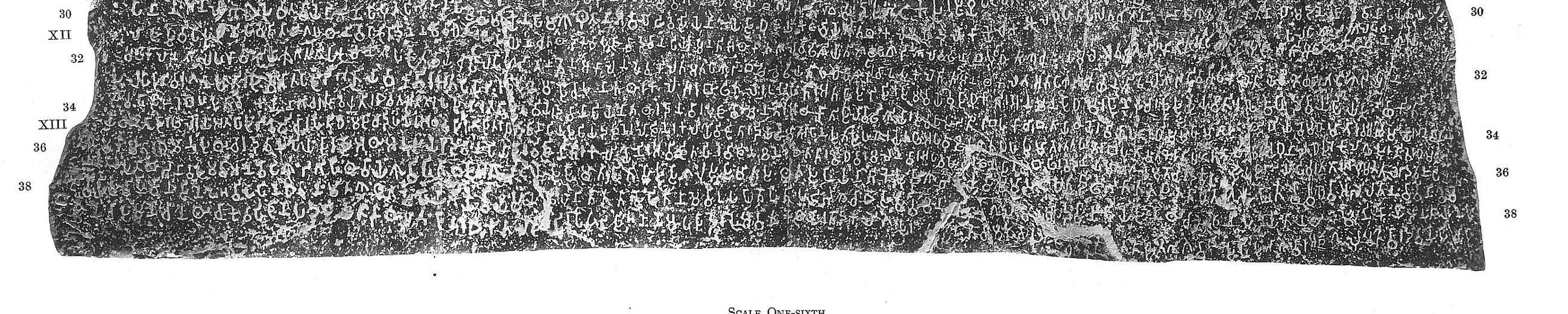
Where on the image
Inked impression (estampage) of the Kalsi rock, not a photograph of the stone: Hultzsch 1925, plate 'Kalsi rock: East face' (facing p. 44; archive.org leaf 183), cropped to lines 35-39 at the foot of the east face, from the numeral XIII in the left margin to the last line (38 is the last number printed in the margin; line 39 is the row below it). Checked on the image against the transcription (lines 35-39). Text and English: Hultzsch 1925, pp. 45-46 (archive.org leaf 184).
35(A) aṭha-[va]shā- | bhishita- | shā [De]vānaṁpiyasha Piyadashine | lājine | Kaligyā vijitā | (B) diyaḍha-mite | pāna-shat[a]-shaha[ś]e | ye [ta]phā apavuḍhe [| śa]ta-[sha]hasha-mite | tata hate | bahu-tāvatake | vā maṭe (C) tat[o pa]chhā | adhunā ladhesha | Kaligyeshu | tive | dhaṁma[vāy]e
36dhaṁma-k[ā]matā | dhaṁmānushathi chā | Devānaṁpiyashā | (D) sh[e] athi anushaye | Devānaṁpiya[sh]ā | vijin[i]tu | Kaligyāni | (E) avijitaṁ hi | vijinamane | e tatā | vadha vā | malane vā | apavahe [vā] | jan[a]shā | [sh]e bāḍha | vedaniya-mute | g[u]l[u]-mut[e] chā | Devānaṁ[pi]yashā | (F) iyaṁ pi chu | tato | galu-matatale | D[e]vānaṁpiyashā
37(G) [ya] tatā vashati b[ā]bhanā va shama vā ane vā pāśaṁḍa gih[i]thā vā yeśu vihitā [e]sh[a] a[gabhu]t[i]-shushushā m[ā]tā-piti-shushushā galu-shushā mita-shaṁthuta-shahāya-nātikeshu dāśa-bha[ṭa]kash[i sha]m[y]ā-paṭipati diḍha-bhatitā teshaṁ tatā hoti [upa]ghāte vā vadhe vā abhilatānaṁ vā vinikhamane
38(H) yeshaṁ vā pi shuvihi[t]ānaṁ shinehe avipahine e tānaṁ mita-śaṁth[u]ta-sha[h]āya-[nā]tikya viyashanaṁ pāpunāta tatā she [p]i t[ā]namev[ā] upaghāt[e] hoti (I) paṭibhāge chā esh[a] sh[a]va-manu[shāna]ṁ gul[u]-m[a]te chā Devāna[ṁ]piyashā (J) n[a]thi chā she jan[a]pade yatā nathi ime nikāyā ānatā Y[o]nesh[u]
39baṁhmane ch[ā] shamane chā nathi chā kuvāpi jan[a]padashi [ya]tā n[a]thi m[a]nushān[a] | ekatalash[i p]i | pāshaḍashi | no n[ā]ma pashāde | (K) she ava[ta]ke jane | t[a]dā Kali[ṁ]geshu | [ladheshu ha]te ch[ā] maṭ[e] chā | [apavuḍhe chā |] tato shat[e] bhāge vā | shah[a]sha-bhāge vā | aja gulu-mate vā | Devāna[ṁ]piyashā
(A) When king Dēvānāṁpriya Priyadarśin had been anointed eight years, (the country of) the Kaliṅgyas was conquered by (him).
(B) One hundred and fifty thousand in number were the men who were deported thence, one hundred thousand in number were those who were slain there, and many times as many those who died.
(C) After that, now that (the country of) the Kaliṅgyas has been taken, Dēvānāṁpriya (is devoted) to a zealous study of morality, to the love of morality, and to the instruction (of people) in morality.
(D) This is the repentance of Dēvānāṁpriya on account of his conquest of (the country of) the Kaliṅgyas.
(E) For, this is considered very painful and deplorable by Dēvānāṁpriya, that, while one is conquering an unconquered (country), slaughter, death, and deportation of people (are taking place) there.
(F) But the following is considered even more deplorable than this by Dēvānāṁpriya.
(G) (To) the Brāhmaṇas or Śramaṇas, or other sects or householders, who are living there, (and) among whom the following are practised: obedience to those who receive high pay, obedience to mother and father, obedience to elders, proper courtesy to friends, acquaintances, companions, and relatives, to slaves and servants, (and) firm devotion,—to these then happen injury or slaughter or deportation of (their) beloved ones.
(H) Or if there are then incurring misfortune the friends, acquaintances, companions, and relatives of those whose affection (for the latter) is undiminished, although they are (themselves) well provided for, this (misfortune) as well becomes an injury to those (persons) themselves.
(I) This is shared by all men and is considered deplorable by Dēvānāṁpriya.
(J) There is no country where these (two) classes, (viz.) the Brāhmaṇas and the Śramaṇas, do not exist, except among the Yōnas; and there is no (place) in any country where men are not indeed attached to some sect.
(K) Therefore even the hundredth part or the thousandth part of all those people who were slain, who died, and who were deported at that time when (the country of) the Kaliṅgas was taken, (would) now be considered very deplorable by Dēvānāṁpriya.
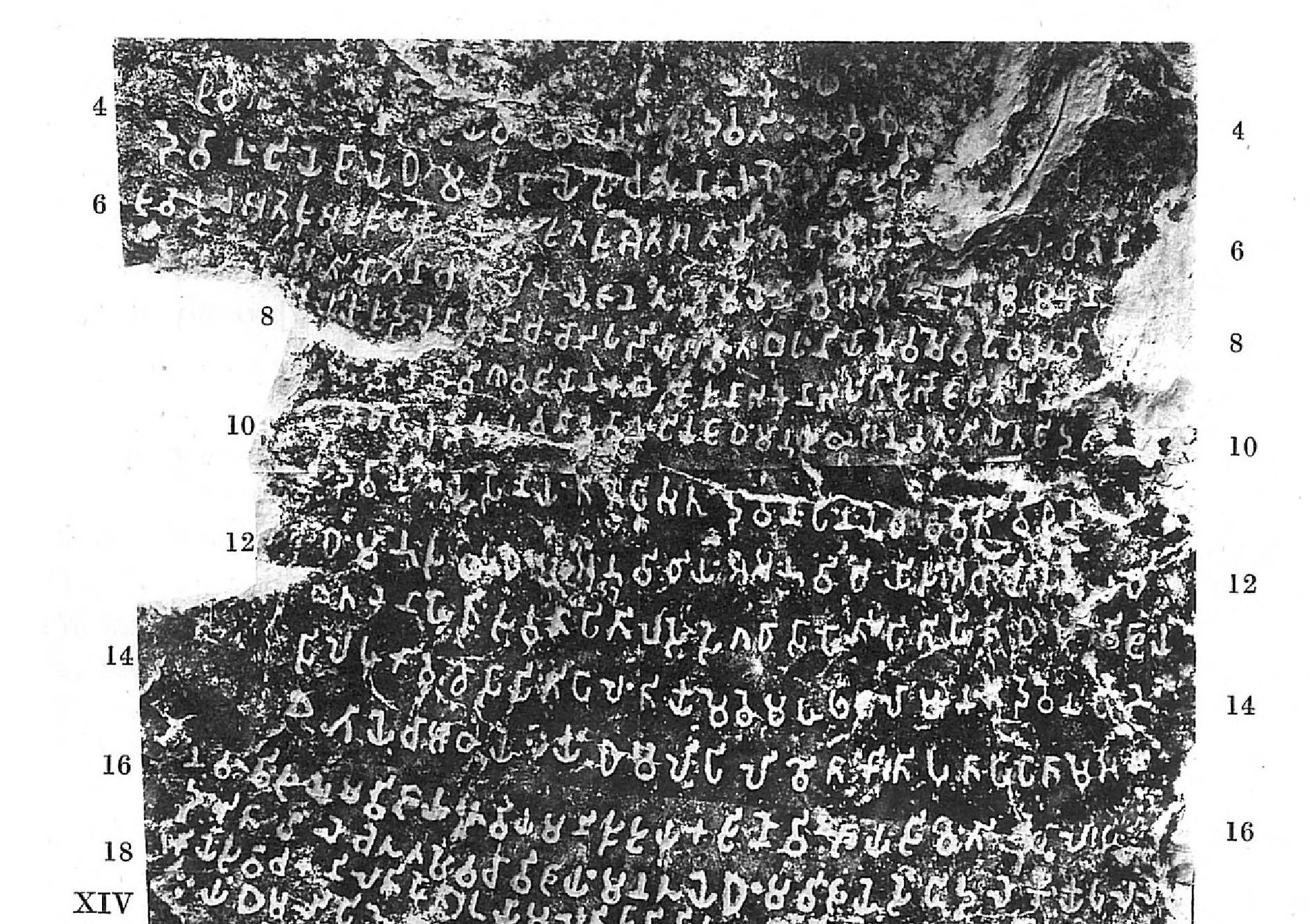
Where on the image
Inked impression (estampage) of the Kalsi rock, not a photograph of the stone: Hultzsch 1925, plate 'Kalsi rock: South face / Kalsi rock: North face' (facing p. 50; archive.org leaf 190), cropped to the upper part of the south-face impression, numbered 4 to 18 in both margins. The impression begins at line 4; lines 1-3, of which only the syllables [ney]u (O) ichha of line 3 survive, are not on the plate. Checked on the image against the transcription (lines 1-18). Text and English: Hultzsch 1925, pp. 46-49 (archive.org leaves 185, 187-188).
1..........
2..........
3.......... [ney]u (O) ichha ..........
4sha[va-bhu] .......... [shayama shamacha]liya[ṁ] madava ti (P) iyaṁ vu mu ..........
5Devānaṁpiyeshā ye dha[ṁ]ma-vijaye (Q) sh[e] cha punā ladhe Devāna[ṁp]i .......... cha
6shaveshu cha ateshu a shashu pi [yo]jana-shateshu at[a] Atiyoge nām[a] Yo[na-lā] . . [pa]laṁ chā tenā
7A[ṁ]tiyogenā chatāli 4 lajāne Tulamaye [nā]m[a] Aṁteki[ne nā]ma Makā nā-
8ma Alikyashudale nāma nichaṁ Choḍa-Paṁḍiyā avaṁ Taṁbapaṁniyā hevamev[ā] (R) hevamevā
9[hi]dā lā[ja]-viśavashi Yona-Kaṁbojeshu Nābhak[a]-Nābhapaṁtishu Bhoja-Pitinikye[sh]u
10[Adha]-P[ā]lade[sh]u [sha]vatā [D]evā[na]ṁpi[ya]shā dhaṁmānu[sha]thi anuvataṁti (S) y[a]ta pi dutā
11Devāna[ṁp]iyasā no yaṁti t[e] pi sutu Dev[āna]ṁp[i]naṁya dh[aṁma]-vutaṁ v[i]dh[a]na[ṁ]
12dhaṁmānusa[th]i dha[ṁ]ma[ṁ] anuvidhiyaṁa [a]nuvidhiyisaṁa [ch]ā (T) ye se [la]dhe
13etakenā hoti savatā vi[ja]ye piti-lase se (U) gadhā sā hoti piti piti dhaṁm[a]-vijaya-
14shi (V) lahukā v[u] kho sā piti (W) pālaṁtikyameve maha-phalā maṁnaṁ[ti] Dev[e]naṁ[pi]ne
15(X) etāye chā aṭhāye iyaṁ dha[ṁ]ma-lipi likhitā kiti putā papotā me a[su]
16nava[ṁ] vijay[a] ma vijayataviya manishu shayakashi no vi[ja]yashi khaṁti chā la | hu-
17daṁḍatā [chā] lochetu tameva chā vijayaṁ manatu ye dhaṁma-vijaye (Y) she hidalokikya palalo-
18kiye (Z) shavā cha ka nilati hot[u] uyāma-lati (AA) shā hi hi[da]lokika pa[la]lokikyā
(O) .......... desires towards all beings .......... self-control, impartiality, (and) kindness.
(P) But this .......... by Dēvānāṁpriya, viz. the conquest by morality.
(Q) And this (conquest) has been won repeatedly by Dēvānāṁpriya both [here] and among all (his) borderers, even as far as at (the distance of) six hundred yōjanas, where the Yōna king named Antiyoga (is ruling), and beyond this Antiyoga, (where) four—4—kings (are ruling), (viz. the king) named Tulamaya, (the king) named Antekina, (the king) named Makā, (and the king) named Alikyashudala, (and) likewise towards the south, (where) the Chōḍas and Pāṇḍyas (are ruling), as far as Tāmraparṇī.
(R) Likewise here in the king’s territory, among the Yōnas and Kambōjas, among the Nābhakas and Nābhapaṅktis, among the Bhōjas and Pitinikyas, among the Andhras and Pāladas,—everywhere (people) are conforming to Dēvānāṁpriya’s instruction in morality.
(S) Even those to whom the envoys of Dēvānāṁpriya do not go, having heard of the duties of morality, the ordinances, (and) the instruction in morality of Dēvānāṁpriya, are conforming to morality and will conform to (it).
(T) This conquest, which has been won by this everywhere, causes the feeling of satisfaction.
(U) Firm becomes this satisfaction, (viz.) the satisfaction at the conquest by morality.
(V) But this satisfaction is indeed of little (consequence).
(W) Dēvānāṁpriya thinks that only the fruits in the other (world) are of great (value).
(X) And for the following purpose has this rescript on morality been written, (viz.) in order that the sons (and) great-grandsons (who) may be (born) to me, should not think that a fresh conquest ought to be made; (that), if a conquest does please them, they should take pleasure in mercy and light punishments; and (that) they should regard the conquest by morality as the only (true) conquest.
(Y) This (conquest bears fruit) in this world (and) in the other world.
(Z) And let all (their) pleasure be the pleasure in exertion.
(AA) For this (bears fruit) in this world (and) in the other world.
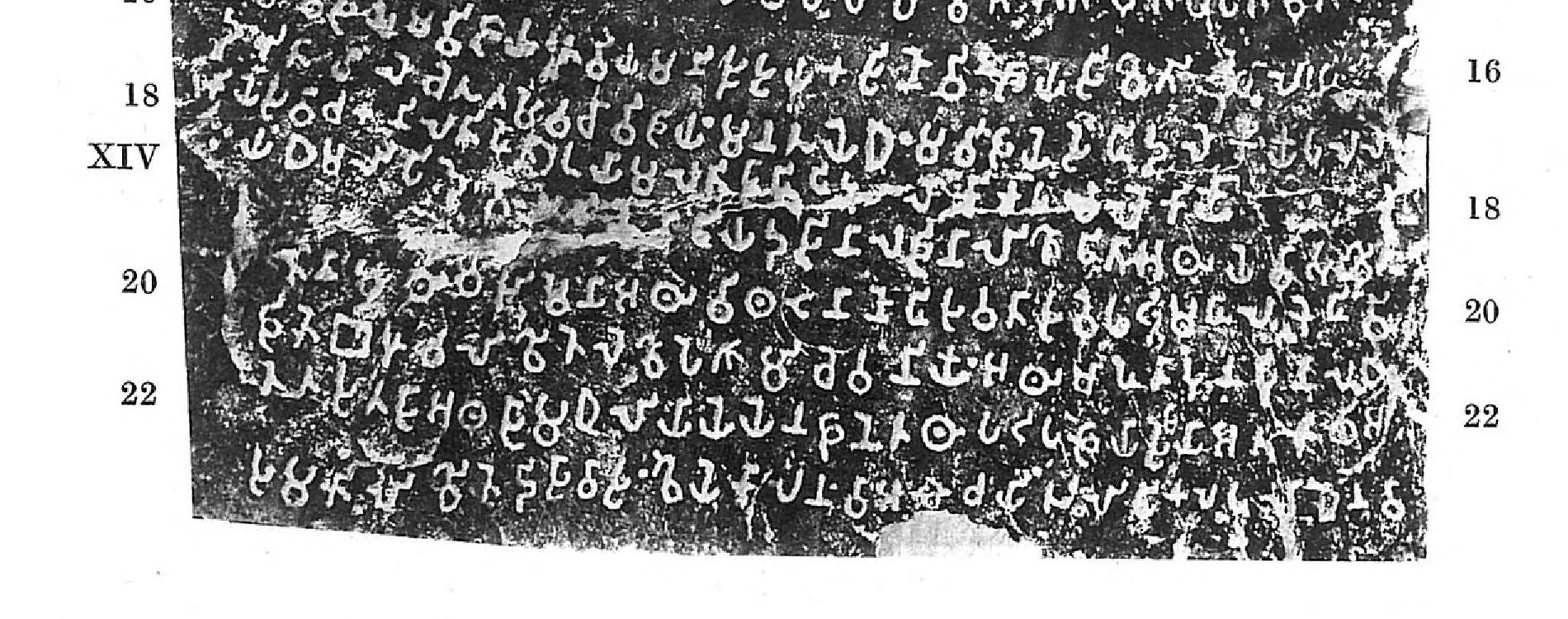
Where on the image
Inked impression (estampage) of the Kalsi rock, not a photograph of the stone: Hultzsch 1925, plate 'Kalsi rock: South face / Kalsi rock: North face' (facing p. 50; archive.org leaf 190), cropped to the lower part of the south-face impression, from the numeral XIV in the left margin (line 19) to line 23, numbered 20 and 22. Checked on the image against the transcription (lines 19-23). Text and English: Hultzsch 1925, pp. 49-50 (archive.org leaves 188-189).
19(A) iyaṁ dhama-lipi Dev[ānaṁp]i[y]e[n]ā [P]iyadasinā lajinā likhāpitā athi yevā sukhi-
20tenā [a]thi majhimenā athi vithaṭenā (B) no hi savatā save [gha]ṭite (C) mahālake hi vi-
21jite bahu cha likhite lekhāpeśāmi cheva nikyaṁ (D) athi chā hetā puna pun[ā] la[p]i-
22t[e] tasha tashā athashā madhuliyāye yena jane tathā paṭipajeyā (E) she shāyā ata k[i]chhi a-
23samati likhite dishā vā shaṁkheye kālanaṁ vā alochayitu li[p]ikalapalādhena vā
(A) These rescripts on morality have been caused to be written by king Dēvānāṁpriya Priyadarśin either in an abridged (form), or of middle (size), or at full length.
(B) For the whole was not suitable everywhere.
(C) For (my) dominions are wide, and much has been written, and I shall constantly cause still (more) to be written.
(D) And (some) of this has been stated again and again because of the charm of certain topics, (and) in order that men should act accordingly.
(E) But some of this may have been written incompletely, either on account of the locality, or because (my) motive was not liked, or by the fault of the writer.
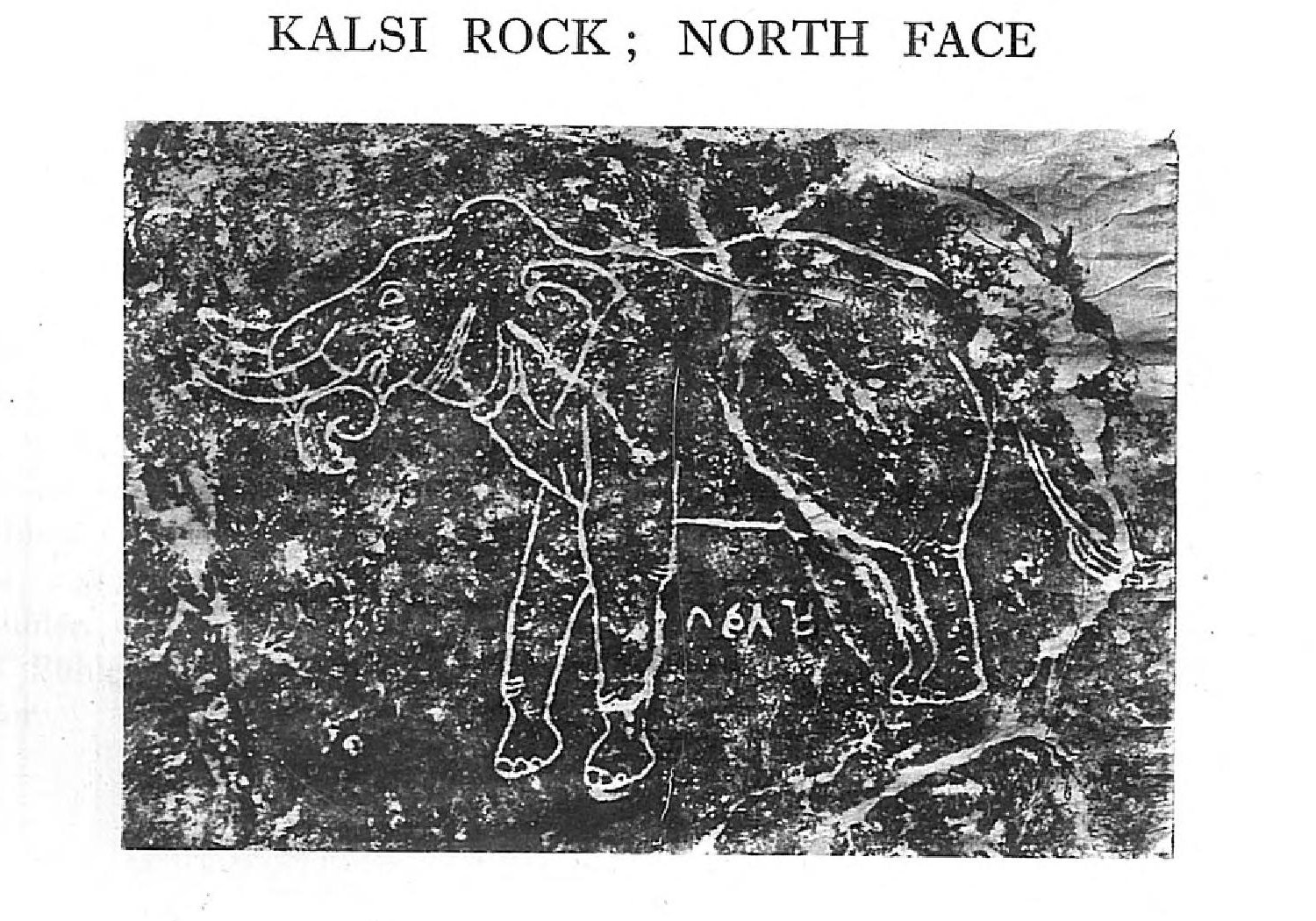
Where on the image
Inked impression (estampage) of the Kalsi rock, not a photograph of the stone: Hultzsch 1925, plate 'Kalsi rock: South face / Kalsi rock: North face' (facing p. 50; archive.org leaf 190), cropped to the impression of the north face (lower figure of the plate): the outline of an elephant with the word gajatame written between its legs. Checked on the image against the transcription (line 1). Text and English: Hultzsch 1925, p. 50 (archive.org leaf 189).
1gajatame
The best elephant.
Notes
- Hultzsch translates dhamma as 'morality'; other translators use 'Dharma' or 'righteousness'.
- Words in round brackets in the English are Hultzsch's additions for sense; words in square brackets render damaged letters.
Cite
Sources
- Source: Kalsi, near Dehradun (Uttarakhand), rock inscription of Ashoka; Hultzsch's collotype plates of inked impressions (1925); Hultzsch's transliteration and English (CII I, 1925), read from the archive.org scan (holding institution)
- Critical edition: E. Hultzsch, Inscriptions of Asoka (CII I, 1925), transliteration read from the scan
← previous · → next · v cycle view · l back to library