Aelian, Varia Historia 3.18: Theopompus' tale of Midas and Silenus, the continent beyond Ocean and Meropis
Introduction
Claudius Aelianus (c. 175-235 AD) collected curiosities in his Varia Historia. At 3.18 he summarizes a story from the 4th-century BCE historian Theopompus of Chios: Silenus told King Midas that Europe, Asia and Libya are islands in the Ocean, and that beyond it lies the only true continent, of boundless size, with two great cities, Eusebes (the Pious) and Machimos (the Warlike). The warriors of Machimos once crossed the Ocean with ten million men, but when they reached the Hyperboreans and learned that these were thought the happiest people here, they despised us and went home. Further off live the Meropes, at the edge of whose land is a place of no return. Aelian calls Theopompus a teller of fables. The story is often read as a parody of Plato's Atlantis.
The manuscript is Paris, BnF, Supplément grec 352, a 13th-century bombycin codex with the Varia Historia on fol. 106v-132, the oldest complete witness of the work with published images (the 12th-century Vat. gr. 96 has only excerpts). The scribe gives each story a title between crosses. 3.18 runs from fol. 113r line 30 to fol. 113v line 18; inside it the scribe adds subtitles for the city Machimos and for the place called Anostos.
How was this verified? (Provenance)
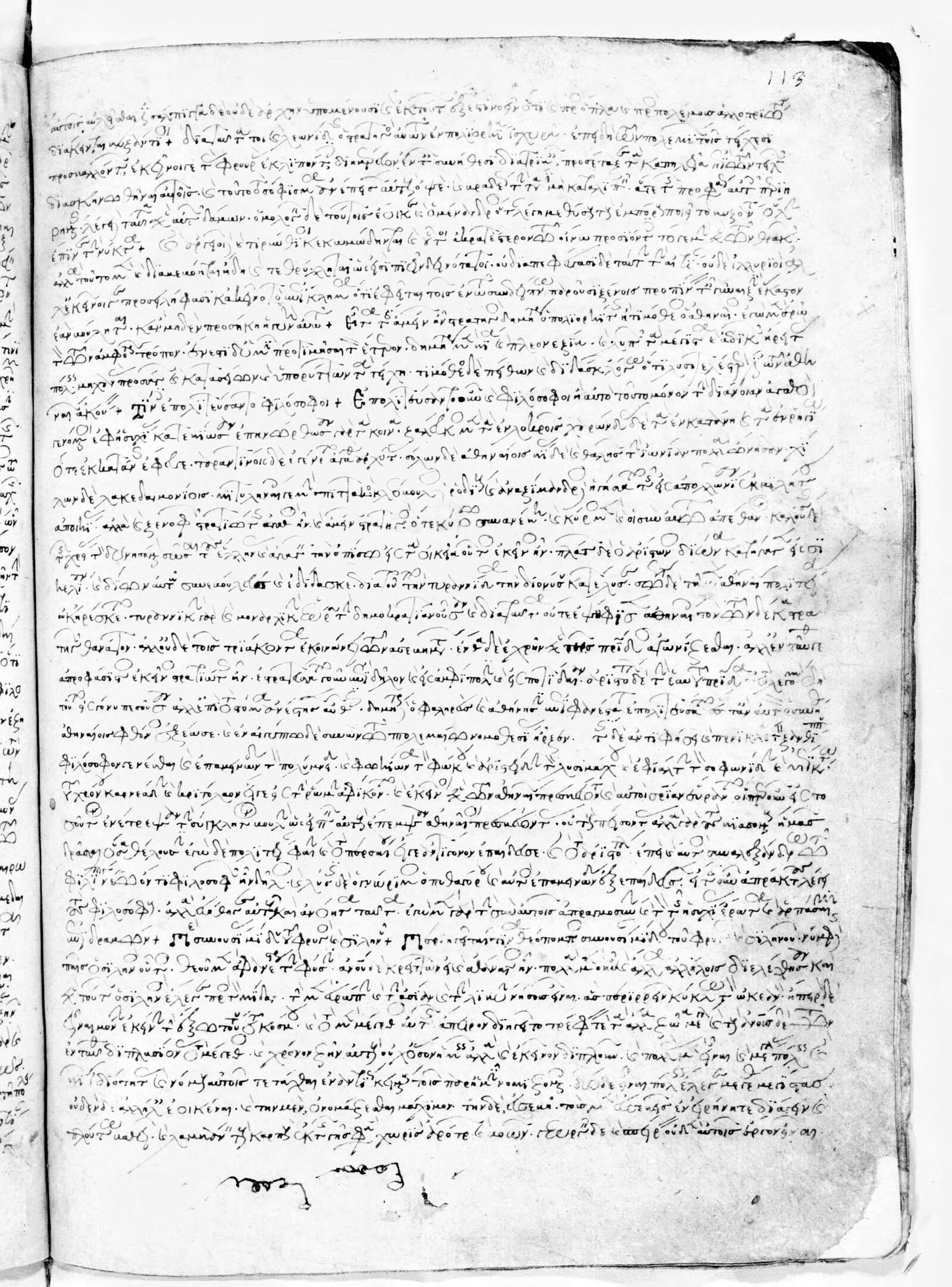
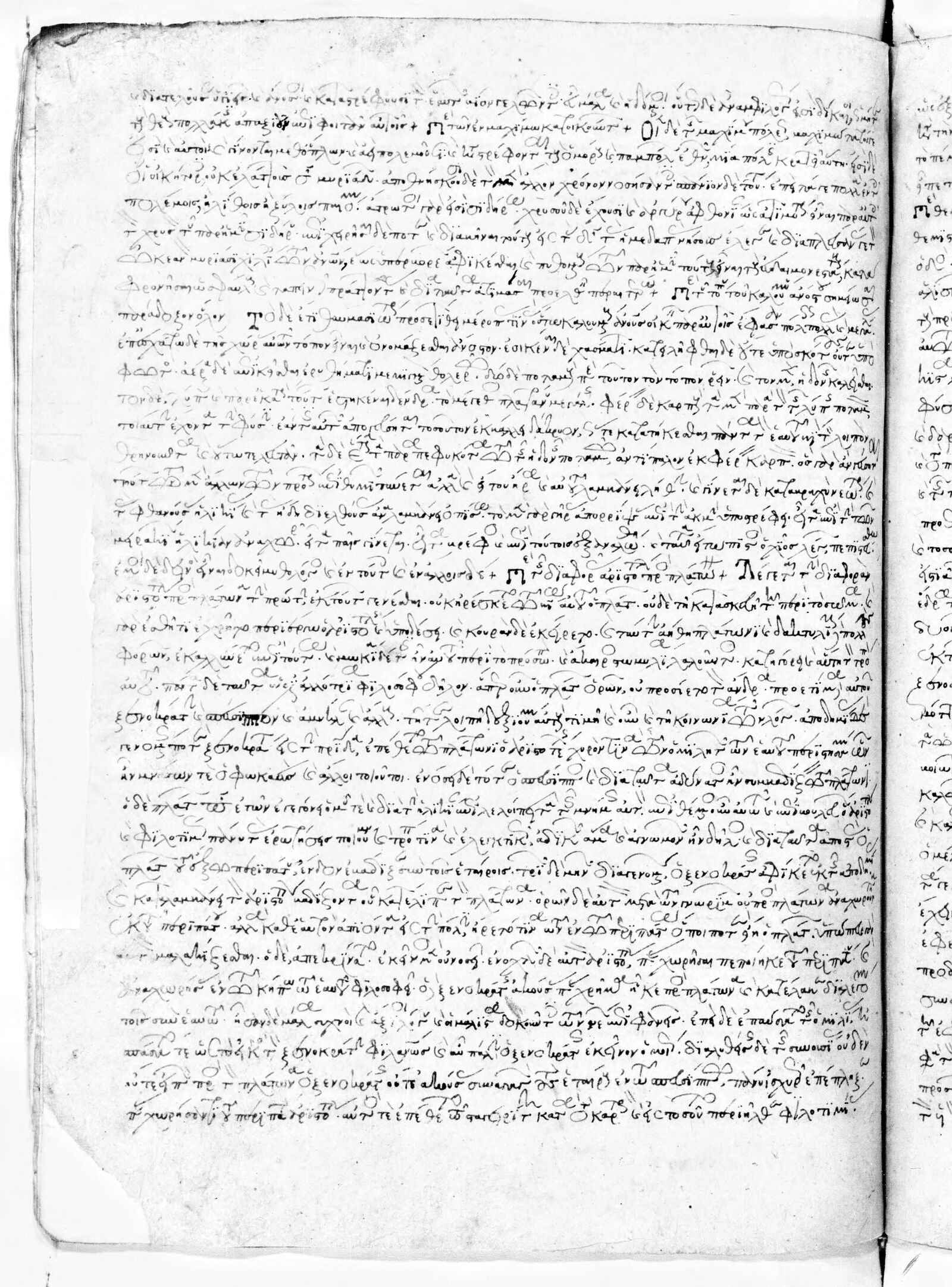
Where on the image
3.18 begins in fol. 113r line 30 (text lines counted from the top; the folio number above them is not counted; recounted 2026-11-12), after the end of 3.17 ‹ἐπιδραμών›, with the title ‹Περὶ συνουσίας μίδου καὶ σιληνοῦ› between crosses and ‹Περιηγεῖταί τινα θεόπομπος συνουσίαν›; the last line of the page (37) ends ‹γεωργεῖν δὲ καὶ σπείρειν οὐδὲν αὐτοῖς ἔργον εἶναι›; fol. 113v begins ‹καὶ διατελοῦσιν ὑγιεῖς καὶ ἄνοσοι›, with subtitles in lines 2 and 8, the Meropes in line 9, and the chapter ends in line 18, ‹ἐμοὶ δὲ δεινὸς εἶναι δοκεῖ μυθολόγος›, followed by the title of 3.19. Read on the BnF images at full resolution.
Περιηγεῖταί τινα Θεόπομπος συνουσίαν Μίδου τοῦ Φρυγὸς καὶ Σιληνοῦ. νύμφης δὲ παῖς ὁ Σιληνὸς οὗτος, θεοῦ μὲν ἀφανέστερος τὴν φύσιν, ἀνθρώπου δὲ κρείττων, ἐπεὶ καὶ ἀθάνατος ἦν. πολλὰ μὲν οὖν καὶ ἄλλα ἀλλήλοις διελέχθησαν, καὶ ὑπὲρ τούτων δὲ ὁ Σιληνὸς ἔλεγε πρὸς τὸν Μίδαν. τὴν μὲν Εὐρώπην καὶ τὴν Ἀσίαν καὶ τὴν Λιβύην νήσους εἶναι, ἃς περιρρεῖν κύκλῳ τὸν Ὠκεανόν, ἤπειρον δὲ εἶναι μόνην ἐκείνην τὴν ἔξω τούτου τοῦ κόσμου. καὶ τὸ μὲν μέγεθος αὐτῆς ἄπειρον διηγεῖτο. τρέφειν δὲ τὰ ἄλλα ζῷα μεγάλα, καὶ τοὺς ἀνθρώπους δὲ τῶν ἐνταυθοῖ διπλασίονας τὸ μέγεθος, καὶ χρόνον ζῆν αὐτοὺς οὐχ ὅσον ἡμεῖς, ἀλλὰ καὶ ἐκεῖνον διπλοῦν. καὶ πολλὰς μὲν εἶναι καὶ μεγάλας πόλεις καὶ βίων ἰδιότητας, καὶ νόμους αὐτοῖς τετάχθαι ἐναντίως κειμένους τοῖς παρʼ ἡμῖν νομιζομένοις. δύο δὲ εἶναι πόλεις ἔλεγε μεγέθει μεγίστας, οὐδὲν δὲ ἀλλήλαις ἐοικέναι· καὶ τὴν μὲν ὀνομάζεσθαι Μάχιμον, τὴν δὲ Εὐσεβῆ. τοὺς μὲν οὖν Εὐσεβεῖς ἐν εἰρήνῃ τε διάγειν καὶ πλούτῳ βαθεῖ, καὶ λαμβάνειν τοὺς καρποὺς ἐκ τῆς γῆς χωρὶς ἀρότρων καὶ βοῶν, γεωργεῖν δὲ καὶ σπείρειν οὐδὲν αὐτοῖς ἔργον εἶναι. καὶ διατελοῦσιν ʽἦ δʼ ὃσʼ ὑγιεῖς καὶ ἄνοσοι, καὶ καταστρέφουσι τὸν ἑαυτῶν βίον γελῶντες εὖ μάλα καὶ ἡδόμενοι. οὕτω δὲ ἀναμφιλόγως εἰσὶ δίκαιοι, ὡς μηδὲ τοὺς θεοὺς πολλάκις ἀπαξιοῦν ἐπιφοιτᾶν αὐτοῖς. οἱ δὲ τῆς Μαχίμου πόλεως μαχιμώτατοί τέ εἰσι καὶ αὐτοὶ καὶ γίνονται μεθʼ ὅπλων, καὶ ἀεὶ πολεμοῦσι, καὶ καταστρέφονται τοὺς ὁμόρους, καὶ παμπόλλων ἐθνῶν μία πόλις κρατεῖ αὕτη. εἰσὶ δὲ οἱ οἰκήτορες οὐκ ἐλάττους διακοσίων μυριάδων. ἀποθνήσκουσι δὲ τὸν μὲν ἄλλον χρόνον νοσήσαντες· σπάνιον δὲ τοῦτο, ἐπεὶ τά γε πολλὰ ἐν τοῖς πολέμοις ἢ λίθοις ἢ ξύλοις παιόμενοι· ἄτρωτοι γάρ εἰσι σιδήρῳ. χρυσοῦ δὲ ἔχουσι καὶ ἀργύρου ἀφθονίαν, ὡς ἀτιμότερον εἶναι παρʼ αὐτοῖς τὸν χρυσὸν τοῦ παρʼ ἡμῖν σιδήρου. ἐπιχειρῆσαι δέ ποτε καὶ διαβῆναι τούτους ἐς τάσδε τὰς ἡμεδαπὰς νήσους ἔλεγε, καὶ διαπλεύσαντάς γε τὸν Ὠκεανὸν μυριάσι χιλίαις ἀνθρώπων ἕως Ὑπερβορέων ἀφικέσθαι. καὶ πυθομένους τῶν παρʼ ἡμῖν τούτους εἶναι τοὺς εὐδαιμονεστάτους, καταφρονῆσαι ὡς φαύλως καὶ ταπεινῶς πράττοντας, καὶ διὰ ταῦτα ἀτιμάσαι προελθεῖν περαιτέρω. τὸ δὲ ἔτι θαυμασιώτερον προσετίθει. μέροπάς τινας οὕτω καλουμένους ἀνθρώπους οἰκεῖν παρʼ αὐτοῖς ἔφη πόλεις πολλὰς καὶ μεγάλας, ἐπʼ ἐσχάτῳ δὲ τῆς χώρας αὐτῶν τόπον εἶναι καὶ ὀνομάζεσθαι Ἄνοστον, ἐοικέναι δὲ χάσματι, κατειλῆφθαι δὲ οὔτε ὑπὸ σκότους οὔτε ὑπὸ φωτός, ἀέρα δὲ ἐπικεῖσθαι ἐρυθήματι μεμιγμένον θολερῷ. δύο δὲ ποταμοὺς περὶ τοῦτον τὸν τόπον ῥεῖν, καὶ τὸν μὲν Ἡδονῆς καλεῖσθαι τὸν δὲ Λύπης· καὶ παρʼ ἑκάτερον τούτων ἑστηκέναι δένδρα τὸ μέγεθος πλατάνου μεγάλης. φέρειν δὲ καρποὺς τὰ μὲν παρὰ τὸν τῆς Λύπης ποταμὸν τοιαύτην ἔχοντας τὴν φύσιν. ἐάν τις αὐτῶν ἀπογεύσηται, τοσοῦτον ἐκβάλλει δακρύων, ὥστε κατατήκεσθαι πάντα τὸν ἑαυτοῦ βίον τὸν λοιπὸν θρηνοῦντα, καὶ οὕτω τελευτᾶν. τὰ δὲ ἕτερα τὰ παραπεφυκότα τῷ τῆς Ἡδονῆς ποταμῷ ἀντίπαλον ἐκφέρειν καρπόν. ὃς γὰρ ἂν γεύσηται τούτων, τῶν μὲν ἄλλων τῶν πρότερον ἐπιθυμιῶν παύεται, ἀλλὰ καὶ εἴ του ἤρα καὶ αὐτοῦ λαμβάνει λήθην, καὶ γίνεται κατὰ βραχὺ νεώτερος καὶ τὰς φθανούσας ἡλικίας καὶ τὰς ἤδη διελθούσας ἀναλαμβάνει ὀπίσω. τὸ μὲν γὰρ γῆρας ἀπορρίψας ἐπὶ τὴν ἀκμὴν ὑποστρέφει, εἶτα ἐπὶ τὴν τῶν μειρακίων ἡλικίαν ἀναχωρεῖ, εἶτα παῖς γίνεται, εἶτα βρέφος, καὶ ἐπὶ τούτοις ἐξαναλώθη. καὶ ταῦτα εἴ τῳ πιστὸς ὁ Χῖος λέγων, πεπιστεύσθω· ἐμοὶ δὲ δεινὸς εἶναι δοκεῖ μυθολόγος καὶ ἐν τούτοις καὶ ἐν ἄλλοις δέ.
Theopompus relates a discourse between Midas the Phrygian and Silenus. This Silenus was son of a Nymph, inferiour by nature to the Gods onely, superior to Men and Death. Amongst other things, Silenus told Midas that Europe, Asia and Africk were Islands surrounded by the Ocean: That there was but one Continent onely, which was beyond this world, and that as to magnitude it was infinite: That in it were bred, besides other very great Creatures, Men twice as big as those here, and they lived double our age: That many great Cities are there, and peculiar manners of life; and that they have Laws wholly different from those amongst us: That there are two Cities farre greater then the rest, nothing to like each other; one named Machimus, Warlike, the other Eusebes, Pious: That the Pious people live in peace, abounding in wealth, & reap the fruits of the Earth without Ploughs or Oxen, having no need of tillage or sowing. They live, as he said, free from sickness, and die laughing, and with great pleasure: They are so exactly Just, that the Gods many times vouchsafe to converse with them. The Inhabitants of the City Machimus are very Warlike, continually armed and fighting: They subdue their Neighbours, and this one City predominates over many. The Inhabitants are not fewer then two hundred Myriads: they die sometimes of sickness, but this happens very rarely, for most commonly they are kill'd in the Wars by Stones or Wood, for they are invulnerable by Steel. They have vast plenty of Gold and Silver, insomuch that Gold is of less value with them then Iron with us. He said that they once designed a Voiage to these our Islands, and sailed upon the Ocean, being in number a thousand Myriads of men, till they came to the Hyperboreans; but understanding that they were the happiest men amongst us, they contemned us as persons that led a mean inglorious life, and therefore thought it not worth their going farther. He added what is yet more wonderful, that there are men living amongst them called Meropes, who inhabit many great Cities; and that at the farthest end of their Countrey there is a place named Anostus, (from whence there is no return) which resembles a Gulf; it is neither very light nor very dark, the air being dusky intermingled with a kinde of Red: That there are two Rivers in this place, one of Pleasure, the other of Grief; and that along each River grow Trees of the bigness of a Plane-tree. Those which grow up by the River of Grief bear fruit of this nature; If any one eat of them, he shall spend all the rest of his life in tears and grief, and so die. The other Trees which grow by the River of Pleasure produce fruit of a contrary nature, for who tasts thereof shall be eased from all his former desires: If he loved any thing, he shall quite forget it; and in a short time shall become younger, and live over again his former years: he shall cast off old age, and return to the prime of his strength, becoming first a young man, then a child, lastly, an infant, and so die. This, if any man think the Chian worthy credit, he may believe. To me he appears an egregious Romancer as well in this as other things.
Notes
- Stanley's English keeps his 1665 spelling ('farre', 'Voiage'); his chapter heading is omitted.
- Theopompus (4th c. BCE) is known here only through Aelian; Aelian himself wrote after 200 AD, but the passage reports a 4th-century BCE text.
Cite
Sources
- Source: Paris suppl. gr. 352 via Gallica (BnF) + Hercher's Greek (Perseus) + Thomas Stanley's English (1665) (holding institution)
- Critical edition: Perseus editions named per passage
← previous · → next · v cycle view · l back to library