Herodotus, Histories 4.184-185: Mount Atlas and the Atlantes
Introduction
At the end of his survey of the peoples along the sand belt of Libya, Herodotus (c. 430 BCE) describes a salt hill near Mount Atlas, so high that its summit is never seen for clouds, which the natives call the pillar of heaven. The people there are named after the mountain, the Atlantes; they are said to eat nothing that has life and to have no dreams (4.184). Beyond them the sand belt runs on to the Pillars of Heracles and beyond (4.185). This is the oldest surviving mention of a people named after Atlas in the far west, written some seventy years before Plato's Atlantis (Herodotus c. 430 BCE, the Timaeus and Critias c. 360 BCE).
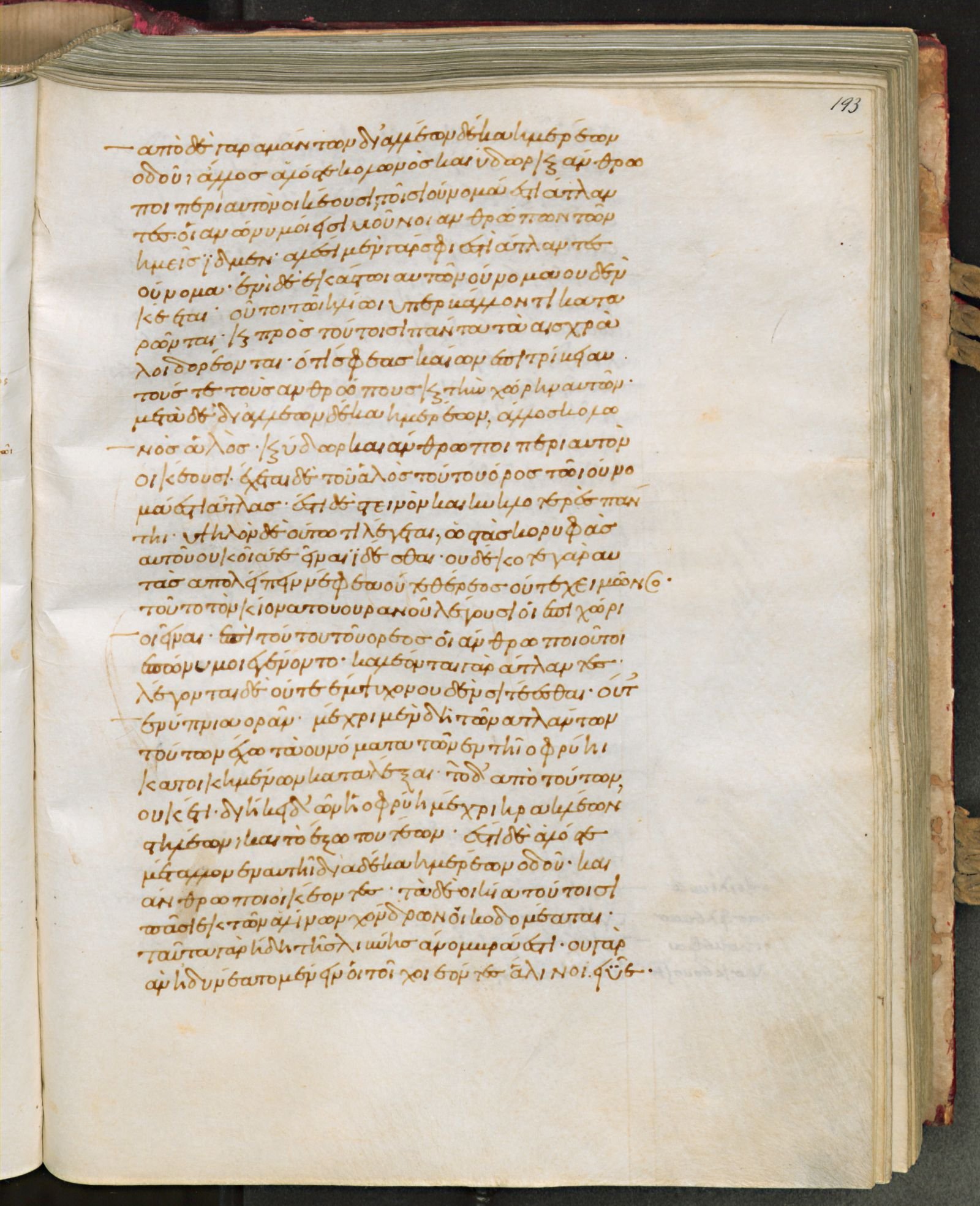
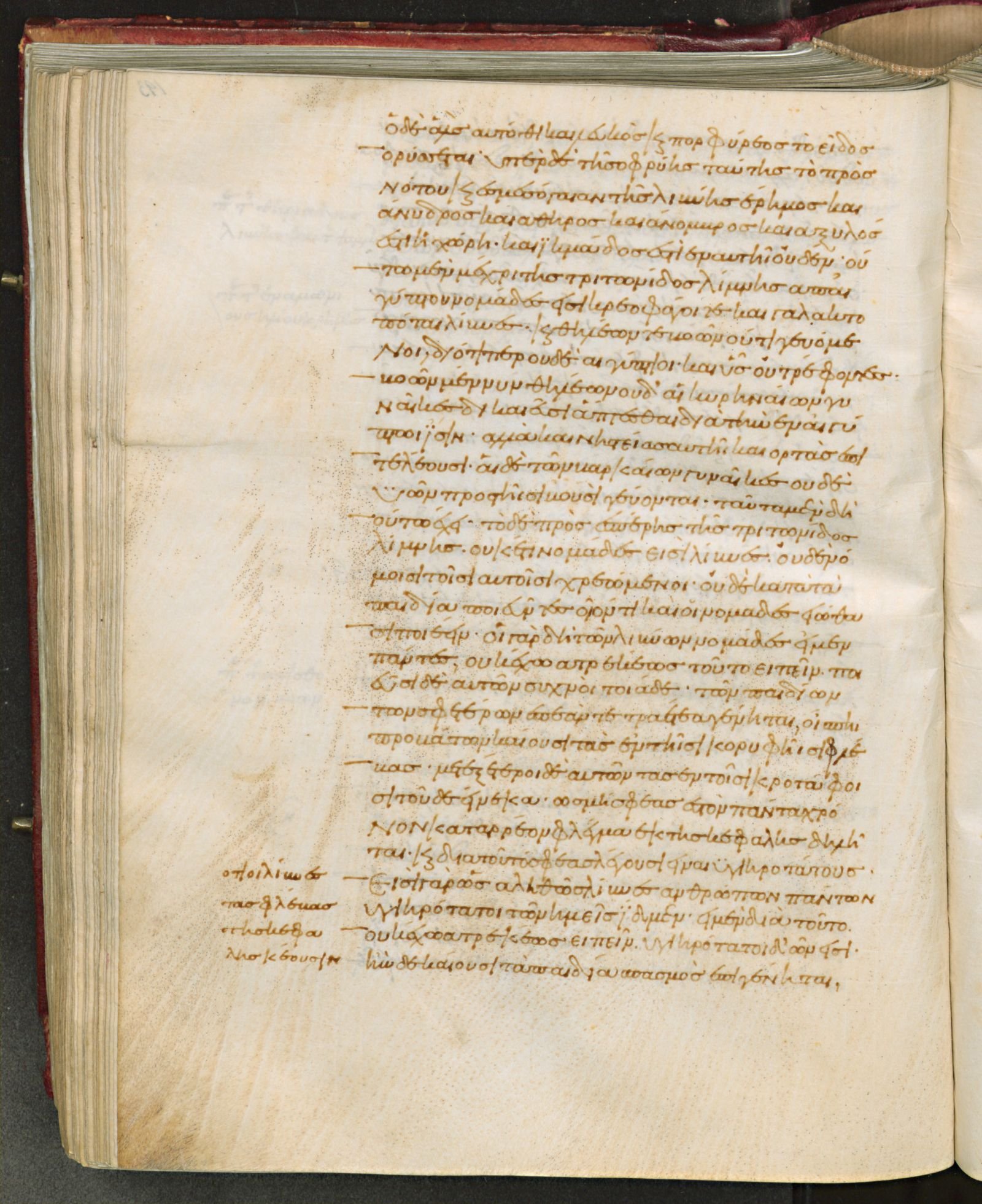
The manuscript is Florence, Biblioteca Medicea Laurenziana, Plut. 70.3 (Herodotus A, 10th century). 4.184 opens fol. 193r; 4.185 ends at fol. 193v line 5. Where the edition prints Ἀτάραντες (the nameless people of 4.184.1), this manuscript reads ἄτλαντες.
How was this verified? (Provenance)
Where on the image
4.184 begins with the first line of fol. 193r, ‹ἀπὸ δὲ γαραμάντων δι' ἀλλέων δέκα ἡμερέων› (fol. 192v ends 4.183); at lines 3-4 the manuscript reads ‹ἄτλαν|τες› where the edition prints Ἀτάραντες; the chapter ends at line 22, ‹οὔτε ἐνύπνια ὁρᾶν›. Read on the BML images (line-numbered full pages and crops).
184.1ἀπὸ δὲ Γαραμάντων διʼ ἀλλέων δέκα ἡμερέων ὁδοῦ ἄλλος ἁλός τε κολωνὸς καὶ ὕδωρ, καὶ ἄνθρωποι περὶ αὐτὸν οἰκέουσι τοῖσι οὔνομα ἐστὶ Ἀτάραντες, οἳ ἀνώνυμοι εἰσὶ μοῦνοι ἀνθρώπων τῶν ἡμεῖς ἴδμεν· ἁλέσι μὲν γάρ σφι ἐστὶ Ἀτάραντες οὔνομα, ἑνὶ δὲ ἑκάστῳ αὐτῶν οὔνομα οὐδὲν κέεται. 184.2οὗτοι τῷ ἡλίῳ ὑπερβάλλοντι καταρῶνται καὶ πρὸς τούτοισι πάντα τὰ αἰσχρὰ λοιδορέονται, ὅτι σφέας καίων ἐπιτρίβει, αὐτούς τε τοὺς ἀνθρώπους καὶ τὴν χώρην αὐτῶν. 184.3μετὰ δὲ διʼ ἀλλέων δέκα ἡμερέων ἄλλος κολωνὸς ἁλὸς καὶ ὕδωρ, καὶ ἄνθρωποι περὶ αὐτὸν οἰκέουσι. ἔχεται δὲ τοῦ ἁλὸς τούτου ὄρος τῷ οὔνομα ἐστὶ Ἄτλας, ἔστι δὲ στεινὸν καὶ κυκλοτερὲς πάντῃ, ὑψηλὸν δὲ οὕτω δή τι λέγεται ὡς τὰς κορυφὰς αὐτοῦ οὐκ οἶά τε εἶναι ἰδέσθαι. οὐδέκοτε γὰρ αὐτὰς ἀπολείπειν νέφεα οὔτε θέρεος οὔτε χειμῶνος. τοῦτο τὸν κίονα τοῦ οὐρανοῦ λέγουσι οἱ ἐπιχώριοι εἶναι. 184.4ἐπὶ τούτου τοῦ ὄρεος οἱ ἄνθρωποι οὗτοι ἐπώνυμοι ἐγένοντο· καλέονται γὰρ δὴ Ἄτλαντες. λέγονται δὲ οὔτε ἔμψυχον οὐδὲν σιτέεσθαι οὔτε ἐνύπνια ὁρᾶν.
From the Garmantians at a distance again of ten days' journey there is another hill of salt and spring of water, and men dwell round it called Atarantians, who alone of all men about whom we know are nameless; for while all taken together have the name Atarantians, each separate man of them has no name given to him. These utter curses against the Sun when he is at his height, and moreover revile him with all manner of foul terms, because he oppresses them by his burning heat, both themselves and their land. After this at a distance of ten days' journey there is another hill of salt and spring of water, and men dwell round it. Near this salt hill is a mountain named Atlas, which is small in circuit and rounded on every side; and so exceedingly lofty is it said to be, that it is not possible to see its summits, for clouds never leave them either in the summer or in the winter. This the natives say is the pillar of the heaven. After this mountain these men got their name, for they are called Atlantians; and it is said that they neither eat anything that has life nor have any dreams.
Where on the image
4.185 begins at fol. 193r line 22, ‹μέχρι μὲν δὴ τῶν ἀτλάντων›; fol. 193v begins ‹ὁ δὲ ἅλς αὐτόθι καὶ λευκὸς καὶ πορφύρεος›; the chapter ends at 193v line 5, ‹καὶ ἰκμάδος ἐστὶ ἐν αὐτῇ οὐδέν›. Read on the BML images (line-numbered full pages and crops).
185.1μέχρι μὲν δὴ τῶν Ἀτλάντων τούτων ἔχω τὰ οὐνόματα τῶν ἐν τῇ ὀφρύῃ κατοικημένων καταλέξαι, τὸ δʼ ἀπὸ τούτων οὐκέτι. διήκει δʼ ὦν ἡ ὀφρύη μέχρι Ἡρακλέων στηλέων καὶ τὸ ἔξω τουτέων. 185.2ἔστι δὲ ἁλός τε μέταλλον ἐν αὐτῇ διὰ δέκα ἡμερέων ὁδοῦ καὶ ἄνθρωποι οἰκέοντες. τὰ δὲ οἰκία τούτοισι πᾶσι ἐκ τῶν ἁλίνων χόνδρων οἰκοδομέαται. ταῦτα γὰρ ἤδη τῆς Λιβύης ἄνομβρα ἐστί· οὐ γὰρ ἂν ἠδυνέατο μένειν οἱ τοῖχοι ἐόντες ἅλινοι, εἰ ὗε. 185.3ὁ δὲ ἃλς αὐτόθι καὶ λευκὸς καὶ πορφύρεος τὸ εἶδος ὀρύσσεται. ὑπὲρ δὲ τῆς ὀφρύης τὸ πρὸς νότου καὶ ἐς μεσόγαιαν τῆς Λιβύης ἔρημος καὶ ἄνυδρος καὶ ἄθηρος καὶ ἄνομβρος καὶ ἄξυλος ἐστὶ ἡ χώρη, καὶ ἰκμάδος ἐστὶ ἐν αὐτῇ οὐδέν.
As far as these Atlantians I am able to mention in order the names of those who are settled in the belt of sand; but for the parts beyond these I can do so no more. However, the belt extends as far as the Pillars of Heracles and also in the parts outside them: and there is a mine of salt in it at a distance of ten days' journey from the Atlantians, and men dwelling there; and these all have their houses built of the lumps of salt, since these parts of Libya which we have now reached are without rain; for if it rained, the walls being made of salt would not be able to last: and the salt is dug up there both white and purple in colour. Above the sand-belt, in the parts which are in the direction of the South Wind and towards the interior of Libya, the country is uninhabited, without water and without wild beasts, rainless and treeless, and there is no trace of moisture in it.
Notes
- Greek: A. D. Godley's Loeb text (1920), via Perseus, not a transcription of the manuscript.
- English: G. C. Macaulay (1890), from Project Gutenberg; his footnote numbers are removed. Godley's own English on Perseus is a modernized revision and is not used.
- Sections follow Herodotus' chapters; the small numbers in the Greek are the sub-sections of the modern editions.
Cite
Sources
- Source: Florence, Laur. Plut. 70.3 (Herodotus A, 10th c.) fol. 193r-193v via Teca digitale BML + Godley's Greek (Perseus) + Macaulay's English (1890, Project Gutenberg) (holding institution)
- Critical edition: Perseus editions named per passage
← previous · → next · v cycle view · l back to library