Diodorus of Sicily, Library 3.53-61: the Amazons of Libya and the myths of the Atlantians
Introduction
In book 3 of his Library of History (c. 60-30 BCE) Diodorus retells, from the mythographer Dionysius Scytobrachion, the story of the Amazons of western Libya, who lived on the island of Hespera in the marsh Tritonis near Ocean, and under their queen Myrina conquered the Atlantians, 'the most civilized men among the inhabitants of those regions', who had a prosperous country and great cities (3.53-55). He then gives the Atlantians' account of the gods: their first king Uranus, his children the Titans, Basileia, Hyperion and Helios, and Atlas, who received the lands along the ocean, named his people Atlantians and the greatest mountain Atlas, and first taught the doctrine of the sphere; it ends with Cronus and Zeus (3.56-61). It is a Hellenistic myth of a western people named after Atlas, not Plato's sunken island.
The manuscript is Vatican, Biblioteca Apostolica Vaticana, Vat. gr. 130, a 10th-century copy of books 1-5 of the Library made by the priest Ioannes (siglum C), the oldest manuscript of these books with published images (the early 10th-century Naples manuscript has none online). The Vatican Library's images are black-and-white (made from microfilm), each showing an opening of two pages; they are cropped here to the single page. Each page has 28 lines. 3.53-61 run from fol. 165v line 11 to fol. 174r line 18; on fol. 170r the lower half (from about line 16) is in a different hand.
How was this verified? (Provenance)
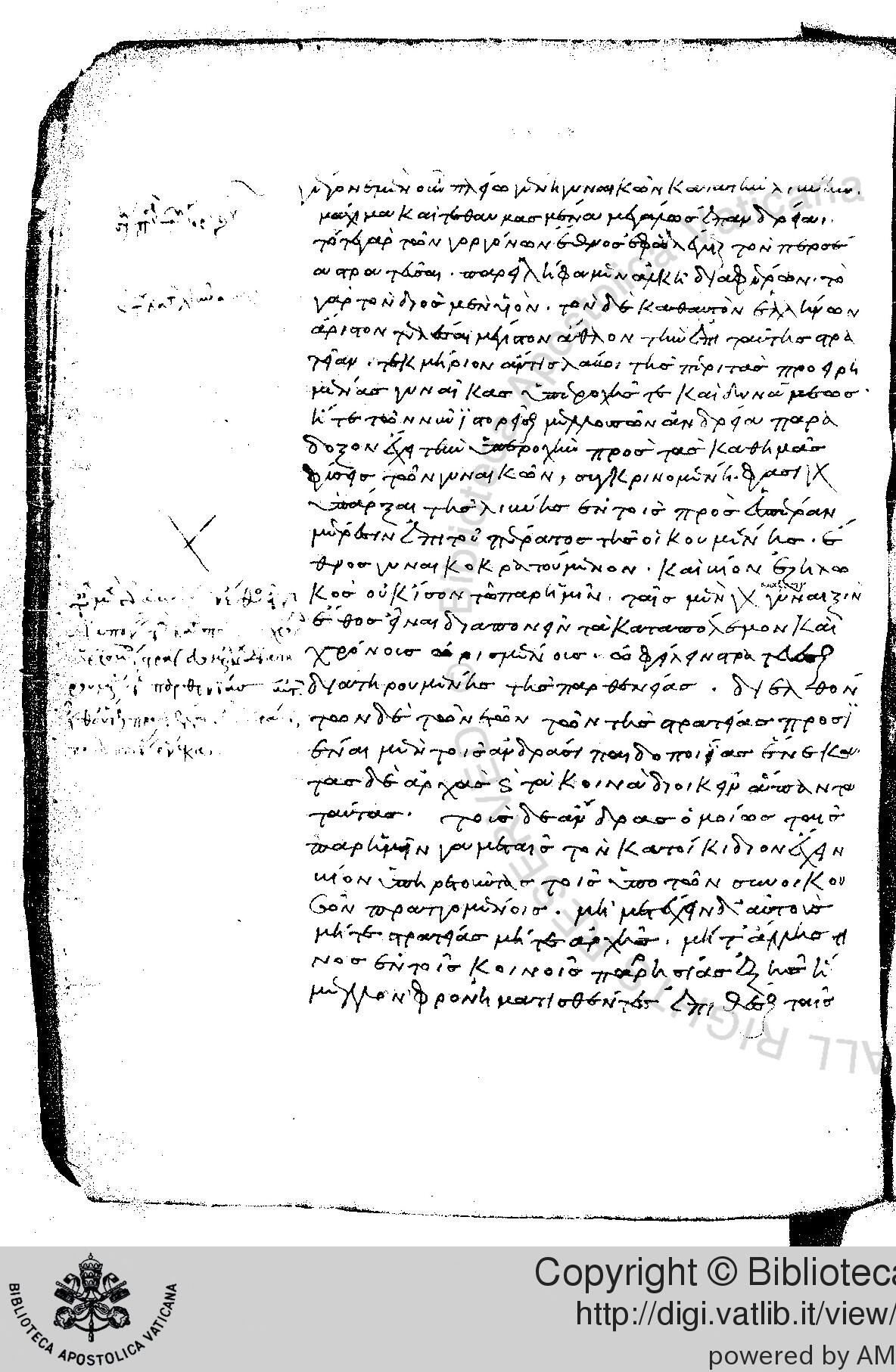
Where on the image
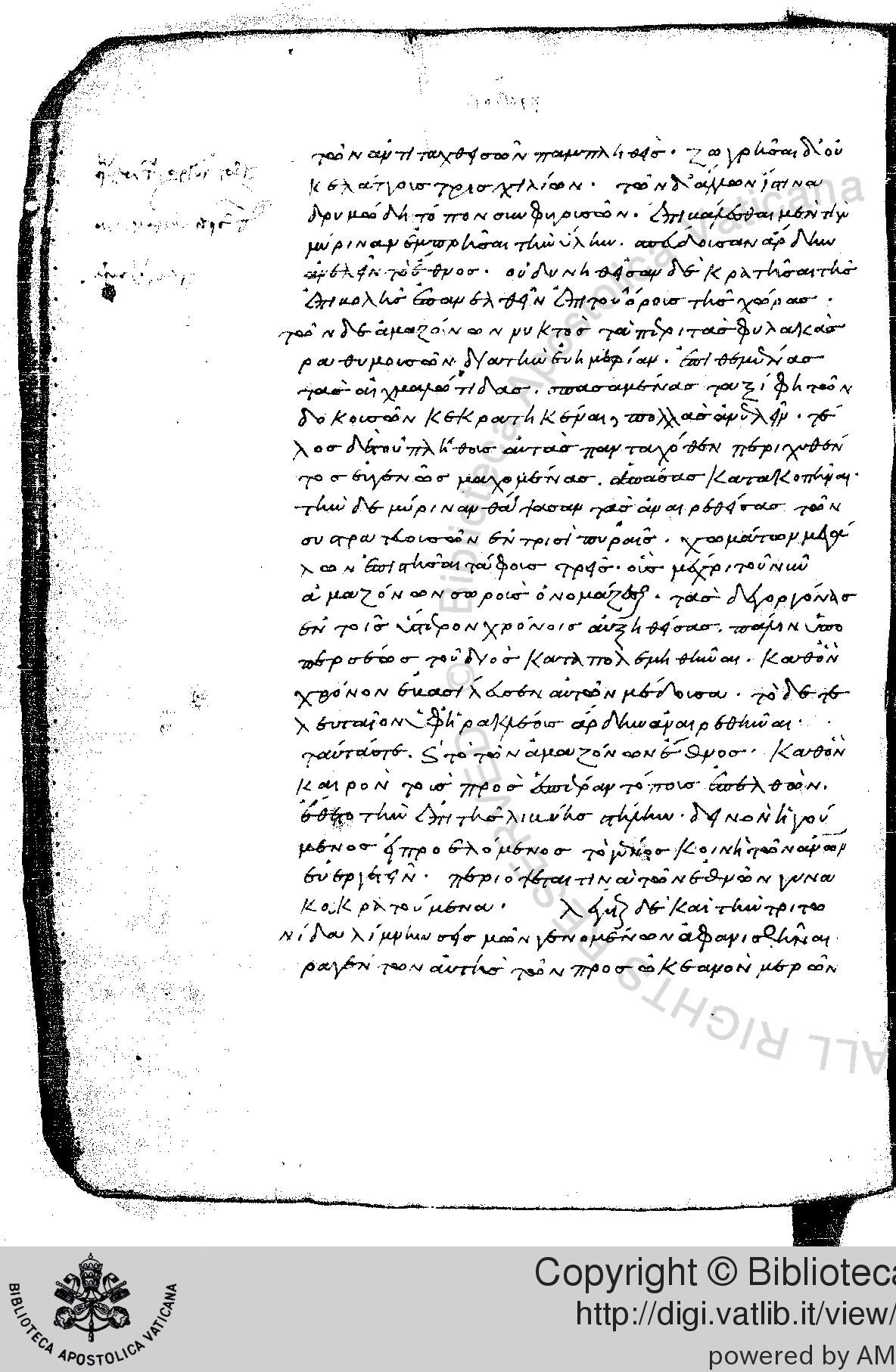
3.53 begins at the end of fol. 165v line 11 with ‹φασὶ› (line 12 ‹ὑπάρξαι τῆς λιβύης›); 3.53.2 begins in 165v line 22, 3.53.3 at fol. 166r line 1 (‹κατὰ δὲ τὰς γενέσεις›), 3.53.4 in line 10 (‹μυθολογοῦσι δ' αὐτὰς ᾠκηκέναι νῆσον›), 3.53.5 at the end of line 19, 3.53.6 in line 27; fol. 166v begins ‹τὰς ἐν τῇ νήσῳ πόλεις καταστρέψασθαι› and the chapter ends in line 10.
3.53.1φασὶ γὰρ ὑπάρξαι τῆς Λιβύης ἐν τοῖς πρὸς ἑσπέραν μέρεσιν ἐπὶ τοῖς πέρασι τῆς οἰκουμένης ἔθνος γυναικοκρατούμενον καὶ βίον ἐζηλωκὸς οὐχ ὅμοιον τῷ παρʼ ἡμῖν. ταῖς μὲν γὰρ γυναιξὶν ἔθος εἶναι διαπονεῖν τὰ κατὰ πόλεμον, καὶ χρόνους ὡρισμένους ὀφείλειν στρατεύεσθαι, διατηρουμένης τῆς παρθενίας· διελθόντων δὲ τῶν ἐτῶν τῶν τῆς στρατείας προσιέναι μὲν τοῖς ἀνδράσι παιδοποιίας ἕνεκα, τὰς δʼ ἀρχὰς καὶ τὰ κοινὰ διοικεῖν ταύτας ἅπαντα. 3.53.2τοὺς δʼ ἄνδρας ὁμοίως ταῖς παρʼ ἡμῖν γαμεταῖς τὸν κατοικίδιον ἔχειν βίον, ὑπηρετοῦντας τοῖς ὑπὸ τῶν συνοικουσῶν προσταττομένοις· μὴ μετέχειν δʼ αὐτοὺς μήτε στρατείας μήτʼ ἀρχῆς μήτʼ ἄλλης τινὸς ἐν τοῖς κοινοῖς παρρησίας, ἐξ ἧς ἔμελλον φρονηματισθέντες ἐπιθήσεσθαι ταῖς γυναιξί. 3.53.3κατὰ δὲ τὰς γενέσεις τῶν τέκνων τὰ μὲν βρέφη παραδίδοσθαι τοῖς ἀνδράσι, καὶ τούτους διατρέφειν αὐτὰ γάλακτι καὶ ἄλλοις τισὶν ἑψήμασιν οἰκείως ταῖς τῶν νηπίων ἡλικίαις· εἰ δὲ τύχοι θῆλυ γεννηθέν, ἐπικάεσθαι αὐτοῦ τοὺς μαστούς, ἵνα μὴ μετεωρίζωνται κατὰ τοὺς τῆς ἀκμῆς χρόνους· ἐμπόδιον γὰρ οὐ τὸ τυχὸν εἶναι δοκεῖν πρὸς τὰς στρατείας τοὺς ἐξέχοντας τοῦ σώματος μαστούς· διὸ καὶ τούτων αὐτὰς ἀπεστερημένας ὑπὸ τῶν Ἑλλήνων Ἀμαζόνας προσαγορεύεσθαι. 3.53.4μυθολογοῦσι δʼ αὐτὰς ᾠκηκέναι νῆσον τὴν ἀπὸ μὲν τοῦ πρὸς δυσμὰς ὑπάρχειν αὐτὴν Ἑσπέραν προσαγορευθεῖσαν, κειμένην δʼ ἐν τῇ Τριτωνίδι λίμνῃ. ταύτην δὲ πλησίον ὑπάρχειν τοῦ περιέχοντος τὴν γῆν ὠκεανοῦ, προσηγορεῦσθαι δʼ ἀπό τινος ἐμβάλλοντος εἰς αὐτὴν ποταμοῦ Τρίτωνος· κεῖσθαι δὲ τὴν λίμνην ταύτην πλησίον Αἰθιοπίας καὶ τοῦ παρὰ τὸν ὠκεανὸν ὄρους, ὃ μέγιστον μὲν ὑπάρχειν τῶν ἐν τοῖς τόποις καὶ προπεπτωκὸς εἰς τὸν ὠκεανόν, ὀνομάζεσθαι δʼ ὑπὸ τῶν Ἑλλήνων Ἄτλαντα. 3.53.5τὴν δὲ προειρημένην νῆσον ὑπάρχειν μὲν εὐμεγέθη καὶ πλήρη καρπίμων δένδρων παντοδαπῶν, ἀφʼ ὧν πορίζεσθαι τὰς τροφὰς τοὺς ἐγχωρίους. ἔχειν δʼ αὐτὴν καὶ κτηνῶν πλῆθος, αἰγῶν καὶ προβάτων, ἐξ ὧν γάλα καὶ κρέα πρὸς διατροφὴν ὑπάρχειν τοῖς κεκτημένοις σίτῳ δὲ τὸ σύνολον μὴ χρῆσθαι τὸ ἔθνος διὰ τὸ μήπω τοῦ καρποῦ τούτου τὴν χρείαν εὑρεθῆναι παρʼ αὐτοῖς. 3.53.6τὰς δʼ οὖν Ἀμαζόνας ἀλκῇ διαφερούσας καὶ πρὸς πόλεμον ὡρμημένας τὸ μὲν πρῶτον τὰς ἐν τῇ νήσῳ. πόλεις καταστρέφεσθαι πλὴν τῆς ὀνομαζομένης Μήνης, ἱερᾶς δʼ εἶναι νομιζομένης, ἣν κατοικεῖσθαι μὲν ὑπʼ Αἰθιόπων Ἰχθυοφάγων, ἔχειν δὲ πυρὸς ἐκφυσήματα μεγάλα καὶ λίθων πολυτελῶν πλῆθος τῶν ὀνομαζομένων παρʼ Ἕλλησιν ἀνθράκων καὶ σαρδίων καὶ σμαράγδων, μετὰ δὲ ταῦτα πολλοὺς τῶν πλησιοχώρων Λιβύων καὶ νομάδων καταπολεμῆσαι, καὶ κτίσαι πόλιν μεγάλην ἐντὸς τῆς Τριτωνίδος λίμνης, ἣν ἀπὸ τοῦ σχήματος ὀνομάσαι Χερρόνησον.
3.53.1We are told, namely, that there was once on the western parts of Libya, on the bounds of the inhabited world, a race which was ruled by women and followed a manner of life unlike that which prevails among us. For it was the custom among them that the women should practise the arts of war and be required to serve in the army for a fixed period, during which time they maintained their virginity; then, when the years of their service in the field had expired, they went in to the men for the procreation of children, but they kept in their hands the administration of the magistracies and of all the affairs of the state. 3.53.2The men, however, like our married women, spent their days about the house, carrying out the orders which were given them by their wives; and they took no part in military campaigns or in office or in the exercise of free citizen ship in the affairs of the community by virtue of which they might become presumptuous and rise up against the women. 3.53.3When their children were born the babies were turned over to the men, who brought them up on milk and such cooked foods as were appropriate to the age of the infants; and if it happened that a girl was born, its breasts were seared that they might not develop at the time of maturity; for they thought that the breasts, as they stood out from the body, were no small hindrance in warfare; and in fact it is because they have been deprived of their breasts that they are called by the Greeks Amazons. 3.53.4As mythology relates, their home was on an island which, because it was in the west, was called Hespera, and it lay in the marsh Tritonis. This marsh was near the ocean which surrounds the earth and received its name from a certain river Triton which emptied into it; and this marsh was also near Ethiopia and that mountain by the shore of the ocean which is the highest of those in the vicinity and impinges upon the ocean and is called by the Greeks Atlas. 3.53.5The island mentioned above was of great size and full of fruit-bearing trees of every kind, from which the natives secured their food. It contained also a multitude of flocks and herds, namely, of goats and sheep, from which possessors received milk and meat for their sustenance; but grain the nation used not at all because the use of this fruit of the earth had not yet been discovered among them. 3.53.6The Amazons, then, the account continues, being a race superior in valour and eager for war, first of all subdued all the cities on the island except the one called Menê, which was considered to be sacred and was inhabited by Ethiopian Ichthyophagi, and was also subject to great eruptions of fire and possessed a multitude of the precious stones which the Greeks call anthrax , sardion , and smaragdos ; and after this they subdued many of the neighbouring Libyans and nomad tribes, and founded within the marsh Tritonis a great city which they named Cherronesus after its shape.
Where on the image
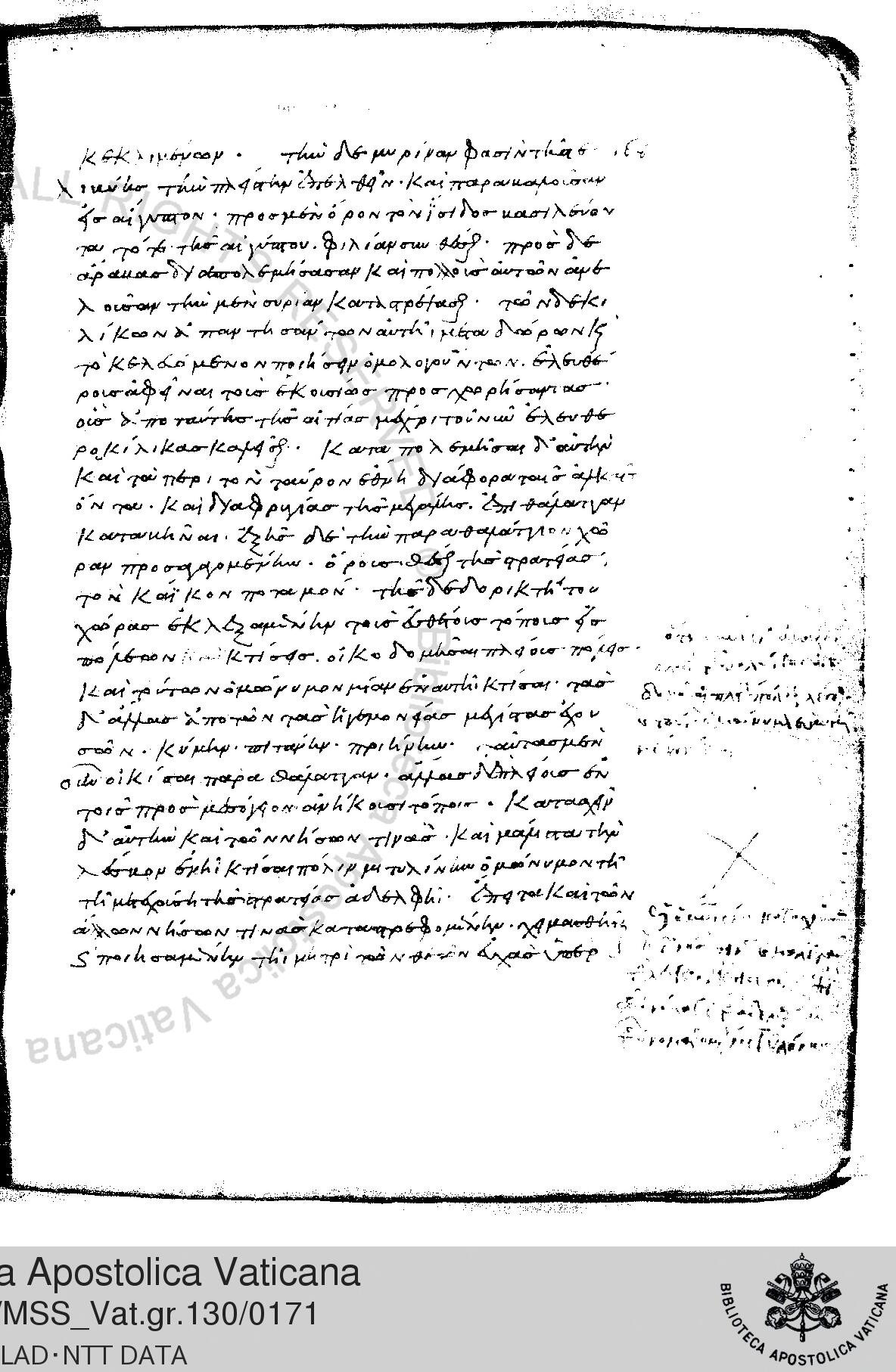
3.54 begins in fol. 166v line 10, ‹χερρόνησον. ἐκ δὲ ταύτης ὁρμωμένας›; 3.54.2 at the end of line 19, 3.54.3 in line 24; fol. 167r (folio number read) has 3.54.4 in line 1, 3.54.5 in line 9 (‹τῆς δὲ περὶ τοὺς κερναίους συμφορᾶς›), 3.54.6 in line 17, 3.54.7 at the end of line 21; fol. 167v begins ‹τῶν ἀμφιταχθεισῶν παμπληθεῖς› and the chapter ends in line 7.
3.54.1ἐκ δὲ ταύτης ὁρμωμένας ἐγχειρῆσαι μεγάλαις ἐπιβολαῖς, ὁρμῆς αὐταῖς ἐμπεσούσης ἐπελθεῖν πολλὰ μέρη τῆς οἰκουμένης. ἐπὶ πρώτους δʼ αὐτὰς στρατεῦσαι λέγεται τοὺς Ἀτλαντίους, ἄνδρας ἡμερωτάτους τῶν ἐν τοῖς τόποις ἐκείνοις καὶ χώραν νεμομένους εὐδαίμονα καὶ πόλεις μεγάλας· παρʼ οἷς δὴ μυθολογεῖσθαί φασι τὴν τῶν θεῶν γένεσιν ὑπάρξαι πρὸς τοῖς κατὰ τὸν ὠκεανὸν τόποις, συμφώνως τοῖς παρʼ Ἕλλησι μυθολόγοις, περὶ ὧν τὰ κατὰ μέρος μικρὸν ὕστερον διέξιμεν. 3.54.2τῶν οὖν Ἀμαζόνων λέγεται βασιλεύουσαν Μύριναν συστήσασθαι στρατόπεδον πεζῶν μὲν τρισμυρίων, ἱππέων δὲ τρισχιλίων, ζηλουμένης παρʼ αὐταῖς περιττότερον ἐν τοῖς πολέμοις τῆς ἀπὸ τῶν ἱππέων χρείας. 3.54.3ὅπλοις δὲ χρῆσθαι σκεπαστηρίοις ὄφεων μεγάλων δοραῖς, ἐχούσης τῆς Λιβύης ταῦτα τὰ ζῷα τοῖς μεγέθεσιν ἄπιστα, ἀμυντηρίοις δὲ τοῖς ξίφεσι καὶ ταῖς λόγχαις, ἔτι δὲ τόξοις, οἷς μὴ μόνον ἐξ ἐναντίας βάλλειν, ἀλλὰ καὶ κατὰ τὰς φυγὰς τοὺς ἐπιδιώκοντας εἰς τοὐπίσω τοξεύειν εὐστόχως. 3.54.4ἐμβαλούσας δʼ αὐτὰς εἰς τὴν τῶν Ἀτλαντίων χώραν τοὺς μὲν τὴν Κέρνην καλουμένην οἰκοῦντας παρατάξει νικῆσαι, καὶ συνεισπεσούσας τοῖς φεύγουσιν ἐντὸς τῶν τειχῶν κυριεῦσαι τῆς πόλεως· βουλομένας δὲ τῷ φόβῳ καταπλήξασθαι τοὺς περιοίκους ὠμῶς προσενεχθῆναι τοῖς ἁλοῦσι, καὶ τοὺς μὲν ἄνδρας ἡβηδὸν ἀποσφάξαι, τέκνα δὲ καὶ γυναῖκας ἐξανδραποδισαμένας κατασκάψαι τὴν πόλιν. 3.54.5τῆς δὲ περὶ τοὺς Κερναίους συμφορᾶς διαδοθείσης εἰς τοὺς ὁμοεθνεῖς, λέγεται τοὺς μὲν Ἀτλαντίους καταπλαγέντας δι’ ὁμολογίας παραδοῦναι τὰς πόλεις καὶ πᾶν τὸ προσταχθὲν ποιήσειν ἐπαγγείλασθαι, τὴν δὲ βασίλισσαν Μύριναν ἐπιεικῶς αὐτοῖς προσενεχθεῖσαν φιλίαν τε συνθέσθαι καὶ πόλιν ἀντὶ τῆς κατασκαφείσης ὁμώνυμον ἑαυτῆς κτίσαι· κατοικίσαι δʼ εἰς αὐτὴν τούς τε αἰχμαλώτους καὶ τῶν ἐγχωρίων τὸν βουλόμενον. 3.54.6μετὰ δὲ ταῦτα τῶν Ἀτλαντίων δῶρά τε μεγαλοπρεπῆ δόντων αὐτῇ καὶ τιμὰς ἀξιολόγους κοινῇ ψηφισαμένων, ἀποδέξασθαί τε τὴν φιλανθρωπίαν αὐτῶν καὶ προσεπαγγείλασθαι τὸ ἔθνος εὐεργετήσειν. 3.54.7τῶν δʼ ἐγχωρίων πεπολεμημένων πολλάκις ὑπὸ τῶν ὀνομαζομένων Γοργόνων, οὐσῶν πλησιοχώρων, καὶ τὸ σύνολον ἔφεδρον ἐχόντων τοῦτο τὸ ἔθνος, φασὶν ἀξιωθεῖσαν τὴν Μύριναν ὑπὸ τῶν Ἀτλαντίων ἐμβαλεῖν εἰς τὴν χώραν τῶν προειρημένων. ἀντιταξαμένων δὲ τῶν Γοργόνων γενέσθαι καρτερὰν μάχην, καὶ τὰς Ἀμαζόνας ἐπὶ τοῦ προτερήματος γενομένας ἀνελεῖν μὲν τῶν ἀντιταχθεισῶν παμπληθεῖς, ζωγρῆσαι δʼ οὐκ ἐλάττους τρισχιλίων· τῶν δʼ ἄλλων εἴς τινα δρυμώδη τόπον συμφυγουσῶν ἐπιβαλέσθαι μὲν τὴν Μύριναν ἐμπρῆσαι τὴν ὕλην, σπεύδουσαν ἄρδην ἀνελεῖν τὸ ἔθνος, οὐ δυνηθεῖσαν δὲ κρατῆσαι τῆς ἐπιβολῆς ἐπανελθεῖν ἐπὶ τοὺς ὅρους τῆς χώρας.
3.54.1Setting out from the city of Cherronesus, the account continues, the Amazons embarked upon great ventures, a longing having come over them to invade many part of the inhabited world. The first people against whom they advanced, according to the tale, was the Atlantians, the most civilized men among the inhabitants of those regions, who dwelt in a prosperous country and possessed great cities; it was among them, we are told, that mythology places the birth of the gods, in the regions which lie along the shore of the ocean, in this respect agreeing with those among the Greeks who relate legends, and about this we shall speak in detail a little later. 3.54.2Now the queen of the Amazons, Myrina, collected, it is said, an army of thirty thousand foot-soldiers and three thousand cavalry, since they favoured to an unusual degree the use of cavalry in their wars. 3.54.3For protective devices they used the skins of large snakes, since Libya contains such animals of incredible size, and for offensive weapons, swords and lances; they also used bows and arrows, with which they struck not only when facing the enemy but also when in flight, by shooting backwards at their pursuers with good effect. 3.54.4Upon entering the land of the Atlantians they defeated in a pitched battle the inhabitants of the city of Cernê, as it is called, and making their way inside the walls along with the fleeing enemy, they got the city into their hands; and desiring to strike terror into the neighbouring peoples they treated the captives savagely, put to the sword the men from the youth upward, led into slavery the children and women, and razed the city. 3.54.5But when the terrible fate of the inhabitants of Cernê became known among their fellow tribesmen, it is related that the Atlantians, struck with terror, surrendered their cities on terms of capitulation and announced that they would do whatever should be commanded them, and that the queen Myrina, bearing herself honourably towards the Atlantians, both established friendship with them and founded a city to bear her name in place of the city which had been razed; and in it she settled both the captives and any native who so desired. 3.54.6Whereupon the Atlantians presented her with magnificent presents and by public decree voted to her notable honours, and she in return accepted their courtesy and in addition promised that she would show kindness to their nation. 3.54.7And since the natives were often being warred upon by the Gorgons, as they were named, a folk which resided upon their borders, and in general had that people lying in wait to injure them, Myrina, they say, was asked by the Atlantians to invade the land of the afore-mentioned Gorgons. But when the Gorgons drew up their forces to resist them a mighty battle took place in which the Amazons, gaining the upper hand, slew great numbers of their opponents and took no fewer than three thousand prisoners; and since the rest had fled for refuge into a certain wooded region, Myrina undertook to set fire to the timber, being eager to destroy the race utterly, but when she found that she was unable to succeed in her attempt she retired to the borders of her country.
Where on the image
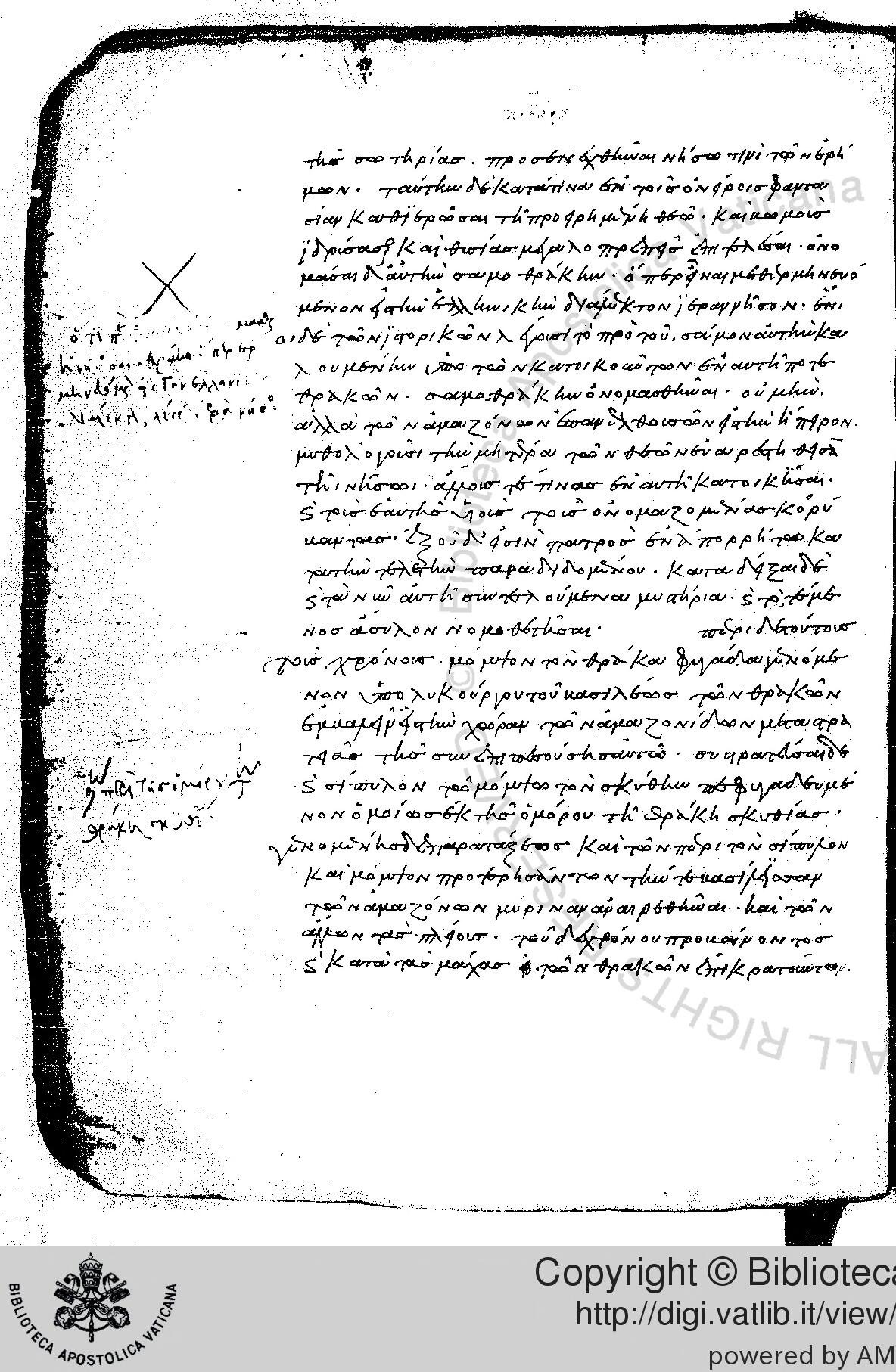
3.55 begins at fol. 167v line 7, ‹τῶν δὲ ἀμαζόνων νυκτὸς›; 3.55.2 in line 13, 3.55.3 in line 16; fol. 168r: 3.55.4 line 1, 3.55.5 line 11, 3.55.6 line 16, 3.55.7 end of line 21, 3.55.8 line 26; fol. 168v begins ‹τῆς σωτηρίας. προσενεχθῆναι νήσῳ›, 3.55.9 at the end of line 9, 3.55.10 at the end of line 17, 3.55.11 in line 24; the chapter ends at fol. 169r line 4, ‹τὸ πέρας›.
3.55.1τῶν δʼ Ἀμαζόνων νυκτὸς τὰ περὶ τὰς φυλακὰς ῥᾳθυμουσῶν διὰ τὴν εὐημερίαν, ἐπιθεμένας τὰς αἰχμαλωτίδας, σπασαμένας τὰ ξίφη τῶν δοκουσῶν κεκρατηκέναι πολλὰς ἀνελεῖν· τέλος δὲ τοῦ πλήθους αὐτὰς πανταχόθεν περιχυθέντος εὐγενῶς μαχομένας ἁπάσας κατακοπῆναι. 3.55.2τὴν δὲ Μύριναν θάψασαν τὰς ἀναιρεθείσας τῶν συστρατευουσῶν ἐν τρισὶ πυραῖς χωμάτων μεγάλων ἐπιστῆσαι τάφους τρεῖς, οὓς μέχρι τοῦ νῦν Ἀμαζόνων σωροὺς ὀνομάζεσθαι. 3.55.3τὰς δὲ Γοργόνας ἐν τοῖς ὕστερον χρόνοις αὐξηθείσας πάλιν ὑπὸ Περσέως τοῦ Διὸς καταπολεμηθῆναι, καθʼ ὃν καιρὸν ἐβασίλευεν αὐτῶν Μέδουσα· τὸ δὲ τελευταῖον ὑφʼ Ἡρακλέους ἄρδην ἀναιρεθῆναι ταύτας τε καὶ τὸ τῶν Ἀμαζόνων ἔθνος, καθʼ ὃν καιρὸν τοὺς πρὸς ἑσπέραν τόπους ἐπελθὼν ἔθετο τὰς ἐπὶ τῆς Λιβύης στήλας, δεινὸν ἡγούμενος, εἰ προελόμενος τὸ γένος κοινῇ τῶν ἀνθρώπων εὐεργετεῖν περιόψεταί τινα τῶν ἐθνῶν γυναικοκρατούμενα. λέγεται δὲ καὶ τὴν Τριτωνίδα λίμνην σεισμῶν γενομένων ἀφανισθῆναι, ῥαγέντων αὐτῆς τῶν πρὸς τὸν ὠκεανὸν μερῶν κεκλιμένων. 3.55.4τὴν δὲ Μύρινάν φασι τῆς τε Λιβύης τὴν πλείστην ἐπελθεῖν, καὶ παραβαλοῦσαν εἰς Αἴγυπτον πρὸς μὲν Ὧρον τὸν Ἴσιδος βασιλεύοντα τότε τῆς Αἰγύπτου φιλίαν συνθέσθαι, πρὸς δʼ Ἄραβας διαπολεμήσασαν καὶ πολλοὺς αὐτῶν ἀνελοῦσαν, τὴν μὲν Συρίαν καταστρέψασθαι, τῶν δὲ Κιλίκων ἀπαντησάντων αὐτῇ μετὰ δώρων καὶ τὸ κελευόμενον ποιήσειν ὁμολογούντων, ἐλευθέρους ἀφεῖναι τοὺς ἑκουσίως προσχωρήσαντας, οὓς ἀπὸ ταύτης τῆς αἰτίας μέχρι τοῦ νῦν Ἐλευθεροκίλικας καλεῖσθαι. 3.55.5καταπολεμῆσαι δʼ αὐτὴν καὶ τὰ περὶ τὸν Ταῦρον ἔθνη, διάφορα ταῖς ἀλκαῖς ὄντα, καὶ διὰ Φρυγίας τῆς μεγάλης ἐπὶ θάλατταν καταβῆναι· ἑξῆς δὲ τὴν παραθαλάττιον χώραν προσαγαγομένην ὅρους θέσθαι τῆς στρατείας τὸν Κάικον ποταμόν. 3.55.6τῆς δὲ δορικτήτου χώρας ἐκλεξαμένην τοὺς εὐθέτους τόπους εἰς πόλεων κτίσεις οἰκοδομῆσαι πλείους πόλεις, καὶ τούτων ὁμώνυμον μίαν ἑαυτῇ κτίσαι, τὰς δʼ ἄλλας ἀπὸ τῶν τὰς ἡγεμονίας τὰς μεγίστας ἐχουσῶν, Κύμην, Πιτάναν, Πριήνην. 3.55.7ταύτας μὲν οὖν οἰκίσαι παρὰ θάλατταν, ἄλλας δὲ πλείους ἐν τοῖς πρὸς μεσόγειον ἀνήκουσι τόποις. κατασχεῖν δʼ αὐτὴν καὶ τῶν νήσων τινάς, καὶ μάλιστα τὴν Λέσβον, ἐν ᾗ κτίσαι πόλιν Μυτιλήνην ὁμώνυμον τῇ μετεχούσῃ τῆς στρατείας ἀδελφῇ. 3.55.8ἔπειτα καὶ τῶν ἄλλων νήσων τινὰς καταστρεφομένην χειμασθῆναι, καὶ ποιησαμένην τῇ μητρὶ τῶν θεῶν εὐχὰς ὑπὲρ τῆς σωτηρίας προσενεχθῆναι νήσῳ τινὶ τῶν ἐρήμων· ταύτην δὲ κατά τινα ἐν τοῖς ὀνείροις φαντασίαν καθιερῶσαι τῇ προειρημένῃ θεῷ καὶ βωμοὺς ἱδρύσασθαι καὶ θυσίας μεγαλοπρεπεῖς ἐπιτελέσαι· ὀνομάσαι δʼ αὐτὴν Σαμοθρᾴκην, ὅπερ εἶναι μεθερμηνευόμενον εἰς τὴν Ἑλληνικὴν διάλεκτον ἱερὰν νῆσον· ἔνιοι δὲ τῶν ἱστορικῶν λέγουσι τὸ πρὸ τοῦ Σάμον αὐτὴν καλουμένην ὑπὸ τῶν κατοικούντων ἐν αὐτῇ ποτε Θρᾳκῶν Σαμοθρᾴκην ὀνομασθῆναι. 3.55.9οὐ μὴν ἀλλὰ τῶν Ἀμαζόνων ἐπανελθουσῶν εἰς τὴν ἤπειρον μυθολογοῦσι τὴν μητέρα τῶν θεῶν εὐαρεστηθεῖσαν τῇ νήσῳ ἄλλους τέ τινας ἐν αὐτῇ κατοικίσαι καὶ τοὺς ἑαυτῆς υἱοὺς τοὺς ὀνομαζομένους Κορύβαντας· ἐξ οὗ δʼ εἰσὶ πατρὸς ἐν ἀπορρήτῳ κατὰ τὴν τελετὴν παραδίδοσθαι· καταδεῖξαι δὲ καὶ τὰ νῦν ἐν αὐτῇ συντελούμενα μυστήρια καὶ τὸ τέμενος ἄσυλον νομοθετῆσαι. 3.55.10περὶ δὲ τούτους τοὺς χρόνους Μόψον τὸν Θρᾷκα, φυγάδα γενόμενον ὑπὸ Λυκούργου τοῦ βασιλέως τῶν Θρᾳκῶν, ἐμβαλεῖν εἰς τὴν χώραν τῶν Ἀμαζόνων μετὰ στρατιᾶς τῆς συνεκπεσούσης αὐτῷ· συστρατεῦσαι δὲ καὶ Σίπυλον τῷ Μόψῳ τὸν Σκύθην, πεφυγαδευμένον ὁμοίως ἐκ τῆς ὁμόρου τῇ Θρᾴκῃ Σκυθίας. 3.55.11γενομένης δὲ παρατάξεως, καὶ τῶν περὶ τὸν Σίπυλον καὶ Μόψον προτερησάντων, τήν τε βασίλισσαν τῶν Ἀμαζόνων Μύριναν ἀναιρεθῆναι καὶ τῶν ἄλλων τὰς πλείους. τοῦ δὲ χρόνου προβαίνοντος, καὶ κατὰ τὰς μάχας ἀεὶ τῶν Θρᾳκῶν ἐπικρατούντων, τὸ τελευταῖον τὰς περιλειφθείσας τῶν Ἀμαζόνων ἀνακάμψαι πάλιν εἰς Λιβύην. καὶ τὴν μὲν στρατείαν τῶν ἀπὸ Λιβύης Ἀμαζόνων μυθολογοῦσι τοιοῦτο λαβεῖν τὸ πέρας.
3.55.1Now as the Amazons, they go on to say, relaxed their watch during the night because of their success, the captive women, falling upon them and drawing the swords of those who thought they were conquerors, slew many of them; in the end, however, the multitude poured in about them from every side and the prisoners fighting bravely were butchered one and all. 3.55.2Myrina accorded a funeral to her fallen comrades on three pyres and raised up three great heaps of earth as tombs, which are called to this day "Amazon Mounds." 3.55.3But the Gorgons, grown strong again in later days, were subdued a second time by Perseus, the son of Zeus, when Medusa was queen over them; and in the end both they and the race of the Amazons were entirely destroyed by Heracles, when he visited the regions to the west and set up his pillars in Libya, since he felt that it would ill accord with his resolve to be the benefactor of the whole race of mankind if he should suffer any nations to be under the rule of women. The story is also told that the marsh disappeared from sight in the course of an earthquake, when those parts of it which lay towards the ocean were torn asunder. 3.55.4As for Myrina, the account continues, she visited the larger part of Libya, and passing over into Egypt she struck a treaty of friendship with Horus, the son of Isis, who was king of Egypt at that time, and then, after making war to the end upon the Arabians and slaying many of them, she subdued Syria; but when the Cilicians came out with presents to meet her and agreed to obey her commands, she left those free who yielded to her of their free will and for this reason these are called to this day the "Free Cilicians." 3.55.5She also conquered in war the races in the region of the Taurus, peoples of outstanding courage, and descended through Greater Phrygia to the sea; and then she won over the land lying along the coast and fixed the bounds of her campaign at the Caïcus River. 3.55.6And selecting in the territory which she had won by arms sites well suited for the founding of cities, she built a considerable number of them and founded one which bore her own name, but the others she named after the women who held the most important commands, such as Cymê, Pitana, and Prienê. 3.55.7These, then, are the cities she settled along the sea, but others, and a larger number, she planted in the regions stretching towards the interior. She seized also some of the islands, and Lesbos in particular, on which she founded the city of Mitylenê, which was named after her sister who took part in the campaign. 3.55.8After that, while subduing some of the rest of the islands, she was caught in a storm, and after she had offered up prayers for her safety to the Mother of the Gods, she was carried to one of the uninhabited islands; this island, in obedience to a vision which she beheld in her dreams, she made sacred to this goddess, and set up altars there and offered magnificent sacrifices. She also gave it the name of Samothrace, which means, when translated into Greek, "sacred island," although some historians say that it was formerly called Samos and was then given the name of Samothrace by Thracians who at one time dwelt on it. 3.55.9However, after the Amazons had returned to the continent, the myth relates, the Mother of the Gods, well pleased with the island, settled in it certain other people, and also her own sons, who are known by the name of Corybantes — who their father was is handed down in their rites as a matter not to be divulged; and she established the mysteries which are now celebrated on the island and ordained by law that the sacred area should enjoy the right of sanctuary. 3.55.10In these times, they go on to say, Mopsus the Thracian, who had been exiled by Lycurgus, the king of the Thracians, invaded the land of the Amazons with an army composed of fellow-exiles, and with Mopsus on the campaign was also Sipylus the Scythian, who had likewise been exiled from that part of Scythia which borders upon Thrace. 3.55.11There was a pitched battle, Sipylus and Mopsus gained the upper hand, and Myrina, the queen of the Amazons, and the larger part of the rest of her army were slain. In the course of the years, as the Thracians continued to be victorious in their battles, the surviving Amazons finally withdrew again into Libya. And such was the end, as the myth relates, of the campaign which the Amazons of Libya made.
Where on the image
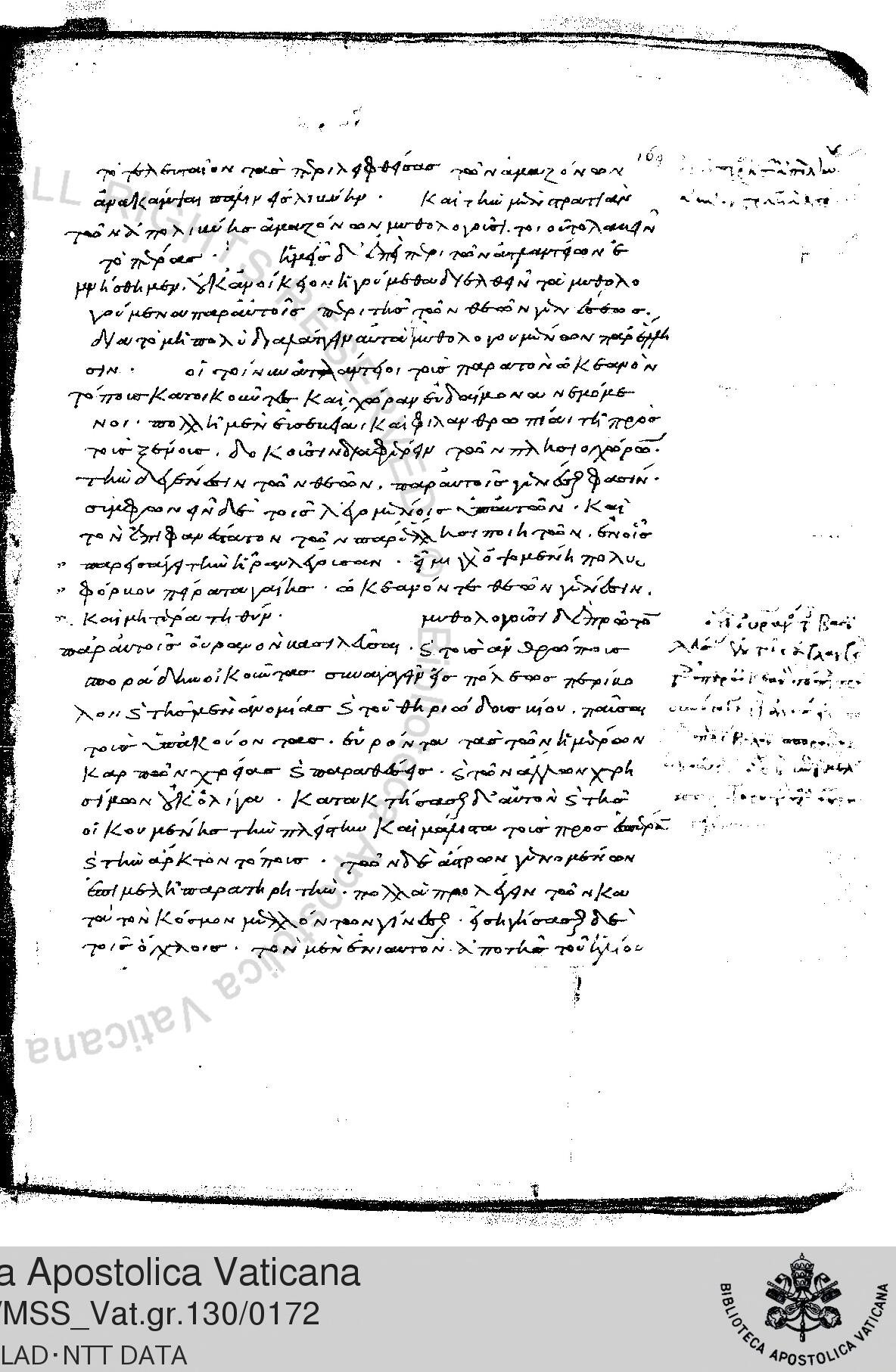
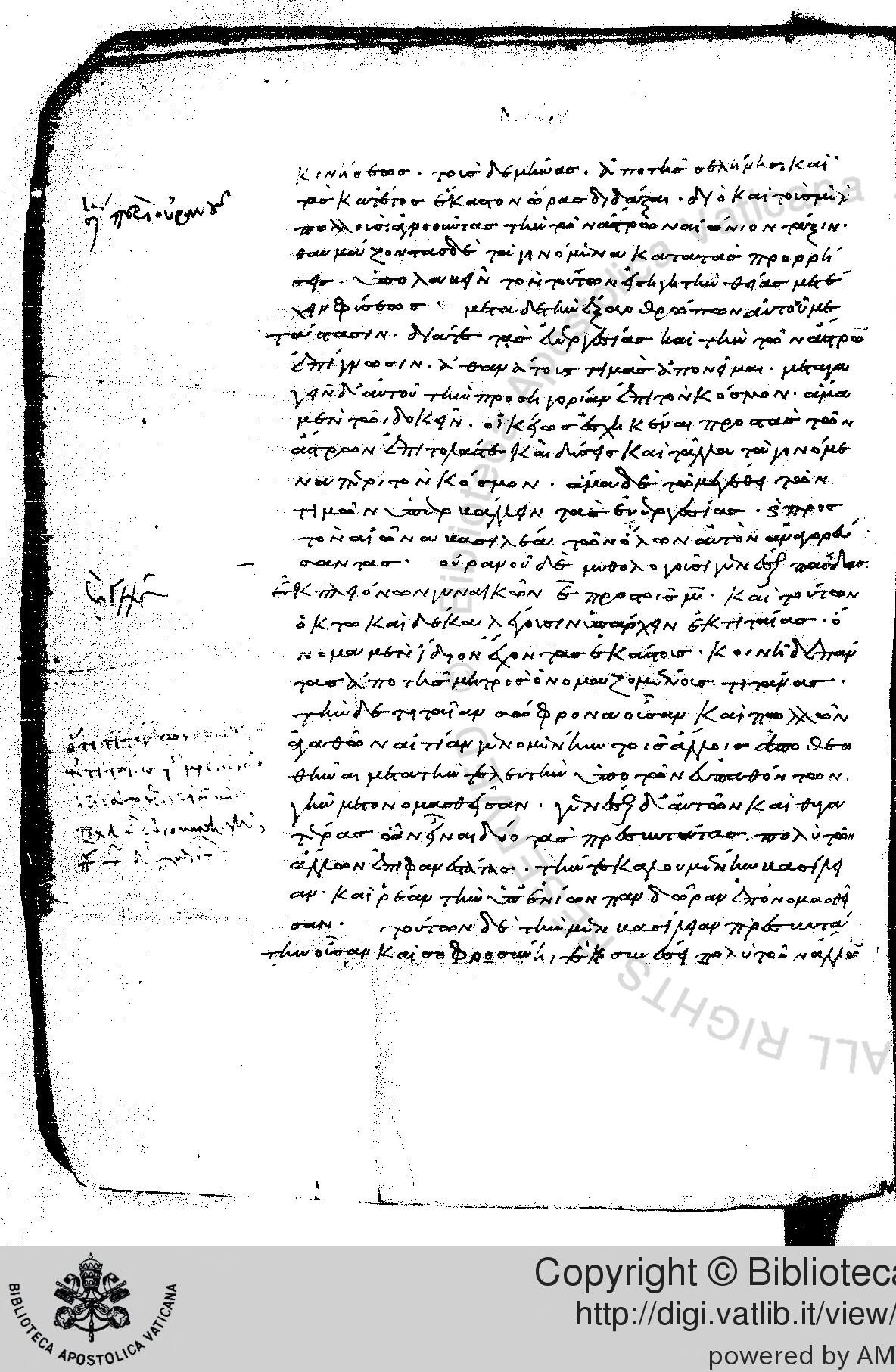
3.56 begins in fol. 169r line 4 (folio number read), ‹ἡμεῖς δ' ἐπεὶ περὶ τῶν ἀτλαντίων›; 3.56.2 in line 8, ‹οἱ τοίνυν ἀτλάντιοι›; 3.56.3 in line 17, 3.56.4 in line 25; fol. 169v begins ‹κινήσεως. τοὺς δὲ μῆνας›, 3.56.5 in line 2, and the chapter ends in line 15.
3.56.1ἡμεῖς δʼ ἐπειδὴ περὶ τῶν Ἀτλαντίων ἐμνήσθημεν, οὐκ ἀνοίκειον ἡγούμεθα διελθεῖν τὰ μυθολογούμενα παρʼ αὐτοῖς περὶ τῆς τῶν θεῶν γενέσεως, διὰ τὸ μὴ πολὺ διαλλάττειν αὐτὰ τῶν μυθολογουμένων παρʼ Ἕλλησιν. 3.56.2οἱ τοίνυν Ἀτλάντιοι τοὺς παρὰ τὸν ὠκεανὸν τόπους κατοικοῦντες καὶ χώραν εὐδαίμονα νεμόμενοι πολλῷ μὲν εὐσεβείᾳ καὶ φιλανθρωπίᾳ τῇ πρὸς τοὺς ξένους δοκοῦσι διαφέρειν τῶν πλησιοχώρων, τὴν δὲ γένεσιν τῶν θεῶν παρʼ αὑτοῖς γενέσθαι φασί. συμφωνεῖν δὲ τοῖς λεγομένοις ὑπʼ αὐτῶν καὶ τὸν ἐπιφανέστατον τῶν παρʼ Ἕλλησι ποιητῶν ἐν οἷς παρεισάγει τὴν Ἥραν λέγουσαν εἶμι γὰρ ὀψομένη πολυφόρβου πείρατα γαίης, Ὠκεανόν τε θεῶν γένεσιν καὶ μητέρα Τηθύν. 3.56.3μυθολογοῦσι δὲ πρῶτον παρʼ αὑτοῖς Οὐρανὸν βασιλεῦσαι καὶ τοὺς ἀνθρώπους σποράδην οἰκοῦντας συναγαγεῖν εἰς πόλεως περίβολον, καὶ τῆς μὲν ἀνομίας καὶ τοῦ θηριώδους βίου παῦσαι τοὺς ὑπακούοντας, εὑρόντα τὰς τῶν ἡμέρων καρπῶν χρείας καὶ παραθέσεις καὶ τῶν ἄλλων τῶν χρησίμων οὐκ ὀλίγα· κατακτήσασθαι δʼ αὐτὸν καὶ τῆς οἰκουμένης τὴν πλείστην, καὶ μάλιστα τοὺς πρὸς τὴν ἑσπέραν καὶ τὴν ἄρκτον τόπους. 3.56.4τῶν δὲ ἄστρων γενόμενον ἐπιμελῆ παρατηρητὴν πολλὰ προλέγειν τῶν κατὰ τὸν κόσμον μελλόντων γίνεσθαι· εἰσηγήσασθαι δὲ τοῖς ὄχλοις τὸν μὲν ἐνιαυτὸν ἐνιαυτὸν ἀπὸ τῆς τοῦ ἡλίου κινήσεως, τοὺς δὲ μῆνας ἀπὸ τῆς σελήνης, καὶ τὰς κατʼ ἔτος ἕκαστον ὥρας διδάξαι. 3.56.5διὸ καὶ τοὺς πολλούς, ἀγνοοῦντας μὲν τὴν τῶν ἄστρων αἰώνιον τάξιν, θαυμάζοντας δὲ τὰ γινόμενα κατὰ τὰς προρρήσεις, ὑπολαβεῖν τὸν τούτων εἰσηγητὴν θείας μετέχειν φύσεως, μετὰ δὲ τὴν ἐξ ἀνθρώπων αὐτοῦ μετάστασιν διά τε τὰς εὐεργεσίας καὶ τὴν τῶν ἄστρων ἐπίγνωσιν ἀθανάτους τιμὰς ἀπονεῖμαι· μεταγαγεῖν δʼ αὐτοῦ τὴν προσηγορίαν ἐπὶ τὸν κόσμον, ἅμα μὲν τῷ δοκεῖν οἰκείως ἐσχηκέναι πρὸς τὰς τῶν ἄστρων ἐπιτολάς τε καὶ δύσεις καὶ τἄλλα τὰ γινόμενα περὶ τὸν κόσμον, ἅμα δὲ τῷ μεγέθει τῶν τιμῶν ὑπερβάλλειν τὰς εὐεργεσίας, καὶ πρὸς τὸν αἰῶνα βασιλέα τῶν ὅλων αὐτὸν ἀναγορεύσαντας.
3.56.1But since we have made mention of the Atlantians, we believe that it will not be inappropriate in this place to recount what their myths relate about the genesis of the gods, in view of the fact that it does not differ greatly from the myths of the Greeks. 3.56.2Now the Atlantians, dwelling as they do in the regions on the edge of the ocean and inhabiting a fertile territory, are reputed far to excel their neighbours in reverence towards the gods and the humanity they showed in their dealings with strangers, and the gods, they say, were born among them. And their account, they maintain, is in agreement with that of the most renowned of the Greek poets when he represents Hera as saying: 3.56.3This is the account given in their myth: Their first king was Uranus, and he gathered the human beings, who dwelt in scattered habitations, within the shelter of a walled city and caused his subjects to cease from their lawless ways and their bestial manner of living, discovering for them the uses of cultivated fruits, how to store them up, and not a few other things which are of benefit to man; and he also subdued the larger part of the inhabited earth, in particular the regions to the west and the north. 3.56.4And since he was a careful observer of the stars he foretold many things which would take place throughout the world; and for the common people he introduced the year on the basis of the movement of the sun and the months on that of the moon, and instructed them in the seasons which recur year after year. 3.56.5Consequently the masses of the people, being ignorant of the eternal arrangement of the stars and marvelling at the events which were taking place as he had predicted, conceived that the man who taught such things partook of the nature of the gods, and after he had passed from among men they accorded him immortal honours, both because of his benefactions and because of his knowledge of the stars and then they transferred his name to the firmament of heaven, both because they thought that he had been so intimately acquainted with the risings and the settings of the stars and with whatever else took place in the firmament, and because they would surpass his benefactions by the magnitude of the honours which they would show him, in that for all subsequent time they proclaimed him to be the king of the universe.
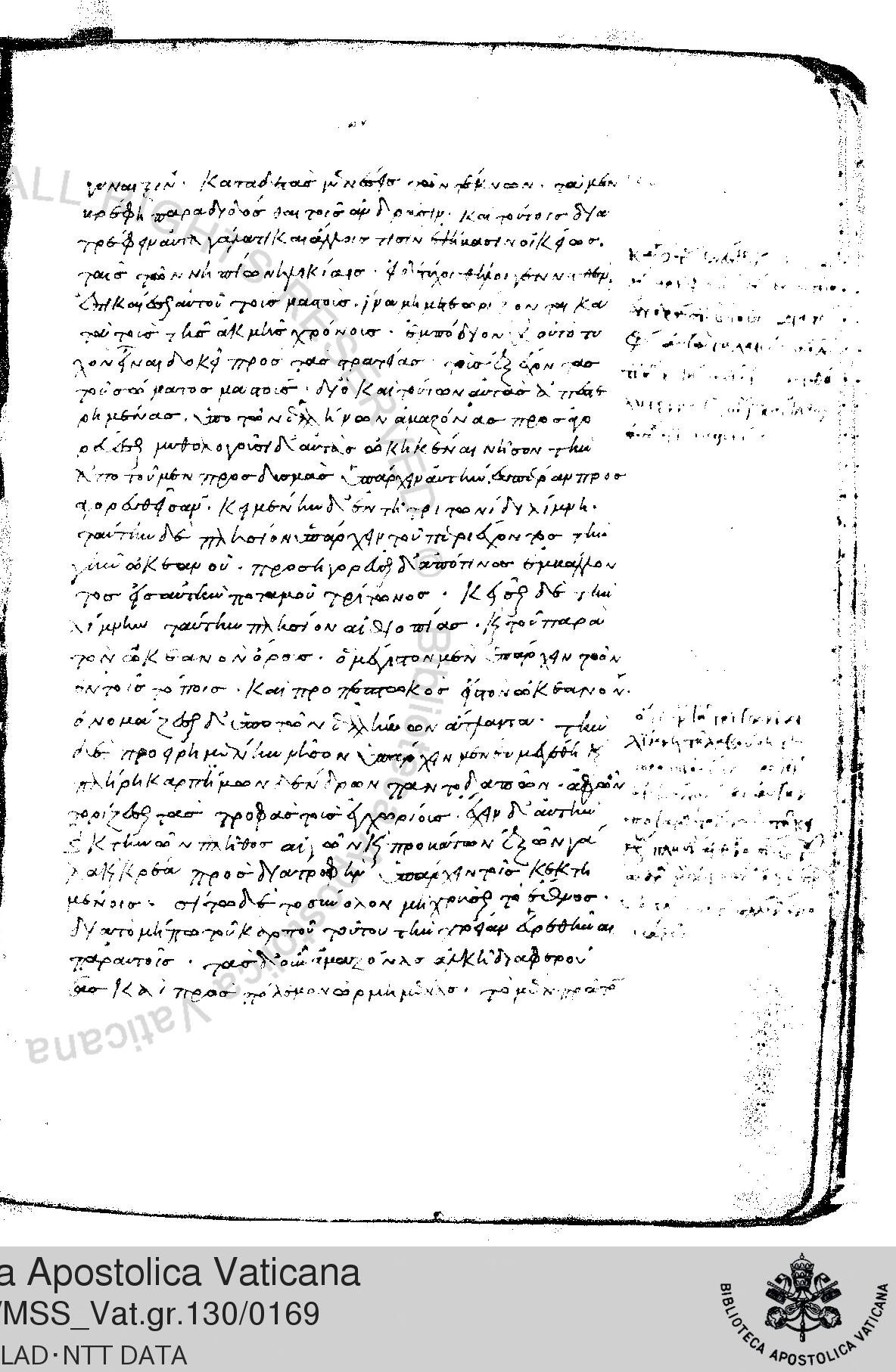
Where on the image
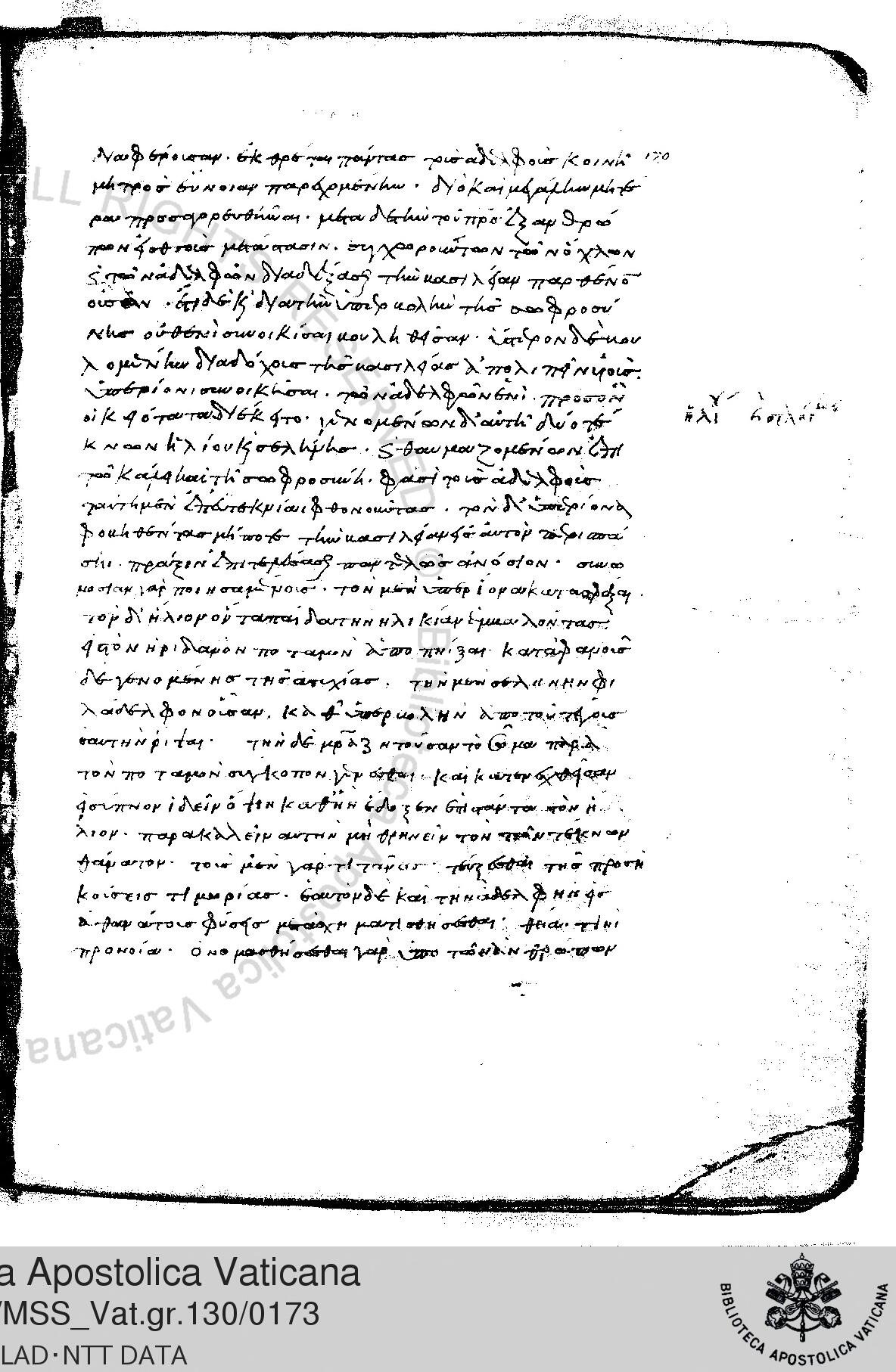
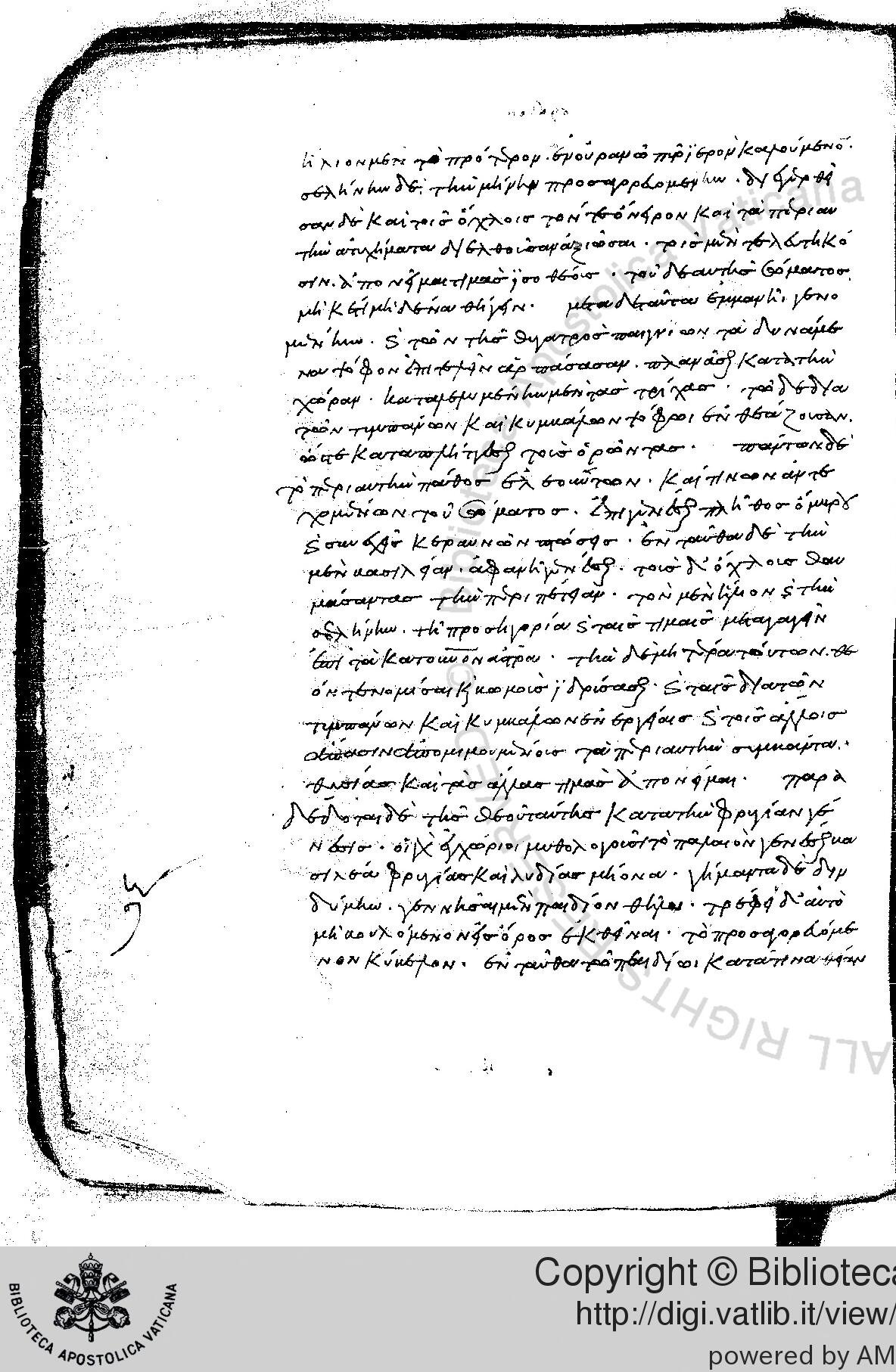
3.57 begins in fol. 169v line 15, ‹οὐρανοῦ δὲ μυθολογοῦσι›; 3.57.2 in line 20, 3.57.3 in line 27; fol. 170r (folio number read) begins ‹διαφέρουσαν›, 3.57.4 in line 10, 3.57.5 at the end of line 15 (the rest of the page is in a different hand); fol. 170v: 3.57.6 line 2, 3.57.7 line 6, 3.57.8 line 11, and the chapter ends in line 22.
3.57.1οὐρανοῦ δὲ μυθολογοῦσι γενέσθαι παῖδας ἐκ πλειόνων γυναικῶν πέντε πρὸς τοῖς τετταράκοντα, καὶ τούτων ὀκτωκαίδεκα λέγουσιν ὑπάρχειν ἐκ Τιταίας ὄνομα μὲν ἴδιον ἔχοντας ἑκάστους, κοινῇ δὲ πάντας ἀπὸ τῆς μητρὸς ὀνομαζομένους Τιτᾶνας. 3.57.2τὴν δὲ Τιταίαν, σώφρονα οὖσαν καὶ πολλῶν ἀγαθῶν αἰτίαν γενομένην τοῖς λαοῖς, ἀποθεωθῆναι μετὰ τὴν τελευτὴν ὑπὸ τῶν εὖ παθόντων Γῆν μετονομασθεῖσαν. γενέσθαι δʼ αὐτῷ καὶ θυγατέρας, ὧν εἶναι δύο τὰς πρεσβυτάτας πολὺ τῶν ἄλλων ἐπιφανεστάτας, τήν τε καλουμένην Βασίλειαν καὶ Ῥέαν τὴν ὑπʼ ἐνίων Πανδώραν ὀνομασθεῖσαν. 3.57.3τούτων δὲ τὴν μὲν Βασίλειαν, πρεσβυτάτην οὖσαν καὶ σωφροσύνῃ τε καὶ συνέσει πολὺ τῶν ἄλλων διαφέρουσαν, ἐκθρέψαι πάντας τοὺς ἀδελφοὺς κοινῇ μητρὸς εὔνοιαν παρεχομένην· διὸ καὶ μεγάλην μητέρα προσαγορευθῆναι· μετὰ δὲ τὴν τοῦ πατρὸς ἐξ ἀνθρώπων εἰς θεοὺς μετάστασιν, συγχωρούντων τῶν ὄχλων καὶ τῶν ἀδελφῶν, διαδέξασθαι τὴν βασιλείαν παρθένον οὖσαν ἔτι καὶ διὰ τὴν ὑπερβολὴν τῆς σωφροσύνης οὐδενὶ συνοικῆσαι βουληθεῖσαν. ὕστερον δὲ βουλομένην διαδόχους τῆς βασιλείας ἀπολιπεῖν υἱούς, Ὑπερίονι συνοικῆσαι τῶν ἀδελφῶν ἑνί, πρὸς ὃν οἰκειότατα διέκειτο. 3.57.4γενομένων δʼ αὐτῇ δύο τέκνων, Ἡλίου καὶ Σελήνης, καὶ θαυμαζομένων ἐπί τε τῷ κάλλει καὶ τῇ σωφροσύνῃ, φασὶ τοὺς ἀδελφοὺς ταύτῃ μὲν ἐπʼ εὐτεκνίᾳ φθονοῦντας, τὸν δʼ Ὑπερίονα φοβηθέντας μήποτε τὴν βασιλείαν εἰς αὑτὸν περισπάσῃ, πρᾶξιν ἐπιτελέσασθαι παντελῶς ἀνόσιον· 3.57.5συνωμοσίαν γὰρ ποιησαμένους τὸν μὲν Ὑπερίονα κατασφάξαι, τὸν δʼ Ἥλιον ὄντα παῖδα τὴν ἡλικίαν ἐμβαλόντας εἰς τὸν Ἠριδανὸν ποταμὸν ἀποπνῖξαι· καταφανοῦς δὲ γενομένης τῆς ἀτυχίας, τὴν μὲν Σελήνην φιλάδελφον οὖσαν καθʼ ὑπερβολὴν ἀπὸ τοῦ τέγους ἑαυτὴν ῥῖψαι, τὴν δὲ μητέρα ζητοῦσαν τὸ σῶμα παρὰ τὸν ποταμὸν σύγκοπον γενέσθαι, καὶ κατενεχθεῖσαν εἰς ὕπνον ἰδεῖν ὄψιν, καθʼ ἣν ἔδοξεν ἐπιστάντα τὸν Ἥλιον παρακαλεῖν αὐτὴν μὴ θρηνεῖν τὸν τῶν τέκνων θάνατον· τοὺς μὲν γὰρ Τιτᾶνας τεύξεσθαι τῆς προσηκούσης τιμωρίας, ἑαυτὸν δὲ καὶ τὴν ἀδελφὴν εἰς ἀθανάτους φύσεις μετασχηματισθήσεσθαι θείᾳ τινὶ προνοίᾳ· ὀνομασθήσεσθαι γὰρ ὑπὸ τῶν ἀνθρώπων ἥλιον μὲν τὸ πρότερον ἐν οὐρανῷ πῦρ ἱερὸν καλούμενον, σελήνην δὲ τὴν μήνην προσαγορευομένην. 3.57.6διεγερθεῖσαν δὲ καὶ τοῖς ὄχλοις τόν τε ὄνειρον καὶ τὰ περὶ αὑτὴν ἀτυχήματα διελθοῦσαν ἀξιῶσαι τοῖς μὲν τετελευτηκόσιν ἀπονεῖμαι τιμὰς ἰσοθέους, τοῦ δʼ αὐτῆς σώματος μηκέτι μηδένα θιγεῖν. 3.57.7μετὰ δὲ ταῦτα ἐμμανῆ γενομένην καὶ τῶν τῆς θυγατρὸς παιγνίων τὰ δυνάμενα ψόφον ἐπιτελεῖν ἁρπάσασαν πλανᾶσθαι κατὰ τὴν χώραν, λελυμένην μὲν τὰς τρίχας, τῷ δὲ διὰ τῶν τυμπάνων καὶ κυμβάλων ψόφῳ ἐνθεάζουσαν, ὥστε καταπλήττεσθαι πλήττεσθαι τοὺς ὁρῶντας. 3.57.8πάντων δὲ τὸ περὶ αὐτὴν πάθος ἐλεούντων, καί τινων ἀντεχομένων τοῦ σώματος, ἐπιγενέσθαι πλῆθος ὄμβρου καὶ συνεχεῖς κεραυνῶν πτώσεις· ἐνταῦθα δὲ τὴν μὲν Βασίλειαν ἀφανῆ γενέσθαι, τοὺς δʼ ὄχλους θαυμάσαντας τὴν περιπέτειαν τὸν μὲν Ἥλιον καὶ τὴν Σελήνην τῇ προσηγορίᾳ καὶ ταῖς τιμαῖς μεταγαγεῖν ἐπὶ τὰ κατʼ οὐρανὸν ἄστρα, τὴν δὲ μητέρα τούτων θεόν τε νομίσαι καὶ βωμοὺς ἱδρύσασθαι, καὶ ταῖς διὰ τῶν τυμπάνων καὶ κυμβάλων ἐνεργείαις καὶ τοῖς ἄλλοις ἅπασιν ἀπομιμουμένους τὰ περὶ αὐτὴν συμβάντα θυσίας καὶ τὰς ἄλλας τιμὰς ἀπονεῖμαι.
3.57.1To Uranus, the myth continues, were born forty-five sons from a number of wives, and, of these, eighteen, it is said, were by Titaea, each of them bearing a distinct name, but all of them as a group were called, after their mother, Titans. 3.57.2Titaea, because she was prudent and had brought about many good deeds for the peoples, was deified after her death by those whom she had helped and her name was changed to Gê. To Uranus were also born daughters, the two eldest of whom were by far the most renowned above all the others and were called Basileia and Rhea, whom some also named Pandora. 3.57.3Of these daughters Basileia, who was the eldest and far excelled the others in both prudence and understanding, reared all her brothers, showing them collectively a mother's kindness; consequently she was given the appellation of "Great Mother"; and after her father had been translated from among men into the circle of the gods, with the approval of the masses and of her brothers she succeeded to the royal dignity, though she was still a maiden and because of her exceedingly great chastity had been unwilling to unite in marriage with any man. But later, because of her desire to leave sons who should succeed to the throne, she united in marriage with Hyperion, one of her brothers, for whom she had the greatest affection. 3.57.4And when there were born to her two children, Helius and Selenê, who were greatly admired for both their beauty and their chastity, the brothers of Basileia, they say, being envious of her because of her happy issue of children and fearing that Hyperion would divert the royal power to himself, committed an utterly impious deed; 3.57.5for entering into a conspiracy among themselves they put Hyperion to the sword, and casting Helius, who was still in years a child, into the Eridanus river, drowned him. When this crime came to light, Selenê, who loved her brother very greatly, threw herself down from the roof, but as for his mother, while seeking his body along the river, her strength left her and falling into a swoon she beheld a vision in which she thought that Helius stood over her and urged her not to mourn the death of her children; for, he said, the Titans would meet the punishment which they deserve, while he and his sister would be transformed, by some divine providence, into immortal natures, since that which had formerly been called the "holy fire" in the heavens would be called by men Helius ("the sun") and that addressed as " menê " would be called Selenê ("the moon"). 3.57.6When she was aroused from the swoon she recounted to the common crowd both the dream and the misfortunes which had befallen her, asking that they render to the dead honours like those accorded to the gods and asserting that no man should thereafter touch her body. 3.57.7And after this she became frenzied, and seizing such of her daughter's playthings as could make a noise, she began to wander over the land, with her hair hanging free, inspired by the noise of the kettledrums and cymbals, so that those who saw her were struck with astonishment. 3.57.8And all men were filled with pity at her misfortune and some were clinging to her body, when there came a mighty storm and continuous crashes of thunder and lightning; and in the midst of this Basileia passed from sight, whereupon the crowds of people, amazed at this reversal of fortune, transferred the names and the honours of Helius and Selenê to the stars of the sky, and as for their mother, they considered her to be a goddess and erected altars to her, and imitating the incidents of her life by the pounding of the kettledrums and the clash of the cymbals they rendered unto her in this way sacrifices and all other honours.
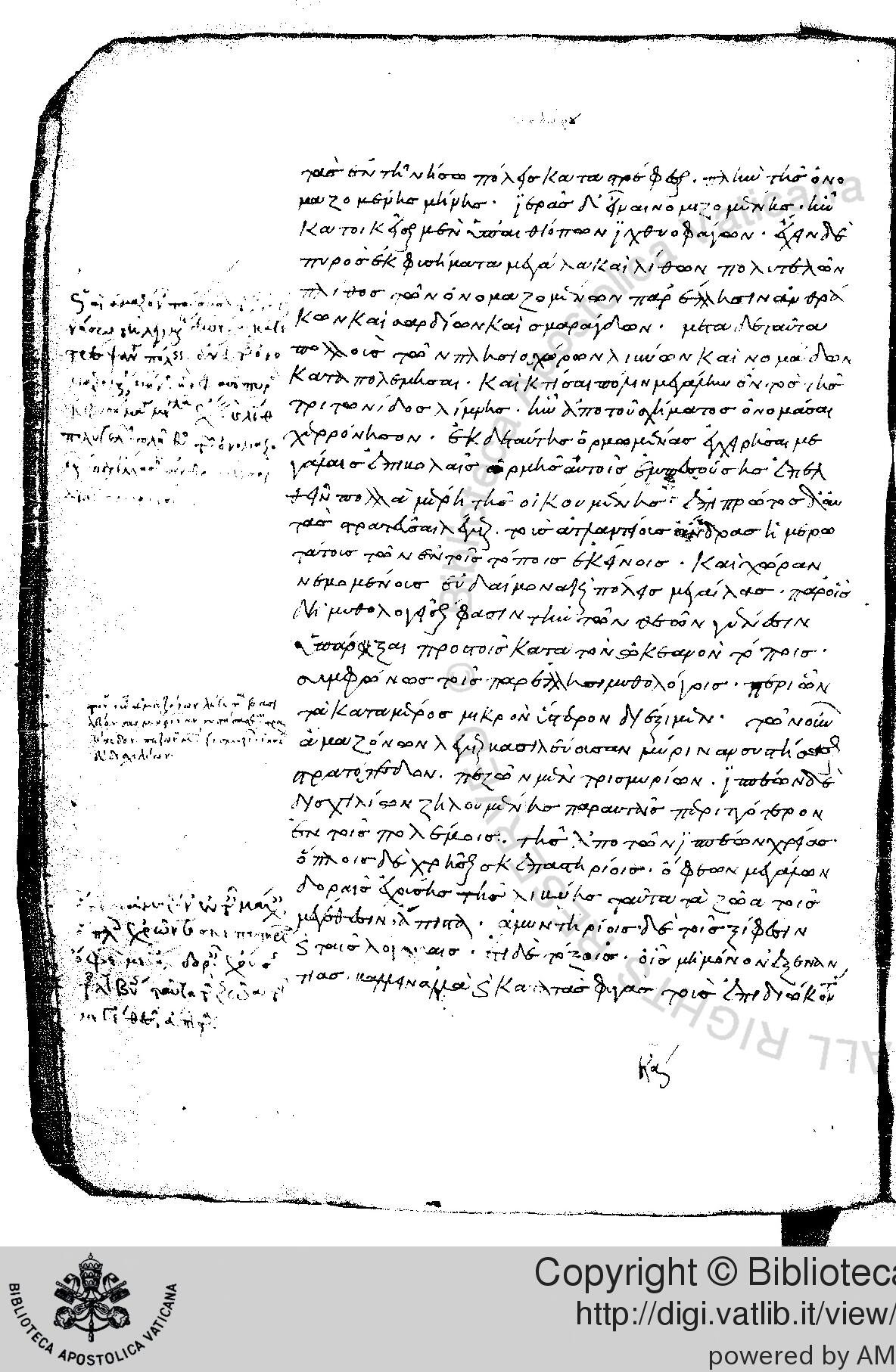
Where on the image
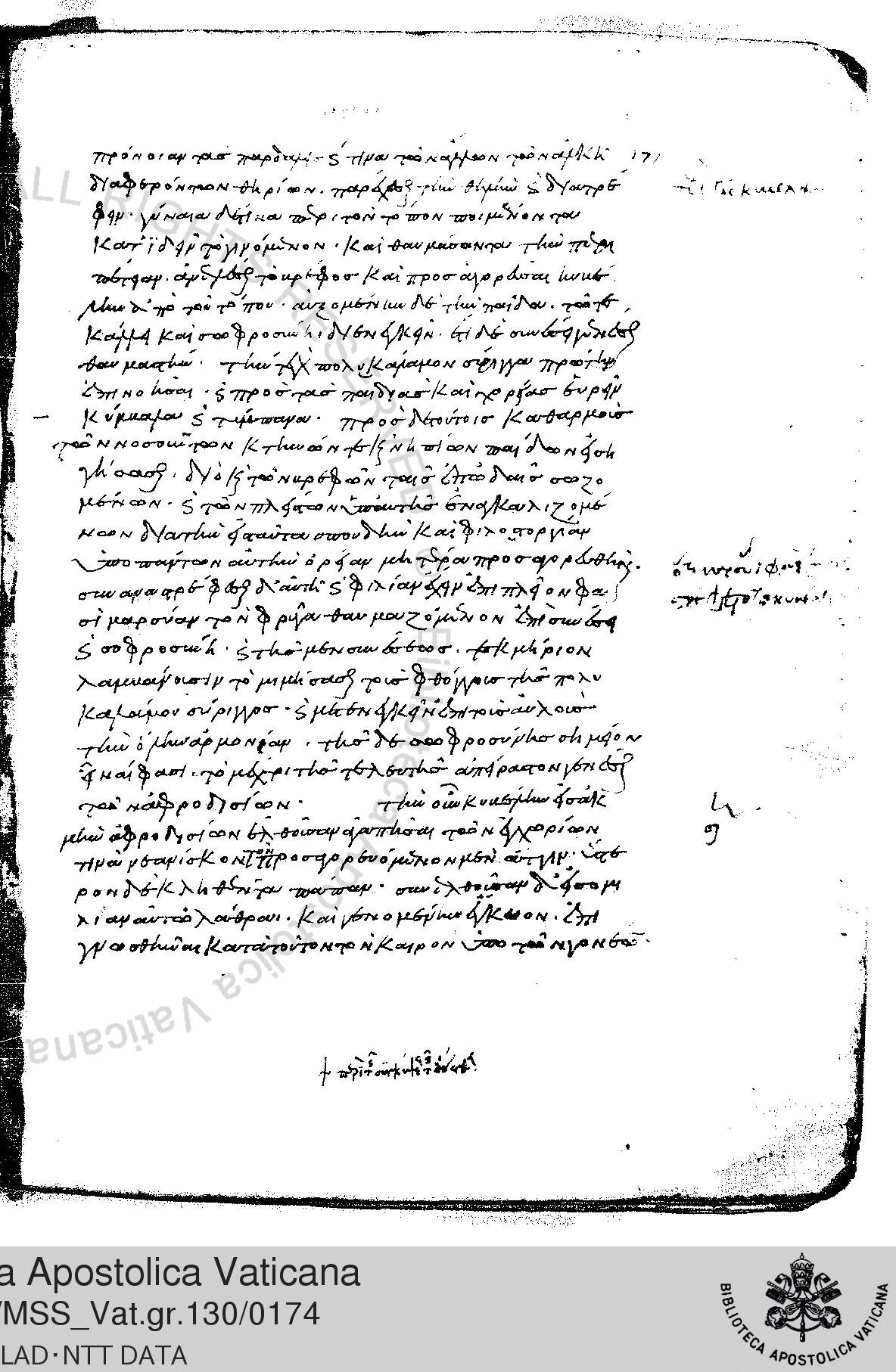
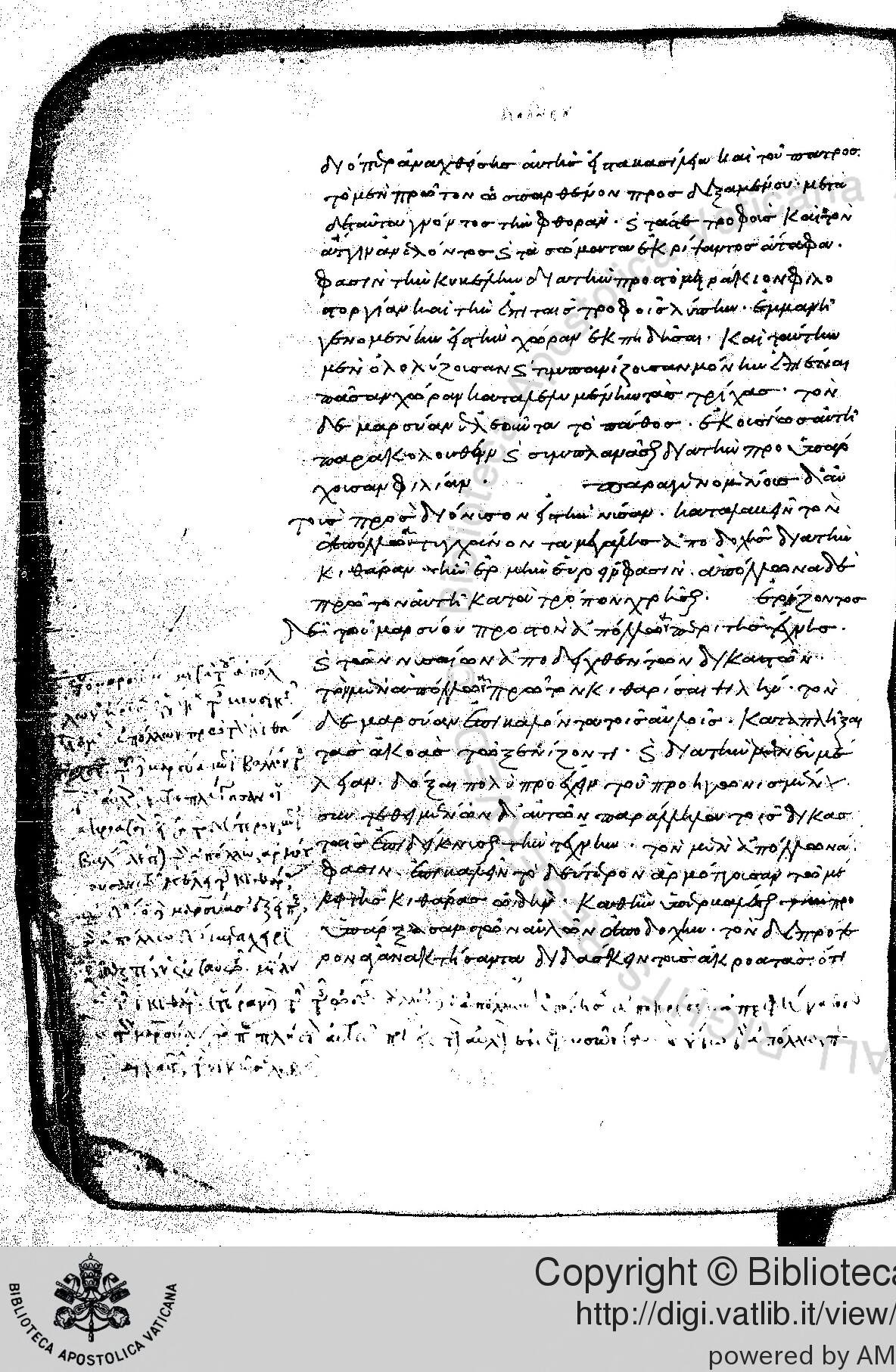
3.58 begins at the end of fol. 170v line 22, ‹παρα-|δέδοται δὲ τῆς θεοῦ›; fol. 171r (folio number read): 3.58.2 line 3, 3.58.3 line 12 (‹διὸ καὶ τῶν βρεφῶν›), 3.58.4 line 23; the chapter ends with the last line, 28.
3.58.1παραδέδοται δὲ τῆς θεοῦ ταύτης καὶ κατὰ τὴν Φρυγίαν γένεσις. οἱ γὰρ ἐγχώριοι μυθολογοῦσι τὸ παλαιὸν γενέσθαι βασιλέα Φρυγίας καὶ Λυδίας Μῄονα· γήμαντα δὲ Δινδύμην γεννῆσαι μὲν παιδίον θῆλυ, τρέφειν δʼ αὐτὸ μὴ βουλόμενον εἰς ὄρος ἐκθεῖναι τὸ προσαγορευόμενον Κύβελον. ἐνταῦθα τῷ παιδίῳ κατά τινα θείαν πρόνοιαν τάς τε παρδάλεις καί τινα τῶν ἄλλων τῶν ἀλκῇ διαφερόντων θηρίων παρέχεσθαι τὴν θηλὴν καὶ διατρέφειν, 3.58.2γύναια δὲ τινα περὶ τὸν τόπον ποιμαίνοντα κατιδεῖν τὸ γινόμενον, καὶ θαυμάσαντα τὴν περιπέτειαν ἀνελέσθαι τὸ βρέφος, καὶ προσαγορεῦσαι Κυβέλην ἀπὸ τοῦ τόπου. αὐξομένην δὲ τὴν παῖδα τῷ τε κάλλει καὶ σωφροσύνῃ διενεγκεῖν, ἔτι δὲ συνέσει γενέσθαι θαυμαστήν· τήν τε γὰρ πολυκάλαμον σύριγγα πρώτην ἐπινοῆσαι καὶ πρὸς τὰς παιδιὰς καὶ χορείας εὑρεῖν κύμβαλα καὶ τύμπανα, πρὸς δὲ τούτοις καθαρμοὺς τῶν νοσούντων κτηνῶν τε καὶ νηπίων παίδων εἰσηγήσασθαι· 3.58.3διὸ καὶ τῶν βρεφῶν ταῖς ἐπῳδαῖς σωζομένων καὶ τῶν πλείστων ὑπʼ αὐτῆς ἐναγκαλιζομένων, διὰ τὴν εἰς ταῦτα σπουδὴν καὶ φιλοστοργίαν ὑπὸ πάντων αὐτὴν ὀρείαν μητέρα προσαγορευθῆναι. συναναστρέφεσθαι δʼ αὐτῇ καὶ φιλίαν ἔχειν ἐπὶ πλέον φασὶ Μαρσύαν τὸν Φρύγα, θαυμαζόμενον ἐπὶ συνέσει καὶ σωφροσύνῃ· καὶ τῆς μὲν συνέσεως τεκμήριον λαμβάνουσι τὸ μιμήσασθαι τοὺς φθόγγους τῆς πολυκαλάμου σύριγγος καὶ μετενεγκεῖν ἐπὶ τοὺς αὐλοὺς τὴν ὅλην ἁρμονίαν, τῆς δὲ σωφροσύνης σημεῖον εἶναί φασι τὸ μέχρι τῆς τελευτῆς ἀπείρατον γενέσθαι τῶν ἀφροδισίων. 3.58.4τὴν οὖν Κυβέλην εἰς ἀκμὴν ἡλικίας ἐλθοῦσαν ἀγαπῆσαι τῶν ἐγχωρίων τινὰ νεανίσκον τὸν προσαγορευόμενον μὲν Ἄττιν, ὕστερον δʼ ἐπικληθέντα Πάπαν· συνελθοῦσαν δʼ εἰς ὁμιλίαν αὐτῷ λάθρᾳ καὶ γενομένην ἔγκυον ἐπιγνωσθῆναι κατὰ τοῦτον τὸν καιρὸν ὑπὸ τῶν γονέων.
3.58.1However, an account is handed down also that this goddess was born in Phrygia. For the natives of that country have the following myth: In ancient times Meïon became king of Phrygia and Lydia; and marrying Dindymê he begat an infant daughter, but being unwilling to rear her he exposed her on the mountain which was called Cybelus. There, in accordance with some divine providence, both the leopards and some of the other especially ferocious wild beasts offered their nipples to the child and so gave it nourishment, 3.58.2and some women who were tending the flocks in that place witnessed the happening, and being astonished at the strange event took up the babe and called her Cybelê after the name of the place. The child, as she grew up, excelled in both beauty and virtue and also came to be admired for her intelligence; for she was the first to devise the pipe of many reeds and to invent cymbals and kettledrums with which to accompany the games and the dance, and in addition she taught how to heal the sicknesses of both flocks and little children by means of rites of purification; 3.58.3in consequence, since the babes were saved from death by her spells and were generally taken up in her arms, her devotion to them and affection for them led all the people to speak of her as the "mother of the mountain." The man who associated with her and loved her more than anyone else, they say, was Marsyas the physician, who was admired for his intelligence and chastity; and a proof of his intelligence they find in the fact that he imitated the sounds made by the pipe of many reeds and carried all its notes over into the flute, and as an indication of his chastity they cite his abstinence from sexual pleasures until the day of his death. 3.58.4Now Cybelê, the myth records, having arrived at full womanhood, came to love a certain native youth who was known as Attis, but at a later time received the appellation Papas; with him she consorted secretly and became with child, and at about the same time her parents recognized her as their child.
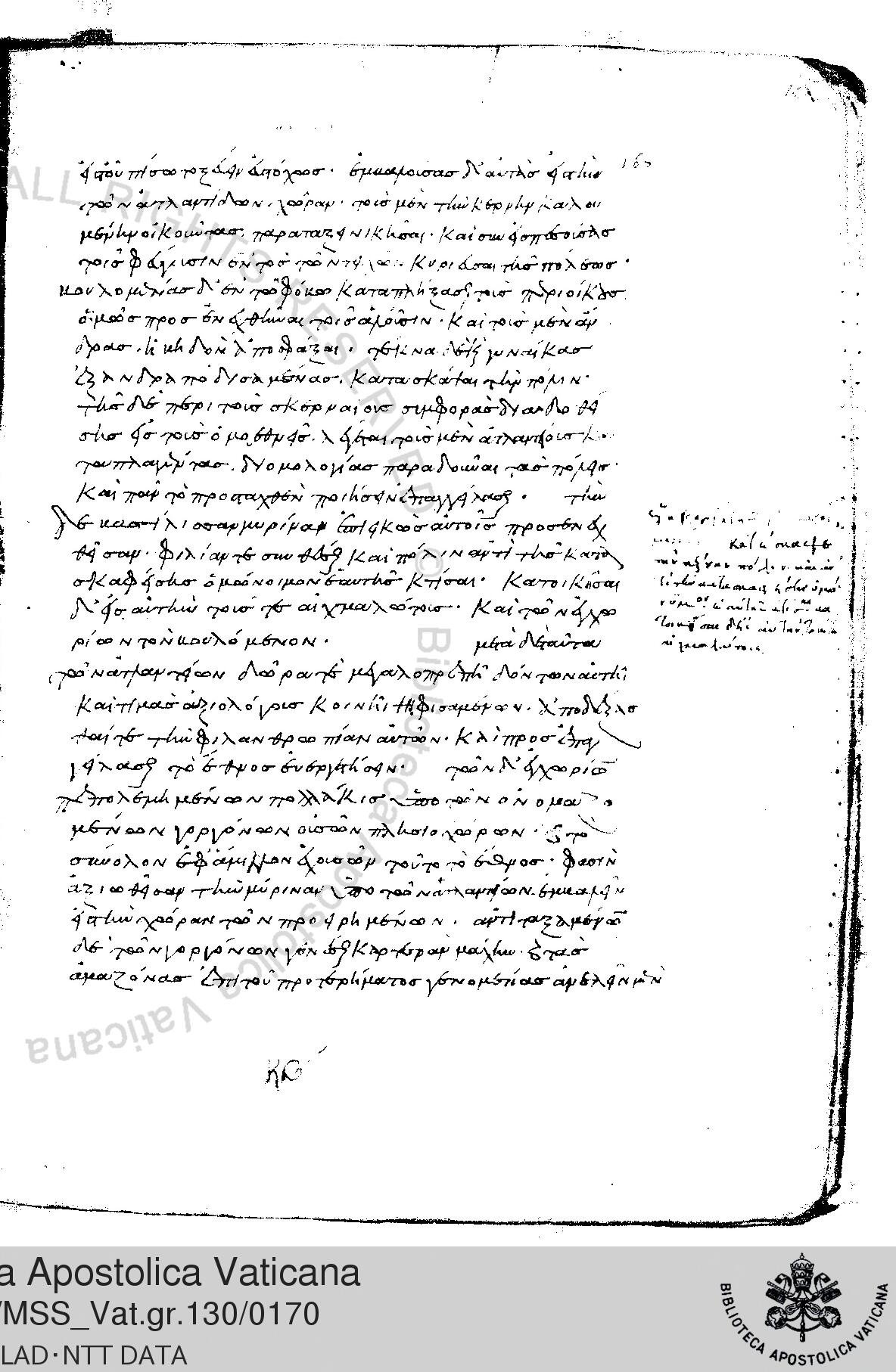
Where on the image
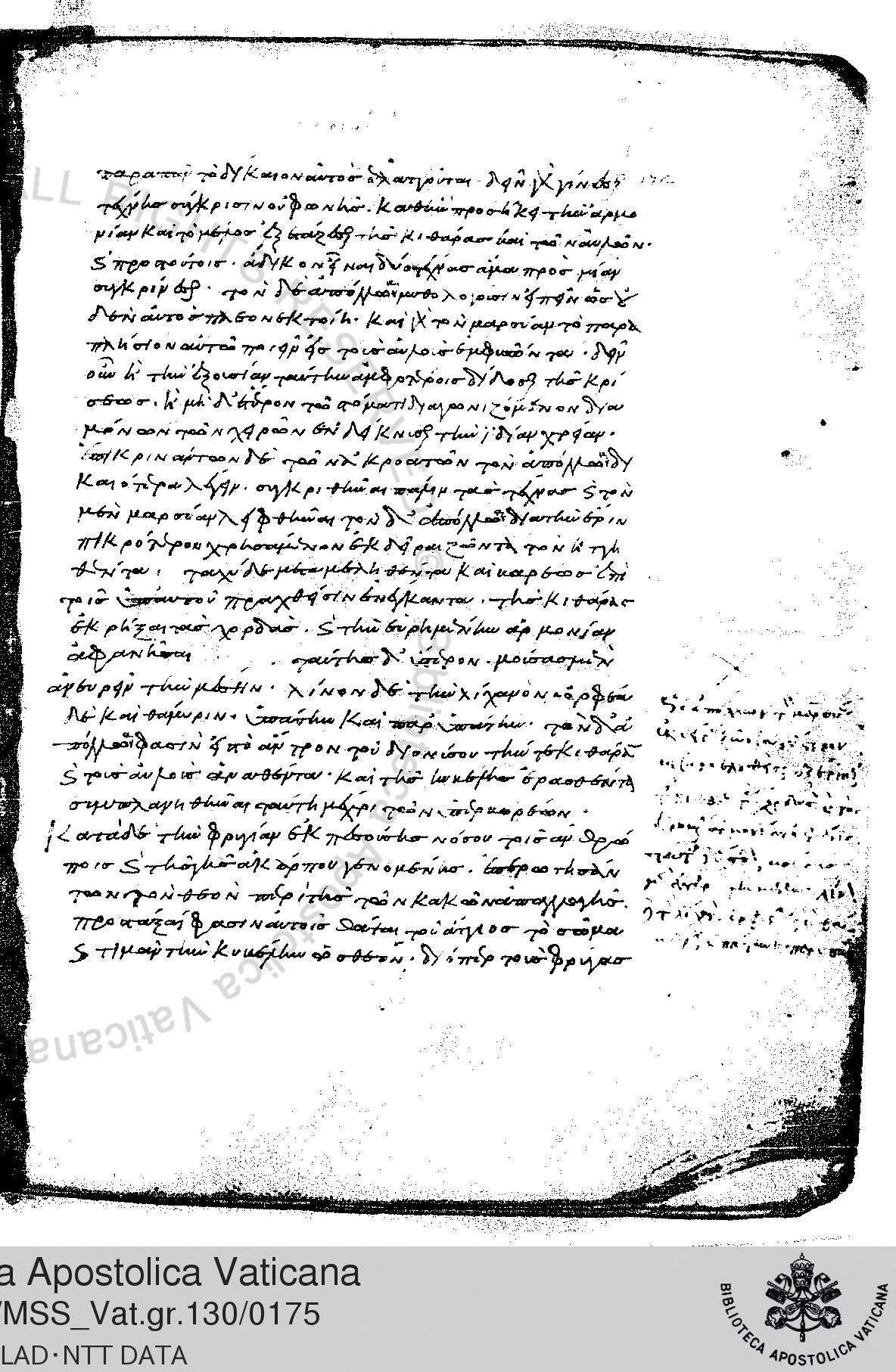
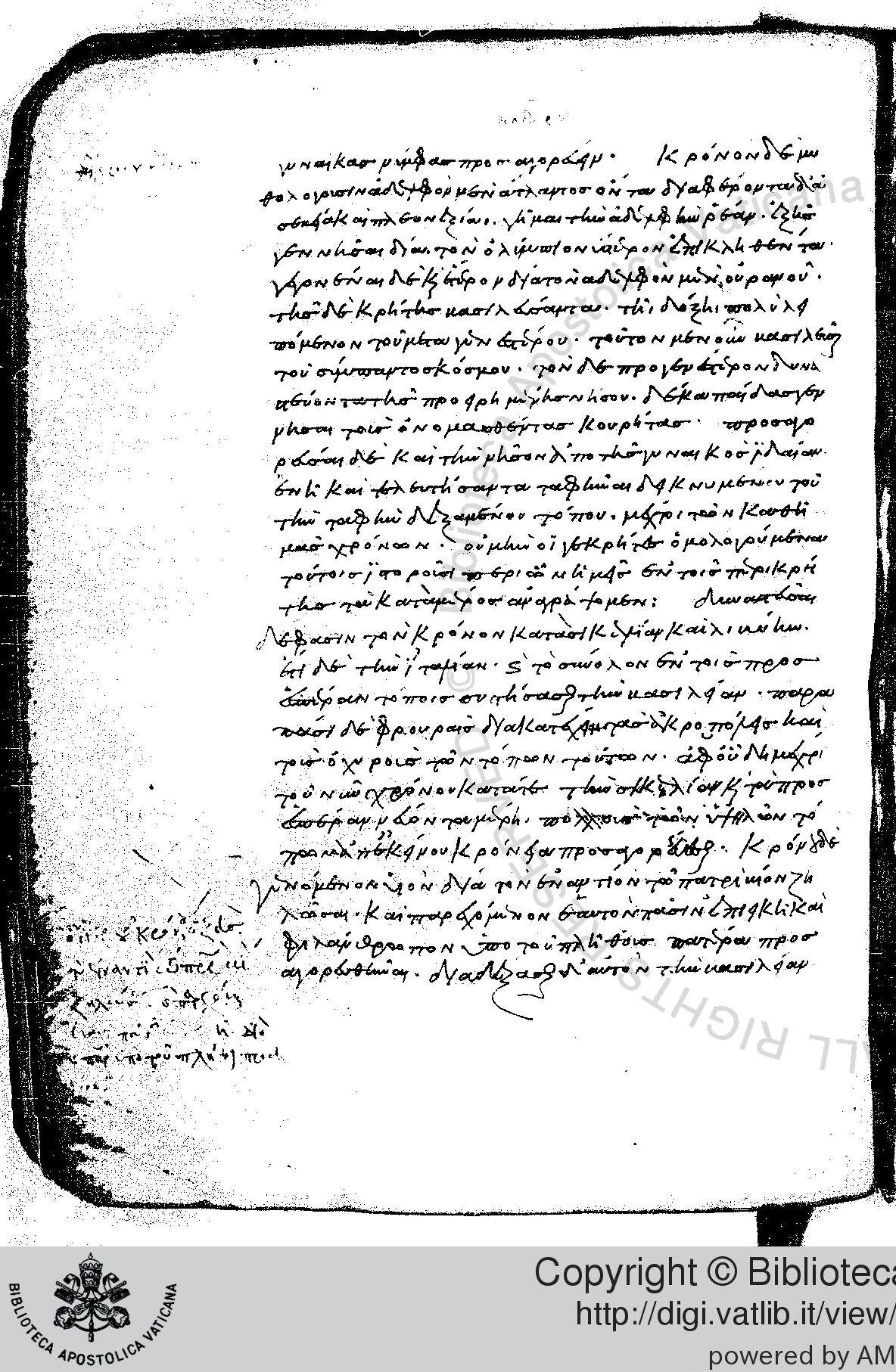
3.59 begins at the top of fol. 171v, ‹διόπερ ἀναχθείσης αὐτῆς›; 3.59.2 line 12, 3.59.3 line 23; fol. 172r (folio number read): 3.59.4 line 6, 3.59.5 line 11, 3.59.6 line 18, 3.59.7 line 24; fol. 172v: 3.59.8 line 5, and the chapter ends in line 15.
3.59.1διόπερ ἀναχθείσης αὐτῆς εἰς τὰ βασίλεια, καὶ τοῦ πατρὸς τὸ μὲν πρῶτον ὡς παρθένον προσδεξαμένου, μετὰ δὲ ταῦτα γνόντος τὴν φθοράν, καὶ τὰς τε τροφοὺς καὶ τὸν Ἄττιν ἀνελόντος καὶ τὰ σώματα ἐκρίψαντος ἄταφα, φασὶ τὴν Κυβέλην διὰ τὴν πρὸς τὸ μειράκιον φιλοστοργίαν καὶ τὴν ἐπὶ ταῖς τροφοῖς λύπην ἐμμανῆ γενομένην εἰς τὴν χώραν ἐκπηδῆσαι. καὶ ταύτην μὲν ὀλολύζουσαν καὶ τυμπανίζουσαν μόνην ἐπιέναι πᾶσαν χώραν, λελυμένην τὰς τρίχας, τὸν δὲ Μαρσύαν ἐλεοῦντα τὸ πάθος ἑκουσίως αὐτῇ συνακολουθεῖν καὶ συμπλανᾶσθαι διὰ τὴν προϋπάρχουσαν φιλίαν. 3.59.2παραγενομένους δʼ αὐτοὺς πρὸς Διόνυσον εἰς τὴν Νῦσαν καταλαβεῖν τὸν Ἀπόλλω τυγχάνοντα μεγάλης ἀποδοχῆς διὰ τὴν κιθάραν, ἣν Ἑρμῆν εὑρεῖν φασιν, Ἀπόλλωνα δὲ πρῶτον αὐτῇ κατὰ τρόπον χρῆσθαι· ἐρίζοντος δὲ τοῦ Μαρσύου πρὸς τὸν Ἀπόλλω περὶ τῆς τέχνης, καὶ τῶν Νυσαίων ἀποδειχθέντων δικαστῶν, τὸν μὲν Ἀπόλλωνα πρῶτον κιθαρίσαι ψιλήν, τὸν δὲ Μαρσύαν ἐπιβαλόντα τοῖς αὐλοῖς καταπλῆξαι τὰς ἀκοὰς τῷ ξενίζοντι, καὶ διὰ τὴν εὐμέλειαν δόξαι πολὺ προέχειν τοῦ προηγωνισμένου. 3.59.3συντεθειμένων δʼ αὐτῶν παρʼ ἄλληλα τοῖς δικασταῖς ἐπιδείκνυσθαι τὴν τέχνην, τὸν μὲν Ἀπόλλωνά φασιν ἐπιβαλεῖν τὸ δεύτερον ἁρμόττουσαν τῷ μέλει τῆς κιθάρας ᾠδήν, καθʼ ἣν ὑπερβαλέσθαι τὴν προϋπάρξασαν τῶν αὐλῶν ἀποδοχήν· τὸν δὲ πρότερον ἀγανακτήσαντα διδάσκειν τοὺς ἀκροατὰς ὅτι παρὰ πᾶν τὸ δίκαιον αὐτὸς ἐλαττοῦται· δεῖν γὰρ γίνεσθαι τέχνης σύγκρισιν, οὐ φωνῆς, καθʼ ἣν προσήκει τὴν ἁρμονίαν καὶ τὸ μέλος ἐξετάζεσθαι τῆς κιθάρας καὶ τῶν αὐλῶν· καὶ πρὸς τούτοις ἄδικον εἶναι δύο τέχνας ἅμα πρὸς μίαν συγκρίνεσθαι. τὸν δὲ Ἀπόλλω μυθολογοῦσιν εἰπεῖν ὡς οὐδὲν αὐτὸν πλεονεκτοίη· 3.59.4καὶ γὰρ τὸν Μαρσύαν τὸ παραπλήσιον αὐτῷ ποιεῖν, εἰς τοὺς αὐλοὺς ἐμφυσῶντα· δεῖν οὖν ἢ τὴν ἐξουσίαν ταύτην ἴσην ἀμφοτέροις δίδοσθαι τῆς κράσεως, ἢ μηδέτερον τῷ στόματι διαγωνιζόμενον διὰ μόνων τῶν χειρῶν ἐνδείκνυσθαι τὴν ἰδίαν τέχνην. 3.59.5ἐπικρινάντων δὲ τῶν ἀκροατῶν τὸν Ἀπόλλω δικαιότερα λέγειν, συγκριθῆναι πάλιν τὰς τέχνας, καὶ τὸν μὲν Μαρσύαν λειφθῆναι, τὸν δʼ Ἀπόλλω διὰ τὴν ἔριν πικρότερον χρησάμενον ἐκδεῖραι ζῶντα τὸν ἡττηθέντα. ταχὺ δὲ μεταμεληθέντα καὶ βαρέως ἐπὶ τοῖς ὑπʼ αὐτοῦ πραχθεῖσιν ἐνέγκαντα τῆς κιθάρας ἐκρῆξαι τὰς χορδὰς καὶ τὴν εὑρημένην ἁρμονίαν ἀφανίσαι. 3.59.6ταύτης δʼ ὕστερον Μούσας μὲν ἀνευρεῖν τὴν μέσην, Λίνον δὲ τὴν λίχανον, Ὀρφέα δὲ καὶ Θαμύραν ὑπάτην καὶ παρυπάτην. τὸν δʼ Ἀπόλλω φασὶν εἰς τὸ ἄντρον τοῦ Διονύσου τήν τε κιθάραν καὶ τοὺς αὐλοὺς ἀναθέντα, καὶ τῆς Κυβέλης ἐρασθέντα, συμπλανηθῆναι ταύτῃ μέχρι τῶν Ὑπερβορέων. 3.59.7κατὰ δὲ τὴν Φρυγίαν ἐμπεσούσης νόσου τοῖς ἀνθρώποις καὶ τῆς γῆς ἀκάρπου γενομένης, ἐπερωτησάντων τῶν ἀτυχούντων τὸν θεὸν περὶ τῆς τῶν κακῶν ἀπαλλαγῆς προστάξαι φασὶν αὐτοῖς θάψαι τὸ Ἄττιδος σῶμα καὶ τιμᾶν τὴν Κυβέλην ὡς θεόν. διόπερ τοὺς Φρύγας ἠφανισμένου τοῦ σώματος διὰ τὸν χρόνον εἴδωλον κατασκευάσαι τοῦ μειρακίου, πρὸς ᾧ θρηνοῦντας ταῖς οἰκείαις τιμαῖς τοῦ πάθους ἐξιλάσκεσθαι τὴν τοῦ παρανομηθέντος μῆνιν· ὅπερ μέχρι τοῦ καθʼ ἡμᾶς βίου ποιοῦντας αὐτοὺς διατελεῖν. 3.59.8τῆς δὲ Κυβέλης τὸ παλαιὸν βωμοὺς ἰδρυσαμένους θυσίας ἐπιτελεἴν κατʼ ἔτος· ὕστερον δʼ ἐν Πισινοῦντι τῆς Φρυγίας κατασκευάσαι νεὼν πολυτελῆ καὶ τιμὰς καὶ θυσίας καταδεῖξαι μεγαλοπρεπεστάτας, Μίδου τοῦ βασιλέως εἰς ταῦτα συμφιλοκαλήσαντος· τῷ δʼ ἀγάλματι τῆς θεοῦ παραστῆσαι παρδάλεις καὶ λέοντας διὰ τὸ δοκεῖν ὑπὸ τούτων πρῶτον τραφῆναι. περὶ μὲν οὖν μητρὸς θεῶν τοιαῦτα μυθολογεῖται παρά τε τοῖς Φρυξὶ καὶ τοῖς Ἀτλαντίοις τοῖς παρὰ τὸν ὠκεανὸν οἰκοῦσιν.
3.59.1Consequently she was brought up into the palace, and her father welcomed her at the outset under the impression that she was a virgin, but later, when he learned of her seduction, he put to death her nurses and Attis as well and cast their bodies forth to lie unburied; whereupon Cybelê, they say, because of her love for the youth and grief over the nurses, became frenzied and rushed out of the palace into the countryside. And crying aloud and beating upon a kettledrum she visited every country alone, with hair hanging free, and Marsyas, out of pity for her plight, voluntarily followed her and accompanied her in her wanderings because of the love which he had formerly borne her. 3.59.2When they came to Dionysus in the city of Nysa they found there Apollo, who was being accorded high favour because of the lyre, which, they say, Hermes invented, though Apollo was the first to play it fittingly; and when Marsyas strove with Apollo in a contest of skill and the Nysaeans had been appointed judges, the first time Apollo played upon the lyre without accompanying it with his voice, while Marsyas, striking up upon his pipes, amazed the ears of his hearers by their strange music and in their opinion far excelled, by reason of his melody, the first contestant. 3.59.3But since they had agreed to take turn about in displaying their skill to the judges, Apollo, they say, added, this second time, his voice in harmony with the music of the lyre, whereby he gained greater approval than that which had formerly been accorded to the pipes. Marsyas, however, was enraged and tried to prove to the hearers that he was losing the contest in defiance of every principle of justice; for, he argued, it should be a comparison of skill and not of voice, and only by such a test was it possible to judge between the harmony and music of the lyre and of the pipes; and furthermore, it was unjust that two skills should be compared in combination against but one. Apollo, however, as the myth relates, replied that he was in no sense taking any unfair advantage of the other; 3.59.4in fact, when Marsyas blew into his pipes he was doing almost the same thing as himself; consequently the rule should be made either that they should both be accorded this equal privilege of combining their skills, or that neither of them should use his mouth in the contest but should display his special skill by the use only of his hands. 3.59.5When the hearers decided that Apollo presented the more just argument, their skills were again compared; Marsyas was defeated, and Apollo, who had become somewhat embittered by the quarrel, flayed the defeated man alive. But quickly repenting and being distressed at what he had done, he broke the strings of the lyre and destroyed the harmony of sounds which he had discovered. 3.59.6The harmony of the strings, however, was rediscovered, when the Muses added later the middle string, Linus the string struck with the forefinger, and Orpheus and Thamyras the lowest string and the one next to it. And Apollo, they say, laid away both the lyre and the pipes as a votive offering in the cave of Dionysus, and becoming enamoured of Cybelê joined in her wanderings as far as the land of the Hyperboreans. 3.59.7But, the myth goes on to say, a pestilence fell upon human beings throughout Phrygia and the land ceased to bear fruit, and when the unfortunate people inquired of the god how they might rid themselves of their ills he commanded them, it is said, to bury the body of Attis and to honour Cybelê as a goddess. Consequently the physicians, since the body had disappeared in the course of time, made an image of the youth, before which they sang dirges and by means of honours in keeping with his suffering propitiated the wrath of him who had been wronged; and these rites they continue to perform down to our own lifetime. 3.59.8As for Cybelê, in ancient times they erected altars and performed sacrifices to her yearly; and later they built for her a costly temple in Pisinus of Phrygia, and established honours and sacrifices of the greatest magnificence, Midas their king taking part in all these works out of his devotion to beauty; and beside the statue of the goddess they set up panthers and lions, since it was the common opinion that she had first been nursed by these animals. Such, then, are the myths which are told about Mother of the Gods both among the Phrygians and by the Atlantians who dwell on the coast of the ocean.
Where on the image
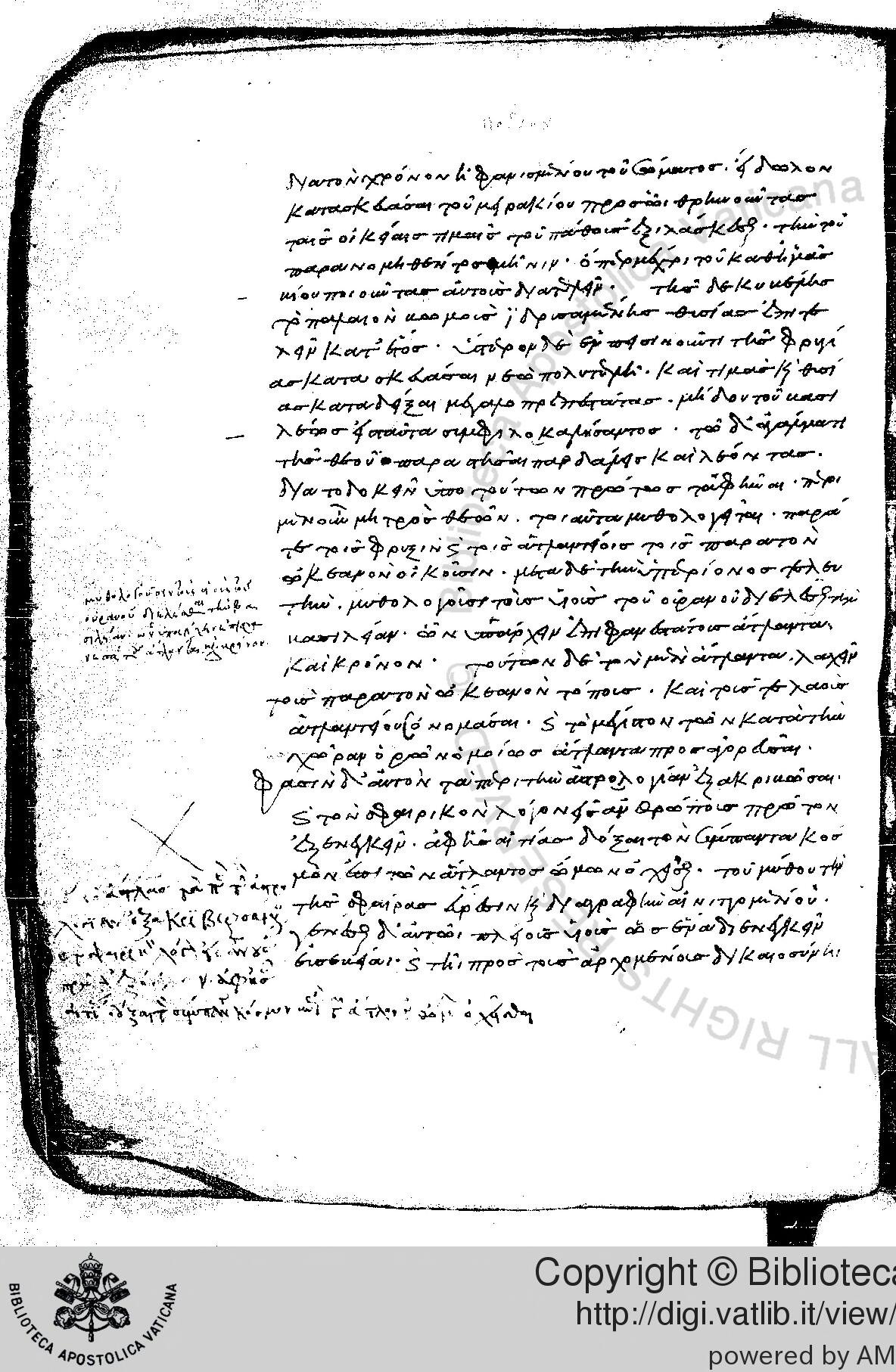
3.60 begins in fol. 172v line 15, ‹μετὰ δὲ τὴν ὑπερίονος›; 3.60.2 line 22 (‹φασὶ δ' αὐτὸν τὰ περὶ τὴν ἀστρολογίαν›); fol. 173r (folio number read): 3.60.3 line 2 (‹τοῦτον δ' ἐπὶ τὴν κορυφὴν›), 3.60.4 line 8, 3.60.5 line 21; the chapter ends in fol. 173v line 1, ‹γυναῖκας νύμφας προσαγορεύειν›.
3.60.1μετὰ δὲ τὴν Ὑπερίονος τελευτὴν μυθολογοῦσι τοὺς υἱοὺς τοῦ Οὐρανοῦ διελέσθαι τὴν βασιλείαν, ὧν ὑπάρχειν ἐπιφανεστάτους Ἄτλαντα καὶ Κρόνον. τούτων δὲ τὸν μὲν Ἄτλαντα λαχεῖν τοὺς παρὰ τὸν ὠκεανὸν τόπους, καὶ τούς τε λαοὺς Ἀτλαντίους ὀνομάσαι καὶ τὸ μέγιστον τῶν κατὰ τὴν χώραν ὀρῶν ὁμοίως Ἄτλαντα προσαγορεῦσαι. 3.60.2φασὶ δʼ αὐτὸν τὰ περὶ τὴν ἀστρολογίαν ἐξακριβῶσαι. καὶ τὸν σφαιρικὸν λόγον εἰς ἀνθρώπους πρῶτον ἐξενεγεῖν· ἀφʼ ἧς αἰτίας δόξαι τὸν σύμπαντα κόσμον ἐπὶ τῶν Ἄτλαντος ὤμων ὀχεῖσθαι, τοῦ μύθου τὴν τῆς σφαίρας εὕρεσιν καὶ καταγραφὴν αἰνιττομένου. γενέσθαι δʼ αὐτῷ πλείους υἱούς, ὧν ἕνα διενεγκεῖν εὐσεβείᾳ καὶ τῇ πρὸς τοὺς ἀρχομένους δικαιοσύνῃ καὶ φιλανθρωπίᾳ, τὸν προσαγορευόμενον Ἕσπερον. 3.60.3τοῦτον δʼ ἐπὶ τὴν κορυφὴν τοῦ Ἄτλαντος ὄρους ἀναβαίνοντα καὶ τὰς τῶν ἄστρων παρατηρήσεις ποιούμενον ἐξαίφνης ὑπὸ πνευμάτων συναρπαγέντα μεγάλων ἄφαντον γενέσθαι· διὰ δὲ τὴν ἀρετὴν αὐτοῦ τὸ πάθος τὰ πλήθη ἐλεήσαντα τιμὰς ἀθανάτους ἀπονεῖμαι καὶ τὸν ἐπιφανέστατον τῶν κατὰ τὸν οὐρανὸν ἀστέρων ὁμωνύμως ἐκείνῳ προσαγορεῦσαι. 3.60.4ὑπάρξαι δʼ Ἄτλαντι καὶ θυγατέρας ἑπτά, τὰς κοινῶς μὲν ἀπὸ τοῦ πατρὸς καλουμένας Ἀτλαντίδας, ἰδίᾳ δʼ ἑκάστην ὀνομαζομένην Μαῖαν, Ἠλέκτραν, Ταϋγέτην, Στερόπην, Μερόπην, Ἁλκυόνην, καὶ τελευταίαν Κελαινώ. ταύτας δὲ μιγείσας τοῖς ἐπιφανεστάτοις ἥρωσι καὶ θεοῖς ἀρχηγοὺς καταστῆναι τοῦ πλείστου γένους τῶν ἀνθρώπων, τεκούσας τοὺς διʼ ἀρετὴν θεοὺς καὶ ἥρωας ὀνομασθέντας, οἷον τὴν πρεσβυτάτην Μαῖαν Διὶ μιγεῖσαν Ἑρμῆν τεκνῶσαι, πολλῶν εὑρετὴν γενόμενον τοῖς ἀνθρώποις· παραπλησίως δὲ καὶ τὰς ἄλλας Ἀτλαντίδας γεννῆσαι παῖδας ἐπιφανεῖς, ὧν τοὺς μὲν ἐθνῶν, τοὺς δὲ πόλεων γενέσθαι κτίστας. 3.60.5διόπερ οὐ μόνον παρʼ ἐνίοις τῶν βαρβάρων, ἀλλὰ καὶ παρὰ τοῖς Ἕλλησι τοὺς πλείστους τῶν ἀρχαιοτάτων ἡρώων εἰς ταύτας ἀναφέρειν τὸ γένος. ὑπάρξαι δʼ αὐτὰς καὶ σώφρονας διαφερόντως, καὶ μετὰ τὴν τελευτὴν τυχεῖν ἀθανάτου τιμῆς παρʼ ἀνθρώποις καὶ καθιδρυθείσας ἐν τῷ κόσμῳ καὶ τῇ τῶν Πλειάδων προσηγορίᾳ περιληφθείσας. ἐκλήθησαν δὲ αἱ Ἀτλαντίδες καὶ νύμφαι διὰ τὸ τοὺς ἐγχωρίους κοινῇ τὰς γυναῖκας νύμφας προσαγορεύειν.
3.60.1After the death of Hyperion, the myth relates, the kingdom was divided among the sons of Uranus, the most renowned of whom were Atlas and Cronus. Of these sons Atlas received as his part the regions on the coast of the ocean, and he not only gave the name of Atlantians to his peoples but likewise called the greatest mountain in the land Atlas. 3.60.2They also say that he perfected the science of astrology and was the first to publish to mankind the doctrine of the sphere; and it was for this reason that the idea was held that the entire heavens were supported upon the shoulders of Atlas, the myth darkly hinting in this way at his discovery and description of the sphere. There were born to him a number of sons, one of whom was distinguished above the others for his piety, justice to his subjects, and love of mankind, his name being Hesperus. 3.60.3This king, having once climbed to the peak of Mount Atlas, was suddenly snatched away by mighty winds while he was making his observations of the stars, and never was seen again; and because of the virtuous life he had lived and their pity for his sad fate the multitudes accorded to him immortal honours and called the brightest of the stars of heaven after him. 3.60.4Atlas, the myth goes on to relate, also had seven daughters, who as a group were called Atlantides after their father, but their individual names were Maea, Electra, Taÿgetê, Steropê, Meropê, Halcyonê, and the last Celaeno. These daughters lay with the most renowned heroes and gods and thus became the first ancestors of the larger part of the race of human beings, giving birth to those who, because of their high achievements, came to be called gods and heroes; Maea the eldest, for instance, lay with Zeus and bore Hermes, who was the discoverer of many things for the use of mankind; similarly the other Atlantides also gave birth to renowned children, who became the founders in some instances of nations in other cases of cities. 3.60.5Consequently, not only among certain barbarians but among the Greeks as well, the great majority of the most ancient heroes trace their descent back to the Atlantides. These daughters were also distinguished for their chastity and after their death attained to immortal honour among men, by whom they were both enthroned in the heavens and endowed with the appellation of Pleiades. The Atlantides were also called "nymphs" because the natives of that land addressed their women by the common appellation of "nymph."
Where on the image
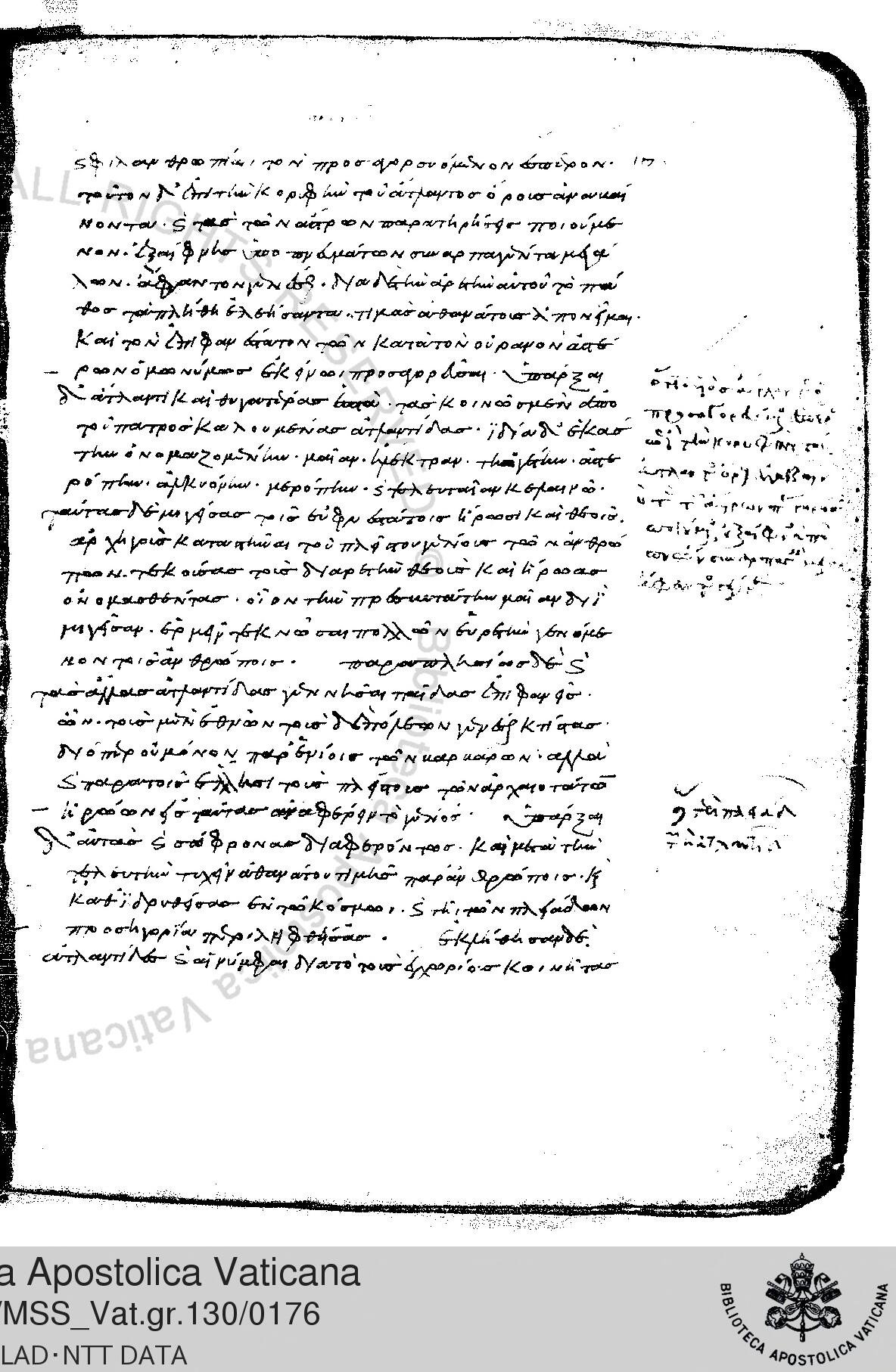
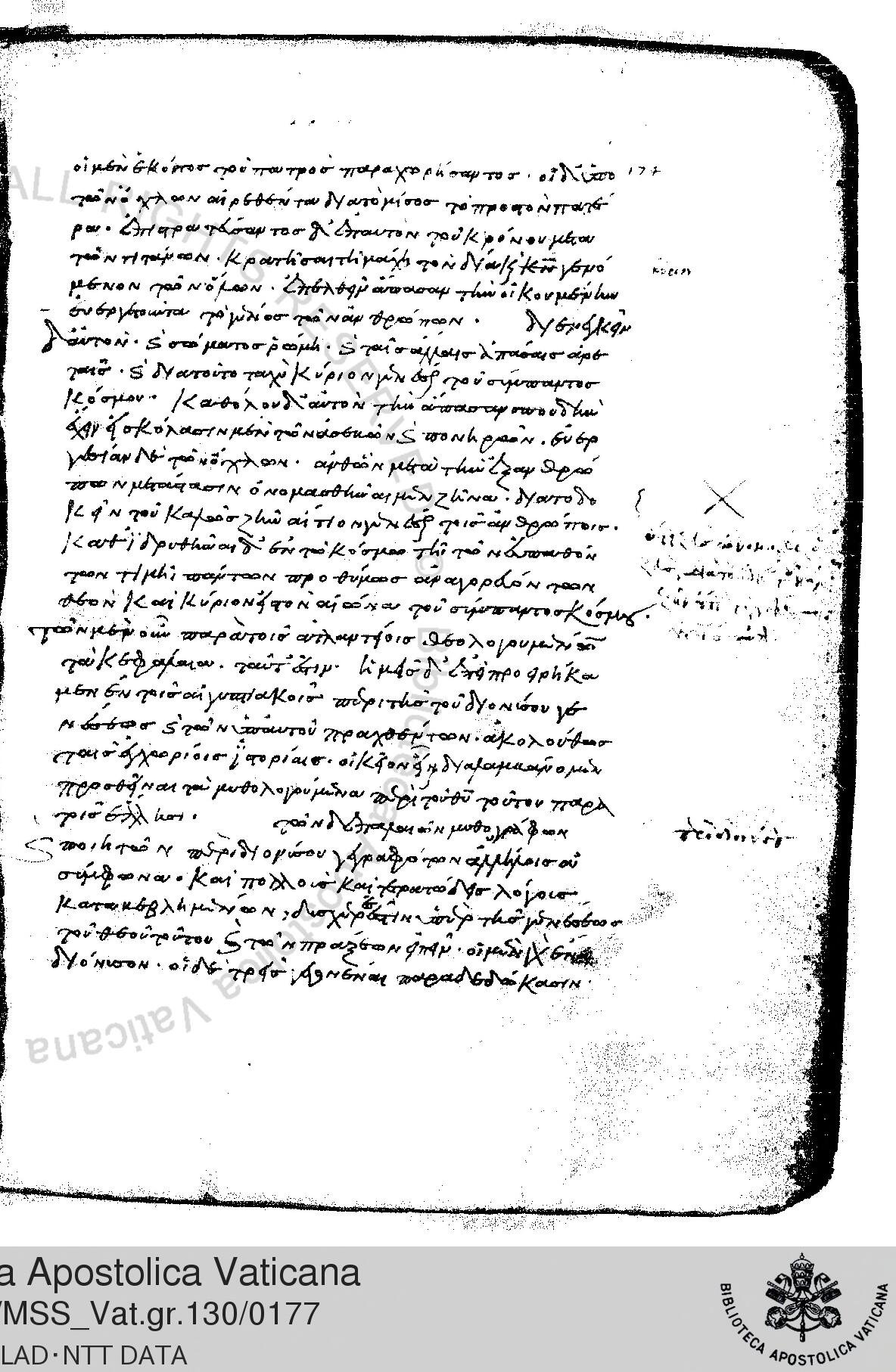
3.61 begins in fol. 173v line 1, ‹κρόνον δὲ μυ-›; 3.61.2 line 7, 3.61.3 line 14, 3.61.4 line 24; fol. 174r (folio number read): 3.61.5 line 6, 3.61.6 line 11, and the chapter ends in line 18, ‹τὰ κεφάλαια. ταῦτ' ἐστίν›, followed by 3.62 ‹ἡμεῖς δ' ἐπεὶ προειρήκα-›.
3.61.1Κρόνον δὲ μυθολογοῦσιν, ἀδελφὸν μὲν Ἄτλαντος ὄντα, διαφέροντα δʼ ἀσεβείᾳ καὶ πλεονεξίᾳ, γῆμαι τὴν ἀδελφὴν Ῥέαν, ἐξ ἧς γεννῆσαι Δία τὸν Ὀλύμπιον ὕστερον ἐπικληθέντα. γεγονέναι δὲ καὶ ἕτερον Δία, τὸν ἀδελφὸν μὲν Οὐρανοῦ, τῆς δὲ Κρήτης βασιλεύσαντα, τῇ δόξῃ πολὺ λειπόμενον τοῦ μεταγενεστέρου. 3.61.2τοῦτον μὲν οὖν βασιλεῦσαι τοῦ σύμπαντος κόσμου, τὸν δὲ προγενέστερον, δυναστεύοντα τῆς προειρημένης νήσου, δέκα παῖδας γεννῆσαι τοὺς ὀνομασθέντας Κούρητας· προσαγορεῦσαι δὲ καὶ τὴν νῆσον ἀπὸ τῆς γυναικὸς Ἰδαίαν, ἐν ᾗ καὶ τελευτήσαντα ταφῆναι, δεικνυμένου τοῦ τὴν ταφὴν δεξαμένου τόπου μέχρι τῶν καθʼ ἡμᾶς χρόνων. 3.61.3οὐ μὴν οἵ γε Κρῆτες ὁμολογούμενα τούτοις μυθολογοῦσι, περὶ ὧν ἡμεῖς ἐν τοῖς περὶ Κρήτης τὰ κατὰ μέρος ἀναγράψομεν· δυναστεῦσαι δέ φασι τὸν Κρόνον κατὰ Σικελίαν καὶ Λιβύην, ἔτι δὲ τὴν Ἰταλίαν, καὶ τὸ σύνολον ἐν τοῖς πρὸς ἑσπέραν τόποις συστήσασθαι τὴν βασιλείαν· παρὰ πᾶσι δὲ φρουραῖς διακατέχειν τὰς ἀκροπόλεις καὶ τοὺς ὀχυροὺς τῶν τόπων τούτων· ἀφʼ οὗ δὴ μέχρι τοῦ νῦν χρόνου κατά τε τὴν Σικελίαν καὶ τὰ πρὸς ἑσπέραν νεύοντα μέρη πολλοὺς τῶν ὑψηλῶν τόπων ἀπʼ ἐκείνου Κρόνια προσαγορεύεσθαι. 3.61.4Κρόνου δὲ γενόμενον υἱὸν Δία τὸν ἐναντίον τῷ πατρὶ βίον ζηλῶσαι, καὶ παρεχόμενον ἑαυτὸν πᾶσιν ἐπιεικῆ καὶ φιλάνθρωπον ὑπὸ τοῦ πλήθους πατέρα προσαγορευθῆναι. διαδέξασθαι δʼ αὐτόν φασι τὴν βασιλείαν οἱ μὲν ἑκουσίως τοῦ πατρὸς παραχωρήσαντος, οἱ δʼ ὑπὸ τῶν ὄχλων αἱρεθέντα διὰ τὸ μῖσος τὸ πρὸς τὸν πατέρα· ἐπιστρατεύσαντος δʼ ἐπʼ αὐτὸν τοῦ Κρόνου μετὰ τῶν Τιτάνων κρατῆσαι τῇ μάχῃ τὸν Δία, καὶ κύριον γενόμενον τῶν ὅλων ἐπελθεῖν ἅπασαν τὴν οἰκουμένην, εὐεργετοῦντα τὸ γένος τῶν ἀνθρώπων. 3.61.5διενεγκεῖν δʼ αὐτὸν καὶ σώματος ῥώμῃ καὶ ταῖς ἄλλαις ἁπάσαις ἀρεταῖς, καὶ διὰ τοῦτο ταχὺ κύριον γενέσθαι τοῦ σύμπαντος κόσμου. καθόλου δʼ αὐτὸν τὴν ἅπασαν σπουδὴν ἔχειν εἰς κόλασιν μὲν τῶν ἀσεβῶν καὶ πονηρῶν, εὐεργεσίαν δὲ τῶν ὄχλων. 3.61.6ἀνθʼ ὧν μετὰ τὴν ἐξ ἀνθρώπων μετάστασιν ὀνομασθῆναι μὲν Ζῆνα διὰ τὸ δοκεῖν τοῦ καλῶς ζῆν αἴτιον γενέσθαι τοῖς ἀνθρώποις, καθιδρυθῆναι δʼ ἐν τῷ κόσμῳ τῇ τῶν εὖ παθόντων τιμῇ, πάντων προθύμως ἀναγορευόντων θεὸν καὶ κύριον εἰς τὸν αἰῶνα τοῦ σύμπαντος κόσμου. τῶν μὲν οὖν παρὰ τοῖς Ἀτλαντίοις θεολογουμένων τὰ κεφάλαια ταῦτʼ ἔστιν.
3.61.1Cronus, the brother of Atlas, the myth continues, who was a man notorious for his impiety and greed, married his sister Rhea, by whom he begat that Zeus who was later called "the Olympian." But there had been also another Zeus, the brother of Uranus and a king of Crete, who, however, was far less famous than the Zeus who was born at a later time. 3.61.2Now the latter was king over the entire world, whereas the earlier Zeus, who was lord of the above-mentioned island, begat ten sons who were given the name of Curetes; and the island he named after his wife Idaea, and on it he died and was buried, and the place which received his grave is pointed out to our day. 3.61.3The Cretans, however, have a myth which does not agree with the story given above, and we shall give a detailed account of it when we speak of Crete. Cronus, they say, was lord of Sicily and Libya, and Italy as well, and, in a word, established his kingdom over the regions to the west; and everywhere he occupied with garrisons the commanding hills and the strongholds of the regions, this being the reason why both throughout Sicily and the parts which incline towards the west many of the lofty places are called to this day after him "Cronia." 3.61.4Zeus, however, the son of Cronus, emulated a manner of life the opposite of that led by his father, and since he showed himself honourable and friendly to all, the masses addressed him as "father." As for his succession to the kingly power, some say that his father yielded it to him of his own accord, but others state that he was chosen as king by the masses because of the hatred they bore towards his father, and that when Cronus made war against him with the aid of the Titans, Zeus overcame him in battle, and on gaining supreme power visited all the inhabited world, conferring benefactions upon the race of men. 3.61.5He was pre-eminent also in bodily strength and in all the other qualities of virtue and for this reason quickly became master of the entire world. And in general he showed all zeal to punish impious and wicked men and to show kindness to the masses. 3.61.6In return for all this, after he had passed from among men he was given the name of Zên, because he was the cause of right "living" among men, and those who had received his favours showed him honour by enthroning him in the heavens, all men eagerly acclaiming him as god and lord for ever of the whole universe. These, then, are in summary the facts regarding the teachings of the Atlantians about the gods.
Notes
- One section per chapter; the small numbers are the sub-sections, which match in the Greek and the English.
- English from Bill Thayer's LacusCurtius transcription of Oldfather, note markers removed.
- Greek: Teubner text via Perseus, not a transcription of the manuscript.
Cite
Sources
- Source: Vat. gr. 130 via DigiVatLib + Vogel's Greek (Perseus) + Oldfather's English (Loeb 1935, LacusCurtius) (holding institution)
- Critical edition: Perseus editions named per passage
← previous · → next · v cycle view · l back to library