Berossus in Josephus, Against Apion 1.128-153: Nabopolassar, Nebuchadnezzar and the last kings of Babylon
Introduction
In his reply to Apion (c. 95 AD) Josephus set out to prove the antiquity of the Jews from non-Greek historians. After the Egyptian Manetho and the Phoenician archives he turned to Berossus, summarized what Berossus said about the flood, the ark that landed in the mountains of Armenia and the generations after Noah, and then quoted his third book word for word: Nabopolassar sends his son Nebuchadnezzar against a rebel governor in Egypt and Syria; Nebuchadnezzar hurries back across the desert on his father's death, rebuilds and walls Babylon, builds a new palace in fifteen days and a hanging garden for his Median queen; after him come Evil-Merodach, Neriglissar, Labashi-Marduk and Nabonidus, until Cyrus takes Babylon.
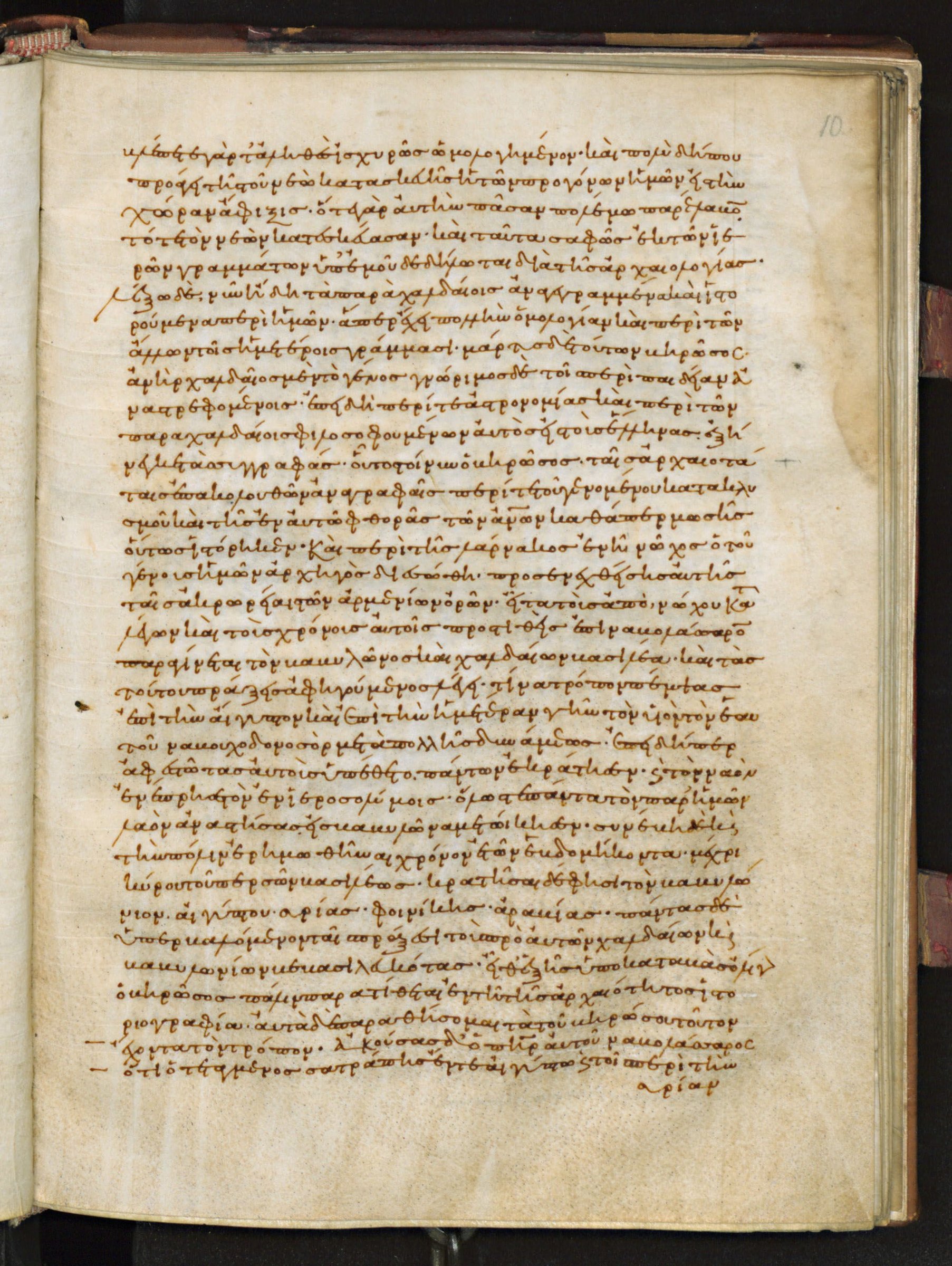
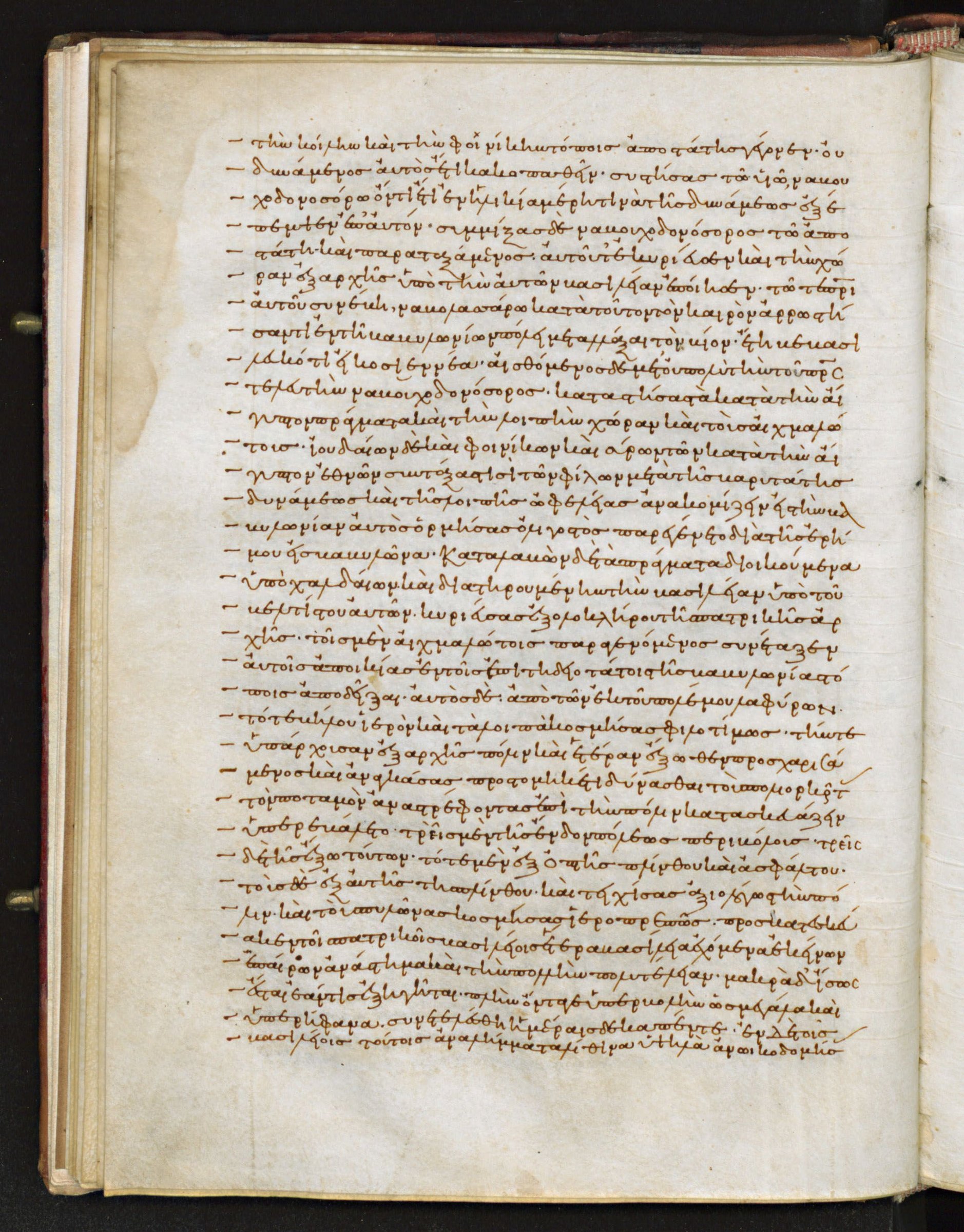
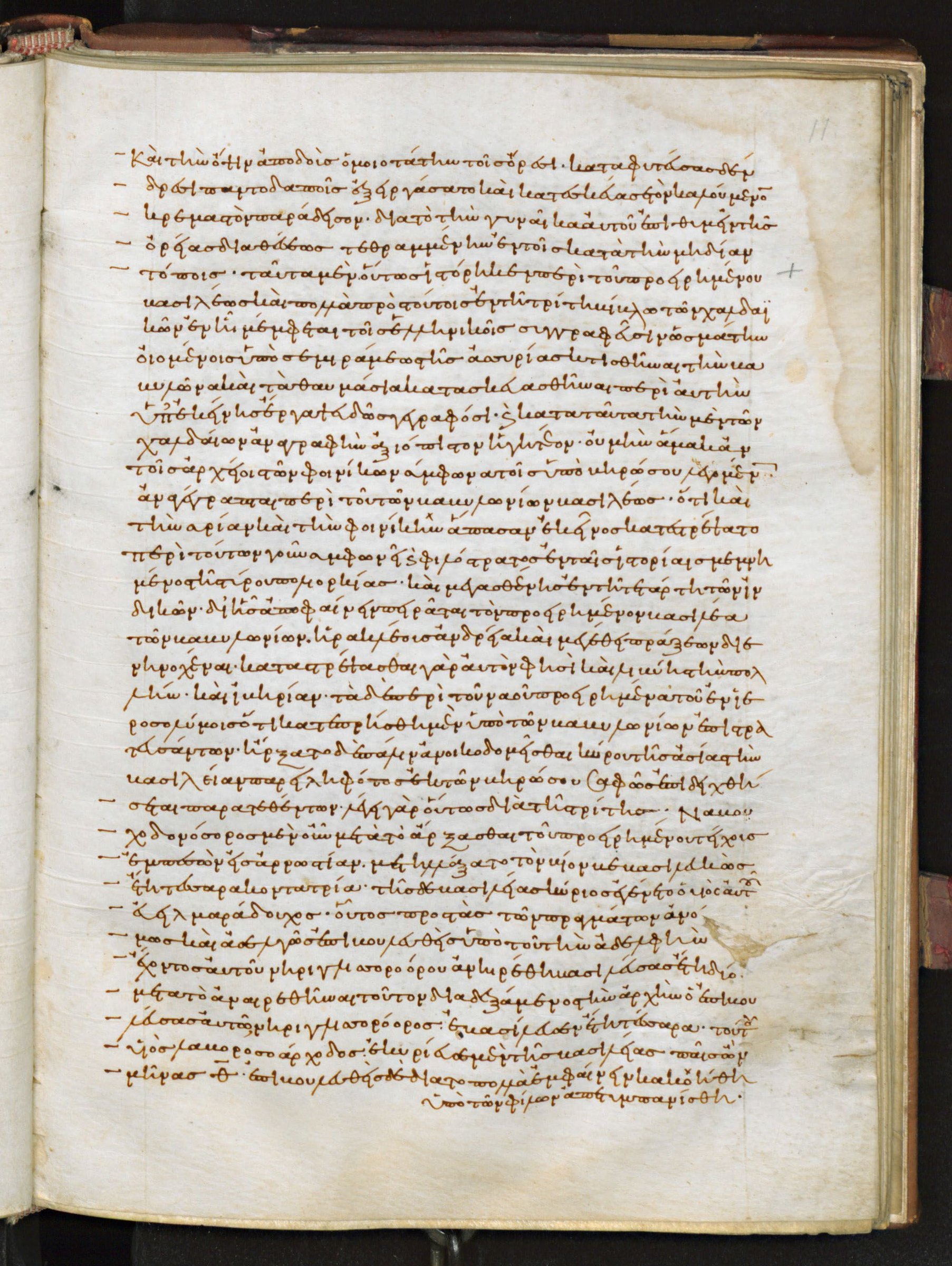
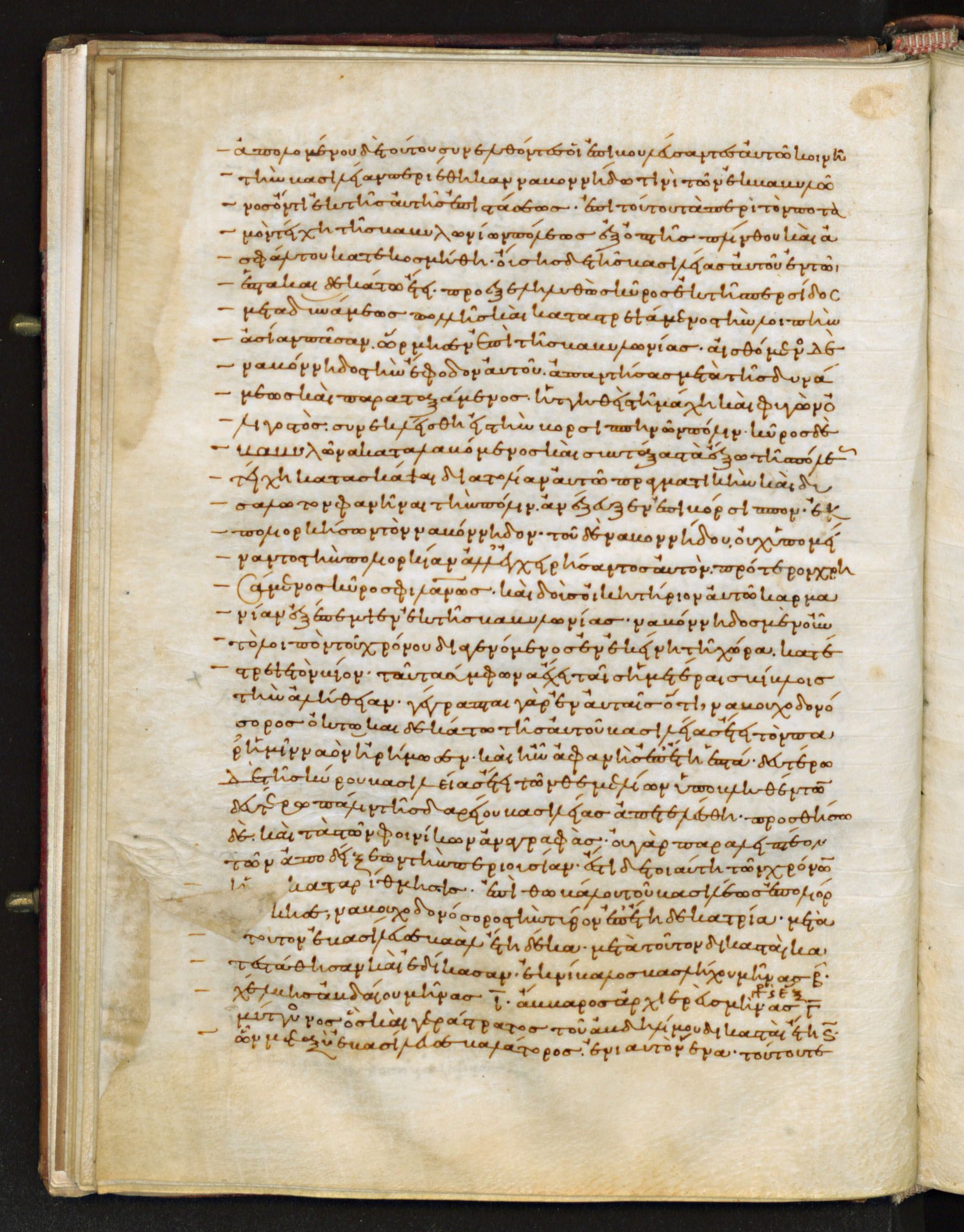
The manuscript is Florence, Biblioteca Medicea Laurenziana, Plut. 69.22, a copy of the first book of Against Apion dated to the 10th century by the library (11th by Niese), the principal Greek manuscript of the work (Niese's siglum L). The excerpt runs from fol. 10r to fol. 11v. Each section is one of Niese's numbered sections and points at the page(s) that carry it; the page breaks were read on the images.
How was this verified? (Provenance)
Where on the image
Fol. 10r (Teca Digitale image 10r): 1.128 begins on line 6 'Λέξω δὲ νῦν ἤδη τὰ παρὰ Χαλδαίοις' (marked in the margin) after the last words of 1.127 'διὰ τῆς ἀρχαιολογίας'; the page ends in 1.135 with '...καὶ τοῖς περὶ τὴν Συ-|ρίαν'. Checked on the image. Viewer: https://tecabml.contentdm.oclc.org/digital/collection/plutei/id/1350351 . The Greek shown is Niese's critical text.
128Λέξω δὲ νῦν ἤδη τὰ παρὰ Χαλδαίοις ἀναγεγραμμένα καὶ ἱστορούμενα περὶ ἡμῶν, ἅπερ ἔχει πολλὴν ὁμολογίαν καὶ περὶ τῶν ἄλλων τοῖς ἡμετέροις γράμμασι.
128I will now relate what hath been written concerning us in the Chaldean histories, which records have a great agreement with our books in other things also.
Where on the image
Fol. 10r (Teca Digitale image 10r): 1.128 begins on line 6 'Λέξω δὲ νῦν ἤδη τὰ παρὰ Χαλδαίοις' (marked in the margin) after the last words of 1.127 'διὰ τῆς ἀρχαιολογίας'; the page ends in 1.135 with '...καὶ τοῖς περὶ τὴν Συ-|ρίαν'. Checked on the image. Viewer: https://tecabml.contentdm.oclc.org/digital/collection/plutei/id/1350351 . The Greek shown is Niese's critical text.
129μάρτυς δὲ τούτων Βηρῶσος ἀνὴρ Χαλδαῖος μὲν τὸ γένος, γνώριμος δὲ τοῖς περὶ παιδείαν ἀναστρεφομένοις, ἐπειδὴ περί τε ἀστρονομίας καὶ περὶ τῶν παρὰ Χαλδαίοις φιλοσοφουμένων αὐτὸς εἰς τοὺς Ἕλληνας ἐξήνεγκε τὰς συγγραφάς.
129Berosus shall be witness to what I say: he was by birth a Chaldean, well known by the learned, on account of his publication of the Chaldean books of astronomy and philosophy among the Greeks.
Where on the image
Fol. 10r (Teca Digitale image 10r): 1.128 begins on line 6 'Λέξω δὲ νῦν ἤδη τὰ παρὰ Χαλδαίοις' (marked in the margin) after the last words of 1.127 'διὰ τῆς ἀρχαιολογίας'; the page ends in 1.135 with '...καὶ τοῖς περὶ τὴν Συ-|ρίαν'. Checked on the image. Viewer: https://tecabml.contentdm.oclc.org/digital/collection/plutei/id/1350351 . The Greek shown is Niese's critical text.
130οὗτος τοίνυν ὁ Βηρῶσος ταῖς ἀρχαιοτάταις ἐπακολουθῶν ἀναγραφαῖς περί τε τοῦ γενομένου κατακλυσμοῦ καὶ τῆς ἐν αὐτῷ φθορᾶς τῶν ἀνθρώπων καθάπερ Μωσῆς οὕτως ἱστόρηκεν καὶ περὶ τῆς λάρνακος, ἐν ᾗ Νῶχος ὁ τοῦ γένους ἡμῶν ἀρχηγὸς διεσώθη προσενεχθείσης αὐτῆς ταῖς ἀκρωρείαις τῶν Ἀρμενίων ὀρῶν.
130This Berosus, therefore, following the most ancient records of that nation, gives us a history of the deluge of waters that then happened, and of the destruction of mankind thereby, and agrees with Moses's narration thereof. He also gives us an account of that ark wherein Noah, the origin of our race, was preserved, when it was brought to the highest part of the Armenian mountains;
Where on the image
Fol. 10r (Teca Digitale image 10r): 1.128 begins on line 6 'Λέξω δὲ νῦν ἤδη τὰ παρὰ Χαλδαίοις' (marked in the margin) after the last words of 1.127 'διὰ τῆς ἀρχαιολογίας'; the page ends in 1.135 with '...καὶ τοῖς περὶ τὴν Συ-|ρίαν'. Checked on the image. Viewer: https://tecabml.contentdm.oclc.org/digital/collection/plutei/id/1350351 . The Greek shown is Niese's critical text.
131εἶτα τοὺς ἀπὸ Νώχου καταλέγων καὶ τοὺς χρόνους αὐτοῖς προστιθεὶς ἐπὶ Ναβοπαλάσσαρον παραγίνεται τὸν Βαβυλῶνος καὶ Χαλδαίων βασιλέα καὶ τὰς τούτου πράξεις ἀφηγούμενος λέγει,
131after which he gives us a catalogue of the posterity of Noah, and adds the years of their chronology, and at length comes down to Nabolassar, who was king of Babylon, and of the Chaldeans. And when he was relating the acts of this king,
Where on the image
Fol. 10r (Teca Digitale image 10r): 1.128 begins on line 6 'Λέξω δὲ νῦν ἤδη τὰ παρὰ Χαλδαίοις' (marked in the margin) after the last words of 1.127 'διὰ τῆς ἀρχαιολογίας'; the page ends in 1.135 with '...καὶ τοῖς περὶ τὴν Συ-|ρίαν'. Checked on the image. Viewer: https://tecabml.contentdm.oclc.org/digital/collection/plutei/id/1350351 . The Greek shown is Niese's critical text.
132τίνα τρόπον πέμψας ἐπὶ τὴν Αἴγυπτον καὶ ἐπὶ τὴν ἡμετέραν γῆν τὸν υἱὸν τὸν ἑαυτοῦ Ναβοκοδρόσορον μετὰ πολλῆς δυνάμεως, ἐπειδήπερ ἀφεστῶτας αὐτοὺς ἐπύθετο, πάντων ἐκράτησεν καὶ τὸν ναὸν ἐνέπρησε τὸν ἐν Ἱεροσολύμοις ὅλως τε πάντα τὸν παρʼ ἡμῶν λαὸν ἀναστήσας εἰς Βαβυλῶνα μετῴκισεν, συνέβη δὲ καὶ τὴν πόλιν ἐρημωθῆναι χρόνον ἐτῶν ἑβδομήκοντα μέχρι Κύρου τοῦ Περσῶν βασιλέως.
132he describes to us how he sent his son Nabuchodonosor against Egypt, and against our land, with a great army, upon his being informed that they had revolted from him; and how, by that means, he subdued them all, and set our temple that was at Jerusalem on fire; nay, and removed our people entirely out of their own country, and transferred them to Babylon; when it so happened that our city was desolate during the interval of seventy years, until the days of Cyrus king of Persia.
Where on the image
Fol. 10r (Teca Digitale image 10r): 1.128 begins on line 6 'Λέξω δὲ νῦν ἤδη τὰ παρὰ Χαλδαίοις' (marked in the margin) after the last words of 1.127 'διὰ τῆς ἀρχαιολογίας'; the page ends in 1.135 with '...καὶ τοῖς περὶ τὴν Συ-|ρίαν'. Checked on the image. Viewer: https://tecabml.contentdm.oclc.org/digital/collection/plutei/id/1350351 . The Greek shown is Niese's critical text.
133κρατῆσαι δέ φησι τὸν Βαβυλώνιον Αἰγύπτου Συρίας Φοινίκης Ἀραβίας πάντας ὑπερβαλόμενον ταῖς πράξεσι τοὺς πρὸ αὐτοῦ Χαλδαίων καὶ Βαβυλωνίων βεβασιλευκότας.
133He then says, "That this Babylonian king conquered Egypt, and Syria, and Phoenicia, and Arabia, and exceeded in his exploits all that had reigned before him in Babylon and Chaldea."
Where on the image
Fol. 10r (Teca Digitale image 10r): 1.128 begins on line 6 'Λέξω δὲ νῦν ἤδη τὰ παρὰ Χαλδαίοις' (marked in the margin) after the last words of 1.127 'διὰ τῆς ἀρχαιολογίας'; the page ends in 1.135 with '...καὶ τοῖς περὶ τὴν Συ-|ρίαν'. Checked on the image. Viewer: https://tecabml.contentdm.oclc.org/digital/collection/plutei/id/1350351 . The Greek shown is Niese's critical text.
134[εἶθʼ ἑξῆς ὑποκαταβὰς ὀλίγον ὁ Βηρῶσος πάλιν παρατίθεται ἐν τῇ τῆς ἀρχαιότητος ἱστοριογραφίᾳ.] αὐτὰ δὲ παραθήσομαι τὰ τοῦ Βηρώσου τοῦτον ἔχοντα τὸν τρόπον·
134A little after which Berosus subjoins what follows in his History of Ancient Times. I will set down Berosus's own accounts, which are these:
Where on the image
1.135 runs across the page break. Fol. 10r (Teca Digitale image 10r): 1.128 begins on line 6 'Λέξω δὲ νῦν ἤδη τὰ παρὰ Χαλδαίοις' (marked in the margin) after the last words of 1.127 'διὰ τῆς ἀρχαιολογίας'; the page ends in 1.135 with '...καὶ τοῖς περὶ τὴν Συ-|ρίαν'. Fol. 10v: begins 'τὴν κοίλην καὶ τὴν Φοινίκην τόποις ἀποστάτης γέγονεν' (1.135) and ends '...βασιλείοις τούτοις ἀναλήμματα λίθινα ὑψηλὰ ἀνοικοδομήσας' (1.141). Checked on the image. Viewer: https://tecabml.contentdm.oclc.org/digital/collection/plutei/id/1350351 . The Greek shown is Niese's critical text.
135ἀκούσας δʼ ὁ πατὴρ αὐτοῦ Ναβοπαλάσαρος, ὅτι ὁ τεταγμένος σατράπης ἔν τε Αἰγύπτῳ καὶ τοῖς περὶ τὴν Συρίαν τὴν κοίλην καὶ τὴν Φοινίκην τόποις ἀποστάτης γέγονεν, οὐ δυνάμενος αὐτὸς ἔτι κακοπαθεῖν συστήσας τῷ υἱῷ Ναβοκοδροσόρῳ ὄντι ἔτι ἐν ἡλικίᾳ μέρη τινὰ τῆς δυνάμεως ἐξέπεμψεν ἐπʼ αὐτόν.
135"When Nabolassar, father of Nabuchodonosor, heard that the governor whom he had set over Egypt, and over the parts of Celesyria and Phoenicia, had revolted from him, he was not able to bear it any longer; but committing certain parts of his army to his son Nabuchodonosor, who was then but young, he sent him against the rebel:
Where on the image
Fol. 10v: begins 'τὴν κοίλην καὶ τὴν Φοινίκην τόποις ἀποστάτης γέγονεν' (1.135) and ends '...βασιλείοις τούτοις ἀναλήμματα λίθινα ὑψηλὰ ἀνοικοδομήσας' (1.141). Checked on the image. Viewer: https://tecabml.contentdm.oclc.org/digital/collection/plutei/id/1350351 . The Greek shown is Niese's critical text.
136συμμίξας δὲ Ναβοκοδρόσορος τῷ ἀποστάτῃ καὶ παραταξάμενος αὐτοῦ τʼ ἐκράτει καὶ τὴν χώραν ἐξ ἀρχῆς ὑπὸ τὴν αὐτῶν βασιλείαν ἐποιήσατο. τῷ τε πατρὶ αὐτοῦ συνέβη Ναβοπαλασάρῳ κατὰ τοῦτον τὸν καιρὸν ἀρρωστήσαντι ἐν τῇ Βαβυλωνίων πόλει μεταλλάξαι τὸν βίον ἔτη βεβασιλευκότι κα.
136Nabuchodonosor joined battle with him, and conquered him, and reduced the country under his dominion again. Now it so fell out that his father Nabolassar fell into a distemper at this time, and died in the city of Babylon, after he had reigned twenty-nine years.
Where on the image
Fol. 10v: begins 'τὴν κοίλην καὶ τὴν Φοινίκην τόποις ἀποστάτης γέγονεν' (1.135) and ends '...βασιλείοις τούτοις ἀναλήμματα λίθινα ὑψηλὰ ἀνοικοδομήσας' (1.141). Checked on the image. Viewer: https://tecabml.contentdm.oclc.org/digital/collection/plutei/id/1350351 . The Greek shown is Niese's critical text.
137αἰσθόμενος δὲ μετʼ οὐ πολὺ τὴν τοῦ πατρὸς τελευτὴν Ναβουκοδρόσορος, καταστήσας τὰ κατὰ τὴν Αἴγυπτον πράγματα καὶ τὴν λοιπὴν χώραν καὶ τοὺς αἰχμαλώτους Ἰουδαίων τε καὶ Φοινίκων καὶ Σύρων καὶ τῶν κατὰ τὴν Αἴγυπτον ἐθνῶν συντάξας τισὶ τῶν φίλων μετὰ τῆς βαρυτάτης δυνάμεως καὶ τῆς λοιπῆς ὠφελείας ἀνακομίζειν εἰς τὴν Βαβυλωνίαν, αὐτὸς ὁρμήσας ὀλιγοστὸς παρεγένετο διὰ τῆς ἐρήμου εἰς Βαβυλῶνα.
137But as he understood, in a little time, that his father Nabolassar was dead, he set the affairs of Egypt and the other countries in order, and committed the captives he had taken from the Jews, and Phoenicians, and Syrians, and of the nations belonging to Egypt, to some of his friends, that they might conduct that part of the forces that had on heavy armor, with the rest of his baggage, to Babylonia; while he went in haste, having but a few with him, over the desert to Babylon;
Where on the image
Fol. 10v: begins 'τὴν κοίλην καὶ τὴν Φοινίκην τόποις ἀποστάτης γέγονεν' (1.135) and ends '...βασιλείοις τούτοις ἀναλήμματα λίθινα ὑψηλὰ ἀνοικοδομήσας' (1.141). Checked on the image. Viewer: https://tecabml.contentdm.oclc.org/digital/collection/plutei/id/1350351 . The Greek shown is Niese's critical text.
138καταλαβὼν δὲ τὰ πράγματα διοικούμενα ὑπὸ Χαλδαίων καὶ διατηρουμένην τὴν βασιλείαν ὑπὸ τοῦ βελτίστου αὐτῶν, κυριεύσας ὁλοκλήρου τῆς πατρικῆς ἀρχῆς τοῖς μὲν αἰχμαλώτοις παραγενομένοις συνέταξεν [αὐτοῖς] κατοικίας ἐν τοῖς ἐπιτηδειοτάτοις τῆς Βαβυλωνίας τόποις ἀποδεῖξαι,
138whither, when he was come, he found the public affairs had been managed by the Chaldeans, and that the principal person among them had preserved the kingdom for him. Accordingly, he now entirely obtained all his father's dominions. He then came, and ordered the captives to be placed as colonies in the most proper places of Babylonia;
Where on the image
Fol. 10v: begins 'τὴν κοίλην καὶ τὴν Φοινίκην τόποις ἀποστάτης γέγονεν' (1.135) and ends '...βασιλείοις τούτοις ἀναλήμματα λίθινα ὑψηλὰ ἀνοικοδομήσας' (1.141). Checked on the image. Viewer: https://tecabml.contentdm.oclc.org/digital/collection/plutei/id/1350351 . The Greek shown is Niese's critical text.
139αὐτὸς δὲ ἀπὸ τῶν ἐκ τοῦ πολέμου λαφύρων τό τε Βήλου ἱερὸν καὶ τὰ λοιπὰ κοσμήσας φιλοτίμως τήν τε ὑπάρχουσαν ἐξ ἀρχῆς πόλιν καὶ ἑτέραν ἔξωθεν προσχαρισάμενος καὶ ἀναγκάσας πρὸς τὸ μηκέτι δύνασθαι τοὺς πολιορκοῦντας τὸν ποταμὸν ἀναστρέφοντας ἐπὶ τὴν πόλιν κατασκευάζειν, περιεβάλετο τρεῖς μὲν τῆς ἔνδον πόλεως περιβόλους, τρεῖς δὲ τῆς ἔξω, τούτων δὲ τοὺς μὲν ἐξ ὀπτῆς πλίνθου καὶ ἀσφάλτου, τοὺς δὲ ἐξ αὐτῆς τῆς πλίνθου.
139but for himself, he adorned the temple of Belus, and the other temples, after an elegant manner, out of the spoils he had taken in this war. He also rebuilt the old city, and added another to it on the outside, and so far restored Babylon, that none who should besiege it afterwards might have it in their power to divert the river, so as to facilitate an entrance into it; and this he did by building three walls about the inner city, and three about the outer. Some of these walls he built of burnt brick and bitumen, and some of brick only.
Where on the image
Fol. 10v: begins 'τὴν κοίλην καὶ τὴν Φοινίκην τόποις ἀποστάτης γέγονεν' (1.135) and ends '...βασιλείοις τούτοις ἀναλήμματα λίθινα ὑψηλὰ ἀνοικοδομήσας' (1.141). Checked on the image. Viewer: https://tecabml.contentdm.oclc.org/digital/collection/plutei/id/1350351 . The Greek shown is Niese's critical text.
140καὶ τειχίσας ἀξιολόγως τὴν πόλιν καὶ τοὺς πυλῶνας κοσμήσας ἱεροπρεπῶς προσκατεσκεύασεν τοῖς πατρικοῖς βασιλείοις ἕτερα βασίλεια ἐχόμενα ἐκείνων, [ὑπὲρ] ὧν ἀνάστημα καὶ τὴν λοιπὴν πολυτέλειαν μακρὸν ἴσως ἔσται ἐάν τις ἐξηγῆται, πλὴν ὄντα γε ὑπερβολὴν ὡς μεγάλα καὶ ὑπερήφανα συνετελέσθη ἡμέραις δεκαπέντε.
140So when he had thus fortified the city with walls, after an excellent manner, and had adorned the gates magnificently, he added a new palace to that which his father had dwelt in, and this close by it also, and that more eminent in its height, and in its great splendor. It would perhaps require too long a narration, if any one were to describe it. However, as prodigiously large and as magnificent as it was, it was finished in fifteen days.
Where on the image
1.141 runs across the page break. Fol. 10v: begins 'τὴν κοίλην καὶ τὴν Φοινίκην τόποις ἀποστάτης γέγονεν' (1.135) and ends '...βασιλείοις τούτοις ἀναλήμματα λίθινα ὑψηλὰ ἀνοικοδομήσας' (1.141). Fol. 11r: begins 'καὶ τὴν ὄψιν ἀποδοὺς ὁμοιοτάτην τοῖς ὄρεσι' (1.141) and ends with the last words of 1.148 'ὑπὸ τῶν φίλων ἀπετυμπανίσθη'. Checked on the image. Viewer: https://tecabml.contentdm.oclc.org/digital/collection/plutei/id/1350351 . The Greek shown is Niese's critical text.
141ἐν δὲ τοῖς βασιλείοις τούτοις ἀναλήμματα λίθινα ὑψηλὰ ἀνοικοδομήσας καὶ τὴν ὄψιν ἀποδοὺς ὁμοιοτάτην τοῖς ὄρεσι, καταφυτεύσας δένδρεσι παντοδαποῖς ἐξειργάσατο καὶ κατεσκεύασε τὸν καλούμενον κρεμαστὸν παράδεισον διὰ τὸ τὴν γυναῖκα αὐτοῦ ἐπιθυμεῖν τῆς ὀρείας διαθέσεως τεθραμμένην ἐν τοῖς κατὰ τὴν Μηδίαν τόποις.
141Now in this palace he erected very high walks, supported by stone pillars, and by planting what was called a pensile paradise, and replenishing it with all sorts of trees, he rendered the prospect an exact resemblance of a mountainous country. This he did to please his queen, because she had been brought up in Media, and was fond of a mountainous situation."
Where on the image
Fol. 11r: begins 'καὶ τὴν ὄψιν ἀποδοὺς ὁμοιοτάτην τοῖς ὄρεσι' (1.141) and ends with the last words of 1.148 'ὑπὸ τῶν φίλων ἀπετυμπανίσθη'. Checked on the image. Viewer: https://tecabml.contentdm.oclc.org/digital/collection/plutei/id/1350351 . The Greek shown is Niese's critical text.
142Ταῦτα μὲν οὕτως ἱστόρηκεν περὶ τοῦ προειρημένου βασιλέως καὶ πολλὰ πρὸς τούτοις ἐν τῇ τρίτῃ βίβλῳ τῶν Χαλδαϊκῶν, ἐν ᾗ μέμφεται τοῖς Ἑλληνικοῖς συγγραφεῦσιν ὡς μάτην οἰομένοις ὑπὸ Σεμιράμεως τῆς Ἀσσυρίας κτισθῆναι τὴν Βαβυλῶνα καὶ τὰ θαυμάσια κατασκευασθῆναι περὶ αὐτὴν ὑπʼ ἐκείνης ἔργα ψευδῶς γεγραφόσι.
142This is what Berosus relates concerning the forementioned king, as he relates many other things about him also in the third book of his Chaldean History; wherein he complains of the Grecian writers for supposing, without any foundation, that Babylon was built by Semiramis, queen of Assyria, and for her false pretense to those wonderful edifices thereto relating, as if they were her own workmanship;
Where on the image
Fol. 11r: begins 'καὶ τὴν ὄψιν ἀποδοὺς ὁμοιοτάτην τοῖς ὄρεσι' (1.141) and ends with the last words of 1.148 'ὑπὸ τῶν φίλων ἀπετυμπανίσθη'. Checked on the image. Viewer: https://tecabml.contentdm.oclc.org/digital/collection/plutei/id/1350351 . The Greek shown is Niese's critical text.
143καὶ κατὰ ταῦτα τὴν μὲν τῶν Χαλδαίων ἀναγραφὴν ἀξιόπιστον ἡγητέον· οὐ μὴν ἀλλὰ κἀν τοῖς ἀρχείοις τῶν Φοινίκων σύμφωνα τοῖς ὑπὸ Βηρώσου λεγομένοις ἀναγέγραπται περὶ τοῦ τῶν Βαβυλωνίων βασιλέως, ὅτι καὶ τὴν Συρίαν καὶ τὴν Φοινίκην ἅπασαν ἐκεῖνος κατεστρέψατο.
143as indeed in these affairs the Chaldean History cannot but be the most credible. Moreover, we meet with a confirmation of what Berosus says in the archives of the Phoenicians, concerning this king Nabuchodonosor, that he conquered all Syria and Phoenicia;
Where on the image
Fol. 11r: begins 'καὶ τὴν ὄψιν ἀποδοὺς ὁμοιοτάτην τοῖς ὄρεσι' (1.141) and ends with the last words of 1.148 'ὑπὸ τῶν φίλων ἀπετυμπανίσθη'. Checked on the image. Viewer: https://tecabml.contentdm.oclc.org/digital/collection/plutei/id/1350351 . The Greek shown is Niese's critical text.
144περὶ τούτων γοῦν συμφωνεῖ καὶ Φιλόστρατος ἐν ταῖς ἱστορίαις μεμνημένος τῆς Τύρου πολιορκίας, καὶ Μεγασθένης ἐν τῇ τετάρτῃ τῶν Ἰνδικῶν, διʼ ἧς ἀποφαίνειν πειρᾶται τὸν προειρημένον βασιλέα τῶν Βαβυλωνίων Ἡρακλέους ἀνδρείᾳ καὶ μεγέθει πράξεων διενηνοχέναι· καταστρέψασθαι γὰρ αὐτόν φησι καὶ Λιβύης τὴν πολλὴν καὶ Ἰβηρίαν.
144in which case Philostratus agrees with the others in that history which he composed, where he mentions the siege of Tyre; as does Megasthenes also, in the fourth book of his Indian History, wherein he pretends to prove that the forementioned king of the Babylonians was superior to Hercules in strength and the greatness of his exploits; for he says that he conquered a great part of Libya, and conquered Iberia also.
Where on the image
Fol. 11r: begins 'καὶ τὴν ὄψιν ἀποδοὺς ὁμοιοτάτην τοῖς ὄρεσι' (1.141) and ends with the last words of 1.148 'ὑπὸ τῶν φίλων ἀπετυμπανίσθη'. Checked on the image. Viewer: https://tecabml.contentdm.oclc.org/digital/collection/plutei/id/1350351 . The Greek shown is Niese's critical text.
145τὰ δὲ περὶ τοῦ ναοῦ προειρημένα τοῦ ἐν Ἱεροσολύμοις, ὅτι κατεπρήσθη μὲν ὑπὸ τῶν Βαβυλωνίων ἐπιστρατευσάντων, ἤρξατο δὲ πάλιν ἀνοικοδομεῖσθαι Κύρου τῆς Ἀσίας τὴν βασιλείαν παρειληφότος, ἐκ τῶν Βηρώσου σαφῶς ἐπιδειχθήσεται παρατεθέντων·
145Now as to what I have said before about the temple at Jerusalem, that it was fought against by the Babylonians, and burnt by them, but was opened again when Cyrus had taken the kingdom of Asia, shall now be demonstrated from what Berosus adds further upon that head;
Where on the image
Fol. 11r: begins 'καὶ τὴν ὄψιν ἀποδοὺς ὁμοιοτάτην τοῖς ὄρεσι' (1.141) and ends with the last words of 1.148 'ὑπὸ τῶν φίλων ἀπετυμπανίσθη'. Checked on the image. Viewer: https://tecabml.contentdm.oclc.org/digital/collection/plutei/id/1350351 . The Greek shown is Niese's critical text.
146λέγει γὰρ οὕτως διὰ τῆς τρίτης· Ναβοκοδρόσορος μὲν οὖν μετὰ τὸ ἄρξασθαι τοῦ προειρημένου τείχους ἐμπεσὼν εἰς ἀρρωστίαν μετήλλαξε τὸν βίον βεβασιλευκὼς ἔτη μγ, τῆς δὲ βασιλείας κύριος ἐγένετο ὁ υἱὸς αὐτοῦ Εὐειλμαράδουχος.
146for thus he says in his third book: "Nabuchodonosor, after he had begun to build the forementioned wall, fell sick, and departed this life, when he had reigned forty-three years; whereupon his son Evilmerodach obtained the kingdom.
Where on the image
Fol. 11r: begins 'καὶ τὴν ὄψιν ἀποδοὺς ὁμοιοτάτην τοῖς ὄρεσι' (1.141) and ends with the last words of 1.148 'ὑπὸ τῶν φίλων ἀπετυμπανίσθη'. Checked on the image. Viewer: https://tecabml.contentdm.oclc.org/digital/collection/plutei/id/1350351 . The Greek shown is Niese's critical text.
147οὗτος προστὰς τῶν πραγμάτων ἀνόμως καὶ ἀσελγῶς ἐπιβουλευθεὶς ὑπὸ τοῦ τὴν ἀδελφὴν ἔχοντος αὐτοῦ Νηριγλισάρου ἀνῃρέθη βασιλεύσας ἔτη β. μετὰ δὲ τὸ ἀναιρεθῆναι τοῦτον διαδεξάμενος τὴν ἀρχὴν ὁ ἐπιβουλεύσας αὐτῷ Νηριγλίσαρος ἐβασίλευσεν ἔτη δ.
147He governed public affairs after an illegal and impure manner, and had a plot laid against him by Neriglissoor, his sister's husband, and was slain by him when he had reigned but two years. After he was slain, Neriglissoor, the person who plotted against him, succeeded him in the kingdom, and reigned four years;
Where on the image
Fol. 11r: begins 'καὶ τὴν ὄψιν ἀποδοὺς ὁμοιοτάτην τοῖς ὄρεσι' (1.141) and ends with the last words of 1.148 'ὑπὸ τῶν φίλων ἀπετυμπανίσθη'. Checked on the image. Viewer: https://tecabml.contentdm.oclc.org/digital/collection/plutei/id/1350351 . The Greek shown is Niese's critical text.
148τούτου υἱὸς Λαβοροσοάρδοχος ἐκυρίευσε μὲν τῆς βασιλείας παῖς ὢν μῆνας θ, ἐπιβουλευθεὶς δὲ διὰ τὸ πολλὰ ἐμφαίνειν κακοήθη ὑπὸ τῶν φίλων ἀπετυμπανίσθη.
148his son Laborosoarchod obtained the kingdom, though he was but a child, and kept it nine months; but by reason of the very ill temper and ill practices he exhibited to the world, a plot was laid against him also by his friends, and he was tormented to death.
Where on the image
Fol. 11v: begins 'ἀπολομένου δὲ τούτου συνελθόντες' (1.149, line 1); 1.153 ends on line 20 'κατέ|στρεψε τὸν βίον', followed by Josephus' comment 'ταῦτα σύμφωνα ἔχει ταῖς ἡμετέραις βίβλοις'. Checked on the image. Viewer: https://tecabml.contentdm.oclc.org/digital/collection/plutei/id/1350351 . The Greek shown is Niese's critical text.
149ἀπολομένου δὲ τούτου συνελθόντες οἱ ἐπιβουλεύσαντες αὐτῷ κοινῇ τὴν βασιλείαν περιέθηκαν Ναβοννήδῳ τινὶ τῶν ἐκ Βαβυλῶνος ὄντι ἐκ τῆς αὐτῆς ἐπισυστάσεως. ἐπὶ τούτου τὰ περὶ τὸν ποταμὸν τείχη τῆς Βαβυλωνίων πόλεως ἐξ ὀπτῆς πλίνθου καὶ ἀσφάλτου κατεκοσμήθη.
149After his death, the conspirators got together, and by common consent put the crown upon the head of Nabonnedus, a man of Babylon, and one who belonged to that insurrection. In his reign it was that the walls of the city of Babylon were curiously built with burnt brick and bitumen;
Where on the image
Fol. 11v: begins 'ἀπολομένου δὲ τούτου συνελθόντες' (1.149, line 1); 1.153 ends on line 20 'κατέ|στρεψε τὸν βίον', followed by Josephus' comment 'ταῦτα σύμφωνα ἔχει ταῖς ἡμετέραις βίβλοις'. Checked on the image. Viewer: https://tecabml.contentdm.oclc.org/digital/collection/plutei/id/1350351 . The Greek shown is Niese's critical text.
150οὔσης δὲ τῆς βασιλείας αὐτοῦ ἐν τῷ ἑπτακαιδεκάτῳ ἔτει προεξεληλυθὼς Κῦρος ἐκ τῆς Περσίδος μετὰ δυνάμεως πολλῆς καταστρεψάμενος τὴν λοιπὴν βασιλείαν πᾶσαν ὥρμησεν ἐπὶ τῆς Βαβυλωνίας.
150but when he was come to the seventeenth year of his reign, Cyrus came out of Persia with a great army; and having already conquered all the rest of Asia, he came hastily to Babylonia.
Where on the image
Fol. 11v: begins 'ἀπολομένου δὲ τούτου συνελθόντες' (1.149, line 1); 1.153 ends on line 20 'κατέ|στρεψε τὸν βίον', followed by Josephus' comment 'ταῦτα σύμφωνα ἔχει ταῖς ἡμετέραις βίβλοις'. Checked on the image. Viewer: https://tecabml.contentdm.oclc.org/digital/collection/plutei/id/1350351 . The Greek shown is Niese's critical text.
151αἰσθόμενος δὲ Ναβόννηδος τὴν ἔφοδον αὐτοῦ, ἀπαντήσας μετὰ τῆς δυνάμεως καὶ παραταξάμενος, ἡττηθεὶς τῇ μάχῃ καὶ φυγὼν ὀλιγοστὸς συνεκλείσθη εἰς τὴν Βορσιππηνῶν πόλιν,
151When Nabonnedus perceived he was coming to attack him, he met him with his forces, and joining battle with him was beaten, and fled away with a few of his troops with him, and was shut up within the city Borsippus.
Where on the image
Fol. 11v: begins 'ἀπολομένου δὲ τούτου συνελθόντες' (1.149, line 1); 1.153 ends on line 20 'κατέ|στρεψε τὸν βίον', followed by Josephus' comment 'ταῦτα σύμφωνα ἔχει ταῖς ἡμετέραις βίβλοις'. Checked on the image. Viewer: https://tecabml.contentdm.oclc.org/digital/collection/plutei/id/1350351 . The Greek shown is Niese's critical text.
152Κῦρος δὲ Βαβυλῶνα καταλαβόμενος καὶ συντάξας τὰ ἔξω τῆς πόλεως τείχη κατασκάψαι διὰ τὸ λίαν αὐτῷ πραγματικὴν καὶ δυσάλωτον φανῆναι τὴν πόλιν ἀνέζευξεν ἐπὶ Βορσίππων ἐκπολιορκήσων τὸν Ναβόννηδον.
152Hereupon Cyrus took Babylon, and gave order that the outer walls of the city should be demolished, because the city had proved very troublesome to him, and cost him a great deal of pains to take it. He then marched away to Borsippus, to besiege Nabonnedus;
Where on the image
Fol. 11v: begins 'ἀπολομένου δὲ τούτου συνελθόντες' (1.149, line 1); 1.153 ends on line 20 'κατέ|στρεψε τὸν βίον', followed by Josephus' comment 'ταῦτα σύμφωνα ἔχει ταῖς ἡμετέραις βίβλοις'. Checked on the image. Viewer: https://tecabml.contentdm.oclc.org/digital/collection/plutei/id/1350351 . The Greek shown is Niese's critical text.
153τοῦ δὲ Ναβοννήδου οὐχ ὑπομείναντος τὴν πολιορκίαν, ἀλλʼ ἐγχειρίσαντος αὑτὸν πρότερον, χρησάμενος Κῦρος φιλανθρώπως καὶ δοὺς οἰκητήριον αὐτῷ Καρμανίαν ἐξέπεμψεν ἐκ τῆς Βαβυλωνίας. Ναβόννηδος μὲν οὖν τὸ λοιπὸν τοῦ χρόνου διαγενόμενος ἐν ἐκείνῃ τῇ χώρᾳ κατέστρεψε τὸν βίον.
153but as Nabonnedus did not sustain the siege, but delivered himself into his hands, he was at first kindly used by Cyrus, who gave him Carmania, as a place for him to inhabit in, but sent him out of Babylonia. Accordingly Nabonnedus spent the rest of his time in that country, and there died."
Notes
- Greek: B. Niese, Flavii Iosephi opera vol. 5 (1889), from Perseus. Square brackets are Niese's marks for words he took to be later additions.
- English: William Whiston's translation (1737), from Project Gutenberg. Three faults in that transcription were corrected against the 1860 printing: 'oilier' for 'other' (1.128), a stray fragment of a footnote inside 1.142, and 'mouths' for 'months' (1.148). Whiston's footnote marker in 1.142 is omitted.
- Whiston's paragraphs were divided at the points that correspond to the openings of Niese's sections; where one English sentence spans two Greek sections it is split at a clause boundary.
Cite
Sources
- Source: Florence, Laur. Plut. 69.22 (10th c.) via BML Teca Digitale IIIF + Niese Greek (Perseus) + Whiston English (Project Gutenberg) (holding institution)
- Critical edition: C. Müller, FHG II and IV (via DFHG, proofread); B. Niese 1889 (Perseus)
← previous · → next · v cycle view · l back to library