Bhagavad Gita, Chapter 13: The Yoga of the Distinction between the Field and the Knower of the Field
Introduction
The Bhagavad Gita ("Song of the Lord") is a dialogue of 700 verses between the prince Arjuna and Krishna, set on the battlefield of Kurukshetra in book 6 (Bhishmaparvan) of the Mahabharata. Its date of composition is debated; many scholars place it in the last centuries BCE. This is chapter 13, The Yoga of the Distinction between the Field and the Knower of the Field (35 verses as numbered in the manuscript and in Besant's edition).
The pages shown are from a complete Sanskrit manuscript of the Gita at the University of Pennsylvania (Penn Ms. Coll. 390 Item 559), 90 paper leaves of 7 lines in Devanagari, with speaker headings, colophons and verse-end marks in red. Its final colophon (fol. 90r) dates the copy to Saṃvat 1851, the third day of the bright half of Caitra (1794 CE). Chapter 13 runs from fol. 63v to the chapter colophon on fol. 67v.
Each section below is one manuscript page: the verses whose text ends on that page, located by reading the scribe's verse numbers and the first and last words on the image. When a verse begins at the foot of one page and ends on the next, both pages are shown. The Sanskrit and English are from Annie Besant's edition and translation (4th edition, 1922), which prints each verse in Devanagari with its English; the manuscript's spelling differs from the printed text in small details.
How was this verified? (Provenance)
Where on the image
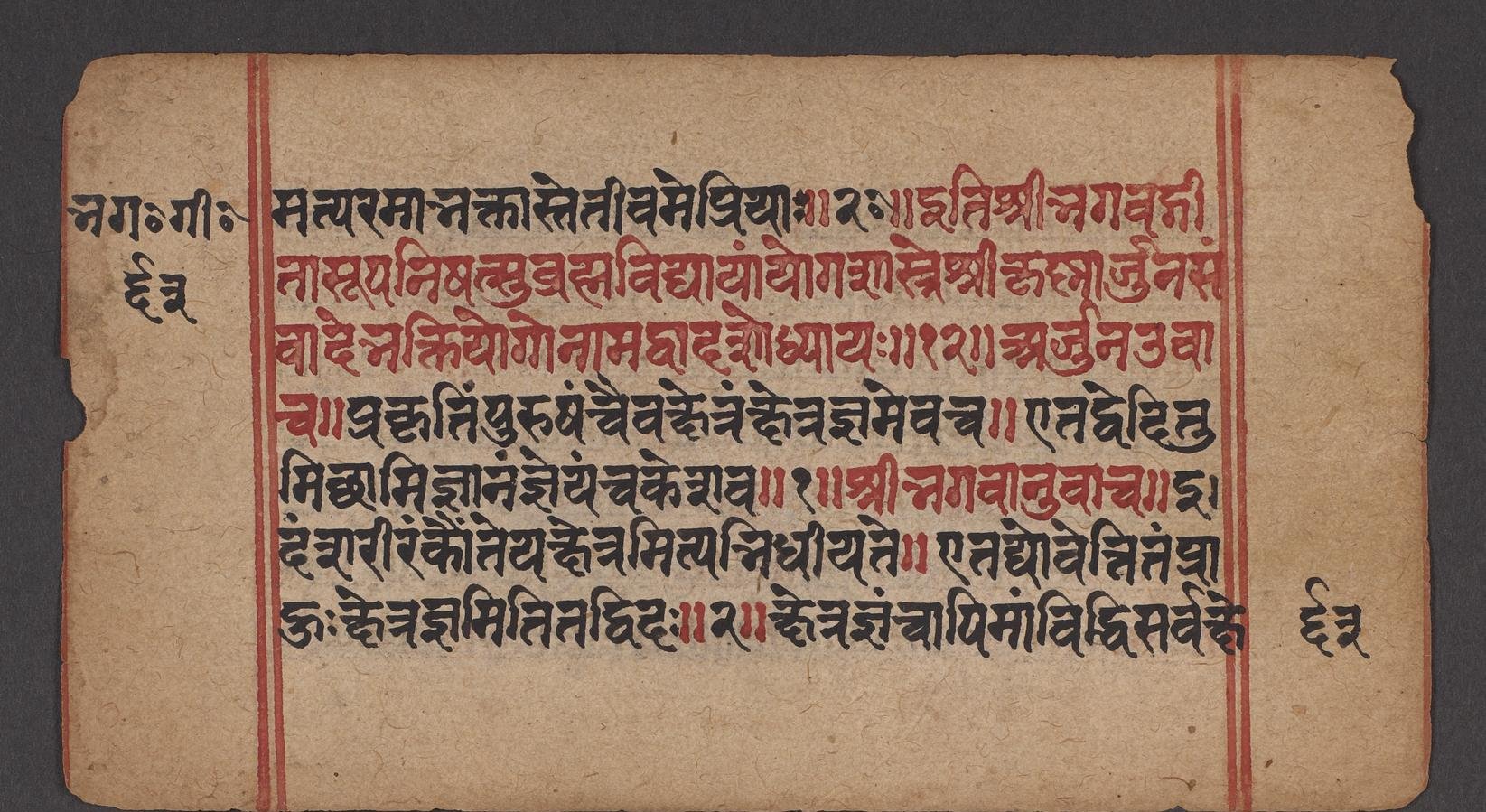
fol. 63v, OPenn image 6555_0063 (upper leaf). Checked on the image: ||20|| line 1; colophon lines 1-3 '... bhaktiyogo nāma dvādaśo 'dhyāyaḥ ||12||'; arjuna uvāca line 3-4; 13.1 'prakṛtiṃ puruṣaṃ caiva' ends line 5 (||1||, the manuscript counts this verse, as Besant does); śrībhagavān uvāca; 13.2 'idaṃ śarīraṃ' ends line 7 (||2||); 13.3 begins line 7.
1अर्जुन उवाच ।
प्रकृतिं पुरुषं चैव क्षेत्रं क्षेत्रज्ञमेव च ।
एतद्वेदितुमिच्छामि ज्ञानं ज्ञेयं च केशव ॥ १ ॥
2श्रीभगवानुवाच ।
इदं शरीरं कौन्तेय क्षेत्रमित्यभिधीयते ।
एतद्यो वेत्ति तं प्राहुः क्षेत्रज्ञ इति तद्विदः ॥ २ ॥
1Arjuna said:
Matter and Spirit, even the Field and the Knower of the Field, wisdom and that which ought to be known, these I fain would learn, O Keshava.
2The Blessed Lord said:
This body, son of Kuntî, is called the Field; that which knoweth it is called the Knower of the Field by the Sages.
Where on the image
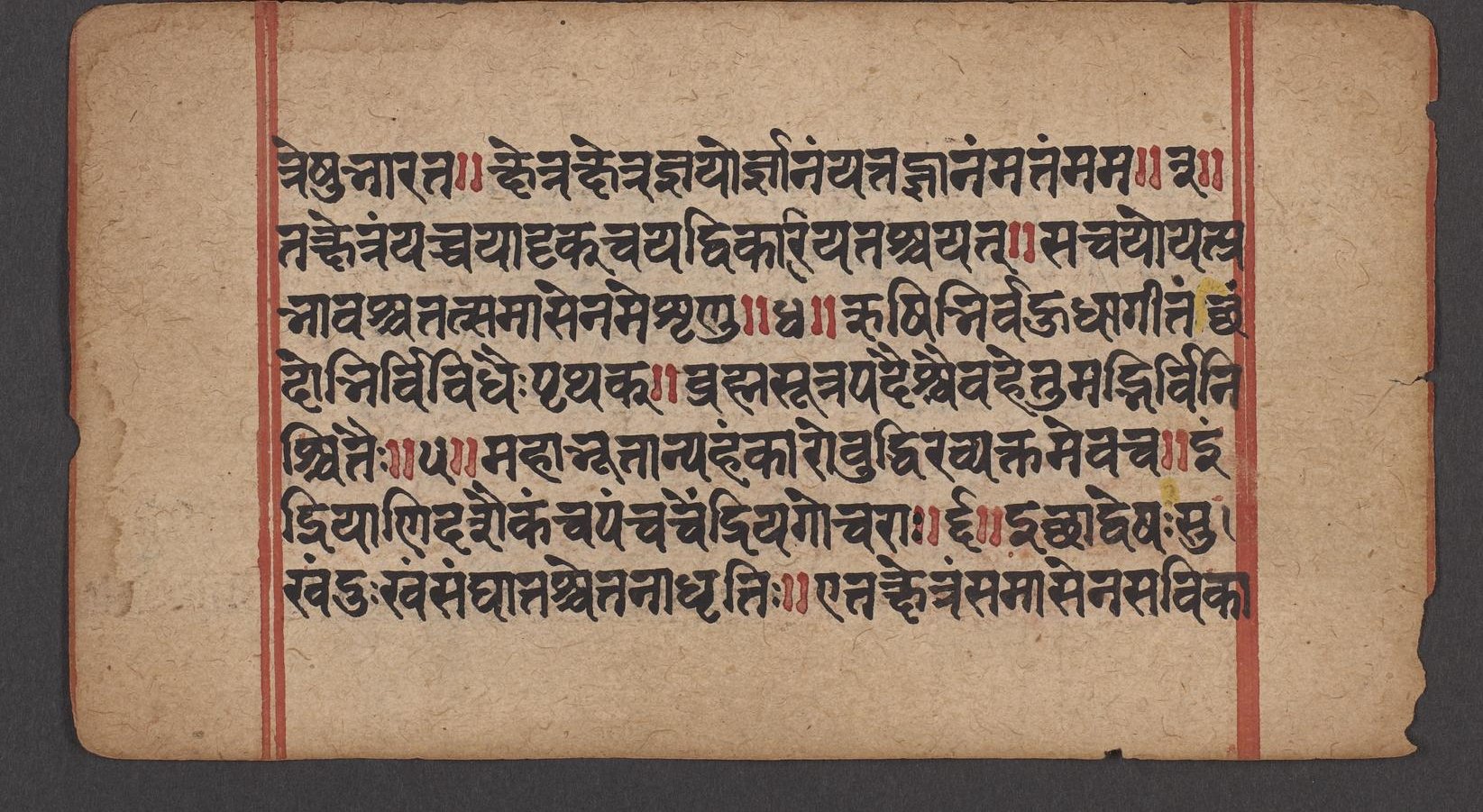
fol. 64r, OPenn image 6555_0063 (lower leaf). Checked on the image: ||3|| line 1 ... ||6|| line 6. Verse 13.3 begins on the previous page, fol. 63v, so both pages are shown.
3क्षेत्रज्ञं चापि मां विद्धि सर्वक्षेत्रेषु भारत ।
क्षेत्रक्षेत्रज्ञयोर्ज्ञानं यत्तज्ज्ञानं मतं मम ॥ ३ ॥
4तत्क्षेत्रं यच्च यादृक् च यद्विकारि यतश्च यत् ।
स च यो यत्प्रभावश्च तत्समासेन मे शृणु ॥ ४ ॥
5ऋषिभिर्बहुधा गीतं छन्दोभिर्विविधैः पृथक् ।
ब्रह्मसूत्रपदैश्चैव हेतुमद्भिर्विनिश्चितैः ॥ ५ ॥
6महाभूतान्यहङ्कारो बुद्धिरव्यक्तमेव च ।
इन्द्रियाणि दशैकं च पञ्च चेन्द्रियगोचराः ॥ ६ ॥
3Understand Me as the Knower of the Field in all Fields, O Bhârata. Wisdom as to the Field and the Knower of the Field, that in My opinion is the wisdom.
4What that Field is and of what nature, how modified, and whence it is, and what He is and what His powers, hear that now briefly from Me.
5Rishis have sung in manifold ways, in many various chants, and in decisive Brahma-sûtra verses full of reasonings.
6The great Elements, Individuality, Reason, and also the unmanifested, the ten senses and the one, and the five pastures of the senses;
Where on the image
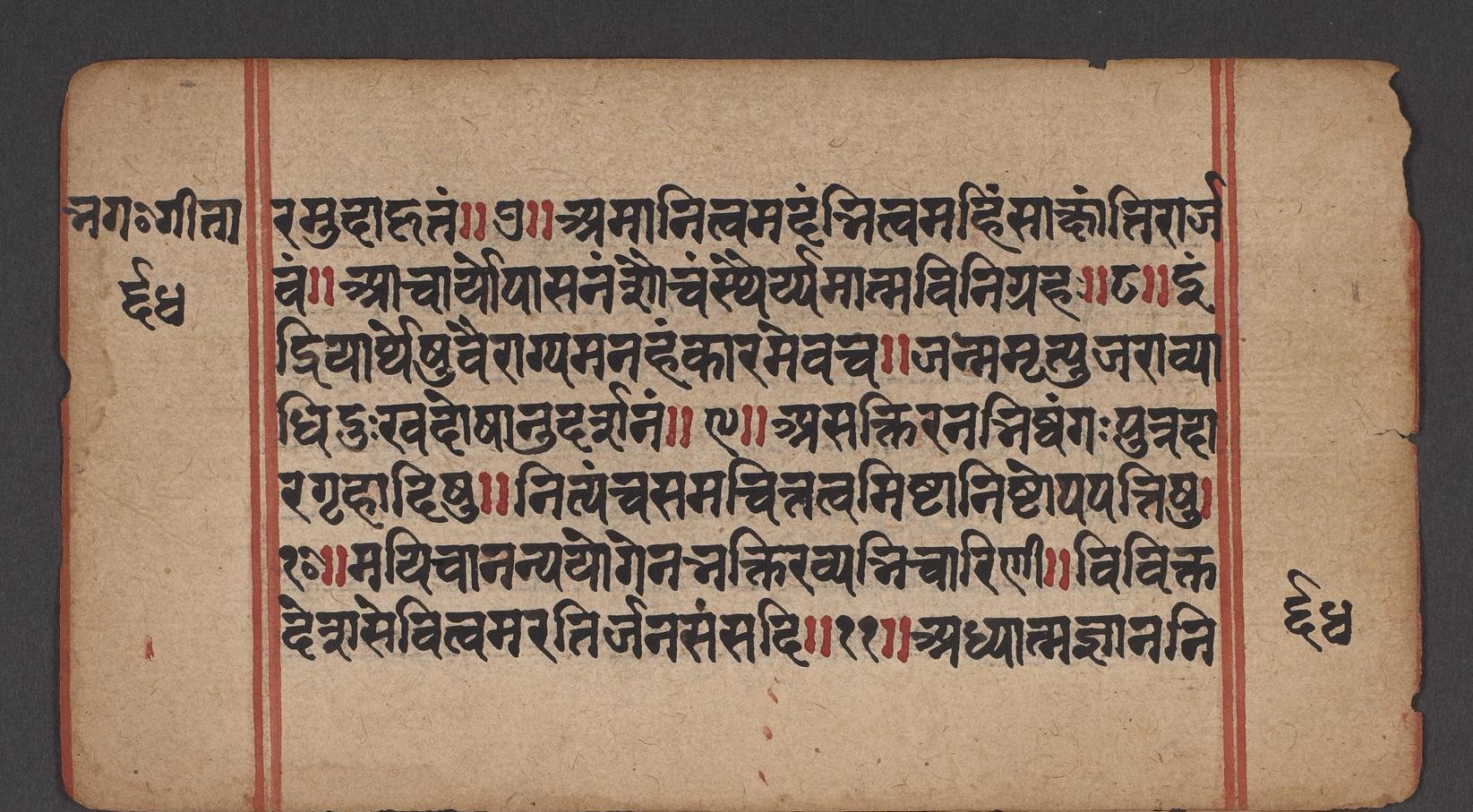
fol. 64v, OPenn image 6555_0064 (upper leaf). Checked on the image: ||7|| line 1 ... ||11|| line 7. Verse 13.7 begins on the previous page, fol. 64r, so both pages are shown.
7इच्छा द्वेषः सुखं दुःखं सङ्घातश्चेतना धृतिः ।
एतत्क्षेत्रं समासेन सविकारमुदाहृतम् ॥ ७ ॥
8अमानित्वमदम्भित्वमहिंसा क्षान्तिरार्जवम् ।
आचार्योपासनं शौचं स्थैर्यमात्मविनिग्रहः ॥ ८ ॥
9इन्द्रियार्थेषु वैराग्यमनहङ्कार एव च ।
जन्ममृत्युजराव्याधिदुःखदोषानुदर्शनम् ॥ ९ ॥
10असक्तिरनभिष्वङ्गः पुत्रदारगृहादिषु ।
नित्यं च समचित्तत्वमिष्टानिष्टोपपत्तिषु ॥ १० ॥
11मयि चानन्ययोगेन भक्तिरव्यभिचारिणी ।
विविक्तदेशसेवित्वमरतिर्जनसंसदि ॥ ११ ॥
7Desire, aversion, pleasure, pain, combination, intelligence, firmness; these, briefly described, constitute the Field and its modifications.
8Humility, unpretentiousness, harmlessness, forgiveness, rectitude, service of the teacher, purity, steadfastness, self-control.
9Dispassion towards the objects of the senses, and also absence of egoism, insight into the pain and evil of birth, death, old age and sickness,
10Unattachment, absence of self-identification with son, wife or home, and constant balance of mind in wished-for and unwished-for events,
11Unflinching devotion to Me by yoga, without other objects, resort to sequestered places, absence of enjoyment in the company of men,
Where on the image
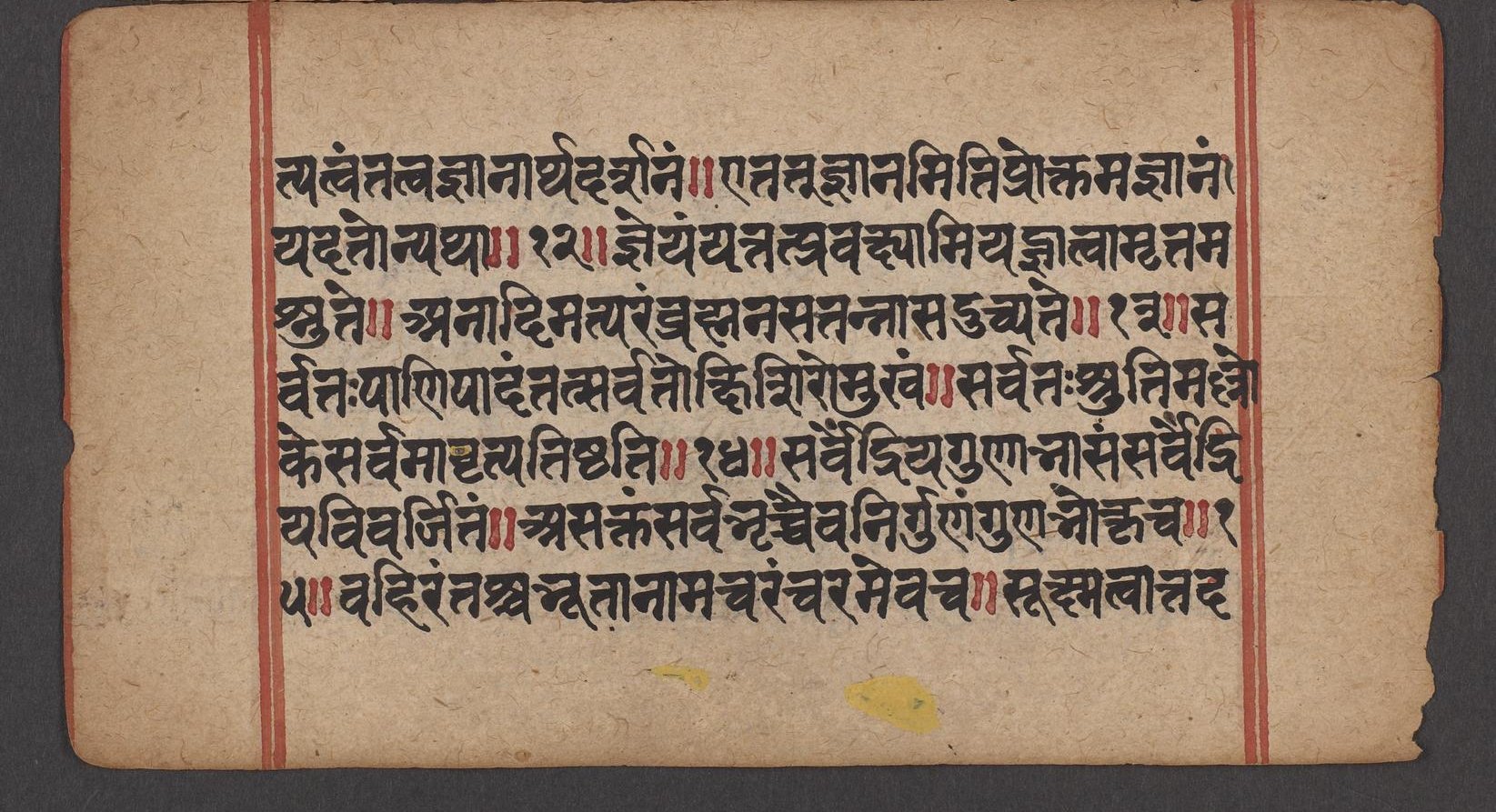
fol. 65r, OPenn image 6555_0064 (lower leaf). Checked on the image: ||12|| line 2 ... ||15|| line 6. Verse 13.12 begins on the previous page, fol. 64v, so both pages are shown.
12अध्यात्मज्ञाननित्यत्वं तत्त्वज्ञानार्थदर्शनम् ।
एतज्ज्ञानमिति प्रोक्तमज्ञानं यदतोऽन्यथा ॥ १२ ॥
13ज्ञेयं यत्तत्प्रवक्ष्यामि यज्ज्ञात्वाऽमृतमश्नुते ।
अनादिमत्परं ब्रह्म न सत्तन्नासदुच्यते ॥ १३ ॥
14सर्वतः पाणिपादं तत्सर्वतोऽक्षिशिरोमुखम् ।
सर्वतः श्रुतिमल्लोके सर्वमावृत्य तिष्ठति ॥ १४ ॥
15सर्वेन्द्रियगुणाभासं सर्वेन्द्रियविवर्जितम् ।
असक्तं सर्वभृच्चैव निर्गुणं गुणभोक्तृ च ॥ १५ ॥
12Constancy in the wisdom of the Self, understanding of the object of essential wisdom; that is declared to be the Wisdom; all against it is ignorance.
13I will declare that which ought to be known, that which being known immortality is enjoyed—the beginningless supreme Eternal, called neither being nor non-being.
14Everywhere That hath hands and feet, everywhere eyes, heads, and mouths; all-hearing, He dwelleth in the world, enveloping all,
15Shining with all sense-faculties without any senses; unattached supporting everything and free from qualities enjoying qualities;
Where on the image
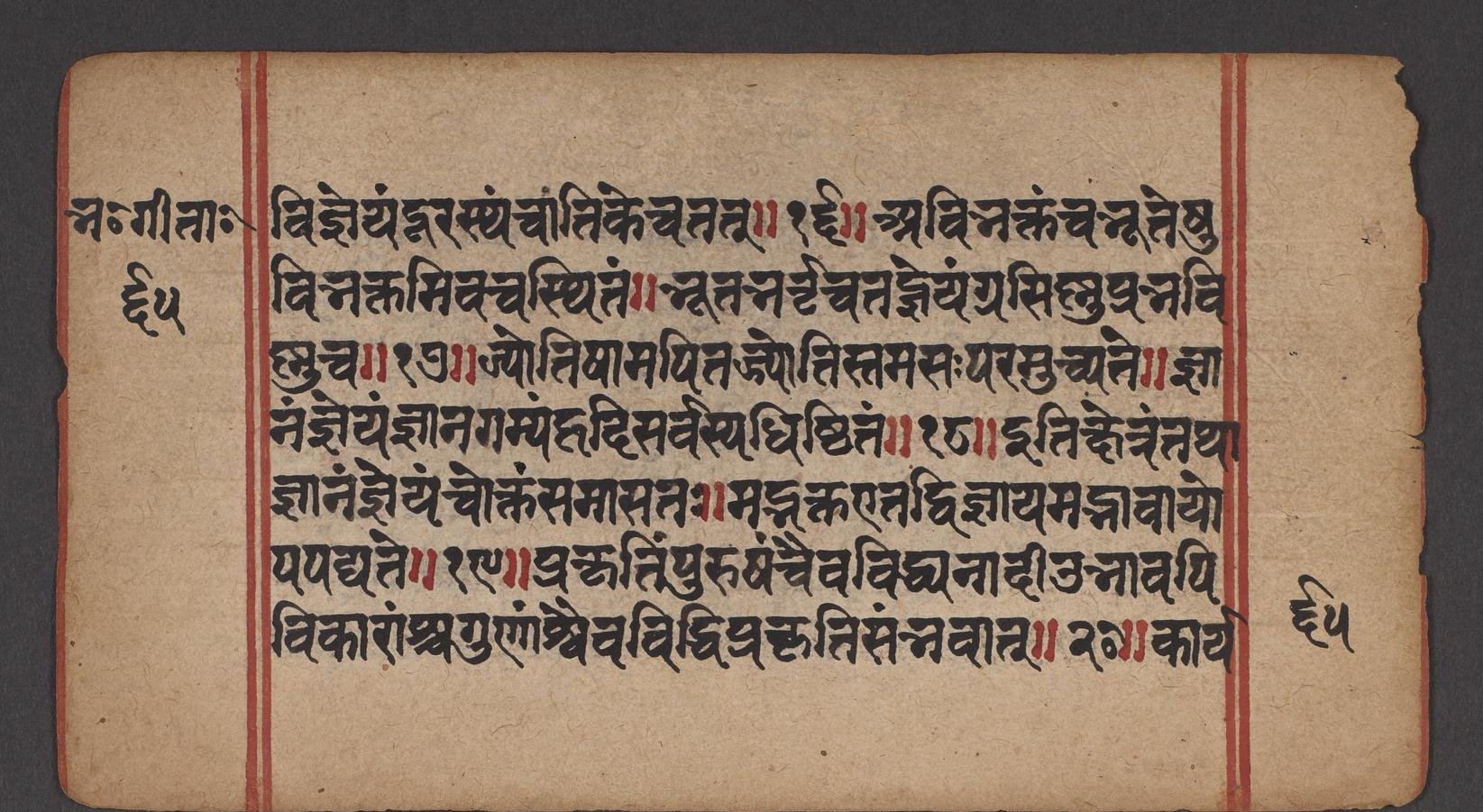
fol. 65v, OPenn image 6555_0065 (upper leaf). Checked on the image: ||16|| line 1 ... ||20|| line 7. Verse 13.16 begins on the previous page, fol. 65r, so both pages are shown.
16बहिरन्तश्च भूतानामचरं चरमेव च ।
सूक्ष्मत्वात्तदविज्ञेयं दूरस्थं चान्तिके च तत् ॥ १६ ॥
17अविभक्तं च भूतेषु विभक्तमिव च स्थितम् ।
भूतभर्तृ च तज्ज्ञेयं ग्रसिष्णु प्रभविष्णु च ॥ १७ ॥
18ज्योतिषामपि तज्ज्योतिस्तमसः परमुच्यते ।
ज्ञानं ज्ञेयं ज्ञानगम्यं हृदि सर्वस्य धिष्ठितम् ॥ १८ ॥
19इति क्षेत्रं तथा ज्ञानं ज्ञेयं चोक्तं समासतः ।
मद्भक्त एतद्विज्ञाय मद्भावायोपपद्यते ॥ १९ ॥
20प्रकृतिं पुरुषं चैव विद्ध्यनादी उभावपि ।
विकारांश्च गुणांश्चैव विद्धि प्रकृतिसंभवान् ॥ २० ॥
16Without and within all beings, immovable and also movable; by reason of His subtlety imperceptible; at hand and far away is That.
17Not divided amid beings, and yet seated distributively; that is to be known as the supporter of beings; He devours and He generates.
18That, the Light of all lights, is said to be beyond darkness; Wisdom, the Object of Wisdom, by Wisdom to be reached, seated in the hearts of all.
19Thus the Field, Wisdom and the Object of Wisdom, have been briefly told. My devotee, thus knowing, enters into My Being.
20Know thou that Matter and Spirit are both without beginning; and know thou also that modifications and qualities are all Matter-born.
Where on the image
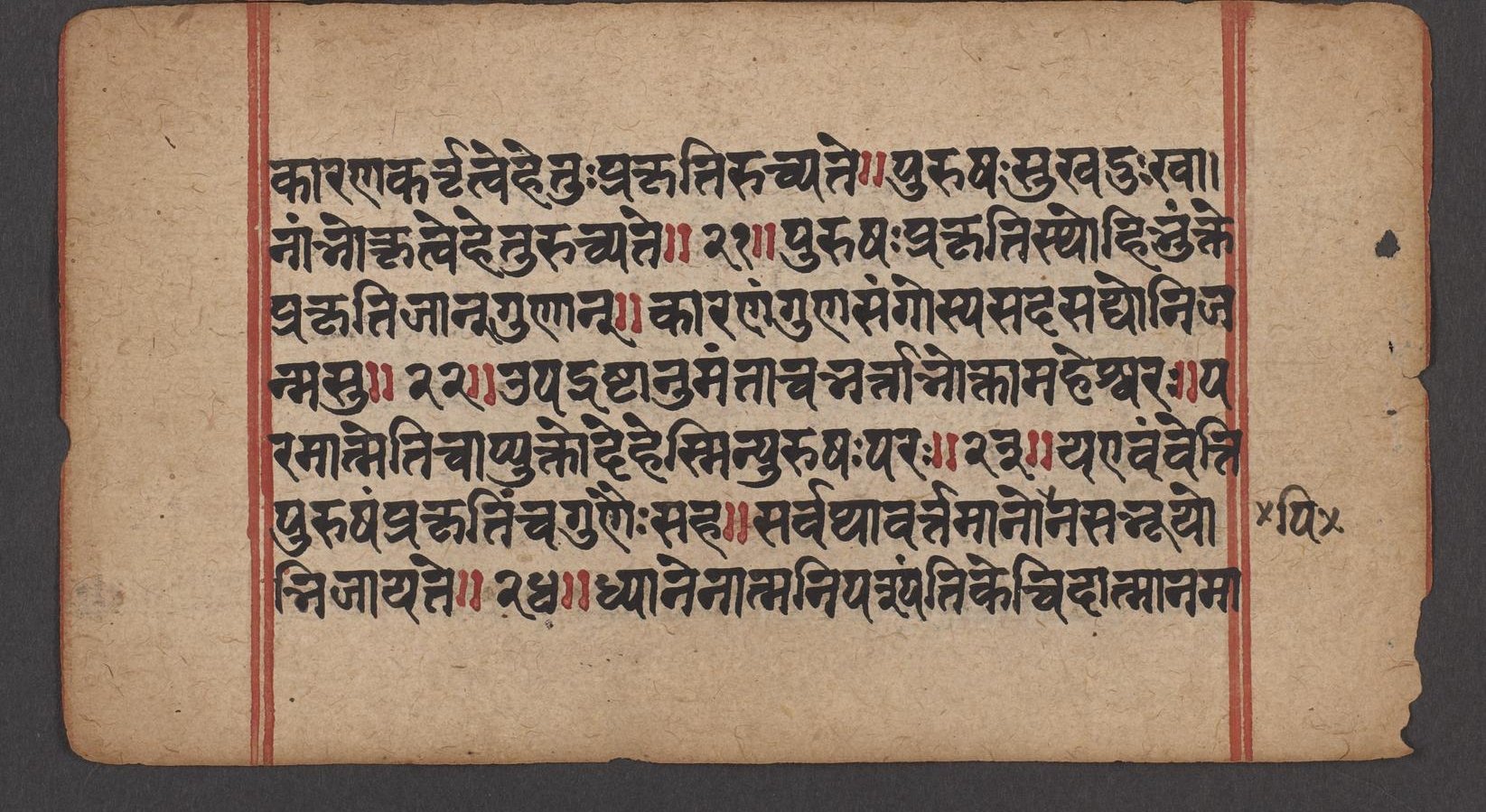
fol. 66r, OPenn image 6555_0065 (lower leaf). Checked on the image: ||21|| line 2 ... ||24|| line 7. Verse 13.21 begins on the previous page, fol. 65v, so both pages are shown.
21कार्यकारणकर्तृत्वे हेतुः प्रकृतिरुच्यते ।
पुरुषः सुखदुःखानां भोक्तृत्वे हेतुरुच्यते ॥ २१ ॥
22पुरुषः प्रकृतिस्थो हि भुङ्क्ते प्रकृतिजान्गुणान् ।
कारणं गुणसङ्गोऽस्य सदसद्योनिजन्मसु ॥ २२ ॥
23उपद्रष्टाऽनुमन्ता च भर्ता भोक्ता महेश्वरः ।
परमात्मेति चाप्युक्तो देहेऽस्मिन्पुरुषः परः ॥ २३ ॥
24य एवं वेत्ति पुरुषं प्रकृतिं च गुणैः सह ।
सर्वथा वर्तमानोऽपि न स भूयोऽभिजायते ॥ २४ ॥
21Matter is called the cause of the generation of causes and effects; Spirit is called the cause of the enjoyment of pleasure and pain.
22Spirit seated in Matter useth the qualities born of Matter; attachment to the qualities is the cause of his births in good and evil wombs.
23Supervisor and permitter, supporter, enjoyer, the great Lord, and also the supreme Self; thus is styled in this body the supreme Spirit.
24He who thus knoweth Spirit and Matter with its qualities, in whatsoever condition he may be, he shall not be born again.
Where on the image
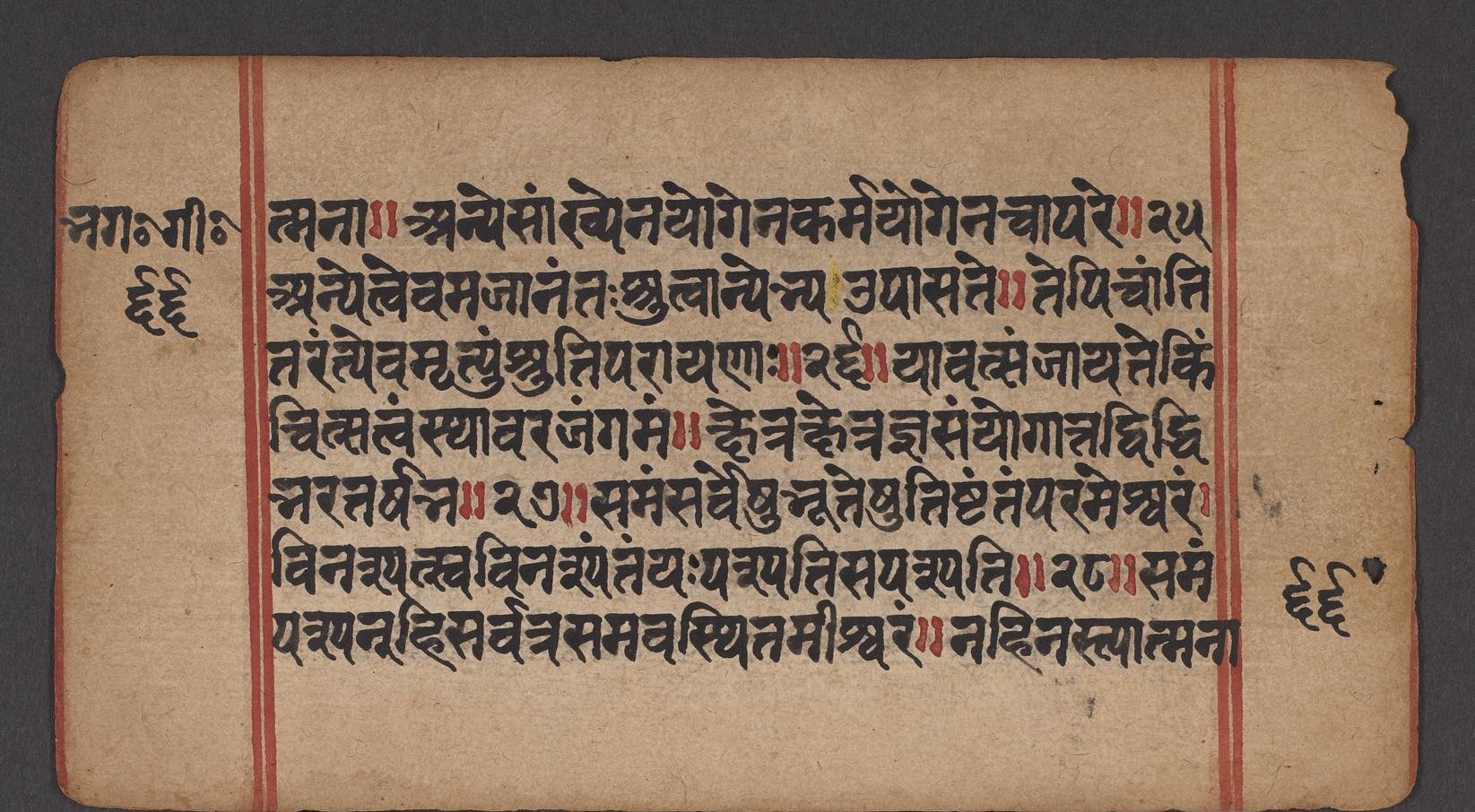
fol. 66v, OPenn image 6555_0066 (upper leaf). Checked on the image: ||25|| line 1 ... ||28|| line 6. Verse 13.25 begins on the previous page, fol. 66r, so both pages are shown.
25ध्यानेनात्मनि पश्यन्ति केचिदात्मानमात्मना ।
अन्ये साङ्ख्येन योगेन कर्मयोगेन चापरे ॥ २५ ॥
26अन्ये त्वेवमजानन्तः श्रुत्वाऽन्येभ्य उपासते ।
तेऽपि चातितरन्त्येव मृत्युं श्रुतिपरायणाः ॥ २६ ॥
27यावत्सञ्जायते किञ्चित्सत्त्वं स्थावरजङ्गमम् ।
क्षेत्रक्षेत्रज्ञसंयोगात्तद्विद्धि भरतर्षभ ॥ २७ ॥
28समं सर्वेषु भूतेषु तिष्ठन्तं परमेश्वरम् ।
विनश्यत्स्वविनश्यन्तं यः पश्यति स पश्यति ॥ २८ ॥
25Some by meditation behold the Self in the self by the Self; others by the Sânkhya Yoga, and others by the Yoga of Action;
26Others also, ignorant of this, having heard of it from others, worship; and these also cross beyond death, adhering to what they had heard.
27Whatsoever creature is born immobile or mobile, know thou, O best of the Bhâratas, that it is from the union between the Field and the Knower of the Field.
28Seated equally in all beings, the supreme Lord, unperishing within the perishing—he who thus seeth, he seeth.
Where on the image
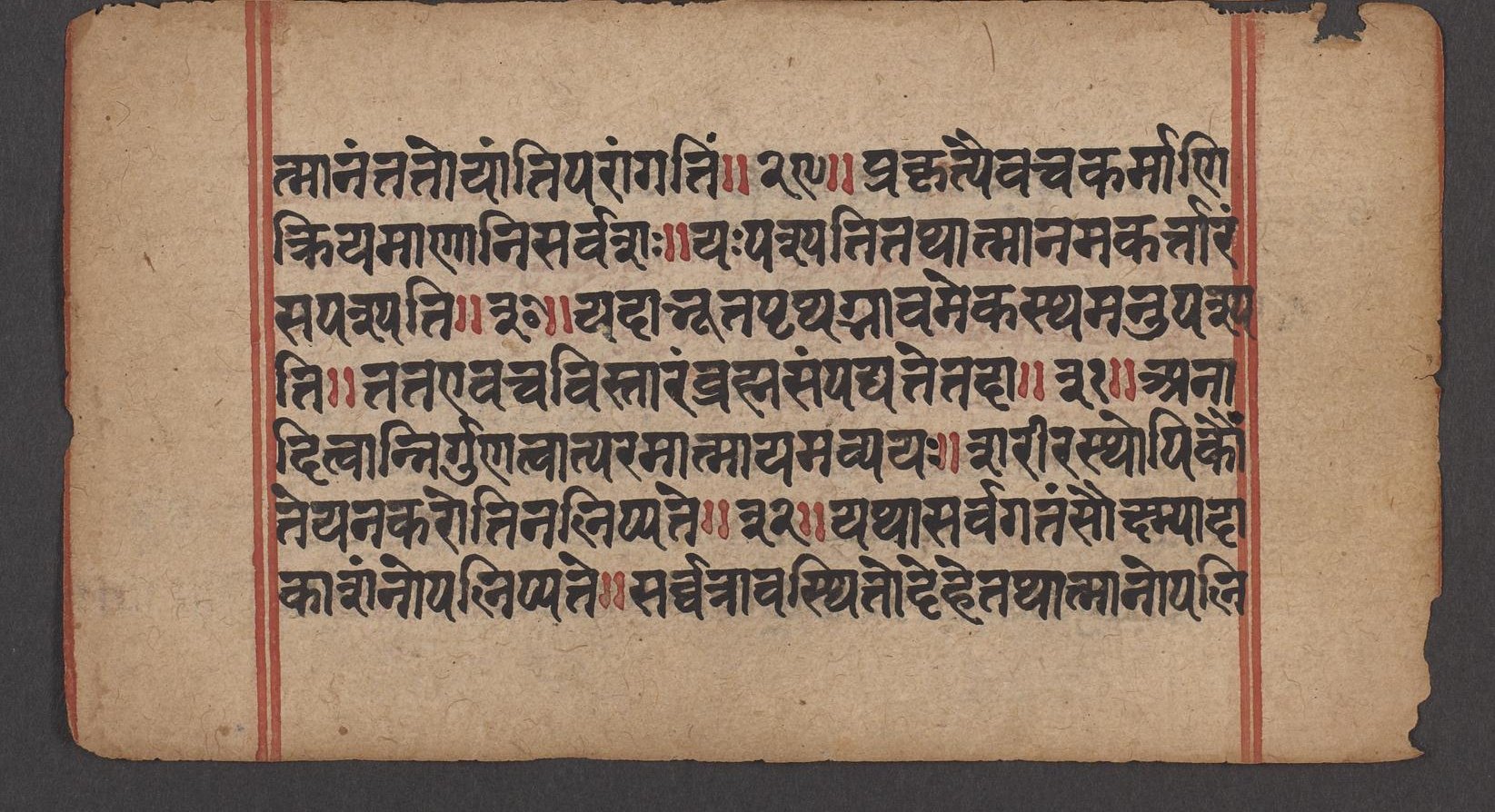
fol. 67r, OPenn image 6555_0066 (lower leaf). Checked on the image: ||29|| line 1 ... ||32|| line 6. Verse 13.29 begins on the previous page, fol. 66v, so both pages are shown.
29समं पश्यन्हि सर्वत्र समवस्थितमीश्वरम् ।
न हिनस्त्यात्मनाऽऽत्मानं ततो याति परां गतिम् ॥ २९ ॥
30प्रकृत्यैव च कर्माणि क्रियमाणानि सर्वशः ।
यः पश्यति तथाऽऽत्मानमकर्तारं स पश्यति ॥ ३० ॥
31यदा भूतपृथग्भावमेकस्थमनुपश्यति ।
तत एव च विस्तारं ब्रह्म संपद्यते तदा ॥ ३१ ॥
32अनादित्वान्निर्गुणत्वात्परमात्माऽयमव्ययः ।
शरीरस्थोऽपि कौन्तेय न करोति न लिप्यते ॥ ३२ ॥
29Seeing indeed everywhere the same Lord equally dwelling, he doth not destroy the Self, and thus treads the highest Path.
30He who seeth that Matter verily performeth all actions, and that the Self is actionless, he seeth.
31When he perceiveth the diversified existence of beings as rooted in One, and spreading forth from it, then he reacheth the Eternal
32Being beginningless and without qualities, the imperishable supreme Self, though seated in the body, O Kaunteya, worketh not nor is affected.
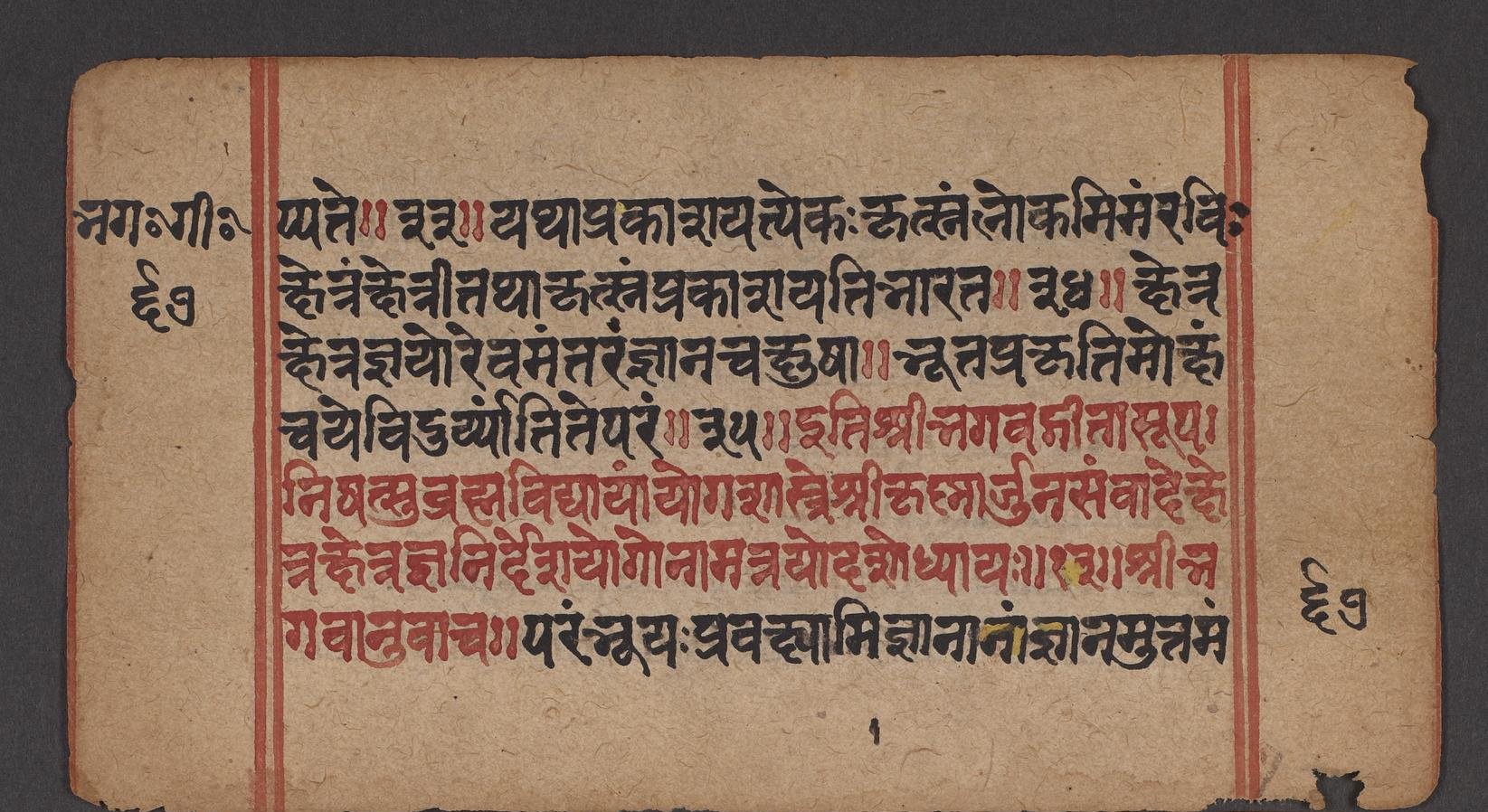
Where on the image
fol. 67v, OPenn image 6555_0067 (upper leaf). Checked on the image: ||33|| line 1, ||34|| line 2, ||35|| line 4; colophon lines 4-6 '... kṣetrakṣetrajñavibhāgayogo nāma trayodaśo 'dhyāyaḥ ||13||'; śrībhagavān uvāca line 6; 14.1 begins line 7. Verse 13.33 begins on the previous page, fol. 67r, so both pages are shown.
33यथा सर्वगतं सौक्ष्म्यादाकाशं नोपलिप्यते ।
सर्वत्रावस्थितो देहे तथाऽऽमा नोपलिप्यते ॥ ३३ ॥
34यथा प्रकाशयत्येकः कृत्स्नं लोकमिमं रविः ।
क्षेत्रं क्षेत्री तथा कृत्स्नं प्रकाशयति भारत ॥ ३४ ॥
35क्षेत्रक्षेत्रज्ञयोरेवमन्तरं ज्ञानचक्षुषा ।
भूतप्रकृतिमोक्षं च ये विदुर्यान्ति ते परम् ॥ ३५ ॥
33As the omnipresent ether is not affected, by reason of its subtlety, so seated everywhere in the body the Self is not affected.
34As the one sun illumineth the whole earth, so the Lord of the Field illumineth the whole Field, O Bhârata.
35They who by the eyes of Wisdom perceive this difference between the Field and the Knower of the Field, and the liberation of beings from Matter they go to the Supreme.
Where on the image
fol. 67v: ||33|| line 1, ||34|| line 2, ||35|| line 4; colophon lines 4-6 '... kṣetrakṣetrajñavibhāgayogo nāma trayodaśo 'dhyāyaḥ ||13||'; śrībhagavān uvāca line 6; 14.1 begins line 7. The manuscript names the chapter kṣetrakṣetrajñavibhāgayoga; the Sanskrit and English shown are the colophon printed in Besant's edition, whose wording differs in places from the manuscript's.
इति श्रीमद्भगवद्गीता॰ क्षेत्रक्षेत्रज्ञविभागयोगो नाम त्रयोदशोऽध्यायः ।
Thus in the glorious Upanishads of the Bhagavad-Gita, the science of the Eternal, the scripture of Yoga, the dialogue between Shrî Krishna and Arjuna, the thirteenth discourse entitled: THE YOGA OF THE DISTINCTION BETWEEN THE FIELD AND THE KNOWER OF THE FIELD.
Notes
- Sanskrit and English: Annie Besant, The Bhagavad-Gita, 4th edition (Madras: G. A. Natesan, 1922), transcription validated on English Wikisource. Besant's footnotes are not reproduced.
- Verse numbers follow Besant and the manuscript, which agree throughout: chapter 13 counts Arjuna's opening question ('prakṛtiṃ puruṣaṃ caiva...') as verse 1, so it has 35 verses and the whole text 701.
- K. T. Telang's translation (Sacred Books of the East 8, 1882) was the first choice for the English, but it is continuous prose without verse divisions, so it cannot be matched to manuscript pages verse by verse; Besant's verse-numbered translation is used instead.
- The last section of each chapter is the chapter colophon. Besant prints most Sanskrit colophons in shortened form (marked with ॰) while her English gives the full formula; the manuscript writes the colophon out in full, and its chapter names differ in places from Besant's (see the scan note).
Cite
Sources
- Source: Penn Ms. Coll. 390 Item 559 (dated 1794) via OPenn + Sanskrit and English of Annie Besant, The Bhagavad-Gita (4th ed. 1922), Wikisource (holding institution)
- Critical edition: Annie Besant, The Bhagavad-Gita, 4th ed. (1922), Sanskrit text, via Wikisource
← previous · → next · v cycle view · l back to library