Book of the Dead, Spell 99: Leading the Boat in or out of Hades (papyrus of Iuefankh)
Introduction
The Book of the Dead, in Egyptian the spells for going forth by day, is a collection of funerary spells written on papyrus rolls and placed in burials from the New Kingdom to the Roman period. Each roll was made for one person, with spells taken from a large repertoire and illustrated with drawings (vignettes). This library gives one complete roll: the papyrus of Iuefankh in the Museo Egizio, Turin (Cat. 1791), written in the Ptolemaic period (332-30 BCE) and coming from Thebes. Richard Lepsius published it in 1842 and divided it into 165 chapters; his numbering is still the standard numbering of the spells, and it is used here.
Spell 99 (Birch: 'The chapter of Leading the Boat in or out of Hades.') is on Lepsius's plates XXXV-XXXVII and on photographs 14, 15 of the 31 Museo Egizio photographs of the roll.
The Egyptian is the transliteration of the Thesaurus Linguae Aegyptiae (edition by Burkhard Backes), with the column number of the spell before each column; the numbers are those of Lepsius's plates. On the papyrus the text runs in vertical columns of cursive hieroglyphs from right to left along the roll; titles and some words are written in red. Signs restored by the editor are in square brackets, signs the scribe left out in angle brackets, superfluous signs in braces and damaged signs in half brackets. The English is the translation by Samuel Birch, published in 1867 and made from Lepsius's copy of this papyrus, so the English and the Egyptian come from the same manuscript. It was the first complete English translation of the Book of the Dead; many passages are now understood differently. Birch's own square brackets give his alternatives and explanations. The photographs are by the Museo Egizio; each shows a stretch of the roll, and the note of each section says where the spell stands on it.
How was this verified? (Provenance)
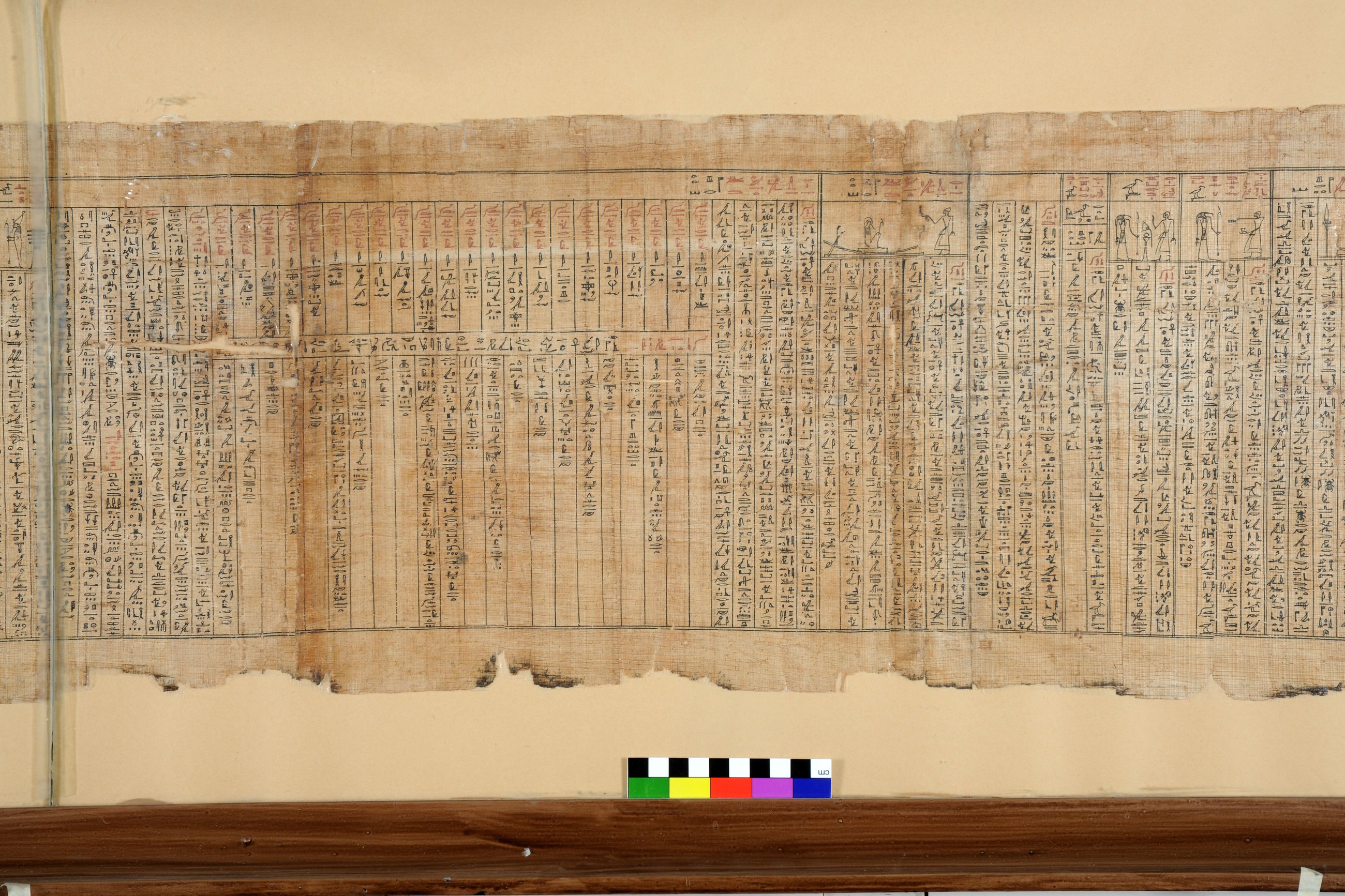
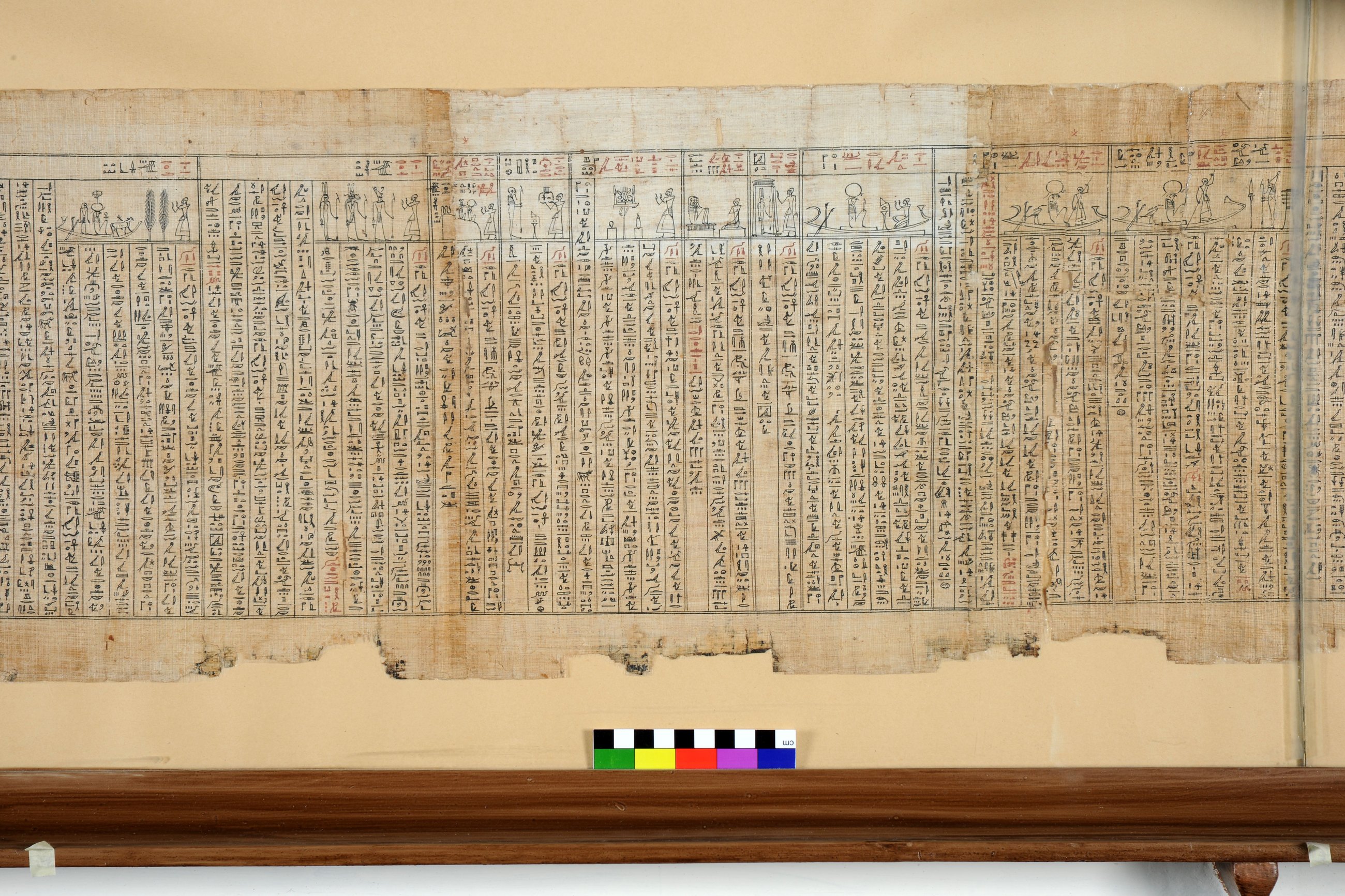
Where on the image
Turin 1791, Spell 99 (TLA Tb 099: title line, columns 1-34; Lepsius 1842, pl. XXXV-XXXVII). Photograph 14 of 31 (Commons Book_of_the_Dead_of_Iuefankh,_papyrus_-_Museo_Egizio_Turin_C_1791_p021.jpg): red title at 51-60%, then its columns with red tops in two registers to the left-hand edge (Lepsius pl. XXXV-XXXVII); it continues on photograph 15. Photograph 15 of 31 (Commons Book_of_the_Dead_of_Iuefankh,_papyrus_-_Museo_Egizio_Turin_C_1791_p020.jpg): its last columns at 93-100%. Checked by eye: the photographs were matched to Lepsius's plates by their vignettes, red titles and framed compartments, and the overlapping edges of neighbouring photographs were compared.
titlerʾ n jni̯〈.t〉 mẖn,t m ẖr,t-nṯr
1ḏd-mdw jn Wsjr […] mꜣꜥ-ḫrw j jni̯ mẖn,t nw,w ḥr ṯz{,t} pwy qsn jni̯ n =j mẖn,t ṯz n =j ꜥq〈ꜣ〉 ⸢jti̯⸣ m-ḥtp zp-2 mi̯ zp-2
2ḫꜣḫ zp-2 jy.n =j r mꜣꜣ jti̯ =j Wsjr j nb jns〈,j〉 sḫm m ꜣw〈,t〉-jb ky-ḏd ḫsf ḥ〈ꜣ〉,tj.pl j nb jgp ṯꜣy sqd,wt j sqdi̯ ḥr ṯz{,t} pwy n
3ꜥꜣpp j ṯz tp.pl smn wsr,t.pl m pri̯〈.t〉 m nzp,w j jr,j mẖn〈,t〉 štꜣ zꜣw ꜥꜣpp jni̯ n =j mẖn〈,t〉 ṯz n =j ꜥq〈ꜣ〉 r pri̯{.n} =j
4jm =f tꜣ pn qsn ḫr sḫd〈.w〉 sbꜣ.pl jm 〈ḥr〉 ḥr =sn 〈n〉 gmi̯ =sn ṯzi̯ =sn s〈n〉 ḥnswꜣ m nsr,t!! n Rꜥ,w ⸢jnb,w⸣ sšmi̯ Tꜣ,du mn Gꜣb,w
5ḥm〈w〉 =sn sḫm n p,t wn jtn ḥr dšr,t jni̯ wj m jwi̯ {jy}〈mi̯〉 ꜣḫ pn hꜣi̯ =k r b〈w〉 ꜥnḫ =k jm =f ky-ḏd sw!! wḏꜣ =k r b〈w〉 rḫ.n =k jm
6aḏd n =j rn =j j.n mnjw
line opening 6b-27bḏ〈d〉-md,t jn Wsjr […] mꜣꜥ-ḫrw ḫr Rꜥ,w msi̯.n […] mꜣꜥ〈.t〉-ḫrw ḫr Wsjr-ḫnt〈,j〉-jmn,tt
6bnb〈,t〉-Tꜣ,du m krjw rn =ṯ
7aḏd n =j rn =j j.n ḫrp
7bḫnd Ḥp rn =k
8aḏd n =j rn =j j.n ḥꜣ,t〈t〉
8bḥnkz,tj mn{jw} Jnp〈,w〉 m kꜣ,t wtj rn =ṯ
9aḏd n =j rn =j j.n wḏ,y
9b⸢sꜥꜥ,t⸣.pl pw n.t ẖr,t-nṯr rn =ṯ
10aḏd n =j rn =j j.n {j}〈ḥ〉p,t
10bkk,w rn =ṯ
11aḏd n =j rn =j j.n ḫt-ṯꜣw
11bjni̯ wr〈,t〉 m-ḫt wꜣi̯.w =s rn =k
12aḏd n =j rn =j j.n ꜥnnt ẖr,j
12bjꜣ,t pw n.t Wpi̯-wꜣ,tpl rn =k
13aḏd n =j rn =j j.n bḏꜣ
13bšbb Jms,tj rn =k
14aḏd n =j rn =j j.n ḥwtꜣ
14bNw,t rn =ṯ
15aḏd n =j rn =j j.n šd,w ꜥ,t.pl
15bjri̯.n =j ṯn m mskꜣ n Mr-wr ky-ḏd m db.pl n〈.w〉 Swtj rn =ṯn
16aḏd n =j rn =j j.n wsr.pl
16bḏbꜥ.pl pw n〈.w〉 Ḥr,w-sms rn =ṯn
17aḏd n =j rn =j j.n mḏꜣb,w
17bḏr,t pw n ꜣs,t ḥr pnq znf n jr,t-Ḥr,w ky-ḏd ḥr dr rḏw n jr,t-Ḥr,w rn =ṯ
18aḏd n =j rn =j j.n wgꜣ,y jm,j ẖ,t
18bJms,tj Ḥpy Dwꜣ-mw,t≡f Qbḥ-sn,pl≡f Ḥꜣq Jṯi̯ m-ꜥwꜣi̯,y Mꜣꜣ-jti̯≡f Jri̯-rn≡f-ḏs≡f rn =ṯn
19aḏd n =j rn =j j.n zmꜣ,t =f
19bḫnt,j sp,t.pl rn =ṯ
20aḏd n =j rn =j j.n jbs,t
20bMr,t rn =ṯ
21aḏd n =j rn =j j.n ḥm〈w〉
21bꜥq〈ꜣ〉 jꜣḫ.w štꜣ ḏnḥ.w rn =k
22aḏd n =j rn =j j.n dp,t
22bwꜥr,t pw n.t Ḥw,t-Ḥr,w šꜥd.n Rꜥ,w m ḏꜣi̯.t ꜥ m jni̯ n =f ⸢znf⸣ r sk,tj rn =ṯ
23aḏd n =j rn =j j.n nfj
23bwy pw rn =k
24aḏd n =j rn =j j.n ṯꜣw ḏr{tw} zbi̯ =k jm =〈j〉
24bmḥ,t pri̯ m Jtm,w r fntj n ḫnt,j-jmn,tt rn =k
25aḏd n =j rn =j j.n jtr,w ḏr ḏꜣi̯ =k jm =〈j〉
25bp〈t〉r =sn rn =k
26aḏd n =j rn =j j.n ꜥḫm〈,t〉
26bḥtm ꜣw-ꜥ m wꜥb〈,t〉 rn =ṯ
27aḏd n =j rn =j j.n zꜣ,t ḏr ḫnd =k ḥr =j
27bḫnt,j-p,t pri̯ m wtj m sḫ,t-jꜣl pri̯ ḥꜥꜥ〈,w〉 jm =f ky-ḏd jti̯ =f rn =k
28ḏd.t ḫft =sn j:nḏ-ḥr =ṯn nfr.pl kꜣ.pl nb.pl-mꜣꜥ,t wnn ꜥnḫ〈.w〉 r-nḥḥ ḥn,tj r ḏ,t wbꜣ.pl 〈n〉 =j jrf mw ḏi̯! =ṯn n =j dbḥ,w ḥtp
29r rʾ =j md{,t}〈wi̯〉 =j jm =f šns r qfn ky-ḏd psj s,t wsḫ〈.t〉 m-bꜣḥ nṯr-ꜥꜣ jw =j rḫ.kw nṯr =ṯn pwy ḏi̯! =ṯn ḏfꜣ r fntj =f Tnm
30ky-ḏd Rkm rn =f jw =f wbꜣ =f m ꜣḫ,t jꜣb,t〈j〉.t n.t p,t jw =f ḫpi̯ =f m ꜣḫ,t jmn,t〈j〉.t n.t p,t Rkm rf rwj =f rwj =j nn dr.w =j ḥr msq〈,t〉
31nn ⸢sḫm⸣ sbj.pl m jwf =j pn jw tʾ =j m Pi̯ ḥ〈n〉q〈,t〉 =j m Dp jw n =j ꜣw〈,t〉-ꜥ pw bd,t jt ꜣw〈,t〉-ꜥ pw ꜥntjw ḥbs
32ꜣpd.pl ꜣw〈,t〉-ꜥ pw ꜥnḫ ꜣw〈,t〉-ꜥ pri̯〈.t〉 m hrw m ḫpr,w nb mrr!{.wt} jr rḫ rʾ pn pri̯ =f m sḫ,t-jꜣl jw ḏḏ! =tw n =f šns ds
33pz〈n〉 〈j〉r ꜣḥ,t.pl jm,j jt btj m mḥ 7 šms,pl-Ḥr,w ꜣzḫ sn wšꜥ.ḫr =f m nn n jt btj ꜣw〈,t〉-ꜥ pw n.t hrw pn
34zjn.ḫr =f ḥꜥ =f jm wnn.ḫr ḥꜥ =f mj nn n nṯr.pl jm =f pri̯ =f m sḫ,t-jꜣl m ḫpr,w nb n mr,wt =f pri̯〈.t〉 jm =f
XCIX. The chapter of Leading the Boat in or out of Hades.
On Bringer of the Bark [Makhen] in this dreadful shore! I bring the Bark. I have weighed anchor [unwound its rope] in peace. Come come near —near. I have come to see my father Osiris. Oh Lord of Clothes, prevailing by his courage, or turning back hearts! Oh Lord, destroying a man in the passage! Oh Passage out of this border of the Apepi [Apophis]! Oh Binding up the Heads! setting the limbs when they come from the Assaulters? Oh Guardian of the secret Boat, guarding the Apepi! I have brought the Boat, I have loosed the rope [I have weighed anchor], so that I have come out in it from this wretched place. The Gods fell down flat on their faces. They find, they transport [it], making it to return and go along in the flame of the Sun. .. passing this country where Kabu [Seb] stays. They paddle the oar of the heaven when the disk is red. I brought the Boat, at the coming of this Spirit. Go thou to the place, live there, it carries thee to the place thou knowest where.
[Then each part speaks thus :]
1. Anchor [Bark]. Tell me my name.
Answer.— Lord of the Earth in a Box is thy name.
2. Rudder. Tell me my name.
Answer Trampler on Hapi is thy name.
3. Rope Tell me my name.
Answer. — The hair which Anepu brings for his work [his work] of Embalmment is thy name.
4. Poop. — Tell me my name.
Answer.— The Great one of the Paths of Hades.
5. Hold. Tell me my name.
Answer. — Darkness is thy name.
G. Mast Tell me my name.
Answer. — Great Bringer and Taker away is thy name. Halyard.— Tell me my name.
Answer. — The Spine of Apheru is thy name.
Block Tell me my name.
Answer The Throat of Mesta is thy name.
Sail.— Tell me my name.
Answer The Firmament [Nupe] is thy name.
Slay Ropes. — Tell us our name.
Answer. — Ye who are made of the hide of the great Bull (Kamul) or the fingers of the Set, is thy name.
Paddles. — Tell us our name.
. Answer Fingers of the Elder Horus is your name.
Oar-blade.— Tell me my name.
Answer. — The Hand of Isis sprinkling blood out of the Eye of Horus, or rubbing the Filth out of the Eye of Horus, is thy name.
Planks in its body. — Tell us our names.
Answer. — Amset, Hapi, Tuautmutf, Kabhsenuf,
Ilak, Tiemua, Mantefef, Amafgesf, is your name.
Its hull [seat.] — Tell me my name.
Answer. — Dwelling in Space is thy name.
Rope. — Tell me my name.
Answer. — Attached is thy name.
Paddle. — Tell me my name.
Answer. Fingers is thy name; Shining in the
Waters; [the Hidden Seat is thy name.]
Keel. — Tell me my name.
Answer. — The Foot of Athor, which the Sun cuts, when he puts forth his arm to bring her to him in the cabin.
Sailor. — Tell me my name.
Answer. — Course is thy name.
The Wind by which thou goest Tell me my name. Answer. — The North wind proceeding from Atum to the Nostril of him who dwells in the West is thy name.
The River while thou passest. Tell me my name. Answer. — The Visible is thy name.
22. The Bank (?). — Tell me my name.
Answer. — Strangling the Arm in the Waters is thy name.
23. The Floor Before thou treadest on me tell me my name.
Answer. — Dwelling in the Heaven, emanating from the Fields of the Aahlu, coming rejoicing out of it, or rejoicing his Father, is thy name.
IIo says, facing them —
Hail, ye good beings, Lords of Truth, who are living for ever! circling for ever, passing me though the waters. Give ye to me [peaceful prayers] to eat the food, let my mouth have words in it, and cooked or baked cakes [to eat], a place in the Hall of Truth before the Great God. I know this your God, ye give incense [kuphi] to his nostrils. Tekem or Bekem is his name. He passed from the East of the heaven, he has gone from the West of the heaven, Rekem is his name. He comes near, I come near. I am not annihilated in the Meska. The wicked do not eat of this my body. For my bread is from Tu, my drink is of Tap. I have a supply of corn and barley, a supply of perfume and clothes given, ray food is life, my food comes from the Sun in all the requisite transformations.
If he knows this chapter, he comes out of the fields of the Aahlu; he has given to him food, and liquid, and cakes at the fields; he eats of the barley and corn of seven cubits high, which the servants of Horus reap, for him he eats of the aforesaid corn, his food being on that day; for he heals his limbs, for his limbs are like the Gods in it; he comes out of the fields of the Aahlu, in all transformations he desires, ho comes out of it.
Notes
- Birch's English was taken from three scans of Bunsen's Egypt's Place in Universal History, vol. V (1867), on the Internet Archive. The three OCR texts were aligned word by word and each word was settled by their agreement; running heads, page numbers, footnote markers and footnotes were removed. Some OCR errors may remain, chiefly in proper names.
- Birch uses the terms and name forms of his time: Hades, Aahlu (Elysium), Tum for Atum, Seb for Geb, Anup for Anubis, Phoenix or Bennu for the heron.
- Labels such as 'title line' or 'gate 1' before a line of the Egyptian translate the position labels of the TLA.
- The TLA has no hieroglyphic encoding for these texts, so only the transliteration is shown.
Cite
Sources
- Source: Papyrus of Iuefankh, Turin, Museo Egizio Cat. 1791 (Museo Egizio photographs, CC0) + TLA transliteration (ed. B. Backes, CC BY-SA 4.0) + English of Samuel Birch (1867, public domain) (holding institution)
- Critical edition: Thesaurus Linguae Aegyptiae, ed. Burkhard Backes (2018 data, AED-TEI)
← previous · → next · v cycle view · l back to library