Code of Hammurabi: Prologue (obverse, columns i-v)
Introduction
The Code of Hammurabi is the longest and best preserved law collection of ancient Mesopotamia. Hammurabi, king of Babylon (c. 1792-1750 BCE), had it carved on basalt stelae late in his reign. The stele in the Louvre (Sb 8) is 2.25 m high. At the top Hammurabi stands before the seated sun god Shamash, god of justice; below, the text runs in horizontal bands, called columns, read from right to left with the signs set upright in the old monumental manner. The stele was carried off to Susa in Elam as war booty in the 12th century BCE and found there by the French mission of Jacques de Morgan in 1901-1902. Many of its laws touch matters also treated in the law of Moses in the Old Testament, such as false witness, theft, kidnapping, slaves, deposits, goring oxen and the rule of like for like (Exodus 21-23, Leviticus 24, Deuteronomy 19-25).
The prologue fills obverse columns i to v line 25. It tells how the gods Anu and Enlil (Bel) gave Marduk rule over mankind and called Hammurabi 'to cause justice to prevail in the land, to destroy the wicked and the evil, to prevent the strong from oppressing the weak', and then lists the cities and temples of his kingdom that he restored and provided for, from Nippur and Eridu to Ashur and Nineveh.
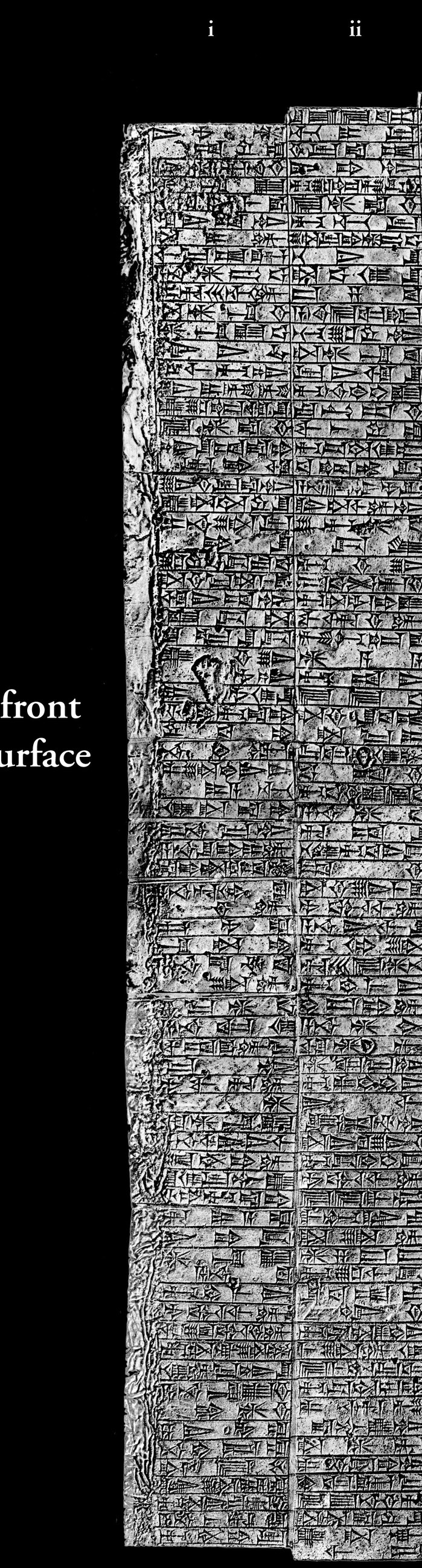
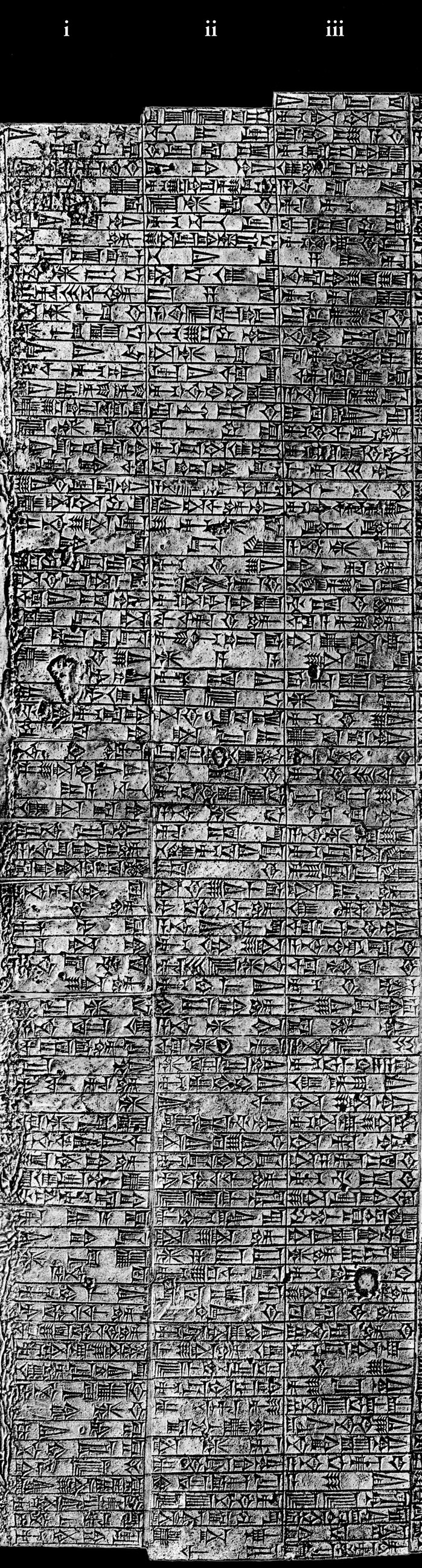
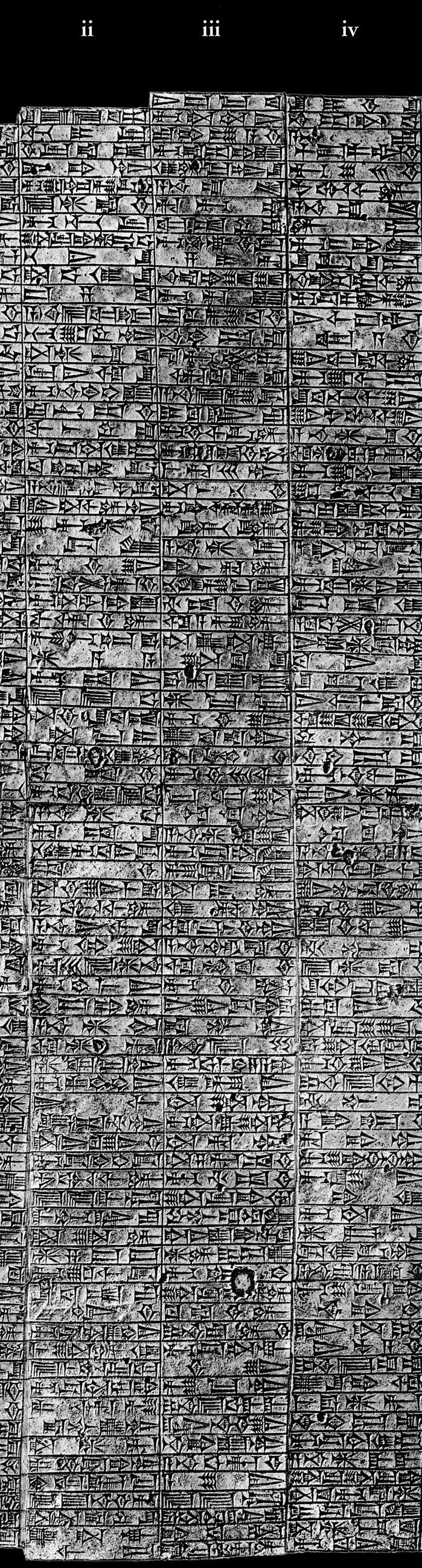
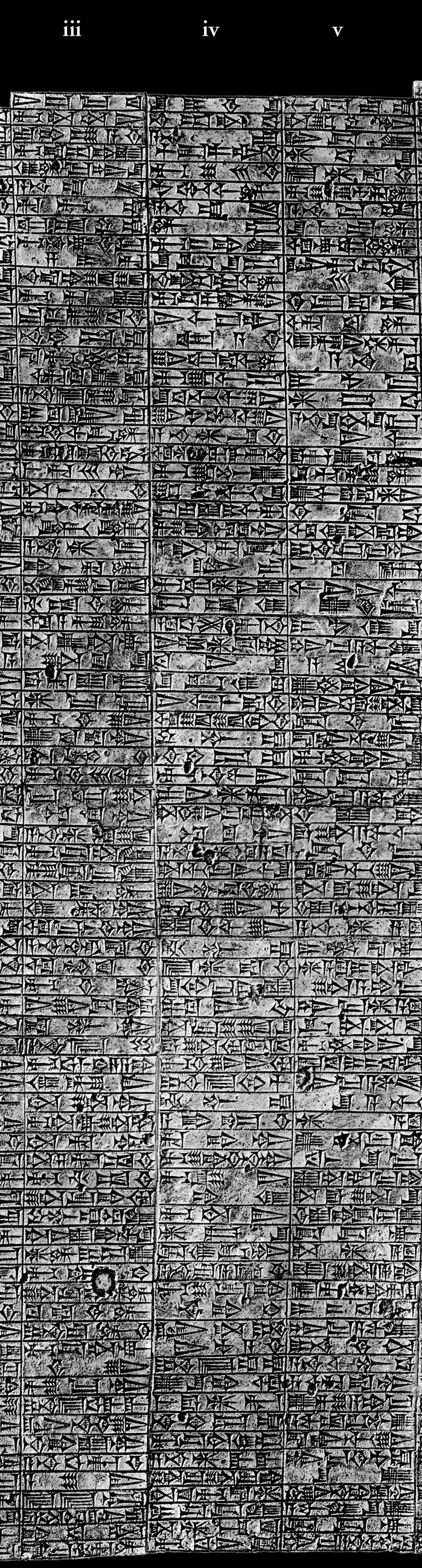
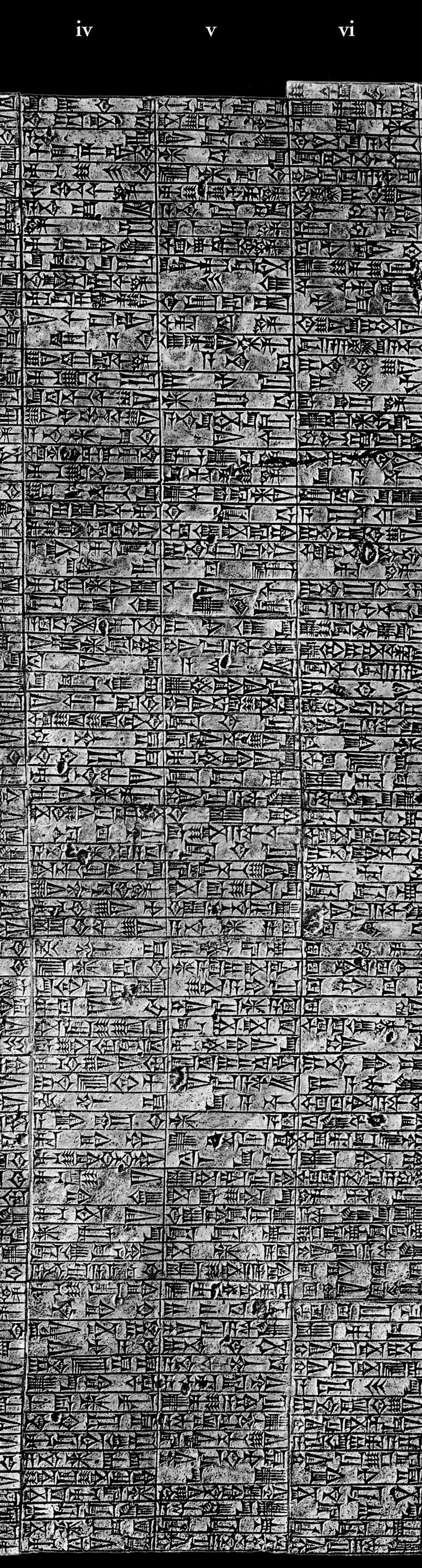
Each section below gives the Akkadian lines of the stele as transliterated by CDLI, with column and line numbers, R. F. Harper's English of 1904, and the photograph of the column that carries those lines. On the obverse each column is shown twice: a colour crop of the band on the stone (the column is the band in the middle of the image) and the same column in the photographic montage of the whole inscription distributed by CDLI, where every column is turned upright and labelled at the top. Reverse columns are shown in the montage. A law that runs over from one column into the next lists both.
How was this verified? (Provenance)

Where on the image
Obverse column i: in the colour crop of the Sailko photograph it is the band in the middle of the image, the first band directly beneath the relief (the relief base is at the top of the image) (the stele's columns are horizontal bands read right to left); in the CDLI montage it is the strip under the label 'i' (front surface). The English is cut at Harper's own column markers '(Col. II)' etc., which he placed where the column begins in his rendering; English word order does not follow the Akkadian line by line.
1i₃-nu an ṣi-ru-um
2LUGAL {d}a-nun-na-ki
3{d}en-lil₂
4be-el ša-me-e
5u₃ er-ṣe-tim
6ša-i-im
7ši-ma-at KALAM
8a-na {d}marduk
9DUMU re-eš-ti-im
10ša {d}en-ki
11{d}en-lil₂-ut
12kiš ni-ši₃
13i-ši-mu-šum
14in i-gi₄-gi₄
15u₂-šar-bi₂-u₃-šu
16babila{ki}
17šum-šu ṣi-ra-am ib-bi-u₃
18in ki-ib-ra-tim
19u₂-ša-ṭe₄-ru-šu
20i-na li-ib-bi-šu
21šar-ru-tam da-ri₂-tam
22ša ki-ma ša-me-e
23u₃ er-ṣe-tim
24iš-da-ša
25šu-ur₂-šu-da
26u₂-ki-in-nu-šum
27i-nu-mi-šu
28{diš}ḫa-am-mu-ra-pi₂
29ru-ba-am
30na-a'-dam
31pa-li-iḫ i₃-li₂ ia-ti
32mi-ša-ra-am
33i-na ma-tim
34a-na šu-pi₂-i-im
35ra-ga-am u₃ ṣe-nam
36a-na ḫu-ul-lu-qi₂-im
37dan-nu-um
38en-ša-am
39a-na la ḫa-ba-li-im
40ki-ma {d}utu
41a-na SAG-GE₆
42wa-ṣe-e-em-ma
43ma-tim
44nu-wu-ri-im
45an
46u₃ {d}en-lil₂
47a-na ši-ir ni-ši
48ṭu₂-ub-bi-im
49šu-mi ib-bu-u₂
50{diš}ḫa-am-mu-ra-pi₂
51re-iu-um
52ni-bi-it
53{d}en-lil₂ a-na-ku
54mu-kam-me-er
55nu-uḫ₂-ši-im
56u₃ ṭu₂-uḫ₂-di-im
57mu-ša-ak-li-il
58mi-im-ma šum-šu
59a-na nibru{ki} DUR-AN-KI
60za-ni-nu-um
61na-a'-du-um
62ša e₂-kur
63LUGAL le-iu-um
64mu-te-er {iri}eridu{ki}
65a-na aš-ri-šu
66mu-ub-bi-ib
When the lofty Anu, king of the Anunnaki, and Bel, lord of heaven and earth, he who determines the destiny of the land, committed the rule of all mankind to Marduk, the chief son of Ea; when they made him great among the Igigi; when they pronounced the lofty name of Babylon; when they made it famous among the quarters of the world and in its midst established an everlasting kingdom whose foundations were firm as heaven and earth—at that time, Anu and Bel called me, Hammurabi, the exalted prince, the worshiper of the gods, to cause justice to prevail in the land, to destroy the wicked and the evil, to prevent the strong from oppressing the weak, to go forth like the Sun over the Black Head Race, to enlighten the land and to further the welfare of the people. Hammurabi, the governor named by Bel, am I, who brought about plenty and abundance; who made everything for Nippur and Durilu complete; the exalted supporter of E-kur; the wise king, who restored Eridu to its place; who purified

Where on the image
Obverse column ii: in the colour crop of the Sailko photograph it is the band in the middle of the image, band 2 counted from the relief down (the stele's columns are horizontal bands read right to left); in the CDLI montage it is the strip under the label 'ii' (front surface). The English is cut at Harper's own column markers '(Col. II)' etc., which he placed where the column begins in his rendering; English word order does not follow the Akkadian line by line.
1šu-luḫ e₂-abzu
2ti-i-ib
3ki-ib-ra-at
4er-be₂-tim
5mu-šar-bi₂ zi-ik-ru
6babila{ki}
7mu-ṭi₃-ib
8li-ib-bi {d}marduk
9be-li₂-šu
10ša u₄-mi-šu
11iz-za-zu
12a-na e₂-sag-il₂
13NUMUN šar-ru-tim
14ša {d}suen
15ib-ni-u₃-šu
16mu-na-aḫ-ḫi-iš
17{iri}uri₅{ki}
18wa-aš-ru-um
19mu-uš-te-mi-qum
20ba-bil₂ ḪE₂-GAL₂
21a-na e₂-kiš-nu-gal₂
22LUGAL ta-ši-im-tim
23še-mu {d}utu da-num₂
24mu-ki-in
25SUḪUŠ zimbir{ki}
26mu-ša-al-bi-iš
27wa-ar-qi₂-im
28gi-gu-ne-e {d}a-a
29mu-ṣi-ir
30e₂-babbar
31ša ki šu-ba-at ša-ma-i
32UR-SAG ga#-mi-il
33larsa{ki}
34mu-u₄-di-iš e₂-babbar
35a-na {d}utu
36re-ṣi-šu
37be-lum mu-ba-li₂-iṭ
38unu{ki}
39ša-ki-in me-e
40nu-uḫ₂-ši-im
41a-na ni-ši-šu
42mu-ul-li
43re-eš e₂-an-na
44mu-kam-me-er
45ḫi-iṣ-bi-im
46a-na AN-nim
47u₃ {d}inanna
48AN-DUL₃ ma-tim
49mu-pa-aḫ-ḫi-ir
50ni-ši sa₆-ap-ḫa-tim
51ša i₃-si-in{ki}
52mu-ṭa-aḫ-ḫi-id
53nu-uḫ₂-ši-im
54E₂ e₂-gal-maḫ
55UŠUMGAL LUGAL-ri₂
56ta-li-im
57{d}za-ba₄-ba₄
58mu-šar-ši-id
59šu-ba-at {iri}kiš{ki}
60mu-uš-ta-as₂-ḫi-ir
61me-le-em-mi
62e₂-me-te-ur-sag
63mu-uš-te-eṣ-bi
64pa-ar-ṣi₂ ra-bu-u₂-tim
65ša {d}inanna
66pa-qi₂-id bi-tim
67ḫur-sag-kalam-ma
68sa-par₄ na-ki-ri
69ša {d}er₃-ra ru-šu
70u₂-ša-ak-ši-du
(Col. II) the sanctuary of E-apsu; who stormed the four quarters of the world; who made the fame of Babylon great; who rejoiced the heart of Marduk, his lord; who daily served in Esagila; of the seed royal, which Sin begat; who filled the city of Ur with plenty; the pious and suppliant one, who brought abundance to E-gis-sir-gal; the diplomatic king, obedient to the mighty Shamash; who refounded Sippar; who clothed with green the shrines of Malkat; who decorated E-babbara, which is like a heavenly dwelling; the warrior, the protector of Larsa; who rebuilt E-babbara for Shamash, his helper; the lord, who gave life to the city of Uruk; who supplied water in abundance to its inhabitants; who raised the turrets of Eanna; who brought riches to Anu and Nana; the divine protector of the land; who collected the scattered people of Nisin; who supplied E-gal-mah with luxurious abundance; the monarch, the city king, the brother of Za-ma-ma; who laid the foundations of the settlement of Kish; who surrounded E-te-me-ur-sag with splendor; who constructed the great shrines of Nana; the patron of the temple of Har-sag-kalama, the grave of the enemy; whose help brings victory

Where on the image
Obverse column iii: in the colour crop of the Sailko photograph it is the band in the middle of the image, band 3 counted from the relief down (the stele's columns are horizontal bands read right to left); in the CDLI montage it is the strip under the label 'iii' (front surface). The English is cut at Harper's own column markers '(Col. II)' etc., which he placed where the column begins in his rendering; English word order does not follow the Akkadian line by line.
1ni-iz-ma-su₂
2mu-ša-te-er
3{iri}gu₂-du₈-a{ki}
4mu-ra-ap-pi₂-iš
5mi-im-ma šum-šu
6ana mes-lam
7ri-mu-um
8ka-ad-ru-um
9mu-na-ak-ki-ip za-i-ri
10na-ra-am {d}tu-tu
11mu-ri-iš
12{iri}bar-si₂-pa₂{ki}
13na-a'-du-um
14la mu-up-pa-ar-ku-u₂-um
15a-na e₂-zi-da
16i-lu LUGAL-ri₂
17mu-de IGI-GAL₂-im
18mu-ša-ad-di-il
19me-re-eš-tim
20ša dil-bat{ki}
21mu-ga-ar-ri-in GURU₇-GURU₇
22a-na {d}uraš
23ga-aš-ri-im
24be-lum si₂-ma-at
25ḫa-aṭ-ṭi-im
26u₃ a-ge-em
27ša u₂-ša-ak-li-lu-šu
28e-ri-iš-tum
29{d}ma-ma
30mu-ki-in
31u₂-ṣu₂-ra-tim
32ša keš₃{ki}
33mu-de-eš-ši
34ma-ka-li el-lu-tim
35a-na {d}nin-tu
36mu-uš-ta-lum
37gi-it-ma-lum
38ša-i-im
39mi-ri-tim
40u₃ ma-aš-qi₂-tim
41a-na lagaš{ki}
42u₃ gir₂-su{ki}
43mu-ki-il
44ni-in-da-be₂-e
45ra-bu-tim
46a-na e₂-ninnu
47mu-tam-me-eḫ a-a-bi
48mi-gi₄-ir
49te-li-tim
50mu-ša-ak-li-il
51te-re-tim
52ša zabala₂{ki}
53mu-ḫa-ad-di
54li-ib-bi {d}eš₁₈-dar
55ru-bu-um el-lum
56ša ni-iš qa₂-ti-šu
57{d}iškur i-du-u₂
58mu-ne-eḫ
59li-ib-bi {d}iškur
60gu₂-ra-di-im
61i-na {iri}im{ki}
62mu-uš-ta-ak-ki-in
63si₂-ma-tim
64i-na e₂-u₄-gal-gal
65LUGAL na-di-in
66na-pi₂-iš-tim
67a-na adab{ki}
68a-še-er
69E₂ e₂-maḫ
70e-te-el LUGAL-ri₂
71qa₂-ba-al
72la ma-ḫa-ri-im
(Col. III); who extended the limits of Cutha; who enlarged Shid-lam in every way; the mighty bull, who gores the enemy; the beloved of Tu-tu; who made the city of Borsippa beautiful; the exalted one who was untiring for the welfare of Ezida; the divine city king, wise and intelligent, who extended the settlements of Dilbat; who stored up grain for the mighty Urash; the lord adorned with scepter and crown, whom the wise god Ma-ma has clothed with complete power; who defined the confines of Kish; who made sumptuous the splendid banquets in honor of Nin-tu; the wise and perfect one, who determined the pasture and watering places for Shir-pur-la (Lagash) and Girsu; who provided large sacrifices for the Temple of Fifty; who seizes the enemy; the favorite of the exalted god (oracle); who put into execution the laws of Aleppo; who makes joyful the heart of Anunit; the illustrious prince, the lifting up of whose hands Adad recognizes; who pacifies the heart of Adad, the warrior, in Karkar; who re-established the appointments in E-ud-gal-gal; the king who gave life to Ud-nun-ki; the benefactor of the temple E-mah; the lordly city king; the soldier who has no equal;

Where on the image
Obverse column iv: in the colour crop of the Sailko photograph it is the band in the middle of the image, band 4 counted from the relief down (the stele's columns are horizontal bands read right to left); in the CDLI montage it is the strip under the label 'iv' (front surface). The English is cut at Harper's own column markers '(Col. II)' etc., which he placed where the column begins in his rendering; English word order does not follow the Akkadian line by line.
1šu i-qi₂-šu
2na-ap-ša-tam
3a-na {iri}maš-gan-šabra{ki}
4mu-še-eš-qi₂
5nu-uḫ₂-ši-im
6a-na MES-LAM
7em-qum
8mu-tab-bi-lum
9šu ik-šu-du
10na-ga-ab ur₂-ši-im
11mu-uš-pa-az-zi-ir
12ni-ši ma₃-al-nag-a {ki}
13in ka-ra-ši-im
14mu-šar-ši-du
15šu-ba-ti-ši-in
16in nu-uḫ₂-ši-in
17a-na {d}en-ki
18u₃ {d}dam-gal-nun-na
19mu-šar-bu-u₂
20šar-ru-ti-šu
21da-ri₂-iš i-ši-mu
22zi-bi el-lu-tim
23a-ša-re-ed LUGAL-ri₂
24mu-ka-an-ni-iš
25da-ad-mi
26{i₇}buranun-na
27i₃-tum {d}da-gan
28ba-ni-šu
29šu ig-mi-lu
30ni-ši me-ra{ki}
31u₃ tu-tu-ul{ki}
32ru-bu-um
33na-a'-du-um
34mu-na-wi-ir
35pa-ni {d}tišpak
36ša-ki-in ma-ka-li el-lu-tim
37a-na {d}nin-a-zu
38ša-ṭi₃-ip ni-ši-šu
39in pu-uš-qi₂-im
40mu-ki-in-nu
41iš-di-ši-in
42qer-bu-um
43babila{ki}
44šu-ul-ma-ni-iš
45SIPA ni-ši₃
46ša ep-še-tu-šu
47e-li {d}eš₁₈-dar ṭa-ba
48mu-ki-in-ni {d}eš₁₈-dar
49i-na e₂-ul-maš
50qer-bu-um
51a-ga-de₃{ki}
52re-bi-tim
53mu-še-pi₂ ki-na-tim
54mu-šu-še-er am-mi
55mu-te-er
56{d}lamma-šu
57da-mi-iq-tim
58a-na {iri}a-šur₄{ki}
59mu-še-ep-pi₂ na-bi-ḫi
60LUGAL ša i-na ni-nu-a{ki}
61i-na e₂-mes-mes
62u₂-šu-pi₂-u₃
63me-e {d}inanna
64na-a'-du-um
65mu-uš-te-mi-qum
66a-na DINGIR GAL-GAL
67li-ip-li-pi₂
68ša {diš}su-mu-la-il₃
69IBILA da-num₂
70ša {diš}{d}suen-mu-ba-li₂-iṭ
(Col. IV) who presented life to the city of Mashkan-shabri; who poured out abundance over Shid-lam; the wise governor, who captured the bandit caves (?), who provided a hiding-place for the people of Malka in their misfortune; who founded dwelling-places for them in plenty; who determined for all time the splendid sacrifices for Ea and Dam-gal-nunna, who had extended his dominion; the city king first in rank; who subdued the settlements along the Euphrates; the warrior of Dagan, his creator; who protected the people of Mera and Tutul; the exalted prince, who makes the face of Nana to shine; who established splendid banquets for Nin-a-zu; who helps his people in time of need; who establishes in security their property in Babylon; the governor of the people, the servant, whose deeds are pleasing to Anunit; who installed Anunit in E-ul-mash in Agane broadway; who made justice prevail and who ruled the race with right; who returned to Ashur its gracious protecting deity; who made the rising sun (?) to shine brilliantly; the king who made the name of Nana glorious in E-mish-mish in Nineveh: the exalted one, who makes supplication to the great gods; the descendant of Sumulailu, the powerful son of Sinmu-ballit

Where on the image
Obverse column v: in the colour crop of the Sailko photograph it is the band in the middle of the image, band 5 counted from the relief down (the stele's columns are horizontal bands read right to left); in the CDLI montage it is the strip under the label 'v' (front surface). The English is cut at Harper's own column markers '(Col. II)' etc., which he placed where the column begins in his rendering; English word order does not follow the Akkadian line by line.
1NUMUN da-ri₂-um
2ša šar-ru-tim
3LUGAL da-num₂
4{d}utu-šu
5babila{ki}
6mu-še-ṣi₂ nu-ri-im
7a-na ma-at
8šu-me-ri₂-im
9u₃ ak-ka-di-im
10LUGAL mu-uš-te-eš-mi
11ki-ib-ra-at
12ar-ba-im
13mi-gi₄-ir {d}inanna a-na-ku
14i-nu-ma
15{d}marduk
16a-na šu-te-šu-ur ni-ši
17KALAM u₂-si-[im]
18šu-ḫu-zi-im
19u₂-wa-e-ra-an-ni
20ki-it-tam
21u₃ mi-ša-ra-am
22i-na KA ma-tim
23aš-ku-un
24ši-ir ni-ši u₂-ṭi-ib
25i-nu-mi-šu
(Col. V), the ancient seed of royalty, the powerful king, the Sun of Babylon, who caused light to go forth over the lands of Sumer and Akkad; the king, who caused the four quarters of the world to render obedience; the favorite of Nana, am I. When Marduk sent me to rule the people and to bring help to the country, I established law and justice in the land and promoted the welfare of the people.
Notes
- Akkadian: CDLI transliteration of the Louvre stele. Square brackets mark signs lost on the stone; # marks a damaged sign and ! a sign the editors correct, as in the source.
- Line labels such as 'v 26' give the stele column and line. The obverse has 16 legible columns and the reverse 28; seven further obverse columns were erased in antiquity.
- English: R. F. Harper (1904), from the Wikisource transcription corrected against the printed book where the two differ. Harper's words in parentheses are his own additions for sense.
- Harper numbers the reverse columns continuously after the 16 obverse columns, so his col. 41 is reverse column xxv.
- Harper divides laws 133 and 176 into 133 and 133A, 176 and 176A; CDLI keeps one law number for each, so both parts appear in one section. Laws 242 and 243 form one law in both.
Cite
Sources
- Source: Louvre Sb 8 photographs (Wikimedia Commons; CDLI montage) + CDLI P249253 transliteration + R. F. Harper's 1904 English (holding institution)
- Critical edition: CDLI P249253 transliteration of the Louvre stele
← previous · → next · v cycle view · l back to library