Daodejing, chapter 55 (Mawangdui silk manuscripts)
Introduction
Chapter 55 of the Daodejing (Laozi), shown on the two oldest nearly complete copies of the work: the silk manuscripts Laozi A and Laozi B, found in 1973 in Tomb 3 at Mawangdui, Changsha (Hunan), a tomb sealed in 168 BCE. Laozi A is written in a script between seal and clerical forms and does not avoid the personal name of the Han founder Liu Bang (邦); it is commonly dated before 195 BCE. Laozi B is in clerical script, avoids 邦, and is commonly dated 194-180 BCE. Both put the De part (chapters 38-81) before the Dao part (chapters 1-37), and a few chapters stand in a different order from the received text.
Each section gives the silk transcription column by column, with the Jicheng column number before each column (for Laozi B, 上 and 下 are the upper and lower halves of a column, photographed on facing plates), and links to the plate that carries those columns. □ marks a lost character; ∠, ‧ and ﹦ are marks written on the silk (﹦ repeats the character before it). Below the transcription is the received text of the Wang Bi recension, which is the text James Legge translated in 1891; the silk wording differs from it, most visibly in 恆 for received 常 (the received text avoids the name of Emperor Wen, Liu Heng), in the frequent final particle 也, and in loan characters such as 胃 for 謂.
How was this verified? (Provenance)
Where on the image
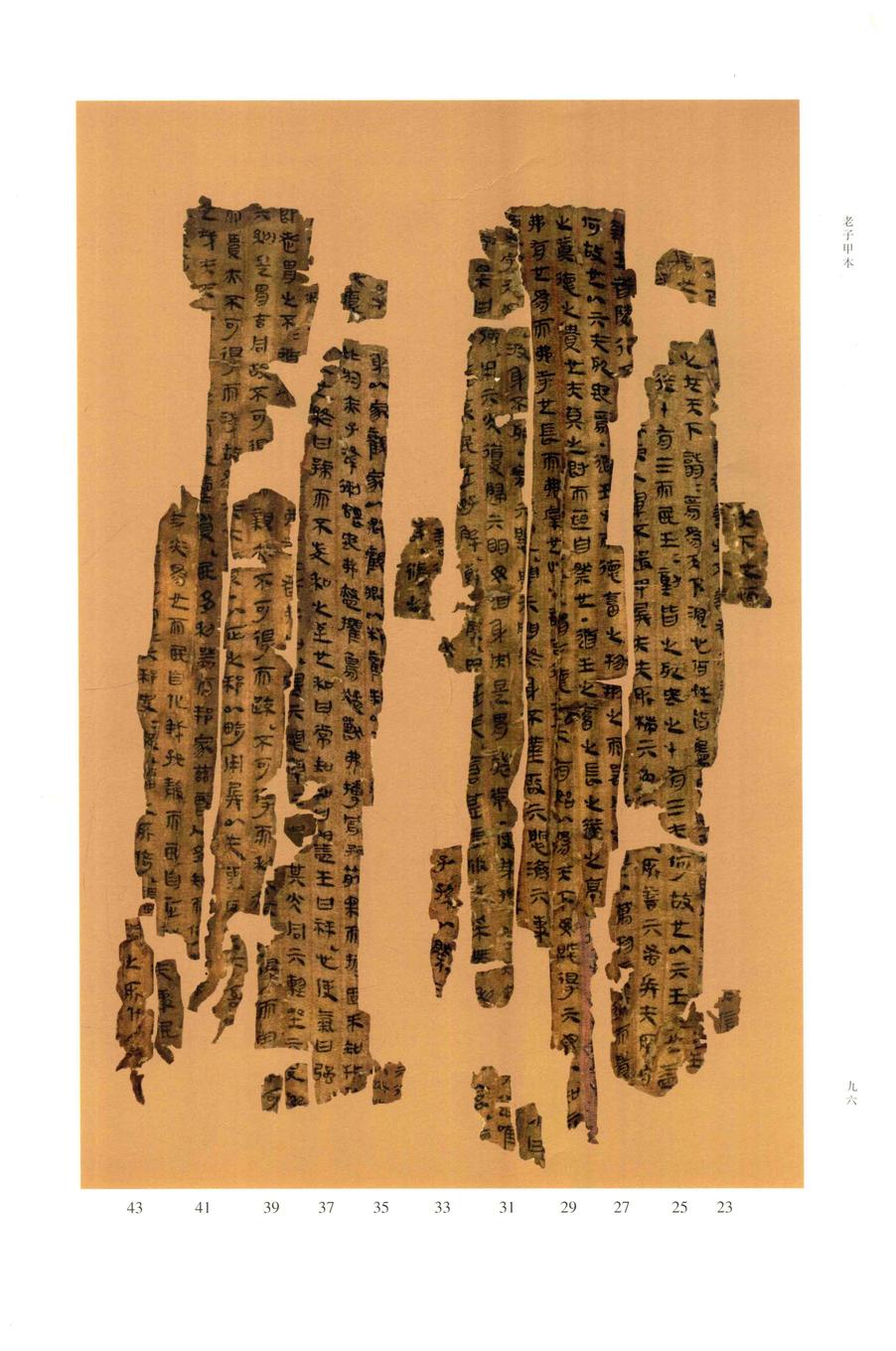
Laozi A (甲本), columns 36 to 38, on plate p. 96 of Changsha Mawangdui Han mu jianbo jicheng, vol. 1 (column numbers are printed under each plate; the columns run from right to left). Checked on the image: column 36 reads 比於赤子逢癘虺地弗螫攫鳥. The opening characters of this chapter are lost or not readable on this plate image, so these are the first characters that were confirmed. □ marks a character lost on the silk (12 in this section). Transcription and column numbers: Wikisource 老子 (帛書甲本), which follows the Jicheng column numbering. The English is Legge's translation of the received text, shown below the silk transcription; the silk wording differs from it in many places, so compare the two Chinese texts for the variants.
36□□之厚□比於赤子逢癘虺地弗螫攫鳥猛獸弗搏骨弱筋柔而握固未知牝牡□□
37而朘□精□至也∠終曰號而不嚘和之至也和曰常知和曰明益生曰祥∠心使氣曰強□□
38即老胃之不﹦道□□□
Compare: Received text (Wang Bi recension), the text Legge translated
含德之厚,比於赤子。蜂蠆虺蛇不螫,猛獸不據,攫鳥不搏。骨弱筋柔而握固。未知牝牡之合而全作,精之至也。終日號而不嗄,和之至也。知和曰常,知常曰明。益生曰祥。心使氣曰強。物壯則老,謂之不道,不道早已。
1He who has in himself abundantly the attributes (of the Tao) is like an infant. Poisonous insects will not sting him; fierce beasts will not seize him; birds of prey will not strike him.
2(The infant's) bones are weak and its sinews soft, but yet its grasp is firm. It knows not yet the union of male and female, and yet its virile member may be excited;--showing the perfection of its physical essence. All day long it will cry without its throat becoming hoarse;--showing the harmony (in its constitution).
3To him by whom this harmony is known,
(The secret of) the unchanging (Tao) is shown,
And in the knowledge wisdom finds its throne.
All life-increasing arts to evil turn;
Where the mind makes the vital breath to burn,
(False) is the strength, (and o'er it we should mourn.)
4When things have become strong, they (then) become old, which may be said to be contrary to the Tao. Whatever is contrary to the Tao soon ends.
Where on the image
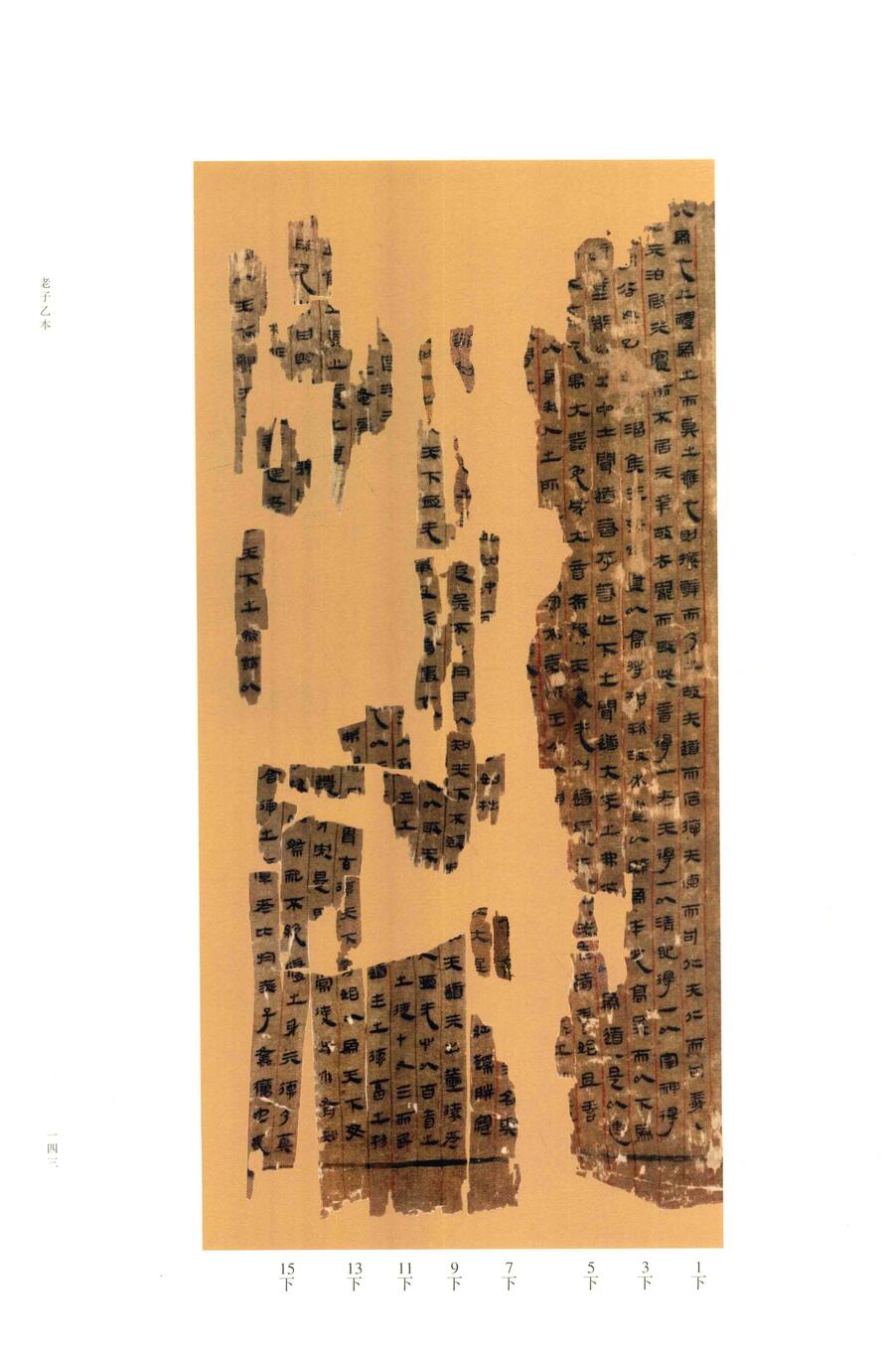
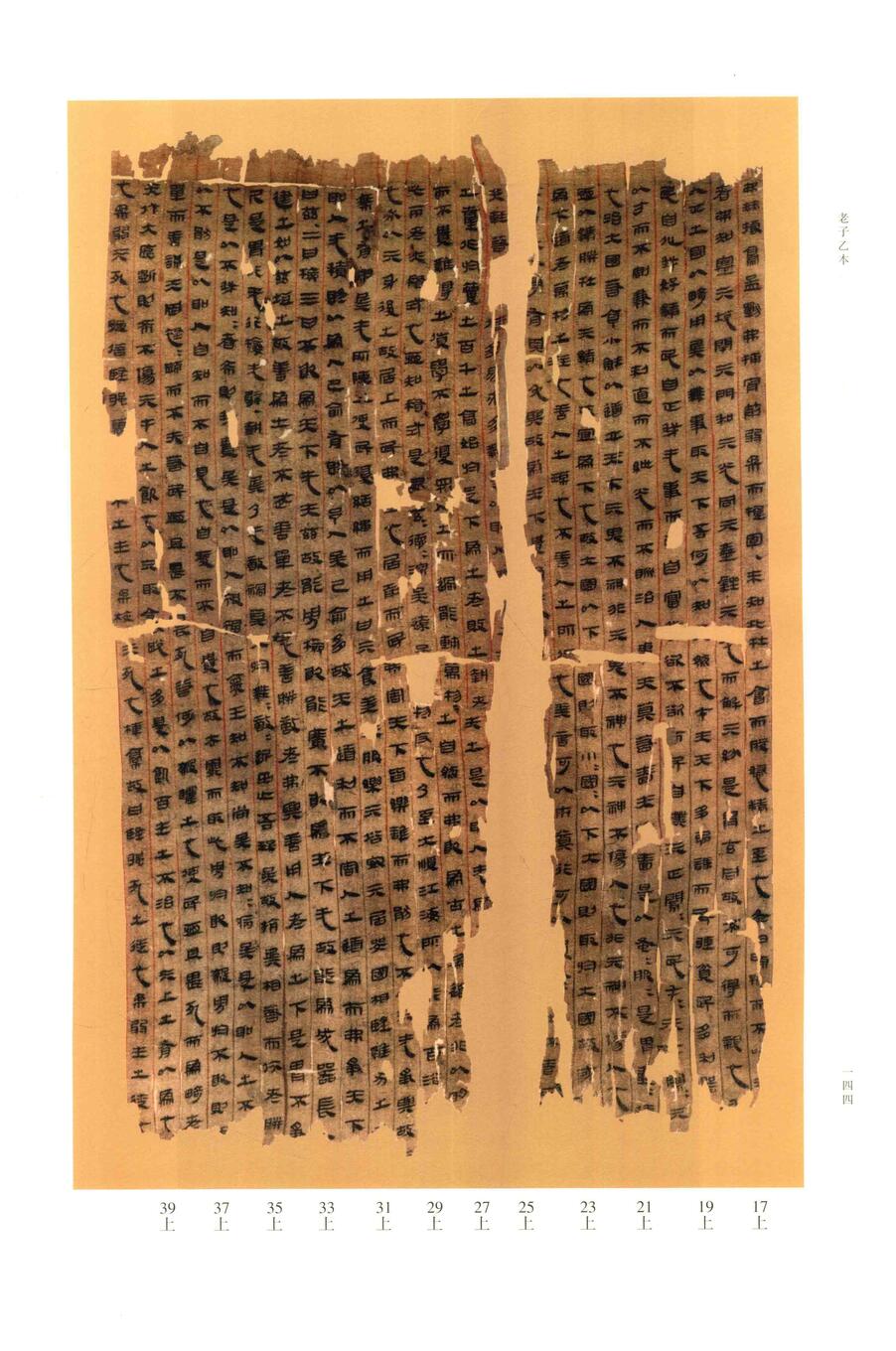
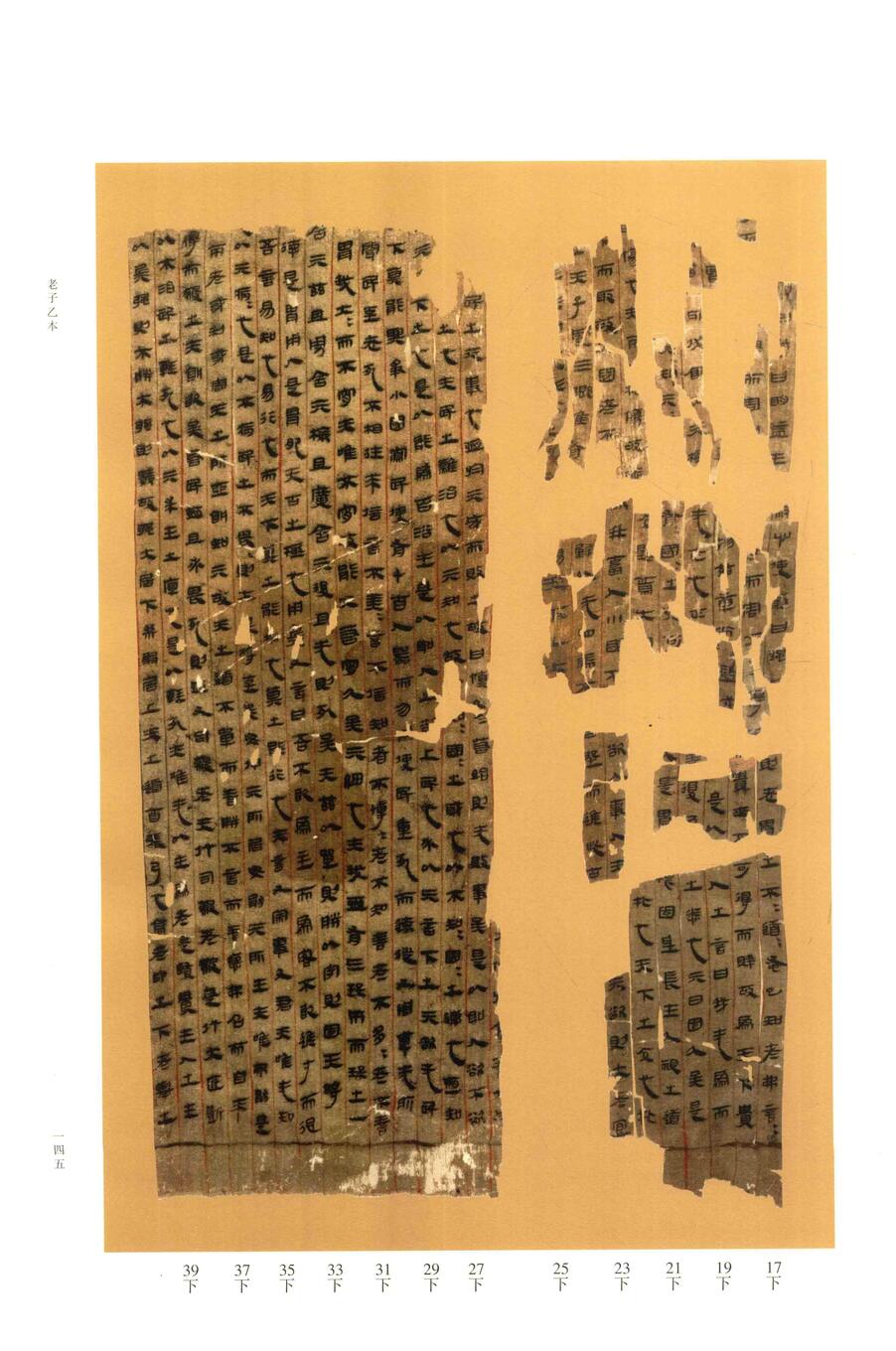
Laozi B (乙本), columns 16下 to 17下, on plates p. 143 and p. 144 and p. 145 of Changsha Mawangdui Han mu jianbo jicheng, vol. 1 (column numbers are printed under each plate; the columns run from right to left; each column of Laozi B is photographed as an upper half (上) and a lower half (下) on facing plates). Checked on the image: column 16下 reads 含德之厚者比於赤子蜂癘虫蛇 (the opening of this chapter, with the end of the preceding text where shown). □ marks a character lost on the silk (8 in this section). Transcription and column numbers: Wikisource 老子 (帛書乙本), which follows the Jicheng column numbering. The English is Legge's translation of the received text, shown below the silk transcription; the silk wording differs from it in many places, so compare the two Chinese texts for the variants.
16下含德之厚者比於赤子蜂癘虫蛇
17上弗赫據鳥孟獸弗捕骨筋弱柔而握固∠未知牝牡之會而朘怒精之至也冬日號而不嚘和□
17下□□□□□常知常曰明益生□祥心使氣曰強物□則老胃之不﹦道﹦蚤已
Compare: Received text (Wang Bi recension), the text Legge translated
含德之厚,比於赤子。蜂蠆虺蛇不螫,猛獸不據,攫鳥不搏。骨弱筋柔而握固。未知牝牡之合而全作,精之至也。終日號而不嗄,和之至也。知和曰常,知常曰明。益生曰祥。心使氣曰強。物壯則老,謂之不道,不道早已。
1He who has in himself abundantly the attributes (of the Tao) is like an infant. Poisonous insects will not sting him; fierce beasts will not seize him; birds of prey will not strike him.
2(The infant's) bones are weak and its sinews soft, but yet its grasp is firm. It knows not yet the union of male and female, and yet its virile member may be excited;--showing the perfection of its physical essence. All day long it will cry without its throat becoming hoarse;--showing the harmony (in its constitution).
3To him by whom this harmony is known,
(The secret of) the unchanging (Tao) is shown,
And in the knowledge wisdom finds its throne.
All life-increasing arts to evil turn;
Where the mind makes the vital breath to burn,
(False) is the strength, (and o'er it we should mourn.)
4When things have become strong, they (then) become old, which may be said to be contrary to the Tao. Whatever is contrary to the Tao soon ends.
Notes
- English: James Legge, The Tao Teh King (Sacred Books of the East 39, 1891); Legge's paragraph numbers are kept as superscripts.
- Legge translated the received text, not the silk manuscripts. Where the silk wording differs, his English follows the received text shown under the transcription.
- Silk transcription: Wikisource Page transcriptions of the Jicheng plates (revisions of 18 October 2026, marked not yet proofread on Wikisource), checked against the plates for each chapter opening.
Cite
Sources
- Source: Mawangdui Laozi A and B silk manuscripts (plates of Changsha Mawangdui Han mu jianbo jicheng vol. 1, via Wikimedia Commons) + Wikisource column transcription + Wang Bi received text (Wikisource) + Legge 1891 English (Project Gutenberg) (holding institution)
- Critical edition: Changsha Mawangdui Han mu jianbo jicheng (2014) column numbers; Wikisource transcription; Wang Bi received text
← previous · → next · v cycle view · l back to library