Dhammapada 26: Brāhmaṇavagga, The Brahmana (verses 383-423)
Introduction
Chapter 26 of the Dhammapada, the Brāhmaṇavagga ('The Brahmana (Arhat)' in Max Müller's translation), verses 383-423. The Dhammapada is a collection of 423 verses in Pali attributed to the Buddha, part of the Khuddakanikāya of the Pali canon; its compilation is usually dated to about the third century BCE.
The images are of a Sinhalese palm-leaf manuscript in the John Rylands Library, Manchester (Pali MS 19), once owned by T. W. Rhys Davids. The text is written in Sinhalese script across the whole width of each leaf, nine lines a side, interrupted only by the string holes; each image is one half of a leaf side. This chapter is on fol. 15b, 16a, 16b. Each section holds the verses that end on that side.
The Pali is the Mahāsaṅgīti edition published by SuttaCentral, and the English is Max Müller's translation in the Sacred Books of the East (1881), which sometimes renders two verses together (for example 58-59).
At the foot of fol. 13b, after verse 326, the scribe wrote verses 408-412 out of place, then a row of marks, and went on with verse 327. The same verses stand in their proper place on fol. 16a.
How was this verified? (Provenance)
Where on the image
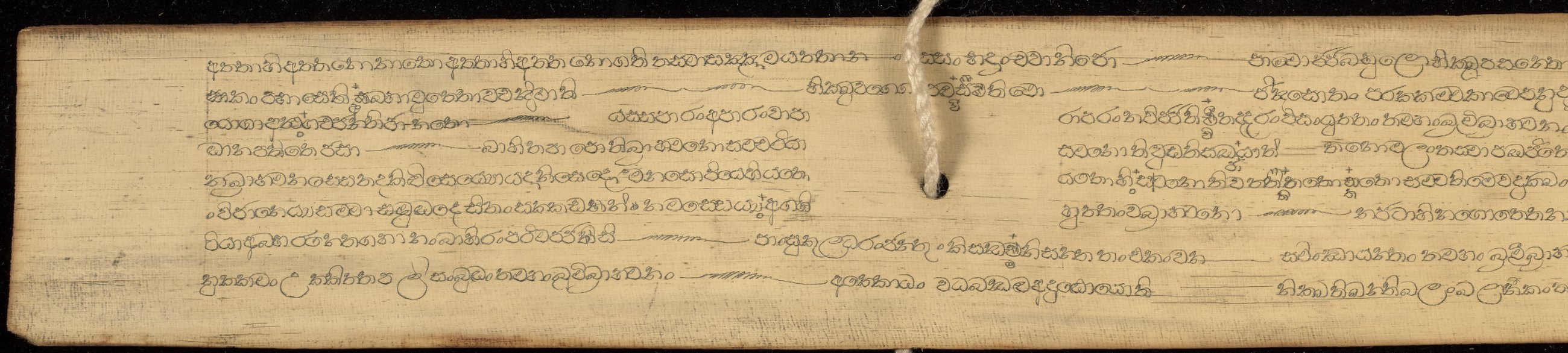
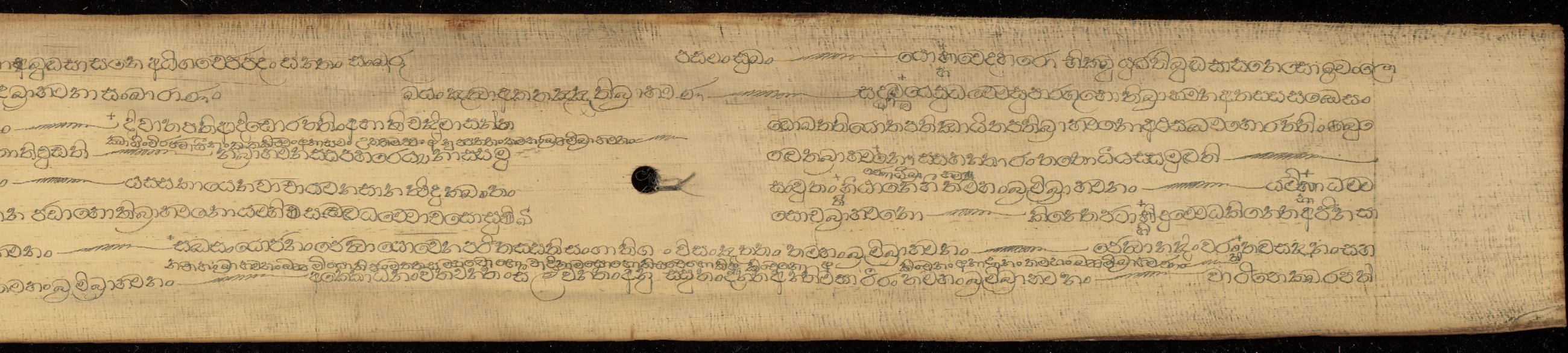
Pali MS 19, fol. 15b (both halves of the leaf side). Checked on the image: the side begins 'attā hi attano nātho attā hi attano gati (v.380)' and its last line ends 'vāri pokkharapat- (v.401)'. The Pali shown is the Mahāsaṅgīti edition (SuttaCentral), not a transcription of the manuscript; the scribe's spellings differ in places.
383Chinda sotaṁ parakkamma, kāme panuda brāhmaṇa; Saṅkhārānaṁ khayaṁ ñatvā, akataññūsi brāhmaṇa.
384Yadā dvayesu dhammesu, pāragū hoti brāhmaṇo; Athassa sabbe saṁyogā, atthaṁ gacchanti jānato.
385Yassa pāraṁ apāraṁ vā, pārāpāraṁ na vijjati; Vītaddaraṁ visaṁyuttaṁ, tamahaṁ brūmi brāhmaṇaṁ.
386Jhāyiṁ virajamāsīnaṁ, katakiccamanāsavaṁ; Uttamatthamanuppattaṁ, tamahaṁ brūmi brāhmaṇaṁ.
387Divā tapati ādicco, rattimābhāti candimā; Sannaddho khattiyo tapati, jhāyī tapati brāhmaṇo; Atha sabbamahorattiṁ, buddho tapati tejasā.
388Bāhitapāpoti brāhmaṇo, Samacariyā samaṇoti vuccati; Pabbājayamattano malaṁ, Tasmā “pabbajito”ti vuccati.
389Na brāhmaṇassa pahareyya, nāssa muñcetha brāhmaṇo; Dhī brāhmaṇassa hantāraṁ, tato dhī yassa muñcati.
390Na brāhmaṇassetadakiñci seyyo, Yadā nisedho manaso piyehi; Yato yato hiṁsamano nivattati, Tato tato sammatimeva dukkhaṁ.
391Yassa kāyena vācāya, manasā natthi dukkaṭaṁ; Saṁvutaṁ tīhi ṭhānehi, tamahaṁ brūmi brāhmaṇaṁ.
392Yamhā dhammaṁ vijāneyya, sammāsambuddhadesitaṁ; Sakkaccaṁ taṁ namasseyya, aggihuttaṁva brāhmaṇo.
393Na jaṭāhi na gottena, na jaccā hoti brāhmaṇo; Yamhi saccañca dhammo ca, so sucī so ca brāhmaṇo.
394Kiṁ te jaṭāhi dummedha, kiṁ te ajinasāṭiyā; Abbhantaraṁ te gahanaṁ, bāhiraṁ parimajjasi.
395Paṁsukūladharaṁ jantuṁ, kisaṁ dhamanisanthataṁ; Ekaṁ vanasmiṁ jhāyantaṁ, tamahaṁ brūmi brāhmaṇaṁ.
396Na cāhaṁ brāhmaṇaṁ brūmi, yonijaṁ mattisambhavaṁ; Bhovādi nāma so hoti, sace hoti sakiñcano; Akiñcanaṁ anādānaṁ, tamahaṁ brūmi brāhmaṇaṁ.
397Sabbasaṁyojanaṁ chetvā, yo ve na paritassati; Saṅgātigaṁ visaṁyuttaṁ, tamahaṁ brūmi brāhmaṇaṁ.
398Chetvā naddhiṁ varattañca, sandānaṁ sahanukkamaṁ; Ukkhittapalighaṁ buddhaṁ, tamahaṁ brūmi brāhmaṇaṁ.
399Akkosaṁ vadhabandhañca, aduṭṭho yo titikkhati; Khantībalaṁ balānīkaṁ, tamahaṁ brūmi brāhmaṇaṁ.
400Akkodhanaṁ vatavantaṁ, sīlavantaṁ anussadaṁ; Dantaṁ antimasārīraṁ, tamahaṁ brūmi brāhmaṇaṁ.
383Stop the stream valiantly, drive away the desires, O Brahmana! When you have understood the destruction of all that was made, you will understand that which was not made.
384If the Brahmana has reached the other shore in both laws (in restraint and contemplation), all bonds vanish from him who has obtained knowledge.
385He for whom there is neither this nor that shore, nor both, him, the fearless and unshackled, I call indeed a Brahmana.
386He who is thoughtful, blameless, settled, dutiful, without passions, and who has attained the highest end, him I call indeed a Brahmana.
387The sun is bright by day, the moon shines by night, the warrior is bright in his armour, the Brahmana is bright in his meditation; but Buddha, the Awakened, is bright with splendour day and night.
388Because a man is rid of evil, therefore he is called Brahmana; because he walks quietly, therefore he is called Samana; because he has sent away his own impurities, therefore he is called Pravragita (Pabbagita, a pilgrim).
389No one should attack a Brahmana, but no Brahmana (if attacked) should let himself fly at his aggressor! Woe to him who strikes a Brahmana, more woe to him who flies at his aggressor!
390It advantages a Brahmana not a little if he holds his mind back from the pleasures of life; when all wish to injure has vanished, pain will cease.
391Him I call indeed a Brahmana who does not offend by body, word, or thought, and is controlled on these three points.
392After a man has once understood the law as taught by the Well- awakened (Buddha), let him worship it carefully, as the Brahmana worships the sacrificial fire.
393A man does not become a Brahmana by his platted hair, by his family, or by birth; in whom there is truth and righteousness, he is blessed, he is a Brahmana.
394What is the use of platted hair, O fool! what of the raiment of goat-skins? Within thee there is ravening, but the outside thou makest clean.
395The man who wears dirty raiments, who is emaciated and covered with veins, who lives alone in the forest, and meditates, him I call indeed a Brahmana.
396I do not call a man a Brahmana because of his origin or of his mother. He is indeed arrogant, and he is wealthy: but the poor, who is free from all attachments, him I call indeed a Brahmana.
397Him I call indeed a Brahmana who has cut all fetters, who never trembles, is independent and unshackled.
398Him I call indeed a Brahmana who has cut the strap and the thong, the chain with all that pertains to it, who has burst the bar, and is awakened.
399Him I call indeed a Brahmana who, though he has committed no offence, endures reproach, bonds, and stripes, who has endurance for his force, and strength for his army.
400Him I call indeed a Brahmana who is free from anger, dutiful, virtuous, without appetite, who is subdued, and has received his last body.
Where on the image
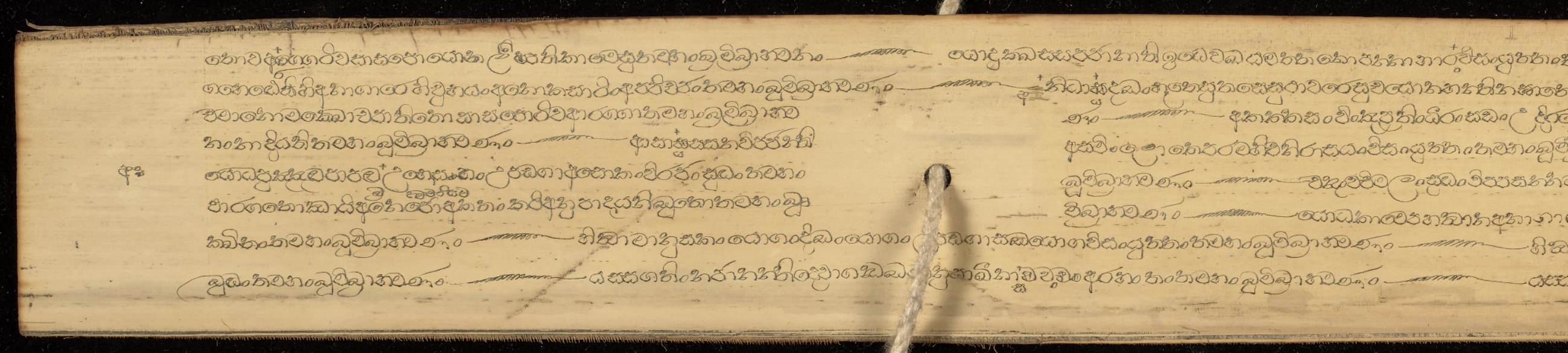
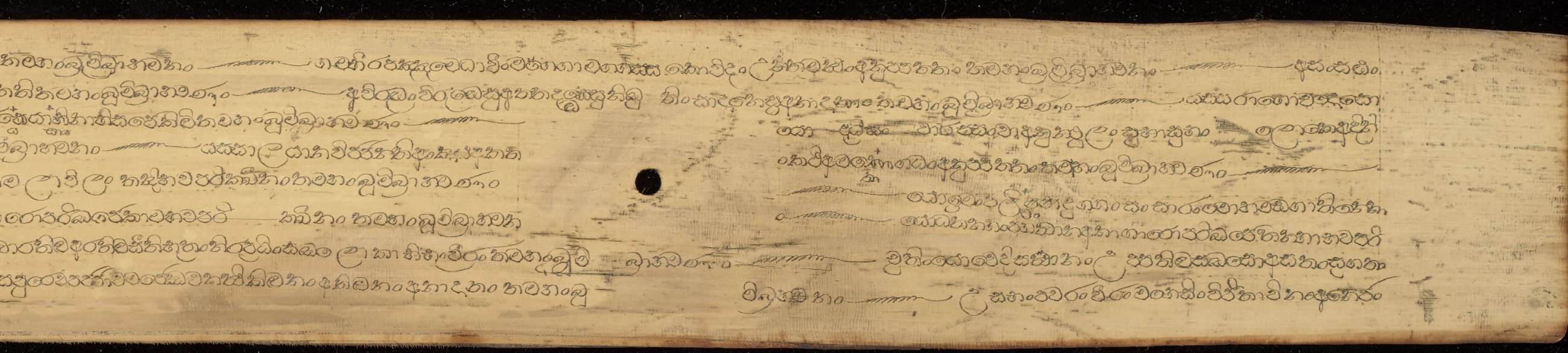
Pali MS 19, fol. 16a (both halves of the leaf side). Checked on the image: the side begins '-teva āraggeriva sāsapo, yo na limpati kāmesu (end of v.401)' and its last line ends 'usabhaṃ pavaraṃ vīraṃ mahesiṃ vijitāvinaṃ anejaṃ (v.422)'. Verse 401 begins on fol. 15b and ends on fol. 16a; both sides are shown. The Pali shown is the Mahāsaṅgīti edition (SuttaCentral), not a transcription of the manuscript; the scribe's spellings differ in places.
401Vāri pokkharapatteva, āraggeriva sāsapo; Yo na limpati kāmesu, tamahaṁ brūmi brāhmaṇaṁ.
402Yo dukkhassa pajānāti, idheva khayamattano; Pannabhāraṁ visaṁyuttaṁ, tamahaṁ brūmi brāhmaṇaṁ.
403Gambhīrapaññaṁ medhāviṁ, maggāmaggassa kovidaṁ; Uttamatthamanuppattaṁ, tamahaṁ brūmi brāhmaṇaṁ.
404Asaṁsaṭṭhaṁ gahaṭṭhehi, anāgārehi cūbhayaṁ; Anokasārimappicchaṁ, tamahaṁ brūmi brāhmaṇaṁ.
405Nidhāya daṇḍaṁ bhūtesu, tasesu thāvaresu ca; Yo na hanti na ghāteti, tamahaṁ brūmi brāhmaṇaṁ.
406Aviruddhaṁ viruddhesu, attadaṇḍesu nibbutaṁ; Sādānesu anādānaṁ, tamahaṁ brūmi brāhmaṇaṁ.
407Yassa rāgo ca doso ca, māno makkho ca pātito; Sāsaporiva āraggā, tamahaṁ brūmi brāhmaṇaṁ.
408Akakkasaṁ viññāpaniṁ, giraṁ saccamudīraye; Yāya nābhisaje kañci, tamahaṁ brūmi brāhmaṇaṁ.
409Yodha dīghaṁ va rassaṁ vā, aṇuṁ thūlaṁ subhāsubhaṁ; Loke adinnaṁ nādiyati, tamahaṁ brūmi brāhmaṇaṁ.
410Āsā yassa na vijjanti, asmiṁ loke paramhi ca; Nirāsāsaṁ visaṁyuttaṁ, tamahaṁ brūmi brāhmaṇaṁ.
411Yassālayā na vijjanti, aññāya akathaṅkathī; Amatogadhamanuppattaṁ, tamahaṁ brūmi brāhmaṇaṁ.
412Yodha puññañca pāpañca, ubho saṅgamupaccagā; Asokaṁ virajaṁ suddhaṁ, tamahaṁ brūmi brāhmaṇaṁ.
413Candaṁva vimalaṁ suddhaṁ, vippasannamanāvilaṁ; Nandībhavaparikkhīṇaṁ, tamahaṁ brūmi brāhmaṇaṁ.
414Yomaṁ palipathaṁ duggaṁ, saṁsāraṁ mohamaccagā; Tiṇṇo pāraṅgato jhāyī, anejo akathaṅkathī; Anupādāya nibbuto, tamahaṁ brūmi brāhmaṇaṁ.
415Yodha kāme pahantvāna, anāgāro paribbaje; Kāmabhavaparikkhīṇaṁ, tamahaṁ brūmi brāhmaṇaṁ.
416Yodha taṇhaṁ pahantvāna, anāgāro paribbaje; Taṇhābhavaparikkhīṇaṁ, tamahaṁ brūmi brāhmaṇaṁ. anāgāro paribbaje; Taṇhābhavaparikkhīṇaṁ, tamahaṁ brūmi brāhmaṇaṁ.
417Hitvā mānusakaṁ yogaṁ, dibbaṁ yogaṁ upaccagā; Sabbayogavisaṁyuttaṁ, tamahaṁ brūmi brāhmaṇaṁ.
418Hitvā ratiñca aratiñca, sītibhūtaṁ nirūpadhiṁ; Sabbalokābhibhuṁ vīraṁ, tamahaṁ brūmi brāhmaṇaṁ.
419Cutiṁ yo vedi sattānaṁ, upapattiñca sabbaso; Asattaṁ sugataṁ buddhaṁ, tamahaṁ brūmi brāhmaṇaṁ.
420Yassa gatiṁ na jānanti, devā gandhabbamānusā; Khīṇāsavaṁ arahantaṁ, tamahaṁ brūmi brāhmaṇaṁ.
421Yassa pure ca pacchā ca, majjhe ca natthi kiñcanaṁ; Akiñcanaṁ anādānaṁ, tamahaṁ brūmi brāhmaṇaṁ.
401Him I call indeed a Brahmana who does not cling to pleasures, like water on a lotus leaf, like a mustard seed on the point of a needle.
402Him I call indeed a Brahmana who, even here, knows the end of his suffering, has put down his burden, and is unshackled.
403Him I call indeed a Brahmana whose knowledge is deep, who possesses wisdom, who knows the right way and the wrong, and has attained the highest end.
404Him I call indeed a Brahmana who keeps aloof both from laymen and from mendicants, who frequents no houses, and has but few desires.
405Him I call indeed a Brahmana who finds no fault with other beings, whether feeble or strong, and does not kill nor cause slaughter.
406Him I call indeed a Brahmana who is tolerant with the intolerant, mild with fault-finders, and free from passion among the passionate.
407Him I call indeed a Brahmana from whom anger and hatred, pride and envy have dropt like a mustard seed from the point of a needle.
408Him I call indeed a Brahmana who utters true speech, instructive and free from harshness, so that he offend no one.
409Him I call indeed a Brahmana who takes nothing in the world that is not given him, be it long or short, small or large, good or bad.
410Him I call indeed a Brahmana who fosters no desires for this world or for the next, has no inclinations, and is unshackled.
411Him I call indeed a Brahmana who has no interests, and when he has understood (the truth), does not say How, how? and who has reached the depth of the Immortal.
412Him I call indeed a Brahmana who in this world is above good and evil, above the bondage of both, free from grief from sin, and from impurity.
413Him I call indeed a Brahmana who is bright like the moon, pure, serene, undisturbed, and in whom all gaiety is extinct.
414Him I call indeed a Brahmana who has traversed this miry road, the impassable world and its vanity, who has gone through, and reached the other shore, is thoughtful, guileless, free from doubts, free from attachment, and content.
415Him I call indeed a Brahmana who in this world, leaving all desires, travels about without a home, and in whom all concupiscence is extinct.
416Him I call indeed a Brahmana who, leaving all longings, travels about without a home, and in whom all covetousness is extinct.
417Him I call indeed a Brahmana who, after leaving all bondage to men, has risen above all bondage to the gods, and is free from all and every bondage.
418Him I call indeed a Brahmana who has left what gives pleasure and what gives pain, who is cold, and free from all germs (of renewed life), the hero who has conquered all the worlds.
419Him I call indeed a Brahmana who knows the destruction and the return of beings everywhere, who is free from bondage, welfaring (Sugata), and awakened (Buddha).
420Him I call indeed a Brahmana whose path the gods do not know, nor spirits (Gandharvas), nor men, whose passions are extinct, and who is an Arhat (venerable).
421Him I call indeed a Brahmana who calls nothing his own, whether it be before, behind, or between, who is poor, and free from the love of the world.
Where on the image
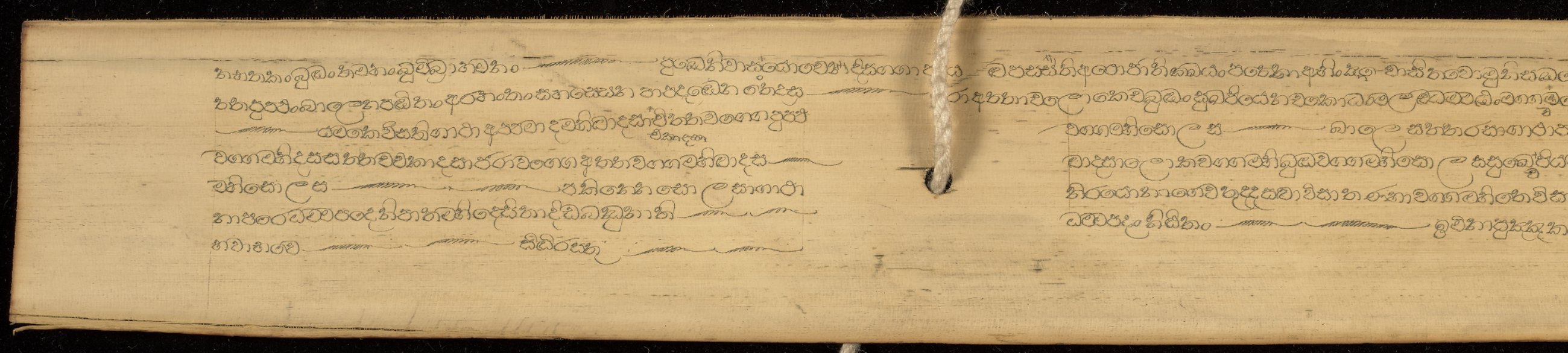
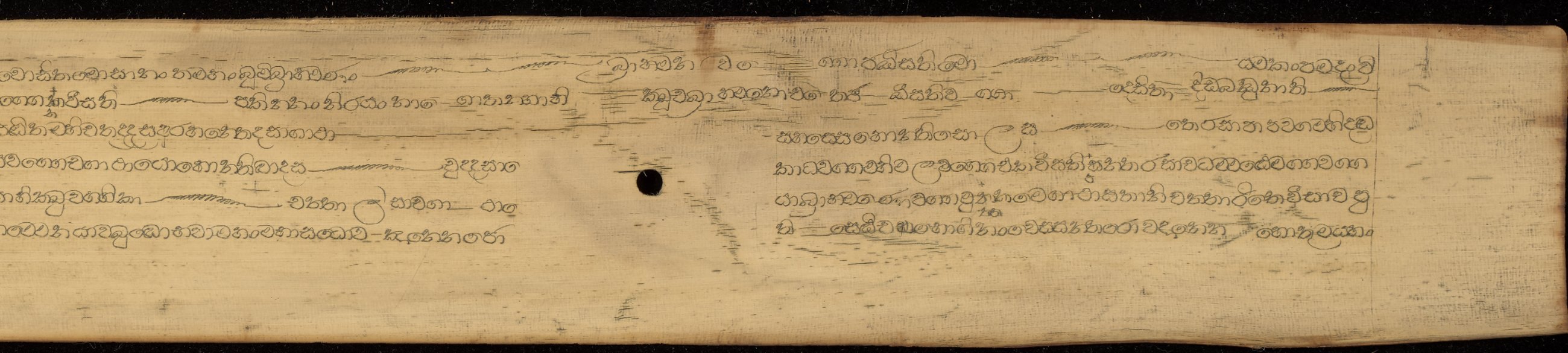
Pali MS 19, fol. 16b (both halves of the leaf side). Checked on the image: the side begins 'nhātakaṃ buddhaṃ tamahaṃ brūmi brāhmaṇaṃ (end of v.422), then pubbenivāsaṃ yo vedī (v.423)' and its last line ends 'the text ends on this side with v.423; the rest of the last line is blank'. Verse 422 begins on fol. 16a and ends on fol. 16b; both sides are shown. The Pali shown is the Mahāsaṅgīti edition (SuttaCentral), not a transcription of the manuscript; the scribe's spellings differ in places.
422Usabhaṁ pavaraṁ vīraṁ, mahesiṁ vijitāvinaṁ; Anejaṁ nhātakaṁ buddhaṁ, tamahaṁ brūmi brāhmaṇaṁ.
423Pubbenivāsaṁ yo vedi, saggāpāyañca passati; Atho jātikkhayaṁ patto, abhiññāvosito muni; Sabbavositavosānaṁ, tamahaṁ brūmi brāhmaṇaṁ.
422Him I call indeed a Brahmana, the manly, the noble, the hero, the great sage, the conqueror, the impassible, the accomplished, the awakened.
423Him I call indeed a Brahmana who knows his former abodes, who sees heaven and hell, has reached the end of births, is perfect in knowledge, a sage, and whose perfections are all perfect.
Notes
- Müller's English is from the Wikisource transcription, which leaves out the diacritics the printed book uses in names (for example Nirvana, Brahmana, Mara).
- Words in round brackets are Müller's additions for sense.
Cite
Sources
- Source: Manchester, John Rylands Library, Pali MS 19 (palm leaf, Sinhalese script) + SuttaCentral Pali (Mahāsaṅgīti) + Max Müller's English (SBE X, 1881) (holding institution)
- Critical edition: SuttaCentral, Mahāsaṅgīti Tipiṭaka edition
← previous · → next · v cycle view · l back to library