Dhammapada 25: Bhikkhuvagga, The Bhikshu (verses 360-382)
Introduction
Chapter 25 of the Dhammapada, the Bhikkhuvagga ('The Bhikshu (Mendicant)' in Max Müller's translation), verses 360-382. The Dhammapada is a collection of 423 verses in Pali attributed to the Buddha, part of the Khuddakanikāya of the Pali canon; its compilation is usually dated to about the third century BCE.
The images are of a Sinhalese palm-leaf manuscript in the John Rylands Library, Manchester (Pali MS 19), once owned by T. W. Rhys Davids. The text is written in Sinhalese script across the whole width of each leaf, nine lines a side, interrupted only by the string holes; each image is one half of a leaf side. This chapter is on fol. 15a, 15b. Each section holds the verses that end on that side.
The Pali is the Mahāsaṅgīti edition published by SuttaCentral, and the English is Max Müller's translation in the Sacred Books of the East (1881), which sometimes renders two verses together (for example 58-59).
How was this verified? (Provenance)
Where on the image
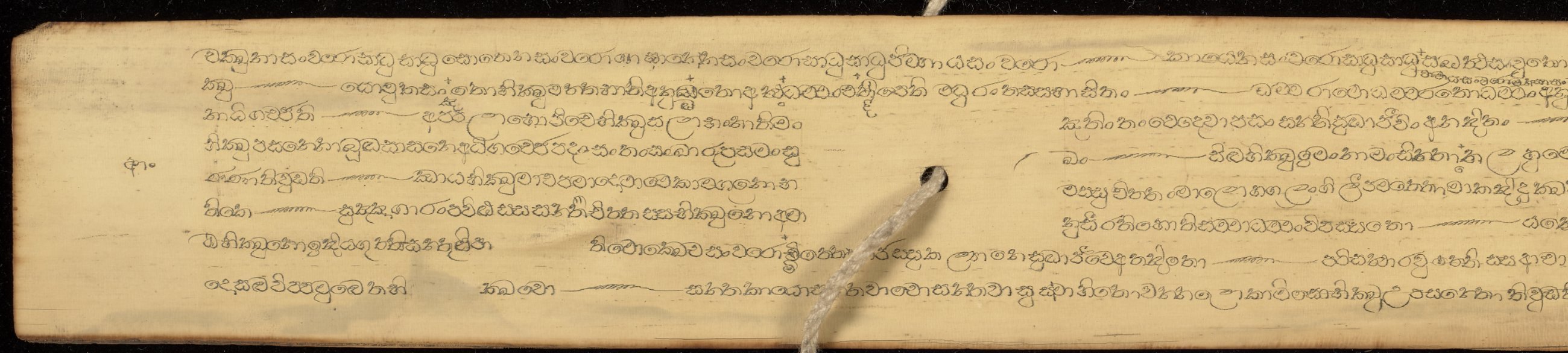
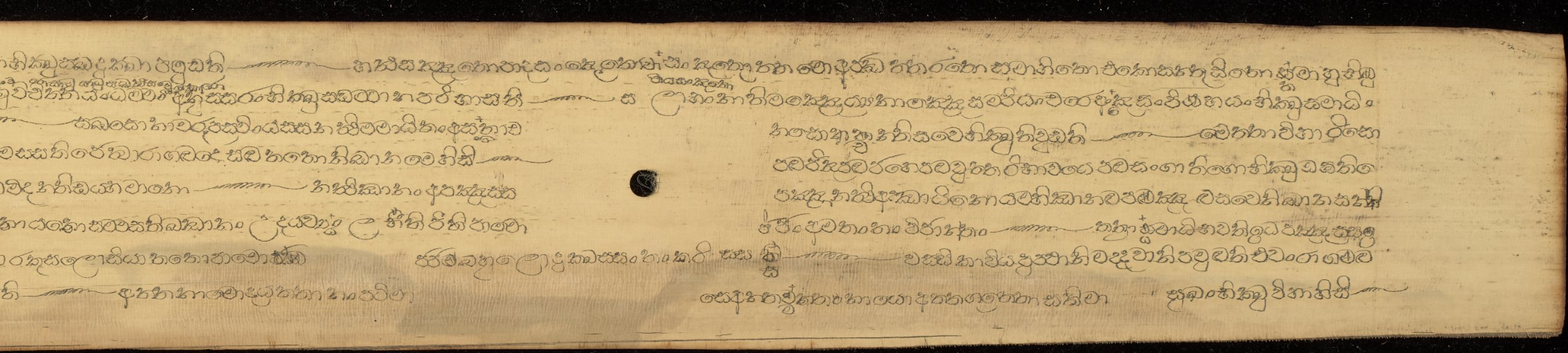
Pali MS 19, fol. 15a (both halves of the leaf side). Checked on the image: the side begins 'cakkhunā saṃvaro sādhu sādhu sotena saṃvaro (v.360)' and its last line ends 'so attagutto satimā sukhaṃ bhikkhu vihāhisi (end of v.379)'. The Pali shown is the Mahāsaṅgīti edition (SuttaCentral), not a transcription of the manuscript; the scribe's spellings differ in places.
360Cakkhunā saṁvaro sādhu, sādhu sotena saṁvaro; Ghānena saṁvaro sādhu, sādhu jivhāya saṁvaro.
361Kāyena saṁvaro sādhu, sādhu vācāya saṁvaro; Manasā saṁvaro sādhu, sādhu sabbattha saṁvaro; Sabbattha saṁvuto bhikkhu, sabbadukkhā pamuccati.
362Hatthasaṁyato pādasaṁyato, Vācāsaṁyato saṁyatuttamo; Ajjhattarato samāhito, Eko santusito tamāhu bhikkhuṁ.
363Yo mukhasaṁyato bhikkhu, mantabhāṇī anuddhato; Atthaṁ dhammañca dīpeti, madhuraṁ tassa bhāsitaṁ.
364Dhammārāmo dhammarato, dhammaṁ anuvicintayaṁ; Dhammaṁ anussaraṁ bhikkhu, saddhammā na parihāyati.
365Salābhaṁ nātimaññeyya, nāññesaṁ pihayaṁ care; Aññesaṁ pihayaṁ bhikkhu, samādhiṁ nādhigacchati.
366Appalābhopi ce bhikkhu, salābhaṁ nātimaññati; Taṁ ve devā pasaṁsanti, suddhājīviṁ atanditaṁ.
367Sabbaso nāmarūpasmiṁ, yassa natthi mamāyitaṁ; Asatā ca na socati, sa ve “bhikkhū”ti vuccati.
368Mettāvihārī yo bhikkhu, pasanno buddhasāsane; Adhigacche padaṁ santaṁ, saṅkhārūpasamaṁ sukhaṁ.
369Siñca bhikkhu imaṁ nāvaṁ, sittā te lahumessati; Chetvā rāgañca dosañca, tato nibbānamehisi.
370Pañca chinde pañca jahe, pañca cuttari bhāvaye; Pañca saṅgātigo bhikkhu, “oghatiṇṇo”ti vuccati.
371Jhāya bhikkhu mā pamādo, Mā te kāmaguṇe ramessu cittaṁ; Mā lohaguḷaṁ gilī pamatto, Mā kandi “dukkhamidan”ti dayhamāno.
372Natthi jhānaṁ apaññassa, paññā natthi ajhāyato; Yamhi jhānañca paññā ca, sa ve nibbānasantike.
373Suññāgāraṁ paviṭṭhassa, santacittassa bhikkhuno; Amānusī rati hoti, sammā dhammaṁ vipassato.
374Yato yato sammasati, khandhānaṁ udayabbayaṁ; Labhatī pītipāmojjaṁ, amataṁ taṁ vijānataṁ.
375Tatrāyamādi bhavati, idha paññassa bhikkhuno; Indriyagutti santuṭṭhi, pātimokkhe ca saṁvaro.
376Mitte bhajassu kalyāṇe, suddhājīve atandite; Paṭisanthāravutyassa, ācārakusalo siyā; Tato pāmojjabahulo, dukkhassantaṁ karissati.
377Vassikā viya pupphāni, maddavāni pamuñcati; Evaṁ rāgañca dosañca, vippamuñcetha bhikkhavo.
378Santakāyo santavāco, santavā susamāhito; Vantalokāmiso bhikkhu, “upasanto”ti vuccati.
379Attanā codayattānaṁ, paṭimaṁsetha attanā; So attagutto satimā, sukhaṁ bhikkhu vihāhisi.
360Restraint in the eye is good, good is restraint in the ear, in the nose restraint is good, good is restraint in the tongue.
361In the body restraint is good, good is restraint in speech, in thought restraint is good, good is restraint in all things. A Bhikshu, restrained in all things, is freed from all pain.
362He who controls his hand, he who controls his feet, he who controls his speech, he who is well controlled, he who delights inwardly, who is collected, who is solitary and content, him they call Bhikshu.
363The Bhikshu who controls his mouth, who speaks wisely and calmly, who teaches the meaning and the law, his word is sweet.
364He who dwells in the law, delights in the law, meditates on the law, follows the law, that Bhikshu will never fall away from the true law.
365Let him not despise what he has received, nor ever envy others: a mendicant who envies others does not obtain peace of mind.
366A Bhikshu who, though he receives little, does not despise what he has received, even the gods will praise him, if his life is pure, and if he is not slothful.
367He who never identifies himself with name and form, and does not grieve over what is no more, he indeed is called a Bhikshu.
368The Bhikshu who acts with kindness, who is calm in the doctrine of Buddha, will reach the quiet place (Nirvana), cessation of natural desires, and happiness.
369O Bhikshu, empty this boat! if emptied, it will go quickly; having cut off passion and hatred thou wilt go to Nirvana.
370Cut off the five (senses), leave the five, rise above the five. A Bhikshu, who has escaped from the five fetters, he is called Oghatinna, `saved from the flood.'
371Meditate, O Bhikshu, and be not heedless! Do not direct thy thought to what gives pleasure that thou mayest not for thy heedlessness have to swallow the iron ball (in hell), and that thou mayest not cry out when burning, `This is pain.'
372Without knowledge there is no meditation, without meditation there is no knowledge: he who has knowledge and meditation is near unto Nirvana.
373A Bhikshu who has entered his empty house, and whose mind is tranquil, feels a more than human delight when he sees the law clearly.
374As soon as he has considered the origin and destruction of the elements (khandha) of the body, he finds happiness and joy which belong to those who know the immortal (Nirvana).
375And this is the beginning here for a wise Bhikshu: watchfulness over the senses, contentedness, restraint under the law; keep noble friends whose life is pure, and who are not slothful.
376Let him live in charity, let him be perfect in his duties; then in the fulness of delight he will make an end of suffering.
377As the Vassika plant sheds its withered flowers, men should shed passion and hatred, O ye Bhikshus!
378The Bhikshu whose body and tongue and mind are quieted, who is collected, and has rejected the baits of the world, he is called quiet.
379Rouse thyself by thyself, examine thyself by thyself, thus self- protected and attentive wilt thou live happily, O Bhikshu!
Where on the image
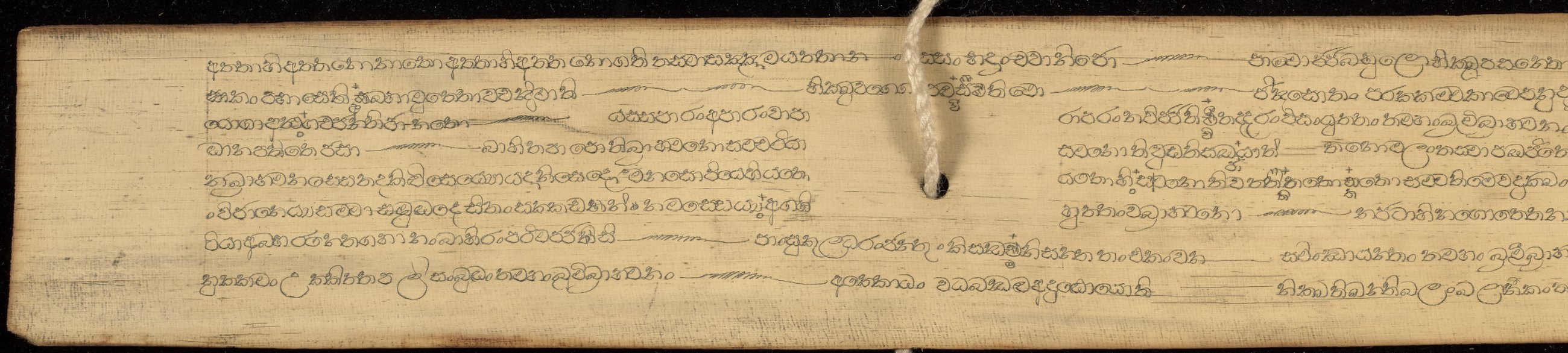
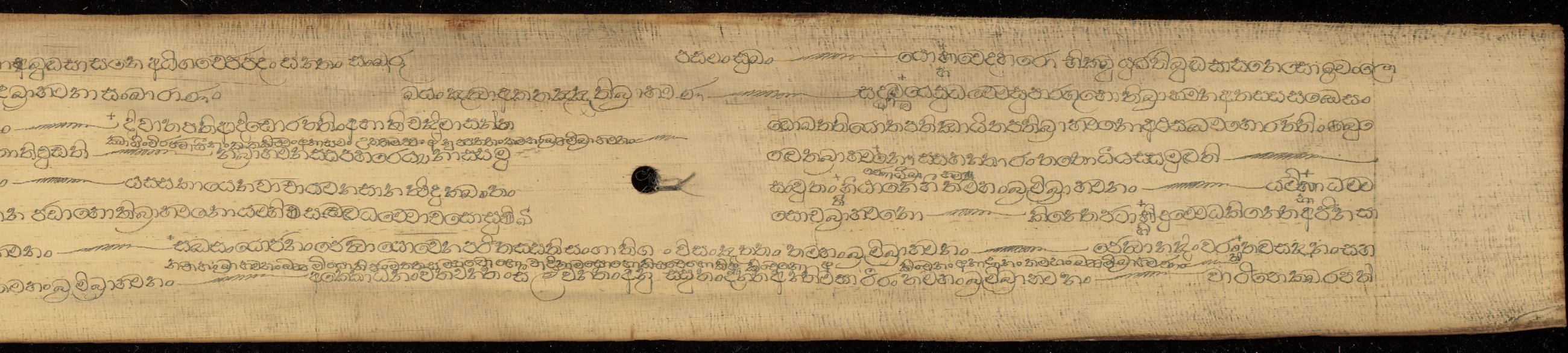
Pali MS 19, fol. 15b (both halves of the leaf side). Checked on the image: the side begins 'attā hi attano nātho attā hi attano gati (v.380)' and its last line ends 'vāri pokkharapat- (v.401)'. The Pali shown is the Mahāsaṅgīti edition (SuttaCentral), not a transcription of the manuscript; the scribe's spellings differ in places.
380Attā hi attano nātho, ko hi nātho paro siyā; Attā hi attano gati, tasmā saṁyamamattānaṁ; Assaṁ bhadraṁva vāṇijo.
381Pāmojjabahulo bhikkhu, pasanno buddhasāsane; Adhigacche padaṁ santaṁ, saṅkhārūpasamaṁ sukhaṁ.
382Yo have daharo bhikkhu, yuñjati buddhasāsane; Somaṁ lokaṁ pabhāseti, abbhā muttova candimā.
380For self is the lord of self, self is the refuge of self; therefore curb thyself as the merchant curbs a good horse.
381The Bhikshu, full of delight, who is calm in the doctrine of Buddha will reach the quiet place (Nirvana), cessation of natural desires, and happiness.
382He who, even as a young Bhikshu, applies himself to the doctrine of Buddha, brightens up this world, like the moon when free from clouds.
Notes
- Müller's English is from the Wikisource transcription, which leaves out the diacritics the printed book uses in names (for example Nirvana, Brahmana, Mara).
- Words in round brackets are Müller's additions for sense.
Cite
Sources
- Source: Manchester, John Rylands Library, Pali MS 19 (palm leaf, Sinhalese script) + SuttaCentral Pali (Mahāsaṅgīti) + Max Müller's English (SBE X, 1881) (holding institution)
- Critical edition: SuttaCentral, Mahāsaṅgīti Tipiṭaka edition
← previous · → next · v cycle view · l back to library