Diodorus Siculus 1.10-13: the first men, the eternal gods and the god-kings of Egypt
Introduction
Diodorus of Sicily wrote his Library of History, a history of the world in forty books, between about 60 and 30 BCE; he visited Egypt in the 180th Olympiad (60-56 BCE). Book 1 is devoted to Egypt, and its first part gives what the Egyptian priests and the Greek writers who used them (chiefly Hecataeus of Abdera) told of the beginning of the world and of the gods who ruled Egypt as kings before the first mortal king, Menas. Diodorus reports these accounts without vouching for them.
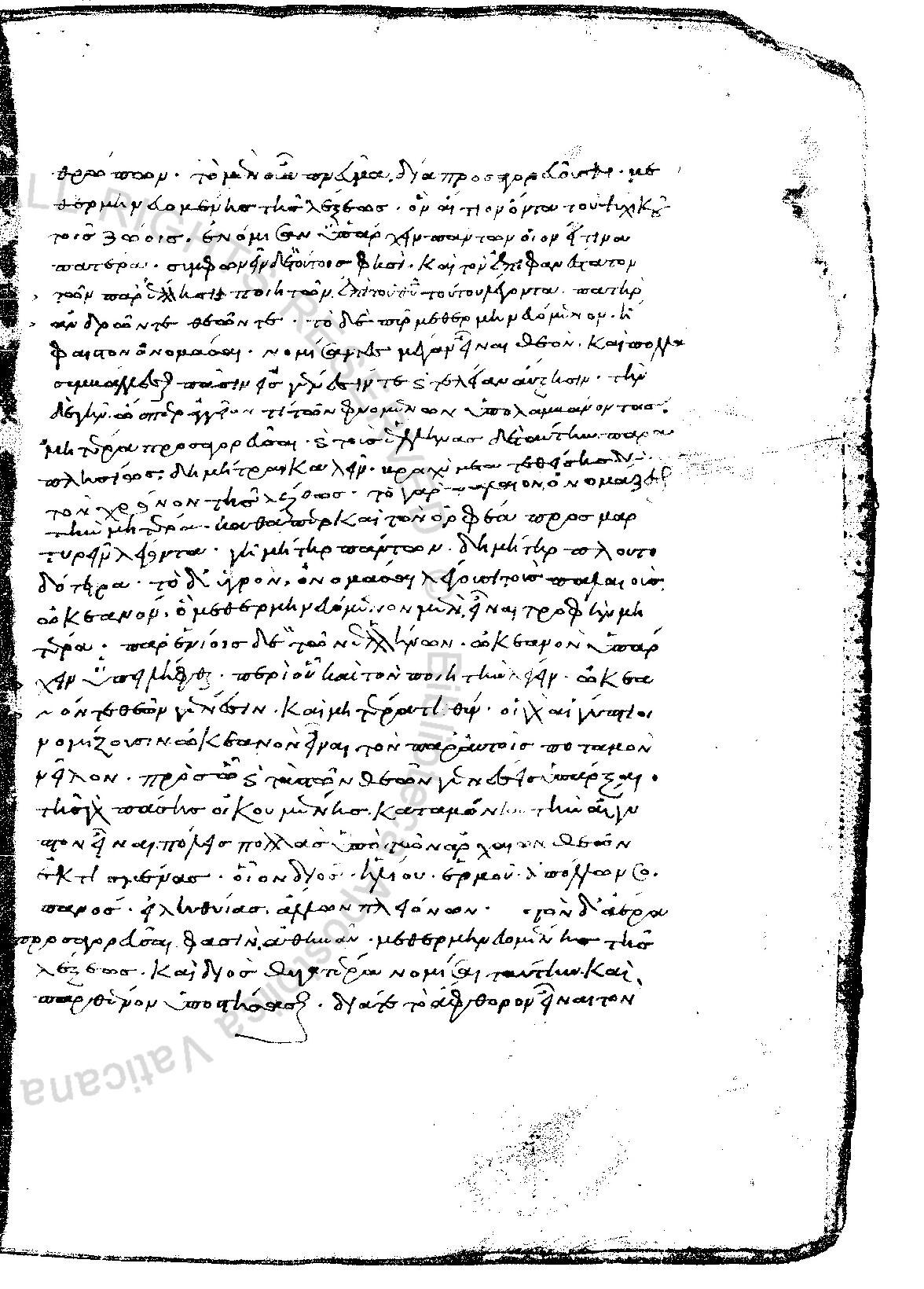
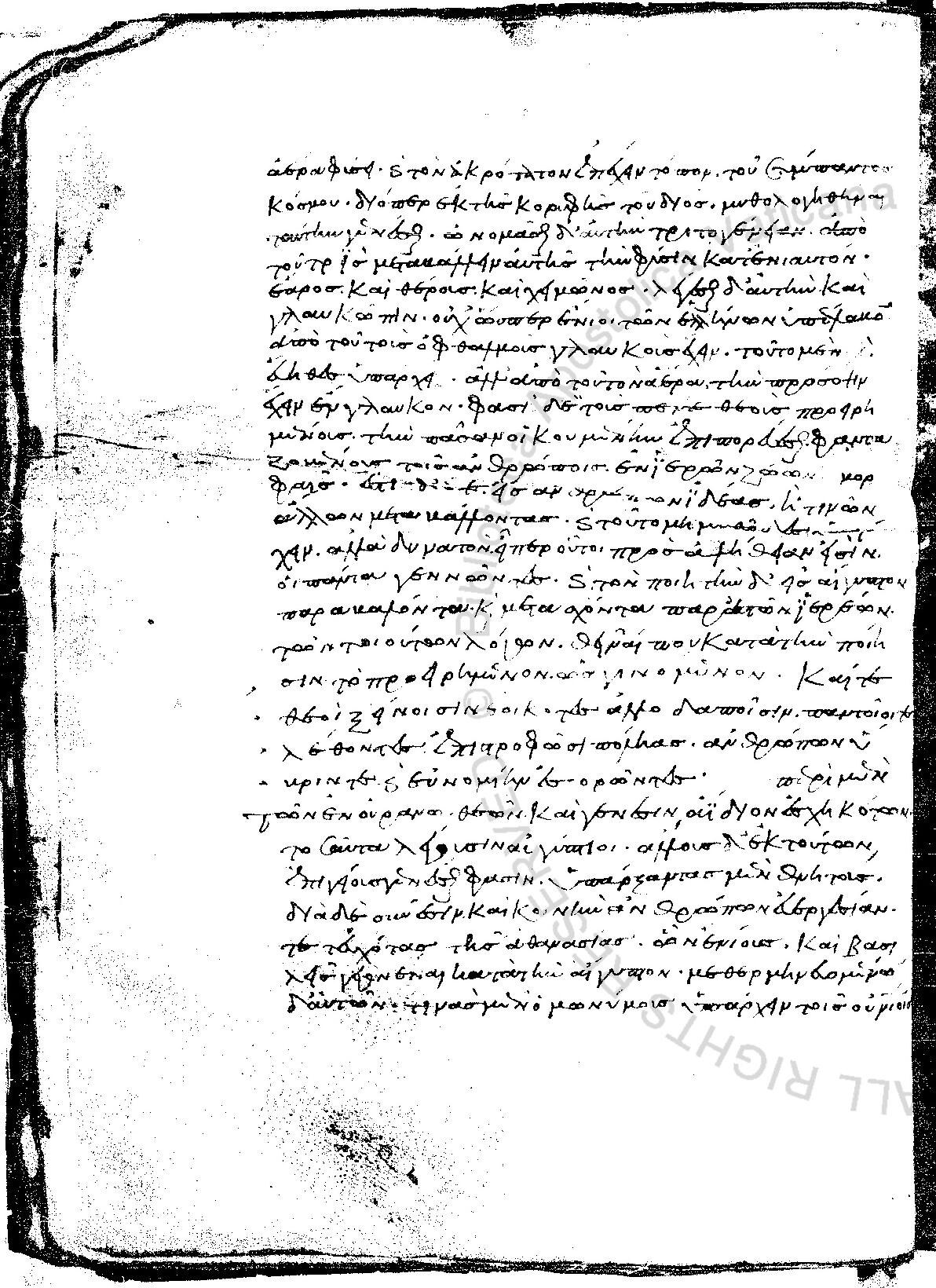
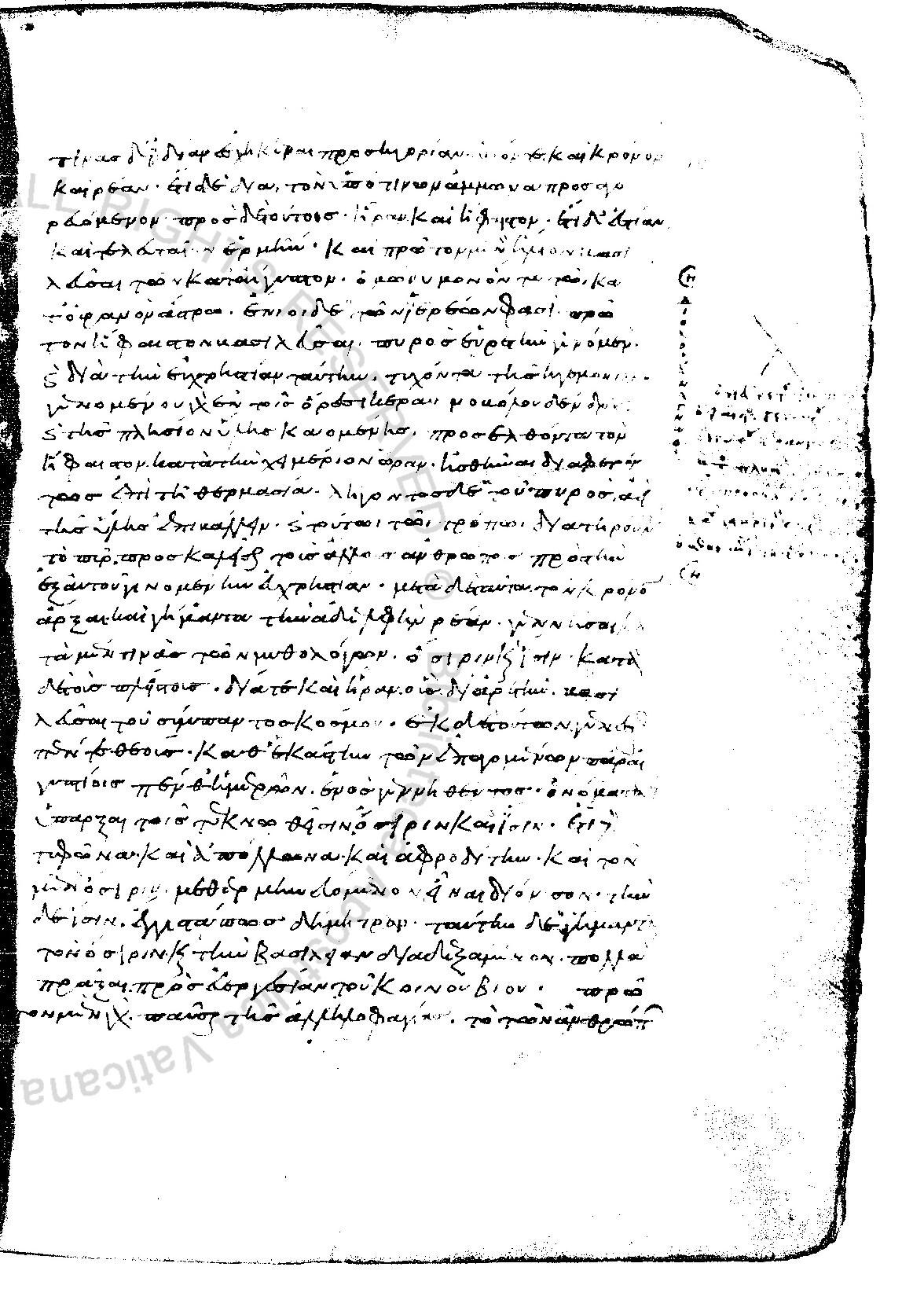
The manuscript shown is Vat. gr. 130 in the Vatican Library, a parchment copy of books 1-5 made in the middle of the 10th century, the oldest manuscript of this part of the work. The images are the library's black-and-white microfilm; each opening has been split into its two pages. No folio numbers are legible on the images, so pages are cited by DigiVatLib image number and side. Each section is one chapter and lists the page or pages that carry it; the page breaks were read on the images and are recorded in each note.
This entry covers chapters 1.10-13.
How was this verified? (Provenance)
Where on the image
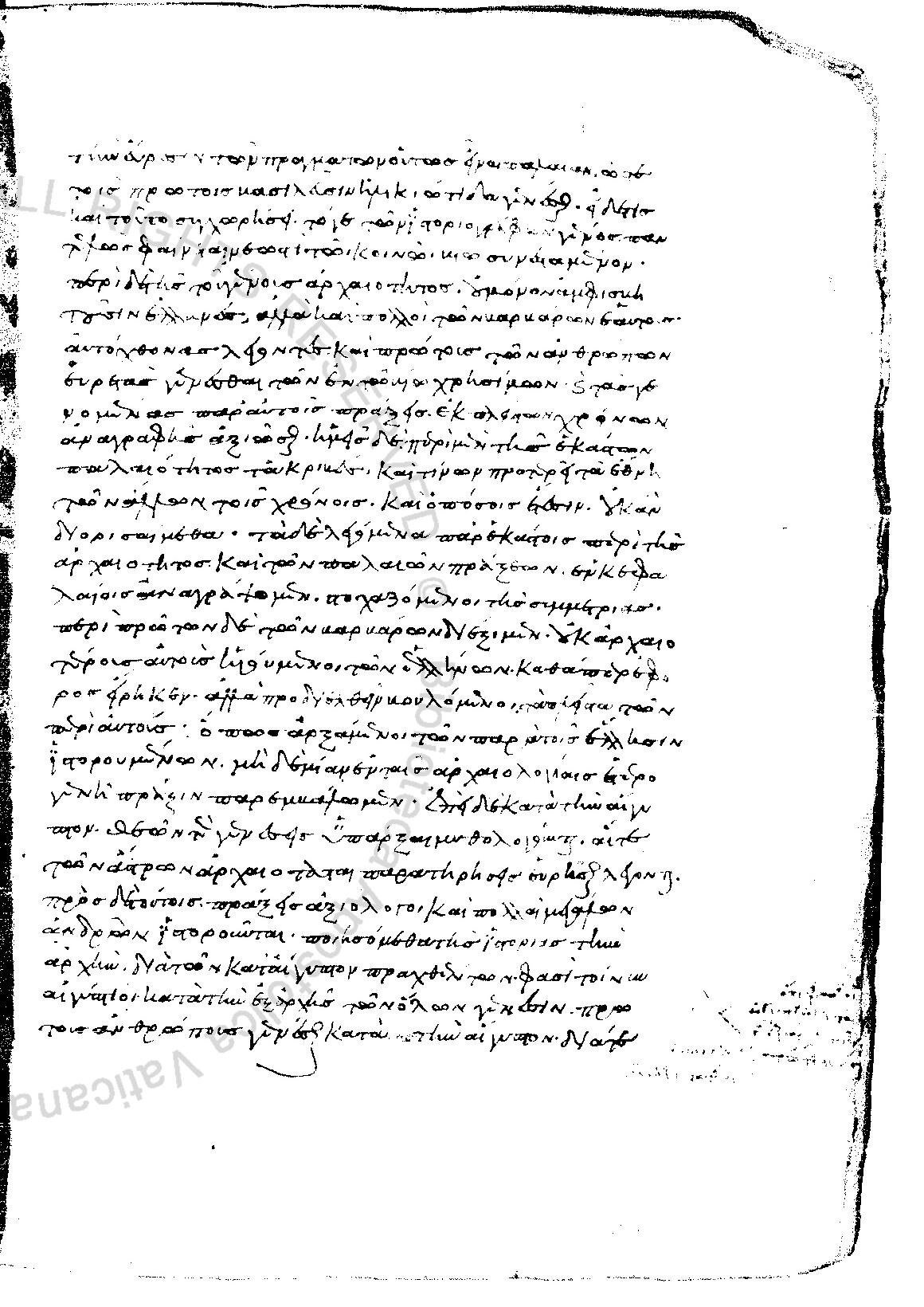
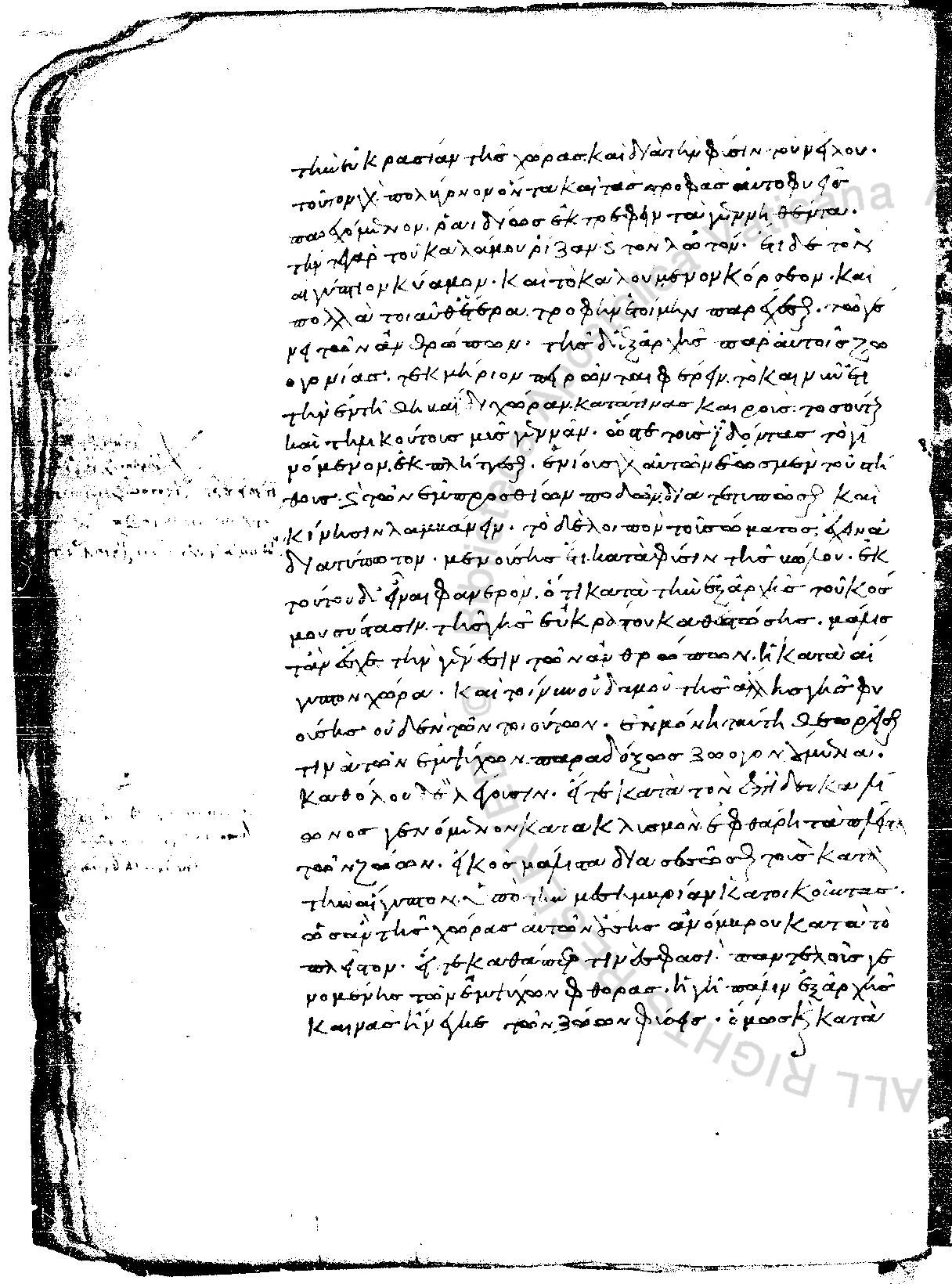
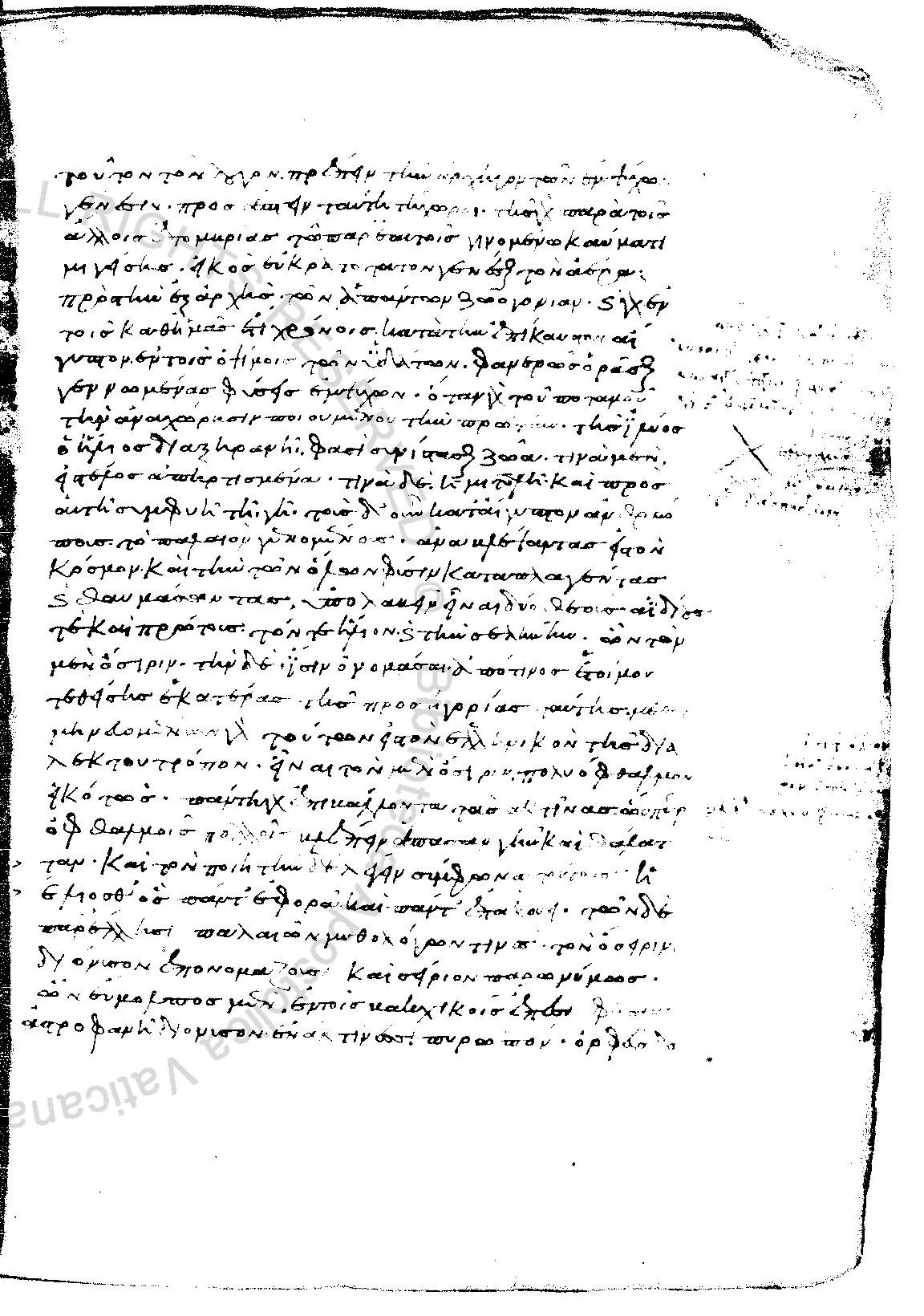
1.10 runs over 3 pages: DigiVatLib image 0012, right page; DigiVatLib image 0013, left page; DigiVatLib image 0013, right page. DigiVatLib image 0012, right page: the last lines begin 1.10.1; the page ends 'Αἰγύπτιοι κατὰ τὴν ἐξ ἀρχῆς τῶν ὅλων γένεσιν πρώ-|τους ἀνθρώπους γενέσθαι κατὰ τὴν Αἴγυπτον διά' (1.10.1). DigiVatLib image 0013, left page: begins 'τὴν εὐκρασίαν τῆς χώρας καὶ διὰ τὴν φύσιν τοῦ Νείλου' (1.10.1); ends 'ἡ γῆ πάλιν ἐξ ἀρχῆς καινὰς ἤνεγκε τῶν ζῴων φύσεις, ὅμως καὶ κατὰ' (1.10.4). DigiVatLib image 0013, right page: begins 'τοῦτον τὸν λόγον πρέπειν τὴν ἀρχηγὸν τῶν ἐμψύχων γένεσιν' (1.10.4); ends 'ἀστροφαῆ Διόνυσον ἐν ἀκτίνεσσι πυρωπόν, Ὀρφεὺς δὲ' (1.11.3). Checked on the images. Viewer: https://digi.vatlib.it/view/MSS_Vat.gr.130/0012
1φασὶ τοίνυν Αἰγύπτιοι κατὰ τὴν ἐξ ἀρχῆς τῶν ὅλων γένεσιν πρώτους ἀνθρώπους γενέσθαι κατὰ τὴν Αἴγυπτον διά τε τὴν εὐκρασίαν τῆς χώρας καὶ διὰ τὴν φύσιν τοῦ Νείλου. τοῦτον γὰρ πολύγονον ὄντα καὶ τὰς τροφὰς αὐτοφυεῖς παρεχόμενον ῥᾳδίως ἐκτρέφειν τὰ ζωογονηθέντα· τήν τε γὰρ τοῦ καλάμου ῥίζαν καὶ τὸν λωτόν, ἔτι δὲ τὸν Αἰγύπτιον κύαμον καὶ τὸ καλούμενον κορσαῖον καὶ πολλὰ τοιαῦθʼ ἕτερα τροφὴν ἑτοίμην παρέχεσθαι τῷ γένει τῶν ἀνθρώπων. 2τῆς δʼ ἐξ ἀρχῆς παρʼ αὐτοῖς ζωογονίας τεκμήριον πειρῶνται φέρειν τὸ καὶ νῦν ἔτι τὴν ἐν Θηβαΐδι χώραν κατά τινας καιροὺς τοσούτους καὶ τηλικούτους μῦς γεννᾶν ὥστε τοὺς ἰδόντας τὸ γινόμενον ἐκπλήττεσθαι· ἐνίους γὰρ αὐτῶν ἕως μὲν τοῦ στήθους καὶ τῶν ἐμπροσθίων ποδῶν διατετυπῶσθαι καὶ κίνησιν λαμβάνειν, τὸ δὲ λοιπὸν τοῦ σώματος ἔχειν ἀδιατύπωτον, μενούσης ἔτι κατὰ φύσιν τῆς βώλου. 3ἐκ τούτου δʼ εἶναι φανερὸν ὅτι κατὰ τὴν ἐξ ἀρχῆς τοῦ κόσμου σύστασιν τῆς γῆς εὐκράτου καθεστώσης μάλιστʼ ἂν ἔσχε τὴν γένεσιν τῶν ἀνθρώπων ἡ κατʼ Αἴγυπτον χώρα· καὶ γὰρ νῦν, οὐδαμοῦ τῆς ἄλλης γῆς φυούσης οὐδὲν τῶν τοιούτων, ἐν μόνῃ ταύτῃ θεωρεῖσθαί τινα τῶν ἐμψύχων παραδόξως ζωογονούμενα. 4καθόλου δὲ λέγουσιν, εἴτε κατὰ τὸν ἐπὶ Δευκαλίωνος γενόμενον κατακλυσμὸν ἐφθάρη τὰ πλεῖστα τῶν ζῴων, εἰκὸς μάλιστα διασεσῶσθαι τοὺς κατὰ τὴν Αἴγυπτον ὑπὸ τὴν μεσημβρίαν κατοικοῦντας, ὡς ἂν τῆς χώρας αὐτῶν οὔσης ἀνόμβρου κατὰ τὸ πλεῖστον, εἴτε, καθάπερ τινές φασι, παντελοῦς γενομένης τῶν ἐμψύχων φθορᾶς ἡ γῆ πάλιν ἐξ ἀρχῆς καινὰς ἤνεγκε τῶν ζῴων φύσεις, ὅμως καὶ κατὰ τοῦτον τὸν λόγον πρέπειν τὴν ἀρχηγὸν τῶν ἐμψύχων γένεσιν προσάπτειν ταύτῃ τῇ χώρᾳ. 5τῆς γὰρ παρὰ τοῖς ἄλλοις ἐπομβρίας τῷ παρʼ ἑαυτοῖς γινομένῳ καύματι μιγείσης εἰκὸς εὐκρατότατον γενέσθαι τὸν ἀέρα πρὸς τὴν ἐξ ἀρχῆς τῶν πάντων ζωογονίαν. 6καὶ γὰρ ἐν τοῖς καθʼ ἡμᾶς ἔτι χρόνοις κατὰ τὴν ἐπίκλυστον Αἴγυπτον ἐν τοῖς ὀψίμοις τῶν ὑδάτων φανερῶς ὁρᾶσθαι γεννωμένας φύσεις ἐμψύχων· 7ὅταν γὰρ τοῦ ποταμοῦ τὴν ἀναχώρησιν ποιουμένου τὴν πρώτην τῆς ἰλύος ὁ ἥλιος διαξηράνῃ, φασὶ συνίστασθαι ζῷα, τινὰ μὲν εἰς τέλος ἀπηρτισμένα, τινὰ δὲ ἡμιτελῆ καὶ πρὸς αὐτῇ συμφυῆ τῇ γῇ.
1Now the Egyptians have an account like this: When in the beginning the universe came into being, men first came into existence in Egypt, both because of the favourable climate of the land and because of the nature of the Nile. For this stream, since it produces much life and provides a spontaneous supply of food, easily supports whatever living things have been engendered; for both the root of the reed and the lotus, as well as the Egyptian bean and corsaeum, as it is called, and many other similar plants, supply the race of men with nourishment all ready for use. 2As proof that animal life appeared first of all in their land they would offer the fact that even at the present day the soil of the Thebaid at certain times generates mice in such numbers and of such size as to astonish all who have witnessed the phenomenon; for some of them are fully formed as far as the breast and front feet and are able to move, while the rest of the body is unformed, the clod of earth still retaining its natural character. 3And from this fact it is manifest that, when the world was first taking shape, the land of Egypt could better than any other have been the place where mankind came into being because of the well-tempered nature of its soil; for even at the present time, while the soil of no other country generates any such things, in it alone certain living creatures may be seen coming into being in a marvellous fashion. 4In general, they say that if in the flood which occurred in the time of Deucalion most living things were destroyed, it is probable that the inhabitants of southern Egypt survived rather than any others, since their country is rainless for the most part; or if, as some maintain, the destruction of living things was complete and the earth then brought forth again new forms of animals, nevertheless, even on such a supposition the first genesis of living things fittingly attaches to this country. 5For when the moisture from the abundant rains, which fell among other peoples, was mingled with the intense heat which prevails in Egypt itself, it is reasonable to suppose that the air became very well tempered for the first generation of all living things. 6Indeed, even in our day during the inundations of Egypt the generation of forms of animal life can clearly be seen taking place in the pools which remain the longest; 7for, whenever the river has begun to recede and the sun has thoroughly dried the surface of the slime, living animals, they say, take shape, some of them fully formed, but some only half so and still actually united with the very earth.
Where on the image
1.11 runs over 2 pages: DigiVatLib image 0013, right page; DigiVatLib image 0014, left page. DigiVatLib image 0013, right page: begins 'τοῦτον τὸν λόγον πρέπειν τὴν ἀρχηγὸν τῶν ἐμψύχων γένεσιν' (1.10.4); ends 'ἀστροφαῆ Διόνυσον ἐν ἀκτίνεσσι πυρωπόν, Ὀρφεὺς δὲ' (1.11.3). DigiVatLib image 0014, left page: begins 'τοὔνεκά μιν καλέουσι Φάνητά τε καὶ Διόνυσον. φασὶ δέ τινες' (1.11.3-4); ends 'τοὺς πρώτους διαλέκτῳ χρησαμένους διηρθρωμένῃ τῶν κατ’ Αἴγυπτον ἀν-' (1.12.1). Checked on the images. Viewer: https://digi.vatlib.it/view/MSS_Vat.gr.130/0013
1τοὺς δʼ οὖν κατʼ Αἴγυπτον ἀνθρώπους τὸ παλαιὸν γενομένους, ἀναβλέψαντας εἰς τὸν κόσμον καὶ τὴν τῶν ὅλων φύσιν καταπλαγέντας τε καὶ θαυμάσαντας, ὑπολαβεῖν εἶναι δύο θεοὺς ἀιδίους τε καὶ πρώτους, τόν τε ἥλιον καὶ τὴν σελήνην, ὧν τὸν μὲν Ὄσιριν, τὴν δὲ Ἶσιν ὀνομάσαι, ἀπό τινος ἐτύμου τεθείσης ἑκατέρας τῆς προσηγορίας ταύτης. 2μεθερμηνευομένων γὰρ τούτων εἰς τὸν Ἑλληνικὸν τῆς διαλέκτου τρόπον εἶναι τὸν μὲν Ὄσιριν πολυόφθαλμον, εἰκότως· πανταχῇ γὰρ ἐπιβάλλοντα τὰς ἀκτῖνας ὥσπερ ὀφθαλμοῖς πολλοῖς βλέπειν ἅπασαν γῆν καὶ θάλατταν. καὶ τὸν ποιητὴν δὲ λέγειν σύμφωνα τούτοις ἠέλιός θʼ, ὃς πάντʼ ἐφορᾷ καὶ πάντʼ ἐπακούει. 3τῶν δὲ παρʼ Ἕλλησι παλαιῶν μυθολόγων τινὲς τὸν Ὄσιριν Διόνυσον προσονομάζουσι καὶ Σείριον παρωνύμως· ὧν Εὔμολπος μὲν ἐν τοῖς Βακχικοῖς ἔπεσί φησιν ἀστροφαῆ Διόνυσον ἐν ἀκτίνεσσι πυρωπόν, Ὀρφεὺς δὲ τούνεκά μιν καλέουσι Φάνητά τε καὶ Διόνυσον. 4φασὶ δέ τινες καὶ τὸ ἔναμμα αὐτῷ τὸ τῆς νεβρίδος ἀπὸ τῆς τῶν ἄστρων ποικιλίας περιῆφθαι. τὴν δὲ Ἶσιν μεθερμηνευομένην εἶναι παλαιάν, τεθειμένης τῆς προσηγορίας ἀπὸ τῆς ἀιδίου καὶ παλαιᾶς γενέσεως. κέρατα δʼ αὐτῇ ἐπιτιθέασιν ἀπό τε τῆς ὄψεως ἣν ἔχουσα φαίνεται καθʼ ὃν ἂν χρόνον ὑπάρχῃ μηνοειδής, καὶ ἀπὸ τῆς καθιερωμένης αὐτῇ βοὸς παρʼ Αἰγυπτίοις. 5τούτους δὲ τοὺς θεοὺς ὑφίστανται τὸν σύμπαντα κόσμον διοικεῖν τρέφοντάς τε καὶ αὔξοντας πάντα τριμερέσιν ὥραις ἀοράτῳ κινήσει τὴν περίοδον ἀπαρτιζούσαις, τῇ τε ἐαρινῇ καὶ θερινῇ καὶ χειμερινῇ· ταύτας δʼ ἐναντιωτάτην ἀλλήλαις τὴν φύσιν ἐχούσας ἀπαρτίζειν τὸν ἐνιαυτὸν ἀρίστῃ συμφωνίᾳ· φύσιν δὲ συμβάλλεσθαι πλείστην εἰς τὴν τῶν ἁπάντων ζωογονίαν τῶν θεῶν τούτων τὸν μὲν πυρώδους καὶ πνεύματος, τὴν δὲ ὑγροῦ καὶ ξηροῦ, κοινῇ δʼ ἀμφοτέρους ἀέρος· καὶ διὰ τούτων πάντα γεννᾶσθαι καὶ τρέφεσθαι. 6διὸ καὶ τὸ μὲν ἅπαν σῶμα τῆς τῶν ὅλων φύσεως ἐξ ἡλίου καὶ σελήνης ἀπαρτίζεσθαι, τὰ δὲ τούτων μέρη πέντε τὰ προειρημένα, τό τε πνεῦμα καὶ τὸ πῦρ καὶ τὸ ξηρόν, ἔτι δὲ τὸ ὑγρὸν καὶ τὸ τελευταῖον τὸ ἀερῶδες, ὥσπερ ἐπʼ ἀνθρώπου κεφαλὴν καὶ χεῖρας καὶ πόδας καὶ τἄλλα μέρη καταριθμοῦμεν, τὸν αὐτὸν τρόπον τὸ σῶμα τοῦ κόσμου συγκεῖσθαι πᾶν ἐκ τῶν προειρημένων.
1Now the men of Egypt, they say, when ages ago they came into existence, as they looked up at the firmament and were struck with both awe and wonder at the nature of the universe, conceived that two gods were both eternal and first, namely, the sun and the moon, whom they called respectively Osiris and Isis, these appellations having in each case been based upon a certain meaning in them. 2For when the names are translated into Greek Osiris means "many-eyed," and properly so; for in shedding his rays in every direction he surveys with many eyes, as it were, all land and sea. And the words of the poet are also in agreement with this conception when he says: The sun, who sees all things and hears all things. 3And of the ancient Greek writers of mythology some give to Osiris the name Dionysus or, with a slight change in form, Sirius. One of them, Eumolpus, in his Bacchic Hymn speaks of Our Dionysus, shining like a star, With fiery eye in ev'ry ray; while Orpheus says: And this is why men call him Shining One And Dionysus. 4Some say that Osiris is also represented with the cloak of fawn-skin about his shoulders as imitating the sky spangled with the stars. As for Isis, when translated the word means "ancient," the name having been given her because her birth was from everlasting and ancient. And they put horns on her head both because of the appearance which she has to the eye when the moon is crescent-shaped, and because among the Egyptians a cow is held sacred to her. 5These two gods, they hold, regulate the entire universe, giving both nourishment and increase to all things by means of a system of three seasons which complete the full cycle through an unobservable movement, these being spring and summer and winter; and these seasons, though in nature most opposed to one another, complete the cycle of the year in the fullest harmony. Moreover, practically all the physical matter which is essential to the generation of all things is furnished by these gods, the sun contributing the fiery element and the spirit, the moon the wet and the dry, and both together the air; and it is through these elements that all things are engendered and nourished. 6And so it is out of the sun and moon that the whole physical body of the universe is made complete; and as for the five parts just named of these bodies — the spirit, the fire, the dry, as well as the wet, and, lastly, the air-like — just as in the case of a man we enumerate head and hands and feet and the other parts, so in the same way the body of the universe is composed in its entirety of these parts.
Where on the image
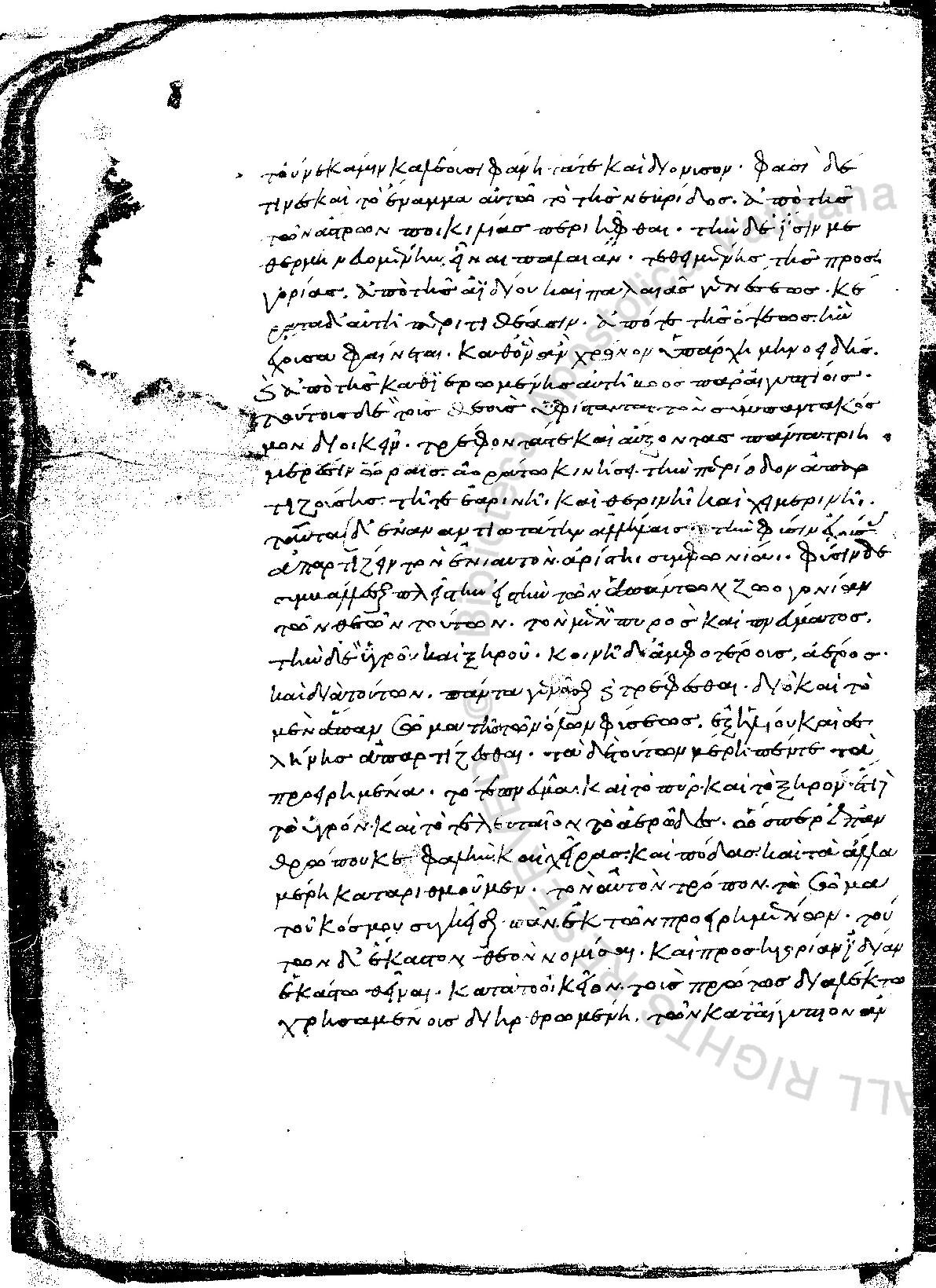
1.12 runs over 3 pages: DigiVatLib image 0014, left page; DigiVatLib image 0014, right page; DigiVatLib image 0015, left page. DigiVatLib image 0014, left page: begins 'τοὔνεκά μιν καλέουσι Φάνητά τε καὶ Διόνυσον. φασὶ δέ τινες' (1.11.3-4); ends 'τοὺς πρώτους διαλέκτῳ χρησαμένους διηρθρωμένῃ τῶν κατ’ Αἴγυπτον ἀν-' (1.12.1). DigiVatLib image 0014, right page: begins '-θρώπων. τὸ μὲν οὖν πνεῦμα Δία προσαγορεῦσαι' (1.12.1-2); ends 'καὶ παρθένον ὑποστήσασθαι διά τε τὸ ἄφθορον εἶναι τὸν' (1.12.7). DigiVatLib image 0015, left page: begins 'ἀέρα καὶ τὸν ἀκρότατον ἐπέχειν τόπον τοῦ σύμπαντος κόσμου' (1.12.7); ends 'κατὰ τὴν Αἴγυπτον. μεθερμηνευομένων δ’ αὐτῶν τινὰς μὲν ὁμωνύμους ὑπάρχειν τοῖς οὐρανίοις' (1.13.1-2). Checked on the images. Viewer: https://digi.vatlib.it/view/MSS_Vat.gr.130/0014
1τούτων δʼ ἕκαστον θεὸν νομίσαι καὶ προσηγορίαν ἰδίαν ἑκάστῳ θεῖναι κατὰ τὸ οἰκεῖον τοὺς πρώτους διαλέκτῳ χρησαμένους διηρθρωμένῃ τῶν κατʼ Αἴγυπτον ἀνθρώπων. 2τὸ μὲν οὖν πνεῦμα Δία προσαγορεῦσαι μεθερμηνευομένης τῆς λέξεως, ὃν αἴτιον ὄντα τοῦ ψυχικοῦ τοῖς ζῴοις ἐνόμισαν ὑπάρχειν πάντων οἱονεί τινα πατέρα. συμφωνεῖν δὲ τούτοις φασὶ καὶ τὸν ἐπιφανέστατον τῶν παρʼ Ἕλλησι ποιητῶν ἐπὶ τοῦ θεοῦ τούτου λέγοντα πατὴρ ἀνδρῶν τε θεῶν τε. 3τὸ δὲ πῦρ μεθερμηνευόμενον Ἥφαιστον ὀνομάσαι, νομίσαντας μέγαν εἶναι θεὸν καὶ πολλὰ συμβάλλεσθαι πᾶσιν εἰς γένεσίν τε καὶ τελείαν αὔξησιν. 4τὴν δὲ γῆν ὥσπερ ἀγγεῖόν τι τῶν φυομένων ὑπολαμβάνοντας μητέρα προσαγορεῦσαι· καὶ τοὺς Ἕλληνας δὲ ταύτην παραπλησίως Δήμητραν καλεῖν, βραχὺ μετατεθείσης διὰ τὸν χρόνον τῆς λέξεως· τὸ γὰρ παλαιὸν ὀνομάζεσθαι γῆν μητέρα, καθάπερ καὶ τὸν Ὀρφέα προσμαρτυρεῖν λέγοντα γῆ μήτηρ πάντων, Δημήτηρ πλουτοδότειρα. 5τὸ δʼ ὑγρὸν ὀνομάσαι λέγουσι τοὺς παλαιοὺς Ὠκεάνην, ὃ μεθερμηνευόμενον μὲν εἶναι τροφὴν μητέρα, παρʼ ἐνίοις δὲ τῶν Ἑλλήνων Ὠκεανὸν ὑπάρχειν ὑπειλῆφθαι, περὶ οὗ καὶ τὸν ποιητὴν λέγειν ὠκεανόν τε θεῶν γένεσιν καὶ μητέρα Τηθύν. 6οἱ γὰρ Αἰγύπτιοι νομίζουσιν Ὠκεανὸν εἶναι τὸν παρʼ αὐτοῖς ποταμὸν Νεῖλον, πρὸς ᾧ καὶ τὰς τῶν θεῶν γενέσεις ὑπάρξαι· τῆς γὰρ πάσης οἰκουμένης κατὰ μόνην τὴν Αἴγυπτον εἶναι πόλεις πολλὰς ὑπὸ τῶν ἀρχαίων θεῶν ἐκτισμένας, οἷον Διός, Ἡλίου, Ἑρμοῦ, Ἀπόλλωνος, Πανός, Εἰλειθυίας, ἄλλων πλειόνων. 7τὸν δʼ ἀέρα προσαγορεῦσαί φασιν Ἀθηνᾶν μεθερμηνευομένης τῆς λέξεως, καὶ Διὸς θυγατέρα νομίσαι ταύτην, καὶ παρθένον ὑποστήσασθαι διά τε τὸ ἄφθορον εἶναι φύσει τὸν ἀέρα καὶ τὸν ἀκρότατον ἐπέχειν τόπον τοῦ σύμπαντος κόσμου· διόπερ ἐκ τῆς κορυφῆς τοῦ Διὸς μυθολογηθῆναι ταύτην γενέσθαι. 8ὠνομάσθαι δὲ αὐτὴν Τριτογένειαν ἀπὸ τοῦ τρὶς μεταβάλλειν αὐτῆς τὴν φύσιν κατʼ ἐνιαυτόν, ἔαρος καὶ θέρους καὶ χειμῶνος. λέγεσθαι δʼ αὐτὴν καὶ Γλαυκῶπιν, οὐχ ὥσπερ ἔνιοι τῶν Ἑλλήνων ὑπέλαβον, ἀπὸ τοῦ τοὺς ὀφθαλμοὺς ἔχειν γλαυκούς· τοῦτο μὲν γὰρ εὔηθες ὑπάρχειν· ἀλλʼ ἀπὸ τοῦ τὸν ἀέρα τὴν πρόσοψιν ἔχειν ἔγγλαυκον. 9φασὶ δὲ τοὺς πέντε θεοὺς τοὺς προειρημένους πᾶσαν τὴν οἰκουμένην ἐπιπορεύεσθαι, φανταζομένους τοῖς ἀνθρώποις ἐν ἱερῶν ζῴων μορφαῖς, ἔστι δʼ ὅτε εἰς ἀνθρώπων ἰδέας ἤ τινων ἄλλων μεταβάλλοντας· καὶ τοῦτο μὴ μυθῶδες ὑπάρχειν, ἀλλὰ δυνατόν, εἴπερ οὗτοι πρὸς ἀλήθειάν εἰσιν οἱ πάντα γεννῶντες. καὶ 10τὸν ποιητὴν δὲ εἰς Αἴγυπτον παραβαλόντα καὶ μετασχόντα παρὰ τῶν ἱερέων τῶν τοιούτων λόγων θεῖναί που κατὰ τὴν ποίησιν τὸ προειρημένον ὡς γινόμενον, καί τε θεοὶ ξείνοισιν ἐοικότες ἀλλοδαποῖσι παντοῖοι τελέθοντες ἐπιστρωφῶσι πόληας, ἀνθρώπων ὕβριν τε καὶ εὐνομίην ἐσορῶντες. περὶ μὲν οὖν τῶν ἐν οὐρανῷ θεῶν καὶ γένεσιν ἀίδιον ἐσχηκότων τοσαῦτα λέγουσιν Αἰγύπτιοι.
1Each of these parts they regard as a god and to each of them the first men in Egypt to use articulate speech gave a distinct name appropriate to its nature. 2Now the spirit they called, as we translate their expression, Zeus, and since he was the source of the spirit of life in animals they considered him to be in a sense the father of all things. And they say that the most renowned of the Greek poets also agrees with this when he speaks of this god as The father of men and of gods. 3The fire they called Hephaestus, as it is translated, holding him to be a great god and one who contributes much both to the birth and full development of all things. 4The earth, again, they looked upon as a kind of vessel which holds all growing things and so gave it the name "mother"; and in like manner the Greeks also call it Demeter, the word having been slightly changed in the course of time; for in olden times they called her Ge Meter (Earth Mother), to which Orpheus bears witness when he speaks of Earth the Mother of all, Demeter giver of wealth. 5And the wet, according to them, was called by the men of old Oceanê, which, when translated, means Fostering-mother, though some of the Greeks have taken it to be Oceanus, in connection with whom the poet also speaks of Oceanus source of gods and mother Tethys. 6For the Egyptians consider Oceanus to be their river Nile, on which also their gods were born; since, they say, Egypt is the only country in the whole inhabited world where there are many cities which were founded by the first gods, such as Zeus, Helius, Hermes, Apollo, Pan, Eileithyia, and many more. 7The air, they say, they called Athena, as the name is translated, and they considered her to be the daughter of Zeus and conceived of her as a virgin, because of fact that the air is by its nature uncorrupted and occupies the highest part of the entire universe; for the latter reason also the myth arose that she was born from the head of Zeus. 8Another name given her was Tritogeneia (Thrice-born), because her nature changes three times in the course of the year, in the spring, summer, and winter. They add that she is also called Glaucopis (Blue-eyed), not because she has blue eyes, as some Greeks have held — a silly explanation, indeed — but because the air has a bluish cast. 9These five deities, they say, visit all the inhabited world, revealing themselves to men in the form of sacred animals, and at times even appearing in the guise of men or in other shapes; nor is this a fabulous thing, but possible, if these are in very truth the gods who give life to all things. 10And also the poet, who visited Egypt and became acquainted with such accounts as these from the lips of the priests, in some place in his writings sets forth as actual fact what has been said: The gods, in strangers' form from alien lands, Frequent the cities of men in ev'ry guise, Observing their insolence and lawful ways. Now so far as the celestial gods are concerned whose genesis is from eternity, this is the account given by the Egyptians.
Where on the image
1.13 runs over 2 pages: DigiVatLib image 0015, left page; DigiVatLib image 0015, right page. DigiVatLib image 0015, left page: begins 'ἀέρα καὶ τὸν ἀκρότατον ἐπέχειν τόπον τοῦ σύμπαντος κόσμου' (1.12.7); ends 'κατὰ τὴν Αἴγυπτον. μεθερμηνευομένων δ’ αὐτῶν τινὰς μὲν ὁμωνύμους ὑπάρχειν τοῖς οὐρανίοις' (1.13.1-2). DigiVatLib image 0015, right page: begins 'τινὰς δ’ ἰδίαν ἐσχηκέναι προσηγορίαν ... καὶ Κρόνον καὶ Ῥέαν' (1.13.2); the last line but one begins 1.14 'πρῶτον μὲν γὰρ παῦσαι τῆς ἀλληλοφαγίας'. Checked on the images. Viewer: https://digi.vatlib.it/view/MSS_Vat.gr.130/0015
1ἄλλους δʼ ἐκ τούτων ἐπιγείους γενέσθαι φασίν, ὑπάρξαντας μὲν θνητούς, διὰ δὲ σύνεσιν καὶ κοινὴν ἀνθρώπων εὐεργεσίαν τετευχότας τῆς ἀθανασίας, ὧν ἐνίους καὶ βασιλεῖς γεγονέναι κατὰ τὴν Αἴγυπτον. 2μεθερμηνευομένων δʼ αὐτῶν τινὰς μὲν ὁμωνύμους ὑπάρχειν τοῖς οὐρανίοις, τινὰς δʼ ἰδίαν ἐσχηκέναι προσηγορίαν, Ἥλιόν τε καὶ Κρόνον καὶ Ῥέαν, ἔτι δὲ Δία τὸν ὑπό τινων Ἄμμωνα προσαγορευόμενον, πρὸς δὲ τούτοις Ἥραν καὶ Ἥφαιστον, ἔτι δʼ Ἑστίαν καὶ τελευταῖον Ἑρμῆν. καὶ πρῶτον μὲν Ἥλιον βασιλεῦσαι τῶν κατʼ Αἴγυπτον, ὁμώνυμον ὄντα τῷ κατʼ οὐρανὸν ἄστρῳ. 3ἔνιοι δὲ τῶν ἱερέων φασὶ πρῶτον Ἥφαιστον βασιλεῦσαι, πυρὸς εὑρετὴν γενόμενον καὶ διὰ τὴν εὐχρηστίαν ταύτην τυχόντα τῆς ἡγεμονίας· γενομένου γὰρ ἐν τοῖς ὄρεσι κεραυνοβόλου δένδρου καὶ τῆς πλησίον ὕλης καομένης προσελθόντα τὸν Ἥφαιστον κατὰ τὴν χειμέριον ὥραν ἡσθῆναι διαφερόντως ἐπὶ τῇ θερμασίᾳ, λήγοντος δὲ τοῦ πυρὸς ἀεὶ τῆς ὕλης ἐπιβάλλειν, καὶ τούτῳ τῷ τρόπῳ διατηροῦντα τὸ πῦρ προκαλεῖσθαι τοὺς ἄλλους ἀνθρώπους πρὸς τὴν ἐξ αὐτοῦ γινομένην εὐχρηστίαν. 4μετὰ δὲ ταῦτα τὸν Κρόνον ἄρξαι, καὶ γήμαντα τὴν ἀδελφὴν Ῥέαν γεννῆσαι κατὰ μέν τινας τῶν μυθολόγων Ὄσιριν καὶ Ἶσιν, κατὰ δὲ τοὺς πλείστους Δία τε καὶ Ἥραν, οὓς διʼ ἀρετὴν βασιλεῦσαι τοῦ σύμπαντος κόσμου. ἐκ δὲ τούτων γενέσθαι πέντε θεούς, καθʼ ἑκάστην τῶν ἐπαγομένων παρʼ Αἰγυπτίοις πένθʼ ἡμερῶν ἑνὸς γεννηθέντος· ὀνόματα δὲ ὑπάρξαι τοῖς τεκνωθεῖσιν Ὄσιριν καὶ Ἶσιν, ἔτι δὲ Τυφῶνα καὶ Ἀπόλλωνα καὶ Ἀφροδίτην· 5καὶ τὸν μὲν Ὄσιριν μεθερμηνευόμενον εἶναι Διόνυσον, τὴν δὲ Ἶσιν ἔγγιστά πως Δήμητραν. ταύτην δὲ γήμαντα τὸν Ὄσιριν καὶ τὴν βασιλείαν διαδεξάμενον πολλὰ πρᾶξαι πρὸς εὐεργεσίαν τοῦ κοινοῦ βίου.
1And besides these there are other gods, they say, who were terrestrial, having once been mortals, but who, by reason of their sagacity and the good services which they rendered to all men, attained immortality, some of them having even been kings in Egypt. 2Their names, when translated, are in some cases the same as those of the celestial gods, while others have a distinct appellation, such as Helius, Cronus, and Rhea, and also the Zeus who is called Ammon by some, and besides these Hera and Hephaestus, also Hestia, and, finally, Hermes. Helius was the first king of the Egyptians, his name being the same as that of the heavenly star. 3Some of the priests, however, say that Hephaestus was their first king, since he was the discoverer of fire and received the rule because of this service to mankind; for once, when a tree on the mountains had been struck by lightning and the forest near by was ablaze, Hephaestus went up to it, for it was winter-time, and greatly enjoyed the heat; as the fire died down he kept adding fuel to it, and while keeping the fire going in this way he invited the rest of mankind to enjoy the advantage which came from it. 4Then Cronus became the ruler, and upon marrying his sister Rhea he begat Osiris and Isis, according to some writers of mythology, but, according to the majority, Zeus and Hera, whose high achievements gave them dominion over the entire universe. From these last were sprung five gods, one born on each of the five days which the Egyptians intercalate; the names of these children were Osiris and Isis, and also Typhon, Apollo, and Aphrodite; 5and Osiris when translated is Dionysus, and Isis is more similar to Demeter than to any other goddess; and after Osiris married Isis and succeeded to the kingship he did many things of service to the social life of man.
Notes
- Greek: F. Vogel's Teubner edition (1888), from the Perseus Digital Library, checked against the printed volume. Square brackets are Vogel's marks for words he took to be later additions. The manuscript's wording differs from the edition in places; the Greek shown is the edition, not a transcription of the page.
- English: C. H. Oldfather's Loeb translation (1933), as printed in that year; his footnotes are omitted. Oldfather's section numbers follow Vogel's, with occasional small differences in where a section begins.
Cite
Sources
- Source: Vat. gr. 130 (10th c.) via DigiVatLib IIIF + Vogel Greek (Perseus, checked against the 1888 printing) + Oldfather English (Loeb 1933, public domain) (holding institution)
- Critical edition: F. Vogel, Teubner 1888 (Perseus, checked against the printing)
← previous · → next · v cycle view · l back to library