Diodorus Siculus 1.14-16: Isis and Osiris as givers of grain, wine and law; Hermes the inventor
Introduction
Diodorus of Sicily wrote his Library of History, a history of the world in forty books, between about 60 and 30 BCE; he visited Egypt in the 180th Olympiad (60-56 BCE). Book 1 is devoted to Egypt, and its first part gives what the Egyptian priests and the Greek writers who used them (chiefly Hecataeus of Abdera) told of the beginning of the world and of the gods who ruled Egypt as kings before the first mortal king, Menas. Diodorus reports these accounts without vouching for them.
The manuscript shown is Vat. gr. 130 in the Vatican Library, a parchment copy of books 1-5 made in the middle of the 10th century, the oldest manuscript of this part of the work. The images are the library's black-and-white microfilm; each opening has been split into its two pages. No folio numbers are legible on the images, so pages are cited by DigiVatLib image number and side. Each section is one chapter and lists the page or pages that carry it; the page breaks were read on the images and are recorded in each note.
This entry covers chapters 1.14-16.
How was this verified? (Provenance)
Where on the image
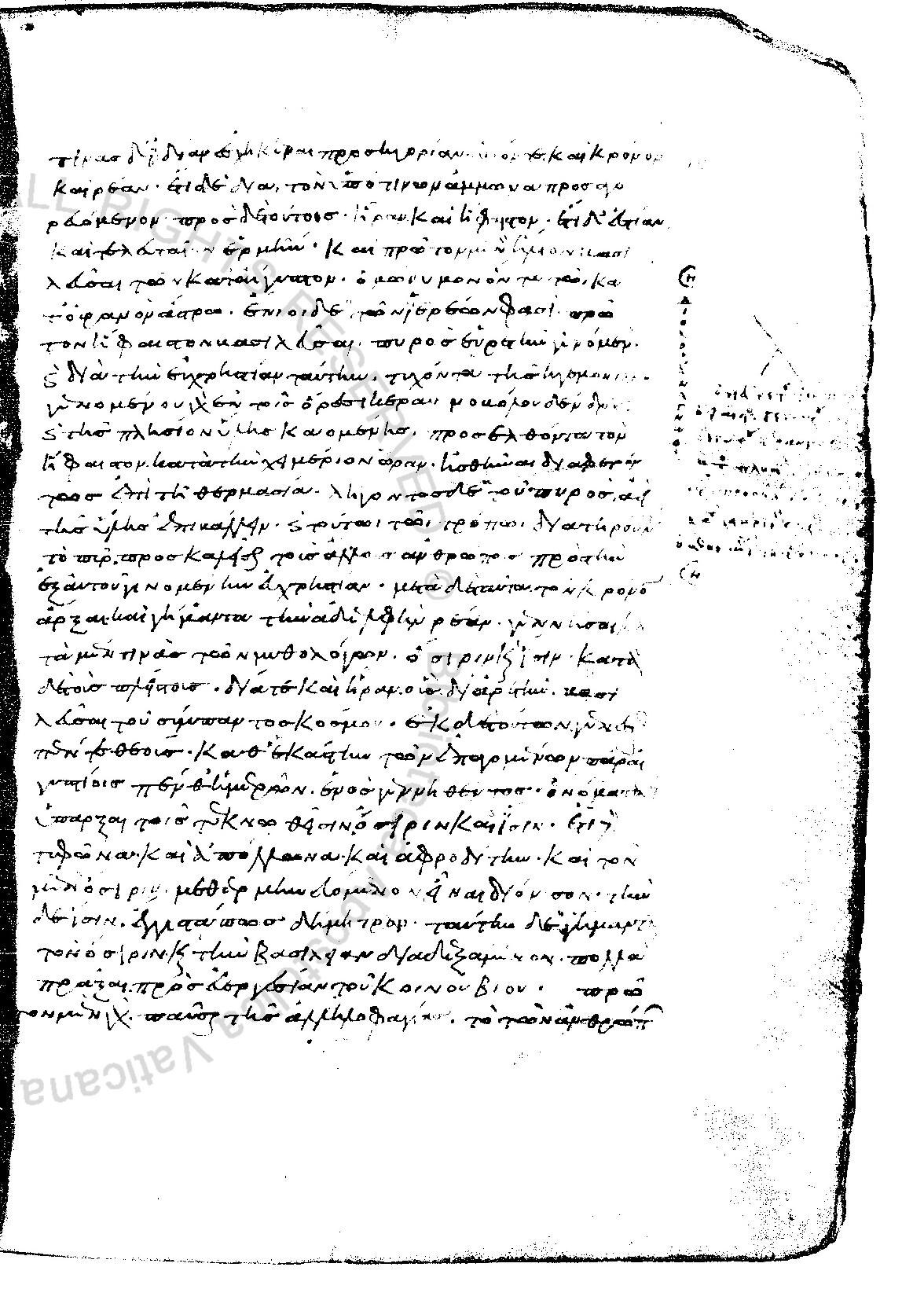
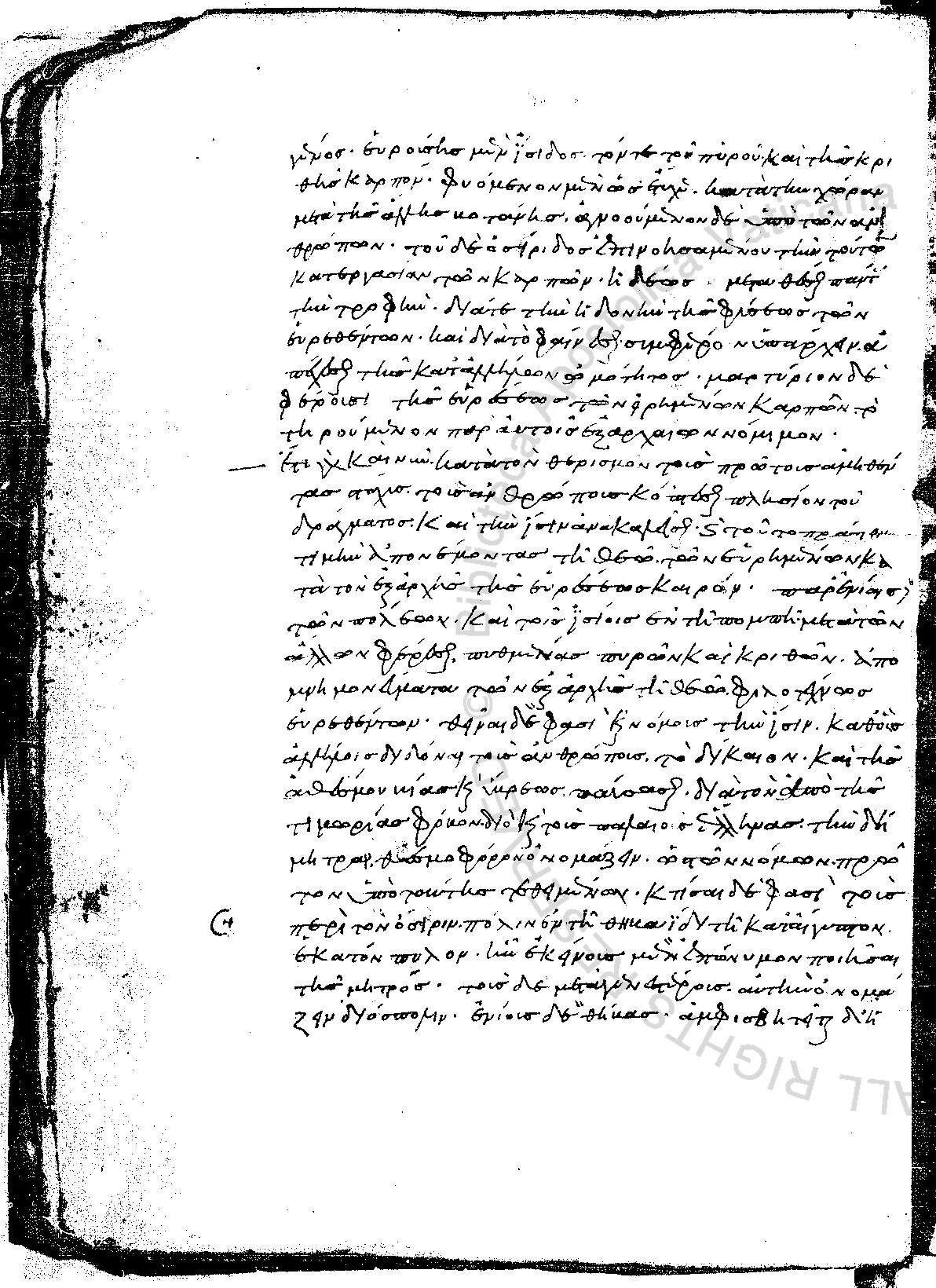
1.14 runs over 2 pages: DigiVatLib image 0015, right page; DigiVatLib image 0016, left page. DigiVatLib image 0015, right page: begins 'τινὰς δ’ ἰδίαν ἐσχηκέναι προσηγορίαν ... καὶ Κρόνον καὶ Ῥέαν' (1.13.2); the last line but one begins 1.14 'πρῶτον μὲν γὰρ παῦσαι τῆς ἀλληλοφαγίας'. DigiVatLib image 0016, left page: begins 'γένος, εὑρούσης μὲν Ἴσιδος τόν τε τοῦ πυροῦ καὶ τῆς κριθῆς καρπόν' (1.14.1); ends 'ἐνίους δὲ Θήβας. ἀμφισβητεῖται δ’ ἡ' (1.15.1-2). Checked on the images. Viewer: https://digi.vatlib.it/view/MSS_Vat.gr.130/0015
1πρῶτον μὲν γὰρ παῦσαι τῆς ἀλληλοφαγίας τὸ τῶν ἀνθρώπων γένος, εὑρούσης μὲν Ἴσιδος τόν τε τοῦ πυροῦ καὶ τῆς κριθῆς καρπόν, φυόμενον μὲν ὡς ἔτυχε κατὰ τὴν χώραν μετὰ τῆς ἄλλης βοτάνης, ἀγνοούμενον δὲ ὑπὸ τῶν ἀνθρώπων, τοῦ δὲ Ὀσίριδος ἐπινοησαμένου καὶ τὴν τούτων κατεργασίαν τῶν καρπῶν, ἡδέως μεταθέσθαι πάντας τὴν τροφὴν διά τε τὴν ἡδονὴν τῆς φύσεως τῶν εὑρεθέντων καὶ διὰ τὸ φαίνεσθαι συμφέρον ὑπάρχειν ἀπέχεσθαι τῆς κατʼ ἀλλήλων ὠμότητος. 2μαρτύριον δὲ φέρουσι τῆς εὑρέσεως τῶν εἰρημένων καρπῶν τὸ τηρούμενον παρʼ αὐτοῖς ἐξ ἀρχαίων νόμιμον· ἔτι γὰρ καὶ νῦν κατὰ τὸν θερισμὸν τοὺς πρώτους ἀμηθέντας στάχυς θέντας τοὺς ἀνθρώπους κόπτεσθαι πλησίον τοῦ δράγματος καὶ τὴν Ἶσιν ἀνακαλεῖσθαι, καὶ τοῦτο πράττειν τιμὴν ἀπονέμοντας τῇ θεῷ τῶν εὑρημένων κατὰ τὸν ἐξ ἀρχῆς τῆς εὑρέσεως καιρόν. 3παρʼ ἐνίαις δὲ τῶν πόλεων καὶ τοῖς Ἰσείοις ἐν τῇ πομπῇ μετὰ τῶν ἄλλων φέρεσθαι καὶ πυθμένας πυρῶν καὶ κριθῶν, ἀπομνημόνευμα τῶν ἐξ ἀρχῆς τῇ θεῷ φιλοτέχνως εὑρεθέντων. θεῖναι δέ φασι καὶ νόμους τὴν Ἶσιν, καθʼ οὓς ἀλλήλοις διδόναι τοὺς ἀνθρώπους τὸ δίκαιον καὶ τῆς ἀθέσμου βίας. καὶ ὕβρεως παύσασθαι διὰ τὸν ἀπὸ τῆς τιμωρίας φόβον· 4διὸ καὶ τοὺς παλαιοὺς Ἕλληνας τὴν Δήμητραν θεσμοφόρον ὀνομάζειν, ὡς τῶν νόμων πρῶτον ὑπὸ ταύτης τεθειμένων.
1Osiris was the first, they record, to make mankind give up cannibalism; for after Isis had discovered the fruit of both wheat and barley which grew wild over the land along with the other plants but was still unknown to man, and Osiris had also devised the cultivation of these fruits, all men were glad to change their food, both because of the pleasing nature of the newly-discovered grains and because it seemed to their advantage to refrain from their butchery of one another. 2As proof of the discovery of these fruits they offer the following ancient custom which they still observe: Even yet at harvest time the people make a dedication of the first heads of the grain to be cut, and standing beside the sheaf beat themselves and call upon Isis, by this act rendering honour to the goddess for the fruits which she discovered, at the season when she first did this. 3Moreover in some cities, during the Festival of Isis as well, stalks of wheat and barley are carried among the other objects in the procession, as a memorial of what the goddess so ingeniously discovered at the beginning. Isis also established laws, they say, in accordance with which the people regularly dispense justice to one another and are led to refrain through fear of punishment from illegal violence and insolence; 4and it is for this reason also that the early Greeks gave Demeter the name Thesmophorus, acknowledging in this way that she had first established their laws.
Where on the image
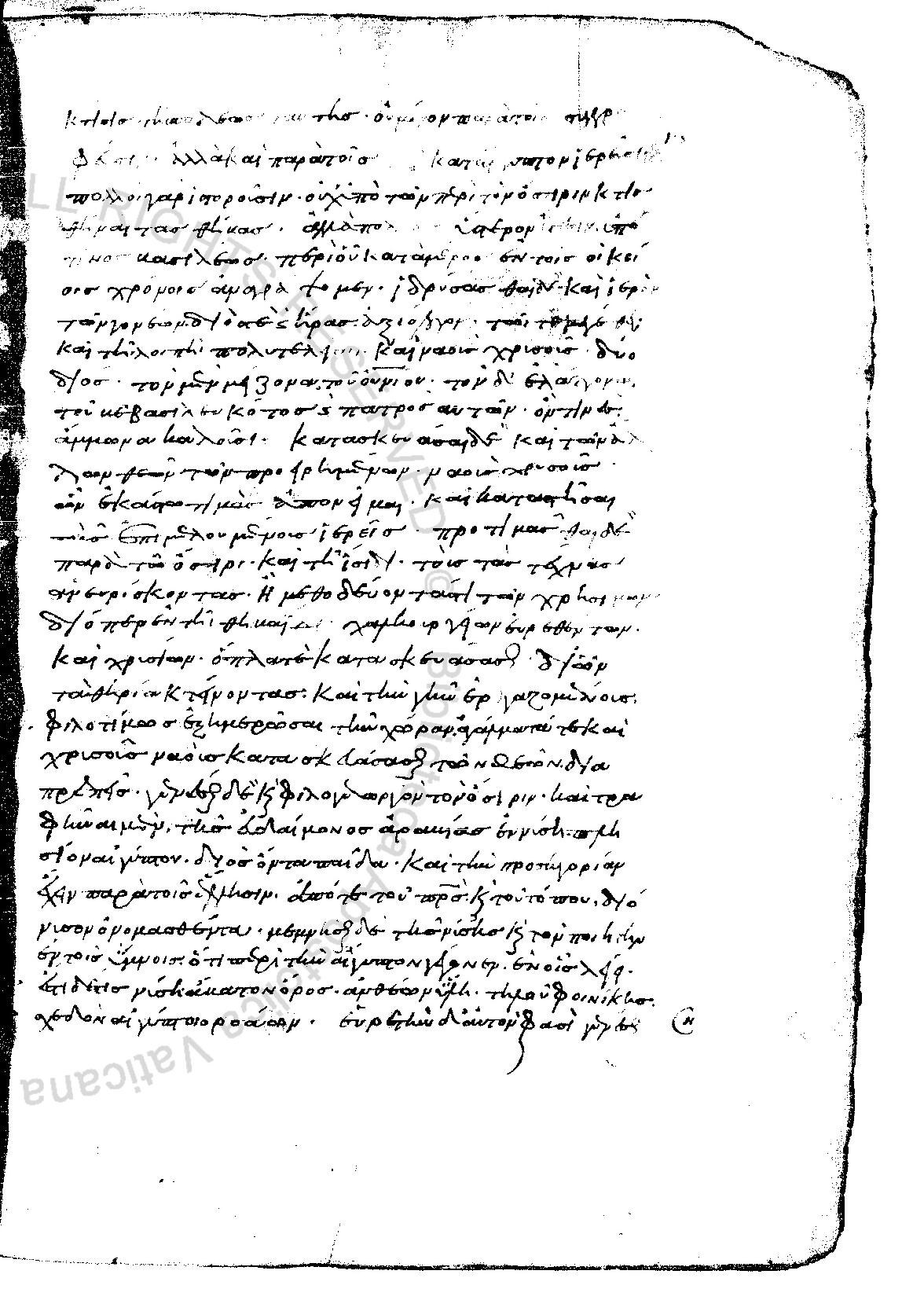
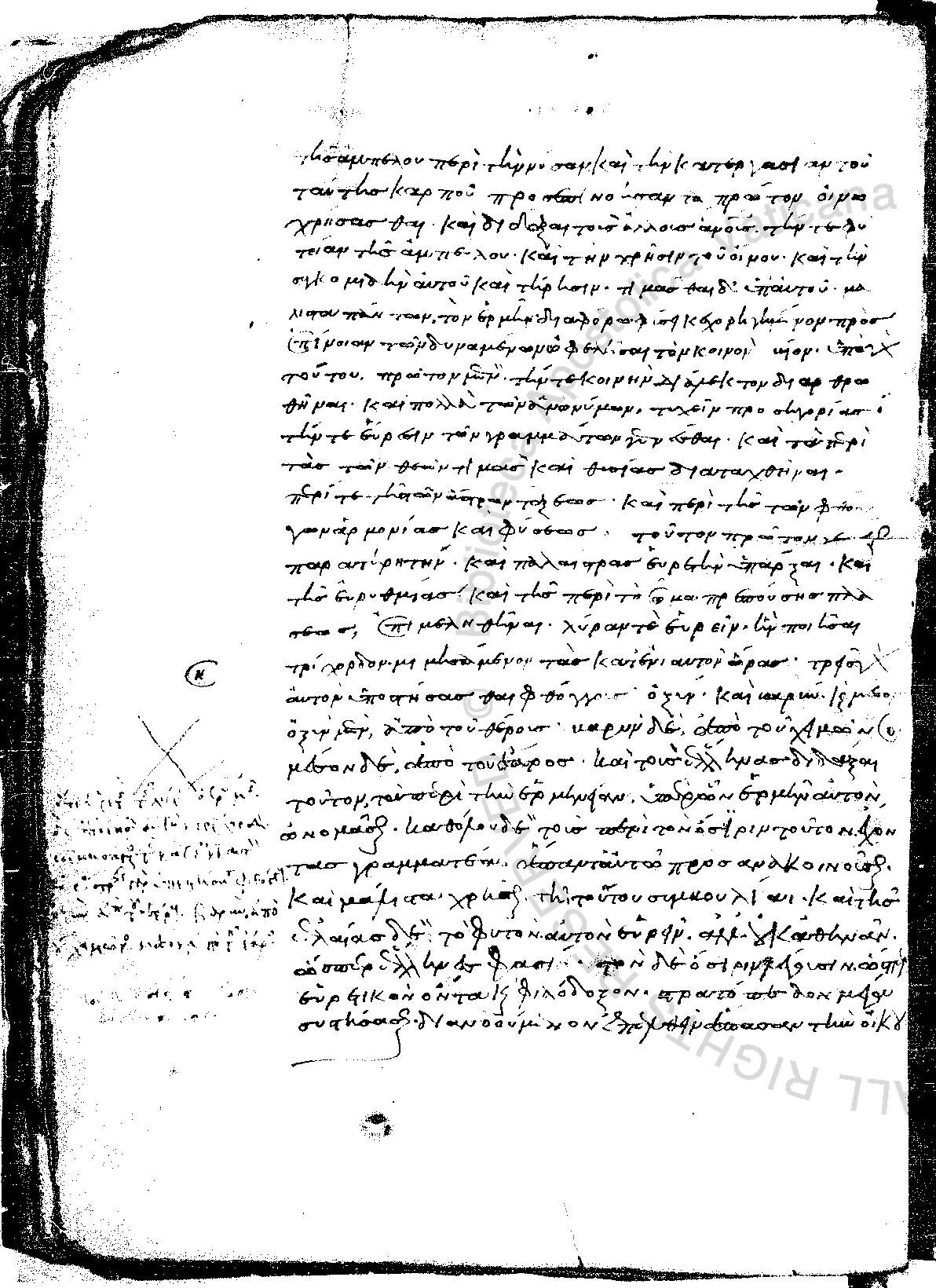
1.15 runs over 3 pages: DigiVatLib image 0016, left page; DigiVatLib image 0016, right page; DigiVatLib image 0017, left page. DigiVatLib image 0016, left page: begins 'γένος, εὑρούσης μὲν Ἴσιδος τόν τε τοῦ πυροῦ καὶ τῆς κριθῆς καρπόν' (1.14.1); ends 'ἐνίους δὲ Θήβας. ἀμφισβητεῖται δ’ ἡ' (1.15.1-2). DigiVatLib image 0016, right page: begins 'κτίσις τῆς πόλεως ταύτης οὐ μόνον παρὰ τοῖς συγγραφεῦσιν' (1.15.2); ends 'σχεδὸν Αἰγύπτοιο ῥοάων. εὑρετὴν δ’ αὐτὸν φασὶ γενέσθαι' (1.15.7-8). DigiVatLib image 0017, left page: begins 'τῆς ἀμπέλου περὶ τὴν Νῦσαν, καὶ τὴν κατεργασίαν τοῦ ταύτης καρποῦ' (1.15.8); ends 'στρατόπεδον μέγα συστήσασθαι, διανοούμενον ἐπελθεῖν ἅπασαν τὴν οἰκου-' (1.17.1). Checked on the images. Viewer: https://digi.vatlib.it/view/MSS_Vat.gr.130/0016
1κτίσαι δέ φασι τοὺς περὶ τὸν Ὄσιριν πόλιν ἐν τῇ Θηβαΐδι τῇ κατʼ Αἴγυπτον ἑκατόμπυλον, ἣν ἐκείνους μὲν ἐπώνυμον ποιῆσαι τῆς μητρός, τοὺς δὲ μεταγενεστέρους αὐτὴν ὀνομάζειν Διὸς πόλιν, ἐνίους δὲ Θήβας. 2ἀμφισβητεῖται δʼ ἡ κτίσις τῆς πόλεως ταύτης οὐ μόνον παρὰ τοῖς συγγραφεῦσιν, ἀλλὰ καὶ παρʼ αὐτοῖς τοῖς κατʼ Αἴγυπτον ἱερεῦσι· πολλοὶ γὰρ ἱστοροῦσιν οὐχ ὑπὸ τῶν περὶ τὸν Ὄσιριν κτισθῆναι τὰς Θήβας, ἀλλὰ πολλοῖς ὕστερον ἔτεσιν ὑπό τινος βασιλέως, περὶ οὗ τὰ κατὰ μέρος ἐν τοῖς οἰκείοις χρόνοις ἀναγράψομεν. 3ἱδρύσασθαι δὲ καὶ ἱερὸν τῶν γονέων Διός τε καὶ Ἥρας ἀξιόλογον τῷ τε μεγέθει καὶ τῇ λοιπῇ πολυτελείᾳ, καὶ ναοὺς χρυσοῦς δύο Διός, τὸν μὲν μείζονα τοῦ οὐρανίου, τὸν δὲ ἐλάττονα τοῦ βεβασιλευκότος καὶ πατρὸς αὐτῶν, ὅν τινες Ἄμμωνα καλοῦσι. 4κατασκευάσαι δὲ καὶ τῶν ἄλλων θεῶν τῶν προειρημένων ναοὺς χρυσοῦς, ὧν ἑκάστῳ τιμὰς ἀπονεῖμαι καὶ καταστῆσαι τοὺς ἐπιμελομένους ἱερεῖς. προτιμᾶσθαι δὲ παρὰ τῷ Ὀσίριδι καὶ τῇ Ἴσιδι τοὺς τὰς τέχνας ἀνευρίσκοντας ἢ μεθοδεύοντάς τι τῶν χρησίμων· 5διόπερ ἐν τῇ Θηβαΐδι χαλκουργείων εὑρεθέντων καὶ χρυσείων ὅπλα τε κατασκευάσασθαι, δι’ ὧν τὰ θηρία κτείνοντας καὶ τὴν γῆν ἐργαζομένους φιλοτίμως ἐξημερῶσαι τὴν χώραν, ἀγάλματά τε καὶ χρυσοῦς ναοὺς κατασκευάσασθαι τῶν θεῶν διαπρεπεῖς. 6γενέσθαι δὲ καὶ φιλογέωργον τὸν Ὄσιριν, καὶ τραφῆναι μὲν τῆς εὐδαίμονος Ἀραβίας ἐν Νύσῃ πλησίον Αἰγύπτου Διὸς ὄντα παῖδα, καὶ τὴν προσηγορίαν ἔχειν παρὰ τοῖς Ἕλλησιν ἀπό τε τοῦ πατρὸς καὶ τοῦ τόπου Διόνυσον ὀνομασθέντα. 7μεμνῆσθαι δὲ τῆς Νύσης καὶ τὸν ποιητὴν ἐν τοῖς ὕμνοις, ὅτι περὶ τὴν Αἴγυπτον γέγονεν, ἐν οἷς λέγει ἔστι δέ τις Νύση, ὕπατον ὄρος ἀνθέον ὕλῃ, τηλοῦ Φοινίκης, σχεδὸν Αἰγύπτοιο ῥοάων. 8εὑρετὴν δʼ αὐτὸν γενέσθαι φασὶ τῆς ἀμπέλου περὶ τὴν Νῦσαν, καὶ τὴν κατεργασίαν τοῦ ταύτης καρποῦ προσεπινοήσαντα πρῶτον οἴνῳ χρήσασθαι, καὶ διδάξαι τοὺς ἄλλους ἀνθρώπους τήν τε φυτείαν τῆς ἀμπέλου καὶ τὴν χρῆσιν τοῦ οἴνου καὶ τὴν συγκομιδὴν αὐτοῦ καὶ τήρησιν. 9τιμᾶσθαι δʼ ὑπʼ αὐτοῦ μάλιστα πάντων τὸν Ἑρμῆν, διαφόρῳ φύσει κεχορηγημένον πρὸς ἐπίνοιαν τῶν δυναμένων ὠφελῆσαι τὸν κοινὸν βίον.
1Osiris, they say, founded in the Egyptian Thebaid a city with a hundred gates, which the men of his day named after his mother, though later generations called it Diospolis, and some named it Thebes. 2There is no agreement, however, as to when this city was founded, not only among the historians, but even among the priests of Egypt themselves; for many writers say that Thebes was not founded by Osiris, but many years later by a certain king of whom we shall give a detailed account in connection with his period. 3Osiris, they add, also built a temple to his parents, Zeus and Hera, which was famous both for its size and its costliness in general, and two golden chapels to Zeus, the larger one to him as god of heaven, the smaller one to him as former king and father of the Egyptians, in which rôle he is called by some Ammon. 4He also made golden chapels for the rest of the gods mentioned above, allotting honours to each of them and appointing priests to have charge over these. Special esteem at the court of Osiris and Isis was also accorded to those who should invent any of the arts or devise any useful process; 5consequently, since copper and gold mines had been discovered in the Thebaid, they fashioned implements with which they killed the wild beasts and worked the soil, and thus in eager rivalry brought the country under cultivation, and they made images of the gods and magnificent golden chapels for their worship. 6Osiris, they say, was also interested in agriculture and was reared in Nysa, a city of Arabia Felix near Egypt, being a son of Zeus; and the name which he bears among the Greeks is derived both from his father and from the birthplace, since he is called Dionysus. 7Mention is also made of Nysa by the poet in his Hymns, to the effect that it was in the vicinity of Egypt, when he says: There is a certain Nysa, mountain high, With forests thick, in Phoenicê afar, Close to Aegyptus' stream. 8And the discovery of the vine, they say, was made by him near Nysa, and that, having further devised the proper treatment of its fruit, he was the first to drink wine and taught mankind at large the culture of the vine and the use of wine, as well as the way to harvest the grape and to store wine. 9The one most highly honoured by him was Hermes, who was endowed with unusual ingenuity for devising things capable of improving the social life of man.
Where on the image
1.16 is on DigiVatLib image 0017, left page. DigiVatLib image 0017, left page: begins 'τῆς ἀμπέλου περὶ τὴν Νῦσαν, καὶ τὴν κατεργασίαν τοῦ ταύτης καρποῦ' (1.15.8); ends 'στρατόπεδον μέγα συστήσασθαι, διανοούμενον ἐπελθεῖν ἅπασαν τὴν οἰκου-' (1.17.1). Checked on the images. Viewer: https://digi.vatlib.it/view/MSS_Vat.gr.130/0017
1ὑπὸ γὰρ τούτου πρῶτον μὲν τήν τε κοινὴν διάλεκτον διαρθρωθῆναι καὶ πολλὰ τῶν ἀνωνύμων τυχεῖν προσηγορία, τήν τε εὕρεσιν τῶν γραμμάτων γενέσθαι καὶ τὰ περὶ τὰς τῶν θεῶν τιμὰς καὶ θυσίας διαταχθῆναι· περί τε τῆς τῶν ἄστρων τάξεως καὶ περὶ τῆς τῶν φθόγγων ἁρμονίας καὶ φύσεως τοῦτον πρῶτον γενέσθαι παρατηρητήν, καὶ παλαίστρας εὑρετὴν ὑπάρξαι, καὶ τῆς εὐρυθμίας καὶ τῆς περὶ τὸ σῶμα πρεπούσης πλάσεως ἐπιμεληθῆναι. λύραν τε νευρίνην ποιῆσαι τρίχορδον, μιμησάμενον τὰς κατʼ ἐνιαυτὸν ὥρας· τρεῖς γὰρ αὐτὸν ὑποστήσασθαι φθόγγους, ὀξὺν καὶ βαρὺν καὶ μέσον, ὀξὺν μὲν ἀπὸ τοῦ θέρους, βαρὺν δὲ ἀπὸ τοῦ χειμῶνος, 2μέσον δὲ ἀπὸ τοῦ ἔαρος. καὶ τοὺς Ἕλληνας διδάξαι τοῦτον τὰ περὶ τὴν ἑρμηνείαν, ὑπὲρ ὧν Ἑρμῆν αὐτὸν ὠνομάσθαι. καθόλου δὲ τοὺς περὶ τὸν Ὄσιριν τοῦτον ἔχοντας ἱερογραμματέα ἅπαντʼ αὐτῷ προσανακοινοῦσθαι καὶ μάλιστα χρῆσθαι τῇ τούτου συμβουλίᾳ. καὶ τῆς ἐλαίας δὲ τὸ φυτὸν αὐτὸν εὑρεῖν, ἀλλʼ οὐκ Ἀθηνᾶν, ὥσπερ Ἕλληνές φασι.
1It was by Hermes, for instance, according to them, that the common language of mankind was first further articulated, and that many objects which were still nameless received an appellation, that the alphabet was invented, and that ordinances regarding the honours and offerings due to the gods were duly established; he was the first also to observe the orderly arrangement of the stars and the harmony of the musical sounds and their nature, to establish a wrestling school, and to give thought to the rhythmical movement of the human body and its proper development. He also made a lyre and gave it three strings, imitating the seasons of the year; for he adopted three tones, a high, a low, and a medium; the high from the summer, the low from the winter, and the medium from the spring. 2The Greeks also were taught by him how to expound (hermeneia) their thoughts, and it was for this reason that he was given the name Hermes. In a word, Osiris, taking him for his priestly scribe, communicated with him on every matter and used his counsel above that of all others. The olive tree also, they claim, was his discovery, not Athena's, as Greeks say.
Notes
- Greek: F. Vogel's Teubner edition (1888), from the Perseus Digital Library, checked against the printed volume. Square brackets are Vogel's marks for words he took to be later additions. The manuscript's wording differs from the edition in places; the Greek shown is the edition, not a transcription of the page.
- English: C. H. Oldfather's Loeb translation (1933), as printed in that year; his footnotes are omitted. Oldfather's section numbers follow Vogel's, with occasional small differences in where a section begins.
Cite
Sources
- Source: Vat. gr. 130 (10th c.) via DigiVatLib IIIF + Vogel Greek (Perseus, checked against the 1888 printing) + Oldfather English (Loeb 1933, public domain) (holding institution)
- Critical edition: F. Vogel, Teubner 1888 (Perseus, checked against the printing)
← previous · → next · v cycle view · l back to library