Diodorus Siculus 1.44: gods and heroes for almost 18,000 years, then mortal kings
Introduction
Diodorus of Sicily wrote his Library of History, a history of the world in forty books, between about 60 and 30 BCE; he visited Egypt in the 180th Olympiad (60-56 BCE). Book 1 is devoted to Egypt, and its first part gives what the Egyptian priests and the Greek writers who used them (chiefly Hecataeus of Abdera) told of the beginning of the world and of the gods who ruled Egypt as kings before the first mortal king, Menas. Diodorus reports these accounts without vouching for them.
The manuscript shown is Vat. gr. 130 in the Vatican Library, a parchment copy of books 1-5 made in the middle of the 10th century, the oldest manuscript of this part of the work. The images are the library's black-and-white microfilm; each opening has been split into its two pages. No folio numbers are legible on the images, so pages are cited by DigiVatLib image number and side. Each section is one chapter and lists the page or pages that carry it; the page breaks were read on the images and are recorded in each note.
This entry covers chapters 1.44.
How was this verified? (Provenance)
Where on the image
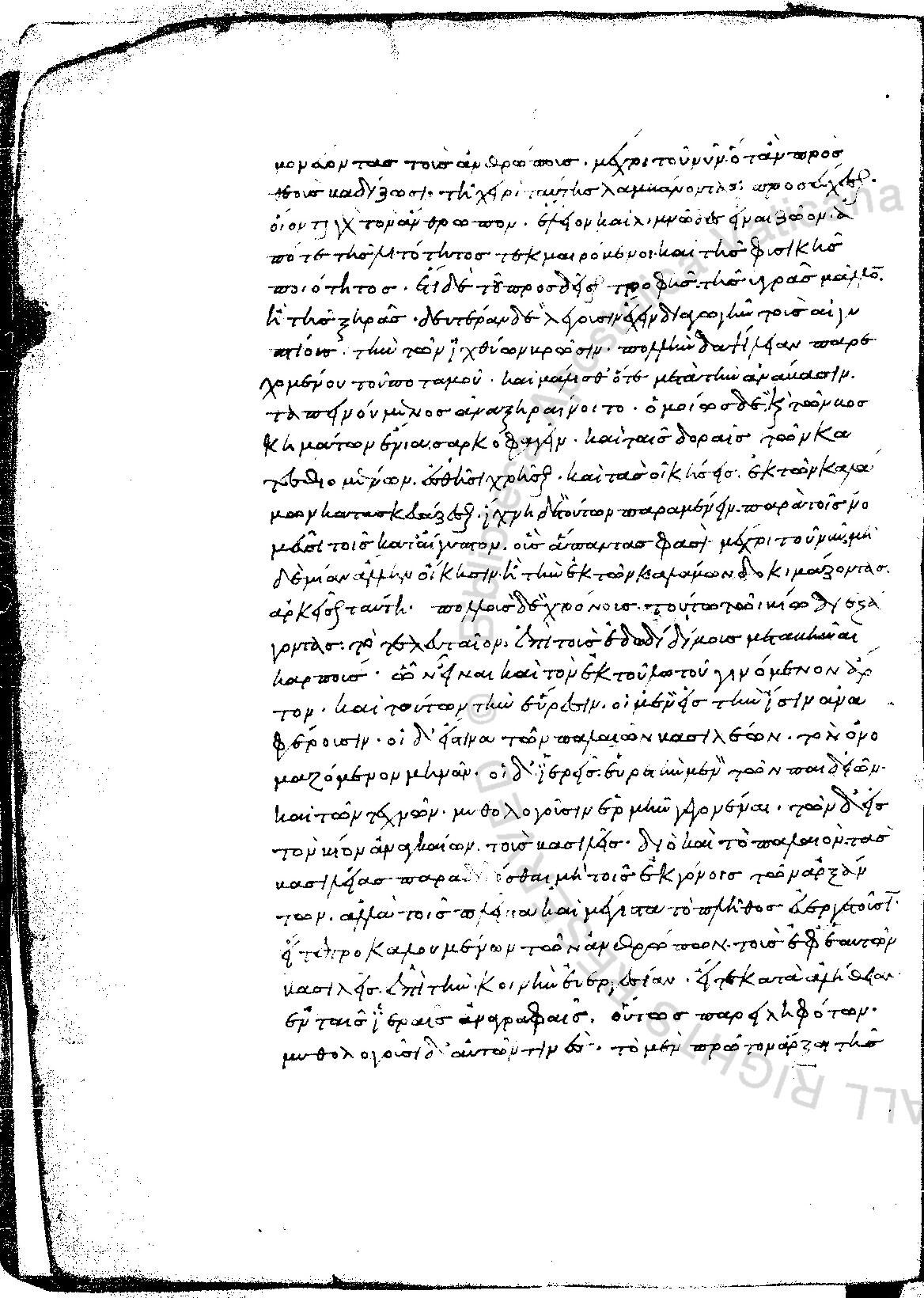
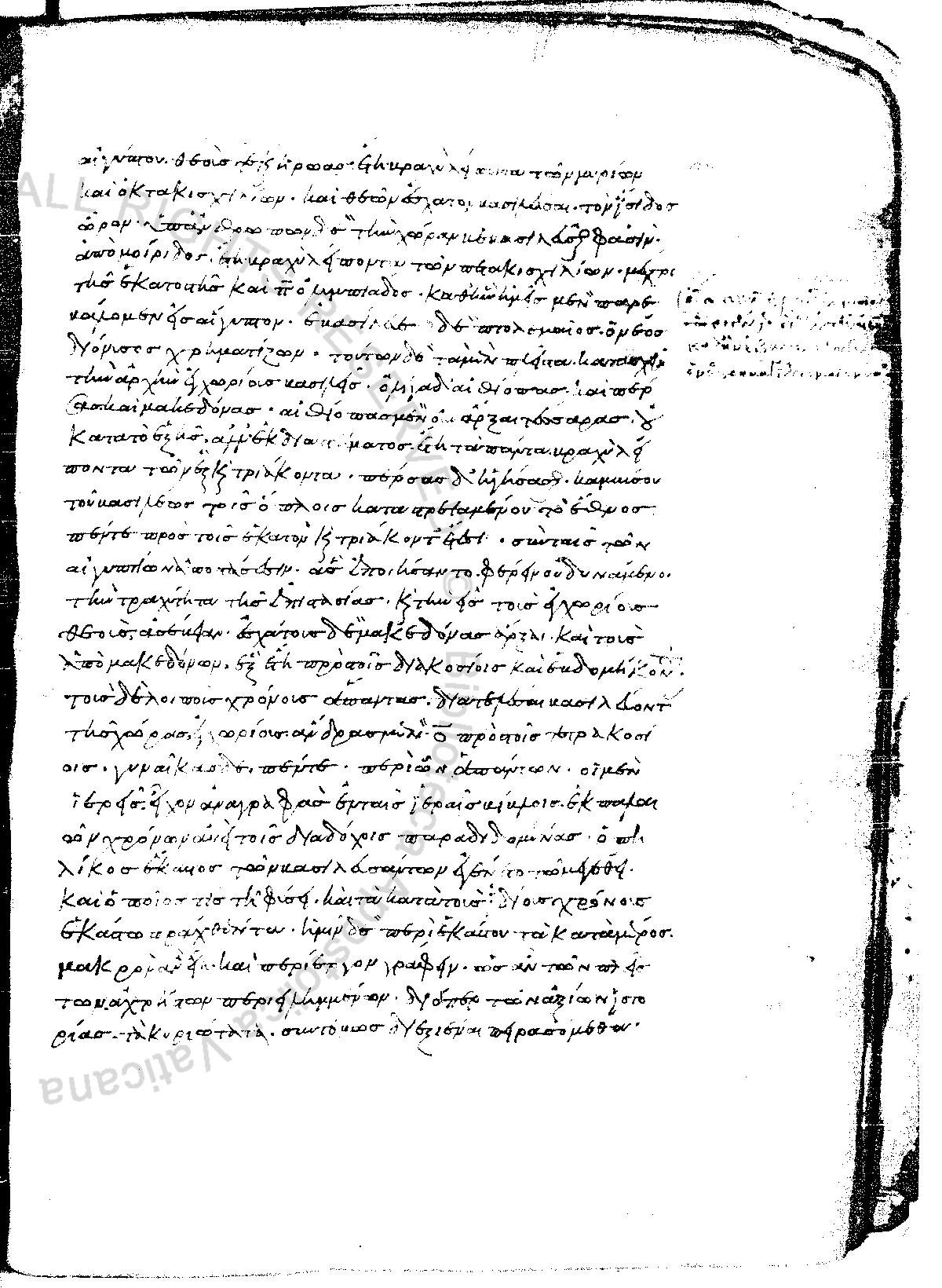
1.44 runs over 2 pages: DigiVatLib image 0040, left page; DigiVatLib image 0040, right page. DigiVatLib image 0040, left page: the last line begins 1.44.1 'μυθολογοῦσι δ’ αὐτῶν τινες τὸ μὲν πρῶτον ἄρξαι τῆς', after the end of 1.43 'ἐν ταῖς ἱεραῖς ἀναγραφαῖς οὕτω παρειληφότων'. DigiVatLib image 0040, right page: begins 'Αἰγύπτου θεοὺς καὶ ἥρωας ἔτη βραχὺ λείποντα τῶν μυρίων καὶ ὀκτακισχιλίων' (1.44.1); ends with the last words of 1.44.5 'τὰ κυριώτατα συντόμως διεξιέναι πειρασόμεθα'. Checked on the images. Viewer: https://digi.vatlib.it/view/MSS_Vat.gr.130/0040
1μυθολογοῦσι δʼ αὐτῶν τινες τὸ μὲν πρῶτον ἄρξαι τῆς Αἰγύπτου θεοὺς καὶ ἥρωας ἔτη βραχὺ λείποντα τῶν μυρίων καὶ ὀκτακισχιλίων, καὶ θεῶν ἔσχατον βασιλεῦσαι τὸν Ἴσιδος Ὧρον· ὑπʼ ἀνθρώπων δὲ τὴν χώραν βεβασιλεῦσθαί φασιν [ἀπὸ Μοίριδος] ἔτη βραχὺ λείποντα τῶν πεντακισχιλίων μέχρι τῆς ἑκατοστῆς καὶ ὀγδοηκοστῆς ὀλυμπιάδος, καθʼ ἣν ἡμεῖς μὲν παρεβάλομεν εἰς Αἴγυπτον, ἐβασίλευε δὲ Πτολεμαῖος ὁ νέος Διόνυσος χρηματίζων. 2τούτων δὲ τὰ μὲν πλεῖστα κατασχεῖν τὴν ἀρχὴν ἐγχωρίους βασιλεῖς, ὀλίγα δὲ Αἰθίοπας καὶ Πέρσας καὶ Μακεδόνας. Αἰθίοπας μὲν οὖν ἄρξαι τέτταρας, οὐ κατὰ τὸ ἑξῆς, ἀλλʼ ἐκ διαστήματος, ἔτη τὰ πάντα βραχὺ λείποντα τῶν ἓξ καὶ τριάκοντα· 3Πέρσας δʼ ἡγήσασθαι Καμβύσου τοῦ βασιλέως τοῖς ὅπλοις καταστρεψαμένου τὸ ἔθνος πέντε πρὸς τοῖς ἑκατὸν καὶ τριάκοντα ἔτεσι σὺν ταῖς τῶν Αἰγυπτίων ἀποστάσεσιν, ἃς ἐποιήσαντο φέρειν οὐ δυνάμενοι τὴν τραχύτητα τῆς ἐπιστασίας καὶ τὴν εἰς τοὺς ἐγχωρίους θεοὺς ἀσέβειαν. 4ἐσχάτους δὲ Μακεδόνας ἄρξαι καὶ τοὺς ἀπὸ Μακεδόνων ἓξ ἔτη πρὸς τοῖς διακοσίοις καὶ ἑβδομήκοντα. τοὺς δὲ λοιποὺς χρόνους ἅπαντας διατελέσαι βασιλεύοντας τῆς χώρας ἐγχωρίους, ἄνδρας μὲν ἑβδομήκοντα πρὸς τοῖς τετρακοσίοις, γυναῖκας δὲ πέντε· περὶ ὧν ἁπάντων οἱ μὲν ἱερεῖς εἶχον ἀναγραφὰς ἐν ταῖς ἱεραῖς βίβλοις ἐκ παλαιῶν χρόνων ἀεὶ τοῖς διαδόχοις παραδεδομένας, ὁπηλίκος ἕκαστος τῶν βασιλευσάντων ἐγένετο τῷ μεγέθει καὶ ὁποῖός τις τῇ φύσει καὶ τὰ κατὰ τοὺς ἰδίους χρόνους ἑκάστῳ πραχθέντα· 5ἡμῖν δὲ περὶ ἑκάστου τὰ κατὰ μέρος μακρὸν ἂν εἴη καὶ περίεργον γράφειν, ὡς ἂν τῶν πλείστων ἀχρήστων περιειλημμένων. διόπερ τῶν ἀξίων ἱστορίας τὰ κυριώτατα συντόμως διεξιέναι πειρασόμεθα.
1Some of them give the story that at first gods and heroes ruled Egypt for a little less than eighteen thousand years, the last of the gods to rule being Horus, the son of Isis; and mortals have been kings over their country, they say, for a little less than five thousand years down to the One Hundred and Eightieth Olympiad, the time when we visited Egypt and the king was Ptolemy, who took the name of The New Dionysus. 2For most of this period the rule was held by native kings, and for a small part of it by Ethiopians, Persians, and Macedonians. Now four Ethiopians held the throne, not consecutively but with intervals between, for a little less than thirty-six years in all; 3and the Persians, after their king Cambyses had subdued the nation by arms, ruled for one hundred and thirty-five years, including the periods of revolt on the part of the Egyptians which they raised because they were unable to endure the harshness of their dominion and their lack of respect for the native gods. 4Last of all the Macedonians and their dynasty held rule for two hundred and seventy-six years. For the rest of the time all the kings of the land were natives, four hundred and seventy of them being men and five women. About all of them the priests had records which were regularly handed down in their sacred books to each successive priest from early times, giving the stature of each of the former kings, a description of his character, and what he had done during his reign; as for us, however, it would be a long task to write of each of them severally, and superfluous also, seeing that most of the material included is of no profit. 5Consequently we shall undertake to recount briefly only the most important of the facts which deserve a place in history.
Notes
- Greek: F. Vogel's Teubner edition (1888), from the Perseus Digital Library, checked against the printed volume. Square brackets are Vogel's marks for words he took to be later additions. The manuscript's wording differs from the edition in places; the Greek shown is the edition, not a transcription of the page.
- English: C. H. Oldfather's Loeb translation (1933), as printed in that year; his footnotes are omitted. Oldfather's section numbers follow Vogel's, with occasional small differences in where a section begins.
Cite
Sources
- Source: Vat. gr. 130 (10th c.) via DigiVatLib IIIF + Vogel Greek (Perseus, checked against the 1888 printing) + Oldfather English (Loeb 1933, public domain) (holding institution)
- Critical edition: F. Vogel, Teubner 1888 (Perseus, checked against the printing)
← previous · → next · v cycle view · l back to library