Diodorus Siculus 1.23-29: the age of the gods, the Egyptian Heracles, Isis the healer, the stelae of Isis and Osiris, and the colonies from Egypt
Introduction
Diodorus of Sicily wrote his Library of History, a history of the world in forty books, between about 60 and 30 BCE; he visited Egypt in the 180th Olympiad (60-56 BCE). Book 1 is devoted to Egypt, and its first part gives what the Egyptian priests and the Greek writers who used them (chiefly Hecataeus of Abdera) told of the beginning of the world and of the gods who ruled Egypt as kings before the first mortal king, Menas. Diodorus reports these accounts without vouching for them.
The manuscript shown is Vat. gr. 130 in the Vatican Library, a parchment copy of books 1-5 made in the middle of the 10th century, the oldest manuscript of this part of the work. The images are the library's black-and-white microfilm; each opening has been split into its two pages. No folio numbers are legible on the images, so pages are cited by DigiVatLib image number and side. Each section is one chapter and lists the page or pages that carry it; the page breaks were read on the images and are recorded in each note.
This entry covers chapters 1.23-29.
How was this verified? (Provenance)
Where on the image
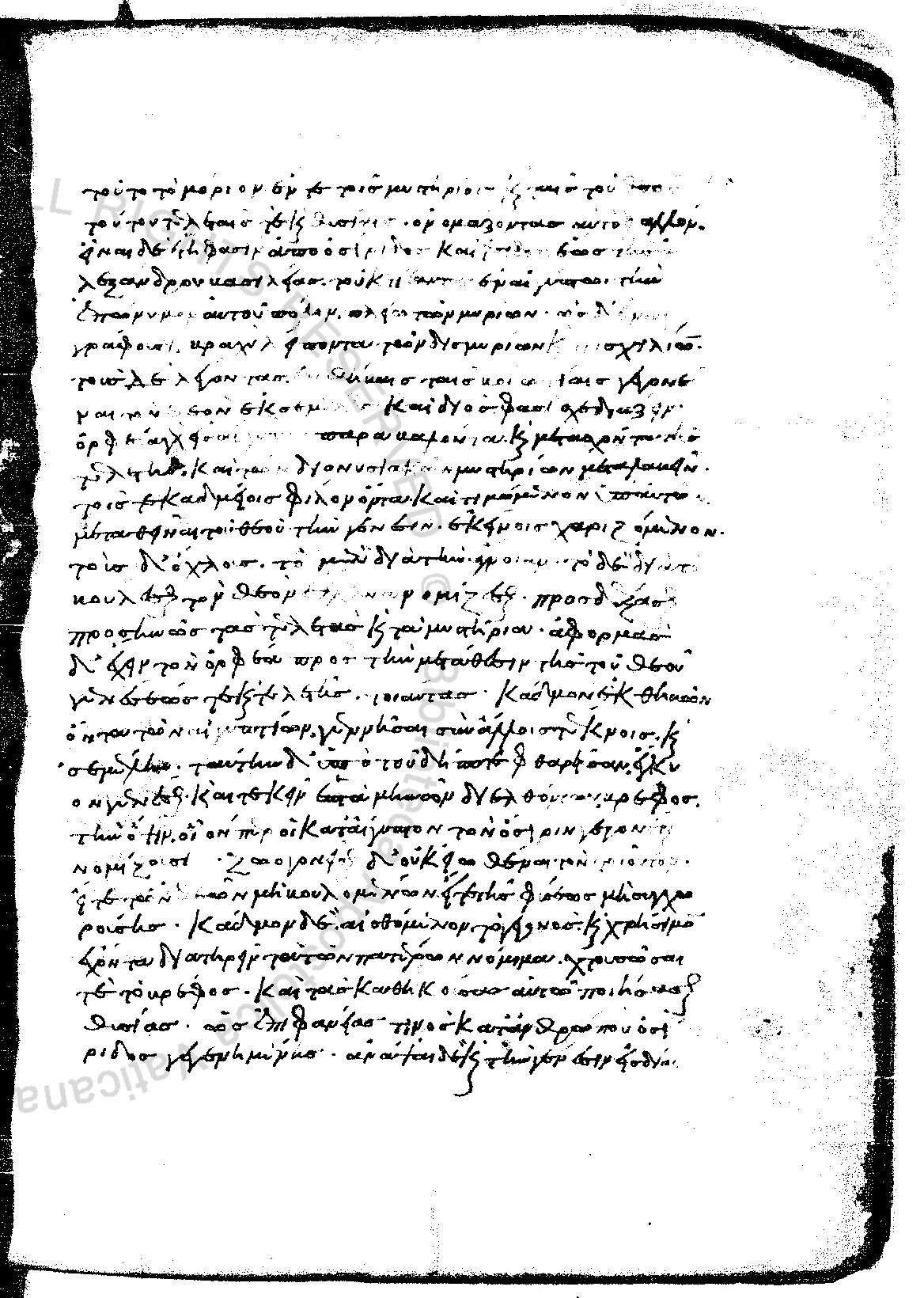
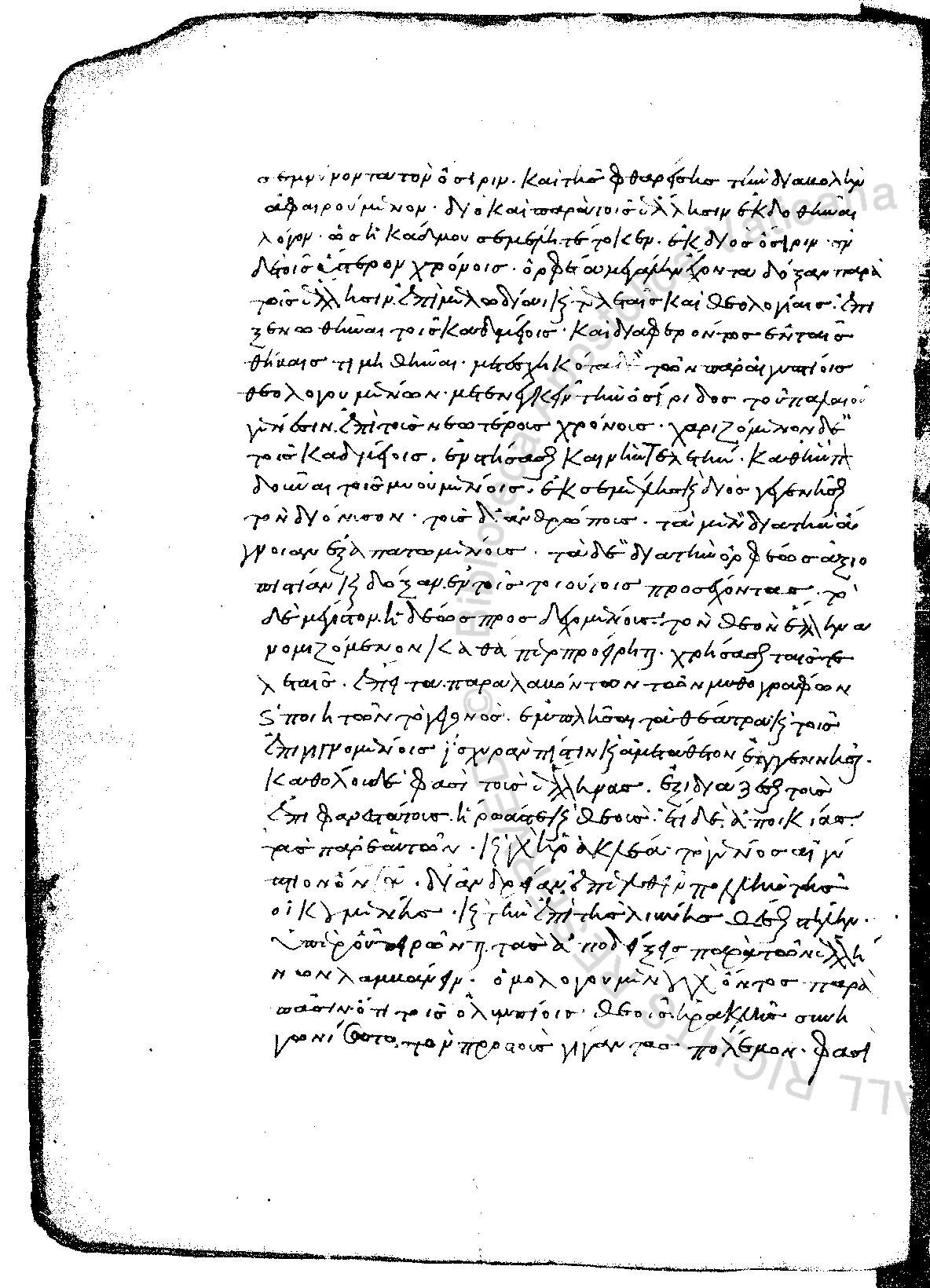
1.23 runs over 2 pages: DigiVatLib image 0021, right page; DigiVatLib image 0022, left page. DigiVatLib image 0021, right page: begins 'τοῦτο τὸ μόριον ἔν τε τοῖς μυστηρίοις' (1.22.7; the edition's 'τιμᾶν' before these words is not on the page, nor at the end of the previous page); 1.23 begins on line 3 'εἶναι δὲ ἔτη φασὶν'; ends 'Ὀσίριδος γεγενημένης. ἀνάψαι δὲ καὶ τὴν γένεσιν εἰς Δία' (1.23.5-6). DigiVatLib image 0022, left page: begins 'σεμνύνοντα τὸν Ὄσιριν καὶ τῆς φθαρείσης τὴν διαβολὴν ἀφαιρούμενον' (1.23.6); ends 'Ἡρακλῆς συνηγωνίσατο τὸν πρὸς τοὺς γίγαντας πόλεμον, φασὶ' (1.24.2). Checked on the images. Viewer: https://digi.vatlib.it/view/MSS_Vat.gr.130/0021
1εἶναι δὲ ἔτη φασὶν ἀπὸ Ὀσίριδος καὶ Ἴσιδος ἕως τῆς Ἀλεξάνδρου βασιλείας τοῦ κτίσαντος ἐν Αἰγύπτῳ τὴν ἐπώνυμον αὐτοῦ πόλιν πλείω τῶν μυρίων, ὡς δʼ ἔνιοι γράφουσι, βραχὺ λείποντα τῶν δισμυρίων καὶ τρισχιλίων. 2τοὺς δὲ λέγοντας ἐν Θήβαις τῆς Βοιωτίας γεγονέναι τὸν θεὸν ἐκ Σεμέλης καὶ Διός φασι σχεδιάζειν. Ὀρφέα γὰρ εἰς Αἴγυπτον παραβαλόντα καὶ μετασχόντα τῆς τελετῆς καὶ τῶν Διονυσιακῶν μυστηρίων μεταλαβεῖν, τοῖς δὲ Καδμείοις φίλον ὄντα καὶ τιμώμενον ὑπʼ αὐτῶν μεταθεῖναι τοῦ θεοῦ τὴν γένεσιν ἐκείνοις χαριζόμενον· τοὺς δʼ ὄχλους τὰ μὲν διὰ τὴν ἄγνοιαν, τὰ δὲ διὰ τὸ βούλεσθαι τὸν θεὸν Ἕλληνα νομίζεσθαι, προσδέξασθαι προσηνῶς τὰς τελετὰς καὶ τὰ μυστήρια. 3ἀφορμὰς δʼ ἔχειν τὸν Ὀρφέα πρὸς τὴν μετάθεσιν τῆς τοῦ θεοῦ γενέσεώς τε καὶ τελετῆς τοιαύτας. 4Κάδμον ἐκ Θηβῶν ὄντα τῶν Αἰγυπτίων γεννῆσαι σὺν ἄλλοις τέκνοις καὶ Σεμέλην, ταύτην δὲ ὑφʼ ὅτου δήποτε φθαρεῖσαν ἔγκυον γενέσθαι, καὶ τεκεῖν ἑπτὰ μηνῶν διελθόντων βρέφος τὴν ὄψιν οἷόνπερ οἱ κατʼ Αἴγυπτον τὸν Ὄσιριν γεγονέναι νομίζουσι· ζωογονεῖσθαι δʼ οὐκ εἰωθέναι τὸ τοιοῦτον, εἴτε τῶν θεῶν μὴ βουλομένων εἴτε τῆς φύσεως μὴ συγχωρούσης. Κάδμον δʼ αἰσθόμενον τὸ γεγονός, 5καὶ χρησμὸν ἔχοντα διατηρεῖν τὰ τῶν πατέρων νόμιμα, χρυσῶσαί τε τὸ βρέφος καὶ τὰς καθηκούσας αὐτῷ ποιήσασθαι θυσίας, ὡς ἐπιφανείας τινὸς κατʼ ἀνθρώπους Ὀσίριδος γεγενημένης. 6ἀνάψαι δὲ καὶ τὴν γένεσιν εἰς Δία, σεμνύνοντα τὸν Ὄσιριν καὶ τῆς φθαρείσης τὴν διαβολὴν ἀφαιρούμενον· διὸ καὶ παρὰ τοῖς Ἕλλησιν ἐκδοθῆναι λόγον ὡς ἡ Κάδμου Σεμέλη τέτοκεν ἐκ Διὸς Ὄσιριν. ἐν δὲ τοῖς ὕστερον χρόνοις Ὀρφέα, μεγάλην ἔχοντα δόξαν παρὰ τοῖς Ἕλλησιν ἐπὶ μελῳδίᾳ καὶ τελεταῖς καὶ θεολογίαις, ἐπιξενωθῆναι τοῖς Καδμείοις καὶ διαφερόντως ἐν ταῖς Θήβαις τιμηθῆναι. 7μετεσχηκότα δὲ τῶν παρʼ Αἰγυπτίοις θεολογουμένων μετενεγκεῖν τὴν Ὀσίριδος τοῦ παλαιοῦ γένεσιν ἐπὶ τοὺς νεωτέρους χρόνους, χαριζόμενον δὲ τοῖς Καδμείοις ἐνστήσασθαι καινὴν τελετήν, καθʼ ἣν παραδοῦναι τοῖς μυουμένοις ἐκ Σεμέλης καὶ Διὸς γεγεννῆσθαι τὸν Διόνυσον. τοὺς δʼ ἀνθρώπους τὰ μὲν διὰ τὴν ἄγνοιαν ἐξαπατωμένους, τὰ δὲ διὰ τὴν Ὀρφέως ἀξιοπιστίαν καὶ δόξαν ἐν τοῖς τοιούτοις προσέχοντας, τὸ δὲ μέγιστον ἡδέως προσδεχομένους τὸν θεὸν Ἕλληνα νομιζόμενον, καθάπερ προείρηται, χρήσασθαι ταῖς τελεταῖς. 8ἔπειτα παραλαβόντων τῶν μυθογράφων καὶ ποιητῶν τὸ γένος, ἐμπεπλῆσθαι τὰ θέατρα, καὶ τοῖς ἐπιγινομένοις ἰσχυρὰν πίστιν καὶ ἀμετάθετον γενέσθαι. καθόλου δέ φασι τοὺς Ἕλληνας ἐξιδιάζεσθαι τοὺς ἐπιφανεστάτους ἥρωάς τε καὶ θεούς, ἔτι δʼ ἀποικίας τὰς παρʼ ἑαυτῶν.
1The number of years from Osiris and Isis, they say, to the reign of Alexander, who founded the city which bears his name in Egypt, is over ten thousand, but, according to other writers, a little less than twenty-three thousand. 2And those who say that the god was born of Semelê and Zeus in Boeotian Thebes are, according to the priests, simply inventing the tale. For they say that Orpheus, upon visiting Egypt and participating in the initiation and mysteries of Dionysus, adopted them and as a favour to the descendants of Cadmus, since he was kindly disposed to them and received honours at their hands, transferred the birth of the god to Thebes; and the common people, partly out of ignorance and partly out of their desire to have the god thought to be a Greek, eagerly accepted his initiatory rites and mysteries. 3What led Orpheus to transfer the birth and rites of the god, they say, was something like this. 4Cadmus, who was a citizen of Egyptian Thebes, begat several children, of whom one was Semelê; she was violated by an unknown person, became pregnant, and after seven months gave birth to a child whose appearance was such as the Egyptians hold had been that of Osiris. Now such a child is not usually brought into the world alive, either because it is contrary to the will of the gods or because the law of nature does not admit of it. 5But when Cadmus found out what had taken place, having at the same time a reply from an oracle commanding him to observe the laws of his fathers, he both gilded the infant and paid it the appropriate sacrifices, on the ground that there had been a sort of epiphany of Osiris among men. 6The fatherhood of the child he attributed to Zeus, in this way magnifying Osiris and averting slander from his violated daughter; and this is the reason why the tale was given out among the Greeks to the effect that Semelê, the daughter of Cadmus, was the mother of Osiris by Zeus. Now at a later time Orpheus, who was held in high regard among the Greeks for his singing, initiatory rites, and instructions on things divine, was entertained as a guest by the descendants of Cadmus and accorded unusual honours in Thebes. 7And since he had become conversant with the teachings of the Egyptians about the gods, he transferred the birth of the ancient Osiris to more recent times, and, out of regard for the descendants of Cadmus, instituted a new initiation, in the ritual of which the initiates were given the account that Dionysus had been born of Semelê and Zeus. And the people observed these initiatory rites, partly because they were deceived through their ignorance, partly because they were attracted to them by the trustworthiness of Orpheus and his reputation in such matters, and most of all because they were glad to receive the god as a Greek, which, as has been said, is what he was considered to be. 8Later, after the writers of myths and poets had taken over this account of his ancestry, the theatres became filled with it and among following generations faith in the story grew stubborn and immutable. In general, they say, the Greeks appropriate to themselves the most renowned of both Egyptian heroes and gods, and so also the colonies sent out by them.
Where on the image
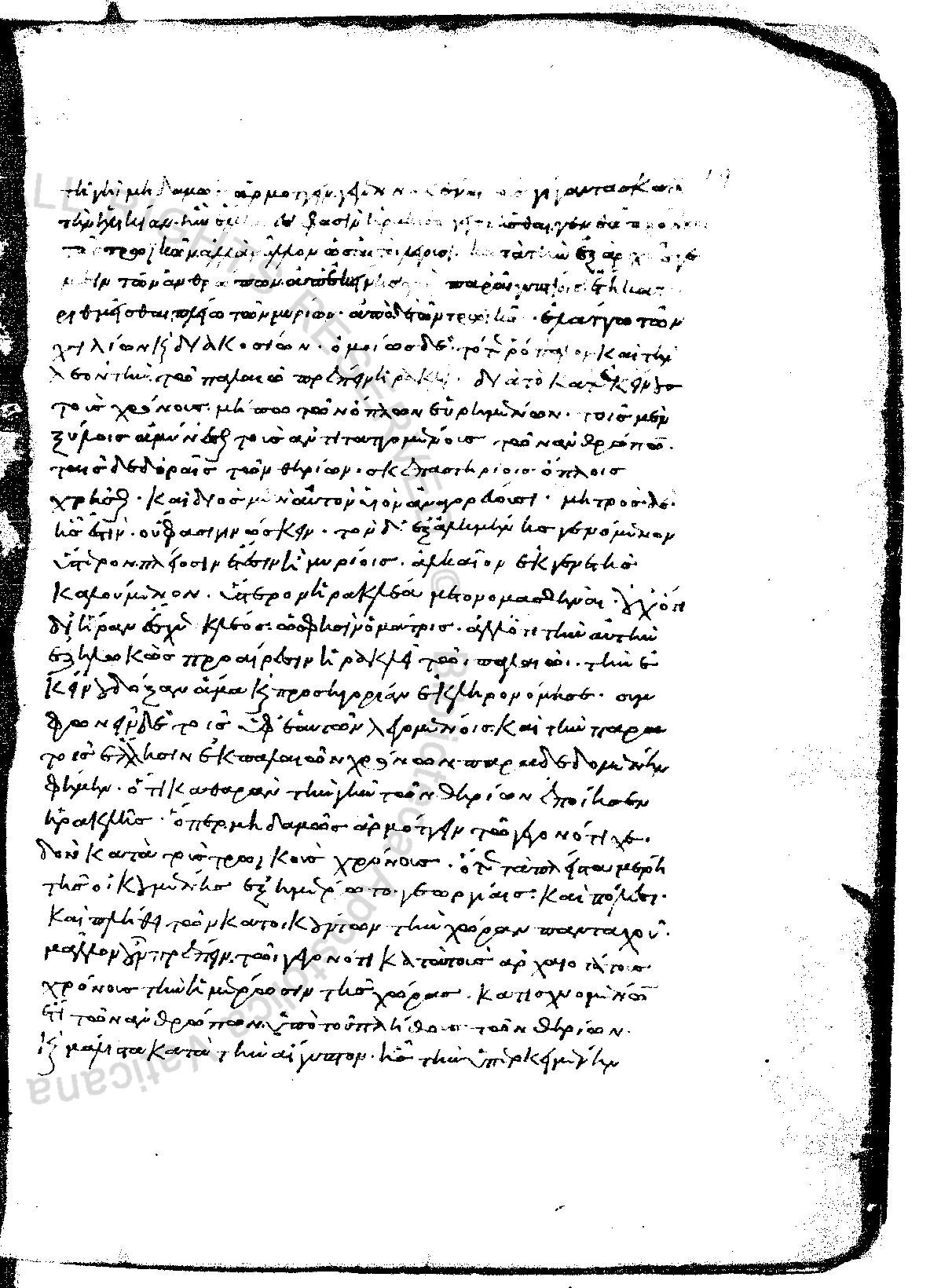
1.24 runs over 3 pages: DigiVatLib image 0022, left page; DigiVatLib image 0022, right page; DigiVatLib image 0023, left page. DigiVatLib image 0022, left page: begins 'σεμνύνοντα τὸν Ὄσιριν καὶ τῆς φθαρείσης τὴν διαβολὴν ἀφαιρούμενον' (1.23.6); ends 'Ἡρακλῆς συνηγωνίσατο τὸν πρὸς τοὺς γίγαντας πόλεμον, φασὶ' (1.24.2). DigiVatLib image 0022, right page: begins 'τῇ γῇ μηδαμῶς ἁρμόττειν γεγεννηκέναι τοὺς γίγαντας' (1.24.2); ends 'καὶ μάλιστα κατὰ τὴν Αἴγυπτον καὶ τὴν ὑπερκειμένην' (1.24.6). DigiVatLib image 0023, left page: begins 'χώραν μέχρι τοῦ νῦν ἔρημον οὖσαν καὶ θηριώδη' (1.24.6); ends 'διδόναι τοῖς κάμνουσι βοηθήματα πρὸς τὰς νόσους, καὶ τοὺς' (1.25.5). Checked on the images. Viewer: https://digi.vatlib.it/view/MSS_Vat.gr.130/0022
1καὶ γὰρ Ἡρακλέα τὸ γένος Αἰγύπτιον ὄντα, διʼ ἀνδρείαν ἐπελθεῖν πολλὴν τῆς οἰκουμένης, καὶ τὴν ἐπὶ τῆς Λιβύης θέσθαι στήλην· ὑπὲρ οὗ πειρῶνται τὰς ἀποδείξεις παρὰ τῶν Ἑλλήνων λαμβάνειν. 2ὁμολογουμένου γὰρ ὄντος παρὰ πᾶσιν ὅτι τοῖς Ὀλυμπίοις θεοῖς Ἡρακλῆς συνηγωνίσατο τὸν πρὸς τοὺς γίγαντας πόλεμον, φασὶ τῇ γῇ μηδαμῶς ἁρμόττειν γεγεννηκέναι τοὺς γίγαντας κατὰ τὴν ἡλικίαν ἣν οἱ Ἕλληνές φασιν Ἡρακλέα γεγενῆσθαι, γενεᾷ πρότερον τῶν Τρωικῶν, ἀλλὰ μᾶλλον, ὡς αὐτοὶ λέγουσι, κατὰ τὴν ἐξ ἀρχῆς γένεσιν τῶν ἀνθρώπων· ἀπʼ ἐκείνης μὲν γὰρ παρʼ Αἰγυπτίοις ἔτη καταριθμεῖσθαι πλείω τῶν μυρίων, ἀπὸ δὲ τῶν Τρωικῶν ἐλάττω τῶν χιλίων καὶ διακοσίων. 3ὁμοίως δὲ τό τε ῥόπαλον καὶ τὴν λεοντῆν τῷ παλαιῷ πρέπειν Ἡρακλεῖ διὰ τὸ κατʼ ἐκείνους τοὺς χρόνους μήπω τῶν ὅπλων εὑρημένων τοὺς ἀνθρώπους τοῖς μὲν ξύλοις ἀμύνεσθαι τοὺς ἀντιταττομένους, ταῖς δὲ δοραῖς τῶν θηρίων σκεπαστηρίοις ὅπλοις χρῆσθαι. καὶ Διὸς μὲν υἱὸν αὐτὸν ἀναγορεύουσι, μητρὸς δὲ ἧς ἐστιν οὔ φασι γινώσκειν. 4τὸν δʼ ἐξ Ἀλκμήνης γενόμενον ὕστερον πλείοσιν ἔτεσιν ἢ μυρίοις, Ἀλκαῖον ἐκ γενετῆς καλούμενον, ὕστερον Ἡρακλέα μετονομασθῆναι, οὐχ ὅτι διʼ Ἥραν ἔσχε κλέος, ὥς φησιν ὁ Μᾶτρις, ἀλλʼ ὅτι τὴν αὐτὴν ἐζηλωκὼς προαίρεσιν Ἡρακλεῖ τῷ παλαιῷ τὴν ἐκείνου δόξαν ἅμα καὶ προσηγορίαν ἐκληρονόμησε. 5συμφωνεῖν δὲ τοῖς ὑφʼ ἑαυτῶν λεγομένοις καὶ τὴν παρὰ τοῖς Ἕλλησιν ἐκ πολλῶν χρόνων παραδεδομένην φήμην, ὅτι καθαρὰν τὴν γῆν τῶν θηρίων ἐποίησεν Ἡρακλῆς· ὅπερ μηδαμῶς ἁρμόττειν τῷ γεγονότι σχεδὸν κατὰ τοὺς Τρωικοὺς χρόνους, ὅτε τὰ πλεῖστα μέρη τῆς οἰκουμένης ἐξημέρωτο γεωργίαις καὶ πόλεσι καὶ πλήθει τῶν κατοικούντων τὴν χώραν πανταχοῦ. 6μᾶλλον οὖν πρέπειν τῷ γεγονότι κατὰ τοὺς ἀρχαίους χρόνους τὴν ἡμέρωσιν τῆς χώρας, κατισχυομένων ἔτι τῶν ἀνθρώπων ὑπὸ τοῦ πλήθους τῶν θηρίων, καὶ μάλιστα κατὰ τὴν Αἴγυπτον καὶ τὴν ὑπερκειμένην χώραν μέχρι τοῦ νῦν ἔρημον οὖσαν καὶ θηριώδη. 7εἰκὸς γὰρ ταύτης ὡς πατρίδος προνοηθέντα τὸν Ἡρακλέα, καὶ καθαρὰν τὴν γῆν τῶν θηρίων ποιήσαντα, παραδοῦναι τοῖς γεωργοῖς τὴν χώραν, καὶ διὰ τὴν εὐεργεσίαν τυχεῖν ἰσοθέου τιμῆς. 8φασὶ δὲ καὶ τὸν Περσέα γεγονέναι κατʼ Αἴγυπτον, καὶ τῆς Ἴσιδος τὴν γένεσιν ὑπὸ τῶν Ἑλλήνων εἰς Ἄργος μεταφέρεσθαι, μυθολογούντων τὴν Ἰὼ τὴν εἰς βοὸς τύπον μεταμορφωθεῖσαν.
1Heracles, for instance, was by birth an Egyptian, who by virtue of his manly vigour visited a large part of the inhabited world and set up his pillar in Libya; 2and their proofs of this assertion they endeavour to draw from the Greeks themselves. For inasmuch as it is generally accepted that Heracles fought on the side of the Olympian gods in their war against the Giants, they say that it in no way accords with the age of the earth for the Giants to have been born in the period when, as the Greeks, Heracles lived, which was a generation before the Trojan War, but rather at the time, as their own account gives it, when mankind first appeared on the earth; for from the latter time to the present the Egyptians reckon more than ten thousand years, but from the Trojan War less than twelve hundred. 3Likewise, both the club and the lion's skin are appropriate to their ancient Heracles, because in those days arms had not yet been invented, and men defended themselves against their enemies with clubs of wood and used the hides of animals for defensive armour. They also designate him as the son of Zeus, but about the identity of his mother they say that they know nothing. 4The son of Alcmenê, who was born more than ten thousand years later and was called Alcaeus at birth, in later life became known instead as Heracles, not because he gained glory (kleos) by the aid of Hera, as Matris says, but because, having avowed the same principles as the ancient Heracles, he inherited that one's fame and name as well. 5The account of the Egyptians agrees also with the tradition which has been handed down among the Greeks since very early times, to the effect that Heracles cleared the earth of wild beasts, a story which is in no way suitable for man who lived in approximately the period of the Trojan War, when most parts of the inhabited world had already been reclaimed from their wild state by agriculture and cities and the multitude of men settled everywhere over the land. 6Accordingly this reclamation of the land suits better a man who lived in early times, when men were still held in subjection by the vast numbers of wild beasts, a state of affairs which was especially true in the case of Egypt, the upper part of which is to this day desert and infested with wild beasts. 7Indeed it is reasonable to suppose that the first concern of Heracles was for this country as his birthplace, and that, after he had cleared the land of wild beasts, he presented it to the peasants, and for this benefaction was accorded divine honours. 8And they say that Perseus also was born in Egypt, and that the origin of Isis is transferred by the Greeks to Argos in the myth which tells of that Io who was changed into a heifer.
Where on the image
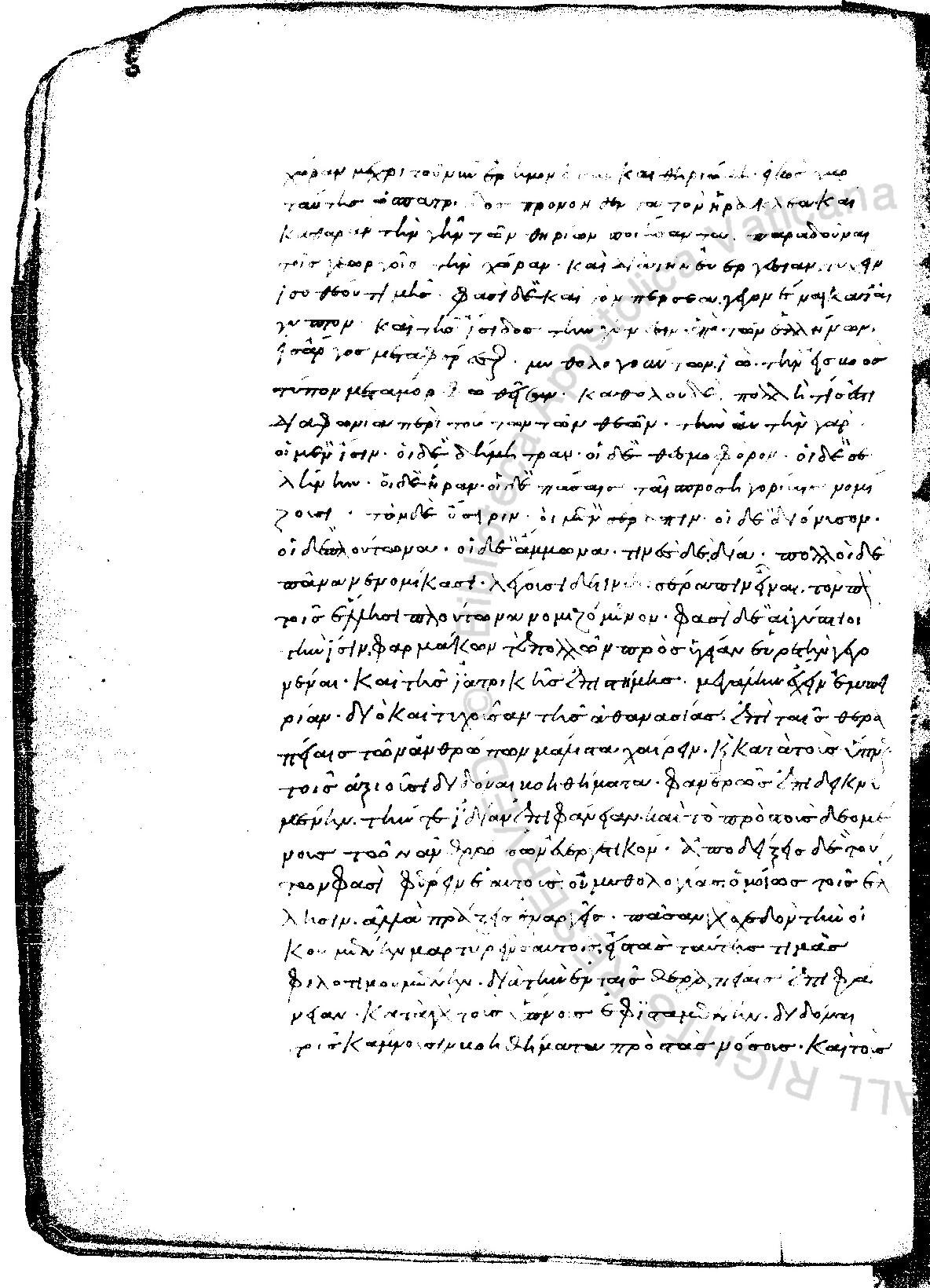
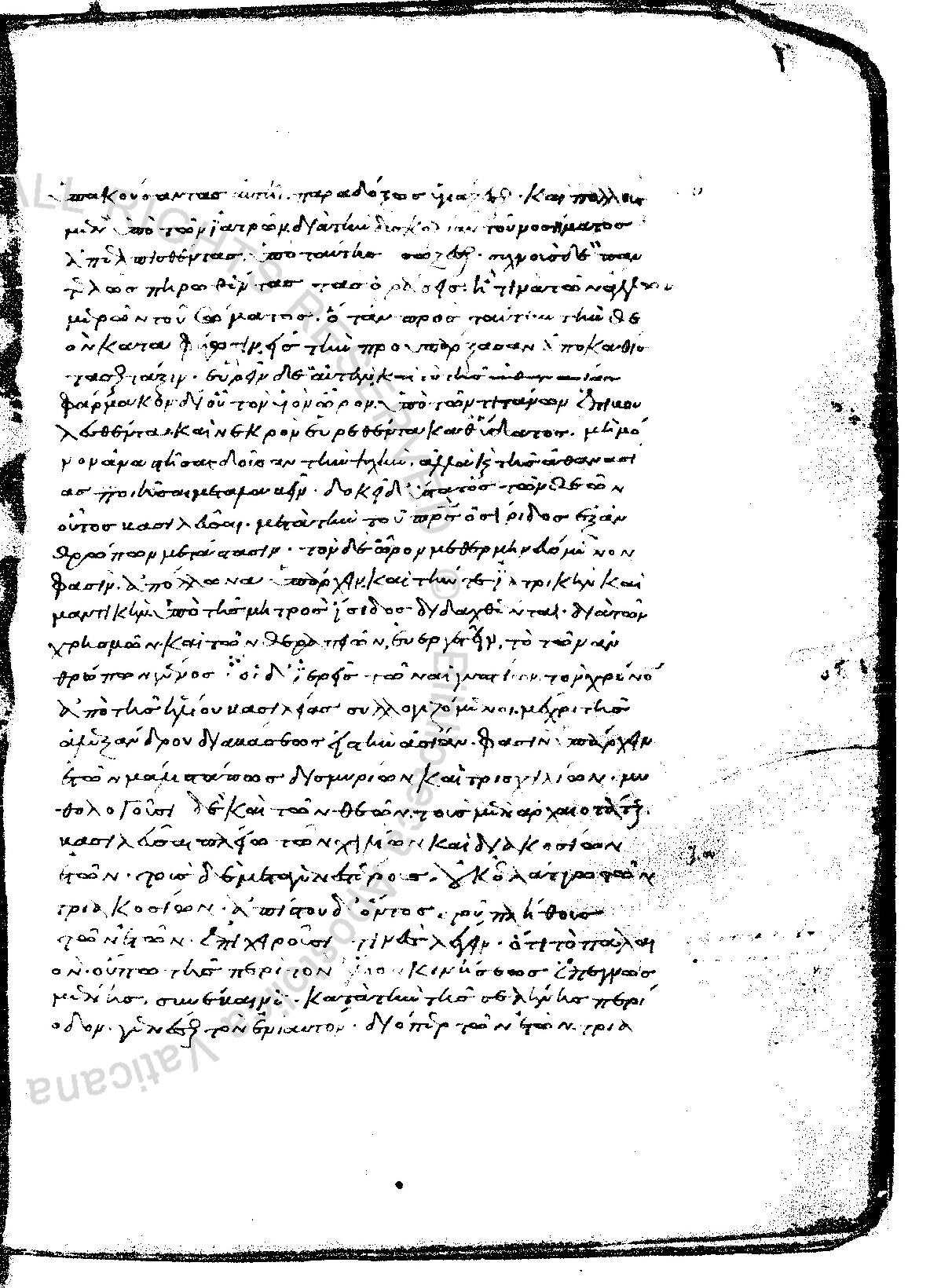
1.25 runs over 2 pages: DigiVatLib image 0023, left page; DigiVatLib image 0023, right page. DigiVatLib image 0023, left page: begins 'χώραν μέχρι τοῦ νῦν ἔρημον οὖσαν καὶ θηριώδη' (1.24.6); ends 'διδόναι τοῖς κάμνουσι βοηθήματα πρὸς τὰς νόσους, καὶ τοὺς' (1.25.5). DigiVatLib image 0023, right page: begins 'ὑπακούσαντας αὐτῇ παραδόξως ὑγιάζεσθαι' (1.25.5); ends 'συνέβαινε κατὰ τὴν τῆς σελήνης περίοδον ἄγεσθαι τὸν ἐνιαυτόν. διόπερ τῶν ἐτῶν τρια-' (1.26.3-4). Checked on the images. Viewer: https://digi.vatlib.it/view/MSS_Vat.gr.130/0023
1καθόλου δὲ πολλή τίς ἐστι διαφωνία περὶ τούτων τῶν θεῶν. τὴν αὐτὴν γὰρ οἱ μὲν Ἶσιν, οἱ δὲ Δήμητραν, οἱ δὲ Θεσμοφόρον, οἱ δὲ Σελήνην, οἱ δὲ Ἥραν, οἱ δὲ πάσαις ταῖς προσηγορίαις ὀνομάζουσι. 2τὸν δὲ Ὄσιριν οἱ μὲν Σάραπιν, οἱ δὲ Διόνυσον, οἱ δὲ Πλούτωνα, οἱ δὲ Ἄμμωνα, τινὲς δὲ Δία, πολλοὶ δὲ Πᾶνα τὸν αὐτὸν νενομίκασι· λέγουσι δέ τινες Σάραπιν εἶναι τὸν παρὰ τοῖς Ἕλλησι Πλούτωνα ὀνομαζόμενον. φασὶ δʼ Αἰγύπτιοι τὴν Ἶσιν φαρμάκων τε πολλῶν πρὸς ὑγίειαν εὑρέτιν γεγονέναι καὶ τῆς ἰατρικῆς ἐπιστήμης μεγάλην ἔχειν ἐμπειρίαν· 3διὸ καὶ τυχοῦσαν τῆς ἀθανασίας ἐπὶ ταῖς θεραπείαις τῶν ἀνθρώπων μάλιστα χαίρειν, καὶ κατὰ τοὺς ὕπνους τοῖς ἀξιοῦσι διδόναι βοηθήματα, φανερῶς ἐπιδεικνυμένην τήν τε ἰδίαν ἐπιφάνειαν καὶ τὸ πρὸς τοὺς δεομένους τῶν ἀνθρώπων εὐεργετικόν. 4ἀποδείξεις δὲ τούτων φασὶ φέρειν ἑαυτοὺς οὐ μυθολογίας ὁμοίως τοῖς Ἕλλησιν, ἀλλὰ πράξεις ἐναργεῖς· πᾶσαν γὰρ σχεδὸν τὴν οἰκουμένην μαρτυρεῖν ἑαυτοῖς, εἰς τὰς ταύτης τιμὰς φιλοτιμουμένην διὰ τὴν ἐν ταῖς θεραπείαις ἐπιφάνειαν. 5κατὰ γὰρ τοὺς ὕπνους ἐφισταμένην διδόναι τοῖς κάμνουσι βοηθήματα πρὸς τὰς νόσους, καὶ τοὺς ὑπακούσαντας αὐτῇ παραδόξως ὑγιάζεσθαι· καὶ πολλοὺς μὲν ὑπὸ τῶν ἰατρῶν διὰ τὴν δυσκολίαν τοῦ νοσήματος ἀπελπισθέντας ὑπὸ ταύτης σώζεσθαι, συχνοὺς δὲ παντελῶς πηρωθέντας τὰς ὁράσεις ἤ τινα τῶν ἄλλων μερῶν τοῦ σώματος, ὅταν πρὸς ταύτην τὴν θεὸν καταφύγωσιν, εἰς τὴν προϋπάρξασαν ἀποκαθίστασθαι τάξιν. 6εὑρεῖν δʼ αὐτὴν καὶ τὸ τῆς ἀθανασίας φάρμακον, διʼ οὗ τὸν υἱὸν Ὧρον, ὑπὸ τῶν Τιτάνων ἐπιβουλευθέντα καὶ νεκρὸν εὑρεθέντα καθʼ ὕδατος, μὴ μόνον ἀναστῆσαι, δοῦσαν τὴν ψυχήν, 7ἀλλὰ καὶ τῆς ἀθανασίας ποιῆσαι μεταλαβεῖν. δοκεῖ δʼ ὕστατος τῶν θεῶν οὗτος βασιλεῦσαι μετὰ τὴν τοῦ πατρὸς Ὀσίριδος ἐξ ἀνθρώπων μετάστασιν. τὸν δὲ Ὧρον μεθερμηνευόμενόν φασιν Ἀπόλλωνα ὑπάρχειν, καὶ τήν τε ἰατρικὴν καὶ τὴν μαντικὴν ὑπὸ τῆς μητρὸς Ἴσιδος διδαχθέντα διὰ τῶν χρησμῶν καὶ τῶν θεραπειῶν εὐεργετεῖν τὸ τῶν ἀνθρώπων γένος.
1In general, there is great disagreement over these gods. For the same goddess is called by some Isis, by others Demeter, by others Thesmophorus, by others Selene, by others Hera, while still others apply to her all these names. 2Osiris has been given the name Sarapis by some, Dionysus by others, Pluto by others, Ammon by others, Zeus by some, and many have considered Pan to be the same god; and some say that Sarapis is the god whom the Greeks call Pluto. As for Isis, the Egyptians say that she was the discoverer of many health-giving drugs and was greatly versed in the science of healing; 3consequently, now that she has attained immortality, she finds her greatest delight in the healing of mankind and gives aid in their sleep to those who call upon her, plainly manifesting both her very presence and her beneficence towards men who ask her help. 4In proof of this, as they say, they advance not legends, as the Greeks do, but manifest facts; for practically the entire inhabited world is their witness, in that it eagerly contributes to the honours of Isis because she manifests herself in healings. 5For standing above the sick in their sleep she gives them aid for their diseases and works remarkable cures upon such as submit themselves to her; and many who have been despaired of by their physicians because of the difficult nature of their malady are restored to health by her, while numbers who have altogether lost the use of their eyes or of some other part of their body, whenever they turn for help to this goddess, are restored to their previous condition. 6Furthermore, she discovered also the drug which gives immortality, by means of which she not only raised from the dead her son Horus, who had been the object of plots on the part of Titans and had been found dead under the water, giving him his soul again, but also made him immortal. 7And it appears that Horus was the last of the gods to be king after his father Osiris departed from among men. Moreover, they say that the name Horus, when translated, is Apollo, and that, having been instructed by his mother Isis in both medicine and divination, he is now a benefactor of the race of men through his oracular responses and his healings.
Where on the image
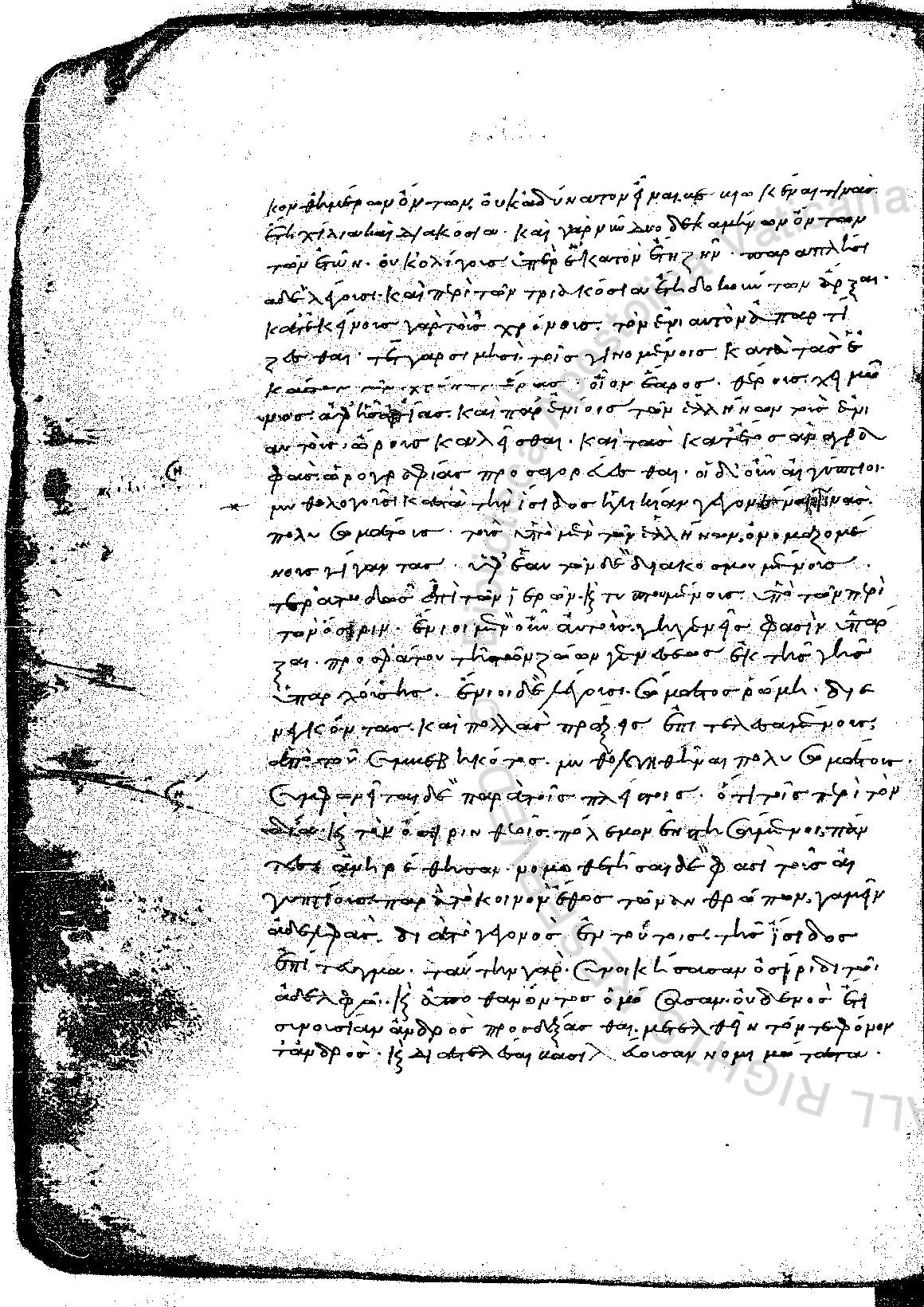
1.26 runs over 2 pages: DigiVatLib image 0023, right page; DigiVatLib image 0024, left page. DigiVatLib image 0023, right page: begins 'ὑπακούσαντας αὐτῇ παραδόξως ὑγιάζεσθαι' (1.25.5); ends 'συνέβαινε κατὰ τὴν τῆς σελήνης περίοδον ἄγεσθαι τὸν ἐνιαυτόν. διόπερ τῶν ἐτῶν τρια-' (1.26.3-4). DigiVatLib image 0024, left page: begins '-κονθημέρων ὄντων οὐκ ἀδύνατον εἶναι βεβιωκέναι τινὰς ἔτη χίλια καὶ διακόσια' (1.26.4); ends 'μετελθεῖν τόν τε φόνον τἀνδρὸς καὶ διατελέσαι βασιλεύουσαν νομιμώτατα' (1.27.1). Checked on the images. Viewer: https://digi.vatlib.it/view/MSS_Vat.gr.130/0023
1οἱ δʼ ἱερεῖς τῶν Αἰγυπτίων τὸν χρόνον ἀπὸ τῆς Ἡλίου βασιλείας συλλογιζόμενοι μέχρι τῆς Ἀλεξάνδρου διαβάσεως εἰς τὴν Ἀσίαν φασὶν ὑπάρχειν ἐτῶν μάλιστά πως δισμυρίων καὶ τρισχιλίων. 2μυθολογοῦσι δὲ καὶ τῶν θεῶν τοὺς μὲν ἀρχαιοτάτους βασιλεῦσαι πλείω τῶν χιλίων καὶ διακοσίων ἐτῶν, τοὺς δὲ μεταγενεστέρους οὐκ ἐλάττω τῶν τριακοσίων. 3ἀπίστου δʼ ὄντος τοῦ πλήθους τῶν ἐτῶν, ἐπιχειροῦσί τινες λέγειν ὅτι τὸ παλαιόν, οὔπω τῆς περὶ τὸν ἥλιον κινήσεως ἐπεγνωσμένης, συνέβαινε κατὰ τὴν τῆς σελήνης περίοδον ἄγεσθαι τὸν ἐνιαυτόν. 4διόπερ τῶν ἐτῶν τριακονθημέρων ὄντων οὐκ ἀδύνατον εἶναι βεβιωκέναι τινὰς ἔτη χίλια καὶ διακόσια· καὶ γὰρ νῦν δωδεκαμήνων ὄντων τῶν ἐνιαυτῶν οὐκ ὀλίγους ὑπὲρ ἑκατὸν ἔτη ζῆν. 5παραπλήσια δὲ λέγουσι καὶ περὶ τῶν τριακόσια ἔτη δοκούντων ἄρξαι· κατʼ ἐκείνους γὰρ τοὺς χρόνους τὸν ἐνιαυτὸν ἀπαρτίζεσθαι τέτταρσι μησὶ τοῖς γινομένοις κατὰ τὰς ἑκάστων τῶν χρόνων ὥρας, οἷον ἔαρος, θέρους, χειμῶνος· ἀφʼ ἧς αἰτίας καὶ παρʼ ἐνίοις τῶν Ἑλλήνων τοὺς ἐνιαυτοὺς ὥρους καλεῖσθαι καὶ τὰς κατʼ ἔτος ἀναγραφὰς ὡρογραφίας προσαγορεύεσθαι. 6οἱ δʼ οὖν Αἰγύπτιοι μυθολογοῦσι κατὰ τὴν Ἴσιδος ἡλικίαν γεγονέναι τινὰς πολυσωμάτους τοὺς ὑπὸ μὲν τῶν Ἑλλήνων ὀνομαζομένους γίγαντας, ὑφʼ ἑαυτῶν δὲ διακοσμουμένους τερατωδῶς ἐπὶ τῶν ἱερῶν καὶ τυπτομένους ὑπὸ τῶν περὶ τὸν Ὄσιριν. 7ἔνιοι μὲν οὖν αὐτοὺς γηγενεῖς φασιν ὑπάρξαι, προσφάτου τῆς τῶν ζῴων γενέσεως ἐκ τῆς γῆς ὑπαρχούσης, ἔνιοι δὲ λέγουσι σώματος ῥώμῃ διενεγκόντας καὶ πολλὰς πράξεις ἐπιτελεσαμένους ἀπὸ τοῦ συμβεβηκότος μυθολογηθῆναι πολυσωμάτους. 8συμφωνεῖται δὲ παρὰ τοῖς πλείστοις ὅτι τοῖς περὶ τὸν Δία καὶ τὸν Ὄσιριν θεοῖς πόλεμον ἐνστησάμενοι πάντες ἀνῃρέθησαν.
1The priests of the Egyptians, reckoning the time from the reign of Helius to the crossing of Alexander into Asia, say that it was in round numbers twenty-three thousand years. 2And, as their legends say, the most ancient of the gods ruled more than twelve hundred years and the later ones not less than three hundred. 3But since this great number of years surpasses belief, some men would maintain that in early times, before the movement of the sun had as yet been recognized, it was customary to reckon the year by the lunar cycle. 4Consequently, since the year consisted of thirty days, it was not impossible that some men lived twelve hundred years; for in our own time, when our year consists of twelve months, not a few men live over one hundred years. 5A similar explanation they also give regarding those who are supposed to have reigned for three hundred years; for at their time, namely, the year was composed of the four months which comprise the seasons of each year, that is, spring, summer, and winter; and it is for this reason that among some of the Greeks the years are called "seasons" (horoi) and that their yearly records are given the name "horographs." 6Furthermore, the Egyptians relate in their myths that in the time of Isis there were certain creatures of many bodies, who are called by the Greeks Giants, but by themselves . . ., these being the men who are represented on their temples in monstrous form and as being cudgelled by Osiris. 7Now some say that they were born of the earth at the time when the genesis of living things from the earth was still recent, while some hold that they were only men of unusual physical strength who achieved many deeds and for this reason were described in the myths as of many bodies. 8But it is generally agreed that when they stirred up war against Zeus and Osiris they were all destroyed.
Where on the image
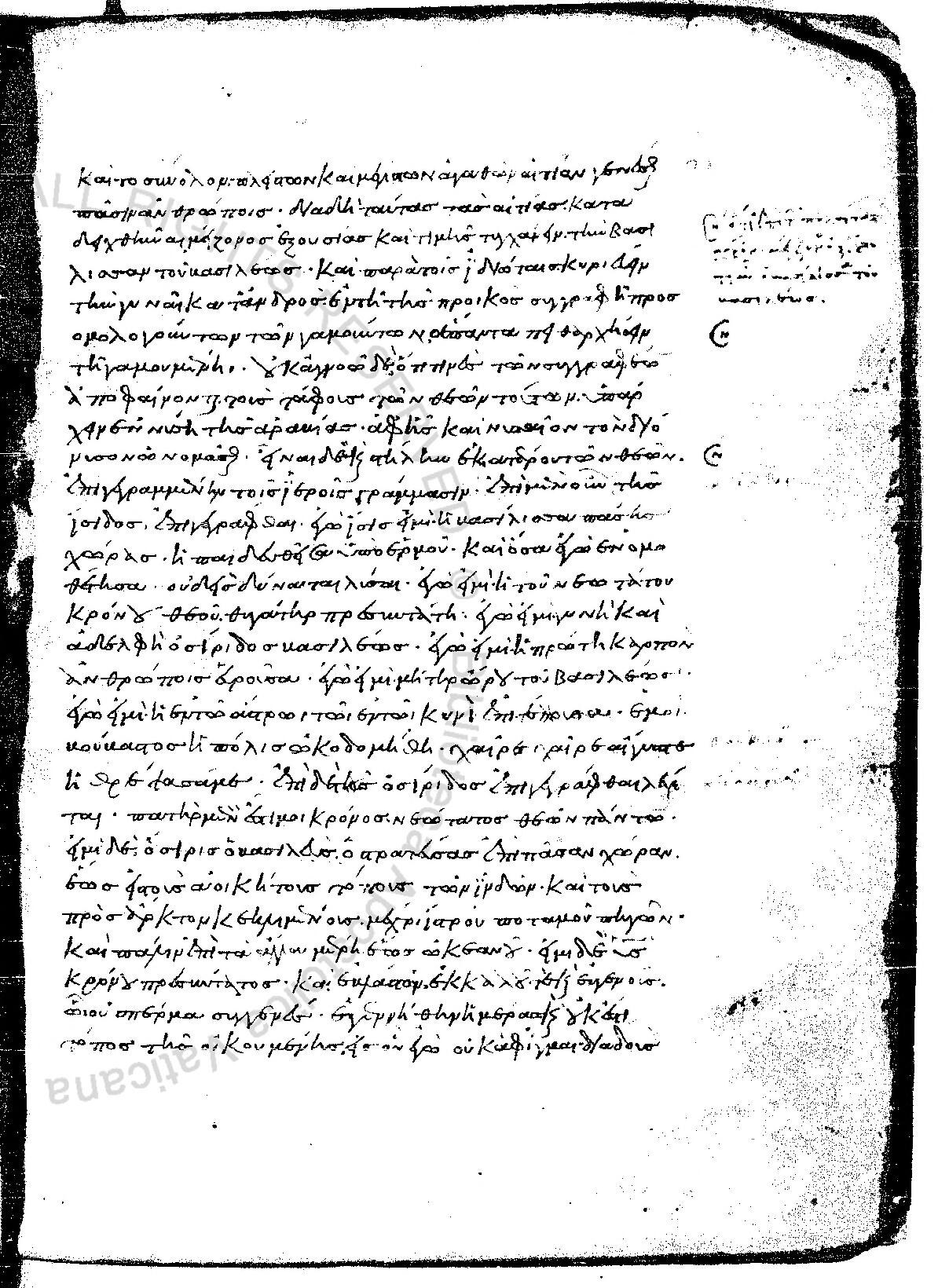
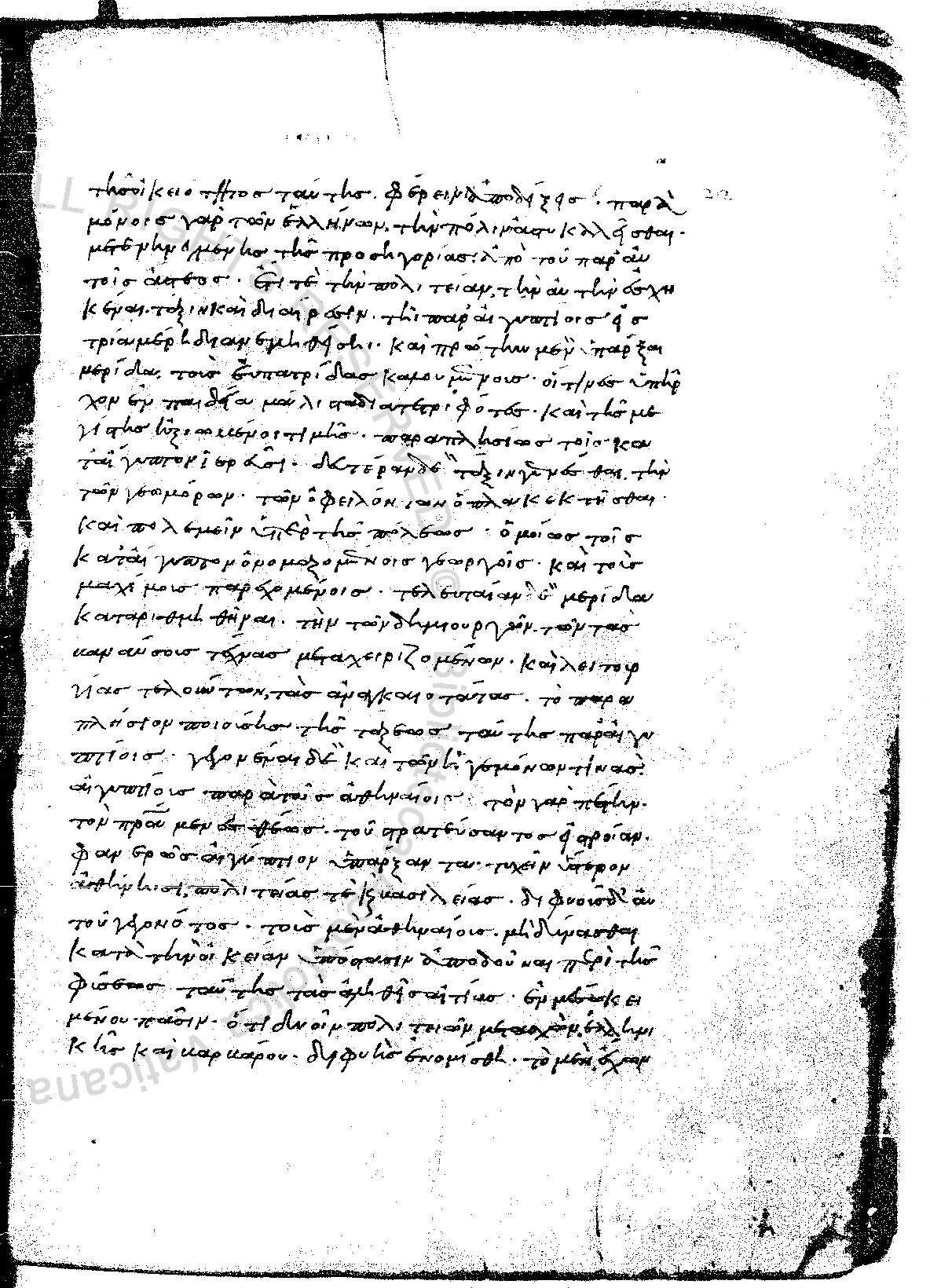
1.27 runs over 3 pages: DigiVatLib image 0024, left page; DigiVatLib image 0024, right page; DigiVatLib image 0025, left page. DigiVatLib image 0024, left page: begins '-κονθημέρων ὄντων οὐκ ἀδύνατον εἶναι βεβιωκέναι τινὰς ἔτη χίλια καὶ διακόσια' (1.26.4); ends 'μετελθεῖν τόν τε φόνον τἀνδρὸς καὶ διατελέσαι βασιλεύουσαν νομιμώτατα' (1.27.1). DigiVatLib image 0024, right page: begins 'καὶ τὸ σύνολον πλείστων καὶ μεγίστων ἀγαθῶν αἰτίαν γενέσθαι πᾶσιν ἀνθρώποις' (1.27.1); ends 'καὶ οὐκ ἔστι τόπος τῆς οἰκουμένης εἰς ὃν οὐκ ἀφῖγμαι, διαδοὺς' (1.27.5). DigiVatLib image 0025, left page: begins 'πᾶσιν ὧν ἐγὼ εὑρετὴς ἐγενόμην. τοσαῦτα τῶν γεγραμμένων ἐν ταῖς στήλαις' (1.27.5-6); ends 'καὶ τοὺς Ἀθηναίους δέ φασιν ἀποίκους εἶναι Σαϊτῶν τῶν ἐξ Αἰγύπτου, καὶ πειρῶνται' (1.28.4). Checked on the images. Viewer: https://digi.vatlib.it/view/MSS_Vat.gr.130/0024
1νομοθετῆσαι δέ φασι τοὺς Αἰγυπτίους παρὰ τὸ κοινὸν ἔθος τῶν ἀνθρώπων γαμεῖν ἀδελφὰς διὰ τὸ γεγονὸς ἐν τούτοις τῆς Ἴσιδος ἐπίτευγμα· ταύτην γὰρ συνοικήσασαν Ὀσίριδι τῷ ἀδελφῷ, καὶ ἀποθανόντος ὀμόσασαν οὐδενὸς ἔτι συνουσίαν ἀνδρὸς προσδέξεσθαι, μετελθεῖν τόν τε φόνον τἀνδρὸς καὶ διατελέσαι βασιλεύουσαν νομιμώτατα, καὶ τὸ σύνολον πλείστων καὶ μεγίστων ἀγαθῶν αἰτίαν γενέσθαι πᾶσιν ἀνθρώποις. 2διὰ δὴ ταύτας τὰς αἰτίας καταδειχθῆναι μείζονος ἐξουσίας καὶ τιμῆς τυγχάνειν τὴν βασίλισσαν τοῦ βασιλέως, καὶ παρὰ τοῖς ἰδιώταις κυριεύειν τὴν γυναῖκα τἀνδρός, ἐν τῇ τῆς προικὸς συγγραφῇ προσομολογούντων τῶν γαμούντων ἅπαντα πειθαρχήσειν τῇ γαμουμένῃ. 3οὐκ ἀγνοῶ δὲ διότι τινὲς τῶν συγγραφέων ἀποφαίνονται τοὺς τάφους τῶν θεῶν τούτων ὑπάρχειν ἐν Νύσῃ τῆς Ἀραβίας, ἀφʼ ἧς καὶ Νυσαῖον τὸν Διόνυσον ὠνομάσθαι. εἶναι δὲ καὶ στήλην ἑκατέρου τῶν θεῶν ἐπιγεγραμμένην τοῖς ἱεροῖς γράμμασιν. 4ἐπὶ μὲν οὖν τῆς Ἴσιδος ἐπιγεγράφθαι “ἐγὼ Ἶσίς εἰμι ἡ βασίλισσα πάσης χώρας, ἡ παιδευθεῖσα ὑπὸ Ἑρμοῦ, καὶ ὅσα ἐγὼ ἐνομοθέτησα, οὐδεὶς αὐτὰ δύναται λῦσαι. ἐγώ εἰμι ἡ τοῦ νεωτάτου Κρόνου θεοῦ θυγάτηρ πρεσβυτάτη· ἐγώ εἰμι γυνὴ καὶ ἀδελφὴ Ὀσίριδος βασιλέως· ἐγώ εἰμι ἡ πρώτη καρπὸν ἀνθρώποις εὑροῦσα· ἐγώ εἰμι μήτηρ Ὥρου τοῦ βασιλέως· ἐγώ εἰμι ἡ ἐν τῷ ἄστρῳ τῷ ἐν τῷ κυνὶ ἐπιτέλλουσα· 5ἐμοὶ Βούβαστος ἡ πόλις ᾠκοδομήθη. χαῖρε χαῖρε Αἴγυπτε ἡ θρέψασά με.” ἐπὶ δὲ τῆς Ὀσίριδος ἐπιγεγράφθαι λέγεται “πατὴρ μέν ἐστί μοι Κρόνος νεώτατος θεῶν ἁπάντων, εἰμὶ δὲ Ὄσιρις ὁ βασιλεύς, ὁ στρατεύσας ἐπὶ πᾶσαν χώραν ἕως εἰς τοὺς ἀοικήτους τόπους τῶν Ἰνδῶν καὶ τοὺς πρὸς ἄρκτον κεκλιμένους, μέχρι Ἴστρου ποταμοῦ πηγῶν, καὶ πάλιν ἐπὶ τἄλλα μέρη ἕως ὠκεανοῦ. εἰμὶ δὲ υἱὸς Κρόνου πρεσβύτατος, καὶ βλαστὸς ἐκ καλοῦ τε καὶ εὐγενοῦς ᾠοῦ σπέρμα συγγενὲς ἐγεννήθην ἡμέρας. καὶ οὐκ ἔστι τόπος τῆς οἰκουμένης εἰς ὃν ἐγὼ οὐκ ἀφῖγμαι, διαδοὺς πᾶσιν ὧν ἐγὼ εὑρετὴς ἐγενόμην.” 6τοσαῦτα τῶν γεγραμμένων ἐν ταῖς στήλαις φασὶ δύνασθαι ἀναγνῶναι, τὰ δʼ ἄλλα ὄντα πλείω κατεφθάρθαι διὰ τὸν χρόνον. τὰ μὲν οὖν περὶ τῆς ταφῆς τῶν θεῶν τούτων διαφωνεῖται παρὰ τοῖς πλείστοις διὰ τὸ τοὺς ἱερεῖς ἐν ἀπορρήτοις παρειληφότας τὴν περὶ τούτων ἀκρίβειαν μὴ βούλεσθαι τἀληθὲς ἐκφέρειν εἰς τοὺς πολλούς, ὡς ἂν καὶ κινδύνων ἐπικειμένων τοῖς τἀπόρρητα περὶ τῶν θεῶν τούτων μηνύσασιν εἰς τοὺς ὄχλους.
1The Egyptians also made a law, they say, contrary to the general custom of mankind, permitting men to marry their sisters, this being due to the success attained by Isis in this respect; for she had married her brother Osiris, and upon his death, having taken a vow never to marry another man, she both avenged the murder of her husband and reigned all her days over the land with complete respect for the laws, and, in a word, became the cause of more and greater blessings to all men than any other. 2It is for these reasons, in fact, that it was ordained that the queen should have greater power and honour than the king and that among private persons the wife should enjoy authority over her husband, the husbands agreeing in the marriage contract that they will be obedient in all things to their wives. 3Now I am not unaware that some historians give the following account of Isis and Osiris: The tombs of these gods lie in Nysa in Arabia, and for this reason Dionysus is also called Nysaeus. And in that place there stands also a stele of each of the gods bearing an inscription in hieroglyphs. 4On the stele of Isis it runs: "I am Isis, the queen of every land, she who was instructed of Hermes, and whatsoever laws I have established, these can no man make void. I am the eldest daughter of the youngest god Cronus; I am the wife and sister of the king Osiris; I am she who first discovered fruits for mankind; I am the mother of Horus the king; I am she who riseth in the star that is in the Constellation of the Dog; by me was the city of Bubastus built. Farewell, farewell, O Egypt that nurtured me." 5And on the stele of Osiris the inscription is said to run: "My father is Cronus, the youngest of all the gods, and I am Osiris the king, who campaigned over every country as far as the uninhabited regions of India and the lands to the north, even to the sources of the river Ister, and again to the remaining parts of the world as far as Oceanus. I am the eldest son of Cronus, and being sprung from a fair and noble egg I was begotten a seed of kindred birth to Day. There is no region of the inhabited world to which I have not come, dispensing to all men the things of which I was the discoverer." 6So much of the inscriptions on the stelae can be read, they say, but the rest of the writing, which was of greater extent, has been destroyed by time. However this may be, varying accounts of the burial of these gods are found in most writers by reason of the fact that the priests, having received the exact facts about these matters as a secret not to be divulged, are unwilling to give out the truth to the public, on the ground that perils overhang any men who disclose to the common crowd the secret knowledge about these gods.
Where on the image
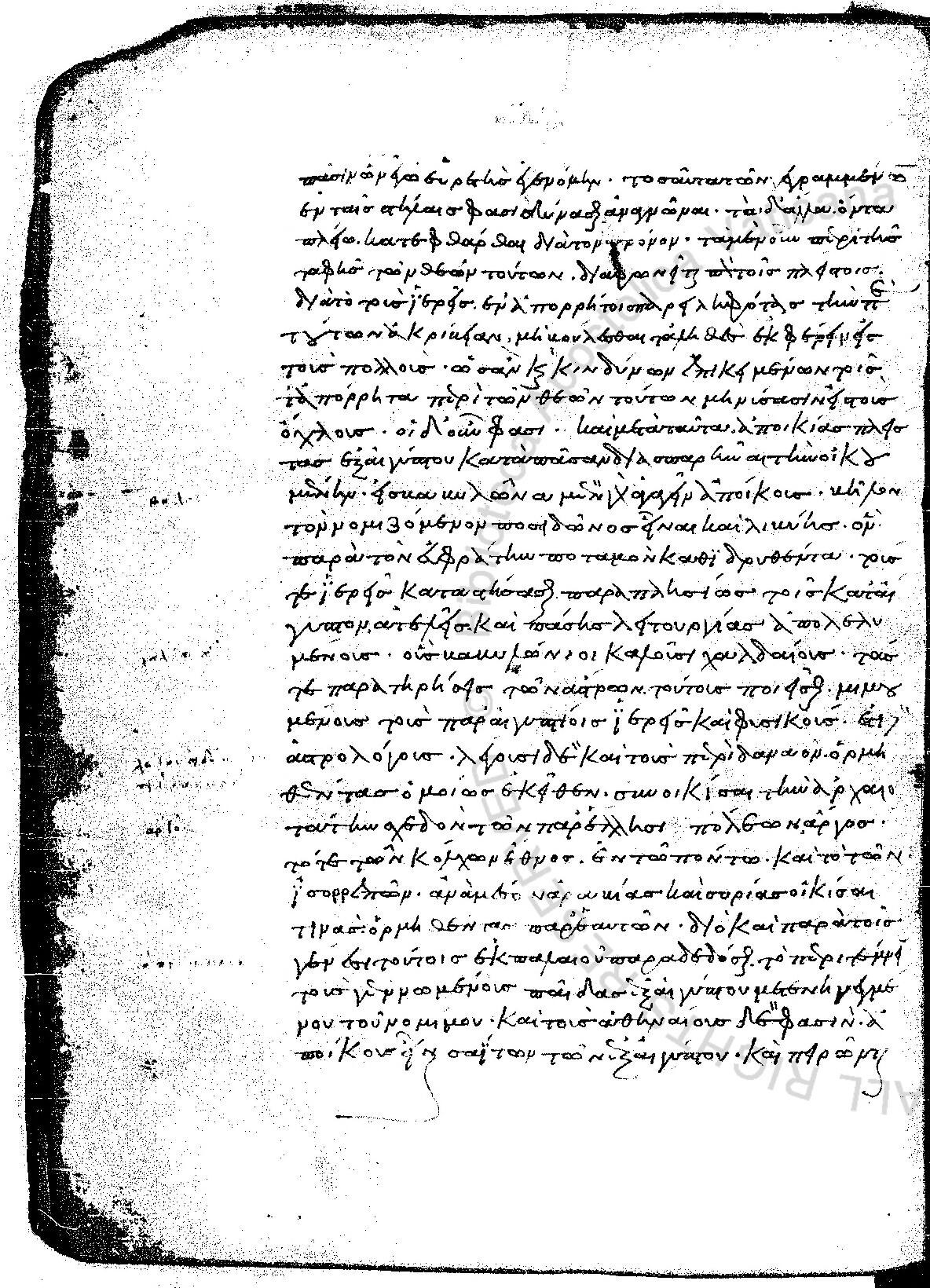
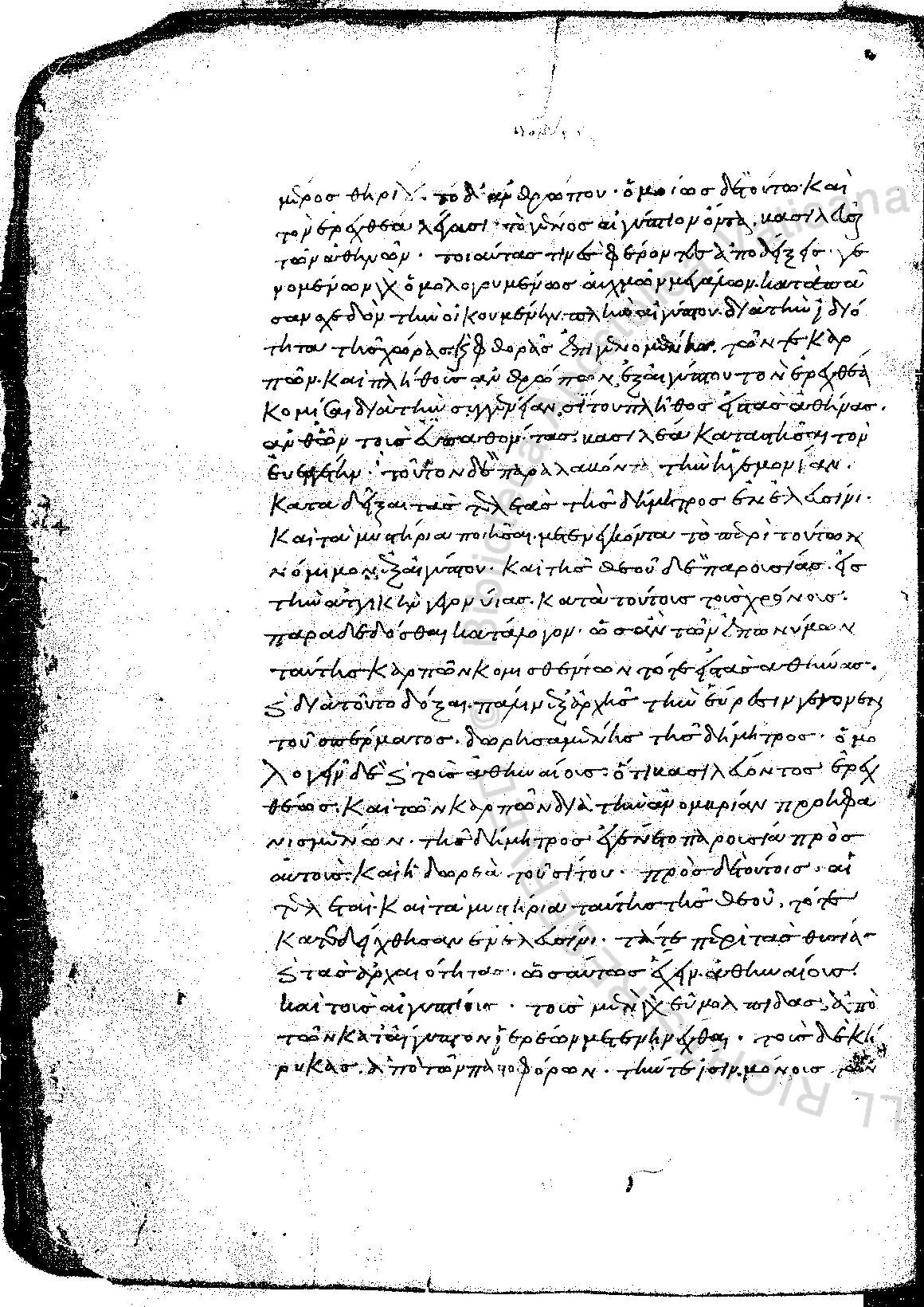
1.28 runs over 3 pages: DigiVatLib image 0025, left page; DigiVatLib image 0025, right page; DigiVatLib image 0026, left page. DigiVatLib image 0025, left page: begins 'πᾶσιν ὧν ἐγὼ εὑρετὴς ἐγενόμην. τοσαῦτα τῶν γεγραμμένων ἐν ταῖς στήλαις' (1.27.5-6); ends 'καὶ τοὺς Ἀθηναίους δέ φασιν ἀποίκους εἶναι Σαϊτῶν τῶν ἐξ Αἰγύπτου, καὶ πειρῶνται' (1.28.4). DigiVatLib image 0025, right page: begins 'τῆς οἰκειότητος ταύτης φέρειν ἀποδείξεις· παρὰ μόνοις γὰρ τῶν Ἑλλήνων' (1.28.4); ends 'Ἑλληνικῆς καὶ βαρβάρου, διφυὴς ἐνομίσθη, τὸ μὲν ἔχων' (1.28.7). DigiVatLib image 0026, left page: begins 'μέρος θηρίου, τὸ δὲ ἀνθρώπου' (end of 1.28.7), followed on the same line by 1.29 'ὁμοίως δὲ τούτῳ καὶ τὸν Ἐρεχθέα'; ends 'τοὺς δὲ Κήρυκας ἀπὸ τῶν παστοφόρων. τήν τε Ἶσιν μόνους τῶν' (1.29.4). Checked on the images. Viewer: https://digi.vatlib.it/view/MSS_Vat.gr.130/0025
1οἱ δʼ οὖν Αἰγύπτιοί φασι καὶ μετὰ ταῦτα ἀποικίας πλείστας ἐξ Αἰγύπτου κατὰ πᾶσαν διασπαρῆναι τὴν οἰκουμένην. εἰς Βαβυλῶνα μὲν γὰρ ἀγαγεῖν ἀποίκους Βῆλον τὸν νομιζόμενον Ποσειδῶνος εἶναι καὶ Λιβύης· ὃν παρὰ τὸν Εὐφράτην ποταμὸν καθιδρυθέντα τούς τε ἱερεῖς καταστήσασθαι παραπλησίως τοῖς κατʼ Αἴγυπτον ἀτελεῖς καὶ πάσης λειτουργίας ἀπολελυμένους, οὓς Βαβυλώνιοι καλοῦσι Χαλδαίους, τάς τε παρατηρήσεις τῶν ἄστρων τούτους ποιεῖσθαι, μιμουμένους τοὺς παρʼ Αἰγυπτίοις ἱερεῖς καὶ φυσικούς, ἔτι δὲ ἀστρολόγους. 2λέγουσι δὲ καὶ τοὺς περὶ τὸν Δαναὸν ὁρμηθέντας ὁμοίως ἐκεῖθεν συνοικίσαι τὴν ἀρχαιοτάτην σχεδὸν τῶν παρʼ Ἕλλησι πόλεων Ἄργος, τό τε τῶν Κόλχων ἔθνος ἐν τῷ Πόντῳ καὶ τὸ τῶν Ἰουδαίων ἀνὰ μέσον Ἀραβίας καὶ Συρίας οἰκίσαι τινὰς ὁρμηθέντας παρʼ ἑαυτῶν· 3διὸ καὶ παρὰ τοῖς γένεσι τούτοις ἐκ παλαιοῦ παραδεδόσθαι τὸ περιτέμνειν τοὺς γεννωμένους παῖδας, ἐξ Αἰγύπτου μετενηνεγμένου τοῦ νομίμου. 4καὶ τοὺς Ἀθηναίους δέ φασιν ἀποίκους εἶναι Σαϊτῶν τῶν ἐξ Αἰγύπτου, καὶ πειρῶνται τῆς οἰκειότητος ταύτης φέρειν ἀποδείξεις· παρὰ μόνοις γὰρ τῶν Ἑλλήνων τὴν πόλιν ἄστυ καλεῖσθαι, μετενηνεγμένης τῆς προσηγορίας ἀπὸ τοῦ παρʼ αὐτοῖς Ἄστεος. ἔτι δὲ τὴν πολιτείαν τὴν αὐτὴν ἐσχηκέναι τάξιν καὶ διαίρεσιν τῇ παρʼ Αἰγυπτίοις, εἰς τρία μέρη διανεμηθείσῃ· 5καὶ πρώτην μὲν ὑπάρξαι μερίδα τοὺς εὐπατρίδας καλουμένους, οἵτινες [ἱεροποιοὶ] ὑπῆρχον ἐν παιδείᾳ μάλιστα διατετριφότες καὶ τῆς μεγίστης ἠξιωμένοι τιμῆς παραπλησίως τοῖς κατʼ Αἴγυπτον ἱερεῦσι· δευτέραν δὲ τάξιν γενέσθαι τὴν τῶν γεωμόρων τῶν ὀφειλόντων ὅπλα κεκτῆσθαι καὶ πολεμεῖν ὑπὲρ τῆς πόλεως ὁμοίως τοῖς κατʼ Αἴγυπτον ὀνομαζομένοις γεωργοῖς καὶ τοὺς μαχίμους παρεχομένοις· τελευταίαν δὲ μερίδα καταριθμηθῆναι τὴν τῶν δημιουργῶν τῶν τὰς βαναύσους τέχνας μεταχειριζομένων καὶ λειτουργίας τελούντων τὰς ἀναγκαιοτάτας, τὸ παραπλήσιον ποιούσης τῆς τάξεως ταύτης παρʼ Αἰγυπτίους. 6γεγονέναι δὲ καὶ τῶν ἡγεμόνων τινὰς Αἰγυπτίους παρὰ τοῖς Ἀθηναίοις· τὸν γὰρ Πέτην τὸν πατέρα Μενεσθέως τοῦ στρατεύσαντος εἰς Τροίαν φανερῶς Αἰγύπτιον ὑπάρξαντα τυχεῖν ὕστερον Ἀθήνησι πολιτείας τε καὶ βασιλείας. 7διφυοῦς δʼ αὐτοῦ γεγονότος, τοὺς μὲν Ἀθηναίους μὴ δύνασθαι κατὰ τὴν ἰδίαν ὑπόστασιν ἀποδοῦναι περὶ τῆς φύσεως ταύτης τὰς ἀληθεῖς αἰτίας, ἐν μέσῳ κειμένου πᾶσιν ὅτι δυοῖν πολιτειῶν μετασχών, Ἑλληνικῆς καὶ βαρβάρου, διφυὴς ἐνομίσθη, τὸ μὲν ἔχων μέρος θηρίου, τὸ δὲ ἀνθρώπου.
1Now the Egyptians say that also after these events a great number of colonies were spread from Egypt over all the inhabited world. To Babylon, for instance, colonists were led by Belus, who was held to be the son of Poseidon and Libya; and after establishing himself on the Euphrates river he appointed priests, called Chaldaeans by the Babylonians, who were exempt from taxation and free from every kind of service to the state, as are the priests of Egypt; and they also make observations of the stars, following the example of the Egyptian priests, physicists, and astrologers. 2They say also that those who set forth with Danaus, likewise from Egypt, settled what is practically the oldest city of Greece, Argos, and that the nation of the Colchi in Pontus and that of the Jews, which lies between Arabia and Syria, were founded as colonies by certain emigrants from their country; 3and this is the reason why it is a long-established institution among these two peoples to circumcise their male children, the custom having been brought over from Egypt. 4Even the Athenians, they say, are colonists from Sais in Egypt, and they undertake to offer proofs of such a relationship; for the Athenians are the only Greeks who call their city "Asty," a name brought over from the city Asty in Egypt. Furthermore, their body politic had the same classification and division of the people as found in Egypt, where the citizens have been divided into three orders: 5the first Athenian class consisted of the "eupatrids," as they were called, being those who were such as had received the best education and were held worthy of the highest honour, as is the case with the priests of Egypt; the second was that of the "geomoroi," who were expected to possess arms and to serve in defence of the state, like those in Egypt who are known as husbandmen and supply the warriors; and the last class was reckoned to be that of the "demiurgoi," who practise the mechanical arts and render only the most menial services to the state, this class among the Egyptians having a similar function. 6Moreover, certain of the rulers of Athens were originally Egyptians, they say. Petes, for instance, the father of that Menestheus who took part in the expedition against Troy, having clearly been an Egyptian, later obtained citizenship at Athens and the kingship. . . . 7He was of double form, and yet the Athenians are unable from their own point of view to give the true explanation of this nature of his, although it is patent to all that it was because of his double citizenship, Greek and barbarian, that he was held to be of double form, that is, part animal and part man.
Where on the image
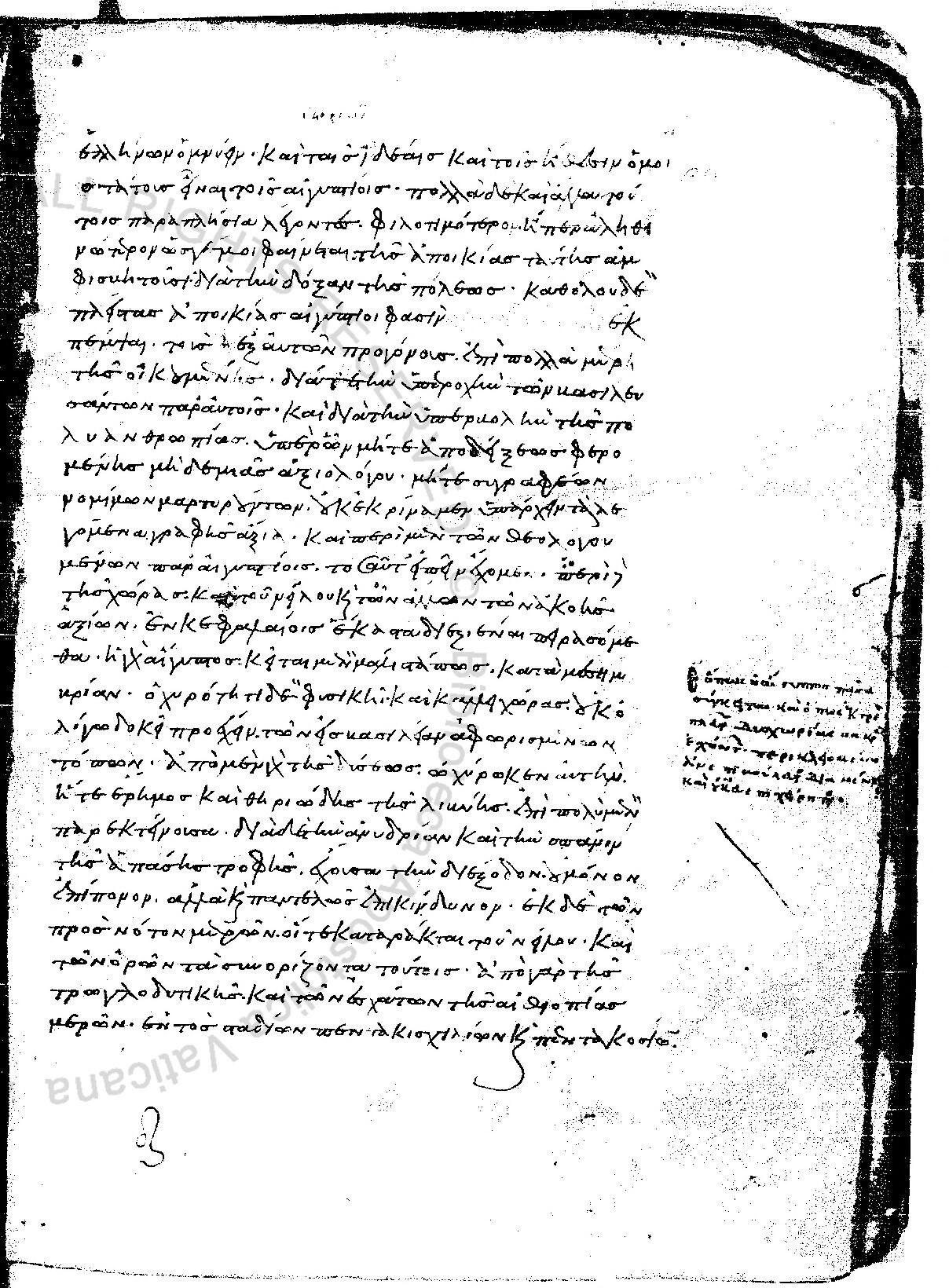
1.29 runs over 2 pages: DigiVatLib image 0026, left page; DigiVatLib image 0026, right page. DigiVatLib image 0026, left page: begins 'μέρος θηρίου, τὸ δὲ ἀνθρώπου' (end of 1.28.7), followed on the same line by 1.29 'ὁμοίως δὲ τούτῳ καὶ τὸν Ἐρεχθέα'; ends 'τοὺς δὲ Κήρυκας ἀπὸ τῶν παστοφόρων. τήν τε Ἶσιν μόνους τῶν' (1.29.4). DigiVatLib image 0026, right page: begins 'Ἑλλήνων ὀμνύειν, καὶ ταῖς ἰδέαις καὶ τοῖς ἤθεσιν' (1.29.4); 1.29 ends in the middle of the page 'ἐν κεφαλαίοις ἕκαστα διεξιέναι πειρασόμεθα', followed by 1.30 'ἡ γὰρ Αἴγυπτος κεῖται μὲν μάλιστά πως κατὰ μεσημβρίαν'. Checked on the images. Viewer: https://digi.vatlib.it/view/MSS_Vat.gr.130/0026
1ὁμοίως δὲ τούτῳ καὶ τὸν Ἐρεχθέα λέγουσι τὸ γένος Αἰγύπτιον ὄντα βασιλεῦσαι τῶν Ἀθηνῶν, τοιαύτας τινὰς φέροντες ἀποδείξεις· γενομένων γὰρ ὁμολογουμένως αὐχμῶν μεγάλων κατὰ πᾶσαν σχεδὸν τὴν οἰκουμένην πλὴν Αἰγύπτου διὰ τὴν ἰδιότητα τῆς χώρας, καὶ φθορᾶς ἐπιγενομένης τῶν τε καρπῶν καὶ πλήθους ἀνθρώπων, ἐξ Αἰγύπτου τὸν Ἐρεχθέα κομίσαι διὰ τὴν συγγένειαν σίτου πλῆθος εἰς τὰς Ἀθήνας· ἀνθʼ ὧν τοὺς εὖ παθόντας βασιλέα καταστῆσαι τὸν εὐεργέτην. 2τοῦτον δὲ παραλαβόντα τὴν ἡγεμονίαν καταδεῖξαι τὰς τελετὰς τῆς Δήμητρος ἐν Ἐλευσῖνι καὶ τὰ μυστήρια ποιῆσαι, μετενεγκόντα τὸ περὶ τούτων νόμιμον ἐξ Αἰγύπτου. καὶ τῆς θεοῦ δὲ παρουσίαν εἰς τὴν Ἀττικὴν γεγονυῖαν κατὰ τούτους τοὺς χρόνους παραδεδόσθαι κατὰ λόγον, ὡς ἂν τῶν ἐπωνύμων ταύτης καρπῶν τότε κομισθέντων εἰς τὰς Ἀθήνας, καὶ διὰ τοῦτο δόξαι πάλιν ἐξ ἀρχῆς τὴν εὕρεσιν γεγονέναι τοῦ σπέρματος, δωρησαμένης τῆς Δήμητρος. 3ὁμολογεῖν δὲ καὶ τοὺς Ἀθηναίους ὅτι βασιλεύοντος Ἐρεχθέως καὶ τῶν καρπῶν διὰ τὴν ἀνομβρίαν προηφανισμένων ἡ τῆς Δήμητρος ἐγένετο παρουσία πρὸς αὐτοὺς καὶ ἡ δωρεὰ τοῦ σίτου. πρὸς δὲ τούτοις αἱ τελεταὶ καὶ τὰ μυστήρια ταύτης τῆς θεοῦ τότε κατεδείχθησαν ἐν Ἐλευσῖνι. 4τά τε περὶ τὰς θυσίας καὶ τὰς ἀρχαιότητας ὡσαύτως ἔχειν Ἀθηναίους καὶ τοὺς Αἰγυπτίους· τοὺς μὲν γὰρ Εὐμολπίδας ἀπὸ τῶν κατʼ Αἴγυπτον ἱερέων μετενηνέχθαι, τοὺς δὲ Κήρυκας ἀπὸ τῶν παστοφόρων. τήν τε Ἶσιν μόνους τῶν Ἑλλήνων ὀμνύειν, καὶ ταῖς ἰδέαις καὶ τοῖς ἤθεσιν ὁμοιοτάτους εἶναι τοῖς Αἰγυπτίοις. 5πολλὰ δὲ καὶ ἄλλα τούτοις παραπλήσια λέγοντες φιλοτιμότερον ἤπερ ἀληθινώτερον, ὥς γʼ ἐμοὶ φαίνεται, τῆς ἀποικίας ταύτης ἀμφισβητοῦσι διὰ τὴν δόξαν τῆς πόλεως. καθόλου δὲ πλείστας ἀποικίας Αἰγύπτιοί φασιν ἐκπέμψαι τοὺς ἑαυτῶν προγόνους ἐπὶ πολλὰ μέρη τῆς οἰκουμένης διά τε τὴν ὑπεροχὴν τῶν βασιλευσάντων παρʼ αὐτοῖς καὶ διὰ τὴν ὑπερβολὴν τῆς πολυανθρωπίας· 6ὑπὲρ ὧν μήτε ἀποδείξεως φερομένης μηδεμιᾶς ἀκριβοῦς μήτε συγγραφέως ἀξιοπίστου μαρτυροῦντος, οὐκ ἐκρίναμεν ὑπάρχειν τὰ λεγόμενα γραφῆς ἄξια. καὶ περὶ μὲν τῶν θεολογουμένων παρʼ Αἰγυπτίοις τοσαῦθʼ ἡμῖν εἰρήσθω, στοχαζομένοις τῆς συμμετρίας· περὶ δὲ τῆς χώρας καὶ τοῦ Νείλου καὶ τῶν ἄλλων τῶν ἀκοῆς ἀξίων ἐν κεφαλαίοις ἕκαστα διεξιέναι πειρασόμεθα.
1In the same way, they continue, Erechtheus also, who was by birth an Egyptian, became king of Athens, and in proof of this they offer the following considerations. Once when there was a great drought, as is generally agreed, which extended over practically all the inhabited earth except Egypt because of the peculiar character of that country, and there followed a destruction both of crops and of men in great numbers, Erechtheus, through his racial connection with Egypt, brought from there to Athens a great supply of grain, and in return those who had enjoyed this aid made their benefactor king. 2After he had secured the throne he instituted the initiatory rites of Demeter in Eleusis and established the mysteries, transferring their ritual from Egypt. And the tradition that an advent of the goddess into Attica also took place at that time is reasonable, since it was then that the fruits which are named after her were brought to Athens, and this is why it was thought that the discovery of the seed had been made again, as though Demeter had bestowed the gift. 3And the Athenians on their part agree that it was in the reign of Erechtheus, when a lack of rain had wiped out the crops, that Demeter came to them with the gift of grain. Furthermore, the initiatory rites and mysteries of this goddess were instituted in Eleusis at that time. 4And their sacrifices as well as their ancient ceremonies are observed by the Athenians in the same way as by the Egyptians; for the Eumolpidae were derived from the priests of Egypt and the Ceryces from the pastophoroi. They are also the only Greeks who swear by Isis, and they closely resemble the Egyptians in both their appearance and manners. 5By many other statements like these, spoken more out of a love for glory than with regard for the truth, as I see the matter, they claim Athens as a colony of theirs because of the fame of that city. In general, the Egyptians say that their ancestors sent forth numerous colonies to many parts of the inhabited world, the pre-eminence of their former kings and their excessive population; 6but since they offer no precise proof whatsoever for these statements, and since no historian worthy of credence testifies in their support, we have not thought that their accounts merited recording. So far as the ideas of the Egyptians about the gods are concerned, let what we have said suffice, since we are aiming at due proportion in our account, but with regard to the land, the Nile, and everything else worth hearing about we shall endeavour, in each case, to give the several facts in summary.
Notes
- Greek: F. Vogel's Teubner edition (1888), from the Perseus Digital Library, checked against the printed volume. Square brackets are Vogel's marks for words he took to be later additions. The manuscript's wording differs from the edition in places; the Greek shown is the edition, not a transcription of the page.
- English: C. H. Oldfather's Loeb translation (1933), as printed in that year; his footnotes are omitted. Oldfather's section numbers follow Vogel's, with occasional small differences in where a section begins.
Cite
Sources
- Source: Vat. gr. 130 (10th c.) via DigiVatLib IIIF + Vogel Greek (Perseus, checked against the 1888 printing) + Oldfather English (Loeb 1933, public domain) (holding institution)
- Critical edition: F. Vogel, Teubner 1888 (Perseus, checked against the printing)
← previous · → next · v cycle view · l back to library