Enuma Elish, Tablet VII: the fifty names of Marduk
Introduction
The gods continue to proclaim the names of Marduk with their meanings. An epilogue asks that the names be remembered, taught and pondered by later generations.
Enuma Elish ('When on high'), the Babylonian Poem of Creation, tells how Marduk, god of Babylon, defeated Tiamat, created the ordered world and became king of the gods. It was written on seven tablets and recited in Babylon during the New Year festival. The date of composition is debated (proposals range from the 18th to the 12th century BCE); the surviving copies date from the 9th to the 2nd century BCE and come from Ashur, Nineveh, Kish, Babylon, Sippar, Uruk and other sites. This page follows the line numbering of the electronic Babylonian Library edition.
How this page is built. Each section is a run of consecutive lines as written on one photographed clay tablet. For every line the eBL edition (https://www.ebl.lmu.de/corpus/L/1/2/SB/VII) lists the manuscripts that carry it, with each tablet's own column and line numbers; the tablet chosen for each run is the photographed copy of the work with the most signs preserved there. Commentaries and texts that only quote a line are never chosen. School and excerpt tablets are used only for lines that no photographed library copy preserves as well, and only where they carry the line as text; their sections say so (BM.37379, BM.37981, BM.39798). The original text is eBL's transliteration of that tablet's signs (not a modern composite text): square brackets mark broken signs, x an illegible sign, # a damaged sign, ? an uncertain reading, and words in {braces} are determinatives; the notes give a key to every sign used on this page, and eBL's layout codes are written out in words (for example '(line break)' or '(blank space)'). Superscript numbers are the line numbers of the eBL edition, used in both the Akkadian and the English. The English is B. R. Foster's translation in the eBL edition (CC BY-NC-SA 4.0), one line of English per line of the poem; italics mark uncertain renderings, as in the source. Where the tablet is broken, the English still translates the whole line of eBL's composite text; each section's note names the lines that are broken on its tablet.
Finding a line on the photograph. Each section names the tablet, the face and column, and the tablet's own line numbers (a prime, as in 5', counts from the first preserved line of a broken column). On a tablet with six columns the obverse carries columns i-iii from left to right; the reverse, turned over from bottom to top, carries columns iv-vi from right to left. The photographs often show the obverse above the reverse with the edges around them; a fragment preserves only part of this layout.
This page shows 142 of the 166 lines of the eBL edition (86%), from 11 tablets in the British Museum: K.2854 (Nineveh), K.8522 (Nineveh), K.9267 (Nineveh), K.17095 (Nineveh), BM.37379, BM.39798, K.13761 (Nineveh), BM.37981, K.12830 (Nineveh), K.18576 (Nineveh), BM.34384.
Lines not shown. 24 of the 166 lines of the eBL edition are not shown, because no photographed copy of the work used here carries them: 48-49 (no photograph in eBL: Ist-A.154 (Istanbul Archaeological Museum), SU-1951.63 (Museum of Anatolian Civilizations, Ankara); commentary: Rm.366); 50-52 (no photograph in eBL: Ist-A.154 (Istanbul Archaeological Museum), SU-1951.63 (Museum of Anatolian Civilizations, Ankara)); 53 (no photograph in eBL: Ist-A.154 (Istanbul Archaeological Museum), SU-1951.63 (Museum of Anatolian Civilizations, Ankara); commentary: Rm.395, K.8585, K.13866); 54 (no photograph in eBL: Ist-A.154 (Istanbul Archaeological Museum), SU-1951.63 (Museum of Anatolian Civilizations, Ankara)); 78 (no photograph in eBL: Ist-A.154 (Istanbul Archaeological Museum), SU-1951.62 (Museum of Anatolian Civilizations, Ankara)); 100 (no photograph in eBL: Ist-A.154 (Istanbul Archaeological Museum), SU-1951.62 (Museum of Anatolian Civilizations, Ankara); quotation in another text: K.8519); 101 (no photograph in eBL: Ist-A.154 (Istanbul Archaeological Museum), SU-1951.63 (Museum of Anatolian Civilizations, Ankara), SU-1951.62 (Museum of Anatolian Civilizations, Ankara); quotation in another text: K.8519, K.7658); 102 (no photograph in eBL: Ist-A.154 (Istanbul Archaeological Museum), SU-1951.63 (Museum of Anatolian Civilizations, Ankara), SU-1951.62 (Museum of Anatolian Civilizations, Ankara); commentary: Sm.11); 103 (no photograph in eBL: Ist-A.154 (Istanbul Archaeological Museum), SU-1951.63 (Museum of Anatolian Civilizations, Ankara), SU-1951.62 (Museum of Anatolian Civilizations, Ankara); commentary: Sm.11; quotation in another text: K.8519, K.7658); 104 (no photograph in eBL: Ist-A.154 (Istanbul Archaeological Museum), SU-1951.63 (Museum of Anatolian Civilizations, Ankara), SU-1951.62 (Museum of Anatolian Civilizations, Ankara); commentary: Sm.11); 105 (no photograph in eBL: Ist-A.154 (Istanbul Archaeological Museum), SU-1951.63 (Museum of Anatolian Civilizations, Ankara), SU-1951.62 (Museum of Anatolian Civilizations, Ankara); quotation in another text: K.8519, K.7658); 106 (no photograph in eBL: Ist-A.154 (Istanbul Archaeological Museum), SU-1951.63 (Museum of Anatolian Civilizations, Ankara), SU-1951.62 (Museum of Anatolian Civilizations, Ankara)); 107 (no photograph in eBL: Ist-A.154 (Istanbul Archaeological Museum), SU-1951.63 (Museum of Anatolian Civilizations, Ankara), SU-1951.62 (Museum of Anatolian Civilizations, Ankara); commentary: Sm.11; quotation in another text: K.8519, K.7658); 108 (no photograph in eBL: Ist-A.154 (Istanbul Archaeological Museum), SU-1951.63 (Museum of Anatolian Civilizations, Ankara), SU-1951.62 (Museum of Anatolian Civilizations, Ankara); commentary: K.4657, Sm.11, VAT.10616, BM.54228); 109 (no photograph in eBL: Ist-A.154 (Istanbul Archaeological Museum), SU-1951.63 (Museum of Anatolian Civilizations, Ankara), SU-1951.62 (Museum of Anatolian Civilizations, Ankara); commentary: K.4657, Sm.11, VAT.10616; quotation in another text: K.7658); 110 (no photograph in eBL: Ist-A.154 (Istanbul Archaeological Museum), SU-1951.63 (Museum of Anatolian Civilizations, Ankara), SU-1951.62 (Museum of Anatolian Civilizations, Ankara); commentary: K.4657, Sm.11, VAT.10616); 111 (no photograph in eBL: Ist-A.154 (Istanbul Archaeological Museum), SU-1951.63 (Museum of Anatolian Civilizations, Ankara), SU-1951.62 (Museum of Anatolian Civilizations, Ankara); commentary: Sm.11); 112 (no photograph in eBL: Ist-A.154 (Istanbul Archaeological Museum), SU-1951.63 (Museum of Anatolian Civilizations, Ankara), SU-1951.62 (Museum of Anatolian Civilizations, Ankara); commentary: Rm.366); 121a (no photograph in eBL: Ist-A.154 (Istanbul Archaeological Museum), SU-1951.63 (Museum of Anatolian Civilizations, Ankara), SU-1951.62 (Museum of Anatolian Civilizations, Ankara), VAT.14511 (Vorderasiatisches Museum, Berlin); commentary: K.4657, Sm.11, VAT.10616); 121b (no photograph in eBL: Ist-A.154 (Istanbul Archaeological Museum), SU-1951.63 (Museum of Anatolian Civilizations, Ankara), VAT.14511 (Vorderasiatisches Museum, Berlin); commentary: Sm.11); 122 (no photograph in eBL: Ist-A.154 (Istanbul Archaeological Museum), SU-1951.63 (Museum of Anatolian Civilizations, Ankara), VAT.14511 (Vorderasiatisches Museum, Berlin); commentary: Sm.11; quotation in another text: K.7658). A line is shown only on a photographed tablet that carries it as text. Commentaries and other texts that quote a line (letters, rituals, god lists) are not used as witnesses, because they carry it with explanations or inside another text; tablets without a photograph in eBL are not used, because the line could not be shown on its tablet.
How was this verified? (Provenance)
Where on the image
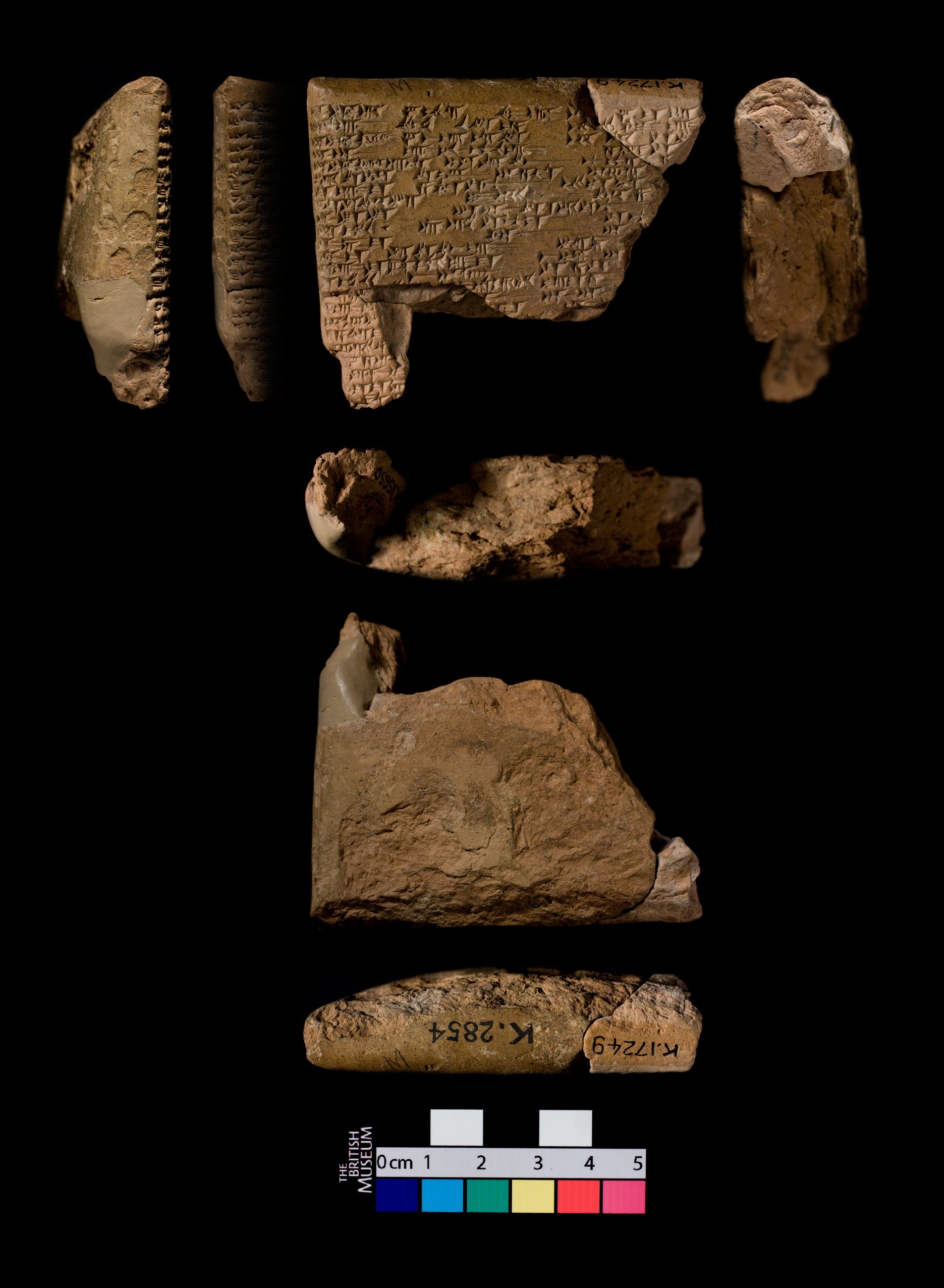
British Museum K.2854: obverse, the tablet's own lines 1 to 16. eBL's corpus edition (https://www.ebl.lmu.de/corpus/L/1/2/SB/VII) attributes SB VII 1-16 to this manuscript at these column and line numbers. Photograph checked: obverse, reverse and edges, ink K.2854 and K.17249 on the bottom edge, K.17249 on the obverse corner and K.15650 on a small joined piece. About 18 to 20 lines on the obverse across the joined pieces, broadly consistent with eBL's 23; the reverse is uninscribed. The small piece K.15650 is visibly joined in this photograph (eBL's separate photograph filed under K.15650 shows K.16050 and is not used). On this tablet lines 1-16 are partly broken (square brackets and x in the Akkadian). The English of these lines translates eBL's composite text, so it includes words that are not preserved on this tablet but are restored from other manuscripts or by the editors. Square brackets in the English mark eBL's restorations in its composite text; words that survive on other tablets carry no brackets even where this tablet is broken.
1{d}asar-re ša₂-rik me₂-reš-t[i] ša₂ is-ra-t[a? x x x]
2ba-nu-u₂ ŠE.AM u qe₂-e m[u-š]e-ṣu-u₂ [x x x]
3{d}asar-alim ša₂ ina E₂ mil-ki kab-ti šu-tu#-[ru x x x]
4DINGIR.DINGIR u₂-taq-qu-u₂ a-dir-šu [x x]
5{d}asar-alim-nun-na ka-ru-bu nu-ur₂ a#-[bi x x x x]
6muš-te-šir₃ te-ret {d}a-nim {d}+en-lil₂ [x x x x x x x x]
7šu-u₂-ma za-nin-šu-nu mu-ad-du-u [x x x x]
8ša₂ šu-ku-us-su HE₂.GAL₂ (erased: x) uṣ-ṣa-[pa x (x) x x x]
9{d}tu-tu ba-an te-diš-ti-šu-nu [x x x]
10li-lil (erased: x) sa-gi-šu-nu-ma šu-nu [x x x x x]
11lib-ni-ma EN₂ DINGIR.DI[NGIR x x x]
12ag-giš lu te-bu-u₂ li-ne₂-ʾ[u-u₂ x x x x]
13lu-u₂ šu-uš-qu-u₂-ma ina UKKIN DINGIR.[DINGIR x x x x]
14ma-am-man ina DINGIR-MEŠ šu-a-šu [x x x x x]
15{d#}MIN<(tu-tu)> {d#}zi#-[ukkin]-na#-kam₂# na-piš-ti um-ma-ni [x x x x x]
16ša₂ u₂-kin#-[nu a]n DINGIR.DINGIR A[N-e x x x]
1“(10) ASARI, grantor of arable land, who established irrigated fields,
2“Creator of grain and flax, who causes vegetation to spring up,
3“(11) ASARALIM, who is honored in the house of counsel, whose counsel excels,
4“The gods heed, they learn fear of him,
5“(12) ASARALIMNUNNA, the honored one, light of the father who begot [him],
6“Who implements the decrees of Anu, Enlil, Ea, (who is) Ninshiku,
7“He is their provider who assigns their portions,
8“Whose tiara increases abundance for the land.
9“(13) TUTU is [he] who effected their restoration,
10“He shall purify their shrines that they may be at rest,
11“He shall devise the magic spell that the gods may be calm,
12“Though they rise in anger, they shall turn [back].
13“He shall be supreme, alone in the assembly of the gods,
14“No one among the gods shall [make himself equal] to him.
15“Tutu they called secondly (14) ZIUKKENNA, life of the masses,
16“Who established the holy heavens for the gods,
Where on the image
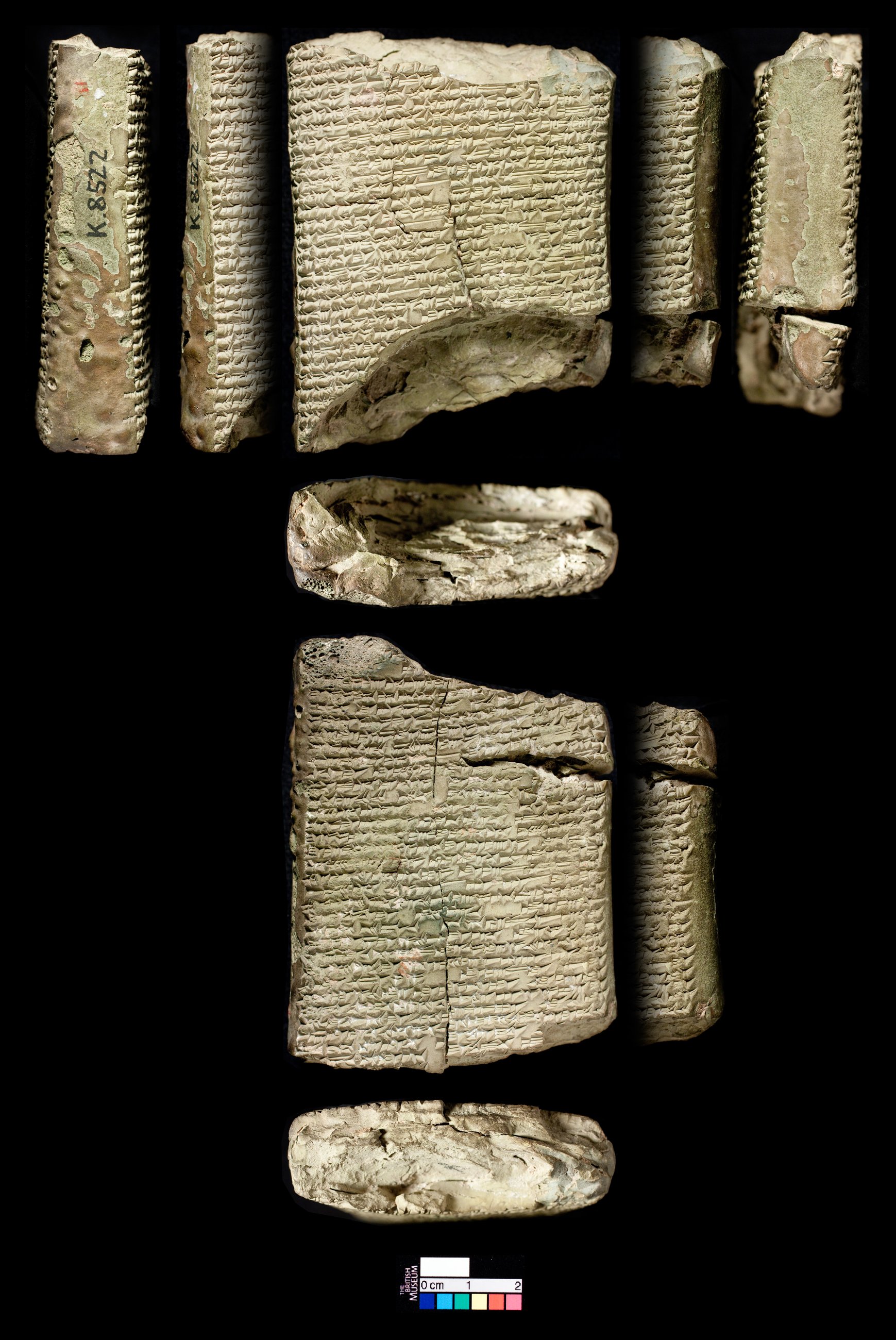
British Museum K.8522: obverse, the tablet's own lines 3' to 27'. eBL's corpus edition (https://www.ebl.lmu.de/corpus/L/1/2/SB/VII) attributes SB VII 17-41 to this manuscript at these column and line numbers. Photograph checked: obverse, reverse and edges, ink K.8522 on the left edge. Both faces are covered in small script with about 30 lines each, consistent with eBL's 31 obverse and 33 reverse. On this tablet lines 17-19, 37-41 are partly broken (square brackets and x in the Akkadian). The English of these lines translates eBL's composite text, so it includes words that are not preserved on this tablet but are restored from other manuscripts or by the editors. Square brackets in the English mark eBL's restorations in its composite text; words that survive on other tablets carry no brackets even where this tablet is broken. Lines 20-36 are complete on this tablet.
17al-kat₃-su-un iṣ#-ba#-tu#-[ma x x x x x x x x]
18a-a im-ma-ši ina a-pa-a-ti# [x x x x x x x x]
19[(gloss: {d}MIN<(tu-tu)>)] {d}zi-ku₃ šal-šiš im-bu-u₂ mu-kil# te#-lil#-ti
20DINGIR ša₂-a-ri ṭa-a-bi be-el taš-me-e u ma-ga-ri
21mu-šab-ši ṣi-im-ri u ku-bu-ut-te-e mu-kin HE₂.GAL₂
22ša₂ mim-ma-ni i-ṣu a-na ma-ʾ-de-e u₂-tir-ru
23i-na pu-uš-qi₂ dan-ni ni-ṣi-nu IM-šu₂ ṭa-a-bu
24liq-bu-u₂ lit-ta-ʾi-du lid-lu-la da-li-li-šu₂
25(gloss: {d}MIN#<(tu-tu)>) {d}aga-ku₃ ina 4-i li-šar-ri-hu ab-ra-a-te
26be-el šip-tu KU₃-ti₃ mu-bal-liṭ mi-i-ti
27ša₂ an DINGIR.DINGIR ka-mu-ti ir-šu-u₂ ta-a-a-ru
28ab-ša₂-na en-du u₂-ša₂-as-si-ku UGU DINGIR-MEŠ na-ki-ri-šu₂
29a-na pa-di-šu₂-nu ib-nu-u a-me-lu-tu
30re-me-nu-u₂ ša₂ bul-lu-ṭu ba-šu-u₂ it-ti-šu₂
31li-ku-na-ma a-a im-ma-ša₂-a a-ma-tu-šu₂
32ina pi-i ṣal-mat SAG.DU ša₂ ib-na-a qa-ta-a-šu₂
33(gloss: {d}MIN<(tu-tu)>) {d}tu₆-ku₃ ina 5-ši ta-a-šu₂ KU₃ pa-ši-na lit-tab-bal
34ša₂ ina EN₂-šu₂ KU₃-ti₃ is-su-hu na-gab lem-nu-ti
35{d}ša₃-zu mu-de-e lib₃-bi DINGIR-MEŠ ša₂ i-bar-ru-u kar-šu₂
36e-piš lem-ne₂-e-ti la u₂#-še#-ṣu-u₂ it-ti-šu₂
37mu-kin UKKIN ša₂ DINGIR.DINGIR# [mu]-ṭib# lib₃#-bi-šu-un
38mu-kan-niš la ma-g[i-ri x x x x] rap#-šu₂#*
39mu-še-šir kit-t[i x x x x x x x x x]
40ša₂ sa-ar-ti u# [x x x x x x x x x x]
41(gloss: {d}MIN<(ša₃-zu)>) {d}zi-si m[u-še-eb-bi x x x x x x x x x x]
17“Who took control of their courses, assigned their stations,
18“Let his deed not be forgotten among teeming humankind, let it be held fast,
19“Tutu they called thirdly (15) ZIKU, who maintains purity,
20“'God of the fair breeze, lord of obedience and consent,
21“Producer of riches and wealth, who establishes abundance,
22“Who turned all our want to plenty,
23“Whose fair breeze we caught whiff of in our great crisis,
24“Let them ever speak of his glorification, let them sing his praises!
25“Tutu let teeming humankind magnify fourthly as (16) AGAKU,
26“Lord of the sacral magic spell, reviver of the moribund,
27“Who had mercy on the vanquished gods,
28“Who removed the yoke imposed on the gods who were hostile to him,
29“Who, to free them, created humankind,
30“The merciful, whose power is to revive,
31“Word of him shall endure, not to be forgotten,
32“In the mouth of the people of this land, whom his hands have created.
33“Tutu, fifthly, is (17) TUKU, his sacral magic spell shall ever be on their lips,
34“Who with his sacral magic spell uprooted all the evil ones.
35“(18) SHAZU, who knew the hearts of the gods, who could examine their innermost,
36“Who allowed no evildoers to escape from him,
37“Who upheld the gods’ host, who contented them,
38“Who subdued the insubmissive, their (the gods’) broad [pro]tection,
39“Who administers justice, uproots twisted testimony,
40“In whose place falsehood and truth are distinguished.
41“Shazu they shall praise secondly as (19) ZISI, who silenced those who rose (against him),
Where on the image
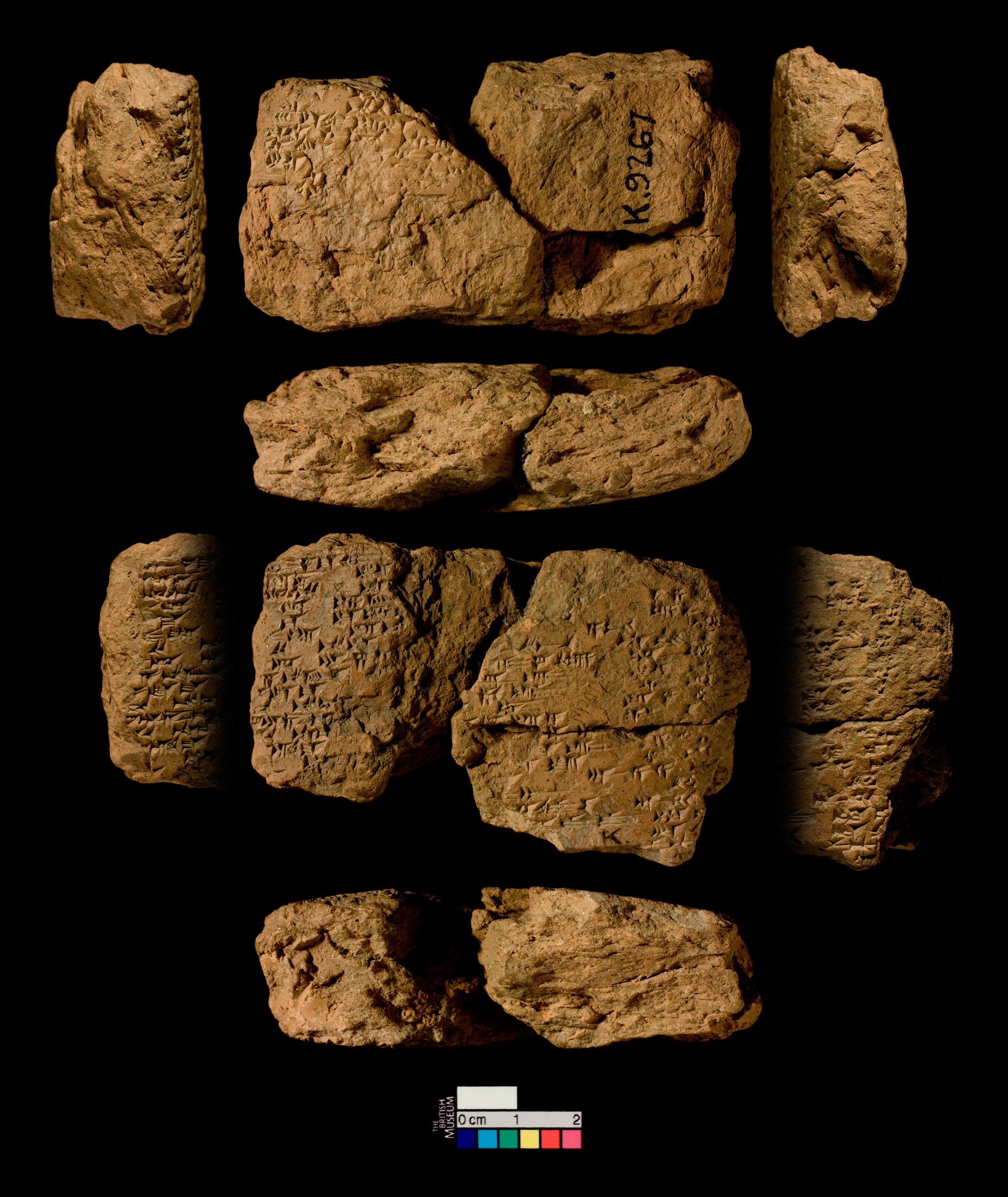
British Museum K.9267: obverse, the tablet's own lines 3' to 5' and 32' to 34'. eBL's corpus edition (https://www.ebl.lmu.de/corpus/L/1/2/SB/VII) attributes SB VII 42-47 to this manuscript at these column and line numbers. Photograph checked: obverse, reverse and edges of two joined pieces, ink K.9267 on the obverse. About eight lines at the upper left of the obverse and about 20 lines across the reverse and its edge, broadly consistent with eBL's 8 and 24. eBL numbers these lines on the tablet 3' to 5' and 32' to 34': its line numbers jump although the poem lines are consecutive. The photograph shows the obverse text as one block of about eight lines at its upper left (eBL attributes eight obverse lines to K.9267, VII 40-47), so these lines are consecutive on the tablet; eBL's labels 32'-34' for lines 45-47 are probably a slip for 6'-8'. Count down from the top line of that block. On this tablet of line 47 only one to three signs survive and lines 42-46 are partly broken (square brackets and x in the Akkadian). The English of these lines translates eBL's composite text, so it includes words that are not preserved on this tablet but are restored from other manuscripts or by the editors. Square brackets in the English mark eBL's restorations in its composite text; words that survive on other tablets carry no brackets even where this tablet is broken.
42[mu-uk]-kiš šu-har-ra-tu [x x x x x x x x]
43[x x {d}]suh-rim šal-šiš na-sih₂# [x x x x x x x x (x) x x]
44[mu-sa]p-pi-ih# [ki]p-di-šu₂-nu [x x x x x x]
45[mu-ba]l-li [nap]-har# rag-g[i x x x x x x]
46[DINGIR-M]EŠ liš-ta#-[al-l]i-lu# [x x x x x]
47[x x x {d}šuh]-gu₂-r[im] ina?# [x x x x x x x x x x x x x]
42“Who banished paralyzing fear from the bodies of the gods his fathers,
43“Shazu is, thirdly, (20) SUHRIM, who uprooted all enemies with the weapon,
44“Who thwarted their plots, turned them into thin air,
45“Who snuffed out all wicked ones, as many as came against him.
46“The gods shall ever hail him in the assembly!
47“Shazu is, fourthly, (21) SUHGURIM, who ensured obedience for the gods his fathers,
Where on the image
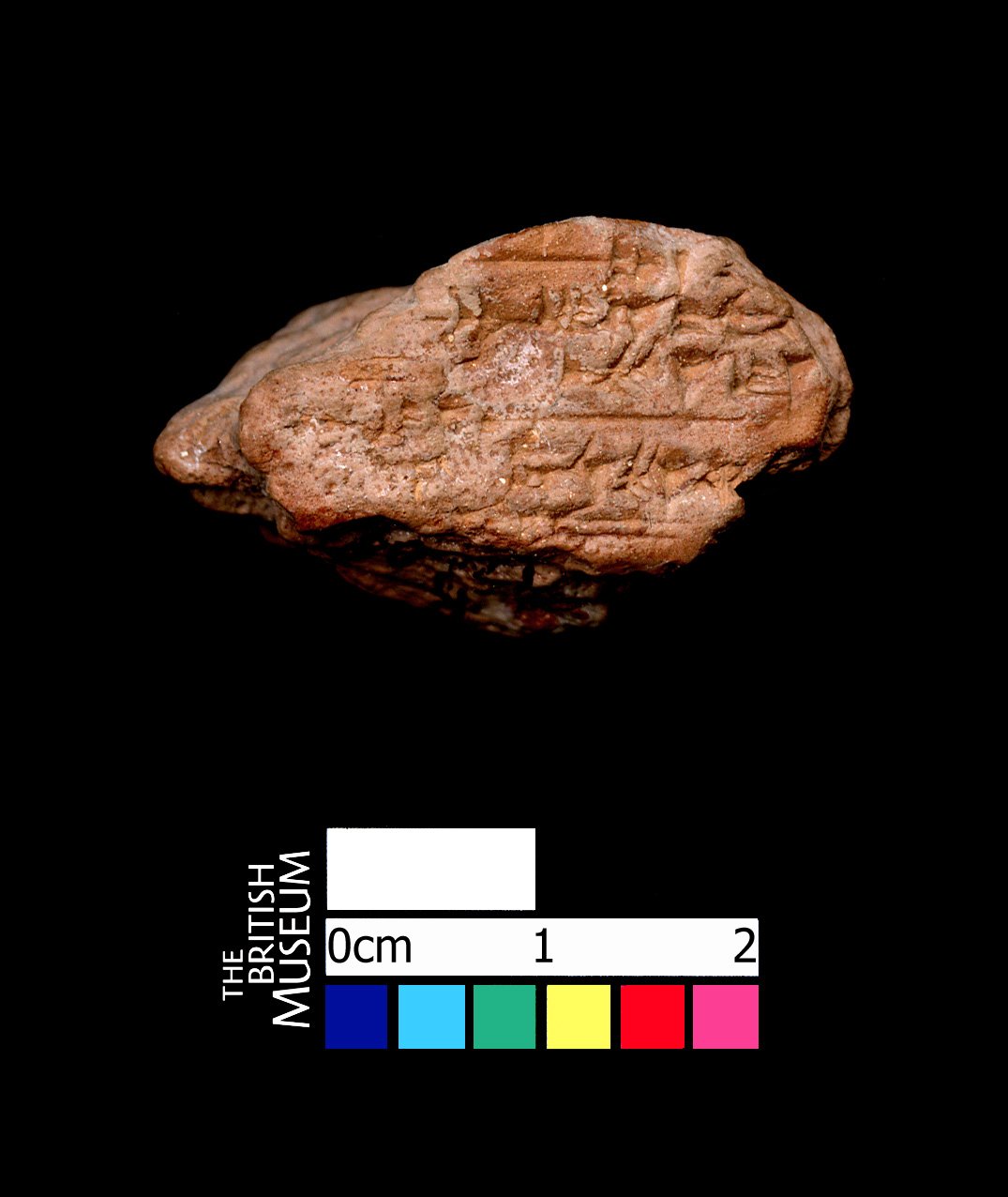
British Museum K.17095: obverse, the tablet's own lines 1' to 5'. eBL's corpus edition (https://www.ebl.lmu.de/corpus/L/1/2/SB/VII) attributes SB VII 55-59 to this manuscript at these column and line numbers. Photograph checked: one face of a small flake about 3 cm wide; no ink number visible. About four or five lines of worn signs survive, broadly consistent with eBL's six obverse lines. On this tablet of lines 55, 58 only one to three signs survive and lines 56-57, 59 are partly broken (square brackets and x in the Akkadian). The English of these lines translates eBL's composite text, so it includes words that are not preserved on this tablet but are restored from other manuscripts or by the editors. Square brackets in the English mark eBL's restorations in its composite text; words that survive on other tablets carry no brackets even where this tablet is broken.
55[x x x x x x x x 6-š]i ap-p[u-na x x x x x]
56[x x x x x x] u₂#-hal#-li-q[u x x x x x x]
57[x x x x x be-l]u₄ mu-deš-šu-[u₂-šu₂-nu x x x]
58[x x na-b]u-šu-nu [x x (x) x x x]
59[x x x x maš-qi₂]-ta!?# uš-te-e[š-še-ru x x x x x x x]
55“To Shazu, moreover, they shall all render universal honor sixthly as (23) ZAHGURIM,
56“He it is who destroyed all foes in battle.
57“(24) ENBlLULU, lord who made them flourish, is he,
58“Their mighty chosen one, who established offerings,
59“Who establishes grazing and well-ordered watering places for the land,
Where on the image
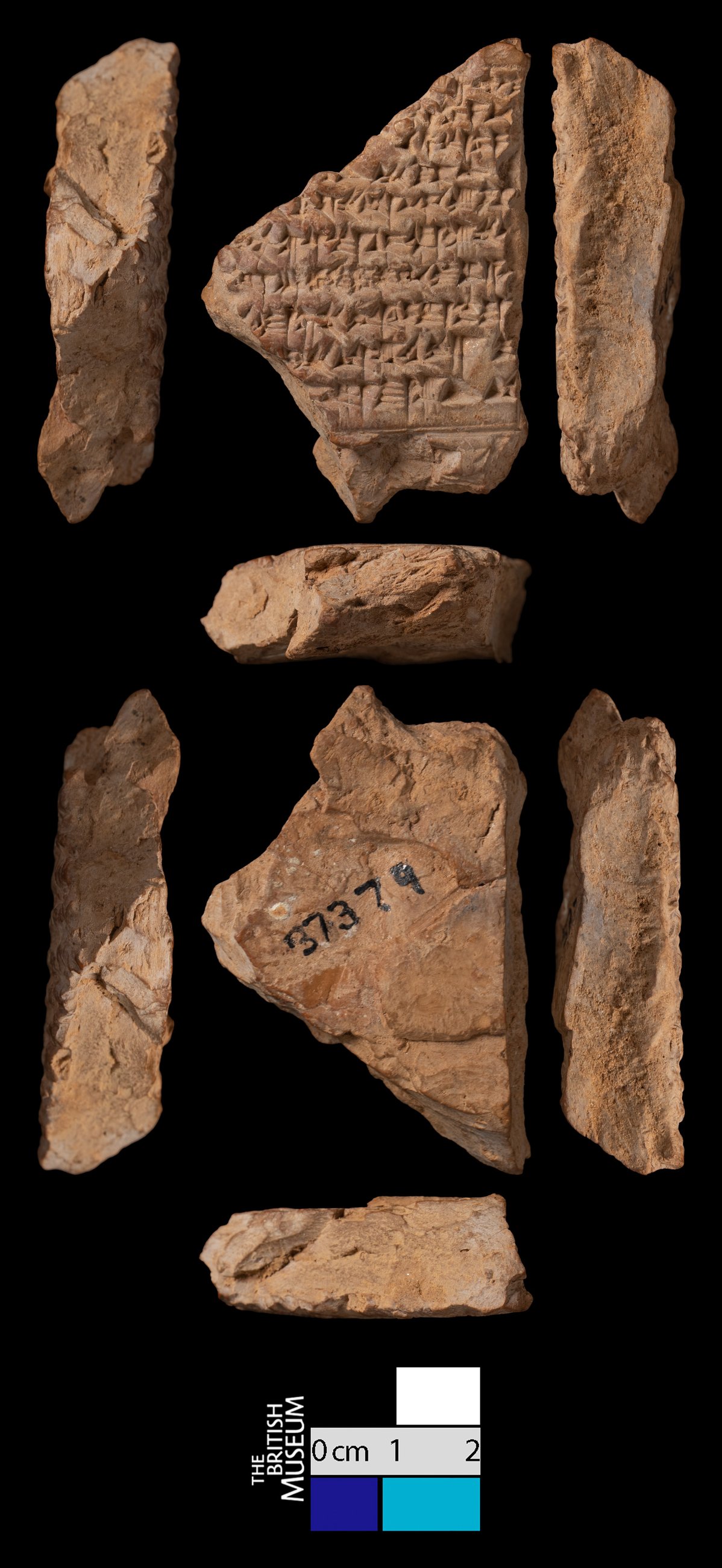
British Museum BM.37379: obverse, the tablet's own lines 2' to 10'. eBL's corpus edition (https://www.ebl.lmu.de/corpus/L/1/2/SB/VII) attributes SB VII 60-66 to this manuscript at these column and line numbers. Photograph checked: obverse, reverse and edges, ink 37379 on the reverse. About ten lines on the obverse, consistent with eBL's nine; the reverse is uninscribed. eBL classes BM.37379 as a school tablet (a scribal exercise that copies an excerpt of the text), not a library copy of the whole work. It carries these lines as text (eBL's transliteration has no commentary or quotation markup), and it is used because no photographed library copy preserves these lines as well. On this tablet lines 60-66 are partly broken (square brackets and x in the Akkadian). The English of these lines translates eBL's composite text, so it includes words that are not preserved on this tablet but are restored from other manuscripts or by the editors. Square brackets in the English mark eBL's restorations in its composite text; words that survive on other tablets carry no brackets even where this tablet is broken. eBL gives no English for line(s) 62b.
60[x x x x x x x x] u₂-za-ʾi-z[u x x x x (x)]
61[x x x x x {d}e-pa₅]-dun# be-[el (x)] (line break) (blank space) [A.RI].A# u a-te-e [x x x x x x]
62a[x x x x x KI]-ti₃# mu-kin-nu [x x]
62b[x me-re-e]š?-tu₂# il-li-ti u₂-kin-[nu x x (x x)]
63[x x x pa]l-gu uš-te-ši-ru u₂-u[ṣ-ṣi-ru x x x]
64[{d}en-bi-l]u-lu {d}gu₂-gal gu₂#-gal# mit-ra-a-t[i x x x x x x x]
65[x x he₂-ga]l₂-la ṭuh-du ši-ip-ka-a#-[ti? x x]
66[x x meš-re]-e# mu-na-ah-hi-iš d[a-ad₂-me]
60“Who opened channels, apportioned abundant waters.
61“Enbilulu they shall [invoke] secondly as (25) EPADUN, lord of open country and watercourses,
62a“Irrigator of heaven and earth, former of furrows, who formed the pristibe plow land in the steppe,
62b(no English for this line in the eBL edition)
63“Who regulates dike and ditch, who patterns the furrowed ground.
64“Enbilulu they shall praise thirdly as (26) ENBILULU-GUGAL, irrigator of the watercourses of the gods,
65“Lord of abundance, plenty, high yields,
66“Producer of wealth, enricher of the inhabited world,
Where on the image
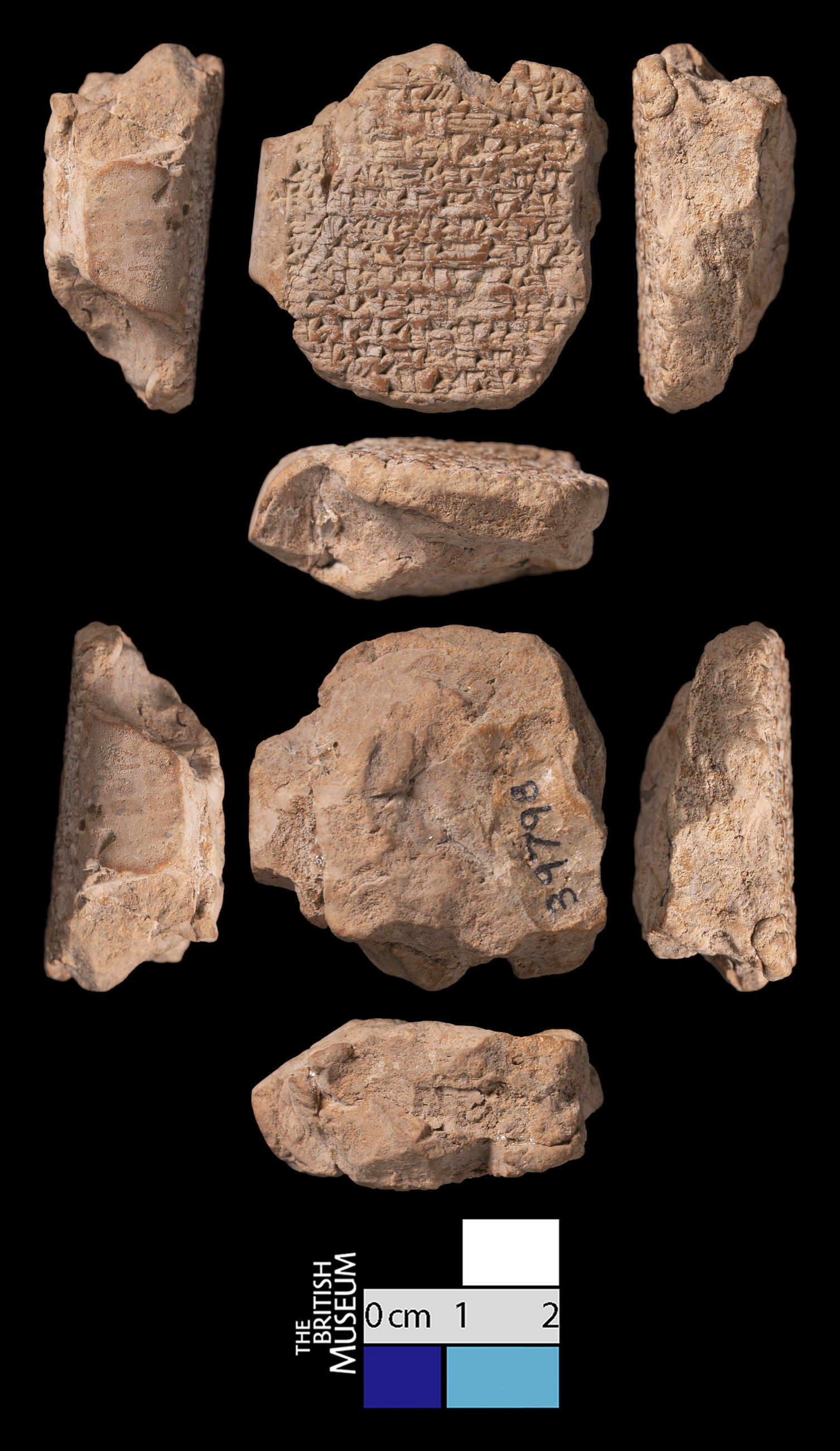
British Museum BM.39798: obverse, the tablet's own lines 3' to 13'. eBL's corpus edition (https://www.ebl.lmu.de/corpus/L/1/2/SB/VII) attributes SB VII 67-77 to this manuscript at these column and line numbers. Photograph checked: obverse, reverse and edges, ink 39798 on the reverse. About 13 lines on the obverse, matching eBL's 13; the reverse is uninscribed. eBL classes BM.39798 as a school tablet (a scribal exercise that copies an excerpt of the text), not a library copy of the whole work. It carries these lines as text (eBL's transliteration has no commentary or quotation markup), and it is used because no photographed library copy preserves these lines as well. On this tablet lines 67-77 are partly broken (square brackets and x in the Akkadian). The English of these lines translates eBL's composite text, so it includes words that are not preserved on this tablet but are restored from other manuscripts or by the editors. Square brackets in the English mark eBL's restorations in its composite text; words that survive on other tablets carry no brackets even where this tablet is broken.
67[na-di]n šu#-a-i mu#-ša[b-šu-u₂ x x x]
68{d#}en#-bi#-lu-lu {d}he₂-gal₂ [x x x x x x x x x x x x x x]
69mu-ša-az-nin nu-uh-šu₂ U[GU x x x x x x x x x]
70{d}sirsir# ša-pi-ik ša₂-di-i# [x x x x x x]
71ša-lil et-gur-tu₄ ti-[amtu x x x x x]
72mu-ut-tar-ru-u₂ ma-a-t[i x x x x x x x x]
73ša₂ šar-ku-uš me-re-šu š[u-ku-us-su x x x x]
74ša₂ ina tam-ti₃ DAGAL-ti₃# i-te-[eb-be₂-ru x x x x]
75[k]i-ma ti-tur-ru i#-te-e[t-ti-qu x x x x x x]
76[{d}sirs]ir {d}ma₂-lah₄# ina MIN-i# i[m?-bu-u x x x x x x]
77[ti]-amtu ru-kub-šu-ma# š[u-u₂ x x x]
67“Bestower of grain, who causes barley to appear.
68“Enbilulu let them speak of fourthly as (27) HEGAL, who heaps up abundance for the peoples,
69“Who rains prosperity over the wide earth, who makes vegetation flourish.
70“(28) SIRSIR, who heaped up the mountain over Tiamat,
71“Who ravaged the corpse of Tiamat with [his] weapon,
72“Leader of the land, their faithful shepherd,
73“To whom have been granted the cultivated field, the subsistence field, the furrow,
74“Who crossed vast Tiamat back and forth in his wrath,
75“Passing back and forth, as a bridge, at the place of single combat with her.
76“Sirsir they named secondly (29) MALAH, so be it,
77“Tiamat is his vessel and he the boatman.
Where on the image
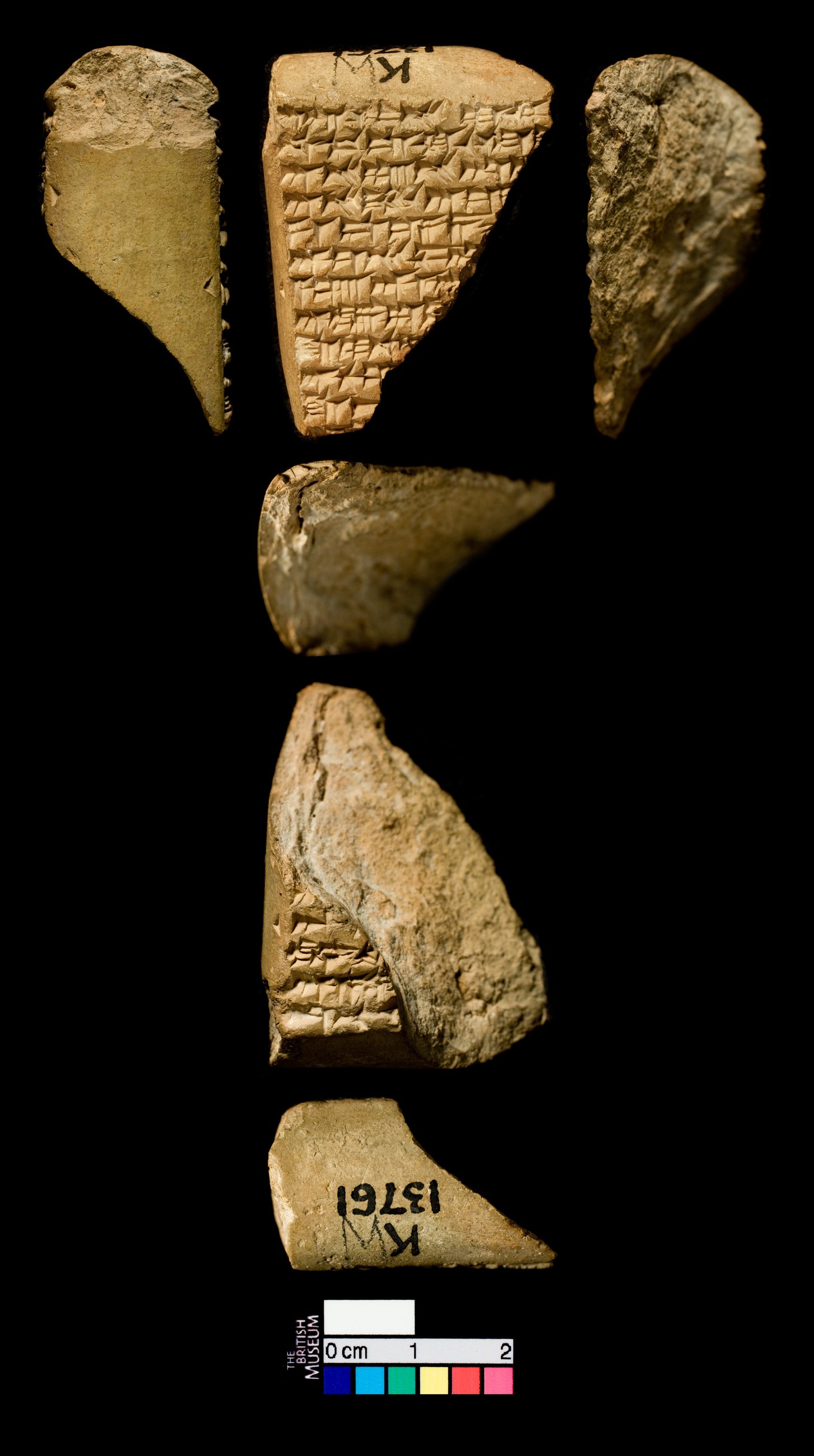
British Museum K.13761: obverse, the tablet's own lines 1' to 5'. eBL's corpus edition (https://www.ebl.lmu.de/corpus/L/1/2/SB/VII) attributes SB VII 79-83 to this manuscript at these column and line numbers. Photograph checked: two faces and edges, ink K.13761 on the top and bottom edges. The face shown on top has about 12 lines and the face shown below about five, matching eBL's 5 and 12 in total, though the photograph lays the faces out in the opposite order to eBL's obverse and reverse. On this tablet of lines 79-83 only one to three signs survive. The English of these lines translates eBL's composite text, so it includes words that are not preserved on this tablet but are restored from other manuscripts or by the editors. Square brackets in the English mark eBL's restorations in its composite text; words that survive on other tablets carry no brackets even where this tablet is broken.
79b[a-nu-u x x x x x x x x x x x x x]
80(gloss: 10) {d}g[ili-ma x x x x x x x x x x x x]
81rap-p[u x x x x x x x x x x x x x]
82{d}a-gi[li-ma x x x x x x x x x x x x x]
83ba-nu-u [x x x x x x x x x x x x x]
79“Who brings forth barley and flocks, grantor of the land’s seed.
80“(31) GILIMMA, who established the bond of the gods, creator of enduring things,
81“The bridle that curbed them, provider of good things,
82“(32) AGILIMMA, the lofty one, remover of the diadem, who controls the snow,
83“Creator of the earth above the waters, establisher of the heights of heaven.
Where on the image
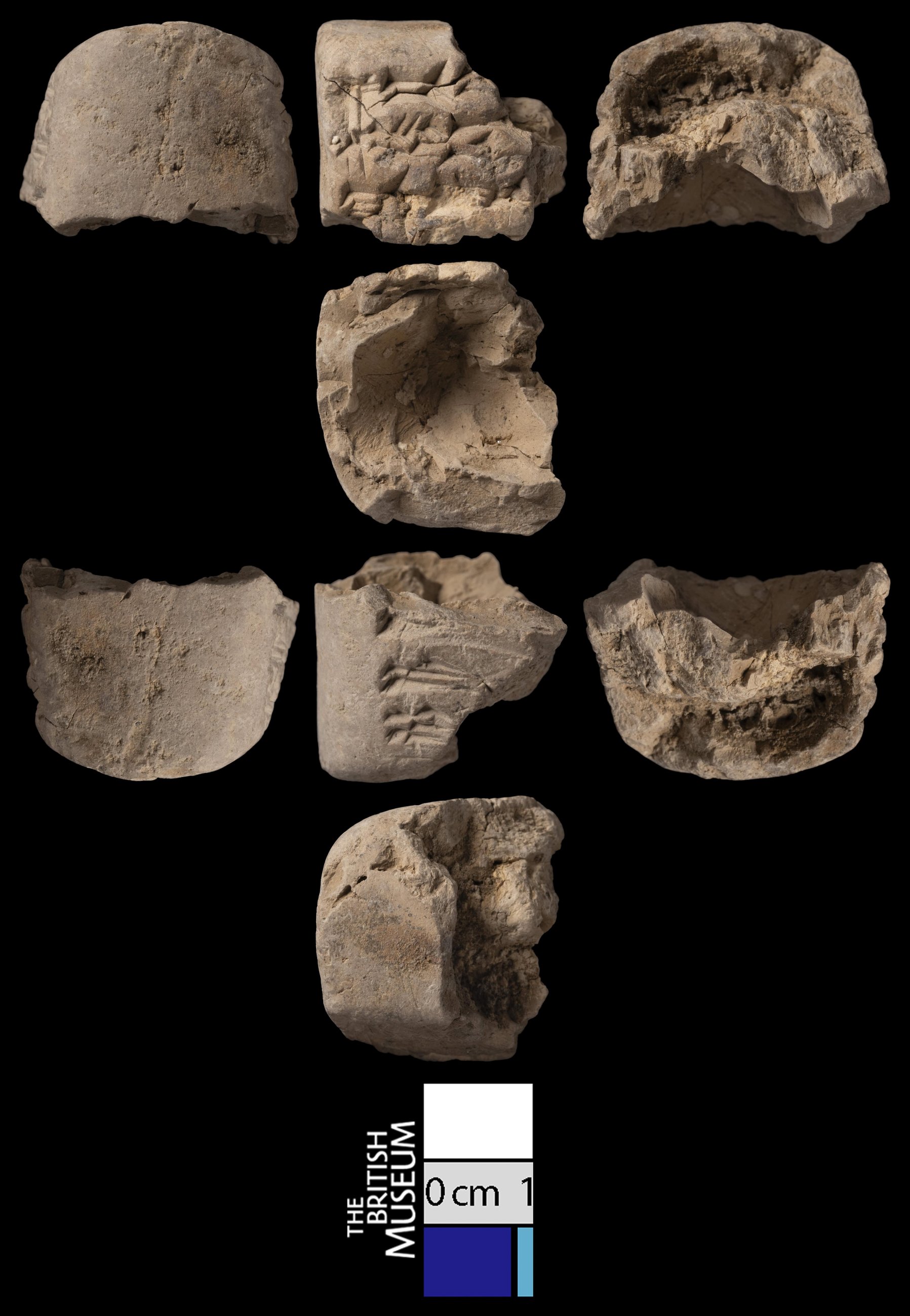
British Museum K.13761: reverse, the tablet's own lines 1 to 12. eBL's corpus edition (https://www.ebl.lmu.de/corpus/L/1/2/SB/VII) attributes SB VII 84-95 to this manuscript at these column and line numbers. Photograph checked: two faces and edges, ink K.13761 on the top and bottom edges. The face shown on top has about 12 lines and the face shown below about five, matching eBL's 5 and 12 in total, though the photograph lays the faces out in the opposite order to eBL's obverse and reverse. On this tablet of lines 93-95 only one to three signs survive and lines 84-92 are partly broken (square brackets and x in the Akkadian). The English of these lines translates eBL's composite text, so it includes words that are not preserved on this tablet but are restored from other manuscripts or by the editors. Square brackets in the English mark eBL's restorations in its composite text; words that survive on other tablets carry no brackets even where this tablet is broken.
84{d}zu-lum mu-ad-di [x x x x x x x x x x x]
85na-din is₂-qi₂ u nin-d[a-be₂-e x x x x x x x x]
86{d}mu-um-mu ba-a[n x x x x x x x x x x x x]
87DINGIR mu-lil AN-e [x x x x x x x x x]
88ša₂ ana du-un-ni-š[u₂ x x x x x x x x x]
89{d}giš-numun-ab₂ b[a-nu-u₂ x x x x x x x x x x]
90(gloss: 10) a-bit DINGIR-MEŠ [x x x x x x x x x x x]
91{d}lugal-ab-du[bur₂!? x (x) x x x x x x x x x x x x]
92ša# i-na r[e-e-ši x x x x x x x x x x]
93{d}p[a₅-gal-gu₂-en-na x x x x x x x x x x x x x x x]
94ša ina [x x x x x x x x x x x x x x x]
95{d#}lu[gal-dur-mah x x x x x x x x x x]
84“(33) ZULUM, who assigned fields for the gods, measured off his handiwork,
85“Grantor of portions and food offerings, tender of sanctuaries.
86“(34) MUMMU, creator of heaven and netherworld, who guides the lost,
87“Divine purifier of heaven and netherworld, is, secondly, (35) ZULUMMU,
88“To whom no other among the gods was equal in strength.
89“(35) GISHNUMUNAB, creator of all peoples, who made the world regions,
90“Who destroyed Tiamat’s gods, who made human beings from parts of them.
91“(36) LUGALABDUBUR, the king who dissipated the preparations of Tiamat, neutralized [her] weapons,
92“Whose support is firm in front and rear.
93“(37) PAGALGUENNA, foremost of all lords, whose strength is outstanding,
94“Who was greatest of the gods his brethren, lord of them all.
95“(38) LUGALDURMAH, king of the bond of the gods, lord of the “Great Bond,”
Where on the image
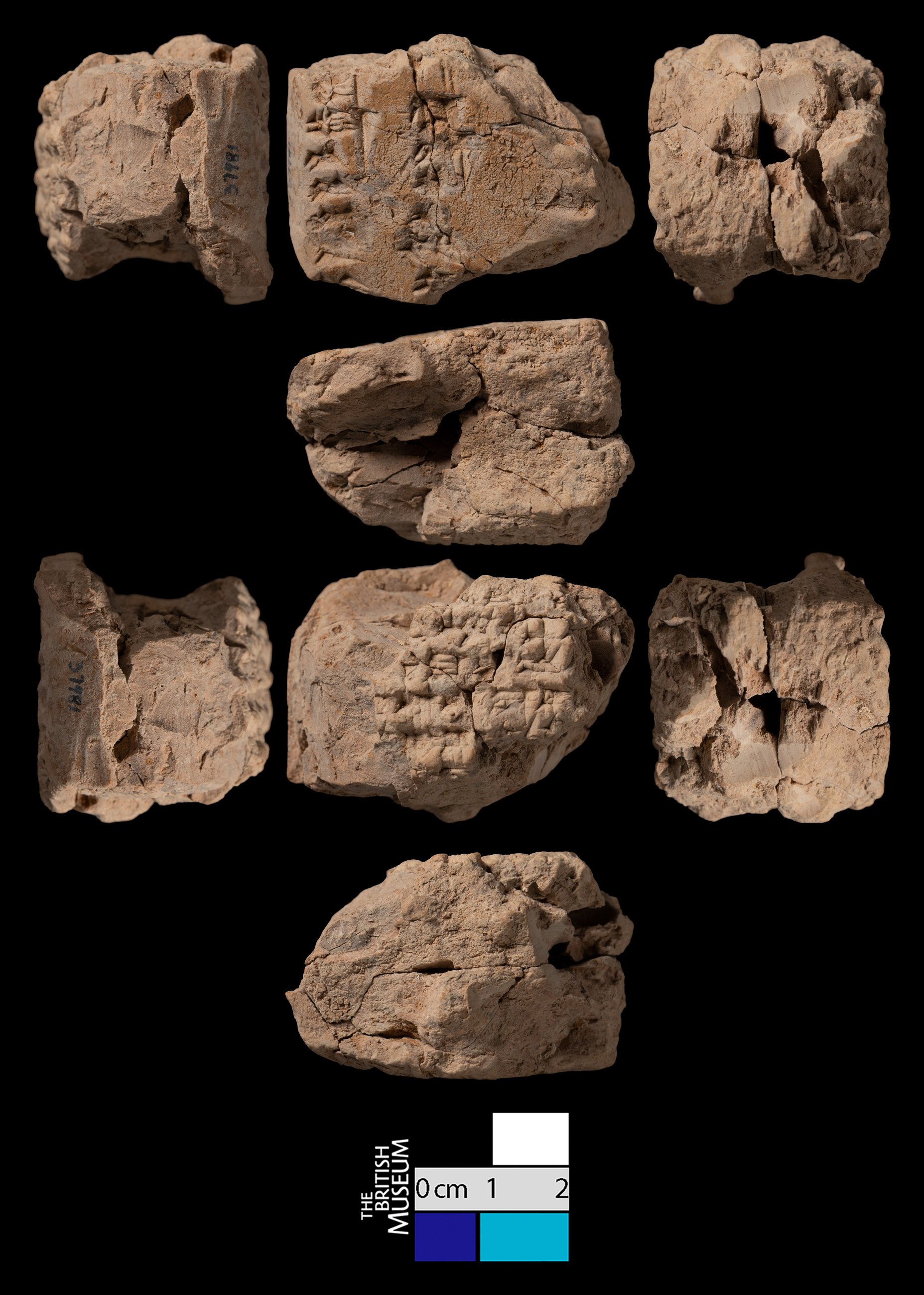
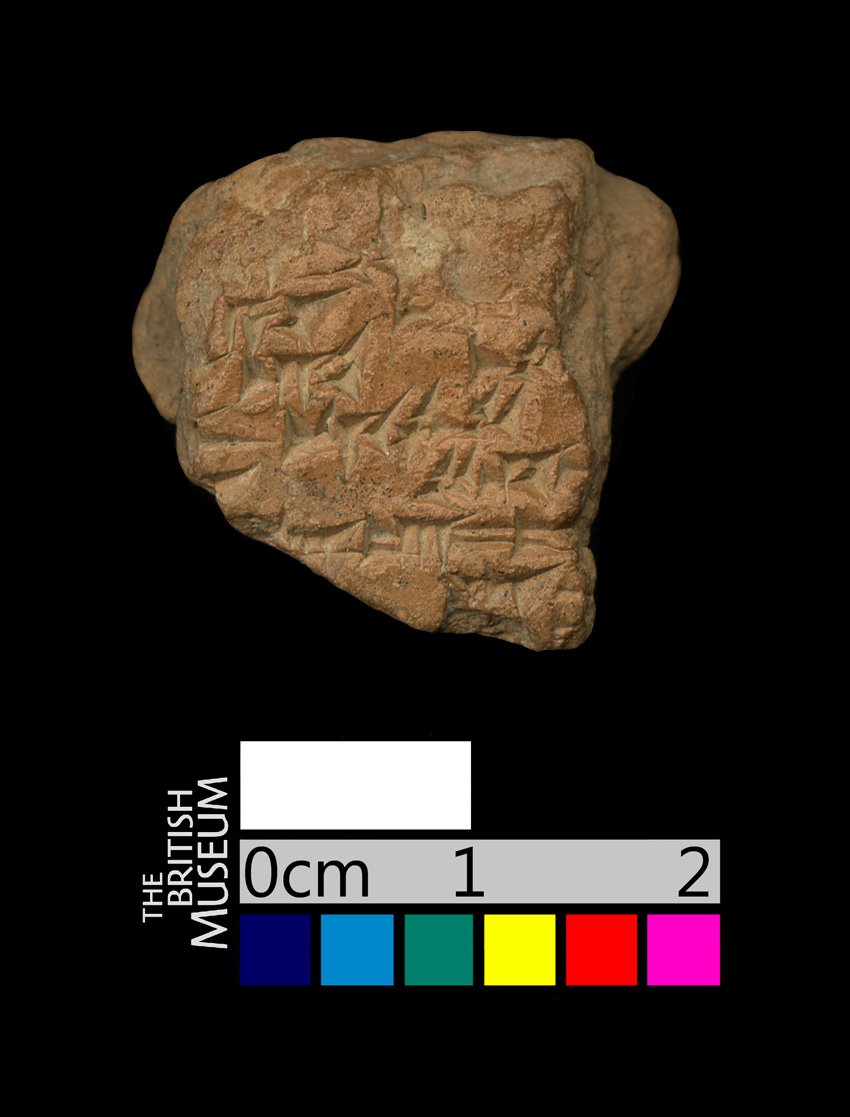
British Museum BM.37981: obverse, the tablet's own lines 3' to 6'. eBL's corpus edition (https://www.ebl.lmu.de/corpus/L/1/2/SB/VII) attributes SB VII 96-99 to this manuscript at these column and line numbers. Photograph checked: obverse, reverse and edges of a small school-tablet fragment about 3 cm across, ink 37981 on the left edge; one face carries about six short lines in its left part and the other a few lines, consistent with eBL's six obverse lines. The joined piece 1880,0617.2892 (about 1.5 cm, a few signs on two faces) is photographed separately and is linked as well. eBL classes BM.37981 as a school tablet (a scribal exercise that copies an excerpt of the text), not a library copy of the whole work. It carries these lines as text (eBL's transliteration has no commentary or quotation markup), and it is used because no photographed library copy preserves these lines as well. eBL treats BM.37981 + 1880,0617.2892 as one manuscript and holds a separate photograph of each of these pieces; it does not say which piece carries which line, so the photographs of BM.37981 + 1880,0617.2892 are linked, and the lines are on one or more of them. On this tablet of line 99 only one to three signs survive and lines 96-98 are partly broken (square brackets and x in the Akkadian). The English of these lines translates eBL's composite text, so it includes words that are not preserved on this tablet but are restored from other manuscripts or by the editors. Square brackets in the English mark eBL's restorations in its composite text; words that survive on other tablets carry no brackets even where this tablet is broken.
96[x i-n]a šu#-bat# LUGAL-t[i x x x x x x x x x x x x]
97[{d}a-r]a₂-nun-na# ma-li[k x x x x x x x x x x]
98[x a-n]a a#-lak-ti# r[u-bu-ti-šu₂ x x x x x x x x x x]
99[{d}dumu-du₆-k]u₃? š[a? x (x) x x x x (x) x x x x x x x]
96“Who is greatest in the royal abode, most exalted by far among the gods.
97“(39) ARANUNNA, counsellor of Ea, creator of the gods [his] fathers,
98“Who, for his lordly ways no god whatever could equal.
99“(40) DUMUDUKU, who renews for himself his pure dwelling in “Holy Hill,”
Where on the image
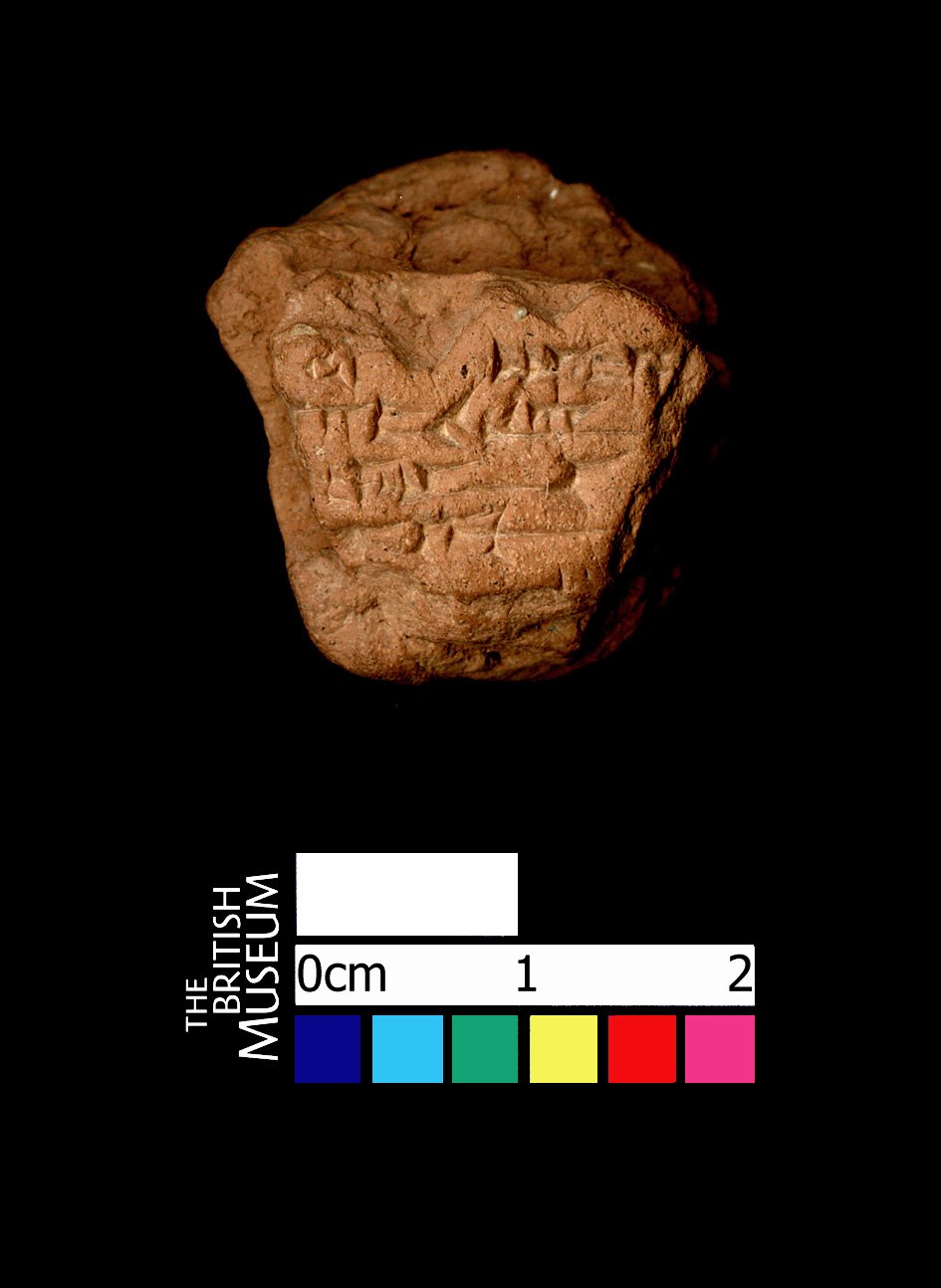
British Museum K.12830: reverse, the tablet's own lines 1' to 8'. eBL's corpus edition (https://www.ebl.lmu.de/corpus/L/1/2/SB/VII) attributes SB VII 113-120 to this manuscript at these column and line numbers. Photograph checked: one face of a small fragment about 2 cm across, no ink number visible; about seven or eight lines of signs, all broken at both ends. Consistent with eBL's eight reverse lines (the British Museum description counts six). On this tablet of lines 113-120 only one to three signs survive. The English of these lines translates eBL's composite text, so it includes words that are not preserved on this tablet but are restored from other manuscripts or by the editors. Square brackets in the English mark eBL's restorations in its composite text; words that survive on other tablets carry no brackets even where this tablet is broken.
113[x x] ṣal#-mat# [x x x x x x x]
114[x x ša₂]-a-šu₂ ṭe₃#-[mi x x x x x x x x x x x x]
115[{d}GI]RA₃ mu#-[kin x x x x x]
116[x x M]E₃ ti-amti [x x x x x x]
117[pal-k]a uz-n[u x x x x x x]
118[x x] ru#-u₂-q[u x x x x x x x x x x x x]
119[x x x] lu#-u₂# [x x x x x x x x x x]
120[x x x] rig!?#-[ma-šu x x x x x x x x x x]
113“The four peoples of this land are his creatures,
114“No god but he knows how long they will live.
115“(46) GIBIL, who tempered(?) the weapons,
116“Who, in the battle with Tiamat, could create artful things,
117“Universal in wisdom, ingenious in perception,
118“Whose heart is so deep that all the gods together cannot comprehend it.
119“(47) ADDU shall be his name, the whole sky he shall cover,
120“His beneficent roar shall thunder over the earth,
Where on the image
British Museum K.18576: reverse, the tablet's own lines 1' to 3'. eBL's corpus edition (https://www.ebl.lmu.de/corpus/L/1/2/SB/VII) attributes SB VII 123-125 to this manuscript at these column and line numbers. Photograph checked: one face of a small fragment about 2.5 cm across; no ink number visible. About five to six lines, matching eBL's six reverse lines. On this tablet of lines 123-125 only one to three signs survive. The English of these lines translates eBL's composite text, so it includes words that are not preserved on this tablet but are restored from other manuscripts or by the editors. Square brackets in the English mark eBL's restorations in its composite text; words that survive on other tablets carry no brackets even where this tablet is broken.
123[x x (x) UG₃]-MEŠ!?# [x x x x x]
124[x x x x ne₂-be₂-re-e]t AN-e [x x x x x x x x]
125[x x x x x x i]b-be₂-ru [x x x x x x x x]
123“He has taken all peoples in his charge.
124“(49) NEBERU shall hold the crossing place of heaven and earth,
125“They shall not cross above and below without awaiting him,
Where on the image
British Museum K.8522: reverse, the tablet's own lines 2' to 17'. eBL's corpus edition (https://www.ebl.lmu.de/corpus/L/1/2/SB/VII) attributes SB VII 126-141 to this manuscript at these column and line numbers. Photograph checked: obverse, reverse and edges, ink K.8522 on the left edge. Both faces are covered in small script with about 30 lines each, consistent with eBL's 31 obverse and 33 reverse. On this tablet of line 126 only one to three signs survive and lines 127-130 are partly broken (square brackets and x in the Akkadian). The English of these lines translates eBL's composite text, so it includes words that are not preserved on this tablet but are restored from other manuscripts or by the editors. Square brackets in the English mark eBL's restorations in its composite text; words that survive on other tablets carry no brackets even where this tablet is broken. Lines 131-141 are complete on this tablet.
126[{d}ne₂-be₂]-ru# MU[L-šu₂ x x x x x x x x]
127lu#-u₂ ṣa-bit kun-sag-ge# [x x x x x x x x x x]
128ma-a ša₂ qer-biš ti-amti i-teb-bi#-r[u x x x (x)]
129šum-šu₂ lu {d}ne₂-be₂-ru a-hi-zu [x x x]
130ša₂ MUL-MEŠ ša₂-ma-mi₃ al-kat₃-su-nu li-k[in-ma]
131GIM ṣe-e-ni li-ir-ta-a DINGIR.DINGIR gim-ra-šu₂#-un#
132lik-mi₃ ti-amta ni-ṣir-ta-ša₂ li-si-iq u lik-ri
133ah-ra-taš UG₃-MEŠ la-ba-riš u₄-mi₃
134liš-ši-ma la uk-ta-li li#-req*# ana ṣa-a-ti
135aš₂#-šu₂ aš₂-ri ib-na-a ip-ti-qa dan#-ni#-na
136be-el KUR.KUR MU-šu₂ it-ta-bi a-bi# {d#}+en#-lil₂
137zik-ri {d}i₂-gi₃-gi₃ im-bu-u na-gab-šu₂-un
138iš-me-ma {d}e₂#-a ka-bat-ta-šu₂ i-te-en-gu
139ma-a ša₂ AD-MEŠ*#-šu₂ u₂-šar-ri-hu zik-ru-u-šu₂
140šu-u₂ ki#-ma# ia#-a-ti-ma {d}e₂-a lu-u šum-šu₂#
141ri-kis par-ṣi#-ia ka-li-šu₂-nu li-bel-ma
126“Neberu is his star that he made visible in the skies.
127“He shall stand at the turning point, they shall look upon him,
128“Saying, ‘He who crossed back and forth, without resting, in the middle of Tiamat,
129‘Neberu (“Crossing”) shall be his name, who holds the middle of it.’
130“He shall fix the motions of the stars of heaven,
131“He shall herd all the gods like sheep.
132“He shall keep Tiamat subdued, he shall keep her life cut short,
133“In the future of humankind, with the passing of time,
134“He shall proceed unhindered, he shall persevere till distant days.
135“Because he created the firmament and fashioned the surface of the earth,
136“Father Enlil has named (him) his own name (50) ‘Lord of the World’.”
137When Ea had heard all the names the Igigi-gods had named (him),
138He was joyful of heart.
139Saying, “He whose name his fathers have glorified,
140“His name, like mine, shall be ‘Ea’.
141“He shall be master of the sum total of my powers,
Where on the image
British Museum K.8522: reverse, the tablet's own lines 18' to 33'. eBL's corpus edition (https://www.ebl.lmu.de/corpus/L/1/2/SB/VII) attributes SB VII 142-157 to this manuscript at these column and line numbers. Photograph checked: obverse, reverse and edges, ink K.8522 on the left edge. Both faces are covered in small script with about 30 lines each, consistent with eBL's 31 obverse and 33 reverse. On this tablet lines 155-157 are partly broken (square brackets and x in the Akkadian). The English of these lines translates eBL's composite text, so it includes words that are not preserved on this tablet but are restored from other manuscripts or by the editors. Square brackets in the English mark eBL's restorations in its composite text; words that survive on other tablets carry no brackets even where this tablet is broken. Lines 142-154 are complete on this tablet.
142gim-ri# te#-re#-ti-ia šu-u₂ lit-tab-bal
143ina zik-ri 50.AM₃ DINGIR.DINGIR GAL.GAL
14450-am₃ MU-MEŠ-šu₂ im-bu-u u₂-ša₂-ti-ru al-kat₃-su
145li-iṣ#-ṣab-tu₂-ma mah-ru-u li-kal-lim
146en-qu mu-du-u mit-ha-riš lim-tal-ku
147li-ša₂-an#-ni-ma a-bu (erased: :) ma-ri li-ša₂-hi-iz
148ša₂ {lu₂}SIPA u na-qi₂-di li-pat-ta-a uz-na-šu₂-un
149li#-ig-gi-ma a-na {d}+en-lil₂-la₂ DINGIR.DINGIR {d}AMAR.UTU
150KUR-su lid-deš-ša₂-a šu-u₂ lu šal-ma
151ki-na-at a-mat-su la e-na-at qi₂-bit-su
152ṣi-it pi-i-šu₂ la uš-te-pi-il DINGIR a-a-um-ma
153ik-ke-lem-mu-ma ul u₂-tar-ra ki-šad-su
154ina sa-ba-si-šu₂ uz-za-šu₂ ul i-mah-har-šu₂ DINGIR ma-am-man
155ru-u-qu lib₃-ba-šu₂ la*-ʾ-iṭ k[a]r-as#-[su]
156[x] an#-ni u gil₂-la-ti ma-har-šu₂ i-[ba-ʾ-u₂]
157[tak-lim]-ti# mah#-ru#-u# id#-bu#-bu# pa#-[nu-uš-šu]
142“He shall execute of all my commands.”
143The great gods named his fifty names
144“The Fifty,” they made his position supreme.
145They must be grasped: the “first one” should reveal (them),
146The wise and knowledgeable should ponder (them) together,
147The master should repeat, and make the pupil understand.
148The “shepherd,” the “herdsman” should pay attention,
149He must not neglect the Enlil of the gods, Marduk,
150So his land may prosper and he himself be safe.
151His word is truth, his command unalterable,
152Not one god can contradict what he says.
153If he frowns, he will not relent,
154If he is angry, no god can face his rage.
155His heart is deep, his feelings all encompassing,
156He before whom crime and sin must appear for judgment.
157The revelation (of the names) that the “first one” discoursed before him (Marduk),
Where on the image
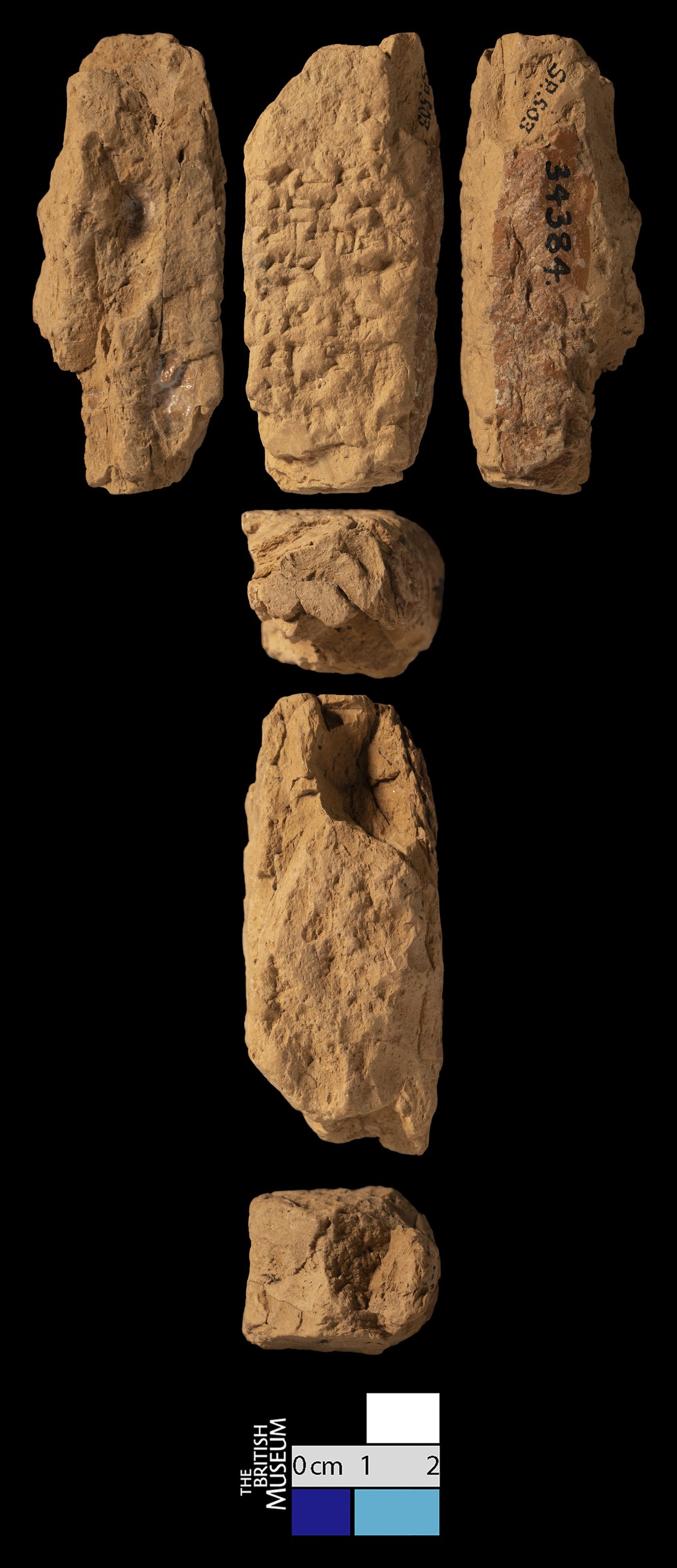
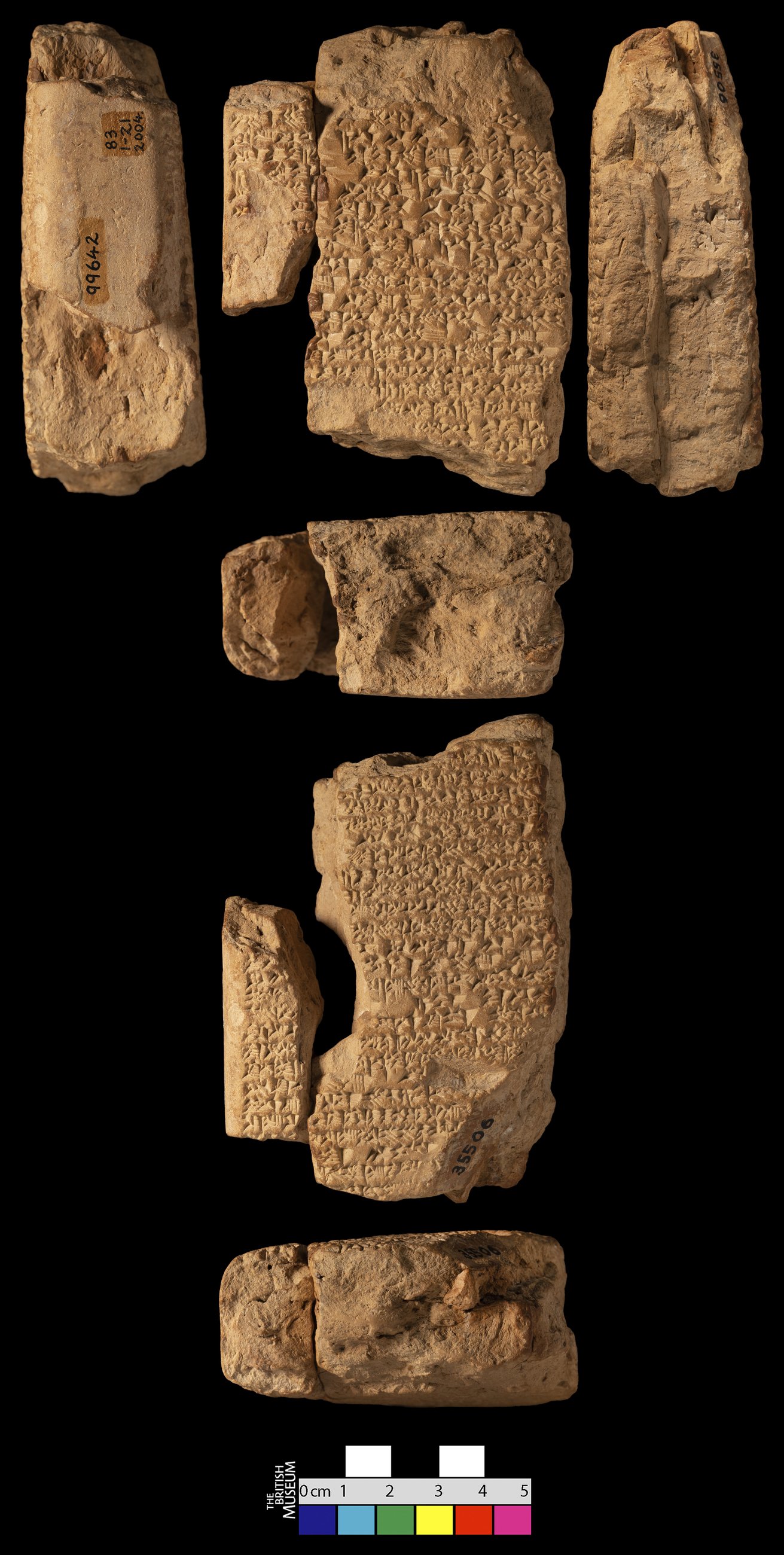
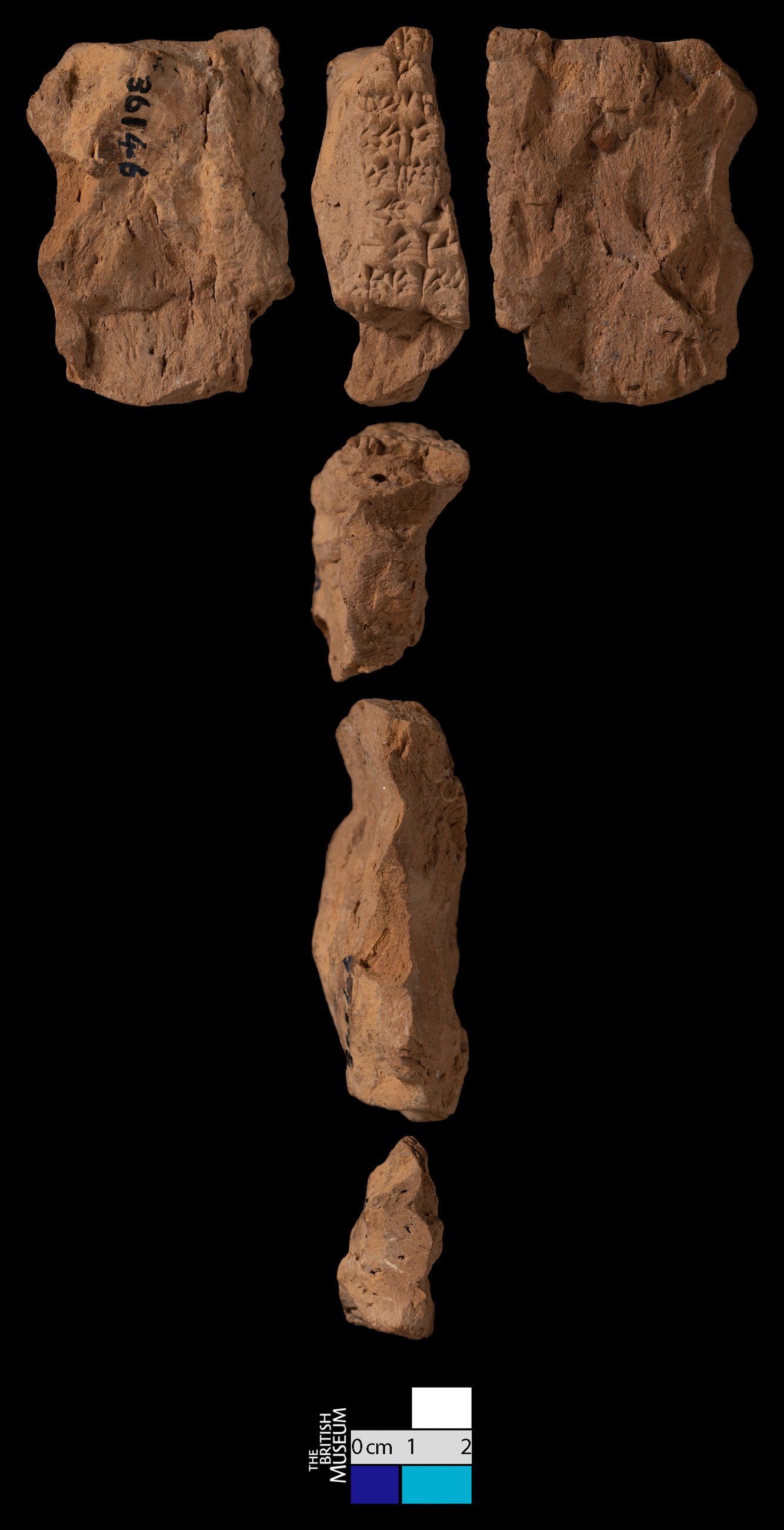
British Museum BM.34384: reverse, the tablet's own lines 22'b to 26'. eBL's corpus edition (https://www.ebl.lmu.de/corpus/L/1/2/SB/VII) attributes SB VII 158-164 to this manuscript at these column and line numbers. Photograph checked: BM.34384 alone, a narrow fragment with ink numbers 34384 and Sp. 503 and about eight worn lines; the joined pieces BM.35506 + BM.99642 (both faces densely inscribed) and BM.36146 are photographed separately and are linked as well. eBL treats BM.34384 + BM.35506 + BM.36146 as one manuscript and holds a separate photograph of each of these pieces; it does not say which piece carries which line, so the photographs of BM.34384 + BM.35506 + BM.36146 are linked, and the lines are on one or more of them. On this tablet lines 158, 161, 163 are entirely broken, of line 164 only illegible traces (x) survive and lines 159-160, 162 are partly broken (square brackets and x in the Akkadian). The English of these lines translates eBL's composite text, so it includes words that are not preserved on this tablet but are restored from other manuscripts or by the editors. Square brackets in the English mark eBL's restorations in its composite text; words that survive on other tablets carry no brackets even where this tablet is broken.
158[x x x x x x x x x x x x x x]
159[ši-ma]-at {d}AMAR.UTU š[a x x x x x x x x x]
160[(x) x x x x i]š-šat-tu-u₂ šu-um#-[šu x x x :. ]
161[x x x x x x x x x x x x]
162[x x x ik-mu]-u₂# il#-qu-u₂# [x x x :. ]
163[... x x x x ...]
164[...] x [...]
158He wrote down and preserved for the future to hear,
159The destiny of Marduk whom the Igigi-gods exalted,
160Wherever water is the drink, his name let them invoke.
161Let them sound abroad the song of Marduk,
162How he defeated Tiamat and took kingship.
163[… An]u, Enlil and Ea, Belet-ili […]
164[… i]n? Babylon [and] Esagila […].
Notes
- Akkadian: eBL transliteration of the signs on the photographed tablet (manuscript-level ATF), not a composite text.
- English: B. R. Foster's translation in the eBL edition; it renders eBL's composite text, including restorations from other tablets.
- Line numbers: eBL edition. Each section also gives the tablet's own column and line numbers.
- Signs in the Akkadian: [ ] broken away; x illegible sign; # damaged sign; ? uncertain reading; ! sign corrected by the editor; * collated sign; ... broken signs of unknown number; ( ) signs perhaps broken away; { } determinative; <( )> sign left out on purpose by the scribe; : divider sign written on the tablet; (line break) the line runs on to the next line of the tablet; (blank space) a space left by the scribe; (gloss: ...) a note written by the scribe in small signs or in the margin.
Cite
Sources
- Source: British Museum tablet photographs + eBL manuscript transliterations (eBL corpus edition L I.2, Poem of Creation (Enuma elish) (ed. A. C. Heinrich, rev. Z. J. Földi and E. Jiménez), SB VII) + English of the eBL edition (B. R. Foster (eBL edition)) (holding institution)
- Critical edition: electronic Babylonian Library, Poem of Creation (ed. A. C. Heinrich), manuscript transliterations
← previous · → next · v cycle view · l back to library