Epic of Gilgamesh, Tablet XI (the Flood): tablet Rm.616
Introduction
Tablet XI of the Epic of Gilgamesh (Standard Babylonian version, attributed to Sin-leqi-unninni) as it survives on one physical object: British Museum tablet Rm.616 (Rm.616, column i), excavated at Nineveh from the library of Ashurbanipal (7th c. BCE). It is manuscript J₂ in A. R. George's 2003 edition. The photograph is the British Museum's, showing the inscribed face(s) and edges; column(s) i are preserved (23 lines).
Three criteria are met for every section:
- Manuscript scan: the British Museum photograph of Rm.616 itself (served by the Electronic Babylonian Library, LMU Munich). Each section names the column and face (obverse = columns i-iii, reverse = columns iv-vi) and the tablet's own line numbers, so the reader can find the lines on the photograph.
- Original text: the eBL manuscript-level ATF transliteration of the signs on this tablet (not the composite text). Brackets [ ] mark broken signs, x an illegible sign, # a damaged sign. Superscript numbers are the modern line numbers of George 2003 / eBL.
- Public-domain English: R. Campbell Thompson, The Epic of Gilgamish (London, 1928), verbatim, with his marginal line numbers as T n.
On line numbers. Thompson's 1928 numbering is not George's. For this tablet the correspondence was established one anchor per Thompson marginal number by reading his verse against the Akkadian; sections are cut only at those anchors, so each section's English is the block of Thompson's lines that renders exactly these Akkadian lines. Where the tablet's text begins or ends inside a Thompson block, the whole block is given and the section says so. Thompson's readings reflect the state of knowledge in 1928: modern editions (George 2003; the eBL edition, updated continuously) supersede him and are not public domain, so they are not reproduced here beyond the transliteration of this tablet's signs.
How was this verified? (Provenance)
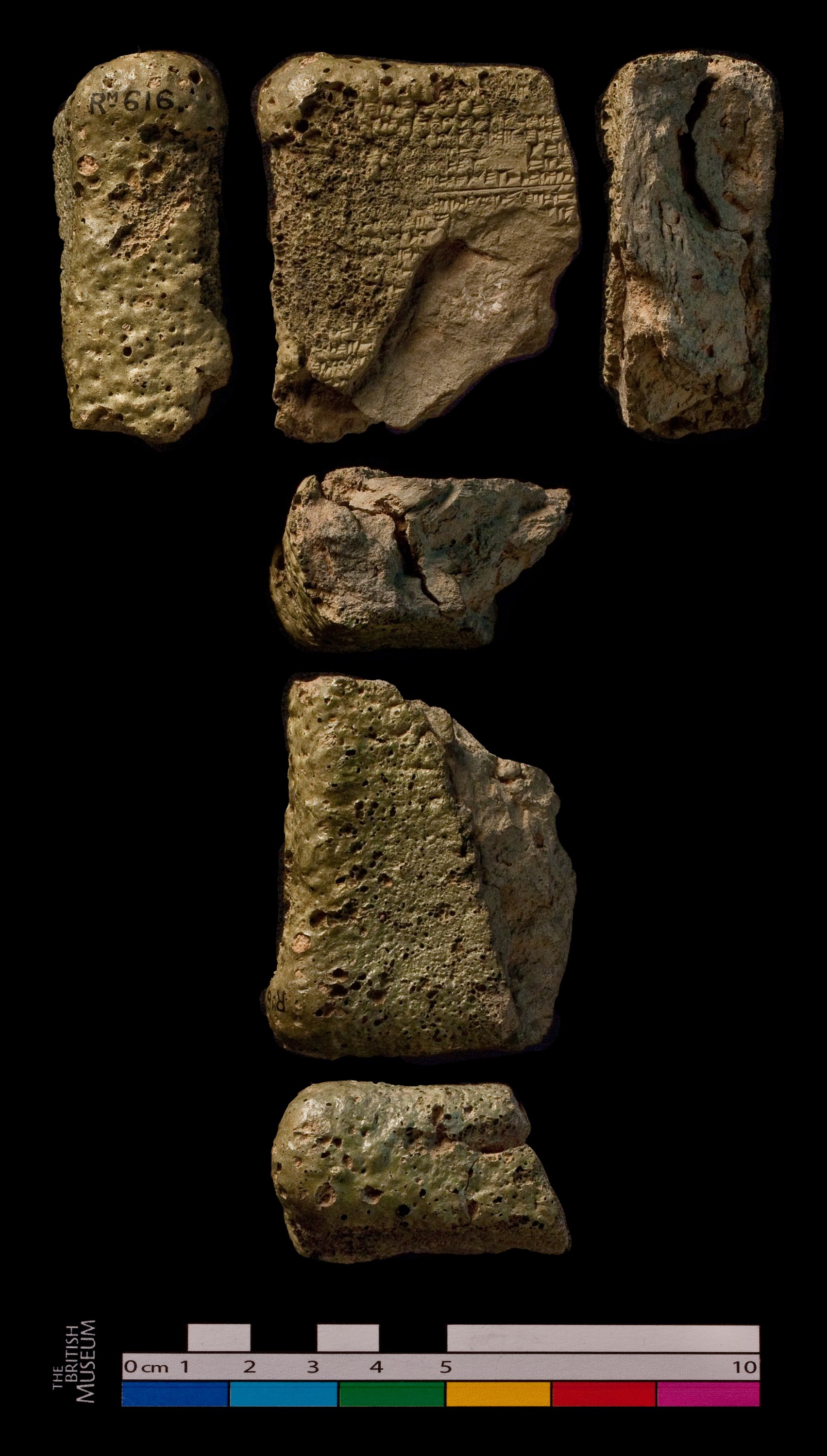
1[x x x] x x x x x x M[U-r]a [x x x x x x x]
2[a-na-a]ṭ-ṭa-la-kum₂-ma [x x x]
3[mi-na]-tu#-ka ul ša₂-na-a ki-i# [x x x x x x]
4u₃# at#-ta# ul ša₂-na-ta ki-i [x x x x x]
5[gu-um-m]ur-ka# lib₃#-bi ana e-[peš x x x x]
6[x] x a-hi na#-da#-at e-l[u x x x]
7[at-t]a ki#-ki#-i# ta-az-ziz-ma ina UKKIN DIN[GIR-MEŠ x x x x x]
8[x x x x a-n]a ša₂-šu [MU-r]a ana {d}GIŠ-gim₂-maš
9lu-up-t[e-ka x x x x x x x x x]
(The Cause of the Flood).
T 1Gilgamish unto him spake, to Uta-Napishtim the Distant:
"Uta-Napishtim, upon thee I gaze, (yet) in no wise thy presence
Strange is, (for) thou art like me, and in no wise different art thou;
T 5Thou art like me; (yea) a stomach for fighting doth make thee consummate,
[Aye, and to rest (?)] on thy back thou dost lie. [O tell me (?)], how couldst thou
Stand in th’ Assemblage of Gods to petition for life (everlasting)?"
Uta-Napishtim (addressing him thus) unto Gilgamish answer'd:
"Gilgamish, I unto thee will discover the (whole) hidden story,
10[x pi-r]iš-ta ša₂ DINGI[R-MEŠ k]a-a-š[a₂ x x x x]
11[x šu]-u₂#-ri-pak U[RU x ti-d]u-[šu₂ x x]
12[x x x x p]u-rat-t[i x x ( : )]
13[x x x x x x x x x]
14[x x x x] a-bu-b[i x x x x x x x x x x]
15[x x x A]D-šu₂-nu [x x x x ( : )]
16[x x x x x x x x x x]
17[x x x x x x x x ( : )]
18[x x x x x x x x x]
19{d#}nin-ši-k[u₃ x x x x x x x x x x]
20[a]-mat-su-nu [x x x x x x x x x]
21[k]i-ik-ki-š[u x x x x x x x x ( : )]
22[x x x x x x x x x x x x x x]
23[š]u-u₂#-[ri-ip-pa-ku-u₂ x x x x x]
T 10Aye, and the rede of the Gods will I tell thee.
The City Shurippak —
(O ’tis) a city thou knowest!—is set [on the marge] of Euphrates,
Old is this city, with gods in its midst. (Now), the great gods a deluge
Purposed to bring: . . . . . . there was Anu, their sire; their adviser
Warrior Enlil; Ninurta , their herald; their leader(?) Ennugi;
Nin-igi-azag—’tis Ea—, (albeit) conspirator with them,
T 20Unto a reed-hut their counsel betray’d he: "O Reed-hut, O Reed-hut!
Wall, wall! Hearken, O Reed-hut, consider, O Wall! O thou Mortal,
Thou of Shurippak, thou scion of Ubara-Tutu, a dwelling
Thompson's numbered block(s) extend after the lines preserved on this tablet; the whole block is given so that no English line is cut mid-block.
Cite
Source & Cross-References
- Source text: British Museum Rm.616 photograph via eBL + eBL manuscript ATF (L.1.4 SB XI) + R. Campbell Thompson 1928 — view original
- Critical edition: Electronic Babylonian Library manuscript transliteration (CC BY-NC-SA 4.0)
← previous · → next · v cycle view · l back to library