Gospel of Truth, pages 16-21 (Nag Hammadi Codex I)
Introduction
The Gospel of Truth is a Christian meditation on the Father, the Word and the return of all things to the one from whom they came, through knowledge that ends forgetfulness and error. Many scholars connect it with the teacher Valentinus or his circle (mid 2nd century). It was written in Greek and survives in Coptic: complete as the third tractate of Nag Hammadi Codex I (the Jung Codex), a papyrus book copied in the 4th century and found near Nag Hammadi in 1945, now in the Coptic Museum, Cairo; small fragments of another copy are in Codex XII and are not shown here. The text runs from page 16 line 31 to page 43 line 24. Its title is taken from its opening words.
This entry covers codex pages 16-21, one section per page. The Coptic is given line by line with codex page and line numbers, so each line can be found on the photograph. The English is Mark M. Mattison's public domain translation, divided at the page numbers Mattison prints in it; because English word order differs from Coptic, a sentence divided between two pages is divided where the translator put the page mark.
Photographs: negatives of the Facsimile Edition of the Nag Hammadi Codices, Nag Hammadi Archive of the Institute for Antiquity and Christianity, Claremont Colleges Digital Library. Coptic: Marcion (Milan Konvicka), which does not name the printed edition behind its transcription. First and last line read on each photograph: 16: 'ⲡⲉⲩⲁⲅⲅⲉⲗⲓⲟⲛ ⲛ̄ⲧⲙⲏⲉ ⲟⲩⲧⲉⲗⲏⲗ ⲡⲉ', below the decorative band that ends the Apocryphon of James ... 'ⲉⲉⲓϥ ⲡⲉ ⲁⲡⲥⲱⲧⲉ ⲛ̄ⲛⲉⲉⲓ ⲛ̄ⲧⲁϩ...'; 17: 'ⲁⲧⲥⲟⲩⲱⲛ ⲡⲓⲱⲧ ⲉⲡⲓⲣ...', with a diple (>) before it ... 'ⲟⲩⲁⲛϩ̄ ⲁⲃⲁⲗ ⲉⲛ ... ⲥⲟⲉⲓ ⲛ̄ⲛⲟⲩ'; 18: '...ⲉⲛ ϩⲁⲧⲙ̄ ⲡⲓⲱⲧ· ϯⲃ̄ϣⲉ ⲛ' ... 'ⲧⲱϥ ⲙⲛ̄ ⲛⲉϥⲙⲉⲗⲟⲥ ⲉⲛⲉⲑⲉ'; 19: 'ⲛ̄ⲅⲁⲣ ⲛ̄ⲧⲁⲡⲓⲁⲓⲱⲛ...' ... 'ⲛⲟⲩⲥ', a short last line at the right with a filler stroke; 20: '...ⲱⲧ ⲁⲩⲱ ϫⲓⲛ̄ ϩⲁⲑⲏ ⲛ̄ⲧⲕⲁ' ... 'ⲙⲛ̄ ⲟⲩϫⲱⲕ ⲉϥⲱϣ ⲛ̄ⲛⲉⲧⲛ̄ϩⲏⲧ'; 21: '...ⲧⲁⲣ...' (the top line is broken) ... 'ⲙⲁ\ⲛ/ⲓⲥⲱϣ ⲁϩⲣⲁⲩ ⲙⲛ̄ⲧⲉⲩ ⲙ̄', with ⲛ written above the line.
How was this verified? (Provenance)
Where on the image
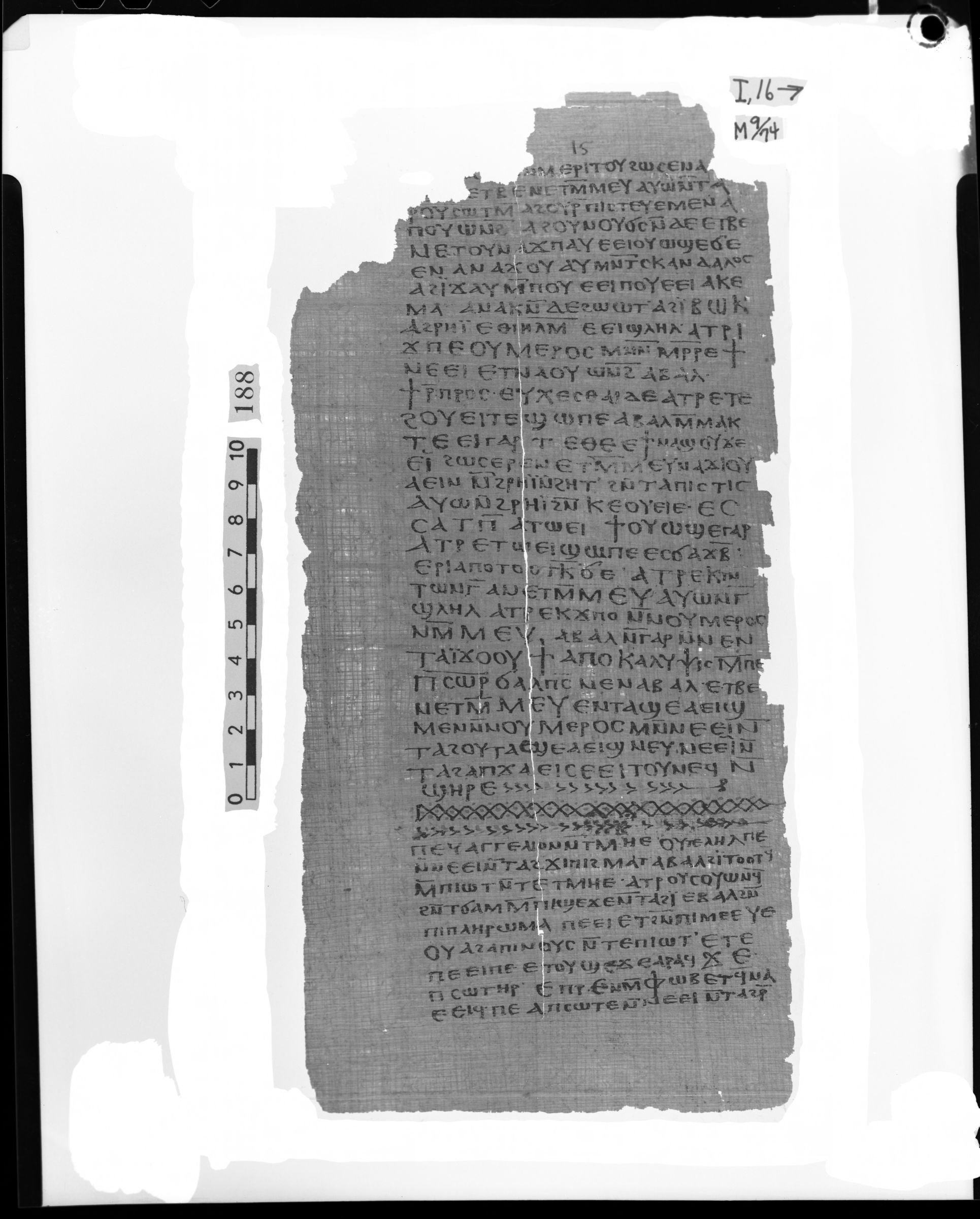
Page 16, lines 31-39 (Codex I page 16, M-Series negative, Facsimile Edition (Codex I, 1977) p. 20, CCDL nha 1883). Checked on the photograph: line 31 begins 'ⲡⲉⲩⲁⲅⲅⲉⲗⲓⲟⲛ ⲛ̄ⲧⲙⲏⲉ ⲟⲩⲧⲉⲗⲏⲗ ⲡⲉ', below the decorative band that ends the Apocryphon of James; line 39 reads 'ⲉⲉⲓϥ ⲡⲉ ⲁⲡⲥⲱⲧⲉ ⲛ̄ⲛⲉⲉⲓ ⲛ̄ⲧⲁϩ...'. Page and line numbers from the Marcion transcription; English from Mattison's text between his page marks 16 and 17.
16.31ⲡⲉⲩⲁⲅⲅⲉⲗⲓⲟⲛ ⲛ̄ⲧⲙⲏⲉ: ⲟⲩⲧⲉⲗⲏⲗ ⲡⲉ
16.32ⲛ̄ⲛⲉⲉⲓ ⲛ̄ⲧⲁϩϫⲓ ⲡⲓϩⲙⲁⲧ: ⲁⲃⲁⲗ ϩⲓ̈ⲧⲟⲟⲧϥ̄
16.33ⲙ̄ⲡⲓⲱⲧ ⲛ̄ⲧⲉ ⲧⲙⲏⲉ: ⲁⲧⲣⲟⲩⲥⲟⲩⲱⲛϥ̄
16.34ϩⲛ̄ ⲧϭⲁⲙ ⲙ̄ⲡⲓϣⲉϫⲉ ⲛ̄ⲧⲁϩⲓ̈ ⲉⲃⲁⲗ ϩⲛ̄
16.35ⲡⲓⲡⲗⲏⲣⲱⲙⲁ ⲡⲉⲉⲓ ⲉⲧϩⲛ̄ ⲡⲓⲙⲉⲉⲩⲉ
16.36ⲟⲩⲁϩⲁ ⲡⲓⲛⲟⲩⲥ ⲛ̄ⲧⲉ ⲡⲓⲱⲧ: ⲉⲧⲉ
16.37ⲡⲉⲉⲓ ⲡⲉ ⲉⲧⲟⲩϣⲉϫⲉ ⲁⲣⲁϥ ϫⲉ:
16.38ⲡⲥⲱⲧⲏⲣ: ⲉⲡⲣⲉⲛ ⲙ̄ⲫⲱⲃ ⲉⲧϥ̄ⲛⲁ-
16.39ⲉⲉⲓϥ: ⲡⲉ ⲁⲡⲥⲱⲧⲉ ⲛ̄ⲛⲉⲉⲓ ⲛ̄ⲧⲁϩⲣ̄
Prologue
The Gospel of Truth is a joy for those who’ve received grace from the Father of Truth, that they might know him through the power of the Word that came from the fullness – the one who’s in the thought and mind of the Father. They call him “Savior.” That’s the name of the work he’ll do to redeem those who had become
Where on the image
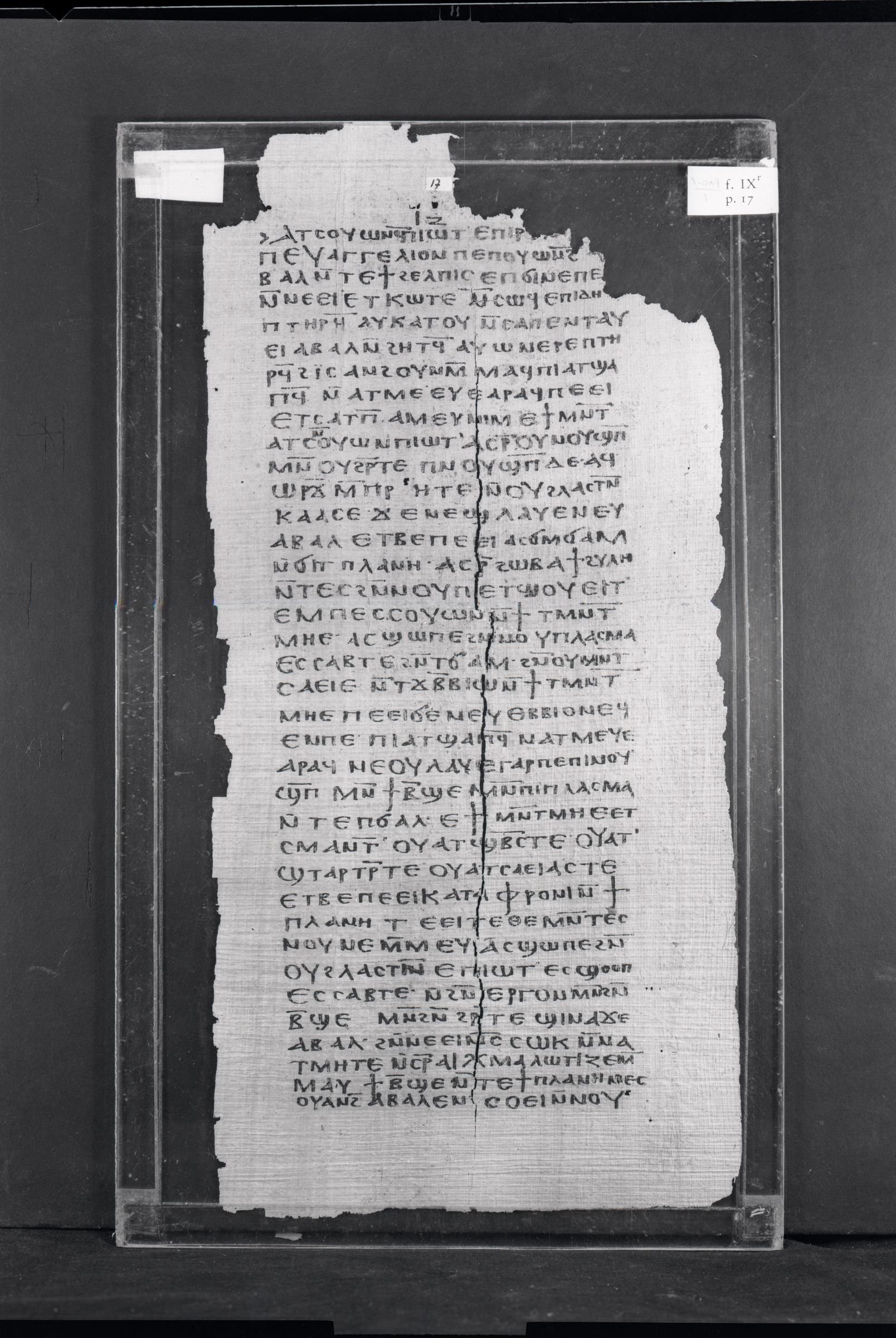
Page 17, lines 1-37 (Codex I page 17, A-Series negative, Facsimile Edition (Codex I, 1977) p. 21, CCDL nha 2758). Checked on the photograph: line 1 begins 'ⲁⲧⲥⲟⲩⲱⲛ ⲡⲓⲱⲧ ⲉⲡⲓⲣ...', with a diple (>) before it; line 37 reads 'ⲟⲩⲁⲛϩ̄ ⲁⲃⲁⲗ ⲉⲛ ... ⲥⲟⲉⲓ ⲛ̄ⲛⲟⲩ'. Page and line numbers from the Marcion transcription; English from Mattison's text between his page marks 17 and 18.
17.1ⲁⲧⲥⲟⲩⲱⲛ ⲡⲓⲱⲧ ⲉⲡⲓⲣⲉ̣ⲛ: ⲇ̣ⲉ̣ [ⲙ]-
17.2ⲡⲉⲩⲁⲅⲅⲉⲗⲓⲟⲛ ⲡⲉ ⲡⲟⲩⲱⲛϩ̄ ⲁ-
17.3ⲃⲁⲗ ⲛ̄ⲧⲉ ϯϩⲉⲗⲡⲓⲥ ⲉⲡϭⲓⲛⲉ ⲡⲉ
17.4ⲛ̄ⲛⲉⲉⲓ: ⲉⲧⲕⲱⲧⲉ ⲛ̄ⲥⲱϥ ⲉⲡⲓⲇⲏ:
17.5ⲡⲧⲏⲣϥ̄ ⲁⲩⲕⲁⲧⲟⲩ ⲛ̄ⲥⲁ ⲡⲉⲛⲧⲁⲩ-
17.6ⲉⲓ ⲁⲃⲁⲗ ⲛ̄ϩⲏⲧϥ̄ ⲁⲩⲱ ⲛⲉⲣⲉⲡⲧⲏ-
17.7ⲣϥ̄ ϩⲓ̈ ⲥⲁⲛϩⲟⲩⲛ ⲙ̄ⲙⲁϥ ⲡⲓⲁⲧϣⲁ-
17.8ⲡϥ̄ ⲛ̄ⲁⲧⲙⲉⲉⲩⲉ ⲁⲣⲁϥ ⲡⲉⲉⲓ
17.9ⲉⲧⲥⲁⲧⲡ̄ ⲁⲙⲉⲩ ⲛⲓⲙ ⲉϯⲙⲛ̄ⲧ-
17.10ⲁⲧⲥ{\ⲛ̄/}ⲟⲩⲱⲛ ⲡⲓⲱⲧ: ⲁⲥⲣ̄ ⲟⲩⲛⲟⲩϣⲡ̄
17.11ⲙⲛ̄ ⲟⲩϩⲣ̄ⲧⲉ ⲡⲛⲟⲩϣⲡ̄ ⲇⲉ: ⲁϥ-
17.12ⲱⲣϫ̄ ⲙ̄ⲡⲣⲏⲧⲉ ⲛ̄ⲟⲩϩⲗⲁⲥⲧⲛ̄
17.13ⲕⲁⲁⲥⲉ: ϫⲉ ⲛⲉϣⲗⲁⲩⲉ ⲛⲉⲩ
17.14ⲁⲃⲁⲗ ⲉⲧⲃⲉ ⲡⲉⲉⲓ ⲁⲥϭⲙϭⲁⲙ
17.15ⲛ̄ϭⲓ ⲧⲡⲗⲁⲛⲏ: ⲁⲥⲣ̄ ϩⲱⲃ ⲁϯϩⲩⲗⲏ
17.16ⲛ̄ⲧⲉⲥ ϩⲛ̄ⲛ ⲟⲩⲡⲉⲧϣⲟⲩⲉⲓⲧ:
17.17ⲉⲙⲡⲉⲥⲥⲟⲩⲱⲛ ⲛ̄ϯⲧⲙⲛ̄ⲧ-
17.18ⲙⲏⲉ: ⲁⲥϣⲱⲡⲉ ϩⲛⲛ ⲟⲩⲡⲗⲁⲥⲙⲁ
17.19ⲉⲥⲥⲁⲃⲧⲉ ϩⲛ̄ ⲧϭⲁⲙ: ϩⲛ̄ ⲟⲩⲙⲛ̄ⲧ-
17.20ⲥⲁⲉⲓⲉ ⲛ̄ⲧϫⲃ̄ⲃⲓⲱ ⲛ̄ϯⲧⲙⲛ̄ⲧ-
17.21ⲙⲏⲉ ⲡⲉⲉⲓ ϭⲉ ⲛⲉⲩⲑⲃⲃⲓⲟ ⲛⲉϥ
17.22ⲉⲛ ⲡⲉ: ⲡⲓⲁⲧϣⲁⲡϥ̄ ⲛⲁⲧⲙⲉⲩⲉ
17.23ⲁⲣⲁϥ ⲛⲉⲟⲩⲗⲁⲩⲉ ⲅⲁⲣ ⲡⲉ ⲡⲓⲛⲟⲩ-
17.24ϣⲡ ⲙⲛ̄ ϯⲃ̄ϣⲉ ⲙⲛ̄ ⲡⲓⲡⲗⲁⲥⲙⲁ
17.25ⲛ̄ⲧⲉ ⲡϭⲁⲗ: ⲉϯⲙⲛ̄ⲧⲙⲏⲉ ⲉⲧ-
17.26ⲥⲙⲁⲛⲧ̄: ⲟⲩⲁⲧϣⲃ⟨ⲧ⟩ⲥ̄ ⲧⲉ: ⲟⲩⲁⲧ:-
17.27ϣⲧⲁⲣⲧⲣ̄ ⲧⲉ: ⲟⲩⲁⲧ⟨ⲧ⟩ⲥⲁⲉⲓⲁⲥ ⲧⲉ:
17.28ⲉⲧⲃⲉ ⲡⲉⲉⲓ ⲕⲁⲧⲁⲫⲣⲟⲛⲓ ⲛ̄ϯ-
17.29ⲡⲗⲁⲛⲏ ⲧⲉⲉⲓ ⲧⲉ ⲑⲉ ⲙⲛ̄ⲧⲉⲥ
17.30ⲛⲟⲩⲛⲉ ⲙ̄ⲙⲉⲩ ⲁⲥϣⲱⲡⲉ ϩⲛ̄
17.31ⲟⲩϩⲗⲁⲥⲧⲛ̄ ⲉⲡⲓⲱⲧ: ⲉⲥϣⲟⲟⲡ
17.32ⲉⲥⲥⲁⲃⲧⲉ: ⲛ̄ϩⲛ̄ⲉⲣⲅⲟⲛ ⲙⲛ̄ ϩⲛ̄-
17.33ⲃ̄ϣⲉ ⲙⲛ̄ ϩⲛ̄ϩⲣ̄ⲧⲉ ϣⲓⲛⲁ ϫⲉ
17.34ⲁⲃⲁⲗ: ϩⲛ̄ ⲛⲉⲉⲓ ⲛ̄ⲥⲥⲱⲕ ⲛ̄ⲛⲁ-
17.35ⲧⲙⲏⲧⲉ ⲛ̄ⲥⲣ̄ ⲁⲓⲭⲙⲁⲗⲱⲧⲓⲍⲉ ⲙ̄-
17.36ⲙⲁⲩ ϯⲃ̄ϣⲉ ⲛ̄ⲧⲉ ϯⲡⲗⲁⲛⲏ ⲛⲉⲥ-
17.37ⲟⲩⲁⲛϩ̄: ⲁⲃⲁⲗ ⲉⲛ: ⲥⲟⲉⲓ ⲛ̄ⲛⲟⲩ-
ignorant of the Father. And the term “the Gospel” is the revelation of hope, the discovery of those who search for him.
Error and Forgetfulness
Since all searched for the one from whom they had come – all were within him, the uncontainable, inconceivable one who’s beyond every thought – (and) since ignorance of the Father caused anguish and terror, and the anguish grew thick like a fog, so that no one could see – Error was strengthened. It worked on its own matter in vain, not knowing the Truth.
It happened in a deluding way, as it (Error) prepared with power, in beauty, a substitute for the Truth. Now this wasn’t humiliating for the uncontainable, inconceivable one, because the anguish and forgetfulness and delusion of deceit were like nothing, whereas the Truth is established, unchangeable, unperturbed, beyond beauty. Because of this, disregard Error, since it has no root.
It happened in a fog concerning the Father. It happens (now) since it (Error) prepares works in forgetfulness and terror, so that with them it (Error) might attract those in the middle and imprison them.
The forgetfulness of Error wasn’t revealed; it wasn’t a
Where on the image
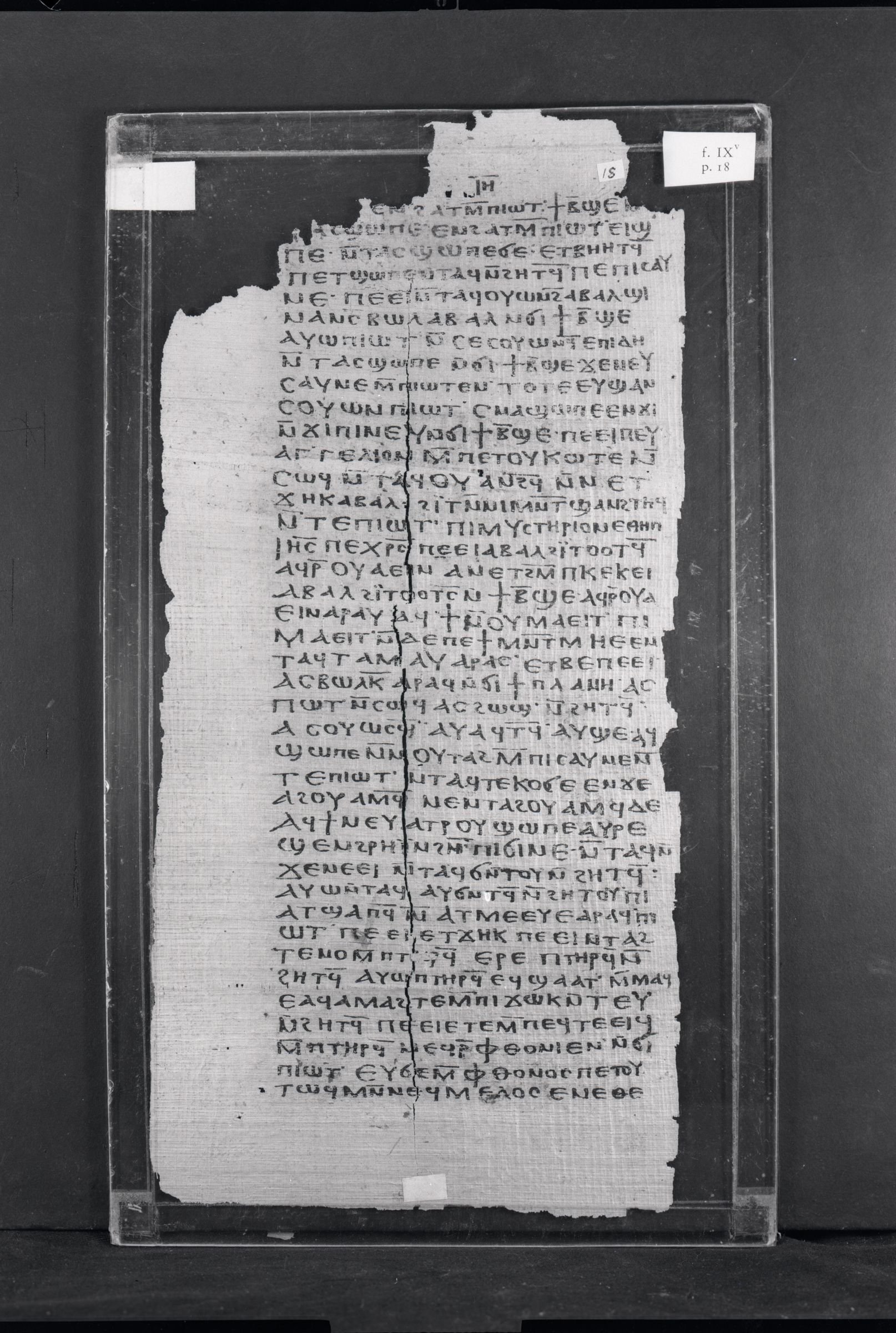
Page 18, lines 1-40 (Codex I page 18, A-Series negative, Facsimile Edition (Codex I, 1977) p. 22, CCDL nha 2780). Checked on the photograph: line 1 begins '...ⲉⲛ ϩⲁⲧⲙ̄ ⲡⲓⲱⲧ· ϯⲃ̄ϣⲉ ⲛ'; line 40 reads 'ⲧⲱϥ ⲙⲛ̄ ⲛⲉϥⲙⲉⲗⲟⲥ ⲉⲛⲉⲑⲉ'. Page and line numbers from the Marcion transcription; English from Mattison's text between his page marks 18 and 19.
18.1[....]ⲉⲛ: ϩⲁⲧⲙ̄ ⲡⲓⲱⲧ: ϯⲃ̄ϣⲉ ⲛ-
18.2ⲧ̣ⲁⲥϣⲱⲡⲉ: ⲉⲛ ϩⲁⲧⲙ̄ ⲡⲓⲱⲧ: ⲉⲓϣ-
18.3ⲡⲉ: ⲛ̄ⲧⲁⲥϣⲱⲡⲉ ϭⲉ: ⲉⲧⲃⲏⲏⲧϥ̄
18.4ⲡⲉⲧϣⲱⲡⲉ ⲛ̄ⲧⲁϥ ⲛ̄ϩⲏⲧϥ̄ ⲡⲉ ⲡⲓⲥⲁⲩ-
18.5ⲛⲉ: ⲡⲉⲉⲓ ⲛ̄ⲧⲁϥⲟⲩⲱⲛϩ̄ ⲁⲃⲁⲗ: ϣⲓ-
18.6ⲛⲁ ⲛ̄ⲥⲃⲱⲗ ⲁⲃⲁⲗ ⲛ̄ϭⲓ ϯⲃ̄ϣⲉ
18.7ⲁⲩⲱ ⲡⲓⲱⲧ: ⲛ̄ⲥⲉⲥⲟⲩⲱⲛϥ̄ ⲉⲡⲓⲇⲏ
18.8ⲛ̄ⲧⲁⲥϣⲱⲡⲉ ⲛ̄ϭⲓ ϯⲃ̄ϣⲉ ϫⲉ ⲛⲉⲩ-
18.9ⲥⲁⲩⲛⲉ ⲙ̄ⲡⲓⲱⲧ ⲉⲛ: ⲧⲟⲧⲉ ⲉⲩϣⲁⲛ-
18.10ⲥⲟⲩⲱⲛ ⲡⲓⲱⲧ: ⲥⲛⲁϣⲱⲡⲉ ⲉⲛ ϫⲓ-
18.11ⲛ̄{ϫⲓ} ⲡⲓⲛⲉⲩ ⲛ̄ϭⲓ ϯⲃ̄ϣⲉ: ⲡⲉⲉⲓ ⲡⲉⲩ-
18.12ⲁⲅ:ⲅⲉⲗⲓⲟⲛ ⲙ̄ⲡⲉⲧⲟⲩⲕⲱⲧⲉ ⲛ̄-
18.13ⲥⲱϥ ⲛ̄ⲧⲁϥⲟⲩⲁⲛϩϥ̄ ⲛ̄ⲛⲉⲧ-
18.14ϫⲏⲕ ⲁⲃⲁⲗ: ϩⲓ̈ⲧⲛ̄ ⲛⲓⲙⲛ̄ⲧϣⲁⲛϩⲧⲏϥ
18.15ⲛ̄ⲧⲉ ⲡⲓⲱⲧ: ⲡⲓⲙⲩⲥⲧⲏⲣⲓⲟⲛ ⲉⲑⲏⲡ
18.16ⲓⲏ(ⲥⲟⲩ)ⲥ ⲡⲉⲭⲣ(ⲓⲥⲧⲟ)ⲥ ⲡⲉⲉⲓ ⲁⲃⲁⲗ ϩⲓ̈ⲧⲟⲟⲧϥ̄
18.17ⲁϥⲣ̄ ⲟⲩⲁⲉⲓⲛ ⲁⲛⲉⲧϩⲙ̄ ⲡⲕⲉⲕⲉⲓ
18.18ⲁⲃⲁⲗ ϩⲓ̈ⲧⲟⲟⲧⲥ̄ ⲛ̄ϯⲃ̄ϣⲉ: ⲁϥⲣ̄ ⲟⲩⲁ-
18.19ⲉⲓⲛ ⲁⲣⲁⲩ ⲁϥϯ ⲛ̄ⲟⲩⲙⲁⲉⲓⲧ: ⲡⲓ-
18.20ⲙⲁⲉⲓⲧ: ⲛ̄ⲇⲉ ⲡⲉ ϯⲙⲛ̄ⲧⲙⲏⲉ ⲉⲛ-
18.21ⲧⲁϥⲧⲁⲙⲁⲩ ⲁⲣⲁⲥ: ⲉⲧⲃⲉ ⲡⲉⲉⲓ:
18.22ⲁⲥⲃⲱⲗⲕ̄ ⲁⲣⲁϥ ⲛ̄ϭⲓ ϯⲡⲗⲁⲛⲏ: ⲁⲥ-
18.23ⲡⲱⲧ: ⲛ̄ⲥⲱϥ ⲁⲥϩⲱϣ: ⲛ̄ϩⲏⲧϥ̄:
18.24ⲁⲥⲟⲩⲱⲥϥ̄: ⲁⲩⲁϥⲧϥ̄: ⲁⲩϣⲉ: ⲁϥ-
18.25ϣⲱⲡⲉ ⲛ̄ⲛⲟⲩⲧⲁϩ ⲙ̄ⲡⲓⲥⲁⲩⲛⲉ ⲛ̄-
18.26ⲧⲉ ⲡⲓⲱⲧ: ⲛⲧⲁϥⲧⲉⲕⲟ ϭⲉ ⲉⲛ ϫⲉ
18.27ⲁϩⲟⲩⲁⲙϥ̄ ⲛⲉⲛⲧⲁϩⲟⲩⲁⲙϥ ⲇⲉ
18.28ⲁϥϯ ⲛⲉⲩ ⲁⲧⲣⲟⲩϣⲱⲡⲉ ⲁⲩⲣⲉ-
18.29ϣⲉ ⲛϩⲣⲏⲓ̈ ⲛϩⲛ̄: ⲡⲓϭⲓⲛⲉ: ⲛ̄ⲧⲁϥ ⲛ̄-
18.30ϫⲉ ⲛⲉⲉⲓ ⲛ̄ⲧⲁϥϭⲛ̄ⲧⲟⲩ ⲛ̄ϩⲏⲧϥ̄:
18.31ⲁⲩⲱ ⲛ̄ⲧⲁϥ ⲁⲩϭⲛⲧϥ̄ ⲛ̄ϩⲏⲧⲟⲩ: ⲡⲓ-
18.32ⲁⲧϣⲁⲡϥ̄ ⲛ̄ⲁⲧⲙⲉⲉⲩⲉ ⲁⲣⲁϥ: ⲡⲓ-
18.33ⲱⲧ: ⲡⲉⲉⲓ ⲉⲧϫⲏⲕ ⲡⲉⲉⲓ ⲛ̄ⲧⲁϩ-
18.34ⲧⲉⲛⲟ ⲙ̄ⲡⲧⲏⲣϥ̄ ⲉⲣⲉⲡⲧⲏⲣϥ̄ ⲛ̄-
18.35ϩⲏⲧϥ̄ ⲁⲩⲱ ⲡⲧⲏⲣϥ̄ ⲉϥϣⲁⲁⲧ: ⲙ̄ⲙⲁϥ
18.36ⲉⲁϥⲁⲙⲁϩⲧⲉ ⲙ̄ⲡⲓϫⲱⲕ ⲛ̄ⲧⲉⲩ
18.37ⲛ̄ϩⲏⲧϥ̄ ⲡⲉⲉⲓ ⲉⲧⲉⲙ̄ⲡⲉϥⲧⲉⲉⲓϥ
18.38ⲙ̄ⲡⲧⲏⲣϥ̄ ⲛⲉϥⲣ̄ ⲫⲑⲟⲛⲓ ⲉⲛ: ⲛ̄ϭⲓ
18.39ⲡⲓⲱⲧ: ⲉⲩ ϭⲉ ⲙ̄ⲫⲑⲟⲛⲟⲥ ⲡⲉⲧⲟⲩ-
18.40ⲧⲱϥ ⲙⲛ̄ ⲛⲉϥⲙⲉⲗⲟⲥ ⲉⲛⲉⲑⲉ
[thought] from the Father. Forgetfulness didn’t come into being from the Father, though it did come into being because of him. What comes into being within him is the knowledge, which was revealed so that forgetfulness might be dissolved, and the Father might be known. Forgetfulness came into being because the Father was unknown, so when the Father comes to be known, forgetfulness won’t exist anymore.
The Gospel
This is the Gospel of the one they search for, revealed to those who are complete through the mercies of the Father, the hidden mystery. Through it (the Gospel), Jesus Christ enlightened those who were in darkness through forgetfulness. He enlightened them; he showed them a Way, and the Way is the Truth which he taught them.
As a result, Error was angry. It pursued him. It was threatened by him and brought to nothing. They nailed him (Jesus) to a tree, and he became the fruit of the Father’s knowledge. However, it (the fruit) didn’t cause destruction when it was eaten, but those who ate it were given joy in the discovery. He discovered them in himself and they discovered him in themselves.
As for the uncontainable, inconceivable one – the Father, the complete one who made all – all are within him, and all need him. Although he kept their completion within himself which he didn’t give to all, the Father wasn’t jealous. Indeed, what jealousy is there between him and his members?
Where on the image
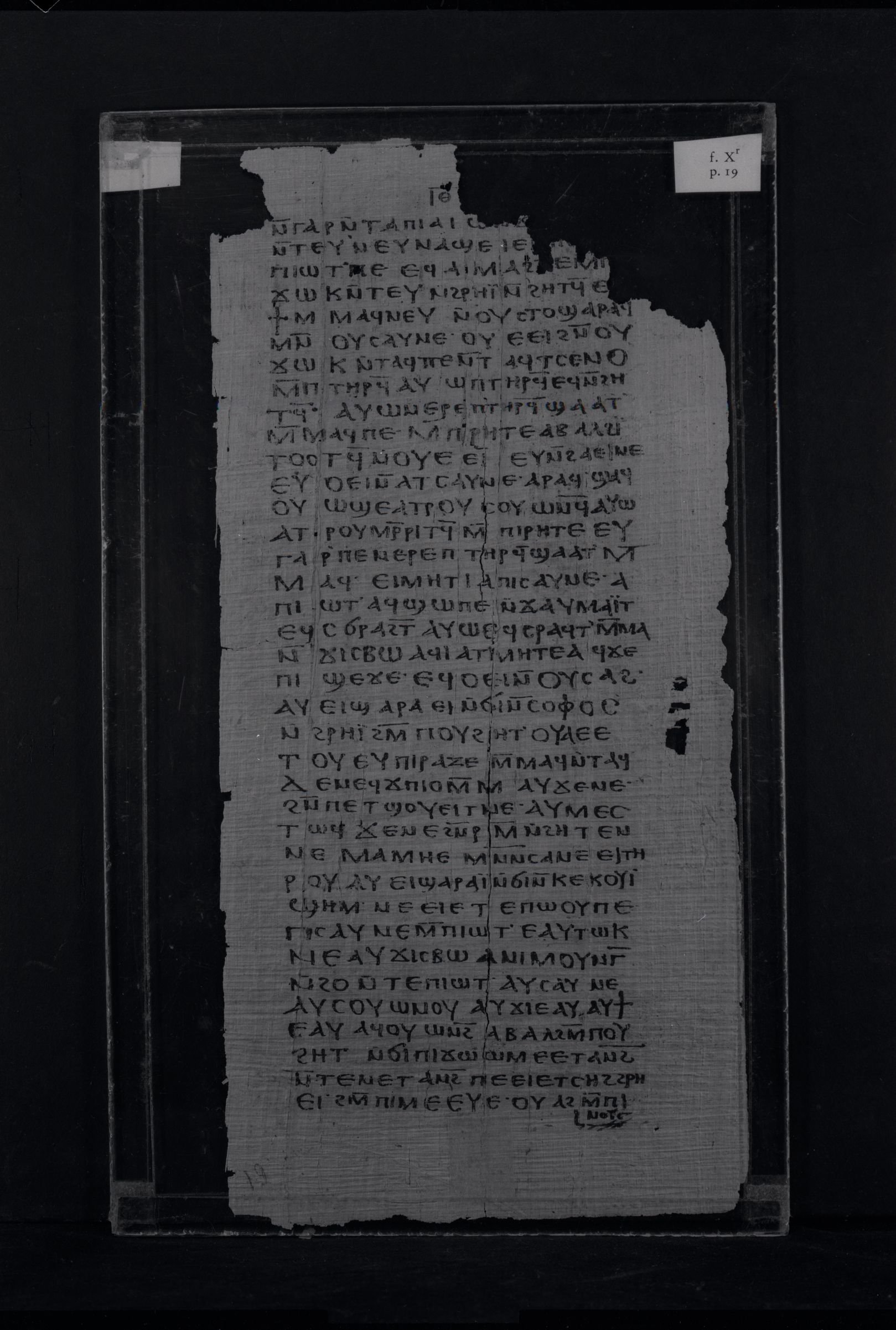
Page 19, lines 1-38 (Codex I page 19, A-Series negative, Facsimile Edition (Codex I, 1977) p. 23, CCDL nha 2761). Checked on the photograph: line 1 begins 'ⲛ̄ⲅⲁⲣ ⲛ̄ⲧⲁⲡⲓⲁⲓⲱⲛ...'; line 38 reads 'ⲛⲟⲩⲥ', a short last line at the right with a filler stroke. Page and line numbers from the Marcion transcription; English from Mattison's text between his page marks 19 and 20.
19.1ⲛ̄ⲅⲁⲣ ⲛ̄ⲧⲁⲡⲓⲁⲓⲱⲛ ϫ[ⲓ ⲡϫⲱⲕ]
19.2ⲛ̄ⲧⲉⲩ: ⲛⲉⲩⲛⲁϣ ⲉⲓ ⲉⲛ̣..[..]
19.3ⲡⲓⲱⲧ: ⲡⲉ ⲉϥⲁⲙⲁϩⲧ̣ⲉ ⲙ̄ⲡ̣[ⲓ]ϫⲱⲕ
19.4ⲛ̄ⲧⲉⲩ ⲛ̄ϩⲣⲏⲓ̈ ⲛ̄ϩⲏⲧϥ̄ ⲉ[ϥ]-
19.5ϯ ⲙⲙⲁϥ ⲛⲉⲩ ⲛ̄ⲟⲩⲥⲧⲟ ϣⲁⲣⲁϥ
19.6ⲙⲛ̄ ⲟⲩⲥⲁⲩⲛⲉ: ⲟⲩⲉⲉⲓ ϩⲛ̄ ⲟⲩ-
19.7ϫⲱⲕ ⲛ̄ⲧⲁϥ ⲡⲉ ⲛ̄ⲧⲁϥⲧⲥⲉⲛⲟ
19.8ⲙ̄ⲡⲧⲏⲣϥ̄ ⲁⲩⲱ ⲡⲧⲏⲣϥ̄ ⲉϥⲛ̄ϩⲏ-
19.9ⲧϥ̄: ⲁⲩⲱ ⲛⲉⲣⲉⲡⲧⲏⲣϥ̄ ϣⲁⲁⲧ:
19.10ⲙ̄ⲙⲁϥ ⲡⲉ: ⲙ̄ⲡⲣⲏⲧⲉ ⲁⲃⲁⲗ ϩⲓ̈-
19.11ⲧⲟⲟⲧϥ̄ ⲛ̄ⲟⲩⲉⲉⲓ̄ ⲉⲩⲛ̄ϩⲁⲉⲓⲛⲉ
19.12ⲉⲩⲟⲉⲓ ⲛ̄ⲁⲧⲥⲁⲩⲛⲉ: ⲁⲣⲁϥ: ϣⲁϥ-
19.13ⲟⲩⲱϣⲉ ⲁⲧⲣⲟⲩⲥⲟⲩⲱⲛϥ̄ ⲁⲩⲱ
19.14ⲁⲧⲣⲟⲩⲙⲣ̄ⲣⲓⲧϥ̄ ⲙ̄ⲡⲓⲣⲏⲧⲉ ⲉⲩ
19.15ⲅⲁⲣ: ⲡⲉⲛⲉⲣⲉⲡⲧⲏⲣϥ̄ ϣⲁⲁⲧ: ⲙ̄-
19.16ⲙⲁϥ: ⲉⲓⲙⲏⲧⲓ ⲁⲡⲓⲥⲁⲩⲛⲉ: ⲁ-
19.17ⲡⲓⲱⲧ: ⲁϥϣⲱⲡⲉ ⲛ̄ϫⲁⲩⲙⲁⲓ̈ⲧ:
19.18ⲉϥⲥϭⲣⲁϩⲧ̄ ⲁⲩⲱ ⲉϥⲥⲣⲁϥⲧ: ⲙ̄ⲙⲁ
19.19ⲛ̄ϫⲓ ⲥⲃⲱ ⲁϥⲓ ⲁⲧⲙⲏⲧⲉ ⲁϥϫⲉ
19.20ⲡⲓϣⲉϫⲉ: ⲉϥⲟⲉⲓ ⲛ̄ⲟⲩⲥⲁϩ:
19.21ⲁⲩⲉⲓ ϣⲁⲣⲁⲉⲓ ⲛ̄ϭⲓ ⲛ̄ⲥⲟⲫⲟⲥ
19.22ⲛ̄ϩⲣⲏⲓ̈ ϩⲙ̄ ⲡⲟⲩϩⲏⲧ: ⲟⲩⲁⲉⲉ-
19.23ⲧⲟⲩ ⲉⲩⲡⲓⲣⲁⲍⲉ ⲙ̄ⲙⲁϥ ⲛ̄ⲧⲁϥ
19.24ⲇⲉ ⲛⲉϥϫⲡⲓⲟ ⲙ̄ⲙⲁⲩ ϫⲉ ⲛⲉ:-
19.25ϩⲛ̄ⲡⲉⲧϣⲟⲩⲉⲓⲧ ⲛⲉ: ⲁⲩⲙⲉⲥ-
19.26ⲧⲱϥ ϫⲉ ⲛⲉϩⲛ̄ⲣⲙ︤ⲛ︥ϩⲏⲧ ⲉⲛ
19.27ⲛⲉ ⲙⲁⲙⲏⲉ ⲙⲛ︤ⲛ︥ⲥⲁ ⲛⲉⲉⲓ ⲧⲏ-
19.28ⲣⲟⲩ ⲁⲩⲉⲓ ϣⲁⲣⲁⲓ̈ ⲛ̄ϭⲓ ⲛ̄ⲕⲉⲕⲟⲩⲓ̈
19.29ϣⲏⲙ: ⲛⲉⲉⲓ ⲉⲧⲉ ⲡⲱⲟⲩ ⲡⲉ:
19.30ⲡⲥⲁⲩⲛⲉ ⲙ̄ⲡⲓⲱⲧ: ⲉⲁⲩⲧⲱⲕ
19.31ⲛⲉⲁⲩϫⲓ ⲥⲃⲱ ⲁⲛⲓⲙⲟⲩⲛⲅ̄
19.32ⲛ̄ϩⲟ ⲛ̄ⲧⲉ ⲡⲓⲱⲧ: ⲁⲩⲥⲁⲩⲛⲉ
19.33ⲁⲩⲥⲟⲩⲱⲛⲟⲩ ⲁⲩϫⲓ ⲉⲁⲩ ⲁⲩϯ
19.34ⲉⲁⲩ ⲁϥⲟⲩⲱⲛϩ̄ ⲁⲃⲁⲗ ϩⲙ̄ ⲡⲟⲩ-
19.35ϩⲏⲧ ⲛ̄ϭⲓ ⲡⲓϫⲱⲱⲙⲉ ⲉⲧⲁⲛϩ̄
19.36ⲛ̄ⲧⲉ ⲛⲉⲧⲁⲛϩ̄ ⲡⲉⲉⲓ ⲉⲧⲥⲏϩ ϩⲣⲏ-
19.37ⲉⲓ: ϩⲙ̄ ⲡⲓⲙⲉⲉⲩⲉ: ⲟⲩⲁϩⲙ̄ ⲡⲓ-
19.38ⲛⲟⲩⲥ
For if, like this, the generation [received the completion,] they couldn’t have come […] the Father. He keeps their completion within himself, giving it to them to return to him with a unitary knowledge in completion. He’s the one who made all, and all are within him, and all need him.
Like someone who’s unknown, he wants to be known and loved – because what did all need if not the knowledge of the Father?
He became a guide, peaceful and leisurely. He came and spoke the Word as a teacher in places of learning. Those who were wise in their own estimation came up to him to test him, but he confounded them because they were vain. They hated him because they weren’t wise in Truth. After all of them, all the little children came too; theirs is the knowledge of the Father. When they were strengthened, they received teaching about the Father’s expressions. They knew and they were known; they received glory and they gave glory. In their hearts the living Book of the Living was revealed, which was written in the thought and mind
Where on the image
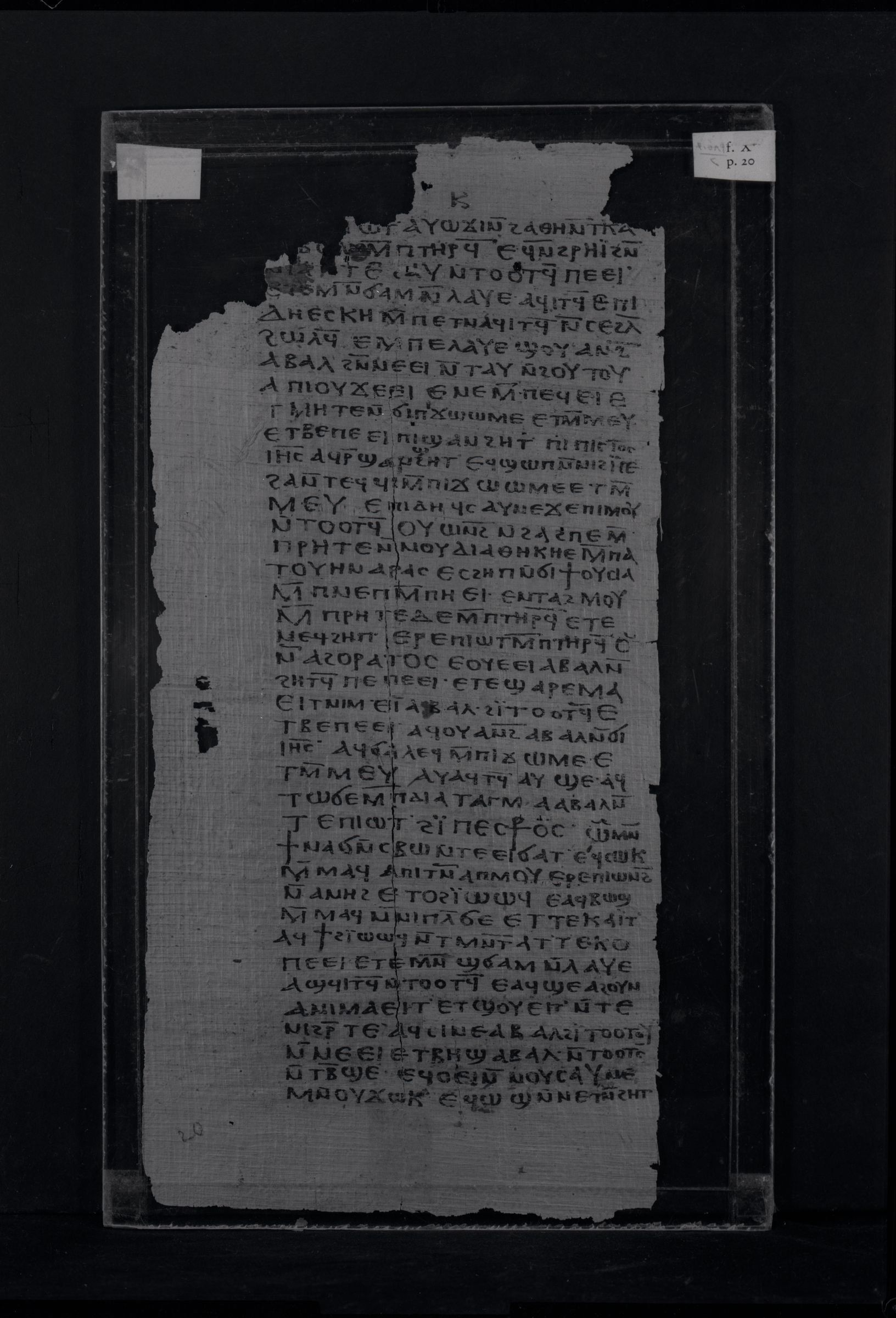
Page 20, lines 1-39 (Codex I page 20, A-Series negative, Facsimile Edition (Codex I, 1977) p. 24, CCDL nha 2766). Checked on the photograph: line 1 begins '...ⲱⲧ ⲁⲩⲱ ϫⲓⲛ̄ ϩⲁⲑⲏ ⲛ̄ⲧⲕⲁ'; line 39 reads 'ⲙⲛ̄ ⲟⲩϫⲱⲕ ⲉϥⲱϣ ⲛ̄ⲛⲉⲧⲛ̄ϩⲏⲧ'. Page and line numbers from the Marcion transcription; English from Mattison's text between his page marks 20 and 21.
20.1[ⲛ̄ⲧⲉ ⲡ]ⲓ̣ⲱⲧ̣: ⲁⲩⲱ ϫⲓⲛ̄ ϩⲁⲑⲏ ⲛ̄ⲧⲕⲁ-
20.2[ⲧⲁ]ⲃⲟ̣ⲗ⟨ⲏ⟩ {ϩ}ⲙ̄ⲡⲧⲏⲣϥ̄ ⲉϥⲛ̄ϩⲣⲏⲓ̈ ϩⲛ̄
20.3ⲛⲓⲁⲧⲧⲉϩⲁⲩ ⲛ̄ⲧⲟⲟⲧϥ̄ ⲡⲉⲉⲓ:
20.4ⲉⲧⲉ ⲙⲛ̄ ϭⲁⲙ ⲛ̄ⲗⲁⲩⲉ ⲁϥⲓⲧϥ̄ ⲉⲡⲓ-
20.5ⲇⲏ ⲉⲥⲕⲏ ⲙ̄ⲡⲉⲧⲛⲁϥⲓⲧϥ̄ ⲛ̄ⲥⲉϩⲗ̄-
20.6ϩⲱⲗϥ̄ ⲉⲙⲡⲉⲗⲁⲩⲉ ϣⲟⲩⲁⲛϩ̄
20.7ⲁⲃⲁⲗ: ϩⲛ̄ ⲛⲉⲉⲓ ⲛ̄ⲧⲁⲩⲛ̄ϩⲟⲩⲧⲟⲩ
20.8ⲁⲡⲓⲟⲩϫⲉⲉⲓ ⲉⲛⲉⲙ̄ⲡⲉϥⲉⲓ ⲉ-
20.9ⲧⲙⲏⲧⲉ ⲛ̄ϭⲓ ⲡ\ⲓ/ϫⲱⲱⲙⲉ ⲉⲧⲙ̄ⲙⲉⲩ
20.10ⲉⲧⲃⲉ ⲡⲉⲉⲓ ⲡⲓϣⲁⲛϩⲏⲧ: ⲡⲓⲡⲓⲥⲧⲟⲥ
20.11ⲓⲏ(ⲥⲟⲩ)ⲥ ⲁϥⲣ̄ ϣⲁⲣ\ϣ/ϩⲏⲧ: ⲉϥϣⲱⲡ ⲛ̄ⲛⲓϩⲓ̈ⲥⲉ
20.12ϩⲁⲛ̄ⲧⲉϥϥⲓ ⲙ̄ⲡⲓϫⲱⲱⲙⲉ ⲉⲧⲙ̄-
20.13ⲙⲉⲩ ⲉⲡⲓⲇⲏ ϥⲥⲁⲩⲛⲉ ϫⲉ ⲡⲓⲙⲟⲩ
20.14ⲛ̄ⲧⲟⲟⲧϥ̄ ⲟⲩⲱⲛϩ̄ ⲛ̄ϩⲁϩ ⲡⲉ ⲙ̄-
20.15ⲡⲣⲏⲧⲉ ⲛ̄ⲛⲟⲩⲇⲓⲁⲑⲏⲕⲏ ⲉⲙ̄ⲡⲁ-
20.16ⲧⲟⲩⲏⲛ ⲁⲣⲁⲥ ⲉⲥϩⲏⲡ ⲛ̄ϭⲓ ϯⲟⲩⲥⲓⲁ
20.17ⲙ̄ⲡⲛⲉⲡ ⲙ̄ⲡⲏⲉⲓ: ⲉⲛⲧⲁϩⲙⲟⲩ
20.18ⲙ̄ⲡⲣⲏⲧⲉ ⲇⲉ ⲙ̄ⲡⲧⲏⲣϥ̄ ⲉⲧⲉ
20.19ⲛⲉϥϩⲏⲡ: ⲉⲣⲉⲡⲓⲱⲧ ⲙ̄ⲡⲧⲏⲣϥ̄ ⲟ
20.20ⲛ̄ⲁϩⲟⲣⲁⲧⲟⲥ ⲉⲟⲩⲉⲉⲓ ⲁⲃⲁⲗ ⲛ-
20.21ϩⲏⲧϥ̄ ⲡⲉ ⲡⲉⲉⲓ: ⲉⲧⲉϣⲁⲣⲉⲙⲁ-
20.22ⲉⲓⲧ ⲛⲓⲙ: ⲉⲓ̄ ⲁⲃⲁⲗ: ϩⲓ̈ⲧⲟⲟⲧϥ̄ ⲉ-
20.23ⲧⲃⲉ ⲡⲉⲉⲓ: ⲁϥⲟⲩⲁⲛϩ̄ ⲁⲃⲁⲗ ⲛ̄ϭⲓ
20.24ⲓⲏ(ⲥⲟⲩ)ⲥ: ⲁϥϭⲁⲗⲉϥ ⲙ̄ⲡⲓϫⲱⲙⲉ: ⲉ-
20.25ⲧⲙ̄ⲙⲉⲩ ⲁⲩⲁϥⲧϥ̄ ⲁⲩϣⲉ: ⲁϥ-
20.26ⲧⲱϭⲉ ⲙ̄ⲡⲇⲓⲁⲧⲁⲅⲙⲁ ⲁⲃⲁⲗ ⲛ̄-
20.27ⲧⲉ ⲡⲓⲱⲧ: ϩⲓ̈ ⲡⲉⲥⲧ(ⲁⲩ̈)ⲣⲟⲥ: ⲱ̂ ⲙⲛ̄-
20.28ϯⲛⲁϭ ⲛ̄ⲥⲃⲱ ⲛ̄ⲧⲉⲉⲓϭⲁⲧ: ⲉϥⲥⲱⲕ
20.29ⲙ̄ⲙⲁϥ ⲁⲡⲓⲧⲛ̄ ⲁⲡⲙⲟⲩ ⲉⲣⲉⲡⲓⲱⲛϩ̄
20.30ⲛ̄ⲁⲛⲏϩⲉ ⲧⲟ ϩⲓ̈ⲱⲱϥ ⲉⲁϥⲃⲱϣ
20.31ⲙ̄ⲙⲁϥ ⲛ̄ⲛⲓⲡⲗ̄ϭⲉ ⲉⲧⲧⲉⲕⲁⲓ̈ⲧ:
20.32ⲁϥϯ ϩⲓ̈ⲱⲱϥ ⲛ̄ⲧⲙⲛ̄ⲧⲁⲧ:ⲧⲉⲕⲟ
20.33ⲡⲉⲉⲓ: ⲉⲧⲉ ⲙⲛ̄ ϣϭⲁⲙ ⲛ̄ⲗⲁⲩⲉ
20.34ⲁϣ ϥⲓⲧϥ̄ ⲛ̄ⲧⲟⲟⲧϥ̄: ⲉⲁϥϣⲉ ⲁϩⲟⲩⲛ
20.35ⲁⲛⲓⲙⲁⲉⲓⲧ: ⲉⲧϣⲟⲩⲉⲓⲧ: ⲛ̄ⲧⲉ
20.36ⲛⲓϩⲣ̄ⲧⲉ: ⲁϥⲥⲓⲛⲉ ⲁⲃⲁⲗ ϩⲓ̈ⲧⲟⲟⲧⲟⲩ
20.37ⲛ̄ⲛⲉⲉⲓ ⲉⲧⲃⲏϣ ⲁⲃⲁⲗ: ⲛ̄ⲧⲟⲟⲧⲥ̄
20.38ⲛ̄ⲧⲃ̄ϣⲉ: ⲉϥⲟⲉⲓ ⲛ̄ⲛⲟⲩⲥⲁⲩⲛⲉ
20.39ⲙⲛ̄ ⲟⲩϫⲱⲕ ⲉϥⲱϣ ⲛ̄ⲛⲉⲧⲛ̄ϩⲏⲧ:
[of the] Father, and before the [foundation] of all within his incomprehensibility. This (book) is impossible to take, since it permits the one who takes it to be killed. No one could’ve been revealed among those who'd been entrusted with salvation unless the book had appeared. Because of this, the merciful and faithful Jesus patiently suffered until he took that book, since he knows that his death is life for many.
When a will hasn’t yet been opened, the wealth of the deceased master of the house is hidden; so too all were hidden while the Father of all was invisible. They were from him, from whom every realm comes. Because of this:
Jesus was revealed, put on that book, was nailed to a tree, and published the Father’s edict on the cross.
Oh, what a great teaching!
Drawing himself down to death, he clothed himself in eternal life, stripped himself of the perishable rags, and clothed himself in incorruptibility, which no one can take from him.
When he entered the empty realms of terror, he passed through those who were stripped by forgetfulness, being knowledge and completion, proclaiming the things that are in the heart
Where on the image
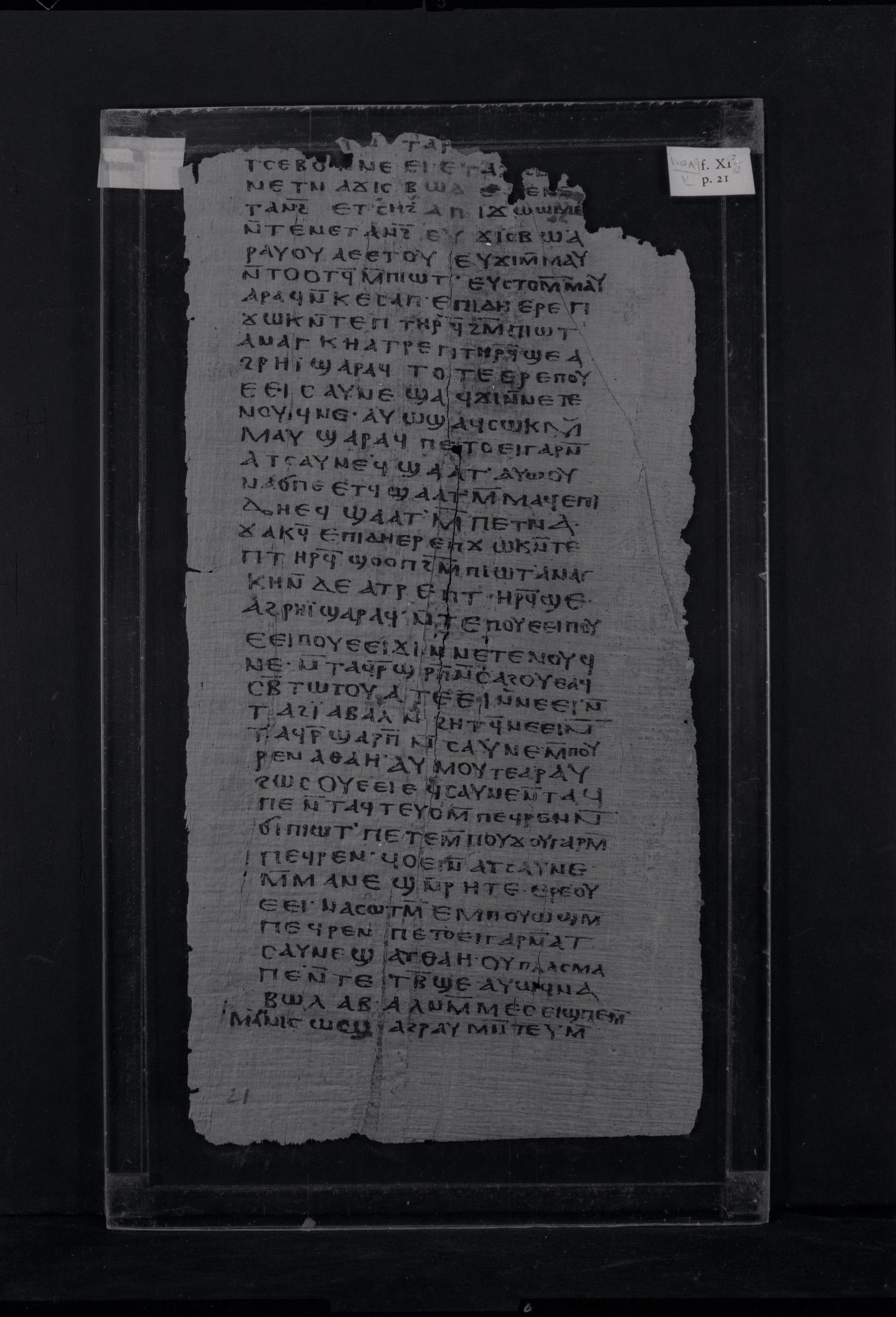
Page 21, lines 1-38 (Codex I page 21, A-Series negative, Facsimile Edition (Codex I, 1977) p. 25, CCDL nha 2772). Checked on the photograph: line 1 begins '...ⲧⲁⲣ...' (the top line is broken); line 38 reads 'ⲙⲁ\ⲛ/ⲓⲥⲱϣ ⲁϩⲣⲁⲩ ⲙⲛ̄ⲧⲉⲩ ⲙ̄', with ⲛ written above the line. Page and line numbers from the Marcion transcription; English from Mattison's text between his page marks 21 and 22.
21.1.[.].[...]ⲧ̣ ⲛ̣̄ⲧⲁⲣ[---]
21.2ⲧⲥⲉⲃⲟ ⲛⲛⲉⲉⲓ: ⲉⲧⲁϫ̣ⲓ̣ ⲥ̣ⲃ̣[ⲱ]
21.3ⲛⲉⲧⲛⲁϫⲓ ⲥⲃⲱ ⲇⲉ ⲛ̣ⲉ ⲛⲉ-
21.4ⲧⲁⲛϩ̄ ⲉⲧⲥⲏϩ: ⲁⲡⲓϫⲱⲱⲙⲉ̣
21.5ⲛ̄ⲧⲉ ⲛⲉⲧⲁⲛϩ̄ ⲉⲩϫⲓ ⲥⲃⲱ: ⲁ-
21.6ⲣⲁⲩ ⲟⲩⲁⲉⲉⲧⲟⲩ ⲉⲩϫⲓ ⲙ̄ⲙⲁⲩ
21.7ⲛ̄ⲧⲟⲟⲧϥ̄ ⲙ̄ⲡⲓⲱⲧ: ⲉⲩⲥⲧⲟ ⲙ̄ⲙⲁⲩ
21.8ⲁⲣⲁϥ ⲛ̄ⲕⲉⲥⲁⲡ: ⲉⲡⲓⲇⲏ ⲉⲣⲉⲡ-
21.9ϫⲱⲕ ⲛ̄ⲧⲉ ⲡⲧⲏⲣϥ̄ ϩⲙ̄ ⲡⲓⲱⲧ:
21.10ⲁⲛⲁⲅⲕⲏ ⲁⲧⲣⲉⲡⲧⲏⲣϥ̄ ϣⲉ ⲁ-
21.11ϩⲣⲏⲓ̈ ϣⲁⲣⲁϥ ⲧⲟⲧⲉ ⲉⲣⲉⲡⲟⲩ-
21.12ⲉⲉⲓ ⲥⲁⲩⲛⲉ ϣⲁϥϫⲓ ⲛ̄ⲛⲉⲧⲉ
21.13ⲛⲟⲩϥ ⲛⲉ: ⲁⲩⲱ ϣⲁϥⲥⲱⲕ ⲙ̄-
21.14ⲙⲁⲩ ϣⲁⲣⲁϥ ⲡⲉⲧⲟⲉⲓ ⲅⲁⲣ ⲛ̄-
21.15ⲁⲧⲥⲁⲩⲛⲉ: ϥϣⲁⲁⲧ: ⲁⲩⲱ ⲟⲩ-
21.16ⲛⲁϭ ⲡⲉ ⲉⲧϥϣⲁⲁⲧ: ⲙ̄ⲙⲁϥ ⲉⲡⲓ-
21.17ⲇⲏ ⲉϥϣⲁⲁⲧ: ⲙ̄ⲡⲉⲧⲛⲁ:-
21.18ϫⲁⲕϥ̄ ⲉⲡⲓⲇⲏ ⲉⲣⲉⲡϫⲱⲕ ⲛ̄ⲧⲉ
21.19ⲡⲧⲏⲣϥ̄ ϣⲟⲟⲡ ϩⲙ̄ ⲡⲓⲱⲧ: ⲁⲛⲁⲅ-
21.20ⲕⲏ ⲛ̄ⲇⲉ ⲁⲧⲣⲉⲡⲧⲏⲣϥ̄ ϣⲉ:
21.21ⲁϩⲣⲏⲓ̈ ϣⲁⲣⲁϥ: ⲛ̄ⲧⲉⲡⲟⲩⲉⲉⲓ ⲡⲟⲩ-
21.22ⲉⲉⲓ {ⲡⲟⲩⲉⲉⲓ} ϫⲓ ⲛⲛⲉⲧⲉ ⲛⲟⲩϥ
21.23ⲛⲉ: ⲛ̄ⲧⲁϥⲣ̄ ϣⲣⲡ̄ ⲛ̄ⲥⲁϩⲟⲩ ⲉⲁϥ-
21.24ⲥⲃ̄ⲧⲱⲧⲟⲩ ⲁⲧⲉⲉⲓ ⲛ̄ⲛⲉⲉⲓ: ⲛ̄-
21.25ⲧⲁϩⲓ̈ ⲁⲃⲁⲗ ⲛ̄ϩⲏⲧϥ̄ ⲛⲉⲉⲓ ⲛ̄-
21.26ⲧⲁϥⲣ̄ ϣⲁⲣⲡ̄ ⲛ̄ⲥⲁⲩⲛⲉ: ⲙ̄ⲡⲟⲩ-
21.27ⲣⲉⲛ ⲁⲑⲁⲏ: ⲁⲩⲙⲟⲩⲧⲉ ⲁⲣⲁⲩ
21.28ϩⲱⲥ ⲟⲩⲉⲉⲓ ⲉϥⲥⲁⲩⲛⲉ ⲛ̄ⲧⲁϥ
21.29ⲡⲉ ⲛ̄ⲧⲁϥⲧⲉⲩⲟ ⲙ̄ⲡⲉϥⲣⲉⲛ ⲛ̄-
21.30ϭⲓ ⲡⲓⲱⲧ: ⲡⲉⲧⲉⲙ̄ⲡⲟⲩϫⲟⲩ ⲅⲁⲣ ⲙ̄-
21.31ⲡⲉϥⲣⲉⲛ: ϥⲟⲉⲓ ⲛ̄ⲁⲧⲥⲁⲩⲛⲉ:
21.32ⲙ̄ⲙⲁⲛ ⲉϣ ⲛ̄ⲣⲏⲧⲉ: ⲉⲣⲉⲟⲩ-
21.33ⲉⲉⲓ: ⲛⲁⲥⲱⲧⲙ̄ ⲉⲙⲡⲟⲩⲱϣ ⲙ̄-
21.34ⲡⲉϥⲣⲉⲛ ⲡⲉⲧⲟⲉⲓ ⲅⲁⲣ ⲛ̄ⲁⲧ-
21.35ⲥⲁⲩⲛⲉ ϣⲁ ⲧⲑⲁⲏ: ⲟⲩⲡⲗⲁⲥⲙⲁ
21.36ⲡⲉ: ⲛ̄ⲧⲉ ⲧⲃ̄ϣⲉ: ⲁⲩⲱ ϥⲛⲁ-
21.37ⲃⲱⲗ ⲁⲃⲁⲗ ⲛⲙ̄ⲙⲉⲥ ⲉⲓϣⲡⲉ ⲛ̄-
21.38ⲙⲁ\ⲛ̣/ ⲛⲓⲥⲱϣ ⲁϩⲣⲁⲩ ⲙⲛ̄ⲧⲉⲩ ⲙ̄-
[…] teach those who will [receive teaching].
The Book of the Living
Now those who will receive teaching [are] the living who are written in the Book of the Living. They receive teaching about themselves, and they receive it from the Father, returning to him again.
Since the completion of all is in the Father, it’s necessary for all to go up to him. Then, if someone has knowledge, they receive what are their own, and he draws them to himself, because the one who’s ignorant is in need. And it’s a great need, since they need what will complete them. Since the completion of all is in the Father, it’s necessary for all to go up to him, and for each one to receive what are their own. He inscribed these things beforehand, having prepared them to give to those who came out from him.
Those whose names he knew beforehand were called at the end, so that the one who has knowledge is the one whose name the Father has called, because those whose name hasn’t been spoken are ignorant. Indeed, how can someone hear if their name hasn’t been called? For the one who’s ignorant until the end is a delusion of forgetfulness, and they’ll dissolve with it. Otherwise, why do these miserable ones have no
Notes
- Coptic: Marcion 1.8 (Milan Konvicka), Nag Hammadi text package, converted here from its ASCII font coding to Unicode Coptic letter for letter. Marcion does not name the printed edition behind its text. The small numbers are codex page and line (for example 18.11) as given in the source.
- Signs in the Coptic: a stroke over a letter, or a line over two letters, is the scribe's supralinear stroke; a dot under a letter marks an uncertain reading; square brackets mark letters lost in a gap (restored by the editor, or dots for the number of lost letters); round brackets write out an abbreviation (as in ⲓⲏ(ⲥⲟⲩ)ⲥ); angle brackets mark letters added by the editor; curly brackets letters the editor removes; double square brackets letters cancelled by the scribe; \ / letters written above the line. The colon (:) is kept as the source gives it; the source does not say what it marks, and on the photographs it does not always match a visible point (the scribe's raised points are small, and some have no colon in the source). A hyphen at the end of a line marks a word that runs on to the next line (the transcription's convention).
- Marcion's text also carries a paragraph code and, at the end of 20.19, one further code whose meaning it does not state; neither is reproduced. A circumflex (as in the interjection ⲱ̂ at 20.27) is the scribe's. The diple (>) the scribe writes before some paragraph openings (for example 17.1) is not in the source text and is not shown.
- English: Mark M. Mattison, The Gospel of Truth (public domain), split at Mattison's own page numbers. Mattison's symbols: [ ] gap in the text, ( ) editorial insertion. The headings in italics are his.
- Mattison's note, Page 17: “It happened in a deluding way.” Cf. Jörgen Magnusson, Rethinking the Gospel of Truth: A Study of Its Eastern Valentinian Setting (Uppsala University), 2006, p. 77, contra most translators, who tend to use “creation” or “form” for plasma instead of “delusion.” Kendrick Grobel translates “She was at work upon a molded figure” in The Gospel of Truth: A Valentinian Meditation on the Gospel (Abingdon Press), 1960, p. 33 (but cf. p. 34); Attridge and MacRae translate “it set about with a creation” in James M. Robinson, ed., The Coptic Gnostic Library: A Complete Edition of the Nag Hammadi Codices, Volume I (Brill), 2000, p. 83 (but cf. the note in their commentary section later in the volume on page 45); Marvin Meyer translates “she assumed a fashioned figure” in The Nag Hammadi Scriptures (HarperOne), 2007, p. 36; Celene Lillie translates “She … became a molded form” in Hal Taussig, ed., A New New Testament (Houghton Mifflin Harcourt), 2013, p. 230; and Bentley Layton translates “she took up residence in a modeled form” in The Gnostic Scriptures (Doubleday), 1987, p. 253. The pronoun in the phrase is feminine (which could refer to “Error,” which is feminine in Coptic) but can also be rendered as “it,” as Coptic has no neuter gender. “delusion of deceit.” Also following Magnusson (op. cit., p. 94); cp. Grobel, “deceitful figure” (op. cit., p. 44); Attridge and MacRae, “creature of deceit” (op. cit., p. 83); Meyer, “deceptive figure” (op. cit., p. 36); Lillie, “molded forms are lies” (op. cit., p. 230); Layton, “modeled form of deception” (op. cit., p. 253). “disregard.” Grobel translates “look with scorn” (op. cit., p. 46); Attridge and MacRae (op. cit., p. 83), Meyer (op. cit., p. 36), and Layton (op. cit., p. 253) translate “despise”; but cf. Lillie, op. cit., p. 230, and Magnusson, op. cit., pp. 78, 79.
- Mattison's note, Page 18: “thought.” The reconstruction is that of Magnusson, op. cit., p. 81. “This is the Gospel of the one they search for … the Way is the Truth which he taught them.” Based on personal correspondence with Lance Jenott dated November 15, 2017.
- Mattison's note, Page 19: “the Father’s expressions.” Literally, “the forms of the Father’s face.”
- Mattison's note, Page 20: “who’d been entrusted with.” Grobel (op. cit., p. 62), Meyer (op. cit., p. 38), and Layton (op. cit., p. 255) translate “those who believed in”; Attridge and MacRae translate “those who have believed in” (op. cit., p. 87); Lillie translates “those who trust in” (op. cit., p. 231); but cf. Magnusson, op. cit., pp. 137, 138.
- Mattison's note, Page 21: “delusion.” Grobel translates “figure” (op. cit., p. 74); Attridge and MacRae (op. cit., p. 89) and Meyer (op. cit., p. 35) translate“creature”; Lillie translates “creatures” (op. cit., p. 231); Layton translates “modeled form” (op. cit., p. 256); but cf. Magnusson, op. cit., p. 100.
Cite
Sources
- Source: Nag Hammadi Codex I page photographs (Claremont Colleges Digital Library, Nag Hammadi Archive) + Coptic transcription from Marcion (Milan Konvicka) + English by Mark M. Mattison (public domain) (holding institution)
- Critical edition: Coptic transcription from Marcion (Milan Konvicka; printed edition not named)
← previous · → next · v cycle view · l back to library