Gospel of Truth, pages 22-27 (Nag Hammadi Codex I)
Introduction
The Gospel of Truth is a Christian meditation on the Father, the Word and the return of all things to the one from whom they came, through knowledge that ends forgetfulness and error. Many scholars connect it with the teacher Valentinus or his circle (mid 2nd century). It was written in Greek and survives in Coptic: complete as the third tractate of Nag Hammadi Codex I (the Jung Codex), a papyrus book copied in the 4th century and found near Nag Hammadi in 1945, now in the Coptic Museum, Cairo; small fragments of another copy are in Codex XII and are not shown here. The text runs from page 16 line 31 to page 43 line 24. Its title is taken from its opening words.
This entry covers codex pages 22-27, one section per page. The Coptic is given line by line with codex page and line numbers, so each line can be found on the photograph. The English is Mark M. Mattison's public domain translation, divided at the page numbers Mattison prints in it; because English word order differs from Coptic, a sentence divided between two pages is divided where the translator put the page mark.
Photographs: negatives of the Facsimile Edition of the Nag Hammadi Codices, Nag Hammadi Archive of the Institute for Antiquity and Christianity, Claremont Colleges Digital Library. Coptic: Marcion (Milan Konvicka), which does not name the printed edition behind its transcription. First and last line read on each photograph: 22: '...ⲛ̄ⲛⲟⲩⲣⲉⲛ ⲙⲙⲛ̄ⲧⲉⲩ' ... '...ⲟⲩⲁⲛϩϥ̄ ⲛ̄ⲛⲓ'; 23: 'ⲁⲓⲱⲛ ⲁⲧⲑⲁⲏ ⲛ̄...' ... 'ⲁⲃⲁⲗ ϩⲛ̄ ⲡⲧⲏⲣϥ̄ ⲉⲡⲟⲩⲧⲁϩ'; 24: '...ϩⲏⲧ ⲛ̄ⲧⲟⲟⲧϥ ⲡⲉ ⲁⲩⲱ' ... 'ⲃⲱⲗ ⲁⲃⲁⲗ ⲉϥϣⲁⲛⲟⲩⲱⲛϩ̄'; 25: '...ⲡⲟⲩⲁⲉⲓⲛ ⲙ̄ⲡⲓⲣⲏⲧⲉ ⲁⲛ' ... 'ⲧⲉⲕⲣⲓⲥⲓⲥ ⲛ̄ⲧⲁϩⲉⲓ ⲁⲃⲁⲗ'; 26: 'ⲙ̄ⲡⲥⲁ ⲛⲧⲡⲉ ⲉⲁⲥϯ ϩⲉⲡ ⲁⲟⲩ' ... 'ⲡⲛ̄ⲁ ⲉⲧⲟⲩⲁⲁⲃ· ⲡⲉⲧⲧⲱϭⲉ ⲙ̄'; 27: 'ⲙⲁϥ ⲁϯⲧⲙⲛ̄ⲧⲙⲏⲉ ⲉϥⲧⲱϭⲉ' ... 'ⲧⲟⲩϣⲱⲡⲉ· ⲁⲗⲗⲁ ⲥⲉϣⲟⲟⲡ·'.
How was this verified? (Provenance)
Where on the image
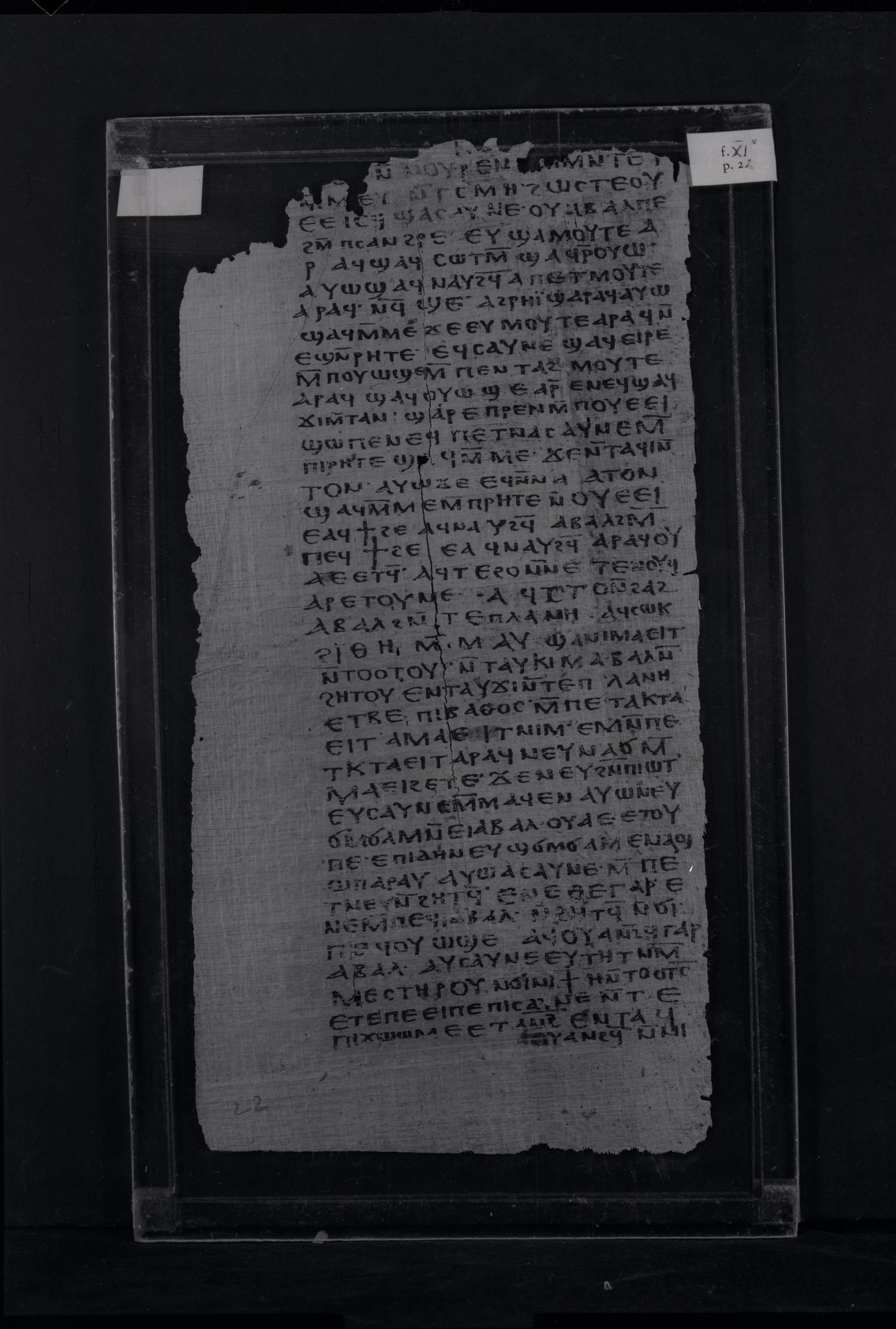
Page 22, lines 1-40 (Codex I page 22, A-Series negative, Facsimile Edition (Codex I, 1977) p. 26, CCDL nha 2794). Checked on the photograph: line 1 begins '...ⲛ̄ⲛⲟⲩⲣⲉⲛ ⲙⲙⲛ̄ⲧⲉⲩ'; line 40 reads '...ⲟⲩⲁⲛϩϥ̄ ⲛ̄ⲛⲓ'. Page and line numbers from the Marcion transcription; English from Mattison's text between his page marks 22 and 23.
22.1[ⲙ]ⲉ̣[ⲩ] ⲛ̄ⲛⲟⲩⲣⲉⲛ ⲙⲙⲛ̄ⲧⲉⲩ̣
22.2ⲙ̄ⲙⲉⲩ ⲛ̄ⲧⲥⲙⲏ: ϩⲱⲥⲧⲉ ⲟⲩ-
22.3ⲉⲉⲓ ⲉϥϣⲁⲥⲁⲩⲛⲉ: ⲟⲩⲁⲃⲁⲗ ⲡⲉ
22.4ϩⲙ̄ ⲡⲥⲁⲛϩⲣⲉ: ⲉⲩϣⲁⲙⲟⲩⲧⲉ ⲁ-
22.5ⲣⲁϥ ϣⲁϥⲥⲱⲧⲙ̄ ϣⲁϥⲣ̄ ⲟⲩⲱ:
22.6ⲁⲩⲱ ϣⲁϥⲛⲁⲩϩϥ̄ ⲁⲡⲉⲧⲙⲟⲩⲧⲉ
22.7ⲁⲣⲁϥ: ⲛ̄ϥϣⲉ: ⲁϩⲣⲏⲓ̈ ϣⲁⲣⲁϥ ⲁⲩⲱ
22.8ϣⲁϥⲙ̄ⲙⲉ ϫⲉ ⲉⲩⲙⲟⲩⲧⲉ ⲁⲣⲁϥ ⲛ̄-
22.9ⲉϣ ⲛ̄ⲣⲏⲧⲉ: ⲉϥⲥⲁⲩⲛⲉ ϣⲁϥⲉⲓⲣⲉ
22.10ⲙ̄ⲡⲟⲩⲱϣ\ⲉ/ ⲙ̄ⲡⲉⲛⲧⲁϩⲙⲟⲩⲧⲉ
22.11ⲁⲣⲁϥ ϣⲁϥⲟⲩⲱϣⲉ ⲁⲣ̄ ⲉⲛⲉϥ ϣⲁϥ-
22.12ϫⲓ ⲙ̄ⲧⲁⲛ: ϣⲁⲣⲉⲡⲣⲉⲛ ⲙ̄ⲡⲟⲩⲉⲉⲓ
22.13ϣⲱⲡⲉ ⲛⲉϥ ⲡⲉⲧⲛⲁⲥⲁⲩⲛⲉ ⲙ̄-
22.14ⲡⲓⲣⲏⲧⲉ ϣⲁ̣ϥⲙ̄ⲙⲉ: ϫⲉ ⲛ̄ⲧⲁϥⲓ ⲛ̄-
22.15ⲧⲟⲛ: ⲁⲩⲱ ϫⲉ ⲉϥⲛ̄ⲛⲁ ⲁⲧⲟⲛ
22.16ϣⲁϥⲙ̄ⲙⲉ ⲙ̄ⲡⲣⲏⲧⲉ ⲛ̄ⲟⲩⲉⲉⲓ:
22.17ⲉⲁϥϯϩⲉ ⲁϥⲛⲁⲩϩϥ̄ ⲁⲃⲁⲗ ϩⲙ̄
22.18ⲡⲉϥϯϩⲉ ⲉⲁϥⲛⲁⲩϩϥ̄ ⲁⲣⲁϥ ⲟⲩ-
22.19ⲁⲉⲉⲧϥ̄: ⲁϥⲧⲉϩⲟ ⲛ̄ⲛⲉⲧⲉ ⲛⲟⲩϥ
22.20ⲁⲣⲉⲧⲟⲩ ⲛⲉ: ⲁϥⲥⲧⲟ ⲛ̄ϩⲁϩ
22.21ⲁⲃⲁⲗ ϩⲛ̄ ⲧⲉⲡⲗⲁⲛⲏ ⲁϥⲥⲱⲕ
22.22ϩⲓ̈ⲑⲏ ⲙ̄ⲙⲁⲩ ϣⲁ ⲛⲓⲙⲁⲉⲓⲧ:
22.23ⲛ̄ⲧⲟⲟⲧⲟⲩ ⲛ̄ⲧⲁⲩⲕⲓⲙ ⲁⲃⲁⲗ ⲛ̄-
22.24ϩⲏⲧⲟⲩ ⲉⲛⲧⲁⲩϫⲓ ⲛ̄ⲧⲉⲡⲗⲁⲛⲏ
22.25ⲉⲧⲃⲉ ⲡⲓⲃⲁⲑⲟⲥ: ⲙ̄ⲡⲉⲧ{ⲁ}ⲕⲧⲁ-
22.26ⲉⲓⲧ: ⲁⲙⲁⲉⲓⲧ ⲛⲓⲙ: ⲉⲙⲛ̄ ⲡⲉ-
22.27ⲧⲕⲧⲁⲉⲓⲧ: ⲁⲣⲁϥ ⲛⲉⲩⲛⲁϭ ⲙ̄-
22.28ⲙⲁⲉⲓϩⲉ ⲧⲉ: ϫⲉ ⲛⲉⲩϩⲛ̄ ⲡⲓⲱⲧ:
22.29ⲉⲩⲥⲁⲩⲛⲉ ⲙ̄ⲙⲁϥ ⲉⲛ ⲁⲩⲱ ⲛⲉⲩ-
22.30ϭⲙϭⲁⲙ ⲛ̄ⲉⲓ ⲁⲃⲁⲗ: ⲟⲩⲁⲉⲉⲧⲟⲩ
22.31ⲡⲉ: ⲉⲡⲓⲇⲏ ⲛⲉⲩϣ ϭⲙϭⲁⲙ ⲉⲛ ⲁϣ-
22.32ⲱⲡ ⲁⲣⲁⲩ ⲁⲩⲱ ⲁⲥⲁⲩⲛⲉ: ⲙ̄ⲡⲉ-
22.33ⲧⲛⲉⲩⲛ̄ϩⲏⲧϥ̄: ⲉⲛⲉⲑⲉ ⲅⲁⲣ: ⲉ-
22.34ⲛⲉⲙ̄ⲡⲉϥⲓ ⲁⲃⲁⲗ: ⲛ̄ϩⲏⲧϥ̄ ⲛ̄ϭⲓ:
22.35ⲡⲉϥⲟⲩⲱϣⲉ ⲁϥⲟⲩⲁⲛϩ̄ϥ ⲅⲁⲣ
22.36ⲁⲃⲁⲗ: ⲁⲩⲥⲁⲩⲛⲉ ⲉⲩⲧⲏⲧ ⲛⲙ̄-
22.37ⲙⲉⲥ ⲧⲏⲣⲟⲩ ⲛ̄ϭⲓ ⲛⲓϯⲏ ⲛ̄ⲧⲟⲟⲧⲥ̄
22.38ⲉⲧⲉ ⲡⲉⲉⲓ ⲡⲉ ⲡⲓⲥⲁⲩⲛⲉ ⲛ̄ⲧⲉ
22.39ⲡⲓϫⲱⲱⲙⲉ ⲉⲧⲁⲛϩ̄ ⲉⲛⲧⲁϥ-
22.40ⲟⲩⲁⲛϩϥ̄: ⲛ̄ⲛⲓ-
name? Why do they have no voice?
So if someone has knowledge, they’re from above. If they’re called, they hear, they reply, and they turn to the one who calls them. And they go up to him, and they know how they are called. Having knowledge, they do the will of the one who called them, they want to please him, and they receive rest. Each one’s name becomes their own. The one who has knowledge like this knows where they come from and where they’re going. They know like one who, having been drunk, turns from their drunkenness, and having returned to themselves, restores what are their own.
He’s returned many from Error. He went before them to the realms from which they had moved away. They had received Error because of the depth of the one who surrounds every realm, though nothing surrounds him. It’s a great wonder that they were in the Father, not knowing him, and that they were able to come out by themselves, since they weren’t able to grasp and know the one in whom they were. He revealed his will as knowledge in harmony with all that emanated from him.
This is the knowledge of the living book which he revealed to the
Where on the image
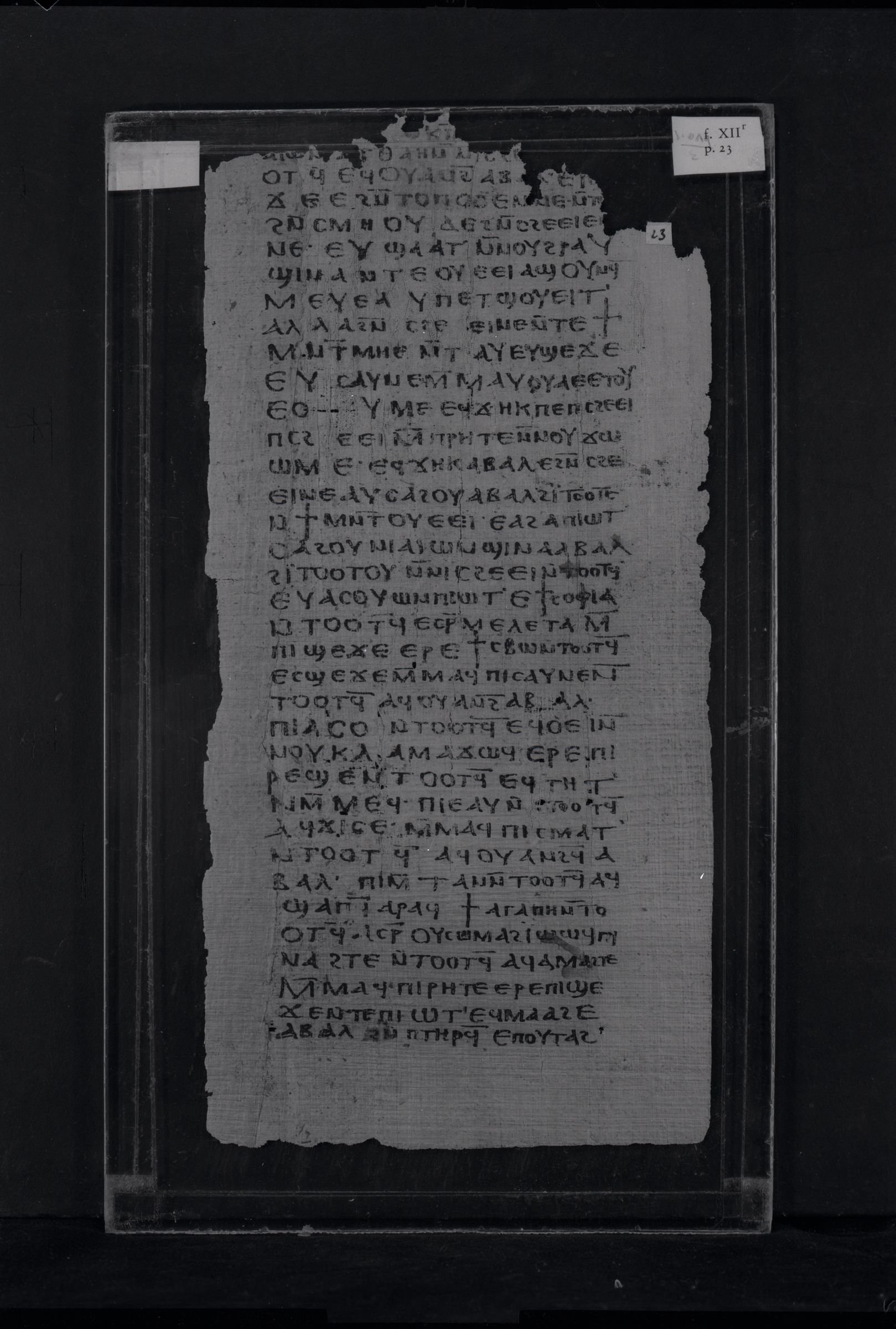
Page 23, lines 1-35 (Codex I page 23, A-Series negative, Facsimile Edition (Codex I, 1977) p. 27, CCDL nha 2776). Checked on the photograph: line 1 begins 'ⲁⲓⲱⲛ ⲁⲧⲑⲁⲏ ⲛ̄...'; line 35 reads 'ⲁⲃⲁⲗ ϩⲛ̄ ⲡⲧⲏⲣϥ̄ ⲉⲡⲟⲩⲧⲁϩ'. Page and line numbers from the Marcion transcription; English from Mattison's text between his page marks 23 and 24.
23.1ⲁⲓⲱⲛ ⲁⲧⲑⲁⲏ ⲛ̄ⲛⲓ̣ⲥϩ̣ⲉ̣[ⲉⲓ ⲛⲧⲟ]-
23.2ⲟⲧϥ̄ ⲉϥⲟⲩⲁⲛϩ̄ ⲁⲃⲁ̣ⲗ̣: ⲉⲓ̣ϣ̣[ⲉ]-
23.3ϫⲉ ⲉϩⲛ̄ⲧⲟⲡⲟⲥ ⲉⲛ ⲛⲉ: ⲛ̄ⲧⲉ̣
23.4ϩⲛ̄ⲥⲙⲏ ⲟⲩⲇⲉ ϩⲛ̄ⲥϩⲉⲉⲓ ⲉⲛ̣
23.5ⲛⲉ: ⲉⲩϣⲁⲁⲧ: ⲛ̄ⲛⲟⲩϩⲣⲁⲩ
23.6ϣⲓⲛⲁ ⲛⲧⲉⲟⲩⲉⲉⲓ ⲁϣⲟⲩ ⲛ̄ϥ-
23.7ⲙⲉⲩⲉ ⲁⲩⲡⲉⲧϣⲟⲩⲉⲓⲧ:
23.8ⲁⲗⲗⲁ ϩⲛ̄ⲥϩⲉⲉⲓ ⲛⲉ ⲛ̄ⲧⲉ ϯ-
23.9ⲙⲛ̄ⲧⲙⲏⲉ ⲛ̄ⲧⲁⲩ ⲉⲩϣⲉϫⲉ
23.10ⲉⲩⲥⲁⲩⲛⲉ ⲙ̄ⲙⲁⲩ ⲟⲩⲁⲉⲉⲧⲟⲩ
23.11ⲉⲟⲩⲙⲉ⟨ⲉⲩⲉ⟩ ⲉϥϫⲏⲕ ⲡⲉ ⲡⲥϩⲉⲉⲓ
23.12ⲡⲥϩⲉⲉⲓ ⲙ̄ⲡⲣⲏⲧⲉ ⲛ̄ⲛⲟⲩϫⲱ-
23.13ⲱⲙⲉ: ⲉϥϫⲏⲕ ⲁⲃⲁⲗ: ⲉϩⲛ̄ⲥϩⲉ-
23.14ⲉⲓ ⲛⲉ ⲁⲩⲥⲁϩⲟⲩ ⲁⲃⲁⲗ ϩⲓ̈ⲧⲟⲟⲧⲥ:
23.15ⲛ̄ϯⲙⲛ̄ⲧⲟⲩⲉⲉⲓ: ⲉⲁϩⲁⲡⲓⲱⲧ:
23.16ⲥⲁϩⲟⲩ ⟨ⲛ̄⟩ⲛⲓⲁⲓⲱⲛ ϣⲓⲛⲁ ⲁⲃⲁⲗ:
23.17ϩⲓ̈ⲧⲟⲟⲧⲟⲩ ⲛ̄ⲛⲓⲥϩⲉⲉⲓ ⲛ̄ⲧⲟⲟⲧϥ:
23.18ⲉⲩⲁⲥⲟⲩⲱⲛ ⲡⲓⲱⲧ: ⲉϯⲥⲟⲫⲓⲁ
23.19ⲛ̄ⲧⲟⲟⲧϥ̄ ⲉⲥⲣ̄ ⲙⲉⲗⲉⲧⲁ ⲙ̄-
23.20ⲡⲓϣⲉϫⲉ ⲉⲣⲉϯⲥⲃⲱ ⲛ̄ⲧⲟⲟⲧϥ̄
23.21ⲉⲥϣⲉϫⲉ ⲙ̄ⲙⲁϥ ⲡⲓⲥⲁⲩⲛⲉ ⲛ̄-
23.22ⲧⲟⲟⲧϥ̄ ⲁϥⲟⲩⲁⲛϩ̄⟨ϥ⟩ ⲁⲃⲁⲗ:
23.23ⲡⲓⲁⲥⲟ ⲛ̄ⲧⲟⲟⲧϥ̄ ⲉϥⲟⲉⲓ ⲛ̄-
23.24ⲛⲟⲩⲕⲗⲁⲙ ⲁϫⲱϥ: ⲉⲣⲉⲡⲓ-
23.25ⲣⲉϣⲉ ⲛ̄ⲧⲟⲟⲧϥ̄ ⲉϥⲧⲏⲧ:
23.26ⲛⲙ̄ⲙⲉϥ: ⲡⲓⲉⲁⲩ ⲛ̄ⲧⲟⲟⲧϥ̄
23.27ⲁϥϫⲓⲥⲉ: ⲙ̄ⲙⲁϥ ⲡⲓⲥⲙⲁⲧ:
23.28ⲛⲧⲟⲟⲧϥ̄ ⲁϥⲟⲩⲁⲛϩϥ̄ ⲁ-
23.29ⲃⲁⲗ: ⲡⲓⲙ̄ⲧⲁⲛ ⲛ̄ⲧⲟⲟⲧϥ̄ ⲁϥ-
23.30ϣⲁⲡϥ̄ ⲁⲣⲁϥ ϯⲁⲅⲁⲡⲏ ⲛ̄ⲧⲟ-
23.31ⲟⲧϥ̄ ⲁⲥⲣ̄ ⲟⲩⲥⲱⲙⲁ ϩⲓ̈ϣⲱⲱϥ ⲡⲓ-
23.32ⲛⲁϩⲧⲉ ⲛ̄ⲧⲟⲟⲧϥ̄ ⲁϥⲁⲙⲁϩⲧⲉ
23.33ⲙ̄ⲙⲁϥ ⲡⲓⲣⲏⲧⲉ ⲉⲣⲉⲡⲓϣⲉ-
23.34ϫⲉ ⲛ̄ⲧⲉ ⲡⲓⲱⲧ: ⲉϥⲙⲁⲁϩⲉ
23.35ⲁⲃⲁⲗ ϩⲛ̄ ⲡⲧⲏⲣϥ̄ ⲉⲡⲟⲩⲧⲁϩ
generations at the end, letters from him revealing how they’re not vowels or consonants, so that one might read them and think they’re meaningless, but they’re letters of the Truth – they speak and know themselves. Each letter is a complete thought, like a book that’s complete, since they’re letters written by the Unity, the Father having written them so that the generations, by means of his letters, might know the Father.
The Return to Unity
His Wisdom meditates on the Word, his teaching speaks it, his knowledge has revealed it, his patience is a crown upon it, his joy is in harmony with it, his glory has exalted it, his image has revealed it, his rest has received it, his love made a body around it, his faith embraced it.
In this way, the Word of the Father goes out in all, as the fruit
Where on the image
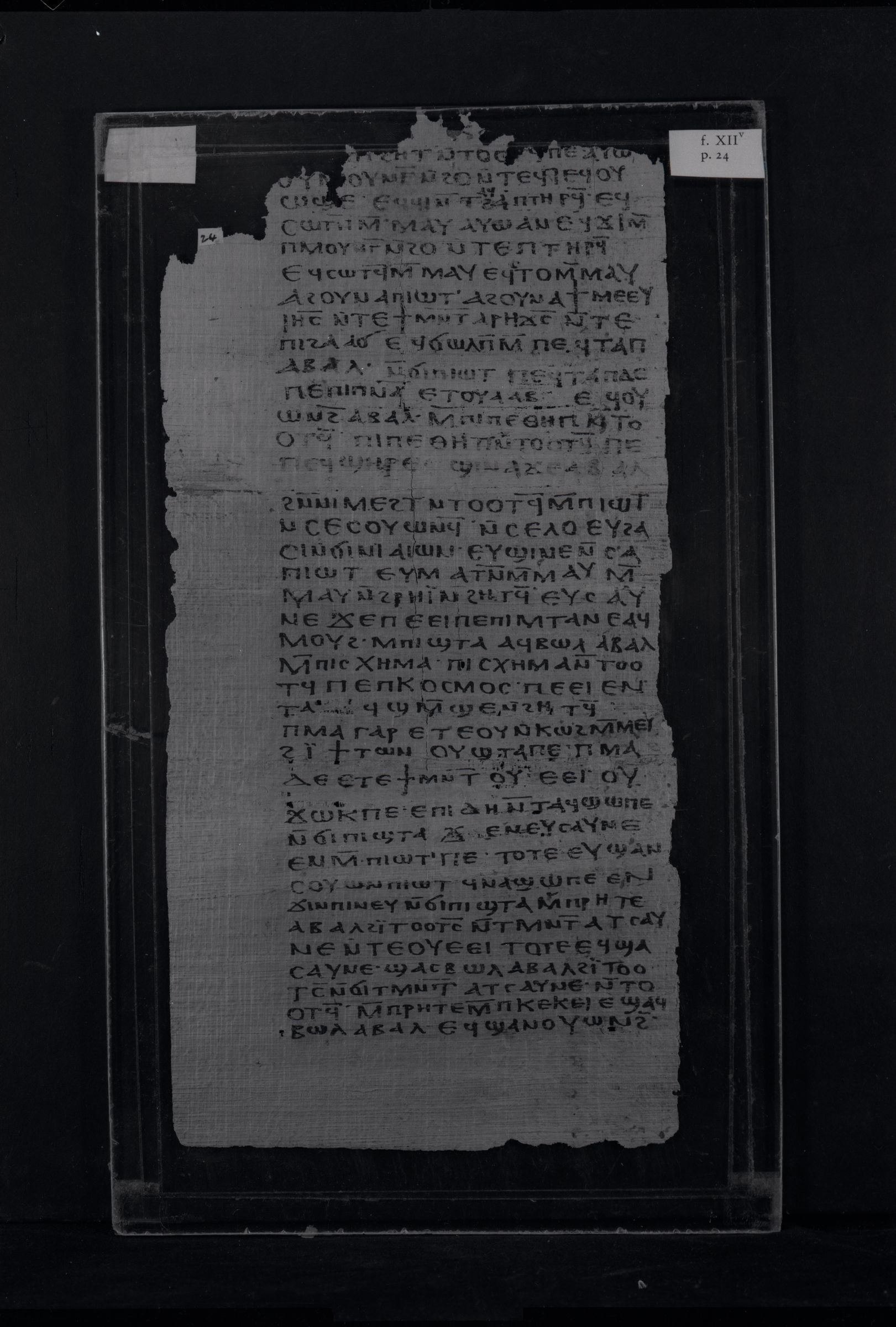
Page 24, lines 1-38 (Codex I page 24, A-Series negative, Facsimile Edition (Codex I, 1977) p. 28, CCDL nha 2779). Checked on the photograph: line 1 begins '...ϩⲏⲧ ⲛ̄ⲧⲟⲟⲧϥ ⲡⲉ ⲁⲩⲱ'; line 38 reads 'ⲃⲱⲗ ⲁⲃⲁⲗ ⲉϥϣⲁⲛⲟⲩⲱⲛϩ̄'. Page and line numbers from the Marcion transcription; English from Mattison's text between his page marks 24 and 25.
24.1[ⲛ̄ⲧⲉ] ⲡ̣ⲓ̣ϩⲏⲧ: ⲛ̄ⲧⲟⲟ̣ⲧ̣ϥ ⲡⲉ: ⲁⲩⲱ
24.2ⲟ̣ⲩⲙⲟⲩⲛⲅ̄ ⲛ̄ϩⲟ ⲛ̄ⲧⲉ ⲡⲉϥⲟⲩ-
24.3ⲱϣⲉ: ⲉϥϥⲓ ⲛ̄ⲧ\ⲁϥ/ ϩⲁ: ⲡⲧⲏⲣϥ̄: ⲉϥ-
24.4ⲥⲱⲧⲡ̄ ⲙ̄:ⲙⲁⲩ ⲁⲩⲱ ⲁⲛ ⲉϥϫⲓ ⲙ̄-
24.5ⲡⲙⲟⲩⲛⲅ̄ ⲛ̄ϩⲟ ⲛ̄ⲧⲉ ⲡⲧⲏⲣϥ̄
24.6ⲉϥⲥⲱⲧϥ̄ ⲙ̄ⲙⲁⲩ ⲉϥ\ⲥ/ⲧⲟ ⲙ̄ⲙⲁⲩ
24.7ⲁϩⲟⲩⲛ ⲁⲡⲓⲱⲧ: ⲁϩⲟⲩⲛ ⲁϯⲙⲉⲉⲩ
24.8ⲓⲏ(ⲥⲟⲩ)ⲥ ⲛ̄ⲧⲉ ϯⲙⲛ̄ⲧ⟨ⲁⲧ⟩ⲁⲣⲏϫⲥ̄ ⲛ̄ⲧⲉ:
24.9ⲡⲓϩⲗⲁϭ ⲉϥϭⲱⲗⲡ̄ ⲙ̄ⲡⲉϥⲧⲁⲡ
24.10ⲁⲃⲁⲗ: ⲛ̄ϭⲓ ⲡⲓⲱⲧ ⲡⲉϥⲧⲁⲡ ⲇⲉ
24.11ⲡⲉ ⲡⲓⲡⲛ(ⲉⲩⲙ)ⲁ ⲉⲧⲟⲩⲁⲁⲃ ⲉϥⲟⲩ-
24.12ⲱⲛϩ̄ ⲁⲃⲁⲗ: ⲙ̄ⲡⲓⲡⲉⲑⲏⲡ ⲛ̄ⲧⲟ-
24.13ⲟⲧϥ̄: ⲡⲓⲡⲉⲑⲏⲡ ⲛ̄ⲧⲟⲟⲧϥ̄ ⲡⲉ
24.14ⲡⲉϥϣⲏⲣⲉ: ϣⲓⲛⲁ ϫⲉ ⲁⲃⲁⲗ
24.15ϩⲛ̄ ⲛⲓⲙⲉϩⲧ ⲛⲧⲟⲟⲧϥ̄ ⲙ̄ⲡⲓⲱⲧ
24.16ⲛⲥⲉⲥⲟⲩⲱⲛϥ̄: ⲛ̄ⲥⲉⲗⲟ ⲉⲩϩⲁ-
24.17ⲥⲓ ⲛ̄ϭⲓ ⲛⲓⲁⲓⲱⲛ: ⲉⲩϣⲓⲛⲉ ⲛ̄ⲥⲁ
24.18ⲡⲓⲱⲧ ⲉⲩⲙⲁⲧⲛ̄ ⲙ̄ⲙⲁⲩ ⲙ̄-
24.19ⲙⲁⲩ ⲛ̄ϩⲣⲏⲓ̈ ⲛ̄ϩⲏⲧϥ̄: ⲉⲩⲥⲁⲩ-
24.20ⲛⲉ ϫⲉ ⲡⲉⲉⲓ ⲡⲉ ⲡⲓⲙⲧⲁⲛ ⲉⲁϥ-
24.21ⲙⲟⲩϩ: ⲙⲡⲓϣⲧⲁ ⲁϥⲃⲱⲗ ⲁⲃⲁⲗ
24.22ⲙ̄ⲡⲓⲥⲭⲏⲙⲁ: ⲡⲓⲥⲭⲏⲙⲁ ⲛ̄ⲧⲟⲟ-
24.23ⲧϥ ⲡⲉ ⲡⲕⲟⲥⲙⲟⲥ: ⲡⲉⲉⲓ ⲉⲛ-
24.24ⲧⲁϥϣⲙ̄ϣⲉ ⲛ̄ϩⲏⲧϥ̄:
24.25ⲡⲙⲁ ⲅⲁⲣ ⲉⲧⲉ ⲟⲩⲛ̄ ⲕⲱϩ ⲙ̄ⲙⲉⲩ
24.26ϩⲓ̈ϯ ⲧⲱⲛ ⲟⲩϣⲧⲁ ⲡⲉ: ⲡⲙⲁ
24.27ⲇⲉ ⲉⲧⲉ ϯⲙⲛ̄ⲧⲟⲩⲉⲉⲓ: ⲟⲩ-
24.28ϫⲱⲕ ⲡⲉ: ⲉⲡⲓⲇⲏ ⲛ̄ⲧⲁϥϣⲱⲡⲉ
24.29ⲛ̄ϭⲓ ⲡⲓϣⲧⲁ ϫⲉ ⲛⲉⲩⲥⲁⲩⲛⲉ
24.30ⲉⲛ ⲙ̄ⲡⲓⲱⲧ: ⲡⲉ: ⲧⲟⲧⲉ: ⲉⲩϣⲁⲛ-
24.31ⲥⲟⲩⲱⲛ ⲡⲓⲱⲧ: ϥⲛⲁϣⲱⲡⲉ ⲉⲛ
24.32ϫⲓⲛ ⲡⲓⲛⲉⲩ ⲛ̄ϭⲓ ⲡⲓϣⲧⲁ ⲙ̄ⲡⲣⲏⲧⲉ
24.33ⲁⲃⲁⲗ ϩⲓ̈ⲧⲟⲟⲧⲥ̄ ⲛ̄ⲧⲙⲛ̄ⲧⲁⲧⲥⲁⲩ-
24.34ⲛⲉ ⲛ̄ⲧⲉ ⲟⲩⲉⲉⲓ ⲧⲟⲧⲉ ⲉϥϣⲁ-
24.35ⲥⲁⲩⲛⲉ: ϣⲁⲥⲃⲱⲗ ⲁⲃⲁⲗ ϩⲓ̈ⲧⲟⲟ-
24.36ⲧⲥ̄ ⲛ̄ϭⲓ ⲧⲙⲛ̄ⲧⲁⲧⲥⲁⲩⲛⲉ: ⲛ̄ⲧⲟ
24.37ⲟⲧϥ̄: ⲙ̄ⲡⲣⲏⲧⲉ ⲙ̄ⲡⲕⲉⲕⲉⲓ ⲉϣⲁϥ-
24.38ⲃⲱⲗ ⲁⲃⲁⲗ: ⲉϥϣⲁⲛⲟⲩⲱⲛϩ̄:
[of] his heart and an expression of his will. But it supports all. It chooses them and also takes the expression of all, purifying them, returning them to the Father and to the Mother, Jesus of infinite sweetness.
The Father reveals his bosom, and his bosom is the Holy Spirit. He reveals what’s hidden of himself; what’s hidden of himself is his Son – so that through the mercies of the Father, the generations may know him and cease their work in searching for the Father, resting in him and knowing that this is the rest. He’s filled the need and dissolved its appearance – its appearance is the world in which it served, because where there’s envy and strife there’s need, but where there’s Unity there’s completion. Since need came into being because the Father wasn’t known, when the Father is known, from then on, need will no longer exist. As someone’s ignorance dissolves when they gain knowledge, and as darkness dissolves when the light appears,
Where on the image
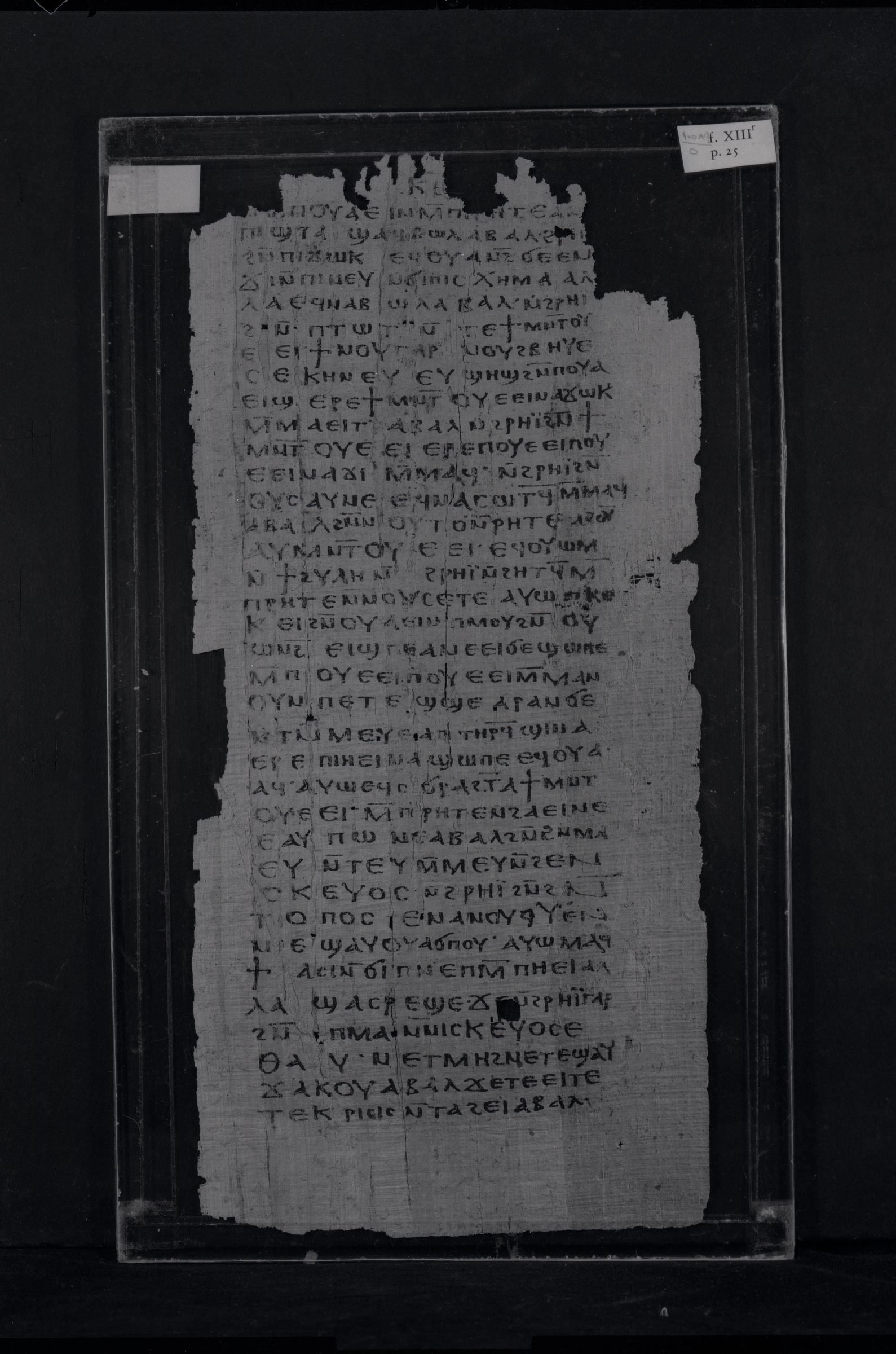
Page 25, lines 1-36 (Codex I page 25, A-Series negative, Facsimile Edition (Codex I, 1977) p. 29, CCDL nha 2725). Checked on the photograph: line 1 begins '...ⲡⲟⲩⲁⲉⲓⲛ ⲙ̄ⲡⲓⲣⲏⲧⲉ ⲁⲛ'; line 36 reads 'ⲧⲉⲕⲣⲓⲥⲓⲥ ⲛ̄ⲧⲁϩⲉⲓ ⲁⲃⲁⲗ'. Page and line numbers from the Marcion transcription; English from Mattison's text between his page marks 25 and 26.
25.1ⲛϭ̣ⲓ̣ ⲡⲟⲩⲁⲉⲓⲛ ⲙ̄ⲡⲓ̣ⲣ̣ⲏⲧⲉ ⲁⲛ
25.2ⲡⲓϣⲧⲁ ϣⲁϥⲃⲱⲗ ⲁⲃⲁⲗ: ϩⲣ̣ⲏ[ⲓ̈]
25.3ϩⲛ̄ ⲡⲓϫⲱⲕ ⲉϥⲟⲩⲁⲛϩ̄ ϭⲉ ⲉⲛ
25.4ϫⲓⲛ̄ ⲡⲓⲛⲉⲩ ⲛ̄ϭⲓ ⲡⲓⲥⲭⲏⲙⲁ ⲁⲗ-
25.5ⲗⲁ ⲉϥⲛⲁⲃⲱⲗ ⲁⲃⲁⲗ: ⲛ̄ϩⲣⲏⲓ̈
25.6ϩⲛ̄ ⲡⲧⲱⲧ ⲛ̄ⲧⲉ ϯⲙⲛ̄ⲧⲟⲩ-
25.7ⲉⲉⲓ: ϯⲛⲟⲩ ⲅⲁⲣ: ⲛⲟⲩϩⲃⲏⲩⲉ
25.8ⲥⲉⲕⲏ ⲛⲉⲩ ⲉⲩϣⲏϣ ϩⲛ̄ ⲡⲟⲩⲁ-
25.9ⲉⲓϣ ⲉⲣⲉϯⲙⲛ̄ⲧⲟⲩⲉⲉⲓ ⲛⲁϫⲱⲕ
25.10ⲙ̄ⲙⲁⲉⲓⲧ: ⲁⲃⲁⲗ ⲛ̄ϩⲣⲏⲓ̈ ϩⲛ̄ ϯ-
25.11ⲙⲛ̄ⲧⲟⲩⲉⲉⲓ ⲉⲣⲉⲡⲟⲩⲉⲉⲓ ⲡⲟⲩ-
25.12ⲉⲉⲓ ⲛⲁϫⲓ ⲙ̄ⲙⲁϥ: ⲛ̄ϩⲣⲏⲓ̈ ϩⲛ̄
25.13ⲟⲩⲥⲁⲩⲛⲉ ⲉϥⲛⲁⲥⲱⲧϥ̄ ⲙ̄ⲙⲁϥ
25.14ⲁⲃⲁⲗ ϩⲛ̄ⲛ ⲟⲩⲧⲟ: ⲛ̄ⲣⲏⲧⲉ: ⲁϩⲟⲩⲛ
25.15ⲁⲩⲙⲛ̄ⲧⲟⲩⲉⲉⲓ: ⲉϥⲟⲩⲱⲙ
25.16ⲛ̄ϯϩⲩⲗⲏ ⲛ̄ϩⲣⲏⲓ̈ ⲛ̄ϩⲏⲧϥ̄ ⲙ̄-
25.17ⲡⲣⲏⲧⲉ ⲛ̄ⲛⲟⲩⲥⲉⲧⲉ ⲁⲩⲱ ⲡⲕⲉ-
25.18ⲕⲉⲓ ϩⲛ̄ ⲟⲩⲁⲉⲓⲛ ⲡⲙⲟⲩ ϩⲛ̄ ⲟⲩ-
25.19ⲱⲛϩ̄ ⲉⲓϣⲡⲉ ⲁⲛⲉⲉⲓ ϭⲉ ϣⲱⲡⲉ
25.20ⲙ̄ⲡⲟⲩⲉⲉⲓ ⲡⲟⲩⲉⲉⲓ ⲙ̄ⲙⲁⲛ
25.21ⲟⲩⲛ ⲡⲉⲧⲉϣϣⲉ ⲁⲣⲁⲛ ϭⲉ
25.22ⲛ̄ⲧⲛ̄ⲙⲉⲩⲉ ⲁⲡⲧⲏⲣϥ̄ ϣⲓⲛⲁ:
25.23ⲉⲣⲉⲡⲓⲏⲉⲓ ⲛⲁϣⲱⲡⲉ ⲉϥⲟⲩⲁ:-
25.24ⲁϥ: ⲁⲩⲱ ⲉϥⲥϭⲣⲁϩⲧ̄ ⲁϯⲙⲛ̄ⲧ-
25.25ⲟⲩⲉⲉⲓ: ⲙ̄ⲡⲣⲏⲧⲉ ⲛ̄ϩⲁⲉⲓⲛⲉ
25.26ⲉⲁⲩⲡⲱⲛⲉ ⲁⲃⲁⲗ ϩⲛ̄ ϩⲛⲙⲁ
25.27ⲉⲩⲛ̄ⲧⲉⲩ ⲙ̄ⲙⲉⲩ ⲛ̄ϩⲉⲛ-
25.28ⲥⲕⲉⲩⲟⲥ: ⲛ̄ϩⲣⲏⲓ̈ ϩⲛ̄ ϩⲛ̄-
25.29ⲧⲟⲡⲟⲥ ⲉⲛⲁⲛⲟⲩⲟⲩ: ⲉⲛ
25.30ⲛⲉϣⲁⲩⲟⲩⲁϭⲡⲟⲩ: ⲁⲩⲱ ⲙⲁϥ-
25.31ϯ ⲁⲥⲓ ⲛ̄ϭⲓ ⲡⲛⲉⲡ ⲙ̄ⲡⲏⲉⲓ ⲁⲗ-
25.32ⲗⲁ ϣⲁⲥⲣⲉϣⲉ: ϫⲉ̣ ⲛ̄ϩⲣⲏⲓ̈ ⲅⲁⲣ
25.33ϩⲛ̄ ⲡⲙⲁ ⲛ̄ⲛⲓⲥⲕⲉⲩⲟⲥ ⲉ-
25.34ⲑⲁⲩ: ⲛⲉⲧⲙⲏϩ ⲛⲉⲧⲉϣⲁⲩ-
25.35ϫⲁⲕⲟⲩ ⲁⲃⲁⲗ ϫⲉ ⲧⲉⲉⲓ ⲧⲉ
25.36ⲧⲉⲕⲣⲓⲥⲓⲥ ⲛ̄ⲧⲁϩⲉⲓ ⲁⲃⲁⲗ:
so also need dissolves in completion. So the appearance is revealed from then on, but it’ll dissolve in the harmony of Unity.
For now, their works lie scattered. In time, Unity will complete the realms. Within Unity each one will receive themselves, and within knowledge they’ll purify themselves from multiplicity into Unity, consuming matter within themselves like fire, and darkness by light, death by life. If indeed these things have happened to each one of us, then it’s right for us to think about all, so that this house will be holy and silent for the Unity.
The Parable of the Jars
It’s like some who’ve left their home, having jars that weren’t any good in places. They broke them, but the master of the house doesn’t suffer any loss. Instead he rejoices, because in place of the bad jars are ones that are full and complete. For this is
Where on the image
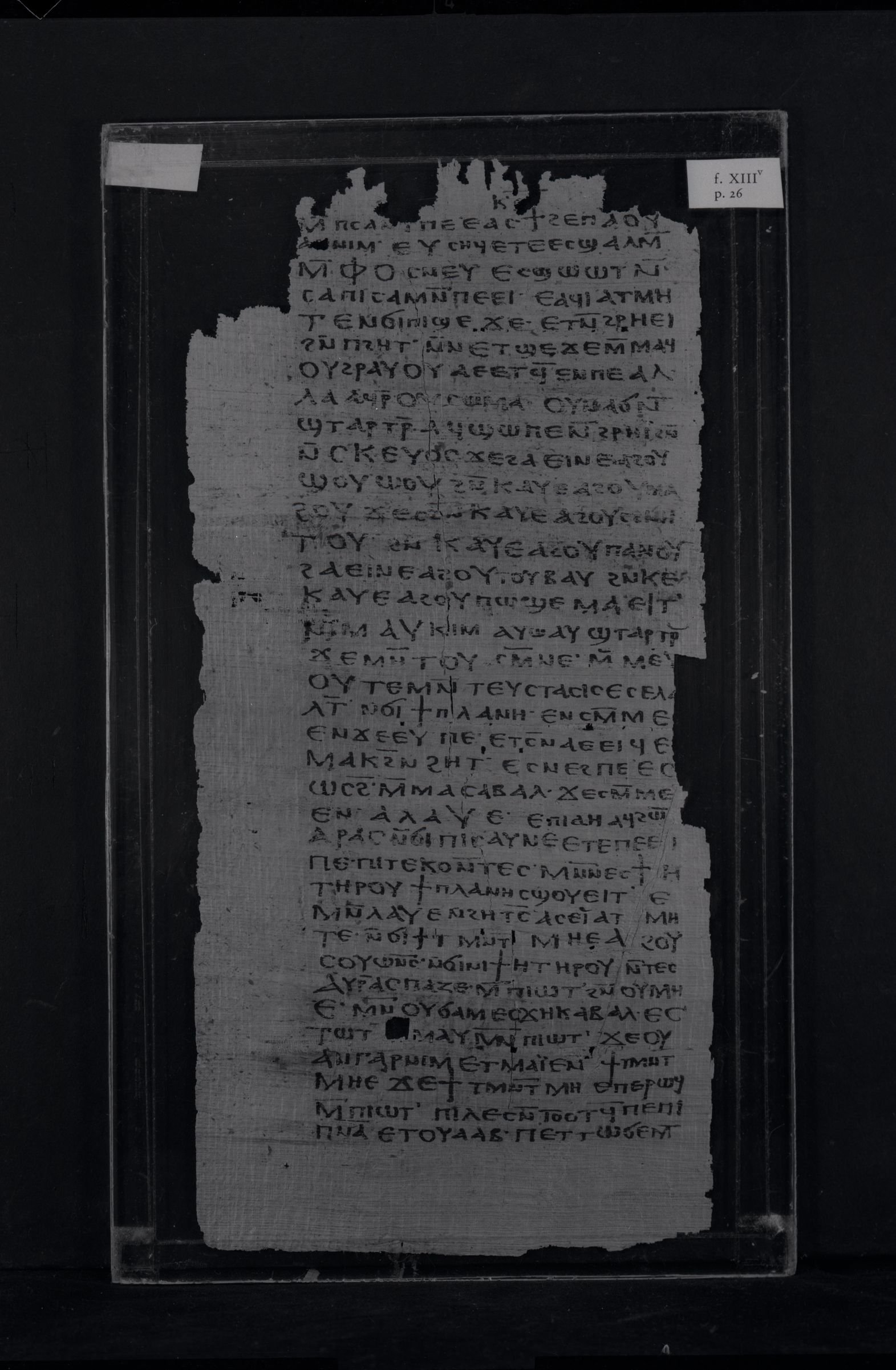
Page 26, lines 1-36 (Codex I page 26, A-Series negative, Facsimile Edition (Codex I, 1977) p. 30, CCDL nha 2745). Checked on the photograph: line 1 begins 'ⲙ̄ⲡⲥⲁ ⲛⲧⲡⲉ ⲉⲁⲥϯ ϩⲉⲡ ⲁⲟⲩ'; line 36 reads 'ⲡⲛ̄ⲁ ⲉⲧⲟⲩⲁⲁⲃ· ⲡⲉⲧⲧⲱϭⲉ ⲙ̄'; the photograph has the abbreviation ⲡⲛ̄ⲁ, which the source writes out as ⲡⲛ(ⲉⲩⲙ)ⲁ. Page and line numbers from the Marcion transcription; English from Mattison's text between his page marks 26 and 27.
26.1ⲙ̄ⲡⲥⲁ ⲛⲧⲡⲉ: ⲉⲁⲥϯ ϩⲉⲡ: ⲁⲟⲩ-
26.2ⲁⲛ ⲛⲓⲙ: ⲉⲩⲥⲏϥⲉ ⲧⲉ ⲉⲥϣⲁⲗⲙ̄
26.3ⲙ̄ⲫⲟ ⲥⲛⲉⲩ ⲉⲥϣⲱⲱⲧ: ⲛ̄-
26.4ⲥⲁ ⲡⲓⲥⲁ ⲙⲛ̄ ⲡⲉⲉⲓ: ⲉⲁϥⲓ ⲁⲧⲙⲏ-
26.5ⲧⲉ ⲛ̄ϭⲓ ⲡⲓϣⲉϫⲉ: ⲉⲧⲛ̄ϩⲣⲏⲉⲓ
26.6ϩⲛ̄ ⲡϩⲏⲧ: ⲛ̄ⲛⲉⲧϣⲉϫⲉ ⲙ̄ⲙⲁϥ
26.7ⲟⲩϩⲣⲁⲩ ⲟⲩⲁⲉⲉⲧϥ̄ ⲉⲛ ⲡⲉ ⲁⲗ:-
26.8ⲗⲁ ⲁϥⲣ̄ ⲟⲩⲥⲱⲙⲁ: ⲟⲩⲛⲁϭ ⲛ̄-
26.9ϣⲧⲁⲣⲧⲣ̄ ⲁϥϣⲱⲡⲉ ⲛ̄ϩⲣⲏⲓ̈ ϩⲛ̄
26.10ⲛ̄ⲥⲕⲉⲩⲟⲥ ϫⲉ ϩⲁⲉⲓⲛⲉ ⲁϩⲟⲩ-
26.11ϣⲟⲩⲱⲟⲩ ϩⲛ̄ⲕⲁⲩⲉ ⲁϩⲟⲩⲙⲁ-
26.12ϩⲟⲩ ϫⲉⲥ ϩⲛ̄ⲕⲁⲩⲉ ⲁϩⲟⲩⲥϩⲛⲏ
26.13ⲧⲟⲩ: ϩⲛ̄ⲕⲁⲩⲉ ⲁϩⲟⲩⲡⲁⲛⲟⲩ
26.14ϩⲁⲉⲓⲛⲉ ⲁϩⲟⲩⲧⲟⲩⲃⲁⲩ ϩⲛⲕⲉ-
26.15ⲕⲁⲩⲉ ⲁϩⲟⲩⲡⲱϣⲉ ⲙⲁⲉⲓⲧ:
26.16ⲛⲓⲙ ⲁⲩⲕⲓⲙ ⲁⲩⲱ ⲁⲩϣⲧⲁⲣⲧⲣ̄
26.17ϫⲉ ⲙⲛ̄ⲧⲟⲩ ⲥⲙ̄ⲛⲉ: ⲙ̄ⲙⲉⲩ
26.18ⲟⲩⲧⲉ ⲙⲛ̄ⲧⲉⲩ ⲥⲧⲁⲥⲓⲥ ⲉⲥⲉⲗⲁ-
26.19ⲗⲧ̄: ⲛ̄ϭⲓ ϯⲡⲗⲁⲛⲏ: ⲉⲛⲥⲙ̄ⲙⲉ
26.20ⲉⲛ ϫⲉ ⲉⲩ ⲡⲉ: ⲉⲧⲥ̄ⲛⲁⲉⲉⲓϥ ⲉⲥ-
26.21ⲙⲁⲕϩ̄ ⲛϩⲏⲧ: ⲉⲥⲛⲉϩⲡⲉ: ⲉⲥ-
26.22ⲱⲥϩ̄: ⲙ̄ⲙⲁⲥ ⲁⲃⲁⲗ: ϫⲉ ⲥⲙ̄ⲙⲉ
26.23ⲉⲛ: ⲁⲗⲁⲩⲉ: ⲉⲡⲓⲇⲏ ⲁϥϩⲱⲛ
26.24ⲁⲣⲁⲥ ⲛ̄ϭⲓ ⲡⲓⲥⲁⲩⲛⲉ ⲉⲧⲉ ⲡⲉⲉⲓ
26.25ⲡⲉ: ⲡⲓⲧⲉⲕⲟ ⲛ̄ⲧⲉⲥ: ⲙⲛ̄ ⲛⲉⲥϯⲏ
26.26ⲧⲏⲣⲟⲩ ϯⲡⲗⲁⲛⲏ ⲥϣⲟⲩⲉⲓⲧ: ⲉ-
26.27ⲙⲛ̄ ⲗⲁⲩⲉ ⲛ̄ϩⲏⲧⲥ̄: ⲁⲥⲉⲓ̄ ⲁⲧⲙⲏ-
26.28ⲧⲉ: ⲛ̄ϭⲓ ϯⲧⲙⲛ̄ⲧⲙⲏⲉ ⲁϩⲟⲩ-
26.29ⲥⲟⲩⲱⲛⲥ̄: ⲛ̄ϭⲓ ⲛⲓϯⲏ ⲧⲏⲣⲟⲩ ⲛ̄ⲧⲉⲥ
26.30ⲁⲩⲣ̄ ⲁⲥⲡⲁⲍⲉ: ⲙ̄ⲡⲓⲱⲧ: ϩⲛ̄ ⲟⲩⲙⲏ-
26.31ⲉ: ⲙⲛ̄ ⲟⲩϭⲁⲙ ⲉⲥϫⲏⲕ ⲁⲃⲁⲗ: ⲉⲥ-
26.32ⲧⲱⲧ ⲙ̣̄ⲙⲁⲩ ⲙⲛ̄ ⲡⲓⲱⲧ: ϫⲉ ⲟⲩ-
26.33ⲁⲛ ⲅⲁⲣ ⲛⲓⲙ ⲉⲧⲙⲁⲓ̈ⲉ ⲛ̄ϯⲧⲙⲛ̄ⲧ-
26.34ⲙⲏⲉ ϫⲉ ϯⲧⲙⲛ̄ⲧⲙⲏⲉ ⲡⲉ ⲣⲱϥ
26.35ⲙ̄ⲡⲓⲱⲧ: ⲡⲓⲗⲉⲥ ⲛ̄ⲧⲟⲟⲧϥ̄ ⲡⲉ ⲡⲓ-
26.36ⲡⲛ(ⲉⲩⲙ)ⲁ ⲉⲧⲟⲩⲁⲁⲃ: ⲡⲉⲧⲧⲱϭⲉ ⲙ̄-
the judgment that’s come from above; it’s judged everyone. It’s a drawn, two-edged sword which cuts both ways. The Word, which is in the hearts of those who speak it, appeared. It isn’t just a sound, but it was incarnated (embodied).
A great disturbance arose among the jars, because some were empty, others filled; some provided for, others poured out; some purified, others broken. All the realms were shaken and disturbed, because they didn’t have order or stability. Error was anxious. It didn’t know what to do; it grieved, mourned, and hurt itself, because it knew nothing. The knowledge, which is its (Error’s) destruction, approached it (Error) and all that emanated from it. Error is empty, with nothing inside it.
Truth came into their midst, and all that emanated knew it. They welcomed the Father in Truth with a complete power that joins them with the Father. Truth is the Father’s mouth; the Holy Spirit is his tongue. Everyone who loves the Truth and are joined to the
Where on the image
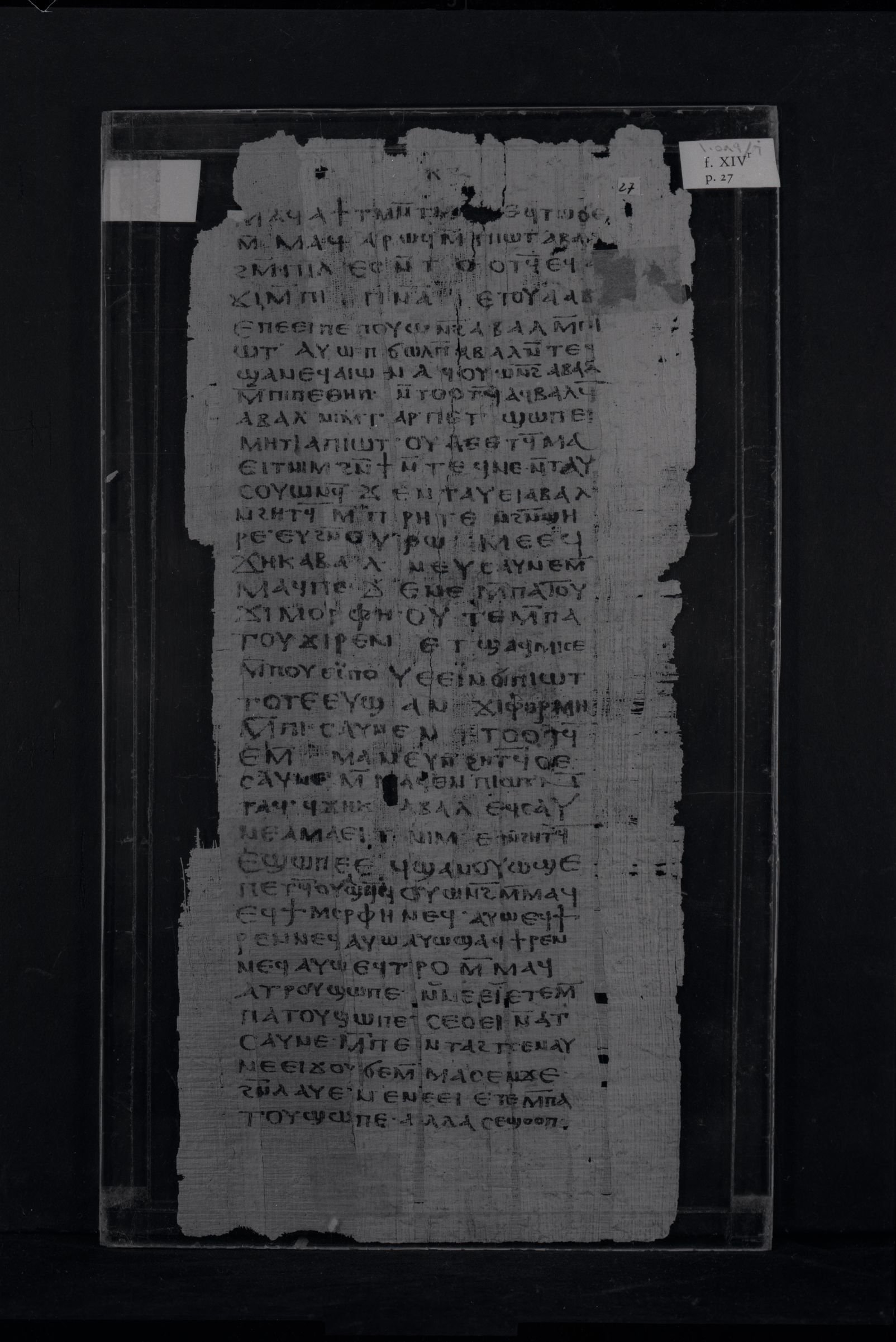
Page 27, lines 1-36 (Codex I page 27, A-Series negative, Facsimile Edition (Codex I, 1977) p. 31, CCDL nha 2812). Checked on the photograph: line 1 begins 'ⲙⲁϥ ⲁϯⲧⲙⲛ̄ⲧⲙⲏⲉ ⲉϥⲧⲱϭⲉ'; line 36 reads 'ⲧⲟⲩϣⲱⲡⲉ· ⲁⲗⲗⲁ ⲥⲉϣⲟⲟⲡ·'. Page and line numbers from the Marcion transcription; English from Mattison's text between his page marks 27 and 28.
27.1ⲙⲁϥ ⲁϯⲧⲙⲛ̄ⲧⲙⲏ̣ⲉ̣ ⲉϥⲧⲱϭⲉ
27.2ⲙ̄ⲙⲁϥ ⲁⲣⲱϥ ⲙ̄ⲡⲓⲱⲧ: ⲁⲃⲁⲗ̣
27.3ϩⲙ̄ ⲡⲓⲗⲉⲥ ⲛ̄ⲧⲟⲟⲧϥ̄ ⲉϥⲁ-
27.4ϫⲓ ⲙ̄ⲡⲓⲡⲛ(ⲉⲩⲙ)ⲁ ⲉⲧⲟⲩⲁⲁⲃ
27.5ⲉⲡⲉⲉⲓ ⲡⲉ ⲡⲟⲩⲱⲛϩ̄ ⲁⲃⲁⲗ ⲙ̄ⲡⲓ-
27.6ⲱⲧ: ⲁⲩⲱ ⲡϭⲱⲗⲡ̄ ⲁⲃⲁⲗ ⲛ̄ⲧⲉϥ
27.7ϣⲁ ⲛⲉϥⲁⲓⲱⲛ ⲁϥⲟⲩⲱⲛϩ̄ ⲁⲃⲁⲗ
27.8ⲙ̄ⲡⲓⲡⲉⲑⲏⲡ: ⲛ̄ⲧⲟⲟⲧϥ̄ ⲁϥⲃⲁⲗϥ̄
27.9ⲁⲃⲁⲗ ⲛⲓⲙ: ⲅⲁⲣ: ⲡⲉⲧϣⲱⲡ ⲉⲓ-
27.10ⲙⲏⲧⲓ ⲁⲡⲓⲱⲧ: ⲟⲩⲁⲉⲉⲧϥ̄ ⲙⲁ-
27.11ⲉⲓⲧ ⲛⲓⲙ ϩⲛ̄ϯ ⲛ̄ⲧⲉϥ ⲛⲉ: ⲛ̄ⲧⲁⲩ-
27.12ⲥⲟⲩⲱⲛϥ̄ ϫⲉ ⲛ̄ⲧⲁⲩⲉⲓ ⲁⲃⲁⲗ
27.13ⲛ̄ϩⲏⲧϥ̄ ⲙ̄ⲡⲣⲏⲧⲉ ⲛ̄ϩⲛ̄ϣⲏ-
27.14ⲣⲉ: ⲉⲩϩⲛ̄ ⲟⲩⲣⲱⲙⲉ ⲉϥ-
27.15ϫⲏⲕ ⲁⲃⲁⲗ: ⲛⲉⲩⲥⲁⲩⲛⲉ ⲙ̄-
27.16ⲙⲁϥ ⲡⲉ: ϫⲉ ⲛⲉⲙ̄ⲡⲁⲧⲟⲩ-
27.17ϫⲓ ⲙⲟⲣⲫⲏ: ⲟⲩⲧⲉ ⲙ̄ⲡⲁ-
27.18ⲧⲟⲩϫⲓ ⲣⲉⲛ ⲉⲧϣⲁϥⲙⲓⲥⲉ
27.19ⲙ̄ⲡⲟⲩⲉⲓ̈ ⲡⲟⲩⲉⲉⲓ ⲛ̄ϭⲓ ⲡⲓⲱⲧ
27.20ⲧⲟⲧⲉ ⲉⲩϣⲁⲛϫⲓ ⲫⲟⲣⲙⲏ
27.21ⲙ̄ⲡⲓⲥⲁⲩⲛⲉ ⲛⲧⲟⲟⲧϥ̄
27.22ⲉⲙ̄ⲙⲁⲛ ⲉⲩⲛ̄ϩⲏⲧϥ̄ ⲥⲉ-
27.23ⲥⲁⲩⲛⲉ: ⲙ̄ⲙⲁϥ: ⲉⲛ: ⲡⲓⲱⲧ: ⲛ̄-
27.24ⲧⲁϥ: ϥϫⲏⲕ ⲁⲃⲁⲗ ⲉϥⲥⲁⲩ-
27.25ⲛⲉ ⲁⲙⲁⲉⲓⲧ ⲛⲓⲙ: ⲉⲧⲛ̄ϩⲏⲧϥ̄
27.26ⲉϣⲱⲡⲉ ⲉϥϣⲁⲛⲟⲩⲱϣⲉ
27.27ⲡⲉⲧϥ̄ⲟⲩ\ⲁ/ϣϥ̄ ϥⲟⲩⲱⲛϩ̄ ⲙ̄ⲙⲁϥ
27.28ⲉϥϯ ⲙⲟⲣⲫⲏ ⲛⲉϥ: ⲁⲩⲱ ⲉϥϯ
27.29ⲣⲉⲛ ⲛⲉϥ ⲁⲩⲱ {ⲁⲩⲱ} ⲥⲁϥϯ ⲣⲉⲛ
27.30ⲛⲉϥ ⲁⲩⲱ ⲉϥⲧⲣⲟ ⲙ̄ⲙⲁϥ
27.31ⲁⲧⲣⲟⲩϣⲱⲡⲉ: ⲛ̄ⲛⲉⲉⲓ̄: ⲉⲧⲉⲙ̄-
27.32ⲡⲁⲧⲟⲩϣⲱⲡⲉ: ⲥⲉⲟⲉⲓ ⲛ̄ⲁⲧ-
27.33ⲥⲁⲩⲛⲉ: ⲙ̄ⲡⲉⲛⲧⲁϩⲧⲥⲉⲛⲁⲩ
27.34ⲛⲉⲉⲓϫⲟⲩ̣ ϭⲉ ⲙ̄ⲙⲁⲥ ⲉⲛ ϫⲉ
27.35ϩⲛ̄ⲗⲁⲩⲉ ⲛⲉ ⲛⲉⲉⲓ ⲉⲧⲉⲙ̄ⲡⲁ-
27.36ⲧⲟⲩϣⲱⲡⲉ: ⲁⲗⲗⲁ ⲥⲉϣⲟⲟⲡ:
Truth are joined to the Father’s mouth. By his tongue they’ll receive the Holy Spirit. This is the revelation of the Father and his manifestation to his generations. He revealed what was hidden of himself; he explained it, because who has anything, if not the Father alone?
Coming into Being
Every realm emanates from him. They know they’ve come out from him like children who are from someone who’s completely mature. They knew they hadn’t yet received form or a name. The Father gives birth to each one. Then, when they receive form from his knowledge, although they’re really within him, they don’t know him. But the Father is complete, knowing every realm that’s within him. If he wants to, he reveals whomever he wants, giving them a form and a name. He gives a name to them, and causes those to come into being who, before they come into being, are ignorant of the one who made them.
I’m not saying, then, that those who haven’t yet come into being are nothing, but they exist
Notes
- Coptic: Marcion 1.8 (Milan Konvicka), Nag Hammadi text package, converted here from its ASCII font coding to Unicode Coptic letter for letter. Marcion does not name the printed edition behind its text. The small numbers are codex page and line (for example 18.11) as given in the source.
- Signs in the Coptic: a stroke over a letter, or a line over two letters, is the scribe's supralinear stroke; a dot under a letter marks an uncertain reading; square brackets mark letters lost in a gap (restored by the editor, or dots for the number of lost letters); round brackets write out an abbreviation (as in ⲓⲏ(ⲥⲟⲩ)ⲥ); angle brackets mark letters added by the editor; curly brackets letters the editor removes; double square brackets letters cancelled by the scribe; \ / letters written above the line. The colon (:) is kept as the source gives it; the source does not say what it marks, and on the photographs it does not always match a visible point (the scribe's raised points are small, and some have no colon in the source). A hyphen at the end of a line marks a word that runs on to the next line (the transcription's convention).
- Marcion's text also carries a paragraph code and, at the end of 20.19, one further code whose meaning it does not state; neither is reproduced. A circumflex (as in the interjection ⲱ̂ at 20.27) is the scribe's. The diple (>) the scribe writes before some paragraph openings (for example 17.1) is not in the source text and is not shown.
- English: Mark M. Mattison, The Gospel of Truth (public domain), split at Mattison's own page numbers. Mattison's symbols: [ ] gap in the text, ( ) editorial insertion. The headings in italics are his.
- Mattison's note, Page 22: “He revealed his will as knowledge in harmony with all that emanated from him.” For clarity, this translation follows Lillie in omitting the preceding phrase which creates a logical incoherence: “If his will hadn’t come out from him.” It appears that either the author changed direction mid-sentence, or the scribe copying this text made an error.
- Mattison's note, Pages 23, 34, and 41: “expression.” Literally, “form of face.”
Cite
Sources
- Source: Nag Hammadi Codex I page photographs (Claremont Colleges Digital Library, Nag Hammadi Archive) + Coptic transcription from Marcion (Milan Konvicka) + English by Mark M. Mattison (public domain) (holding institution)
- Critical edition: Coptic transcription from Marcion (Milan Konvicka; printed edition not named)
← previous · → next · v cycle view · l back to library