Gospel of Truth, pages 40-43 (Nag Hammadi Codex I)
Introduction
The Gospel of Truth is a Christian meditation on the Father, the Word and the return of all things to the one from whom they came, through knowledge that ends forgetfulness and error. Many scholars connect it with the teacher Valentinus or his circle (mid 2nd century). It was written in Greek and survives in Coptic: complete as the third tractate of Nag Hammadi Codex I (the Jung Codex), a papyrus book copied in the 4th century and found near Nag Hammadi in 1945, now in the Coptic Museum, Cairo; small fragments of another copy are in Codex XII and are not shown here. The text runs from page 16 line 31 to page 43 line 24. Its title is taken from its opening words.
This entry covers codex pages 40-43, one section per page. The Coptic is given line by line with codex page and line numbers, so each line can be found on the photograph. The English is Mark M. Mattison's public domain translation, divided at the page numbers Mattison prints in it; because English word order differs from Coptic, a sentence divided between two pages is divided where the translator put the page mark.
Photographs: negatives of the Facsimile Edition of the Nag Hammadi Codices, Nag Hammadi Archive of the Institute for Antiquity and Christianity, Claremont Colleges Digital Library. Coptic: Marcion (Milan Konvicka), which does not name the printed edition behind its transcription. First and last line read on each photograph: 40: 'ⲉⲛ ⲛ̄ϭⲓ ⲙ̄ⲙⲓⲥⲉ ⲛ̄ⲧⲟⲟⲧϥ̄ ⲛ̄' ... 'ϩⲏⲧϥ̄', a short last line at the right with a filler stroke; 41: 'ⲁⲩⲱ ⲛϥϯ ⲉⲁⲩ ⲙ̄ⲡⲓⲡⲗⲏⲣⲱⲙⲁ' ... 'ⲙⲟⲥ ⲥⲉⲟⲩⲁⲛϩ ⲇⲉ ⲉⲛ'; 42: 'ⲁⲃⲁⲗ ⲛϭⲓ ⲛⲉⲉⲓ ⲙ̄ⲡⲓⲣⲏⲧⲉ·' ... 'ⲡⲉⲧⲉϣϣⲉ ⲁⲣⲁⲉⲓ ⲉⲛ ⲡⲉ'; 43: 'ⲉⲁϩⲓϣⲱⲡⲉ ϩⲙ̄ ⲡⲙⲁ ⲛⲙ̄ⲧⲁⲛ' ... 'ϣⲟⲩ', followed by filler signs and a decorative band.
How was this verified? (Provenance)
Where on the image
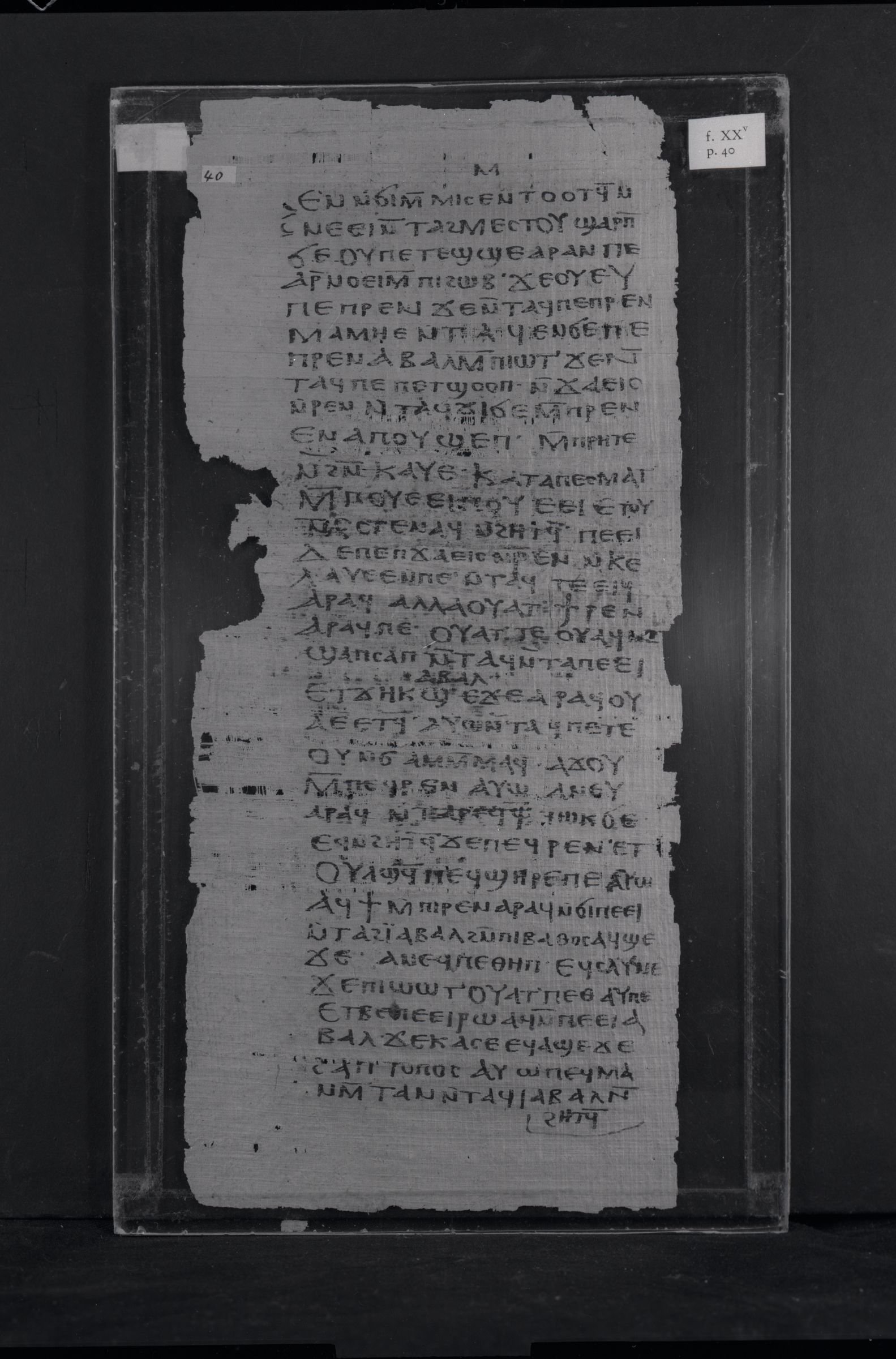
Page 40, lines 1-34 (Codex I page 40, A-Series negative, Facsimile Edition (Codex I, 1977) p. 44, CCDL nha 2765). Checked on the photograph: line 1 begins 'ⲉⲛ ⲛ̄ϭⲓ ⲙ̄ⲙⲓⲥⲉ ⲛ̄ⲧⲟⲟⲧϥ̄ ⲛ̄'; line 34 reads 'ϩⲏⲧϥ̄', a short last line at the right with a filler stroke. Page and line numbers from the Marcion transcription; English from Mattison's text between his page marks 40 and 41.
40.1ⲉⲛ ⲛ̄ϭⲓ ⲙ̄ⲙⲓⲥⲉ ⲛ̄ⲧⲟⲟⲧϥ̄ ⲛ̄-
40.2ⲛⲉⲉⲓ ⲛ̄ⲧⲁϩⲙⲉⲥⲧⲟⲩ ϣⲁⲣⲡ̄
40.3ϭⲉ ⲟⲩⲡⲉⲧⲉϣϣⲉ ⲁⲣⲁⲛ ⲡⲉ
40.4ⲁⲣ̄ ⲛⲟⲉⲓ ⲙ̄ⲡⲓϩⲱⲃ: ϫⲉ ⲟⲩⲉⲩ
40.5ⲡⲉ ⲡⲣⲉⲛ ϫⲉ ⲛ̄ⲧⲁϥ ⲡⲉ ⲡⲣⲉⲛ
40.6ⲙⲁⲙⲏⲉ ⲛ̄ⲧⲁϥ ⲉⲛ ϭⲉ ⲡⲉ
40.7ⲡⲣⲉⲛ: ⲁⲃⲁⲗ ⲙ̄ⲡⲓⲱⲧ: ϫⲉ ⲛ̄-
40.8ⲧⲁϥ ⲡⲉ ⲡⲉⲧϣⲟⲟⲡ: ⲛ̄ϫⲁⲉⲓⲥ
40.9ⲛ̄ⲣⲉⲛ ⲛ̄ⲧⲁϥϫⲓ ϭⲉ ⲙ̄ⲡⲣⲉⲛ
40.10ⲉⲛ ⲁⲡⲟⲩϣⲉⲡ: ⲙ̄ⲡⲣⲏⲧⲉ
40.11ⲛ̄ϩⲛ̄ⲕⲁⲩⲉ: ⲕⲁⲧⲁ ⲡⲉⲥⲙⲁⲧ:
40.12ⲙ̄ⲡⲟⲩⲉⲉⲓ ⲡⲟⲩⲉⲉⲓ ⲉⲧⲟⲩ-
40.13ⲛⲁ{ⲥ}ⲧⲉⲛⲁϥ ⲛ̄ϩⲏⲧϥ̄: ⲡⲉⲉⲓ
40.14ⲇⲉ ⲡⲉ ⲡϫⲁⲉⲓⲥ ⲛ̄ⲣⲉⲛ ⲛ̄ⲕⲉ-
40.15ⲗⲁⲩⲉ ⲉⲛ ⲡⲉ: ⲛ̄ⲧⲁϥⲧⲉⲉⲓϥ
40.16ⲁⲣⲁϥ ⲁⲗⲗⲁ ⲟⲩⲁⲧ:ϯ ⲣⲉⲛ
40.17ⲁⲣⲁϥ ⲡⲉ: ⲟⲩⲁⲧ:ⲧⲉⲟⲩⲁϥ ⲛⲉ
40.18ϣⲁ ⲡⲥⲁⲡ: ⲛ̄ⲧⲁϥ ⲛ̄ⲧⲁⲡⲉⲉⲓ
40.19ⲉⲧϫⲏⲕ \ⲁⲃⲁⲗ:/ ϣⲉϫⲉ ⲁⲣⲁϥ ⲟⲩ-
40.20ⲁⲉⲉⲧϥ̄: ⲁⲩⲱ ⲛ̄ⲧⲁϥ ⲡⲉⲧⲉ
40.21ⲟⲩⲛ̄ ϭⲁⲙ ⲙ̄ⲙⲁϥ: ⲁϫⲟⲩ
40.22ⲙ̄ⲡⲉϥⲣⲉⲛ ⲁⲩⲱ ⲁⲛⲉⲩ
40.23ⲁⲣⲁϥ ⲛ̄ⲧⲁⲣⲉ⟦ϥϥ̄⟧ϥⲱⲕ ϭⲉ
40.24ⲉϥⲛ̄ϩⲏⲧϥ̄ ϫⲉ ⲡⲉϥⲣⲉⲛ: ⲉⲧ-
40.25ⲟⲩⲁϣϥ̄ ⲡⲉϥϣⲏⲣⲉ ⲡⲉ ⲁⲩⲱ
40.26ⲁϥϯ ⲙ̄ⲡⲓⲣⲉⲛ ⲁⲣⲁϥ ⲛ̄ϭⲓ ⲡⲉⲉⲓ
40.27ⲛ̄ⲧⲁϩⲓ̈ ⲁⲃⲁⲗ ϩⲛ̄ ⲡⲓⲃⲁⲑⲟⲥ ⲁϥϣⲉ-
40.28ϫⲉ: ⲁⲛⲉϥⲡⲉⲑⲏⲡ: ⲉϥⲥⲁⲩⲛⲉ
40.29ϫⲉ ⲡⲓⲱⲱⲧ: ⲟⲩⲁⲧ:ⲡⲉⲑⲁⲩ ⲡⲉ
40.30ⲉⲧⲃⲉ ⲡⲉⲉⲓ ⲣⲱ ⲁϥⲛ̄ ⲡⲉⲉⲓ ⲁ-
40.31ⲃⲁⲗ: ϫⲉⲕⲁⲥⲉ ⲉϥⲁϣⲉϫⲉ
40.32ϩⲁ ⲡⲧⲟⲡⲟⲥ ⲁⲩⲱ ⲡⲉϥⲙⲁ
40.33ⲛⲙ̄ⲧⲁⲛ ⲛ̄ⲧⲁϥⲓ ⲁⲃⲁⲗ ⲛ̄-
40.34ϩⲏⲧϥ̄
offspring didn’t receive a name from those who gave them birth?” First, then, it’s right for us to consider what the name is. It’s the true name, the name from the Father, because it’s the proper name. So he didn’t receive the name on loan, the way others do, according to the form in which each one will be produced. This, then, is the proper name. There’s no one else who gave it to him. But he’s unnameable, indescribable, until the time when he who’s complete spoke of him alone. And it’s he who has the power to speak his name and to see him.
So when it pleased him that his beloved name should be his Son, and he gave the name to him who came out from the depth, he disclosed his secrets, knowing that the Father is without evil. Because of this, he brought him out so that he might speak about the place, and his resting place from which he had come,
Where on the image
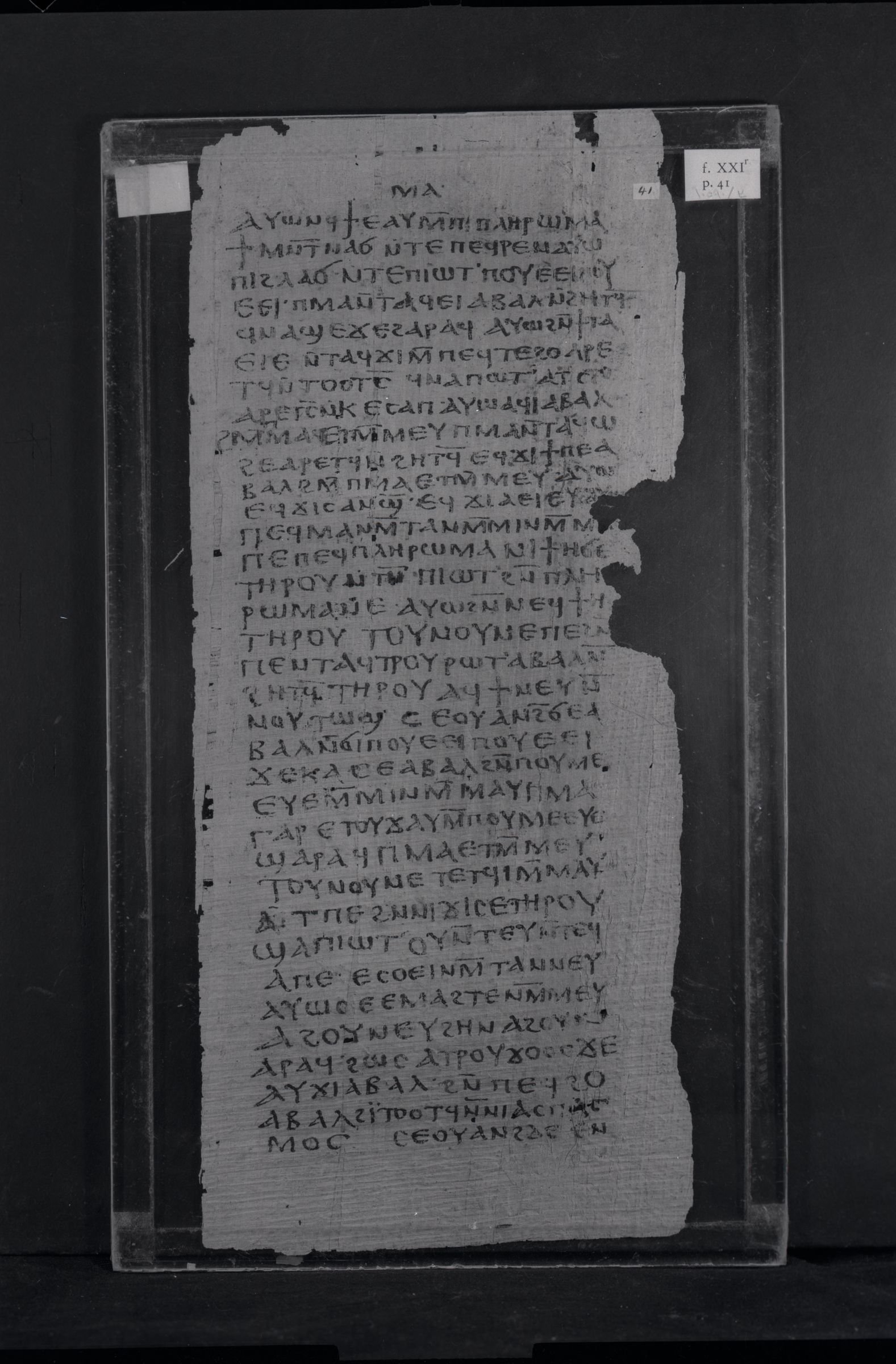
Page 41, lines 1-35 (Codex I page 41, A-Series negative, Facsimile Edition (Codex I, 1977) p. 45, CCDL nha 2769). Checked on the photograph: line 1 begins 'ⲁⲩⲱ ⲛϥϯ ⲉⲁⲩ ⲙ̄ⲡⲓⲡⲗⲏⲣⲱⲙⲁ'; line 35 reads 'ⲙⲟⲥ ⲥⲉⲟⲩⲁⲛϩ ⲇⲉ ⲉⲛ'. Page and line numbers from the Marcion transcription; English from Mattison's text between his page marks 41 and 42.
41.1ⲁⲩⲱ ⲛϥϯ ⲉⲁⲩ ⲙ̄ⲡⲓⲡⲗⲏⲣⲱⲙⲁ
41.2ϯⲙⲛ̄ⲧⲛⲁϭ ⲛ̄ⲧⲉ ⲡⲉϥⲣⲉⲛ ⲁⲩⲱ
41.3ⲡⲓϩⲗⲁϭ: ⲛ̄ⲧⲉ ⲡⲓⲱⲧ: ⲡⲟⲩⲉⲉⲓ ⲡⲟⲩ-
41.4ⲉⲉⲓ: ⲡⲙⲁ ⲛ̄ⲧⲁϥⲉⲓ ⲁⲃⲁⲗ: ⲛ̄ϩⲏⲧϥ̄:
41.5ϥⲛⲁϣⲉϫⲉ ϩⲁⲣⲁϥ ⲁⲩⲱ ϩⲛ̄ ϯⲧⲁ-
41.6ⲉⲓⲉ ⲛ̄ⲧⲁϥϫⲓ ⲙ̄ⲡⲉϥⲧⲉϩⲟ ⲁⲣⲉ:-
41.7ⲧϥ ⲛ̄ⲧⲟⲟⲧⲥ̄ ϥⲛⲁⲡⲱⲧ: ⲁⲧ:ⲥⲧⲟ
41.8ⲁⲣⲉⲧⲥ̄ ⲛ̄ⲕⲉⲥⲁⲡ: ⲁⲩⲱ ⲁϥⲓ ⲁⲃⲁⲗ:
41.9ϩⲙ̄ \ⲡ/ⲙⲁ ⲉⲧⲙ̄ⲙⲉⲩ ⲡⲙⲁ ⲛ̄ⲧⲁϥⲱ-
41.10ϩⲉ ⲁⲣⲉⲧϥ ⲛ̄ϩⲏⲧϥ̄ ⲉϥϫⲓ ϯⲡⲉ ⲁ-
41.11ⲃⲁⲗ ϩⲙ̄ ⲡⲙⲁ ⲉⲧⲙ̄ⲙⲉⲩ: ⲁⲩⲱ
41.12ⲉϥϫⲓ ⲥⲁⲛϣ̄: ⲉϥϫⲓ ⲁⲉⲓⲉⲩ: ⲁⲩⲱ̣
41.13ⲡⲉϥⲙⲁ ⲛⲙ̄ⲧⲁⲛ ⲙ̄ⲙⲓⲛ ⲙ̄ⲙⲁ̣ϥ̣
41.14ⲡⲉ: ⲡⲉϥⲡⲗⲏⲣⲱⲙⲁ ⲛⲓϯⲏ ϭⲉ
41.15ⲧⲏⲣⲟⲩ ⲛ̄ⲧⲛ̄ ⲡⲓⲱⲧ: ϩⲛ̄ⲡⲗⲏ-
41.16ⲣⲱⲙⲁ ⲛⲉ: ⲁⲩⲱϩⲛ̄ ⲛⲉϥϯⲏ
41.17ⲧⲏⲣⲟⲩ ⲧⲟⲩⲛⲟⲩⲛⲉ ⲡⲉ ϩⲛ̄
41.18ⲡⲉⲛⲧⲁϥⲧⲣⲟⲩⲣⲱⲧ: ⲁⲃⲁⲗ ⲛ̄-
41.19ϩⲏⲧϥ̄ ⲧⲏⲣⲟⲩ ⲁϥϯ ⲛⲉⲩ ⲛ̄-
41.20ⲛⲟⲩⲧⲱϣ: ⲥⲉⲟⲩⲁⲛϩ̄ ϭⲉ ⲁ-
41.21ⲃⲁⲗ ⲛ̄ϭⲓ ⲡⲟⲩⲉⲉⲓ ⲡⲟⲩⲉⲉⲓ:
41.22ϫⲉⲕⲁⲥⲉ ⲁⲃⲁⲗ ϩⲛ̄ ⲡⲟⲩⲙⲉ-
41.23ⲉⲩⲉ ⲙ̄ⲙⲓⲛ ⲙ̄ⲙⲁⲩ ⟨---⟩ ⲡⲙⲁ
41.24ⲅⲁⲣ ⲉⲧⲟⲩϫⲁⲩ ⲙ̄ⲡⲟⲩⲙⲉⲉⲩⲉ
41.25ϣⲁⲣⲁϥ ⲡⲙⲁ ⲉⲧⲙ̄ⲙⲉⲩ
41.26ⲧⲟⲩⲛⲟⲩⲛⲉ ⲧⲉⲧϥⲓ ⲙ̄ⲙⲁⲩ
41.27ⲁⲧⲡⲉ ϩⲛ ⲛⲓϫⲓⲥⲉ: ⲧⲏⲣⲟⲩ
41.28ϣⲁ ⲡⲓⲱⲧ: ⲟⲩⲛ̄ⲧⲉⲩ ⲛ̄ⲧⲉϥ-
41.29ⲁⲡⲉ: ⲉⲥⲟⲉⲓ ⲛⲙ̄ⲧⲁⲛ ⲛⲉⲩ
41.30ⲁⲩⲱ ⲥⲉⲉⲙⲁϩⲧⲉ ⲛⲙ̄ⲙⲉⲩ
41.31ⲁϩⲟⲩⲛ ⲉⲩϩⲏⲛ ⲁϩⲟⲩⲛ
41.32ⲁⲣⲁϥ: ϩⲱⲥ ⲁⲧⲣⲟⲩϫⲟⲟⲥ ϫⲉ
41.33ⲁⲩϫⲓ ⲁⲃⲁⲗ: ϩⲛ̄ ⲡⲉϥϩⲟ
41.34ⲁⲃⲁⲗ ϩⲓ̈ⲧⲟⲟⲧϥ ⲛ̄ⲛⲓⲁⲥⲡⲁⲥ-
41.35ⲙⲟⲥ ⲥⲉⲟⲩⲁⲛϩ ⲇⲉ ⲉⲛ
and to glorify the fullness, the greatness of his name, and the Father’s sweetness.
The Place of Rest
Each one will speak about the place from which they came, and they’ll hurry to return again to the place where they received their restoration to receive from the place where they were, receiving a taste from that place and receiving nourishment, receiving growth.
And their place of rest is their fullness. All that have emanated from the Father, then, are fullnesses, and the roots of all that have emanated from him are within the one who caused them all to grow. He gave them their destinies. Then each one was revealed, so that through their own thought […] for the place to which they send their thought is their root, which takes them up through all the heights, up to the Father. They embrace his head, which is rest for them, and they’re grasped, approaching him, as though to say that they receive his expression by means of kisses. But they’re not revealed
Where on the image
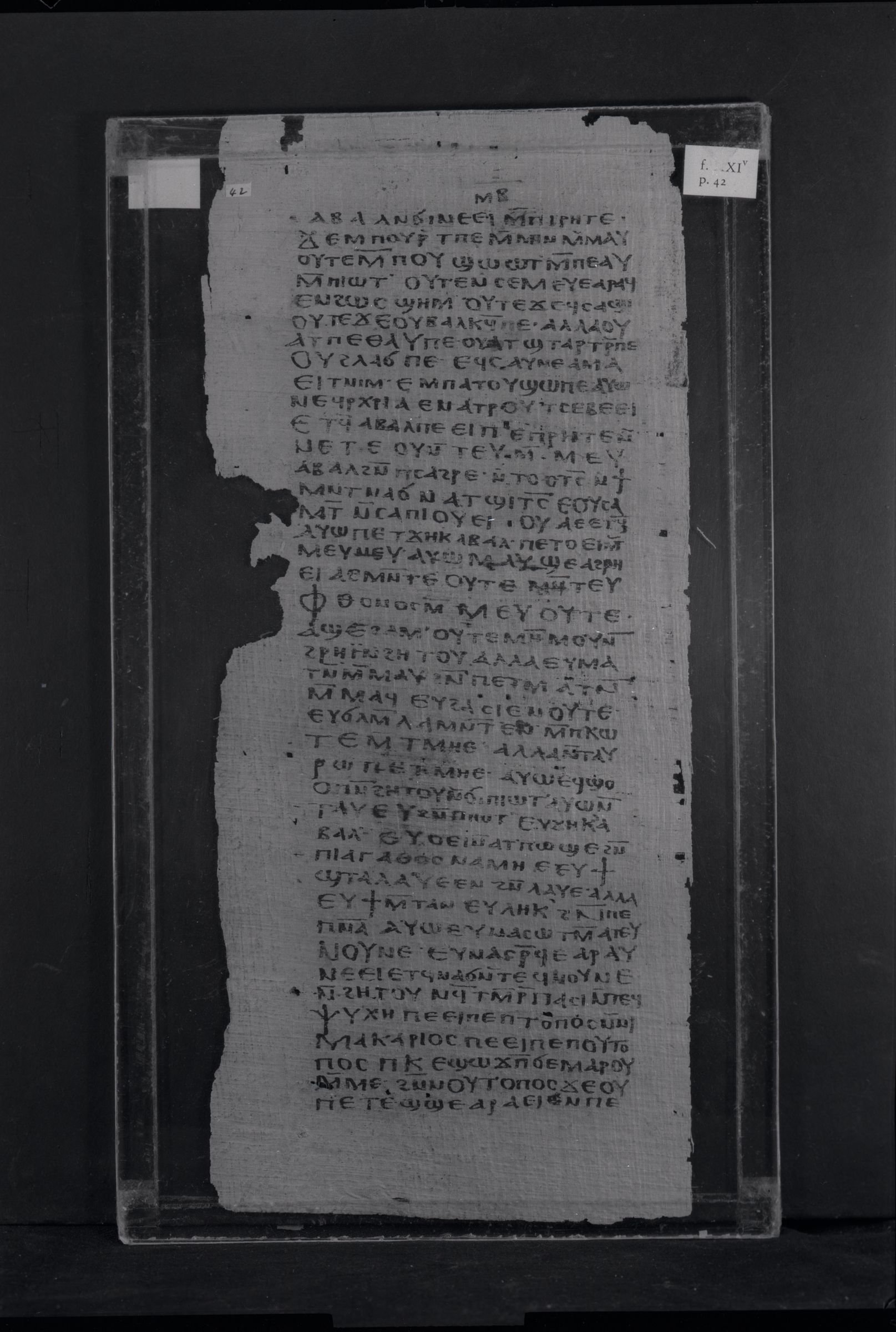
Page 42, lines 1-41 (Codex I page 42, A-Series negative, Facsimile Edition (Codex I, 1977) p. 46, CCDL nha 2740). Checked on the photograph: line 1 begins 'ⲁⲃⲁⲗ ⲛϭⲓ ⲛⲉⲉⲓ ⲙ̄ⲡⲓⲣⲏⲧⲉ·'; line 41 reads 'ⲡⲉⲧⲉϣϣⲉ ⲁⲣⲁⲉⲓ ⲉⲛ ⲡⲉ'. Page and line numbers from the Marcion transcription; English from Mattison's text between his page marks 42 and 43.
42.1ⲁⲃⲁⲗ ⲛϭⲓ ⲛⲉⲉⲓ ⲙ̄ⲡⲓⲣⲏⲧⲉ:
42.2ϫⲉ ⲙⲡⲟⲩⲣ̄ ⲧⲡⲉ ⲙ̄ⲙⲓⲛ ⲙ̄ⲙⲁⲩ
42.3ⲟⲩⲧⲉ ⲙ̄ⲡⲟⲩϣⲱⲱⲧ: ⲙ̄ⲡⲉⲁⲩ
42.4ⲙ̄ⲡⲓⲱⲧ: ⲟⲩⲧⲉ ⲛ̄ⲥⲉⲙⲉⲩⲉ ⲁⲣⲁϥ
42.5ⲉⲛ ϩⲱⲥ ϣⲏⲙ: ⲟⲩⲧⲉ ϫⲉ ϥⲥⲁϣⲓ
42.6ⲟⲩⲧⲉ ϫⲉ ⲟⲩⲃⲁⲗⲕϥ̄ ⲡⲉ: ⲁⲗⲗⲁ ⲟⲩ-
42.7ⲁⲧⲡⲉⲑⲁⲩ ⲡⲉ: ⲟⲩⲁⲧϣⲧⲁⲣⲧⲣ̄ ⲡⲉ
42.8ⲟⲩϩⲗⲁϭ ⲡⲉ: ⲉϥⲥⲁⲩⲛⲉ ⲁⲙⲁ-
42.9ⲉⲓⲧ ⲛⲓⲙ: ⲉⲙⲡⲁⲧⲟⲩϣⲱⲡⲉ: ⲁⲩⲱ
42.10ⲛⲉϥⲣ ⲭⲣⲓⲁ ⲉⲛ ⲁⲧⲣⲟⲩⲧⲥⲉⲃⲉ ⲉⲓ-
42.11ⲉⲧϥ̄ ⲁⲃⲁⲗ: ⲡⲉⲉⲓ ⲡⲉ ⲡⲣⲏⲧⲉ ⲛ̄-
42.12ⲛⲉⲧⲉⲟⲩⲛ̄ⲧⲉⲩ ⲙ̄ⲙⲉⲩ
42.13ⲁⲃⲁⲗ ϩⲛ̄ ⲡⲥⲁ ϩⲣⲉ: ⲛ̄ⲧⲟⲟⲧⲥ̄ ⲛϯ-
42.14ⲙⲛⲧⲛⲁϭ ⲛ̄ⲁⲧϣⲓⲧⲥ̄ ⲉⲟⲩⲥⲁ-
42.15ⲙⲧ̄ ⲛ̄ⲥⲁ ⲡⲓⲟⲩⲉⲓ ⲟⲩⲁⲉⲉⲧϥ̄
42.16ⲁⲩⲱ ⲡⲉⲧϫⲏⲕ ⲁⲃⲁⲗ: ⲡⲉⲧⲟⲉⲓ ⲙ̄-
42.17ⲙⲉⲩ ⲛⲉⲩ: ⲁⲩⲱ ⲙⲁⲩϣⲉ ⲁϩⲣⲏ-
42.18ⲉⲓ ⲁⲉⲙⲛ̄ⲧⲉ ⲟⲩⲧⲉ ⲙⲛ̄ⲧⲉⲩ
42.19ⲫⲑⲟⲛⲟⲥ ⲙ̄ⲙⲉⲩ ⲟⲩⲧⲉ:
42.20ⲁϣⲉϩⲁⲙ: ⲟⲩⲧⲉ ⲙⲛ̄ ⲙⲟⲩ ⲛ̄-
42.21ϩⲣⲏⲓ̈ ⲛ̄ϩⲏⲧⲟⲩ ⲁⲗⲗⲁ ⲉⲩⲙⲁ-
42.22ⲧⲛ̄: ⲙ̄ⲙⲁⲩ ϩⲛ̄ ⲡⲉⲧⲙⲁⲧⲛ̄
42.23ⲙ̄ⲙⲁϥ ⲉⲩϩⲁⲥⲓ ⲉⲛ ⲟⲩⲧⲉ:
42.24ⲉⲩϭⲗⲙ̄ⲗⲁⲙⲛⲧ̄: ⲉⲛ: ⲙ̄ⲡⲕⲱ-
42.25ⲧⲉ ⲙ̄ⲧⲙⲏⲉ: ⲁⲗⲗⲁ ⲛ̄ⲧⲁⲩ
42.26ⲣⲱ ⲡⲉ ⲧⲙⲏⲉ: ⲁⲩⲱ ⲉϥϣⲟ-
42.27ⲟⲡ ⲛ̄ϩⲏⲧⲟⲩ ⲛ̄ϭⲓ ⲡⲓⲱⲧ: ⲁⲩⲱ ⲛ̄-
42.28ⲧⲁⲩ ⲉⲩϩⲛ̄ ⲡⲓⲱⲧ: ⲉⲩϫⲏⲕ: ⲁ-
42.29ⲃⲁⲗ: ⲉⲩⲟⲉⲓ ⲛ̄ⲁⲧ:ⲡⲱϣⲉ ϩⲛ̄
42.30ⲡⲓⲁⲅⲁⲑⲟⲥ ⲛⲁⲙⲏⲉ: ⲉⲩϯ
42.31ϣⲧⲁ ⲗⲁⲩⲉ ⲉⲛ ϩⲛ̄ ⲗⲁⲩⲉ: ⲁⲗⲗⲁ
42.32ⲉⲩϯ ⲙ̄ⲧⲁⲛ ⲉⲩⲗⲏⲕ: ϩⲛ̄ ⲡⲉ-
42.33ⲡⲛ(ⲉⲩⲙ)ⲁ ⲁⲩⲱ ⲉⲩⲛⲁⲥⲱⲧⲙ̄ ⲁⲧⲉⲩ-
42.34ⲛⲟⲩⲛⲉ: ⲉⲩⲛⲁⲥⲣ̄ϥⲉ ⲁⲣⲁⲩ
42.35ⲛⲉⲉⲓ ⲉⲧϥⲛⲁϭⲛ̄ ⲧⲉϥⲛⲟⲩⲛⲉ:
42.36ⲛ̄ϩⲏⲧⲟⲩ ⲛϥ̄ⲧⲙ︤ⲣ︥ ⲡⲁⲥⲓ ⲛ̄ⲧⲉϥ-
42.37ⲯⲩⲭⲏ ⲡⲉⲉⲓ ⲡⲉ ⲡⲧⲟⲡⲟⲥ ⲛ̄ⲛⲓ-
42.38ⲙⲁⲕⲁⲣⲓⲟⲥ ⲡⲉⲉⲓ ⲡⲉ ⲡⲟⲩⲧⲟ-
42.39ⲡⲟⲥ ⲡⲕⲉϣⲱϫⲡ̄ ϭⲉ ⲙⲁⲣⲟⲩ-
42.40ⲙ̄ⲙⲉ: ϩⲛ̄ ⲛⲟⲩⲧⲟⲡⲟⲥ ϫⲉ ⲟⲩ-
42.41ⲡⲉⲧⲉϣϣⲉ ⲁⲣⲁⲉⲓ ⲉⲛ ⲡⲉ
in this way, because they neither exalted themselves, nor wanted the Father’s glory, nor did they think of him as trivial or harsh or wrathful; but he’s without evil, unperturbed, and sweet. He knows every realm before they’ve come into existence, and he has no need to be instructed.
This is the way of those who possess something of the immeasurable greatness from above, as they wait for the complete one alone, who’s a Mother for them. And they don’t go down to Hades, nor do they have envy or groaning, nor death within them, but they rest in the one who rests, not striving nor twisting around in the search for Truth. But they themselves are the Truth, and the Father is within them, and they’re in the Father, being complete. They’re undivided from the truly good one. They don’t need anything, but they rest, refreshed in the Spirit. And they’ll listen to their root. They’ll devote themselves to those things that they’ll find in their root and not suffer loss to their soul. This is the place of the blessed; this is their place.
Conclusion
As for the others, then, may they know, where they’re at, that it’s not right
Where on the image
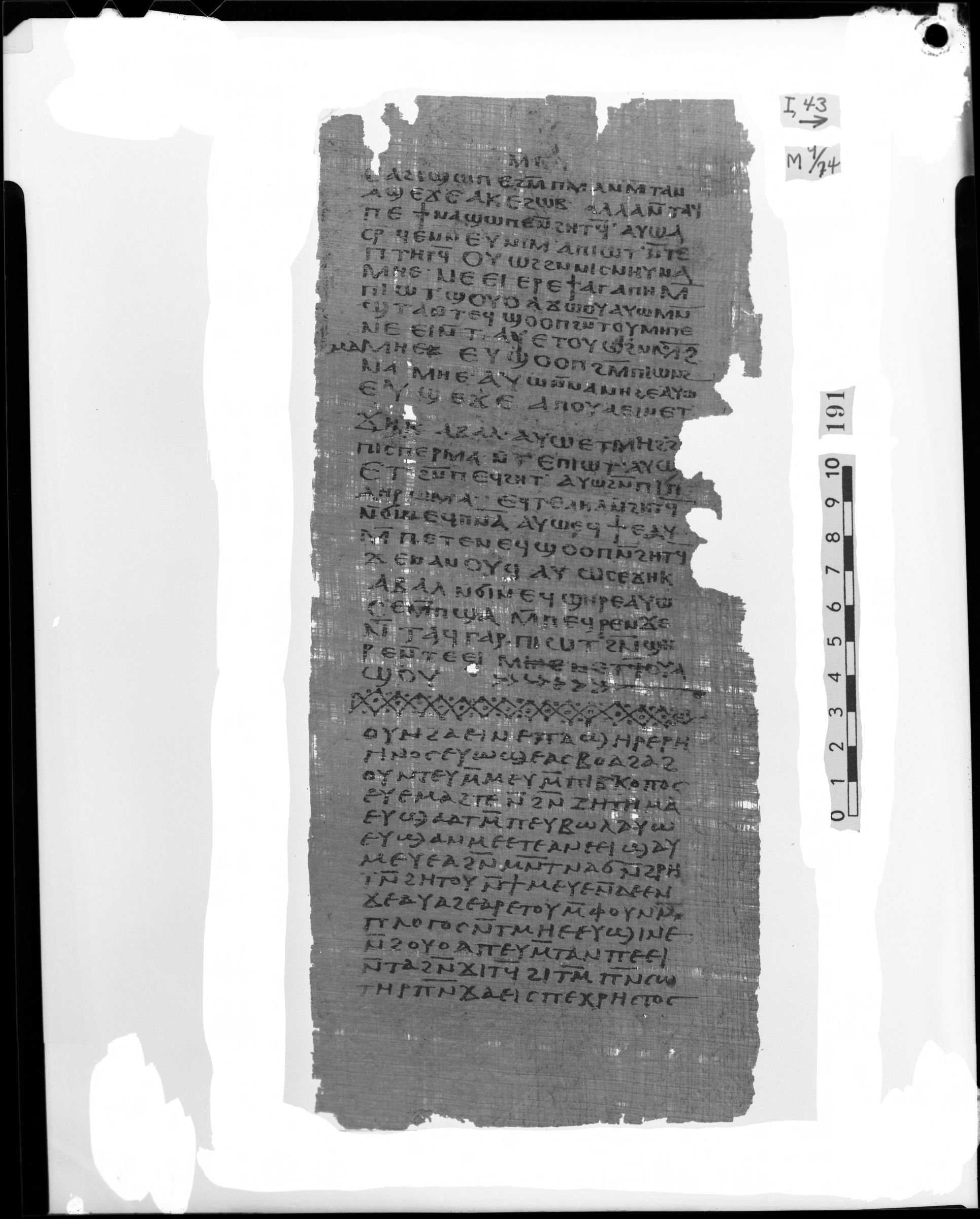
Page 43, lines 1-24 (Codex I page 43, M-Series negative, Facsimile Edition (Codex I, 1977) p. 47, CCDL nha 1917). Checked on the photograph: line 1 begins 'ⲉⲁϩⲓϣⲱⲡⲉ ϩⲙ̄ ⲡⲙⲁ ⲛⲙ̄ⲧⲁⲛ'; line 24 reads 'ϣⲟⲩ', followed by filler signs and a decorative band; the Treatise on the Resurrection begins below the band. Page and line numbers from the Marcion transcription; English from Mattison's text between his page marks 43 and the end.
43.1ⲉⲁϩⲓϣⲱⲡⲉ ϩⲙ̄ ⲡⲙⲁ ⲛⲙ̄ⲧⲁⲛ
43.2ⲁϣⲉϫⲉ: ⲁⲕⲉϩⲱⲃ: ⲁⲗⲗⲁ ⲛ̄ⲧⲁϥ
43.3ⲡⲉϯⲛⲁϣⲱⲡⲉ ⲛ̄ϩⲏⲧϥ̄: ⲁⲩⲱ ⲁ-
43.4ⲥⲣ̄ϥⲉ ⲛ̄ⲛⲉⲩ ⲛⲓⲙ: ⲁⲡⲓⲱⲧ: ⲛ̄ⲧⲉ
43.5ⲡⲧⲏⲣϥ̄ ⲟⲩⲱϩϩⲛ ⲛⲓⲥⲛⲏⲩ ⲛⲁ-
43.6ⲙⲏⲉ: ⲛⲉⲉⲓ ⲉⲣⲉϯⲁⲅⲁⲡⲏ ⲙ̄-
43.7ⲡⲓⲱⲧ: ϣⲟⲩⲟ ⲁϫⲱⲟⲩ ⲁⲩⲱ ⲙⲛ̄
43.8ϣⲧⲁ ⲛ̄ⲧⲉϥ ϣⲟⲟⲡ ϩⲛ̄ ⲧⲟⲩⲙⲏⲧⲉ
43.9ⲛⲉⲉⲓ ⲛ̄ⲧⲁⲩ ⲉⲧⲟⲩⲱ⟦ϩ⟧ⲛ⟦ⲙ⟧ϩ̄
43.10ⲙⲁⲙⲏⲉ⟦ⲓ⟧ ⲉⲩϣⲟⲟⲡ ϩⲙ̄ ⲡⲓⲱⲛϩ
43.11ⲛⲁⲙⲏⲉ: ⲁⲩⲱ ⲛ̄ⲛⲁⲛⲏϩⲉ: ⲁⲩⲱ
43.12ⲉⲩϣⲉϫⲉ ⲁⲡⲟⲩⲁⲉⲓⲛ ⲉⲧ:-
43.13ϫⲏⲕ ⲁⲃⲁⲗ: ⲁⲩⲱ ⲉⲧⲙⲏϩ: ϩⲛ̣̄
43.14ⲡⲓⲥⲡⲉⲣⲙⲁ: ⲛ̄ⲧⲉ ⲡⲓⲱⲧ: ⲁⲩⲱ
43.15ⲉⲧ:ϩⲛ̄ ⲡⲉϥϩⲏⲧ: ⲁⲩⲱ ϩⲛ̄ ⲡⲓⲡ-
43.16ⲗⲏⲣⲱⲙⲁ: ⲉϥⲧⲉⲗⲏⲗ ⲛ̄ϩⲏⲧϥ̄
43.17ⲛ̄ϭⲓ ⲡⲉϥⲡⲛ(ⲉⲩⲙ)ⲁ: ⲁⲩⲱ ⲉϥϯ ⲉⲁⲩ
43.18ⲙ̄ⲡⲉⲧⲉⲛⲉϥϣⲟⲟⲡ ⲛ̄ϩⲏⲧϥ̄
43.19ϫⲉ ⲛⲁⲛⲟⲩϥ ⲁⲩⲱ ⲥⲉϫⲏⲕ
43.20ⲁⲃⲁⲗ ⲛ̄ϭⲓ ⲛⲉϥϣⲏⲣⲉ ⲁⲩⲱ
43.21ⲥⲉⲙ̄ⲡϣⲁ ⲙ̄ⲡⲉϥⲣⲉⲛ ϫⲉ
43.22ⲛ̄ⲧⲁϥ ⲅⲁⲣ: ⲡⲓⲱⲧ: ϩⲛ̄ϣⲏ-
43.23ⲣⲉ ⲛ̄ⲧⲉⲉⲓⲙⲓⲛⲉ ⲛⲉⲧϥ̄ⲟⲩⲁ-
43.24ϣⲟⲩ
for me, having come to the place of rest, to say anything else, but I’ll come to be in it, and will devote myself continually to the Father of all and the true brothers (and sisters), those upon whom the Father’s love is emptied and in whose midst there is no need. They’re the ones who are revealed in Truth; they exist in the true eternal life, and they speak of the light that’s complete and that’s filled with the Father’s seed, and that’s in his heart and in the fullness. His Spirit rejoices in it, and glorifies the one in whom it existed, because he’s good. And his children are complete, and worthy of his name, because he’s the Father. It’s children like this that he loves.
Notes
- Coptic: Marcion 1.8 (Milan Konvicka), Nag Hammadi text package, converted here from its ASCII font coding to Unicode Coptic letter for letter. Marcion does not name the printed edition behind its text. The small numbers are codex page and line (for example 18.11) as given in the source.
- Signs in the Coptic: a stroke over a letter, or a line over two letters, is the scribe's supralinear stroke; a dot under a letter marks an uncertain reading; square brackets mark letters lost in a gap (restored by the editor, or dots for the number of lost letters); round brackets write out an abbreviation (as in ⲓⲏ(ⲥⲟⲩ)ⲥ); angle brackets mark letters added by the editor; curly brackets letters the editor removes; double square brackets letters cancelled by the scribe; \ / letters written above the line. The colon (:) is kept as the source gives it; the source does not say what it marks, and on the photographs it does not always match a visible point (the scribe's raised points are small, and some have no colon in the source). A hyphen at the end of a line marks a word that runs on to the next line (the transcription's convention).
- Marcion's text also carries a paragraph code and, at the end of 20.19, one further code whose meaning it does not state; neither is reproduced. A circumflex (as in the interjection ⲱ̂ at 20.27) is the scribe's. The diple (>) the scribe writes before some paragraph openings (for example 17.1) is not in the source text and is not shown.
- English: Mark M. Mattison, The Gospel of Truth (public domain), split at Mattison's own page numbers. Mattison's symbols: [ ] gap in the text, ( ) editorial insertion. The headings in italics are his.
- Mattison's note, Pages 23, 34, and 41: “expression.” Literally, “form of face.”
- Mattison's note, Page 42: “a Mother,” following Meyer, op. cit., p. 47 (but cf. n. 49); Lillie, op. cit., p. 238 (but cf. note); Layton, op. cit., p. 264; alternatively, “is there”; cf. Grobel, op. cit., p. 196; Attridge and MacRae, op. cit., p. 117; Magnusson, op. cit., p. 126.
Cite
Sources
- Source: Nag Hammadi Codex I page photographs (Claremont Colleges Digital Library, Nag Hammadi Archive) + Coptic transcription from Marcion (Milan Konvicka) + English by Mark M. Mattison (public domain) (holding institution)
- Critical edition: Coptic transcription from Marcion (Milan Konvicka; printed edition not named)
← previous · → next · v cycle view · l back to library