Herodotus, Histories 2.99-101: Min, Nitocris and the 330 kings
Introduction
In the second book of his Histories (written c. 430 BCE) Herodotus reports what the priests of Hephaestus at Memphis told him of the kings of Egypt, from Min (Menes), who first ruled and founded Memphis, through 330 kings named from a papyrus roll, to Sesostris, Proteus, Rhampsinitus, the pyramid builders Cheops, Chephren and Mycerinus, and Sethos, priest-king in the time of Sennacherib. He ends with their chronology: 341 generations, 11,340 years, during which no god had reigned in human form and the sun had four times risen out of its usual place.
The manuscript is Florence, Biblioteca Medicea Laurenziana, Plut. 70.3, written in the 10th century, the oldest surviving manuscript of Herodotus (codex A of the editors). Chapters 2.99-146 run from fol. 78v to fol. 92v. Each section is one chapter (Godley's subdivisions of the Rhampsinitus story, 121a-f, are kept apart) and points at the page(s) that carry it; the page breaks were read on the images and are recorded in each note.
This entry covers 2.99 to 2.101, on fol. 78v to 79v.
How was this verified? (Provenance)
Where on the image
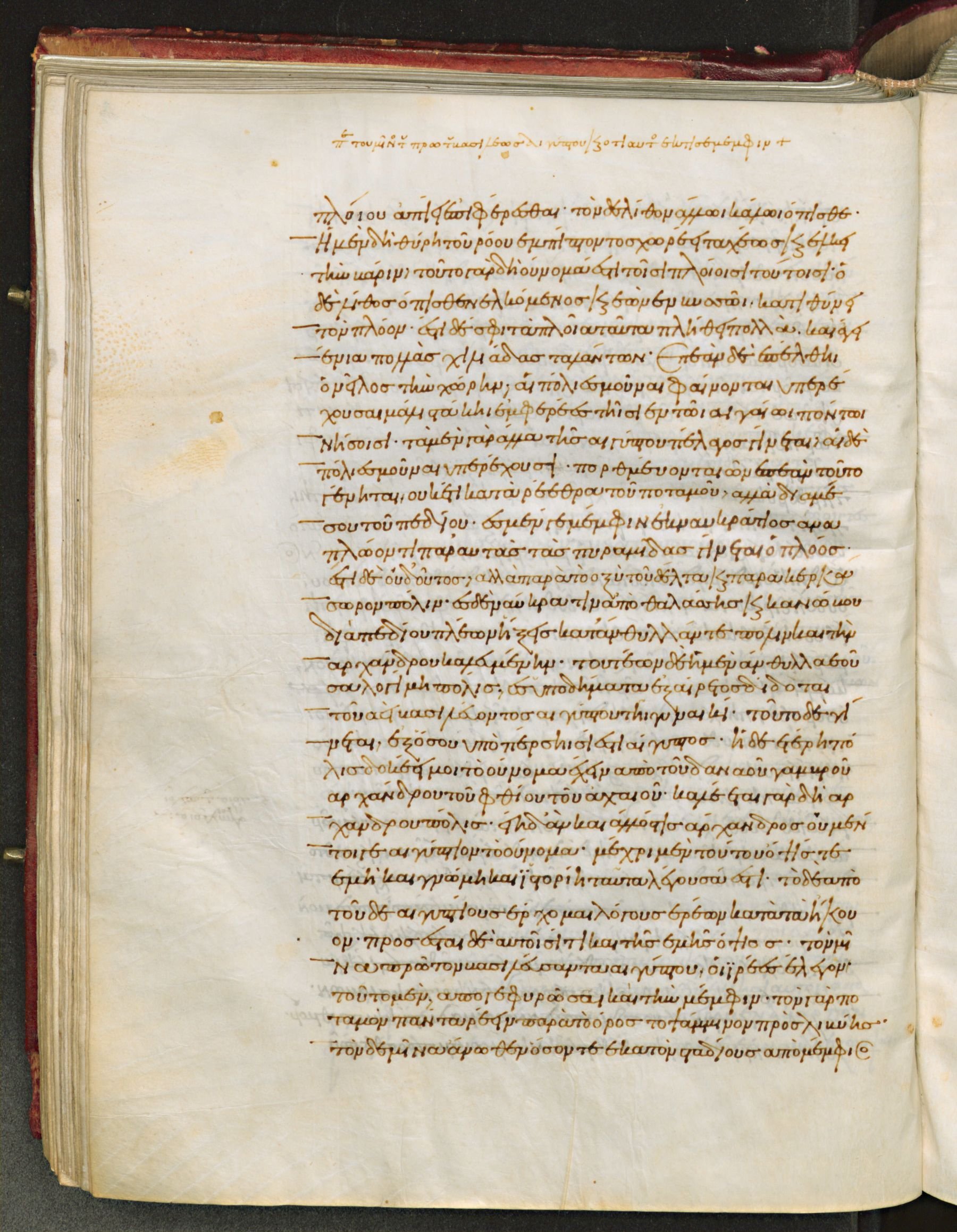
2.99 runs from fol. 78v to fol. 79r. Page breaks read on the images: fol. 78v: 2.99 begins in line 24 'μέχρι μὲν τούτου ὄψις τε ἐμή' (after '...Αἰγύπτιον τὸ οὔνομα'); the page ends '...ὅσον τε ἑκατὸν σταδίους ἀπὸ Μέμφιος' (2.99.2); fol. 79r begins 'τὸν πρὸς μεσαμβρίης ἀγκῶνα προσχώσαντα' (2.99.2) and ends 'τῶν δὲ ἄλλων' (2.101.1). Checked on the image. Viewer: https://tecabml.contentdm.oclc.org/digital/collection/plutei/id/1358114
2.99μέχρι μὲν τούτου ὄψις τε ἐμὴ καὶ γνώμη καὶ ἱστορίη ταῦτα λέγουσα ἐστί, τὸ δὲ ἀπὸ τοῦδε Αἰγυπτίους ἔρχομαι λόγους ἐρέων κατὰ τὰ ἤκουον· προσέσται δὲ αὐτοῖσί τι καὶ τῆς ἐμῆς ὄψιος.
Μῖνα τὸν πρῶτον βασιλεύσαντα Αἰγύπτου οἱ ἱρέες ἔλεγον τοῦτο μὲν ἀπογεφυρῶσαι τὴν Μέμφιν. τὸν γὰρ ποταμὸν πάντα ῥέειν παρὰ τὸ ὄρος τὸ ψάμμινον πρὸς Λιβύης, τὸν δὲ Μῖνα ἄνωθεν, ὅσον τε ἑκατὸν σταδίους ἀπὸ Μέμφιος, τὸν πρὸς μεσαμβρίης ἀγκῶνα προσχώσαντα τὸ μὲν ἀρχαῖον ῥέεθρον ἀποξηρῆναι, τὸν δὲ ποταμὸν ὀχετεῦσαι τὸ μέσον τῶν ὀρέων ῥέειν.
ἔτι δὲ καὶ νῦν ὑπὸ Περσέων ὁ ἀγκὼν οὗτος τοῦ Νείλου ὡς ἀπεργμένος ῥέῃ ἐν φυλακῇσι μεγάλῃσι ἔχεται, φρασσόμενος ἀνὰ πᾶν ἔτος· εἰ γὰρ ἐθελήσει ῥήξας ὑπερβῆναι ὁ ποταμὸς ταύτῃ, κίνδυνος πάσῃ Μέμφι κατακλυσθῆναι ἐστί.
ὡς δὲ τῷ Μῖνι τούτῳ τῷ πρώτῳ γενομένῳ βασιλέι χέρσον γεγονέναι τὸ ἀπεργμένον, τοῦτο μὲν ἐν αὐτῷ πόλιν κτίσαι ταύτην ἥτις νῦν Μέμφις καλέεται· ἔστι γὰρ καὶ ἡ Μέμφις ἐν τῷ στεινῷ τῆς Αἰγύπτου· ἔξωθεν δὲ αὐτῆς περιορύξαι λίμνην ἐκ τοῦ ποταμοῦ πρὸς βορέην τε καὶ πρὸς ἑσπέρην (τὸ γὰρ πρὸς τὴν ἠῶ αὐτὸς ὁ Νεῖλος ἀπέργει), τοῦτο δὲ τοῦ Ἡφαίστου τὸ ἱρὸν ἱδρύσασθαι ἐν αὐτῇ, ἐὸν μέγα τε καὶ ἀξιαπηγητότατον.
2.99Thus far all I have said is the outcome of my own sight and judgment and inquiry. Henceforth I will record Egyptian chronicles, according to that which I have heard, adding thereto somewhat of what I myself have seen. The priests told me that Min was the first king of Egypt, and that first he separated Memphis from the Nile by a dam. All the river had flowed close under the sandy mountains on the Libyan side, but Min made the southern bend of it which begins about an hundred furlongs above Memphis, by damming the stream; thereby he dried up the ancient course, and carried the river by a channel so that it flowed midway between the hills. And to this day the Persians keep careful guard over this bend of the river, strengthening its dam every year, that it may keep the current in; for were the Nile to burst his dykes and overflow here, all Memphis were in danger of drowning. Then, when this first king Min had made what he thus cut off to be dry land, he first founded in it that city which is now called Memphis—for even Memphis lies in the narrow part of Egypt—and outside of it he dug a lake to its north and west, from the river (the Nile itself being the eastern boundary of the place); and secondly, he built in it the great and most noteworthy temple of Hephaestus.
Where on the image
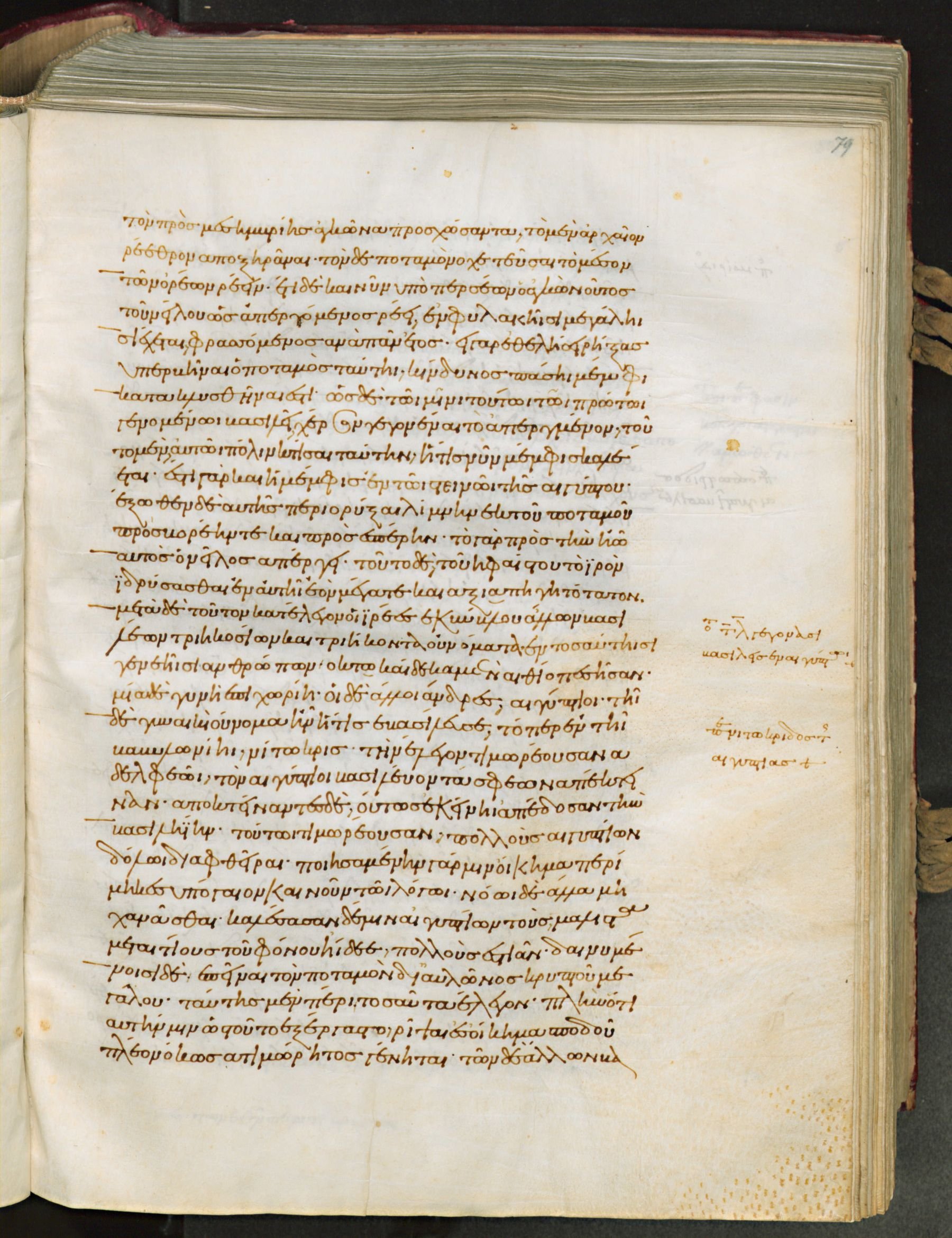
2.100 is on fol. 79r. Page breaks read on the images: fol. 79r begins 'τὸν πρὸς μεσαμβρίης ἀγκῶνα προσχώσαντα' (2.99.2) and ends 'τῶν δὲ ἄλλων' (2.101.1). Checked on the image. Viewer: https://tecabml.contentdm.oclc.org/digital/collection/plutei/id/1358114
2.100μετὰ δὲ τοῦτον κατέλεγον οἱ ἱρέες ἐκ βύβλου ἄλλων βασιλέων τριηκοσίων καὶ τριήκοντα οὐνόματα. ἐν τοσαύτῃσι δὲ γενεῇσι ἀνθρώπων ὀκτωκαίδεκα μὲν Αἰθίοπες ἦσαν, μία δὲ γυνὴ ἐπιχωρίη, οἱ δὲ ἄλλοι ἄνδρες Αἰγύπτιοι.
τῇ δὲ γυναικὶ οὔνομα ἦν, ἥτις ἐβασίλευσε, τό περ τῇ Βαβυλωνίῃ, Νίτωκρις· τὴν ἔλεγον τιμωρέουσαν ἀδελφεῷ, τὸν Αἰγύπτιοι βασιλεύοντα σφέων ἀπέκτειναν, ἀποκτείναντες δὲ οὕτω ἐκείνῃ ἀπέδοσαν τὴν βασιληίην, τούτῳ τιμωρέουσαν πολλοὺς Αἰγυπτίων διαφθεῖραι δόλῳ.
ποιησαμένην γάρ μιν οἴκημα περίμηκες ὑπόγαιον καινοῦν τῷ λόγῳ, νόῳ δὲ ἄλλα μηχανᾶσθαι· καλέσασαν δέ μιν Αἰγυπτίων τοὺς μάλιστα μεταιτίους τοῦ φόνου ᾔδεε πολλοὺς ἱστιᾶν, δαινυμένοισι δὲ ἐπεῖναι τὸν ποταμὸν διʼ αὐλῶνος κρυπτοῦ μεγάλου.
ταύτης μὲν πέρι τοσαῦτα ἔλεγον, πλὴν ὅτι αὐτήν μιν, ὡς τοῦτο ἐξέργαστο, ῥίψαι ἐς οἴκημα σποδοῦ πλέον, ὅκως ἀτιμώρητος γένηται.
2.100After him came three hundred and thirty kings, whose names the priests recited from a papyrus roll. In all these many generations there were eighteen Ethiopian kings, and one queen, native to the country; the rest were all Egyptian men. The name of the queen was the same as that of the Babylonian princess, Nitocris. She, to avenge her brother (he was king of Egypt and was slain by his subjects, who then gave Nitocris the sovereignty) put many of the Egyptians to death by guile. She built a spacious underground chamber; then, with the pretence of handselling it, but with far other intent in her mind, she gave a great feast, inviting to it those Egyptians whom she knew to have been most concerned in her brother’s murder; and while they feasted she let the river in upon them by a great and secret channel. This was all that the priests told of her, save that also when she had done this she cast herself into a chamber full of hot ashes, thereby to escape vengeance.
Where on the image
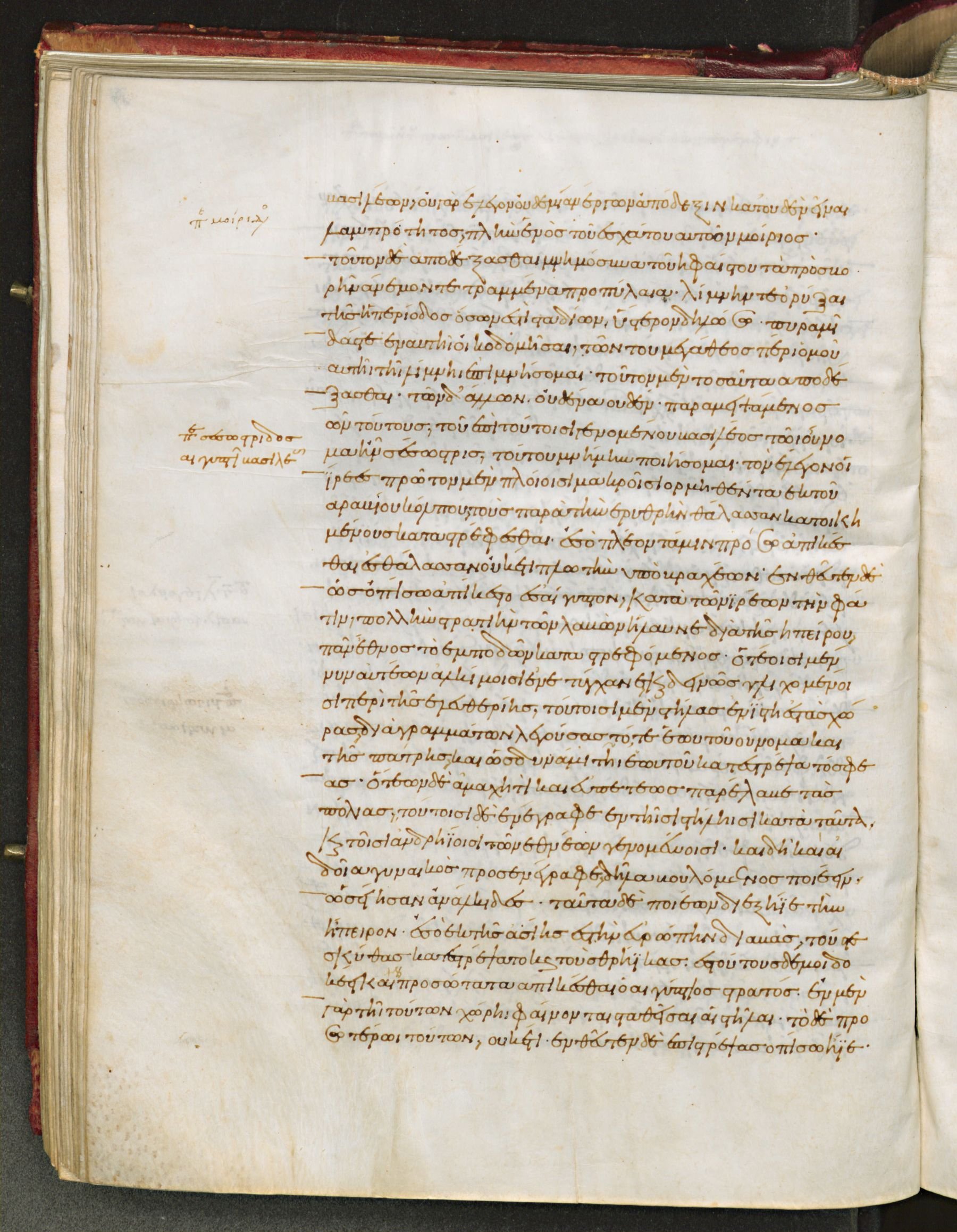
2.101 runs from fol. 79r to fol. 79v. Page breaks read on the images: fol. 79r begins 'τὸν πρὸς μεσαμβρίης ἀγκῶνα προσχώσαντα' (2.99.2) and ends 'τῶν δὲ ἄλλων' (2.101.1); fol. 79v begins 'βασιλέων· οὐ γὰρ ἔλεγον οὐδεμίαν ἔργων ἀπόδεξιν' (2.101.1), margin 'περὶ Μοίριδος', and ends '...ἐνθεῦτεν δὲ ἐπιστρέψας ὀπίσω ἤιε' (2.103.2). Checked on the image. Viewer: https://tecabml.contentdm.oclc.org/digital/collection/plutei/id/1358114
2.101τῶν δὲ ἄλλων βασιλέων οὐ γὰρ ἔλεγον οὐδεμίαν ἔργων ἀπόδεξιν καὶ οὐδὲν εἶναι λαμπρότητος, πλὴν ἑνὸς τοῦ ἐσχάτου αὐτῶν Μοίριος·
τοῦτον δὲ ἀποδέξασθαι μνημόσυνα τοῦ Ἡφαίστου τὰ πρὸς βορέην ἄνεμον τετραμμένα προπύλαια, λίμνην τε ὀρύξαι, τῆς ἡ περίοδος ὅσων ἐστὶ σταδίων ὕστερον δηλώσω, πυραμίδας τε ἐν αὐτῇ οἰκοδομῆσαι, τῶν τοῦ μεγάθεος πέρι ὁμοῦ αὐτῇ τῇ λίμνῃ ἐπιμνήσομαι· τοῦτον μὲν τοσαῦτα ἀποδέξασθαι, τῶν δὲ ἄλλων οὐδένα οὐδέν.
2.101But of the other kings they related no achievement or deed of great note, save of Moeris, who was the last of them. This Moeris was remembered as having built the northern forecourt of the temple of Hephaestus, and dug a lake, of as many furlongs in circuit as I shall later show; and built there pyramids also, the size of which I will mention when I speak of the lake. All this was Moeris’ work, they said; of none of the rest had they anything to record.
Notes
- Greek: the text printed in A. D. Godley's Loeb edition (1920), from Perseus. Square brackets mark words the editor considers later additions. The manuscript's wording differs from the edition in places; the Greek is the edition, not a transcription of the page.
- English: A. D. Godley's translation as printed in 1920 (Loeb Classical Library, Herodotus vol. 1), not the modernized version on Perseus. Godley's footnotes are omitted.
- Chapter 121 is divided into 121 and 121a-121f as in Godley's edition; the English is divided at the corresponding sentences.
Cite
Sources
- Source: Florence, Laur. Plut. 70.3 (10th c.) via BML Teca Digitale + Greek of Godley's Loeb (Perseus) + English of A. D. Godley (1920, Wikisource, checked against the printing) (holding institution)
- Critical edition: Greek of A. D. Godley's Loeb edition (1920), via Perseus
← previous · → next · v cycle view · l back to library