Hesiod, Theogony 963-1022: Goddesses who lay with mortal men
Introduction
Hesiod's Theogony (c. 700 BCE) is the oldest Greek account of the origin of the world and the gods, from Chaos and Earth through the reign of Cronos to the victory of Zeus. This part: Goddesses who lay with mortal men (lines 963-1022, 60 lines). The children born to goddesses by mortal men, from Demeter and Iasion to Calypso and Odysseus.
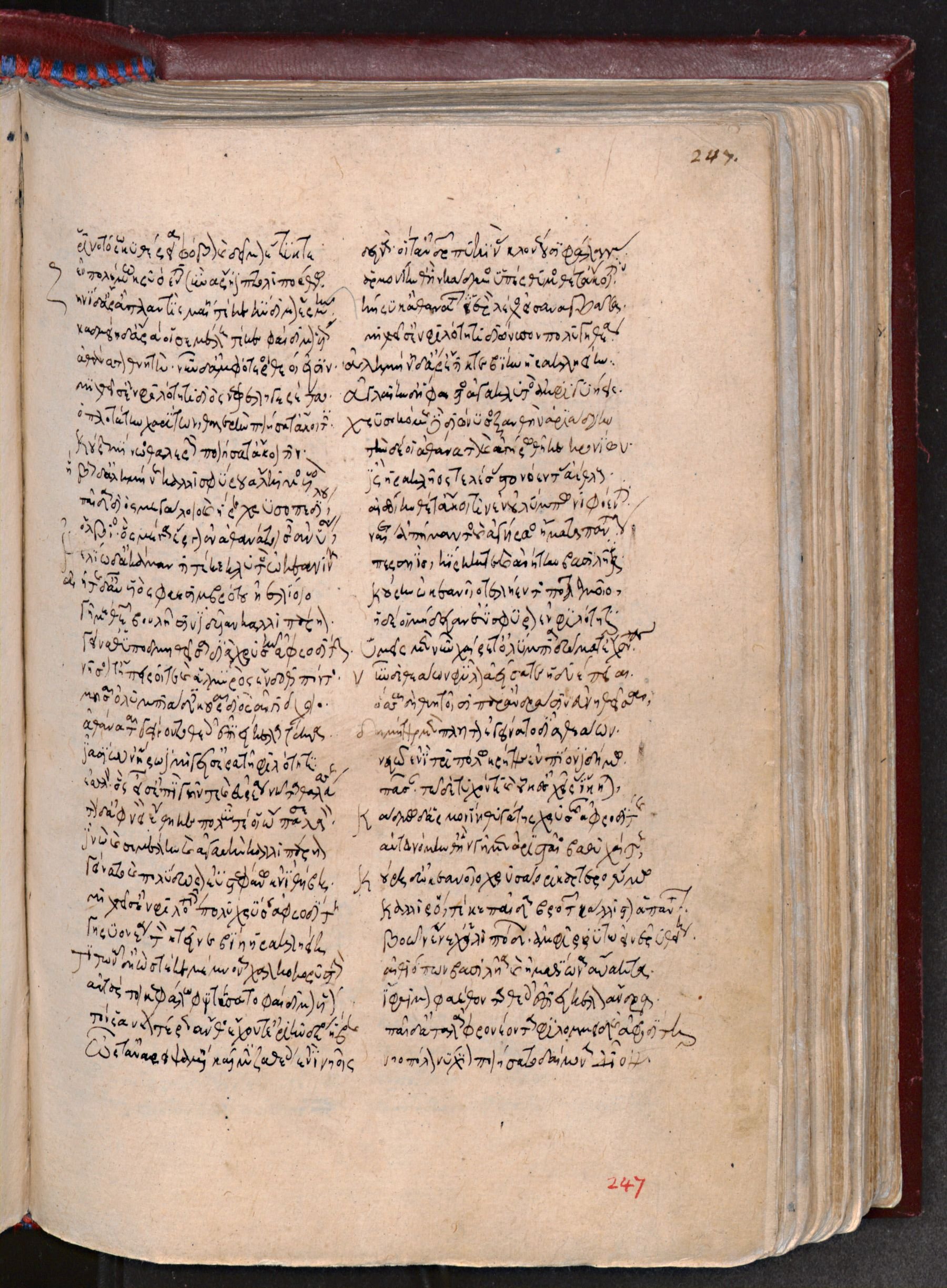
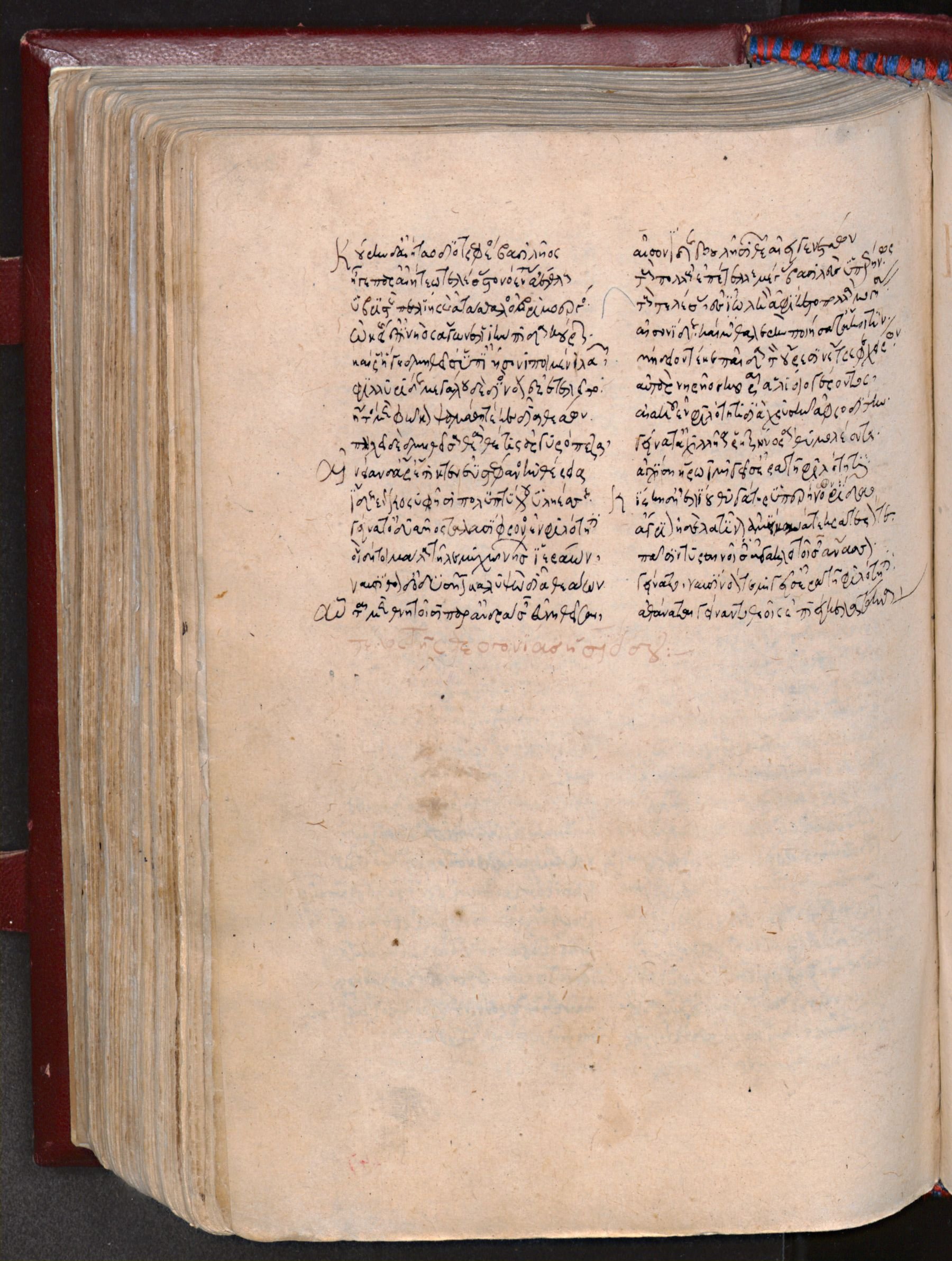
The page photographs are from Florence, Biblioteca Medicea Laurenziana, Plut. 32.16 (paper, late 13th century; a large collection of Greek poetry that also holds letters of Maximus Planudes), Theogony on fols. 240r-247v, the oldest complete manuscript of the poem with published images, in the Biblioteca Medicea Laurenziana's Teca Digitale. This part is on fol. 247r, 247v. The scribe writes two verses to a row, one in each column, so a page is read across the columns, row by row. Each section below is one page; its note gives the page's first and last verse as read on the photograph.
The Greek is Evelyn-White's Loeb text (1914) via Perseus, not a transcription of this manuscript, whose wording differs here and there. Verses the editor brackets as later additions are shown in square brackets. The English is Evelyn-White's prose translation (1914); it is cut at the end of his sentences, so where a sentence runs across a page break it is given whole to one page; each section's note gives the exact lines its English covers.
How was this verified? (Provenance)
Where on the image
Laur. Plut. 32.16, fol. 247r: lines 934-991, begins ‹ῥινοτόρῳ Κυθέρεια Φόβον καὶ›, ends ‹νύχιον ποιήσατο, δαίμονα δῖον.›. Checked on the image: first and last rows read and matched to the Greek (re-read on the image 2026-11-12: first row ‹934 | 935: ῥινοτόρῳ κυθέρεια φόβον ... | δεινούς οἵ τ' ἀνδρῶν πυκινὰς ...›, last row ‹990 | 991: ὦρτ' ἀναρεψαμένη ... | ... ποιήσατο δαίμονα δῖον›); the page before ends at line 933 and the page after begins at line 992. This section shows lines 963-991 of that page; the rest of the page belongs to the previous part of the poem. Rows 1-3 hold 934-939; 940 (Καδμείη δ' ἄρα οἱ) opens row 4. (Corrected 2026-11-12: the page map had put 934-939 on fol. 246v.) English here: lines 963-991, cut at the end of Evelyn-White's sentences. At the break with the next page the English ends with line 991, the same line as the Greek.
963ὑμεῖς μὲν νῦν χαίρετʼ, Ὀλύμπια δώματʼ ἔχοντες,
964νῆσοί τʼ ἤπειροί τε καὶ ἁλμυρὸς ἔνδοθι πόντος.
965νῦν δὲ θεάων φῦλον ἀείσατε, ἡδυέπειαι
966Μοῦσαι Ὀλυμπιάδες, κοῦραι Διὸς αἰγιόχοιο,
967ὅσσαι δὴ θνητοῖσι παρʼ ἀνδράσιν εὐνηθεῖσαι
968ἀθάναται γείναντο θεοῖς ἐπιείκελα τέκνα.
969Δημήτηρ μὲν Πλοῦτον ἐγείνατο, δῖα θεάων,
970Ἰασίωνʼ ἥρωι μιγεῖσʼ ἐρατῇ φιλότητι
971νειῷ ἔνι τριπόλῳ, Κρήτης ἐν πίονι δήμῳ,
972ἐσθλόν, ὃς εἶσʼ ἐπὶ γῆν τε καὶ εὐρέα νῶτα θαλάσσης
973πάντη· τῷ δὲ τυχόντι καὶ οὗ κʼ ἐς χεῖρας ἵκηται,
974τὸν δʼ ἀφνειὸν ἔθηκε, πολὺν δέ οἱ ὤπασεν ὄλβον.
975Κάδμῳ δʼ Ἁρμονίη, θυγάτηρ χρυσέης Ἀφροδιτης,
976Ἰνὼ καὶ Σεμέλην καὶ Ἀγαυὴν καλλιπάρῃον
977Αὐτονόην θʼ, ἣν γῆμεν Ἀρισταῖος βαθυχαίτης,
978γείνατο καὶ Πολύδωρον ἐυστεφάνῳ ἐνὶ Θήβῃ.
979κούρη δʼ Ὠκεανοῦ, Χρυσάορι καρτεροθύμῳ
980μιχθεῖσʼ ἐν φιλότητι πολυχρύσου Ἀφροδίτης,
981Καλλιρόη τέκε παῖδα βροτῶν κάρτιστον ἁπάντων,
982Γηρυονέα, τὸν κτεῖνε βίη Ἡρακληείη
983βοῶν ἕνεκʼ εἰλιπόδων ἀμφιρρύτῳ εἰν Ἐρυθείῃ.
984Τιθωνῷ δʼ Ἠὼς τέκε Μέμνονα χαλκοκορυστήν,
985Αἰθιόπων βασιλῆα, καὶ Ἠμαθίωνα ἄνακτα.
986αὐτὰρ ὑπαὶ Κεφάλῳ φιτύσατο φαίδιμον υἱόν,
987ἴφθιμον Φαέθοντα, θεοῖς ἐπιείκελον ἄνδρα.
988τόν ῥα νέον τέρεν ἄνθος ἔχοντʼ ἐρικυδέος ἥβης
989παῖδʼ ἀταλὰ φρονέοντα φιλομμειδὴς Ἀφροδίτη
990ὦρτʼ ἀναρεψαμένη, καί μιν ζαθέοις ἐνὶ νηοῖς
991νηοπόλον νύχιον ποιήσατο, δαίμονα δῖον.
963And now farewell, you dwellers on Olympus, and you islands and continents, and you briny sea within. 965Now sing the company of goddesses, sweet-voiced Muses of Olympus, daughter of Zeus who holds the aegis,—even those deathless ones who lay with mortal men and bore children like gods. Demeter, bright goddess, was joined in sweet love 970with the hero Iasion in a thrice-ploughed fallow in the rich land of Crete, and bore Plutus, a kindly god who goes everywhere over land and the sea's wide back, and he makes rich the man who finds him and into whose hands he comes, bestowing great wealth upon him. 975And Harmonia, the daughter of golden Aphrodite, bore to Cadmus Ino and Semele and fair-cheeked Agave and Autonoe whom long haired Aristaeus wedded, and Polydorus also in rich-crowned Thebes. And the daughter of Ocean, Callirrhoe 980was joined in the love of rich Aphrodite with stout-hearted Chrysaor and bore a son who was the strongest of all men, Geryones, whom mighty Heracles killed in sea-girt Erythea for the sake of his shambling oxen. And Eos bore to Tithonus brazen-crested Memnon, 985king of the Ethiopians, and the Lord Emathion. And to Cephalus she bore a splendid son, strong Phaethon, a man like the gods, whom, when he was a young boy in the tender flower of glorious youth with childish thoughts, laughter-loving Aphrodite 990seized and caught up and made a keeper of her shrine by night, a divine spirit.
Where on the image
Laur. Plut. 32.16, fol. 247v: lines 992-1020, begins ‹κούρην δʼ Αἰήταο διοτρεφέος›, ends ‹γείναντο θεοῖς ἐπιείκελα τέκνα.›. Checked on the image: first and last rows read and matched to the Greek (re-read on the image 2026-11-12: first row ‹992 | 993: κούρην δ' αἰήταο ... | αἰσονίδης βουλῇσι ...›, last row ‹1019 | 1020: αὗται μὲν θνητοῖσι ... | ἀθάναται γείναντο θεοῖς ἐπιείκελα τέκνα›); the page before ends at line 991 and this is its last page. Line 1014 (Telegonus) is not on the page: the row 1012 | 1013 is followed by 1015 | 1016. The poem ends at 1020 with the red subscription τέλος τῆς θεογονίας ἡσιόδου; lines 1021-1022, the transition to the Catalogue of Women, are not in this manuscript and are printed from the edition. English here: lines 992-1022, cut at the end of Evelyn-White's sentences. At the break with the page before, his sentence for line 992 (‹And the son of Aeson by the will of the gods ...›) begins with the Greek of this page.
992κούρην δʼ Αἰήταο διοτρεφέος βασιλῆος
993Αἰσονίδης βουλῇσι θεῶν αἰειγενετάων
994ἦγε παρʼ Αἰήτεω, τελέσας στονόεντας ἀέθλους,
995τοὺς πολλοὺς ἐπέτελλε μέγας βασιλεὺς ὑπερήνωρ,
996ὑβριστὴς Πελίης καὶ ἀτάσθαλος, ὀβριμοεργός.
997τοὺς τελέσας Ἰαωλκὸν ἀφίκετο, πολλὰ μογήσας,
998ὠκείης ἐπὶ νηὸς ἄγων ἑλικώπιδα κούρην
999Αἰσονίδης, καί μιν θαλερὴν ποιήσατʼ ἄκοιτιν.
1000καί ῥʼ ἥ γε δμηθεῖσʼ ὑπʼ Ἰήσονι, ποιμένι λαῶν,
1001Μήδειον τέκε παῖδα, τὸν οὔρεσιν ἔτρεφε Χείρων
1002Φιλυρίδης· μεγάλου δὲ Διὸς νόος ἐξετελεῖτο.
1003αὐτὰρ Νηρῆος κοῦραι,· ἁλίοιο γέροντος,
1004ἦ τοι μὲν Φῶκον Ψαμάθη τέκε δῖα θεάων
1005Αἰακοῦ ἐν φιλότητι διὰ χρυσέην Ἀφροδίτην,
1006Πηλέι δὲ δμηθεῖσα θεὰ Θέτις ἀργυρόπεζα
1007γείνατʼ Ἀχιλλῆα ῥηξήνορα θυμολέοντα.
1008Αἰνείαν δʼ ἄρʼ ἔτικτεν ἐυστέφανος Κυθέρεια
1009Ἀγχίσῃ ἥρωι μιγεῖσʼ ἐρατῇ φιλότητι
1010Ἴδης ἐν κορυφῇσι πολυπτύχου ὑληέσσης.
1011Κίρκη δʼ, Ἠελίου θυγάτηρ Ὑπεριονίδαο,
1012γείνατʼ Ὀδυσσῆος ταλασίφρονος ἐν φιλότητι
1013Ἄγριον ἠδὲ Λατῖνον ἀμύμονά τε κρατερόν τε·
1014[Τηλέγονον δʼ ἄρʼ ἔτικτε διὰ χρυσέην Ἀφροδίτην.]
1015οἳ δή τοι μάλα τῆλε μυχῷ νήσων ἱεράων
1016πᾶσιν Τυρσηνοῖσιν ἀγακλειτοῖσιν ἄνασσον.
1017Ναυσίθοον δʼ Ὀδυσῆι Καλυψὼ δῖα θεάων
1018γείνατο Ναυσίνοόν τε μιγεῖσʼ ἐρατῇ φιλότητι.
1019αὗται μὲν θνητοῖσι παρʼ ἀνδράσιν εὐνηθεῖσαι
1020ἀθάναται γείναντο θεοῖς ἐπιείκελα τέκνα.
1021νῦν δὲ γυναικῶν φῦλον ἀείσατε, ἡδυέπειαι
1022Μοῦσαι Ὀλυμπιάδες, κοῦραι Διὸς αἰγιόχοιο.
992And the son of Aeson by the will of the gods led away from Aeetes the daughter of Aeetes the heaven-nurtured king, when he had finished the many grievous labours 995which the great king, overbearing Pelias, that outrageous and presumptuous doer of violence, put upon him. But when the son of Aeson had finished them, he came to Iolcus after long toil bringing the coy-eyed girl with him on his swift ship, and made her his buxom wife. 1000And she was subject to Iason, shepherd of the people, and bore a son Medeus whom Cheiron the son of Philyra brought up in the mountains. And the will of great Zeus was fulfilled. 1003But of the daughters of Nereus, the Old man of the Sea, Psamathe the fair goddess, 1005was loved by Aeacus through golden Aphrodite and bore Phocus. And the silver-shod goddess Thetis was subject to Peleus and brought forth lion-hearted Achilles, the destroyer of men. And Cytherea with the beautiful crown was joined in sweet love with the hero Anchises and bore Aeneas 1010on the peaks of Ida with its many wooded glens. And Circe the daughter of Helius, Hyperion's son, loved steadfast Odysseus and bore Agrius and Latinus who was faultless and strong: also she brought forth Telegonus by the will of golden Aphrodite. 1015And they ruled over the famous Tyrsenians, very far off in a recess of the holy islands. And the bright goddess Calypso was joined to Odysseus in sweet love, and bore him Nausithous and Nausinous. 1020These are the immortal goddesses who lay with mortal men and bore them children like gods. But now, sweet-voiced Muses of Olympus, daughters of Zeus who holds the aegis, sing of the company of women.
Notes
- Greek: H. G. Evelyn-White, Hesiod, the Homeric Hymns and Homerica (Loeb Classical Library, 1914), via Perseus. Square brackets mark verses the editor regards as interpolated.
- English: H. G. Evelyn-White's translation in the same volume; his footnotes are omitted.
- Lines 929a-929t of the Loeb text (a passage on the birth of Athena quoted by Galen from Chrysippus) are not in the medieval manuscripts and are not included.
Cite
Sources
- Source: Laur. Plut. 32.16 (BML Teca Digitale IIIF) + Evelyn-White Greek (Loeb 1914, Perseus) + Evelyn-White English (1914, Perseus) (holding institution)
- Critical edition: Evelyn-White, Loeb 1914, via Perseus
← previous · → next · v cycle view · l back to library