Ignatius of Antioch, To the Ephesians (Laur. Plut. 57.7)
Introduction
Ignatius, bishop of Antioch, wrote seven letters while he was being taken under guard to Rome to be put to death, probably in the reign of Trajan (about 110 AD). This is his letter to the Ephesians. Together the letters are among the earliest witnesses to the Christian bishop, presbyters and deacons, to the eucharist as the flesh of Christ, and to faith in Christ as God and man, written against teachers who said that Christ only seemed to suffer.
The manuscript. The letter is shown on Florence, Biblioteca Medicea Laurenziana, Plut. 57.7 (11th century), the only Greek manuscript of the six other letters in this form. Laur. Plut. 57.7 carries the letters on fol. 242r-252v in the order Smyrnaeans, Polycarp, Ephesians, Magnesians, Philadelphians, Trallians, followed by spurious letters; the scribe numbers them in the margin. The Letter to the Romans is not in it, and is shown from the Paris manuscript. Each section is one chapter, linked to the page or pages that carry it; the first and last words of every page were read on the images.
Texts. The Greek is Kirsopp Lake's edition (1912), proofread here against his printed pages; the English is J. B. Lightfoot's translation (1891). Both follow the middle (seven-letter) recension. They are edited texts, so the wording on the page differs from them in places.
How was this verified? (Provenance)
Where on the image
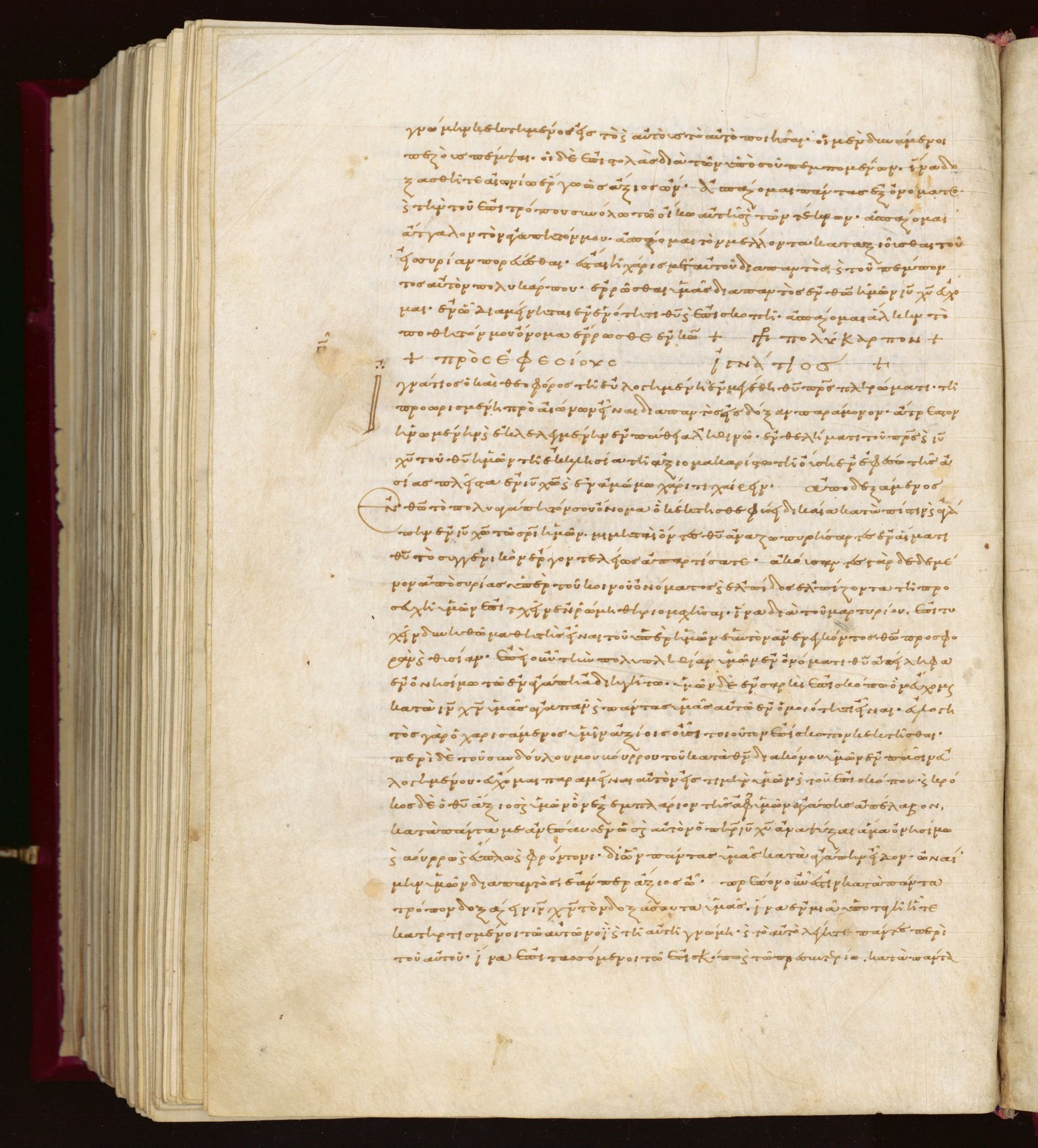
Checked on the images: Laur. Plut. 57.7 fol. 244v: the page begins ‹γνώμην κεκτημένος (Pol. 8.1)› and ends ‹ὑποτασσόμενοι τῷ ἐπισκόπῳ καὶ τῷ πρεσβυτερίῳ, κατὰ πάντα (Eph. 2.2)›. The span of each page was found by reading its first and last words and locating them in the Greek. The Greek shown is Lake's edited text (1912), not a transcription of the page; the scribe's spellings and abbreviations differ in small details.
Ἰγνάτιος, ὁ καὶ Θεοφόρος, τῇ εὐλογημένῃ ἐν μεγέθει θεοῦ πατρὸς πληρώματι, τῇ προωρισμένῃ πρὸ αἰώνων εἶναι διὰ παντὸς εἰς δόξαν παράμονον ἄτρεπτον, ἡνωμένῃ καὶ ἐκλελεγμένῃ ἐν πάθει ἀληθινῷ, ἐν θελήματι τοῦ πατρὸς καὶ Ἰησοῦ Χριστοῦ τοῦ θεοῦ ἡμῶν, τῇ ἐκκλησίᾳ τῇ ἀξιομακαρίστῳ, τῇ οὔσῃ ἐν Ἐφέσῳ τῆς Ἀσίας, πλεῖστα ἐν Ἰησοῦ Χριστῷ καὶ ἐν ἀμώμῳ χαρᾷ χαίρειν.
Ignatius, who is also Theophorus, unto her which hath been blessed in greatness through the plentitude of God the Father; which hath been foreordained before the ages to be for ever unto abiding and unchangeable glory, united and elect in a true passion, by the will of the Father and of Jesus Christ our God; even unto the church which is in Ephesus [of Asia], worthy of all felicitation: abundant greeting in Christ Jesus and in blameless joy.
Where on the image
Checked on the images: Laur. Plut. 57.7 fol. 244v: the page begins ‹γνώμην κεκτημένος (Pol. 8.1)› and ends ‹ὑποτασσόμενοι τῷ ἐπισκόπῳ καὶ τῷ πρεσβυτερίῳ, κατὰ πάντα (Eph. 2.2)›. The span of each page was found by reading its first and last words and locating them in the Greek. The Greek shown is Lake's edited text (1912), not a transcription of the page; the scribe's spellings and abbreviations differ in small details.
1Ἀποδεξάμενος ἐν θεῷ τὸ πολυαγάπητόν σου ὄνομα, ὃ κέκτησθε φύσει δικαίᾳ κατὰ πίστιν καὶ ἀγάπην ἐν Χριστῷ Ἰησοῦ, τῷ σωτῆρι ἡμῶν· μιμηταὶ ὄντες θεοῦ, ἀναζωπυρήσαντες ἐν αἵματι θεοῦ τὸ συγγενικὸν ἔργον τελείως ἀπηρτίσατε· 2ἀκούσαντες γὰρ δεδεμένον ἀπὸ Συρίας ὑπὲρ τοῦ κοινοῦ ὀνόματος καὶ ἐλπίδος, ἐλπίζοντα τῇ προσευχῇ ὑμῶν ἐπιτυχεῖν ἐν Ῥώμῃ θηριομαχῆσαι, ἵνα διὰ τοῦ ἐπιτυχεῖν δυνηθῶ μαθητὴς εἶναι, ἰδεῖν ἐσπουδάσατε· 3ἐπεὶ οὖν τὴν πολυπλήθειαν ὑμῶν ἐν ὀνόματι θεοῦ ἀπείληφα ἐν Ὀνησίμῳ, τῷ ἐν ἀγάπῃ ἀδιηγήτῳ, ὑμῶν δὲ ἐπισκόπῳ, ὃν εὔχομαι κατὰ Ἰησοῦν Χριστὸν ὑμᾶς ἀγαπᾶν καὶ πάντας ὑμᾶς αὐτῷ ἐν ὁμοιότητι εἶναι. εὐλογητὸς γὰρ ὁ χαρισάμενος ὑμῖν ἀξίοις οὖσι τοιοῦτον ἐπίσκοπον κεκτῆσθαι.
1While I welcomed in God [your] well-beloved name which ye bear by natural right, [in an upright and virtuous mind], by faith and love in Christ Jesus our Saviour -- being imitators of God, and having your hearts kindled in the blood of God, ye have perfectly fulfilled your congenial work -- 2for when ye heard that I was on my way from Syria, in bonds for the sake of the common Name and hope, and was hoping through your prayers to succeed in fighting with wild beasts in Rome, that by so succeeding I might have power to be a disciple, ye were eager to visit me: -- 3seeing then that in God's name I have received your whole multitude in the person of Onesimus, whose love passeth utterance and who is moreover your bishop [in the flesh] -- and I pray that ye may love him according to Jesus Christ and that ye all may be like him; for blessed is He that granted unto you according to your deserving to have such a bishop: --
Where on the image
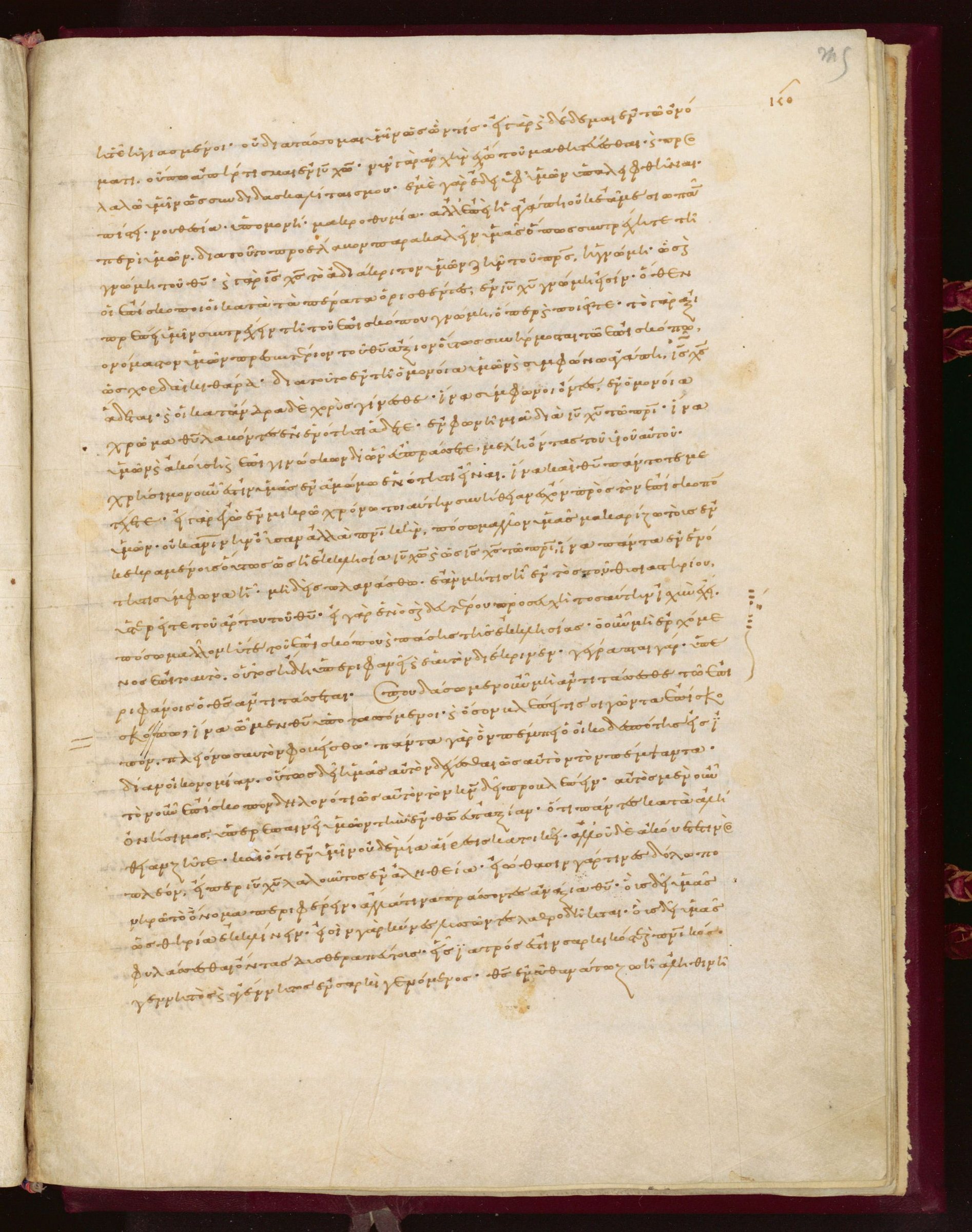
Checked on the images: Laur. Plut. 57.7 fol. 244v: the page begins ‹γνώμην κεκτημένος (Pol. 8.1)› and ends ‹ὑποτασσόμενοι τῷ ἐπισκόπῳ καὶ τῷ πρεσβυτερίῳ, κατὰ πάντα (Eph. 2.2)›; Laur. Plut. 57.7 fol. 245r: the page begins ‹ἦτε ἡγιασμένοι. οὐ διατάσσομαι (Eph. 2.2-3.1)› and ends ‹ἐν θανάτῳ ζωὴ ἀληθινή (Eph. 7.2)›. The span of each page was found by reading its first and last words and locating them in the Greek. The Greek shown is Lake's edited text (1912), not a transcription of the page; the scribe's spellings and abbreviations differ in small details.
1Περὶ δὲ τοῦ συνδούλου μου Βούρρου, τοῦ κατὰ θεὸν διακόνου ὑμῶν ἐν πᾶσιν εὐλογημένου, εὔχομαι παραμεῖναι αὐτὸν εἰς τιμὴν ὑμῶν καὶ τοῦ ἐπισκόπου· καὶ Κρόκος δέ, ὁ θεοῦ ἄξιος καὶ ὑμῶν, ὅν ἐξεμπλάριον τῆς ἀφ’ ὑμῶν ἀγάπης ἀπέλαβον, κατὰ πάντα με ἀνέπαυσεν, ὡς καὶ αὐτὸν ὁ πατὴρ Ἰησοῦ Χριστοῦ ἀναψύξαι, ἅμα Ὀνησίμῳ καὶ Βούρρῳ καὶ Εὔπλῳ καὶ Φρόντωνι, δι’ ὧν πάντας ὑμᾶς κατὰ ἀγάπην εἶδον. 2ὀναίμην ὑμῶν διὰ παντός, ἐάνπερ ἄξιος ὦ. πρέπον οὖν ἐστὶν κατὰ πάντα τρόπον δοξάζειν Ἰησοῦν Χριστὸν τὸν δοξάσαντα ὑμᾶς, ἵνα ἐν μιᾷ ὑποταγῇ κατηρτισμένοι, ὑποτασσόμενοι τῷ ἐπισκόπῳ καὶ τῷ πρεσβυτερίῳ, κατὰ πάντα ἦτε ἡγιασμένοι.
1But as touching my fellow-servant Burrhus, who by the will of God is your deacon blessed in all things, I pray that he may remain with me to the honour of yourselves and of your bishop. Yea, and Crocus also, who is worthy of God and of you, whom I received as an ensample of the love which ye bear me, hath relieved me in all ways -- even so may the Father of Jesus Christ refresh him -- together with Onesimus and Burrhus and Euplus and Fronto; in whom I saw you all with the eyes of love. 2May I have joy of you always, if so be I am worthy of it. It is therefore meet for you in every way to glorify Jesus Christ who glorified you; that being perfectly joined together in one submission, submitting yourselves to your bishop and presbytery, ye may be sanctified in all things.
Where on the image
Checked on the images: Laur. Plut. 57.7 fol. 245r: the page begins ‹ἦτε ἡγιασμένοι. οὐ διατάσσομαι (Eph. 2.2-3.1)› and ends ‹ἐν θανάτῳ ζωὴ ἀληθινή (Eph. 7.2)›. The span of each page was found by reading its first and last words and locating them in the Greek. The Greek shown is Lake's edited text (1912), not a transcription of the page; the scribe's spellings and abbreviations differ in small details.
1Οὐ διατάσσομαι ὑμῖν ὡς ὤν τις. εἰ γὰρ καὶ δέδεμαι ἐν τῷ ὀνόματι, οὔπω ἀπήρτισμαι ἐν Ἰησοῦ Χριστῷ· νῦν γὰρ ἀρχὴν ἔχω τοῦ μαθητεύεσθαι, καὶ προσλαλῶ ὑμῖν ὡς συνδιδασκαλίταις μου. ἐμὲ γὰρ ἔδει ὑφ’ ὑμῶν ὑπαλειφθῆναι πίστει, νουθεσίᾳ, ὑπομονῇ, μακροθυμίᾳ. 2ἀλλ’ ἐπεὶ ἡ ἀγάπη οὐκ ἐᾷ με σιωπᾶν περὶ ὑμῶν, διὰ τοῦτο προέλαβον παρακαλεῖν ὑμᾶς, ὅπως συντρέχητε τῇ γνώμῃ τοῦ θεοῦ. καὶ γὰρ Ἰησοῦς Χριστός, τὸ ἀδιάκριτον ἡμῶν ζῆν, τοῦ πατρὸς ἡ γνώμη, ὡς καὶ οἱ ἐπίσκοποι, οἱ κατὰ τὰ πέρατα ὁρισθέντες, ἐν Ἰησοῦ Χριστοῦ γνώμῃ εἰσίν.
1I do not command you, as though I were somewhat. For even though I am in bonds for the Name's sake, I am not yet perfected in Jesus Christ. [For] now am I beginning to be a disciple; and I speak to you as to my school-fellows. For I ought to be trained by you for the contest in faith, in admonition, in endurance, in long-suffering. 2But, since love doth not suffer me to be silent concerning you, therefore was I forward to exhort you, that ye run in harmony with the mind of God: for Jesus Christ also, our inseparable life, is the mind of the Father, even as the bishops that are settled in the farthest parts of the earth are in the mind of Jesus Christ.
Where on the image
Checked on the images: Laur. Plut. 57.7 fol. 245r: the page begins ‹ἦτε ἡγιασμένοι. οὐ διατάσσομαι (Eph. 2.2-3.1)› and ends ‹ἐν θανάτῳ ζωὴ ἀληθινή (Eph. 7.2)›. The span of each page was found by reading its first and last words and locating them in the Greek. The Greek shown is Lake's edited text (1912), not a transcription of the page; the scribe's spellings and abbreviations differ in small details.
1Ὅθεν πρέπει ὑμῖν συντρέχειν τῇ τοῦ ἐπισκόπου γνώμῃ, ὅπερ καὶ ποιεῖτε. τὸ γὰρ ἀξιονόμαστον ὑμῶν πρεσβυτέριον, τοῦ θεοῦ ἄξιον, οὕτως συνήρμοσται τῷ ἐπισκόπῳ, ὡς χορδαὶ κιθάρᾳ. διὰ τοῦτο ἐν τῇ ὁμονοίᾳ ὑμῶν καὶ συμφώνῳ ἀγάπῃ Ἰησοῦς Χριστὸς ᾄδεται. 2καὶ οἱ κατ’ ἄνδρα δὲ χορὸς γίνεσθε, ἵνα σύμφωνοι ὄντες ἐν ὁμονοίᾳ, χρῶμα θεοῦ λαβόντες ἐν ἑνότητι, ᾄδητε ἐν φωνῇ μιᾷ διὰ Ἰησοῦ Χριστοῦ τῷ πατρί, ἵνα ὑμῶν καὶ ἀκούσῃ καὶ ἐπιγινώσκῃ, δι’ ὧν εὖ πράσσετε, μέλη ὄντας τοῦ υἱοῦ αὐτοῦ. χρήσιμον οὖν ἐστὶν ὑμᾶς ἐν ἀμώμῳ ἑνότητι εἶναι, ἵνα καὶ θεοῦ πάντοτε μετέχητε.
1So then it becometh you to run in harmony with the mind of the bishop; which thing also ye do. For your honourable presbytery, which is worthy of God, is attuned to the bishop, even as its strings to a lyre. Therefore in your concord and harmonious love Jesus Christ is sung. 2And do ye, each and all, form yourselves into a chorus, that being harmonious in concord and taking the key note of God ye may in unison sing with one voice through Jesus Christ unto the Father, that He may both hear you and acknowledge you by your good deeds to be members of His Son. It is therefore profitable for you to be in blameless unity, that ye may also be partakers of God always.
Where on the image
Checked on the images: Laur. Plut. 57.7 fol. 245r: the page begins ‹ἦτε ἡγιασμένοι. οὐ διατάσσομαι (Eph. 2.2-3.1)› and ends ‹ἐν θανάτῳ ζωὴ ἀληθινή (Eph. 7.2)›. The span of each page was found by reading its first and last words and locating them in the Greek. The Greek shown is Lake's edited text (1912), not a transcription of the page; the scribe's spellings and abbreviations differ in small details.
1Εἰ γὰρ ἐγὼ ἐν μικρῷ χρόνῳ τοιαύτην συνήθειαν ἔσχον πρὸς τὸν ἐπίσκοπον ὑμῶν, οὐκ ἀνθρωπίνην οὖσαν, ἀλλὰ πνευματικήν, πόσῳ μᾶλλον ὑμᾶς μακαρίζω τοὺς ἐγκεκραμένους οὕτως, ὡς ἡ ἐκκλησία Ἰησοῦ Χριστῷ, καὶ ὡς Ἰησοῦς Χριστὸς τῷ πατρί, ἵνα πάντα ἐν ἑνότητι σύμφωνα ᾖ; 2μηδεὶς πλανάσθω· ἐὰν μή τις ᾖ ἐντὸς τοῦ θυσιαστηρίου, ὑστερεῖται τοῦ ἄρτου τοῦ θεοῦ. εἰ γὰρ ἑνὸς καὶ δευτέρου προσευχὴ τοσαύτην ἰσχὺν ἔχει, πόσῳ μᾶλλον ἥ τε τοῦ ἐπισκόπου καὶ πάσης τῆς ἐκκλησίας; 3ὁ οὖν μὴ ἐρχόμενος ἐπὶ τὸ αὐτὸ οὗτος ἤδη ὑπερηφανεῖ καὶ ἑαυτὸν διέκρινεν. γέγραπται γάρ· Ὑπερηφάνοις ὁ θεὸς ἀντιτάσσεται, σπουδάσωμεν οὖν μὴ ἀντιτάσσεσθαι τῷ ἐπισκόπῳ, ἵνα ὦμεν θεῷ ὑποτασσόμενοι.
1For if I in a short time had such converse with your bishop, which was not after the manner of men but in the Spirit, how much more do I congratulate you who are closely joined with him as the Church is with Jesus Christ and as Jesus Christ is with the Father, that all things may be harmonious in unity. 2Let no man be deceived. If any one be not within the precinct of the altar, he lacketh the bread [of God]. For, if the prayer of one and another hath so great force, how much more that of the bishop and of the whole Church. 3Whosoever therefore cometh not to the congregation, he doth thereby show his pride and hath separated himself; for it is written, God resisteth the proud. Let us therefore be careful not to resist the bishop, that by our submission we may give ourselves to God.
Where on the image
Checked on the images: Laur. Plut. 57.7 fol. 245r: the page begins ‹ἦτε ἡγιασμένοι. οὐ διατάσσομαι (Eph. 2.2-3.1)› and ends ‹ἐν θανάτῳ ζωὴ ἀληθινή (Eph. 7.2)›. The span of each page was found by reading its first and last words and locating them in the Greek. The Greek shown is Lake's edited text (1912), not a transcription of the page; the scribe's spellings and abbreviations differ in small details.
1Καὶ ὅσον βλέπει τις σιγῶντα ἐπίσκοπον, πλειόνως αὐτὸν φοβείσθω· πάντα γάρ, ὃν πέμπει ὁ οἰκοδεσπότης εἰς ἰδίαν οἰκονομίαν, οὕτως δεῖ ἡμᾶς αὐτὸν δέχεσθαι, ὡς αὐτὸν τὸν πέμψαντα, τὸν οὖν ἐπίσκοπον δῆλον ὅτι ὡς αὐτὸν κύριον δεῖ προσβλέπειν. 2αὐτὸς μὲν οὖν Ὀνήσιμος ὑπερεπαινεῖ ὑμῶν τὴν ἐν θεῷ εὐταξίαν, ὅτι πάντες κατὰ ἀλήθειαν ζῆτε καὶ ὅτι ἐν ὑμῖν οὐδεμία αἵρεσις κατοικεῖ· ἀλλ’ οὐδὲ ἀκούετέ τινος πλέον, ἢ περὶ Ἰησοῦ Χριστοῦ λαλοῦντος ἐν ἀληθείᾳ.
1And in proportion as a man seeth that his bishop is silent, let him fear him the more. For every one whom the Master of the household sendeth to be steward over His own house, we ought so to receive as Him that sent him. Plainly therefore we ought to regard the bishop as the Lord Himself. 2Now Onesimus of his own accord highly praiseth your orderly conduct in God, for that ye all live according to truth,and that no heresy hath a home among you: nay, ye do not so much as listen to any one, if he speak of aught else save concerning Jesus Christ in truth.
Where on the image
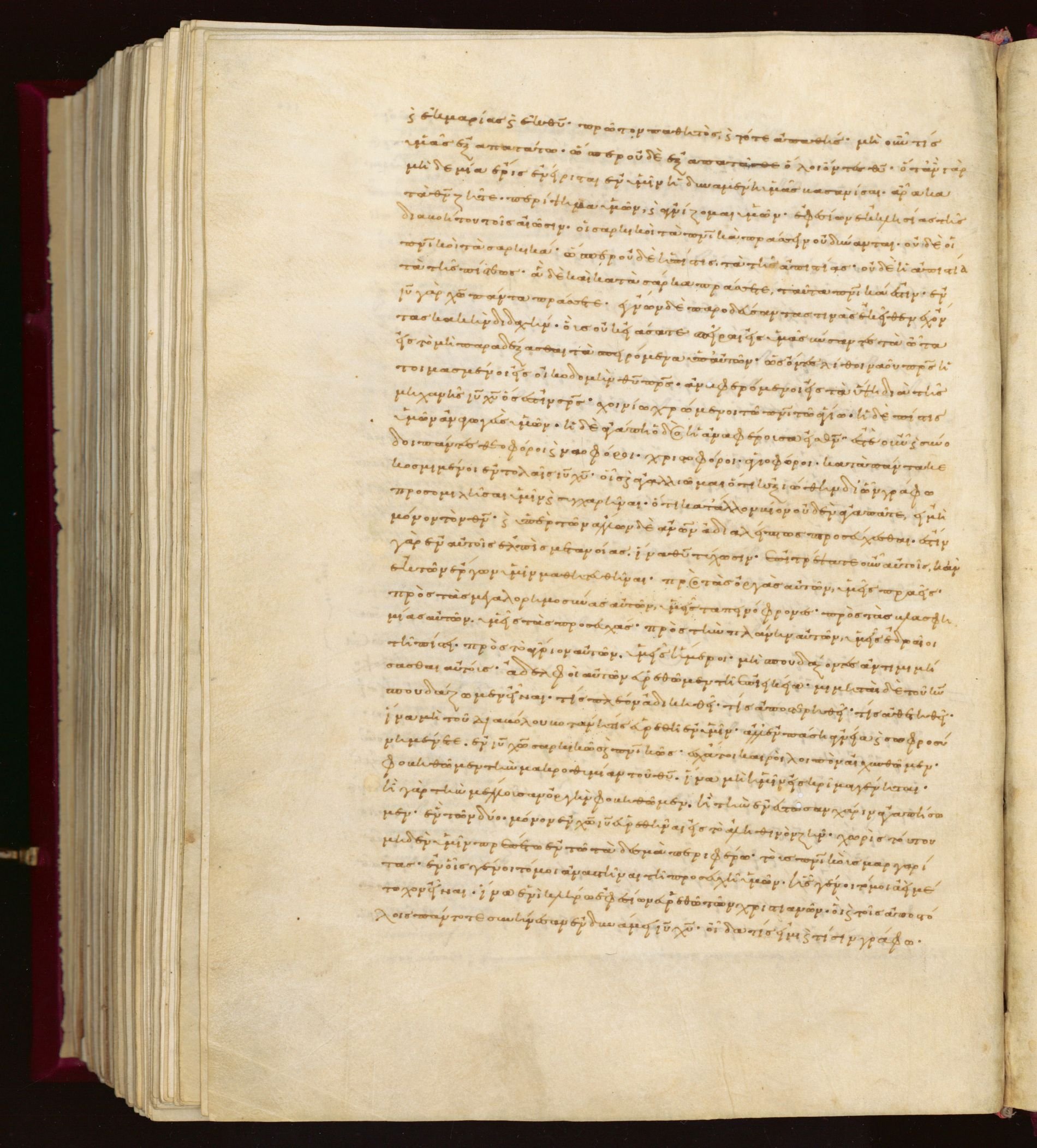
Checked on the images: Laur. Plut. 57.7 fol. 245r: the page begins ‹ἦτε ἡγιασμένοι. οὐ διατάσσομαι (Eph. 2.2-3.1)› and ends ‹ἐν θανάτῳ ζωὴ ἀληθινή (Eph. 7.2)›; Laur. Plut. 57.7 fol. 245v: the page begins ‹καὶ ἐκ Μαρίας καὶ ἐκ θεοῦ (Eph. 7.2)› and ends ‹οἶδα τίς εἰμι καὶ τίσιν γράφω (Eph. 12.1)›. The span of each page was found by reading its first and last words and locating them in the Greek. The Greek shown is Lake's edited text (1912), not a transcription of the page; the scribe's spellings and abbreviations differ in small details.
1Εἰώθασιν γάρ τινες δόλῳ πονηρῷ τὸ ὄνομα περιφέρειν, ἄλλα τινὰ πράσσοντες ἀνάξια θεοῦ· οὓς δεῖ ὑμᾶς ὡς θηρία ἐκκλίνειν· εἰσὶν γὰρ κύνες λυσσῶντες, λαθροδῆκται· οὓς δεῖ ὑμᾶς φυλάσσεσθαι ὄντας δυσθεραπεύτους. 2εἷς ἰατρός ἐστιν, σαρκικός τε καὶ πνευματικός, γεννητὸς καὶ ἀγέννητος, ἐν ἀνθρώπῳ θεός, ἐν θανάτῳ ζωὴ ἀληθινή, καὶ ἐκ Μαρίας καὶ ἐκ θεοῦ, πρῶτον παθητὸς καὶ τότε ἀπαθής. Ἰησοῦς Χριστὸς ὁ κύριος ἡμῶν.
1For some are wont of malicious guile to hawk about the Name, while they do certain other things unworthy of God. These men ye ought to shun, as wild- beasts; for they are mad dogs, biting by stealth; against whom ye ought to be on your guard, for they are hard to heal. 2There is one only physician, of flesh and of spirit, generate and ingenerate, God in man, true Life in death, Son of Mary and Son of God, first passible and then impassible, Jesus Christ our Lord.
Where on the image
Checked on the images: Laur. Plut. 57.7 fol. 245v: the page begins ‹καὶ ἐκ Μαρίας καὶ ἐκ θεοῦ (Eph. 7.2)› and ends ‹οἶδα τίς εἰμι καὶ τίσιν γράφω (Eph. 12.1)›. The span of each page was found by reading its first and last words and locating them in the Greek. The Greek shown is Lake's edited text (1912), not a transcription of the page; the scribe's spellings and abbreviations differ in small details.
1Μὴ οὖν τις ὑμᾶς ἐξαπατάτω, ὥσπερ οὐδὲ ἐξαπατᾶσθε, ὅλοι ὄντες θεοῦ. ὅταν γὰρ μηδεμία ἔρις ἐνήρεισται ἐν ὑμῖν ἡ δυναμένη ὑμᾶς βασανίσαι ἄρα κατὰ θεὸν ζῆτε. περίψημα ὑμῶν καὶ ἁγνίζομαι ὑμῶν Ἐφεσίων, ἐκκλησίας τῆς διαβοήτου τοῖς αἰῶσιν. 2οἱ σαρκικοὶ τὰ πνευματικὰ πράσσειν οὐ δύνανται, οὐδὲ οἱ πνευματικοὶ τὰ σαρκικά, ὥσπερ οὐδὲ ἡ πίστις τὰ τῆς ἀπιστίας οὐδε ἡ ἀπιστία τὰ τῆς πίστεως. ἃ δὲ καὶ κατὰ σάρκα πράσσετε, ταῦτα πνευματικά ἐστιν· ἐν Ἰησοῦ γὰρ Χριστῷ πάντα πράσσετε.
1Let no one therefore deceive you, as indeed ye are not deceived, seeing that ye belong wholly to God. For when no lust is established in you, which hath power to torment you, then truly ye live after God. I devote myself for you, and I dedicate myself as an offering for the church of you Ephesians which is famous unto all the ages. 2They that are of the flesh cannot do the things of the Spirit, neither can they that are of the Spirit do the things of the flesh; even as faith cannot do the things of unfaithfulness, neither unfaithfulness the things of faith. Nay, even those things which ye do after the flesh are spiritual; for ye do all things in Jesus Christ.
Where on the image
Checked on the images: Laur. Plut. 57.7 fol. 245v: the page begins ‹καὶ ἐκ Μαρίας καὶ ἐκ θεοῦ (Eph. 7.2)› and ends ‹οἶδα τίς εἰμι καὶ τίσιν γράφω (Eph. 12.1)›. The span of each page was found by reading its first and last words and locating them in the Greek. The Greek shown is Lake's edited text (1912), not a transcription of the page; the scribe's spellings and abbreviations differ in small details.
1Ἔγνων δὲ παροδεύσαντάς τινας ἐκεῖθεν, ἔχοντας κακὴν διδαχήν· οὓς οὐκ εἰάσατε σπεῖραι εἰς ὑμᾶς, βύσαντες τὰ ὦτα, εἰς τὸ μὴ παραδέξασθαι τὰ σπειρόμενα ὑπ’ αὐτῶν, ὡς ὄντες λίθοι ναοῦ πατρός, ἡτοιμασμένοι εἰς οἰκοδομὴν θεοῦ πατρός, ἀναφερόμενοι εἰς τὰ ὕψη διὰ τῆς μηχανῆς Ἰησοῦ Χριστοῦ, ὅς ἐστιν σταυρός, σχοινίῳ χρώμενοι τῷ πνεύματι τῷ ἁγίῳ· ἡ δὲ πίστις ὑμῶν ἀναγωγεὺς ὑμῶν, ἡ δὲ ἀγάπη ὁδὸς ἡ ἀναφέρουσα εἰς θεόν. 2ἐστὲ οὖν καὶ σύνοδοι πάντες, θεοφόροι καὶ ναοφόροι, χριστοφόροι, ἁγιοφόροι, κατὰ πάντα κεκοσμημένοι ἐντολαῖς Ἰησοῦ Χριστοῦ· οἷς καὶ ἀγαλλιώμενος ἠξιώθην δι’ ὧν γράφω προσομιλῆσαι ὑμῖν καὶ συγχαρῆναι, ὅτι κατ’ ἀνθρώπων βίον οὐδὲν ἀγαπᾶτε εἰ μὴ μόνον τὸν θεόν.
1But I have learned that certain persons passed through you from yonder, bringing evil doctrine; whom ye suffered not to sow seed in you, for ye stopped your ears, so that ye might not receive the seed sown by them; forasmuch as ye are stones of a temple, which were prepared beforehand for a building of God the Father, being hoisted up to the heights through the engine of Jesus Christ, which is the Cross, and using for a rope the Holy Spirit; while your faith is your windlass, and love is the way that leadeth up to God. 2So then ye are all companions in the way, carrying your God and your shrine, your Christ and your holy things, being arrayed from head to foot in the commandments of Jesus Christ. And I too, taking part in the festivity, am permitted by letter to bear you company and to rejoice with you, that ye set not your love on anything after the common life of men, but only on God.
Where on the image
Checked on the images: Laur. Plut. 57.7 fol. 245v: the page begins ‹καὶ ἐκ Μαρίας καὶ ἐκ θεοῦ (Eph. 7.2)› and ends ‹οἶδα τίς εἰμι καὶ τίσιν γράφω (Eph. 12.1)›. The span of each page was found by reading its first and last words and locating them in the Greek. The Greek shown is Lake's edited text (1912), not a transcription of the page; the scribe's spellings and abbreviations differ in small details.
1Καὶ ὑπὲρ τῶν ἄλλων δὲ ἀνθρώπων ἀδιαλείπτως προσεύχεσθε, ἔστιν γὰρ ἐν αὐτοῖς ἐλπὶς μετανοίας, ἵνα θεοῦ τύχωσιν. ἐπιτρέψατε οὖν αὐτοῖς κἂν ἐκ τῶν ἔργων ὑμῖν μαθητευθῆναι. 2πρὸς τὰς ὀργὰς αὐτῶν ὑμεῖς πραεῖς, πρὸς τὰς μεγαλορημοσύνας αὐτῶν ὑμεῖς ταπεινόφρονες, πρὸς τὰς βλασφημίας αὐτῶν ὑμεῖς τὰς προσευχάς, πρὸς τὴν πλάνην αὐτῶν αὐτῶν ὑμεῖς ἑδραῖοι τῇ πίστει, πρὸς τὸ ἄγριον αὐτῶν ὑμεῖς ἥμεροι, μὴ σπουδάζοντες ἀντιμιμήσασθαι αὐτούς, 3ἀδελφοὶ αὐτῶν εὑρεθῶμεν τῇ ἐπιεικείᾳ· μιμηταὶ δὲ τοῦ κυρίου σπουδάζωμεν εἶναι, τίς πλέον ἀδικηθῇ, τίς ἀποστερηθῇ, τίς ἀθετηθῇ· ἵνα μὴ τοῦ διαβόλου βοτάνη τις εὑρεθῇ ἐν ὑμῖν, ἀλλ’ ἐν πάσῃ ἁγνείᾳ καὶ σωφροσύνῃ μένητε ἐν Ἰησοῦ Χριστῷ σαρκικῶς καὶ πνευματικῶς.
1And pray ye also without ceasing for the rest of mankind (for there is in them a hope of repentance), that they may find God. Therefore permit them to take lessons at least from your works. 2Against their outbursts of wrath be ye meek; against their proud words be ye humble; against their railings set ye your prayers; against their errors be ye stedfast in the faith; against their fierceness be ye gentle. And be not zealous to imitate them by requital. 3Let us show ourselves their brothers by our forbearance; but let us be zealous to be imitators of the Lord, vying with each other who shall suffer the greater wrong, who shall be defrauded, who shall be set at nought; that no herb of the devil be found in you: but in all purity and temperance abide ye in Christ Jesus, with your flesh and with your spirit.
Where on the image
Checked on the images: Laur. Plut. 57.7 fol. 245v: the page begins ‹καὶ ἐκ Μαρίας καὶ ἐκ θεοῦ (Eph. 7.2)› and ends ‹οἶδα τίς εἰμι καὶ τίσιν γράφω (Eph. 12.1)›. The span of each page was found by reading its first and last words and locating them in the Greek. The Greek shown is Lake's edited text (1912), not a transcription of the page; the scribe's spellings and abbreviations differ in small details.
1Ἔσχατοι καιροί. λοιπὸν αἰσχυνθῶμεν, φοβηθῶμεν τὴν μακροθυμίαν τοῦ θεοῦ, ἵνα μὴ ἡμῖν εἰς κρίμα γένηται. ἢ γὰρ τὴν μέλλουσαν ὀργὴν φοβηθῶμεν, ἢ τὴν ἐνεστῶσαν χάριν ἀγαπήσωμεν, ἓν τῶν δύο· μόνον ἐν Χριστῷ Ἰησοῦ εὑρεθῆναι εἰς τὸ ἀληθινὸν ζῆν. 2χωρὶς τούτου μηδὲν ὑμῖν πρεπέτω, ἐν ᾧ τὰ δεσμὰ περιφέρω, τοὺς πνευματικοὺς μαργαρίτας, ἐν οἷς γένοιτό μοι ἀναστῆναι τῇ προσευχῇ ὑμῶν, ἧς γένοιτό μοι ἀεὶ μέτοχον εἶναι, ἵνα ἐν κλήρῳ Ἐφεσίων εὑρεθῶ τῶν Χριστιανῶν, οἳ καὶ τοῖς ἀποστόλοις πάντοτε συνῄνεσαν ἐν δυνάμει Ἰησοῦ Χριστοῦ
1These are the last times. Henceforth let us have reverence; let us fear the long-suffering of God, lest it turn into a judgment against us. For either let us fear the wrath which is to come or let us love the grace which now is -- the one or the other; provided only that we be found in Christ Jesus unto true life. 2Let nothing glitter in your eyes apart from Him, in whom I carry about my bonds, my spiritual pearls in which I would fain rise again through your prayer, whereof may it be my lot to be always a partaker, that I may be found in the company of those Christians of Ephesus who moreover were ever of one mind with the Apostles in the power of Jesus Christ.
Where on the image
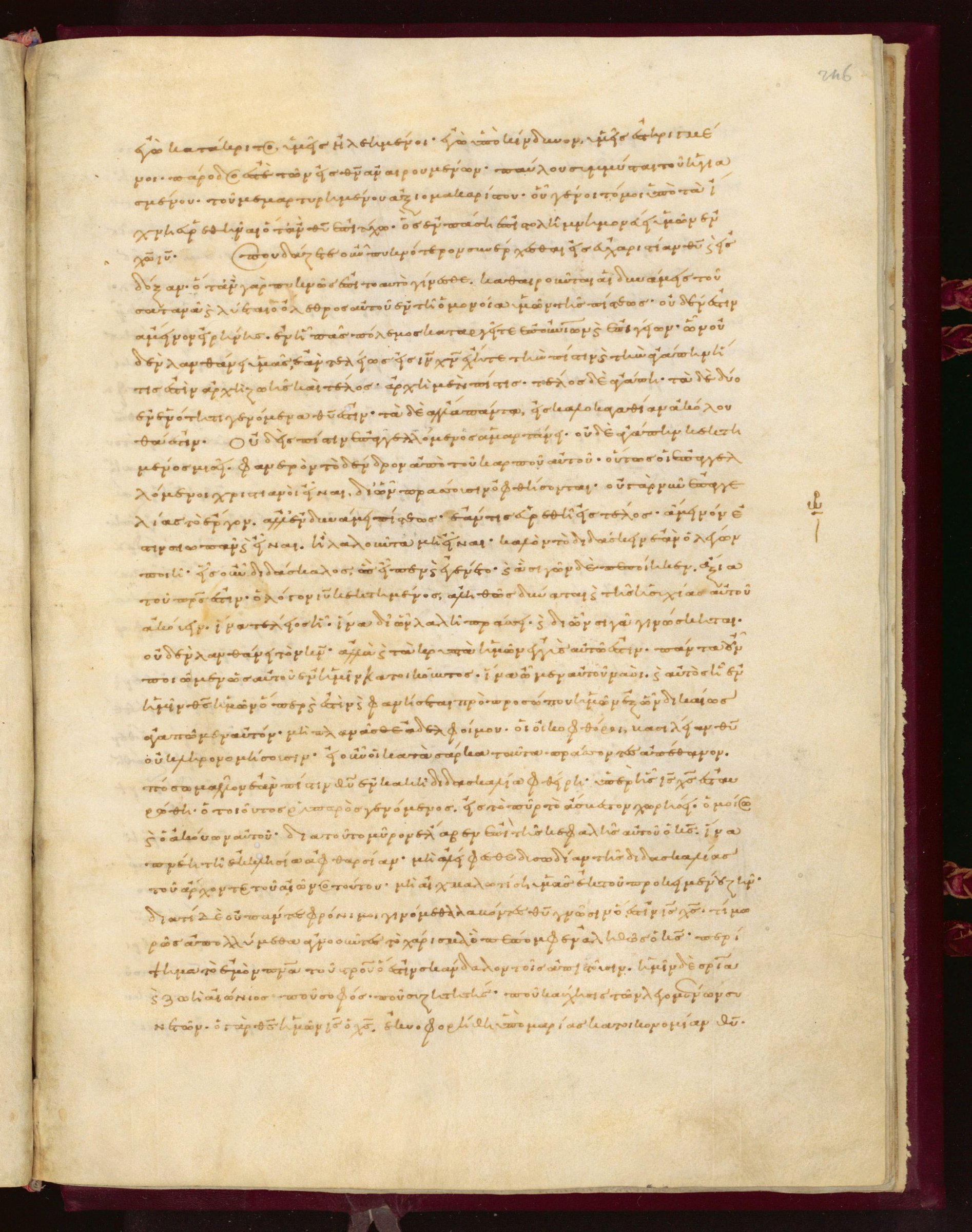
Checked on the images: Laur. Plut. 57.7 fol. 245v: the page begins ‹καὶ ἐκ Μαρίας καὶ ἐκ θεοῦ (Eph. 7.2)› and ends ‹οἶδα τίς εἰμι καὶ τίσιν γράφω (Eph. 12.1)›; Laur. Plut. 57.7 fol. 246r: the page begins ‹ἐγὼ κατάκριτος, ὑμεῖς ἠλεημένοι (Eph. 12.1)› and ends ‹ἐκυοφορήθη ὑπὸ Μαρίας κατ' οἰκονομίαν θεοῦ (Eph. 18.2)›. The span of each page was found by reading its first and last words and locating them in the Greek. The Greek shown is Lake's edited text (1912), not a transcription of the page; the scribe's spellings and abbreviations differ in small details.
1Οἶδα, τίς εἰμι καὶ τίσιν γράφω. ἐγὼ κατάκριτος, ὑμεῖς ἠλεημένοι· ἐγὼ ὑπὸ κίνδυνον, ὑμεῖς ἐστηριγμένοι· 2πάροδός ἐστε τῶν εἰς θεὸν ἀναιρουμένων, Παύλου συμμύσται τοῦ ἡγιασμένου. τοῦ μεμαρτυρημένου, ἀξιομακαρίστου, οὗ γένοιτό μοι ὑπὸ τὰ ἴχνη εὑρεθῆναι, ὅταν θεοῦ ἐπιτύχω, ὃς ἐν πάσῃ ἐπιστολῇ μνημονεύει ὑμῶν ἐν Χριστῷ Ἰησοῦ.
1I know who I am and to whom I write. I am a convict, ye have received mercy: I am in peril, ye are established. 2Ye are the high-road of those that are on their way to die unto God. Ye are associates in the mysteries with Paul, who was sanctified, who obtained a good report, who is worthy of all felicitation; in whose foot-steps I would fain be found treading, when I shall attain unto God; who in every letter maketh mention of you in Christ Jesus.
Where on the image
Checked on the images: Laur. Plut. 57.7 fol. 246r: the page begins ‹ἐγὼ κατάκριτος, ὑμεῖς ἠλεημένοι (Eph. 12.1)› and ends ‹ἐκυοφορήθη ὑπὸ Μαρίας κατ' οἰκονομίαν θεοῦ (Eph. 18.2)›. The span of each page was found by reading its first and last words and locating them in the Greek. The Greek shown is Lake's edited text (1912), not a transcription of the page; the scribe's spellings and abbreviations differ in small details.
1Σπουδάζετε οὖν πυκνότερον συνέρχεσθαι εἰς εὐχαριστίαν θεοῦ καὶ εἰς δόξαν. ὅταν γὰρ πυκνῶς ἐπὶ τὸ αὐτὸ γίνεσθε, καθαιροῦνται αἱ δυνάμεις τοῦ Σατανᾶ, καὶ λύεται ὁ ὄλεθρος αὐτοῦ ἐν τῇ ὁμονοίᾳ ὑμῶν τῆς πίστεως. 2οὐδέν ἐστιν ἄμεινον εἰρήνης, ἐν ᾗ πᾶς πόλεμος καταργεῖται ἐπουρανίων καὶ ἐπιγείων.
1Do your diligence therefore to meet together more frequently for thanksgiving to God and for His glory. For when ye meet together frequently, the powers of Satan are cast down; and his mischief cometh to nought in the concord of your faith. 2There is nothing better than peace, in which all warfare of things in heaven and things on earth is abolished.
Where on the image
Checked on the images: Laur. Plut. 57.7 fol. 246r: the page begins ‹ἐγὼ κατάκριτος, ὑμεῖς ἠλεημένοι (Eph. 12.1)› and ends ‹ἐκυοφορήθη ὑπὸ Μαρίας κατ' οἰκονομίαν θεοῦ (Eph. 18.2)›. The span of each page was found by reading its first and last words and locating them in the Greek. The Greek shown is Lake's edited text (1912), not a transcription of the page; the scribe's spellings and abbreviations differ in small details.
1Ὦν οὐδὲν λανθάνει ὑμᾶς, ἐὰν τελείως εἰς Ἰησοῦν Χριστὸν ἔχητε τὴν πίστιν καὶ τὴν ἀγάπην, ἥτις ἐστὶν ἀρχὴ ζωῆς καὶ τέλος· ἀρχὴ μὲν πίστις, τέλος δὲ ἀγάπη. τὰ δὲ δύο ἐν ἑνότητι γενόμενα θεός ἐστιν, τὰ δὲ ἄλλα πάντα εἰς καλοκἀγαθίαν ἀκόλουθά ἐστιν. 2οὐδεὶς πίστιν ἐπαγγελλόμενος ἁμαρτάνει, οὐδὲ ἀγάπην κεκτημένος μισεῖ. φανερὸν τὸ δένδρον ἀπὸ τοῦ καρποῦ αὐτοῦ. οὕτως οἱ ἐπαγγελλόμενοι Χριστοῦ εἶναι δι’ ὧν πράσσουσιν ὀφθήσονται. οὐ γὰρ νῦν ἐπαγγελίας τὸ ἔργον, ἀλλ’ ἐν δυνάμει πίστεως ἐάν τις εὑρεθῇ εἰς τέλος.
1None of these things is hidden from you, if ye be perfect in your faith and love toward Jesus Christ, for these are the beginning and end of life -- faith is the beginning and love is the end -- and the two being found in unity are God, while all things else follow in their train unto true nobility. 2No man professing faith sinneth, and no man possessing love hateth. The tree is manifest from its fruit; so they that profess to be Christ's shall be seen through their actions. For the Work is not a thing of profession now, but is seen then when one is found in the power of faith unto the end.
Where on the image
Checked on the images: Laur. Plut. 57.7 fol. 246r: the page begins ‹ἐγὼ κατάκριτος, ὑμεῖς ἠλεημένοι (Eph. 12.1)› and ends ‹ἐκυοφορήθη ὑπὸ Μαρίας κατ' οἰκονομίαν θεοῦ (Eph. 18.2)›. The span of each page was found by reading its first and last words and locating them in the Greek. The Greek shown is Lake's edited text (1912), not a transcription of the page; the scribe's spellings and abbreviations differ in small details.
1Ἄμεινόν ἐστιν σιωπᾶν καὶ εἶναι, ἢ λαλοῦντα μὴ εἶναι. καλὸν τὸ διδάσκειν, ἐὰν ὁ λέγων ποιῇ. εἷς οὖν διδάσκαλος, ὃς εἶπεν, καὶ ἐγένετο· καὶ ἃ σιγῶν δὲ πεποίηκεν ἄξια τοῦ πατρός ἐστιν. 2ὁ λόγον Ἰησοῦ κεκτημένος ἀληθῶς δύναται καὶ τῆς ἡσυχίας αὐτοῦ ἀκούειν, ἵνα τέλειος ᾖ, ἵνα δι’ ὧν λαλεῖ πράσσῃ καὶ δι’ ὧν σιγᾷ γινώσκηται. 3οὐδὲν λανθάνει τὸν κύριον, ἀλλὰ καὶ τὰ κρυπτὰ ἡμῶν ἐγγὺς αὐτῷ ἐστιν. πάντα οὖν ποιῶμεν ὡς αὐτοῦ ἐν ἡμῖν κατοικοῦντος, ἵνα ὦμεν αὐτοῦ ναοὶ καὶ αὐτὸς ἐν ἡμῖν θεὸς ἡμῶν· ὅπερ καὶ ἔστιν καὶ φανήσεται πρὸ προσώπου ἡμῶν, ἐξ ὧν δικαίως ἀγαπῶμεν αὐτόν.
1It is better to keep silence and to be, than to talk and not to be. It is a fine thing to teach, if the speaker practise. Now there is one teacher, who spake and it came to pass: yea and even the things which He hath done in silence are worthy of the Father. 2He that truly possesseth the word of Jesus is able also to hearken unto His silence, that he may be perfect; that through his speech he may act and through his silence he may be known. 3Nothing is hidden from the Lord, but even our secrets are nigh unto Him. Let us therefore do all things as knowing that He dwelleth in us, to the end that we may be His temples and He Himself may be in us as our God. This is so, and it will also be made clear in our sight from the love which we rightly bear towards Him.
Where on the image
Checked on the images: Laur. Plut. 57.7 fol. 246r: the page begins ‹ἐγὼ κατάκριτος, ὑμεῖς ἠλεημένοι (Eph. 12.1)› and ends ‹ἐκυοφορήθη ὑπὸ Μαρίας κατ' οἰκονομίαν θεοῦ (Eph. 18.2)›. The span of each page was found by reading its first and last words and locating them in the Greek. The Greek shown is Lake's edited text (1912), not a transcription of the page; the scribe's spellings and abbreviations differ in small details.
1Μὴ πλανᾶσθε, ἀδελφοί μου· οἱ οἰκοφθόροι βασιλείαν θεοῦ οὐ κληρονομήσουσιν. 2εἰ οὖν οἱ κατὰ σάρκα ταῦτα πράσσοντες ἀπέθανον, πόσῳ μᾶλλον, ἐὰν πίστιν θεοῦ ἐν κακῇ διδασκαλίᾳ φθείρῃ, ὑπὲρ ἧς Ἰησοῦς Χριστὸς ἐσταυρώθη; ὁ τοιοῦτος ῥυπαρὸς γενόμενος, εἰς τὸ πῦρ τὸ ἄσβεστον χωρήσει, ὁμοίως καὶ ὁ ἀκούων αὐτοῦ.
1Be not deceived, my brethren. Corrupters of houses shall not inherit the kingdom of God. 2If then they which do these things after the flesh are put to death, how much more if a man through evil doctrine corrupt the faith of God for which Jesus Christ was crucified. Such a man, having defiled himself, shall go into the unquenchable fire; and in like manner also shall he that hearkeneth unto him.
Where on the image
Checked on the images: Laur. Plut. 57.7 fol. 246r: the page begins ‹ἐγὼ κατάκριτος, ὑμεῖς ἠλεημένοι (Eph. 12.1)› and ends ‹ἐκυοφορήθη ὑπὸ Μαρίας κατ' οἰκονομίαν θεοῦ (Eph. 18.2)›. The span of each page was found by reading its first and last words and locating them in the Greek. The Greek shown is Lake's edited text (1912), not a transcription of the page; the scribe's spellings and abbreviations differ in small details.
1Διὰ τοῦτο μύρον ἔλαβεν ἐπὶ τῆς κεφαλῆς αὐτοῦ ὁ κύριος, ἵνα πνέῃ τῇ ἐκκλησίᾳ ἀφθαρσίαν, μὴ ἀλείφεσθε δυσωδίαν τῆς διδασκαλίας τοῦ ἄρχοντος τοῦ αἰῶνος τούτου, μὴ αἰχμαλωτίσῃ ὑμᾶς ἐκ τοῦ προκειμένου ζῆν. 2διὰ τί δὲ οὐ πάντες φρόνιμοι γινόμεθα λαβόντες θεοῦ γνῶσιν, ὅ ἐστιν Ἰησοῦς Χριστός; τί μωρῶς ἀπολλύμεθα, ἀγνοοῦντες τὸ χάρισμα, ὃ πέπομφεν ἀληθῶς ὁ κύριος;
1For this cause the Lord received ointment on His head, that He might breathe incorruption upon the Church. Be not anointed with the ill odour of the teaching of the prince of this world, lest he lead you captive and rob you of the life which is set before you. 2And wherefore do we not all walk prudently, receiving the knowledge of God, which is Jesus Christ? Why perish we in our folly, not knowing the gift of grace which the Lord hath truly sent?
Where on the image
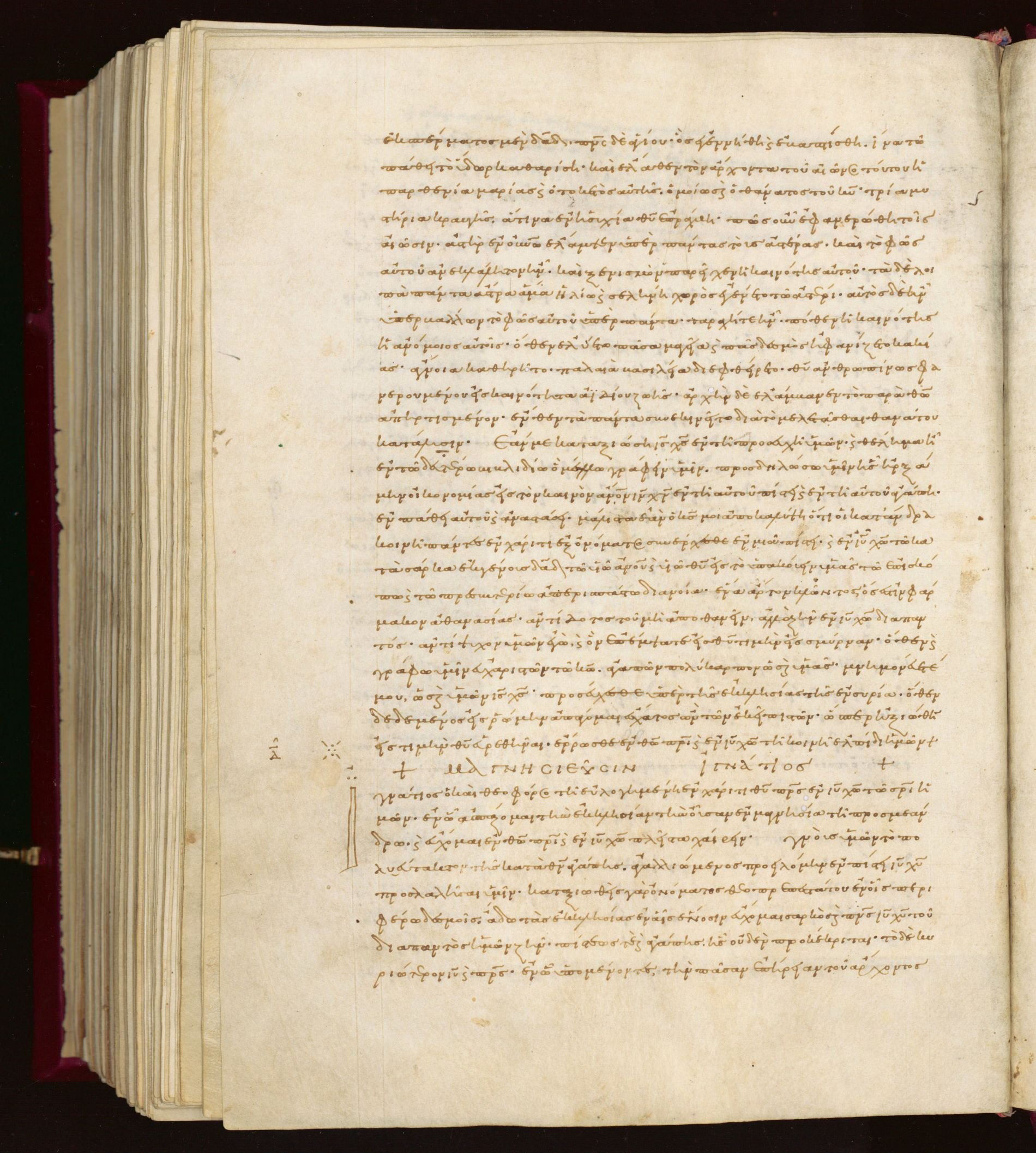
Checked on the images: Laur. Plut. 57.7 fol. 246r: the page begins ‹ἐγὼ κατάκριτος, ὑμεῖς ἠλεημένοι (Eph. 12.1)› and ends ‹ἐκυοφορήθη ὑπὸ Μαρίας κατ' οἰκονομίαν θεοῦ (Eph. 18.2)›; Laur. Plut. 57.7 fol. 246v: the page begins ‹ἐκ σπέρματος μὲν Δαυείδ (Eph. 18.2)› and ends ‹τὴν πᾶσαν ἐπήρειαν τοῦ ἄρχοντος (Magn. 1.3)›. The span of each page was found by reading its first and last words and locating them in the Greek. The Greek shown is Lake's edited text (1912), not a transcription of the page; the scribe's spellings and abbreviations differ in small details.
1Περίψημα τὸ ἐμὸν πνεῦμα τοῦ σταυροῦ, ὅ ἐστιν σκάνδαλον τοῖς ἀπιστοῦσιν, ἡμῖν δὲ σωτηρία καὶ ζωὴ αἰώνιος, ποῦ σοφός; ποῦ συζητητής; ποῦ καύχησις τῶν λεγομένων συνετῶν; 2ὁ γὰρ θεὸς ἡμῶν Ἰησοῦς ὁ Χριστὸς ἐκυοφορήθη ὑπὸ Μαρίας κατ’ οἰκονομίαν θεοῦ ἐκ σπέρματος μὲν Δαυείδ, πνεύματος δὲ ἁγίου· ὃς ἐγεννήθη καὶ ἐβαπτίσθη, ἵνα τῷ πάθει τὸ ὕδωρ καθαρίσῃ.
1My spirit is made an offscouring for the Cross, which is a stumbling-block to them that are unbelievers, but to us salvation and life eternal. Where is the wise? Where is the disputer? Where is the boasting of them that are called prudent? 2For our God, Jesus the Christ, was conceived in the womb by Mary according to a dispensation, of the seed of David but also of the Holy Ghost; and He was born and was baptized that by His passion He might cleanse water.
Where on the image
Checked on the images: Laur. Plut. 57.7 fol. 246v: the page begins ‹ἐκ σπέρματος μὲν Δαυείδ (Eph. 18.2)› and ends ‹τὴν πᾶσαν ἐπήρειαν τοῦ ἄρχοντος (Magn. 1.3)›. The span of each page was found by reading its first and last words and locating them in the Greek. The Greek shown is Lake's edited text (1912), not a transcription of the page; the scribe's spellings and abbreviations differ in small details.
1Καὶ ἔλαθεν τὸν ἄρχοντα τοῦ αἰῶνος τούτου ἡ παρθενία Μαρίας καὶ ὁ τοκετὸς αὐτῆς, ὁμοίως καὶ ὁ θάνατος τοῦ κυρίου· τρία μυστήρια κραυγῆς, ἅτινα ἐν ἡσυχίᾳ θεοῦ ἐπράχθη. 2πῶς οὖν ἐφανερώθη τοῖς αἰῶσιν; ἀστὴρ ἐν οὐρανῷ ἔλαμψεν ὑπὲρ πάντας τοὺς ἀστέρας, καὶ τὸ φῶς αὐτοῦ ἀνεκλάλητον ἦν καὶ ξενισμὸν παρεῖχεν ἡ καινότης αὐτοῦ, τὰ δὲ λοιπὰ πάντα ἄστρα ἅμα ἡλίῳ καὶ σελήνῃ χορὸς ἐγένετο τῷ ἀστέρι, αὐτὸς δὲ ἦν ὑπερβάλλων τὸ φῶς αὐτοῦ ὑπὲρ πάντα· ταραχή τε ἦν, πόθεν ἡ καινότης ἡ ἀνόμοιος αὐτοῖς. 3ὅθεν ἐλύετο πᾶσα μαγεία καὶ πᾶς δεσμὸς ἠφανίζετο κακίας· ἄγνοια καθῃρεῖτο, παλαιὰ βασιλεία διεφθείρετο θεοῦ ἀνθρωπίνως φανερουμένου εἰς καινότητα ἀϊδίου ζωῆς· ἀρχὴν δὲ ἐλάμβανεν τὸ παρὰ θεῷ ἀπηρτισμένον. ἔνθεν τὰ πάντα συνεκινεῖτο διὰ τὸ μελετᾶσθαι θανάτου κατάλυσιν.
1And hidden from the prince of this world were the virginity of Mary and her child-bearing and likewise also the death of the Lord -- three mysteries to be cried aloud -- the which were wrought in the silence of God. 2How then were they made manifest to the ages? A star shone forth in the heaven above all the stars; and its light was unutterable, and its strangeness caused amazement; and all the rest of the constellations with the sun and moon formed themselves into a chorus about the star; but the star itself far outshone them all; and there was perplexity to know whence came this strange appearance which was so unlike them. 3From that time forward every sorcery and every spell was dissolved, the ignorance of wickedness vanished away, the ancient kingdom was pulled down, when God appeared in the likeness of man unto newness of everlasting life; and that which had been perfected in the counsels of God began to take effect. Thence all things were perturbed, because the abolishing of death was taken in hand.
Where on the image
Checked on the images: Laur. Plut. 57.7 fol. 246v: the page begins ‹ἐκ σπέρματος μὲν Δαυείδ (Eph. 18.2)› and ends ‹τὴν πᾶσαν ἐπήρειαν τοῦ ἄρχοντος (Magn. 1.3)›. The span of each page was found by reading its first and last words and locating them in the Greek. The Greek shown is Lake's edited text (1912), not a transcription of the page; the scribe's spellings and abbreviations differ in small details.
1Ἐάν με καταξιώσῃ Ἰησοῦς Χριστὸς ἐν τῇ προσευχῇ ὑμῶν καὶ θέλημα ᾖ, ἐν τῷ δευτέρῳ βιβλιδίῳ, ὃ μέλλω γράφειν ὑμῖν, προσδηλώσω ὑμῖν, ἧς ἠρξάμην οἰκονομίας εἰς τὸν καινὸν ἄνθρωπον Ἰησοῦν Χριστόν, ἐν τῇ αὐτοῦ πίστει καὶ ἐν τῇ αὐτοῦ ἀγάπῃ, ἐν πάθει αὐτοῦ καὶ ἀναστάσει· 2μάλιστα ἐὰν ὁ κύριός μοι ἀποκαλύψῃ, ὅτι οἱ κατ’ ἄνδρα κοινῇ πάντες ἐν χάριτι ἐξ ὀνόματος συνέρχεσθε ἐν μιᾷ πίστει καὶ ἐν Ἰησοῦ Χριστῷ. τῷ κατὰ σάρκα ἐκ γένους Δαυείδ, τῷ υἱῷ ἀνθρώπου καὶ υἱῷ θεοῦ, εἰς τὸ ὑπακούειν ὑμᾶς τῷ ἐπισκόπῳ καὶ τῷ πρεσβυτερίῳ ἀπερισπάστῳ διανοίᾳ, ἕνα ἄρτον κλῶντες, ὅς ἐστιν φάρμακον ἀθανασίας, ἀντίδοτος τοῦ μὴ ἀποθανεῖν, ἀλλὰ ζῆν ἐν Ἰησοῦ Χριστῷ διὰ παντός.
1If Jesus Christ should count me worthy through your prayer, and it should be the Divine will, in my second tract, which I intend to write to you, I will further set before you the dispensation whereof I have begun to speak, relating to the new man Jesus Christ, which consisteth in faith towards Him and in love towards Him, in His passion and resurrection, 2especially if the Lord should reveal aught to me. Assemble yourselves together in common, every one of you severally, man by man, in grace, in one faith and one Jesus Christ, who after the flesh was of David's race, who is Son of Man and Son of God, to the end that ye may obey the bishop and presbytery without distraction of mind; breaking one bread, which is the medicine of immortality and the antidote that we should not die but live for ever in Jesus Christ.
Where on the image
Checked on the images: Laur. Plut. 57.7 fol. 246v: the page begins ‹ἐκ σπέρματος μὲν Δαυείδ (Eph. 18.2)› and ends ‹τὴν πᾶσαν ἐπήρειαν τοῦ ἄρχοντος (Magn. 1.3)›. The span of each page was found by reading its first and last words and locating them in the Greek. The Greek shown is Lake's edited text (1912), not a transcription of the page; the scribe's spellings and abbreviations differ in small details.
1Ἀντίψυχον ὑμῶν ἐγὼ καὶ ὧν ἐπέμψατε εἰς θεοῦ τιμὴν εἰς Σμύρναν, ὅθεν καὶ γράφω ὑμῖν, εὐχαριστῶν τῷ κυρίῳ, ἀγαπῶν Πολύκαρπον ὡς καὶ ὑμᾶς· μνημονεύετέ μου, ὡς καὶ ὑμῶν Ἰησοῦς Χριστός. 2προσεύχεσθε ὑπὲρ τῆς ἐκκλησίας τῆς ἐν Συρίᾳ, ὅθεν δεδεμένος εἰς Ῥώμην ἀπάγομαι, ἔσχατος ὢν τῶν ἐκεῖ πιστῶν, ὥσπερ ἠξιώθην εἰς τιμὴν θεοῦ εὑρεθῆναι. ἔρρωσθε ἐν θεῷ πατρὶ καὶ ἐν Ἰησοῦ Χριστῷ, τῇ κοινῇ ἐλπίδι ἡμῶν.
1I am devoted to you and to those whom for the honour of God ye sent to Smyrna; whence also I write unto you with thanksgiving to the Lord, having love for Polycarp as I have for you also. Remember me, even as I would that Jesus Christ may also remember you. 2Pray for the church which is in Syria, whence I am led a prisoner to Rome -- I who am the very last of the faithful there; according as I was counted worthy to be found unto the honour of God. Fare ye well in God the Father and in Jesus Christ our common hope.
Notes
- Greek: Kirsopp Lake, The Apostolic Fathers I (Loeb Classical Library, 1912), digital text of the First1KGreek project (tlg1443.tlg001, CC BY-SA 4.0); Lake's footnotes are not shown. Elided words are written with an apostrophe and the digital text's colon is shown as the raised dot.
- Proofreading: the Greek pages of Lake (archive.org theapostolicfath00unknuoft, leaves 184-288) were read by OCR twice and aligned with the digital text; every word on which both OCR readings agreed against the digital text, and every form that cannot be right, was looked up on the page image. Corrections in this letter: 1.1 'ὀνομα,' to 'ὄνομα,'; 1.3 'ὄν' to 'ὃν'; 2.1 'ὦν' to 'ὧν'; 2.2 'οὗν' to 'οὖν'; 4.1 'ᾅδεται.' to 'ᾄδεται.'; 4.2 'ᾅδητε' to 'ᾄδητε'; 4.2 'ὦν' to 'ὧν'; 5.2 'ἑὰν' to 'ἐὰν'; 7.1 'οὕς δεῖ' to 'οὓς δεῖ'; 9.2 'οἶς καὶ' to 'οἷς καὶ'; 9.2 'ὦν' to 'ὧν'; 10.2 'μῆ' to 'μὴ'; 11.1 'ἦ γὰρ' to 'ἢ γὰρ'; 11.1 'φοβηθῶμεν, ἦ' to 'φοβηθῶμεν, ἢ'; 11.1 'ἒν' to 'ἓν'; 11.2 'τῆ' to 'τῇ'; 11.2 'ἦς' to 'ἧς'; 12.2 'οὖ' to 'οὗ'; 15.1 'ἦ' to 'ἢ'; 15.1 'εἶς' to 'εἷς'; 15.2 'δι’ ὦν λαλεῖ' to 'δι’ ὧν λαλεῖ'; 15.2 'δι’ ὦν σιγᾷ' to 'δι’ ὧν σιγᾷ'; 15.3 'ὦν' to 'ὧν'; 20.1 'ἦς' to 'ἧς'. Kept as Lake prints them (worn or missing accents): Eph. 8.2 οὐδε, Phld. 5.2 ἀξιαγαπητοι, Smyrn. 2.1 το; Lake's quotation marks in Pol. 8.1 are shown as ‘ ’.
- English: J. B. Lightfoot, The Apostolic Fathers (1891, Lightfoot and Harmer), as transcribed at earlychristianwritings.com; Lightfoot's italics are kept.
Cite
Sources
- Source: Laur. Plut. 57.7 (BML IIIF) + Lake 1912 Greek (First1KGreek, CC BY-SA 4.0) + Lightfoot 1891 English (public domain) (holding institution)
- Critical edition: Kirsopp Lake, The Apostolic Fathers I (1912), via First1KGreek
← previous · → next · v cycle view · l back to library