Ignatius of Antioch, To Polycarp (Laur. Plut. 57.7)
Introduction
Ignatius, bishop of Antioch, wrote seven letters while he was being taken under guard to Rome to be put to death, probably in the reign of Trajan (about 110 AD). This is his letter to Polycarp. Together the letters are among the earliest witnesses to the Christian bishop, presbyters and deacons, to the eucharist as the flesh of Christ, and to faith in Christ as God and man, written against teachers who said that Christ only seemed to suffer.
The manuscript. The letter is shown on Florence, Biblioteca Medicea Laurenziana, Plut. 57.7 (11th century), the only Greek manuscript of the six other letters in this form. Laur. Plut. 57.7 carries the letters on fol. 242r-252v in the order Smyrnaeans, Polycarp, Ephesians, Magnesians, Philadelphians, Trallians, followed by spurious letters; the scribe numbers them in the margin. The Letter to the Romans is not in it, and is shown from the Paris manuscript. Each section is one chapter, linked to the page or pages that carry it; the first and last words of every page were read on the images.
Texts. The Greek is Kirsopp Lake's edition (1912), proofread here against his printed pages; the English is J. B. Lightfoot's translation (1891). Both follow the middle (seven-letter) recension. They are edited texts, so the wording on the page differs from them in places.
How was this verified? (Provenance)
Where on the image
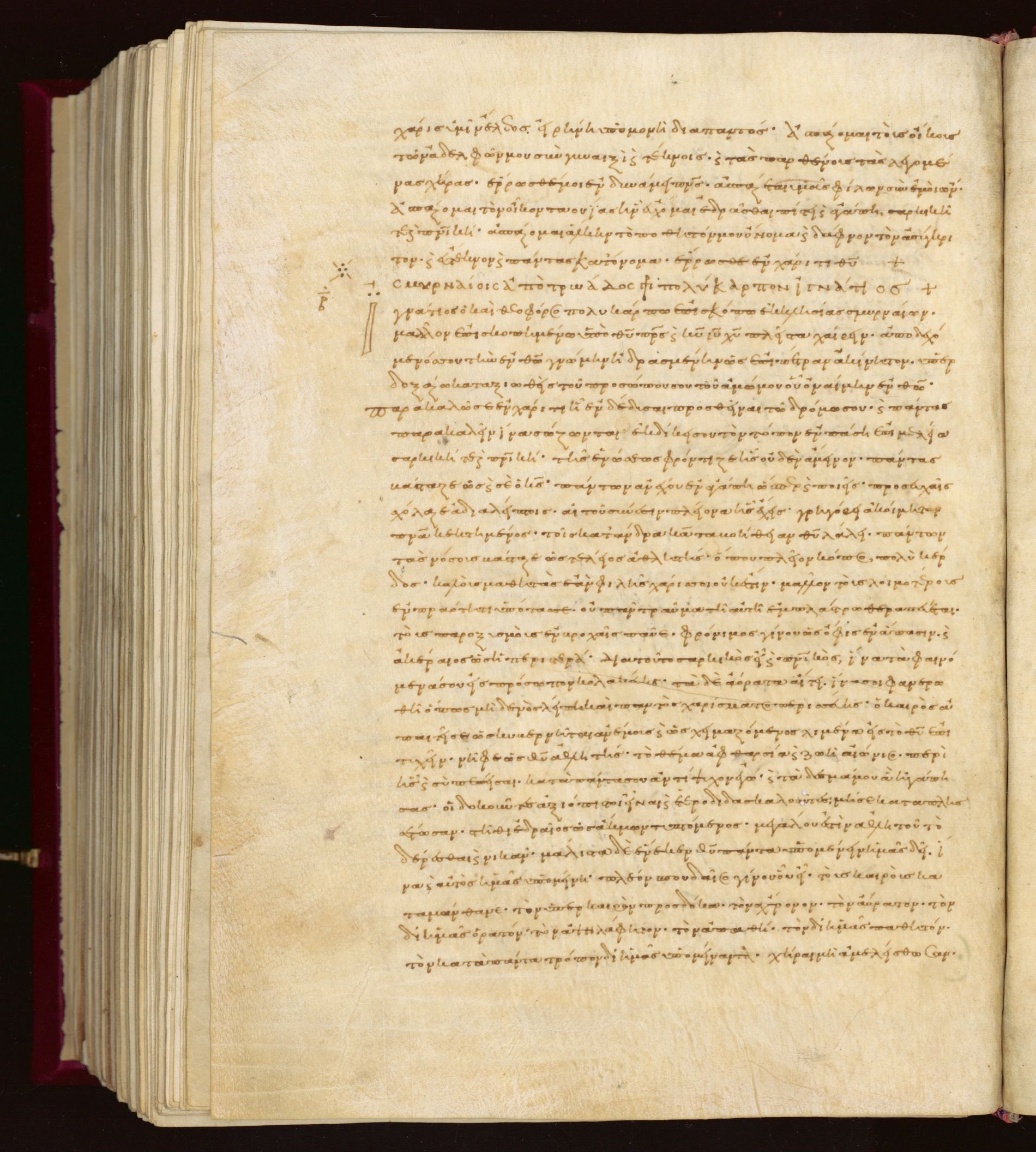
Checked on the images: Laur. Plut. 57.7 fol. 243v: the page begins ‹χάρις ὑμῖν, ἔλεος, εἰρήνη (Smyrn. 12.2)› and ends ‹χῆραι μὴ ἀμελείσθωσαν (Pol. 4.1)›. The span of each page was found by reading its first and last words and locating them in the Greek. The Greek shown is Lake's edited text (1912), not a transcription of the page; the scribe's spellings and abbreviations differ in small details.
Ἰγνάτιος, ὁ καὶ Θεοφόρος, Πολυκάρπῳ ἐπισκόπῳ ἐκκλησίας Σμυρναίων, μᾶλλον ἐπισκοπημένῳ ὑπὸ θεοῦ πατρὸς καὶ κυρίου Ἰησοῦ Χριστοῦ, πλεῖστα χαίρειν.
Ignatius, who is also Theophorus, unto Polycarp who is bishop of the church of the Smyrnaeans or rather who hath for his bishop God the Father and Jesus Christ, abundant greeting.
Where on the image
Checked on the images: Laur. Plut. 57.7 fol. 243v: the page begins ‹χάρις ὑμῖν, ἔλεος, εἰρήνη (Smyrn. 12.2)› and ends ‹χῆραι μὴ ἀμελείσθωσαν (Pol. 4.1)›. The span of each page was found by reading its first and last words and locating them in the Greek. The Greek shown is Lake's edited text (1912), not a transcription of the page; the scribe's spellings and abbreviations differ in small details.
1Ἀποδεχόμενός σου τὴν ἐν θεῷ γνώμην ἡδρασμένην ὡς ἐπὶ πέτραν ἀκίνητον, ὑπερδοξάζω, καταξιωθεὶς τοῦ προσώπου σου τοῦ ἀμώμου, οὗ ὀναίμην ἐν θεῷ. 2παρακαλῶ σε ἐν χάριτι ᾗ ἐνδέδυσαι, προσθεῖναι τῷ δρόμῳ σου καὶ πάντας παρακαλεῖν, ἵνα σώζωνται. ἐκδίκει σου τὸν τόπον ἐν πάσῃ ἐπιμελείᾳ σαρκικῇ τε καὶ πνευματικῇ. τῆς ἑνώσεως φρόντιζε, ἧς οὐδὲν ἄμεινον, πάντας βάσταζε, ὡς καὶ σὲ ὁ κύριος· πάντων ἀνέχου ἐν ἀγάπῃ, ὥσπερ καὶ ποιεῖς. 3προσευχαῖς σχόλαζε ἀδιαλείπτοις· αἰτοῦ σύνεσιν πλείονα ἧς ἔχεις· γρηγόρει ἀκοίμητον πνεῦμα κεκτημένος. τοῖς κατ’ ἄνδρα κατὰ ὁμοήθειαν θεοῦ λάλει· πάντων τὰς νόσους βάσταζε ὡς τέλειος ἀθλητής. ὅπου πλείων κόπος, πολὺ κέρδος.
1Welcoming thy godly mind which is grounded as it were on an immovable rock, I give exceeding glory that it hath been vouchsafed me to see thy blameless face, whereof I would fain have joy in God. 2I exhort thee in the grace wherewith thou art clothed to press forward in thy course and to exhort all men that they may be saved. Vindicate thine office in all diligence of flesh and of spirit. Have a care for union, than which there is nothing better. Bear all men, as the Lord also beareth thee. Suffer all men in love, as also thou doest. 3Give thyself to unceasing prayers. Ask for larger wisdom than thou hast. Be watchful, and keep thy spirit from slumbering. Speak to each man severally after the manner of God. Bear the maladies of all, as a perfect athlete. Where there is more toil, there is much gain.
Where on the image
Checked on the images: Laur. Plut. 57.7 fol. 243v: the page begins ‹χάρις ὑμῖν, ἔλεος, εἰρήνη (Smyrn. 12.2)› and ends ‹χῆραι μὴ ἀμελείσθωσαν (Pol. 4.1)›. The span of each page was found by reading its first and last words and locating them in the Greek. The Greek shown is Lake's edited text (1912), not a transcription of the page; the scribe's spellings and abbreviations differ in small details.
1Καλοὺς μαθητὰς ἐὰν φιλῇς, χάρις σοι οὐκ ἔστιν· μᾶλλον τοὺς λοιμοτέρους ἐν πραότητι ὑπότασσε. οὐ πᾶν τραῦμα τῇ αὐτῇ ἐμπλάστρῳ θεραπεύεται. τοὺς παροξυσμοὺς ἐμβροχαῖς παῦε. 2φρόνιμος γίνου ὡς ὁ ὄφις ἐν ἅπασιν καὶ ἀκέραιος εἰς ἀεὶ ὡς ἡ περιστερά. διὰ τοῦτο σαρκικὸς εἶ καὶ πνευματικός, ἵνα τὰ φαινόμενά σου εἰς πρόσωπον κολακεύῃς· τὰ δὲ ἀόρατα αἴτει ἵνα σοι φανερωθῇ, ὅπως μηδενὸς λείπῃ καὶ παντὸς χαρίσματος περισσεύῃς, 3ὁ καιρὸς ἀπαιτεῖ σε, ὡς κυβερνῆται ἀνέμους καὶ ὡς χειμαζόμενος λιμένα, εἰς τὸ θεοῦ ἐπιτυχεῖν. νῆφε, ὡς θεοῦ ἀθλητής· τὸ θέμα ἀφθαρσία καὶ ζωὴ αἰώνιος, περὶ ἧς καὶ σὺ πέπεισαι. κατὰ πάντα σου ἀντίψυχον ἐγὼ καὶ τὰ δεσμά μου, ἃ ἠγάπησας.
1If thou lovest good scholars, this is not thankworthy in thee. Rather bring the more pestilent to submission by gentleness. All wounds are not healed by the same salve. Allay sharp pains by fomentations. 2Be thou prudent as the serpent in all things and guileless always as the dove. Therefore art thou made of flesh and spirit, that thou mayest humour the things which appear before thine eyes; and as for the invisible things, pray thou that they may be revealed unto thee; that thou mayest be lacking in nothing, but mayest abound in every spiritual gift. 3The season requireth thee, as pilots require winds or as a storm-tossed mariner a haven, that it may attain unto God. Be sober, as God's athlete. The prize is incorruption and life eternal, concerning which thou also art persuaded. In all things I am devoted to thee -- I and my bonds which thou didst cherish.
Where on the image
Checked on the images: Laur. Plut. 57.7 fol. 243v: the page begins ‹χάρις ὑμῖν, ἔλεος, εἰρήνη (Smyrn. 12.2)› and ends ‹χῆραι μὴ ἀμελείσθωσαν (Pol. 4.1)›. The span of each page was found by reading its first and last words and locating them in the Greek. The Greek shown is Lake's edited text (1912), not a transcription of the page; the scribe's spellings and abbreviations differ in small details.
1Οἱ δοκοῦντες ἀξιόπιστοι εἶναι καὶ ἑτεροδιδασκαλοῦντες μή σε καταπλησσέτωσαν. στῆθι ἑδραῖος ὡς ἄκμων τυπτόμενος. μεγάλου ἐστιν ἀθλητοῦ τὸ δέρεσθαι καὶ νικᾶν. μάλιστα δὲ ἕνεκεν θεοῦ πάντα ὑπομένειν ἡμᾶς δεῖ, ἵνα καὶ αὐτὸς ἡμᾶς ὑπομείνῃ. 2πλέον σπουδαῖος γίνου οὗ εἶ. τοὺς καιροὺς καταμάνθανε. τὸν ὑπὲρ καιρὸν προσδόκα, τὸν ἄχρονον, τὸν ἀόρατον, τὸν δι’ ἡμᾶς ὁρατόν, τὸν ἀψηλάφητον, τὸν ἀπαθῆ, τὸν δι’ ἡμᾶς παθητόν, τὸν κατὰ πάντα τρόπον δι’ ἡμᾶς ὑπομείναντα.
1Let not those that seem to be plausible and yet teach strange doctrine dismay thee. Stand thou firm, as an anvil when it is smitten. It is the part of a great athlete to receive blows and be victorious. But especially must we for God's sake endure all things, that He also may endure us. 2Be thou more diligent than thou art. Mark the seasons. Await Him that is above every season, the Eternal, the Invisible, who became visible for our sake, the Impalpable, the Impassible, who suffered for our sake, who endured in all ways for our sake.
Where on the image
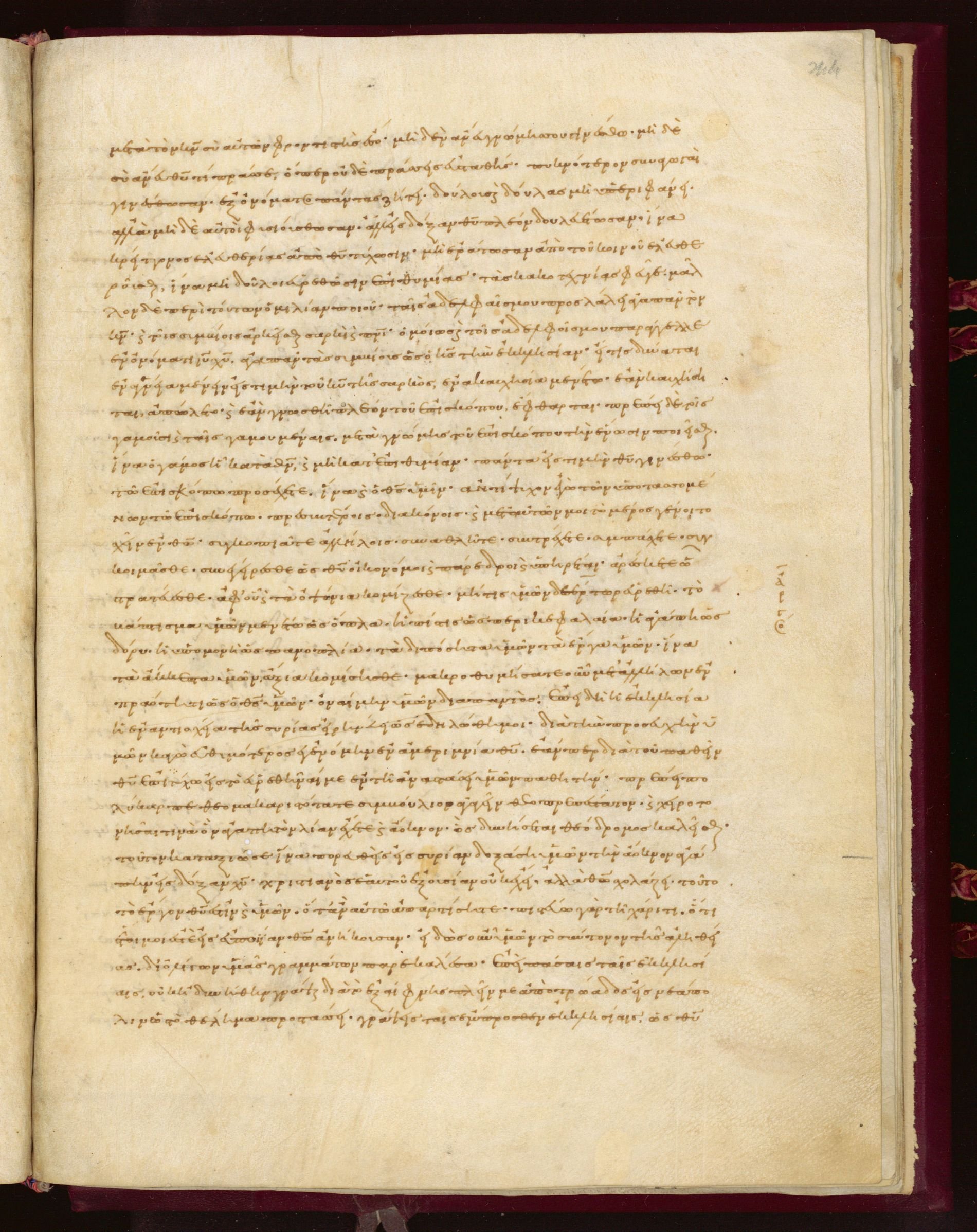
Checked on the images: Laur. Plut. 57.7 fol. 243v: the page begins ‹χάρις ὑμῖν, ἔλεος, εἰρήνη (Smyrn. 12.2)› and ends ‹χῆραι μὴ ἀμελείσθωσαν (Pol. 4.1)›; Laur. Plut. 57.7 fol. 244r: the page begins ‹μετὰ τὸν κύριον σὺ αὐτῶν φροντιστὴς ἔσο (Pol. 4.1)› and ends ‹γράψεις ταῖς ἔμπροσθεν ἐκκλησίαις, ὡς θεοῦ (Pol. 8.1)›. The span of each page was found by reading its first and last words and locating them in the Greek. The Greek shown is Lake's edited text (1912), not a transcription of the page; the scribe's spellings and abbreviations differ in small details.
1Χῆραι μὴ ἀμελείσθωσαν· μετὰ τὸν κύριον σὺ αὐτῶν φροντιστὴς ἔσο. μηδὲν ἄνευ γνώμης σου γινέσθω μηδὲ σὺ ἄνευ θεοῦ τι πρᾶσσε, ὅπερ οὐδὲ πράσσεις· εὐστάθει. 2πυκνότερον συναγωγαὶ γινέσθωσαν· ἐξ ὀνόματος πάντας ζήτει. 3δούλους καὶ δούλας μὴ ὑπερηφάνει· ἀλλὰ μηδὲ αὐτοὶ φυσιούσθωσαν, ἀλλ’ εἰς δόξαν θεοῦ πλέον δουλευέτωσαν, ἵνα κρείττονος ἐλευθερίας ἀπὸ θεοῦ τύχωσιν. μὴ ἐράτωσαν ἀπὸ τοῦ κοινοῦ ἐλευθεροῦσθαι, ἵνα μὴ δοῦλοι εὑρεθῶσιν ἐπιθυμίας.
1Let not widows be neglected. After the Lord be thou their protector. Let nothing be done without thy consent; neither do thou anything without the consent of God, as indeed thou doest not. Be stedfast. 2Let meetings be held more frequently. Seek out all men by name. 3Despise not slaves, whether men or women. Yet let not these again be puffed up, but let them serve the more faithfully to the glory of God, that they may obtain a better freedom from God. Let them not desire to be set free at the public cost, lest they be found slaves of lust.
Where on the image
Checked on the images: Laur. Plut. 57.7 fol. 244r: the page begins ‹μετὰ τὸν κύριον σὺ αὐτῶν φροντιστὴς ἔσο (Pol. 4.1)› and ends ‹γράψεις ταῖς ἔμπροσθεν ἐκκλησίαις, ὡς θεοῦ (Pol. 8.1)›. The span of each page was found by reading its first and last words and locating them in the Greek. The Greek shown is Lake's edited text (1912), not a transcription of the page; the scribe's spellings and abbreviations differ in small details.
1Τὰς κακοτεχνίας φεῦγε, μᾶλλον δὲ περὶ τούτων ὁμιλίαν ποιοῦ. ταῖς ἀδελφαῖς μου προσλάλει, ἀγαπᾶν τὸν κύριον καὶ τοῖς συμβίοις ἀρκεῖσθαι σαρκὶ καὶ πνεύματι. ὁμοίως καὶ τοῖς ἀδελφοῖς μου παράγγελλε ἐν ὀνόματι Ἰησοῦ Χριστοῦ, ἀγαπᾶν τὰς συμβίους ὡς ὁ κύριος τὴν ἐκκλησίαν. 2εἵ τις δύναται ἐν ἁγνείᾳ μένειν εἰς τιμὴν τῆς σαρκὸς τοῦ κυρίου, ἐν ἀκαυχησίᾳ μενέτω. ἐὰν καυχήσηται, ἀπώλετο, καὶ ἐὰν γνωσθῇ πλέον τοῦ ἐπισκόπου, ἔφθαρται. πρέπει δὲ τοῖς γαμοῦσι καὶ ταῖς γαμουμέναις μετὰ γνώμης τοῦ ἐπισκόπου τὴν ἕνωσιν ποιεῖσθαι, ἵνα ὁ γάμος ᾖ κατὰ κύριον καὶ μὴ κατ’ ἐπιθυμίαν. πάντα εἰς τιμὴν θεοῦ γινέσθω.
1Flee evil arts, or rather hold thou discourse about these. Tell my sisters to love the Lord and to be content with their husbands in flesh and in spirit. In like manner also charge my brothers in the name of Jesus Christ to love their wives, as the Lord loved the Church. 2If any one is able to abide in chastity to the honour of the flesh of the Lord, let him so abide without boasting. If he boast, he is lost; and if it be known beyond the bishop, he is polluted. It becometh men and women too, when they marry, to unite themselves with the consent of the bishop, that the marriage may be after the Lord and not after concupiscence. Let all things be done to the honour of God.
Where on the image
Checked on the images: Laur. Plut. 57.7 fol. 244r: the page begins ‹μετὰ τὸν κύριον σὺ αὐτῶν φροντιστὴς ἔσο (Pol. 4.1)› and ends ‹γράψεις ταῖς ἔμπροσθεν ἐκκλησίαις, ὡς θεοῦ (Pol. 8.1)›. The span of each page was found by reading its first and last words and locating them in the Greek. The Greek shown is Lake's edited text (1912), not a transcription of the page; the scribe's spellings and abbreviations differ in small details.
1Τῷ ἐπισκόπῳ προσέχετε, ἵνα καὶ ὁ θεὸς ὑμῖν. ἀντίψυχον ἐγὼ τῶν ὑποτασσομένων τῷ ἐπισκόπῳ, πρεσβυτέροις, διακόνοις· καὶ μετ’ αὐτῶν μοι τὸ μέρος γένοιτο σχεῖν ἐν θεῷ. συγκοπιᾶτε ἀλλήλοις, συναθλεῖτε, συντρέχετε, συμπάσχετε, συγκοιμᾶσθε. συνεγείρεσθε ὡς θεοῦ οἰκονόμοι καὶ πάρεδροι καὶ ὑπηρέται. 2ἀρέσκετε ᾧ στρατεύεσθε, ἀφ’ οὗ καὶ τὰ ὀψώνια κομίζεσθε· μή τις ὑμῶν δεσέρτωρ εὑρεθῇ. τὸ βάπτισμα ὑμῶν μενέτω ὡς ὅπλα, ἡ πίστις ὡς περικεφαλαία, ἡ ἀγάπη ὡς δόρυ. ἡ ὑπομονὴ ὡς πανοπλία. τὰ δεπόσιτα ὑμῶν τὰ ἔργα ὑμῶν, ἵνα τὰ ἄκκεπτα ὑμῶν ἄξια κομίσησθε. μακροθυμήσατε οὖν μετ’ ἀλλήλων ἐν πραότητι, ὡς ὁ θεὸς μεθ’ ὑμῶν, ὀναίμην ὑμῶν διὰ παντός.
1Give ye heed to the bishop, that God also may give heed to you. I am devoted to those who are subject to the bishop, the presbyters, the deacons. May it be granted me to have my portion with them in the presence of God. Toil together one with another, struggle together, run together, suffer together, lie down together, rise up together, as God's stewards and assessors and ministers. 2Please the Captain in whose army ye serve, from whom also ye will receive your pay. Let none of you be found a deserter. Let your baptism abide with you as you shield; your faith as your helmet; your love as your spear; your patience as your body armour. Let your works be your deposits, that ye may receive your assets due to you. Be ye therefore long-suffering one with another in gentleness, as God is with you. May I have joy of you always.
Where on the image
Checked on the images: Laur. Plut. 57.7 fol. 244r: the page begins ‹μετὰ τὸν κύριον σὺ αὐτῶν φροντιστὴς ἔσο (Pol. 4.1)› and ends ‹γράψεις ταῖς ἔμπροσθεν ἐκκλησίαις, ὡς θεοῦ (Pol. 8.1)›. The span of each page was found by reading its first and last words and locating them in the Greek. The Greek shown is Lake's edited text (1912), not a transcription of the page; the scribe's spellings and abbreviations differ in small details.
1Ἐπειδὴ ἡ ἐκκλησία ἡ ἐν Ἀντιοχείᾳ τῆς Συρίας εἰρηνεύει, ὡς ἐδηλώθη μοι, διὰ τὴν προσευχὴν ὑμῶν, κἀγὼ εὐθυμότερος ἐγενόμην ἐν ἀμεριμνίᾳ θεοῦ, ἐάνπερ διὰ τοῦ παθεῖν θεοῦ ἐπιτύχω, εἰς τὸ εὑρεθῆναί με ἐν τῇ ἀναστάσει ὑμῶν μαθητήν. 2πρέπει, Πολύκαρπε θεομακαριστότατε, συμβούλιον ἀγαγεῖν θεοπρεπέστατον καὶ χειροτονῆσαί τινα, ὃν ἀγαπητὸν λίαν ἔχετε καὶ ἄοκνον, ὃς δυνήσεται θεοδρόμος καλεῖσθαι· τοῦτον καταξιῶσαι, ἵνα πορευθεὶς εἰς Συρίαν δοξάσῃ ὑμῶν τὴν ἄοκνον ἀγάπην εἰς δόξαν θεοῦ· 3Χριστιανὸς ἑαυτοῦ ἐξουσίαν οὐκ ἔχει, ἀλλὰ θεῷ σχολάζει. τοῦτο τὸ ἔργον θεοῦ ἐστιν καὶ ὑμῶν, ὅταν αὐτὸ ἀπαρτίσητε. πιστεύω γὰρ τῇ χάριτι, ὅτι ἕτοιμοί ἐστε εἰς εὐποιΐαν θεῷ ἀνήκουσαν. εἰδὼς ὑμῶν τὸ σύντονον τῆς ἀληθείας, δι’ ὀλίγων ὑμᾶς γραμμάτων παρεκάλεσα.
1Seeing that the church which is in Antioch of Syria hath peace, as it hath been reported to me, through your prayers, I myself also have been the more comforted since God hath banished my care; if so be I may through suffering attain unto God, that I may be found a disciple through your intercession. 2It becometh thee, most blessed Polycarp, to call together a godly council and to elect some one among you who is very dear to you and zealous also, who shall be fit to bear the name of God's courier -- to appoint him, I say, that he may go to Syria and glorify your zealous love unto the glory of God. 3A Christian hath no authority over himself, but giveth his time to God. This is God's work, and yours also, when ye shall complete it: for I trust in the Divine grace, that ye are ready for an act of well- doing which is meet for God. Knowing the fervour of your sincerity, I have exhorted you in a short letter.
Where on the image
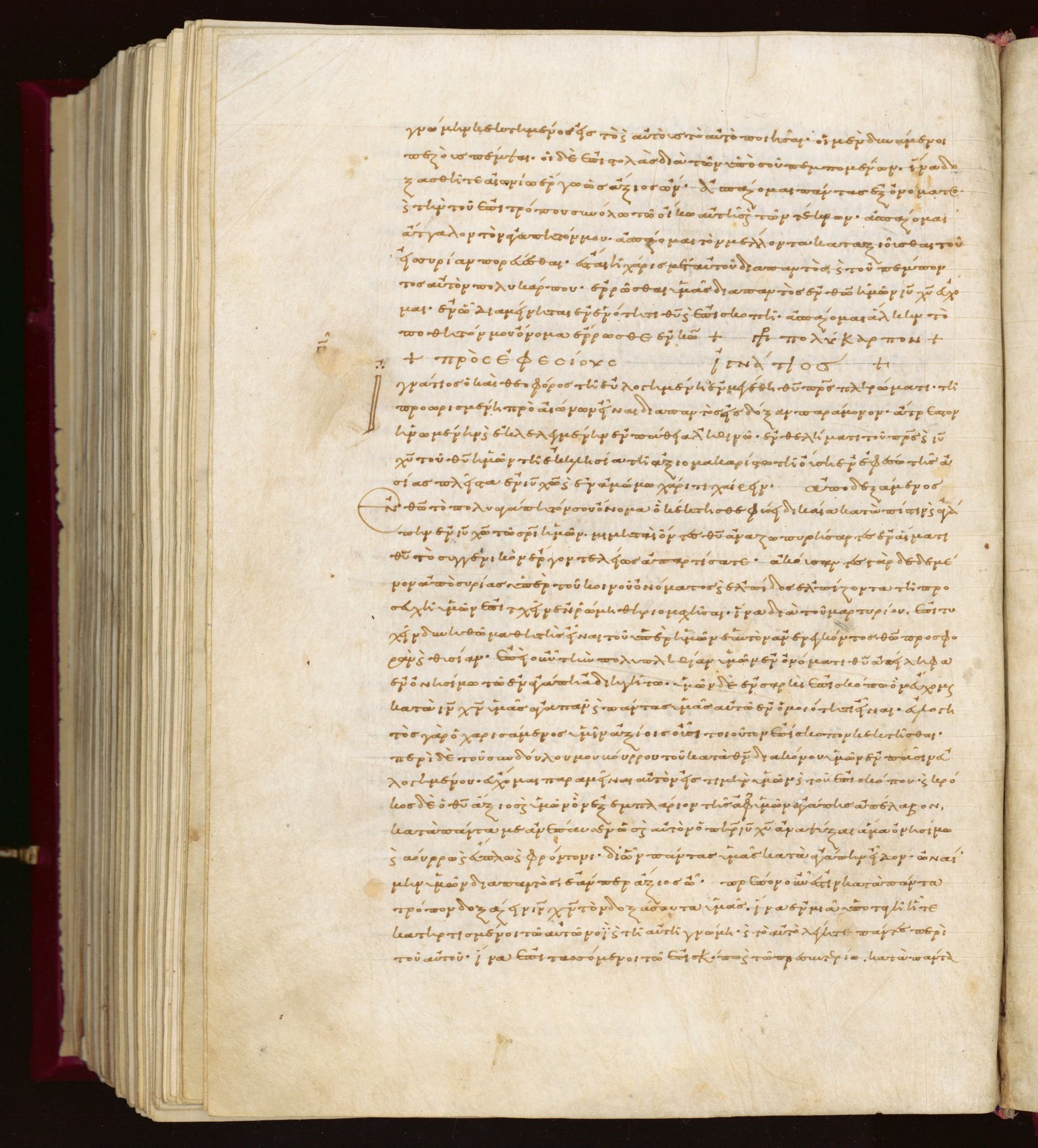
Checked on the images: Laur. Plut. 57.7 fol. 244r: the page begins ‹μετὰ τὸν κύριον σὺ αὐτῶν φροντιστὴς ἔσο (Pol. 4.1)› and ends ‹γράψεις ταῖς ἔμπροσθεν ἐκκλησίαις, ὡς θεοῦ (Pol. 8.1)›; Laur. Plut. 57.7 fol. 244v: the page begins ‹γνώμην κεκτημένος (Pol. 8.1)› and ends ‹ὑποτασσόμενοι τῷ ἐπισκόπῳ καὶ τῷ πρεσβυτερίῳ, κατὰ πάντα (Eph. 2.2)›. The span of each page was found by reading its first and last words and locating them in the Greek. The Greek shown is Lake's edited text (1912), not a transcription of the page; the scribe's spellings and abbreviations differ in small details.
1Ἐπεὶ πάσαις ταῖς ἐκκλησίαις οὐκ ἠδυνήθην γράψαι διὰ τὸ ἐξαίφνης πλεῖν με ἀπὸ Τρωάδος εἰς Νεάπολιν, ὡς τὸ θέλημα προστάσσει, γράψεις ταῖς ἔμπροσθεν ἐκκλησίαις, ὡς θεοῦ γνώμην κεκτημένος, εἰς τὸ καὶ αὐτοὺς τὸ αὐτὸ ποιῆσαι, ‘οἱ μὲν δυνάμενοι πεζοὺς πέμψαι, οἱ δὲ ἐπιστολὰς διὰ τῶν ὑπό σου πεμπομένων. ἵνα δοξασθῆτε αἰωνίῳ ἔργῳ.’ ὡς ἄξιος ὤν. 2ἀσπάζομαι πάντας ἐξ ὀνόματος καὶ τὴν τοῦ Ἐπιτρόπου σὺν ὅλῳ τῷ οἴκῳ αὐτῆς καὶ τῶν τέκνων. ἀσπάζομαι Ἄτταλον τὸν ἀγαπητόν μου. ἀσπάζομαι τὸν μέλλοντα καταξιοῦσθαι τοῦ εἰς Συρίαν πορεύεσθαι. ἔσται ἡ χάρις μετ’ αὐτοῦ διὰ παντὸς καὶ τοῦ πέμποντος αὐτὸν Πολυκάρπου. 3ἐρρῶσθαι ὑμᾶς διὰ παντὸς ἐν θεῷ ἡμῶν Ἰησοῦ Χριστῷ εὔχομαι, ἐν ᾧ διαμείνητε ἐν ἑνότητι θεοῦ καὶ ἐπισκοπῇ. ἀσπάζομαι Ἄλκην, τὸ ποθητόν μοι ὄνομα. ἔρρωσθε ἐν κυρίῳ.
1Since I have not been able to write to all the churches, by reason of my sailing suddenly from Troas to Neapolis, as the Divine will enjoineth, thou shalt write to the churches in front, as one possessing the mind of God, to the intent that they also may do this same thing -- let those who are able send messengers, and the rest letters by the persons who are sent by thee, that ye may be glorified by an ever memorable deed -- for this is worthy of thee. 2I salute all by name, and especially the wife of Epitropus with her whole household and her children's. I salute Attalus my beloved. I salute him that shall be appointed to go to Syria. Grace shall be with him always, and with Polycarp who sendeth him. 3I bid you farewell always in our God Jesus Christ, in whom abide ye in the unity and supervision of God. I salute Alce, a name very dear to me. Fare ye well in the Lord.
Notes
- Greek: Kirsopp Lake, The Apostolic Fathers I (Loeb Classical Library, 1912), digital text of the First1KGreek project (tlg1443.tlg001, CC BY-SA 4.0); Lake's footnotes are not shown. Elided words are written with an apostrophe and the digital text's colon is shown as the raised dot.
- Proofreading: the Greek pages of Lake (archive.org theapostolicfath00unknuoft, leaves 184-288) were read by OCR twice and aligned with the digital text; every word on which both OCR readings agreed against the digital text, and every form that cannot be right, was looked up on the page image. Corrections in this letter: 6.2 'οὖ' to 'οὗ'. Kept as Lake prints them (worn or missing accents): Eph. 8.2 οὐδε, Phld. 5.2 ἀξιαγαπητοι, Smyrn. 2.1 το; Lake's quotation marks in Pol. 8.1 are shown as ‘ ’.
- English: J. B. Lightfoot, The Apostolic Fathers (1891, Lightfoot and Harmer), as transcribed at earlychristianwritings.com; Lightfoot's italics are kept.
Cite
Sources
- Source: Laur. Plut. 57.7 (BML IIIF) + Lake 1912 Greek (First1KGreek, CC BY-SA 4.0) + Lightfoot 1891 English (public domain) (holding institution)
- Critical edition: Kirsopp Lake, The Apostolic Fathers I (1912), via First1KGreek
← previous · → next · v cycle view · l back to library