1 Esdras, Chapter 2 (Codex Alexandrinus)
Introduction
1 Esdras 2 in the Greek Old Testament (the Septuagint) as written in Codex Alexandrinus, a Greek Bible copied in the fifth century, probably in Egypt, and now in the British Library (Royal MS 1 D. VI, the second of its four volumes). It is one of the three great early codices of the whole Greek Bible, with Codex Vaticanus and Codex Sinaiticus.
Numbering: Swete's Greek and Brenton's English number or divide some verses of this chapter differently (Swete 2:6 = Brenton 2:6-7; Swete 2:7-17 = Brenton 2:8-18; Swete 2:18 = Brenton 2:19-21; Swete 2:19 = Brenton 2:22-23; Swete 2:20-23 = Brenton 2:24-27; Swete 2:24 = Brenton 2:28-29; Swete 2:25 = Brenton 2:30). Each column keeps its own verse numbers, and sections are cut only where the two texts agree, so each section holds the same passage in both languages.
This entry meets the strict three-criteria standard of the Theosis Library:
- Manuscript scan: the pages of Codex Alexandrinus carrying this chapter (fol. 439r, fol. 439v, fol. 440r), from the full-size photographic (autotype) facsimile published by the British Museum in 1879-1883, as digitised on the Internet Archive. The verse range of every page comes from the reduced photographic facsimile of 1957, which prints it beneath each plate, and the opening words of every page were read on the plate to confirm the page and the verse it begins with. Each section links to the page or pages that hold its verses. Folio numbers are those written at the head of each leaf and visible on the plates.
- Original text: Swete's edition, which here prints the text of Codex Vaticanus (Vat. gr. 1209), the base of his edition, and gives the readings of Alexandrinus only in his apparatus. The Greek column is therefore Vaticanus' text; where Alexandrinus differs, the plate shows what Alexandrinus reads.
- English translation: Sir Lancelot C. L. Brenton, The Septuagint Version of the Old Testament (1844; 1851 edition), a translation of the Greek, public domain, from the eBible.org text.
How was this verified? (Provenance)
Where on the image
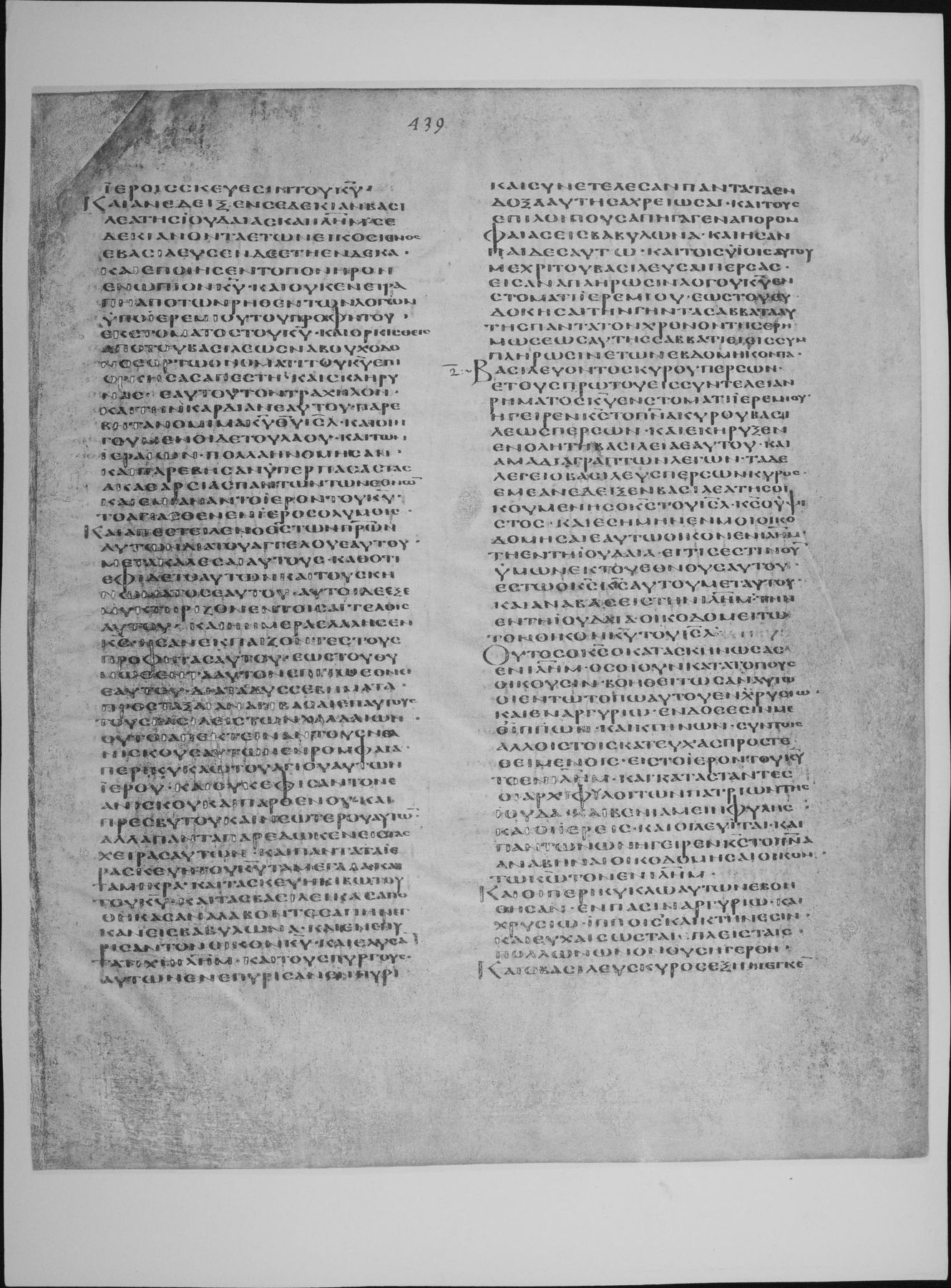
1 Esdras 2:1-8 is on fol. 439r (full-size facsimile of 1879-83, Internet Archive codex-alexandrinus leaf 902). The 1957 reduced facsimile prints beneath this page: 1 Esdras i. 43 (45)-ii. 9 (10). Checked on the plate: the page begins inside 1 Esdras 1:43 (first words read: ΙΕΡΟΙΣ ΣΚΕΥΕΣΙΝ ΤΟΥ ΚΥ ΚΑΙ ΑΝΕΔΕΙΞΕΝ ΣΕΔΕΚΙΑΝ ΒΑΣΙΛΕΑ ΤΗΣ ΙΟΥΔΑΙΑΣ).
1Βασιλεύοντος Κύρου Περσῶν ἔτους πρώτου, εἰς συντέλειαν ῥήματος Κυρίου ἐν στόματι Ἰερεμίου, 2ἤγειρεν Κύριος τὸ πνεῦμα Κύρου βασιλέως Περσῶν, καὶ ἐκήωυξεν ὅλῇ τῃ βασιλείᾳ αὐτοῦ καὶ ἅμα διὰ γραπτῶν λέγων 3Τάδε λέγει ὁ βασιλεὺς Περσῶν Κῦρος Ἐμὲ ἀνέδειξεν βασιλέα τῆς οἰκουμένης ὁ κύριος τοῦ Ἰσραήλ, Κύριος ὁ ὕψιστος, 4καὶ ἐσήμηνέν μοι οἰκοδομῆσαι αὐτῷ οἶκον ἐν Ἰερουσαλὴμ τῇ ἐν τῇ Ἰουδαίᾳ. 5εἴ τίς ἐστιν οὖν ὑμῶν ἐκ τοῦ ἔθνους αὐτοῦ, ἔστω ὁ κύριος αὐτοῦ μετ᾽ αὐτοῦ, καὶ ἀναβὰς εἰς τὴν Ἰερουσαλὴμ τὴν ἐν τῇ Ἰουδαίᾳ οἰκοδομείτω τὸν οἶκον τοῦ κυρίου τοῦ Ἰσραήλ. οὗτος ὁ κύριος ὁ κατασκηνώσας ἐν Ἰερουσαλήμ. 6ὅσοι οὖν κατὰ τοὺς τόπους οἰκοῦσιν, βοηθείτωσαν αὐτῷ οἱ ἐν τῷ τόπῳ αὐτοῦ ἐν χρυσίῳ καὶ ἐν ἀργυρίῳ καὶ ἐν δόσεσιν, μεθ᾽ ἵππων καὶ κτηνῶν, σὺν τοῖς ἄλλοις τοῖς κατ᾽ εὐχὰς προστεθειμένοις εἰς τὸ ἱερὸν τοῦ κυρίου τὸ ἐν Ἰερουσαλήμ. 7Καὶ καταστήσαντες οἱ ἀρχίφυλοι τῶν πατριῶν τῆς Ἰούδα καὶ Βενιαμεὶν φυλῆς, καὶ οἱ ἱερεῖς καὶ οἱ Λευεῖται, καὶ πάντων ὧν ἤγειρεν Κύριος τό πνεῦμα ἀναβῆναι οἰκοδομῆσαι οἶκον τῷ κυρίῳ τὸν ἐν Ἰερουσαλήμ· 8καὶ οἱ περικύκλῳ αὐτῶν ἐβοήθησαν ἐν πᾶσιν, ἐν ἀργυριῳ καὶ χρυσίῳ, ἵπποις, κτήνεσιν καὶ εὐχαῖς ὡς πλείσταις πολλῶν ὧν ὁ νοῦς ἠγέρθη.
1In the first year of Cyrus king of the Persians, that the word of the Lord might be accomplished, that he had promised by the mouth of Jeremy; 2the Lord raised up the spirit of Cyrus the king of the Persians, and he made proclamation through all his kingdom, and also by writing, 3saying, Thus saith Cyrus king of the Persians; The Lord of Israel, the most high Lord, hath made me king of the whole world, 4and commanded me to build him an house at Jerusalem in Jewry. 5If therefore there be any of you that are of his people, let his Lord be with him, and let him go up to Jerusalem that is in Judea, and build the house of the Lord of Israel: for he is the Lord that dwelleth in Jerusalem. 6Whosoever then dwell in the places about, let them help him, those, I say, that are his neighbours, with gold, and with silver, 7with gifts, with horses, and with cattle, and other things, which have been set forth by vow, for the temple of the Lord at Jerusalem. 8Then the chief of the families of Judea and of the tribe of Benjamin stood up; the priests also, and the Levites, and all they whose mind the Lord had moved to go up, and to build an house for the Lord at Jerusalem, 9and they that dwelt round about them, and helped them in all things with silver and gold, with horses and cattle, and with very many free gifts of a great number whose minds were stirred up thereto.
Where on the image
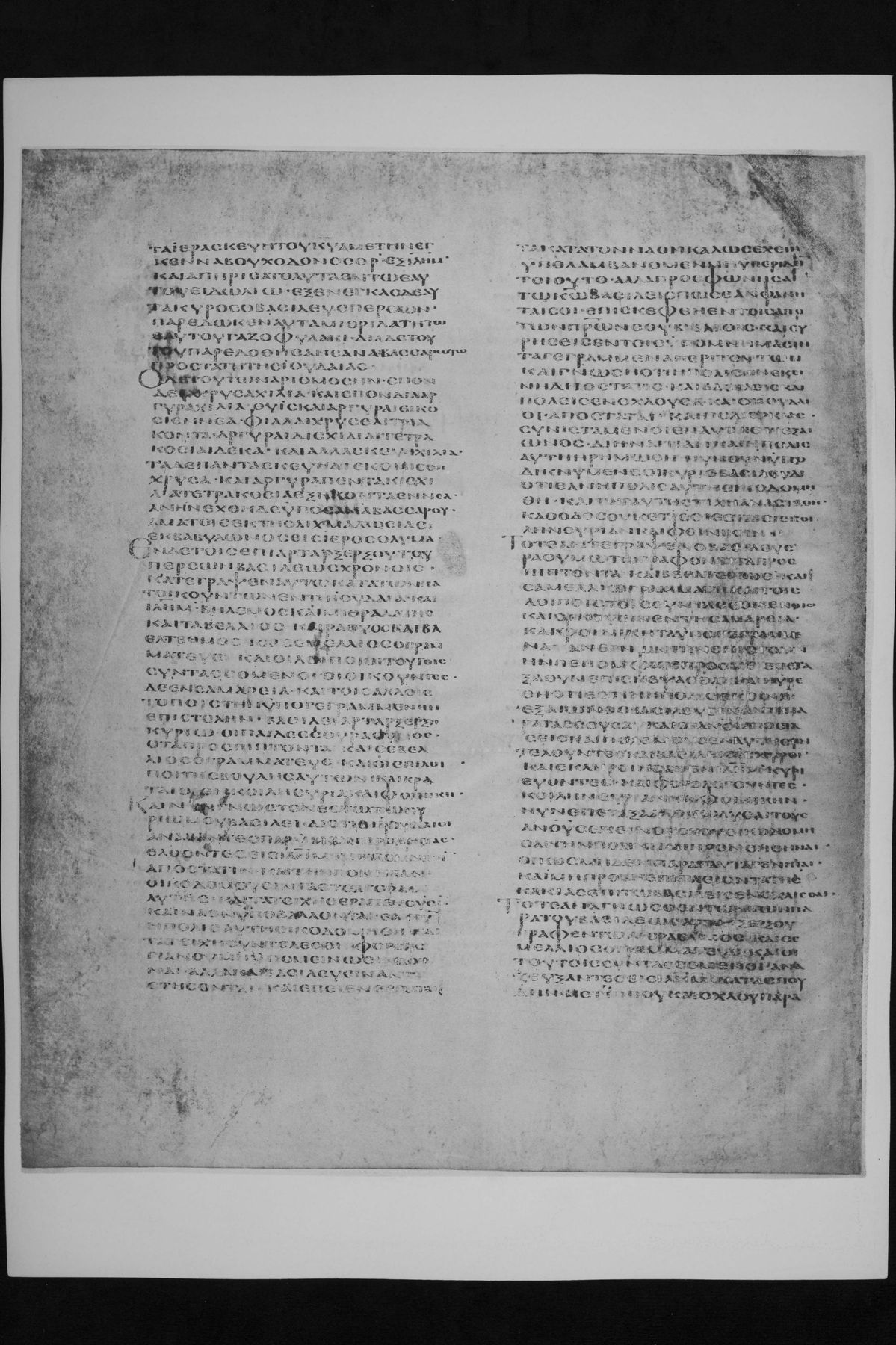
1 Esdras 2:9 is on fol. 439r (full-size facsimile of 1879-83, Internet Archive codex-alexandrinus leaf 902). The 1957 reduced facsimile prints beneath this page: 1 Esdras i. 43 (45)-ii. 9 (10). Checked on the plate: the page begins inside 1 Esdras 1:43 (first words read: ΙΕΡΟΙΣ ΣΚΕΥΕΣΙΝ ΤΟΥ ΚΥ ΚΑΙ ΑΝΕΔΕΙΞΕΝ ΣΕΔΕΚΙΑΝ ΒΑΣΙΛΕΑ ΤΗΣ ΙΟΥΔΑΙΑΣ). 1 Esdras 2:9-16 is on fol. 439v (full-size facsimile of 1879-83, Internet Archive codex-alexandrinus leaf 903). The 1957 reduced facsimile prints beneath this page: 1 Esdras ii. 9 (10)-ii. 25 (30). Checked on the plate: the page begins inside 1 Esdras 2:9 (first words read: ΤΑ ΙΕΡΑ ΣΚΕΥΗ ΤΟΥ ΚΥ Α ΜΕΤΗΝΕΓΚΕΝ ΝΑΒΟΥΧΟΔΟΝΟΣΟΡ ΕΞ ΙΛΗΜ).
9καὶ ὁ βασιλεὺς Κῦρος ἐξήνεγκεν τὰ ἅγια σκεύη τοῦ κυρὶου, ἃ μετήγαγεν Ναβουχοδονοσὸρ ἐξ Ἰερουσαγὴμ καὶ ἀπηρείσατο αὐτὰ ἐν τῷ εἰδωλίῳ αὐτοῦ. 10ἐξενέγκας δὲ αὐτὰ Κῦρος ὁ βασιλεὺς Περσῶν παρέδωκεν αὐτὰ Μιθριδάτῃ τῷ ἑαυτοῦ γαζοφύλακι· 11διὰ δὲ τούτου παρεδόθησαν Σανασσάρῳ προστάτῃ τῆς Ἰουδαίας. 12ὁ δὲ τούτων ἀριθμὸς ἦν, σπονδεῖα χρυσᾶ χίλια, σπονδεῖα ἀργυρᾶ χίλια, θυίσκαι ἀργυραῖ εἴκοσι ἐννέα, φιάλαι χρυσαῖ τριάκοντα, ἀργυραῖ βυ᾽ δέκα, καὶ ἄλλα σκεύη χίλια. 13τὰ δὲ πάντα σκεύη ἐκομίσθη, χρυσᾶ καὶ ἀργυρᾶ, πεντακισχίλια τετρακόσια ἑξήκοντα ἐννέα· 14ἀνηνέχθη δὲ ὑπὸ Σαμανασσάρον ἅμα τοῖς ἐκ τῆς αἰχμαλωσίας ἐκ Βαβυλῶνος εἰς Ἰερουσαλήμ. 15Ἐν δὲ τοῖς ἐπὶ Ἀρταξέρξου τοῦ Περσῶν βασιλέως χρόνοις κατέγραψεν αὐτῶν κατὰ τῶν κατοικούντων ἐν τῇ Ἰουδαίᾳ καὶ Ἰερουσαλὴμ Βήλεμος καὶ Μιθραδάτης καὶ Ταβέλλιος καὶ Ῥάθυμος καὶ Βεέλτεθμος καὶ Σαμέλλιος ὁ γραμματεὺς καὶ οἱ λοιποὶ οἱ τούτοις συντασσόμενοι, οἰκοῦντες δὲ ἐν Σαμαρείᾳ καὶ τοῖς ἄλλοις τόποις, τὴν ὑπογεγραμμένην ἐπιστολήν 16Βασιλεῖ Ἀρταξέρξῃ κυρίῳ οἱ παῖδές σου Ῥάθυμος ὁ τὰ προσπίπτοντα καὶ Σαμέλλιος ὁ γραμματεὺς καὶ οἱ ἐπίλοιποι τῆς βουλῆς αὐτῶν καὶ οἱ ἐν κοίλῃ Συρίᾳ καὶ Φοινίκῃ.
10King Cyrus also brought forth the holy vessels which Nabuchodonosor had carried away from Jerusalem, and had set up in his temple of idols. 11Now when Cyrus king of the Persians had brought them forth, he delivered them to Mithridates his treasurer: 12and by him they were delivered to Sanabassar the governor of Judea. 13And this was the number of them; A thousand golden cups, and a thousand of silver, censers of silver twenty-nine, vials of gold thirty, and of silver two thousand four hundred and ten, and a thousand other vessels. 14So all the vessels of gold and of silver, which were carried away, were five thousand four hundred threescore and nine. 15These were brought back by Sanabassar, together with them of the captivity, from Babylon to Jerusalem. 16But in the time of Artaxerxes king of the Persians Belemus, and Mithridates, and Tabellius, and Rathumus, and Beeltethmus, and Samellius the secretary, with the rest that were in commission with them, dwelling in Samaria and other places, wrote unto him against them that dwelt in Judea and Jerusalem this letter following; 17To king Artaxerxes our lord, Thy servants, Rathumus the storywriter, and Samellius the scribe, and the rest of their council, and the judges that are in Celosyria and Phenice.
Where on the image
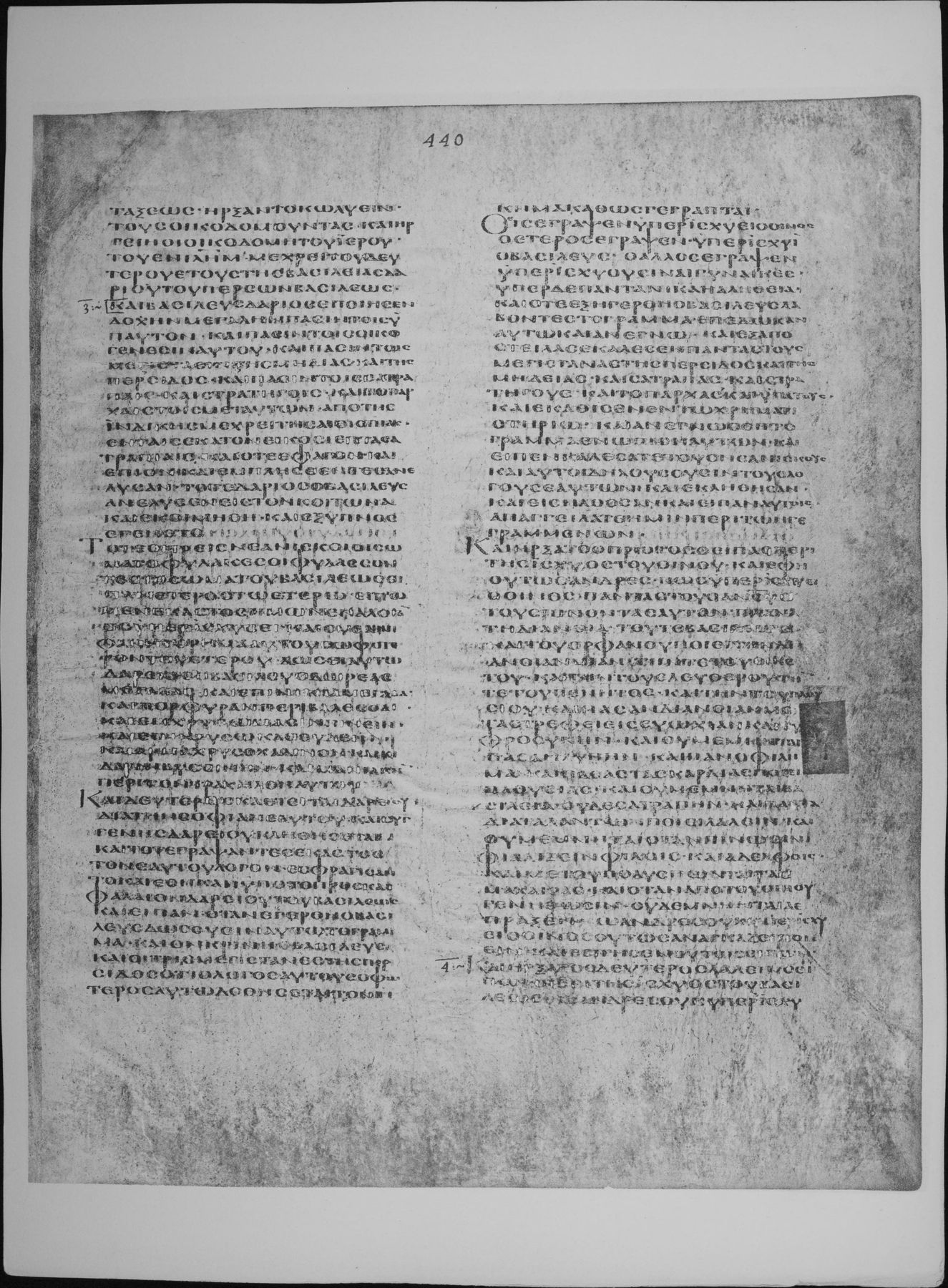
1 Esdras 2:17-25 is on fol. 439v (full-size facsimile of 1879-83, Internet Archive codex-alexandrinus leaf 903). The 1957 reduced facsimile prints beneath this page: 1 Esdras ii. 9 (10)-ii. 25 (30). Checked on the plate: the page begins inside 1 Esdras 2:9 (first words read: ΤΑ ΙΕΡΑ ΣΚΕΥΗ ΤΟΥ ΚΥ Α ΜΕΤΗΝΕΓΚΕΝ ΝΑΒΟΥΧΟΔΟΝΟΣΟΡ ΕΞ ΙΛΗΜ). 1 Esdras 2:25 is on fol. 440r (full-size facsimile of 1879-83, Internet Archive codex-alexandrinus leaf 904). The 1957 reduced facsimile prints beneath this page: 1 Esdras ii. 25 (30)-iv. 2. Checked on the plate: the page begins inside 1 Esdras 2:25 (first words read: ΤΑΞΕΩΣ ΗΡΞΑΝΤΟ ΚΩΛΥΕΙΝ ΤΟΥΣ ΟΙΚΟΔΟΜΟΥΝΤΑΣ ΚΑΙ ΗΡΓΕΙ Η ΟΙΚΟΔΟΜΗ ΤΟΥ ΙΕΡΟΥ).
17καὶ νῦν γνωστὸν ἔστω τῷ κυρίῳ βασιλεῖ ὅτι Ἰουδαῖοι ἀναβάντες παρ᾽ ὑμῶν πρὸς ἡμᾶς, ἐλθόντες εἰς Ἰερουσαλήμ, τὴν πόλιν τήν ἀποστάτιν καὶ πονηρὰν οἰκοῦσιν, τάς τε ἀγορὰς αὐτῆς καὶ τὰ τείχη θεραπεύουσιν καὶ ναὸν ὑποβάλλονται. 18ἐὰν οὖν ἡ πόλις αὕτη οἰκοδομηθῇ καὶ τὰ τείχη συντελεσθῇ, φορολογίαν οὐ μὴ ὑπομείνωσιν δοῦναι, ἀλλὰ καὶ βασιλεῦσιν ἀντιστήσονται· καὶ ἐπεὶ ἐνεργεῖται τὰ κατὰ τὸν ναόν, καλῶς ἔχειν ὑπολαμβάνομεν μὴ ὑπεριδεῖν τὸ τοιοῦτο ἀλλὰ προσφωνῆσαι τῷ κυρίῳ βασιλεῖ ὅπως, ἂν φαίνηταί σοι, ἐπισκεφθῇ ἐν τοῖς ἀπὸ τῶν πατέρων σου βιβλίοις. 19καὶ εὑρήσεις ἐν τοῖς ὑπομνηματισμοῖς τὰ γεγραμμένα περὶ τούτων, καὶ γνώσῃ ὅτι ἡ πόλις ἦν ἐκείνη ἀποστάτις καὶ βασιλεῖς καὶ πόλεις ἐνοχλοῦσα, καὶ οἱ Ἰουδαῖοι ἀποστάται καὶ πολιορκίας συνεσταμένοι ἐν αὐτῇ ἔτι ἐξ αἰῶνος, δι᾽ ἣν αἰτίαν ἡ πόλις αὕτη ἠρημώθη. 20νῦν οὖν ὑποδεικνύομέν σοι, κύριε βασιλεῦ, ὅτι ἐὰν ἡ πόλις αὕτη οἰκοδομηθῇ καὶ τὰ ταύτης τείχη ἀνασταθῇ, ἔξοδός σοι οὐκέτι ἔσται εἰς κοίλην Συρίαν καὶ Φοινίκην. 21τότε ἀντέγραψεν ὁ βασιλεὺς Ῥαθύμῳ τῷ γράφοντι τὰ προσπίπτοντα καὶ Βεελτέθμῳ καὶ Σαμελλίῳ γραμματεῖ καὶ τοῖς λοιποῖς τοῖς συντασσομένοις καὶ οἰκοῦσιν ἐν Σαμαρείᾳ καὶ Συρίᾳ καὶ Φοινίκῃ τὰ ὑπογεγραμμένα 22Ἀνέγνων τὴν ἐπιστολὴν ἣν πεπόμφατε πρὸς μέ. ἐπέταξα οὖν ἐπισκέψασθαι· καὶ εὑρέθη ὅτι ἐστὶν ἡ πόλις ἐκείνη ἐξ αἰῶνος βασιλεῦσιν ἀντιπαρατάσσουσα, 23καὶ οἱ ἄνθρωποι ἀποστάσεις καὶ πολέμους ἐν αὐτῇ συντελοῦντες, καὶ βασιλεῖς ἰσχυροὶ καὶ σκληροὶ ἦσαν ἐν Ἰερουσαλὴμ κυριεύοντες καὶ φορολοῦντες κοίλην Συρίαν καὶ Φοινίκην. 24νῦν οὖν ἐπέταξα ἀποκωλῦσαι τοὺς ἀνθρώπους ἐκείνους τοῦ οἰκοδομῆσαι τὴν πόλιν, καὶ προνοηθῆναι ὅπως μηθὲν παρὰ ταῦτα γένηται καὶ μὴ προβῇ ἐπὶ πλεῖον τὰ τῆς κακίας εἰς τὸ βασιλεῖς ἐνοχλῆσαι. 25τότε ἀναγνωσθέντων τῶν παρὰ τοῦ βασιλέως Ἀρταξέρξου γραφέντων ὁ Ῥάθυμος καὶ Σαμέλλιος ὁ γραμματεὺς καὶ οἱ τούτοις συντασσόμενοι, ἀναζεύξαντες κατὰ σπουδὴν εἰς Ἰερουσαλὴμ μεθ᾽ ἵππου καὶ ὄχλου παρατάξεως, ἤρξαντο κωλύειν τοὺς οἰκοδομοῦντας· καὶ ἤργει ἡ οἰκοδομὴ τοῦ ἱεροῦ τοῦ ἐν Ἰερουσαλὴμ μέχρι τοῦ δευτέρου ἔτους τῆς βασιλείας Δαρείου τοῦ Περσῶν βασιλέως.
18Be it now known to the lord the king, that the Jews that are come up from you to us, being come into Jerusalem, that rebellious and wicked city, do build the marketplaces, and repair the walls of it, and do lay the foundation of the temple. 19Now if this city and the walls thereof be made up again, they will not only refuse to give tribute, but also rebel against kings. 20And forasmuch as the things pertaining to the temple are now in hand, we think it meet not to neglect such a matter, 21but to speak unto our lord the king, to the intent that, if it be thy pleasure, it may be sought out in the books of thy fathers: 22and thou shalt find in the chronicles what is written concerning these things, and shalt understand that that city was rebellious, troubling both kings and cities: 23and that the Jews were rebellious, and raised always wars therein; for the which cause even this city was made desolate. 24Wherefore now we do declare unto thee, O lord the king, that if this city be built again, and the walls thereof set up anew, thou shalt from henceforth have no passage into Celosyria and Phenice. 25Then the king wrote back again to Rathumus the storywriter, to Beeltethmus, to Semellius the scribe, and to the rest that were in commission, and dwellers in Samaria and Syria and Phenice, after this manner; 26I have read the epistle which ye have sent unto me: therefore I commanded to make diligent search, and it hath been found that that city was from the beginning practising against kings; 27and the men therein were given to rebellion and war: and that mighty kings and fierce were in Jerusalem, who reigned and exacted tributes in Celosyria and Phenice. 28Now therefore I have commanded to hinder those men from building the city, and heed to be taken that there be no more done in it; 29and that those wicked workers proceed no further to the annoyance of kings. 30Then king Artaxerxes his letters being read, Rathumus, and Semellius the scribe, and the rest that were in commission with them, removing in haste toward Jerusalem with a troop of horsemen and a multitude of people in battle array, began to hinder the builders; and the building of the temple in Jerusalem ceased until the second year of the reign of Darius king of the Persians.
Cite
Sources
- Source: Codex Alexandrinus (British Library Royal MS 1 D. VI) via the British Museum photographic facsimiles of 1879-83 and 1957 (Internet Archive) + Swete's Septuagint + Brenton's English (holding institution)
- Critical edition: H. B. Swete, The Old Testament in Greek according to the Septuagint (1909)
← previous · → next · v cycle view · l back to library