1 Esdras, Chapter 5 (Codex Alexandrinus)
Introduction
1 Esdras 5 in the Greek Old Testament (the Septuagint) as written in Codex Alexandrinus, a Greek Bible copied in the fifth century, probably in Egypt, and now in the British Library (Royal MS 1 D. VI, the second of its four volumes). It is one of the three great early codices of the whole Greek Bible, with Codex Vaticanus and Codex Sinaiticus.
Numbering: Swete's Greek and Brenton's English number or divide some verses of this chapter differently (Swete 5:41 = Brenton 5:41-42; Swete 5:42-52 = Brenton 5:43-53; Swete 5:53 = Brenton 5:54-55; Swete 5:54-56 = Brenton 5:56-58; Swete 5:57 = Brenton 5:59-60; Swete 5:58-70 = Brenton 5:61-73). Each column keeps its own verse numbers, and sections are cut only where the two texts agree, so each section holds the same passage in both languages.
This entry meets the strict three-criteria standard of the Theosis Library:
- Manuscript scan: the pages of Codex Alexandrinus carrying this chapter (fol. 441v, fol. 442r, fol. 442v, fol. 443r), from the full-size photographic (autotype) facsimile published by the British Museum in 1879-1883, as digitised on the Internet Archive. The verse range of every page comes from the reduced photographic facsimile of 1957, which prints it beneath each plate, and the opening words of every page were read on the plate to confirm the page and the verse it begins with. Each section links to the page or pages that hold its verses. Folio numbers are those written at the head of each leaf and visible on the plates.
- Original text: Swete's edition, which here prints the text of Codex Vaticanus (Vat. gr. 1209), the base of his edition, and gives the readings of Alexandrinus only in his apparatus. The Greek column is therefore Vaticanus' text; where Alexandrinus differs, the plate shows what Alexandrinus reads.
- English translation: Sir Lancelot C. L. Brenton, The Septuagint Version of the Old Testament (1844; 1851 edition), a translation of the Greek, public domain, from the eBible.org text.
How was this verified? (Provenance)
Where on the image
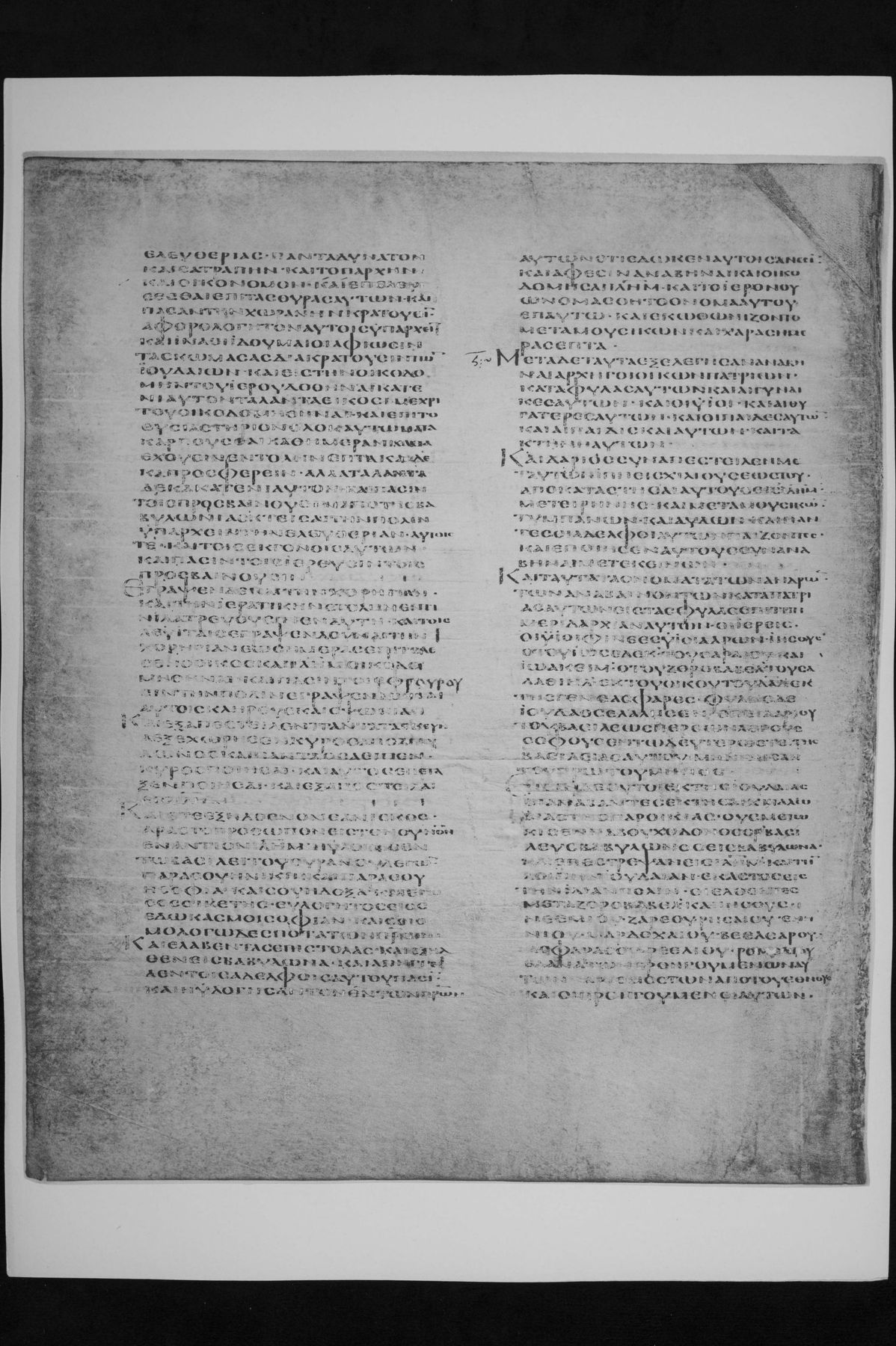
1 Esdras 5:1-8 is on fol. 441v (full-size facsimile of 1879-83, Internet Archive codex-alexandrinus leaf 907). The 1957 reduced facsimile prints beneath this page: 1 Esdras iv. 49-v. 9. Checked on the plate: the page begins inside 1 Esdras 4:49 (first words read: ΕΛΕΥΘΕΡΙΑΣ ΠΑΝΤΑ ΔΥΝΑΤΟΝ ΚΑΙ ΣΑΤΡΑΠΗΝ ΚΑΙ ΤΟΠΑΡΧΗΝ ΚΑΙ ΟΙΚΟΝΟΜΟΝ).
1Μετὰ δὲ ταῦτα ἐξελέγησαν ἀναβῆναι ἀρχηγοὶ οἴκου πατριῶν κατὰ φυλὰς αὐτῶν, καὶ αἱ γυναῖκες αὐτῶν καὶ οἱ υἱοὶ καὶ αἱ θυγατέρες καὶ οἱ παῖδες αὐτῶν, καὶ αἱ παιδίσκαι καὶ τὰ κτήνη αὐτῶν. 2καὶ Δαρεῖος συναπέστειλεν μετ᾽ αὐτῶν ἱππεῖς χιλίους ἕως τοῦ ἀποκαταστῆσαι αὐτοὺς εἰς Ἰερουσαλὴμ μετ᾽ εἰρήνης καὶ μετὰ μουσικῶν, τυμπάνων καὶ αὐλῶν. 3καὶ πάντες οἱ ἀδελφοὶ αὐτῶν παίζοντες· καὶ ἐποίησεν αὐτοῖς συναναβῆναι μετ᾽ ἐκείνων. 4Καὶ ταῦτα τὰ ὀνόματα τῶν ἀνδρῶν τῶν ἀναβαινόντων κατὰ πατριὰς αὐτῶν εἰς τὰς φυλὰς ἐπὶ τὴν μεριδαρχίαν αὐτῶν. 5οἱ ἱερεῖς υἱοὶ Φινεὲς υἱοὶ Ἀαρών, Ἰησοῦς ὁ τοῦ Ἰωσεδὲκ τοῦ Σαραίου, καὶ Ἰωακεὶμ ὁ τοῦ Ζοροβαβὲλ τοῦ Σαλαθιὴλ ἐκ τοῦ οἴκου τοῦ Δαυείδ, ἐκ τῆς γενεᾶς Φάρες, φυλῆς δὲ Ἰούδα, 6ὃς ἐλάλησεν ἐπὶ Δαρείου τοῦ βασιλέως Περσῶν λόγους σοφοὺς ἐν τῷ δευτέρῳ ἔτει τῆς βασιλείας αὐτοῦ μηνὶ Νισὰν τοῦ πρώτου μηνός. 7εἰσὶν δὲ οὗτοι οἱ ἐκ τῆς Ἰουδαίας οἱ ἀναβάντες ἐκ τῆς αἰχμαλωσίας τῆς παροικίας, οὓς μετοίκισεν Ναβουχοδονοσὸρ βασιλεὺς Βαβυλῶνος εἰς Βαβυλῶνα, 8καὶ ἐπέστρεψεν εἰς Ἰερουσαλὴμ καὶ τὴν λοιπὴν Ἰουδαίαν ἕκαστος εἰς τὴς ἰδίαν πόλιν, οἱ ἐλθόντες μετὰ Ζοροβαβὲλ καὶ Ἰησοῦ, Νεεμίου, Ζαραίου, Ῥησαίου, Ἐνήνιος, Μαρδοχαίου, Βεελσάρου, Ἀσφαράσου, Βορολείου, Ῥοείμου, Βαανά, τῶν προηγουμένων αὐτῶν.
1After this were the principal men of the families chosen according to their tribes, to go up with their wives and sons and daughters, with their menservants and maidservants, and their cattle. 2And Darius sent with them a thousand horsemen, till they had brought them back to Jerusalem safely, and with musical instruments, tabrets and flutes. 3And all their brethren played, and he made them go up together with them. 4And these are the names of the men which went up, according to their families, among their tribes, after their several heads. 5The priests, the sons of Phinees, the sons of Aaron: Jesus the son of Josedec, the son of Saraias, and Joacim the son of Zorobabel, the son of Salathiel, of the house of David, out of the kindred of Phares, of the tribe of Judah; 6who spake wise sentences before Darius the king of Persia in the second year of his reign, in the month Nisan, which is the first month. 7And these are they of Jewry that came up from the captivity, where they dwelt as strangers, whom Nabuchodonosor the king of Babylon had carried away unto Babylon. 8And they returned unto Jerusalem, and to the other parts of Jewry, every man to his own city, who came with Zorobabel, and Jesus, Nehemias, Zaraias, Reesaias, Enenius, Mardocheus, Beelsarus, Aspharasus, Reelius, Roimus, and Baana, their guides.
Where on the image
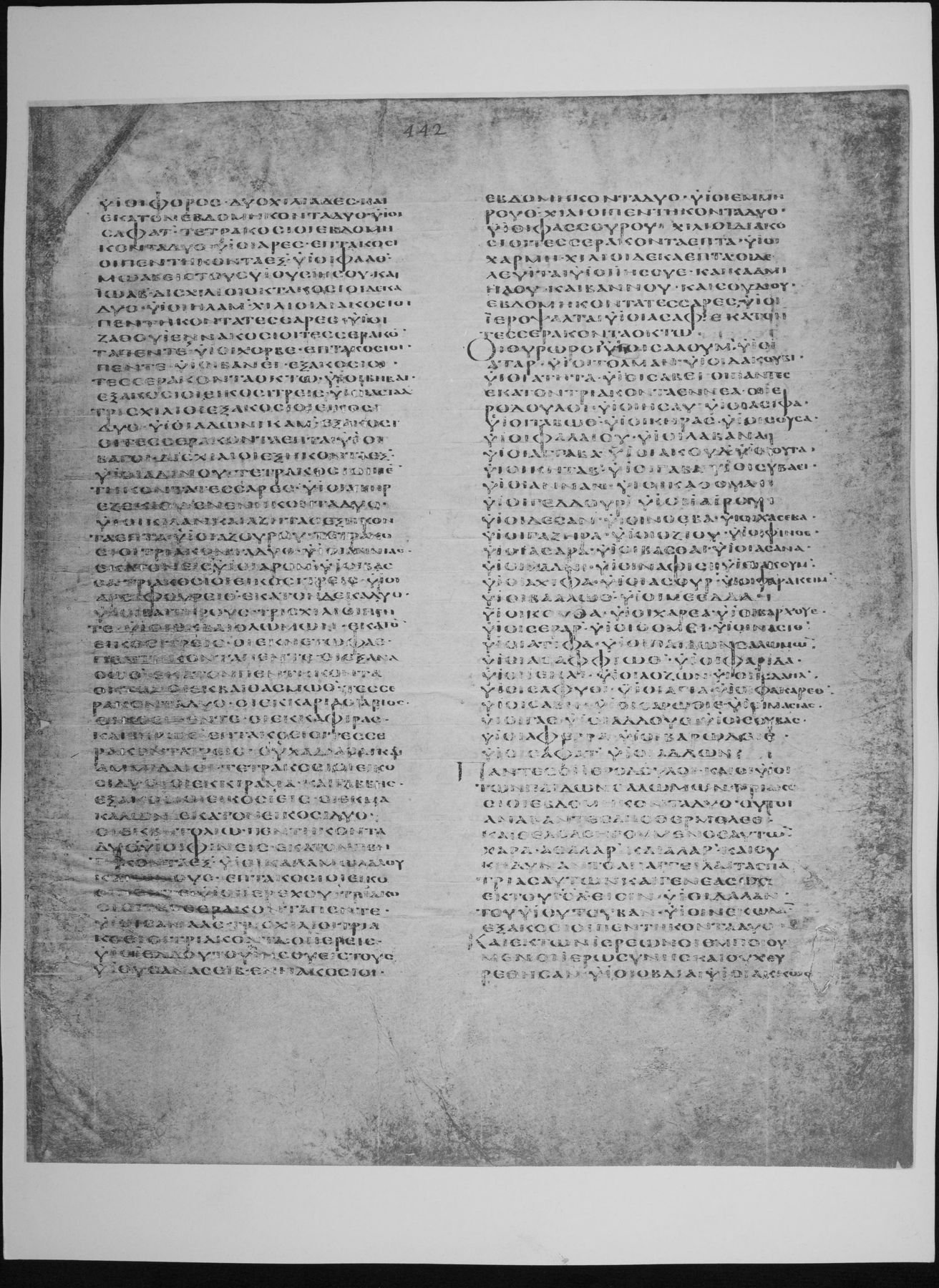
1 Esdras 5:9 is on fol. 441v (full-size facsimile of 1879-83, Internet Archive codex-alexandrinus leaf 907). The 1957 reduced facsimile prints beneath this page: 1 Esdras iv. 49-v. 9. Checked on the plate: the page begins inside 1 Esdras 4:49 (first words read: ΕΛΕΥΘΕΡΙΑΣ ΠΑΝΤΑ ΔΥΝΑΤΟΝ ΚΑΙ ΣΑΤΡΑΠΗΝ ΚΑΙ ΤΟΠΑΡΧΗΝ ΚΑΙ ΟΙΚΟΝΟΜΟΝ). 1 Esdras 5:9-16 is on fol. 442r (full-size facsimile of 1879-83, Internet Archive codex-alexandrinus leaf 908). The 1957 reduced facsimile prints beneath this page: 1 Esdras v. 9-v. 38. Checked on the plate: the page begins inside 1 Esdras 5:9 (first words read: ΥΙΟΙ ΦΟΡΟΣ ΔΥΟ ΧΙΛΙΑΔΕΣ ΚΑΙ ΕΚΑΤΟΝ ΕΒΔΟΜΗΚΟΝΤΑ ΔΥΟ ΥΙΟΙ ΣΑΦΑΤ ΤΕΤΡΑΚΟΣΙΟΙ). Note: Codex Alexandrinus' wording here differs from Swete's (Codex Vaticanus) text: in 1 Esd. 5:9 it numbers the sons of Phoros ΔΥΟ ΧΙΛΙΑΔΕΣ ΚΑΙ ΕΚΑΤΟΝ ΕΒΔΟΜΗΚΟΝΤΑ ΔΥΟ where Swete has ἑβδομήκοντα δύο χιλιάδες.
9ἀριθμὸς τῶν ἀπὸ τοῦ ἔθνους καὶ οἱ προηγούμενοι αὐτῶν· υἱοὶ Φορός, ἑβδομήκοντα δύο χιλιάδες· 10υἱοὶ Ἀρές, ἑπτακόσιοι πεντήκοντα ἕξ. 11υἱοὶ Φθαλειμωάβ, εἰς τοὺς υἱοὺς Ἰησοῦ καὶ Ῥοβοάβ, δισχίλιοι ὀκτακόσιοι δύο· 12υἱοὶ Ἰωλάμου, δύο· υἱοὶ Ζατόν, ἐννακόσιοι ἑβδομήκοντα· υἱοὶ Χορβέ, ἑπτακόσιοι πέντε· υἱοὶ Βανεί, ἑξακόσιοι τεσσεράκοντα ὀκτώ· 13υἱοὶ Βηβαί, ἑξακόσιοι τριάκοντα τρεῖς· υἱοὶ Ἀργαί, χίλιοι τριακόσιοι εἴκοσι δύο· 14υἱοὶ Ἀδωνεικάμ, τριάκοντα ἑπτά· υἱοὶ Βοσαί, δισχίλιοι ἑξακόσιοι ἕξ· υἱοὶ Ἀσειλίου, τετρακόσιοι πεντήκοντα τέσσαρες· 15υἱοὶ Ἀζὴρ Ἑζεκίου, υἱοὶ Κειλὰν καὶ Ἀζητάς, ἑζήκοντα ἑπτά· υἱοὶ Ἀζάρου, τετρακόσιοι τριάκοντα δύο· 16υἱοὶ Ἁννείς, ἑκατὸν εἷς· υἱοὶ Ἀρόμ, υἱοὶ Βασσαί, τριακόσιοι εἴκοσι τρεῖς· υἱοὶ Ἀρσειφουρείθ,
9The number of them of the nation, and their governors: the sons of Phoros, two thousand an hundred seventy and two: the sons of Saphat, four hundred seventy and two: 10The sons of Ares, seven hundred fifty and six: 11The sons of Phaath Moab, among the sons of Jesus and Joab, two thousand eight hundred and twelve: 12The sons of Elam, a thousand two hundred fifty and four: the sons of Zathui, nine hundred seventy and five: the sons of Corbe, seven hundred and five: the sons of Bani, six hundred forty and eight: 13The sons of Bebai, six hundred thirty and three: the sons of Argai, one thousand three hundred twenty and two: 14The sons of Adonikan, six hundred thirty and seven: the sons of Bagoi, two thousand six hundred and six: the sons of Adin, four hundred fifty and four: 15The sons of Ater, son of Ezekias, ninety and two: the sons of Cilan and Azenan, threescore and seven: the sons of Azarus, four hundred thirty and two: 16The sons of Annis, an hundred and one: the sons of Arom, thirty-two: the sons of Bassai, three hundred twenty and three: the sons of Arsiphurith, an hundred and two:
Where on the image
1 Esdras 5:17-24 is on fol. 442r (full-size facsimile of 1879-83, Internet Archive codex-alexandrinus leaf 908). The 1957 reduced facsimile prints beneath this page: 1 Esdras v. 9-v. 38. Checked on the plate: the page begins inside 1 Esdras 5:9 (first words read: ΥΙΟΙ ΦΟΡΟΣ ΔΥΟ ΧΙΛΙΑΔΕΣ ΚΑΙ ΕΚΑΤΟΝ ΕΒΔΟΜΗΚΟΝΤΑ ΔΥΟ ΥΙΟΙ ΣΑΦΑΤ ΤΕΤΡΑΚΟΣΙΟΙ). Note: Codex Alexandrinus' wording here differs from Swete's (Codex Vaticanus) text: in 1 Esd. 5:9 it numbers the sons of Phoros ΔΥΟ ΧΙΛΙΑΔΕΣ ΚΑΙ ΕΚΑΤΟΝ ΕΒΔΟΜΗΚΟΝΤΑ ΔΥΟ where Swete has ἑβδομήκοντα δύο χιλιάδες.
17υἱοὶ Βαιτηροῦς, τρισχίλιοι πέντε· υἱοὶ ἐκ Ῥαγεθλωμῶν, ἑκατὸν εἴκοσι τρεῖς· 18οἱ ἐκ Νετέβας, πεντήκοντα πέντε· οἱ ἐξ Ἐνάτου, ἑκατὸν πεντήκοντα ὀκτώ· οἱ ἐκ Βαιτασμῶν Ζαμμώθ· 19οἱ ἐκ Καρταθειαρειός, εἴκοσι πέντε· οἱ ἐκ Πείρας καὶ Βηρόγ, ἑπτακόσιοι· 20οἱ Χαδιάσαι καὶ Ἁμμίδιοι, τετρακὀσιοι εἴκοσι δύο· οἱ ἐκ Κειράμας Κάββης, ἑξακόσιοι εἴκοσι εἷς· 21οἱ ἐκ Μακαλῶν, ἑκατὸν εἴκοσι δύο· οἱ ἐκ Βετολώ, πεντήκοντα δύο· Νειφεῖς, ἑκατὸν πεντήκοντα ἕξ· 22υἱοὶ Καλαμωκάλου καὶ Ὠνοῦς, ἑπτακόσιοι εἴκοσι πέντε· υἱοὶ Ἰερέχου, διακόσιοι τεσσεράκοντα πέντε· 23υἱοὶ Σαμά, τρισχίλιοι τριακόσιοι εἷς· 24οἱ ἱερεῖς οἱ υἱοὶ Ἰέδδου τοῦ υἱοῦ Ἰησοῦ, εἰς τοὺς υἱοὺς Σαναβείς, ὀκτακόσιοι ἑβδομήκοντα δύο· υἱοὶ Ἐρμήρου, διακόσιοι πεντήκοντα δύο·
17The sons of Beterus, three thousand and five: the sons of Bethlomon, an hundred twenty and three: 18They of Netophah, fifty and five: they of Anathoth, an hundred fifty and eight: they of Bethsamos, forty and two: 19They of Kiriathiarius, twenty and five: they of Caphira and Beroth, seven hundred forty and three. 20They of Chadias and Ammidoi, four hundred twenty and two: they of Cirama and Gabbes, six hundred twenty and one: 21They of Macalon, an hundred twenty and two: they of Betolius, fifty and two: the sons of Nephis, an hundred fifty and six: 22The sons of Calamolalus and Onus, seven hundred twenty and five: the sons of Jerechus, two hundred forty and five: 23The sons of Sanaas, three thousand three hundred and one. 24The priests: the sons of Jeddu, the son of Jesus, among the sons of Sanasib, eight hundred seventy and two: the sons of Emmeruth, two hundred fifty and two:
Where on the image
1 Esdras 5:25-32 is on fol. 442r (full-size facsimile of 1879-83, Internet Archive codex-alexandrinus leaf 908). The 1957 reduced facsimile prints beneath this page: 1 Esdras v. 9-v. 38. Checked on the plate: the page begins inside 1 Esdras 5:9 (first words read: ΥΙΟΙ ΦΟΡΟΣ ΔΥΟ ΧΙΛΙΑΔΕΣ ΚΑΙ ΕΚΑΤΟΝ ΕΒΔΟΜΗΚΟΝΤΑ ΔΥΟ ΥΙΟΙ ΣΑΦΑΤ ΤΕΤΡΑΚΟΣΙΟΙ). Note: Codex Alexandrinus' wording here differs from Swete's (Codex Vaticanus) text: in 1 Esd. 5:9 it numbers the sons of Phoros ΔΥΟ ΧΙΛΙΑΔΕΣ ΚΑΙ ΕΚΑΤΟΝ ΕΒΔΟΜΗΚΟΝΤΑ ΔΥΟ where Swete has ἑβδομήκοντα δύο χιλιάδες.
25υἱοὶ Φασσόρου, χίλιοι διακόσιοι τεσσεράκοντα ἑπτά· υἱοὶ Χαρυή, διακόσιοι δέκα ἑπτά· 26οἱ Λευεῖται υἱοὶ Ἰησουείς, Κοδοήλου καὶ Βάννου καὶ Σουδίου, ἑβδομήκοντα τέσσαρες· 27υἱοὶ ἱεροψάλται υἱοὶ Ἀσάφ, ἑκατὸν εἴκοσι ὀκτώ· 28οἱ θυρωροί, τετρακόσιοι· οἱ Ἰσμαήλου, υἱοὶ Λακουβάτου, χίλιοι· υἱοὶ Τωβείς, πάντες ἑκατὸν τριάκοντα ἐννέα· 29οἱ ἱερόδουλοι, υἱοὶ Ἠσαύ, υἱοὶ Τασειφά, υἱοὶ Ταβαώθ, υἱοὶ Κηράς, υἱοὶ Σουά, υἱοὶ Φαλαίου, υἱοὶ Λαβανά, 30υἱοὶ Ἀκούδ, υἱοὶ Οὐτά, υἱοὶ Κητάβ, υἱοὶ Ἁκκαβά, υἱοὶ Συβαεί, υἱοὶ Ἁνάν, υἱοὶ Κουά, υἱοὶ Κεδδούρ, 31υἱοὶ Ἰαείρου, υἱοὶ Δαισάν, υἱοὶ Νοεβά, υἱοὶ Χασεβά, υἱοὶ Καζηρά, υἱοὶ Ὀζείου, υἱοὶ Φινόε, υἱοὶ Ἀσαρά, υἱοὶ Βασθαί, υἱοὶ Ἀσσανά, υἱοὶ Μανεί, υἱοὶ Ναφεισεί, υἱοὶ Ἀκούφ, υἱοὶ Ἀχειβά, υἱοὶ Ἀσούρ, υἱοὶ Φαρακέμ, υἱοὶ Βασαλέμ, 32υἱοὶ Δεδδά, υἱοὶ Βαχούς, υἱοὶ Σεράρ, υἱοὶ Θόμθει, υἱοὶ Νασεί, υἱοὶ Ἁτεφά·
25The sons of Phassaron, a thousand forty and seven: the sons of Carme, two hundred and seventeen. 26The Levites: the sons of Jessue, and Cadmiel, and Banuas, and Sudias, seventy and four. 27The holy singers: the sons of Asaph, an hundred twenty and eight. 28The porters: the sons of Salum, the sons of Atar, the sons of Tolman, the sons of Dacobi, the sons of Ateta, the sons of Tobis, in all an hundred thirty and nine. 29The servants of the temple: the sons of Esau, the sons of Asipha, the sons of Tabaoth, the sons of Ceras, the sons of Sud, the sons of Phaleas, the sons of Labana, the sons of Agraba, 30The sons of Acud, the sons of Uta, the sons of Cetab, the sons of Agaba, the sons of Subai, the sons of Anan, the sons of Cathua, the sons of Geddur, 31The sons of Jairus, the sons of Daisan, the sons of Noeba, the sons of Chaseba, the sons of Cazera, the sons of Ozia, the sons of Phinees, the sons of Azara, the sons of Bastai, the sons of Assana, the sons of Mani, the sons of Naphisi, the sons of Acuph, the sons of Achiba, the sons of Asub, the sons of Pharacim, the sons of Basalem, 32The sons of Meedda, the sons of Coutha, the sons of Charea, the sons of Barcue, the sons of Serar, the sons of Thomoi, the sons of Nasith, the sons of Atipha.
Where on the image
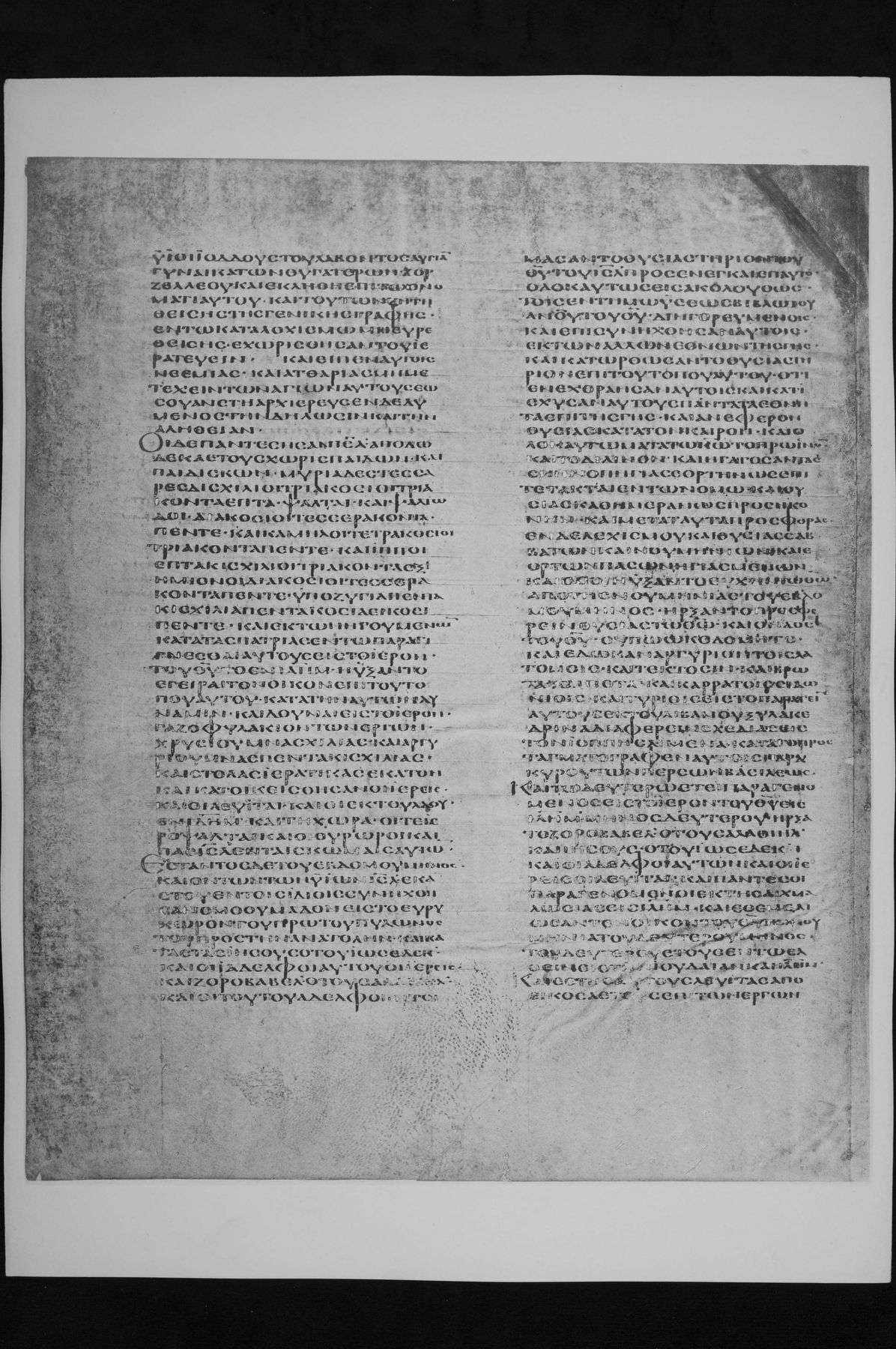
1 Esdras 5:33-38 is on fol. 442r (full-size facsimile of 1879-83, Internet Archive codex-alexandrinus leaf 908). The 1957 reduced facsimile prints beneath this page: 1 Esdras v. 9-v. 38. Checked on the plate: the page begins inside 1 Esdras 5:9 (first words read: ΥΙΟΙ ΦΟΡΟΣ ΔΥΟ ΧΙΛΙΑΔΕΣ ΚΑΙ ΕΚΑΤΟΝ ΕΒΔΟΜΗΚΟΝΤΑ ΔΥΟ ΥΙΟΙ ΣΑΦΑΤ ΤΕΤΡΑΚΟΣΙΟΙ). Note: Codex Alexandrinus' wording here differs from Swete's (Codex Vaticanus) text: in 1 Esd. 5:9 it numbers the sons of Phoros ΔΥΟ ΧΙΛΙΑΔΕΣ ΚΑΙ ΕΚΑΤΟΝ ΕΒΔΟΜΗΚΟΝΤΑ ΔΥΟ where Swete has ἑβδομήκοντα δύο χιλιάδες. 1 Esdras 5:38-40 is on fol. 442v (full-size facsimile of 1879-83, Internet Archive codex-alexandrinus leaf 909). The 1957 reduced facsimile prints beneath this page: 1 Esdras v. 38-v. 56 (58). Checked on the plate: the page begins inside 1 Esdras 5:38 (first words read: ΤΟΥ ΛΑΒΟΝΤΟΣ ΑΓΙΑ ΓΥΝΑΙΚΑ ΤΩΝ ΘΥΓΑΤΕΡΩΝ ΒΑΡΖΕΛΛΑΙΟΥ). Note: the first word of the column (a name) is unclear on the plate.
33υἱοὶ παίδων Σαλωμών, υἱοὶ Ἁσσαφείωθ, υἱοὶ Φαρειδά, υἱοὶ Ἰειηλεί, υἱοὶ Λοζών, υἱοὶ Ἰσδαήλ, υἱοὶ Σαφυεί, 34υἱοὶ Ἁγιά, υἱοὶ Φακαρὲθ Σαβειή, υἱοὶ Σαρωθεί, υἱοὶ Μεισαιάς, υἱοὶ Γάς, υἱοὶ Ἀδδούς, υἱοὶ Σουβάς, υἱοὶ Ἀφερρά, υἱοὶ Βαρωδείς, υἱοὶ Σαφάγ, υἱοὶ Ἀλλών· 35πάντες οἱ ἱερόδουλοι καὶ οἱ υἱοὶ τῶν παίδων Σαλωμὼν τριακόσιοι ἑβδομήκοντα δύο. 36οὗτοι ἀναβάντες ἀπὸ θερμέλεθ καὶ θελερσάς· ἡγούμενος αὐτῶν Χαρααθαλὰν καὶ Ἀλλάρ. 37καὶ οὐκ ἠδύναντο ἀπαγγεῖλαι τὰς πατριὰς αὐτῶν καὶ γενεάς, ὡς ἐκ τοῦ Ἰσραήλ εἰσιν· υἱοὶ Ἀσὰν τοῦ υἱοῦ τοῦ Βαενάν, υἱοὶ Νεκωδάν, ἐξακόσιοι πεντήκοντα δύο. 38καὶ ἐκ τῶν ἱῶν ἱερέων οἱ ἐμποιούμενοι ἱερωσύνης, καὶ οὐχ εὑρέθησαν· υἱοὶ Ὁββειά, υἱοὶ Ἁκβώς, υἱοὶ Ἰαδδοὺς τοῦ λαβόντος Αὐγίαν γυναῖκα τῶν θυγατέρων Φαηζελδαίου, καὶ ἐκλήθη ἐπὶ τῷ ὀνόματι αὐτοῦ. 39καὶ τούτων ζητηθείσης τῆς γενικῆς γραφῆς ἐν τῷ καταλοχισμῷ καὶ μὴ εὑρεθείσης, ἐχωρίσθησαν τοῦ ἱερατεύειν. 40καὶ εἶπεν αὐτοῖς Ναμίας καὶ Ἁτθαρίας μὴ μετέχειν τῶν ἁγίων ἕως ἀναστῇ ἱερεὺς ἐνδεδυμένος τὴν δήλωσιν καὶ τὴν ἀλήθειαν.
33The sons of the servants of Solomon: the sons of Azaphioth, the sons of Pharira, the sons of Jeieli, the sons of Lozon, the sons of Isdael, the sons of Saphui, 34The sons of Hagia, the sons of Phacareth, the sons of Sabi, the sons of Sarothi, the sons of Misaias, the sons of Gas, the sons of Addus, the sons of Suba, the sons of Apherra, the sons of Barodis, the sons of Saphag, the sons of Allom. 35All the ministers of the temple, and the sons of the servants of Solomon, were three hundred seventy and two. 36These came up from Thermeleth and Thelersas, Charaathalan leading them, and Aalar; 37they could not shew their families or their stock, how they were of Israel: the sons of Dalan, the son of Baenan, the sons of Necodan, six hundred fifty and two. 38And of the priests that usurped the office of the priesthood, and were not found: the sons of Obdia, the sons of Acbos, the sons of Jaddus, who married Augia one of the daughters of Phaezeldæus, and was named after his name. 39And when the description of the kindred of these men was sought in the register, and was not found, they were removed from executing the office of the priesthood: 40for unto them said Nehemias and Attharias, that they should not be partakers of the holy things, till there arose up an high priest clothed with doctrine and truth.
Where on the image
1 Esdras 5:41-48 is on fol. 442v (full-size facsimile of 1879-83, Internet Archive codex-alexandrinus leaf 909). The 1957 reduced facsimile prints beneath this page: 1 Esdras v. 38-v. 56 (58). Checked on the plate: the page begins inside 1 Esdras 5:38 (first words read: ΤΟΥ ΛΑΒΟΝΤΟΣ ΑΓΙΑ ΓΥΝΑΙΚΑ ΤΩΝ ΘΥΓΑΤΕΡΩΝ ΒΑΡΖΕΛΛΑΙΟΥ). Note: the first word of the column (a name) is unclear on the plate.
41Οἱ δὲ πάντες ἦσαν Ἰσραὴλ ἀπὸ δωδεκαετοῦς, χωρὶς παὶδων καὶ παιδισκῶν, μυριάδες τέσσαρες δισχίλιοι τριακόσιοι ἑξήκοντα. παῖδες τούτων καὶ παιδίσκαι ἑπτακισχίλιοι τριακόσιοι τριάκοντα ἑπτά. ψάλται καὶ ψαλτῳδοί, διακόσιοι τεσσεράκοντα πέντε. 42κάμηλοι τετρακόσιοι τριάκοντα πέντε, καὶ ἵπποι ἑπτακισχίλιοι τριάκοντα ἕξ, ἡμίονοι διακόσιοι τεσσεράκοντα πέντε, ὑποζύγια πεντακισχίλια πεντακόσια εἴκοσι πέντε. 43Καὶ ἐκ τῶν ἡγουμένων κατὰ τὰς πατριὰς ἐν τῷ παραγίνεσθαι αὐτοὺς εἰς τὸ ἱερὸν τοῦ θεοῦ τὸ ἐν Ἰερουσαλὴμ εὔξαντο ἐγεῖραι τὸν οἶκον ἐπὶ τοῦ τόπου αὐτοῦ κατὰ τὴν αὐτῶν δύναμιν, 44καὶ δοῦναι εἰς τὸ ἱερὸν γαζοφυλάκιον τῶν ἔργων χρυσίου μνᾶς χιλίας καὶ ἀργυρίου μνᾶς πεντακισχιλίας καὶ στολὰς ἱερατικὰς ἑκατόν. 45καὶ κατοικίσθησαν οἱ ἱερεῖς καὶ οἱ Λευεῖται καὶ οἱ ἐκ τοῦ λαοῦ αὐτοῦ ἐν Ἰερουσαλὴμ καὶ τῇ χώρᾳ, οἵ τε ἱεροψάλται καὶ οἱ θυρωροὶ καὶ πᾶς Ἰσραὴλ ἐν ταῖς κώμαις αὐτῶν. 46Ἐνστάντος δὲ τοῦ ἑβδόμου μηνός, καὶ ὄντων τῶν υἱῶν Ἰσραὴλ ἑκάστου ἐν τοῖς ἰδίοις, συνήχθησαν ὁμοθυμαδὸν εἰς τὸ εὐρύχωρον τοῦ πρώτου πυλῶνος τοῦ πρὸς τῇ ἀνατολῇ. 47καὶ καταστὰς Ἰησοῦς ὁ τοῦ Ἰωσεδὲκ καὶ οἱ ἀδελφοὶ αὐτοῦ οἱ ἱερεῖς καὶ Ζοροβαβὲλ ὁ τοῦ Σαλαθιὴλ καὶ οἱ τούτου ἀδελφοὶ ἡτοίμασαν τὸ θυσιαστήριον τοῦ θεοῦ Ἰσραήλ, 48προσενέγκαι ἐπ᾽ αὐτοῦ ὁλοκαυτώσεις ἀκολούθως τοῖς ἐν τῇ Μωσέως βίβλῳ τοῦ ἀνθρώπου τοῦ θεοῦ διηγορευμένοις.
41So of Israel, from them of twelve years old and upward, beside menservants and womenservants, they were all in number forty thousand, two thousand three hundred and sixty. 42Their menservants and handmaids were seven thousand three hundred thirty and seven: the singing men and singing women, two hundred forty and five: 43four hundred thirty and five camels, seven thousand thirty and six horses, two hundred forty and five mules, five thousand five hundred twenty and five beasts used to the yoke: 44And certain of the chief of their families, when they came to the temple of God that is in Jerusalem, vowed to set up the house again in his own place according to their ability, 45and to give into the holy treasury of the works a thousand pounds of gold, five thousand of silver, and an hundred priestly vestments. 46And so dwelt the priests and the Levites and the people in Jerusalem, and in the country, the singers also and the porters; and all Israel in their villages. 47But when the seventh month was at hand, and when the children of Israel were every man in his own place, they came altogether with one consent into the open place of the first gate which is toward the east. 48Then stood up Jesus the son of Josedec, and his brethren the priests, and Zorobabel the son of Salathiel, and his brethren, and made ready the altar of the God of Israel, 49to offer burnt sacrifices upon it, according as it is expressly commanded in the book of Moses the man of God.
Where on the image
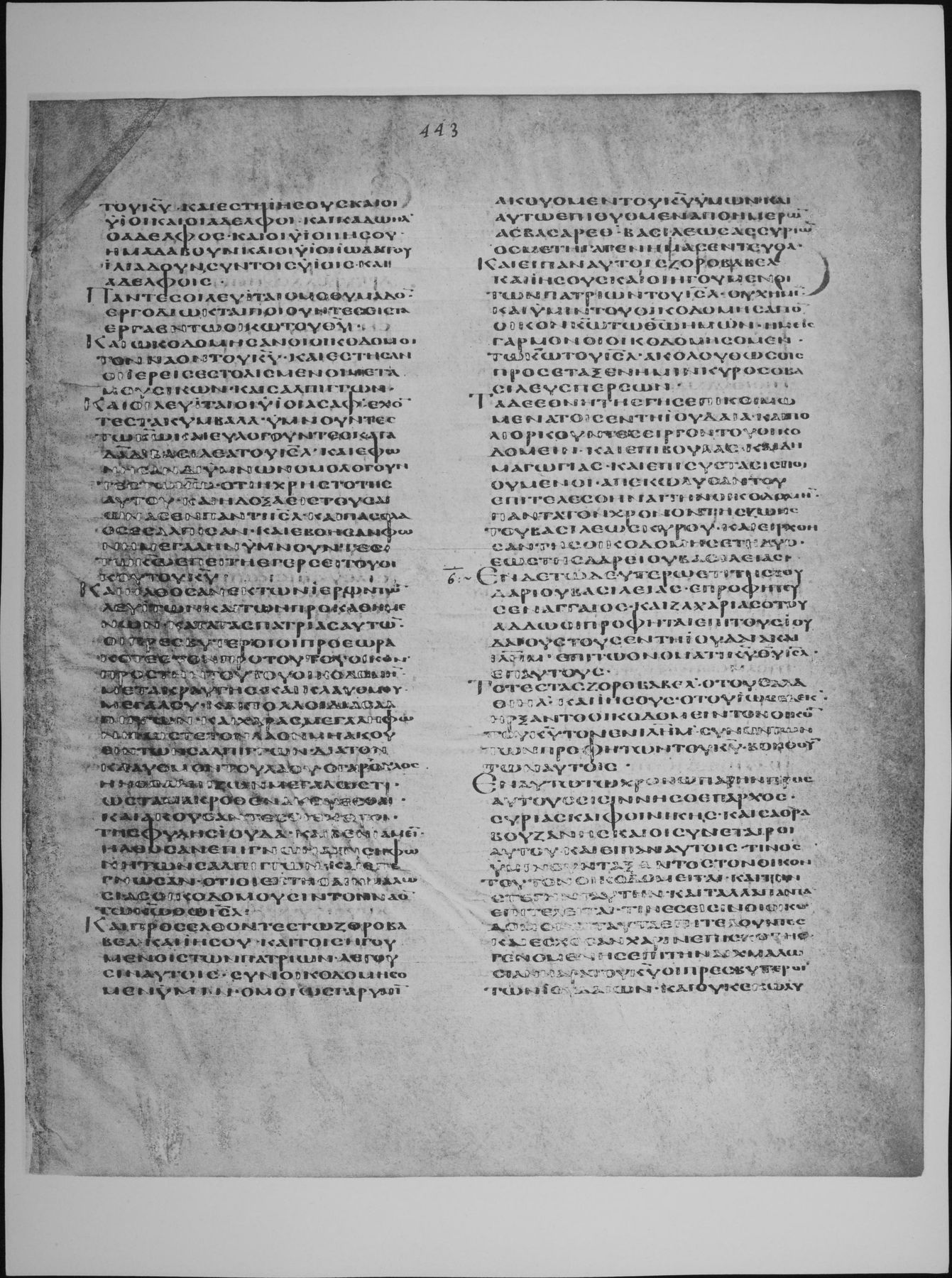
1 Esdras 5:49-56 is on fol. 442v (full-size facsimile of 1879-83, Internet Archive codex-alexandrinus leaf 909). The 1957 reduced facsimile prints beneath this page: 1 Esdras v. 38-v. 56 (58). Checked on the plate: the page begins inside 1 Esdras 5:38 (first words read: ΤΟΥ ΛΑΒΟΝΤΟΣ ΑΓΙΑ ΓΥΝΑΙΚΑ ΤΩΝ ΘΥΓΑΤΕΡΩΝ ΒΑΡΖΕΛΛΑΙΟΥ). Note: the first word of the column (a name) is unclear on the plate. 1 Esdras 5:56 is on fol. 443r (full-size facsimile of 1879-83, Internet Archive codex-alexandrinus leaf 910). The 1957 reduced facsimile prints beneath this page: 1 Esdras v. 56 (58)-vi. 6. Checked on the plate: the page begins inside 1 Esdras 5:56 (first words read: ΤΟΥ ΚΥ ΚΑΙ ΕΣΤΗ ΙΗΣΟΥΣ ΚΑΙ ΟΙ ΥΙΟΙ ΚΑΙ ΟΙ ΑΔΕΛΦΟΙ ΚΑΔΜΙΗΛ ΚΑΙ Ο ΑΔΕΛΦΟΣ).
49καὶ ἐπισυνήχθησαν αὐτοῖς ἐκ τῶν ἄλλων ἐθνῶν τῆς γῆς καὶ κατωρθώθησαν ἐπὶ τὸ θυσιαστήριον ἐπὶ τοῦ τόπου αὐτῶν· ὅτι ἐν ἔχθρᾳ ἦσαν αὐτοῖς· κατίσχυσαν αὐτοὺς πάντα τὰ ἔθνη τὰ ἐπὶ τῆς γῆς· καὶ ἀνέφερον θυσίας κατὰ τὸν καιρὸν καὶ ὁλοκαυτώματα Κυρίῳ τὸ πρωινὸν καὶ τὸ δειλινόν. 50καὶ ἠγάγοσαν τὴν τῆς σκηνοπηγίας ἑορτὴν ὡς ἐπιτέτακται ἐν τῷ νόμῳ, καὶ θυσίας καθ᾽ ἡμέραν, ὡς προσῆκον ἦν· 51καὶ μετὰ ταῦτα προσφορὰς ἐνδελεχισμοῦ, καὶ θυσίας σαββάτων καὶ νουμηνιῶν καὶ ἑορτῶν πασῶν ἡγιασμένων. 52καὶ ὅσοι εὔξαντο εὐχὴν τῷ θεῷ ἀπὸ τῆς νουμηνίας τοῦ πρώτου μηνός, ἤρξατο προσφέρειν θυσίας τῷ θεῷ, καὶ ὁ ναὸς τοῦ θεοῦ οὔπω ᾠκοδόμητο. 53καὶ ἔδωκαν ἀργύριον τοῖς λατόμοις καὶ τέκτοσι, καὶ ποτὰ καὶ βρωτὰ καὶ χάρα τοῖς Σειδωνίοις καὶ Τυρίοις εἰς τὸ παράγειν αὐτοὺς ἐκ τοῦ Λιβάνου ξύλα κέδρινα, διαφέρειν σχεδίας εἰς τὸν Ἰόππης λιμένα, καὶ τὸ πρόσταγμα τὸ γραφὲν αὐτοῖς παρὰ Κύρου τοῦ ΙΙερσῶν βασιλέως. 54καὶ τῷ δευτέρῳ ἔτει παραγενόμενος εἰς τὸ ἱερὸν τοῦ θεοῦ εἰς Ἰερονσαλὴμ μηνὸς δευτέρου ἤρξατο Ζοροβαβὲλ ὁ τοῦ Σαλαθιὴλ καὶ Ἰησοῦς ὁ τοῦ Ἰωσεδὲκ καὶ οἱ ἀδελφοὶ αὐτῶν καὶ οἱ ἱερεῖς οἱ Λευεῖται καὶ πάντες οἱ παραγενόμενοι ἐκ τῆς αἰχμαλωσίας εἰς Ἰερουσαλήμ, 55καὶ ἐθεμελίωσαν τὸν ναὸν τοῦ θεοῦ τῇ νουμηνίᾳ τοῦ δευτέρου μηνὸς τοῦ δευτέρου ἔτους ἐν τῷ ἐλθεῖν εἰς τὴν Ἰουδαίαν καὶ Ἰερουσαλήμ. 56καὶ ἔστησαν τοὺς Λευείτας ἀπὸ εἰκοσαετοῦς ἐπὶ τῶν ἔργων τοῦ κυρίου· καὶ ἔστη Ἰησοῦς καὶ οἱ υἱοὶ καὶ οἱ ἀδελφοί, καὶ ὁ Δαμαδιὴλ ὁ ἀδελφός, καὶ οἱ υἱοὶ Ἰησοῦ Ἠμαδαβούν, καὶ οἱ υἱοὶ Ἰούδα τοῦ Εἰλιαδοὺν σὺν τοῖς υἱοῖς καὶ ἀδελφοῖς, πάντες οἱ Λευεῖται ὁμοθυμαδὸν ἐργοδιῶκται, ποιοῦντες εἰς τὰ ἔργα ἐν τῷ οἴκῳ τοῦ κυρίου· καὶ οἰκοδόμησαν οἱ οἰκοδόμοι τὸν ναὸν τοῦ κυρίου.
50And there were gathered unto them out of the other nations of the land, and they erected the altar upon his own place, because all the nations of the land were at enmity with them, and oppressed them; and they offered sacrifices according to the time, and burnt offerings to the Lord both morning and evening. 51Also they held the feast of tabernacles, as it is commanded in the law, and offered sacrifices daily, as was meet: 52and after that, the continual oblations, and the sacrifice of the sabbaths, and of the new moons, and of all holy feasts. 53And all they that had made any vow to God began to offer sacrifices to God from the first day of the seventh month, although the temple of the Lord was not yet built. 54And they gave unto the masons and carpenters money, meat, and drink, with cheerfulness. 55Unto them of Zidon also and Tyre they gave carrs, that they should bring cedar trees from Libanus, which should be brought by floats to the haven of Joppe, according as it was commanded them by Cyrus king of the Persians. 56And in the second year and second month after his coming to the temple of God at Jerusalem began Zorobabel the son of Salathiel, and Jesus the son of Josedec, and their brethren, and the priests, and the Levites, and all they that were come unto Jerusalem out of the captivity: 57and they laid the foundation of the house of God in the first day of the second month, in the second year after they were come to Jewry and Jerusalem. 58And they appointed the Levites from twenty years old over the works of the Lord. Then stood up Jesus, and his sons and brethren, and Cadmiel his brother, and the sons of Emadabun, with the sons of Joda the son of Eliadud, with their sons and brethren, all Levites, with one accord setters forward of the business, labouring to advance the works in the house of the Lord. So the builders built the temple of the Lord.
Where on the image
1 Esdras 5:57-64 is on fol. 443r (full-size facsimile of 1879-83, Internet Archive codex-alexandrinus leaf 910). The 1957 reduced facsimile prints beneath this page: 1 Esdras v. 56 (58)-vi. 6. Checked on the plate: the page begins inside 1 Esdras 5:56 (first words read: ΤΟΥ ΚΥ ΚΑΙ ΕΣΤΗ ΙΗΣΟΥΣ ΚΑΙ ΟΙ ΥΙΟΙ ΚΑΙ ΟΙ ΑΔΕΛΦΟΙ ΚΑΔΜΙΗΛ ΚΑΙ Ο ΑΔΕΛΦΟΣ).
57Καὶ ἔστησαν οἱ ἱερεῖς ἐστολισμένοι μετὰ μουσικῶν καὶ σαλπίγγων, καὶ οἱ Λευεῖται υἱοὶ Ἀσὰφ ἔχοντες τὰ κύμβαλα ὑμνοῦντες τῷ κυρίῳ καὶ εὐλογοῦντες κατὰ Δαυεὶδ βασιλέα τοῦ Ἰσραήλ. 58καὶ ἐφώνησαν δι᾽ ὕμνων εὐλογοῦντες τῷ κυρίῳ, ὅτι ἡ χρηστότης αὐτοῦ καὶ ἡ δόξα εἰς τοὺς αἰῶνας παντὶ Ἰσραήλ. 59καὶ πᾶς ὁ λαὸς ἐσάλπισαν καὶ ἐβόησαν φωνῇ μεγάλῃ, ὑμνοῦντες τῷ κυρίῳ ἐπὶ τῇ ἐγέρσει τοῦ οἴκου Κυρίου. 60καὶ ἤλθοσαν ἐκ τῶν ἱερέων τῶν Λευειτῶν καὶ τῶν προκαθημένων κατὰ τὰς πατριὰς αὐτῶν οἱ πρεσβύτεροι ἑωρακότες τὸν πρὸ τοῦ οἶκον πρὸς τὴν τούτου οἰκοδομὴν μετὰ κραυγῆς καὶ κλαυθμοῦ μεγάλου, 61καὶ πολλοὶ διὰ σαλπίγγων, καὶ χαρὰ μεγάλῃ τῇ φωνῇ· 62ὥστε τὸν λαὸν μὴ ἀκούειν τῶν σαλπίγγων διὰ τὸν κλαυθμὸν τοῦ λαοῦ· ὁ γὰρ ὄχλος ἦν ὁ σαλπίζων μεγάλως, ὥστε μακρόθεν ἀκούεσθαι. 63Καὶ ἀκούσαντες οἱ ἐχθροί τῆς φυλῆς Ἰούδα καὶ Βενιαμεὶν ἤλθοσαν ἐπιγνῶναι τίς ἡ φωνὴ τῶν σαλπίγγων, 64καὶ ἐπέγνωσαν ὅτι οἱ ἐκ τῆς αἰχμαλωσίας οἰκοδομοῦσιν τὸν ναὸν τῷ κυρίῳ θεῷ Ἰσραήλ.
59And the priests stood arrayed in their vestments with musical instruments and trumpets; and the Levites the sons of Asaph had cymbals, 60singing songs of thanksgiving, and praising the Lord, according as David the king of Israel had ordained. 61And they sung with loud voices songs to the praise of the Lord, because his mercy and glory is for ever in all Israel. 62And all the people sounded trumpets, and shouted with a loud voice, singing songs of thanksgiving unto the Lord for the rearing up of the house of the Lord. 63Also of the priests and Levites, and of the chief of their families, the ancients who had seen the former house came to the building of this with weeping and great crying. 64But many with trumpets and joy shouted with loud voice, 65insomuch that the trumpets might not be heard for the weeping of the people; yet the multitude sounded marvellously, so that it was heard afar off. 66Wherefore when the enemies of the tribe of Juda and Benjamin heard it, they came to know what the noise of trumpets should mean. 67And they perceived that they that were of the captivity did build the temple unto the Lord God of Israel.
Where on the image
1 Esdras 5:65-70 is on fol. 443r (full-size facsimile of 1879-83, Internet Archive codex-alexandrinus leaf 910). The 1957 reduced facsimile prints beneath this page: 1 Esdras v. 56 (58)-vi. 6. Checked on the plate: the page begins inside 1 Esdras 5:56 (first words read: ΤΟΥ ΚΥ ΚΑΙ ΕΣΤΗ ΙΗΣΟΥΣ ΚΑΙ ΟΙ ΥΙΟΙ ΚΑΙ ΟΙ ΑΔΕΛΦΟΙ ΚΑΔΜΙΗΛ ΚΑΙ Ο ΑΔΕΛΦΟΣ).
65καὶ προσελθόντες τῷ Ζοροβαβὲλ καὶ Ἰησοῦ καὶ τοῖς ἡγουμένοις τῶν πατριῶν λέγουσιν αὐτοῖς Συνοικοδομήσομεν ὑμῖν· 66ὁμοίως γὰρ ὑμῖν ἀκούομεν τοῦ κυρίου ὑμῶν, καὶ αὐτῷ ἐπιθύσομεν ἀπὸ ἡμερῶν Ἀσβακαφὰθ βασιλέως Ἀσσυρίων, ὃς μετήγαγεν ἡμᾶς ἐνταῦθα. 67καὶ εἶπεν αὐτοῖς Ζοροβαβὲλ καὶ Ἰησοῦς καὶ οἱ ἡγούμενοι τῶν πατριῶν τοῦ Ἰσραήλ Οὐχ ὑμῖν τοῦ οἰκοδομῆσαι τὸν οἶκον Κυρίῳ θεῷ ἡμῶν· 68ἡμεῖς γὰρ μόνοι οἰκοδομήσομεν τῷ κυρίῳ τοῦ Ἰσραήλ, ἀκολούθως οἷς προσέταξεν ἡμῖν Κῦρος ὁ βασιλεὺς Περσῶν. 69τὰ δὲ ἔθνη τῆς γῆς ἐπικοιμώμενα τοῖς ἐν τῇ Ἰουδαίᾳ καὶ πολιορκοῦντες εἶργον τοῦ οἰκοδομεῖν, 70καὶ βουλὰς καὶ δημαγωγοῦντες καὶ συστάσεις ποιούμενοι ἀπεκώλυσαν τοῦ ἀποτελεσθῆναι τὴν οἰκοδομὴν πάντα τὸν χρόνον τῆς ζωῆς τοῦ βασιλέως Κύρου· καὶ εἴρχθησαν τῆς οἰκοδομῆς ἔτη δύο ἕως τῆς Δαρείου βασιλείας.
68So they went to Zorobabel and Jesus, and to the chief of the families, and said unto them, We will build together with you. 69For we likewise, as ye, do obey your Lord, and do sacrifice unto him from the days of Azbazareth the king of the Assyrians, who brought us hither. 70Then Zorobabel and Jesus and the chief of the families of Israel said unto them, It is not for us and you to build together an house unto the Lord our God. 71We ourselves alone will build unto the Lord of Israel, according as Cyrus the king of the Persians hath commanded us. 72But the heathen of the land lying heavy upon the inhabitants of Judea, and holding them strait, hindered their building; 73and by their secret plots, and popular persuasions and commotions, they hindered the finishing of the building all the time that king Cyrus lived: so they were hindered from building for the space of two years, until the reign of Darius.
Cite
Sources
- Source: Codex Alexandrinus (British Library Royal MS 1 D. VI) via the British Museum photographic facsimiles of 1879-83 and 1957 (Internet Archive) + Swete's Septuagint + Brenton's English (holding institution)
- Critical edition: H. B. Swete, The Old Testament in Greek according to the Septuagint (1909)
← previous · → next · v cycle view · l back to library