1 Esdras, Chapter 4 (Codex Alexandrinus)
Introduction
1 Esdras 4 in the Greek Old Testament (the Septuagint) as written in Codex Alexandrinus, a Greek Bible copied in the fifth century, probably in Egypt, and now in the British Library (Royal MS 1 D. VI, the second of its four volumes). It is one of the three great early codices of the whole Greek Bible, with Codex Vaticanus and Codex Sinaiticus.
This entry meets the strict three-criteria standard of the Theosis Library:
- Manuscript scan: the pages of Codex Alexandrinus carrying this chapter (fol. 440r, fol. 440v, fol. 441r, fol. 441v), from the full-size photographic (autotype) facsimile published by the British Museum in 1879-1883, as digitised on the Internet Archive. The verse range of every page comes from the reduced photographic facsimile of 1957, which prints it beneath each plate, and the opening words of every page were read on the plate to confirm the page and the verse it begins with. Each section links to the page or pages that hold its verses. Folio numbers are those written at the head of each leaf and visible on the plates.
- Original text: Swete's edition, which here prints the text of Codex Vaticanus (Vat. gr. 1209), the base of his edition, and gives the readings of Alexandrinus only in his apparatus. The Greek column is therefore Vaticanus' text; where Alexandrinus differs, the plate shows what Alexandrinus reads.
- English translation: Sir Lancelot C. L. Brenton, The Septuagint Version of the Old Testament (1844; 1851 edition), a translation of the Greek, public domain, from the eBible.org text.
How was this verified? (Provenance)
Where on the image
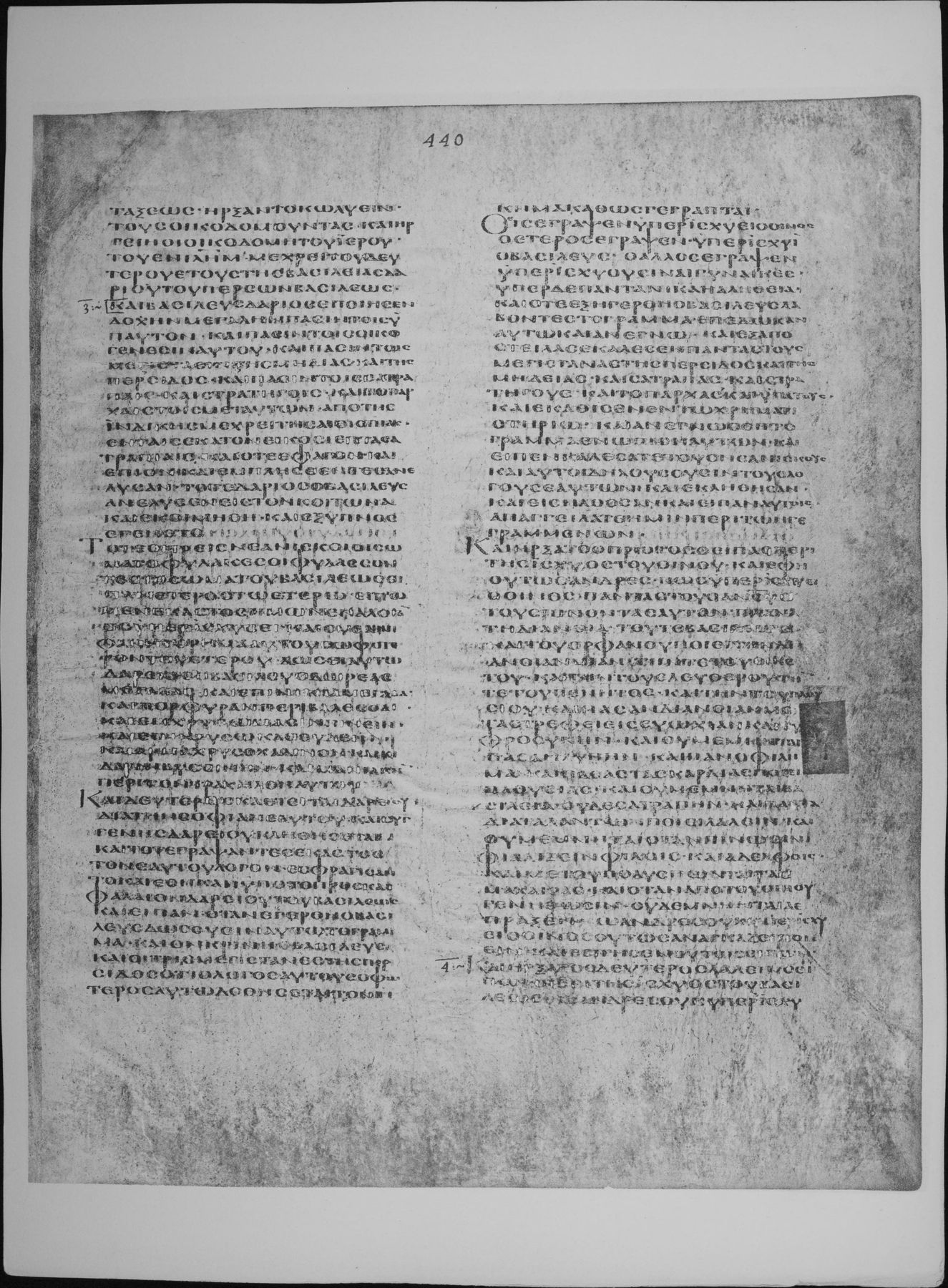
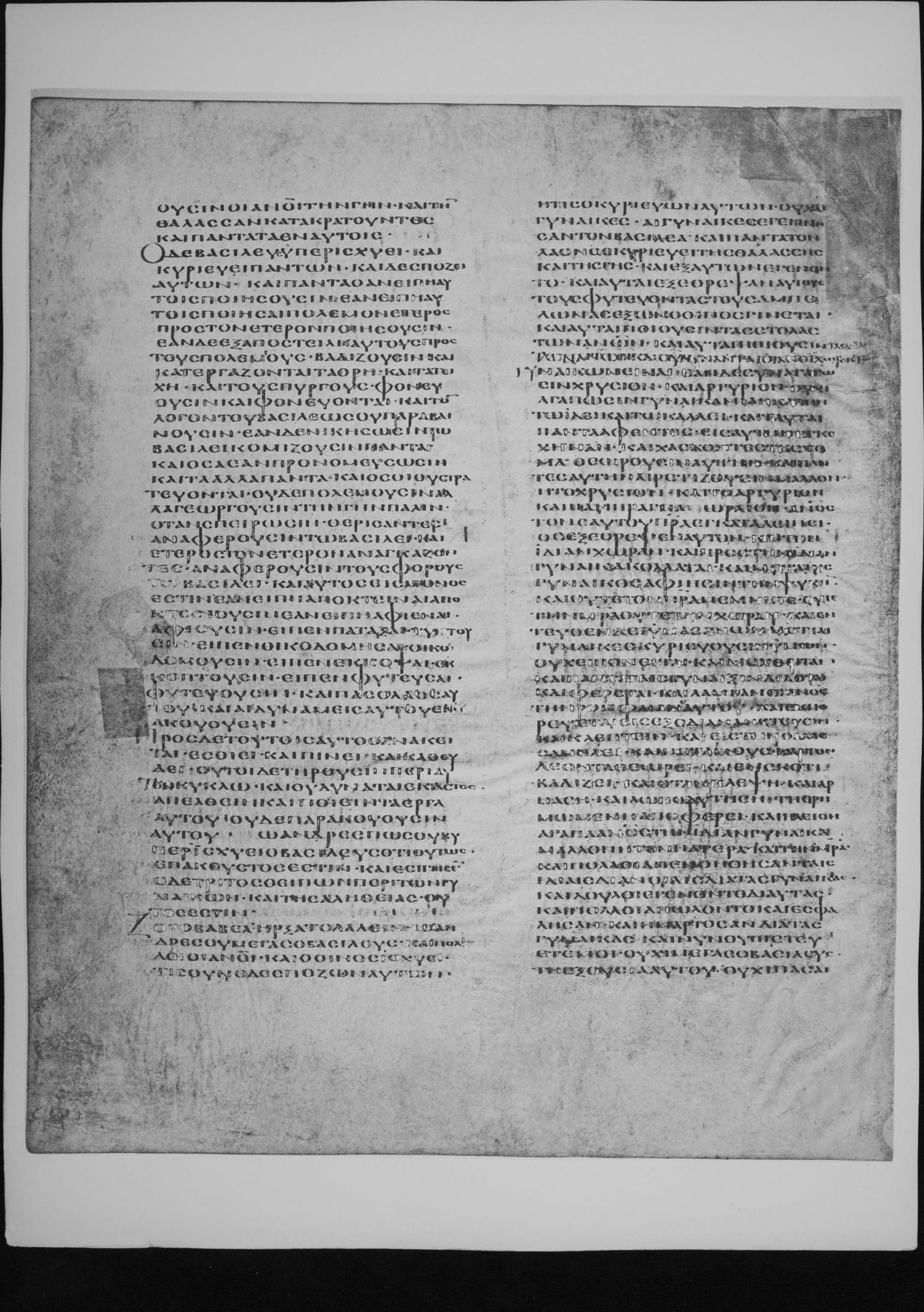
1 Esdras 4:1-2 is on fol. 440r (full-size facsimile of 1879-83, Internet Archive codex-alexandrinus leaf 904). The 1957 reduced facsimile prints beneath this page: 1 Esdras ii. 25 (30)-iv. 2. Checked on the plate: the page begins inside 1 Esdras 2:25 (first words read: ΤΑΞΕΩΣ ΗΡΞΑΝΤΟ ΚΩΛΥΕΙΝ ΤΟΥΣ ΟΙΚΟΔΟΜΟΥΝΤΑΣ ΚΑΙ ΗΡΓΕΙ Η ΟΙΚΟΔΟΜΗ ΤΟΥ ΙΕΡΟΥ). 1 Esdras 4:2-8 is on fol. 440v (full-size facsimile of 1879-83, Internet Archive codex-alexandrinus leaf 905). The 1957 reduced facsimile prints beneath this page: 1 Esdras iv. 2-iv. 28. Checked on the plate: the page begins inside 1 Esdras 4:2 (first words read: ΟΥΣΙΝ ΟΙ ΑΝΟΙ ΤΗΝ ΓΗΝ ΚΑΙ ΤΗΝ ΘΑΛΑΣΣΑΝ ΚΑΤΑΚΡΑΤΟΥΝΤΕΣ ΚΑΙ ΠΑΝΤΑ ΤΑ ΕΝ ΑΥΤΟΙΣ).
1Καὶ ἤρξατο ὁ δεύτερος λαλεῖν ὁ εἴπας περὶ τῆς ἰσχύος τοῦ βασιλέως 2Ὦ ἄνδρες, οὐχ ὑπερισχύουσιν οἱ ἄνθρωποι, τὴν γῆν καὶ τὴν θάλασσαν κατακρατοῦντες καὶ πάντα τὰ ἐν αὐτοῖς; 3ὁ δὲ βασιλεὺς ὑπερισχύει καὶ κυριεύει αὐτῶν καὶ δεσπόζει αὐτῶν, καὶ πᾶν ὃ ἐὰν εἴπῃ αὐτοῖς ἐνακούουσιν. 4ἐὰν εἴπῃ αὐτοῖς ποιῆσαι πόλεμον ἕτερος πρὸς τὸν ἕτερον, ποιοῦσιν· ἐὰν δὲ ἐξαποστείλῃ αὐτοὺς πρὸς τοὺς πολεμίους, βαδίζουσιν καὶ κατεργάζονται τὰ ὄρη καὶ τὰ τείχη καὶ τοὺς πύργους. 5φονεύουσιν καὶ φονεύονται, καὶ τὸν λόγον τοῦ βασιλέως οὐ παραβαίνουσιν· ἐὰν δὲ νικήσωσιν, τῷ βασιλεῖ κομίζουσιν πάντα, καὶ ἐὰν προνομεύσωσιν καὶ τὰ ἄλλα πάντα. 6καὶ ὅσοι οὐ στρατεύονται οὐδὲ πολεμοῦσιν ἀλλὰ γεωργοῦσιν τὴν γῆν, πάλιν ὅταν σπείρωσι, θερίσαντες ἀναφέρουσιν τῷ βασιλεῖ· καὶ ἕτερος τὸν ἕτερον ἀναγκάζοντες ἀναφέρουσι τοὺς φόρους τῷ βασιλεῖ. 7καὶ αὐτὸς εἰ μόνος ἐστίν, ἐὰν εἴπῃ ἀποκτεῖναι, ἀποκτέννουσιν· εἶπεν ἀφεῖναι, ἀφίουσιν· 8εἶπε πατάξαι, τύπτουσιν· εἶπεν ἐρημῶσαι, ἐρημοῦσιν· εἶπεν οἰκοδομῆσαι, οἰκοδομοῦσιν·
1Then the second, that had spoken of the strength of the king, began to say, 2O ye men, do not men excel in strength, that bear rule over sea and land, and all things in them? 3But yet the king is more mighty: for he is lord of all these things, and hath dominion over them; and whatsoever he commandeth them they do. 4If he bid them make war the one against the other, they do it: if he send them out against the enemies, they go, and break down mountains, walls, and towers. 5They slay and are slain, and transgress not the king's commandment: if they get the victory, they bring all to the king, as well the spoil, as all things else. 6Likewise for those that are no soldiers, and have not to do with wars, but use husbandry, when they have reaped again that which they had sown, they bring it to the king, and compel one another to pay tribute unto the king. 7And yet he is but one man: if he command to kill, they kill; if he command to spare, they spare; 8if he command to smite, they smite; if he command to make desolate, they make desolate; if he command to build, they build;
Where on the image
1 Esdras 4:9-16 is on fol. 440v (full-size facsimile of 1879-83, Internet Archive codex-alexandrinus leaf 905). The 1957 reduced facsimile prints beneath this page: 1 Esdras iv. 2-iv. 28. Checked on the plate: the page begins inside 1 Esdras 4:2 (first words read: ΟΥΣΙΝ ΟΙ ΑΝΟΙ ΤΗΝ ΓΗΝ ΚΑΙ ΤΗΝ ΘΑΛΑΣΣΑΝ ΚΑΤΑΚΡΑΤΟΥΝΤΕΣ ΚΑΙ ΠΑΝΤΑ ΤΑ ΕΝ ΑΥΤΟΙΣ).
9εἶπεν ἐκκόψαι, ἐκκόπτουσιν· εἶπεν φυτεῦσαι, φυτεύουσιν· 10καὶ πᾶς ὁ λαὸς αὐτοῦ καὶ αἱ δυνάμεις αὐτοῦ ἐνακούουσιν. πρὸς δὲ τούτοις αὐτὸς ἀνάκειται, ἐσθίει καὶ πίνει καὶ καθεύδει· 11αὐτοὶ δὲ τηροῦσιν κύκλῳ περὶ αὐτόν, καὶ οὐ δύνανται ἕκαστος ἀπελθεῖν καὶ ποιεῖν τὰ ἔργα αὐτοῦ, οὐδὲ παρακούουσιν αὐτοῦ. 12ὦ ἄνδρες, πῶς οὐχ ὑπερισχύει ὁ βασιλεὺς ὅτι οὕτως ἐπακουστός ἐστιν; καὶ ἐσίγησεν. 13Ὁ δὲ τρίτος ὁ εἴπας περὶ τῶν γυναικῶν καὶ τῆς ἀληθείας, οὗτός ἐστιν Ζοροβαβέλ, ἤρξατο λαλεῖν 14Ἄνδρες, οὐ μέγας ὁ βασιλεύς, καὶ πολλοὶ οἱ ἄνθρωποι, καὶ ὁ οἶνος ἰσχύει; τίς οὖν ὁ δεσπόζων αὐτῶν, ἢ τίς ὁ κυριεύων; οὐχ αἱ γυναῖκες; 15αἱ γυναῖκες ἐγέννησαν τὸν βασιλέα καὶ πάντα τὸν λαὸν ὃς κυριεύει τῆς θαλάσσης καὶ τῆς γῆς· 16καὶ ἐξ αὐτῶν ἐγένοντο, καὶ αὗται ἐξέθρεψαν αὐτοὺς τοὺς φυτεύσαντας τοὺς ἀμπελῶνας ἐξ ὧν ὁ οἶνος γίνεται,
9if he command to cut down, they cut down; if he command to plant, they plant. 10So all his people and his armies obey him: furthermore he lieth down, he eateth and drinketh, and taketh his rest: 11and these keep watch round about him, neither may any one depart, and do his own business, neither disobey they him in any thing. 12O ye men, how should not the king be mightiest, when in such sort he is obeyed? And he held his tongue. 13Then the third, who had spoken of women, and of the truth, (this was Zorobabel) began to speak. 14O ye men, it is not the great king, nor the multitude of men, neither is it wine, that excelleth: who is it then that ruleth them, or hath the lordship over them? are they not women? 15Women have borne the king and all the people that bear rule by sea and land. 16Even of them came they: and they nourished them up that planted the vineyards, from whence the wine cometh.
Where on the image
1 Esdras 4:17-24 is on fol. 440v (full-size facsimile of 1879-83, Internet Archive codex-alexandrinus leaf 905). The 1957 reduced facsimile prints beneath this page: 1 Esdras iv. 2-iv. 28. Checked on the plate: the page begins inside 1 Esdras 4:2 (first words read: ΟΥΣΙΝ ΟΙ ΑΝΟΙ ΤΗΝ ΓΗΝ ΚΑΙ ΤΗΝ ΘΑΛΑΣΣΑΝ ΚΑΤΑΚΡΑΤΟΥΝΤΕΣ ΚΑΙ ΠΑΝΤΑ ΤΑ ΕΝ ΑΥΤΟΙΣ).
17καὶ αὗται ποιοῦσιν τὰς στολὰς τῶν ἀνθρώπων, καὶ αὗται ποιοῦσιν δόξαν τοῖς ἀνθρώποις, καὶ οὐ δύνανται οἱ ἄνθρωποι εἶναι χωρὶς τῶν γυναικῶν. 18ἐὰν δὲ συναγάγωσιν χρυσίον καὶ ἀργύριον καὶ πᾶν πρᾶγμα ὡραῖον, καὶ ἴδωσιν γυναῖκα μίαν καλὴν τῷ εἴδει καὶ τῷ κάλλει, 19καὶ ταῦτα πάντα ἀφέντες εἰς αὐτὴν κέχηναν, καὶ χάσκοντες τὸ στόμα θεωροῦσιν αὐτήν, καὶ πάντες αὐτὴν αἱρετίζουσιν μᾶλλον ἢ τὸ χρυσίον καὶ τὸ ἀργύριον καὶ πᾶν πρᾶγμα ὡραῖον. 20ἄνθρωπος τὸν ἑαυτοῦ πατέρα ἐνκαταλείπει ὃς ἐξέθρεψεν αὐτὸν καὶ τὴν ἰδίαν χώραν, καὶ πρὸς τὴν ἰδίαν γυναῖκα κολλᾶται, 21καὶ μετὰ τῆς γυναικὸς ἀφίησι τὴν ψυχήν, καὶ οὔτε τὸν πατέρα μέμνηται οὔτε τὴν μητέρα οὔτε τὴν χώραν. 22καὶ ἐντεῦθεν δεῖ ὑμᾶς γνῶναι ὅτι αἱ γυναῖκες κυριεύουσιν ὑμῶν· οὐχὶ πονεῖτε καὶ μοχθεῖτε, καὶ πάντα ταῖς γυναιξὶν δίδοτε καὶ φέρετε; 23καὶ λαμβάνει ἄνθρωπος τὴν ῥομφαίαν αὐτοῦ καὶ ἐκπορεύεται ἐξοδεύειν καὶ λῃστεύειν καὶ κλέπτειν, καὶ εἰς τὴν θάλασσαν πλεῖν καὶ ποταμούς, 24καὶ τὸν λέοντα θεωρεῖ, καὶ ἐν σκότει βαδίζει· καὶ ὅταν κλέψῃ καὶ ἁρπάσῃ καὶ λωποδυτήσῃ, τῇ ἐρωμένῃ ἀποφέρει.
17These also make garments for men; these bring glory unto men; and without women cannot men be. 18Yea, and if men have gathered together gold and silver, or any other goodly thing, do they not love a woman which is comely in favour and beauty? 19And letting all those things go, do they not gape, and even with open mouth fix their eyes fast on her; and have not all men more desire unto her than unto silver or gold, or any goodly thing whatsoever? 20A man leaveth his own father that brought him up, and his own country, and cleaveth unto his wife. 21He sticketh not to spend his life with his wife, and remembereth neither father, nor mother, nor country. 22By this also ye must know that women have dominion over you: do ye not labour and toil, and give and bring all to the woman? 23Yea, a man taketh his sword, and goeth his way to rob and to steal, to sail upon the sea and upon rivers; 24and looketh upon a lion, and goeth in the darkness; and when he hath stolen, spoiled, and robbed, he bringeth it to his love.
Where on the image
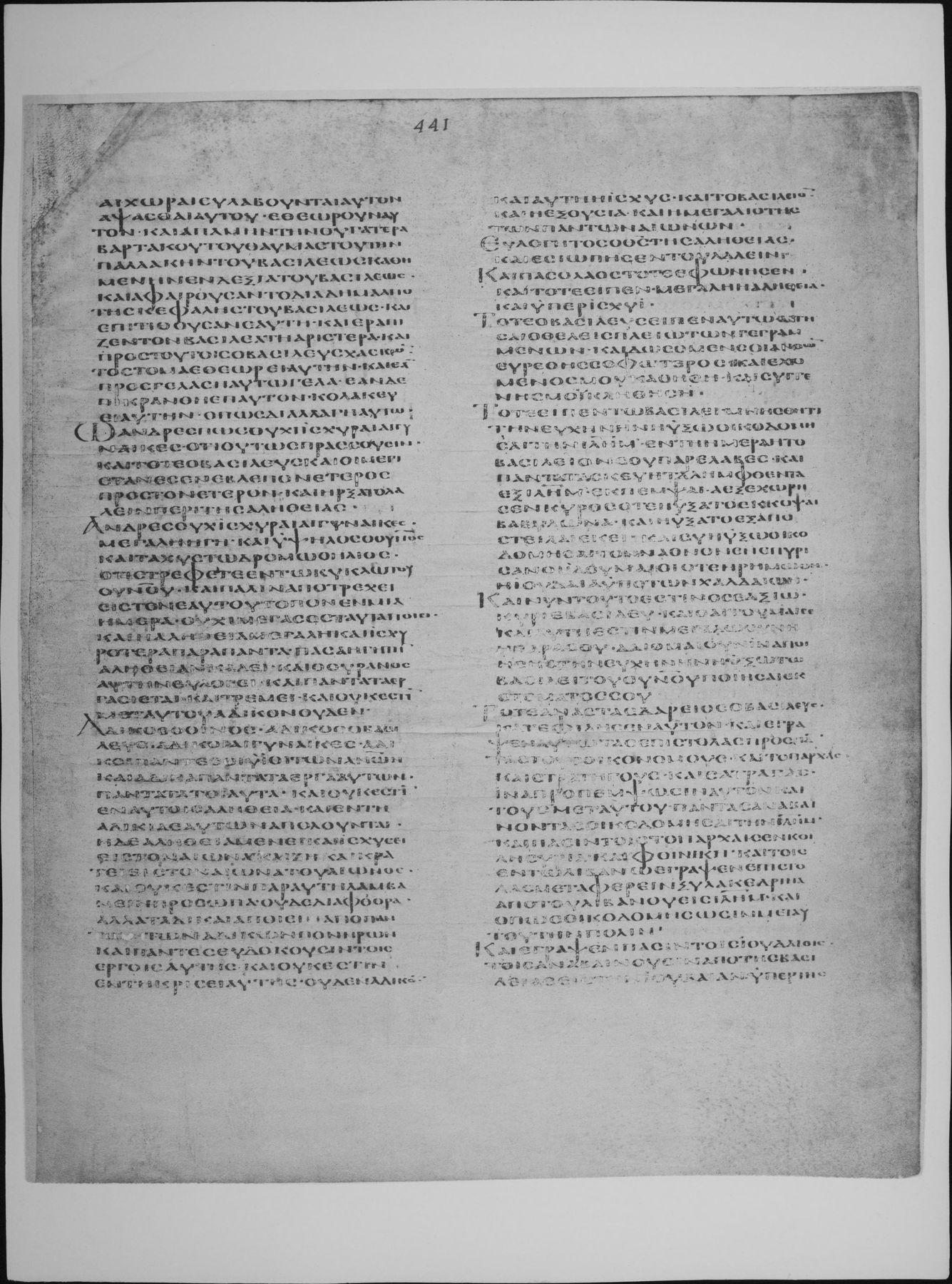
1 Esdras 4:25-28 is on fol. 440v (full-size facsimile of 1879-83, Internet Archive codex-alexandrinus leaf 905). The 1957 reduced facsimile prints beneath this page: 1 Esdras iv. 2-iv. 28. Checked on the plate: the page begins inside 1 Esdras 4:2 (first words read: ΟΥΣΙΝ ΟΙ ΑΝΟΙ ΤΗΝ ΓΗΝ ΚΑΙ ΤΗΝ ΘΑΛΑΣΣΑΝ ΚΑΤΑΚΡΑΤΟΥΝΤΕΣ ΚΑΙ ΠΑΝΤΑ ΤΑ ΕΝ ΑΥΤΟΙΣ). 1 Esdras 4:28-32 is on fol. 441r (full-size facsimile of 1879-83, Internet Archive codex-alexandrinus leaf 906). The 1957 reduced facsimile prints beneath this page: 1 Esdras iv. 28-iv. 49. Checked on the plate: the page begins inside 1 Esdras 4:28 (first words read: ΑΙ ΧΩΡΑΙ ΕΥΛΑΒΟΥΝΤΑΙ ΑΥΤΟΝ ΑΨΑΣΘΑΙ ΑΥΤΟΥ ΕΘΕΩΡΟΥΝ ΑΥΤΟΝ ΚΑΙ ΑΠΑΜΗΝ ΤΗΝ ΘΥΓΑΤΕΡΑ).
25καὶ πλεῖον ἀγαπᾷ ἄνθρωπος τὴν ἰδίαν γυναῖκα μᾶλλον ἢ τὸν πατέρα καὶ τὴν μητέρα. 26καὶ πολλοὶ ἀπενοήθησαν ταῖς ἰδίαις διανοίαις διὰ τὰς γυναῖκας, καὶ δοῦλοι ἐγένοντο δι᾽ αὐτάς· 27καὶ πολλοὶ ἀπώλοντο καὶ ἐσφάλησαν καὶ ἡμάρτοσαν διὰ τὰς γυναῖκας. 28καὶ νῦν οὐ πιστεύετέ μοι; οὐχὶ μέγας ὁ βασιλεὺς τῇ ἐξουσίᾳ αὐτοῦ; οὐχὶ πᾶσαι αἱ χῶραι εὐλαβοῦνται ἅψασθαι αὐτοῦ; 29ἐθεώρουν αὐτὸν καὶ Ἀπάμην τὴν θυγατέρα Βαρτάκου τοῦ θαυμαστοῦ τὴν παλλακὴν τοῦ βασιλέως καθημένην ἐν δεξιᾷ τοῦ βασιλέως, 30καὶ ἀφαιροῦσαν τὸ διάδημα ἀπὸ τῆς κεφαλῆς τοῦ βασιλέως καὶ ἐπιτιθοῦσαν αὑτῇ· καὶ ἐράπιζεν τὸν βασιλέα τῇ ἀριστερᾷ. 31καὶ πρὸς τούτοις ὁ βασιλεὺς χάσκων τὸ στόμα ἐθεώρει αὐτήν· καὶ ἐὰν γελάσῃ αὐτῷ, γελᾷ· ἐὰν δὲ πικρανθῇ ἐπ᾽ αὐτόν, κολακεύει αὐτὴν ὅπως διαλλαγῇ αὐτῷ. 32ὦ ἄνδρες, πῶς οὐκ ἰσχυραὶ αἱ γυναῖκες ὅτι οὕτως πράσσουσιν;
25Wherefore a man loveth his wife better than father or mother. 26Yea, many there be that have run out of their wits for women, and become servants for their sakes. 27Many also have perished, have erred, and sinned, for women. 28And now do ye not believe me? is not the king great in his power? do not all regions fear to touch him? 29Yet did I see him and Apame the king's concubine, the daughter of the admirable Bartacus, sitting at the right hand of the king, 30and taking the crown from the king's head, and setting it upon her own head; she also struck the king with her left hand. 31And yet for all this the king gaped and gazed upon her with open mouth: if she laughed upon him, he laughed also: but if she took any displeasure at him, the king was fain to flatter, that she might be reconciled to him again. 32O ye men, how can it be but women should be strong, seeing they do thus?
Where on the image
1 Esdras 4:33-40 is on fol. 441r (full-size facsimile of 1879-83, Internet Archive codex-alexandrinus leaf 906). The 1957 reduced facsimile prints beneath this page: 1 Esdras iv. 28-iv. 49. Checked on the plate: the page begins inside 1 Esdras 4:28 (first words read: ΑΙ ΧΩΡΑΙ ΕΥΛΑΒΟΥΝΤΑΙ ΑΥΤΟΝ ΑΨΑΣΘΑΙ ΑΥΤΟΥ ΕΘΕΩΡΟΥΝ ΑΥΤΟΝ ΚΑΙ ΑΠΑΜΗΝ ΤΗΝ ΘΥΓΑΤΕΡΑ).
33καὶ τότε ὁ βασιλεὺς καὶ οἱ μεγιστᾶνες ἔβλεπον εἷς τὸν ἕτερον. καὶ ἤρξατο λαλεῖν περὶ τῆς ἀληθείας 34Ἄνδρες, οὐκ ἰσχυραὶ αἱ γυναῖκες; μεγάλη ἡ γῆ, καὶ ὑψηλὸς ὁ οὐρανός, καὶ ταχὺς τῷ δρόμῳ ὁ ἥλιος, ὅτι στρέφεται ἐν τῷ κύκλῳ τοῦ οὐρανοῦ καὶ πάλιν ἀποτρέχει εἰς τὸν ἑαυτοῦ τόπον ἐν μιᾷ ἡμέρᾳ. 35οὐχὶ μέγας ὃς ταῦτα ποιεῖ; καὶ ἡ ἀλήθεια μεγάλη καὶ ἰσχυροτέρα παρὰ πάντα. 36πᾶσα ἡ γῆ τὴν ἀλὴθειαν καλεῖ, καὶ ὁ οὐρανὸς αὐτὴν εὐλογεῖ, καὶ πάντα τὰ ἔργα σείεται καὶ τρέμει, καὶ οὐκ ἔστιν μετ᾽ αὐτοῦ ἄδικον οὐθέν. 37ἄδικος ὁ οἶνος, ἄδικος ὁ βασιλεύς, ἄδικοι αἱ γυναῖκες, ἄδικοι πὰντες οἱ υἱοὶ τῶν ἀνθρώπων καὶ ἄδικα πάντα τὰ ἔργα αὐτῶν, πάντα τὰ τοιαῦτα· καὶ οὐκ ἔστιν ἐν αὐτοῖς ἀλήθεια, καὶ ἐν τῇ ἀδικίᾳ αὐτῶν ἀπολοῦνται. 38καὶ ἡ ἀλήθεια μένει καὶ ἰσχύει εἰς τὸν αἰῶνα, καὶ ζῇ καὶ κρατεῖ εἰς τὸν αἰῶνα τοῦ αἰῶνος. 39καὶ οὐκ ἔστιν παρ᾽ αὐτὴν λαμβάνειν πρόσωπα οὐδὲ διάφορα, ἀλλὰ τὰ δίκαια ποιεῖ ἀπὸ πάντων τῶν ἀδίκων καὶ πονηρῶν· καὶ πάντες εὐδοκοῦσι τοῖς ἔργοις αὐτῆς, 40καὶ οὐκ ἔστιν ἐν τῇ κρίσει αὐτῆς οὐθὲν ἄδικον. καὶ αὐτῇ ἡ ἰσχὺς καὶ τὸ βασίλειον καὶ ἡ ἐξουσία καὶ ἡ μεγαλειότης τῶν πάντων αἰώνων· εὐλογητὸς ὁ θεὸς τῆς ἀληθείας.
33Then the king and the princes looked one upon another: so he began to speak of the truth. 34O ye men, are not women strong? great is the earth, high is the heaven, swift is the sun in his course, for he compasseth the heavens round about, and fetcheth his course again to his own place in one day. 35Is he not great that maketh these things? therefore great is the truth, and stronger than all things. 36All the earth calleth upon the truth, and the heaven blesseth it: all works shake and tremble at it, and with it is no unrighteous thing. 37Wine is wicked, the king is wicked, women are wicked, all the children of men are wicked; and such are all their wicked works, and there is no truth in them; in their unrighteousness also they shall perish. 38As for the truth, it endureth, and is always strong; it liveth and conquereth for evermore. 39With her there is no accepting of persons or rewards: but she doeth the things that are just, and refraineth from all unjust and wicked things; and all men do well like of her works. 40Neither in her judgment is any unrighteousness; and she is the strength, kingdom, power, and majesty of all ages. Blessed be the God of truth.
Where on the image
1 Esdras 4:41-48 is on fol. 441r (full-size facsimile of 1879-83, Internet Archive codex-alexandrinus leaf 906). The 1957 reduced facsimile prints beneath this page: 1 Esdras iv. 28-iv. 49. Checked on the plate: the page begins inside 1 Esdras 4:28 (first words read: ΑΙ ΧΩΡΑΙ ΕΥΛΑΒΟΥΝΤΑΙ ΑΥΤΟΝ ΑΨΑΣΘΑΙ ΑΥΤΟΥ ΕΘΕΩΡΟΥΝ ΑΥΤΟΝ ΚΑΙ ΑΠΑΜΗΝ ΤΗΝ ΘΥΓΑΤΕΡΑ).
41καὶ ἐσιώπησεν τοῦ λαλεῖν· καὶ πᾶς ὁ λαὸς τότε ἐφώνησεν καὶ τότε εἶπον Μεγάλη ἡ ἀλήθεια καὶ ὑπερισχύει. 42Τότε ὁ βασιλεὺς εἶπεν αὐτῷ Αἴτησαι ὃ θέλεις πλείω τῶν γεγραμμένων, καὶ δώσομέν σοι, ὅν τρόπον εὑρέθης σοφώτερος· καὶ ἐχόμενός μου καθήσῃ, καὶ συγγενής μου κληθήσῃ. 43τότε εἶπεν τῷ βασιλεῖ Μνήσθητι τὴν εὐχὴν ἣν ηὔξω οἰκοδομῆσαι τὴν Ἰερουσαλήμ ἐν τῇ ἡμέρᾳ ᾗ τὸ βασίλειόν σου παρέλαβες, 44καὶ πάντα τά σκεύη τὰ λημφθέντα ἐξ Ἰερουσαλὴμ καὶ ἐκπέμψαι ἃ ἐχώρισεν Κῦρος, ὅτε ηὔξατο ἐκκόψαι Βαβυλῶνα, καὶ ηὔξατο ἐξαποστεῖλαι ἐκεῖ. 45καὶ σὺ εὔξω οἰκοδομῆσαι τὸν ναὸν ὃν ἐνεπύρισαν οἱ Ἰουδαῖοι, ὅτε ἐρημώθη ἡ Ἰουδαία ὑπὸ τῶν Χαλδαίων. 46καὶ νῦν τοῦτό ἐστιν ὅσα ἀξιῶ, κύριε βασιλεῦ, καὶ ὃ αἰτοῦμαί σε, καὶ αὕτη ἐστὶν ἡ μεγαλωσύνη ἡ παρὰ σοῦ· δέομαι οὖν ἵνα ποιήσῃς τὴν εὐχὴν ἣν ηὔξω τῷ βασιλεῖ τοῦ οὐρανοῦ ποιῆσαι ἐκ στόματός σου. 47Τότε ἀναστάς Δαρεῖος ὁ βασιλεὺς κατεφίλησεν αὐτόν, καὶ ἔγραψεν αὐτῷ τὰς ἐπιστολὰς πρὸς πάντας οἰκονόμους καὶ τοπάρχας καὶ στρατηγοὺς καὶ σατράπας, ἵνα προπέμψωσιν αὐτὸν καὶ τοὺς μετ᾽ αὐτοῦ πάντας ἀναβαίνοντας οἰκοδομῆσαι τὴν Ἰερουσαλήμ. 48καὶ πᾶσι τοῖς τοπάρχαις ἐν κοίλῃ Συρίᾳ καὶ Φοινίκῃ καὶ τοῖς ἐν τῷ Λιβάνῳ καὶ ἔγραψεν ἐπιστολάς, μεταφέρειν ξύλα κέδρινα ἀπὸ τοῦ Λιβάνου εἰς Ἰερουσαλήμ, καὶ ὅπως οἰκοδομήσωσιν μετ᾽ αὐτοῦ τὴν πόλιν.
41And with that he held his peace. And all the people then shouted, and said, Great is Truth, and mighty above all things. 42Then said the king unto him, Ask what thou wilt more than is appointed in the writings, and we will give it thee, because thou art found wisest; and thou shalt sit next me, and shalt be called my cousin. 43Then said he unto the king, Remember thy vow, which thou hast vowed to build Jerusalem, in the day when thou camest to thy kingdom, 44and to send away all the vessels that were taken away out of Jerusalem, which Cyrus set apart, when he vowed to destroy Babylon, and to send them again thither. 45Thou also hast vowed to build up the temple, which the Edomites burned when Judea was made desolate by the Chaldees. 46And now, O lord the king, this is that which I require, and which I desire of thee, and this is the princely liberality proceeding from thyself: I desire therefore that thou make good the vow, the performance whereof with thine own mouth thou hast vowed to the King of heaven. 47Then Darius the king stood up, and kissed him, and wrote letters for him unto all the treasurers and lieutenants and captains and governors, that they should safely convey on their way both him, and all those that go up with him to build Jerusalem. 48He wrote letters also unto the lieutenants that were in Celosyria and Phenice, and unto them in Libanus, that they should bring cedar wood from Libanus unto Jerusalem, and that they should build the city with him.
Where on the image
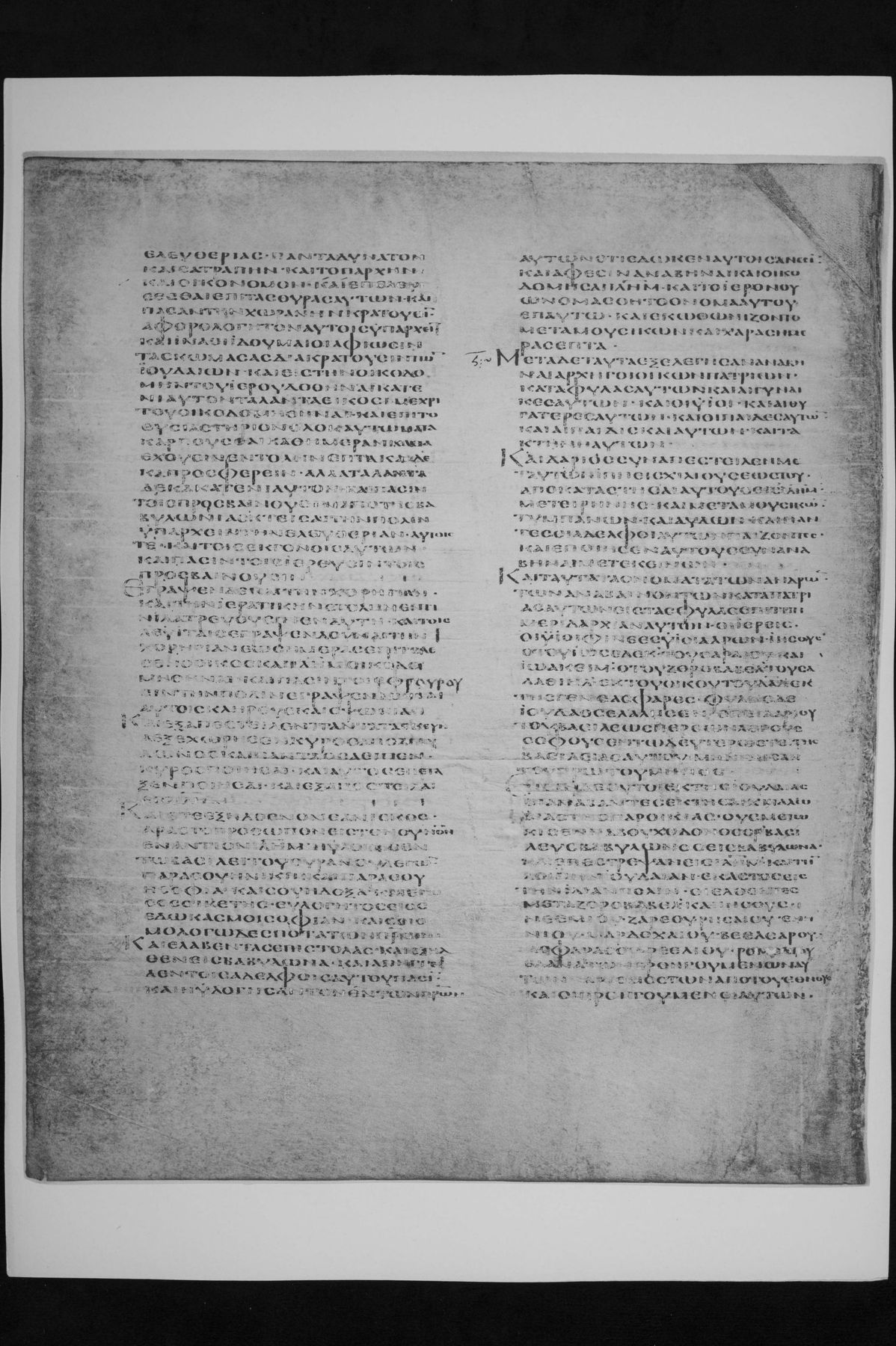
1 Esdras 4:49 is on fol. 441r (full-size facsimile of 1879-83, Internet Archive codex-alexandrinus leaf 906). The 1957 reduced facsimile prints beneath this page: 1 Esdras iv. 28-iv. 49. Checked on the plate: the page begins inside 1 Esdras 4:28 (first words read: ΑΙ ΧΩΡΑΙ ΕΥΛΑΒΟΥΝΤΑΙ ΑΥΤΟΝ ΑΨΑΣΘΑΙ ΑΥΤΟΥ ΕΘΕΩΡΟΥΝ ΑΥΤΟΝ ΚΑΙ ΑΠΑΜΗΝ ΤΗΝ ΘΥΓΑΤΕΡΑ). 1 Esdras 4:49-56 is on fol. 441v (full-size facsimile of 1879-83, Internet Archive codex-alexandrinus leaf 907). The 1957 reduced facsimile prints beneath this page: 1 Esdras iv. 49-v. 9. Checked on the plate: the page begins inside 1 Esdras 4:49 (first words read: ΕΛΕΥΘΕΡΙΑΣ ΠΑΝΤΑ ΔΥΝΑΤΟΝ ΚΑΙ ΣΑΤΡΑΠΗΝ ΚΑΙ ΤΟΠΑΡΧΗΝ ΚΑΙ ΟΙΚΟΝΟΜΟΝ).
49καὶ ἔγραψεν πᾶσι τοῖς Ἰουδαίοις τοῖς ἀναβαίνουσιν ἀπὸ τῆς βασιλείας εἰς τὴν Ἰουδαίαν ὑπὲρ τῆς ἐλευθερίας, πάντα δυνατὸν καὶ σατράπην καὶ τοπάρχην καὶ οἰκονόμον μὴ ἐπελεύσεσθαι ἐπὶ τὰς θύρας αὐτῶν, 50καὶ πᾶσαν τὴν χώραν ἣν κρατήσουσιν ἀφορολόγητον αὐτοῖς ὑπάρχειν· καὶ ἵνα οἱ Χαλδαῖοι ἀφίουσι τὰς κώμας ἃς διακρατοῦσιν τῶν Ἰουδαίων. 51καὶ εἰς τὴν οἰκοδομήν τοῦ ἱεροῦ δοθῆναι κατ᾽ ἐνιαυτὸν τάλαντα εἴκοσι μέχρι τοῦ οἰκοδομηθῆναι· 52καὶ ἐπὶ τὸ θυσιαστήριον ὁλοκαυτώματα καρποῦσθαι καθ᾽ ἡμέραν, καθὰ ἔχουσιν ἐντολὴν ἑπτὰ καὶ δέκα προσφέρειν, ἄλλα τάλαντα, δέκα κατ᾽ ἐνιαυτόν. 53καὶ πᾶσιν τοῖς προσβαίνουσιν ἀπὸ τῆς Βαβυλωνίας κτίσαι τὴν πόλιν, ὑπάρχειν τὴν ἐλευθερίαν αὐτοῖς τε καὶ τοῖς τέκνοις αὐτῶν, καὶ πᾶσι τοῖς ἱερεῦσι τοῖς προσβαίνουσιν. 54ἔγραψεν δὲ καὶ τὴν χορηγίαν καὶ τὴν ἱερατικὴν στολὴν ἐν τίνι λατρεύουσιν ἐν αὐτῇ. 55καὶ τοῖς Λευείταις ἔγραψεν δοῦναι τὴν χορηγίαν ἕως τῆς ἡμέρας ᾗ ἐπιτελεσθῇ ὁ οἶκος καὶ Ἰερουσαλὴμ οἰκοδομηθῆναι. 56καὶ πᾶσι τοῖς φρουροῦσι τὴν πόλιν, ἔγραψε δοῦναι αὐτοῖς κλήρους καὶ ὀψώνια.
49Moreover he wrote for all the Jews that went out of his realm up into Jewry, concerning their freedom, that no officer, no ruler, no lieutenant, nor treasurer, should forcibly enter into their doors; 50and that all the country which they hold should be free without tribute; and that the Edomites should give over the villages of the Jews which then they held: 51yea, that there should be yearly given twenty talents to the building of the temple, until the time that it were built; 52and other ten talents yearly, to maintain the burnt offerings upon the altar every day, as they had a commandment to offer seventeen: 53and that all they that went from Babylon to build the city should have free liberty, as well they as their posterity, and all the priests that went away. 54He wrote also concerning the charges, and the priests' vestments wherein they minister; 55and likewise for the charges of the Levites, to be given them until the day that the house were finished, and Jerusalem builded up. 56And he commanded to give to all that kept the city pensions and wages.
Where on the image
1 Esdras 4:57-63 is on fol. 441v (full-size facsimile of 1879-83, Internet Archive codex-alexandrinus leaf 907). The 1957 reduced facsimile prints beneath this page: 1 Esdras iv. 49-v. 9. Checked on the plate: the page begins inside 1 Esdras 4:49 (first words read: ΕΛΕΥΘΕΡΙΑΣ ΠΑΝΤΑ ΔΥΝΑΤΟΝ ΚΑΙ ΣΑΤΡΑΠΗΝ ΚΑΙ ΤΟΠΑΡΧΗΝ ΚΑΙ ΟΙΚΟΝΟΜΟΝ).
57καὶ ἐξαπέστειλεν πάντα τὰ σκεύη ἃ ἐχώρισεν Κῦρος ἀπὸ Βαβυλῶνος· καὶ πάντα ὅσα εἶπεν Κῦρος ποιῆσαι, καὶ αὐτὸς ἐπέταξεν ποιῆσαι καὶ ἐξαποστεῖλαι εἰς Ἰερουσαλήμ. 58Καὶ ὅτε ἐξῆλθεν ὁ νεανίσκος, ἄρας τὸ πρόσωπον εἰς τὸν οὐρανὸν ἐναντίον Ἰερουσαλήμ εὐλόγησεν τῷ βασιλεῖ τοῦ οὐρανοῦ λέγων 59Παρὰ σοῦ νίκη, καὶ παρὰ σοῦ ἡ σοφία, καὶ σὴ ἡ δόξα, καὶ ἐγώ σὸς οἰκέτης. 60εὐλογητὸς εἶ, ὃς ἔδωκάς μοι σοφίαν· καὶ σοὶ ὁμολογῶ, δέσποτα τῶν πατέρων. 61καὶ ἔλαβεν τὰς ἐπιστολὰς καὶ ἐξῆλθεν εἰς Βαβυλῶνα καὶ ἀπήγγειλεν τοῖς ἀδελφοῖς αὐτοῦ πᾶσιν. 62καὶ εὐλόγησαν τὸν θεὸν τῶν πατέρων αὐτῶν, ὅτι ἔδωκεν αὐτοῖς ἄνεσιν καὶ ἄφεσιν 63ἀναβῆναι καὶ οἰκοδομῆσαι Ἰερουσαλὴμ καὶ τὸ ἱερὸν οὗ ὠνομάσθη τὸ ὄνομα αὐτοῦ ἐπ᾽ αὐτῷ· καὶ ἐκωθωνίζοντο μετὰ μουσικῶν καὶ χαρᾶς ἡμέρας ἑπτά.
57He sent away also all the vessels from Babylon, that Cyrus had set apart; and all that Cyrus had given in commandment, the same charged he also to be done, and sent unto Jerusalem. 58Now when this young man was gone forth, he lifted up his face to heaven toward Jerusalem, and praised the King of heaven, 59and said, From thee cometh victory, from thee cometh wisdom, and thine is the glory, and I am thy servant. 60Blessed art thou, who hast given me wisdom: and to thee I give thanks, O Lord of our fathers. 61And so he took the letters, and went out, and came unto Babylon, and told it all his brethren. 62And they praised the God of their fathers, because he had given them freedom and liberty 63to go up, and to build Jerusalem, and the temple which is called by his name: and they feasted with instruments of musick and gladness seven days.
Cite
Sources
- Source: Codex Alexandrinus (British Library Royal MS 1 D. VI) via the British Museum photographic facsimiles of 1879-83 and 1957 (Internet Archive) + Swete's Septuagint + Brenton's English (holding institution)
- Critical edition: H. B. Swete, The Old Testament in Greek according to the Septuagint (1909)
← previous · → next · v cycle view · l back to library