1 Kingdoms (1 Samuel), Chapter 17 (Codex Alexandrinus)
Introduction
1 Kingdoms (1 Samuel) 17 in the Greek Old Testament (the Septuagint) as written in Codex Alexandrinus, a Greek Bible copied in the fifth century, probably in Egypt, and now in the British Library (Royal MS 1 D. V, the first of its four volumes). It is one of the three great early codices of the whole Greek Bible, with Codex Vaticanus and Codex Sinaiticus.
Verses not in Swete's text: Swete's Greek (Codex Vaticanus) has no verse numbered 12, 13, 14, 15, 16, 17, 18, 19, 20, 21, 22, 23, 24, 25, 26, 27, 28, 29, 30, 31, 41, 50 in this chapter. In the books of Kingdoms and Chronicles Codex Alexandrinus often follows the Hebrew text more closely and may have text at such points; any such lines on the pages shown have no Greek column here. Brenton, translating a Vaticanus-type text, mostly lacks them too.
English without Greek: Brenton's verse(s) 17:12-31 translate text that Swete's Greek (Codex Vaticanus) lacks at this point, so they are left out of the English column.
This entry meets the strict three-criteria standard of the Theosis Library:
- Manuscript scan: the pages of Codex Alexandrinus carrying this chapter (fol. 171v, fol. 172r, fol. 172v, fol. 173r), from the full-size photographic (autotype) facsimile published by the British Museum in 1879-1883, as digitised on the Internet Archive. The verse range of every page comes from the reduced photographic facsimile of 1930, which prints it beneath each plate, and the opening words of every page were read on the plate to confirm the page and the verse it begins with. Each section links to the page or pages that hold its verses. Folio numbers are those written at the head of each leaf and visible on the plates.
- Original text: Swete's edition, which here prints the text of Codex Vaticanus (Vat. gr. 1209), the base of his edition, and gives the readings of Alexandrinus only in his apparatus. The Greek column is therefore Vaticanus' text; where Alexandrinus differs, the plate shows what Alexandrinus reads.
- English translation: Sir Lancelot C. L. Brenton, The Septuagint Version of the Old Testament (1844; 1851 edition), a translation of the Greek, public domain, from the eBible.org text.
How was this verified? (Provenance)
Where on the image
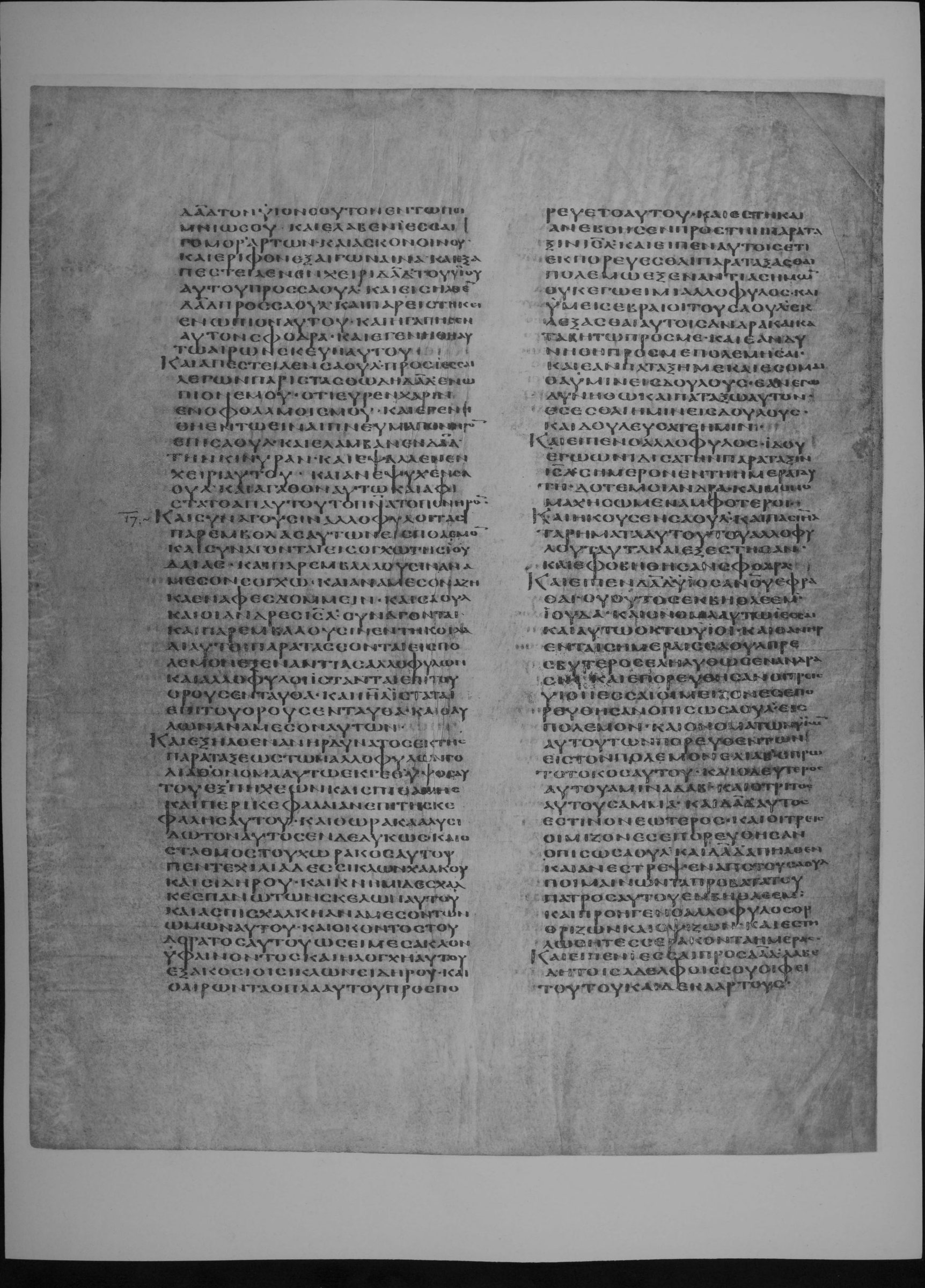
1 Kingdoms (1 Samuel) 17:1-8 is on fol. 171v (full-size facsimile of 1879-83, Internet Archive codex-alexandrinus leaf 361). The 1930 reduced facsimile prints beneath this page: 1 Sam. xvi. 19-xvii. 17. Checked on the plate: the page begins inside 1 Kingdoms (1 Samuel) 16:19 (first words read: ΔΑΥΕΙΔ ΤΟΝ ΥΙΟΝ ΣΟΥ ΤΟΝ ΕΝ ΤΩ ΠΟΙΜΝΙΩ ΣΟΥ ΚΑΙ ΕΛΑΒΕΝ ΙΕΣΣΑΙ ΓΟΜΟΡ ΑΡΤΩΝ).
1Καὶ συνάγουσιν ἀλλόφυλοι τὰς παρεμβολὰς αὐτῶν εἰς πόλεμον, καὶ συνάγονται εἰς Σοκχὼθ τῆς Ἰδουμαίας, καὶ παρεμβάλλουσιν ἀνὰ μέσον Σοκχὼθ καὶ ἀνὰ μέσον Ἀζηκὰ Ἐφερμέμ. 2καὶ Σαοὺλ καὶ οἱ ἄνδρες Ἰσραὴλ συνάγονται καὶ παρεμβάλλουσιν ἐν τῇ κοιλάδι· αὐτοὶ παρατάσσονται εἰς πόλεμον ἐξ ἐναντίας ἀλλοφύλων. 3καὶ ἀλλόφυλοι ἵστανται ἐπὶ τοῦ ὄρους ἐνταῦθα, καὶ Ἰσραὴλ ἵσταται ἐπὶ τοῦ ὄρους ἐνταῦθα, κύκλῳ ἀνὰ μέσον αὐτῶν. 4καὶ ἐξῆλθεν ἀνὴρ δυνατὸς ἐκ τῆς παρατάξεως τῶν ἀλλοφύλων, Γολιὰθ ὄνομα αὐτῷ, ἐκ Γέθ· ὕψος αὐτοῦ τεσσάρων πήχεων καὶ σπιθαμῆς. 5καὶ περικεφαλαία ἐπὶ τῆς κεφαλῆς αὐτοῦ, καὶ θώρακα ἁλυσιδωτὸν αὐτὸς ἐνδεδυκώς, καὶ ὁ σταθμὸς τοῦ θώρακος αὐτοῦ πέντε χιλιάδες σίκλων χαλκοῦ καὶ σιδήρου· 6καὶ κνημῖδες χαλκαῖ ἐπάνω τῶν σκελῶν αὐτοῦ, καὶ ἀσπὶς χαλκῆ ἀνὰ μέσον τῶν ὤμων αὐτοῦ· 7καὶ ὁ κοντὸς τοῦ δόρατος αὐτοῦ ὡσεὶ μέσακλον ὑφαινόντων, καὶ ἡ λόγχη αὐτοῦ ἑξακοσίων σίκλων σιδήρου· καὶ ὁ αἴρων τὰ ὅπλα αὐτοῦ προεπορεύετο αὐτοῦ. 8καὶ ἀνέστη καὶ ἀνεβόησεν εἰς τὴν παράταξιν Ἰσραὴλ καὶ εἶπεν αὐτοῖς Τί ἐκπορεύεσθε παρατάξασθαι πολέμῳ ἐξ ἐναντίας ἡμῶν; οὐκ ἐγώ εἰμι ἀλλόφυλος, καὶ ὑμεῖς Ἐβραῖοι καὶ Σαούλ; ἐκλέξασθε ἑαυτοῖς ἄνδρα καὶ καταβήτω τρὸς μέ·
1And the Philistines gather their armies to battle, and gather themselves to Socchoth of Judæa, and encamp between Socchoth and Azeca Ephermen. 2And Saul and the men of Israel gather together, and they encamp in the valley, and set the battle in array against the Philistines. 3And the Philistines stand on the mountain on one side, and Israel stands on the mountain on the other side, and the valley was between them. 4And there went forth a mighty man out of the army of the Philistines, Goliath by name, out of Geth, his height was four cubits and a span. 5And he had a helmet upon his head, and he wore a breastplate of chain armour; and the weight of his breastplate was five thousand shekels of brass and iron. 6And greaves of brass were upon his legs, and a brazen target was between his shoulders. 7And the staff of his spear was like a weavers' beam, and the spear's head was formed of six hundred shekels of iron; and his armour-bearer went before him. 8And he stood and cried to the army of Israel, and said to them, Why are ye come forth to set yourselves in battle array against us? Am not I a Philistine, and ye Hebrews of Saul? choose for yourselves a man, and let him come down to me.
Where on the image
1 Kingdoms (1 Samuel) 17:9-11 is on fol. 171v (full-size facsimile of 1879-83, Internet Archive codex-alexandrinus leaf 361). The 1930 reduced facsimile prints beneath this page: 1 Sam. xvi. 19-xvii. 17. Checked on the plate: the page begins inside 1 Kingdoms (1 Samuel) 16:19 (first words read: ΔΑΥΕΙΔ ΤΟΝ ΥΙΟΝ ΣΟΥ ΤΟΝ ΕΝ ΤΩ ΠΟΙΜΝΙΩ ΣΟΥ ΚΑΙ ΕΛΑΒΕΝ ΙΕΣΣΑΙ ΓΟΜΟΡ ΑΡΤΩΝ).
9καὶ ἐὰν δυνηθῇ πρὸς ἐμὲ πολεμῆσαι καὶ ἐὰν πατάξῃ με, καὶ ἐσόμεθα ὑμῖν εἰς δούλους· ἐὰν δὲ ἐγὼ δυνηθῶ καὶ πατάξω αὐτόν, ἔσεσθε ἡμῖν εἰς δούλους καὶ δουλεύσετε ἡμῖν. 10καὶ εἶπεν ὁ ἀλλόφυλος Ἰδοὺ ἐγὼ ὠνείδισα τὴν παράταξιν Ἰσραὴλ σήμερον ἐν τῇ ἡμέρᾳ ταύτῃ· δότε μοι ἄνδρα καὶ μονομαχήσομεν ἀμφότεροι. 11καὶ ἤκουσεν Σαοὺλ καὶ πᾶς Ἰσραὴλ τὰ ῥήματα τοῦ ἀλλοφύλου ταῦτα, καὶ ἐξέστησαν καὶ ἐφοβήθησαν σφόδρα.
9And if he shall be able to fight against me, and shall smite me, then will we be your servants: but if I should prevail and smite him, ye shall be our servants, and serve us. 10And the Philistine said, Behold, I have defied the armies of Israel this very day: give me a man, and we will both of us fight in single combat. 11And Saul and all Israel heard these words of the Philistine, and they were dismayed, and greatly terrified.
Where on the image
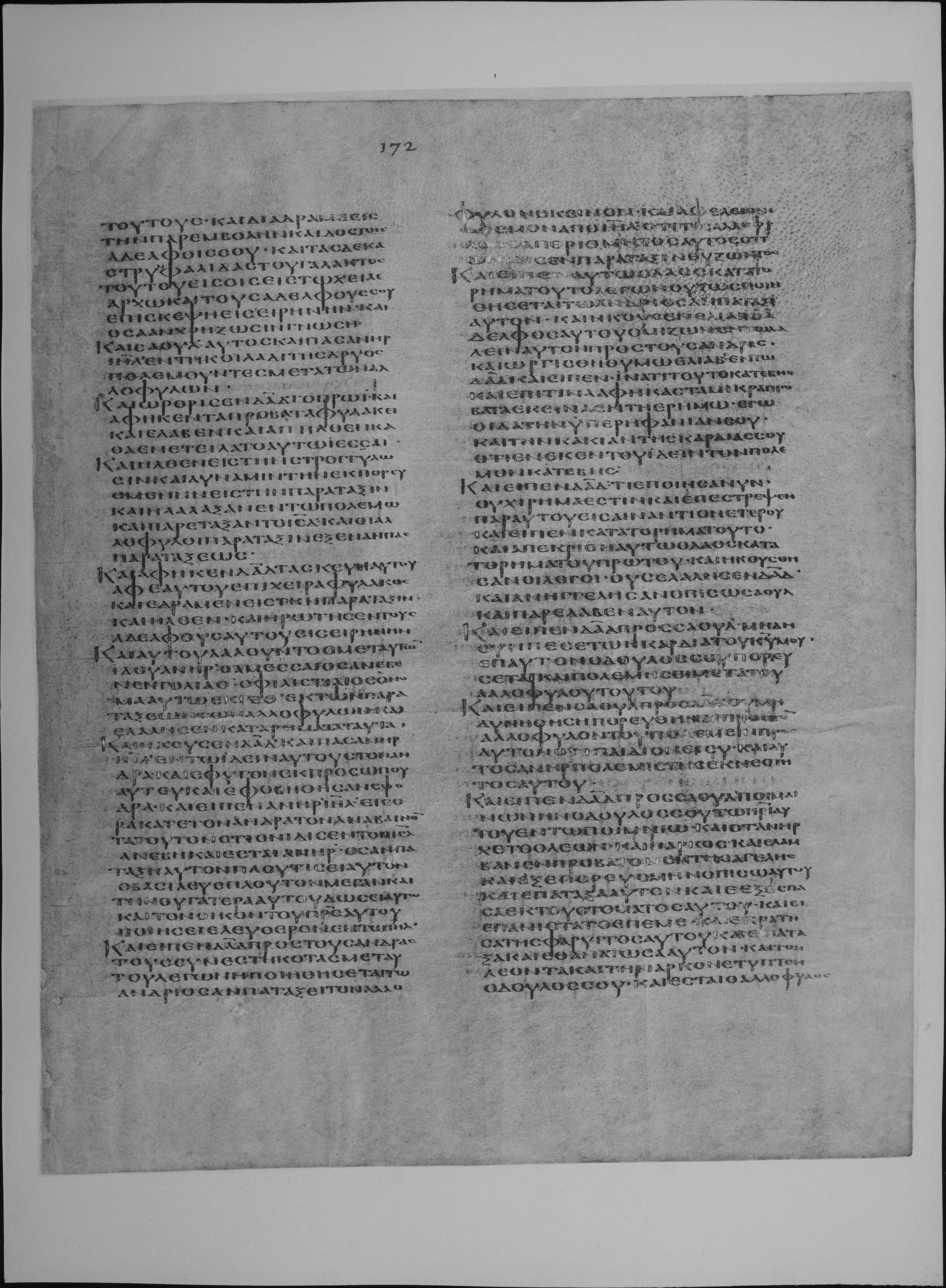
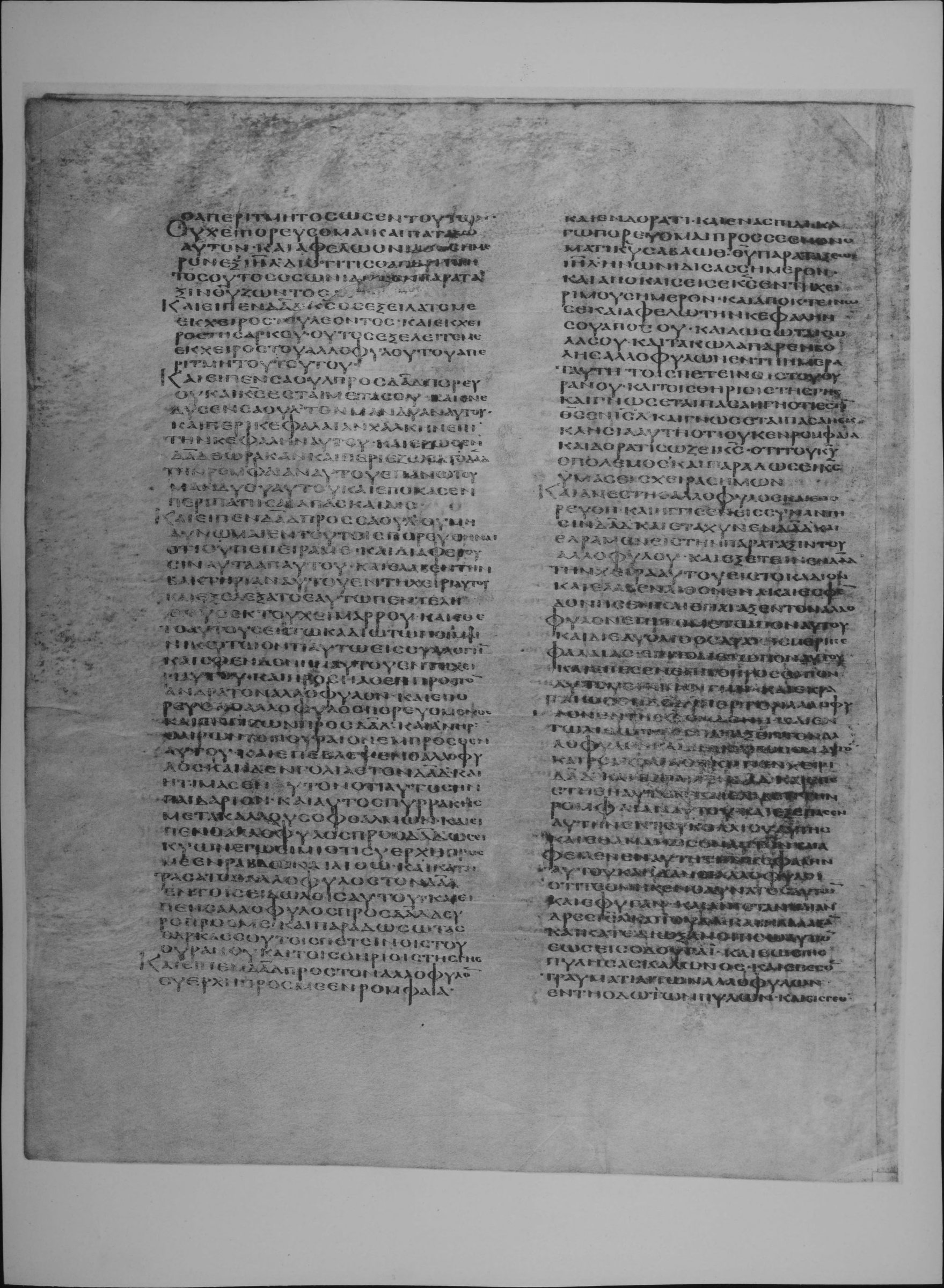
1 Kingdoms (1 Samuel) 17:32-36 is on fol. 172r (full-size facsimile of 1879-83, Internet Archive codex-alexandrinus leaf 362). The 1930 reduced facsimile prints beneath this page: 1 Sam. xvii. 17-36. Checked on the plate: the page begins at the start of 1 Kingdoms (1 Samuel) 17:32 (first words read: ΤΟΥΤΟΥΣ ΚΑΙ ΔΡΑΜΕ ΕΙΣ ΤΗΝ ΠΑΡΕΜΒΟΛΗΝ ΚΑΙ ΔΟΣ ΤΟΙΣ ΑΔΕΛΦΟΙΣ ΣΟΥ). Note: the page begins inside 1 Kgdms 17:17, in the passage 17:12-31 that Codex Alexandrinus contains but Codex Vaticanus, and therefore Swete's Greek, lacks; the first verse of Swete's text on this page is 17:32. 1 Kingdoms (1 Samuel) 17:36-39 is on fol. 172v (full-size facsimile of 1879-83, Internet Archive codex-alexandrinus leaf 363). The 1930 reduced facsimile prints beneath this page: 1 Sam. xvii. 36-52. Checked on the plate: the page begins inside 1 Kingdoms (1 Samuel) 17:36 (first words read: ΑΠΕΡΙΤΜΗΤΟΣ ΩΣ ΕΝ ΤΟΥΤΩΝ ΟΥΧΙ ΠΟΡΕΥΣΟΜΑΙ ΚΑΙ ΠΑΤΑΞΩ ΑΥΤΟΝ ΚΑΙ ΑΦΕΛΩ ΣΗΜΕΡΟΝ ΟΝΕΙΔΟΣ).
32Καὶ εἶπεν Δαυεὶδ πρὸς Σαούλ Μὴ δὴ συνπεσέτω καρδία τοῦ κυρίου μου ἐπ᾽ αὐτόν· ὁ δοῦλός σου πορεύσεται καὶ πολεμήσει μετὰ τοῦ ἀλλοφύλου τούτου. 33καὶ εἶπεν Σαοὺλ πρὸς Δαυείδ Οὐ μὴ δύνῃ πορευθῆναι πρὸς τὸν ἀλλόφυλον τοῦ πολεμεῖν μετ᾽ αὐτοῦ, ὅτι παιδάριον εἶ σύ, καὶ αὐτὸς ἀνὴρ πολεμιστὴς ἐκ νεότητος αὐτοῦ. 34καὶ εἶπεν Δαυεὶδ πρὸς Σαούλ Ποιμαίνων ἦν ὁ δοῦλός σου τῷ πατρὶ αὐτοῦ ἐν τῷ ποιμνίῳ· καὶ ὅταν ἤρχετο ὁ λέων καὶ ἡ ἄρκος καὶ ἐλάμβανεν πρόβατον ἐκ τῆς ἀγέλης, 35καὶ ἐξεπορευόμην ὀπίσω αὐτοῦ καὶ ἐπάταξα αὐτόν, καὶ ἐξέσπασα ἐκ τοῦ στόματος αὐτοῦ· καὶ εἰ ἐπανίστατο ἐπ᾽ ἐμέ, καὶ ἐκράτησα τοῦ φάρυγγος αὐτοῦ καὶ ἐπάταξα καὶ ἐθανάτωσα αὐτόν. 36καὶ τὴν ἄρκον ἔτυπτεν ὁ δοῦλός σου καὶ τὸν λέοντα, καὶ ἔσται ὁ ἀλλόφυλος ὁ ἀπερίτμητος ὡς ἓν τούτων· οὐχὶ πορεύσομαι καὶ πατάξω αὐτόν, καὶ ἀφελῶ σήμερον ὄνειδος ἐξ Ἰσραήλ; διότι τίς ὁ ἀπερίτμητος οὗτος ὃς ὠνείδισεν παράταξιν θεοῦ ζῶντος; 37Κύριος ὃς ἐξείλατό με ἐκ χειρὸς τοῦ λέοντος καὶ ἐκ χειρὸς τῆς ἄρκου, αὐτὸς ἐξελεῖταί με ἐκ χειρὸς τοῦ ἀλλοφύλου τοῦ ἀπεριτμήτου τούτου. καὶ εἶπεν Σαοὺλ πρὸς Δαυείδ Πορεύου, καὶ ἔσται Κύριος μετὰ σοῦ. 38καὶ ἐνέδυσεν Σαοὺλ τὸν Δαυεὶδ μανδύαν καὶ περικεφαλαίαν χαλκῆν περὶ τὴν κεφαλὴν αὐτοῦ, 39καὶ ἔζωσεν τὸν Δαυεὶδ τὴν ῥομφαίαν αὐτοῦ ἐπάνω τοῦ μανδύου αὐτοῦ· καὶ ἐκοπίασεν περιπατήσας ἅπαξ καὶ δίς. καὶ εἶπεν Δαυεὶδ πρὸς Σαούλ Οὐ μὴ δύνωμαι πορευθῆναι ἐν τούτοις, ὅτι οὐ πεπείραμαι· καὶ ἀφαιροῦσιν αὐτὰ ἀπ᾽ αὐτοῦ.
32And David said to Saul, Let not, I pray thee, the heart of my lord be dejected within him: thy servant will go, and fight with this Philistine. 33And Saul said to David, Thou wilt not in anywise be able to go against this Philistine to fight with him, for thou art a mere youth, and he a man of war from his youth. 34And David said to Saul, Thy servant was tending the flock for his father; and when a lion came and a she-bear, and took a sheep out of the flock, 35then I went forth after him, and smote him, and drew the spoil out of his mouth: and as he rose up against me, then I caught hold of his throat, and smote him, and slew him. 36Thy servant smote both the lion and the bear, and the uncircumcised Philistine shall be as one of them: shall I not go and smite him, and remove this day a reproach from Israel? for who is this uncircumcised one, who has defied the army of the living God? 37The Lord who delivered me out of the paw of the lion and out of the paw of the bear, he will deliver me out of the hand of this uncircumcised Philistine. And Saul said to David, Go, and the Lord shall be with thee. 38And Saul clothed David with a military coat, and put his brazen helmet on his head. 39And he girt David with his sword over his coat: and he made trial walking with them once and again: and David said to Saul, I shall not be able to go with these, for I have not proved them: so they remove them from him.
Where on the image
1 Kingdoms (1 Samuel) 17:40-48 is on fol. 172v (full-size facsimile of 1879-83, Internet Archive codex-alexandrinus leaf 363). The 1930 reduced facsimile prints beneath this page: 1 Sam. xvii. 36-52. Checked on the plate: the page begins inside 1 Kingdoms (1 Samuel) 17:36 (first words read: ΑΠΕΡΙΤΜΗΤΟΣ ΩΣ ΕΝ ΤΟΥΤΩΝ ΟΥΧΙ ΠΟΡΕΥΣΟΜΑΙ ΚΑΙ ΠΑΤΑΞΩ ΑΥΤΟΝ ΚΑΙ ΑΦΕΛΩ ΣΗΜΕΡΟΝ ΟΝΕΙΔΟΣ).
40καὶ ἔλαβεν τὴν βακτηρίαν αὐτοῦ ἐν τῇ χειρὶ αὐτοῦ, καὶ ἐξελέξατο ἑαυτῷ πέντε λίθους τελείους ἐκ τοῦ χειμάρρου καὶ ἔθετο αὐτοὺς ἐν τῷ καδίῳ τῷ ποιμενικῷ τῷ ὄντι αὐτῷ εἰς συλλογήν, καὶ σφενδόνην αὐτοῦ ἐν τῇ χειρὶ αὐτοῦ· καὶ προσῆλθεν πρὸς τὸν ἄνδρα τὸν ἀλλόφυλον. 42καὶ εἶδεν Γολιὰδ τὸν Δαυεὶδ καὶ ἠτίμασεν αὐτόν, ὅτι αὐτὸς ἦν παιδάριον καὶ αὐτὸς πυρράκης μετὰ κάλλους ὀφθαλμῶν. 43καὶ εἶπεν ὁ ἀλλόφυλος πρὸς Δαυείδ Ὡσεὶ κύων ἐγώ εἰμι, ὅτι σὺ ἔρχῃ ἐπ᾽ ἐμὲ ἐν ῥάβδῳ καὶ λίθοις; καὶ εἶπεν Δαυείδ Οὐχί, ἀλλ᾽ ἢ χείρω κυνός. καὶ κατηράσατο ὁ ἀλλόφυλος τὸν Δαυεὶδ ἐν τοῖς θεοῖς ἑαυτοῦ. 44καὶ εἶπεν ὁ ἀλλόφυλος πρὸς Δαυείδ Δεῦρο πρὸς μὲ καὶ δώσω τὰς σάρκας σου τοῖς πετεινοῖς τοῦ οὐρανοῦ καὶ τοῖς κτήνεσιν τῆς γῆς. 45καὶ εἶπεν Δαυεὶδ πρὸς τὸν ἀλλόφυλον Σὺ ἔρχῃ πρὸς μὲ ἐν ῥομφαίᾳ καὶ ἐν δόρατι καὶ ἐν ἀσπίδι, κἀγὼ πορεύομαι πρὸς σὲ ἐν ὀνόματι Κυρίου θεοῦ σαβαὼθ παρατάξεως Ἰσραὴλ ἣν ὠνείδισας σήμερον· 46καὶ ἀποκλείσει σε Κύριος σήμερον εἰς τὴν χεῖρά μου, καὶ ἀποκτενῶ σε καὶ ἀφελῶ τὴν κεφαλήν σου ἀπὸ σοῦ, καὶ δώσω τὰ κῶλά σου καὶ τὰ κῶλα παρεμβολῆς ἀλλοφύλων ἐν ταύτῃ τῇ ἡμέρᾳ τοῖς πετεινοῖς τοῦ οὐρανοῦ καὶ τοῖς θηρίοις τῆς γῆς· καὶ γνώσεται πᾶσα ἡ γῆ ὅτι ἔστιν θεὸς ἐν Ἰσραήλ. 47καὶ γνώσεται πᾶσα ἡ ἐκκλησία αὕτη ὅτι οὐκ ἐν ῥομφαίᾳ καὶ δόρατι σώζει Κύριος· ὅτι τοῦ Κυρίου ὁ πόλεμος, καὶ παραδώσει Κύριος ὑμᾶς εἰς χεῖρας ἡμῶν. 48καὶ ἀνέστη ὁ ἀλλόφυλος καὶ ἐπορεύθη εἰς συνάντησιν Δαυείδ.
40And he took his staff in his hand, and he chose for himself five smooth stones out of the brook, and put them in the shepherd's scrip which he had for his store, and his sling was in his hand; and he approached the Philistine. 42And Goliath saw David, and despised him; for he was a lad, and ruddy, with a fair countenance. 43And the Philistine said to David, Am I as a dog, that thou comest against me with a staff and stones? [and David said, Nay, but worse than a dog.] And the Philistine cursed David by his gods. 44And the Philistine said to David, Come to me, and I will give thy flesh to the birds of the air, and to the beasts of the earth. 45And David said to the Philistine, Thou comest to me with sword, and with spear, and with shield; but I come to thee in the name of the Lord God of hosts of the army of Israel, which thou hast defied 46this day. And the Lord shall deliver thee this day into my hand; and I will slay thee, and take away thy head from off thee, and will give thy limbs and the limbs of the army of the Philistines this day to the birds of the sky, and to the wild beasts of the earth; and all the earth shall know that there is a God in Israel. 47And all this assembly shall know that the Lord delivers not by sword or spear, for the battle is the Lord's, and the Lord will deliver you into our hands. 48And the Philistine arose and went to meet David.
Where on the image
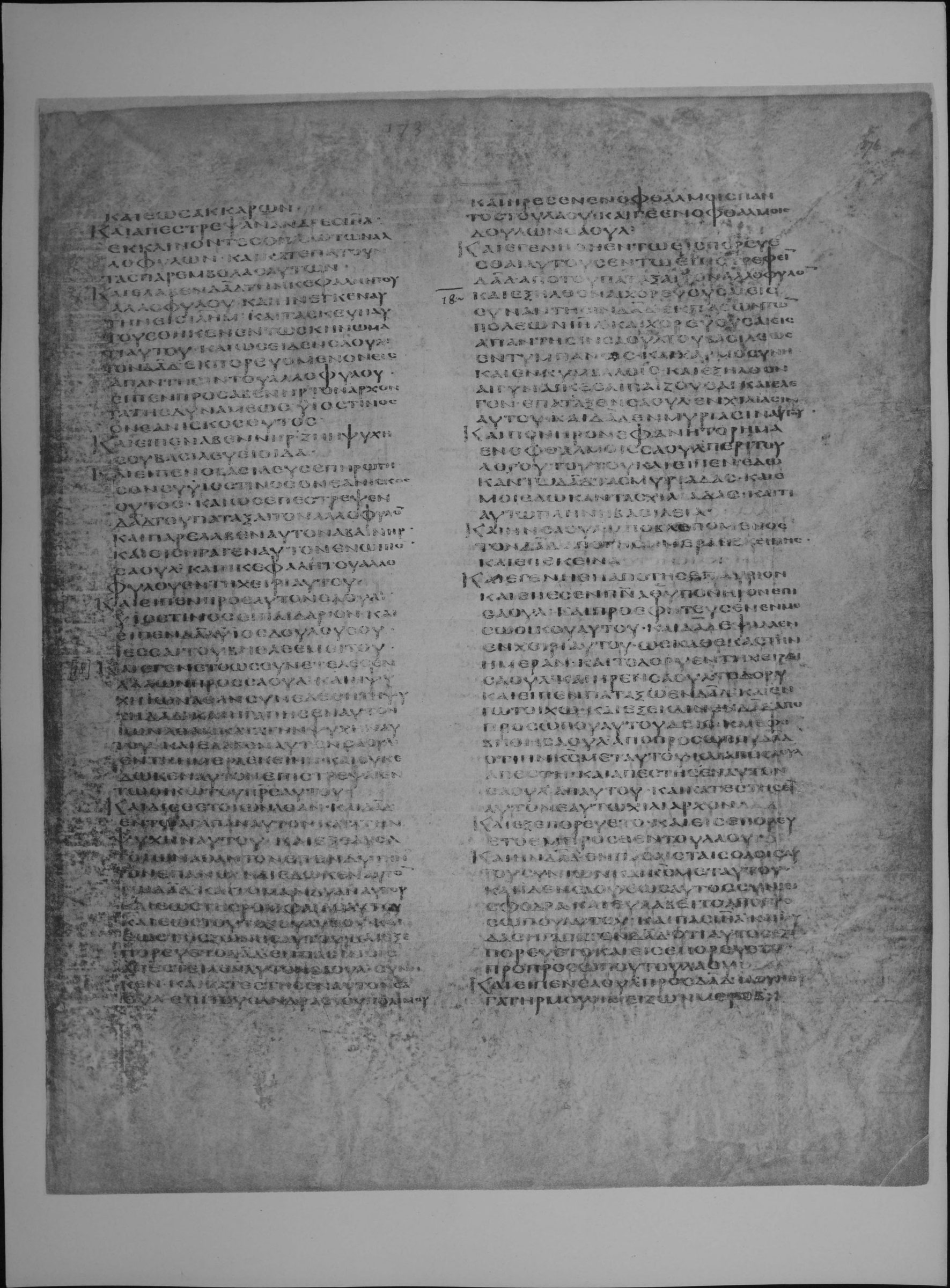
1 Kingdoms (1 Samuel) 17:49-52 is on fol. 172v (full-size facsimile of 1879-83, Internet Archive codex-alexandrinus leaf 363). The 1930 reduced facsimile prints beneath this page: 1 Sam. xvii. 36-52. Checked on the plate: the page begins inside 1 Kingdoms (1 Samuel) 17:36 (first words read: ΑΠΕΡΙΤΜΗΤΟΣ ΩΣ ΕΝ ΤΟΥΤΩΝ ΟΥΧΙ ΠΟΡΕΥΣΟΜΑΙ ΚΑΙ ΠΑΤΑΞΩ ΑΥΤΟΝ ΚΑΙ ΑΦΕΛΩ ΣΗΜΕΡΟΝ ΟΝΕΙΔΟΣ). 1 Kingdoms (1 Samuel) 17:52-54 is on fol. 173r (full-size facsimile of 1879-83, Internet Archive codex-alexandrinus leaf 364). The 1930 reduced facsimile prints beneath this page: 1 Sam. xvii. 52-xviii. 17. Checked on the plate: the page begins inside 1 Kingdoms (1 Samuel) 17:52 (first words read: ΚΑΙ ΕΩΣ ΑΣΚΑΛΩΝΟΣ ΚΑΙ ΑΝΕΣΤΡΕΨΑΝ ΑΝΔΡΕΣ ΙΣΡΑΗΛ ΕΚΚΛΙΝΟΝΤΕΣ).
49καὶ ἐξέτεινεν Δαυεὶδ τὴν χεῖρα αὐτοῦ εἰς τὸ κάδιον καὶ ἔλαβεν ἐκεῖθεν λίθον ἕνα, καὶ ἐσφενδόνησεν καὶ ἐπάταξεν τὸν ἀλλόφυλον ἐπὶ τὸ μέτωπον αὐτοῦ, καὶ διέδυ ὁ λίθος διὰ τῆς περικεφαλαίας εἰς τὸ μέτωπον αὐτοῦ, καὶ ἔπεσεν ἐπὶ πρόσωπον αὐτοῦ ἐπὶ τὴν γῆν. 51καὶ ἔδραμεν Δαυεὶδ καὶ ἐπέστη ἐπ᾽ αὐτόν, καὶ ἔλαβεν τὴν ῥομφαίαν αὐτοῦ καὶ ἐθανάτωσεν αὐτὸν καὶ ἀφεῖλεν τὴν κεφαλὴν αὐτοῦ· καὶ εἶδον οἱ ἀλλόφυλοι ὅτι τέθνηκεν ὁ δυνατὸς αὐτῶν, καὶ ἔφυγον. 52καὶ ἀνίστανται ἄνδρες Ἰσραὴλ καὶ Ἰούδα καὶ ἠλάλαξαν, καὶ κατεδίωξαν ὀπίσω αὐτῶν ἕως εἰσόδου Γὲθ καὶ ἕως τῆς πύλης Ἀσκάλωνος· καὶ ἔπεσαν τραυματίαι τῶν ἀλλοφύλων ἐν τῇ ὁδῷ τῶν πυλῶν καὶ ἕως Γὲθ καὶ ἕως Ἀκκαρών. 53καὶ ἀνέστρεψαν ἄνδρες Ἰσραὴλ ἐκκλίνοντες ὀπίσω τῶν ἀλλοφύλων, καὶ κατεπάτουν τὰς παρεμβολὰς αὐτῶν. 54καὶ ἔλαβεν Δαυεὶδ τὴν κεφαλὴν τοῦ ἀλλοφύλου καὶ ἤνεγκεν αὐτὴν εἰς Ἰερουσαλήμ, καὶ τὰ σκεύη αὐτοῦ ἔθηκεν ἐν τῷ σκηνώματι αὐτοῦ.
49And David stretched out his hand to his scrip, and took thence a stone, and slang it, and smote the Philistine on his forehead, and the stone penetrated through the helmet into his forehead, and he fell upon his face to the ground. 51And David ran, and stood upon him, and took his sword, and slew him, and cut off his head: and the Philistines saw that their champion was dead, and they fled. 52And the men of Israel and Juda arose, and shouted and pursued them as far as the entrance to Geth, and as far as the gate of Ascalon: and the slain men of the Philistines fell in the way of the gates, both to Geth, and to Accaron. 53And the men of Israel returned from pursuing after the Philistines, and they destroyed their camp. 54And David took the head of the Philistine, and brought it to Jerusalem; but he put his armour in his tent.
Cite
Sources
- Source: Codex Alexandrinus (British Library Royal MS 1 D. V) via the British Museum photographic facsimiles of 1879-83 and 1930 (Internet Archive) + Swete's Septuagint + Brenton's English (holding institution)
- Critical edition: H. B. Swete, The Old Testament in Greek according to the Septuagint (1909)
← previous · → next · v cycle view · l back to library