2 Chronicles, Chapter 13 (Codex Alexandrinus)
Introduction
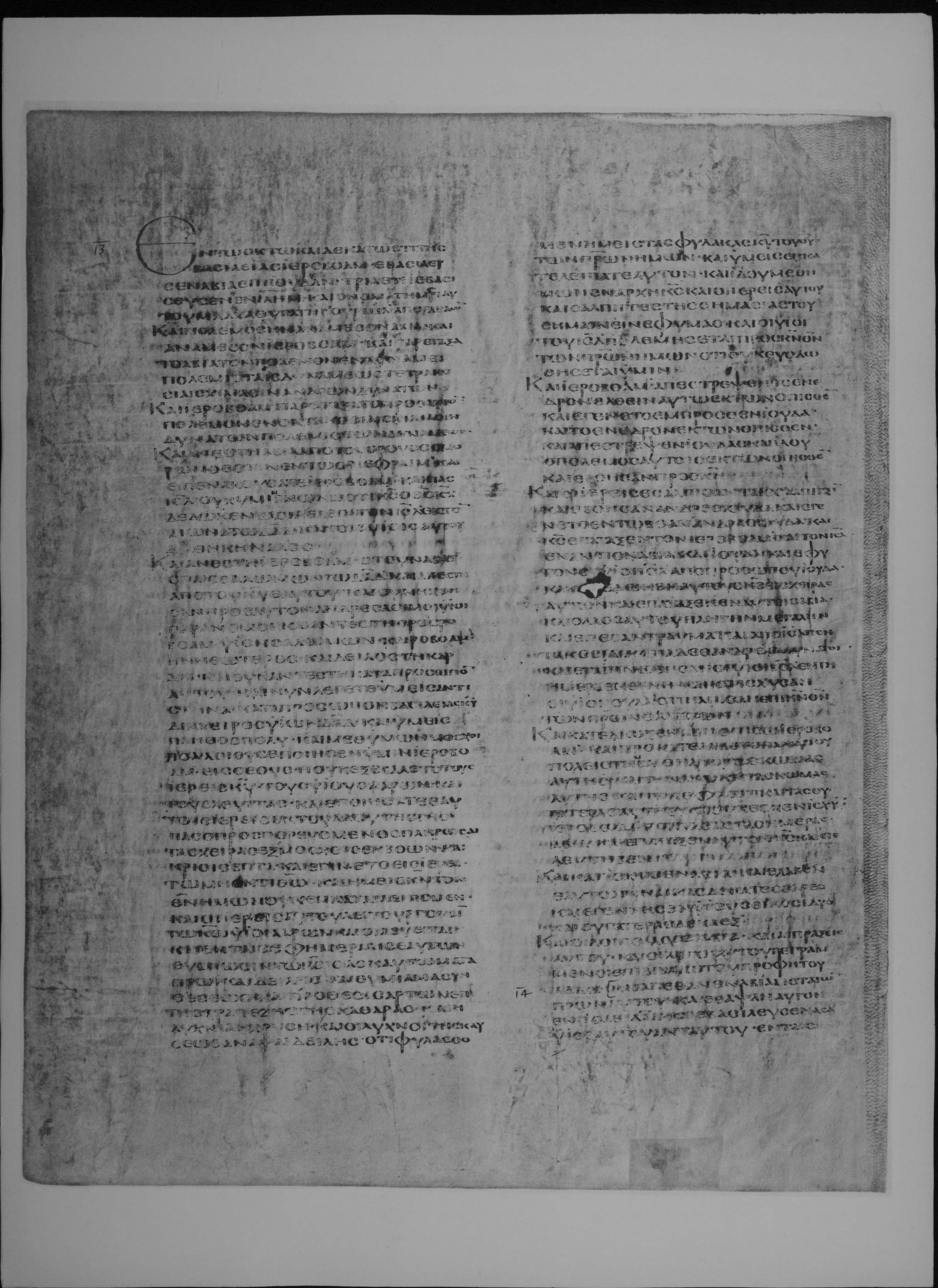
2 Chronicles 13 in the Greek Old Testament (the Septuagint) as written in Codex Alexandrinus, a Greek Bible copied in the fifth century, probably in Egypt, and now in the British Library (Royal MS 1 D. V, the first of its four volumes). It is one of the three great early codices of the whole Greek Bible, with Codex Vaticanus and Codex Sinaiticus.
This entry meets the strict three-criteria standard of the Theosis Library:
- Manuscript scan: the page of Codex Alexandrinus carrying this chapter (fol. 262v), from the full-size photographic (autotype) facsimile published by the British Museum in 1879-1883, as digitised on the Internet Archive. The verse range of every page comes from the reduced photographic facsimile of 1930, which prints it beneath each plate, and the opening words of every page were read on the plate to confirm the page and the verse it begins with. Each section links to the page or pages that hold its verses. Folio numbers are those written at the head of each leaf and visible on the plates.
- Original text: Swete's edition, which here prints the text of Codex Vaticanus (Vat. gr. 1209), the base of his edition, and gives the readings of Alexandrinus only in his apparatus. The Greek column is therefore Vaticanus' text; where Alexandrinus differs, the plate shows what Alexandrinus reads.
- English translation: Sir Lancelot C. L. Brenton, The Septuagint Version of the Old Testament (1844; 1851 edition), a translation of the Greek, public domain, from the eBible.org text.
How was this verified? (Provenance)
Where on the image
2 Chronicles 13:1-8 is on fol. 262v (full-size facsimile of 1879-83, Internet Archive codex-alexandrinus leaf 543). The 1930 reduced facsimile prints beneath this page: 2 Chron. xiii. 1-xiv. 2. Checked on the plate: the page begins at the start of 2 Chronicles 13:1 (first words read: ΕΝ ΤΩ ΟΚΤΩΚΑΙΔΕΚΑΤΩ ΕΤΕΙ ΤΗΣ ΒΑΣΙΛΕΙΑΣ ΙΕΡΟΒΟΑΜ ΕΒΑΣΙΛΕΥΣΕΝ ΑΒΙΑ).
1Ἐν τῷ ὀκτωκαιδεκάτῳ ἔτει τῆς βασιλείας Ἰεροβοὰμ ἐβασίλευσεν Ἀβιὰ ἐπὶ Ἰσραήλ. 2ἔτη τρία ἐβασίλευσεν ἐν Ἰερουσαλήμ, καὶ ὄνομα τῇ μητρὶ αὐτοῦ Μααχὰ θυγάτηρ Οὐριὴλ ἀπὸ Γαβαών· καὶ πόλεμος ἦν ἀνὰ μέσον Ἀβιὰ καὶ ἀνὰ μέσον Ἰεροβοάμ. 3καὶ παρετάξατο Ἀβιὰ ἐν δυνάμει πολεμισταῖς δυνάμεως τετρακοσίαις χιλιάσιν ἀνδρῶν δυνατῶν· καὶ Ἰεροβοὰμ παρετάξατο πρὸς αὐτὸν πόλεμον ἐν ὀκτακοσίαις χιλιάσιν, δυνατοὶ πολεμισταὶ δυνάμεως. 4καὶ ἀνέστη Ἀβιὰ ἀπὸ τοῦ ὄρους Σομορών, ὅ ἐστιν ἐν τῷ ὄρει Ἐφράιμ, καὶ εἶπεν Ἀκούσατε, Ἰεροβοὰμ καὶ πᾶς Ἰσραήλ. 5οὐχ ὑμῖν γνῶναι ὅτι Κύριος ὁ θεὸς Ἰσραὴλ ἔδωκεν βασιλέα ἐπὶ τὸν Ἰσραὴλ εἰς τὸν αἰῶνα τῷ Δαυεὶδ καὶ τοῖς υἱοῖς αὐτοῦ διαθήκῃ ἁλός; 6καὶ ἀνέστη Ἰεροβοὰμ ὁ τοῦ Ναβὰτ ὁ παῖς Σαλωμὼν τοῦ Δαυεὶδ καὶ ἀνέστη ἀπὸ τοῦ κυρίου αὐτοῦ. 7καὶ συνήχθησαν πρὸς αὐτὸν ἄνδρες λοιμοὶ υἱοὶ παράνομοι, καὶ ἀνέστη πρὸς Ῥοβοὰμ τὸν τοῦ Σαλωμών, καὶ Ῥοβοὰμ ἦν νεώτερος καὶ δειλὸς τῇ καρδίᾳ, καὶ οὐκ ἀντέστη κατὰ πρόσωπον αὐτοῦ. 8καὶ νῦν λέγετε ὑμεῖς ἀντιστῆναι κατὰ πρόσωπον βασιλείας Κυρίου διὰ χειρὸς υἱῶν Δαυείδ· καὶ ὑμεῖς πλῆθος πολύ, καὶ μεθ᾽ ὑμῶν μόσχοι χρυσοῖ οὓς ἐποίησεν ὑμῖν Ἰεροβοὰμ εἰς θεούς.
1In the eighteenth year of the reign of Jeroboam Abia began to reign over Juda. 2He reigned three years in Jerusalem. And his mother's name was Maacha, daughter of Uriel of Gabaon. 3And Abia set the battle in array with an army, with mighty men of war, even four hundred thousand mighty men: and Jeroboam set the battle in array against him with eight hundred thousand, they were mighty warriors of the host. 4And Abia rose up from the mount Somoron, which is in mount Ephraim, and said, Hear ye, Jeroboam, and all Israel: 5Is it not for you to know that the Lord God of Israel has given a king over Israel for ever to David, and to his sons, by a covenant of salt? 6But Jeroboam the son of Nabat, the servant of Solomon the son of David, is risen up, and has revolted from his master: 7and there are gathered to him pestilent men, transgressors, and he has risen up against Roboam the son of Solomon, while Roboam was young and fearful in heart, and he withstood him not. 8And now ye profess to resist the kingdom of the Lord in the hand of the sons of David; and ye are a great multitude, and with you are golden calves, which Jeroboam made you for gods.
Where on the image
2 Chronicles 13:9-16 is on fol. 262v (full-size facsimile of 1879-83, Internet Archive codex-alexandrinus leaf 543). The 1930 reduced facsimile prints beneath this page: 2 Chron. xiii. 1-xiv. 2. Checked on the plate: the page begins at the start of 2 Chronicles 13:1 (first words read: ΕΝ ΤΩ ΟΚΤΩΚΑΙΔΕΚΑΤΩ ΕΤΕΙ ΤΗΣ ΒΑΣΙΛΕΙΑΣ ΙΕΡΟΒΟΑΜ ΕΒΑΣΙΛΕΥΣΕΝ ΑΒΙΑ).
9ἢ οὐκ ἐξεβάλετε τοὺς ἱερεῖς Κυρίου τοὺς υἱοὺς Ἀαρὼν καὶ τοὺς Λευείτας, καὶ ἐποιήσατε ἑαυτοῖς ἱερεῖς ἐκ τοῦ λαοῦ τῆς γῆς πάσης; ὁ προσπορευόμενος πληρῶσαι τὰς χεῖρας ἐκ μόσχων ἐκ βοῶν καὶ κριοῖς ἑπτά, καὶ ἐγίνετο εἰς ἱερέα τῷ μὴ ὄντι θεῷ. 10καὶ ἡμεῖς Κύριον τὸν θεὸν ἡμῶν οὐκ ἐνκατελίπομεν, καὶ οἱ ἱερεῖς αὐτοῦ λειτουργοῦσιν τῷ κυρίῳ οἱ υἱοὶ Ἀαρὼν καὶ οἱ Λευεῖται ἐν ταῖς ἐφημερίαις αὐτῶν· 11θυμιῶσιν τῷ κυρίῳ ὁλοκαύτωμα πρωὶ καὶ δείλης καὶ θυμίαμα συνθέσεως, καὶ προθέσεις ἄρτων ἐπὶ τῆς τραπέζης τῆς καθαρᾶς, καὶ ἡ λυχνία ἡ χρυσῆ καὶ οἱ λυχνοὶ τῆς καύσεως ἀνάψαι δείλης· ὅτι φυλάσσομεν ἡμεῖς τὰς φυλακὰς Κυρίου τοῦ θεοῦ τῶν πατέρων ἡμῶν, καὶ ὑμεῖς ἐνκατελίπετε αὐτόν. 12καὶ ἰδοὺ μεθ᾽ ἡμῶν ἐν ἀρχῇ Κύριος καὶ οἱ ἱερεῖς αὐτοῦ καὶ αἱ σάλπιγγες τῆς σημασίας τοῦ σημαίνειν ἐφ᾽ ἡμᾶς· οἱ υἱοὶ τοῦ Ἰσραήλ, πολεμήσετε πρὸς Κύριον θεὸν τῶν πατέρων ἡμῶν, ὅτι οὐκ εὐοδώσεται ὑμῖν. 13καὶ Ἰεροβοὰμ ἀπέστρεψεν τὸ ἔνεδρον ἐλθεῖν αὐτῶν ἐκ τῶν ὄπισθεν, καὶ ἐγένετο ἔμπροσθεν Ἰούδα, καὶ τὸ ἔνεδρον ἐκ τῶν ὄπισθεν. 14καὶ ἀπέστρεψεν Ἰούδας, καὶ ἰδοὺ αὐτοῖς ὁ πόλεμος ἐκ τῶν ἔμπροσθεν καὶ ἐκ τῶν ὄπισθεν, καὶ ἐβόησαν πρὸς Κύριον, καὶ οἱ ἱερεῖς ἐσάλπισαν ταῖς σάλπιγξιν. 15καὶ ἐβόησαν ἄνδρες Ἰούδα· καὶ ἐγένετο ἐν τῷ βοᾷν ἄνδρας Ἰουδά, καὶ Κύριος ἐπάταξεν τὸν Ἰεροβοὰμ καὶ τὸν Ἰσραὴλ ἐναντίον Ἀβιὰ καὶ Ἰούδα. 16καὶ ἔφυγον οἱ υἱοὶ Ἰσραὴλ ἀπὸ προσώπου Ἰούδα, καὶ παρέδωκεν αὐτοὺς Κύριος εἰς τὰς χεῖρας αὐτῶν.
9Did ye not cast out the priests of the Lord, the sons of Aaron, and the Levites, and make to yourselves priests of the people of any other land? whoever came to consecrate himself with a calf of the herd and seven rams, he forthwith became a priest to that which is no god. 10But we have not forsaken the Lord our God, and his priests, the sons of Aaron, and the Levites, minister to the Lord; and in their daily courses 11they sacrifice to the Lord whole-burnt-offering, morning and evening, and compound incense, and set the shewbread on the pure table; and there is the golden candlestick, and the lamps for burning, to light in the evening: for we keep the charge of the Lord God of our fathers; but ye have forsaken him. 12And, behold, the Lord and his priests are with us at our head, and the signal trumpets to sound an alarm over us. Children of Israel, fight not against the Lord God of our fathers; for ye shall not prosper. 13Now Jeroboam had caused an ambush to come round upon him from behind: and he himself was before Juda, and the ambush behind. 14And Juda looked back, and, behold, the battle was against them before and behind: and they cried to the Lord, and the priests sounded with the trumpets. 15And the men of Juda shouted: and it came to pass, when the men of Juda shouted, that the Lord smote Jeroboam and Israel before Abia and Juda. 16And the children of Israel fled from before Juda; and the Lord delivered them into their hands.
Where on the image
2 Chronicles 13:17-22 is on fol. 262v (full-size facsimile of 1879-83, Internet Archive codex-alexandrinus leaf 543). The 1930 reduced facsimile prints beneath this page: 2 Chron. xiii. 1-xiv. 2. Checked on the plate: the page begins at the start of 2 Chronicles 13:1 (first words read: ΕΝ ΤΩ ΟΚΤΩΚΑΙΔΕΚΑΤΩ ΕΤΕΙ ΤΗΣ ΒΑΣΙΛΕΙΑΣ ΙΕΡΟΒΟΑΜ ΕΒΑΣΙΛΕΥΣΕΝ ΑΒΙΑ).
17καὶ ἐπάταξεν ἐν αὐτοῖς Ἀβιὰ καὶ ὁ λαὸς αὐτοῦ πληγὴν μεγάλην, καὶ ἔπεσον τραυματίαι ἀπὸ Ἰσραὴλ πεντακόσιαι χιλιάδες ἄνδρες δυνατοί. 18καὶ ἐταπεινώθησαν οἱ υἱοὶ Ἰσραὴλ ἐν τῇ ἡμέρᾳ ἐκείνῃ, καὶ κατίσχυσαν οἱ υἱοὶ Ἰούδα, ὅτι ἤλπισαν ἐπὶ Κύριον θεὸν τῶν πατέρων αὐτῶν. 19καὶ κατεδίωξεν Ἀβιὰ ὀπίσω Ἰεροβοὰμ καὶ προκατελάβετο παρ᾽ αὐτοῦ πόλεις, τὴν Βαιθὴλ καὶ τὰς κώμας αὐτῆς, καὶ τὴν Κανὰ καὶ τὰς κώμας αὐτῆς, καὶ τὴν Ἐφρὼν καὶ τὰς κώμας αὐτῆς. 20καὶ οὐκ ἔσχεν ἰσχὺν Ἰεροβοὰμ ἔτι πάσας τὰς ἡμέρας Ἀβιά, καὶ ἐπάταξεν αὐτὸν Κύριος, καὶ ἐτελεύτησεν. 21καὶ κατίσχυσεν Ἀβιά, καὶ ἔλαβεν ἑαυτῷ γυναῖκας δέκα τέσσαρας, καὶ ἐγέννησεν υἱοὺς εἴκοσι δύο καὶ θυγατέρας δέκα ἕξ. 22καὶ οἱ λοιποὶ λόγοι Ἀβιὰ καὶ αἱ πράξεις αὐτοῦ καὶ οἱ λόγοι αὐτοῦ γεγραμμένοι ἐπὶ βιβλίῳ τοῦ προφήτου Ἀδώ.
17And Abia and his people smote them with a great slaughter: and there fell slain of Israel five hundred thousand mighty men. 18So the children of Israel were brought low in that day, and the children of Juda prevailed, because they trusted on the Lord God of their fathers. 19And Abia pursued after Jeroboam, and he took from him the cities, Bæthel and her towns, and Jesyna and her towns, and Ephron and her towns. 20And Jeroboam did not recover strength again all the days of Abia: and the Lord smote him, and he died. 21But Abia strengthened himself, and took to himself fourteen wives, and he begot twenty-two sons, and sixteen daughters. 22And the rest of the acts of Abia, and his deeds, and his sayings, are written in the book of the prophet Addo.
Cite
Sources
- Source: Codex Alexandrinus (British Library Royal MS 1 D. V) via the British Museum photographic facsimiles of 1879-83 and 1930 (Internet Archive) + Swete's Septuagint + Brenton's English (holding institution)
- Critical edition: H. B. Swete, The Old Testament in Greek according to the Septuagint (1909)
← previous · → next · v cycle view · l back to library