2 Chronicles, Chapter 14 (Codex Alexandrinus)
Introduction
2 Chronicles 14 in the Greek Old Testament (the Septuagint) as written in Codex Alexandrinus, a Greek Bible copied in the fifth century, probably in Egypt, and now in the British Library (Royal MS 1 D. V, the first of its four volumes). It is one of the three great early codices of the whole Greek Bible, with Codex Vaticanus and Codex Sinaiticus.
Numbering: Swete's Greek and Brenton's English number or divide some verses of this chapter differently (Swete 14:1 = Brenton 13:23; Swete 14:2-15 = Brenton 14:1-14). Each column keeps its own verse numbers, and sections are cut only where the two texts agree, so each section holds the same passage in both languages.
This entry meets the strict three-criteria standard of the Theosis Library:
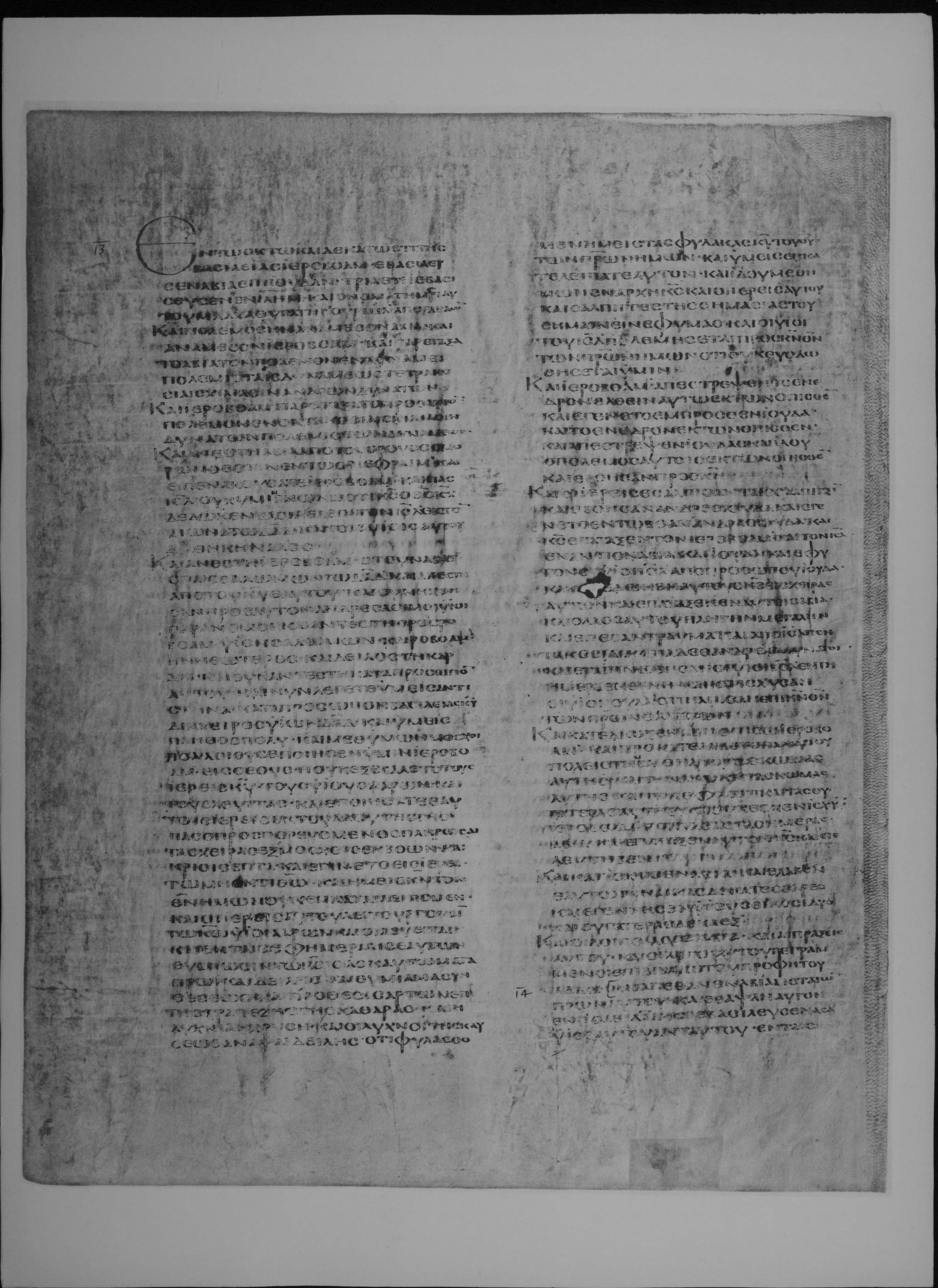
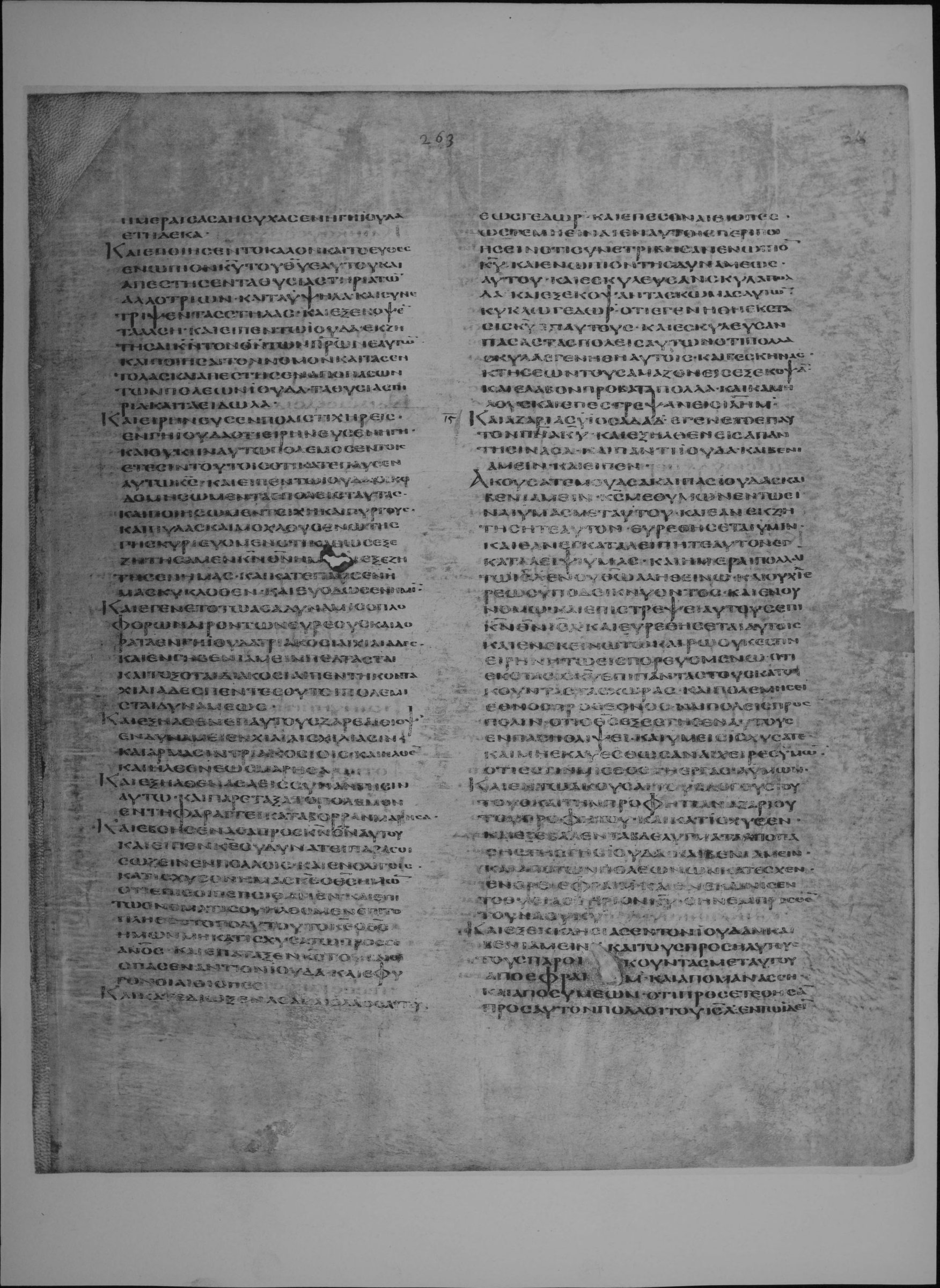
- Manuscript scan: the pages of Codex Alexandrinus carrying this chapter (fol. 262v, fol. 263r), from the full-size photographic (autotype) facsimile published by the British Museum in 1879-1883, as digitised on the Internet Archive. The verse range of every page comes from the reduced photographic facsimile of 1930, which prints it beneath each plate, and the opening words of every page were read on the plate to confirm the page and the verse it begins with. Each section links to the page or pages that hold its verses. Folio numbers are those written at the head of each leaf and visible on the plates.
- Original text: Swete's edition, which here prints the text of Codex Vaticanus (Vat. gr. 1209), the base of his edition, and gives the readings of Alexandrinus only in his apparatus. The Greek column is therefore Vaticanus' text; where Alexandrinus differs, the plate shows what Alexandrinus reads.
- English translation: Sir Lancelot C. L. Brenton, The Septuagint Version of the Old Testament (1844; 1851 edition), a translation of the Greek, public domain, from the eBible.org text.
How was this verified? (Provenance)
Where on the image
2 Chronicles 14:1 is on fol. 262v (full-size facsimile of 1879-83, Internet Archive codex-alexandrinus leaf 543). The 1930 reduced facsimile prints beneath this page: 2 Chron. xiii. 1-xiv. 2. Checked on the plate: the page begins at the start of 2 Chronicles 13:1 (first words read: ΕΝ ΤΩ ΟΚΤΩΚΑΙΔΕΚΑΤΩ ΕΤΕΙ ΤΗΣ ΒΑΣΙΛΕΙΑΣ ΙΕΡΟΒΟΑΜ ΕΒΑΣΙΛΕΥΣΕΝ ΑΒΙΑ). 2 Chronicles 14:1-8 is on fol. 263r (full-size facsimile of 1879-83, Internet Archive codex-alexandrinus leaf 544). The 1930 reduced facsimile prints beneath this page: 2 Chron. xiv. 2-xv. 9. Checked on the plate: the page begins inside 2 Chronicles 14:1 (first words read: ΗΣΥΧΑΣΕΝ Η ΓΗ ΙΟΥΔΑ ΕΤΗ ΔΕΚΑ ΚΑΙ ΕΠΟΙΗΣΕΝ ΤΟ ΚΑΛΟΝ ΚΑΙ ΤΟ ΕΥΘΕΣ ΕΝΩΠΙΟΝ ΚΥ ΤΟΥ ΘΥ ΑΥΤΟΥ). Note: the caption begins at xiv. 2, but the first line of the page holds the last words of 14:1.
1Καὶ ἀπέθανεν Ἀβιὰ μετὰ τῶν πατέρων αὐτοῦ, καὶ ἔθαψαν αὐτὸν ἐν πόλει Δαυεὶδ· καὶ ἐβασίλευσεν Ἀσὰ υἱὸς αὐτοῦ ἀντ᾽ αὐτοῦ. ἐν ταῖς ἡμέραις Ἀσὰ ἡσύχασεν ἡ γῆ Ἰούδα ἔτη δέκα. 2καὶ ἐποίησεν τὸ καλὸν καὶ τὸ εὐθὲς ἐνώπιον Κυρίου θεοῦ αὐτοῦ. 3καὶ ἀπέστησεν τὰ θυσιαστήρια τῶν ἀλλοτρίων καὶ τὰ ὑψηλά, καὶ συνέτριψεν τὰς στήλας καὶ ἐξέκοψεν τὰ ἄλση, 4καὶ εἶπεν τῷ Ἰούδᾳ ἐκζητῆσαι τὸν κύριον θεὸν τῶν πατέρων αὐτῶν καὶ ποιῆσαι τὸν νόμον καὶ τὰς ἐντολάς. 5καὶ ἀπέστησεν ἀπὸ πασῶν τῶν πόλεων Ἰούδα τὰ θυσιαστήρια καὶ τὰ εἴδωλα, καὶ εἰρήνευσεν. 6πόλεις τειχήρεις ἐν γῇ Ἰούδα, ὅτι εἰρήνευσεν ἡ γῆ· καὶ οὐκ ἦν αὐτῷ πόλεμος ἐν τοῖς ἔτεσιν τούτοις, ὅτι κατέπαυσεν αὐτῷ Κύριος. 7καὶ εἶπεν τῷ Ἰούδᾳ Οἰκοδομήσωμεν τάς πόλεις ταύτας, καὶ ποιήσωμεν τείχη καὶ πύργους καὶ πύλας καὶ μοχλούς, ἐνώπιον τῆς γῆς κυριεύσομεν· ὅτι καθὼς ἐζητήσαμεν Κύριον θεὸν ἡμῶν, ἐξεζήτησεν ἡμᾶς, καὶ κατέπαυσεν ἡμᾶς κυκλόθεν καὶ εὐόδωσεν ἡμῖν. 8καὶ ἐγένετο τῷ Ἀσὰ δύναμις ὁπλοφόρων αἰρόντων θυρεοὺς καὶ δόρατα ἐν γῇ Ἰούδα τριακόσιαι χιλιάδες, καὶ ἐν γῇ Βενιαμεὶν πελτασταὶ καὶ τοξόται διακόσιαι καὶ πεντήκοντα χιλιάδες, πάντες οὗτοι πολεμισταὶ δυνάμεως.
13:23And Abia died with his fathers, and they buried him in the city of David; and Asa his son reigned in his stead. In the days of Asa the land of Juda had rest ten years. 1And he did that which was good and right in the sight of the Lord his God. 2And he removed the altars of the strange gods, and the high places, and broke the pillars in pieces, and cut down the groves: 3and he told Juda to seek earnestly the Lord God of their fathers, and to perform the law and the commandments. 4And he removed from all the cities of Juda the altars and the idols, and established in quietness 5fortified cities in the land of Juda; for the land was quiet, and he had no war in these years; for the Lord gave him rest. 6And he said to Juda, Let us fortify these cities, and make walls, and towers, and gates, and bars: we shall prevail over the land, for as we have sought out the Lord our God, he has sought out us, and has given us rest round about, and prospered us. 7And Asa had a force of armed men bearing shields and spears in the land of Juda, even three hundred thousand, and in the land of Benjamin two hundred and eighty thousand targeteers and archers: all these were mighty warriors.
Where on the image
2 Chronicles 14:9-15 is on fol. 263r (full-size facsimile of 1879-83, Internet Archive codex-alexandrinus leaf 544). The 1930 reduced facsimile prints beneath this page: 2 Chron. xiv. 2-xv. 9. Checked on the plate: the page begins inside 2 Chronicles 14:1 (first words read: ΗΣΥΧΑΣΕΝ Η ΓΗ ΙΟΥΔΑ ΕΤΗ ΔΕΚΑ ΚΑΙ ΕΠΟΙΗΣΕΝ ΤΟ ΚΑΛΟΝ ΚΑΙ ΤΟ ΕΥΘΕΣ ΕΝΩΠΙΟΝ ΚΥ ΤΟΥ ΘΥ ΑΥΤΟΥ). Note: the caption begins at xiv. 2, but the first line of the page holds the last words of 14:1.
9καὶ ἐξῆλθεν ἐπ᾽ αὐτοὺς Ζάρε ὁ Αἰθίοψ ἐν δυνάμει, ἐν χιλιάσιν καὶ ἅρμασιν τριακοσίοις, καὶ ἦλθεν ἕως Μαρισήλ. 10καὶ ἐξῆλθεν Ἀσὰ εἰς συνάντησιν αὐτῷ, καὶ παρετάξατο πόλεμον ἐν τῇ φάραγγι κατὰ βορρᾶν Μαρείσης. 11καὶ ἐβόησεν Ἀσὰ πρὸς Κύριον θεὸν αὐτοῦ καὶ εἶπεν Κύριε, οὐκ ἀδυνατεῖ παρὰ σοὶ σώζειν ἐν πολλοῖς καὶ ἐν ὀλίγοις· κατίσχυσον ἡμᾶς, Κύριε ὁ θεὸς ἡμῶν, ὅτι ἐπὶ σοὶ πεποίθαμεν, καὶ ἐπὶ τῷ ὀνόματί σου ἤλθαμεν ἐπὶ τὸ πλῆθος τὸ πολὺ τοῦτο· Κύριε ὁ θεὸς ἡμῶν, μὴ κατισχυσάτω πρὸς σὲ ἄνθρωπος. 12καὶ ἐπάταξεν Κύριος τοὺς Αἰθίοπας ἐναντίον Ἰούδα, καὶ ἔφυγον Αἰθίοπες, 13καὶ κατεδίωξεν Ἀσὰ καὶ ὁ λαὸς αὐτοῦ ἕως Γεδώρ· καὶ ἔπεσον Αἰθίοπες ὥστε μὴ εἶναι ἐν αὐτοῖς περιποίησιν, ὅτι συνετρίβησαν ἐνώπιον Κυρίου καὶ ἐναντίον τῆς δυνάμεως αὐτοῦ· καὶ ἐσκύλευσαν σκῦλα πολλά. 14καὶ ἐξέκοψαν τὰς κώμας αὐτῶν κύκλῳ Γεδώρ, ὅτι ἐγενήθη ἔκστασις Κυρίου ἐπ᾽ αὐτούς, καὶ ἐσκύλευσαν πάσας τὰς πόλεις αὐτοῦ, ὅτι πολλὰ σκῦλα ἐγενήθη αὐτοῖς· 15καί γε σκηνὰς κτήσεων, τοὺς Ἀμαζονεῖς, ἐξέκοψαν, καὶ ἔλαβον πρόβατα πολλὰ καὶ καμήλους, καὶ ἐπέστρεψαν εἰς Ἰερουσαλήμ.
8And Zare the Ethiopian went out against them, with a force of a million, and three hundred chariots; and came to Maresa. 9And Asa went out to meet him, and set the battle in array in the valley north of Maresa. 10And Asa cried to the Lord his God, and said, O Lord, it is not impossible with thee to save by many or by few: strengthen us, O Lord our God; for we trust in thee, and in thy name have we come against this great multitude. O Lord our God, let not man prevail against thee. 11And the Lord smote the Ethiopians before Juda; and the Ethiopians fled. 12And Asa and his people pursued them to Gedor; and the Ethiopians fell, so that they could not recover themselves; for they were crushed before the Lord, and before his host; and they took many spoils. 13And they destroyed their towns round about Gedor; for a terror of the Lord was upon them: and they spoiled all their cities, for they had much spoil. 14Also they destroyed the tents of cattle, and the Alimazons, and took many sheep and camels, and returned to Jerusalem.
Cite
Sources
- Source: Codex Alexandrinus (British Library Royal MS 1 D. V) via the British Museum photographic facsimiles of 1879-83 and 1930 (Internet Archive) + Swete's Septuagint + Brenton's English (holding institution)
- Critical edition: H. B. Swete, The Old Testament in Greek according to the Septuagint (1909)
← previous · → next · v cycle view · l back to library