2 Chronicles, Chapter 3 (Codex Alexandrinus)
Introduction
2 Chronicles 3 in the Greek Old Testament (the Septuagint) as written in Codex Alexandrinus, a Greek Bible copied in the fifth century, probably in Egypt, and now in the British Library (Royal MS 1 D. V, the first of its four volumes). It is one of the three great early codices of the whole Greek Bible, with Codex Vaticanus and Codex Sinaiticus.
Verses not in Swete's text: Swete's Greek (Codex Vaticanus) has no verse numbered 12 in this chapter. In the books of Kingdoms and Chronicles Codex Alexandrinus often follows the Hebrew text more closely and may have text at such points; any such lines on the pages shown have no Greek column here. Brenton, translating a Vaticanus-type text, mostly lacks them too.
This entry meets the strict three-criteria standard of the Theosis Library:
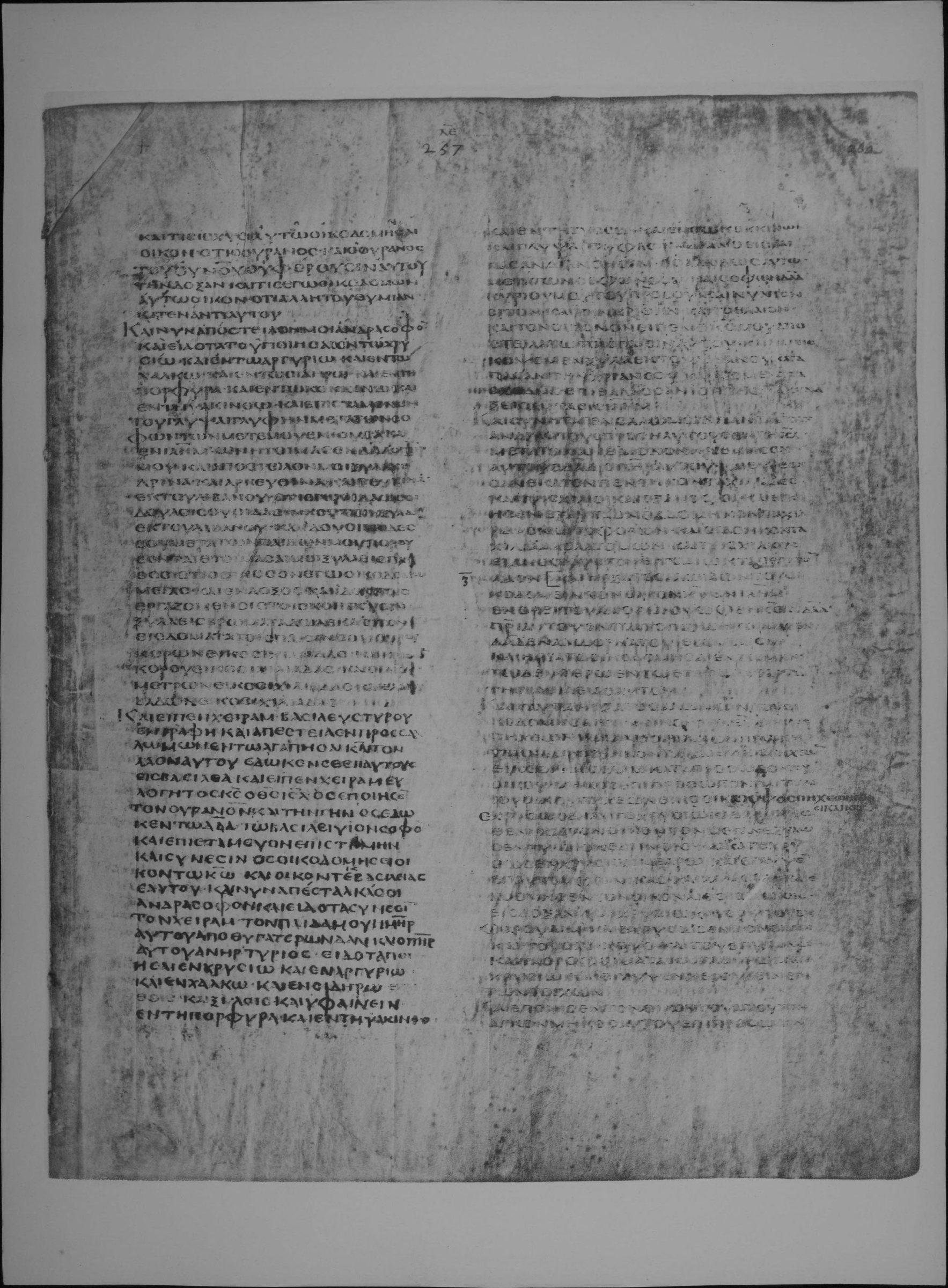
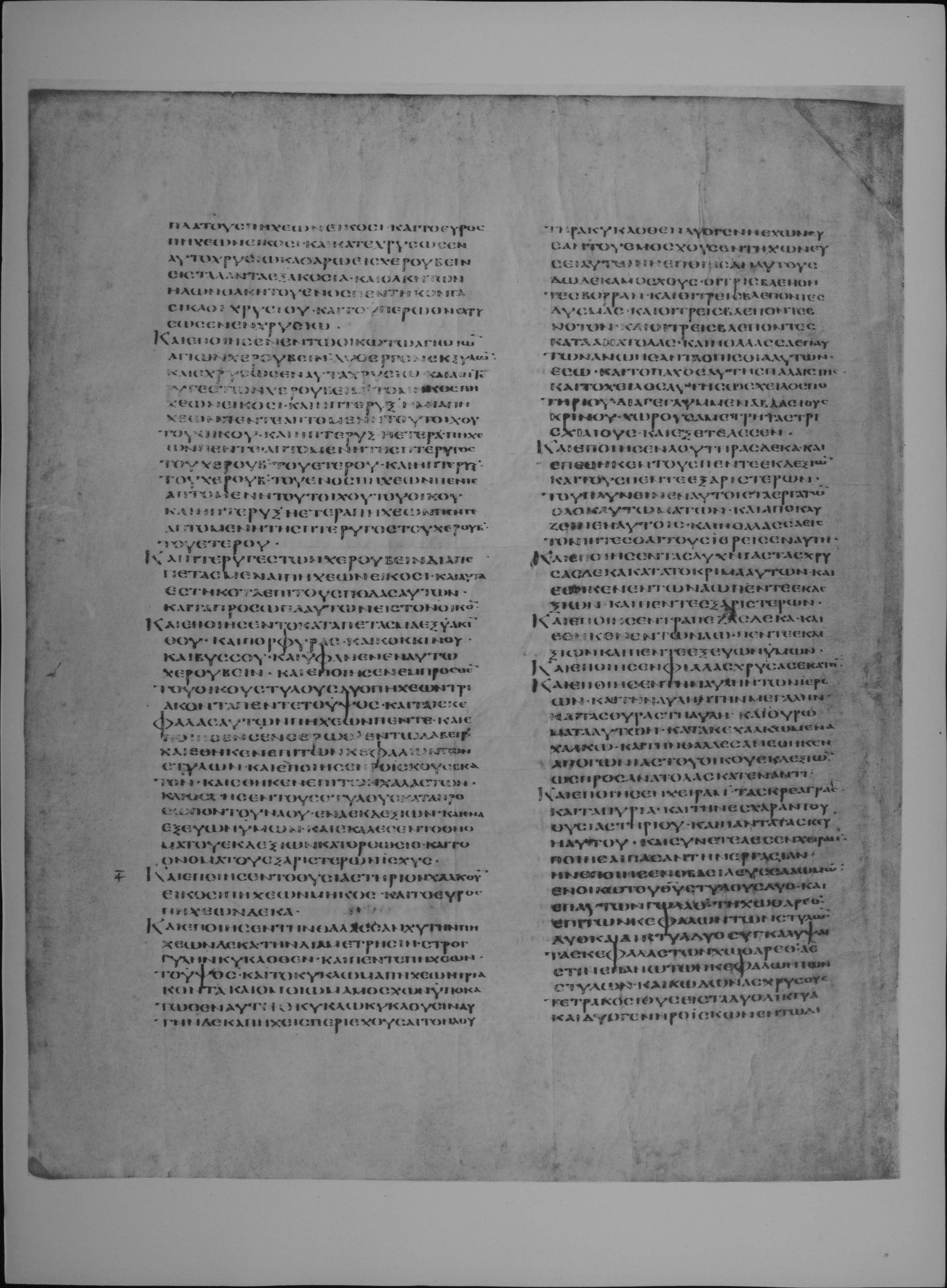
- Manuscript scan: the pages of Codex Alexandrinus carrying this chapter (fol. 257r, fol. 257v), from the full-size photographic (autotype) facsimile published by the British Museum in 1879-1883, as digitised on the Internet Archive. The verse range of every page comes from the reduced photographic facsimile of 1930, which prints it beneath each plate, and the opening words of every page were read on the plate to confirm the page and the verse it begins with. Each section links to the page or pages that hold its verses. Folio numbers are those written at the head of each leaf and visible on the plates.
- Original text: Swete's edition, which here prints the text of Codex Vaticanus (Vat. gr. 1209), the base of his edition, and gives the readings of Alexandrinus only in his apparatus. The Greek column is therefore Vaticanus' text; where Alexandrinus differs, the plate shows what Alexandrinus reads.
- English translation: Sir Lancelot C. L. Brenton, The Septuagint Version of the Old Testament (1844; 1851 edition), a translation of the Greek, public domain, from the eBible.org text.
How was this verified? (Provenance)
Where on the image
2 Chronicles 3:1-8 is on fol. 257r (full-size facsimile of 1879-83, Internet Archive codex-alexandrinus leaf 532). The 1930 reduced facsimile prints beneath this page: 2 Chron. ii. 6-iii. 8. Checked on the plate: the page begins at the start of 2 Chronicles 2:6 (first words read: ΚΑΙ ΤΙΣ ΙΣΧΥΣΕΙ ΑΥΤΩ ΟΙΚΟΔΟΜΗΣΑΙ ΟΙΚΟΝ ΟΤΙ Ο ΟΥΡΑΝΟΣ ΚΑΙ Ο ΟΥΡΑΝΟΣ ΤΟΥ ΟΥΡΑΝΟΥ ΟΥ ΦΕΡΟΥΣΙΝ ΑΥΤΟΥ). 2 Chronicles 3:8 is on fol. 257v (full-size facsimile of 1879-83, Internet Archive codex-alexandrinus leaf 533). The 1930 reduced facsimile prints beneath this page: 2 Chron. iii. 8-iv. 13. Checked on the plate: the page begins inside 2 Chronicles 3:8 (first words read: ΠΗΧΕΩΝ ΕΙΚΟΣΙ ΚΑΙ ΚΑΤΕΧΡΥΣΩΣΕΝ ΑΥΤΟΝ ΧΡΥΣΙΩ ΚΑΘΑΡΩ ΕΙΣ ΧΕΡΟΥΒΕΙΝ ΕΙΣ ΤΑΛΑΝΤΑ ΕΞΑΚΟΣΙΑ).
1Καὶ ἤρξατο Σαλωμὼν τοῦ οἰκοδομεῖν τὸν οἶκον Κυρίου ἐν Ἰερουσαλὴμ ἐν ὄρει τοῦ Ἁμορειά, οὗ ὤφθη Κύριος τῷ Δαυεὶδ πατρὶ αὐτοῦ, ἐν τῷ τόπῳ ᾧ ἡτοίμασεν Δαυεὶδ ἐν ἅλῳ Ὀρνὰ τοῦ Ἰεβουσαίου. 2καὶ ἤρξατο οἰκοδομὴ ἐν τῷ μηνὶ τῷ δευτέρῳ ἐν τῷ ἔτει τῷ τετάρτῳ τῆς βασιλείας αὐτοῦ. 3Καὶ ταῦτα ἤρξατο Σαλωμὼν τοῦ οἰκοδομῆσαι τὸν οἶκον τοῦ θεοῦ· μῆκος πήχεων ἡ διαμέτρησις ἡ πρώτη πήχεων ἑξήκοντα, καὶ εὖρος πήχεων εἴκοσι. 4καὶ αἰλὰμ κατὰ πρόσωπον τοῦ οἴκου, μῆκος ἐπὶ πρόσωπον πλάτος τοῦ οἴκου πήχεων εἴκοσι, καὶ ὕψος πήχεων ἑκατὸν εἴκοσι· καὶ κατεχρύσωσεν αὐτὸν ἔσωθεν χρυσίῳ καθαρῷ. 5καὶ τὸν οἶκον τὸν μέγαν ἐξύλωσεν ξύλοις κεδρίνοις, καὶ κατεχρύσωσεν χρυσίῳ καθαρῷ, καὶ ἔγλυψεν ἐπ᾽ αὐτοῦ φοίνικας καὶ χαλαστά. 6καὶ ἐκόσμησεν τὸν οἶκον λίθοις τιμίοις εἰς δόξαν, καὶ χρυσίῳ χρυσίου τοῦ ἐκ Φαρουάιμ, 7καὶ ἐχρύσωσεν τὸν οἶκον καὶ τοὺς τοίχους καὶ τοὺς πυλῶνας καὶ τὰ ὀροφώματα καὶ τὰ θυρώματα χρυσίῳ, καὶ ἔγλυψεν χερουβεὶν ἐπὶ τῶν τοίχων. 8καὶ ἐποίησεν τὸν οἶκον τοῦ ἁγίου τῶν ἁγίων, μῆκος αὐτοῦ ἐπὶ πρόσωπον, πλάτος πήχεων εἴκοσι, καὶ τὸ μῆκος πήχεων εἴκοσι, καὶ ἐχρύσωσεν αὐτὸν χρυσίῳ καθαρῷ εἰς χερουβεὶν εἰς τάλαντα ἑξακόσια.
1And Solomon began to build the house of the Lord in Jerusalem in the mount of Amoria, where the Lord appeared to his father David, in the place which David had prepared in the threshing-floor of Orna the Jebusite. 2And he began to build in the second month, in the fourth year of his reign. 3And thus Solomon began to build the house of God: the length in cubits—even the first measurement from end to end, was sixty cubits, and the breadth twenty cubits. 4And the portico in front of the house, its length in front of the breadth of the house was twenty cubits, and its height a hundred and twenty cubits: and he gilded it within with pure gold. 5And he lined the great house with cedar wood, and gilded it with pure gold, and carved upon it palm-trees and chains. 6And he garnished the house with precious stones for beauty; and he gilded it with gold of the gold from Pharuim. 7And he gilded the house, and its inner walls, and the door-posts, and the roofs, and the doors with gold; and he carved cherubs on the walls. 8And he built the holy of holies, its length was according to the front of the other house, the breadth of the house was twenty cubits, and the length twenty cubits: and he gilded it with pure gold for cherubs, to the amount of six hundred talents.
Where on the image
2 Chronicles 3:9-17 is on fol. 257v (full-size facsimile of 1879-83, Internet Archive codex-alexandrinus leaf 533). The 1930 reduced facsimile prints beneath this page: 2 Chron. iii. 8-iv. 13. Checked on the plate: the page begins inside 2 Chronicles 3:8 (first words read: ΠΗΧΕΩΝ ΕΙΚΟΣΙ ΚΑΙ ΚΑΤΕΧΡΥΣΩΣΕΝ ΑΥΤΟΝ ΧΡΥΣΙΩ ΚΑΘΑΡΩ ΕΙΣ ΧΕΡΟΥΒΕΙΝ ΕΙΣ ΤΑΛΑΝΤΑ ΕΞΑΚΟΣΙΑ).
9καὶ ὁλκὴ τῶν ἥλων, ὁλκὴ τοῦ ἑνὸς πεντήκοντα σίκλοι χρυσίου· καὶ τὸ ὑπερῷον ἐχρύσωσεν χρυσίῳ. 10καὶ ἐποίησεν ἐν τῷ οἴκῳ τῷ ἁγίῳ τῶν ἁγίων χερουβεὶν δύο, ἔργον ἐκ ξύλων, καὶ ἐχρύσωσεν αὐτὰ χρυσίῳ. 11καὶ αἱ πτέρυγες τῶν χερουβεὶν τὸ μῆκος πήχεων εἴκοσι, καὶ ἡ μία πτέρυξ πήχεων πέντε ἁπτομένη τοῦ τοίχου τοῦ οἴκου, καὶ ἡ πτέρυξ ἡ ἑτέρα πήχεων πέντε ἁπτομένη τῆς πτέρυγος τοῦ χερουβεὶν τοῦ ἑτέρου. 13καὶ αἱ πτέρυγες τῶν χερουβεὶν διαπεπετασμέναι πήχεων εἴκοσι, καὶ αὐτὰ ἑστηκότα ἐπὶ τοὺς πόδας αὐτῶν, καὶ τὰ πρόσωπα αὐτῶν εἰς τὸν οἶκον. 14καὶ ἐποίησεν τὸ καταπέτασμα ὑακίνθου καὶ πορφύρας καὶ κοκκίνου καὶ βύσσου, καὶ ὕφανεν ἐν αὐτῷ χερουβείν. 15καὶ ἐποίησεν ἔμπροσθεν τοῦ τοίχου στύλους δύο, πήχεων τριάκοντα πέντε τὸ ὕψος, καὶ τὰς κεφαλὰς αὐτῶν πήχεων πέντε. 16καὶ ἐποίησεν σερσερὼθ ἐν τῷ δαβεὶρ καὶ ἔδωκεν ἐπὶ τῶν κεφαλῶν τῶν στύλων, καὶ ἐποίησεν ῥοίσκους ἑκατὸν καὶ ἐπέθηκεν ἐπὶ τῶν χαλαστῶν. 17καὶ ἔστησεν τοὺς στύλους κατὰ πρόσωπον τοῦ ναοῦ, ἕνα ἐκ δεξιῶν καὶ τὸν ἕνα ἐξ εὐωνύμων, καὶ ἐκάλεσεν τὸ ὄνομα τοῦ ἐκ δεξιῶν Κατόρθωσις, καὶ τὸ ὄνομα τοῦ ἐξ ἀριστερῶν Ἰσχύς.
9And the weight of the nails, even the weight of each was fifty shekels of gold: and he gilded the upper chamber with gold. 10And he made two cherubs in the most holy house, wood-work, and he gilded them with gold. 11And the wings of the cherubs were twenty cubits in length: and one wing of five cubits touched the wall of the house: and the other wing of five cubits touched the wing of the other cherub. 13And the wings of these cherubs expanded were of the length of twenty cubits: and they stood upon their feet, and their faces were toward the house. 14And he made the vail of blue, and purple, and scarlet, and fine linen, and wove cherubs in it. 15Also he made in front of the house two pillars, in height thirty-five cubits, and their chapiters of five cubits. 16And he made chains, as in the oracle, and put them on the heads of the pillars; and he made a hundred pomegranates, and put them on the chains. 17And he set up the pillars in front of the temple, one on the right hand and the other on the left: and he called the name of the one on the right hand ‘Stability,’ and the name of the one on the left ‘Strength.’
Cite
Sources
- Source: Codex Alexandrinus (British Library Royal MS 1 D. V) via the British Museum photographic facsimiles of 1879-83 and 1930 (Internet Archive) + Swete's Septuagint + Brenton's English (holding institution)
- Critical edition: H. B. Swete, The Old Testament in Greek according to the Septuagint (1909)
← previous · → next · v cycle view · l back to library