2 Chronicles, Chapter 4 (Codex Alexandrinus)
Introduction
2 Chronicles 4 in the Greek Old Testament (the Septuagint) as written in Codex Alexandrinus, a Greek Bible copied in the fifth century, probably in Egypt, and now in the British Library (Royal MS 1 D. V, the first of its four volumes). It is one of the three great early codices of the whole Greek Bible, with Codex Vaticanus and Codex Sinaiticus.
This entry meets the strict three-criteria standard of the Theosis Library:
- Manuscript scan: the pages of Codex Alexandrinus carrying this chapter (fol. 257v, fol. 258r), from the full-size photographic (autotype) facsimile published by the British Museum in 1879-1883, as digitised on the Internet Archive. The verse range of every page comes from the reduced photographic facsimile of 1930, which prints it beneath each plate, and the opening words of every page were read on the plate to confirm the page and the verse it begins with. Each section links to the page or pages that hold its verses. Folio numbers are those written at the head of each leaf and visible on the plates.
- Original text: Swete's edition, which here prints the text of Codex Vaticanus (Vat. gr. 1209), the base of his edition, and gives the readings of Alexandrinus only in his apparatus. The Greek column is therefore Vaticanus' text; where Alexandrinus differs, the plate shows what Alexandrinus reads.
- English translation: Sir Lancelot C. L. Brenton, The Septuagint Version of the Old Testament (1844; 1851 edition), a translation of the Greek, public domain, from the eBible.org text.
How was this verified? (Provenance)
Where on the image
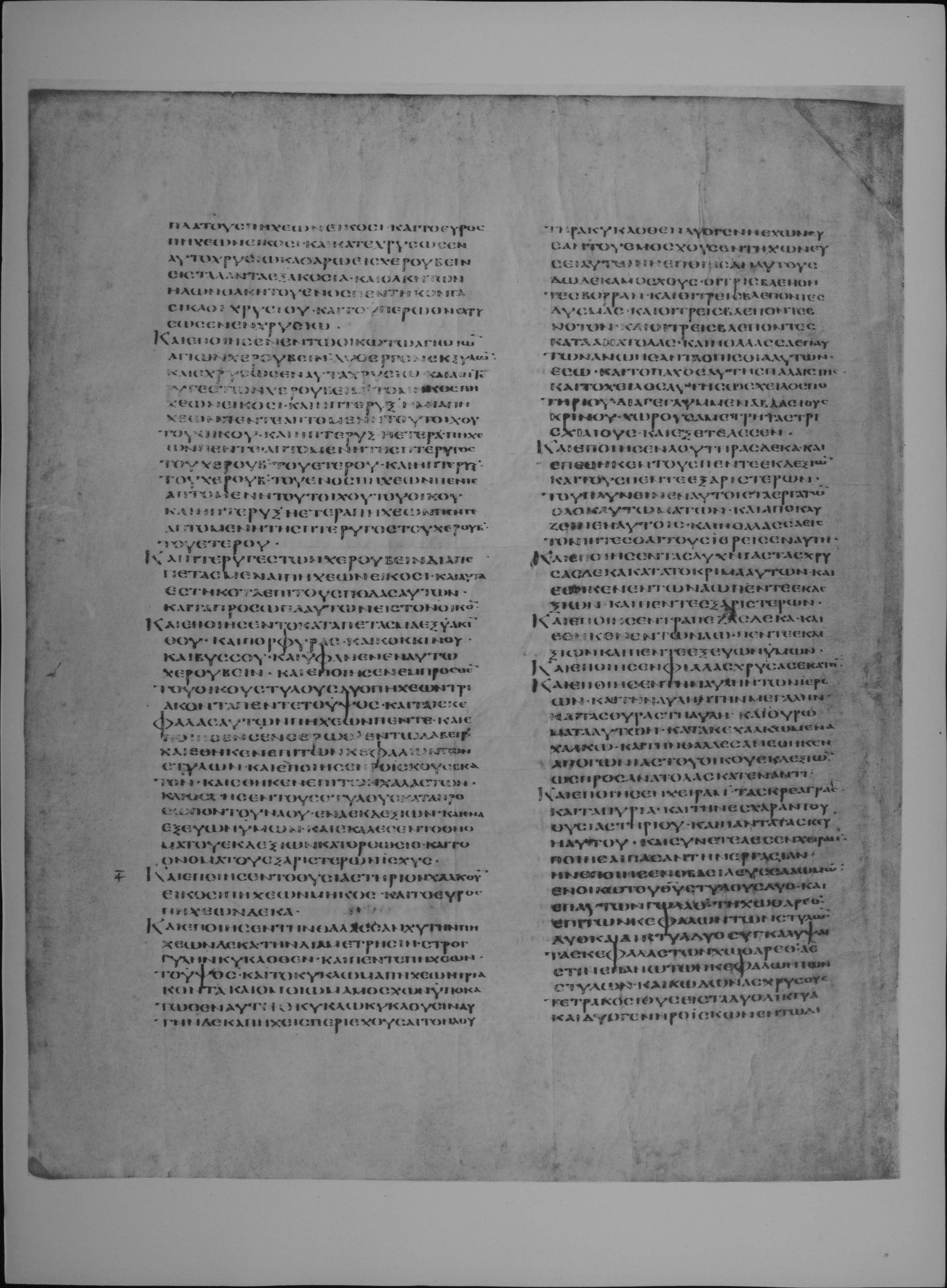
2 Chronicles 4:1-8 is on fol. 257v (full-size facsimile of 1879-83, Internet Archive codex-alexandrinus leaf 533). The 1930 reduced facsimile prints beneath this page: 2 Chron. iii. 8-iv. 13. Checked on the plate: the page begins inside 2 Chronicles 3:8 (first words read: ΠΗΧΕΩΝ ΕΙΚΟΣΙ ΚΑΙ ΚΑΤΕΧΡΥΣΩΣΕΝ ΑΥΤΟΝ ΧΡΥΣΙΩ ΚΑΘΑΡΩ ΕΙΣ ΧΕΡΟΥΒΕΙΝ ΕΙΣ ΤΑΛΑΝΤΑ ΕΞΑΚΟΣΙΑ).
1καὶ ἐποίησεν τὸ θυσιαστήριον χαλκοῦν, πήχεων εἴκοσι μῆκος, καὶ τὸ εὖρος πήχεων εἴκοσι· ὕψος πήχεων δέκα. 2καὶ ἐποίησεν τὴν θάλασσαν χυτήν, πήχεων δέκα τὴν διαμέτρησιν, στρογγύλην κυκλόθεν, καὶ πήχεων πέντε τὸ ὕψος, καὶ τὸ κύκλωμα πήχεων τριάκοντα. 3καὶ ὁμοίωμα μόσχων ὑποκάτω αὐτῆς· κύκλῳ κυκλοῦσιν αὐτήν, πήχεις δέκα περιέχουσιν τὸν λουτῆρα κυκλόθεν· δύο γένη ἐχώνευσαν τοὺς μόσχους ἐν τῇ χωνεύσει αὐτῶν, 4ᾗ ἐποίησαν αὐτοὺς δώδεκα μόσχους, οἱ τρεῖς βλέποντες βορρᾶν, καὶ οἱ τρεῖς δυσμάς, καὶ οἱ τρεῖς νότον, καὶ οἱ τρεῖς κατ᾽ ἀνατολάς· καὶ ἡ θάλασσα ἐπ᾽ αὐτῶν ἄνω, ἦσαν τὰ ὀπίσθια αὐτῶν ἔσω. 5καὶ τὸ πάχος αὐτῆς παλαιστής, καὶ τὸ χεῖλος αὐτῆς ὡς χεῖλος ποτηρίου, διαγεγλυμμένα βλαστοὺς κρίνου, χωροῦσαν μετρητὰς τρισχιλίους· καὶ ἐξετέλεσεν. 6καὶ ἐποίησεν λουτῆρας δέκα, καὶ ἔθηκεν τοὺς πέντε ἐκ δεξιῶν καὶ τοὺς πέντε ἐξ ἀριστερῶν, τοῦ πλύνειν ἐν αὐτοῖς τὰ ἔργα τῶν ὁλοκαυτωμάτων καὶ ἀποκλύζειν ἐν αὐτοῖς· καὶ ἡ θάλασσα εἰς τὸ νίπτεσθαι τοὺς ἱερεῖς ἐν αὐτῇ. 7καὶ ἐποίησεν τὰς λυχνίας τὰς χρυσᾶς δέκα κατὰ τὸ κρίμα αὐτῶν καὶ ἔθηκεν ἐν τῷ ναῷ, πέντε ἐκ δεξιῶν καὶ πέντε ἐξ ἀριστερῶν. 8καὶ ἐποίησεν τραπέζας δέκα καὶ ἔθηκεν ἐν τῷ ναῷ, πέντε ἐκ δεξιῶν καὶ πέντε ἐξ εὐωνύμων· καὶ ἐποίησεν φιάλας χρυσᾶς ἑκατόν·
1And he made a brazen altar, the length of it twenty cubits, and the breadth twenty cubits, and the height ten cubits. 2And he made the molten sea, in diameter ten cubits, entirely round, and the height of it five cubits, and the circumference thirty cubits. 3And beneath it the likeness of calves, they compass it round about: ten cubits compass the laver round about, they cast the calves two rows in their casting, 4wherein they made them twelve calves,—three looking northwards, and three westwards, and three southwards, and three eastwards: and the sea was upon them above, and their hinder parts were inward. 5And its thickness was a hand-breadth, and its brim as the brim of a cup, graven with flowers of lilies, holding three thousand measures: and he finished it. 6And he made ten lavers, and set five on the right hand, and five on the left, to wash in them the instruments of the whole-burnt-offerings, and to rinse the vessels in them; and the sea was for the priests to wash in. 7And he made the ten golden candlesticks according to their pattern, and he put them in the temple, five on the right hand, and five on the left. 8And he made ten tables, and put them in the temple, five on the right hand, and five on the left: and he made a hundred golden bowls.
Where on the image
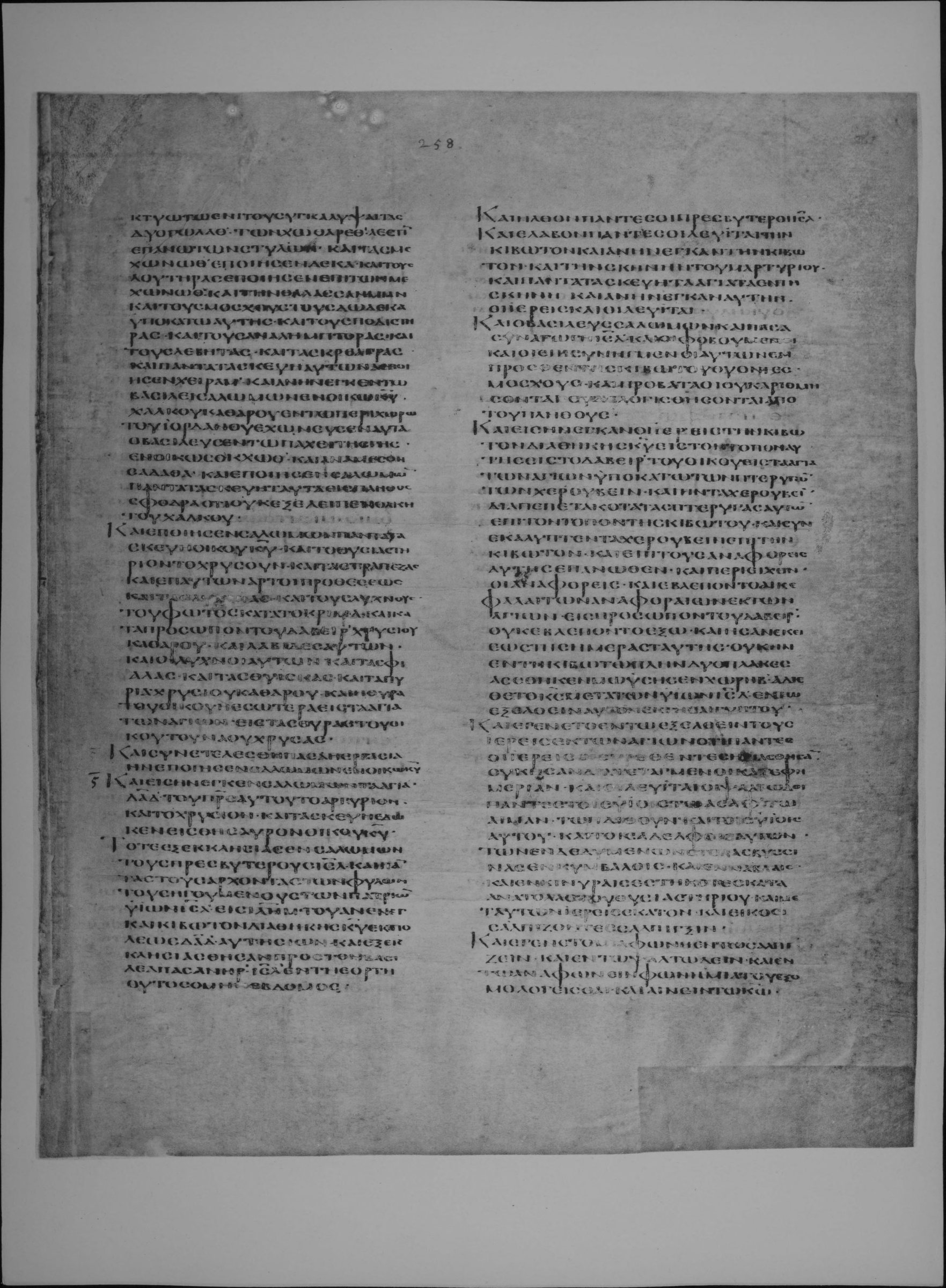
2 Chronicles 4:9-13 is on fol. 257v (full-size facsimile of 1879-83, Internet Archive codex-alexandrinus leaf 533). The 1930 reduced facsimile prints beneath this page: 2 Chron. iii. 8-iv. 13. Checked on the plate: the page begins inside 2 Chronicles 3:8 (first words read: ΠΗΧΕΩΝ ΕΙΚΟΣΙ ΚΑΙ ΚΑΤΕΧΡΥΣΩΣΕΝ ΑΥΤΟΝ ΧΡΥΣΙΩ ΚΑΘΑΡΩ ΕΙΣ ΧΕΡΟΥΒΕΙΝ ΕΙΣ ΤΑΛΑΝΤΑ ΕΞΑΚΟΣΙΑ). 2 Chronicles 4:13-16 is on fol. 258r (full-size facsimile of 1879-83, Internet Archive codex-alexandrinus leaf 534). The 1930 reduced facsimile prints beneath this page: 2 Chron. iv. 13-v. 13. Checked on the plate: the page begins inside 2 Chronicles 4:13 (first words read: ΤΟΥ ΣΥΓΚΑΛΥΨΑΙ ΤΑΣ ΔΥΟ ΓΩΛΑΘ ΤΩΝ ΧΩΘΑΡΕΘ Α ΕΣΤΙΝ ΕΠΑΝΩ ΤΩΝ ΣΤΥΛΩΝ).
9καὶ ἐποίησεν τὴν αὐλήν τῶν ἱερέων καὶ τήν αὐλὴν τὴν μεγάλην, καὶ θύρας τῇ αὐλῇ, καὶ θυρώματα αὐτῶν κατακεχαλκωμένα χαλκῷ. 10καὶ τήν θάλασσαν ἔθηκεν ἀπὸ γωνίας τοῦ οἴκου ἐκ δεξιῶν ὡς πρὸς ἀνατολὰς κατέναντι. 11καὶ ἐποίησεν Χειρὰμ τὰς κρεάγρας καὶ τὰ πυρεῖα καὶ τὴν ἐσχάραν τοῦ θυσιαστηρίου καὶ πάντα τὰ σκεύη αὐτοῦ. καὶ συνετέλεσεν Χειρὰμ ποιῆσαι πᾶσαν τὴν ἐργασίαν ἣν ἐποίησεν Σαλωμὼν τῷ βασιλεῖ ἐν οἴκῳ τοῦ θεοῦ, 12στύλους δύο καὶ ἐπ᾽ αὐτῶν γωλὰθ τῇ χωθαρὲθ ἐπὶ τῶν κεφαλῶν τῶν στύλων δύο, καὶ δίκτυα δύο συνκαλύψαι τὰς κεφαλὰς τῶν χωθαρὲθ ἅ ἐστιν ἐπὶ τῶν κεφαλῶν τῶν στύλων, 13καὶ κώδωνας χρυσοῦς τετρακοσίους εἰς τὰ δύο δίκτυα, καὶ γένη ῥοίσκων ἐν τῷ δικτύῳ τῷ ἑνὶ τοῦ συνκαλύψαι τὰς δύο γωλὰθ τῶν χωθαρὲθ ἅ ἐστιν ἐπάνω τῶν στύλων. 14καὶ τὰς μεχωνὼθ ἐποίησεν δέκα, καὶ τοὺς λουτῆρας ἐποίησεν ἐπὶ τῶν μεχωνώθ, 15καὶ τὴν θάλασσαν μίαν καὶ τοὺς μόσχους τοὺς δώδεκα ὑποκάτω αὐτῆς, 16καὶ τοὺς ποδιστῆρας καὶ τοὺς ἀναλημπτῆρας καὶ τοὺς λέβητας καὶ τὰς κρεάγρας, καὶ πάντα τὰ σκεύη αὐτῶν ἃ ἐποίησεν Χειρὰμ καὶ ἀνήνεγκεν τῷ βασιλεῖ Σαλωμὼν ἐν οἴκῳ Κυρίου χαλκοῦ καθαροῦ.
9Also he made the priests' court, and the great court, and doors to the court, and their panels were overlaid with brass. 10And he set the sea at the corner of the house on the right, as it were fronting the east. 11And Chiram made the fleshhooks, and the fire-pans, and the grate of the altar, and all its instruments: and Chiram finished doing all the work which he wrought for king Solomon in the house of God: 12two pillars, and upon them an embossed work for the chapiters on the heads of the two pillars, and two nets to cover the heads of the chapiters which are on the heads of the pillars; 13and four hundred golden bells for the two nets, and two rows of pomegranates in each net, to cover the two embossed rims of the chapiters which are upon the pillars. 14And he made the ten bases, and he made the lavers upon the bases; 15and the one sea, and the twelve calves under it; 16and the foot-baths, and the buckets, and the caldrons, and the flesh-hooks, and all their furniture (which Chiram made, and brought to king Solomon in the house of the Lord) of pure brass.
Where on the image
2 Chronicles 4:17-22 is on fol. 258r (full-size facsimile of 1879-83, Internet Archive codex-alexandrinus leaf 534). The 1930 reduced facsimile prints beneath this page: 2 Chron. iv. 13-v. 13. Checked on the plate: the page begins inside 2 Chronicles 4:13 (first words read: ΤΟΥ ΣΥΓΚΑΛΥΨΑΙ ΤΑΣ ΔΥΟ ΓΩΛΑΘ ΤΩΝ ΧΩΘΑΡΕΘ Α ΕΣΤΙΝ ΕΠΑΝΩ ΤΩΝ ΣΤΥΛΩΝ).
17ἐν τῷ περιχώρῳ τοῦ Ἰορδάνου ἐχώνευσεν αὐτὰ ὁ βασιλεὺς ἐν τῷ πάχει τῆς γῆς, ἐν οἴκῳ Σεχχὼθ καὶ Ἀναμεσιρδάθαι. 18καὶ ἐποίησεν Σαλωμὼν πάντα τὰ σκεύη ταῦτα εἰς πλῆθος σφόδρα, ὅτι οὐκ ἐξέλιπεν ὁλκὴ τοῦ χαλκοῦ. 19καὶ ἐποίησεν Σαλωμὼν πάντα τὰ σκεύη οἴκου Κυρίου, καὶ τὸ θυσιαστήριον τὸ χρυσοῦν καὶ τὰς τραπέζας, καὶ ἐπ᾽ αὐτῶν ἄρτοι προθέσεως, 20καὶ τὰς λυχνίας καὶ τοὺς λύχνους τοῦ φωτὸς κατὰ τὸ κρίμα καὶ κατὰ πρόσωπον τοῦ δαβεὶρ χρυσίου καθαροῦ, 21καὶ λαβίδες αὐτῶν καὶ οἱ λύχνοι αὐτῶν, καὶ τὰς φιάλας καὶ τὰς θυὶσκας καὶ τὰ πυρεῖα χρυσίου καθαροῦ, 22καὶ ἡ θύρα τοῦ οἴκου ἡ ἐσωτέρα εἰς τὰ ἅγια τῶν ἁγίων, εἰς τὰς θύρας τοῦ οἴκου τοῦ ναοῦ χρυσᾶς. καὶ συνετελέσθη πᾶσα ἡ ἐργασία ἣν ἐποίησεν Σαλωμὼν ἐν οἴκῳ Κυρίου.
17In the country round about Jordan the king cast them, in the clay ground in the house of Socchoth, and between that and Saredatha. 18So Solomon made all these vessels in great abundance, for the quantity of brass failed not. 19And Solomon made all the vessels of the house of the Lord, and the golden altar, and the tables, and upon them were to be the loaves of shewbread; 20also the candlesticks, and the lamps to give light according to the pattern, and in front of the oracle, of pure gold. 21And their snuffers, and their lamps were made, and he made the bowls, and the censers, and the fire-pans, of pure gold. 22And there was the inner door of the house opening into the holy of holies, and he made the inner doors of the temple of gold. So all the work which Solomon wrought for the house of the Lord was finished.
Cite
Sources
- Source: Codex Alexandrinus (British Library Royal MS 1 D. V) via the British Museum photographic facsimiles of 1879-83 and 1930 (Internet Archive) + Swete's Septuagint + Brenton's English (holding institution)
- Critical edition: H. B. Swete, The Old Testament in Greek according to the Septuagint (1909)
← previous · → next · v cycle view · l back to library