2 Kingdoms (2 Samuel), Chapter 11 (Codex Alexandrinus)
Introduction
2 Kingdoms (2 Samuel) 11 in the Greek Old Testament (the Septuagint) as written in Codex Alexandrinus, a Greek Bible copied in the fifth century, probably in Egypt, and now in the British Library (Royal MS 1 D. V, the first of its four volumes). It is one of the three great early codices of the whole Greek Bible, with Codex Vaticanus and Codex Sinaiticus.
This entry meets the strict three-criteria standard of the Theosis Library:
- Manuscript scan: the pages of Codex Alexandrinus carrying this chapter (fol. 187v, fol. 188r), from the full-size photographic (autotype) facsimile published by the British Museum in 1879-1883, as digitised on the Internet Archive. The verse range of every page comes from the reduced photographic facsimile of 1930, which prints it beneath each plate, and the opening words of every page were read on the plate to confirm the page and the verse it begins with. Each section links to the page or pages that hold its verses. Folio numbers are those written at the head of each leaf and visible on the plates.
- Original text: Swete's edition, which here prints the text of Codex Vaticanus (Vat. gr. 1209), the base of his edition, and gives the readings of Alexandrinus only in his apparatus. The Greek column is therefore Vaticanus' text; where Alexandrinus differs, the plate shows what Alexandrinus reads.
- English translation: Sir Lancelot C. L. Brenton, The Septuagint Version of the Old Testament (1844; 1851 edition), a translation of the Greek, public domain, from the eBible.org text.
How was this verified? (Provenance)
Where on the image
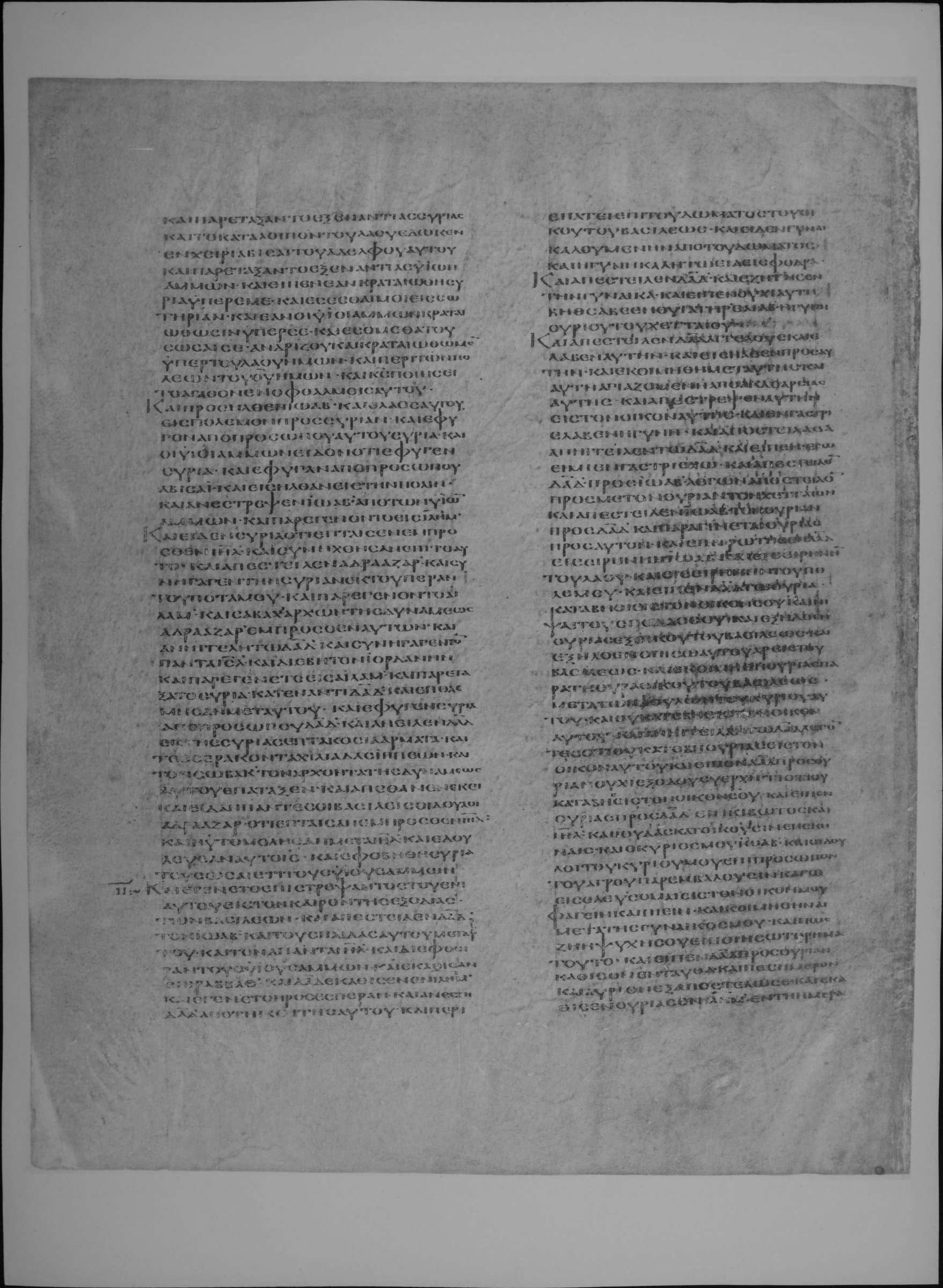
2 Kingdoms (2 Samuel) 11:1-8 is on fol. 187v (full-size facsimile of 1879-83, Internet Archive codex-alexandrinus leaf 393). The 1930 reduced facsimile prints beneath this page: 2 Sam. x. 9-xi. 12. Checked on the plate: the page begins inside 2 Kingdoms (2 Samuel) 10:9 (first words read: ΚΑΙ ΠΑΡΕΤΑΞΑΝΤΟ ΕΞ ΕΝΑΝΤΙΑΣ ΣΥΡΙΑΣ ΚΑΙ ΤΟ ΚΑΤΑΛΟΙΠΟΝ ΤΟΥ ΛΑΟΥ ΕΔΩΚΕΝ ΕΝ ΧΕΙΡΙ ΑΒΕΣΣΑ).
1Καὶ ἐγένετο ἐπιστρέψαντος τοῦ ἐνιαυτοῦ εἰς τὸν καιρὸν τῆς ἐξοδίας τῶν βασιλέων καὶ ἀπέστειλεν Δαυεὶδ τὸν Ἰωὰβ καὶ τοὺς παῖδας αὐτοῦ μετ᾽ αὐτοῦ καὶ τὸν πάντα Ἰσραήλ, καὶ διέφθειραν τοὺς υἱοὺς Ἀμμών· καὶ διεκάθισαν ἐπὶ Ῥαββάθ, καὶ Δαυεὶδ ἐκάθισεν ἐν Ἰερουσαλήμ. 2Καὶ ἐγένετο πρὸς ἑσπέραν καὶ ἀνέστη Δαυεὶδ ἀπὸ τῆς κοίτης αὐτοῦ καὶ περιεπάτει ἐπὶ τοῦ δώματος τοῦ οἴκου τοῦ βασιλέως, καὶ εἶδεν γυναῖκα λουομένην ἀπὸ τοῦ δώματος, καὶ ἡ γυνὴ καλὴ τῷ εἴδει σφόδρα. 3καὶ ἀπέστειλεν Δαυεὶδ καὶ ἐζήτησεν τὴν γυναῖκα, καὶ εἶπεν Οὐχὶ αὕτη Βηρσάβεε θυγάτηρ Ἐλιὰβ γυνὴ Οὐρείου τοῦ Χετταίου; 4καὶ ἀπέστειλεν Δαυεὶδ ἀγγέλους καὶ ἔλαβεν αὐτήν, καὶ εἰσῆλθεν πρὸς αὐτὴν καὶ ἐκοιμήθη μετ᾽ αὐτῆς· καὶ αὕτη ἁγιαζομένη ἀπὸ ἀκαθαρσίας αὐτῆς· καὶ ἀπέστρεψεν εἰς τὸν οἶκον αὐτῆς. 5καὶ ἐν γαστρὶ ἔλαβεν ἡ γυνή, καὶ ἀποστείλασα ἀπήγγειλεν τῷ Δαυεὶδ καὶ εἶπεν Ἐγώ εἰμι ἐν γαστρὶ ἔχω. 6καὶ ἀπέστειλεν Δαυεὶδ πρὸς Ἰωὰβ λέγων Ἀπόστειλον πρὸς μὲ τὸν Οὐρείαν τὸν Χετταῖον· καὶ ἀπέστειλεν Ἰωὰβ τὸν Οὐρείαν πρὸς Δαυείδ. 7καὶ παραγίνεται Οὐρείας καὶ εἰσῆλθεν πρὸς αὐτόν, καὶ ἐπηρώτησεν Δαυεὶδ εἰς εἰρήνην Ἰωὰβ καὶ εἰς εἰρήνην τοῦ λαοῦ καὶ εἰς εἰρήνην τοῦ πολέμου. 8καὶ εἶπεν Δαυεὶδ τῷ Οὐρείᾳ Κατάβηθι εἰς τὸν οἶκόν σου καὶ νίψαι τοὺς πόδας σου· καὶ ἐξῆλθεν Οὐρείας ἐξ οἴκου τοῦ βασιλέως, καὶ ἐξῆλθεν ὀπίσω αὐτοῦ ἄρσις τοῦ βασιλέως.
1And it came to pass when the time of the year for kings going out to battle had come round, that David sent Joab, and his servants with him, and all Israel; and they destroyed the children of Ammon, and besieged Rabbath: but David remained at Jerusalem. 2And it came to pass toward evening, that David arose off his couch, and walked on the roof of the king's house, and saw from the roof a woman bathing; and the woman was very beautiful to look upon. 3And David sent and enquired about the woman: and one said, Is not this Bersabee the daughter of Eliab, the wife of Urias the Chettite? 4And David sent messengers, and took her, and went in to her, and he lay with her: and she was purified from her uncleanness, and returned to her house. 5And the woman conceived; and she sent and told David, and said, I am with child. 6And David sent to Joab, saying, Send me Urias the Chettite; and Joab sent Urias to David. 7And Urias arrived and went in to him, and David asked him how Joab was, and how the people were, and how the war went on. 8And David said to Urias, Go to thy house, and wash thy feet: and Urias departed from the house of the king, and a portion of meat from the king followed him.
Where on the image
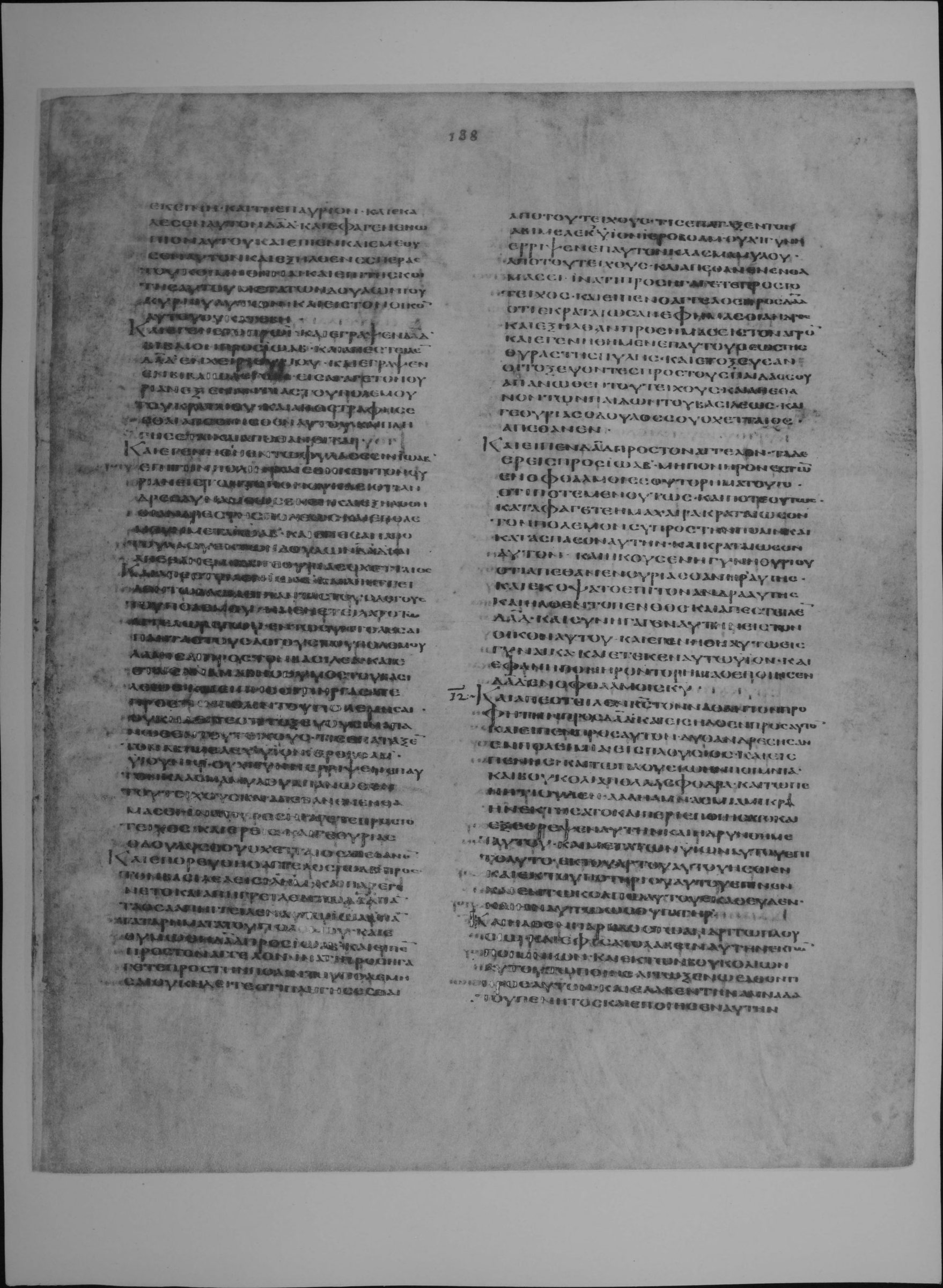
2 Kingdoms (2 Samuel) 11:9-12 is on fol. 187v (full-size facsimile of 1879-83, Internet Archive codex-alexandrinus leaf 393). The 1930 reduced facsimile prints beneath this page: 2 Sam. x. 9-xi. 12. Checked on the plate: the page begins inside 2 Kingdoms (2 Samuel) 10:9 (first words read: ΚΑΙ ΠΑΡΕΤΑΞΑΝΤΟ ΕΞ ΕΝΑΝΤΙΑΣ ΣΥΡΙΑΣ ΚΑΙ ΤΟ ΚΑΤΑΛΟΙΠΟΝ ΤΟΥ ΛΑΟΥ ΕΔΩΚΕΝ ΕΝ ΧΕΙΡΙ ΑΒΕΣΣΑ). 2 Kingdoms (2 Samuel) 11:12-16 is on fol. 188r (full-size facsimile of 1879-83, Internet Archive codex-alexandrinus leaf 394). The 1930 reduced facsimile prints beneath this page: 2 Sam. xi. 12-xii. 4. Checked on the plate: the page begins inside 2 Kingdoms (2 Samuel) 11:12 (first words read: ΚΑΙ ΤΗ ΕΠΑΥΡΙΟΝ ΚΑΙ ΕΚΑΛΕΣΕΝ ΑΥΤΟΝ ΔΑΥΕΙΔ ΚΑΙ ΕΦΑΓΕΝ ΕΝΩΠΙΟΝ ΑΥΤΟΥ).
9καὶ ἐκοιμήθη Οὐρείας παρὰ τῇ θύρᾳ τοῦ βασιλέως μετὰ τῶν δούλων τοῦ κυρίου αὐτοῦ, καὶ οὐ κατέβη εἰς τὸν οἶκον αὐτοῦ. 10καὶ ἀνήγγειλαν τῷ Δαυεὶδ λέγοντες ὅτι Οὐ κατέβη Οὐρείας εἰς τὸν οἶκον αὐτοῦ. καὶ εἶπεν Δαυεὶδ πρὸς Οὐρείαν Οὐχὶ ἐξ ὁδοῦ σὺ ἔρχῃ; τί ὅτι οὐ κατέβης εἰς τὸν οἶκόν σου; 11καὶ εἶπεν Οὐρείας πρὸς Δαυείδ Ἡ κιβωτὸς καὶ Ἰσραὴλ καὶ Ἰούδας κατοικοῦσιν ἐν σκηναῖς, καὶ ὁ κύριός μου Ἰωὰβ καὶ οἱ δοῦλοι τοῦ κυρίου μου ἐπὶ πρόσωπον τοῦ ἀγροῦ παρεμβάλλουσιν· καὶ ἐγὼ εἰσελεύσομαι εἰς τὸν οἶκόν μου φαγεῖν καὶ πιεῖν καὶ κοιμηθῆναι μετὰ τῆς γυναικός μου; πῶς; ζῇ ἡ ψυχή σου, εἰ ποιήσω τὸ ῥῆμα τοῦτο. 12καὶ εἶπεν Δαυεὶδ πρὸς Οὐρείαν Κάθισον ἐνταῦθα καί γε σήμερον, καὶ αὔριον ἐξαποστελῶ σε· καὶ ἐκάθισεν Οὐρείας ἐν Ἰερουσαλὴμ ἐν τῇ ἡμέρᾳ ἐκείνῃ καὶ τῇ ἐπαύριον. 13καὶ ἐκάλεσεν αὐτὸν Δαυείδ, καὶ ἔφαγεν ἐνώπιον αὐτοῦ καὶ ἔπιεν, καὶ ἐμέθυσεν αὐτόν· καὶ ἐξῆλθεν ἑσπέρας τοῦ κοιμηθῆναι ἐπὶ τῆς κοίτης αὐτοῦ μετὰ τῶν δούλων τοῦ κυρίου αὐτοῦ, καὶ εἰς τὸν οἶκον αὐτοῦ οὐ κατέβη. 14καὶ ἐγένετο πρωὶ καὶ ἔγραψεν Δαυεὶδ βιβλίον πρὸς Ἰωάβ, καὶ ἀπέστειλεν ἐν χειρὶ Οὐρείου. 15καὶ ἔγραψεν ἐν βιβλίῳ λέγων Εἰσάγαγε τὸν Οὐρείαν ἐξ ἐναντίας τοῦ πολέμου τοῦ κραταιοῦ, καὶ ἀποστραφήσεσθε ἀπὸ ὄπισθεν αὐτοῦ, καὶ πληγήσεται καὶ ἀποθανεῖται. 16καὶ ἐγενήθη ἐν τῷ φυλάσσειν Ἰωὰβ ἐπὶ τὴν πόλιν καὶ ἔθηκεν τὸν Οὐρείαν εἰς τὸν τόπον οὗ ᾔδει ὅτι ἄνδρες δυνάμεως ἐκεῖ.
9And Urias slept at the door of the king with the servants of his lord, and went not down to his house. 10And they brought David word, saying, Urias has not gone down to his house. And David said to Urias, Art thou not come from a journey? why hast thou not gone down to thy house? 11And Urias said to David, The ark, and Israel, and Juda dwell in tents; and my lord Joab, and the servants of my lord, are encamped in the open fields; and shall I go into my house to eat and drink, and lie with my wife? how should I do this? as thy soul lives, I will not do this thing. 12And David said to Urias, Remain here to-day also, and to-morrow I will let thee go. So Urias remained in Jerusalem that day and the day following. 13And David called him, and he ate before him and drank, and he made him drunk: and he went out in the evening to lie upon his bed with the servants of his lord, and went not down to his house. 14And the morning came, and David wrote a letter to Joab, and sent it by the hand of Urias. 15And he wrote in the letter, saying, Station Urias in front of the severe part of the fight, and retreat from behind him, so shall he be wounded and die. 16And it came to pass while Joab was watching against the city, that he set Urias in a place where he knew that valiant men were.
Where on the image
2 Kingdoms (2 Samuel) 11:17-24 is on fol. 188r (full-size facsimile of 1879-83, Internet Archive codex-alexandrinus leaf 394). The 1930 reduced facsimile prints beneath this page: 2 Sam. xi. 12-xii. 4. Checked on the plate: the page begins inside 2 Kingdoms (2 Samuel) 11:12 (first words read: ΚΑΙ ΤΗ ΕΠΑΥΡΙΟΝ ΚΑΙ ΕΚΑΛΕΣΕΝ ΑΥΤΟΝ ΔΑΥΕΙΔ ΚΑΙ ΕΦΑΓΕΝ ΕΝΩΠΙΟΝ ΑΥΤΟΥ).
17καὶ ἐξῆλθον οἱ ἄνδρες τῆς πόλεως καὶ ἐπολέμουν μετὰ Ἰωάβ· καὶ ἔπεσαν ἐκ τοῦ λαοῦ ἐκ τῶν δούλων Δαυεὶδ καὶ ἀπέθαναν, καί γε Οὐρείας ὁ Χετταῖος. 18καὶ ἀπέστειλεν Ἰωὰβ καὶ ἀπήγγειλεν τῷ βασιλεῖ Δαυεὶδ πάντας τοὺς λόγους τοῦ πολέμου λαλῆσαι πρὸς τὸν βασιλέα. 19καὶ ἐνετείλατο τῷ ἀγγέλῳ λέγων Ἐν τῷ συντελέσαι πάντας τοὺς λόγους τοῦ πολέμου λαλῆσαι πρὸς τὸν βασιλέα, 20καὶ ἔσται ἐὰν ἀναβῇ ὁ θυμὸς τοῦ βασιλέως καὶ εἴπῃ σοι Τί ὅτι ἠγγίσατε πρὸς τὴν πόλιν πολεμῆσαι; οὐκ ᾔδειτε ὅτι τοξεύσουσιν ἀπάνωθεν τοῦ τείχους; 21τίς ἐπάταξεν τὸν Ἀβειμέλεχ υἱὸν Ἰεροβοὰμ υἱοῦ Νήρ; οὐχὶ γυνὴ ἔρριψεν κλάσμα ἐπ᾽ αὐτὸν μύλου ἐπάνωθεν τοῦ τείχους καὶ ἀπέθανεν ἐν Θαμασί; ἵνα τί προσηγάγετε πρὸς τὸ τεῖχος; καὶ ἐρεῖς Καί γε Οὐρείας ὁ δοῦλός σου ὁ Χετταῖος ἀπέθανεν. 22καὶ ἐπορεύθη ὁ ἄγγελος Ἰωὰβ πρὸς τὸν βασιλέα εἰς Ἰερουσαλήμ, καὶ παρεγένετο καὶ ἀπήγγειλεν τῷ Δαυεὶδ πάντα ὅσα ἀπήγγειλεν αὐτῷ Ἰωάβ, πάντα τὰ ῥήματα τοῦ πολέμου. καὶ ἐθυμώθη Δαυεὶδ πρὸς Ἰωάβ, καὶ εἶπεν πρὸς τὸν ἄγγελον Ἵνα τί προσηγάγετε πρὸς τὴν πόλιν τοῦ πολεμῆσαι; οὐκ ᾔδειτε ὅτι πληγήσεσθε ἀπὸ τοῦ τείχους; τίς ἐπάταξεν τὸν Ἀβειμέλεχ υἱὸν Ἰεροβοάμ; οὐχὶ γυνὴ ἔρριψεν ἐπ᾽ αὐτὸν κλάσμα μύλου ἀπὸ τοῦ τείχους καὶ ἀπέθανεν ἐν Θαμασί; ἵνα τί προσηγάγετε πρὸς τὸ τεῖχος; 23καὶ εἶπεν ὁ ἄγγελος πρὸς Δαυείδ Ὅτι ἐκραταίωσαν ἐφ᾽ ἡμᾶς οἱ ἄνδρες καὶ ἐξῆλθαν ἐφ᾽ ἡμᾶς εἰς τὸν ἀγρόν, καὶ ἐγενήθημεν ἐπ᾽ αὐτοὺς ἕως τῆς θύρας τῆς πύλης· 24καὶ ἐτόξευσαν οἱ τοξεύοντες πρὸς τοὺς παῖδάς σου ἀπάνωθεν τοῦ τείχους, καὶ ἀπέθαναν τῶν παίδων τοῦ βασιλέως, καί γε ὁ δοῦλός σου Οὐρείας ὁ Χετταῖος ἀπέθανεν.
17And the men of the city went out, and fought with Joab: and some of the people of the servants of David fell, and Urias the Chettite died also. 18And Joab sent, and reported to David all the events of the war, so as to tell them to the king. 19And he charged the messenger, saying, When thou hast finished reporting all the events of the war to the king, 20then it shall come to pass if the anger of the king shall arise, and he shall say to thee, Why did ye draw nigh to the city to fight? knew ye not that they would shoot from off the wall? 21Who smote Abimelech the son of Jerobaal son of Ner? did not a woman cast a piece of a millstone upon him from above the wall, and he died in Thamasi? why did ye draw near to the wall? then thou shalt say, Thy servant Urias the Chettite is also dead. 22And the messenger of Joab went to the king to Jerusalem, and he came and reported to David all that Joab told him, all the affairs of the war. And David was very angry with Joab, and said to the messenger, Why did ye draw nigh to the wall to fight? knew ye not that ye would be wounded from off the wall? Who smote Abimelech the son of Jerobaal? did not a woman cast upon him a piece of millstone from the wall, and he died in Thamasi? why did ye draw near to the wall? 23And the messenger said to David, The men prevailed against us, and they came out against us into the field, and we came upon them even to the door of the gate. 24And the archers shot at thy servants from off the wall, and some of the king's servants died, and thy servant Urias the Chettite is dead also.
Where on the image
2 Kingdoms (2 Samuel) 11:25-27 is on fol. 188r (full-size facsimile of 1879-83, Internet Archive codex-alexandrinus leaf 394). The 1930 reduced facsimile prints beneath this page: 2 Sam. xi. 12-xii. 4. Checked on the plate: the page begins inside 2 Kingdoms (2 Samuel) 11:12 (first words read: ΚΑΙ ΤΗ ΕΠΑΥΡΙΟΝ ΚΑΙ ΕΚΑΛΕΣΕΝ ΑΥΤΟΝ ΔΑΥΕΙΔ ΚΑΙ ΕΦΑΓΕΝ ΕΝΩΠΙΟΝ ΑΥΤΟΥ).
25καὶ εἶπεν Δαυεὶδ πρὸς τὸν ἄγγελον Τάδε ἐρεῖς πρὸς Ἰωάβ Μὴ πονηρὸν ἔστω ἐν ὀφθαλμοῖς σου τὸ ῥῆμα τοῦτο, ὅτι ποτὲ μὲν οὕτως καὶ ποτὲ οὕτως φάγεται ἡ μάχαιρα· κραταίωσον τὸν πόλεμόν σου πρὸς τὴν πόλιν καὶ κατάσπασον αὐτήν· καὶ κραταίωσον αὐτόν. 26καὶ ἤκουσεν ἡ γυνὴ Οὐρείου ὅτι ἀπέθανεν Οὐρείας ὁ ἀνὴρ αὐτῆς, καὶ ἐκόψατο τὸν ἄνδρα αὐτῆς. 27καὶ διῆλθεν τὸ πένθος, καὶ ἀπέστειλεν Δαυεὶδ καὶ συνήγαγεν αὐτὴν εἰς τὸν οἶκον αὐτοῦ, καὶ ἐγενήθη αὐτῷ εἰς γυναῖκα καὶ ἔτεκεν αὐτῷ υἱόν· καὶ πονηρὸν ἐφάνη τὸ ῥῆμα ὃ ἐποίησεν Δαυεὶδ ἐν ὀφθαλμοῖς Κυρίου.
25And David said to the messenger, Thus shalt thou say to Joab, Let not the matter be grievous in thine eyes, for the sword devours one way at one time and another way at another: strengthen thine array against the city, and destroy it, and strengthen him. 26And the wife of Urias heard that Urias her husband was dead, and she mourned for her husband. 27And the time of mourning expired, and David sent and took her into his house, and she became his wife, and bore him a son: but the thing which David did was evil in the eyes of the Lord.
Cite
Sources
- Source: Codex Alexandrinus (British Library Royal MS 1 D. V) via the British Museum photographic facsimiles of 1879-83 and 1930 (Internet Archive) + Swete's Septuagint + Brenton's English (holding institution)
- Critical edition: H. B. Swete, The Old Testament in Greek according to the Septuagint (1909)
← previous · → next · v cycle view · l back to library