2 Kingdoms (2 Samuel), Chapter 19 (Codex Alexandrinus)
Introduction
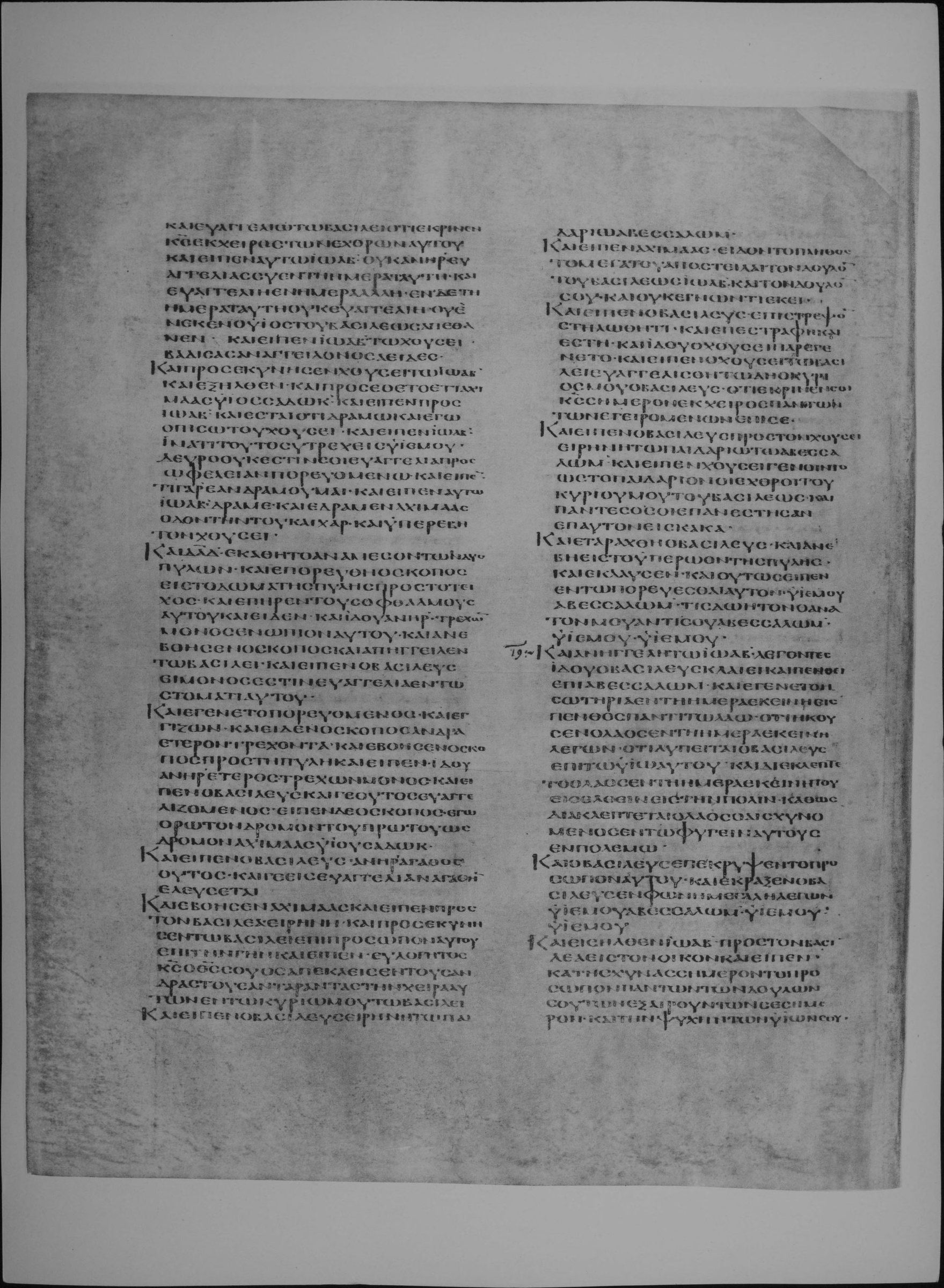
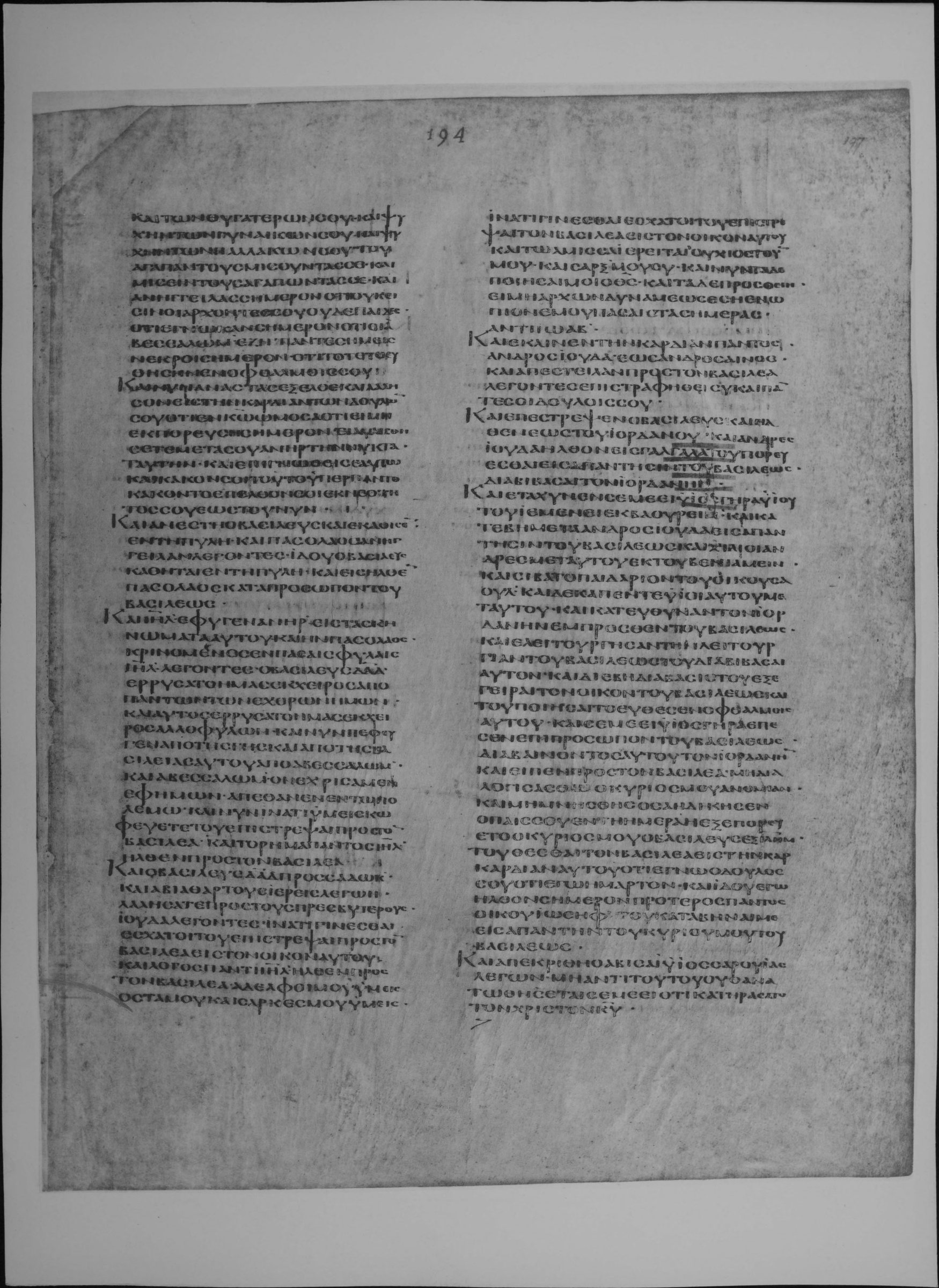
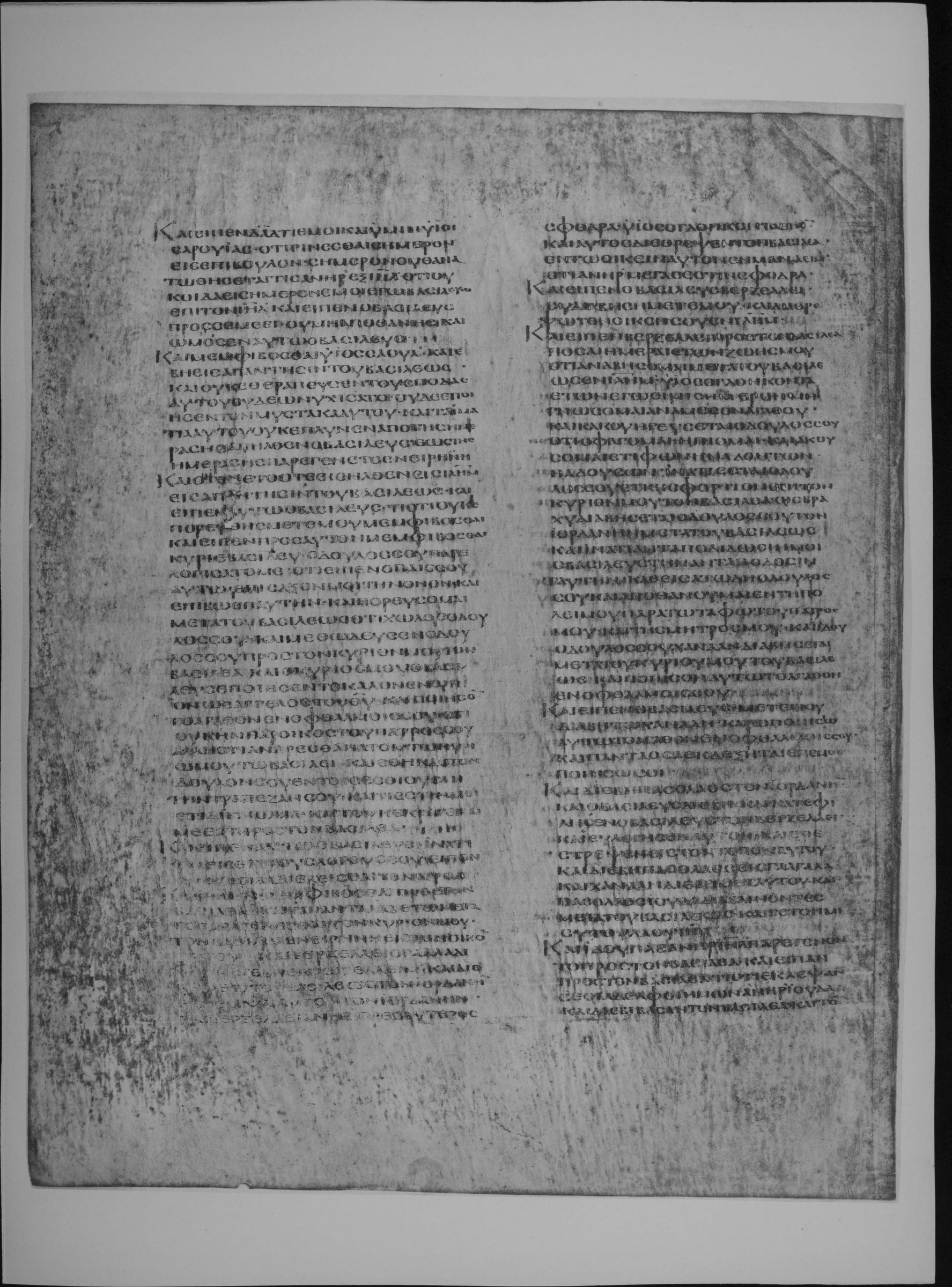
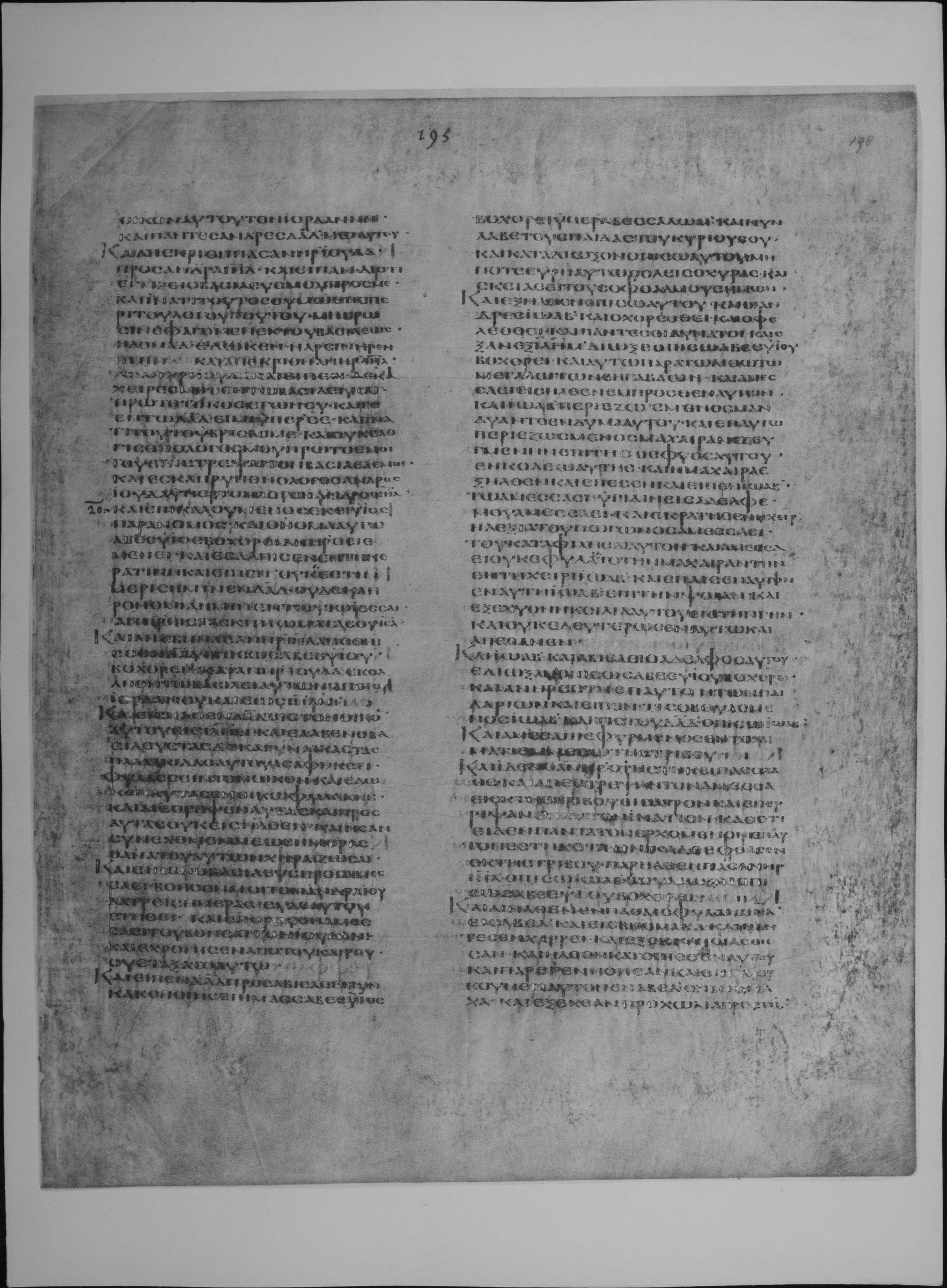
2 Kingdoms (2 Samuel) 19 in the Greek Old Testament (the Septuagint) as written in Codex Alexandrinus, a Greek Bible copied in the fifth century, probably in Egypt, and now in the British Library (Royal MS 1 D. V, the first of its four volumes). It is one of the three great early codices of the whole Greek Bible, with Codex Vaticanus and Codex Sinaiticus.
Numbering: Swete's Greek and Brenton's English number or divide some verses of this chapter differently (Swete 19:1-43 = Brenton 19:2-44). Each column keeps its own verse numbers, and sections are cut only where the two texts agree, so each section holds the same passage in both languages.
This entry meets the strict three-criteria standard of the Theosis Library:
- Manuscript scan: the pages of Codex Alexandrinus carrying this chapter (fol. 193v, fol. 194r, fol. 194v, fol. 195r), from the full-size photographic (autotype) facsimile published by the British Museum in 1879-1883, as digitised on the Internet Archive. The verse range of every page comes from the reduced photographic facsimile of 1930, which prints it beneath each plate, and the opening words of every page were read on the plate to confirm the page and the verse it begins with. Each section links to the page or pages that hold its verses. Folio numbers are those written at the head of each leaf and visible on the plates.
- Original text: Swete's edition, which here prints the text of Codex Vaticanus (Vat. gr. 1209), the base of his edition, and gives the readings of Alexandrinus only in his apparatus. The Greek column is therefore Vaticanus' text; where Alexandrinus differs, the plate shows what Alexandrinus reads.
- English translation: Sir Lancelot C. L. Brenton, The Septuagint Version of the Old Testament (1844; 1851 edition), a translation of the Greek, public domain, from the eBible.org text.
How was this verified? (Provenance)
Where on the image
2 Kingdoms (2 Samuel) 19:1-5 is on fol. 193v (full-size facsimile of 1879-83, Internet Archive codex-alexandrinus leaf 405). The 1930 reduced facsimile prints beneath this page: 2 Sam. xviii. 19-xix. 5. Checked on the plate: the page begins inside 2 Kingdoms (2 Samuel) 18:19 (first words read: ΚΑΙ ΕΥΑΓΓΕΛΙΩ ΤΩ ΒΑΣΙΛΕΙ ΟΤΙ ΕΚΡΙΝΕΝ ΑΥΤΩ ΚΣ ΕΚ ΧΕΙΡΟΣ ΤΩΝ ΕΧΘΡΩΝ ΑΥΤΟΥ). 2 Kingdoms (2 Samuel) 19:5-8 is on fol. 194r (full-size facsimile of 1879-83, Internet Archive codex-alexandrinus leaf 406). The 1930 reduced facsimile prints beneath this page: 2 Sam. xix. 5-21. Checked on the plate: the page begins inside 2 Kingdoms (2 Samuel) 19:5 (first words read: ΚΑΙ ΤΩΝ ΘΥΓΑΤΕΡΩΝ ΣΟΥ ΚΑΙ ΤΗΝ ΨΥΧΗΝ ΤΩΝ ΓΥΝΑΙΚΩΝ ΣΟΥ ΚΑΙ ΤΩΝ ΠΑΛΛΑΚΩΝ ΣΟΥ).
1Καὶ ἀνηγγέλη τῷ Ἰωὰβ λέγοντες Ἰδοὺ ὁ βασιλεὺς κλαίει καὶ πενθεῖ ἐπὶ Ἀβεσσαλώμ. 2καὶ ἐγένετο ἡ σωτηρία ἐν τῇ ἡμέρᾳ ἐκείνῃ εἰς πένθος παντὶ τῷ λαῷ, ὅτι ἤκουσεν ὁ λαὸς ἐν τῇ ἡμέρᾳ ἐκείνῃ λέγων ὅτι Λυπεῖται ὁ βασιλεὺς ἐπὶ τῷ υἱῷ αὐτοῦ. 3καὶ διεκλέπτετο ὁ λαὸς ἐν τῇ ἡμέρᾳ ἐκείνῃ τοῦ εἰσελθεῖν εἰς τὴν πόλιν, καθὼς διακλέπτεται ὁ λαὸς οἱ αἰσχυνόμενοι ἐν τῷ αὐτοὺς φεύγειν ἐν τῷ πολέμῳ. 4καὶ ὁ βασιλεὺς ἔκρυψεν τὸ πρόσωπον αὐτοῦ· καὶ ἔκραξεν ὁ βασιλεὺς φωνῇ μεγάλῃ λέγων Υἱέ μου Ἀβεσσαλώμ, Ἀβεσσαλὼμ υἱὲ μου. 5καὶ εἰσῆλθεν Ἰωὰβ πρὸς τὸν βασιλέα εἰς τὸν οἶκον καὶ εἶπεν Κατῄσχυνας σήμερον τὸ πρόσωπον πάντων τῶν δούλων σου τῶν ἐξαιρουμένων σε σήμερον καὶ τὴν ψυχὴν τῶν υἱῶν σου καὶ τῶν θυγατέρων σου καὶ τὴν ψυχὴν τῶν γυναικῶν σου καὶ τῶν παλλακῶν σου, 6τοῦ ἀγαπᾷν τοὺς μισοῦντάς σε καὶ μισεῖν τοὺς ἀγαπῶντάς σε, καὶ ἀνήγγειλας σήμερον ὅτι οὐκ εἰσὶν οἱ ἄρχοντές σου οὐδὲ παῖδες· ὅτι ἔγνωκα σήμερον ὅτι εἰ Ἀβεσσαλὼμ ἔζη, πάντες ἡμεῖς σήμερον νεκροί, ὅτι τότε τὸ εὐθὲς ἦν ἐν ὀφθαλμοῖς σου. 7καὶ νῦν ἀναστὰς ἔξελθε καὶ λάλησον εἰς τὴν καρδίαν τῶν δούλων σου, ὅτι ἐν Κυρίῳ ὤμοσα ὅτι εἰ μὴ ἐκπορεύσῃ σήμερον, εἰ αὐλισθήσεται ἀνὴρ μετὰ σοῦ τὴν νύκτα ταύτην· καὶ ἐπίγνωθι σεαυτῷ καὶ κακόν σοι τοῦτο ὑπὲρ πᾶν τὸ κακὸν τὸ ἐπελθόν σοι ἐκ νεότητός σου ἕως τοῦ νῦν. 8καὶ ἀνέστη ὁ βασιλεὺς καὶ ἐκάθισεν ἐν τῇ πύλῃ, καὶ πᾶς ὁ λαὸς ἀνήγγειλαν λέγοντες Ἰδοὺ ὁ βασιλεὺς κάθηται ἐν τῇ πύλῃ· καὶ εἰσῆλθεν πᾶς ὁ λαὸς κατὰ πρόσωπον τοῦ βασιλέως. Καὶ Ἰσραὴλ ἔφυγεν ἀνὴρ εἰς τὰ σκηνώματα αὐτοῦ.
2And they brought Joab word, saying, Behold, the king weeps and mourns for Abessalom. 3And the victory was turned that day into mourning to all the people, for the people heard say that day, The king grieves after his son. 4And the people stole away that day to go into the city, as people steal away when they are ashamed as they flee in the battle. 5And the king hid his face: and the king cried with a loud voice, My son Abessalom! Abessalom my son! 6And Joab went in to the king, into the house, and said, Thou hast this day shamed the faces of all thy servants that have delivered thee this day, and have saved the lives of thy sons and of thy daughters, and the lives of thy wives, and of thy concubines, 7forasmuch as thou lovest them that hate thee, and hatest them that love thee; and thou hast this day declared, that thy princes and thy servants are nothing in thy sight: for I know this day, that if Abessalom were alive, and all of us dead to-day, then it would have been right in thy sight. 8And now arise, and go forth, and speak comfortably to thy servants; for I have sworn by the Lord, that unless thou wilt go forth to-day, there shall not a man remain with thee this night: and know for thyself, this thing will indeed be evil to thee beyond all the evil that has come upon thee from thy youth until now. 9Then the king arose, and sat in the gate: and all the people reported, saying, Behold, the king sits in the gate. And all the people went in before the king to the gate; for Israel had fled every man to his tent.
Where on the image
2 Kingdoms (2 Samuel) 19:9-16 is on fol. 194r (full-size facsimile of 1879-83, Internet Archive codex-alexandrinus leaf 406). The 1930 reduced facsimile prints beneath this page: 2 Sam. xix. 5-21. Checked on the plate: the page begins inside 2 Kingdoms (2 Samuel) 19:5 (first words read: ΚΑΙ ΤΩΝ ΘΥΓΑΤΕΡΩΝ ΣΟΥ ΚΑΙ ΤΗΝ ΨΥΧΗΝ ΤΩΝ ΓΥΝΑΙΚΩΝ ΣΟΥ ΚΑΙ ΤΩΝ ΠΑΛΛΑΚΩΝ ΣΟΥ).
9καὶ ἦν πᾶς ὁ λαὸς κρινόμενος ἐν πάσαις φυλαῖς Ἰσραὴλ λέγοντες Ὁ βασιλεὺς Δαυεὶδ ἐρύσατο ἡμᾶς ἐκ χειρὸς ἀπὸ πάντων τῶν ἐχθρῶν ἡμῶν, καὶ αὐτὸς ἐξείλατο ἡμᾶς ἐκ χειρὸς ἀλλοφύλων· καὶ νῦν πέφευγεν ἀπὸ τῆς γῆς καὶ ἀπὸ τῆς βασιλείας αὐτοῦ καὶ ἀπὸ Ἀβεσσαλώμ. 10ὃν ἐχρίσαμεν ἐφ᾽ ἡμῶν, ἀπέθανεν ἐν τῷ πολέμῳ· καὶ νῦν ἵνα τί ὑμεῖς κωφεύετε τοῦ ἐπιστρέψαι πρὸς τὸν βασιλέα; καὶ τὸ ῥῆμα παντὸς Ἰσραὴλ ἦλθεν πρὸς τὸν βασιλέα. 11Καὶ ὁ βασιλεὺς Δαυεὶδ ἀπέστειλεν πρὸς Σαδὼκ καὶ πρὸς Ἀβιαθὰρ τοὺς ἱερεῖς λέγων Λαλήσατε πρὸς τοὺς πρεσβυτέρους Ἰούδα λέγοντες Ἵνα τί γίνεσθε ἔσχατοι τοῦ ἐπιστρέψαι πρὸς τὸν βασιλέα εἰς τὸν οἶκον αὐτοῦ; καὶ λόγος παντὸς Ἰσραὴλ ἦλθεν πρὸς τὸν βασιλέα. 12ἀδελφοί μοι ὑμεῖς, ὀστᾶ μου καὶ σάρκες μου ὑμεῖς· ἵνα τί γίνεσθε ἔσχατοι τοῦ ἐπιστρέψαι τὸν βασιλέα εἰς τὸν οἶκον αὐτοῦ; 13καὶ τῷ Ἀμεσσαεὶ ἐρεῖτε Οὐχὶ ὀστοῦν μου καὶ σάρξ μου σύ; καὶ νῦν τάδε ποιήσαι μοι ὁ θεὸς καὶ τάδε προσθείη, εἰ μὴ ἄρχων δυνάμεως ἔσῃ ἐνώπιον ἐμοῦ πάσας τὰς ἡμέρας ἀντὶ Ἰωάβ. 14καὶ ἔκλινεν τὴν καρδίαν παντὸς ἀνδρὸς Ἰούδα ἕως ἀνδρὸς ἑνός· καὶ ἀπέστειλαν πρὸς τὸν βασιλέα λέγοντες Ἐπιστράφητι σὺ καὶ πάντες οἱ δοῦλοί σου. 15καὶ ἐπέστρεψεν ὁ βασιλεὺς καὶ ἦλθεν ἕως τοῦ Ἰορδάνου· καὶ ἄνδρες Ἰούδα ἦλθαν εἰς Γάλγαλα τοῦ πορεύεσθαι εἰς ἀπαντὴν τοῦ βασιλέως, διαβιβάσαι τὸν βασιλέα τὸν Ἰορδάνην. 16Καὶ ἐτάχυνεν Σεμεεὶ υἱὸς Γηρὰ υἱοῦ τοῦ Ἰεμενεὶ ἐκ Βαουρεὶμ καὶ κατέβη μετὰ ἀνδρὸς Ἰούδα εἰς ἀπαντὴν τοῦ βασιλέως Δαυείδ,
10And all the people disputed among all the tribes of Israel, saying, King David delivered us from all our enemies, and he rescued us from the hand of the Philistines: and now he has fled from the land, and from his kingdom, and from Abessalom. 11And Abessalom, whom we anointed over us, is dead in battle: and now why are ye silent about bringing back the king? And the word of all Israel came to the king. 12And king David sent to Sadoc and Abiathar the priests, saying, Speak to the elders of Israel, saying, Why are ye the last to bring back the king to his house? whereas the word of all Israel is come to the king to his house. 13Ye are my brethren, ye are my bones and my flesh: why are ye the last to bring back the king to his house? 14And ye shall say to Amessai, Art thou not my bone and my flesh? and now God do so to me, and more also, if thou shalt not be commander of the host before me continually in the room of Joab. 15And he bowed the heart of all the men of Juda as that of one man; and they sent to the king, saying, Return thou, and all thy servants. 16And the king returned, and came as far as Jordan. And the men of Juda came to Galgala on their way to meet the king, to cause the king to pass over Jordan. 17And Semei the son of Gera, the Benjamite, of Baurim, hasted and went down with the men of Juda to meet king David.
Where on the image
2 Kingdoms (2 Samuel) 19:17-21 is on fol. 194r (full-size facsimile of 1879-83, Internet Archive codex-alexandrinus leaf 406). The 1930 reduced facsimile prints beneath this page: 2 Sam. xix. 5-21. Checked on the plate: the page begins inside 2 Kingdoms (2 Samuel) 19:5 (first words read: ΚΑΙ ΤΩΝ ΘΥΓΑΤΕΡΩΝ ΣΟΥ ΚΑΙ ΤΗΝ ΨΥΧΗΝ ΤΩΝ ΓΥΝΑΙΚΩΝ ΣΟΥ ΚΑΙ ΤΩΝ ΠΑΛΛΑΚΩΝ ΣΟΥ). 2 Kingdoms (2 Samuel) 19:22-24 is on fol. 194v (full-size facsimile of 1879-83, Internet Archive codex-alexandrinus leaf 407). The 1930 reduced facsimile prints beneath this page: 2 Sam. xix. 22-41. Checked on the plate: the page begins at the start of 2 Kingdoms (2 Samuel) 19:22 (first words read: ΚΑΙ ΕΙΠΕΝ ΔΑΥΕΙΔ ΤΙ ΕΜΟΙ ΚΑΙ ΥΜΙΝ ΥΙΟΙ ΣΑΡΟΥΙΑΣ ΟΤΙ ΓΙΝΕΣΘΕ ΜΟΙ ΣΗΜΕΡΟΝ ΕΙΣ ΕΠΙΒΟΥΛΟΝ).
17καὶ χίλιοι οἱ ἄνδρες μετ᾽ αὐτοῦ Βενιαμείν, καὶ Σειβὰ τὸ παιδάριον τοῦ οἴκου Σαοὺλ καὶ δέκα πέντε υἱοὶ αὐτοῦ μετ᾽ αὐτοῦ καὶ εἴκοσι δοῦλοι αὐτοῦ μετ᾽ αὐτοῦ· καὶ κατεύθυναν τὸν Ἰορδάνην ἔμπροσθεν τοῦ βασιλέως, 18καὶ ἐλειτούργησαν τὴν λειτουργίαν τοῦ διαβιβάσαι τὸν βασιλέα· καὶ διέβῃ ἡ διάβασις ἐξεγεῖραι τὸν οἶκον τοῦ βασιλέως καὶ τοῦ ποιῆσαι τὸ εὐθὲς ἐν ὀφθαλμοῖς αὐτοῦ· καὶ Σεμεεὶ υἱὸς Γηρὰ ἔπεσεν ἐπὶ πρόσωπον αὐτοῦ ἐνώπιον τοῦ βασιλέως, διαβαίνοντος αὐτοῦ τὸν Ἰορδάνην, 19καὶ εἶπεν πρὸς τὸν βασιλέα Μὴ διαλογισάσθω ὁ κύριός μου ἀνομίαν, καὶ μὴ μνησθῇς ὅσα ἠδίκησεν ὁ παῖς σου ἐν τῇ ἡμέρᾳ ᾗ ὁ κύριός μου ἐξεπορεύετο ἐξ Ἰερουσαλήμ, τοῦ θέσθαι τὸν βασιλέα εἰς τὴν καρδίαν αὐτοῦ· 20ὅτι ἔγνω ὁ δοῦλός σου ὅτι ἐγὼ ἥμαρτον, καὶ ἰδοὺ ἐγὼ ἦλθον σήμερον πρότερος παντὸς οἴκου Ἰωσὴφ τοῦ καταβῆναι εἰς ἀπαντὴν τοῦ κυρίου μου τοῦ βασιλέως. 21καὶ ἀπεκρίθη Ἀβεισὰ υἱὸς Σαρουίας καὶ εἶπεν Μὴ ἀντὶ τούτου οὐ θανατωθήσεται Σεμεεί, ὅτι κατηράσατο τὸν χριστὸν Κυρίου; 22καὶ εἶπεν Δαυείδ Τί ἐμοὶ καὶ ὑμῖν, υἱοὶ Σαρουίας, ὅτι γίνεσθέ, μοι σήμερον εἰς ἐπίβουλον; σήμερον οὐ θανατωθήσεταί τις ἀνὴρ ἐξ Ἰσραήλ, ὅτι οὐκ οἶδα εἰ σήμερον βασιλεύω ἐγὼ ἐπὶ τὸν Ἰσραήλ; 23καὶ εἶπεν ὁ βασιλεὺς πρὸς Σεμεεί Οὐ μὴ ἀποθάνῃς· καὶ ὤμοσεν αὐτῷ ὁ βασιλεύς. 24Καὶ Μεμφιβόσθε υἱὸς υἱοῦ Σαοὺλ κατέβη εἰς ἀπαντὴν τοῦ βασιλέως, καὶ οὐκ ἐθεράπευσεν τοὺς πόδας αὐτοῦ οὐδὲ ὠνυχίσατο οὐδὲ ἐποίησεν τὸν μύστακα αὐτοῦ καὶ τὰ ἱμάτια αὐτοῦ οὐκ ἀπέπλυνεν ἀπὸ τῆς ἡμέρας ἧς ἀπῆλθεν ὁ βασιλεὺς ἕως τῆς ἡμέρας ἧς αὐτὸς παρεγένετο ἐν εἰρήνῃ.
18And a thousand men of Benjamin were with him, and Siba the servant of the house of Saul, and his fifteen sons with him, and his twenty servants with him: and they went directly down to Jordan before the king, 19and they performed the service of bringing the king over; and there went over a ferry-boat to remove the household of the king, and to do that which was right in his eyes. And Semei the son of Gera fell on his face before the king, as he went over Jordan; 20and said to the king, Let not my lord now impute iniquity, and remember not all the iniquity of thy servant in the day in which my lord went out from Jerusalem, so that the king should mind it. 21For thy servant knows that I have sinned: and, behold, I am come to-day before all Israel and the house of Joseph, to go down and meet my lord the king. 22And Abessai the son of Saruia answered and said, Shall not Semei therefore be put to death, because he cursed the Lord's anointed? 23And David said, What have I to do with you, ye sons of Saruia, that ye as it were lie in wait against me this day? to-day no man in Israel shall be put to death, for I know not if I this day reign over Israel. 24And the king said to Semei, Thou shalt not die: and the king swore to him. 25And Memphibosthe the son of Saul's son went down to meet the king, and had not dressed his feet, nor pared his nails, nor shaved himself, neither had he washed his garments, from the day that the king departed, until the day when he arrived in peace.
Where on the image
2 Kingdoms (2 Samuel) 19:25-32 is on fol. 194v (full-size facsimile of 1879-83, Internet Archive codex-alexandrinus leaf 407). The 1930 reduced facsimile prints beneath this page: 2 Sam. xix. 22-41. Checked on the plate: the page begins at the start of 2 Kingdoms (2 Samuel) 19:22 (first words read: ΚΑΙ ΕΙΠΕΝ ΔΑΥΕΙΔ ΤΙ ΕΜΟΙ ΚΑΙ ΥΜΙΝ ΥΙΟΙ ΣΑΡΟΥΙΑΣ ΟΤΙ ΓΙΝΕΣΘΕ ΜΟΙ ΣΗΜΕΡΟΝ ΕΙΣ ΕΠΙΒΟΥΛΟΝ).
25καὶ ἐγένετο ὅτε εἰσῆλθεν εἰς Ἰερουσαλὴμ εἰς ἀπάντησιν τοῦ βασιλέως, καὶ εἶπεν αὐτῷ ὁ βασιλεύς Τί ὅτι οὐκ ἐπορεύθης μετ᾽ ἐμοῦ, Μεμφιβόσθε; 26καὶ εἶπεν πρὸς αὐτὸν Μεμφιβόσθε Κύριέ μου βασιλεῦ, ὁ δοῦλός σου παρελογίσατό με· ὅτι εἶπεν ὁ παῖς σου αὐτῷ Ἐπίσαξόν μοι τὴν ὄνον καὶ ἐπιβῶ ἐπ᾽ αὐτὴν καὶ πορεύσομαι μετὰ τοῦ βασιλέως, ὅτι χωλὸς ὁ δοῦλός σου. 27καὶ μεθώδευσεν ὁ δοῦλός σου πρὸς τὸν κύριόν μου, πρὸς τὸν βασιλέα· καὶ ὁ κύριός μου ὁ βασιλεὺς ἐποίησεν τὸ καλὸν ἐνώπιον ὡς ἄγγελος τοῦ θεοῦ. καὶ ποίησον τὸ ἀγαθὸν ἐν ὀφθαλμοῖς σου. 28ὅτι οὐκ ἦν πᾶς ὁ οἶκος τοῦ πατρός μου ἀλλ᾽ ἢ ὅτι ἄνδρες θανάτου τῷ κυρίῳ μου τῷ βασιλεῖ, καὶ ἔθηκας τὸν δοῦλόν σου ἐν τοῖς ἐσθίουσιν τὴν τράπεζάν σου· καὶ τί ἐστιν μοι ἔτι δικαίωμα καὶ τοῦ κεκραγέναι με ἔτι πρὸς τὸν βασιλέα; 29καὶ εἶπεν αὐτῷ ὁ βασιλεύς Ἵνα τί λαλεῖς ἔτι τοὺς λόγους σου; εἶπον Σὺ καὶ Σειβὰ διελεῖσθε τὸν ἀγρόν. 30καὶ εἶπεν Μεμφιβόσθε πρὸς τὸν βασιλέα Καί γε τὰ πάντα λαβέτω μετὰ τὸ παραγενέσθαι τὸν κύριόν μου τὸν βασιλέα ἐν εἰρήνῃ εἰς τὸν οἶκον αὐτοῦ. 31Καὶ Βερζελλεὶ ὁ Γαλααδείτης κατέβη ἐκ Ῥωγελλεὶμ καὶ διέβη μετὰ τοῦ βασιλέως τὸν Ἰορδάνην ἐκπέμψαι αὐτὸν τὸν Ἰορδάνην. 32καὶ Βερζελλεὶ ἀνὴρ πρεσβύτερος σφόδρα, υἱὸς ὀγδοήκοντα ἐτῶν, καὶ αὐτὸς διέθρεψεν τὸν βασιλέα ἐν τῷ οἰκεῖν αὐτὸν ἐν Μανάειμ, ὅτι ἀνὴρ μέγας ἐστὶν σφόδρα.
26And it came to pass when he went into Jerusalem to meet the king, that the king said to him, Why didst thou not go with me, Memphibosthe? 27And Memphibosthe said to him, My lord, O king, my servant deceived me; for thy servant said to him, Saddle me the ass, and I will ride upon it, and go with the king; for thy servant is lame. 28And he has dealt deceitfully with thy servant to my lord the king: but my lord the king is as an angel of God, and do thou that which is good in thine eyes. 29For all the house of my father were but as dead men before my lord the king; yet thou hast set thy servant among them that eat at thy table: and what right have I any longer even to cry to the king? 30And the king said to him, Why speakest thou any longer of thy matters? I have said, Thou and Siba shall divide the land. 31And Memphibosthe said to the king, Yea, let him take all, since my lord the king has come in peace to his house. 32And Berzelli the Galaadite came down from Rogellim, and crossed over Jordan with the king, that he might conduct the king over Jordan. 33And Berzelli was a very old man, eighty years old; and he had maintained the king when he dwelt in Manaim; for he was a very great man.
Where on the image
2 Kingdoms (2 Samuel) 19:33-40 is on fol. 194v (full-size facsimile of 1879-83, Internet Archive codex-alexandrinus leaf 407). The 1930 reduced facsimile prints beneath this page: 2 Sam. xix. 22-41. Checked on the plate: the page begins at the start of 2 Kingdoms (2 Samuel) 19:22 (first words read: ΚΑΙ ΕΙΠΕΝ ΔΑΥΕΙΔ ΤΙ ΕΜΟΙ ΚΑΙ ΥΜΙΝ ΥΙΟΙ ΣΑΡΟΥΙΑΣ ΟΤΙ ΓΙΝΕΣΘΕ ΜΟΙ ΣΗΜΕΡΟΝ ΕΙΣ ΕΠΙΒΟΥΛΟΝ).
33καὶ εἶπεν ὁ βασιλεὺς πρὸς Βερζελλεί Σὺ διαβήσῃ μετ᾽ ἐμοῦ, καὶ διαθρέψω τὸ γῆράς σου μετ᾽ ἐμοῦ ἐν Ἰερουσαλήμ. 34καὶ εἶπεν Βερζελλεὶ πρὸς τὸν βασιλέα Πόσαι ἡμέραι ἡμερῶν ζωῆς μου, ὅτι ἀναβήσομαι μετὰ τοῦ βασιλέως εἰς Ἰερουσαλήμ; 35υἱὸς ὀγδοήκοντα ἐτῶν ἐγώ εἰμι σήμερον· εἰ μὴν γνώσομαι ἀνὰ μέσον ἀγαθοῦ καὶ κακοῦ εἰς πονηρόν; εἰ γεύσεται ὁ δοῦλός σου ἔτι ὃ φάγομαι ἢ πίομαι; ἢ ἀκούσομαι ἔτι φωνὴν ᾀδόντων καὶ ᾀδουσῶν; ἵνα τί ἔσται ἔτι ὁ δοῦλός σου εἰς φορτίον ἐπὶ τὸν κύριόν μου τὸν βασιλέα; 36ὡς βραχὺ διαβήσεται ὁ δοῦλός σου τὸν Ἰορδάνην μετὰ τοῦ βασιλέως· καὶ ἵνα τί ἀνταποδίδωσίν μοι ὁ βασιλεὺς τὴν ἀνταπόδοσιν ταύτην; 37καθισάτω δὴ ὁ δοῦλός σου καὶ ἀποθανοῦμαι ἐν τῇ πόλει μου παρὰ τῷ τάφῳ τοῦ πατρός μου καὶ τῆς μητρός μου· καὶ ἰδοὺ ὁ δοῦλός σου Χαμαὰμ διαβήσεται μετὰ τοῦ κυρίου μου τοῦ βασιλέως, καὶ ποίησον αὐτῷ τὸ ἀγαθὸν ἐν ὀφθαλμοῖς σου. 38καὶ εἶπεν ὁ βασιλεύς Μετ᾽ ἐμοῦ διαβήτω Χαμαάμ, κἀγὼ ποιήσω αὐτῷ τὸ ἀγαθὸν ἐν ὀφθαλμοῖς σου, καὶ πάντα ὅσα ἐκλέξῃ ἐπ᾽ ἐμοὶ ποιήσω σοι. 39καὶ διέβη πᾶς ὁ λαὸς τὸν Ἰορδάνην, καὶ ὁ βασιλεὺς διέβη· καὶ κατεφίλησεν ὁ βασιλεὺς τὸν Βερζελλεὶ καὶ εὐλόγησεν αὐτόν, καὶ ἐπέστρεψεν εἰς τὸν τόπον αὐτοῦ. 40Καὶ διέβη ὁ βασιλεὺς εἰς Γάλγαλα, καὶ Χαμαὰμ διέβη μετ᾽ αὐτοῦ· καὶ πᾶς ὁ λαὸς Ἰούδα διαβαίνοντες μετὰ τοῦ βασιλέως καί γε τὸ ἥμισυ τοῦ λαοῦ Ἰσραήλ.
34And the king said to Berzelli, Thou shalt go over with me, and I will nourish thine old age with me in Jerusalem. 35And Berzelli said to the king, How many are the days of the years of my life, that I should go up with the king to Jerusalem? 36I am this day eighty years old: can I then distinguish between good and evil? Can thy servant taste any longer what I eat or drink? can I any longer hear the voice of singing men or singing women? and wherefore shall thy servant any longer be a burden to my lord the king? 37Thy servant will go a little way over Jordan with the king: and why does the king return me this recompense? 38Let, I pray thee, thy servant remain, and I will die in my city, by the tomb of my father and of my mother. And, behold, thy servant Chamaam shall go over with my lord the king; and do thou to him as it seems good in thine eyes. 39And the king said, Let Chamaam go over with me, and I will do to him what is good in my sight; and whatsoever thou shalt choose at my hand, I will do for thee. 40And all the people went over Jordan, and the king went over; and the king kissed Berzelli, and blessed him; and he returned to his place. 41And the king went over to Galgala, and Chamaam went over with him: and all the men of Juda went over with the king, and also half the people of Israel.
Where on the image
2 Kingdoms (2 Samuel) 19:41 is on fol. 194v (full-size facsimile of 1879-83, Internet Archive codex-alexandrinus leaf 407). The 1930 reduced facsimile prints beneath this page: 2 Sam. xix. 22-41. Checked on the plate: the page begins at the start of 2 Kingdoms (2 Samuel) 19:22 (first words read: ΚΑΙ ΕΙΠΕΝ ΔΑΥΕΙΔ ΤΙ ΕΜΟΙ ΚΑΙ ΥΜΙΝ ΥΙΟΙ ΣΑΡΟΥΙΑΣ ΟΤΙ ΓΙΝΕΣΘΕ ΜΟΙ ΣΗΜΕΡΟΝ ΕΙΣ ΕΠΙΒΟΥΛΟΝ). 2 Kingdoms (2 Samuel) 19:41-43 is on fol. 195r (full-size facsimile of 1879-83, Internet Archive codex-alexandrinus leaf 408). The 1930 reduced facsimile prints beneath this page: 2 Sam. xix. 41-xx. 15. Checked on the plate: the page begins inside 2 Kingdoms (2 Samuel) 19:41 (first words read: ΟΙΚΟΝ ΑΥΤΟΥ ΤΟΝ ΙΟΡΔΑΝΗΝ ΚΑΙ ΠΑΝΤΕΣ ΑΝΔΡΕΣ ΔΑΥΕΙΔ ΜΕΤ ΑΥΤΟΥ).
41καὶ ἰδοὺ πᾶς ἀνὴρ Ἰσραὴλ παρεγένοντο πρὸς τὸν βασιλέα, καὶ εἶπον πρὸς τὸν βασιλέα Τί ὅτι ἔκλεψάν σε οἱ ἀδελφοὶ ἡμῶν ἀνὴρ Ἰούδα, καὶ διεβίβασαν τὸν βασιλέα καὶ τὸν οἶκον αὐτοῦ τὸν Ἰορδάνην, καὶ πάντες ἄνδρες Δαυεὶδ μετ᾽ αὐτοῦ; 42καὶ ἀπεκρίθη πᾶς ἀνὴρ Ἰούδα πρὸς ἄνδρα Ἰσραὴλ καὶ εἶπαν Διότι ἐγγίζει πρὸς μὲ ὁ βασιλεύς; καὶ ἵνα τί οὕτως ἐθυμώθης περὶ τοῦ λόγου τούτου; μὴ βρώσει ἐφάγαμεν ἐκ τοῦ βασιλέως, ἢ δόμα ἔδωκεν ἢ ἄρσιν ἦρεν ἡμῖν; 43καὶ ἀπεκρίθη ἀνὴρ Ἰσραὴλ τῷ ἀνδρὶ Ἰούδα καὶ εἶπεν Δέκα χεῖρές μοι ἐν τῷ βασιλεῖ, καὶ πρωτότοκος ἐγὼ ἢ σύ, καί γε ἐν τῷ Δαυείδ εἰμι ὑπὲρ σέ. καὶ ἵνα τί τοῦτο ὕβρισάς με καὶ οὐκ ἐλογίσθη ὁ λόγος μου πρῶτός μοι τοῦ Ἰούδα, ἐπιστρέψαι τὸν βασιλέα ἐμοί; καὶ ἐσκληρύνθη ὁ λόγος ἀνδρὸς Ἰούδα ὑπὲρ τὸν λόγον ἀνδρὸς Ἰσραήλ.
42And behold, all the men of Israel came to the king, and said to the king, Why have our brethren the men of Juda stolen thee away, and caused the king and all his house to pass over Jordan, and all the men of David with him? 43And all the men of Juda answered the men of Israel, and said, Because the king is near of kin to us: and why were you thus angry concerning this matter? have we indeed eaten of the king's food? or has he given us a gift, or has he sent us a portion? 44And the men of Israel answered the men of Juda, and said, We have ten parts in the king, and we are older than you, we have also an interest in David above you: and why have ye thus insulted us, and why was not our advice taken before that of Juda, to bring back our king? And the speech of the men of Juda was sharper than the speech of the men of Israel.
Cite
Sources
- Source: Codex Alexandrinus (British Library Royal MS 1 D. V) via the British Museum photographic facsimiles of 1879-83 and 1930 (Internet Archive) + Swete's Septuagint + Brenton's English (holding institution)
- Critical edition: H. B. Swete, The Old Testament in Greek according to the Septuagint (1909)
← previous · → next · v cycle view · l back to library