2 Kingdoms (2 Samuel), Chapter 20 (Codex Alexandrinus)
Introduction
2 Kingdoms (2 Samuel) 20 in the Greek Old Testament (the Septuagint) as written in Codex Alexandrinus, a Greek Bible copied in the fifth century, probably in Egypt, and now in the British Library (Royal MS 1 D. V, the first of its four volumes). It is one of the three great early codices of the whole Greek Bible, with Codex Vaticanus and Codex Sinaiticus.
This entry meets the strict three-criteria standard of the Theosis Library:
- Manuscript scan: the pages of Codex Alexandrinus carrying this chapter (fol. 195r, fol. 195v), from the full-size photographic (autotype) facsimile published by the British Museum in 1879-1883, as digitised on the Internet Archive. The verse range of every page comes from the reduced photographic facsimile of 1930, which prints it beneath each plate, and the opening words of every page were read on the plate to confirm the page and the verse it begins with. Each section links to the page or pages that hold its verses. Folio numbers are those written at the head of each leaf and visible on the plates.
- Original text: Swete's edition, which here prints the text of Codex Vaticanus (Vat. gr. 1209), the base of his edition, and gives the readings of Alexandrinus only in his apparatus. The Greek column is therefore Vaticanus' text; where Alexandrinus differs, the plate shows what Alexandrinus reads.
- English translation: Sir Lancelot C. L. Brenton, The Septuagint Version of the Old Testament (1844; 1851 edition), a translation of the Greek, public domain, from the eBible.org text.
How was this verified? (Provenance)
Where on the image
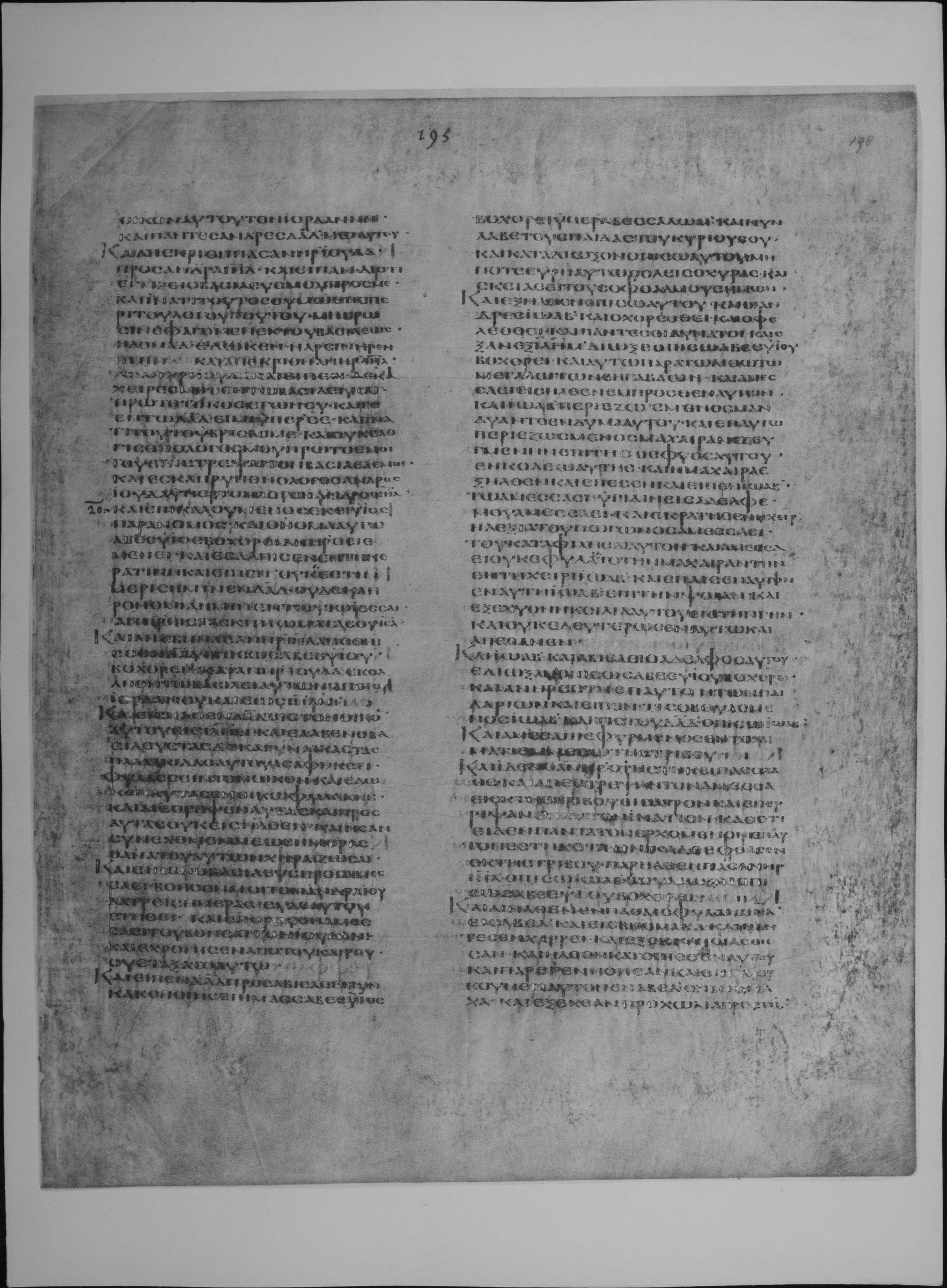
2 Kingdoms (2 Samuel) 20:1-8 is on fol. 195r (full-size facsimile of 1879-83, Internet Archive codex-alexandrinus leaf 408). The 1930 reduced facsimile prints beneath this page: 2 Sam. xix. 41-xx. 15. Checked on the plate: the page begins inside 2 Kingdoms (2 Samuel) 19:41 (first words read: ΟΙΚΟΝ ΑΥΤΟΥ ΤΟΝ ΙΟΡΔΑΝΗΝ ΚΑΙ ΠΑΝΤΕΣ ΑΝΔΡΕΣ ΔΑΥΕΙΔ ΜΕΤ ΑΥΤΟΥ).
1Καὶ ἐκεῖ ἐπικαλούμενος υἱὸς παράνομος καὶ ὄνομα αὐτῷ Σάβεε, υἱὸς Βοχορεί, ἀνὴρ ὁ Ἱεμενεί· καὶ ἐσάλπισεν τῇ κερατίνῃ καὶ εἶπεν Οὐκ ἔστιν ἡμῖν μερὶς ἐν Δαυεὶδ οὐδὲ κληρονομία ἡμῖν ἐν τῷ υἱῷ Ἰεσσαί· ἀνὴρ εἰς τὰ σκηνώματά σου, Ἰσραήλ. 2καὶ ἀνέβη πᾶς Ἰσραὴλ ἀπὸ ὄπισθεν Δαυεὶδ ὀπίσω Σάβεε υἱοῦ Βοχορεί· καὶ ἀνὴρ Ἰούδα ἐκολλήθη τῷ βασιλεῖ αὐτῶν ἀπὸ τοῦ Ἰορδάνου καὶ ἕως Ἰερουσαλήμ. 3Καὶ εἰσῆλθεν Δαυεὶδ εἰς τὸν οἶκον αὐτοῦ εἰς Ἰερουσαλήμ· καὶ ἔλαβεν ὁ βασιλεὺς τὰς δέκα γυναῖκας τὰς παλλακὰς αὐτοῦ, ἃς ἀφῆκεν φυλάσσειν τὸν οἶκον, καὶ ἔδωκεν αὐτὰς ἐν οἴκῳ φυλακῆς, καὶ διέθρεψεν αὐτὰς καὶ πρὸς αὐτὰς οὐκ εἰσῆλθεν, καὶ ἦσαν συνεχόμεναι ἕως ἡμέρας θανάτου αὐτῶν, χῆραι ζῶσαι. 4Καὶ εἶπεν ὁ βασιλεὺς πρὸς Ἀμεσσαεί Βόησόν μοι τὸν ἄνδρα Ἰούδα τρεῖς ἡμέρας, σὺ δὲ αὐτοῦ στῆθι. 5καὶ ἐπορεύθη Ἀμεσσαεὶ τοῦ βοῆσαι τὸν Ἰούδαν, καὶ ἐχρόνισεν ἀπὸ τοῦ καιροῦ οὗ ἐτάξατο αὐτῷ. 6καὶ εἶπεν Δαυεὶδ πρὸς Ἀβεισά Νῦν κακοποιήσει ἡμᾶς Σάβεε υἱὸς Βοχορεὶ ὑπὲρ Ἀβεσσαλώμ· καὶ νῦν σὺ λάβε μετὰ σεαυτοῦ τοὺς παῖδας τοῦ κυρίου σου καὶ καταδίωξον ὀπίσω αὐτοῦ, μή ποτε ἑαυτῷ εὕρῃ πόλεις ὀχυρὰς καὶ σκιάσει τοὺς ὀφθαλμοὺς ἡμῶν. 7καὶ ἐξῆλθεν ὀπίσω αὐτοῦ Ἀβεσσὰ καὶ οἱ ἄνδρες Ἰωὰβ καὶ ὁ Χελεθθεὶ καὶ ὁ Φελεθθεὶ καὶ πάντες οἱ δυνατοί, καὶ ἐξῆλθαν ἐξ Ἰερουσαλὴμ διῶξαι ὀπίσω Σάβεε υἱοῦ Βοχορεί. 8καὶ αὐτοὶ παρὰ τῷ λίθῳ τῷ μεγάλῳ τῷ ἐν Γαβαών, καὶ Ἀμεσσαεὶ ἦλθεν ἔμπροσθεν αὐτῶν· καὶ Ἰωὰβ περιεζωσμένος μανδύαν τὸ ἔνδυμα αὐτοῦ, καὶ ἐπ᾽ αὐτῷ περιεζωσμένος μάχαιραν ἐζευγμένην ἐπὶ τῆς ὀσφύος αὐτοῦ ἐν κολεῷ αὐτῆς· καὶ ἡ μάχαιρα ἐξῆλθεν, καὶ αὐτὴ ἐξῆλθεν καὶ ἔπεσεν.
1And there was a transgressor so called there, and his name was Sabee, a Benjamite, the son of Bochori: and he blew the trumpet, and said, We have no portion in David, neither have we any inheritance in the son of Jessæ: to thy tents, O Israel, every one. 2And all the men of Israel went up from following David after Sabee the son of Bochori: but the men of Juda adhered to their king, from Jordan even to Jerusalem. 3And David went into his house at Jerusalem: and the king took the ten women his concubines, whom he had left to keep the house, and he put them in a place of custody, and maintained them, and went not in to them; and they were kept living as widows, till the day of their death. 4And the king said to Amessai, Call to me the men of Juda for three days, and do thou be present here. 5And Amessai went to call Juda, and delayed beyond the time which David appointed him. 6And David said to Amessai, Now shall Sabee the son of Bochori do us more harm than Abessalom: now then take thou with thee the servants of thy lord, and follow after him, lest he find for himself strong cities, so will he blind our eyes. 7And there went out after him Amessai and the men of Joab, and the Cherethites, and the Phelethites, and all the mighty men: and they went out from Jerusalem to pursue after Sabee the son of Bochori. 8And they were by the great stone that is in Gabaon: and Amessai went in before them: and Joab had upon him a military cloak over his apparel, and over it he was girded with a dagger fastened upon his loins in its scabbard: and the dagger came out, it even came out and fell.
Where on the image
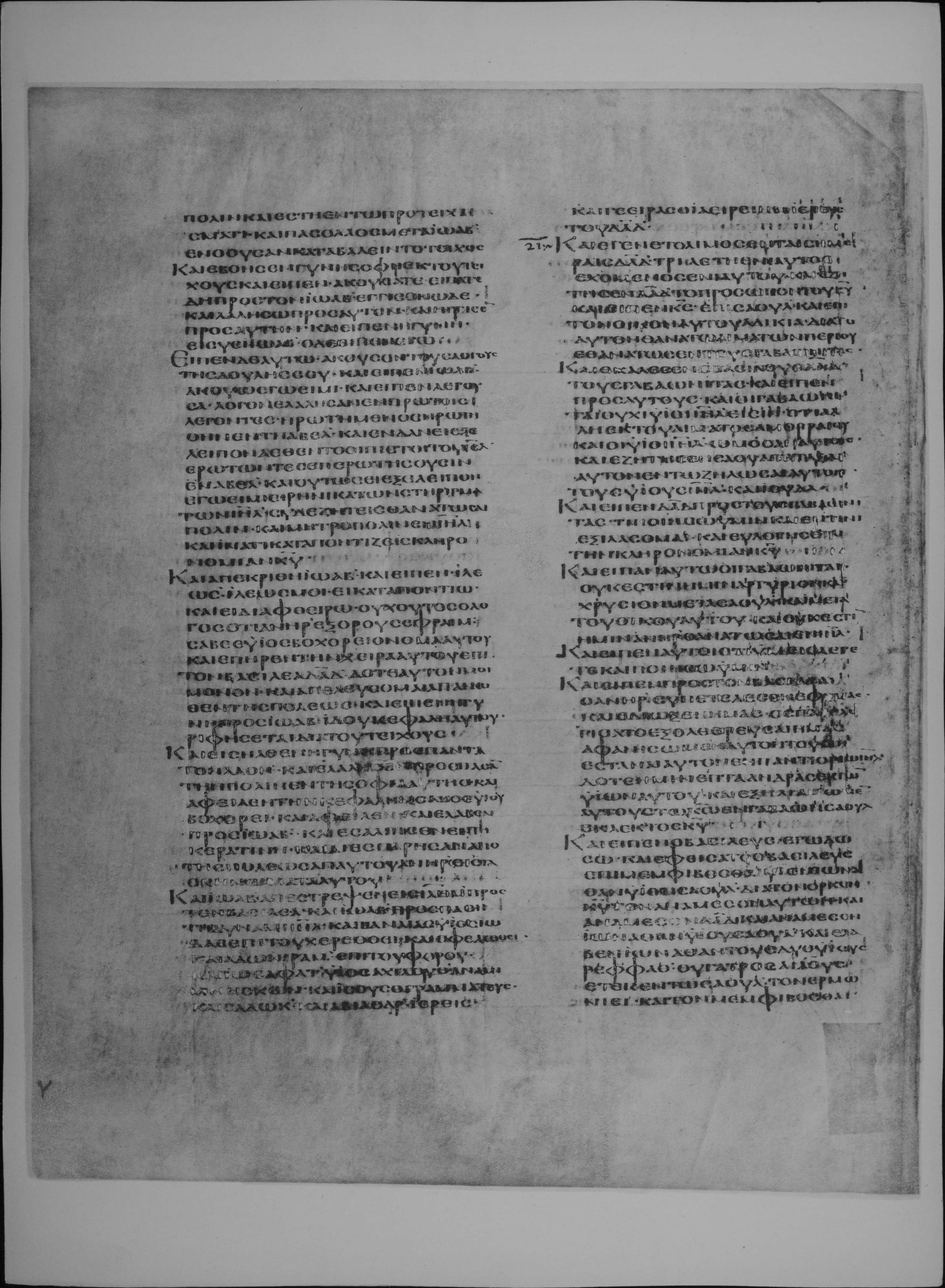
2 Kingdoms (2 Samuel) 20:9-15 is on fol. 195r (full-size facsimile of 1879-83, Internet Archive codex-alexandrinus leaf 408). The 1930 reduced facsimile prints beneath this page: 2 Sam. xix. 41-xx. 15. Checked on the plate: the page begins inside 2 Kingdoms (2 Samuel) 19:41 (first words read: ΟΙΚΟΝ ΑΥΤΟΥ ΤΟΝ ΙΟΡΔΑΝΗΝ ΚΑΙ ΠΑΝΤΕΣ ΑΝΔΡΕΣ ΔΑΥΕΙΔ ΜΕΤ ΑΥΤΟΥ). 2 Kingdoms (2 Samuel) 20:15-16 is on fol. 195v (full-size facsimile of 1879-83, Internet Archive codex-alexandrinus leaf 409). The 1930 reduced facsimile prints beneath this page: 2 Sam. xx. 15-xxi. 8. Checked on the plate: the page begins inside 2 Kingdoms (2 Samuel) 20:15 (first words read: ΠΟΛΙΝ ΚΑΙ ΕΣΤΗ ΕΝ ΤΩ ΠΡΟΤΕΙΧΙΣΜΑΤΙ ΚΑΙ ΠΑΣ Ο ΛΑΟΣ Ο ΜΕΤΑ ΙΩΑΒ ΕΝΟΟΥΣΑΝ ΚΑΤΑΒΑΛΕΙΝ ΤΟ ΤΕΙΧΟΣ).
9καὶ εἶπεν Ἰωὰβ τῷ Ἀμεσσαεί Εἰ ὑγιαίνεις, ἀδελφέ; καὶ ἐκράτησεν ἡ χεὶρ ἡ δεξιὰ Ἰωὰβ τοῦ πώγωνος Ἀμεσσαεὶ τοῦ καταφιλῆσαι αὐτόν. 10καὶ Ἀμεσσαεὶ οὐκ ἐφυλάξατο τὴν μάχαιραν τὴν ἐν τῇ χειρὶ Ἰωάβ· καὶ ἔπαισεν αὐτὸν ἐν αὐτῇ Ἰωὰβ εἰς τὴν ψόαν, καὶ ἐξεχύθη ἡ κοιλία αὐτοῦ εἰς τὴν γῆν, καὶ οὐκ ἐδευτέρωσεν αὐτῷ, καὶ ἀπέθανεν. καὶ Ἰωὰβ καὶ Ἀβεισὰ ὁ ἀδελφὸς αὐτοῦ ἐδίωξεν ὀπίσω Σάβεε υἱοῦ Βοχορεί. 11καὶ ἀνὴρ ἔστη ἐπ᾽ αὐτὸν τῶν παιδαρίων Ἰωὰβ καὶ εἶπεν Τίς ὁ βουλόμενος Ἰωάβ, καὶ τίς τοῦ Δαυεὶδ ὀπίσω Ἰωάβ; 12καὶ Ἀμεσσαεὶ πεφυρμένος ἐν τῷ αἵματι ἐν μέσῳ τῆς τρίβου, καὶ εἶδεν ἀνὴρ ὅτι εἱστήκει πᾶς ὁ λαός· καὶ ἀπέστρεψαν τὸν Ἀμεσσαεὶ ἐκ τῆς τρίβου εἰς ἀγρὸν καὶ ἐπέρριψεν ἐπ᾽ αὐτὸν ἱμάτιον, καθότι εἶδεν πάντα τὸν ἐρχόμενον ἐπ᾽ αὐτὸν ἑστηκότα. 13ἡνίκα δὲ ἔφθασεν ἐκ τῆς τρίβου, παρῆλθεν πᾶς ἀνὴρ Ἰσραὴλ ὀπίσω Ἰωὰβ τοῦ διῶξαι ὀπίσω Σάβεε υἱοῦ Βοχορεὶ. 14καὶ διῆλθεν ἐν πάσαις φυλαῖς Ἰσραὴλ εἰς Ἀβὲλ καὶ εἰς Βαιθμαχά, καὶ πάντες ἐν Χαρρεὶ καὶ ἐξεκκλησιάσθησαν· καὶ ἦλθεν κατόπισθεν αὐτοῦ. 15καὶ παρεγενήθησαν καὶ ἐπολιόρκουν ἐπ᾽ αὐτὸν ἐν Ἀβὲλ τὴν Βαιθμαχά, καὶ ἐξέχεαν πρόσχωμα πρὸς τὴν πόλιν καὶ ἔστη ἐν τῷ προτειχίσματι· καὶ πᾶς ὁ λαὸς ὁ μετὰ Ἰωὰβ ἐνοοῦσαν καταβαλεῖν τὸ τεῖχος· 16καὶ ἐβόησεν γυνὴ σοφὴ ἐκ τοῦ τείχους καὶ εἶπεν Ἀκούσατε ἀκούσατε, εἴπατε δὴ πρὸς Ἰωάβ Ἔγγισον ἕως ὧδε, καὶ λαλήσω πρὸς αὐτόν.
9And Joab said to Amessai, Art thou in health, my brother? and the right hand of Joab took hold of the beard of Amessai to kiss him. 10And Amessai observed not the dagger that was in the hand of Joab: and Joab smote him with it on the loins, and his bowels were shed out upon the ground, and he did not repeat the blow, and he died: and Joab and Abessai his brother pursued after Sabee the son of Bochori. 11And there stood over him one of the servants of Joab, and said, Who is he that is for Joab, and who is on the side of David following Joab? 12And Amessai was weltering in blood in the midst of the way. And a man saw that all the people stood still; and he removed Amessai out of the path into a field, and he cast a garment upon him, because he saw every one that came to him standing still. 13And when he was quickly removed from the road, every man of Israel passed after Joab to pursue after Sabee the son of Bochori. 14And he went through all the tribes of Israel to Abel, and to Bethmacha; and all in Charri too were assembled, and followed after him. 15And they came and besieged him in Abel and Phermacha: and they raised a mound against the city and it stood close to the wall; and all the people with Joab proposed to throw down the wall. 16And a wise woman cried from the wall, and said, Hear, hear; say, I pray ye, to Joab, Draw near hither, and I will speak to him.
Where on the image
2 Kingdoms (2 Samuel) 20:17-26 is on fol. 195v (full-size facsimile of 1879-83, Internet Archive codex-alexandrinus leaf 409). The 1930 reduced facsimile prints beneath this page: 2 Sam. xx. 15-xxi. 8. Checked on the plate: the page begins inside 2 Kingdoms (2 Samuel) 20:15 (first words read: ΠΟΛΙΝ ΚΑΙ ΕΣΤΗ ΕΝ ΤΩ ΠΡΟΤΕΙΧΙΣΜΑΤΙ ΚΑΙ ΠΑΣ Ο ΛΑΟΣ Ο ΜΕΤΑ ΙΩΑΒ ΕΝΟΟΥΣΑΝ ΚΑΤΑΒΑΛΕΙΝ ΤΟ ΤΕΙΧΟΣ).
17καὶ προσήγγισεν πρὸς αὐτήν, καὶ εἶπεν ἡ γυνή Εἰ σὺ εἶ Ἰωάβ; ὁ δὲ εἶπεν Ἐγώ. εἶπεν δὲ αὐτῷ Ἄκουσον τοὺς λόγους τῆς δούλης σου· καὶ εἶπεν Ἰωάβ Ἀκούω ἐγώ εἰμι. 18καὶ εἶπεν λέγουσα Λόγον ἐλάλησαν ἐν πρώτοις λέγοντες Ἠρωτημένος ἠρωτήθη ἐν τῇ Ἀβὲλ καὶ ἐν Δὰν εἰ ἐξέλιπον ἃ ἔθεντο οἱ πιστοὶ τοῦ Ἰσραήλ· ἐρῶντες ἐπερωτήσουσιν ἕνα ἐν Ἀβὲλ καὶ οὕτως, εἰ ἐξέλιπον. 19ἐγώ εἰμι εἰρηνικὰ τῶν στηριγμάτων Ἰσραήλ, σὺ δὲ ζητεῖς θανατῶσαι πόλιν καὶ μητρόπολιν ἐν Ἰσραήλ· ἵνα τί καταποντίζεις κληρονομίαν Κυρίου; 20καὶ ἀπεκρίθη Ἰωὰβ καὶ εἶπεν Ἵλεώς μοι ἵλεώς μοι, εἰ καταποντιῶ καὶ εἰ φθερῶ· 21οὐχ οὗτος ὁ λόγος· ὅτι ἀνὴρ ἐξ ὄρους Ἐφράιμ, Σάβεε υἱὸς Βοχορεὶ ὄνομα αὐτοῦ, καὶ ἐπῆρεν τὴν χεῖρα αὐτοῦ ἐπὶ τὸν βασιλέα Δαυείδ. δότε αὐτόν μοι μόνον, καὶ ἀπελεύσομαι ἀπάνωθεν τῆς πόλεως. καὶ εἶπεν ἡ γυνὴ πρὸς Ἰωάβ Ἰδοὺ ἡ κεφαλὴ αὐτοῦ ῥιφήσεται πρὸς σὲ διὰ τοῦ τείχους. 22καὶ εἰσῆλθεν ἡ γυνὴ πρὸς πάντα τὸν λαόν, καὶ ἐλάλησεν πρὸς πᾶσαν τὴν πόλιν ἐν τῇ σοφίᾳ αὐτῆς· καὶ ἀφεῖλεν τὴν κεφαλὴν Σάβεε υἱοῦ Βοχορεί, καὶ ἀφεῖλεν καὶ ἔβαλεν πρὸς Ἰωάβ. καὶ ἐσάλπισεν ἐν κερατίνῃ, καὶ διεσπάρησαν ἀπὸ τῆς πόλεως ἀπ᾽ αὐτοῦ ἀνὴρ εἰς τὰ σκηνώματα αὐτοῦ· καὶ Ἰωὰβ ἀπέστρεψεν εἰς Ἰερουσαλὴμ πρὸς τὸν βασιλέα. 23Καὶ Ἰωὰβ πρὸς πάσῃ τῇ δυνάμει Ἰσραήλ, καὶ Βαναίας υἱὸς Ἀχειλοὺθ ἐπὶ τοῦ Χελεθθεὶ καὶ ἐπὶ τοῦ Φελεθθεί, 24καὶ Ἀδωνειρὰμ ἐπὶ τοῦ φόρου, καὶ Ἰωσαφὰθ υἱὸς Ἀχειλοὺθ ἀναμιμνήσκων, 25καὶ Ἰησοῦς ὁ γραμματεύς, καὶ Σαδὼκ καὶ Ἀβιαθὰρ ἱερεῖς, 26καί γε Εἴρας ὁ Ἰαρεὶν ἦν ἱερεὺς τοῦ Δαυείδ.
17And he drew nigh to her, and the woman said to him, Art thou Joab? and he said, I am. And she said to him, Hear the words of thy handmaid; and Joab said, I do hear. 18And she spoke, saying, Of old time they said thus, Surely one was asked in Abel, and Dan, whether the faithful in Israel failed in what they purposed; they will surely ask in Abel, even in like manner, whether they have failed. 19I am a peaceable one of the strong ones in Israel; but thou seekest to destroy a city and a mother-city in Israel: why dost thou seek to ruin the inheritance of the Lord? 20And Joab answered and said, Far be it, far be it from me, that I should ruin or destroy. 21Is not the case thus, that a man of mount Ephraim, Sabee son of Bochori by name, has even lifted up his hand against king David? Give him only to me, and I will depart from the city. And the woman said to Joab, Behold, his head shall be thrown to thee over the wall. 22And the woman went in to all the people, and she spoke to all the city in her wisdom; and they took off the head of Sabee the son of Bochori; and took it away and threw it to Joab: and he blew the trumpet, and the people separated from the city away from him, every man to his tent: and Joab returned to Jerusalem to the king. 23And Joab was over all the forces of Israel: and Banaias the son of Jodae was over the Cherethites and over the Phelethites. 24And Adoniram was over the tribute: and Josaphath the son of Achiluth was recorder. 25And Susa was scribe: and Sadoc and Abiathar were priests. 26Moreover Iras the son of Iarin was priest to David.
Cite
Sources
- Source: Codex Alexandrinus (British Library Royal MS 1 D. V) via the British Museum photographic facsimiles of 1879-83 and 1930 (Internet Archive) + Swete's Septuagint + Brenton's English (holding institution)
- Critical edition: H. B. Swete, The Old Testament in Greek according to the Septuagint (1909)
← previous · → next · v cycle view · l back to library