2 Kingdoms (2 Samuel), Chapter 8 (Codex Alexandrinus)
Introduction
2 Kingdoms (2 Samuel) 8 in the Greek Old Testament (the Septuagint) as written in Codex Alexandrinus, a Greek Bible copied in the fifth century, probably in Egypt, and now in the British Library (Royal MS 1 D. V, the first of its four volumes). It is one of the three great early codices of the whole Greek Bible, with Codex Vaticanus and Codex Sinaiticus.
This entry meets the strict three-criteria standard of the Theosis Library:
- Manuscript scan: the page of Codex Alexandrinus carrying this chapter (fol. 186v), from the full-size photographic (autotype) facsimile published by the British Museum in 1879-1883, as digitised on the Internet Archive. The verse range of every page comes from the reduced photographic facsimile of 1930, which prints it beneath each plate, and the opening words of every page were read on the plate to confirm the page and the verse it begins with. Each section links to the page or pages that hold its verses. Folio numbers are those written at the head of each leaf and visible on the plates.
- Original text: Swete's edition, which here prints the text of Codex Vaticanus (Vat. gr. 1209), the base of his edition, and gives the readings of Alexandrinus only in his apparatus. The Greek column is therefore Vaticanus' text; where Alexandrinus differs, the plate shows what Alexandrinus reads.
- English translation: Sir Lancelot C. L. Brenton, The Septuagint Version of the Old Testament (1844; 1851 edition), a translation of the Greek, public domain, from the eBible.org text.
How was this verified? (Provenance)
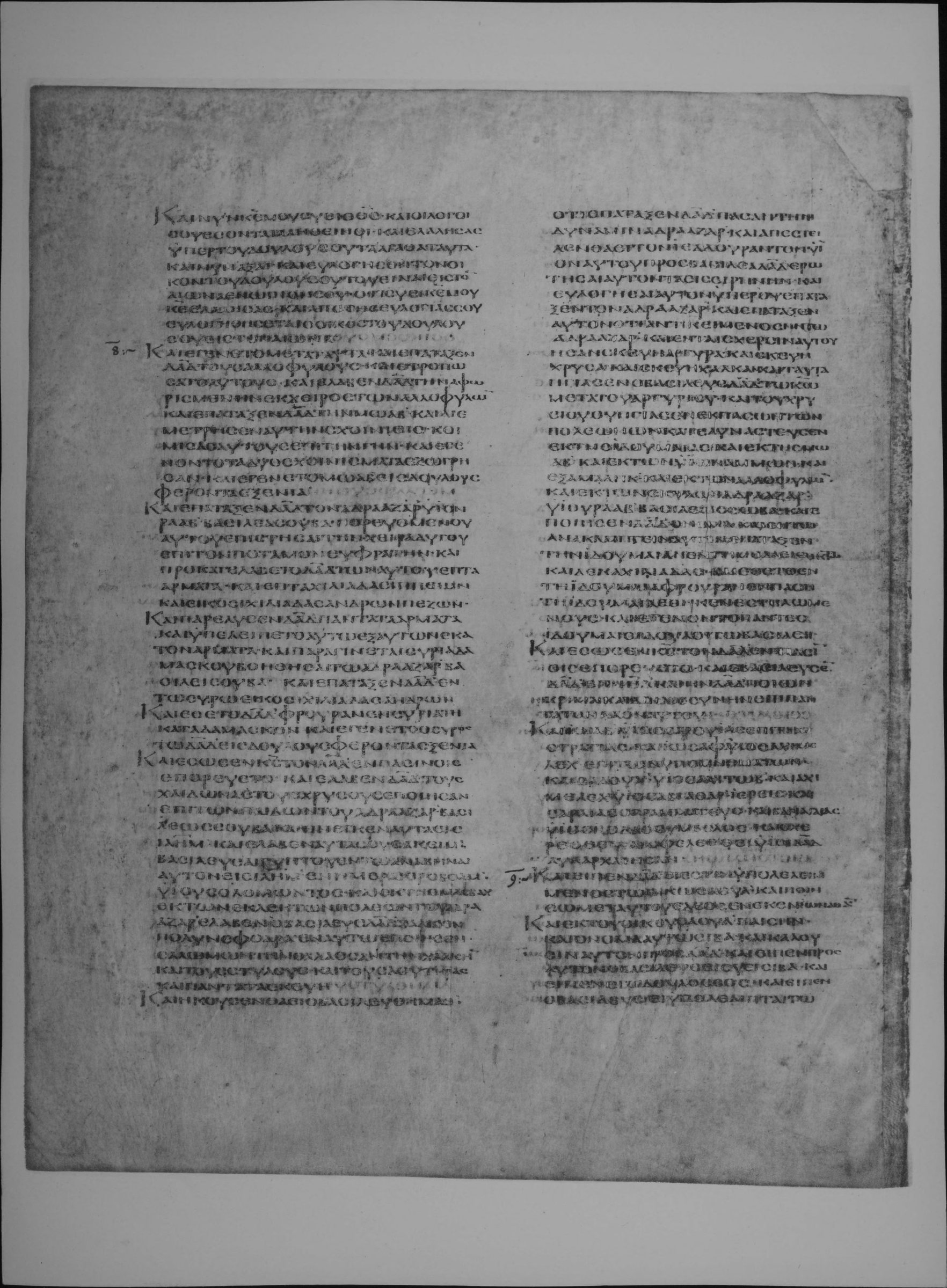
Where on the image
2 Kingdoms (2 Samuel) 8:1-8 is on fol. 186v (full-size facsimile of 1879-83, Internet Archive codex-alexandrinus leaf 391). The 1930 reduced facsimile prints beneath this page: 2 Sam. vii. 28-ix. 3. Checked on the plate: the page begins at the start of 2 Kingdoms (2 Samuel) 7:28 (first words read: ΚΑΙ ΝΥΝ ΚΕ ΜΟΥ ΚΕ ΣΥ ΕΙ Ο ΘΣ ΚΑΙ ΟΙ ΛΟΓΟΙ ΣΟΥ ΕΣΟΝΤΑΙ ΑΛΗΘΙΝΟΙ).
1Καὶ ἐγένετο μετὰ ταῦτα καὶ ἐπάταξεν Δαυεὶδ τοὺς ἀλλοφύλους καὶ ἐτροπώσατο αὐτούς· καὶ ἔλαβεν Δαυεὶδ τὴν ἀφωρισμένην ἐκ χειρὸς τῶν ἀλλοφύλων. 2καὶ ἐπάταξεν Δαυεὶδ τὴν Μωάβ, καὶ διεμέτρησεν αὐτοὺς ἐν σχοινίοις, κοιμίσας αὐτοὺς ἐπὶ τὴν γῆν· καὶ ἐγένετο τὰ δύο σχοινίσματα τοῦ θανατῶσαι, καὶ τὰ δύο σχοινίσματα ἐζώγρησεν· καὶ ἐγένετο Μωὰβ τῷ Δαυεὶδ εἰς δούλους φέροντας ξένια. 3καὶ ἐπάταξεν Δαυεὶδ τὸν Ἁδραάζαρ υἱὸν Ῥαὰβ βασιλέα Σουβά, πορευομένου αὐτοῦ ἐπιστῆσαι τὴν χεῖρα αὐτοῦ ἐπὶ τὸν ποταμὸν Εὐφράτην. 4καὶ προκατελάβετο Δαυεὶδ τῶν αὐτοῦ χίλια ἅρματα καὶ ἑπτὰ χιλιάδας ἱππέων καὶ εἴκοσι χιλιάδας ἀνδρῶν πεζῶν· καὶ παρέλυσεν Δαυεὶδ πάντα τὰ ἅρματα, καὶ ὑπελίπετο ἑαυτῷ ἑκατὸν ἅρματα. 5καὶ παραγίνεται Συρία Δαμασκοῦ βοηθῆσαι τῷ Ἁδραάζαρ βασιλεῖ Σουβά, καὶ ἐπάταξεν Δαυεὶδ ἐν τῷ Σύρῳ εἴκοσι δύο χιλιάδας ἀνδρῶν. 6καὶ ἔθετο Δαυεὶδ φρουρὰν ἐν Συρίᾳ τῇ κατὰ Δαμασκόν, καὶ ἐγένετο ὁ Σύρος τῷ Δαυεὶδ εἰς δούλους φέροντας ξένια· καὶ ἔσωσεν Κύριος τὸν Δαυεὶδ ἐν πᾶσιν οἷς ἐπορεύετο. 7καὶ ἔλαβεν Δαυεὶδ τοὺς χλίδωνας τοὺς χρυσοῦς οὓς ἐποίησεν ἐπὶ τῶν παίδων τῶν Ἀδραάζαρ βασιλέως Σουβά, καὶ ἤνεγκεν αὐτὰ εἰς Ἰερουσαλήμ· καὶ ἔλαβεν αὐτὰ Σουσακεὶμ βασιλεὺς Αἰγύπτου ἐν τῷ ἀναβῆναι αὐτὸν εἰς Ἰερουσαλὴμ ἐν ἡμέραις Ἰεροβοὰμ υἱοῦ Σολομῶντος. 8καὶ ἐκ τῆς Μασβὰκ ἔλαβεν ὁ βασιλεὺς Δαυεὶδ ἐκ τῶν ἐκλεκτῶν πόλεων τοῦ Ἁδραάζαρ χαλκὸν πολὺν σφόδρα· ἐν αὐτῷ ἐποίησεν Σαλωμὼν τὴν θάλασσαν τὴν χαλκῆν καὶ τοὺς στύλους καὶ τοὺς λουτῆρας καὶ πάντα τὰ σκεύη.
1And it came to pass after this, that David smote the Philistines, and put them to flight, and David took the tribute from out of the hand of the Philistines. 2And David smote Moab, and measured them out with lines, having laid them down on the ground: and there were two lines for slaying, and two lines he kept alive: and Moab became servants to David, yielding tribute. 3And David smote Adraazar the son of Raab king of Suba, as he went to extend his power to the river Euphrates. 4And David took a thousand of his chariots, and seven thousand horsemen, and twenty thousand footmen: and David houghed all his chariot horses, and he reserved to himself a hundred chariots. 5And Syria of Damascus comes to help Adraazar king of Suba, and David smote twenty-two thousand men belonging to the Syrian. 6And David placed a garrison in Syria near Damascus, and the Syrians became servants and tributaries to David: and the Lord preserved David whithersoever he went. 7And David took the golden bracelets which were on the servants of Adraazar king of Suba, and brought them to Jerusalem. And Susakim king of Egypt took them, when he went up to Jerusalem in the days of Roboam son of Solomon. 8And king David took from Metebac, and from the choice cities of Adraazar, very much brass: with that Solomon made the brazen sea, and the pillars, and the lavers, and all the furniture.
Where on the image
2 Kingdoms (2 Samuel) 8:9-18 is on fol. 186v (full-size facsimile of 1879-83, Internet Archive codex-alexandrinus leaf 391). The 1930 reduced facsimile prints beneath this page: 2 Sam. vii. 28-ix. 3. Checked on the plate: the page begins at the start of 2 Kingdoms (2 Samuel) 7:28 (first words read: ΚΑΙ ΝΥΝ ΚΕ ΜΟΥ ΚΕ ΣΥ ΕΙ Ο ΘΣ ΚΑΙ ΟΙ ΛΟΓΟΙ ΣΟΥ ΕΣΟΝΤΑΙ ΑΛΗΘΙΝΟΙ).
9Καὶ ἤκουσεν Θούου ὁ βασιλεὺς Ἡμὰθ ὅτι ἐπάταξεν Δαυεὶδ πᾶσαν τὴν δύναμιν Ἁδραάζαρ, 10καὶ ἀπέστειλεν Θόου Ἰεδδουρὰν τὸν υἱὸν αὐτοῦ πρὸς βασιλέα Δαυεὶδ ἐρωτῆσαι αὐτὸν τὰ εἰς εἰρήνην καὶ εὐλογῆσαι αὐτὸν ὑπὲρ οὗ ἐπάταξεν τὸν Ἁδραάζαρ· καὶ ἐπάταξεν αὐτόν, ὅτι κείμενος ἦν τῷ Ἁδραάζαρ· καὶ ἐν ταῖς χερσὶν αὐτοῦ ἦσαν σκεύη ἀργυρᾶ καὶ σκεύη χρυσᾶ καὶ σκεύη χαλκᾶ. 11καὶ ταῦτα ἡγίασεν ὁ βασιλεὺς τῷ κυρίῳ μετὰ τοῦ ἀργυρὶου καὶ μετὰ τοῦ χρυσίου οὗ ἡγίασεν ἐκ πασῶν τῶν πόλεων ὧν κατεδυνάστευσεν· 12ἐκ τῆς Ἰδουμαίας καὶ ἐκ γῆς Μωὰβ καὶ ἐκ τῶν υἱῶν Ἀμμὼν καὶ ἐκ τῶν ἀλλοφύλων καὶ ἐξ Ἀμαλὴκ καὶ ἐκ τῶν σκύλων Ἁδραάζαρ υἱοῦ Ῥαὰβ βασιλέως Σουβά. 13καὶ ἐποίησεν Δαυεὶδ ὄνομα· καὶ ἐν τῷ ἀνακάμπτειν αὐτὸν ἐπάταξεν τὴν Ἰδουμαίαν ἐν Γεβέλεμ εἰς ὀκτὼ καὶ δέκα χιλιάδας. 14καὶ ἔθετο ἐν τῇ Ἰδουμαίᾳ φρουράν, ἐν πάσῃ τῇ Ἰδουμαίᾳ, καὶ ἐγένοντο πάντες οἱ Ἰδουμαῖοι δοῦλοι τῷ βασιλεῖ· καὶ ἔσωσεν Κύριος τὸν Δαυεὶδ ἐν πᾶσιν οἷς ἐπορεύετο. 15Καὶ ἐβασίλευσεν Δαυεὶδ ἐπὶ Ἰσραήλ· καὶ ἦν ποιῶν κρίμα καὶ δικαιοσύνην ἐπὶ πάντα τὸν λαὸν αὐτοῦ. 16καὶ Ἰωὰβ υἱὸς Σαρουίας ἐπὶ τῆς στρατείας, καὶ Ἰωσαφὰτ υἱὸς Ἀχειὰ ἐπὶ τῶν ὑπομνημάτων, 17καὶ Σαδδοὺκ υἱὸς Ἀχειτὼβ καὶ Ἀχειμέλεχ υἱὸς Ἀβιαθὰρ ἱερεῖς, καὶ Ἀσὰ ὁ γραμματεύς, 18καὶ Βαναὶ υἱὸς Ἰανὰκ σύμβουλος, καὶ ὁ Χελεθθεὶ καὶ ὁ Φελεττεί· υἱοὶ Δαυεὶδ αὐλάρχαι ἦσαν.
9And Thoü the king of Hemath heard that David had smitten all the host of Adraazar. 10And Thoü sent Jedduram his son to king David, to ask him of his welfare, and to congratulate him on his fighting against Adraazar and smiting him, for he was an enemy to Adraazar: and in his hands were vessels of silver, and vessels of gold, and vessels of brass. 11And these king David consecrated to the Lord, with the silver and with the gold which he consecrated out of all the cities which he conquered, 12out of Idumea, and out of Moab, and from the children of Ammon, and from the Philistines, and from Amalec, and from the spoils of Adraazar son of Raab king of Suba. 13And David made himself a name: and when he returned he smote Idumea in Gebelem to the number of eighteen thousand. 14And he set garrisons in Idumea, even in all Idumea: and all the Idumeans were servants to the king. And the Lord preserved David wherever he went. 15And David reigned over all Israel: and David wrought judgment and justice over all his people. 16And Joab the son of Saruia was over the host; and Josaphat the son of Achilud was keeper of the records. 17And Sadoc the son of Achitob, and Achimelech son of Abiathar, were priests; and Sasa was the scribe, 18and Banæas son of Jodaë was councillor, and the Chelethite and the Phelethite, and the sons of David, were princes of the court.
Cite
Sources
- Source: Codex Alexandrinus (British Library Royal MS 1 D. V) via the British Museum photographic facsimiles of 1879-83 and 1930 (Internet Archive) + Swete's Septuagint + Brenton's English (holding institution)
- Critical edition: H. B. Swete, The Old Testament in Greek according to the Septuagint (1909)
← previous · → next · v cycle view · l back to library