2 Kingdoms (2 Samuel), Chapter 9 (Codex Alexandrinus)
Introduction
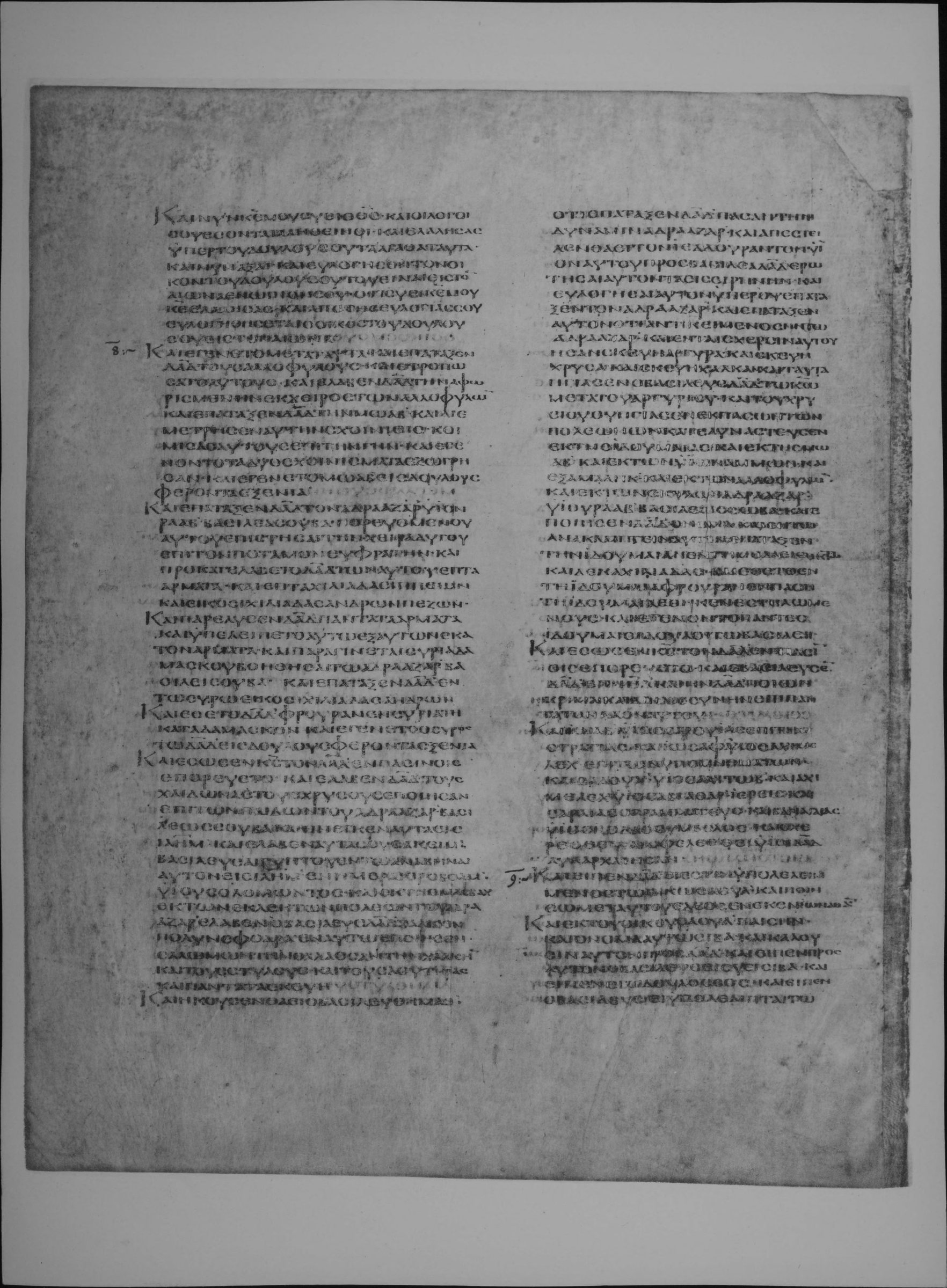
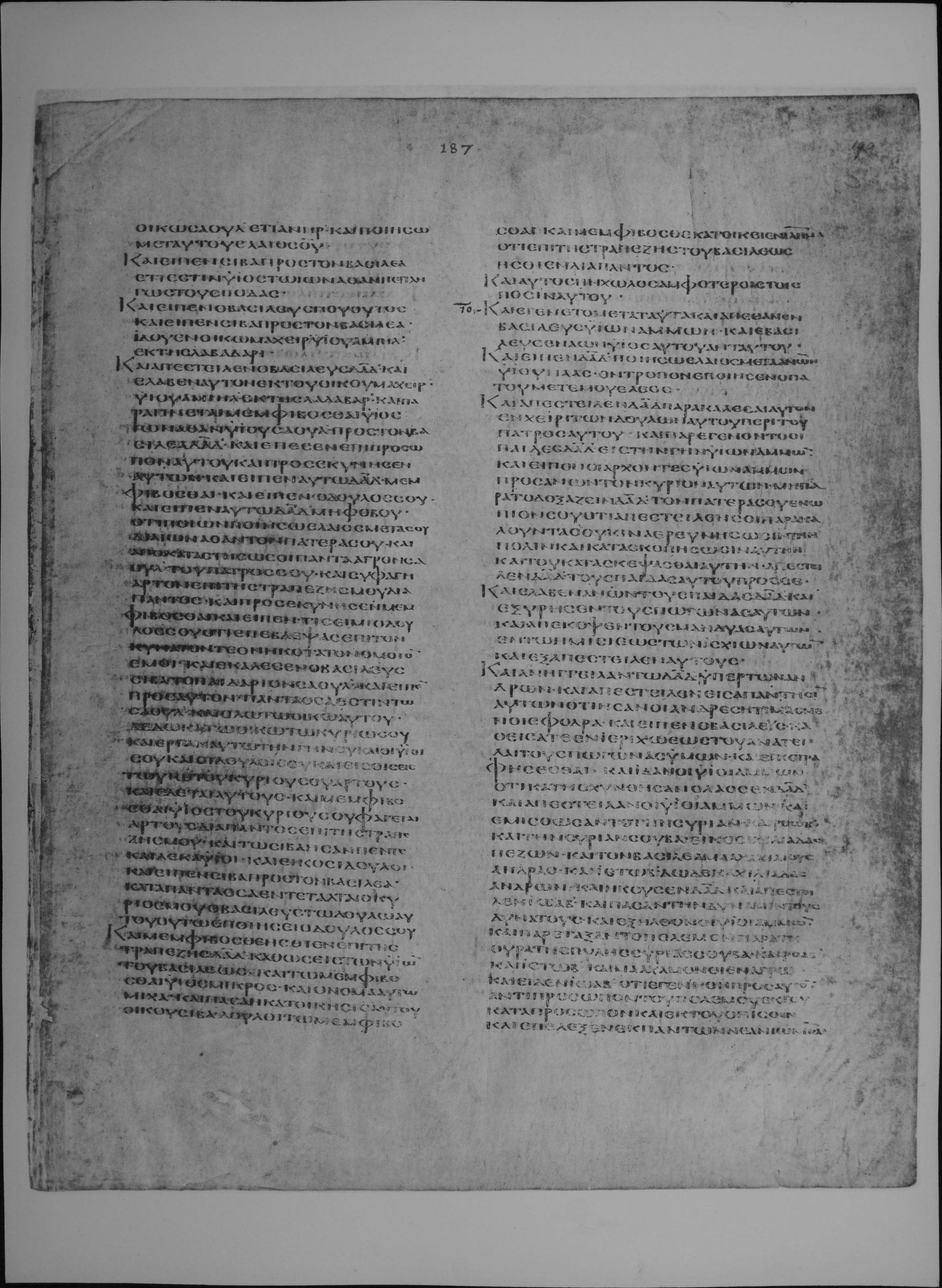
2 Kingdoms (2 Samuel) 9 in the Greek Old Testament (the Septuagint) as written in Codex Alexandrinus, a Greek Bible copied in the fifth century, probably in Egypt, and now in the British Library (Royal MS 1 D. V, the first of its four volumes). It is one of the three great early codices of the whole Greek Bible, with Codex Vaticanus and Codex Sinaiticus.
This entry meets the strict three-criteria standard of the Theosis Library:
- Manuscript scan: the pages of Codex Alexandrinus carrying this chapter (fol. 186v, fol. 187r), from the full-size photographic (autotype) facsimile published by the British Museum in 1879-1883, as digitised on the Internet Archive. The verse range of every page comes from the reduced photographic facsimile of 1930, which prints it beneath each plate, and the opening words of every page were read on the plate to confirm the page and the verse it begins with. Each section links to the page or pages that hold its verses. Folio numbers are those written at the head of each leaf and visible on the plates.
- Original text: Swete's edition, which here prints the text of Codex Vaticanus (Vat. gr. 1209), the base of his edition, and gives the readings of Alexandrinus only in his apparatus. The Greek column is therefore Vaticanus' text; where Alexandrinus differs, the plate shows what Alexandrinus reads.
- English translation: Sir Lancelot C. L. Brenton, The Septuagint Version of the Old Testament (1844; 1851 edition), a translation of the Greek, public domain, from the eBible.org text.
How was this verified? (Provenance)
Where on the image
2 Kingdoms (2 Samuel) 9:1-3 is on fol. 186v (full-size facsimile of 1879-83, Internet Archive codex-alexandrinus leaf 391). The 1930 reduced facsimile prints beneath this page: 2 Sam. vii. 28-ix. 3. Checked on the plate: the page begins at the start of 2 Kingdoms (2 Samuel) 7:28 (first words read: ΚΑΙ ΝΥΝ ΚΕ ΜΟΥ ΚΕ ΣΥ ΕΙ Ο ΘΣ ΚΑΙ ΟΙ ΛΟΓΟΙ ΣΟΥ ΕΣΟΝΤΑΙ ΑΛΗΘΙΝΟΙ). 2 Kingdoms (2 Samuel) 9:3-8 is on fol. 187r (full-size facsimile of 1879-83, Internet Archive codex-alexandrinus leaf 392). The 1930 reduced facsimile prints beneath this page: 2 Sam. ix. 3-x. 9. Checked on the plate: the page begins inside 2 Kingdoms (2 Samuel) 9:3 (first words read: ΟΙΚΩ ΣΑΟΥΛ ΕΤΙ ΑΝΗΡ ΚΑΙ ΠΟΙΗΣΩ ΜΕΤ ΑΥΤΟΥ ΕΛΕΟΣ ΘΥ ΚΑΙ ΕΙΠΕΝ ΣΕΙΒΑ ΠΡΟΣ ΤΟΝ ΒΑΣΙΛΕΑ).
1Καὶ εἶπεν Δαυείδ Εἰ ἔστιν ἔτι ὑπολελειμμένος τῷ οἴκῳ Σαούλ, καὶ ποιήσω μετ᾽ αὐτοῦ ἔλεος ἕνεκεν Ἰωναθάν; 2καὶ ἐκ τοῦ οἴκου Σαοὺλ παῖς ἦν καὶ ὄνομα αὐτῷ Σειβά, καὶ καλοῦσιν αὐτὸν πρὸς Δαυείδ· καὶ εἶπεν πρὸς αὐτὸν ὁ βασιλεύς Εἰ σὺ εἶ Σειβά; καὶ εἶπεν Ἐγὼ δοῦλος σός. 3καὶ εἶπεν ὁ βασιλεύς Εἰ ὑπολέλειπται ἐκ τοῦ οἴκου Σαοὺλ ἔτι ἀνήρ, καὶ ποιήσω μετ᾽ αὐτοῦ ἔλεος θεοῦ; καὶ εἶπεν Σειβὰ πρὸς τὸν βασιλέα Ἔτι ἔστιν υἱὸς τῷ Ἰωναθὰν πεπληγὼς τοὺς πόδας. 4καὶ εἶπεν ὁ βασιλεύς Ποῦ οὗτος; καὶ εἶπεν Σειβὰ πρὸς τὸν βασιλέα Ἰδοὺ ἐν οἴκῳ Μαχεὶρ υἱοῦ Ἀμαὴρ ἐκ τῆς Λαδαβάρ. 5καὶ ἀπέστειλεν ὁ βασιλεὺς Δαυεὶδ καὶ ἔλαβεν αὐτὸν ἐκ τοῦ οἴκου Μαξεὶρ υἱοῦ Ἀμειὴλ ἐκ τῆς Λαδαβάρ. 6καὶ παραγίνεται Μεμφιβόσθε υἱὸς Ἰωναθὰν υἱοῦ Σαοὺλ πρὸς τὸν βασιλέα Δαυείδ, καὶ ἔπεσεν ἐπὶ πρόσωπον αὐτοῦ καὶ προσεκύνησεν αὐτῷ· καὶ εἶπεν αὐτῷ Δαυείδ Μεμφιβόσθε· καὶ εἶπεν Ἰδοὺ ὁ δοῦλός σου. 7καὶ εἶπεν αὐτῷ Δαυείδ Μὴ φοβοῦ, ὅτι ποιῶν ποιήσω μετὰ σοῦ ἔλεος διὰ Ἰωναθὰν τὸν πατέρα σου, καὶ ἀποκαταστήσω σοι πάντα ἀγρὸν Σαοὺλ πατρὸς τοῦ πατρός σου, καὶ σὺ φάγῃ ἄρτον ἐπὶ τῆς τραπέζης μου διὰ παντός. 8καὶ προσεκύνησεν Μεμφιβόσθε καὶ εἶπεν Τίς εἰμι ὁ δοῦλός σου ὅτι ἐπέβλεψας ἐπὶ τὸν κύνα τὸν τεθνηκότα τὸν ὅμοιον ἐμοί;
1And David said, Is there yet any one left in the house of Saul, that I may deal kindly with him for Jonathan's sake? 2And there was a servant of the house of Saul, and his name was Siba: and they call him to David; and the king said to him, Art thou Siba? and he said, I am thy servant. 3And the king said, Is there yet a man left of the house of Saul, that I may act towards him with the mercy of God? and Siba said to the king, There is yet a son of Jonathan, lame of his feet. 4And the king said, Where is he? and Siba said to the king, Behold, he is in the house of Machir the son of Amiel of Lodabar. 5And king David sent, and took him out of the house of Machir the son of Amiel of Lodabar. 6And Memphibosthe the son of Jonathan the son of Saul comes to king David, and he fell upon his face and did obeisance to him: and David said to him, Memphibosthe: and he said, Behold thy servant. 7And David said to him, Fear not, for I will surely deal mercifully with thee for the sake of Jonathan thy father, and I will restore to thee all the land of Saul the father of thy father; and thou shalt eat bread at my table continually. 8And Memphibosthe did obeisance, and said, Who am I thy servant, that thou hast looked upon a dead dog like me?
Where on the image
2 Kingdoms (2 Samuel) 9:9-13 is on fol. 187r (full-size facsimile of 1879-83, Internet Archive codex-alexandrinus leaf 392). The 1930 reduced facsimile prints beneath this page: 2 Sam. ix. 3-x. 9. Checked on the plate: the page begins inside 2 Kingdoms (2 Samuel) 9:3 (first words read: ΟΙΚΩ ΣΑΟΥΛ ΕΤΙ ΑΝΗΡ ΚΑΙ ΠΟΙΗΣΩ ΜΕΤ ΑΥΤΟΥ ΕΛΕΟΣ ΘΥ ΚΑΙ ΕΙΠΕΝ ΣΕΙΒΑ ΠΡΟΣ ΤΟΝ ΒΑΣΙΛΕΑ).
9καὶ ἐκάλεσεν ὁ βασιλεὺς Σειβὰ τὸ παιδάριον Σαοὺλ καὶ εἶπεν πρὸς αὐτόν Πάντα ὅσα ἐστὶν τῷ Σαοὺλ καὶ ὅλῳ τῷ οἴκῳ αὐτοῦ δέδωκα τῷ υἱῷ τοῦ κυρίου σου. 10καὶ ἐργᾷ αὐτῷ τὴν γῆν, σὺ καὶ οἱ υἱοί σου καὶ οἱ δοῦλοί σου, καὶ εἰσοίσεις τῷ υἱῷ τοῦ κυρίου σου ἄρτους καὶ ἔδεται ἄρτους· καὶ Μεμφιβόσθε υἱὸς τοῦ κυρίου σου φάγεται διὰ παντὸς ἄρτον ἐπὶ τῆς τραπέζης μου. καὶ τῷ Σειβὰ ἦσαν πέντε καὶ δέκα υἱοὶ καὶ εἴκοσι δοῦλοι. 11καὶ εἶπεν Σειβὰ πρὸς τὸν βασιλέα Κατὰ πάντα ὅσα ἐντέταλται ὁ κύριός μου ὁ βασιλεὺς τῷ δούλῳ αὐτοῦ, οὕτως ποιήσει ὁ δοῦλός σου. καὶ Μεμφιβόσθε ἤσθιεν ἐπὶ τῆς τραπέζης Δαυεὶδ καθὼς εἷς τῶν υἱῶν αὐτοῦ τοῦ βασιλέως. 12καὶ τῷ Μεμφιβόσθε υἱὸς μικρὸς καὶ ὄνομα αὐτῷ Μειχά. καὶ πᾶσα ἡ κατοίκησις αὐτοῦ οἴκου Σειβὰ δοῦλοι τοῦ Μεμφιβόσθε. 13καὶ Μεμφιβόσθε κατῴκει ἐν Ἰερουσαλήμ, ὅτι ἐπὶ τῆς τραπέζης τοῦ βασιλέως διὰ παντὸς ἤσθιεν· καὶ αὐτὸς ἦν χωλὸς ἀμφοτέροις τοῖς ποσὶν αὐτοῦ.
9And the king called Siba the servant of Saul, and said to him, All that belonged to Saul and to all his house have I given to the son of thy lord. 10And thou, and thy sons, and thy servants, shall till the land for him; and thou shalt bring in bread to the son of thy lord, and he shall eat bread: and Memphibosthe the son of thy lord shall eat bread continually at my table. Now Siba had fifteen sons and twenty servants. 11And Siba said to the king, According to all that my lord the king has commanded his servant, so will thy servant do. And Memphibosthe did eat at the table of David, as one of the sons of the king. 12And Memphibosthe had a little son, and his name was Micha: and all the household of Siba were servants to Memphibosthe. 13And Memphibosthe dwelt in Jerusalem, for he continually ate at the table of the king; and he was lame in both his feet.
Cite
Sources
- Source: Codex Alexandrinus (British Library Royal MS 1 D. V) via the British Museum photographic facsimiles of 1879-83 and 1930 (Internet Archive) + Swete's Septuagint + Brenton's English (holding institution)
- Critical edition: H. B. Swete, The Old Testament in Greek according to the Septuagint (1909)
← previous · → next · v cycle view · l back to library