2 Maccabees, Chapter 5 (Codex Alexandrinus)
Introduction
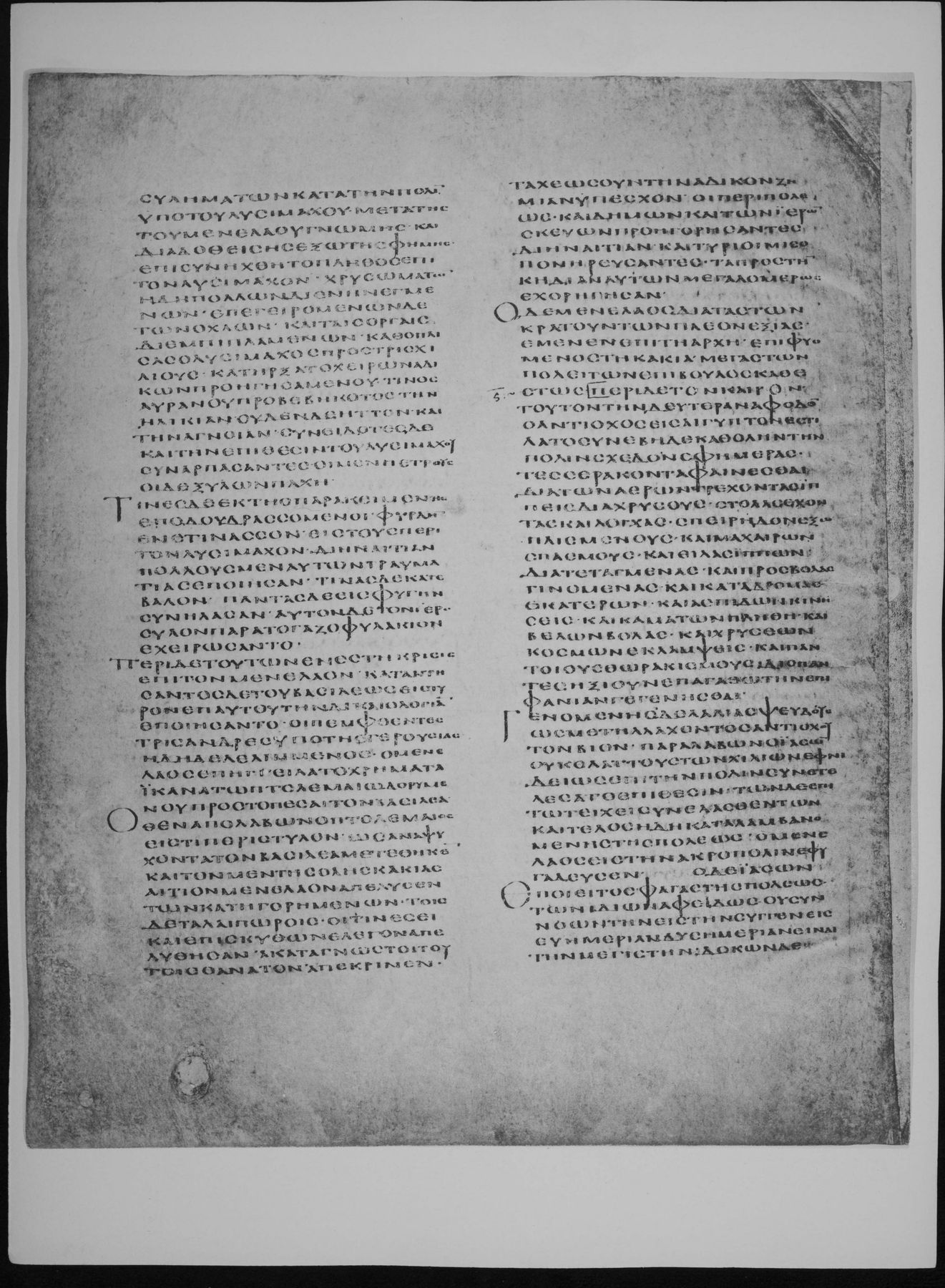
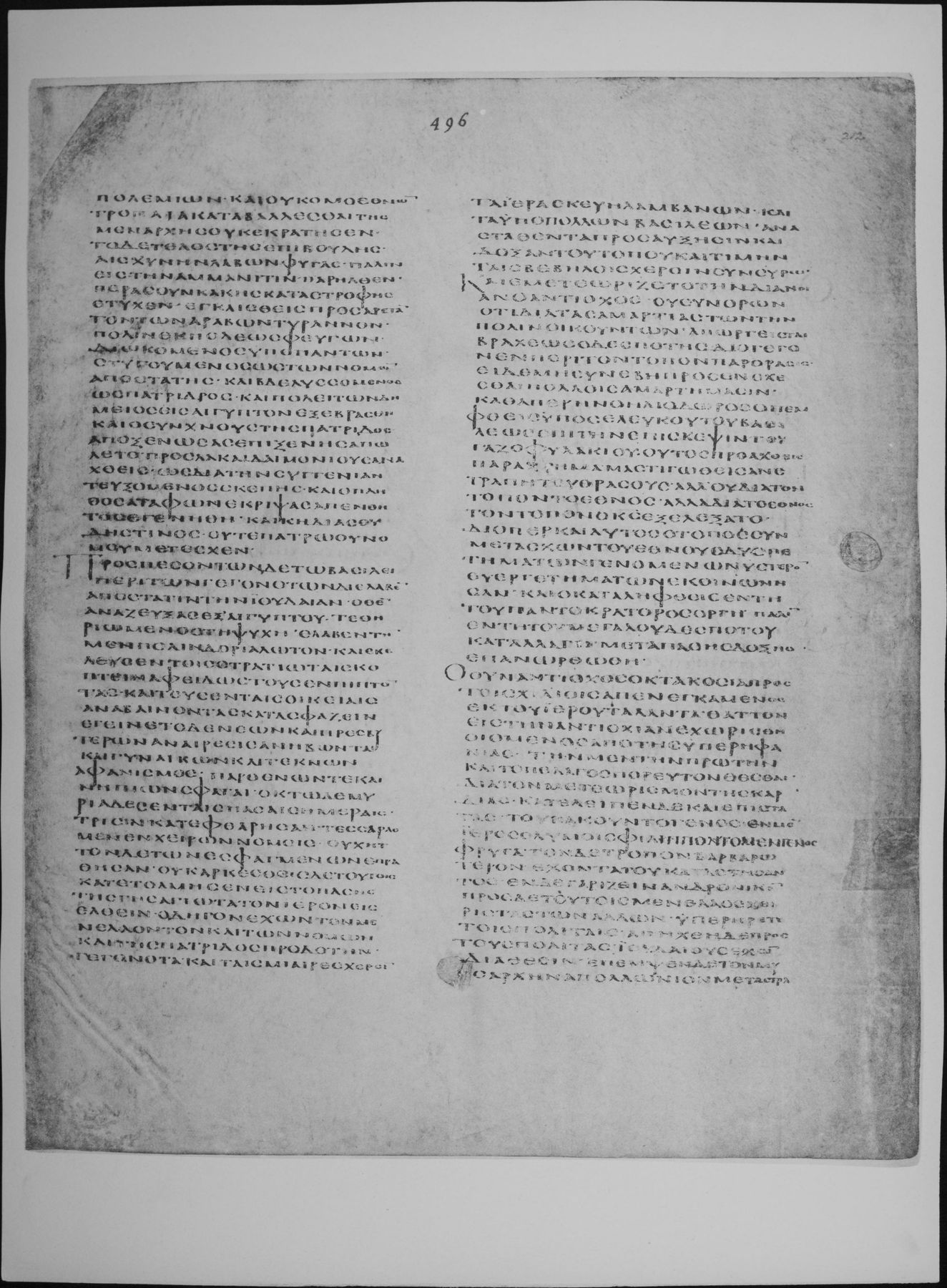
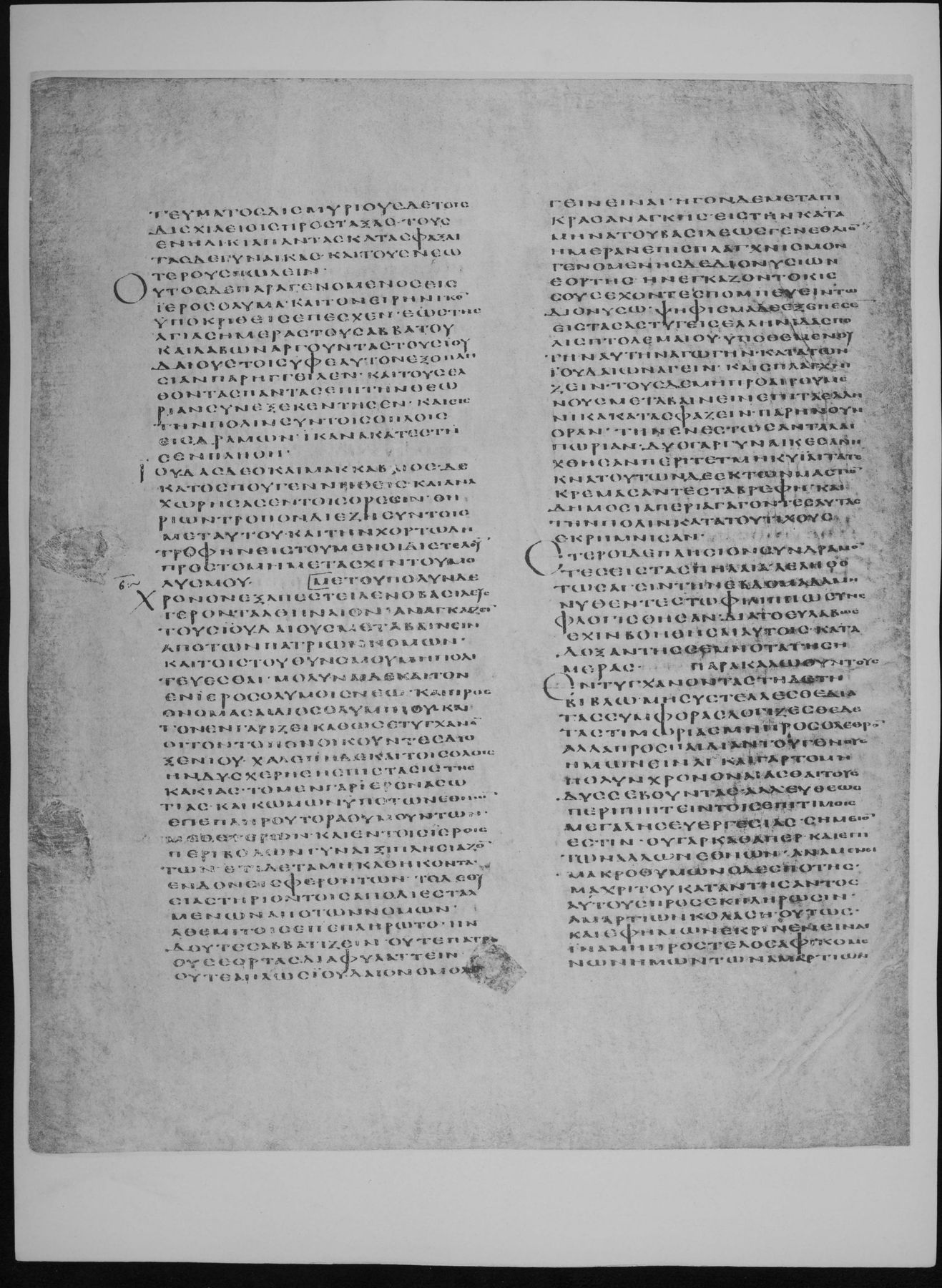
2 Maccabees 5 in the Greek Old Testament (the Septuagint) as written in Codex Alexandrinus, a Greek Bible copied in the fifth century, probably in Egypt, and now in the British Library (Royal MS 1 D. VI, the second of its four volumes). It is one of the three great early codices of the whole Greek Bible, with Codex Vaticanus and Codex Sinaiticus.
This entry meets the strict three-criteria standard of the Theosis Library:
- Manuscript scan: the pages of Codex Alexandrinus carrying this chapter (fol. 495v, fol. 496r, fol. 496v), from the full-size photographic (autotype) facsimile published by the British Museum in 1879-1883, as digitised on the Internet Archive. The verse range of every page comes from the reduced photographic facsimile of 1957, which prints it beneath each plate, and the opening words of every page were read on the plate to confirm the page and the verse it begins with. Each section links to the page or pages that hold its verses. Folio numbers are those written at the head of each leaf and visible on the plates.
- Original text: Swete's edition, which in the books of Maccabees prints the text of Codex Alexandrinus itself (Codex Vaticanus does not contain these books), with the readings of other manuscripts in his apparatus. Swete adds accents, breathings and punctuation and expands the abbreviated sacred names, so the plate shows the same text in unaccented capitals.
- English translation: Sir Lancelot C. L. Brenton, The Septuagint Version of the Old Testament (1844; 1851 edition), a translation of the Greek, public domain, from the eBible.org text.
How was this verified? (Provenance)
Where on the image
2 Maccabees 5:1-6 is on fol. 495v (full-size facsimile of 1879-83, Internet Archive codex-alexandrinus leaf 997). The 1957 reduced facsimile prints beneath this page: 2 Maccabees iv. 39-v. 6. Checked on the plate: the page begins inside 2 Maccabees 4:39 (first words read: ΣΥΛΗΜΑΤΩΝ ΚΑΤΑ ΤΗΝ ΠΟΛΙΝ ΥΠΟ ΤΟΥ ΛΥΣΙΜΑΧΟΥ ΜΕΤΑ ΤΗΣ ΤΟΥ ΜΕΝΕΛΑΟΥ ΓΝΩΜΗΣ). 2 Maccabees 5:6-8 is on fol. 496r (full-size facsimile of 1879-83, Internet Archive codex-alexandrinus leaf 998). The 1957 reduced facsimile prints beneath this page: 2 Maccabees v. 6-v. 24. Checked on the plate: the page begins inside 2 Maccabees 5:6 (first words read: ΠΟΛΕΜΙΩΝ ΚΑΙ ΟΥΚ ΟΜΟΕΘΝΩΝ ΤΡΟΠΑΙΑ ΚΑΤΑΒΑΛΛΕΣΘΑΙ ΤΗΣ ΜΕΝ ΑΡΧΗΣ ΟΥΚ ΕΚΡΑΤΗΣΕΝ).
1Περὶ δὲ τὸν καιρὸν τοῦτον τὴν δευτέραν ἄφοδον ὁ Ἀντίοχος εἰς Αἴγυπτον ἐστείλατο. 2συνέβη δὲ καθ᾽ ὅλην τὴν πόλιν σχεδὸν ἐφ᾽ ἡμέρας τεσσεράκοντα φαίνεσθαι διὰ τῶν ἀέρων τρέχοντας ἱππεῖς διαχρύσους στολὰς ἔχοντας, καὶ λόγχας σπειρηδὸν ἐξωπλισμένους, 3καὶ μαχαιρῶν σπασμούς, καὶ εἴλας ἵππων διατεταγμένας, καὶ προσβολὰς γινομένας καὶ καταδρομὰς ἑκατέρων, καὶ ἀσπίδων κινήσεις, καὶ καμάτων πλήθη, καὶ βελῶν βολάς, καὶ χρυσέων κόσμων ἐκλάμψεις, καὶ παντοίους θωρακισμούς. 4διὸ πάντες ἠξίουν ἐπ᾽ ἀγαθῷ τὴν ἐπιφανίαν γεγενῆσθαι. 5Γενομένης δὲ λαλιᾶς ψευδοῦς, ὡς μετηλλαχότος Ἀντιόχου τὸν βίον, παραλαβὼν ὁ Ἰάσων οὐκ ἐλάττους τῶν χιλίων, ἐφνιδίως ἐπὶ τὴν πόλιν συνετελέσατο ἐπίθεσιν· τῶν δὲ ἐπὶ τῷ τείχει συνελασθέντων, καὶ τέλος ἤδη καταλαμβανομένης τῆς πόλεως, ὁ Μενέλαος εἰς τὴν ἀκρόπολιν ἐφυγάδευσεν. 6ὁ δὲ Ἰάσων ἐποιεῖτο σφαγὰς τῆς πόλεως τῶν ἰδίων ἀφειδῶς, οὐ συννοῶν τὴν εἰς τοὺς συγγενεῖς εὐημερίαν δυσημερίαν εἶναι τὴν μεγίστην, δοκῶν δὲ πολεμίων καὶ οὐχ ὁμοεθνῶν τρόπαια καταβάλλεσθαι. 7τῆς μὲν ἀρχῆς οὐκ ἐκράτησεν, τὸ δὲ τέλος τῆς ἐπιβουλῆς αἰσχύνην λαβών, φυγὰς πάλιν εἰς τὴν Ἀμμανῖτιν παρῆλθεν. 8πέρας οὖν κακῆς καταστροφῆς ἔτυχεν, ἐγκλεισθεὶς πρὸς Ἀρέταν τὸν τῶν Ἀράβων τύραννον, πόλιν ἐκ πόλεως φεύγων, διωκόμενος ὑπὸ πάντων, στυγούμενος ὡς τῶν νόμων ἀποστάτης καὶ βδελυσσόμενος ὡς πατρίδος καὶ πολιτῶν δήμιος, εἰς Αἴγυπτον ἐξεβράσθη.
1About the same time Antiochus prepared his second voyage into Egypt: 2and then it happened, that through all the city, for the space almost of forty days, there were seen horsemen running in the air, in cloth of gold, and armed with lances, like a band of soldiers, 3and troops of horsemen in array, encountering and running one against another, with shaking of shields, and multitude of pikes, and drawing of swords, and casting of darts, and glittering of golden ornaments, and harness of all sorts. 4Wherefore every man prayed that that apparition might turn to good. 5Now when there was gone forth a false rumour, as though Antiochus had been dead, Jason took at the least a thousand men, and suddenly made an assault upon the city; and they that were upon the walls being put back, and the city at length taken, Menelaus fled into the castle: 6but Jason slew his own citizens without mercy, not considering that to get the day of them of his own nation would be a most unhappy day for him; but thinking they had been his enemies, and not his countrymen, whom he conquered. 7Howbeit for all this he obtained not the principality, but at the last received shame for the reward of his treason, and fled again into the country of the Ammonites. 8In the end therefore he had an unhappy return, being accused before Aretas the king of the Arabians, fleeing from city to city, pursued of all men, hated as a forsaker of the laws, and being had in abomination as an open enemy of his country and countrymen, he was cast out into Egypt.
Where on the image
2 Maccabees 5:9-16 is on fol. 496r (full-size facsimile of 1879-83, Internet Archive codex-alexandrinus leaf 998). The 1957 reduced facsimile prints beneath this page: 2 Maccabees v. 6-v. 24. Checked on the plate: the page begins inside 2 Maccabees 5:6 (first words read: ΠΟΛΕΜΙΩΝ ΚΑΙ ΟΥΚ ΟΜΟΕΘΝΩΝ ΤΡΟΠΑΙΑ ΚΑΤΑΒΑΛΛΕΣΘΑΙ ΤΗΣ ΜΕΝ ΑΡΧΗΣ ΟΥΚ ΕΚΡΑΤΗΣΕΝ).
9ὁ συχνοὺς τῆς πατρίδος ἀποξενώσας ἐπὶ ξένης ἀπώλετο, πρὸς Λακεδαιμονίους ἀναχθείς, ὡς διὰ τὴν συγγενίαν τευξόμενος σκέπης· 10καὶ ὁ πλῆθος ἀτάφων ἐκρίψας ἀπένθητος ἐγενήθη, καὶ κηδίας οὐδ᾽ ἥστινος οὔτε πατρῴου νόμου μετέσχεν. 11Προσπεσόντων δὲ τῷ βασιλεῖ περὶ τῶν γεγονότων, διέλαβεν ἀποστάτιν τὴν Ἰουδαίαν· ὅθεν ἀναζεύξας ἐξ Αἰγύπτου τεθηριωμένος τῇ ψυχῇ, ἔλαβεν τὴν μὲν πόλιν δοριάλωτον. 12καὶ ἐκέλευσεν τοῖς στρατιώταις κόπτειν ἀφειδῶς τοὺς ἐνπίπτοντας, καὶ τοὺς ἐν ταῖς οἰκίαις ἀναβαίνοντας κατασφάζειν. 13ἐγίνετο δὲ νέων καὶ πρεσβυτέρων ἀναίρεσις, ἀνήβων τε καὶ γυναικῶν καὶ τέκνων ἀφανισμός, παρθένων τε καὶ νηπίων σφαγαί. 14ὀκτὼ δὲ μυριάδες ἐν ταῖς πάσαις ἡμέραις τρισὶν κατεφθάρησαν, τέσσαρες μὲν ἐν χειρῶν νόμοις, οὐχ ἧττον δὲ τῶν ἐσφαγμένων ἐπράθησαν. 15οὐκ ἀρκεσθεὶς δὲ τούτοις, κατετόλμησεν εἰς τὸ πάσης τῆς γῆς ἁγιώτατον ἱερὸν εἰσελθεῖν, ὁδηγὸν ἔχων τὸν Μενέλαον, τὸν καὶ τῶν νόμων καὶ τῆς πατρίδος προδότην γεγονότα, 16καὶ ταῖς μιεραῖς χερσὶν τὰ ἱερὰ σκεύη λαμβάνων, καὶ τὰ ὑπὸ πολλῶν βασιλέων ἀνασταθέντα πρὸς αὔξησιν καὶ δόξαν τοῦ τόπου καὶ τιμήν, ταῖς βεβήλοις χερσὶν συνσύρων.
9Thus he that had driven many out of their country perished in a strange land, retiring to the Lacedemonians, and thinking there to find succour by reason of his kindred: 10and he that had cast out many unburied had none to mourn for him, nor any solemn funerals at all, nor sepulchre with his fathers. 11Now when this that was done came to the king's ear, he thought that Judea had revolted: whereupon removing out of Egypt in a furious mind, he took the city by force of arms, 12and commanded his men of war not to spare such as they met, and to slay such as went up upon the houses. 13Thus there was killing of young and old, making away of men, women, and children, slaying of virgins and infants. 14And there were destroyed within the space of three whole days fourscore thousand, whereof forty thousand were slain in the conflict; and no fewer sold than slain. 15Yet was he not content with this, but presumed to go into the most holy temple of all the world; Menelaus, that traitor to the laws, and to his own country, being his guide: 16and taking the holy vessels with polluted hands, and with profane hands pulling down the things that were dedicated by other kings to the augmentation and glory and honour of the place, he gave them away.
Where on the image
2 Maccabees 5:17-24 is on fol. 496r (full-size facsimile of 1879-83, Internet Archive codex-alexandrinus leaf 998). The 1957 reduced facsimile prints beneath this page: 2 Maccabees v. 6-v. 24. Checked on the plate: the page begins inside 2 Maccabees 5:6 (first words read: ΠΟΛΕΜΙΩΝ ΚΑΙ ΟΥΚ ΟΜΟΕΘΝΩΝ ΤΡΟΠΑΙΑ ΚΑΤΑΒΑΛΛΕΣΘΑΙ ΤΗΣ ΜΕΝ ΑΡΧΗΣ ΟΥΚ ΕΚΡΑΤΗΣΕΝ). 2 Maccabees 5:24 is on fol. 496v (full-size facsimile of 1879-83, Internet Archive codex-alexandrinus leaf 999). The 1957 reduced facsimile prints beneath this page: 2 Maccabees v. 24-vi. 15. Checked on the plate: the page begins inside 2 Maccabees 5:24 (first words read: ΤΕΥΜΑΤΟΣ ΔΙΣΜΥΡΙΟΥΣ ΔΕ ΤΟΙΣ ΔΙΣΧΙΛΙΟΙΣ ΠΡΟΣΤΑΞΑΣ ΤΟΥΣ ΕΝ ΗΛΙΚΙΑ ΠΑΝΤΑΣ ΚΑΤΑΣΦΑΞΑΙ).
17καὶ ἐμετεωρίζετο τὴν διάνοιαν ὁ Ἀντίοχος, οὐ συνορῶν ὅτι διὰ τὰς ἁμαρτίας τῶν τὴν πόλιν οἰκούντων ἀπώργισται βραχέως ὁ δεσπότης, διὸ γέγονεν περὶ τὸν τόπον παρόρασις. 18εἰ δὲ μὴ συνέβη προσενέχεσθαι πολλοῖς ἁμαρτήμασιν, καθάπερ ἦν ὁ Ἡλιόδωρος ὁ πεμφθεὶς ὑπὸ Σελεύκου τοῦ βασιλέως ἐπὶ τὴν ἐπίσκεψιν τοῦ γαζοφυλακίου, οὗτος προαχθεὶς παραχρῆμα μαστιγωθεὶς ἀνετράπη τοῦ θράσους. 19ἀλλ᾽ οὐ διὰ τὸν τόπον τὸ ἔθνος, ἀλλὰ διὰ τὸ ἔθνος τὸν τόπον ὁ κύριος ἐξελέξατο. 20διόπερ καὶ αὐτὸς ὁ τόπος συνμετασχὼν τοῦ ἔθνους δυσπετημάτων γενομένων, ὕστερον εὐεργετημάτων ἐκοινώνησεν· καὶ ὁ καταληφθεὶς ἐν τῇ τοῦ παντοκράτορος ὀργῇ, πάλιν ἐν τῇ τοῦ μεγάλου δεσπότου καταλλαγῇ μετὰ πάσης δόξης ἐπανωρθώθη. 21Ὁ οὖν Ἀντίοχος ὀκτακόσια πρὸς τοῖς χιλίοις ἀπενεγκάμενος ἐκ τοῦ ἱεροῦ τάλαντα θᾶττον εἰς τὴν Ἀντιοχίαν ἐχωρίσθη, οἰόμενος ἀπὸ τῆς ὑπερηφανίας τὴν μὲν γῆν πλωτὴν καὶ τὸ πέλαγος πορευτὸν θέσθαι, διὰ τὸν μετεωρισμὸν τῆς καρδίας. 22κατέλειπεν δὲ καὶ ἐπιστάτας τοῦ κακοῦν τὸ γένος, ἐν μὲν Ἰεροσολύμοις Φίλιππον τὸ μὲν γένος Φρύγα, τὸν δὲ τρόπον βαρβαρώτερον ἔχοντα τοῦ καταστήσαντος· 23ἐν δὲ Γαριζεὶν Ἀνδρόνικον· πρὸς δὲ τούτοις Μενέλαος χείριστα τῶν ἄλλων ὑπερῄρετο τοῖς πολίταις, ἀπεχθῆ δὲ πρὸς τοὺς πολίτας Ἰουδαίους ἔχων διάθεσιν. 24ἔπεμψεν δὲ τὸν μυσάρχην Ἀπολλώνιον μετὰ στρατεύματος, δισμυρίους δὲ τοῖς δισχιλίοις, προστάξας τοὺς ἐν ἡλικίᾳ πάντας κατασφάξαι, τὰς δὲ γυναῖκας καὶ τοὺς νεωτέρους πωλεῖν.
17And so haughty was Antiochus in mind, that he considered not that the Lord was angry for a while for the sins of them that dwelt in the city, and therefore his eye was not upon the place. 18For had they not been formerly wrapped in many sins, this man, as soon as he had come, had forthwith been scourged, and put back from his presumption, as Heliodorus was, whom Seleucus the king sent to view the treasury. 19Nevertheless God did not choose the people for the place's sake, but the place for the people's sake. 20And therefore the place itself, that was partaker with them of the adversity that happened to the nation, did afterward communicate in the benefits sent from the Lord: and as it was forsaken in the wrath of the Almighty, so again, the great Lord being reconciled, it was set up with all glory. 21So when Antiochus had carried out of the temple a thousand and eight hundred talents, he departed in all haste unto Antiochia, weening in his pride to make the land navigable, and the sea passable by foot: such was the haughtiness of his mind. 22And he left governors to vex the nation: at Jerusalem, Philip, for his country a Phrygian, and for manners more barbarous than he that set him there; 23and at Garizim, Andronicus; and besides, Menelaus, who worse than all the rest bare an heavy hand over the citizens, having a malicious mind against his countrymen the Jews. 24He sent also that detestable ringleader Apollonius with an army of two and twenty thousand, commanding him to slay all those that were in their best age, and to sell the women and the younger sort:
Where on the image
2 Maccabees 5:25-27 is on fol. 496v (full-size facsimile of 1879-83, Internet Archive codex-alexandrinus leaf 999). The 1957 reduced facsimile prints beneath this page: 2 Maccabees v. 24-vi. 15. Checked on the plate: the page begins inside 2 Maccabees 5:24 (first words read: ΤΕΥΜΑΤΟΣ ΔΙΣΜΥΡΙΟΥΣ ΔΕ ΤΟΙΣ ΔΙΣΧΙΛΙΟΙΣ ΠΡΟΣΤΑΞΑΣ ΤΟΥΣ ΕΝ ΗΛΙΚΙΑ ΠΑΝΤΑΣ ΚΑΤΑΣΦΑΞΑΙ).
25οὗτος δὲ παραγενόμενος εἰς Ἰεροσόλυμα καὶ τὸν εἰρηνικὸν ὑποκριθείς, ἐπέσχεν ἕως τῆς ἁγίας ἡμέρας τοῦ σαββάτου· καὶ λαβὼν ἀργοῦντας τοὺς Ἰουδαίους τοῖς ὑφ᾽ ἑαυτὸν ἐξοπλισίαν παρήγγειλεν. 26καὶ τοὺς ἐλθόντας πάντας ἐπὶ τὴν θεωρίαν συνεξεκέντησεν, καὶ εἰς τὴν πόλιν σὺν τοῖς ὅπλοις εἰσδραμὼν ἱκανὰ κατέστησεν πλήθη. 27Ἰούδας δὲ ὁ καὶ Μακκαβαῖος, δέκατός που γενηθεὶς καὶ ἀναχωρήσας, ἐν τοῖς ὄρεσιν θηρίων τρόπον διέζη σὺν τοῖς μετ᾽ αὐτοῦ· καὶ τὴν χορτώδη τροφὴν σιτούμενοι διετέλουν, πρὸς τὸ μὴ μετασχεῖν τοῦ μολυσμοῦ.
25who coming to Jerusalem, and pretending peace, did forbear till the holy day of the sabbath, when taking the Jews keeping holy day, he commanded his men to arm themselves. 26And so he slew all them that were gone to the celebrating of the sabbath, and running through the city with weapons slew great multitudes. 27But Judas Maccabeus with nine others, or thereabout, withdrew himself into the wilderness, and lived in the mountains after the manner of beasts, with his company, who fed on herbs continually, lest they should be partakers of the pollution.
Cite
Sources
- Source: Codex Alexandrinus (British Library Royal MS 1 D. VI) via the British Museum photographic facsimiles of 1879-83 and 1957 (Internet Archive) + Swete's Septuagint + Brenton's English (holding institution)
- Critical edition: H. B. Swete, The Old Testament in Greek according to the Septuagint (1909)
← previous · → next · v cycle view · l back to library