2 Maccabees, Chapter 6 (Codex Alexandrinus)
Introduction
2 Maccabees 6 in the Greek Old Testament (the Septuagint) as written in Codex Alexandrinus, a Greek Bible copied in the fifth century, probably in Egypt, and now in the British Library (Royal MS 1 D. VI, the second of its four volumes). It is one of the three great early codices of the whole Greek Bible, with Codex Vaticanus and Codex Sinaiticus.
This entry meets the strict three-criteria standard of the Theosis Library:
- Manuscript scan: the pages of Codex Alexandrinus carrying this chapter (fol. 496v, fol. 497r), from the full-size photographic (autotype) facsimile published by the British Museum in 1879-1883, as digitised on the Internet Archive. The verse range of every page comes from the reduced photographic facsimile of 1957, which prints it beneath each plate, and the opening words of every page were read on the plate to confirm the page and the verse it begins with. Each section links to the page or pages that hold its verses. Folio numbers are those written at the head of each leaf and visible on the plates.
- Original text: Swete's edition, which in the books of Maccabees prints the text of Codex Alexandrinus itself (Codex Vaticanus does not contain these books), with the readings of other manuscripts in his apparatus. Swete adds accents, breathings and punctuation and expands the abbreviated sacred names, so the plate shows the same text in unaccented capitals.
- English translation: Sir Lancelot C. L. Brenton, The Septuagint Version of the Old Testament (1844; 1851 edition), a translation of the Greek, public domain, from the eBible.org text.
How was this verified? (Provenance)
Where on the image
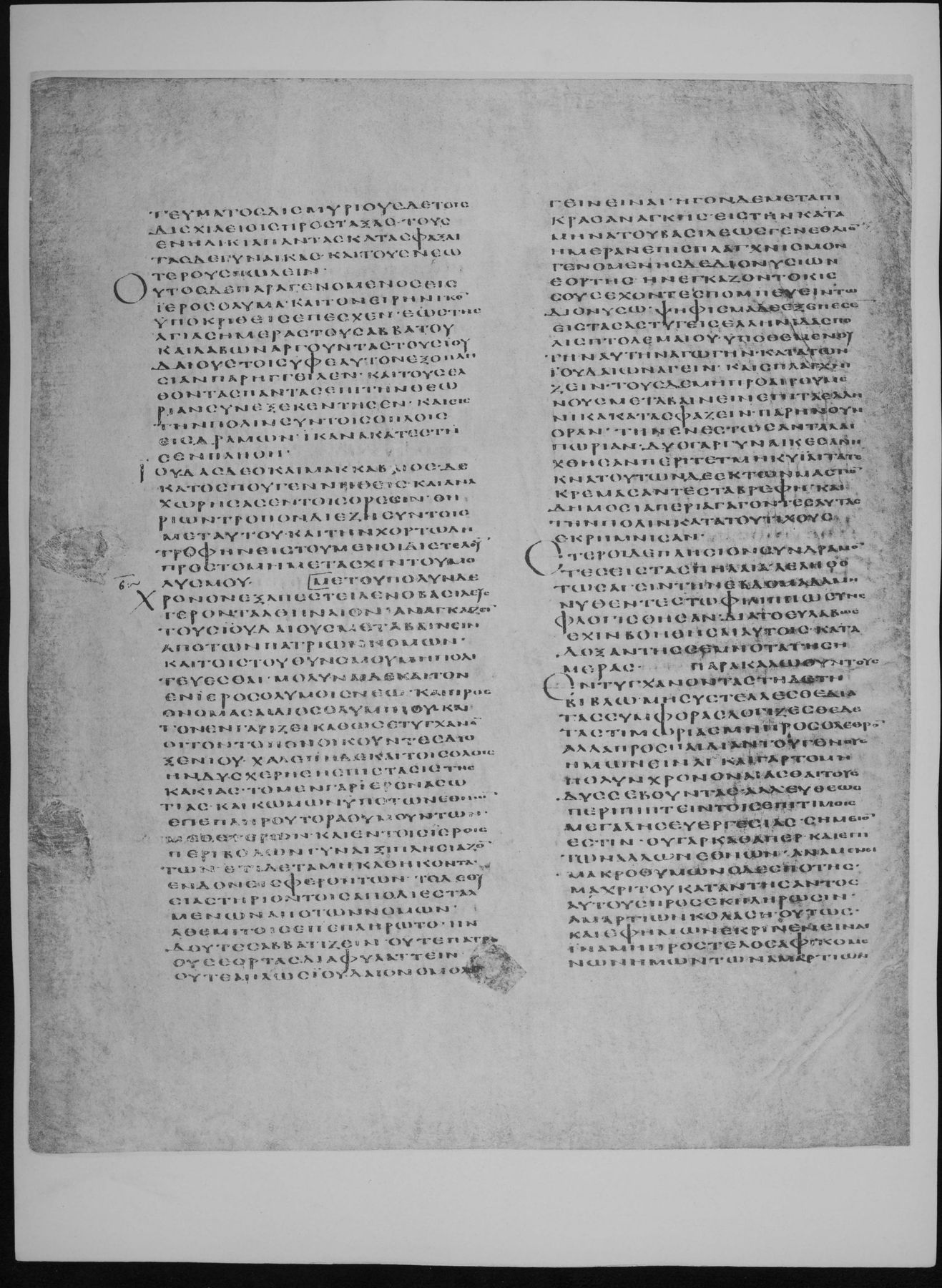
2 Maccabees 6:1-8 is on fol. 496v (full-size facsimile of 1879-83, Internet Archive codex-alexandrinus leaf 999). The 1957 reduced facsimile prints beneath this page: 2 Maccabees v. 24-vi. 15. Checked on the plate: the page begins inside 2 Maccabees 5:24 (first words read: ΤΕΥΜΑΤΟΣ ΔΙΣΜΥΡΙΟΥΣ ΔΕ ΤΟΙΣ ΔΙΣΧΙΛΙΟΙΣ ΠΡΟΣΤΑΞΑΣ ΤΟΥΣ ΕΝ ΗΛΙΚΙΑ ΠΑΝΤΑΣ ΚΑΤΑΣΦΑΞΑΙ).
1Μετ᾽ οὐ πολὺν δὲ χρόνον ἐξαπέστειλεν ὁ βασιλεὺς γέροντα Ἀθηναῖον, ἀναγκάζειν τοὺς Ἰουδαίους μεταβαίνειν ἀπὸ τῶν πατρίων νόμων, καὶ τοῖς τοῦ θεοῦ νόμοις μὴ πολιτεύεσθαι· 2μολῦναι δὲ καὶ τὸν ἐν Ἰεροσολύμοις νεὼ καὶ προσονομάσαι Διὸς Ὀλυμπίου, καὶ τὸν ἐν Γαριζεί[ν], καθὼς ἐτύγχανον οἱ τὸν τόπον οἰκοῦντες, Διὸς ξενίου. 3χαλεπὴ δὲ καὶ τοῖς ὅλοις ἦν δυσχερὴς ἡ ἐπίστασις τῆς κακίας. 4τὸ μὲν γὰρ ἱερὸν ἀσωτίας καὶ κώμων ὑπὸ τῶν ἐθνῶν ἐπεπληροῦτο ῥᾳθυμούντων μεθ᾽ ἑταιρῶν, καὶ ἐν τοῖς ἱεροῖς περιβόλων γυναιξὶ πλησιαζόντων, ἔτι δὲ τὰ μὴ καθήκοντα ἔνδον εἰσφερόντων. 5τὸ δὲ θυσιαστήριον τοῖς ἀποδιεσταλμένοις ἀπὸ τῶν νόμων ἀθεμίτοις ἐπεπλήρωτο. 6ἦν δ᾽ οὔτε σαββατίζειν, οὔτε πατρῴους ἑορτὰς διαφυλάττειν, οὔτε ἁπλῶς Ἰουδαῖον ὁμολογεῖν εἶναι. 7ἦγον δὲ μετὰ πικρᾶς ἀνάγκης εἰς τὴν κατὰ μῆνα τοῦ βασιλέως γενέθλιον ἡμέραν ἐπὶ σπλαγχνισμόν· γενομένης δὲ Διονυσίων ἑορτῆς ἠναγκάζοντο κισσοὺς ἔχοντες πομπεύειν τῷ Διονύσῳ. 8ψήφισμα δὲ ἐξέπεσεν εἰς τὰς ἀστυγείτονας Ἑλληνίδας πόλεις, Πτολεμαίου ὑποθεμένου, τὴν αὐτὴν ἀγωγὴν κατὰ τῶν Ἰουδαίων ἄγειν καὶ σπλαγχνίζειν,
1Not long after this the king sent an old man of Athens to compel the Jews to depart from the laws of their fathers, and not to live after the laws of God: 2and to pollute also the temple in Jerusalem, and to call it the temple of Jupiter Olympius; and that in Garizim, of Jupiter the defender of strangers, as they did desire that dwelt in the place. 3The coming in of this mischief was sore and grievous to the people: 4for the temple was filled with riot and revelling by the Gentiles, who dallied with harlots, and had to do with women within the circuit of the holy places, and besides that brought in things that were not lawful. 5The altar also was filled with profane things, which the law forbiddeth. 6Neither was it lawful for a man to keep sabbath days or ancient feasts, or to profess himself at all to be a Jew. 7And in the day of the king's birth every month they were brought by bitter constraint to eat of the sacrifices; and when the feast of Bacchus was kept, the Jews were compelled to go in procession to Bacchus, carrying ivy. 8Moreover there went out a decree to the neighbour cities of the heathen, by the suggestion of Ptolemee, against the Jews, that they should observe the same fashions, and be partakers of their sacrifices:
Where on the image
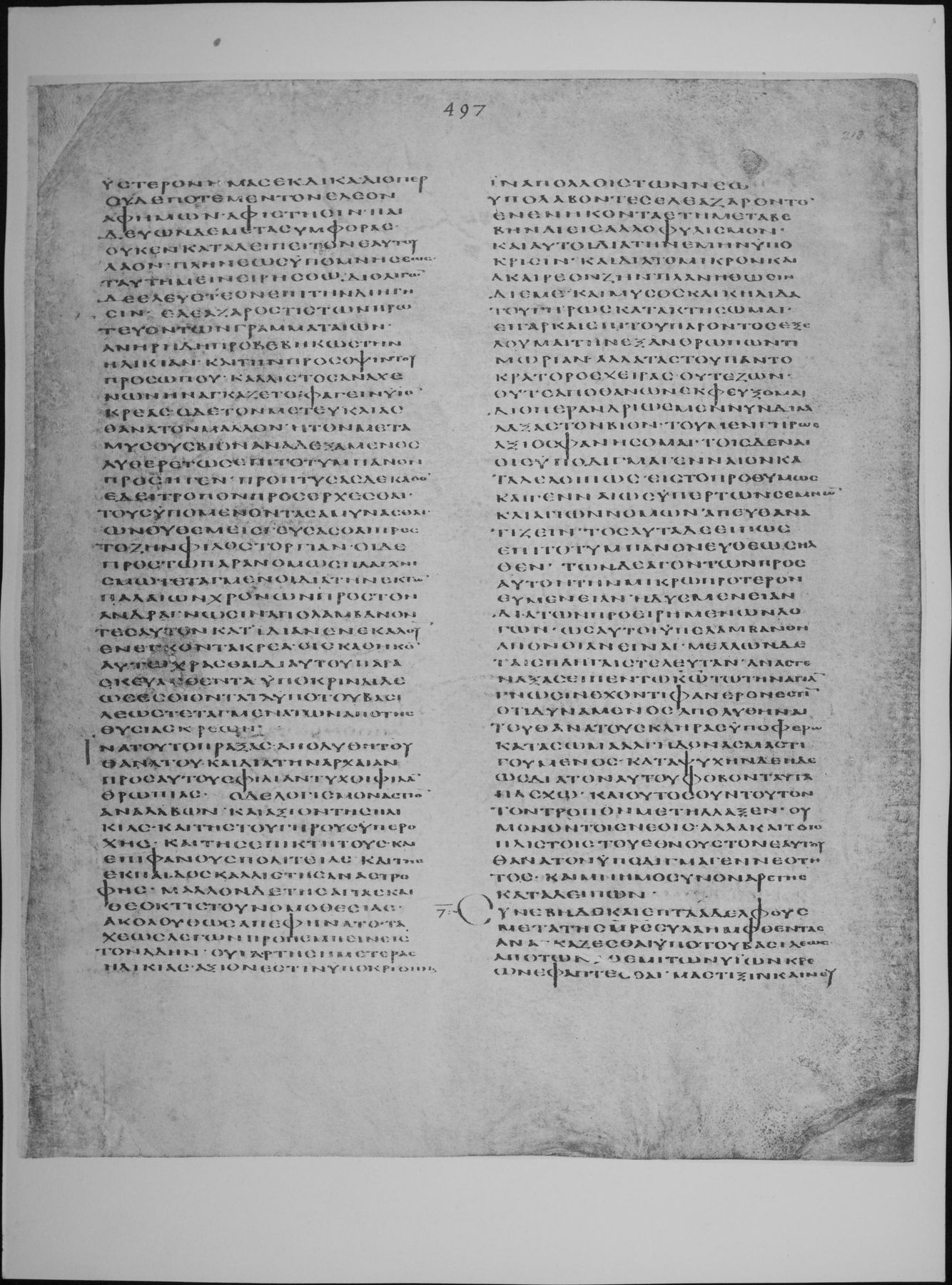
2 Maccabees 6:9-15 is on fol. 496v (full-size facsimile of 1879-83, Internet Archive codex-alexandrinus leaf 999). The 1957 reduced facsimile prints beneath this page: 2 Maccabees v. 24-vi. 15. Checked on the plate: the page begins inside 2 Maccabees 5:24 (first words read: ΤΕΥΜΑΤΟΣ ΔΙΣΜΥΡΙΟΥΣ ΔΕ ΤΟΙΣ ΔΙΣΧΙΛΙΟΙΣ ΠΡΟΣΤΑΞΑΣ ΤΟΥΣ ΕΝ ΗΛΙΚΙΑ ΠΑΝΤΑΣ ΚΑΤΑΣΦΑΞΑΙ). 2 Maccabees 6:15-16 is on fol. 497r (full-size facsimile of 1879-83, Internet Archive codex-alexandrinus leaf 1000). The 1957 reduced facsimile prints beneath this page: 2 Maccabees vi. 15-vii. 1. Checked on the plate: the page begins inside 2 Maccabees 6:15 (first words read: ΥΣΤΕΡΟΝ ΗΜΑΣ ΕΚΔΙΚΑ ΔΙΟΠΕΡ ΟΥΔΕ ΠΟΤΕ ΜΕΝ ΤΟΝ ΕΛΕΟΝ ΑΦ ΗΜΩΝ ΑΦΙΣΤΗΣΙΝ).
9τοὺς δὲ μὴ προαιρουμένους μεταβαίνειν ἐπὶ τὰ Ἑλληνικὰ κατασφάζειν. παρῆν οὖν ὁρᾷν τὴν ἐνεστῶσαν ταλαιπωρίαν. 10δύο γὰρ γυναῖκες ἀνήχθησαν περιτετμηκυῖαι τὰ τέκνα· τούτων δὲ ἐκ τῶν μαστῶν κρεμάσαντες τὰ βρέφη, καὶ δημοσίᾳ περιαγαγόντες αὐτὰς τὴν πόλιν, κατὰ τοῦ τείχους ἐκρήμνισαν. 11ἕτεροι δὲ πλησίον συνδραμόντες εἰς τὰ σπήλαια λεληθότως ἄγειν τὴν ἑβδομάδα, μηνυθέντες τῷ Φιλίππῳ συνεφλογίσθησαν, διὰ τὸ εὐλαβῶς ἔχειν βοηθῆσαι αὑτοῖς κατὰ δόξαν τῆς σεμνοτάτης ἡμέρας. 12Παρακαλῶ οὖν τοὺς ἐντυγχάνοντας τῇδε τῇ βίβλῳ μὴ συστέλλεσθαι διὰ τὰς συμφοράς, λογίζεσθαι δὲ τὰς τιμωρίας μὴ πρὸς ὄλεθρον, ἀλλὰ πρὸς παιδίαν τοῦ γένους ἡμῶν εἶναι. 13καὶ γὰρ τὸ μὴ πολὺν χρόνον ἐᾶσθαι τοὺς δυσσεβοῦντας, ἀλλ᾽ εὐθέως περιπίπτειν τοῖς ἐπιτίμοις, μεγάλης εὐεργεσίας σημεῖόν ἐστιν. 14οὐ γὰρ καθάπερ καὶ ἐπὶ τῶν ἄλλων ἐθνῶν ἀναμένει μακροθυμῶν ὁ δεσπότης μέχρι τοῦ καταντήσαντας αὐτοὺς πρὸς ἐκπλήρωσιν ἁμαρτιῶν κολάσῃ, οὕτως καὶ ἐφ᾽ ἡμῶν ἔκρινεν εἶναι· 15ἵνα μὴ πρὸς τέλος ἀφικομένων ἡμῶν τῶν ἁμαρτιῶν ὕστερον ἡμᾶς ἐκδικᾷ. 16διόπερ οὐδέποτε μὲν τὸν ἔλεον ἀφ᾽ ἡμῶν ἀφίστησιν· παιδεύων δὲ μετὰ συμφορᾶς οὐκ ἐνκαταλείπει τὸν ἑαυτοῦ λαόν.
9and whoso would not conform themselves to the manners of the Gentiles should be put to death. Then might a man have seen the present misery. 10For there were two women brought, who had circumcised their children; whom when they had openly led round about the city, the babes hanging at their breasts, they cast them down headlong from the wall. 11And others, that had run together into caves near by, to keep the sabbath day secretly, being discovered to Philip, were all burnt together, because they made a conscience to help themselves for the honour of the most sacred day. 12Now I beseech those that read this book, that they be not discouraged for these calamities, but that they judge those punishments not to be for destruction, but for a chastening of our nation. 13For it is a token of his great goodness, when wicked doers are not suffered any longer time, but forthwith punished. 14For not as with other nations, whom the Lord patiently forbeareth to punish, till they be come to the fulness of their sins, so dealeth he with us, 15lest that, being come to the height of sin, afterwards he should take vengeance of us. 16And therefore he never withdraweth his mercy from us: and though he punish with adversity, yet doth he never forsake his people.
Where on the image
2 Maccabees 6:17-24 is on fol. 497r (full-size facsimile of 1879-83, Internet Archive codex-alexandrinus leaf 1000). The 1957 reduced facsimile prints beneath this page: 2 Maccabees vi. 15-vii. 1. Checked on the plate: the page begins inside 2 Maccabees 6:15 (first words read: ΥΣΤΕΡΟΝ ΗΜΑΣ ΕΚΔΙΚΑ ΔΙΟΠΕΡ ΟΥΔΕ ΠΟΤΕ ΜΕΝ ΤΟΝ ΕΛΕΟΝ ΑΦ ΗΜΩΝ ΑΦΙΣΤΗΣΙΝ).
17πλὴν ἕως ὑπομνήσεως ταῦθ᾽ ἡμῖν εἰρήσθω· δι᾽ ὀλίγων δὲ ἐλευστέον ἐπὶ τὴν διήγησιν. 18Ἐλεάζαρός τις τῶν πρωτευόντων γραμματέων, ἀνὴρ ἤδη προβεβηκὼς τὴν ἡλικίαν καὶ τὴν πρόσοψιν τοῦ προσώπου κάλλιστος, ἀναχαίνων ἠναγκάζετο φαγεῖν ὕειον κρέας. 19ὁ δὲ τὸν μετ᾽ εὐκλείας θάνατον μᾶλλον ἢ τὸν μετὰ μύσους βίον ἀναδεξάμενος αὐθαιρέτως ἐπὶ τὸ τύμπανον προσῆγεν, 20προπτύσας δέ, καθ᾽ ὃν ἔδει τρόπον προσέρχεσθαι τοὺς ὑπομένοντας ἀμύνασθαι ὧν οὐ θέμις γεύσασθαι διὰ τὴν πρὸς τὸ ζῇν φιλοστοργίαν. 21οἱ δὲ πρὸς τῷ παρανόμῳ σπλαγχνισμῷ τεταγμένοι διὰ τὴν ἐκ τῶν παλαιῶν χρόνων πρὸς τὸν ἄνδρα γνῶσιν ἀπολαμβάνοντες αὐτὸν κατ᾽ ἰδίαν ἐνεκάλουν, ἐνεγκόντα κρέα, οἷς καθῆκον αὐτῷ χρᾶσθαι, δι᾽ αὐτοῦ παρασκευασθέντα, ὑποκρῖναι δὲ ὡς ἐσθίοντα τὰ ὑπὸ τοῦ βασιλέως τεταγμένα τῶν ἀπὸ τῆς θυσίας κρεῶν, 22ἵνα τοῦτο πράξας ἀπολυθῇ τοῦ θανάτου, καὶ διὰ τὴν ἀρχαίαν πρὸς αὐτοὺς φιλίαν τύχοι φιλανθρωπίας. 23ὁ δὲ λογισμὸν ἀστεῖον ἀναλαβὼν καὶ ἄξιον τῆς ἡλικίας καὶ τῆς τοῦ γήρους ὑπεροχῆς καὶ τῆς ἐπικτήτου καὶ ἐπιφανοῦς πολιτείας καὶ τῆς ἐκ παιδὸς καλλίστης ἀναστροφῆς, μᾶλλον δὲ τῆς ἁγίας καὶ θεοκτίστου νομοθεσίας ἀκολούθως ἀπεφῄνατο, ταχέως λέγων προπέμπειν εἰς τὸν ᾅδην 24Οὐ γὰρ τῆς ἡμετέρας ἡλικίας ἄξιόν ἐστιν ὑποκριθῆναι, ἵνα πολλοὶ τῶν νέων ὑπολαβόντες Ἐλεάζαρον τὸν ἐνενηκονταετῆ μεταβεβηκέναι εἰς ἀλλοφυλισμόν,
17But let this that we have spoken be for a warning unto us. And now will we come to the declaring of the matter in a few words. 18Eleazar, one of the principal scribes, an aged man, and of a well-favoured countenance, was constrained to open his mouth, and to eat swine's flesh. 19But he, choosing rather to die gloriously, than to live stained with such an abomination, spit it forth, and came of his own accord to the torment. 20As it behoved them to come, that are resolute to stand out against such things as are not lawful for love of life to be tasted. 21But they that had the charge of that wicked feast, for the old acquaintance they had with the man, taking him aside, besought him to bring flesh of his own provision, such as was lawful for him to use, and make as if he did eat of the flesh taken from the sacrifice commanded by the king; 22that in so doing he might be delivered from death, and for the old friendship with them find favour. 23But he began to consider discreetly, and as became his age, and the excellency of his ancient years, and the honour of his gray head, whereunto he was come, and his most honest education from a child, or rather the holy law made and given by God: therefore he answered accordingly, and willed them straightways to send him to the grave. 24For it becometh not our age, said he, in any wise to dissemble, whereby many young persons might think that Eleazar, being fourscore years old and ten, were now gone to a strange religion;
Where on the image
2 Maccabees 6:25-31 is on fol. 497r (full-size facsimile of 1879-83, Internet Archive codex-alexandrinus leaf 1000). The 1957 reduced facsimile prints beneath this page: 2 Maccabees vi. 15-vii. 1. Checked on the plate: the page begins inside 2 Maccabees 6:15 (first words read: ΥΣΤΕΡΟΝ ΗΜΑΣ ΕΚΔΙΚΑ ΔΙΟΠΕΡ ΟΥΔΕ ΠΟΤΕ ΜΕΝ ΤΟΝ ΕΛΕΟΝ ΑΦ ΗΜΩΝ ΑΦΙΣΤΗΣΙΝ).
25καὶ αὐτοὶ διὰ τὴν ἐμὴν ὑπόκρισιν καὶ διὰ τὸ μικρὸν καὶ ἀκαριαῖον ζῇν πλανηθῶσιν δι᾽ ἐμέ, καὶ μύσος καὶ κηλῖδα τοῦ γήρως κατακτήσωμαι. 26εἰ γὰρ καὶ ἐπὶ τοῦ παρόντος ἐξελοῦμαι τὴν ἐξ ἀνθρώπων τιμωρίαν, ἀλλὰ τὰς τοῦ παντοκράτορος χεῖρας οὔτε ζῶν οὔτε ἀποθανὼν ἐκφεύξομαι. 27διόπερ ἀνδρείως μὲν νῦν διαλλάξας τὸν βίον τοῦ μὲν γήρως ἄξιος φανήσομαι, 28τοῖς δὲ νέοις ὑπόδιγμα γενναῖον καταλελοιπὼς εἰς τὸ προθύμως καὶ γενναίως ὑπὲρ τῶν σεμνῶν καὶ ἁγίων νόμων ἀπευθανατίζειν. τοσαῦτα δὲ εἰπὼν ἐπὶ τὸ τύμπανον εὐθέως ἦλθεν, 29τῶνδε ἀγόντων πρὸς αὐτὸν τὴν μικρῷ πρότερον εὐμένειαν δυσμένειαν διὰ τὴν τῶν προειρημένων λόγων, ὡς αὐτοὶ ὑπελάμβανον, ἀπόνοιαν. 30μέλλων δὲ ταῖς πληγαῖς τελευτᾷν, ἀναστενάξας εἶπεν Τῷ κυρίῳ τῷ τὴν ἁγίαν γνῶσιν ἔχοντι φανερόν ἐστιν ὅτι δυνάμενος ἀπολυθῆναι τοῦ θανάτου, σκληρὰς ὑποφέρω κατὰ σῶμα ἀλγηδόνας μαστιγούμενος, κατὰ ψυχὴν δὲ ἡδέως διὰ τὸν αὐτοῦ φόβον ταῦτα πάσχω. 31καὶ οὗτος οὖν τοῦτον τὸν τρόπον μετήλλαξεν, οὐ μόνον τοῖς νέοις, ἀλλὰ καὶ τοῖς πλείστοις τοῦ ἔθνους τὸν ἑαυτοῦ θάνατον ὑπόδιγμα γενναιότητος καὶ μνημόσυνον ἀρετῆς καταλείπων.
25and so they through mine hypocrisy, and desire to live a little time and a moment longer, should be deceived by me, and I get a stain to mine old age, and make it abominable. 26For though for the present time I should be delivered from the punishment of men: yet should I not escape the hand of the Almighty, neither alive, nor dead. 27Wherefore now, manfully changing this life, I will shew myself such an one as mine age requireth, 28and leave a notable example to such as be young to die willingly and courageously for the honourable and holy laws. And when he had said these words, immediately he went to the torment: 29they that led him changing the good will they bare him a little before into hatred, because the foresaid speeches proceeded, as they thought, from a desperate mind. 30But when he was ready to die with stripes, he groaned, and said, It is manifest unto the Lord, that hath the holy knowledge, that whereas I might have been delivered from death, I now endure sore pains in body by being beaten: but in soul am well content to suffer these things, because I fear him. 31And thus this man died, leaving his death for an example of a noble courage, and a memorial of virtue, not only unto young men, but unto all his nation.
Cite
Sources
- Source: Codex Alexandrinus (British Library Royal MS 1 D. VI) via the British Museum photographic facsimiles of 1879-83 and 1957 (Internet Archive) + Swete's Septuagint + Brenton's English (holding institution)
- Critical edition: H. B. Swete, The Old Testament in Greek according to the Septuagint (1909)
← previous · → next · v cycle view · l back to library