3 Kingdoms (1 Kings), Chapter 6 (Codex Alexandrinus)
Introduction
3 Kingdoms (1 Kings) 6 in the Greek Old Testament (the Septuagint) as written in Codex Alexandrinus, a Greek Bible copied in the fifth century, probably in Egypt, and now in the British Library (Royal MS 1 D. V, the first of its four volumes). It is one of the three great early codices of the whole Greek Bible, with Codex Vaticanus and Codex Sinaiticus.
Numbering: Swete's Greek and Brenton's English number or divide some verses of this chapter differently (Swete 6:1-5 = Brenton 6:1; Swete 6:6 = Brenton 6:2; Swete 6:7-8 = Brenton 6:3; Swete 6:9-15 = Brenton 6:4-10; Swete 6:16-17 = Brenton 6:15-16; Swete 6:18 = Brenton 6:17-19; Swete 6:19-20 = Brenton 6:20-21; Swete 6:21-29 = Brenton 6:22-30; Swete 6:30-31 = Brenton 6:31; Swete 6:32-34 = Brenton 6:34-36). Each column keeps its own verse numbers, and sections are cut only where the two texts agree, so each section holds the same passage in both languages.
This entry meets the strict three-criteria standard of the Theosis Library:
- Manuscript scan: the pages of Codex Alexandrinus carrying this chapter (fol. 204r, fol. 204v, fol. 205r), from the full-size photographic (autotype) facsimile published by the British Museum in 1879-1883, as digitised on the Internet Archive. The verse range of every page comes from the reduced photographic facsimile of 1930, which prints it beneath each plate, and the opening words of every page were read on the plate to confirm the page and the verse it begins with. Each section links to the page or pages that hold its verses. Folio numbers are those written at the head of each leaf and visible on the plates.
- Original text: Swete's edition, which here prints the text of Codex Vaticanus (Vat. gr. 1209), the base of his edition, and gives the readings of Alexandrinus only in his apparatus. The Greek column is therefore Vaticanus' text; where Alexandrinus differs, the plate shows what Alexandrinus reads.
- English translation: Sir Lancelot C. L. Brenton, The Septuagint Version of the Old Testament (1844; 1851 edition), a translation of the Greek, public domain, from the eBible.org text.
How was this verified? (Provenance)
Where on the image
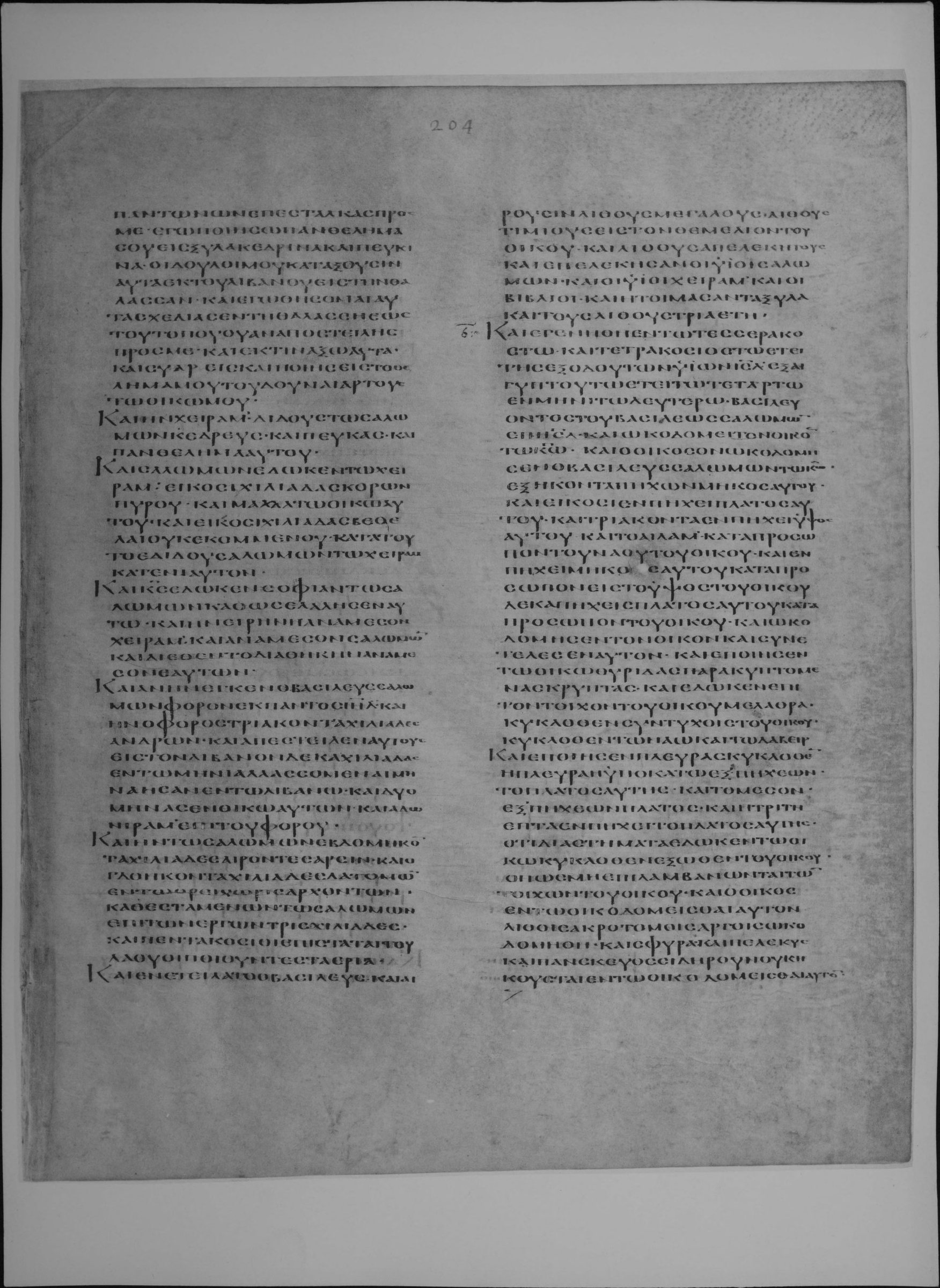
3 Kingdoms (1 Kings) 6:1-8 is on fol. 204r (full-size facsimile of 1879-83, Internet Archive codex-alexandrinus leaf 426). The 1930 reduced facsimile prints beneath this page: 1 Kings v. 8-vi. 12. Checked on the plate: the page begins inside 3 Kingdoms (1 Kings) 5:8 (first words read: ΠΑΝΤΩΝ ΩΝ ΑΠΕΣΤΑΛΚΑΣ ΠΡΟΣ ΜΕ ΕΓΩ ΠΟΙΗΣΩ ΠΑΝ ΘΕΛΗΜΑ ΣΟΥ).
1Καὶ ἐγενήθη ἐν τῷ τεσσερακοστῷ καὶ τετρακοσιοστῷ ἔτει τῆς ἐξόδου υἱῶν Ἰσραὴλ ἐξ Αἰγύπτου, τῷ ἔτει τῷ τετάρτῳ ἐν μηνὶ τῷ δευτέρῳ βασιλεύοντος τοῦ βασιλέως Σαλωμὼν ἐπὶ Ἰσραήλ, 2καὶ αἴρουσιν λίθους μεγάλους τιμίους εἰς τὸν θεμέλιον τοῦ οἴκου καὶ λίθους ἀπελεκήτους· 3καὶ ἐπελέκησαν οἱ υἱοὶ Σαλωμὼν καὶ οἱ υἱοὶ Χειράμ, καὶ ἔβαλαν αὐτούς. 4ἐν τῷ ἔτει τῷ τετάρτῳ ἐθεμελίωσεν τὸν οἶκον Κυρίου, ἐν μηνὶ Νεισῷ καὶ τῷ δευτέρῳ μηνί. 5ἐν ἑνδεκάτῳ ἐνιαυτῷ ἐν μηνὶ Βαάδ, οὗτος ὁ μὴν ὁ ὄγδοος, συνετελέσθη ὁ οἶκος εἰς πάντα λόγον αὐτοῦ καὶ εἰς πᾶσαν διάταξιν αὐτοῦ. 6καὶ ὁ οἶκος ὃν ᾠκοδόμησεν ὁ βασιλεὺς τῷ κυρίῳ, τεσσεράκοντα μῆκος αὐτοῦ, καὶ εἴκοσι ἐν πήχει πλάτος αὐτοῦ, καὶ πέντε καὶ εἴκοσι ἐν πήχει τὸ ὕψος αὐτοῦ. 7καὶ τὸ αἰλὰμ κατὰ πρόσωπον τοῦ ναοῦ, εἴκοσι ἐν πήχει μῆκος αὐτοῦ εἰς τὸ πλάτος τοῦ οἴκου κατὰ πρόσωπον τοῦ οἴκου. 8καὶ ᾠκοδόμησεν τὸν οἶκον καὶ συνετέλεσεν αὐτόν.
1And it came to pass in the four hundred and fortieth year after the departure of the children of Israel out of Egypt, in the fourth year and second month of the reign of king Solomon over Israel, that the king commanded that they should take great and costly stones for the foundation of the house, and hewn stones. And the men of Solomon, and the men of Chiram hewed the stones, and laid them for a foundation. In the fourth year he laid the foundation of the house of the Lord, in the month Ziu, even in the second month. In the eleventh year, in the month Baal, this is the eighth month, the house was completed according to all its plan, and according to all its arrangement. 2And the house which the king built to the Lord was forty cubits in length, and twenty cubits in breadth, and its height five and twenty cubits. 3And the porch in front of the temple—twenty cubits was its length according to the breadth of the house in front of the house: and he built the house, and finished it.
Where on the image
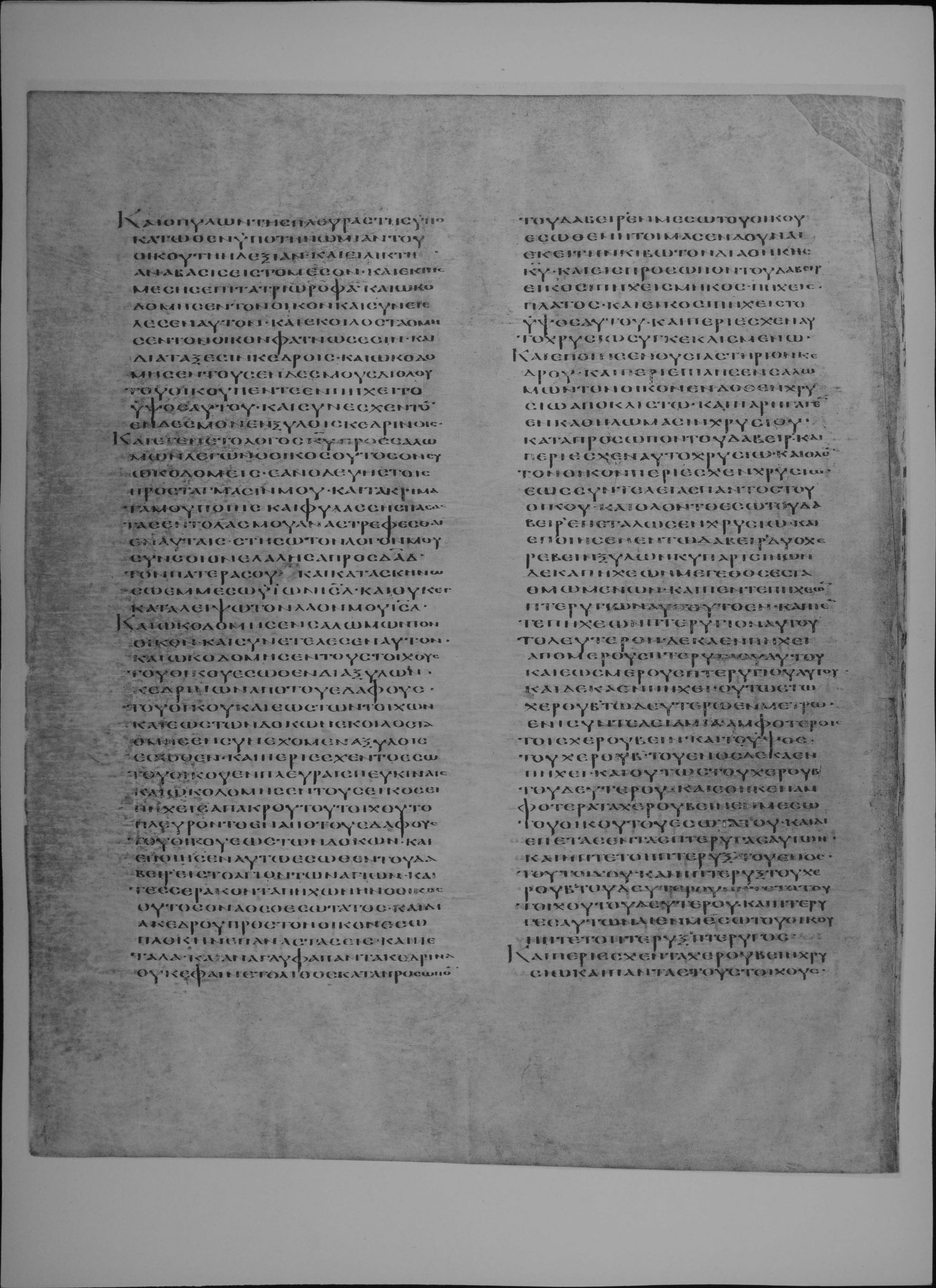
3 Kingdoms (1 Kings) 6:9-12 is on fol. 204r (full-size facsimile of 1879-83, Internet Archive codex-alexandrinus leaf 426). The 1930 reduced facsimile prints beneath this page: 1 Kings v. 8-vi. 12. Checked on the plate: the page begins inside 3 Kingdoms (1 Kings) 5:8 (first words read: ΠΑΝΤΩΝ ΩΝ ΑΠΕΣΤΑΛΚΑΣ ΠΡΟΣ ΜΕ ΕΓΩ ΠΟΙΗΣΩ ΠΑΝ ΘΕΛΗΜΑ ΣΟΥ). 3 Kingdoms (1 Kings) 6:13-16 is on fol. 204v (full-size facsimile of 1879-83, Internet Archive codex-alexandrinus leaf 427). The 1930 reduced facsimile prints beneath this page: 1 Kings vi. 13-28. Checked on the plate: the page begins at the start of 3 Kingdoms (1 Kings) 6:13 (first words read: ΚΑΙ Ο ΠΥΛΩΝ ΤΗΣ ΠΛΕΥΡΑΣ ΤΗΣ ΥΠΟΚΑΤΩΘΕΝ ΥΠΟ ΤΗΝ ΩΜΙΑΝ ΤΟΥ ΟΙΚΟΥ).
9καὶ ἐποίησεν τῷ οἴκῳ θυρίδας παρακυπτομένας κρυπτάς. 10καὶ ἔδωκεν ἐπ᾽ αὐτὸν τοῖχον τοῦ οἴκου μέλαθρα κυκλόθεν τῷ ναῷ καὶ τῷ δαβείρ. 11ἡ πλευρὰ ἡ ὑποκάτω πέντε πήχεων ἐν πήχει τὸ πλάτος αὐτῆς, καὶ τὸ μέσον ἕξ, καὶ ἡ τρίτη ἑπτὰ ἐν πήχει τὸ πλάτος αὐτῆς· ὅτι διάστημα ἔδωκεν τῷ οἴκῳ κυκλόθεν ἔξωθεν τοῦ οἴκου, ὅπως μὴ ἐπιλαμβάνωνται τῶν τοίχων τοῦ οἴκου. 12καὶ ὁ οἶκος ἐν τῷ οἰκοδομεῖσθαι αὐτὸν λίθοις ἀκροτόμοις ἀργοῖς ᾠκοδομήθη· καὶ σφῦρα καὶ πέλεκυς καὶ πᾶν σκεῦος σιδηροῦν οὐκ ἠκούσθη ἐν τῷ οἴκῳ ἐν τῷ οἰκοδομεῖσθαι αὐτόν. 13καὶ ὁ πυλὼν τῆς πλευρᾶς τῆς ὑποκάτωθεν ὑπὸ τὴν ὠμίαν τοῦ οἴκου τὴν δεξιάν, καὶ ἑλικτὴ ἀνάβασις εἰς τὸ μέσον καὶ ἐκ τῆς μέσης ἐπὶ τὰ τριώροφα. 14καὶ ᾠκοδόμησεν τὸν οἶκον καὶ συνετέλεσεν αὐτόν· καὶ ἐκοιλοστάθμησεν τὸν οἶκον κέδροις. 15καὶ ᾠκοδόμησεν τοὺς ἐνδέσμους δι᾽ ὅλου τοῦ οἴκου πέντε ἐν πήχει τὸ ὕψος αὐτοῦ, καὶ συνέσχεν τὸν σύνδεσμον ἐν ξύλοις κεδρίνοις. 16καὶ ᾠκοδόμησεν τοὺς τοίχους τοῦ οἴκου διὰ ξύλων κεδρίνων ἀπὸ τοῦ ἐδάφους τοῦ οἴκου καὶ ἕως τῶν δοκῶν καὶ ἕως τῶν τοίχων· ἐκοιλοστάθμησεν συνεχόμενος ξύλοις ἔσωθεν, καὶ περιέσχεν τὸ ἔσω τοῦ οἴκου ἐν πλευραῖς πευκίναις.
4And he made to the house secret windows inclining inward. 5And against the wall of the house he set chambers round about the temple and the ark. 6The under side was five cubits broad, and the middle part six, and the third was seven cubits broad; for he formed an interval to the house round about without the house, that they might not touch the walls of the house. 7And the house was built in the construction of it with rough hewn stones: and there was not heard in the house in the building of it hammer or axe, or any iron tool. 8And the porch of the under side was below the right wing of the house, and there was a winding ascent into the middle chamber, and from the middle to the third story. 9So he built the house and finished it; and he made the ceiling of the house with cedars. 10And he made the partitions through all the house, each five cubits high, and enclosed each partition with cedar boards. 15And he framed the walls of the house within with cedar boards, from the floor of the house and on to the inner walls and to the beams: he lined the parts enclosed with boards within, and compassed the inward parts of the house with planks of fir.
Where on the image
3 Kingdoms (1 Kings) 6:17-24 is on fol. 204v (full-size facsimile of 1879-83, Internet Archive codex-alexandrinus leaf 427). The 1930 reduced facsimile prints beneath this page: 1 Kings vi. 13-28. Checked on the plate: the page begins at the start of 3 Kingdoms (1 Kings) 6:13 (first words read: ΚΑΙ Ο ΠΥΛΩΝ ΤΗΣ ΠΛΕΥΡΑΣ ΤΗΣ ΥΠΟΚΑΤΩΘΕΝ ΥΠΟ ΤΗΝ ΩΜΙΑΝ ΤΟΥ ΟΙΚΟΥ).
17καὶ ᾠκοδόμησεν τοὺς εἴκοσι πήχεις ἀπ᾽ ἄκρου τοῦ τοίχου, τὸ πλευρὸν τὸ ἓν ἀπὸ τοῦ ἐδάφους ἕως τῶν δοκῶν· καὶ ἐποίησεν ἐκ τοῦ δαβεὶρ εἰς τὸ ἅγιον τῶν ἁγίων. 18καὶ τεσσεράκοντα πηχῶν ἦν ὁ ναὸς κατὰ πρόσωπον τοῦ δαβεὶρ ἐν μέσῳ τοῦ οἴκου ἔσωθεν, δοῦναι ἐκεῖ τὴν κιβωτὸν διαθήκης Κυρίου. 19εἴκοσι πήχεις μῆκος, καὶ εἴκοσι πήχεις πλάτος, καὶ εἴκοσι πήχεις τὸ ὕψος αὐτοῦ. 20καὶ περιέσχεν αὐτὸν χρυσίῳ συνκεκλεισμένῳ· καὶ ἐποίησεν θυσιαστήριον κατὰ πρόσωπον τοῦ δαβεὶρ καὶ περιέσχεν αὐτὸν χρυσίῳ. 21καὶ ὅλον τὸν οἶκον περιέσχεν χρυσίῳ ἕως συντελείας παντὸς τοῦ οἴκου. 22καὶ ἐποίησεν ἐν τῷ δαβεὶρ δύο χερουβεὶν δέκα πήχεων μέγεθος ἐσταθμωμένον. 23καὶ πέντε πήχεων πτερύγιον αὐτοῦ· τὸ δεύτερον δὲ ἐν πήχει δέκα ἀπὸ μέρους πτερυγίου αὐτοῦ. 24οὕτως τῷ χεροὺβ τῷ δευτέρῳ, ἐν μέτρῳ ἑνὶ συντέλεια μία· ἀμφοτέροις συντέλεια μία·
16And he built the twenty cubits from the top of the wall, one side from the floor to the beams, and he made it from the oracle to the most holy place. 17And the temple was forty cubits in extent, 19in front of the oracle in the midst of the house within, in order to put there the ark of the covenant of the Lord. 20The length was twenty cubits, and the breadth was twenty cubits, and the height of it was twenty cubits. And he covered it with perfect gold, and he made an altar 21in front of the oracle, and covered it with gold. 22And he covered the whole house with gold, till he had finished gilding the whole house. 23And he made in the oracle two cherubs of ten cubits measured size. 24And the wing of one cherub was five cubits, and his other wing was five cubits; ten cubits from the tip of one wing to the tip of the other wing. 25Thus it was with the other cherub, both were alike finished with one measure.
Where on the image
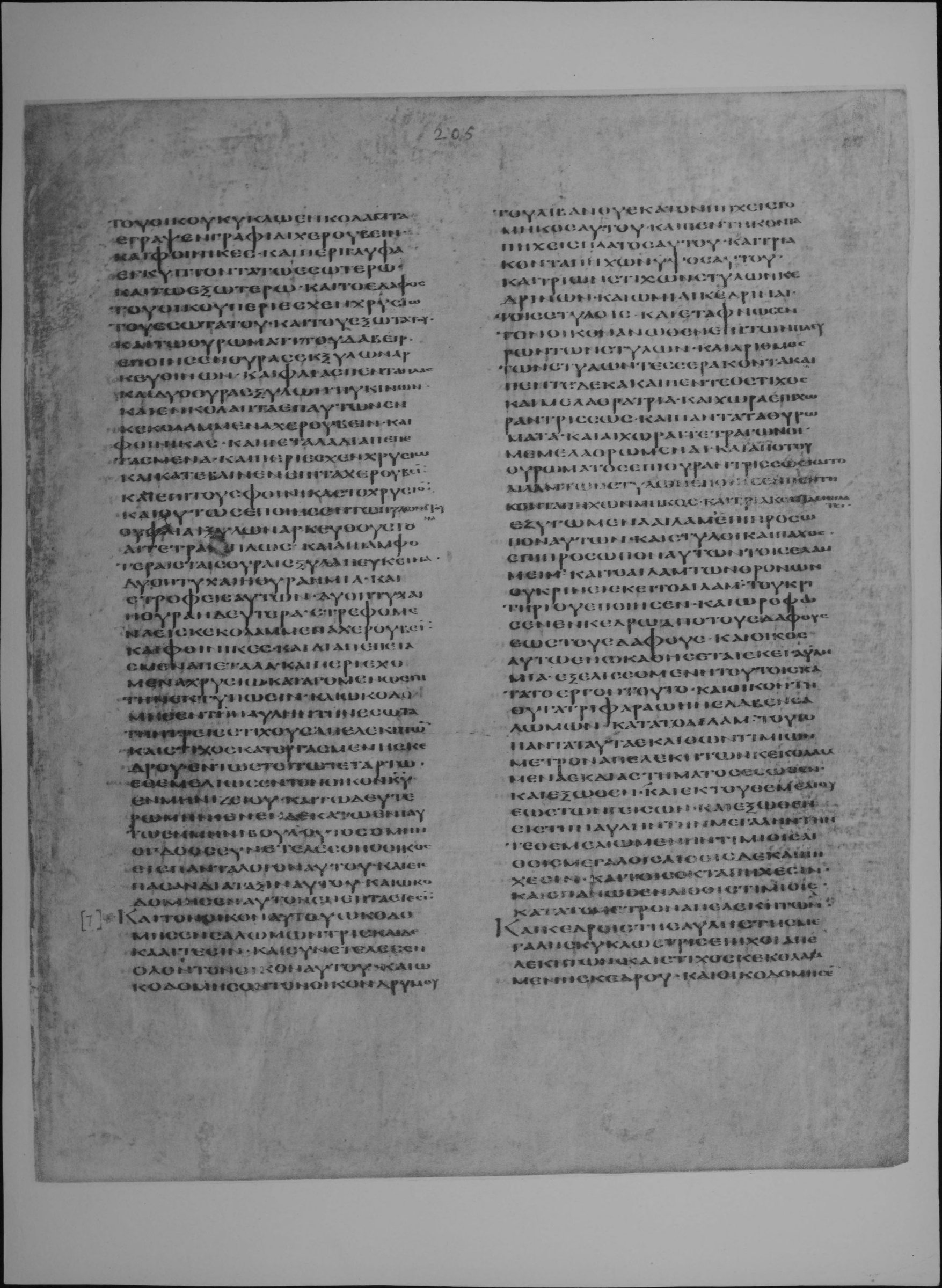
3 Kingdoms (1 Kings) 6:25-28 is on fol. 204v (full-size facsimile of 1879-83, Internet Archive codex-alexandrinus leaf 427). The 1930 reduced facsimile prints beneath this page: 1 Kings vi. 13-28. Checked on the plate: the page begins at the start of 3 Kingdoms (1 Kings) 6:13 (first words read: ΚΑΙ Ο ΠΥΛΩΝ ΤΗΣ ΠΛΕΥΡΑΣ ΤΗΣ ΥΠΟΚΑΤΩΘΕΝ ΥΠΟ ΤΗΝ ΩΜΙΑΝ ΤΟΥ ΟΙΚΟΥ). 3 Kingdoms (1 Kings) 6:28-34 is on fol. 205r (full-size facsimile of 1879-83, Internet Archive codex-alexandrinus leaf 428). The 1930 reduced facsimile prints beneath this page: 1 Kings vi. 28-34, vii. 38-50. Checked on the plate: the page begins inside 3 Kingdoms (1 Kings) 6:28 (first words read: ΤΟΥ ΟΙΚΟΥ ΚΥΚΛΩ ΕΝΚΟΛΑΠΤΑ ΕΓΡΑΨΕΝ ΓΡΑΦΙΔΙ ΧΕΡΟΥΒΕΙΝ ΚΑΙ ΦΟΙΝΙΚΕΣ).
25καὶ τὸ ὕψος τοῦ χερουβεὶν ἐν πήχει, καὶ οὕτως τὸ χερουβεὶν τὸ δεύτερον. 26καὶ ἀμφότερα χερουβεὶν ἐν μέσῳ τοῦ οἴκου τοῦ ἐσωτάτου· καὶ διεπέτασεν τὰς πτέρυγας αὐτῶν, καὶ ἥπτετο πτέρυξ μία τοῦ τοίχου, καὶ πτέρυξ ἥπτετο τοῦ τοίχου τοῦ δευτέρου· καὶ αἱ πτέρυγες αὐτοῦ αἱ ἐν μέσῳ τοῦ οἴκου ἥπτοντο πτέρυξ πτέρυγος. 27καὶ περιέσχεν τὰ χερουβεὶν χρυσίῳ. 28πάντας τοὺς τοίχους τοῦ οἴκου κύκλῳ ἐκκολαπτὰ ἔγραψεν γραφίδι χερουβείν, καὶ φοίνικες τῷ ἐσωτέρῳ καὶ τῷ ἐξωτέρῳ. 29καὶ τὸ ἔδαφος τοῦ οἴκου περιέσχεν χρυσίῳ, τοῦ ἐσωτάτου καὶ τοῦ ἐξωτάτου. 30καὶ τῷ θυρώματι τοῦ δαβεὶρ ἐποίησεν θύρας ξυλίνων ἀρκευθίνων· 31στοαὶ τετραπλῶς. 32ἐν ἀμφοτέραις ταῖς θύραις ξύλα πεύκινα· δύο πτυχαὶ καὶ ἡ θύρα ἡ μία καὶ στροφεῖς αὐτῶν, καὶ δύο πτυχαὶ ἡ θύρα ἡ δευτέρα, στρεφόμενα. 33ἐκκεκολαμμένα χερουβεὶν καὶ φοίνικες καὶ διαπεπετασμένα πέταλα, καὶ περιεχόμενα χρυσίῳ καταγομένῳ ἐπὶ τὴν ἐκτύπωσιν. 34καὶ ᾠκοδόμησεν τὴν αὐλὴν τὴν ἐσωτάτην, τρεῖς στίχους ἀπελεκήτων, καὶ στίχος κατειργασμένης κέδρου κυκλόθεν. καὶ ᾠκοδόμησε καταπέτασμα τῆς αὐλῆς τοῦ αἰλὰμ τοῦ οἴκου τοῦ κατὰ πρόσωπον τοῦ ναοῦ.
26And the height of the one cherub was ten cubits, and so was it with the second cherub. 27And both the cherubs were in the midst of the innermost part of the house; and they spread out their wings, and one wing touched the wall, and the wing of the other cherub touched the other wall; and their wings in the midst of the house touched each other. 28And he covered the cherubs with gold. 29He graved all the walls of the house round about with the graving of cherubs, and he sculptured palm trees within and without the house. 30And he covered the floor of the house within and without with gold. 31And for the door-way of the oracle he made doors of juniper wood, there were porches in a four-fold way. 34In both the doors were planks of fir; the one door had two leaves and their hinges, and the other door had two leaves and turned on hinges, 35being carved with cherubs, and there were palm-trees and open flower-leaves, and it was overlaid with gold gilt upon the engraving. 36And he built the inner court, three rows of hewn stones, and a row of wrought cedar round about, and he made the curtain of the court of the porch of the house that was in front of the temple.
Cite
Sources
- Source: Codex Alexandrinus (British Library Royal MS 1 D. V) via the British Museum photographic facsimiles of 1879-83 and 1930 (Internet Archive) + Swete's Septuagint + Brenton's English (holding institution)
- Critical edition: H. B. Swete, The Old Testament in Greek according to the Septuagint (1909)
← previous · → next · v cycle view · l back to library