3 Kingdoms (1 Kings), Chapter 7 (Codex Alexandrinus)
Introduction
3 Kingdoms (1 Kings) 7 in the Greek Old Testament (the Septuagint) as written in Codex Alexandrinus, a Greek Bible copied in the fifth century, probably in Egypt, and now in the British Library (Royal MS 1 D. V, the first of its four volumes). It is one of the three great early codices of the whole Greek Bible, with Codex Vaticanus and Codex Sinaiticus.
Order: Codex Alexandrinus gives the account of Solomon's palace (Swete 7:38-50) before the bronze work for the temple (Swete 7:1-37), in the order of the Hebrew text; Swete follows Codex Vaticanus. Each section links to the page that actually carries its verses.
This entry meets the strict three-criteria standard of the Theosis Library:
- Manuscript scan: the pages of Codex Alexandrinus carrying this chapter (fol. 205r, fol. 205v, fol. 206r, fol. 206v), from the full-size photographic (autotype) facsimile published by the British Museum in 1879-1883, as digitised on the Internet Archive. The verse range of every page comes from the reduced photographic facsimile of 1930, which prints it beneath each plate, and the opening words of every page were read on the plate to confirm the page and the verse it begins with. Each section links to the page or pages that hold its verses. Folio numbers are those written at the head of each leaf and visible on the plates.
- Original text: Swete's edition, which here prints the text of Codex Vaticanus (Vat. gr. 1209), the base of his edition, and gives the readings of Alexandrinus only in his apparatus. The Greek column is therefore Vaticanus' text; where Alexandrinus differs, the plate shows what Alexandrinus reads.
- English translation: Sir Lancelot C. L. Brenton, The Septuagint Version of the Old Testament (1844; 1851 edition), a translation of the Greek, public domain, from the eBible.org text.
How was this verified? (Provenance)
Where on the image
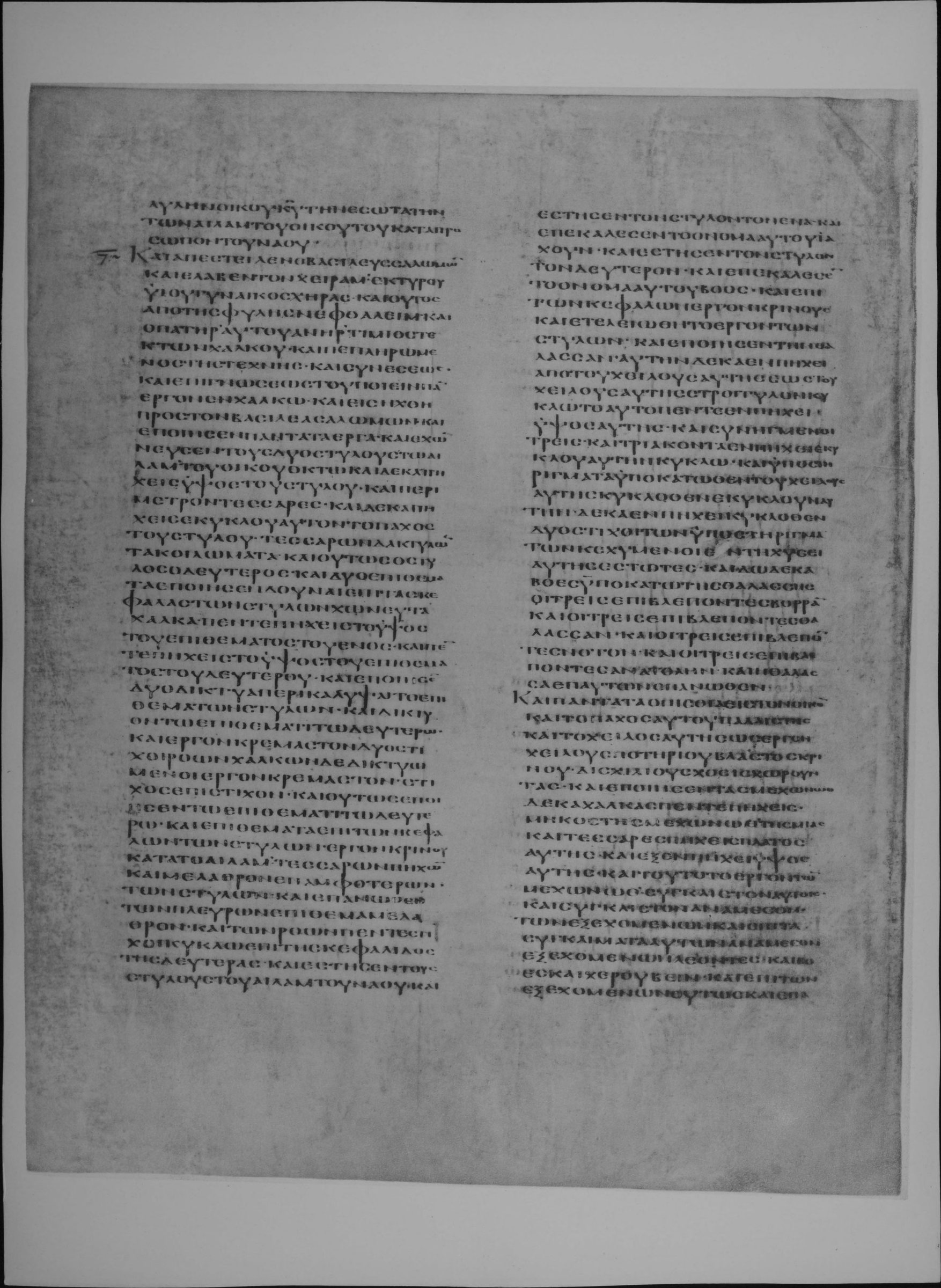
3 Kingdoms (1 Kings) 7:1-8 is on fol. 205v (full-size facsimile of 1879-83, Internet Archive codex-alexandrinus leaf 429). The 1930 reduced facsimile prints beneath this page: 1 Kings vii. 50, 1-16. Checked on the plate: the page begins inside 3 Kingdoms (1 Kings) 7:49 (first words read: ΑΥΛΗ ΟΙΚΟΥ ΚΥ Η ΕΣΩΤΑΤΗ ΚΑΙ ΤΟ ΑΙΛΑΜ ΤΟΥ ΟΙΚΟΥ ΤΟΥ ΚΑΤΑ ΠΡΟΣΩΠΟΝ ΤΟΥ ΝΑΟΥ). Note: the page begins with the end of the palace account in Codex Alexandrinus' wording (ΑΥΛΗ ΟΙΚΟΥ ΚΥ Η ΕΣΩΤΑΤΗ ΚΑΙ ΤΟ ΑΙΛΑΜ, words that Swete's 7:49 lacks) and goes on with 7:1; the caption gives vii. 50, 1-16, so Swete's 7:49-50 are credited to this page and to the preceding one.
1Καὶ ἀπέστειλεν ὁ βασιλεὺς Σαλωμὼν καὶ ἔλαβεν τὸν Χειρὰμ ἐκ Τύρου, 2υἱὸν γυναικὸς χήρας, καὶ οὗτος ἀπὸ τῆς φυλῆς Νεφθαλεί, καὶ ὁ πατὴρ αὐτοῦ ἀνὴρ Τύριος, τέκτων χαλκοῦ καὶ πεπληρωμένος τῆς τέχνης καὶ συνέσεως καὶ γυώσεως τοῦ ποιεῖν πᾶν ἔργον ἐν χαλκῷ· καὶ εἰσηνέχθη πρὸς τὸν βασιλέα Σαλωμών, καὶ ἐποίησεν πάντα τὰ ἔργα. 3καὶ ἐχώνευσεν τὸ αἰλὰμ τοῦ οἴκου, ὀκτὼ καὶ δέκα πήχεις ὕψος τοῦ στύλου· καὶ περίμετρον τέσσαρες καὶ δέκα πήχεις ἐκύκλου αὐτόν, τὸ πάχος τοῦ στύλου· τεσσάρων δακτύλων τὰ κοιλώματα· καὶ οὕτως στύλος ὁ δεύτερος. 4καὶ δύο ἐπιθέματα ἐποίησεν, δοῦναι ἐπὶ τὰς κεφαλὰς τῶν στύλων, χωνευτά· πέντε πήχεις τὸ ὕψος τοῦ ἐπιθέματος τοῦ ἑνός. 5καὶ ἐποίησεν δύο δίκτυα περικαλύψαι τὸ ἐπίθεμα τῶν στύλων, καὶ δίκτυον τῷ ἐπιθέματι τῷ ἑνὶ καὶ δίκτυον τῷ ἐπιθέματι τῷ δευτέρῳ. 6καὶ ἔργον κρεμαστόν, δύο στίχοι ῥοῶν χαλκῶν δεδικτυωμένοι, ἔργον κρεμαστόν, στίχος ἐπὶ στίχον· καὶ οὕτως ἐποίησεν τῷ ἐπιθέματι τῷ δευτέρῳ. 7καὶ ἔστησεν τοὺς στύλους τοῦ αἰλὰμ τοῦ ναοῦ· καὶ ἔστησεν τὸν στύλον τὸν ἕνα καὶ ἐπεκάλεσεν τὸ ὄνομα αὐτοῦ Ἰαχούμ, καὶ ἔστησεν τὸν στύλον τὸν δεύτερον καὶ ἐπεκάλεσεν τὸ ὄνομα αὐτοῦ βάλαζ. 8καὶ ἐπὶ τῶν κεφαλῶν τῶν στύλων ἔργον κρίνου κατὰ τὸ αἰλὰμ τεσσάρων πηχῶν.
1And king Solomon sent, and took Chiram out of Tyre, 2the son of a widow woman; and he was of the tribe of Nephthalim, and his father was a Tyrian; a worker in brass, and accomplished in art and skill and knowledge to work every work in brass: and he was brought in to king Solomon, and he wrought all the works. 3And he cast the two pillars for the porch of the house: eighteen cubits was the height of each pillar, and a circumference of fourteen cubits encompassed it, even the thickness of the pillar: the flutings were four fingers wide, and thus was the other pillar formed. 4And he made two molten chapiters to put on the heads of the pillars: five cubits was the height of one chapiter, and five cubits was the height of the other chapiter. 5And he made two ornaments of net-work to cover the chapiters of the pillars; even a net for one chapiter, and a net for the other chapiter. 6And hanging work, two rows of brazen pomegranates, formed with net-work, hanging work, row upon row: and thus he framed the ornaments for the second chapiter. 7And he set up the pillars of the porch of the temple: and he set up the one pillar, and called its name Jachum: and he set up the second pillar, and called its name Boloz. 8And on the heads of the pillars he made lily-work against the porch, of four cubits,
Where on the image
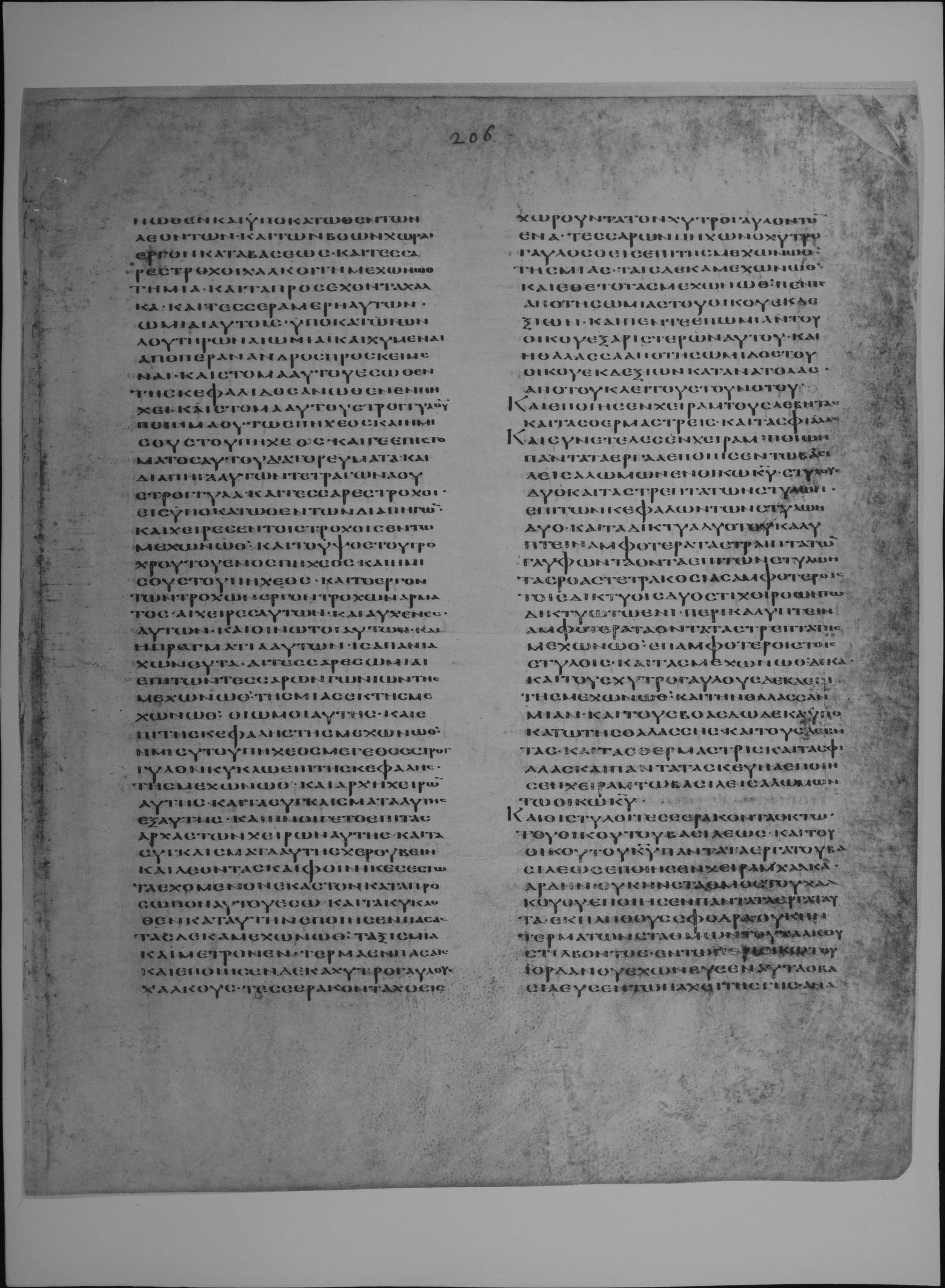
3 Kingdoms (1 Kings) 7:9-16 is on fol. 205v (full-size facsimile of 1879-83, Internet Archive codex-alexandrinus leaf 429). The 1930 reduced facsimile prints beneath this page: 1 Kings vii. 50, 1-16. Checked on the plate: the page begins inside 3 Kingdoms (1 Kings) 7:49 (first words read: ΑΥΛΗ ΟΙΚΟΥ ΚΥ Η ΕΣΩΤΑΤΗ ΚΑΙ ΤΟ ΑΙΛΑΜ ΤΟΥ ΟΙΚΟΥ ΤΟΥ ΚΑΤΑ ΠΡΟΣΩΠΟΝ ΤΟΥ ΝΑΟΥ). Note: the page begins with the end of the palace account in Codex Alexandrinus' wording (ΑΥΛΗ ΟΙΚΟΥ ΚΥ Η ΕΣΩΤΑΤΗ ΚΑΙ ΤΟ ΑΙΛΑΜ, words that Swete's 7:49 lacks) and goes on with 7:1; the caption gives vii. 50, 1-16, so Swete's 7:49-50 are credited to this page and to the preceding one. 3 Kingdoms (1 Kings) 7:16 is on fol. 206r (full-size facsimile of 1879-83, Internet Archive codex-alexandrinus leaf 430). The 1930 reduced facsimile prints beneath this page: 1 Kings vii. 16-33. Checked on the plate: the page begins inside 3 Kingdoms (1 Kings) 7:16 (first words read: ΚΑΙ ΥΠΟΚΑΤΩΘΕΝ ΤΩΝ ΛΕΟΝΤΩΝ ΚΑΙ ΤΩΝ ΒΟΩΝ ΧΩΡΑΘ ΕΡΓΟΝ ΚΑΤΑΒΑΣΕΩΣ).
9καὶ μέλαθρον ἐπ᾽ ἀμφοτέρων τῶν στύλων, καὶ ἐπάνωθεν τῶν πλευρῶν ἐπίθεμα τὸ μέλαθρον τῷ πήχει. 10καὶ ἐποίησεν τὴν θάλασσαν δέκα ἐν πήχει ἀπὸ τοῦ τείχους αὐτῆς ἕως τοῦ χείλους αὐτῆς, στρογγὺλον κὺκλῳ τὸ αὐτό· πέντε ἐν πήχει τὸ ὕψος αὐτῆς καὶ συνηγμένοι τρεῖς καὶ τριάκοντα ἐν πήχει. 11καὶ ὑποστηρίγματα ὑποκάτωθεν τοῦ χείλους αὐτῆς κυκλόθεν ἐκύκλουν αὐτὴν δέκα ἐν πήχει κυκλόθεν· 12καὶ τὸ χεῖλος αὐτῆς ὡς ἔργον χείλους ποτηρίου, βλαστὸς κρίνου, καὶ τὸ πάχος αὐτοῦ παλαιστής. 13καὶ δώδεκα βόες ὑποκάτω τῆς θαλάσσης, οἱ τρεῖς ἐπιβλέποντες βορρᾶν, καὶ οἱ τρεῖς ἐπιβλέποντες θάλασσαν, καὶ οἱ τρεῖς ἐπιβλέποντες νότον, καὶ οἱ τρεῖς ἐπιβλέποντες ἀνατολήν. καὶ πάντα τὰ ὀπίσθια εἰς τὸν οἶκον, καὶ ἡ θάλασσα ἐπ᾽ αὐτῶν ἐπάνωθεν. 14καὶ ἐποίησεν δέκα μεχωνὼθ χαλκᾶς· πέντε πήχεις μῆκος τῆς μεχωνὼθ τῆς μιᾶς, καὶ τέσσαρες πήχεις πλάτος αὐτῆς, καὶ ἓξ ἐν πήχει ὕψος αὐτῆς. 15καὶ τοῦτο τὸ ἔργον τῶν μεχωνώθ· συνκλειστὸν αὐτοῖς, καὶ συνκλειστὸν ἀνὰ μέσον τῶν ἐξεχομένων. 16καὶ ἐπὶ τὰ συνκλείσματα αὐτῶν ἀνὰ μέσον ἐξεχομένων λέοντες καὶ βόες καὶ χερουβείν· καὶ ἐπὶ τῶν ἐξεχομένων οὕτως καὶ ἐπάνωθεν, καὶ ὑποκάτωθεν τῶν λεόντων καὶ τῶν βοῶν χῶραι, ἔργον καταβάσεως.
9and a chamber over both the pillars, and above the sides an addition equal to the chamber in width. 10And he made the sea, ten cubits from one rim to the other, the same was completely circular round about: its height was five cubits, and its circumference thirty-three cubits. 11And stays underneath its rim round about compassed it ten cubits round; 12and its rim was as the work of the rim of a cup, a lily-flower, and the thickness of it was a span. 13And there were twelve oxen under the sea; three looking to the north, and three looking to the west, and three looking to the south, and three looking to the east: and all their hinder parts were inward, and the sea was above upon them. 14And he made ten brazen bases: five cubits was the length of one base, and four cubits the breadth of it, and its height was six cubits. 15And this work of the bases was formed with a border to them, and there was a border between the ledges. 16And upon their borders between the projections were lions, and oxen, and cherubs: and on the projections, even so above, and also below were the places of lions and oxen, hanging work.
Where on the image
3 Kingdoms (1 Kings) 7:17-24 is on fol. 206r (full-size facsimile of 1879-83, Internet Archive codex-alexandrinus leaf 430). The 1930 reduced facsimile prints beneath this page: 1 Kings vii. 16-33. Checked on the plate: the page begins inside 3 Kingdoms (1 Kings) 7:16 (first words read: ΚΑΙ ΥΠΟΚΑΤΩΘΕΝ ΤΩΝ ΛΕΟΝΤΩΝ ΚΑΙ ΤΩΝ ΒΟΩΝ ΧΩΡΑΘ ΕΡΓΟΝ ΚΑΤΑΒΑΣΕΩΣ).
17καὶ τέσσαρες τροχοὶ χαλκοῖ τῇ μεχωνὼθ τῇ μιᾷ, καὶ τὰ προσέχοντα χαλκᾶ καὶ τέσσερα μέρη αὐτῶν, ὠμίαι ὑποκάτω τῶν λουτήρων. 18καὶ χεῖρες ἐν τοῖς τροχοῖς ἐν τῷ μεχωνώθ· καὶ τὸ ὕψος τοῦ τροχοῦ τοῦ ἑνὸς πήχεος καὶ ἡμίσους. 19καὶ τὸ ἔργον τῶν τροχῶν ἔργον τροχῶν ἅρματος· αἱ χεῖρες αὐτῶν καὶ οἱ νῶτοι αὐτῶν καὶ ἡ πραγματεία αὐτῶν πάντα χωνευτά. 20αἱ τέσσαρες ὠμίαι ἐπὶ τῶν τεσσάρων γωνιῶν τῆς μεχωνὼθ τῇ μιᾷ, ἐκ τῆς μεχωνὼθ οἱ ὦμοι αὐτῆς· 21καὶ ἐπὶ τῆς κεφαλῆς τῆς μεχωνὼθ ἥμισυ τοῦ πήχεος μέγεθος αὐτῆς, στρογγύλον κύκλῳ ἐπὶ τῆς κεφαλῆς τῆς μεχωνώθ· καὶ ἀρχὴ χειρῶν αὐτῆς καὶ τὰ συγκλείσματα αὐτῆς· καὶ ἠνοίγετο ἐπὶ τέσσαρας ἀρχὰς τῶν χειρῶν αὐτῆς. 22καὶ τὰ συγκλείσματα αὐτῆς χερουβεὶν καὶ λέοντες καὶ φοίνικες ἑστῶτα, ἐχόμενον ἕκαστον κατὰ πρόσωπον ἔσω καὶ τὰ κυκλόθεν. 23κατ᾽ αὐτὴν ἐποίησεν πάσας τὰς δέκα μεχωνώθ, τάξιν μίαν καὶ μέτρον ἓν πάσαις. 24καὶ ἐποίησεν δέκα χυτροκαύλους χαλκοῦς, τεσσεράκοντα χοεῖς χωροῦντας τὸν χυτρόκαυλον τὸν ἕνα μετρήσει· ὁ χυτρόκαυλος ὁ εἷς ἐπὶ τῇ μεχωνὼθ τῇ μιᾷ, ταῖς δέκα μεχωνώθ.
17And there were four brazen wheels to one base; and there were brazen bases, and their four sides answering to them, side pieces under the bases. 18And there were axles in the wheels under the base. And the height of one wheel was a cubit and a half. 19And the work of the wheels was as the work of chariot wheels: their axles, and their felloes, and the rest of their work, were all molten. 20The four side-pieces were at the four corners of each base; its shoulders were formed of the base. 21And on the top of the base half a cubit was the size of it, there was a circle on the top of the base, and there was the top of its spaces and its borders: and it was open at the top of its spaces. 22And its borders were cherubs, and lions, and palm-trees, upright, each was joined in front and within and round about. 23According to the same form he made all the ten bases, even one order and one measure to all. 24And he made ten brazen lavers, each laver containing forty baths, and measuring four cubits, each laver placed on a several base throughout the ten bases.
Where on the image
3 Kingdoms (1 Kings) 7:25-32 is on fol. 206r (full-size facsimile of 1879-83, Internet Archive codex-alexandrinus leaf 430). The 1930 reduced facsimile prints beneath this page: 1 Kings vii. 16-33. Checked on the plate: the page begins inside 3 Kingdoms (1 Kings) 7:16 (first words read: ΚΑΙ ΥΠΟΚΑΤΩΘΕΝ ΤΩΝ ΛΕΟΝΤΩΝ ΚΑΙ ΤΩΝ ΒΟΩΝ ΧΩΡΑΘ ΕΡΓΟΝ ΚΑΤΑΒΑΣΕΩΣ).
25καὶ ἔθετο τὰς πέντε μεχωνὼθ ἀπὸ τῆς ὠμίας τοῦ οἴκου ἐξ ἀριστερῶν· καὶ ἡ θάλασσα ἀπὸ τῆς ὠμίας τοῦ οἴκου ἐκ δεξιῶν κατ᾽ ἀνατολὰς ἀπὸ τοῦ κλίτους τοῦ νότου. 26καὶ ἐποίησεν Χειρὰμ τοὺς λέβητας καὶ τὰς θερμάστρεις καὶ τὰς φιάλας· καὶ συνετέλεσεν Χειρὰμ ποιῶν πάντα τὰ ἔργα ἃ ἐποίησεν τῷ βασιλεῖ Σαλωμὼν ἐν οἴκῳ Κυρίου. 27στύλους δύο καὶ τὰ στρεπτὰ τῶν στύλων ἐπὶ τῶν κεφαλῶν τῶν στύλων δύο· καὶ τὰ δίκτυα δύο τοῦ καλύπτειν ἀμφότερα τὰ στρεπτὰ τῶν γλυφῶν τὰ ὄντα ἐπὶ τῶν στύλων· 28τὰς ῥόας τετρακοσίας ἀμφοτέροις τοῖς δικτύοις, δύο στίχοι ῥοῶν τῷ δικτύῳ τῷ ἑνὶ περικαλύπτειν ἀμφότερα τὰ ὄντα τὰ στρεπτὰ τῆς μεχωνὼθ ἐπ᾽ ἀμφοτέροις τοῖς στύλοις· 29καὶ τὰς μεχωνὼθ δέκα, καὶ τοὺς χυτροκαύλους δέκα ἐπὶ τῶν μεχωνώθ· 30καὶ τὴν θάλασσαν μίαν, καὶ τοὺς βόας δώδεκα ὑποκάτω τῆς θαλάσσης· 31καὶ τοὺς λέβητας καὶ τὰς θερμάστρεις καὶ τὰς φιάλας καὶ πάντα τὰ σκεύη ἃ ἐποίησεν Χειρὰμ τῷ βασιλεῖ Σαλωμὼν τῷ οἴκῳ Κυρίου· καὶ οἱ στύλοι τεσσεράκοντα καὶ ὀκτὼ τοῦ οἴκου τοῦ βασιλέως καὶ τοῦ οἴκου Κυρίου· πάντα τὰ ἔργα τοῦ βασιλέως ἐποίησεν Χειρὰμ χαλκᾶ ἄρδην. 32οὐκ ἦν σταθμὸς τοῦ χαλκοῦ οὗ ἐποίησεν πάντα τὰ ἔργα ταῦτα ἐκ πλήθους σφόδρα· οὐκ ἦν τέρμα τῶν σταθμῶν τοῦ χαλκοῦ.
25And he put five bases on the right side of the house, and five on the left side of the house: and the sea was placed on the right side of the house eastward in the direction of the south. 26And Chiram made the caldrons, and the pans, and the bowls; and Chiram finished making all the works that he wrought for king Solomon in the house of the Lord: 27two pillars and the wreathen works of the pillars on the heads of the two pillars; and the two net-works to cover both the wreathen works of the flutings that were upon the pillars. 28The four hundred pomegranates for both the net-works, two rows of pomegranates for one net-work, to cover both the wreathen works of the bases belonging to both pillars. 29And the ten bases, and the ten lavers upon the bases. 30And one sea, and the twelve oxen under the sea. 31And the caldrons, and pans, and bowls, and all the furniture, which Chiram made for king Solomon for the house of the Lord: and there were eight and forty pillars of the house of the king and of the house of the Lord: all the works of the king which Chiram made were entirely of brass. 32There was no reckoning of the brass of which he made all these works, from the very great abundance, there was no end of the weight of the brass.
Where on the image
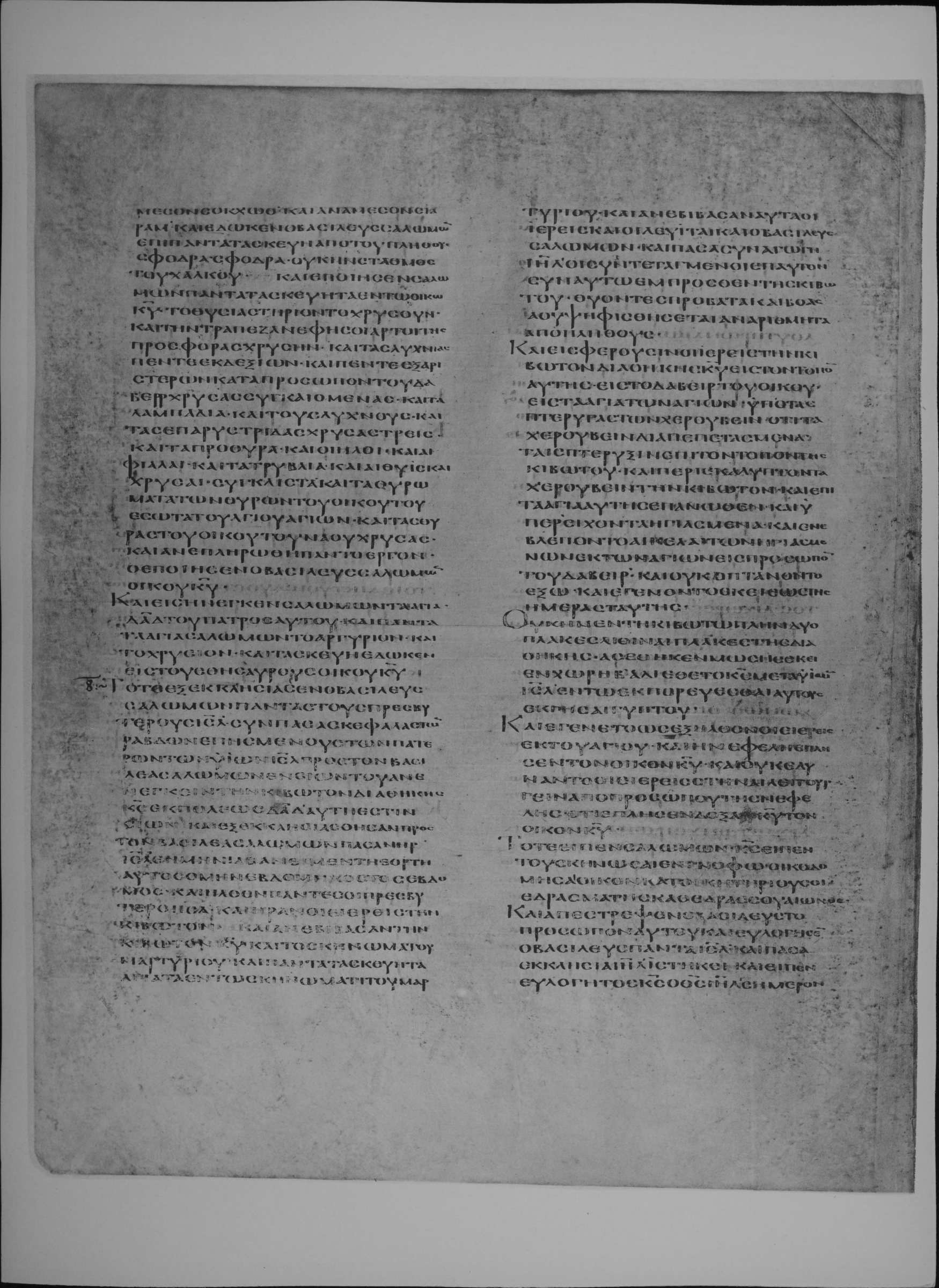
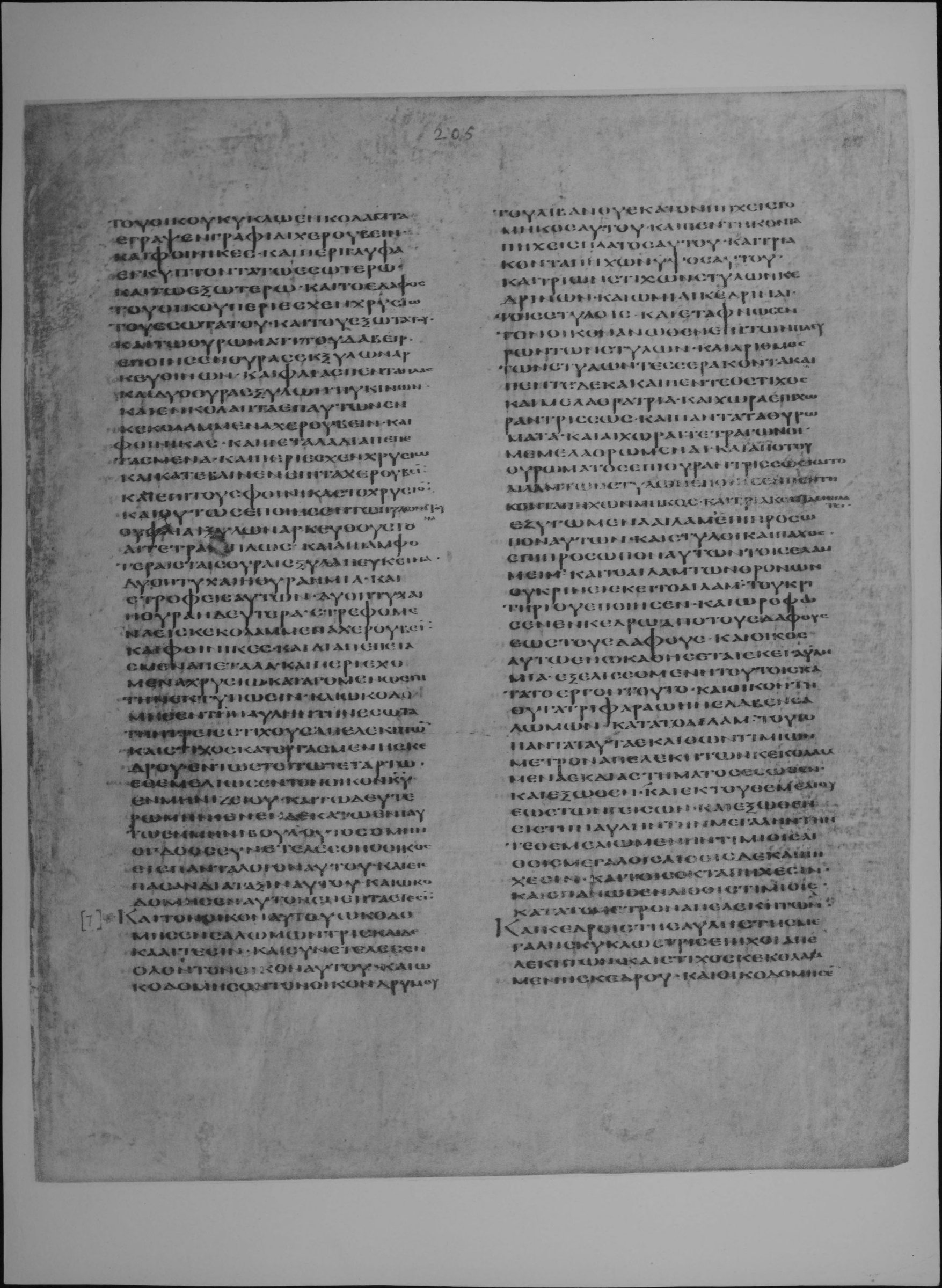
3 Kingdoms (1 Kings) 7:33 is on fol. 206r (full-size facsimile of 1879-83, Internet Archive codex-alexandrinus leaf 430). The 1930 reduced facsimile prints beneath this page: 1 Kings vii. 16-33. Checked on the plate: the page begins inside 3 Kingdoms (1 Kings) 7:16 (first words read: ΚΑΙ ΥΠΟΚΑΤΩΘΕΝ ΤΩΝ ΛΕΟΝΤΩΝ ΚΑΙ ΤΩΝ ΒΟΩΝ ΧΩΡΑΘ ΕΡΓΟΝ ΚΑΤΑΒΑΣΕΩΣ). 3 Kingdoms (1 Kings) 7:33-37 is on fol. 206v (full-size facsimile of 1879-83, Internet Archive codex-alexandrinus leaf 431). The 1930 reduced facsimile prints beneath this page: 1 Kings vii. 33-37, viii. 1-15. Checked on the plate: the page begins inside 3 Kingdoms (1 Kings) 7:33 (first words read: ΜΕΣΟΝ ΣΟΚΧΩΘ ΚΑΙ ΑΝΑ ΜΕΣΟΝ ΣΙΡΑ ΚΑΙ ΕΔΩΚΕΝ Ο ΒΑΣΙΛΕΥΣ ΣΑΛΩΜΩΝ ΤΑ ΣΚΕΥΗ). 3 Kingdoms (1 Kings) 7:38-40 is on fol. 205r (full-size facsimile of 1879-83, Internet Archive codex-alexandrinus leaf 428). The 1930 reduced facsimile prints beneath this page: 1 Kings vi. 28-34, vii. 38-50. Checked on the plate: the page begins inside 3 Kingdoms (1 Kings) 6:28 (first words read: ΤΟΥ ΟΙΚΟΥ ΚΥΚΛΩ ΕΝΚΟΛΑΠΤΑ ΕΓΡΑΨΕΝ ΓΡΑΦΙΔΙ ΧΕΡΟΥΒΕΙΝ ΚΑΙ ΦΟΙΝΙΚΕΣ).
33ἐν τῷ περιοίκῳ τοῦ Ἰορδάνου ἐχώνευσεν αὐτὰ ἐν τῷ πάχει τῆς γῆς, ἀνὰ μέσον Σοκχὼθ καὶ ἀνὰ μέσον Σειρά. 34καὶ ἔλαβεν ὁ βασιλεὺς Σαλωμὼν τὰ σκεύη ἃ ἐποίησεν ἐν οἴκῳ, τὸ θυσιαστήριον τὸ χρυσοῦν, καὶ τὴν τράπεζαν ἐφ᾽ ἧς οἱ ἄρτοι τῆς προσφορᾶς χρυσῆν, 35καὶ τὰς λυχνίας πέντε ἐξ ἀριστερῶν καὶ πέντε ἐκ δεξιῶν κατὰ πρόσωπον τοῦ δαβεὶρ χρυσᾶς συνκλειομένας, καὶ τὰ λαμπαδεῖα καὶ τοὺς λύχνους καὶ τὰς ἐπαρύστρις χρυσᾶς· 36καὶ τὰ πρόθυρα καὶ οἱ ἧλοι καὶ αἱ φιάλαι καὶ τὰ τρυβλία καὶ αἱ θυίσκαι χρυσαῖ, συνκλειστά· καὶ τὰ θυρώματα τῶν θυρῶν τοῦ οἴκου τοῦ ἐσωτάτου ἁγίου τῶν ἁγίων, καὶ τὰς θύρας τοῦ ναοῦ χρυσᾶς. 37καὶ ἀνεπληρώθη τὸ ἔργον ὃ ἐποίησεν Σαλωμὼν οἴκου Κυρίου· καὶ εἰσήνεγκεν Σαλωμὼν τὰ ἅγια Δαυεὶδ τοῦ πατρὸς αὐτοῦ καὶ πάντα τὰ ἅγια Σαλωμών, τὸ ἀργύριον καὶ τὸ χρυσίον ἔδωκεν εἰς τοὺς θησαυροὺς οἴκου Κυρίου. 38Καὶ τὸν οἶκον ἑαυτῷ ᾠκοδόμησεν Σαλωμὼν τρισκαίδεκα ἔτη. 39καὶ ᾠκοδόμησεν τὸν οἶκον δρυμῷ τοῦ Λιβάνου· ἑκατὸν πήχεις μῆκος αὐτοῦ, καὶ πεντήκοντα πήχεις πλάτος αὐτοῦ· καὶ τριῶν στίχων στύλων κεδρίνων, καὶ ὠμίαι κέδριναι τοῖς στύλοις. 40καὶ ἐφάτνωσεν τὸν οἶκον ἄνωθεν ἐπὶ τῶν πλευρῶν τῶν στύλων· καὶ ἀριθμὸς τῶν στύλων τεσσεράκοντα καὶ πέντε ὁ στίχος,
33In the country round about Jordan did he cast them, in the clay land between Socchoth and Sira. 34And king Solomon took the furniture which Chiram made for the house of the Lord, the golden altar, and the golden table of shewbread. 35And he put the five candlesticks on the left, and five on the right in front of the oracle, being of pure gold, and the lamp-stands, and the lamps, and the snuffers of gold. 36And there were made the porches, and the nails, and the bowls, and the spoons, and the golden censers, of pure gold: and the panels of the doors of the innermost part of the house, even the holy of holies, and the golden doors of the temple. 37So the work of the house of the Lord which Solomon wrought was finished; and Solomon brought in the holy things of David his father, and all the holy things of Solomon; he put the silver, and the gold, and the furniture, into the treasures of the house of the Lord. 38And Solomon built a house for himself in thirteen years. 39And he built the house with the wood of Libanus; its length was a hundred cubits, and its breadth was fifty cubits, and its height was of thirty cubits, and it was made with three rows of cedar pillars, and the pillars had side-pieces of cedar. 40And he formed the house with chambers above on the sides of the pillars, and the number of the pillars was each row forty and five,
Where on the image
3 Kingdoms (1 Kings) 7:41-50 is on fol. 205r (full-size facsimile of 1879-83, Internet Archive codex-alexandrinus leaf 428). The 1930 reduced facsimile prints beneath this page: 1 Kings vi. 28-34, vii. 38-50. Checked on the plate: the page begins inside 3 Kingdoms (1 Kings) 6:28 (first words read: ΤΟΥ ΟΙΚΟΥ ΚΥΚΛΩ ΕΝΚΟΛΑΠΤΑ ΕΓΡΑΨΕΝ ΓΡΑΦΙΔΙ ΧΕΡΟΥΒΕΙΝ ΚΑΙ ΦΟΙΝΙΚΕΣ). 3 Kingdoms (1 Kings) 7:49-50 is on fol. 205v (full-size facsimile of 1879-83, Internet Archive codex-alexandrinus leaf 429). The 1930 reduced facsimile prints beneath this page: 1 Kings vii. 50, 1-16. Checked on the plate: the page begins inside 3 Kingdoms (1 Kings) 7:49 (first words read: ΑΥΛΗ ΟΙΚΟΥ ΚΥ Η ΕΣΩΤΑΤΗ ΚΑΙ ΤΟ ΑΙΛΑΜ ΤΟΥ ΟΙΚΟΥ ΤΟΥ ΚΑΤΑ ΠΡΟΣΩΠΟΝ ΤΟΥ ΝΑΟΥ). Note: the page begins with the end of the palace account in Codex Alexandrinus' wording (ΑΥΛΗ ΟΙΚΟΥ ΚΥ Η ΕΣΩΤΑΤΗ ΚΑΙ ΤΟ ΑΙΛΑΜ, words that Swete's 7:49 lacks) and goes on with 7:1; the caption gives vii. 50, 1-16, so Swete's 7:49-50 are credited to this page and to the preceding one.
41καὶ μέλαθρα τρία, καὶ χώρα ἐπὶ χώραν τρισσῶς. 42καὶ πάντα τὰ θυρώματα καὶ αἱ χῶραι τετράγωνοι μεμελαθρωμέναι, καὶ ἀπὸ τοῦ θυρώματος ἐπὶ θύραν τρισσῶς. 43καὶ τὸ αἰλὰμ τῶν στύλων πεντήκοντα μῆκος καὶ πεντήκοντα ἐν πλάτει ἐζυγωμένα, αἰλὰμ ἐπὶ πρόσωπον αὐτῶν· καὶ στύλοι καὶ πάχος ἐπὶ πρόσωπον αὐτῆς τοῖς αἰλαμμείν. 44καὶ τὸ αἰλὰμ τῶν θρόνων οὗ κρινεῖ ἐκεῖ, αἰλὰμ τοῦ κριτηρίου. 45καὶ ὁ οἶκος αὐτῶν, ἐν οἴκῳ καθήσεται ἐκεῖ, αὐλὴ μία ἐξ ἐλισσομένης τούτοις κατὰ τὸ ἔργον τοῦτο· καὶ οἶκον τῇ θυγατρὶ Φαραὼ ἣν ἔλαβεν Σαλωμὼν κατὰ τὸ αἰλὰμ τοῦτο. 46πάντα ταῦτα ἐκ λίθων τιμίων κεκολαμμένα ἐκ διαστήματος ἔσωθεν καὶ ἐκ τοῦ θεμελίου ἕως τῶν γεισῶν· καὶ ἔξωθεν εἰς τὴν αὐλὴν τὴν μεγάλην 47τὴν τεθεμελιωμένην ἐν τιμίοις λίθοις μεγάλοις, λίθοις δεκαπήχεσιν καὶ τοῖς ὀκταπήχεσιν· 48καὶ ἐπάνωθεν τιμίοις κατὰ τὸ μέτρον ἀπελεκήτων καὶ κέδροις. 49τῆς αὐλῆς τῆς μεγάλης κύκλοι τρεῖς στίχοι ἀπελεκήτων καὶ στίχος κεκολλημένης κέδρου. 50καὶ συνετέλεσεν Σαλωμὼν ὅλον τὸν οἶκον αὐτοῦ.
41and there were three chambers, and space against space in three rows. 42And all the doors and spaces formed like chambers were square, and from door to door was a correspondence in three rows. 43And he made the porch of the pillars, they were fifty cubits long and fifty broad, the porch joining them in front; and the other pillars and the thick beam were in front of the house by the porches. 44And there was the Porch of seats where he would judge, the porch of judgment. 45And their house where he would dwell, had one court communicating with these according to this work; and he built the house for the daughter of Pharao whom Solomon had taken, according to this porch. 46All these were of costly stones, sculptured at intervals within even from the foundation even to the top, and outward to the great court, 47founded with large costly stones, stones of ten cubits and eight cubits long. 48And above with costly stones, according to the measure of hewn stones, and with cedars. 49There were three rows of hewn stones round about the great hall, and a row of sculptured cedar: 50and Solomon finished all his house.
Cite
Sources
- Source: Codex Alexandrinus (British Library Royal MS 1 D. V) via the British Museum photographic facsimiles of 1879-83 and 1930 (Internet Archive) + Swete's Septuagint + Brenton's English (holding institution)
- Critical edition: H. B. Swete, The Old Testament in Greek according to the Septuagint (1909)
← previous · → next · v cycle view · l back to library