3 Maccabees, Chapter 4 (Codex Alexandrinus)
Introduction
3 Maccabees 4 in the Greek Old Testament (the Septuagint) as written in Codex Alexandrinus, a Greek Bible copied in the fifth century, probably in Egypt, and now in the British Library (Royal MS 1 D. VI, the second of its four volumes). It is one of the three great early codices of the whole Greek Bible, with Codex Vaticanus and Codex Sinaiticus.
This entry meets the strict three-criteria standard of the Theosis Library:
- Manuscript scan: the pages of Codex Alexandrinus carrying this chapter (fol. 509r, fol. 509v, fol. 510r), from the full-size photographic (autotype) facsimile published by the British Museum in 1879-1883, as digitised on the Internet Archive. The verse range of every page comes from the reduced photographic facsimile of 1957, which prints it beneath each plate, and the opening words of every page were read on the plate to confirm the page and the verse it begins with. Each section links to the page or pages that hold its verses. Folio numbers are those written at the head of each leaf and visible on the plates.
- Original text: Swete's edition, which in the books of Maccabees prints the text of Codex Alexandrinus itself (Codex Vaticanus does not contain these books), with the readings of other manuscripts in his apparatus. Swete adds accents, breathings and punctuation and expands the abbreviated sacred names, so the plate shows the same text in unaccented capitals.
- English translation: Sir Lancelot C. L. Brenton, The Septuagint Version of the Old Testament (1844; 1851 edition), a translation of the Greek, public domain, from the eBible.org text.
How was this verified? (Provenance)
Where on the image
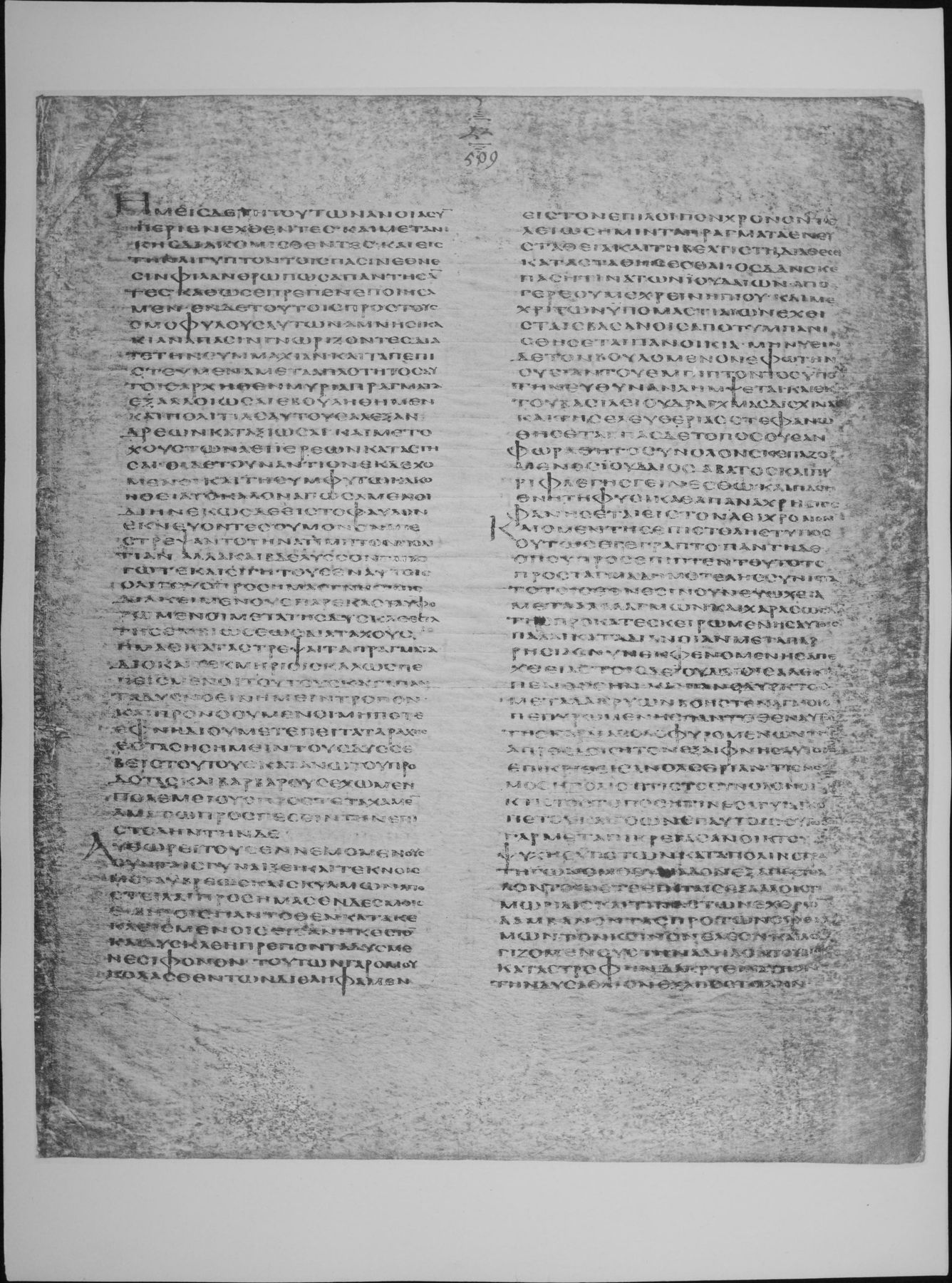
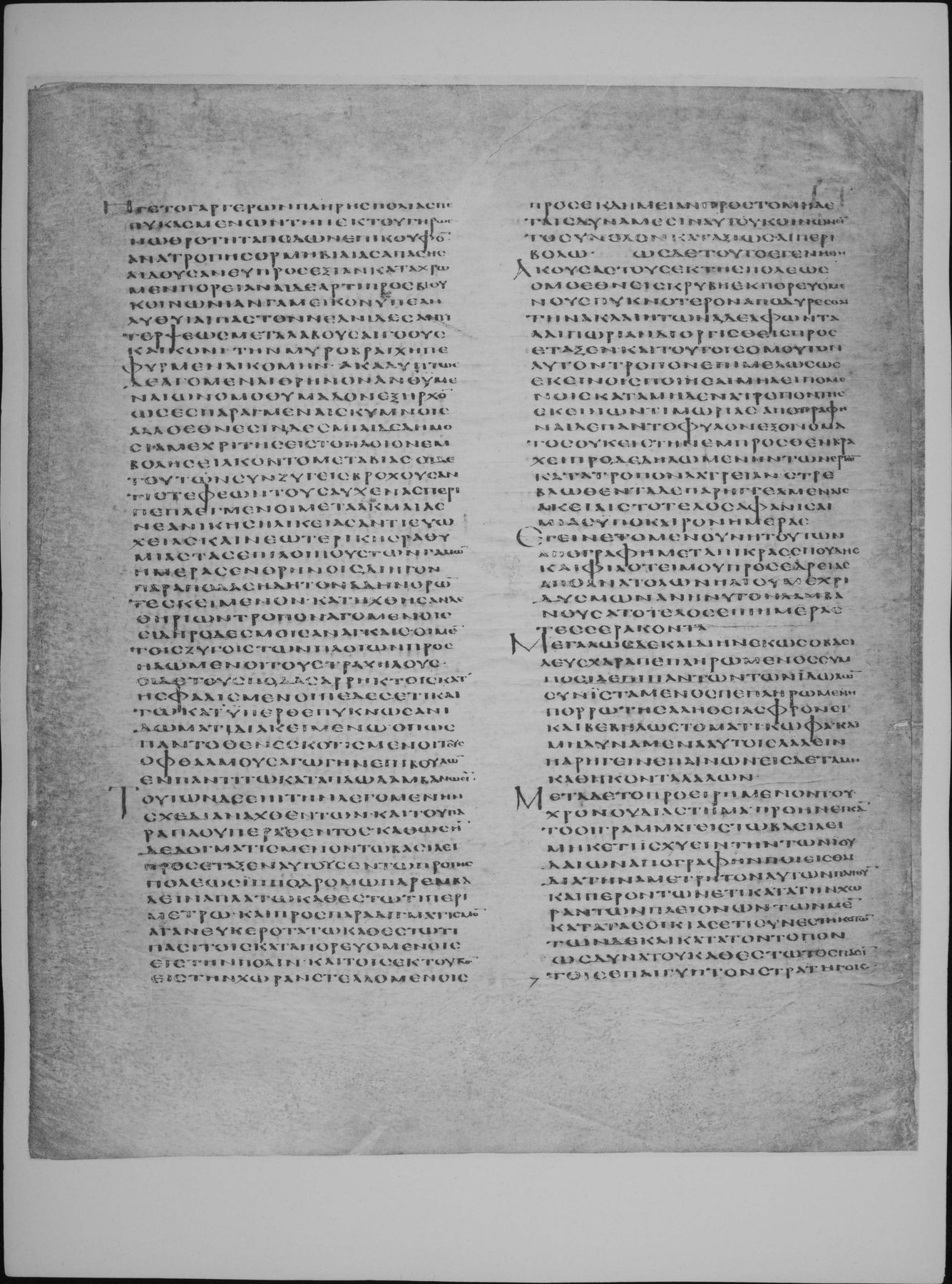
3 Maccabees 4:1-4 is on fol. 509r (full-size facsimile of 1879-83, Internet Archive codex-alexandrinus leaf 1024). The 1957 reduced facsimile prints beneath this page: 3 Maccabees iii. 20-iv. 4. Checked on the plate: the page begins at the start of 3 Maccabees 3:20 (first words read: ΗΜΕΙΣ ΔΕ ΤΗ ΤΟΥΤΩΝ ΑΝΟΙΑ ΠΕΡΙΕΝΕΧΘΕΝΤΕΣ ΚΑΙ ΜΕΤΑ ΝΙΚΗΣ). 3 Maccabees 4:5-8 is on fol. 509v (full-size facsimile of 1879-83, Internet Archive codex-alexandrinus leaf 1025). The 1957 reduced facsimile prints beneath this page: 3 Maccabees iv. 5-iv. 18. Checked on the plate: the page begins at the start of 3 Maccabees 4:5 (first words read: ΗΓΕΤΟ ΓΑΡ ΓΕΡΟΝΤΩΝ ΠΛΗΘΟΣ ΠΟΛΙΑ ΠΕΠΥΚΑΣΜΕΝΩΝ).
1Πάντη δὲ ὅπου προσέπιπτεν τοῦτο τὸ πρόσταγμα, δημοτελὴς συνίστατο τοῖς ἔθνεσιν οὖν εὐωχία μετὰ ἀλαλαγμῶν καὶ χαρᾶς, ὡς ἂν τῆς προκατεσκιρωμένης αὐτοῖς πάλαι κατὰ διάνοιαν, μετὰ παρρησίας νῦν ἐκφαινομένης ἀπεχθείας. 2τοῖς δὲ Ἰουδαίοις ἄλεκτον πένθος ἦν καὶ πανόδυρτος μετὰ δακρύων βοή, στεναγμοῖς πεπυρωμένης πάντοθεν αὐτῶν τῆς καρδίας, ὀλοφυρομένων τὴν ἀπροσδόκητον ἐξαίφνης αὐτοῖς ἐπικριθεῖσαν ὀλεθρίαν. 3τίς νομὸς ἢ πόλις, ἢ τίς τὸ σύνολον οἴκτιστος τόπος, ἢ τίνες ἀγυιαὶ κοπετοῦ καὶ γόων ἐπ᾽ αὐτοῖς οὐκ ἐνεπιπλῶντο; 4οὕτως γὰρ μετὰ πικρίας ἀνοίκτου ψυχῆς ὑπὸ τῶν κατὰ πόλιν στρατηγῶν ὁμοθυμαδὸν ἐξαπεστέλλοντο, ὥστε ἐπὶ ταῖς ἐξάλλοις τιμωρίαις καί τινας τῶν ἐχθρῶν λαμβάνοντας πρὸ τῶν ὀφθαλμῶν τὸν κοινὸν ἔλεον, καὶ λογιζομένους τὴν ἄδηλον τοῦ βίου καταστροφήν, δακρύειν αὐτῶν τὴν δυσάθλιον ἐξαποστολήν. 5ἤγετο γὰρ γέρων πλήρης πολιᾶς πεπυκασμένος τὴν ἐκ τοῦ γήρως νωθρότητα ποδῶν ἐπικύφων, ἀνατροπῆς ὁρμῇ βιαίας, ἁπάσης αἰδοῦς ἄνευ πρὸς ὀξείαν καταχρώμενος πορείαν. 6αἱ δὲ ἄρτι πρὸς βίου κοινωνίαν γαμικὸν ὑπεληλυθυῖαι παστὸν νεάνιδες ἀντὶ τέρψεως μεταλαβοῦσαι γόους, καὶ κόνει τὴν μυροβρεχῆ πεφυρμέναι κόμην, ἀκαλύπτως δὲ ἀγόμεναι, θρῆνον ἀνθ᾽ ὑμεναίων ὁμοθυμαδὸν ἐξῆρχον, ὡς ἐσπαραγμέναι σκύμνοις ἀλλοεθνέσιν· 7δέσμιαι δὲ δημοσίᾳ μέχρι τῆς εἰς τὸ πλοῖον ἐμβολῆς εἵλκοντο μετὰ βίας. 8οἱ δὲ τούτων συνζυγεῖς βρόχους ἀντὶ στεφέων τοὺς αὐχένας περιπεπλεγμένοι μετὰ ἀκμαίας νεανικῆς ἡλικίας, ἀντὶ εὐωχίας καὶ νεωτερικῆς ῥᾳθυμίας τὰς ἐπιλοίπους τῶν γάμων ἡμέρας ἐν θρήνοις διῆγον, παρὰ πόδας ἤδη τὸν ᾅδην ὁρῶντες κείμενον.
1Wherever this decree was received, the people kept up a revelry of joy and shouting; as if their long-pent-up, hardened hatred, were now to shew itself openly. 2The Jews suffered great throes of sorrow, and wept much; while their hearts, all things around being lamentable, were set on fire as they bewailed the sudden destruction which was decreed against them. 3What home, or city, or place at all inhabited, or what streets were there, which their condition did not fill with wailing and lamentation? 4They were sent out unanimously by the generals in the several cities, with such stern and pitiless feeling, that the exceptional nature of the infliction moved even some of their enemies. These, influenced by sentiments of common humanity, and reflecting upon the uncertain issue of life, shed tears at this their miserable expulsion. 5A multitude of aged hoary-haired men, were driven along with halting bending feet, urged onward by the impulse of a violent, shameless force to quick speed. 6Girls who had entered the bridal chamber quite lately, to enjoy the partnership of marriage, exchanged pleasure for misery; and with dust scattered upon their myrrh-anointed heads, were hurried along unveiled, and, in the midst of outlandish insults, set up with one accord a lamentable cry in lieu of the marriage hymn. 7Bound, and exposed to public gaze, they were hurried violently on board ship. 8The husbands of these, in the prime of their youthful vigour, instead of crowns wore halters round their necks; instead of feasting and youthful jollity, spent the rest of their nuptial days in wailings, and saw only the grave at hand.
Where on the image
3 Maccabees 4:9-16 is on fol. 509v (full-size facsimile of 1879-83, Internet Archive codex-alexandrinus leaf 1025). The 1957 reduced facsimile prints beneath this page: 3 Maccabees iv. 5-iv. 18. Checked on the plate: the page begins at the start of 3 Maccabees 4:5 (first words read: ΗΓΕΤΟ ΓΑΡ ΓΕΡΟΝΤΩΝ ΠΛΗΘΟΣ ΠΟΛΙΑ ΠΕΠΥΚΑΣΜΕΝΩΝ).
9κατήχθησαν δὲ θηρίων τρόπον ἀγόμενοι σιδηροδέσμοις ἀνάγκαις· οἱ μὲν τοῖς ζυγοῖς τῶν πλοίων προσηλωμένοι τοὺς τραχήλους, οἱ δὲ τοὺς πόδας ἀρρήκτοις κατησφαλισμένοι πέδαις, 10ἔτι καὶ τῷ καθύπερθε πυκνῷ σανιδώματι διακειμένῳ, ὅπως πάντοθεν ἐσκοτισμένοι τοὺς ὀφθαλμούς, ἀγωγὴν ἐπιβούλων ἐν παντὶ τῷ κατάπλῳ λαμβάνωσιν. 11Τούτων δὲ ἐπὶ τὴν λεγομένην Σχεδίαν ἀχθέντων, καὶ τοῦ παράπλου περανθέντος, καθὼς ἦν δεδογματισμένον τῷ βασιλεῖ, προσέταξεν αὐτοὺς ἐν τῷ πρὸ τῆς πόλεως ἱπποδρόμῳ παρεμβαλεῖν ἀπλάτῳ καθεστῶτι περιμέτρῳ, καὶ πρὸς παραδιγματισμὸν ἄγαν εὐκαιροτάτῳ καθεστῶτι πᾶσι τοῖς καταπορευομένοις εἰς τὴν πόλιν, καὶ τοῖς ἐκ τούτων εἰς τὴν χώραν στελλομένοις πρὸς ἐκδημίαν· πρὸς τὸ μηδὲ ταῖς δυνάμεσιν αὐτοῦ κοινωνεῖν μηδὲ τὸ σύνολον καταξιῶσαι περιβόλῳ. 12ὡς δὲ τοῦτο ἐγενήθη, ἀκούσας τοὺς ἐκ τῆς πόλεως ὁμοεθνεῖς κρυβῇ ἐκπορευομένους πυκνότερον ἀποδύρεσθαι τὴν ἀκλεῆ τῶν ἀδελφῶν ταλαιπωρίαν, 13διοργισθεὶς προσέταξεν καὶ τούτοις ὁμοῦ τὸν αὐτὸν τρόπον ἐπιμελῶς ὡς ἐκείνοις ποιῆσαι, μή λειπομένοις κατὰ μηδένα τρόπον τῆς ἐκείνων τιμωρίας· 14ἀπογραφῆναι δὲ πᾶν τὸ φῦλον ἐξ ὀνόματος, οὐκ εἰς τὴν ἔμπροσθεν βραχεῖ προδεδηλωμένην τῶν ἔργων κατὰ τρόπον λατρείαν, στρεβλωθέντας δὲ παρηγγελμέναις αἰκίαις τὸ τέλος ἀφανίσαι μιᾶς ὑπὸ καιρὸν ἡμέρας. 15ἐγίνετο μὲν οὖν ἡ τούτων ἀπογραφὴ μετὰ πικρᾶς σπουδῆς καὶ φιλοτίμου προσεδρίας ἀπὸ ἀνατολῶν ἡλίου μέχρι δυσμῶν, ἀνήνυτον λαμβάνουσα τὸ τέλος ἐπὶ ἡμέρας τεσσεράκοντα. 16Μεγάλως δὲ καὶ διηνεκῶς ὁ βασιλεὺς χαρᾷ πεπληρωμένος, συμπόσια ἐπὶ πάντων τῶν εἰδώλων συνιστάμενος, πεπληρωμένῃ πόρρω τῆς ἀληθείας φρενὶ καὶ βεβήλῳ στόματι, κωφὰ καὶ μὴ δυνάμενα αὐτοῖς λαλεῖν ἢ ἀρήγειν ἐπαινῶν, εἰς δὲ [τὸν θεὸν] τὰ μὴ καθήκοντα λαλῶν.
9They were dragged along by unyielding chains, like wild beasts: of these, some had their necks thrust into the benches of the rowers; while the feet of others were enclosed in hard fetters. 10The planks of the deck above them barred out the light, and shut out the day on every side, so that they might be treated like traitors during the whole voyage. 11They were conveyed accordingly in this vessel, and at the end of it arrived at Schedia. The king had ordered them to be cast into the vast hippodrome, which was built in front of the city. This place was well adapted by its situation to expose them to the gaze of all comers into the city, and of those who went from the city into the country. Thus they could hold no communication with his forces; nay, were deemed unworthy of any civilized accommodation. 12When this was done, the king, hearing that their brethren in the city often went out and lamented the melancholy distress of these victims, 13was full of rage, and commanded that they should be carefully subjected to the same (and not one whit milder) treatment. 14The whole nation was now to be registered. Every individual was to be specified by name; not for that hard servitude of labour which we have a little before mentioned, but that he might expose them to the before-mentioned tortures; and finally, in the short space of a day, might extirpate them by his cruelties. 15The registering of these men was carried on cruelly, zealously, assiduously, from the rising of the sun to its going down, and was not brought to an end in forty days. 16The king was filled with great and constant joy, and celebrated banquets before the temple idols. His erring heart, far from the truth, and his profane mouth, gave glory to idols, deaf and incapable of speaking or aiding, and uttered unworthy speech against the Greatest God.
Where on the image
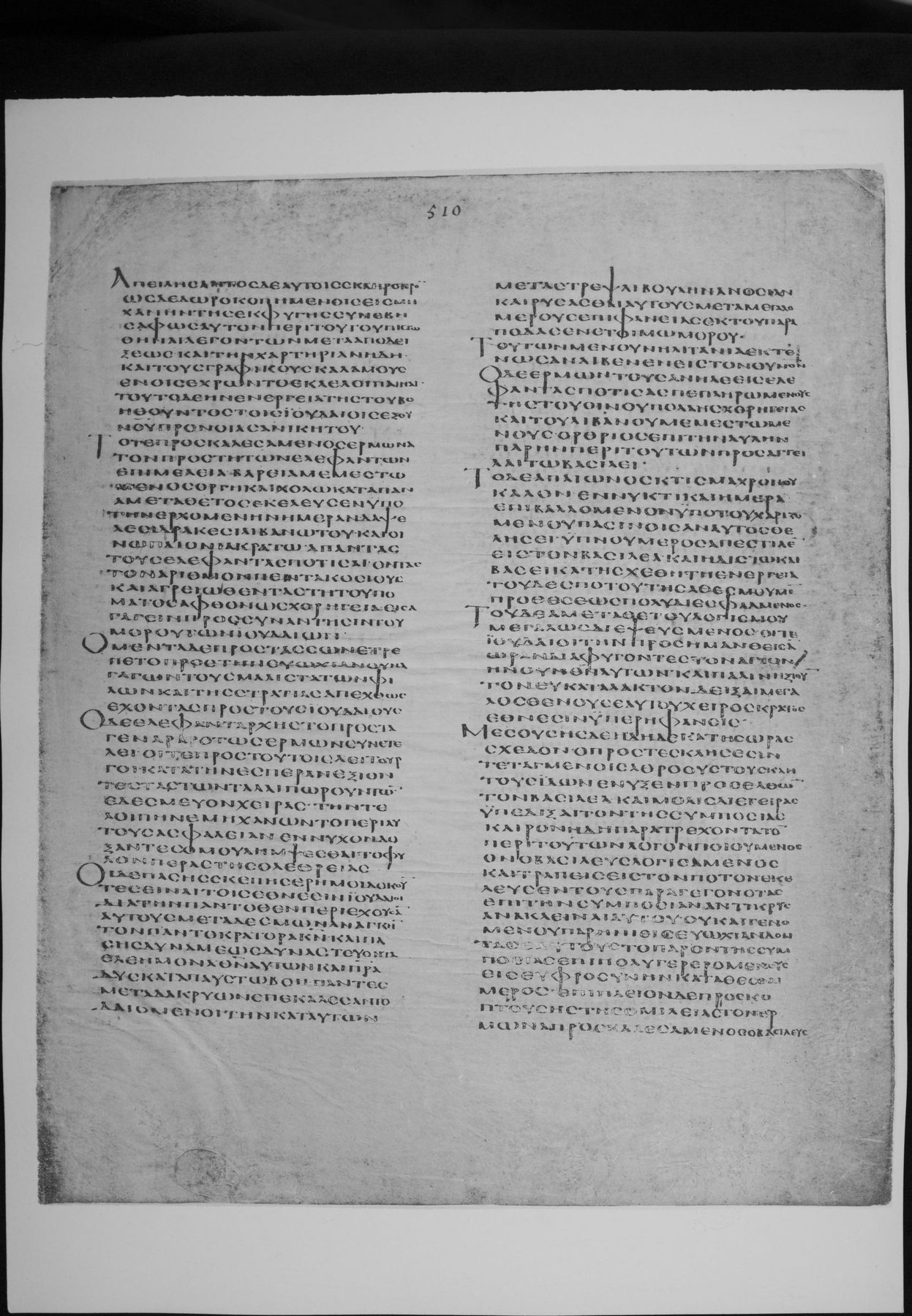
3 Maccabees 4:17-18 is on fol. 509v (full-size facsimile of 1879-83, Internet Archive codex-alexandrinus leaf 1025). The 1957 reduced facsimile prints beneath this page: 3 Maccabees iv. 5-iv. 18. Checked on the plate: the page begins at the start of 3 Maccabees 4:5 (first words read: ΗΓΕΤΟ ΓΑΡ ΓΕΡΟΝΤΩΝ ΠΛΗΘΟΣ ΠΟΛΙΑ ΠΕΠΥΚΑΣΜΕΝΩΝ). 3 Maccabees 4:19-21 is on fol. 510r (full-size facsimile of 1879-83, Internet Archive codex-alexandrinus leaf 1026). The 1957 reduced facsimile prints beneath this page: 3 Maccabees iv. 19-v. 18. Checked on the plate: the page begins at the start of 3 Maccabees 4:19 (first words read: ΑΠΕΙΛΗΣΑΝΤΟΣ ΔΕ ΑΥΤΟΙΣ ΣΚΛΗΡΟΤΕΡΟΝ ΩΣ ΔΕΔΩΡΟΚΟΠΗΜΕΝΟΙΣ).
17μετὰ δὲ τὸ προειρημένον τοῦ χρόνου διάστημα προηνέγκαντο οἱ γραμματεῖς τῷ βασιλεῖ, μηκέτι ἰσχύειν τὴν τὼν Ἰουδαίων ἀπογραφὴν ποιεῖσθαι διὰ τὴν ἀμέτρητον αὐτῶν πληθύν· 18καίπερ ὄντων ἔτι κατὰ τὴν χώραν τῶν πλειόνων, τῶν μὲν κατὰ τὰς οἰκίας ἔτι συνεστηκότων, τῶν δὲ καὶ κατὰ τὸν τὸπον, ὡς ἀδυνάτου καθεστῶτος πᾶσιν τοῖς ἐπ᾽ Αἴγυπτον στρατηγοῖς. 19ἀπειλήσαντος δὲ αὐτοῖς σκληρότερον, ὡς δεδωροκοπημένοις εἰς μηχανὴν τῆς ἐκφυγῆς, συνέβη σαφῶς αὐτὸν περὶ τούτου πιστωθῆναι, 20λεγόντων μετὰ ἀποδείξεως καὶ τὴν χαρτηρίαν ἤδη καὶ τοὺς γραφικοὺς καλάμους, ἐν οἷς ἐχρῶντο, ἐκλελοιπέναι. 21τοῦτο δὲ ἦν ἐνέργεια τῆς τοῦ βοηθοῦντος τοῖς Ἰουδαίοις ἐξ οὐρανοῦ προνοίας ἀνικήτου.
17At the end of the above-mentioned interval of time, the registrars brought word to the king that the multitude of the Jews was too great for registration, 18inasmuch as there were many still left in the land, of whom some were in inhabited houses, and others were scattered about in various places; so that all the commanders in Egypt were insufficient for the work. 19The king threatened them, and charged them with taking bribes, in order to contrive the escape of the Jews: but was clearly convinced of the truth of what had been said. 20They said, and proved, that paper and pens had failed them for the carrying out of their purpose. 21Now this was the active interference of the unconquerable Providence which assisted the Jews from heaven.
Cite
Sources
- Source: Codex Alexandrinus (British Library Royal MS 1 D. VI) via the British Museum photographic facsimiles of 1879-83 and 1957 (Internet Archive) + Swete's Septuagint + Brenton's English (holding institution)
- Critical edition: H. B. Swete, The Old Testament in Greek according to the Septuagint (1909)
← previous · → next · v cycle view · l back to library