3 Maccabees, Chapter 3 (Codex Alexandrinus)
Introduction
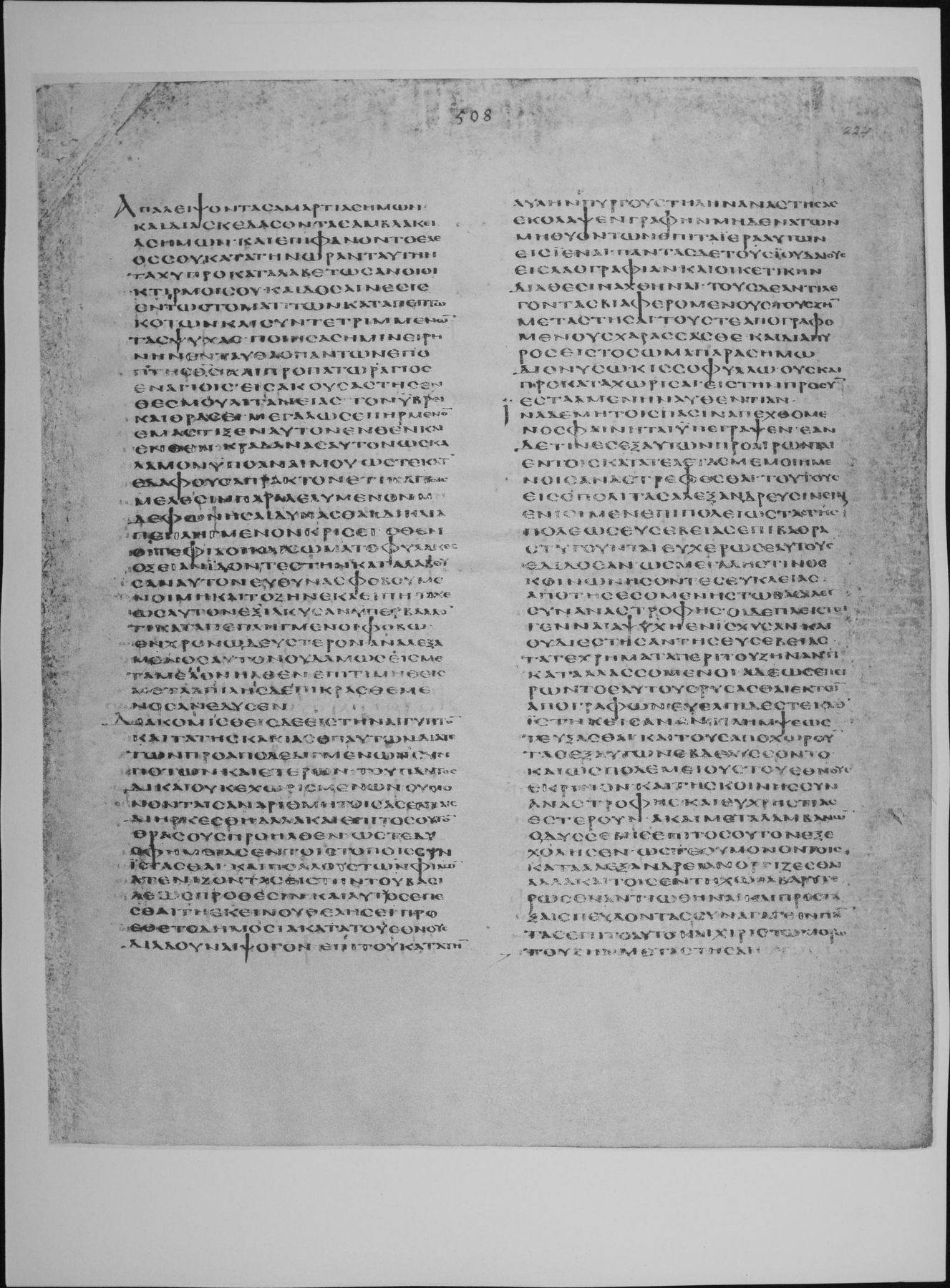
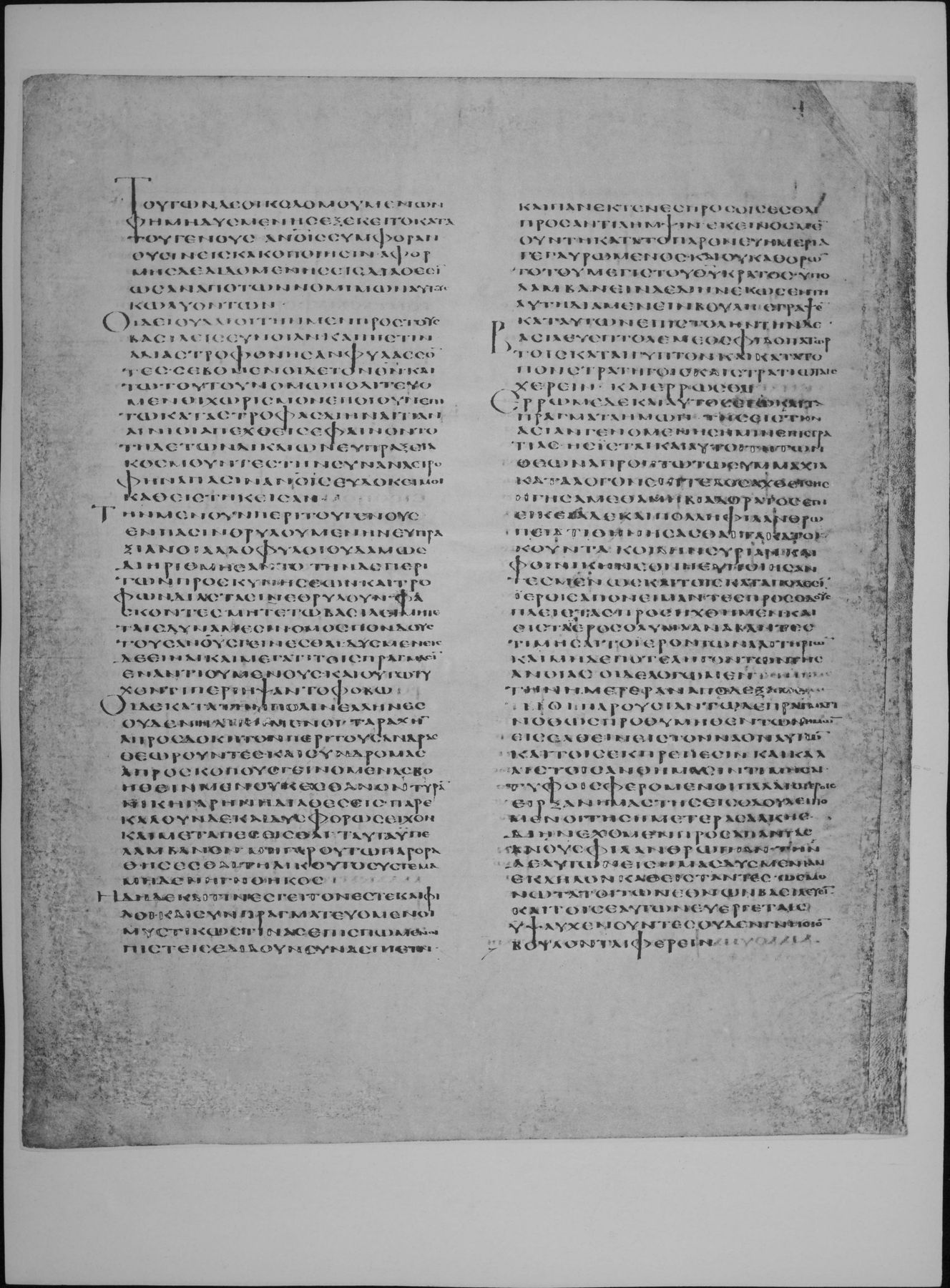
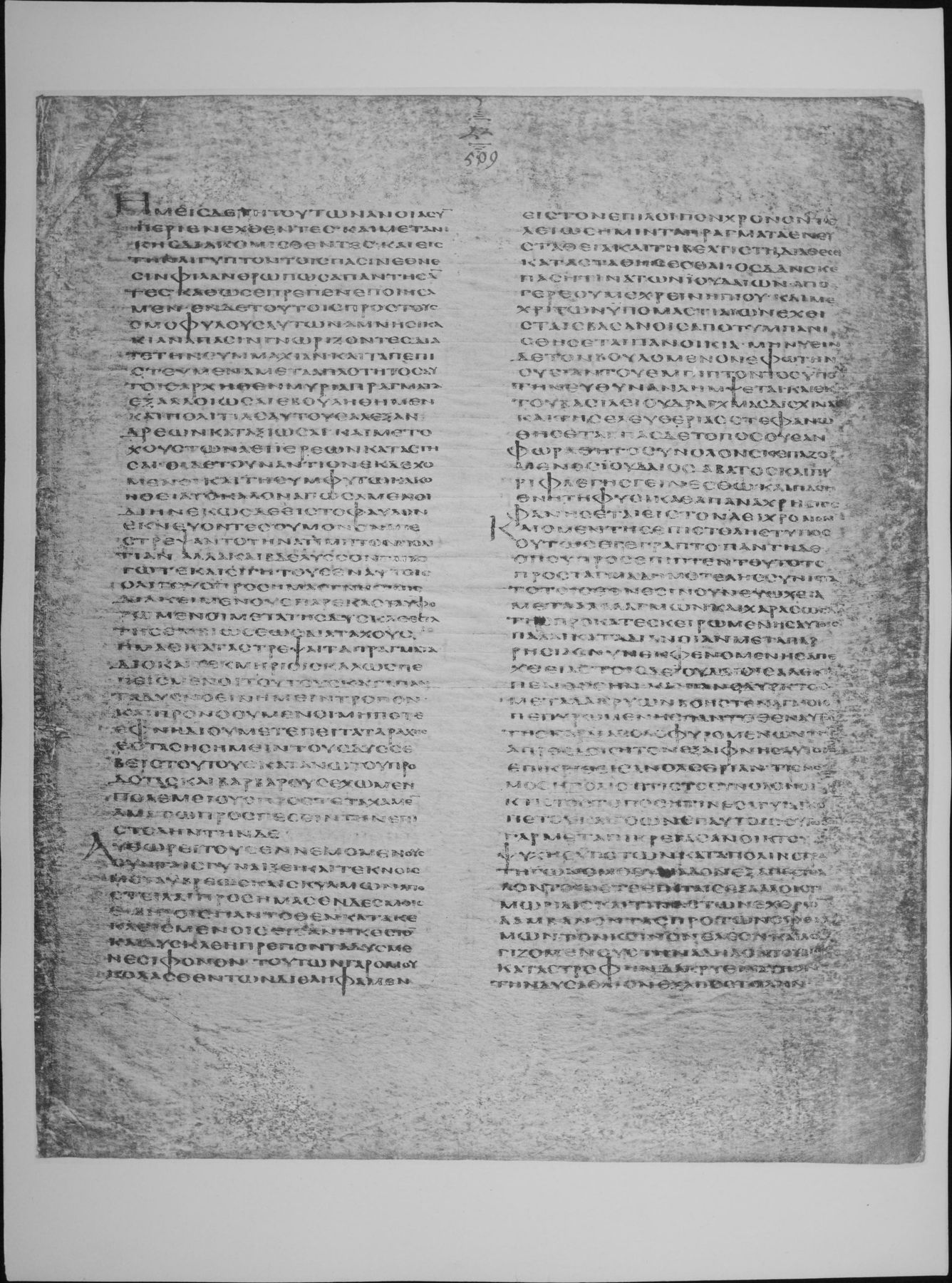
3 Maccabees 3 in the Greek Old Testament (the Septuagint) as written in Codex Alexandrinus, a Greek Bible copied in the fifth century, probably in Egypt, and now in the British Library (Royal MS 1 D. VI, the second of its four volumes). It is one of the three great early codices of the whole Greek Bible, with Codex Vaticanus and Codex Sinaiticus.
This entry meets the strict three-criteria standard of the Theosis Library:
- Manuscript scan: the pages of Codex Alexandrinus carrying this chapter (fol. 508r, fol. 508v, fol. 509r), from the full-size photographic (autotype) facsimile published by the British Museum in 1879-1883, as digitised on the Internet Archive. The verse range of every page comes from the reduced photographic facsimile of 1957, which prints it beneath each plate, and the opening words of every page were read on the plate to confirm the page and the verse it begins with. Each section links to the page or pages that hold its verses. Folio numbers are those written at the head of each leaf and visible on the plates.
- Original text: Swete's edition, which in the books of Maccabees prints the text of Codex Alexandrinus itself (Codex Vaticanus does not contain these books), with the readings of other manuscripts in his apparatus. Swete adds accents, breathings and punctuation and expands the abbreviated sacred names, so the plate shows the same text in unaccented capitals.
- English translation: Sir Lancelot C. L. Brenton, The Septuagint Version of the Old Testament (1844; 1851 edition), a translation of the Greek, public domain, from the eBible.org text.
How was this verified? (Provenance)
Where on the image
3 Maccabees 3:1 is on fol. 508r (full-size facsimile of 1879-83, Internet Archive codex-alexandrinus leaf 1022). The 1957 reduced facsimile prints beneath this page: 3 Maccabees ii. 19-iii. 1. Checked on the plate: the page begins at the start of 3 Maccabees 2:19 (first words read: ΑΠΑΛΕΙΨΟΝ ΤΑΣ ΑΜΑΡΤΙΑΣ ΗΜΩΝ ΚΑΙ ΔΙΑΣΚΕΔΑΣΟΝ ΤΑΣ ΑΜΠΛΑΚΙΑΣ ΗΜΩΝ). 3 Maccabees 3:2-8 is on fol. 508v (full-size facsimile of 1879-83, Internet Archive codex-alexandrinus leaf 1023). The 1957 reduced facsimile prints beneath this page: 3 Maccabees iii. 2-iii. 19. Checked on the plate: the page begins at the start of 3 Maccabees 3:2 (first words read: ΤΟΥΤΩΝ ΔΕ ΟΙΚΟΝΟΜΟΥΜΕΝΩΝ ΦΗΜΗ ΔΥΣΜΕΝΗΣ ΕΞΗΧΕΙΤΟ ΚΑΤΑ ΤΟΥ ΓΕΝΟΥΣ ΑΝΟΙΣ ΣΥΜΦΡΟΝΟΥΣΙΝ).
1Ἃ καὶ μεταλαμβάνων ὁ δυσσεβὴς ἐπὶ τοσοῦτον ἐξεχόλησεν ὥστε οὐ μόνον τοῖς κατὰ Ἀλεξάνδρειαν ὀργίζεσθαι ἀλλὰ καὶ τοῖς ἐν τῇ χώρᾳ βαρυτέρως ἐναντιωθῆναι, καὶ προστάξαι σπεύδοντας συναγαγεῖν πάντας ἐπὶ τὸ αὐτό, καὶ χειρίστῳ μόρῳ τοῦ ζῇν μεταστῆσαι. 2τούτων δὲ οἰκονομουμένων φήμη δυσμενὴς ἐξέκειτο κατὰ τοῦ γένους ἀνθρώποις συμφρονοῦσιν εἰς κακοποίησιν, ἀφορμῆς δὲ διδομένης εἰς διάθεσιν, ὡς ἂν ἀπὸ τῶν νομίμων αὐτοὺς κωλυόντων. 3οἱ δὲ Ἰουδαῖοι τὴν μὲν πρὸς τοὺς βασιλεῖς εὔνοιαν καὶ πίστιν ἀδιάστροφον ἦσαν φυλάσσοντες· 4σεβόμενοι δὲ τὸν θεόν, καὶ τῷ τούτου νόμῳ πολιτευόμενοι, χωρισμὸν ἐποίουν ἐπὶ τῷ κατὰ τὰς τροφάς. δι᾽ ἣν αἰτίαν ἔνιοι ἀπεχθεῖς ἐφαίνοντο· 5τῇ δὲ τῶν δικαίων εὐπραξίᾳ κοσμοῦντες τὴν συναναστροφήν, ἅπασιν ἀνθρώποις εὐδόκιμοι καθειστήκεισαν. 6τὴν μὲν οὖν περὶ τοῦ γένους ἐν πᾶσιν θρυλουμένην εὐπραξίαν οἱ ἀλλόφυλοι οὐδαμῶς διηριθμήσαντο. 7τὴν δὲ περὶ τῶν προσκυνήσεων καὶ τροφῶν διάστασιν ἐθρύλουν, φάσκοντες μήτε τῷ βασιλεῖ μήτε ταῖς δυνάμεσιν ὁμοσπόνδους τοὺς ἀνθρώπους γίνεσθαι, δυσμενεῖς δὲ εἶναι καὶ μέγα τι τοῖς πράγμασιν ἐναντιουμένους· καὶ οὐ τῷ τυχόντι περιήψαντο φόβῳ. 8Οἱ δὲ κατὰ τὴν πόλιν Ἕλληνες οὐδὲν ἠδικημένοι, ταραχὴν ἀπροσδόκητον περὶ τοὺς ἄνδρας θεωροῦντες καὶ συνδρομὰς ἀπροσκόπους γινομένας, βοηθεῖν μὲν οὐκ ἔσθενον· τυραννικὴ γὰρ ἦν ἡ διάθεσις· παρεκάλουν δὲ καὶ δυσφόρως εἶχον, καὶ μεταπεσεῖσθαι ταῦτα ὑπελάμβανον·
1On discovering this, so incensed was the wicked king, that he no longer confined his rage to the Jews in Alexandria. Laying his hand more heavily upon those who lived in the country, he gave orders that they should be quickly collected into one place, and most cruelly deprived of their lives. 2While this was going on, an invidious rumour was uttered abroad by men who had banded together to injure the Jewish race. The purport of their charge was, that the Jews kept them away from the ordinances of the law. 3Now, while the Jews always maintained a feeling of unswerving loyalty towards the kings, 4yet, as they worshipped God, and observed his law, they made certain distinctions, and avoided certain things. Hence some persons held them in odium; 5although, as they adorned their conversation with works of righteousness, they had established themselves in the good opinion of the world. 6What all the rest of mankind said, was, however, made of no account by the foreigners; 7who said much of the exclusiveness of the Jews with regard to their worship and meats; they alleged that they were men unsociable, hostile to the king's interests, refusing to associate with him or his troops. By this way of speaking, they brought much odium upon them. 8Nor was this unexpected uproar and sudden conflux of people unobserved by the Greeks who lived in the city, concerning men who had never harmed them: yet to aid them was not in their power, since all was oppression around; but they encouraged the Jews by sympathizing with them in their troubles, and expected a favourable turn of affairs:
Where on the image
3 Maccabees 3:9-16 is on fol. 508v (full-size facsimile of 1879-83, Internet Archive codex-alexandrinus leaf 1023). The 1957 reduced facsimile prints beneath this page: 3 Maccabees iii. 2-iii. 19. Checked on the plate: the page begins at the start of 3 Maccabees 3:2 (first words read: ΤΟΥΤΩΝ ΔΕ ΟΙΚΟΝΟΜΟΥΜΕΝΩΝ ΦΗΜΗ ΔΥΣΜΕΝΗΣ ΕΞΗΧΕΙΤΟ ΚΑΤΑ ΤΟΥ ΓΕΝΟΥΣ ΑΝΟΙΣ ΣΥΜΦΡΟΝΟΥΣΙΝ).
9μὴ γὰρ οὕτω παροραθήσεσθαι τηλικοῦτο σύστεμα μηδὲν ἠγνοηκός. 10ἤδη δὲ καί τινες γείτονές τε καὶ φίλοι καὶ συνπραγματευόμενοι, μυστικῶς τινας ἐπισπώμενοι, πίστεις ἐδίδουν συνασπιεῖν, καὶ πᾶν ἐκτενὲς προσοίσεσθαι πρὸς ἀντίλημψιν. 11Ἐκεῖνος μὲν οὖν τῇ κατὰ τὸ παρὸν εὐημερίᾳ γεγαυρωμένος, καὶ οὐ καθορῶν τὸ τοῦ μεγίστου θεοῦ κράτος, ὑπολαμβάνων δὲ διηνεκῶς ἐν τῇ αὐτῇ διαμένειν βουλῇ, ἔγραψεν κατ᾽ αὐτῶν ἐπιστολὴν τήνδε 12Βασιλεὺς Πτολεμαῖος Φιλοπάτωρ τοῖς κατ᾽ Αἴγυπτον καὶ κατὰ τόπον στρατηγοῖς καὶ στρατιώταις χαίρειν καὶ ἐρρῶσθαι. 13ἔρρωμαι δὲ καὶ αὐτὸς ἐγὼ καὶ τὰ πράγματα ἡμῶν. 14τῆς εἰς τὴν Ἀσίαν γενομένης ἡμῖν ἐπιστρατίας, ἧς ἴστε καὶ αὐτοί, τῇ τῶν θεῶν ἀπροπτώτῳ συμμαχίᾳ κατὰ λόγον ἐπὶ τέλος ἀχθείσης, 15ἡγησάμεθα μὴ βίᾳ δόρατος, ἐπιεικείᾳ δὲ καὶ πολλῇ φιλανθρωπίᾳ τιθηνήσασθαι τὰ κατοικοῦντα Κοίλην Συρίαν καὶ Φοινίκην ἔθνη, εὖ ποιήσαντες ἀσμένως. 16καὶ τοῖς κατὰ πόλεσιν ἱεροῖς ἀπονείμαντες προσόδους πλείστας, προσήχθημεν καὶ εἰς τὰ Ἰεροσόλυμα ἀναβάντες τιμῆσαι τὸ ἱερὸν τῶν ἀλιτηρίων καὶ μηδέποτε ληγόντων τῆς ἀνοίας.
9He who knoweth all things, will not, said they, disregard so great a people. 10Some of the neighbours, friends, and fellow dealers of the Jews, even called them secretly to an interview, pledged them their assistance, and promised to do their very utmost for them. 11Now the king, elated with his prosperous fortune, and not regarding the superior power of God, but thinking to persevere in his present purpose, wrote the following letter to the prejudice of the Jews. 12King Ptolemy Philopater, to the commanders and soldiers in Egypt, and in all places, health and happiness! 13I am right well; and so, too, are my affairs. 14Since our Asiatic campaign, the particulars of which ye know, and which by the aid of the gods, not lightly given, and by our own vigour, has been brought to a successful issue according to our expectation, 15we resolved, not with strength of spear, but with gentleness and much humanity, as it were to nurse the inhabitants of Cœle-Syria and Phœnicia, and to be their willing benefactors. 16So, having bestowed considerable sums of money upon the temples of the several cities, we proceeded even as far as Jerusalem; and went up to honour the temple of these wretched beings who never cease from their folly.
Where on the image
3 Maccabees 3:17-19 is on fol. 508v (full-size facsimile of 1879-83, Internet Archive codex-alexandrinus leaf 1023). The 1957 reduced facsimile prints beneath this page: 3 Maccabees iii. 2-iii. 19. Checked on the plate: the page begins at the start of 3 Maccabees 3:2 (first words read: ΤΟΥΤΩΝ ΔΕ ΟΙΚΟΝΟΜΟΥΜΕΝΩΝ ΦΗΜΗ ΔΥΣΜΕΝΗΣ ΕΞΗΧΕΙΤΟ ΚΑΤΑ ΤΟΥ ΓΕΝΟΥΣ ΑΝΟΙΣ ΣΥΜΦΡΟΝΟΥΣΙΝ). 3 Maccabees 3:20-24 is on fol. 509r (full-size facsimile of 1879-83, Internet Archive codex-alexandrinus leaf 1024). The 1957 reduced facsimile prints beneath this page: 3 Maccabees iii. 20-iv. 4. Checked on the plate: the page begins at the start of 3 Maccabees 3:20 (first words read: ΗΜΕΙΣ ΔΕ ΤΗ ΤΟΥΤΩΝ ΑΝΟΙΑ ΠΕΡΙΕΝΕΧΘΕΝΤΕΣ ΚΑΙ ΜΕΤΑ ΝΙΚΗΣ).
17οἱ δὲ λόγῳ μὲν τὴν ἡμετέραν ἀποδεξάμενοι παρουσίαν, τῷ δὲ πράγματι νόθως, προθυμηθέντων ἡμῶν εἰσελθεῖν εἰς τὸν ναὸν αὐτῶν καὶ τοῖς ἐκπρεπέσιν καὶ καλλίστοις ἀναθήμασιν τιμῆσαι, 18τύφοις φερόμενοι παλαιοτέροις, εἶρξαν ἡμᾶς τῆς εἰσόδου, λειπόμενοι τῆς ἡμετέρας ἀλκῆς, δι᾽ ἣν ἔχομεν πρὸς ἅπαντας ἀνθρώπους φιλανθρωπίαν. 19τὴν δὲ αὐτῶν εἰς ἡμᾶς δυσμενίαν ἔκδηλον καθιστάντες, ὡς μονώτατοι τῶν ἐθνῶν βασιλεῦσιν καὶ τοῖς ἑαυτῶν εὐεργέταις ὑψαυχενοῦντες οὐδὲν γνήσιον βούλονται φέρειν. 20Ἡμεῖς δὲ τῇ τούτων ἀνοίᾳ συνπεριενεχθέντες, καὶ μετὰ νίκης διακομισθέντες, καὶ εἰς τὴν Αἴγυπτον τοῖς πᾶσιν ἔθνεσιν φιλανθρώπως ἀπαντήσαντες, καθὼς ἔπρεπεν ἐποιήσαμεν. 21ἐν δὲ τούτοις πρὸς τοὺς ὁμοφύλους αὐτῶν ἀμνησικακίαν ἅπασιν γνωρίζοντες, διά τε τὴν συμμαχίαν καὶ τὰ πεπιστευμένα μετὰ ἁπλότητος αὐτοῖς ἀρχῆθεν μύρια πράγματα, ἐξαλλοιῶσαι ἐβουλήθημεν, καὶ πολιτίας αὐτοὺς Ἀλεξανδρέων καταξιῶσαι, καὶ μετόχους τῶν ἀεὶ ἱερέων καταστῆσαι. 22οἱ δὲ τοὐναντίον ἐκδεχόμενοι καὶ τῇ συμφύτῳ κακοηθείᾳ τὸ καλὸν ἀπωσάμενοι, διηνεκῶς δὲ εἰς τὸ φαῦλον ἐκνεύοντες, 23οὐ μόνον ἀπεστρέψαντο τὴν ἀτίμητον πολιτίαν, ἀλλὰ καὶ βδελύσσονται λόγῳ τε καὶ σιγῇ τοὺς ἐν αὐτοῖς ὀλίγους πρὸς ἡμᾶς γνησίως διακειμένους, παρ᾽ ἕκαστα ὑφορώμενοι μετὰ τῆς δυσκλεεστάτης ἐμβιώσεως διὰ τάχους ἡμᾶς καταστρέψαι τὰ πράγματα. 24διὸ καὶ τεκμηρίοις καλῶς πεπεισμένοι τούτους κατὰ πάντα δυσνοεῖν ἡμῖν τρόπον, καὶ προνοούμενοι μή ποτε ἐφνιδίου μετέπειτα ταραχῆς ἐνστάσης ἡμῖν τοὺς δυσσεβεῖς τούτους κατὰ νώτου προδότας καὶ βαρβάρους ἔχωμεν πολεμίους·
17To outward appearance they received us willingly; but belied that appearance by their deeds. When we were eager to enter their temple, and to honour it with the most beautiful and exquisite gifts, 18they were so carried away by their old arrogance, as to forbid us the entrance; while we, out of our forbearance toward all men, refrained from exercising our power upon them. 19And thus, exhibiting their enmity against us, they alone among the nations lift up their heads against kings and benefactors, as men unwilling to submit to any thing reasonable. 20We then, having endeavoured to make allowance for the madness of these persons, and on our victorious return treating all people in Egypt courteously, acted in a manner which was befitting. 21Accordingly, bearing no ill-will against their kinsmen [at Jerusalem], but rather remembering our connection with them, and the numerous matters with sincere heart from a remote period entrusted to them, we wished to venture a total alteration of their state, by bestowing upon them the rights of citizens of Alexandria, and to admit them to the everlasting rites of our solemnities. 22All this, however, they have taken in a very different spirit. With their innate malignity, they have spurned the fair offer; and constantly inclining to evil, 23have rejected the inestimable rights. Not only so, but by using speech, and by refraining from speech, they abhor the few among them who are heartily disposed towards us; ever deeming that their ignoble course of procedure will force us to do away with our reform. 24Having then, received certain proofs that these Jews bear us every sort of ill-will, we must look forward to the possibility of some sudden tumult among ourselves, when these impious men may turn traitors and barbarous enemies.
Where on the image
3 Maccabees 3:25-30 is on fol. 509r (full-size facsimile of 1879-83, Internet Archive codex-alexandrinus leaf 1024). The 1957 reduced facsimile prints beneath this page: 3 Maccabees iii. 20-iv. 4. Checked on the plate: the page begins at the start of 3 Maccabees 3:20 (first words read: ΗΜΕΙΣ ΔΕ ΤΗ ΤΟΥΤΩΝ ΑΝΟΙΑ ΠΕΡΙΕΝΕΧΘΕΝΤΕΣ ΚΑΙ ΜΕΤΑ ΝΙΚΗΣ).
25προστετάχαμεν ἅμα τῷ προσπεσεῖν τὴν ἐπιστολὴν τήνδε, αὐθωρεὶ τοὺς ἐννεμομένους σὺν ταῖς γυναιξὶ καὶ τέκνοις μετὰ ὕβρεως καὶ σκυλμῶν ἀποστεῖλαι πρὸς ἡμᾶς ἐν δεσμοῖς σιδηροῖς πάντοθεν κατακεκλεισμένους, εἰς ἀνήκεστον καὶ δυσκλεῆ πρέποντα δυσμενέσι φόνον. 26τούτων γὰρ ὁμοῦ κολασθέντων, διειλήφαμεν εἰς τὸν ἐπίλοιπον χρόνον τελείως ἡμῖν τὰ πράγματα ἐν εὐσταθείᾳ καὶ τῇ βελτίστῃ διαθέσει κατασταθήσεσθαι. 27ὃς δ᾽ ἂν σκεπάσῃ τινὰ τῶν Ἰουδαίων ἀπὸ γεραιοῦ μέχρι νηπίου καὶ μέχρι τῶν ὑπομαστιαίων, ἐχθίσταις βασάνοις ἀποτυμπανισθήσεται πανοικίᾳ· 28μηνύειν δὲ τὸν βουλόμενον ἐφ᾽ ᾧ τὴν οὐσίαν τοῦ ἐμπίπτοντος ὑπὸ τὴν εὔθυναν λήμψεται, καὶ ἐκ τοῦ βασιλείου δραχμὰς δισχιλίας, καὶ τῆς ἐλευθερίας στεφανωθήσεται. 29πᾶς δὲ τόπος, οὗ ἐὰν φωραθῇ τὸ σύνολον σκεπαζόμενος Ἰουδαῖος, ἄβατος καὶ πυριφλεγὴς γινέσθω, καὶ πάσῃ θνητῇ φύσει καθ᾽ ἅπαν ἄχρηστος φανήσεται εἰς τὸν ἀεὶ χρόνον. 30καὶ ὁ μὲν τῆς ἐπιστολῆς τύπος οὕτως ἐγέγραπτο.
25As soon, therefore, as the contents of this letter become known to you, in that same hour we order those Jews who dwell among you, with wives and children, to be sent to us, vilified and abused, in chains of iron, to undergo a death, cruel and ignominious, suitable to men disaffected. 26For by the punishment of them in one body we perceive that we have found the only means of establishing our affairs for the future on a firm and satisfactory basis. 27Whoever shall shield a Jew, whether it be old man, child, or suckling, shall with his whole house be tortured to death. 28Whoever shall inform against the Jews, besides receiving the property of the person charged, shall be presented with two thousand drachmæ from the royal treasury, shall be made free, and shall be crowned. 29Whatever place shall shelter a Jew, shall, when he is hunted forth, be put under the ban of fire, and be for ever rendered useless to every living being for all time to come. 30Such was the purport of the king's letter.
Cite
Sources
- Source: Codex Alexandrinus (British Library Royal MS 1 D. VI) via the British Museum photographic facsimiles of 1879-83 and 1957 (Internet Archive) + Swete's Septuagint + Brenton's English (holding institution)
- Critical edition: H. B. Swete, The Old Testament in Greek according to the Septuagint (1909)
← previous · → next · v cycle view · l back to library