4 Kingdoms (2 Kings), Chapter 10 (Codex Alexandrinus)
Introduction
4 Kingdoms (2 Kings) 10 in the Greek Old Testament (the Septuagint) as written in Codex Alexandrinus, a Greek Bible copied in the fifth century, probably in Egypt, and now in the British Library (Royal MS 1 D. V, the first of its four volumes). It is one of the three great early codices of the whole Greek Bible, with Codex Vaticanus and Codex Sinaiticus.
This entry meets the strict three-criteria standard of the Theosis Library:
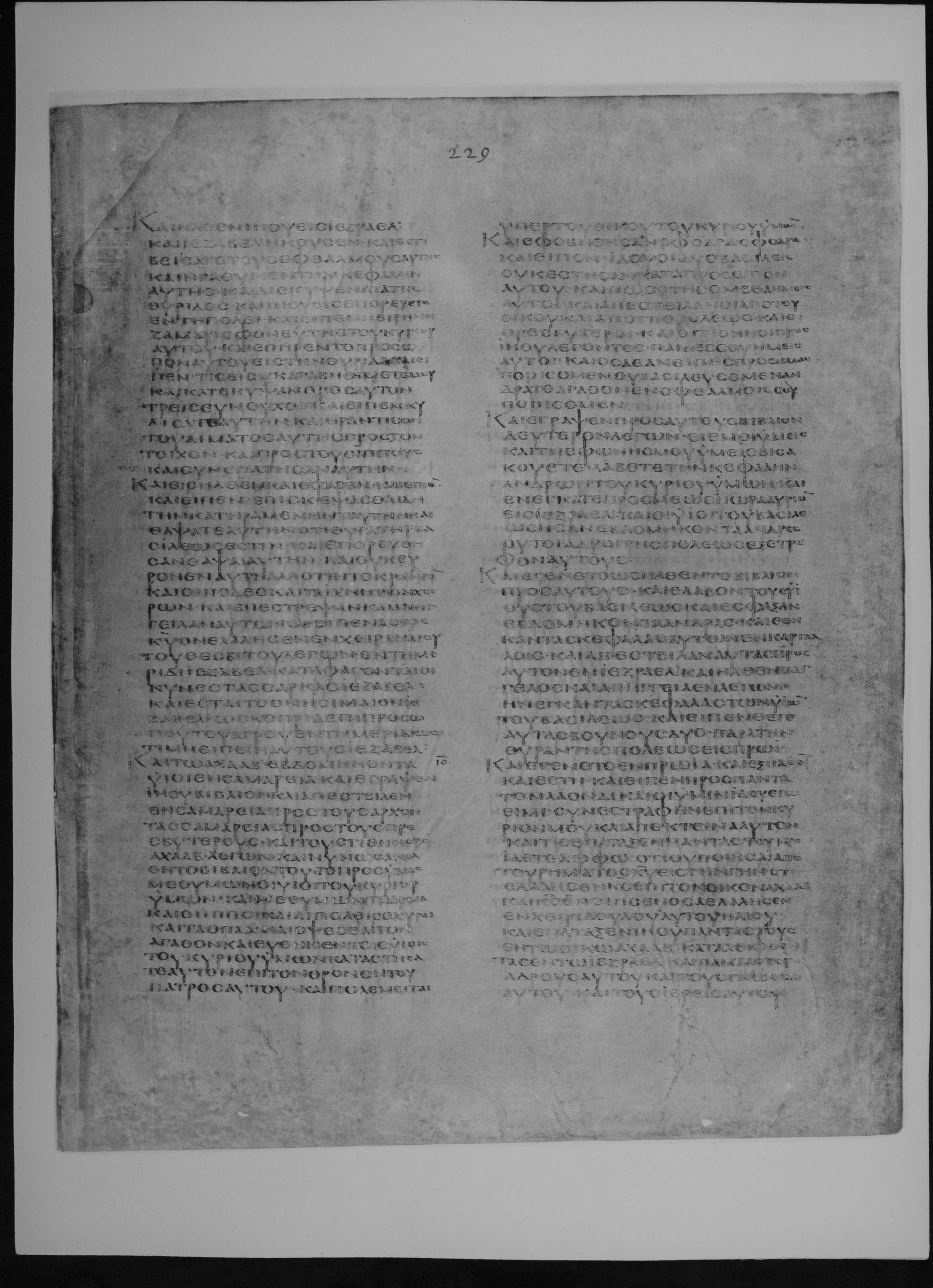
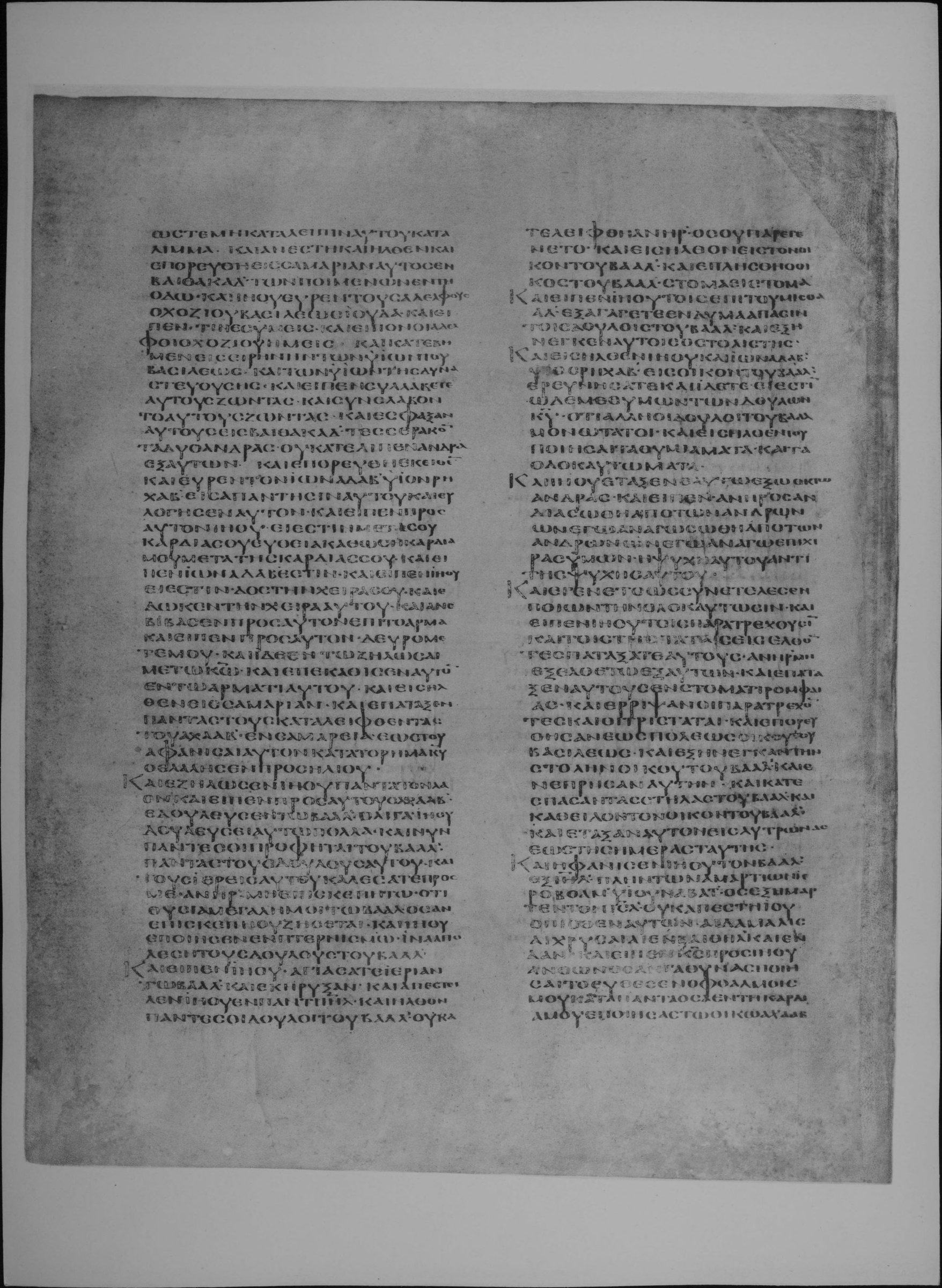
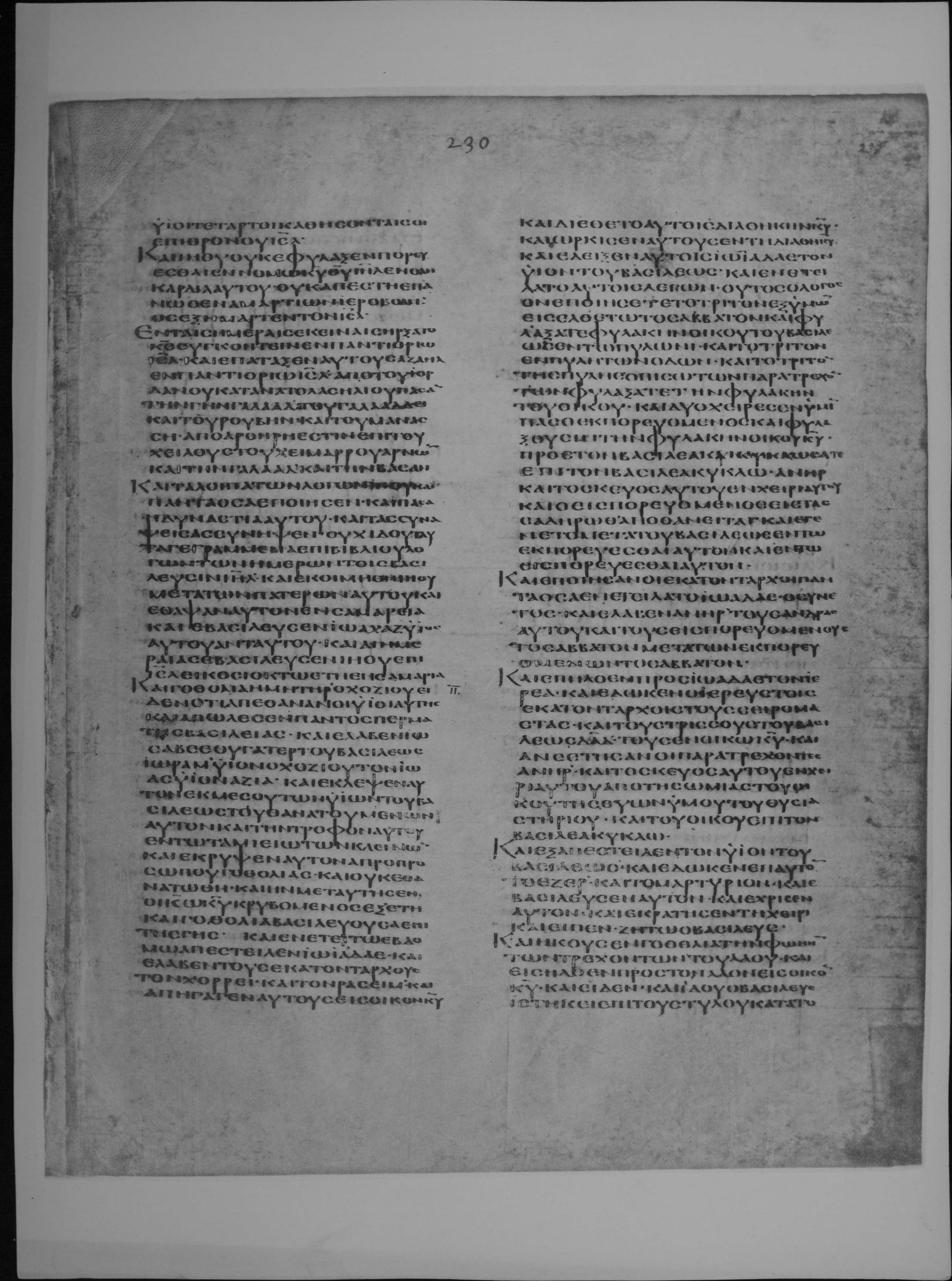
- Manuscript scan: the pages of Codex Alexandrinus carrying this chapter (fol. 229r, fol. 229v, fol. 230r), from the full-size photographic (autotype) facsimile published by the British Museum in 1879-1883, as digitised on the Internet Archive. The verse range of every page comes from the reduced photographic facsimile of 1930, which prints it beneath each plate, and the opening words of every page were read on the plate to confirm the page and the verse it begins with. Each section links to the page or pages that hold its verses. Folio numbers are those written at the head of each leaf and visible on the plates.
- Original text: Swete's edition, which here prints the text of Codex Vaticanus (Vat. gr. 1209), the base of his edition, and gives the readings of Alexandrinus only in his apparatus. The Greek column is therefore Vaticanus' text; where Alexandrinus differs, the plate shows what Alexandrinus reads.
- English translation: Sir Lancelot C. L. Brenton, The Septuagint Version of the Old Testament (1844; 1851 edition), a translation of the Greek, public domain, from the eBible.org text.
How was this verified? (Provenance)
Where on the image
4 Kingdoms (2 Kings) 10:1-8 is on fol. 229r (full-size facsimile of 1879-83, Internet Archive codex-alexandrinus leaf 476). The 1930 reduced facsimile prints beneath this page: 2 Kings ix. 30-x. 11. Checked on the plate: the page begins at the start of 4 Kingdoms (2 Kings) 9:30 (first words read: ΚΑΙ ΗΛΘΕΝ ΙΟΥ ΕΙΣ ΙΣΡΑΗΛ ΚΑΙ ΙΕΖΑΒΕΛ ΗΚΟΥΣΕΝ).
1Καὶ τῷ Ἀχαὰβ ἑβδομήκοντα υἱοὶ ἐν Σαμαρείᾳ. καὶ ἔγραψεν Εἰοὺ βιβλίον καὶ ἀπέστειλεν ἐν Σαμαρείᾳ πρὸς τοὺς ἄρχοντας Σαμαρείας καὶ πρὸς τοὺς πρεσβυτέρους καὶ πρὸς τοὺς τιθηνοὺς Ἀχαὰβ λέγων 2Καὶ νῦν ὡς ἐὰν ἔλθῃ τὸ βιβλίον τοῦτο πρὸς ὑμᾶς, καὶ μεθ᾽ ὑμῶν οἱ υἱοὶ τοῦ κυρίου ὑμῶν, καὶ μεθ᾽ ὑμῶν τὸ ἅρμα καὶ ἵπποι καὶ πόλεις ὀχυραὶ καὶ τὰ ὅπλα. 3καὶ ὄψεσθε τὸν ἀγαθὸν καὶ τὸν εὐθῆ ἐν τοῖς υἱοῖς τοῦ κυρίου ὑμῶν καὶ καταστήσετε αὐτὸν ἐπὶ τὸν θρόνον τοῦ πατρὸς αὐτοῦ, καὶ πολεμεῖτε ὑπὲρ τοῦ οἴκου τοῦ κυρίου ὑμῶν. 4καὶ ἐφοβήθησαν σφόδρα, καὶ εἶπον Ἰδοὺ οἱ δύο βασιλεῖς οὐκ ἔστησαν κατὰ πρόσωπον αὐτοῦ, καὶ πῶς στησόμεθα ἡμεῖς; 5καὶ ἀπέστειλαν οἱ ἐπὶ τοῦ οἴκου καὶ οἱ ἐπὶ τῆς πόλεως καὶ οἱ πρεσβύτεροι καὶ οἱ τιθηνοὶ πρὸς Εἰοὺ λέγοντες Παῖδές σου ἡμεῖς, καὶ ὅσα ἐὰν εἴπῃς πρὸς ἡμᾶς ποιήσομεν· οὐ βασιλεύσομεν ἄνδρα, τὸ ἀγαθὸν ἐν ὀφθαλμοῖς σου ποιήσομεν. 6καὶ ἔγραψεν πρὸς αὐτοὺς βιβλίον δεύτερον λέγων Εἰ ἐμοὶ ὑμεῖς καὶ τῆς φωνῆς μου ὑμεῖς εἰσακούετε, λάβετε τὴν κεφαλὴν ἀνδρῶν τῶν υἱῶν τοῦ κυρίου ὑμῶν καὶ ἐνέγκατε πρὸς μὲ ὡς ἡ ὥρα αὔριον εἰς Ἰσραήλ. καὶ οἱ υἱοὶ τοῦ βασιλέως ἦσαν ἑβδομήκοντα ἄνδρες· οὗτοι ἁδροὶ τῆς πόλεως ἐξέτρεφον αὐτούς. 7καὶ ἐγένετο ὡς ἦλθεν τὸ βιβλίον πρὸς αὐτούς, καὶ ἔλαβον τοὺς υἱοὺς τοῦ βασιλέως καὶ ἔσφαξαν αὐτούς, ἑβδομήκοντα ἄνδρας· καὶ ἔθηκαν τὰς κεφαλὰς αὐτῶν ἐν καρτάλλοις καὶ ἀπέστειλαν αὐτὰς πρὸς αὐτὸν εἰς Ἰσραήλ. 8καὶ ἦλθεν ὁ ἄγγελος καὶ ἀπήγγειλεν λέγων Ἤνεγκα τὰς κεφαλὰς τῶν υἱῶν τοῦ βασιλέως· καὶ εἶπεν Θέτε αὐτὰς βουνοὺς δύο παρὰ τὴν θύραν τῆς πύλης πόλεως εἰς πρωί.
1And Achaab had seventy sons in Samaria. And Ju wrote a letter, and sent it into Samaria to the rulers of Samaria, and to the elders, and to the guardians of the children of Achaab, saying, 2Now then, as soon as this letter shall have reached you, whereas there are with you the sons of your master, and with you chariots and horses, and strong cities, and arms, 3do ye accordingly look out the best and fittest among your master's sons, and set him on the throne of his father, and fight for the house of your master. 4And they feared greatly, and said, Behold, two kings stood not before him: and how shall we stand? 5So they that were over the house, and they that were over the city, and the elders and the guardians, sent to Ju, saying, We also are thy servants, and whatsoever thou shalt say to us we will do; we will not make any man king: we will do that which is right in thine eyes. 6And Ju wrote them a second letter, saying, If ye are for me, and hearken to my voice, take the heads of the men your master's sons, and bring them to me at this time to-morrow in Jezrael. Now the sons of the king were seventy men; these great men of the city brought them up. 7And it came to pass, when the letter came to them, that they took the king's sons, and slew them, even seventy men, and put their heads in baskets, and sent them to him at Jezrael. 8And a messenger came and told him, saying, They have brought the heads of the king's sons. And he said, Lay them in two heaps by the door of the gate until the morning.
Where on the image
4 Kingdoms (2 Kings) 10:9-11 is on fol. 229r (full-size facsimile of 1879-83, Internet Archive codex-alexandrinus leaf 476). The 1930 reduced facsimile prints beneath this page: 2 Kings ix. 30-x. 11. Checked on the plate: the page begins at the start of 4 Kingdoms (2 Kings) 9:30 (first words read: ΚΑΙ ΗΛΘΕΝ ΙΟΥ ΕΙΣ ΙΣΡΑΗΛ ΚΑΙ ΙΕΖΑΒΕΛ ΗΚΟΥΣΕΝ). 4 Kingdoms (2 Kings) 10:11-16 is on fol. 229v (full-size facsimile of 1879-83, Internet Archive codex-alexandrinus leaf 477). The 1930 reduced facsimile prints beneath this page: 2 Kings x. 11-30. Checked on the plate: the page begins inside 4 Kingdoms (2 Kings) 10:11 (first words read: ΩΣΤΕ ΜΗ ΚΑΤΑΛΙΠΕΙΝ ΑΥΤΟΥ ΚΑΤΑΛΕΙΜΜΑ ΚΑΙ ΑΝΕΣΤΗ ΚΑΙ ΕΠΟΡΕΥΘΗ ΕΙΣ ΣΑΜΑΡΙΑΝ).
9καὶ ἐγένετο πρωὶ καὶ ἐξῆλθεν καὶ ἔστη, καὶ εἶπεν πρὸς πάντα τὸν λαόν Δίκαιοι ὑμεῖς, ἰδοὺ ἐγώ εἰμι συνεστράφην ἐπὶ τὸν κύριόν μου καὶ ἀπέκτεινα αὐτόν· καὶ τίς ἐπάταξεν πάντας τούτους; 10ἴδετε ἀφφώ, ὅτι οὐ πεσεῖται ἀπὸ τοῦ ῥήματος Κυρίου εἰς τὴν γῆν οὗ ἐλάλησεν Κύριος ἐπὶ τὸν οἶκον Ἀχαάβ· καὶ Κύριος ἐποίησεν ὅσα ἐλάλησεν ἐν χειρὶ δούλου αὐτοῦ Ἠλειού. 11καὶ ἐπάταξεν Εἰοὺ πάντας τοὺς ἐν τῷ οἴκῳ Ἀχαὰβ καταλειφθέντας ἐν Ἰσραήλ, καὶ πάντας τοὺς ἁδροὺς αὐτοῦ καὶ τοὺς γνωστοὺς αὐτοῦ καὶ τοὺς ἱερεῖς αὐτοῦ, ὥστε μὴ καταλιπεῖν αὐτοὺς κατάλιμμα. 12καὶ ἀνέστη καὶ ἐπορεύθη εἰς Σαμάρειαν. Αὐτὸς ἐν Βαιθάκαθ τῶν ποιμένων ἐν τῇ ὁδῷ, 13καὶ Εἰοὺ εὗρεν τοὺς ἀδελφοὺς Ὀχοζείου βασιλέως Ἰούδα καὶ εἶπεν Τίνες ὑμεῖς; καὶ εἶπον Οἱ ἀδελφοὶ Ὀχοζείου ἡμεῖς, καὶ κατέβημεν εἰς εἰρήνην τῶν υἱῶν τοῦ βασιλέως καὶ τῶν υἱῶν τῆς δυναστευούσης. 14καὶ εἶπεν Συλλάβετε αὐτοὺς ζῶντας· καὶ ἔσφαξαν αὐτοὺς εἰς Βαιθάκαθ τεσσεράκοντα καὶ δύο ἄνδρας· οὐ κατέλιπεν ἄνδρα ἐξ αὐτῶν. 15Καὶ ἐπορεύθη ἐκεῖθεν καὶ ἔλαβεν τὸν Ἰωναδὰβ υἱὸν Ῥηχὰβ εἰς ἀπαντὴν αὐτοῦ, καὶ εὐλόγησεν αὐτόν· καὶ εἶπεν πρὸς αὐτὸν Εἰού Εἰ ἔστιν καρδία σου μετὰ καρδίας μου εὐθεῖα καθὼς ἡ καρδία μου μετὰ τῆς καρδίας σου; καὶ εἶπεν Ἰωναδάβ Ἔστιν· καὶ εἶπεν Εἰού Καὶ εἰ ἔστιν, δὸς τὴν χεῖρά σου· καὶ ἔδωκεν τὴν χεῖρα αὐτοῦ· καὶ ἀνεβίβασεν αὐτὸν πρὸς αὐτὸν ἐπὶ τὸ ἅρμα, 16καὶ εἶπεν πρὸς αὐτόν Δεῦρο μετ᾽ ἐμοῦ καὶ ἴδε ἐν τῷ ζηλῶσαί με τῷ κυρίῳ· καὶ ἐπεκάθισεν αὐτὸν ἐν τῷ ἅρματι αὐτοῦ.
9And the morning came, and he went forth, and stood, and said to all the people, Ye are righteous: behold, I conspired against my master, and slew him: but who slew all these? 10See now that there shall not fall to the ground anything of the word of the Lord which the Lord spoke against the house of Achaab: for the Lord has performed all that he spoke of by the hand of his servant Eliu. 11And Ju smote all that were left of the house of Achaab in Jezrael, and all his great men, and his acquaintance, and his priests, so as not to leave him any remnant. 12And he arose and went to Samaria, and he was in the house of sheep-shearing in the way. 13And Ju found the brethren of Ochozias king of Juda, and said, Who are ye? And they said, We are the brethren of Ochozias, and we have come down to salute the sons of the king, and the sons of the queen. 14And he said, Take them alive. And they slew them at the shearing-house, forty and two men: he left not a man of them. 15And he went thence and found Jonadab the son of Rechab coming to meet him; and he saluted him, and Ju said to him, Is thy heart right with my heart, as my heart is with thy heart? And Jonadab said, It is. And Ju said, If it is then, give me thy hand. And he gave him his hand, and he took him up to him into the chariot. 16And he said to him, Come with me, and see me zealous for the Lord. And he caused him to sit in his chariot.
Where on the image
4 Kingdoms (2 Kings) 10:17-24 is on fol. 229v (full-size facsimile of 1879-83, Internet Archive codex-alexandrinus leaf 477). The 1930 reduced facsimile prints beneath this page: 2 Kings x. 11-30. Checked on the plate: the page begins inside 4 Kingdoms (2 Kings) 10:11 (first words read: ΩΣΤΕ ΜΗ ΚΑΤΑΛΙΠΕΙΝ ΑΥΤΟΥ ΚΑΤΑΛΕΙΜΜΑ ΚΑΙ ΑΝΕΣΤΗ ΚΑΙ ΕΠΟΡΕΥΘΗ ΕΙΣ ΣΑΜΑΡΙΑΝ).
17καὶ εἰσῆλθεν εἰς Σαμάρειαν, καὶ ἐπάταξεν πάντας τοὺς καταλειφθέντας τοῦ Ἀχαὰβ ἐν Σαμαρείᾳ ἕως τοῦ ἀφανίσαι αὐτόν, κατὰ τὸ ῥῆμα Κυρίου ὃ ἐλάλησεν πρὸς Ἠλειού. 18καὶ ἐζήλωσεν Εἰοὺ πάντα τὸν λαὸν καὶ εἶπεν πρὸς αὐτούς Ἀχαὰβ ἐδούλευσεν τῷ Βάαλ ὀλίγα, Εἰοὺ δουλεύσει αὐτῷ πολλά. 19καὶ νῦν, πάντες οἱ προφῆται τοῦ Βάαλ, πάντας τοὺς δούλους αὐτοῦ καὶ τοὺς ἱερεῖς αὐτοῦ καλέσατε πρὸς μέ· ἀνὴρ μὴ ἐπισκεπήτω, ὅτι θυσία μεγάλη μοι τῷ Βάαλ· πᾶς ὃς ἐὰν ἐπισκεπῇ οὐ ζήσεται. καὶ Εἰοὺ ἐποίησεν ἐν πτερνισμῷ, ἵνα ἀπολέσῃ τοὺς δούλους τοῦ Βάαλ. 20καὶ εἶπεν Εἰού Ἁγιάσατε ἱερείαν τῷ Βάαλ· καὶ ἐκήρυξεν. 21καὶ ἀπέστειλεν Εἰοὺ ἐν παντὶ Ἰσραὴλ λέγων Καὶ νῦν πάντες οἱ δοῦλοι αὐτοῦ καὶ πάντες οἱ ἱερεῖς αὐτοῦ καὶ πάντες οἱ προφῆται αὐτοῦ, μηδεὶς ἀπολειπέσθω, ὅτι θυσίαν μεγάλην ποιῶ· ὃς ἂν ἀπολειφθῇ οὐ ζήσεται. καὶ ἦλθον πάντες οἱ δοῦλοι τοῦ Βάαλ καὶ πάντες οἱ ἱερεῖς αὐτοῦ καὶ πάντες οἱ προφῆται αὐτοῦ· οὐ κατελείφθη ἀνὴρ ὃς οὐ παρεγένετο· καὶ εἰσῆλθον εἰς τὸν οἶκον τοῦ Βάαλ, καὶ ἐπλήσθη ὁ οἶκος τοῦ Βάαλ στόμα εἰς στόμα. 22καὶ εἶπεν τῷ ἐπὶ τοῦ οἴκου μεσθαάλ Ἐξάγαγε ἔνδυμα πᾶσι τοῖς δούλοις τοῦ Βάαλ· καὶ ἐξήνεγκεν αὐτοῖς ὁ στολιστής. 23καὶ εἰσῆλθεν Εἰοὺ καὶ Ἰωναδὰβ υἱὸς Ῥηχὰβ εἰς οἶκον τοῦ Βάαλ· καὶ εἶπεν τοῖς δούλοις τοῦ Βάαλ Ἐρευνήσατε καὶ ἴδετε εἰ ἔστιν μεθ᾽ ὑμῶν τῶν δούλων Κυρίου, ὅτι ἀλλ᾽ ἢ οἱ δοῦλοι τοῦ Βάαλ μονώτατοι. 24καὶ εἰσῆλθεν τοῦ ποιῆσαι τὰ θύματα καὶ τὰ ὁλοκαυτώματα· καὶ Εἰοὺ ἔταξεν ἑαυτῷ ἔξω ὀγδοήκοντα ἄνδρας καὶ εἶπεν Ἀνὴρ ὃς ἐὰν διασωθῇ ἀπὸ τῶν ἀνδρῶν ὧν ἐγὼ ἀνάγω ἐπὶ χεῖρας ὑμῶν, ἡ ψυχὴ αὐτοῦ ἀντὶ τῆς ψυχῆς αὐτοῦ.
17And he entered into Samaria, and smote all that were left of Achaab in Samaria, until he had utterly destroyed him, according to the word of the Lord, which he spoke to Eliu. 18And Ju gathered all the people, and said to them, Achaab served Baal a little; Ju shall serve him much. 19Now then do all ye the prophets of Baal call all his servants and his priests to me; let not a man be wanting: for I have a great sacrifice to offer to Baal; every one who shall be missing shall die. But Ju did it in subtilty, that he might destroy the servants of Baal. 20And Ju said, Sanctify a solemn festival to Baal, and they made a proclamation. 21And Ju sent throughout all Israel, saying, Now then let all Baal's servants, and all his priests, and all his prophets come, let none be lacking: for I am going to offer a great sacrifice; whosoever shall be missing, shall not live. So all the servants of Baal came, and all his priests, and all his prophets: there was not one left who came not. And they entered into the house of Baal; and the house of Baal was filled from one end to the other. 22And he said to the man who was over the house of the wardrobe, Bring forth a robe for all the servants of Baal. And the keeper of the robes brought forth to them. 23And Ju and Jonadab the son of Rechab entered into the house of Baal, and said to the servants of Baal, Search, and see whether there is among you any of the servants of the Lord, or only the servants of Baal, by themselves. 24And he went in to offer sacrifices and whole-burnt-offerings; and Ju set for himself eighty men without, and said, Every man who shall escape of the men whom I bring into your hand, the life of him that spares him shall go for his life.
Where on the image
4 Kingdoms (2 Kings) 10:25-30 is on fol. 229v (full-size facsimile of 1879-83, Internet Archive codex-alexandrinus leaf 477). The 1930 reduced facsimile prints beneath this page: 2 Kings x. 11-30. Checked on the plate: the page begins inside 4 Kingdoms (2 Kings) 10:11 (first words read: ΩΣΤΕ ΜΗ ΚΑΤΑΛΙΠΕΙΝ ΑΥΤΟΥ ΚΑΤΑΛΕΙΜΜΑ ΚΑΙ ΑΝΕΣΤΗ ΚΑΙ ΕΠΟΡΕΥΘΗ ΕΙΣ ΣΑΜΑΡΙΑΝ). 4 Kingdoms (2 Kings) 10:30-32 is on fol. 230r (full-size facsimile of 1879-83, Internet Archive codex-alexandrinus leaf 478). The 1930 reduced facsimile prints beneath this page: 2 Kings x. 30-xi. 14. Checked on the plate: the page begins inside 4 Kingdoms (2 Kings) 10:30 (first words read: ΥΙΟΙ ΤΕΤΑΡΤΟΙ ΚΑΘΗΣΟΝΤΑΙ ΣΟΙ ΕΠΙ ΘΡΟΝΟΥ ΙΣΡΑΗΛ ΚΑΙ ΙΟΥ ΟΥΚ ΕΦΥΛΑΞΕΝ ΠΟΡΕΥΕΣΘΑΙ ΕΝ ΝΟΜΩ ΚΥ).
25καὶ ἐγένετο ὡς συνετέλεσεν ποιῶν τὴν ὁλοκαύτωσιν, καὶ εἶπεν Εἰοὺ τοῖς παρατρέχουσιν καὶ τοῖς τριστάταις Εἰσελθόντες πατάξατε αὐτούς, ἀνὴρ μὴ ἐξελθάτω ἐξ αὐτῶν· καὶ ἐπάταξαν αὐτοὺς ἐν στόματι ῥομφαίας, καὶ ἔρριψαν οἱ παρατρέχοντες καὶ οἱ τριστάται, καὶ ἐπορεύθησαν ἕως πόλεως οἴκου τοῦ Βάαλ. 26καὶ ἐξήνεγκαν τὴν στολὴν τοῦ Βὰαλ καὶ ἐνέπρησαν αὐτήν. 27καὶ κατέσπασαν τὰς στήλας τοῦ Βάαλ, καὶ ἐπάταξεν αὐτὸν εἰς λυτρῶνας ἕως τῆς ἡμέρας ταύτης. 28καὶ ἠφάνισεν Εἰοὺ τὸν Βάαλ ἐξ Ἰσραήλ. 29πλὴν ἁμαρτιῶν Ἰεροβοὰμ υἱοῦ Ναβὰτ ὃς ἐξήμαρτεν τὸν Ἰσραήλ, οὐκ ἀπέστη Εἰοὺ ἔμπροσθεν αὐτῶν, αἱ δαμάλεις αἱ χρυσαῖ ἐν Βαιθὴλ καὶ ἐν Δάν. 30Καὶ εἶπεν Κύριος πρὸς Εἰού Ἀνθ᾽ ὧν ὅσα ἠγάθυνας ποιῆσαι τὸ εὐθὲς ἐν ὀφθαλμοῖς μου κατὰ πάντα ὅσα ἐν τῇ καρδίᾳ μου ἐποίησας τῷ οἴκῳ Ἀχαάβ, υἱοὶ τέταρτοι καθήσονταί σοι ἐπὶ θρόνου Ἰσραήλ. 31καὶ Εἰοὺ οὐκ ἐφύλαξεν πορεύεσθαι ἐν νόμῳ Κυρίου θεοῦ Ἰσραὴλ ἐν ὅλῃ καρδίᾳ αὐτοῦ, οὐκ ἀπέστη ἐπάνωθεν ἁμαρτιῶν Ἰεροβοὰμ ὃς ἐξήμαρτεν τὸν Ἰσραήλ. 32Ἐν ταῖς ἡμέραις ἐκείναις ἤρξατο Κύριος συνκόπτειν ἐν τῷ Ἰσραὴλ, καὶ ἐπάταξεν αὐτοὺς Ἁζαὴλ καὶ ἐν παντὶ ὁρίῳ Ἰσραήλ,
25And it came to pass, when he had finished offering the whole-burnt-offering, that Ju said to the footmen and the officers, Go ye in and slay them; let not a man of them escape. So they smote them with the edge of the sword, and the footmen and the officers cast the bodies forth, and went to the city of the house of Baal. 26And they brought out the pillar of Baal, and burnt it. 27And they tore down the pillars of Baal, and made his house a draught-house until this day. 28So Ju abolished Baal out of Israel. 29Nevertheless Ju departed not from following the sins of Jeroboam the son of Nabat, who led Israel to sin: these were the golden heifers in Bæthel and in Dan. 30And the Lord said to Ju, Because of all thy deeds wherein thou hast acted well in doing that which was right in my eyes, according to all things which thou hast done to the house of Achaab as they were in my heart, thy sons to the fourth generation shall sit upon the throne of Israel. 31But Ju took no heed to walk in the law of the Lord God of Israel with all his heart: he departed not from following the sins of Jeroboam, who made Israel to sin. 32In those days the Lord began to cut Israel short; and Azael smote them in every coast of Israel;
Where on the image
4 Kingdoms (2 Kings) 10:33-36 is on fol. 230r (full-size facsimile of 1879-83, Internet Archive codex-alexandrinus leaf 478). The 1930 reduced facsimile prints beneath this page: 2 Kings x. 30-xi. 14. Checked on the plate: the page begins inside 4 Kingdoms (2 Kings) 10:30 (first words read: ΥΙΟΙ ΤΕΤΑΡΤΟΙ ΚΑΘΗΣΟΝΤΑΙ ΣΟΙ ΕΠΙ ΘΡΟΝΟΥ ΙΣΡΑΗΛ ΚΑΙ ΙΟΥ ΟΥΚ ΕΦΥΛΑΞΕΝ ΠΟΡΕΥΕΣΘΑΙ ΕΝ ΝΟΜΩ ΚΥ).
33ἀπὸ τοῦ Ἰορδάνου κατ᾽ ἀνατολὰς ἡλίου πᾶσαν τὴν Γαλαάδ, τοῦ Γαδδεὶ καὶ τοῦ Ῥουβὴν καὶ τοῦ Μανασσή, ἀπὸ Ἀροὴρ ἥ ἐστιν ἐπὶ τοῦ χεὶλους χειμάρρου Ἀρνών, καὶ τὴν Γαλαὰδ καὶ τὴν Βασάν. 34καὶ τὰ λοιπὰ τῶν λόγων Εἰοὺ καὶ πάντα ὅσα ἐποίησεν καὶ πᾶσα ἡ δυναστεία αὐτοῦ καὶ τὰς συνάψεις ἃς συνῆψεν, οὐχὶ ταῦτα γεγραμμένα ἐπὶ βιβλίῳ λόγων τῶν ἡμερῶν τοῖς βασιλεῦσιν Ἰσραήλ; 35καὶ ἐκοιμήθη Εἰοὺ μετὰ τῶν πατέρων αὐτοῦ, καὶ ἔθαψαν αὐτὸν ἐν Σαμαρείᾳ· καὶ ἐβασίλευσεν Ἰωαχὰς υἱὸς αὐτοῦ ἀντ᾽ αὐτοῦ. 36καὶ αἱ ἡμέραι ἃς ἐβασίλευσεν Εἰοὺ ἐπὶ Ἰσραὴλ εἴκοσι ὀκτὼ ἔτη ἐν Σαμαρείᾳ.
33from Jordan eastward all the land of Galaad belonging to the Gadites, of Gaddi and that of Ruben, and of Manasses, from Aroer, which is on the brink of the brook of Arnon, and Galaad and Basan. 34And the rest of the acts of Ju, and all that he did, and all his might, and the wars wherein he engaged, are not these things written in the book of the chronicles of the kings of Israel? 35And Ju slept with his fathers; and they buried him in Samaria: and Joachaz his son reigned in his stead. 36And the days which Ju reigned over Israel were twenty-eight years in Samaria.
Cite
Sources
- Source: Codex Alexandrinus (British Library Royal MS 1 D. V) via the British Museum photographic facsimiles of 1879-83 and 1930 (Internet Archive) + Swete's Septuagint + Brenton's English (holding institution)
- Critical edition: H. B. Swete, The Old Testament in Greek according to the Septuagint (1909)
← previous · → next · v cycle view · l back to library