4 Kingdoms (2 Kings), Chapter 9 (Codex Alexandrinus)
Introduction
4 Kingdoms (2 Kings) 9 in the Greek Old Testament (the Septuagint) as written in Codex Alexandrinus, a Greek Bible copied in the fifth century, probably in Egypt, and now in the British Library (Royal MS 1 D. V, the first of its four volumes). It is one of the three great early codices of the whole Greek Bible, with Codex Vaticanus and Codex Sinaiticus.
This entry meets the strict three-criteria standard of the Theosis Library:
- Manuscript scan: the pages of Codex Alexandrinus carrying this chapter (fol. 228r, fol. 228v, fol. 229r), from the full-size photographic (autotype) facsimile published by the British Museum in 1879-1883, as digitised on the Internet Archive. The verse range of every page comes from the reduced photographic facsimile of 1930, which prints it beneath each plate, and the opening words of every page were read on the plate to confirm the page and the verse it begins with. Each section links to the page or pages that hold its verses. Folio numbers are those written at the head of each leaf and visible on the plates.
- Original text: Swete's edition, which here prints the text of Codex Vaticanus (Vat. gr. 1209), the base of his edition, and gives the readings of Alexandrinus only in his apparatus. The Greek column is therefore Vaticanus' text; where Alexandrinus differs, the plate shows what Alexandrinus reads.
- English translation: Sir Lancelot C. L. Brenton, The Septuagint Version of the Old Testament (1844; 1851 edition), a translation of the Greek, public domain, from the eBible.org text.
How was this verified? (Provenance)
Where on the image
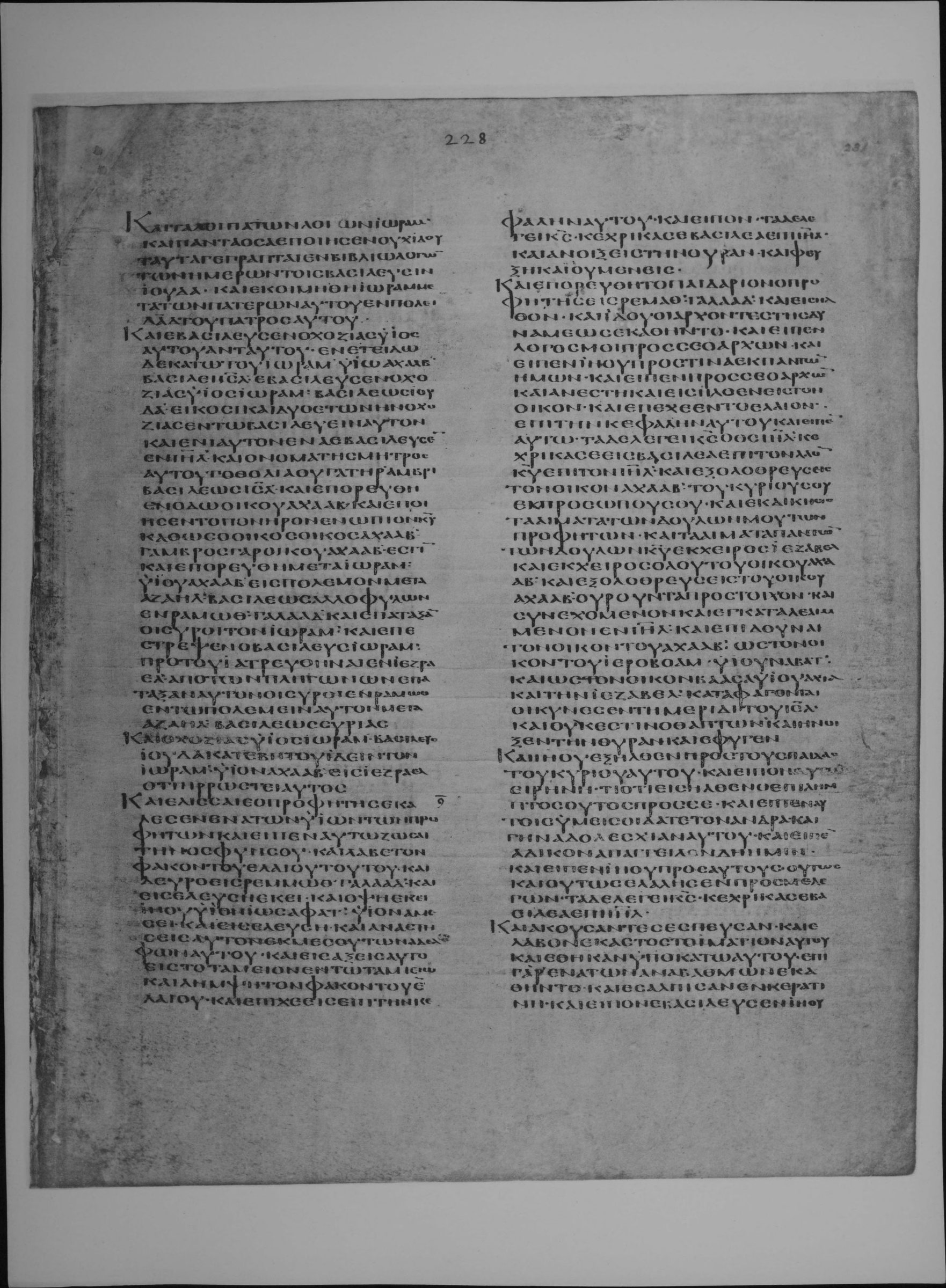
4 Kingdoms (2 Kings) 9:1-8 is on fol. 228r (full-size facsimile of 1879-83, Internet Archive codex-alexandrinus leaf 474). The 1930 reduced facsimile prints beneath this page: 2 Kings viii. 23-ix. 13. Checked on the plate: the page begins at the start of 4 Kingdoms (2 Kings) 8:23 (first words read: ΚΑΙ ΤΑ ΛΟΙΠΑ ΤΩΝ ΛΟΓΩΝ ΙΩΡΑΜ ΚΑΙ ΠΑΝΤΑ ΟΣΑ ΕΠΟΙΗΣΕΝ ΟΥΧΙ ΤΑΥΤΑ ΓΕΓΡΑΜΜΕΝΑ).
1Καὶ Ἐλεισαῖε ὁ προφήτης ἐκάλεσεν ἕνα τῶν υἱῶν τῶν προφητῶν καὶ εἶπεν αὐτῷ Ζῶσαι τὴν ὀσφύν σου, καὶ λάβε τὸν φακὸν τοῦ ἐλαίου τούτου ἐν τῇ χειρί σου, καὶ δεῦρο εἰς Ῥεμμὼθ Γαλαάδ. 2καὶ εἰσελεύσῃ ἐκεῖ, καὶ ὄψῃ ἐκει υἱὸν Ἰωσαφὰθ Εἰοὺ υἱοῦ Ναμεσσεί, καὶ εἰσελεύσῃ καὶ ἀναστήσεις αὐτὸν ἐκ μέσου τῶν ἀδελφῶν αὐτοῦ, καὶ εἰσάξεις αὐτὸν εἰς τὸ ταμεῖον ἐν ταμείῳ. 3καὶ λήμψῃ τὸν φακὸν τοῦ ἐλαίου καὶ ἐπιχεεῖς ἐπὶ τὴν κεφαλὴν αὐτοῦ, καὶ εἰπόν Τάδε λέγει Κύριος Κέχρικά σε εἰς βασιλέα ἐπὶ Ἰσραήλ· καὶ ἀνοίξεις τὴν θύραν, καὶ φεύξῃ καὶ οὐ μενεῖς. 4καὶ ἐπορεύθη ὁ προφήτης τὸ παιδάριον εἰς Ῥεμμὰθ Γαλαάδ. 5καὶ εἰσῆλθεν καὶ ἰδοὺ οἱ ἄρχοντες τῆς δυνάμεως ἐκάθηντο, καὶ εἶπεν Λόγος μοι πρὸς σέ, ὁ ἄρχων· καὶ εἶπεν Εἰού Πρὸς τίνα ἐκ πάντων ἡμῶν; καὶ εἶπεν Πρὸς σέ, ὁ ἄρχων. 6καὶ ἀνέστη καὶ εἰσῆλθεν εἰς τὸν οἶκον, καὶ ἐπέχεεν τὸ ἔλαιον ἐπὶ τὴν κεφαλὴν αὐτοῦ καὶ εἶπεν αὐτῷ Τάδε λέγει Κύριος ὁ θεὸς Ἰσραήλ Κέχρικά σε εἰς βασιλέα ἐπὶ λαὸν Κυρίου, ἐπὶ τὸν Ἰσραήλ. 7καὶ ἐξολεθρεύσεις τὸν οἶκον Ἀχαὰβ τοῦ κυρίου σου ἐκ προσώπου σου, καὶ ἐκδικὴσεις τὰ αἵματα τῶν δούλων μου τῶν προφητῶν καὶ τὰ αἵματα πάντων τῶν δούλων Κυρίου ἐκ χειρὸς Ἰεζάβελ 8καὶ ἐκ χειρὸς ὅλου τοῦ οἴκου Ἀχαάβ, καὶ ἐξολεθρεύσεις τῷ οἴκῳ Ἀχαὰβ οὐροῦντα πρὸς τοῖχον καὶ συνεχόμενον καὶ ἐνκαταλελειμμένον ἐν Ἰσραήλ.
1And Elisaie the prophet called one of the sons of the prophets, and said to him, Gird up thy loins, and take this cruse of oil in thy hand, and go to Remmoth Galaad. 2And thou shalt enter there, and shalt see there Ju the son of Josaphat son of Namessi, and shalt go in and make him rise up from among his brethren, and shalt bring him into a secret chamber. 3And thou shalt take the cruse of oil, and pour it on his head, and say thou, Thus saith the Lord, I have anointed thee king over Israel: and thou shalt open the door, and flee, and not tarry. 4And the young man the prophet went to Remmoth Galaad. 5And he went in, and, behold, the captains of the host were sitting; and he said, I have a message to thee, O captain. And Ju said, To which of all us? And he said, To thee, O captain. 6And he arose, and went into the house: and he poured the oil upon his head, and said to him, Thus saith the Lord God of Israel, I have anointed thee to be king over the people of the Lord, even over Israel. 7And thou shalt utterly destroy the house of Achaab thy master from before me, and shalt avenge the blood of my servants the prophets, and the blood of all the servants of the Lord, at the hand of Jezabel, 8and at the hand of the whole house of Achaab: and thou shalt utterly cut off from the house of Achaab every male, and him that is shut up and left in Israel.
Where on the image
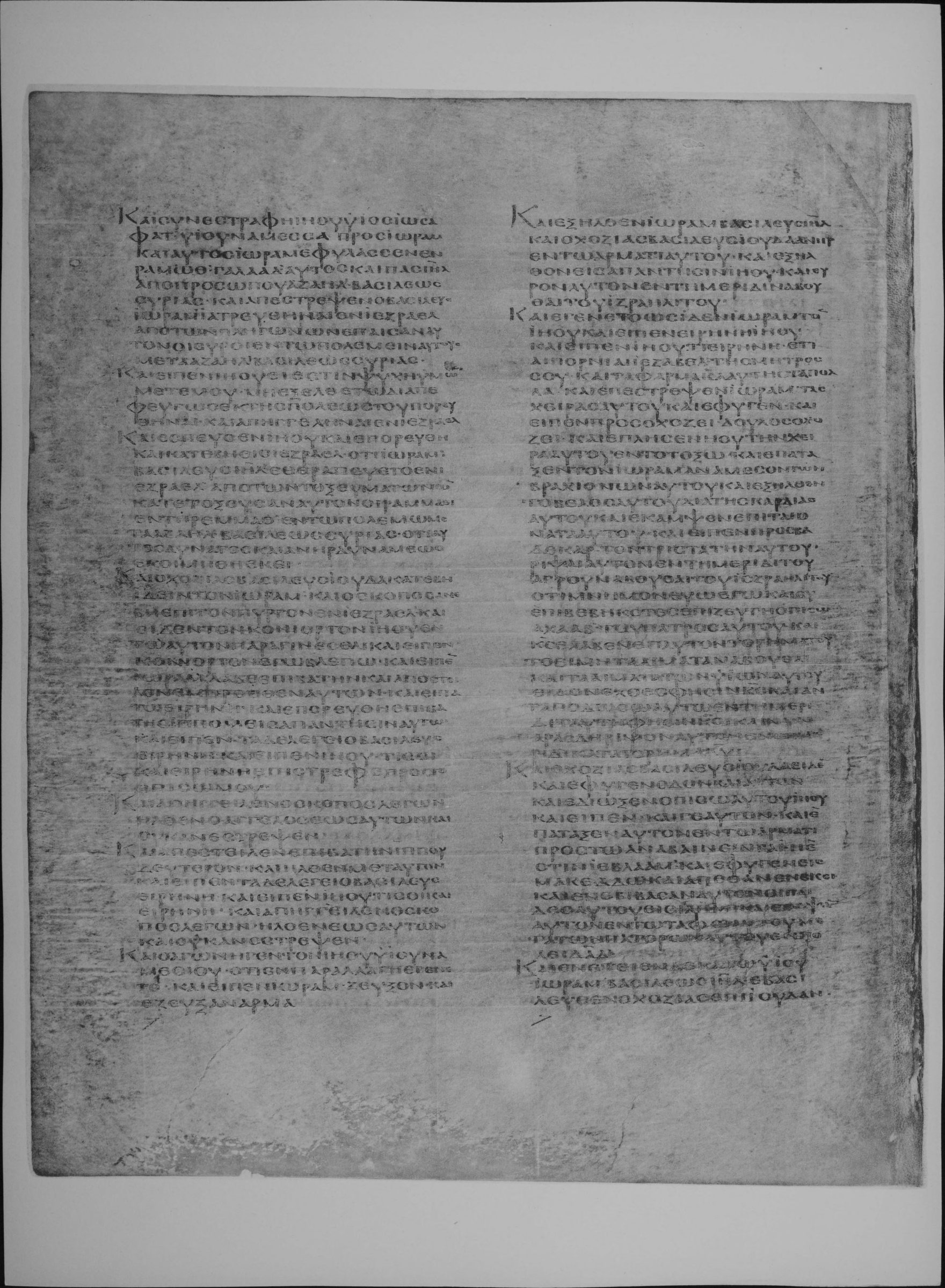
4 Kingdoms (2 Kings) 9:9-13 is on fol. 228r (full-size facsimile of 1879-83, Internet Archive codex-alexandrinus leaf 474). The 1930 reduced facsimile prints beneath this page: 2 Kings viii. 23-ix. 13. Checked on the plate: the page begins at the start of 4 Kingdoms (2 Kings) 8:23 (first words read: ΚΑΙ ΤΑ ΛΟΙΠΑ ΤΩΝ ΛΟΓΩΝ ΙΩΡΑΜ ΚΑΙ ΠΑΝΤΑ ΟΣΑ ΕΠΟΙΗΣΕΝ ΟΥΧΙ ΤΑΥΤΑ ΓΕΓΡΑΜΜΕΝΑ). 4 Kingdoms (2 Kings) 9:14-16 is on fol. 228v (full-size facsimile of 1879-83, Internet Archive codex-alexandrinus leaf 475). The 1930 reduced facsimile prints beneath this page: 2 Kings ix. 14-29. Checked on the plate: the page begins at the start of 4 Kingdoms (2 Kings) 9:14 (first words read: ΚΑΙ ΣΥΝΕΣΤΡΑΦΗ ΙΟΥ ΥΙΟΣ ΙΩΣΑΦΑΤ ΥΙΟΥ ΝΑΜΕΣΣΑ ΠΡΟΣ ΙΩΡΑΜ).
9καὶ δώσω τὸν οἶκον Ἀχαὰβ ὡς τὸν οἶκον Ἰεροβοὰμ υἱοῦ Ναβὰτ καὶ ὡς τὸν οἶκον Βαασὰ υἱοῦ Ἀχειά· 10καὶ τὴν Ἰεζάβελ καταφάγονται οἱ κύνες ἐν τῇ μερίδι τοῦ Ἰσραήλ, καὶ οὐκ ἔστιν ὁ θάπτων. καὶ ἤνοιξεν τὴν θύραν καὶ ἔφυγεν. 11καὶ Εἰοὺ ἐξῆλθεν πρὸς τοὺς παῖδας τοῦ κυρίου αὐτοῦ, καὶ εἶπον αὐτῷ Εἰρήνη; τί ὅτι εἰσῆλθεν ὁ ἐπίλημπτος οὗτος πρὸς σέ; καὶ εἶπεν αὐτοῖς Ὑμεῖς οἴδατε τὸν ἄνδρα καὶ τὴν ἀδολεσχίαν αὐτοῦ. 12καὶ εἶπεν Ἄδικον· ἀπάγγειλον δὴ ἡμῖν. καὶ εἶπεν Εἰοὺ πρὸς αὐτούς Οὕτως καὶ οὕτως ἐλάλησεν πρὸς μὲ λέγων· καὶ εἶπεν Τάδε λέγει Κύριος Κέχρικά σε εἰς βασιλέα ἐπὶ Ἰσραήλ. 13καὶ ἀκούσαντες ἔσπευσαν, καὶ ἔλαβεν ἕκαστος τὸ ἱμάτιον αὐτοῦ καὶ ἔθηκαν ὑποκάτω αὐτοῦ ἐπὶ τὸ γάρεμ τῶν ἀναβαθμῶν, καὶ ἐσάλπισαν ἐν κερατίνῃ καὶ εἶπον Ἐβασίλευσεν Εἰού. 14καὶ συνεστράφη Εἰοὺ υἱὸς Ιωσαφὰθ υἱοῦ Ναμεσσεὶ πρὸς Ἰωράμ· καὶ Ἰωρὰμ αὐτὸς ἐφύλασσεν ἐν Ῥεμμὼθ Γαλαὰδ καὶ πᾶς Ἰσραὴλ ἀπὸ προσώπου Ἁζαὴλ βασιλέως Συρίας. 15καὶ ἀπέστρεψεν Ἰωρὰμ ὁ βασιλεὺς ἰατρευθῆναι ἐν Ἰσραὴλ ἀπὸ τῶν πληγῶν ὧν ἔπαισαν αὐτὸν οἱ Σύροι ἐν τῷ πολεμεῖν αὐτοὺς μετὰ Ἀζαὴλ βασιλέως Συρίας. καὶ εἶπεν Εἰού Εἰ ἔστιν ἡ ψυχὴ ὑμῶν μετ᾽ ἐμοῦ, μὴ ἐξελθέτω ἐκ τῆς πόλεως διαπεφευγὼς τοῦ πορευθῆναι καὶ ἀπαγγεῖλαι ἐν Ἰσραήλ. 16καὶ ἵππευσεν καὶ ἐπορεύθη Εἰού, καὶ κατέβη ἐν Ἰσραήλ, ὅτι Ἰωρὰμ βασιλεὺς Ἰσραὴλ ἐθεραπεύετο ἐν τῷ Ἰσραὴλ ἀπὸ τῶν τοξευμάτων ὧν κατετόξευσαν αὐτὸν οἱ Ἀραμιεὶν ἐν τῇ Ῥαμμὰθ ἐν τῷ πολέμῳ μετὰ Ἁζαὴλ βασιλέως Συρίας, ὅτι δυνατὸς καὶ ἀνὴρ δυνάμεως· καὶ Ὀχοζείας βασιλεὺς Ἰούδα κατέβη ἰδεῖν τὸν Ἰωράμ.
9And I will make the house of Achaab like the house of Jeroboam the son of Nabat, and as the house of Baasa the son of Achia. 10And the dogs shall eat Jezabel in the portion of Jezreel, and there shall be none to bury her. And he opened the door, and fled. 11And Ju went forth to the servants of his lord, and they said to him, Is all well? Why came this mad fellow in to thee? And he said to them, Ye know the man, and his communication. 12And they said, It is wrong: tell us now. And Ju said to them, Thus and thus spoke he to me, saying,—and he said, Thus saith the Lord, I have anointed thee to be king over Israel. 13And when they heard it, they hasted, and took every man his garment, and put it under him on the top of the stairs, and blew with the trumpet, and said, Ju is king. 14So Ju the son of Josaphat the son of Namessi conspired against Joram, and Joram was defending Remmoth Galaad, he and all Israel, because of Azael king of Syria. 15And king Joram had returned to be healed in Jezrael of the wounds which the Syrians had given him, in his war with Azael king of Syria. 16And Ju rode and advanced, and came down to Jezrael; for Joram king of Israel was getting healed in Jezrael of the arrow-wounds wherewith the Syrians had wounded him in Rammath in the war with Azael king of Syria; for he was strong and a mighty man: and Ochozias king of Juda was come down to see Joram.
Where on the image
4 Kingdoms (2 Kings) 9:17-24 is on fol. 228v (full-size facsimile of 1879-83, Internet Archive codex-alexandrinus leaf 475). The 1930 reduced facsimile prints beneath this page: 2 Kings ix. 14-29. Checked on the plate: the page begins at the start of 4 Kingdoms (2 Kings) 9:14 (first words read: ΚΑΙ ΣΥΝΕΣΤΡΑΦΗ ΙΟΥ ΥΙΟΣ ΙΩΣΑΦΑΤ ΥΙΟΥ ΝΑΜΕΣΣΑ ΠΡΟΣ ΙΩΡΑΜ).
17καὶ ὁ σκοπὸς ἀνέβη ἐπὶ τὸν πύργον Ἰσραήλ, καὶ εἶδεν τὸν κονιορτὸν Εἰοὺ ἐν τῷ παραγίνεσθαι αὐτόν, καὶ εἶπεν Κονιορτὸν ἐγὼ βλέπω· καὶ εἶπεν Ἰωράμ Λάβε ἐπιβάτην καὶ ἀπόστειλον ἔμπροσθεν αὐτῶν, καὶ εἰπάτω Ἦ εἰρήνη; 18καὶ ἐπορεύθη ἐπιβάτης ἵππου εἰς ἀπαντὴν αὐτῶν καὶ εἶπεν Τάδε λέγει ὁ βασιλεὺς Ἦ εἰρήνη; καὶ εἶπεν Εἰού Τί σοι και εἰρήνῃ; ἐπίστρεφε εἰς τὰ ὀπίσω μου. καὶ ἀπήγγειλεν ὁ σκοπὸς λέγων Ἦλθεν ὁ ἄγγελος ἕως αὐτῶν καὶ οὐκ ἀνέστρεψεν. 19καὶ ἀπέστειλεν ἐπιβάτην ἵππου δεύτερον, καὶ ἦλθεν πρὸς αὐτὸν καὶ εἶπεν Τάδε λέγει ὁ βασιλεύς Ἦ εἰρήνη; καὶ εἶπεν Εἰού Τί σοι καὶ εἰρήνῃ; ἐπιστρέφου εἰς τὰ ὀπίσω μου. 20καὶ ἀπήγγειλεν ὁ σκοπὸς λέγων Ἦλθεν ἕως αὐτῶν καὶ οὐκ ἀνέστρεψεν· καὶ ὁ ἄγων ἦγεν τὸν Εἰοὺ υἱὸν Ναμεσσείου, ὅτι ἐν παραλλαγῇ ἐγένετο. 21καὶ εἶπεν Ἰωράμ Ζεῦξον· καὶ ἔζευξεν ἅρμα. καὶ ἐξῆλθεν Ἰωρὰμ βασιλεὺς Ἰσραὴλ καὶ Ὀχοζεὶ βασιλεὺς Ἰούδα, ἀνὴρ ἐν τῷ ἅρματι αὐτοῦ, καὶ ἐξῆλθον εἰς ἀπαντὴν Εἰού, καὶ εὗρον αὐτὸν ἐν τῇ μερίδι Ναβουθαὶ τοῦ Ἰσραηλείτου. 22καὶ ἐγένετο ὡς εἶδεν Ἰωρὰμ τὸν Εἰού, καὶ εἶπεν Ἦ εἰρήνη, Εἰού; καὶ εἶπεν Εἰού Τί εἰρήνη; ἔτι αἱ πορνεῖαι Ἰεζάβελ τῆς μητρός σου καὶ τὰ φάρμακα αὐτῆς τὰ πολλά. 23καὶ ἐπέστρεψεν Ἰωρὰμ τὰς χεῖρας αὐτοῦ καὶ ἔφυγεν, καὶ εἶπεν πρὸς Ὀχοζείαν Δόλος, Ὀχοζεία. 24καὶ ἔπλησεν Εἰοὺ τὴν χεῖρα αὐτοῦ ἐν τῷ τόξῳ καὶ ἐπάταξεν τὸν Ἰωρὰμ ἀνὰ μέσον τῶν βραχιόνων αὐτοῦ, καὶ ἐξῆλθεν τὸ βέλος αὐτοῦ διὰ τῆς καρδίας αὐτοῦ, καὶ ἔκαμψεν ἐπὶ τὰ γόνατα αὐτοῦ.
17And there went up a watchman upon the tower of Jezrael, and saw the dust made by Ju as he approached; and he said, I see dust. And Joram said, Take a horseman, and send to meet them, and let him say, Peace. 18And there went a horseman to meet them, and said, Thus says the king, Peace. And Ju said, What hast thou to do with peace? turn behind me. And the watchman reported, saying, The messenger came up to them, and has not returned. 19And he sent another horseman, and he came to him, and said, Thus says the king, Peace. And Ju said, What hast thou to do with peace? turn behind me. 20And the watchman reported, saying, He came up to them, and has not returned: and the driver drives Ju the son of Namessi, for it is with furious haste. 21And Joram said, Make ready. And one made ready the chariot: and Joram the king of Israel went forth, and Ochozias king of Juda, each in his chariot, and they went to meet Ju, and found him in the portion of Nabuthai the Jezraelite. 22And it came to pass when Joram saw Ju, that he said, Is it peace, Ju? And Ju said, How can it be peace? as yet there are the whoredoms of thy mother Jezabel, and her abundant witchcrafts. 23And Joram turned his hands, and fled, and said to Ochozias, Treachery, Ochozias. 24And Ju bent his bow with his full strength, and smote Joram between his arms, and his arrow went out at his heart, and he bowed upon his knees.
Where on the image
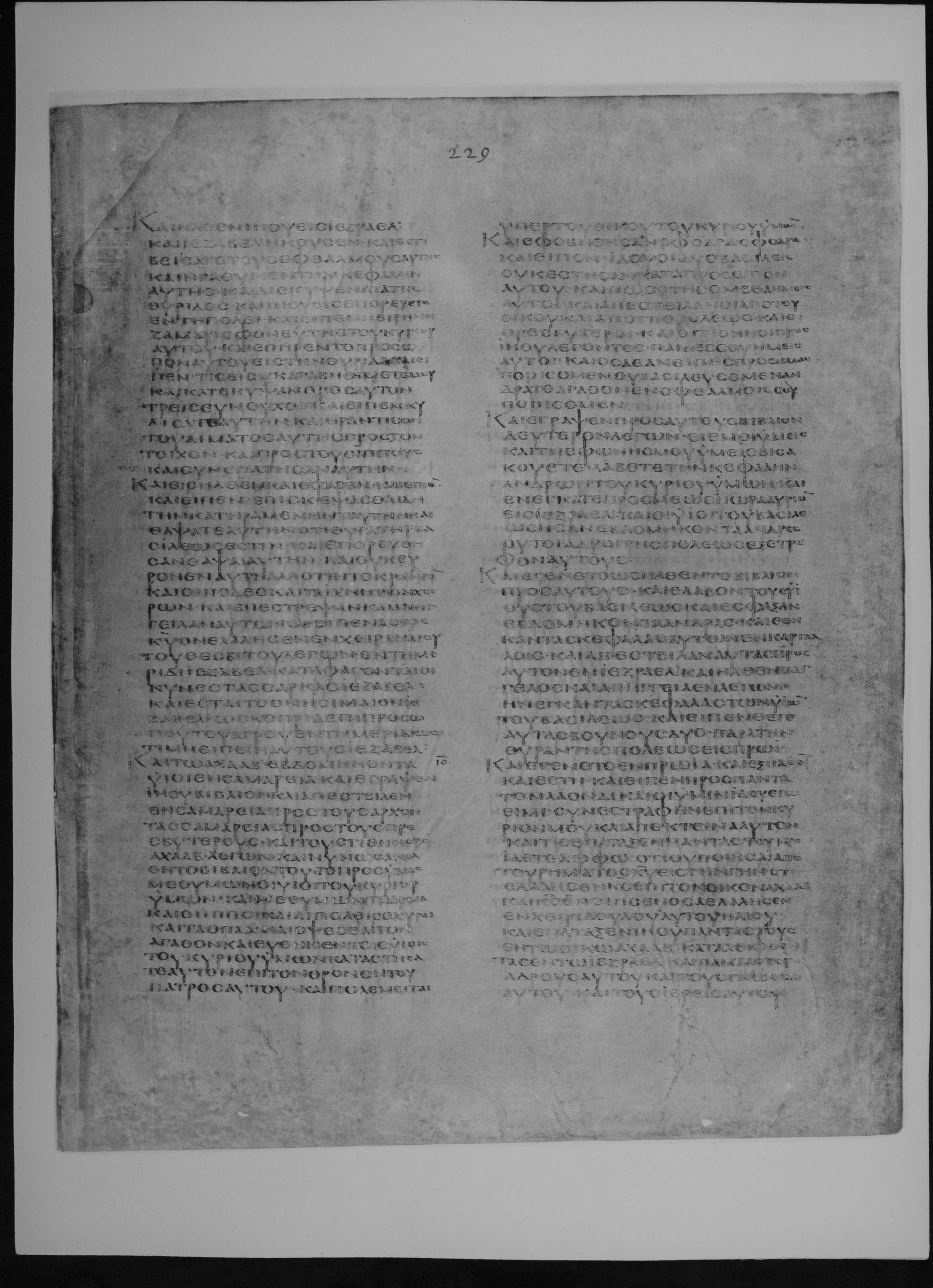
4 Kingdoms (2 Kings) 9:25-29 is on fol. 228v (full-size facsimile of 1879-83, Internet Archive codex-alexandrinus leaf 475). The 1930 reduced facsimile prints beneath this page: 2 Kings ix. 14-29. Checked on the plate: the page begins at the start of 4 Kingdoms (2 Kings) 9:14 (first words read: ΚΑΙ ΣΥΝΕΣΤΡΑΦΗ ΙΟΥ ΥΙΟΣ ΙΩΣΑΦΑΤ ΥΙΟΥ ΝΑΜΕΣΣΑ ΠΡΟΣ ΙΩΡΑΜ). 4 Kingdoms (2 Kings) 9:30-32 is on fol. 229r (full-size facsimile of 1879-83, Internet Archive codex-alexandrinus leaf 476). The 1930 reduced facsimile prints beneath this page: 2 Kings ix. 30-x. 11. Checked on the plate: the page begins at the start of 4 Kingdoms (2 Kings) 9:30 (first words read: ΚΑΙ ΗΛΘΕΝ ΙΟΥ ΕΙΣ ΙΣΡΑΗΛ ΚΑΙ ΙΕΖΑΒΕΛ ΗΚΟΥΣΕΝ).
25καὶ εἶπεν πρὸς Βαδεκὰ τὸν τριστάτην αὐτοῦ Ῥίψαι αὐτὸν ἐν τῇ μερίδι ἀγροῦ Ναβουθαὶ τοῦ Ἰσραηλείτου· ὅτι μνημονεύω, ἐγὼ καὶ σὺ ἐπιβεβηκότες ἐπὶ ζεύγη ὀπίσω Ἀχαὰβ τοῦ πατρὸς αὐτοῦ, καὶ Κύριος ἔλαβεν ἐπ᾽ αὐτὸν τὸ λῆμμα τοῦτο 26Εἰ μὴ τὰ αἵματα Ναβουθαὶ καὶ τὰ αἵματα τῶν υἱῶν αὐτοῦ εἶδον ἐχθές, φησὶν Κύριος· καὶ ἀνταποδώσω αὐτῷ ἐν τῇ μερίδι ταύτῃ, φησὶν Κυρίος. καὶ νῦν ἄρας δὴ ῥίψον αὐτὸν ἐν τῇ μερίδι κατὰ τὸ ῥῆμα Κύριου. 27καὶ Ὀχοζείας βασιλεὺς Ἰούδα εἶδεν, καὶ ἔφυγεν ὁδὸν Βαιθάν· καὶ ἐδίωξεν ὀπίσω αὐτοῦ Εἰοὺ καὶ εἶπεν Καί γε αὐτόν· καὶ ἐπάταξεν αὐτὸν πρὸς τῷ ἅρματι ἐν τῷ ἀναβαίνειν Γαί, ἥ ἐστιν Ἐκβλαάμ· καὶ ἔφυγεν εἰς Μαγεδαών, καὶ ἀπέθανεν ἐκεῖ. 28καὶ ἐπεβίβασαν αὐτὸν οἱ παῖδες αὐτοῦ ἐπὶ τὸ ἅρμα καὶ ἤγαγον αὐτὸν εἰς Ἰερουσαλήμ, καὶ ἔθαψαν αὐτὸν ἐν τῷ τάφῳ αὐτοῦ ἐν πόλει Δαυείδ. 29Καὶ ἐν ἔτει ἑνδεκάτῳ Ἰωρὰμ βασιλεῖ Ἰσραὴλ ἐβασίλευσεν Ὀχοζείας ἐπὶ Ἰούδαν. 30Καὶ ἦλθεν Εἰοὺ ἐπὶ Ἰσραήλ· καὶ Ἰεζάβελ ἤκουσεν καὶ ἐστιμίσατο τοὺς ὀφθαλμοὺς αὐτῆς καὶ ἠγάθυνεν τὴν κεφαλὴν αὐτῆς, καὶ διέκυψεν διὰ τῆς θυρίδος. 31καὶ Εἰοὺ εἰσεπορεύετο ἐν τῇ πόλει, καὶ εἶπεν Ἦ εἰρήνη, Ζαμβρεί, ὁ φονευτὴς τοῦ κυρίου αὐτοῦ; 32καὶ ἐπῆρεν τὸ πρόσωπον αὐτοῦ εἰς τὴν θυρίδα καὶ εἶδεν αὐτήν, καὶ εἶπεν Τίς εἶ σύ; κατάβηθι μετ᾽ ἐμοῦ· καὶ κατέκυψαν πρὸς αὐτὸν δύο εὐνοῦχοι.
25And Ju said to Badecar his chief officer, Cast him into the portion of ground of Nabuthai the Jezraelite, for I and thou remember, riding as we were on chariots after Achaab his father, that the Lord took up this burden against him, saying, 26Surely, I have seen yesterday the blood of Nabuthai, and the blood of his sons, saith the Lord; and I will recompense him in this portion, saith the Lord. Now then, I pray thee, take him up and cast him into the portion, according to the word of the Lord. 27And Ochozias king of Juda saw it, and fled by the way of Bæthgan. And Ju pursued after him, and said, Slay him also. And one smote him in the chariot at the going up of Gai, which is Jeblaam: and he fled to Mageddo, and died there. 28And his servants put him on a chariot, and brought him to Jerusalem, and they buried him in his sepulchre in the city of David. 29And in the eleventh year of Joram king of Israel, Ochozias began to reign over Juda. 30And Ju came to Jezrael; and Jezabel heard of it, and coloured her eyes, and adorned her head, and looked through the window. 31And Ju entered into the city; and she said, Had Zambri, the murderer of his master, peace? 32And he lifted up his face toward the window, and saw her, and said, Who art thou? Come down with me. And two eunuchs looked down towards him.
Where on the image
4 Kingdoms (2 Kings) 9:33-37 is on fol. 229r (full-size facsimile of 1879-83, Internet Archive codex-alexandrinus leaf 476). The 1930 reduced facsimile prints beneath this page: 2 Kings ix. 30-x. 11. Checked on the plate: the page begins at the start of 4 Kingdoms (2 Kings) 9:30 (first words read: ΚΑΙ ΗΛΘΕΝ ΙΟΥ ΕΙΣ ΙΣΡΑΗΛ ΚΑΙ ΙΕΖΑΒΕΛ ΗΚΟΥΣΕΝ).
33καὶ εἶπεν Κυλίσατε αὐτήν· καὶ ἐκύλισαν αὐτήν, καὶ ἐραντίσθη τοῦ αἵματος αὐτῆς πρὸς τὸν τοῖχον καὶ πρὸς τοὺς ἵππους, καὶ συνεπάτησαν αὐτήν. 34καὶ εἰσῆλθεν καὶ ἔφαγεν καὶ ἔπιεν, καὶ εἶπεν Ἐπισκέψασθε δὴ τὴν κατηραμένην ταύτην καὶ θάψατε αὐτήν, ὅτι θυγάτηρ βασιλέως ἐστίν. 35καὶ ἐπορεύθησαν θάψαι αὐτήν, καὶ οὐχ εὗρον ἐν αὐτῇ ἄλλο τι ἢ τὸ κρανίον καὶ οἱ πόδες καὶ τὰ ἴχνη τῶν χειρῶν. 36καὶ ἐπέστρεψαν καὶ ἀνήγγειλαν αὐτῷ, καὶ εἶπεν Λόγος Κυρίου ὃν ἐλάλησεν ἐν χειρὶ Ἠλειοὺ τοῦ Θεσβείτου λέγων Ἐν τῇ μερίδι Ἰσραὴλ καταφάγονται οἱ κύνες τὰς σάρκας Ἰεζάβελ. 37καὶ ἔσται τὸ θνησιμαῖον Ἰεζάβελ ὡς κοπρία ἐπὶ προσώπου τοῦ ἀγροῦ ἐν τῇ μερίδι Ἰσραήλ, ὥστε μὴ εἰπεῖν αὐτούς Ἰεζάβελ.
33And he said, Throw her down. And they threw her down; and some of her blood was sprinkled on the wall, and on the horses: and they trampled on her. 34And Ju went in and ate and drank, and said, Look now, after this cursed woman, and bury her, for she is a king's daughter. 35And they went to bury her; but they found nothing of her but the skull, and the feet, and the palms of her hands. 36And they returned and told him. And he said, It is the word of the Lord, which he spoke by the hand of Eliu the Thesbite, saying, In the portion of Jezrael shall the dogs eat the flesh of Jezabel. 37And the carcase of Jezabel shall be as dung on the face of the field in the portion of Jezrael, so that they shall not say, This is Jezabel.
Cite
Sources
- Source: Codex Alexandrinus (British Library Royal MS 1 D. V) via the British Museum photographic facsimiles of 1879-83 and 1930 (Internet Archive) + Swete's Septuagint + Brenton's English (holding institution)
- Critical edition: H. B. Swete, The Old Testament in Greek according to the Septuagint (1909)
← previous · → next · v cycle view · l back to library