4 Kingdoms (2 Kings), Chapter 12 (Codex Alexandrinus)
Introduction
4 Kingdoms (2 Kings) 12 in the Greek Old Testament (the Septuagint) as written in Codex Alexandrinus, a Greek Bible copied in the fifth century, probably in Egypt, and now in the British Library (Royal MS 1 D. V, the first of its four volumes). It is one of the three great early codices of the whole Greek Bible, with Codex Vaticanus and Codex Sinaiticus.
Numbering: Swete's Greek and Brenton's English number or divide some verses of this chapter differently (Swete 12:1-21 = Brenton 12:2-22). Each column keeps its own verse numbers, and sections are cut only where the two texts agree, so each section holds the same passage in both languages.
This entry meets the strict three-criteria standard of the Theosis Library:
- Manuscript scan: the pages of Codex Alexandrinus carrying this chapter (fol. 230v, fol. 231r), from the full-size photographic (autotype) facsimile published by the British Museum in 1879-1883, as digitised on the Internet Archive. The verse range of every page comes from the reduced photographic facsimile of 1930, which prints it beneath each plate, and the opening words of every page were read on the plate to confirm the page and the verse it begins with. Each section links to the page or pages that hold its verses. Folio numbers are those written at the head of each leaf and visible on the plates.
- Original text: Swete's edition, which here prints the text of Codex Vaticanus (Vat. gr. 1209), the base of his edition, and gives the readings of Alexandrinus only in his apparatus. The Greek column is therefore Vaticanus' text; where Alexandrinus differs, the plate shows what Alexandrinus reads.
- English translation: Sir Lancelot C. L. Brenton, The Septuagint Version of the Old Testament (1844; 1851 edition), a translation of the Greek, public domain, from the eBible.org text.
How was this verified? (Provenance)
Where on the image
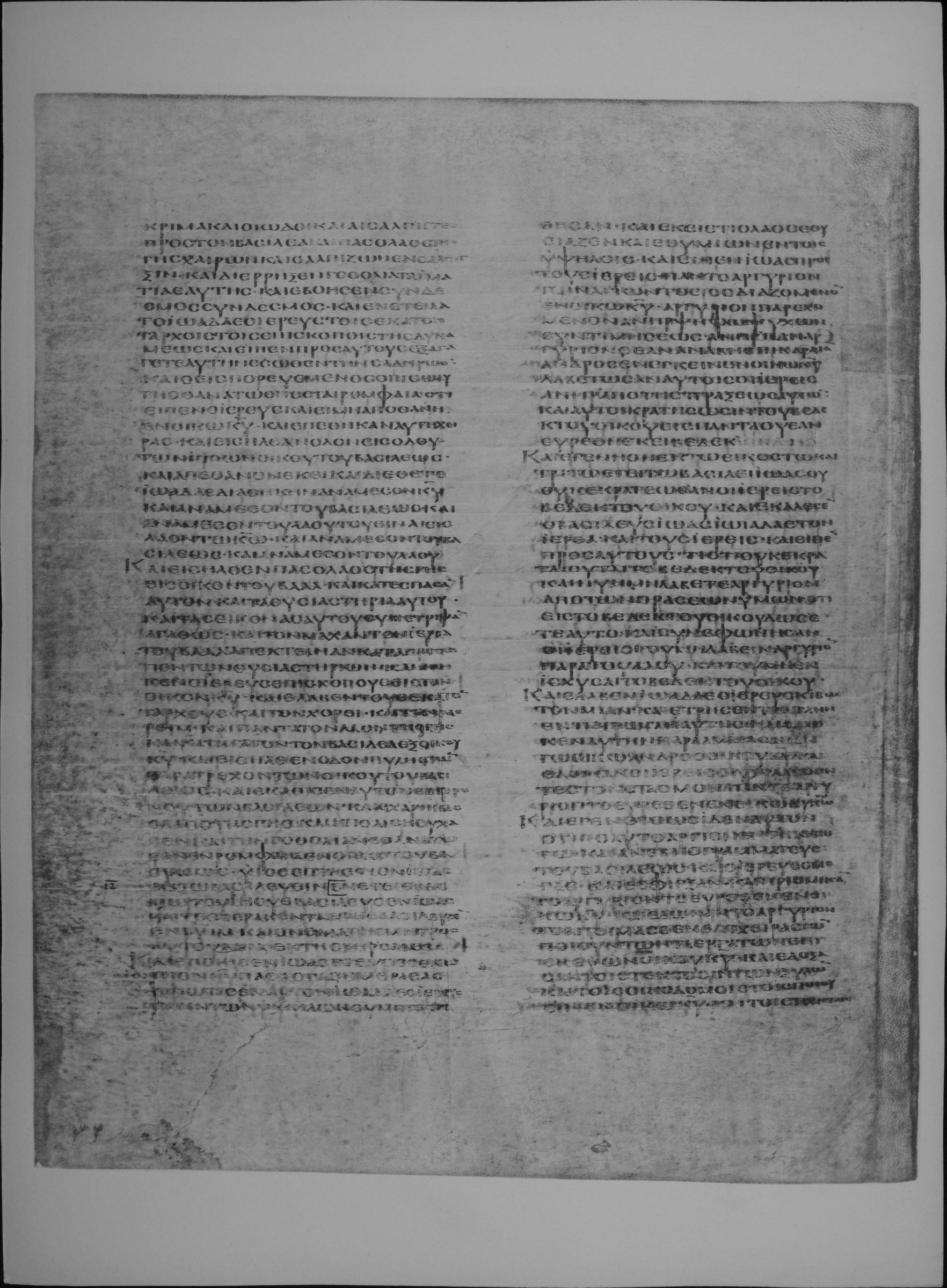
4 Kingdoms (2 Kings) 12:1-8 is on fol. 230v (full-size facsimile of 1879-83, Internet Archive codex-alexandrinus leaf 479). The 1930 reduced facsimile prints beneath this page: 2 Kings xi. 14-xii. 12. Checked on the plate: the page begins inside 4 Kingdoms (2 Kings) 11:14 (first words read: ΚΡΙΜΑ ΚΑΙ ΟΙ ΩΔΟΙ ΚΑΙ ΑΙ ΣΑΛΠΙΓΓΕΣ ΠΡΟΣ ΤΟΝ ΒΑΣΙΛΕΑ ΚΑΙ ΠΑΣ Ο ΛΑΟΣ ΤΗΣ ΓΗΣ ΧΑΙΡΩΝ).
1ἐν ἔτει ἑβδόμῳ τῷ Εἰοὺ ἐβασίλευσεν Ἰωάς, καὶ τεσσεράκοντα ἔτη ἐβασίλευσεν ἐν Ἰερουσαλήμ, καὶ ὄνομα τῆς μητρὸς αὐτοῦ Ἀβιὰ ἐκ γῆς Βηρσάβεε. 2καὶ ἐποίησεν Ἰωὰς τὸ εὐθὲς ἐνώπιον Κυρίου πάσας τὰς ἡμέρας ἃς ἐφώτισεν αὐτὸν Ἰωδᾶε ὁ ἱερεύς. 3πλὴν τῶν ὑψηλῶν οὐ μετεστάθησαν, καὶ ἐκεῖ ἔτι ὁ λαὸς ἐθυσίασαν καὶ ἐθυμίων ἐν τοῖς ὑψηλοῖς. 4Καὶ εἶπεν Ἰωὰς πρὸς τοὺς ἱερεῖς Πᾶν τὸ ἀργύριον τῶν ἁγίων τὸ εἰσοδιαζόμενον ἐν τῷ οἴκῳ Κυρίου ἀργύριον συντιμήσεως, ἀνὴρ ἀργύριον λαβὼν συντιμήσεως, πᾶν ἀργύριον ὃ ἐὰν λάβῃ ἐπὶ καρδίαν ἀνδρὸς ἐνεγκεῖν ἐν οἴκῳ Κυρίου, 5λαβέτωσαν ἑαυτοῖς οἱ ἱερεῖς ἀνὴρ ἀπὸ τῆς πράσεως αὐτοῦ, καὶ αὐτοὶ κρατήσουσιν τὸ βέδεκ τοῦ οἴκου εἰς πάντα οὗ ἐὰν εὑρεθῇ ἐκεῖ βέδεκ. 6καὶ ἐγενήθη ἐν τῷ εἰκοστῷ καὶ τρίτῳ ἔτει τῷ βασιλεῖ Ἰωὰς οὐκ ἐκραταίωσαν οἱ ἱερεῖς τὸ βέδεκ τοῦ οἴκου. 7καὶ ἐκάλεσεν Ἰωὰς ὁ βασιλεὺς Ἰωδᾶε τὸν ἱερέα καὶ τοὺς ἱερεῖς, καὶ εἶπεν πρὸς αὐτούς Τί ὅτι οὐκ ἐκραταιοῦτε τὸ βέδεκ τοῦ οἴκου; καὶ νῦν μὴ λάβητε ἀργύριον ἀπὸ τῶν πράσεων ὑμῶν, ὅτι εἰς τὸ βέδεκ τοῦ οἴκου δώσετε αὐτό. 8καὶ συνεφώνησαν οἱ ἱερεῖς τοῦ μὴ λαβεῖν ἀργύριον παρὰ τοῦ λαοῦ καὶ τοῦ μὴ ἐνισχῦσαι τὸ βδέλυγμα τοῦ οἴκου.
2Joas began to reign in the seventh year of Ju, and he reigned forty years in Jerusalem: and his mother's name was Sabia of Bersabee. 3And Joas did that which was right in the sight of the Lord all the days that Jodae the priest instructed him. 4Only there were not any of the high places removed, and the people still sacrificed there, and burned incense on the high places. 5And Joas said to the priests, As for all the money of the holy things that is brought into the house of the Lord, the money of valuation, as each man brings the money of valuation, all the money which any man may feel disposed to bring into the house of the Lord, 6let the priests take it to themselves, every man from the proceeds of his sale: and they shall repair the breaches of the house in all places wheresoever a breach shall be found. 7And it came to pass in the twenty-third year of king Joas the priests had not repaired the breaches of the house. 8And king Joas called Jodae the priest, and the other priests, and said to them, Why have ye not repaired the breaches of the house? now then receive no more money from your sales, for ye shall give it to repair the breaches of the house. 9And the priests consented to receive no more money of the people, and not to repair the breaches of the house.
Where on the image
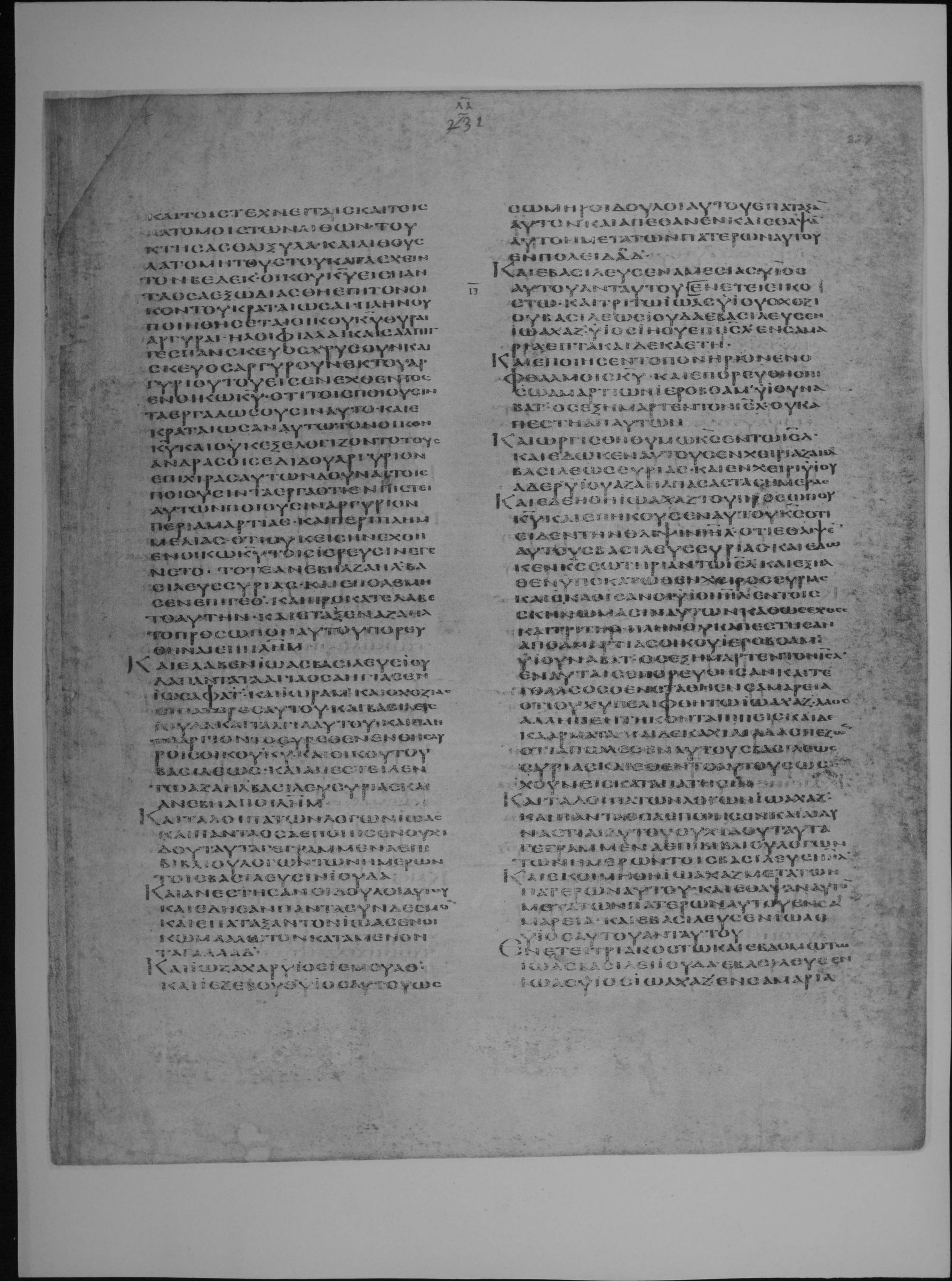
4 Kingdoms (2 Kings) 12:9-12 is on fol. 230v (full-size facsimile of 1879-83, Internet Archive codex-alexandrinus leaf 479). The 1930 reduced facsimile prints beneath this page: 2 Kings xi. 14-xii. 12. Checked on the plate: the page begins inside 4 Kingdoms (2 Kings) 11:14 (first words read: ΚΡΙΜΑ ΚΑΙ ΟΙ ΩΔΟΙ ΚΑΙ ΑΙ ΣΑΛΠΙΓΓΕΣ ΠΡΟΣ ΤΟΝ ΒΑΣΙΛΕΑ ΚΑΙ ΠΑΣ Ο ΛΑΟΣ ΤΗΣ ΓΗΣ ΧΑΙΡΩΝ). 4 Kingdoms (2 Kings) 12:12-16 is on fol. 231r (full-size facsimile of 1879-83, Internet Archive codex-alexandrinus leaf 480). The 1930 reduced facsimile prints beneath this page: 2 Kings xii. 12-xiii. 10. Checked on the plate: the page begins inside 4 Kingdoms (2 Kings) 12:12 (first words read: ΚΑΙ ΤΟΙΣ ΤΕΧΝΙΤΑΙΣ ΚΑΙ ΤΟΙΣ ΛΑΤΟΜΟΙΣ ΤΩΝ ΛΙΘΩΝ ΤΟΥ ΚΤΗΣΑΣΘΑΙ ΞΥΛΑ ΚΑΙ ΛΙΘΟΥΣ). Note: 4 Kgdms 12:12 is divided between this page and the preceding one, as both captions show (xii. 12); the first line reads ΚΑΙ ΤΟΙΣ ΤΕΧΝΙΤΑΙΣ where Swete's text has καὶ τοῖς τειχισταῖς.
9καὶ ἔλαβεν Ἰωδᾶε ὁ ἱερεὺς κιβωτὸν μίαν, καὶ ἔτρησεν τρὼγλην ἐν τῇ τρώγλῃ αὐτῆς, καὶ ἔδωκαν οἱ ἱερεῖς οἱ φυλάσσοντες τὸν σταθμὸν πᾶν τὸ ἀργύριον τὸ εὑρεθὲν ἐν οἴκῳ Κυρίου. 10καὶ ἐγένετο ὡς εἶδεν ὅτι πολὺ τὸ ἀργύριον ἐν τῇ κιβωτῷ, καὶ ἀνέβη ὁ γραμματεὺς τοῦ βασιλέως καὶ ὁ ἱερεὺς ὁ μέγας, καὶ ἔσφιγξαν καὶ ἠρίθμησαν τὸ ἀργύριον τὸ εὑρεθὲν ἐν οἴκῳ Κυρίου. 11καὶ ἔδωκεν τὸ ἀργύριον τὸ ἑτοιμασθὲν ἐπὶ χεῖρας ποιούντων τὰ ἔργα τῶν ἐπισκόπων οἴκου Κυρίου· καὶ ἐχέδοσαν τοῖς τέκτοσιν τῶν ξύλων καὶ τοῖς οἰκοδόμοις τοῖς ποιοῦσιν ἐν οἴκῳ Κυρίου 12καὶ τοῖς τειχισταῖς καὶ τοῖς λατόμοις τῶν λίθων, τοῦ κτήσασθαι ξύλα καὶ λίθους λατομητοὺς τοῦ κατασχεῖν τὸ βέδεκ οἴκου Κυρίου, εἰς πάντα ὅσα ἐξωδιάσθη ἐπὶ τὸν οἶκον τοῦ κραταιῶσαι. 13πλὴν οὐ ποιηθήσεται οἴκῳ Κυρίου θύραι ἀργυραῖ, ἧλοι, φιάλαι καὶ σάλπιγγες, πᾶν σκεῦος χρυσοῦν καὶ σκεῦος ἀργυροῦν, ἐκ τοῦ ἀργυρίου τοῦ εἰσενεχθέντος ἐν οἴκῳ Κυρίου· 14ὅτι τοῖς ποιοῦσιν τὰ ἔργα δώσουσιν αὐτὸ. καὶ ἐκραταίωσαν ἐν αὐτῷ τὸν οἶκον Κυρίου. 15καὶ οὐκ ἐξελογίζοντο τοὺς ἄνδρας οἷς ἐδίδουν τὸ ἀργύριον ἐπὶ χεῖρας αὐτῶν δοῦναι τοῖς ποιοῦσιν τὰ ἔργα, ὅτι ἐν πίστει αὐτῶν ποιοῦσιν. 16ἀργύριον περὶ ἁμαρτίας καὶ ἀργύριον περὶ πλημμελείας ὅ τι εἰσηνέχθη ἐν οἴκῳ Κυρίου, τοῖς ἱερεῦσιν ἐγένετο.
10And Jodae the priest took a chest, and bored a hole in the lid of it, and set it by the altar in the house of a man belonging to the house of the Lord, and the priests that kept the door put therein all the money that was found in the house of the Lord. 11And it came to pass, when they saw that there was much money in the chest, that the king's scribe and the high priest went up, and they tied up and counted the money that was found in the house of the Lord. 12And they gave the money that had been collected into the hands of them that wrought the works, the overseers of the house of the Lord; and they gave it out to the carpenters and to the builders that wrought in the house of the Lord. 13And to the masons, and to the hewers of stone, to purchase timber and hewn stone to repair the breaches of the house of the Lord, for all that was spent on the house of the Lord to repair it. 14Only there were not to be made for the house of the Lord silver plates, studs, bowls, or trumpets, any vessel of gold or vessel of silver, of the money that was brought into the house of the Lord: 15for they were to give it to the workmen, and they repaired therewith the house of the Lord. 16Also they took no account of the men into whose hands they gave the money to give to the workmen, for they acted faithfully. 17Money for a sin-offering, and money for a trespass-offering, whatever happened to be brought into the house of the Lord, went to the priests.
Where on the image
4 Kingdoms (2 Kings) 12:17-21 is on fol. 231r (full-size facsimile of 1879-83, Internet Archive codex-alexandrinus leaf 480). The 1930 reduced facsimile prints beneath this page: 2 Kings xii. 12-xiii. 10. Checked on the plate: the page begins inside 4 Kingdoms (2 Kings) 12:12 (first words read: ΚΑΙ ΤΟΙΣ ΤΕΧΝΙΤΑΙΣ ΚΑΙ ΤΟΙΣ ΛΑΤΟΜΟΙΣ ΤΩΝ ΛΙΘΩΝ ΤΟΥ ΚΤΗΣΑΣΘΑΙ ΞΥΛΑ ΚΑΙ ΛΙΘΟΥΣ). Note: 4 Kgdms 12:12 is divided between this page and the preceding one, as both captions show (xii. 12); the first line reads ΚΑΙ ΤΟΙΣ ΤΕΧΝΙΤΑΙΣ where Swete's text has καὶ τοῖς τειχισταῖς.
17Τότε ἀνέβη Ἁζαὴλ βασιλεὺς Συρίας καὶ ἐπολέμησεν ἐπὶ Γέθ, καὶ προκατελάβετο αὐτήν. καὶ ἔταξεν Ἁζαὴλ τὸ πρόσωπον αὐτοῦ ἀναβῆναι ἐπὶ Ἰερουσαλήμ. 18καὶ ἔλαβεν Ἰωὰς βασιλεὺς Ἰούδα πάντα τὰ ἅγια ὅσα ἡγίασεν Ἰωσαφὰθ καὶ Ἰωρὰμ καὶ Ὀχοζείας, οἱ πατέρες αὐτοῦ καὶ βασιλεῖς Ἰούδα, καὶ τὰ ἅγια αὐτοῦ καὶ πᾶν τὸ χρυσίον τὸ εὑρεθὲν ἐν θησαυροῖς οἴκου Κυρίου καὶ οἴκου τοῦ βασιλέως, καὶ ἀπέστειλεν τῷ Ἁζαὴλ βασιλεῖ Συρίας· καὶ ἀνέβη ἀπὸ Ἰερουσαλήμ. 19καὶ τὰ λοιπὰ τῶν λόγων Ἰωὰς καὶ πάντα ὅσα ἐποίησεν, οὐκ ἰδοὺ ταῦτα γεγραμμένα ἐπὶ βιβλίῳ λόγων τῶν ἡμερῶν τοῖς βασιλεῦσιν Ἰούδα; 20καὶ ἀνέστησαν οἱ δοῦλοι αὐτοῦ καὶ ἔδησαν πάντα δεσμόν, καὶ ἐπάταξαν τὸν Ἰωὰς ἐν οἴκῳ Μααλὼ τὸν Γααλλά. 21καὶ Ἰεζειχὰρ υἱὸς Ἰεμουὰθ καὶ Ἰεζεβοὺθ ὁ υἱὸς αὐτοῦ Σωμὴρ οἱ δοῦλοι αὐτοῦ ἐπάταξαν αὐτόν, καὶ ἀπέθανεν· καὶ ἔθαψαν αὐτὸν μετὰ τῶν πατέρων αὐτοῦ ἐν πόλει Δαυείδ· καὶ ἐβασίλευσεν Ἀμεσσείας υἱὸς αὐτοῦ ἀντ᾽ αὐτοῦ.
18Then went up Azael king of Syria, and fought against Geth, and took it: and Azael set his face to go against Jerusalem. 19And Joas king of Juda took all the holy things which Josaphat, and Joram, Ochozias, his fathers, and kings of Juda had consecrated, and what he had himself dedicated, and all the gold that was found in the treasures of the Lord's house and the king's house, and he sent them to Azael king of Syria; and he went up from Jerusalem. 20And the rest of the acts of Joas, and all that he did, behold, are not these things written in the book of the chronicles of the kings of Juda? 21And his servants rose up and made a conspiracy, and smote Joas in the house of Mallo that is in Sela. 22And Jezirchar the son of Jemuath, and Jezabuth Somer's son, his servants, smote him, and he died; and they buried him with his fathers in the city of David: and Amessias his son reigned in his stead.
Cite
Sources
- Source: Codex Alexandrinus (British Library Royal MS 1 D. V) via the British Museum photographic facsimiles of 1879-83 and 1930 (Internet Archive) + Swete's Septuagint + Brenton's English (holding institution)
- Critical edition: H. B. Swete, The Old Testament in Greek according to the Septuagint (1909)
← previous · → next · v cycle view · l back to library