4 Kingdoms (2 Kings), Chapter 13 (Codex Alexandrinus)
Introduction
4 Kingdoms (2 Kings) 13 in the Greek Old Testament (the Septuagint) as written in Codex Alexandrinus, a Greek Bible copied in the fifth century, probably in Egypt, and now in the British Library (Royal MS 1 D. V, the first of its four volumes). It is one of the three great early codices of the whole Greek Bible, with Codex Vaticanus and Codex Sinaiticus.
This entry meets the strict three-criteria standard of the Theosis Library:
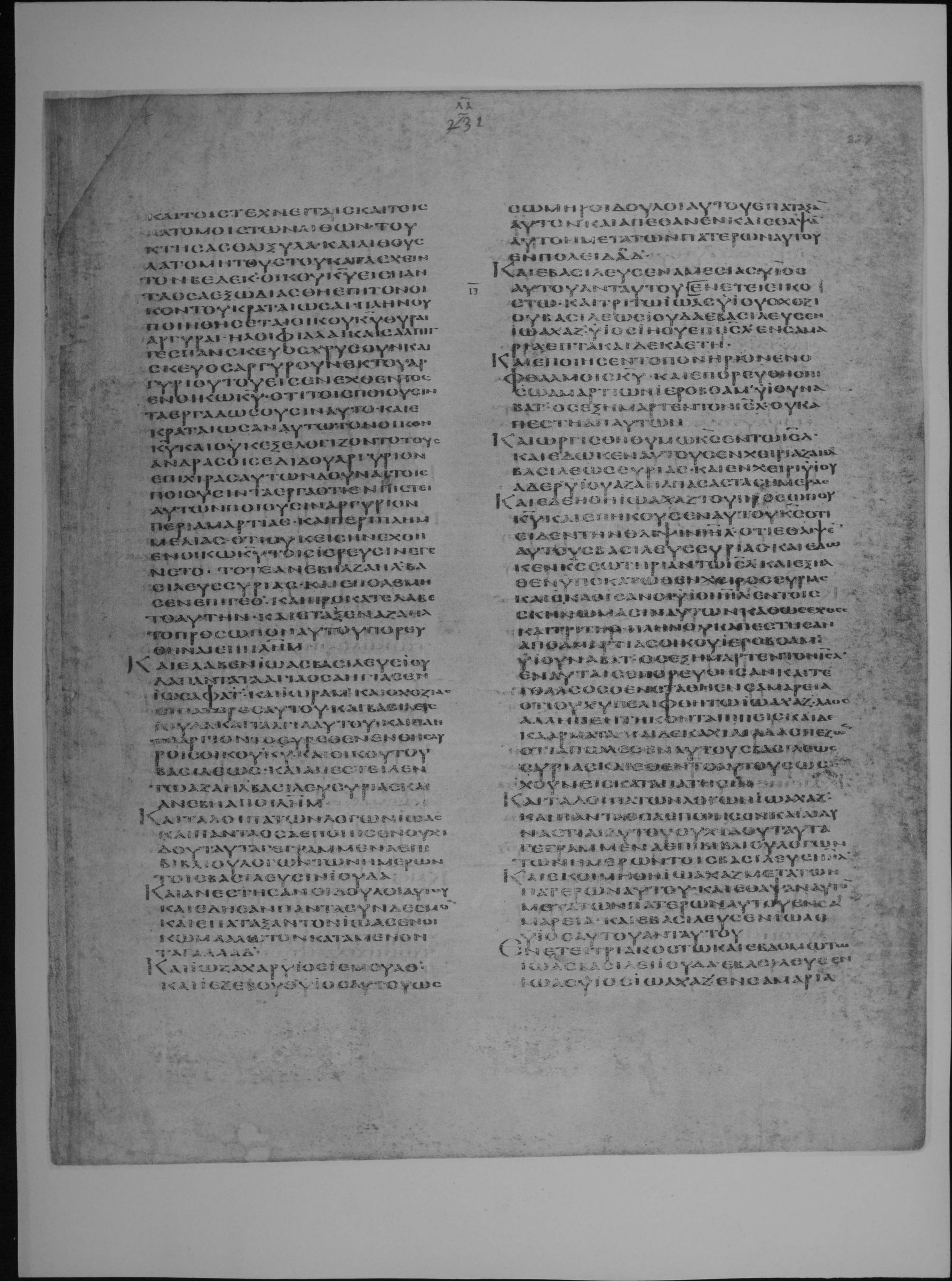
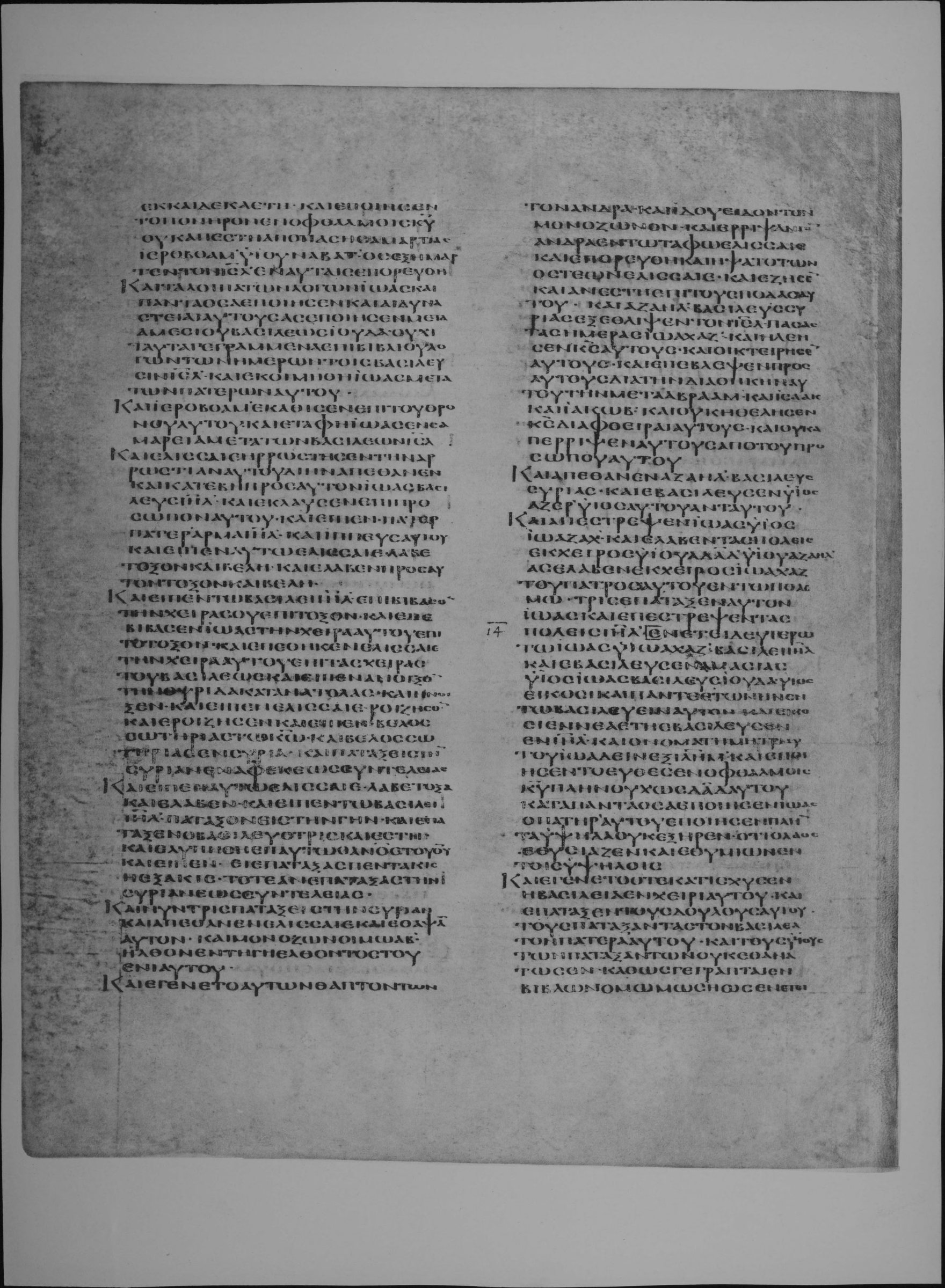
- Manuscript scan: the pages of Codex Alexandrinus carrying this chapter (fol. 231r, fol. 231v), from the full-size photographic (autotype) facsimile published by the British Museum in 1879-1883, as digitised on the Internet Archive. The verse range of every page comes from the reduced photographic facsimile of 1930, which prints it beneath each plate, and the opening words of every page were read on the plate to confirm the page and the verse it begins with. Each section links to the page or pages that hold its verses. Folio numbers are those written at the head of each leaf and visible on the plates.
- Original text: Swete's edition, which here prints the text of Codex Vaticanus (Vat. gr. 1209), the base of his edition, and gives the readings of Alexandrinus only in his apparatus. The Greek column is therefore Vaticanus' text; where Alexandrinus differs, the plate shows what Alexandrinus reads.
- English translation: Sir Lancelot C. L. Brenton, The Septuagint Version of the Old Testament (1844; 1851 edition), a translation of the Greek, public domain, from the eBible.org text.
How was this verified? (Provenance)
Where on the image
4 Kingdoms (2 Kings) 13:1-8 is on fol. 231r (full-size facsimile of 1879-83, Internet Archive codex-alexandrinus leaf 480). The 1930 reduced facsimile prints beneath this page: 2 Kings xii. 12-xiii. 10. Checked on the plate: the page begins inside 4 Kingdoms (2 Kings) 12:12 (first words read: ΚΑΙ ΤΟΙΣ ΤΕΧΝΙΤΑΙΣ ΚΑΙ ΤΟΙΣ ΛΑΤΟΜΟΙΣ ΤΩΝ ΛΙΘΩΝ ΤΟΥ ΚΤΗΣΑΣΘΑΙ ΞΥΛΑ ΚΑΙ ΛΙΘΟΥΣ). Note: 4 Kgdms 12:12 is divided between this page and the preceding one, as both captions show (xii. 12); the first line reads ΚΑΙ ΤΟΙΣ ΤΕΧΝΙΤΑΙΣ where Swete's text has καὶ τοῖς τειχισταῖς.
1Ἐν ἔτει εἰκοστῷ καὶ τρίτῳ ἔτει τῷ Ἰωὰς υἱῷ Ὀχοζείου βασιλεῖ Ἰούδα ἐβασίλευσεν Ἰωαχάς υἱὸς Εἰοὺ ἐν Σαμαρείᾳ ἑπτὰ ἔτη καὶ δέκα ἔτη. 2καὶ ἐποίησεν τὸ πονηρὸν ἐν ὀφθαλμοῖς Κυρίου, καὶ ἐπορεύθη ὀπίσω ἁμαρτιῶν Ἰεροβοὰμ υἱοῦ Ναβὰτ ὃς ἐξήμαρτεν τὸν Ἰσραήλ· οὐκ ἀπέστη ἀπ᾽ αὐτῆς. 3καὶ ὠργίσθη θυμῷ Κύριος ἐν τῷ Ἰσραήλ, καὶ ἔδωκεν αὐτοὺς ἐν χειρὶ Ἁζαὴλ βασιλέως Συρίας καὶ ἐν χειρὶ υἱοῦ Ἁδὲρ υἱοῦ Ἁζαὴλ πάσας τὰς ἡμέρας. 4καὶ ἐδεήθη Ἰωαχὰς τοῦ προσώπου Κυρίου, καὶ ἐπήκουσεν αὐτοῦ Κύριος, ὅτι εἶδεν τὴν θλίψιν Ἰσραήλ, ὅτι ἔθλιψεν αὐτοὺς βασιλεὺς Συρίας. 5καὶ ἔδωκεν Κύριος σωτηρίαν Ἰσραήλ, καὶ ἐξῆλθεν ὑποκάτωθεν χειρὸς Συρίας· καὶ ἐκάθισαν οἱ υἱοὶ Ἰσραὴλ ἐν τοῖς σκηνώμασιν αὐτῶν καθὼς ἐχθὲς καὶ τρίτης. 6πλὴν οὐκ ἀπέστησαν ἀπὸ ἁμαρτιῶν οἴκου Ἰεροβοὰμ ὃς ἐξήμαρτεν τὸν Ἰσραήλ, ἐν αὐτῇ ἐπορεύθη· καὶ γε τὸ ἄλσος ἐστάθη ἐν Σαμαρείᾳ. 7ὅτι οὐχ ὑπελείφθη τῷ Ἰωαχὰς λαὸς ἀλλ᾽ ἢ πεντήκοντα ἱππεῖς καὶ δὲκα ἅρματα καὶ δέκα χιλιάδες πεζῶν, ὅτι ἀπώλεσεν αὐτοὺς βασιλεὺς Συρίας, καὶ ἔθεντο αὐτοὺς ὡς χοῦν εἰς καταπάτησιν. 8καὶ τὰ λοιπὰ τῶν λόγων Ἰωαχὰς καὶ πάντα ὅσα ἐποίησεν καὶ αἱ δυναστεῖαι αὐτοῦ, οὐχὶ ταῦτα γεγραμμένα ἐπὶ βιβλίῳ λόγων τῶν ἡμερῶν τοῖς βασιλεῦσιν Ἱσραήλ;
1In the twenty-third year of Joas son of Ochozias king of Juda began Joachaz the son of Ju to reign in Samaria, and he reigned seventeen years. 2And he did that which was evil in the sight of the Lord, and walked after the sins of Jeroboam the son of Nabat, who led Israel to sin; he departed not from them. 3And the Lord was very angry with Israel, and delivered them into the hand of Azael king of Syria, and into the hand of the son of Ader son of Azael, all their days. 4And Joachaz besought the Lord, and the Lord hearkened to him, for he saw the affliction of Israel, because the king of Syria afflicted them. 5And the Lord gave deliverance to Israel, and they escaped from under the hand of Syria: and the children of Israel dwelt in their tents as heretofore. 6Only they departed not from the sins of the house of Jeroboam, who led Israel to sin: they walked in them—moreover the grove also remained in Samaria. 7Whereas there was not left any army to Joachaz, except fifty horsemen, and ten chariots, and ten thousand infantry: for the king of Syria had destroyed them, and they made them as dust for trampling. 8And the rest of the acts of Joachaz, and all that he did, and his mighty acts are not these things written in the book of the chronicles of the kings of Israel?
Where on the image
4 Kingdoms (2 Kings) 13:9-10 is on fol. 231r (full-size facsimile of 1879-83, Internet Archive codex-alexandrinus leaf 480). The 1930 reduced facsimile prints beneath this page: 2 Kings xii. 12-xiii. 10. Checked on the plate: the page begins inside 4 Kingdoms (2 Kings) 12:12 (first words read: ΚΑΙ ΤΟΙΣ ΤΕΧΝΙΤΑΙΣ ΚΑΙ ΤΟΙΣ ΛΑΤΟΜΟΙΣ ΤΩΝ ΛΙΘΩΝ ΤΟΥ ΚΤΗΣΑΣΘΑΙ ΞΥΛΑ ΚΑΙ ΛΙΘΟΥΣ). Note: 4 Kgdms 12:12 is divided between this page and the preceding one, as both captions show (xii. 12); the first line reads ΚΑΙ ΤΟΙΣ ΤΕΧΝΙΤΑΙΣ where Swete's text has καὶ τοῖς τειχισταῖς. 4 Kingdoms (2 Kings) 13:10-16 is on fol. 231v (full-size facsimile of 1879-83, Internet Archive codex-alexandrinus leaf 481). The 1930 reduced facsimile prints beneath this page: 2 Kings xiii. 10-xiv. 6. Checked on the plate: the page begins inside 4 Kingdoms (2 Kings) 13:10 (first words read: ΕΞ ΚΑΙ ΔΕΚΑ ΕΤΗ ΚΑΙ ΕΠΟΙΗΣΕΝ ΤΟ ΠΟΝΗΡΟΝ ΕΝ ΟΦΘΑΛΜΟΙΣ ΚΥ ΟΥΚ ΑΠΕΣΤΗ ΑΠΟ ΠΑΣΩΝ ΤΩΝ ΑΜΑΡΤΙΩΝ ΙΕΡΟΒΟΑΜ).
9καὶ ἐκοιμήθη Ἰωαχὰς μετὰ τῶν πατέρων αὐτοῦ, καὶ ἔθαψαν αὐτὸν ἐν Σαμαρείᾳ· καὶ ἐβασίλευσεν Ἰωὰς υἱὸς αὐτοῦ. 10Ἐν ἔτει τριακοστῷ καὶ ἑβδόμῳ ἔτει τῷ Ἰωὰς βασιλεῖ Ἰούδα ἐβασίλευσεν Ἰωὰς υἱὸς Ἰωαχὰς ἐπὶ Ἰσραὴλ ἐν Σαμαρείᾳ ἑκκαίδεκα ἔτη. 11καὶ ἐποίησεν τὸ πονηρὸν ἐν ὀφθαλμοῖς Κυρίου· οὐκ ἀπέστη ἀπὸ πάσης Ἰεροβοὰμ υἱοῦ Ναβὰτ ἁμαρτίας ὃς ἐξήμαρτεν τὸν Ἰσραήλ, ἐν αὐτῇ ἐπορεύθη. 12καὶ τὰ λοιπὰ τῶν λόγων Ἰωὰς καὶ πάντα ὅσα ἐποίησεν καὶ αἱ δυναστεῖαι αὐτοῦ ἃς ἐποίησεν μετὰ Ἀμεσσείου βασιλέως Ἰούδα, οὐχὶ ταῦτα γεγραμμένα ἐπὶ βιβλίῳ λόγων τῶν ἡμερῶν τοῖς βασιλεῦσιν Ἰσραήλ; 13καὶ ἐκοιμήθη Ἰωὰς μετὰ τῶν πατέρων αὐτοῦ, καὶ Ἰεροβοὰμ ἐκάθισεν μετὰ τῶν πατέρων αὐτοῦ καὶ ἐν Σαμαρείᾳ μετὰ τῶν ἀδελφῶν Ἰσραήλ. 14Καὶ Ἐλεισαῖε ἠρρώστησεν τὴν ἀρρωστίαν ἑαυτοῦ δι᾽ ἣν ἀπέθανεν· καὶ κατέβη πρὸς αὐτὸν Ἰωὰς βασιλεὺς Ἰσραὴλ καὶ ἔκλαυσεν ἐπὶ προσώπου αὐτοῦ καὶ εἶπεν Πάτερ, πάτερ, ἅρμα Ἰσραὴλ καὶ ἱππεὺς αὐτοῦ. 15καὶ εἶπεν αὐτῷ Ἐλεισαῖε Λἀβε τόξον καὶ βέλη· καὶ ἔλαβεν πρὸς αὐτὸν τόξον καὶ βέλη. 16καὶ εἶπεν τῷ βασιλεῖ Ἐπιβίβασον τὴν χεῖρά σου ἐπὶ τὸ τόξον· καὶ ἐπεβίβασεν Ἰωὰς τὴν χεῖρα αὐτοῦ, καὶ ἐπέθηκεν Ἐλεισαῖε τὰς χεῖρας αὐτοῦ ἐπὶ τὰς χεῖρας τοῦ βασιλέως
9And Joachaz slept with his fathers, and they buried him in Samaria: and Joas his son reigned in his stead. 10In the thirty-seventh year of Joas king of Juda, Joas the son of Joachaz began to reign over Israel in Samaria sixteen years. 11And he did that which was evil in the sight of the Lord; he departed not from all the sin of Jeroboam the son of Nabat, who led Israel to sin: he walked in it. 12And the rest of the acts of Joas, and all that he did, and his mighty acts which he performed together with Amessias king of Juda, are not these written in the book of the chronicles of the kings of Israel? 13And Joas slept with his fathers, and Jeroboam sat upon his throne, and he was buried in Samaria with the kings of Israel. 14Now Elisaie was sick of his sickness, whereof he died: and Joas king of Israel went down to him, and wept over his face, and said, My father, my father, the chariot of Israel, and the horseman thereof! 15And Elisaie said to him, Take bow and arrows. And he took to himself a bow and arrows. 16And he said to the king, Put thy hand on the bow. And Joas put his hand upon it: and Elisaie put his hands upon the king's hands.
Where on the image
4 Kingdoms (2 Kings) 13:17-25 is on fol. 231v (full-size facsimile of 1879-83, Internet Archive codex-alexandrinus leaf 481). The 1930 reduced facsimile prints beneath this page: 2 Kings xiii. 10-xiv. 6. Checked on the plate: the page begins inside 4 Kingdoms (2 Kings) 13:10 (first words read: ΕΞ ΚΑΙ ΔΕΚΑ ΕΤΗ ΚΑΙ ΕΠΟΙΗΣΕΝ ΤΟ ΠΟΝΗΡΟΝ ΕΝ ΟΦΘΑΛΜΟΙΣ ΚΥ ΟΥΚ ΑΠΕΣΤΗ ΑΠΟ ΠΑΣΩΝ ΤΩΝ ΑΜΑΡΤΙΩΝ ΙΕΡΟΒΟΑΜ).
17καὶ εἶπεν Ἄνοιξον τὴν θυρίδα κατ᾽ ἀνατολάς· καὶ ἤνοιξεν. καὶ εἶπεν Βέλος σωτηρίας τῷ κυρίῳ καὶ βέλος σωτηρίας ἐν Συρίᾳ, καὶ πατάξει τὴν Συρίαν ἐν Ἀφὲκ ἕως συντελείας. 18καὶ εἶπεν αὐτῷ Ἐλεισαῖε Λάβε τόξα· καὶ ἔλαβεν. καὶ εἶπεν τῷ βασιλεῖ Ἰσραήλ Πάταξον εἰς τὴν γῆν· καὶ ἐπάταξεν ὁ βασιλεὺς τρὶς καὶ ἔστη. 19καὶ ἐλυπήθη ἐπ᾽ αὐτῷ ὁ ἄνθρωπος τοῦ θεοῦ καὶ εἶπεν Εἰ ἐπάταξας πεντάκις ἢ ἑξάκις, τότε ἂν ἐπάταξας τὴν Συρίαν ἕως συντελείας· καὶ νῦν τρὶς πατάξεις τὴν Συρίαν. 20Καὶ ἀπέθανεν Ἐλεισαῖε, καὶ ἔθαψαν αὐτόν. καὶ μονόζωνοι Μωὰβ ἦλθον ἐν τῇ γῇ ἐλθόντος τοῦ ἐνιαυτοῦ. 21καὶ ἐγένετο αὐτῶν θαπτόντων τὸν ἄνδρα, καὶ ἰδοὺ ἴδον τὸν μονόζωνον, καὶ ἔρριψαν τὸν ἄνδρα ἐν τῷ τάφῳ Ἐλεισαῖε· καὶ ἐπορεύθη καὶ ἥψατο τῶν ὀστέων Ἐλεισαῖε, καὶ ἔζησεν καὶ ἀνέστη ἐπὶ τοὺς πόδας αὐτοῦ. 22Καὶ Ἁζαὴλ ἐξέθλιψεν τὸν Ἰσραὴλ πάσας τὰς ἡμέρας Ἰωαχάς. 23καὶ ἠλέησεν Κύριος αὐτοὺς καὶ οἰκτείρησεν αὐτούς, καὶ ἐπέβλεψεν ἐπ᾽ αὐτοὺς διὰ τὴν διαθήκην αὐτοῦ τὴν μετὰ Ἀβραὰμ καὶ Ἰσαὰκ καὶ Ἰακώβ, καὶ οὐκ ἠθέλησεν Κύριος διαφθεῖραι αὐτούς, καὶ οὐκ ἀπέρριψεν αὐτοὺς ἀπὸ τοῦ προσώπου αὐτοῦ. 24καὶ ἀπέθανεν Ἁζαὴλ βασιλεὺς Συρίας, καὶ ἐβασίλευσεν υἱὸς Ἁδὲρ υἱὸς αὐτοῦ ἀντ᾽ αὐτοῦ. 25καὶ ἐπέστρεψεν Ἰωὰς υἱὸς Ἰωαχὰς καὶ ἔλαβεν τὰς πόλεις ἐκ χειρὸς υἱοῦ Ἁδὲρ υἱοῦ Ἁζαήλ, ἃς ἔλαβεν ἐκ χειρὸς Ἰωαχὰς τοῦ πατρὸς αὐτοῦ ἐν τῷ πολέμῳ· τρὶς ἐπάταξεν αὐτὸν Ἰωὰς καὶ ἐπέστρεψεν τὰς πόλεις Ἰσραήλ.
17And he said, Open the window eastward. And he opened it. And Elisaie said, Shoot. And he shot. And Elisaie said, The arrow of the Lord's deliverance, and the arrow of deliverance from Syria; and thou shalt smite the Syrians in Aphec until thou have consumed them. 18And Elisaie said to him, Take bow and arrows. And he took them. And he said to the king of Israel, Smite upon the ground. And the king smote three times, and stayed. 19And the man of God was grieved at him, and said, If thou hadst smitten five or six times, then thou shouldest have smitten Syria till thou hadst consumed them; but now thou shalt smite Syria only thrice. 20And Elisaie died, and they buried him. And the bands of the Moabites came into the land, at the beginning of the year. 21And it came to pass as they were burying a man, that behold, they saw a band of men, and they cast the man into the grave of Elisaie: and as soon as he touched the bones of Elisaie, he revived and stood up on his feet. 22And Azael greatly afflicted Israel all the days of Joachaz. 23And the Lord had mercy and compassion upon them, and had respect to them because of his covenant with Abraam, and Isaac, and Jacob; and the Lord would not destroy them, and did not cast them out from his presence. 24And Azael king of Syria died, and the son of Ader his son reigned in his stead. 25And Joas the son of Joachaz returned, and took the cities out of the hand of the son of Ader the son of Azael, which he had taken out of the hand of Joachaz his father in the war: thrice did Joas smite him, and he recovered the cities of Israel.
Cite
Sources
- Source: Codex Alexandrinus (British Library Royal MS 1 D. V) via the British Museum photographic facsimiles of 1879-83 and 1930 (Internet Archive) + Swete's Septuagint + Brenton's English (holding institution)
- Critical edition: H. B. Swete, The Old Testament in Greek according to the Septuagint (1909)
← previous · → next · v cycle view · l back to library