4 Kingdoms (2 Kings), Chapter 14 (Codex Alexandrinus)
Introduction
4 Kingdoms (2 Kings) 14 in the Greek Old Testament (the Septuagint) as written in Codex Alexandrinus, a Greek Bible copied in the fifth century, probably in Egypt, and now in the British Library (Royal MS 1 D. V, the first of its four volumes). It is one of the three great early codices of the whole Greek Bible, with Codex Vaticanus and Codex Sinaiticus.
This entry meets the strict three-criteria standard of the Theosis Library:
- Manuscript scan: the pages of Codex Alexandrinus carrying this chapter (fol. 231v, fol. 232r, fol. 232v), from the full-size photographic (autotype) facsimile published by the British Museum in 1879-1883, as digitised on the Internet Archive. The verse range of every page comes from the reduced photographic facsimile of 1930, which prints it beneath each plate, and the opening words of every page were read on the plate to confirm the page and the verse it begins with. Each section links to the page or pages that hold its verses. Folio numbers are those written at the head of each leaf and visible on the plates.
- Original text: Swete's edition, which here prints the text of Codex Vaticanus (Vat. gr. 1209), the base of his edition, and gives the readings of Alexandrinus only in his apparatus. The Greek column is therefore Vaticanus' text; where Alexandrinus differs, the plate shows what Alexandrinus reads.
- English translation: Sir Lancelot C. L. Brenton, The Septuagint Version of the Old Testament (1844; 1851 edition), a translation of the Greek, public domain, from the eBible.org text.
How was this verified? (Provenance)
Where on the image
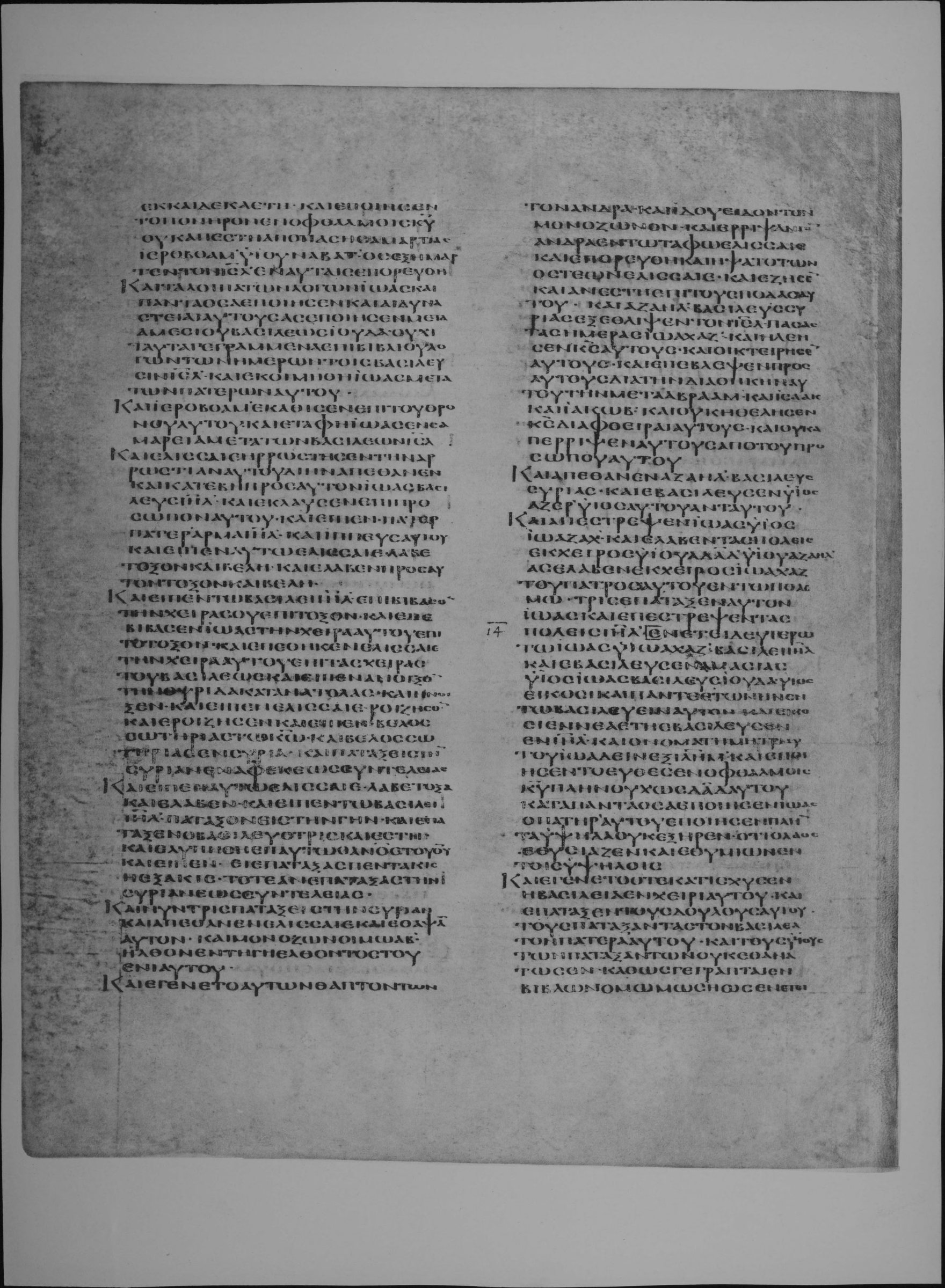
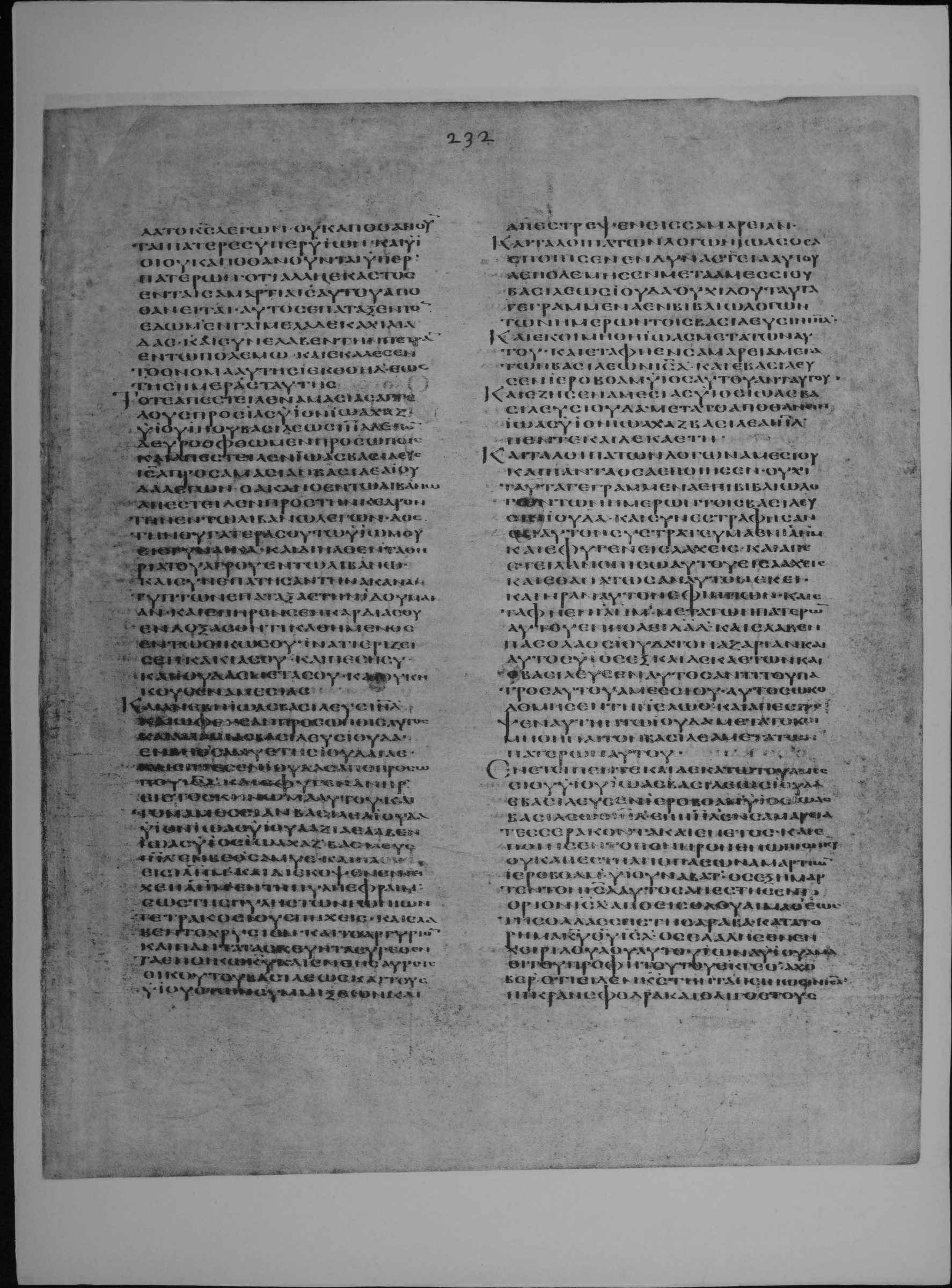
4 Kingdoms (2 Kings) 14:1-6 is on fol. 231v (full-size facsimile of 1879-83, Internet Archive codex-alexandrinus leaf 481). The 1930 reduced facsimile prints beneath this page: 2 Kings xiii. 10-xiv. 6. Checked on the plate: the page begins inside 4 Kingdoms (2 Kings) 13:10 (first words read: ΕΞ ΚΑΙ ΔΕΚΑ ΕΤΗ ΚΑΙ ΕΠΟΙΗΣΕΝ ΤΟ ΠΟΝΗΡΟΝ ΕΝ ΟΦΘΑΛΜΟΙΣ ΚΥ ΟΥΚ ΑΠΕΣΤΗ ΑΠΟ ΠΑΣΩΝ ΤΩΝ ΑΜΑΡΤΙΩΝ ΙΕΡΟΒΟΑΜ). 4 Kingdoms (2 Kings) 14:6-8 is on fol. 232r (full-size facsimile of 1879-83, Internet Archive codex-alexandrinus leaf 482). The 1930 reduced facsimile prints beneath this page: 2 Kings xiv. 6-26. Checked on the plate: the page begins inside 4 Kingdoms (2 Kings) 14:6 (first words read: ΚΣ ΛΕΓΩΝ ΟΥΚ ΑΠΟΘΑΝΟΥΝΤΑΙ ΠΑΤΕΡΕΣ ΥΠΕΡ ΥΙΩΝ ΚΑΙ ΥΙΟΙ ΟΥΚ ΑΠΟΘΑΝΟΥΝΤΑΙ ΥΠΕΡ ΠΑΤΕΡΩΝ).
1Ἐν ἔτει δευτέρῳ τῷ Ἰωὰς υἱῷ Ἰωαχὰς βασιλεῖ Ἰσραὴλ καὶ ἐβασίλευσεν Ἀμεσσείας υἱὸς Ἰωὰς βασιλεὺς Ἰούδα. 2υἱὸς εἴκοσι καὶ πέντε ἐτῶν ἦν ἐν τῷ βασιλεύειν αὐτόν, καὶ εἴκοσι καὶ ἐννέα ἔτη ἐβασίλευσεν ἐν Ἰερουσαλήμ, καὶ ὄνομα τῆς μητρὸς αὐτοῦ Ἰωαδεὶμ ἐξ Ἰερουσαλήμ. 3καὶ ἐποίησεν τὸ εὐθὲς ὀφθαλμοῖς Κυρίου, πλὴν οὐχ ὡς Δαυεὶδ ὁ πατὴρ αὐτοῦ· κατὰ πάντα ὅσα ἐποίησεν Ἰωὰς ὁ πατὴρ αὐτοῦ ἐποίησεν. 4πλὴν τὰ ὑψηλὰ οὐκ ἐξῆρεν· ἔτι ὁ λαὸς ἐθυσίασεν καὶ ἐθυμίων ἐν τοῖς ὑψηλοῖς. 5καὶ ἐγένετο ὅτε κατίσχυσεν ἡ βασιλεία ἐν χειρὶ αὐτοῦ, καὶ ἐπάταξεν τοὺς δούλους αὐτοῦ τοὺς πατάξαντας τὸν πατέρα αὐτοῦ. 6καὶ τοὺς υἱοὺς τῶν παταξάντων οὐκ ἐθανάτωσεν, καθὼς γέγραπται ἐν βιβλίῳ νόμων Μωυσῆ, ὡς ἐνετείλατο Κύριος λέγων Οὐκ ἀποθανοῦνται πατέρες ὑπὲρ υἱῶν, καὶ υἱοὶ οὐκ ἀποθανοῦνται ὑπὲρ πατέρων, ὅτι ἀλλ᾽ ἢ ἐν ταῖς ἁμαρτίαις αὐτοῦ ἀποθανεῖται. 7αὐτὸς ἐπάταξεν τὴν Ἐδὼμ ἐν Ῥεμέλε δέκα χιλιάδας, καὶ συνέλαβε τὴν πέτραν ἐν τῷ πολέμῳ, καὶ ἐκάλεσεν τὸ ὄνομα αὐτῆς Καθοὴλ ἕως τῆς ἡμέρας ταύτης. 8Τότε ἀπέστειλεν Ἀμεσσείας ἀγγέλους πρὸς Ἰωὰς υἱὸν Ἰωαχὰς υἱοῦ Εἰοὺ βασιλέως Ἰσραὴλ λέγων Δεῦρο ὀφθῶμεν προσώποις.
1In the second year of Joas the son of Joachaz king of Israel, did Amessias also the son of Joas the king of Juda begin to reign. 2Twenty and five years old was he when he began to reign, and he reigned twenty and nine years in Jerusalem: and his mother's name was Joadim of Jerusalem. 3And he did that which was right in the sight of the Lord, but not as David his father: he did according to all things that his father Joas did. 4Only he removed not the high places: as yet the people sacrificed and burnt incense on the high places. 5And it came to pass when the kingdom was established in his hand, that he slew his servants that had slain the king his father. 6But he slew not the sons of those that had slain him; according as it is written in the book of the laws of Moses, as the Lord gave commandment, saying, The fathers shall not be put to death for the children, and the children shall not be put to death for the fathers; but every one shall die for his own sins. 7He smote of Edom ten thousand in the valley of salt, and took the Rock in the war, and called its name Jethoel until this day. 8Then Amessias sent messengers to Joas son of Joachaz son of Ju king of Israel, saying, Come, let us look one another in the face.
Where on the image
4 Kingdoms (2 Kings) 14:9-16 is on fol. 232r (full-size facsimile of 1879-83, Internet Archive codex-alexandrinus leaf 482). The 1930 reduced facsimile prints beneath this page: 2 Kings xiv. 6-26. Checked on the plate: the page begins inside 4 Kingdoms (2 Kings) 14:6 (first words read: ΚΣ ΛΕΓΩΝ ΟΥΚ ΑΠΟΘΑΝΟΥΝΤΑΙ ΠΑΤΕΡΕΣ ΥΠΕΡ ΥΙΩΝ ΚΑΙ ΥΙΟΙ ΟΥΚ ΑΠΟΘΑΝΟΥΝΤΑΙ ΥΠΕΡ ΠΑΤΕΡΩΝ).
9καὶ ἀπέστειλεν Ἰωὰς βασιλεὺς Ἰσραὴλ πρὸς Ἀμεσσείαν βασιλέα Ἰούδα λέγων Ὁ ἀκὰν ὁ ἐν τῷ Λιβάνῳ ἀπέστειλεν πρὸς τὴν κέδρον τὴν ἐν τῷ Λιβάνῳ λέγων Δὸς τὴν θυγατέρα σου τῷ υἱῷ μου εἰς γυναῖκα· καὶ διῆλθον τὰ θηρία τοῦ ἀγροῦ τὰ ἐν τῷ Λιβάνῳ καὶ συνεπάτησαν τὸν ἀκάνα. 10τύπτων ἐπάταξας τὴν Ἰδουμαίαν, καὶ ἐπῆρέν σε καρδία σου· ἐνδοξάσθητι καθήμενος ἐν τῷ οἴκῳ σου. καὶ ἵνα τί ἐρίζεις ἐν κακίᾳ σου; καὶ πεσῇ σὺ καὶ Ἰούδας μετὰ σοῦ. 11καὶ οὐκ ἤκουσεν Ἀμεσσείας· καὶ ἀνέβη ὁ βασιλεὺς Ἰσραήλ, καὶ ὤφθη προσώποις αὐτὸς καὶ Ἀμεσσείας βασιλεὺς Ἰούδα, ἐν Βαιθσάμυς γῇ τοῦ Ἰούδα· 12καὶ ἔπταισεν Ἰούδας ἀπὸ προσώπου Ἰσραήλ, καὶ ἔφυγεν ἀνὴρ εἰς τὸ σκήνωμα αὐτοῦ. 13καὶ τὸν Ἀμεσσείαν υἱὸν Ἰωὰς υἱοῦ Ἰωαχὰς συνέλαβεν Ἰωὰς βασιλεὺς Ἰσραὴλ ἐν Βαιθσάμυς· καὶ ἦλθεν εἰς Ἰερουσαλήμ, καὶ καθεῖλεν ἐν τῷ τείχει Ἰερουσαλὴμ ἐν τῇ πύλῃ Ἐφράιμ ἕως πύλης τῆς γωνίας τετρακοσίους πήχεις. 14καὶ ἔλαβεν τὸ χρυσίον καὶ τὸ ἀργύριον καὶ πάντα τὰ σκεύη τὰ εὑρεθέντα ἐν οἴκῳ Κυρίου καὶ ἐν θησαυροῖς οἴκου τοῦ βασιλέως καὶ τοὺς υἱοὺς τῶν συμμίξεων, καὶ ἀπέστρεψεν εἰς Σαμάρειαν. 15καὶ τὰ λοιπὰ τῶν λόγων Ἰωὰς ὅσα ἐποίησεν ἐν δυναστείᾳ αὐτοῦ, ἃ ἐπολέμησεν μετὰ Ἀμεσσείου βασιλέως Ἰούδα, οὐχὶ ταῦτα γεγραμμένα ἐπὶ βιβλίῳ λόγων τῶν ἡμερῶν τοῖς βασιλεῦσιν Ἰσραήλ; 16καὶ ἐκοιμήθη Ἰωὰς μετὰ τῶν πατέρων αὐτοῦ, καὶ ἐτάφη ἐν Σαμαρείᾳ μετὰ τῶν βασιλέων Ἰσραήλ· καὶ ἐβασίλευσεν Ἰεροβοὰμ υἱὸς αὐτοῦ ἀντ᾽ αὐτοῦ.
9And Joas the king of Israel sent to Amessias king of Juda, saying, The thistle that was in Libanus sent to the cedar that was in Libanus, saying, Give my daughter to thy son to wife: and the wild beasts of the field that were in Libanus passed by and trod down the thistle. 10Thou hast smitten and wounded Edom, and thy heart has lifted thee up: stay at home and glorify thyself; for wherefore art thou quarrelsome to thy hurt? So both thou wilt fall and Juda with thee. 11Nevertheless Amessias hearkened not: so Joas king of Israel went up, and he and Amessias king of Juda looked one another in the face in Bæthsamys of Juda. 12And Juda was overthrown before Israel, and every man fled to his tent. 13And Joas king of Israel took Amessias the son of Joas the son of Ochozias, in Bæthsamys; and he came to Jerusalem, and broke down the wall of Jerusalem, beginning at the gate of Ephraim as far as the gate of the corner, four hundred cubits. 14And he took the gold, and the silver, and all the vessels that were found in the house of the Lord, and in the treasures of the king's house, and the hostages, and returned to Samaria. 15And the rest of the acts of Joas, even all that he did in his might, how he warred with Amessias king of Juda, are not these things written in the book of the chronicles of the kings of Israel? 16And Joas slept with his fathers, and was buried in Samaria with the kings of Israel; and Jeroboam his son reigned in his stead.
Where on the image
4 Kingdoms (2 Kings) 14:17-24 is on fol. 232r (full-size facsimile of 1879-83, Internet Archive codex-alexandrinus leaf 482). The 1930 reduced facsimile prints beneath this page: 2 Kings xiv. 6-26. Checked on the plate: the page begins inside 4 Kingdoms (2 Kings) 14:6 (first words read: ΚΣ ΛΕΓΩΝ ΟΥΚ ΑΠΟΘΑΝΟΥΝΤΑΙ ΠΑΤΕΡΕΣ ΥΠΕΡ ΥΙΩΝ ΚΑΙ ΥΙΟΙ ΟΥΚ ΑΠΟΘΑΝΟΥΝΤΑΙ ΥΠΕΡ ΠΑΤΕΡΩΝ).
17Καὶ ἔζησεν Ἀμεσσείας υἱὸς Ἰωὰς βασιλεὺς Ἰούδα μετὰ τὸ ἀποθανεῖν Ἰωὰς υἱὸν Ἰωαχὰς βασιλέα Ἰσραὴλ πέντε καὶ δέκα ἔτη. 18καὶ τὰ λοιπὰ τῶν λόγων Ἀμεσσείου καὶ πάντα ἃ ἐποίησεν, οὐχὶ ταῦτα γεγραμμένα ἐπὶ βιβλίῳ λόγων τῶν ἡμερῶν τοῖς βασιλεῦσιν Ἰούδα; 19καὶ συνεστράφησαν ἐπ᾽ αὐτὸν σύστρεμμα ἐν Ἰερουσαλήμ, καὶ ἔφυγεν εἰς Λαχείς· καὶ ἀπέστειλεν ὀπίσω αὐτοῦ εἰς Λαχείς, καὶ ἐθανάτωσεν αὐτὸν ἐκεῖ. 20καὶ ἦραν αὐτὸν ἐφ᾽ ἵππων, καὶ ἐτάφη ἐν Ἰερουσαλὴμ μετὰ τῶν πατέρων αὐτοῦ ἐν πόλει Δαυείδ. 21καὶ ἔλαβεν πᾶς ὁ λαὸς Ἰούδα τὸν Ἀζαρίαν, καὶ αὐτὸς υἱὸς ἑκκαίδεκα ἐτῶν, καὶ ἐβασίλευσεν αὐτὸς ἀντὶ τοῦ πατρὸς αὐτοῦ Ἀμεσσείου. 22αὐτὸς ᾠκοδόμησεν τὴν Αἰλώμ, καὶ ἐπέστρεψεν αὐτὴν τῷ Ἰούδᾳ μετὰ τὸ κοιμηθῆναι τὸν βασιλέα μετὰ τῶν πατέρων αὐτοῦ. 23Ἐν ἔτει πεντεκαιδεκάτῳ τοῦ Ἀμεσσείου υἱῷ Ἰωὰς βασιλεῖ Ἰούδα ἐβασίλευσεν Ἰεροβοὰμ υἱὸς Ἰωὰς ἐπὶ Ἰσραὴλ ἐν Σαμαρείᾳ τεσσεράκοντα καὶ ἓν ἔτος. 24καὶ ἐποίησεν τὸ πονηρὸν ἐνώπιον Κυρίου· οὐκ ἀπέστη ἀπὸ πασῶν ἁμαρτιῶν Ἰεροβοὰμ υἱοῦ Ναβὰτ ὃς ἐξήμαρτεν τὸν Ἰσραήλ.
17And Amessias the son of Joas king of Juda lived after the death of Joas son of Joachaz king of Israel fifteen years. 18And the rest of the acts of Amessias, and all that he did, are not these written in the book of the chronicles of the kings of Juda? 19And they formed a conspiracy against him in Jerusalem, and he fled to Lachis: and they sent after him to Lachis, and slew him there. 20And they brought him upon horses; and he was buried in Jerusalem with his fathers in the city of David. 21And all the people of Juda took Azarias, and he was sixteen years old, and made him king in the room of his father Amessias. 22He built Æloth, and restored it to Juda, after the king slept with his fathers. 23In the fifteenth year of Amessias son of Joas king of Juda began Jeroboam son of Joas to reign over Israel in Samaria forty and one years. 24And he did that which was evil in the sight of the Lord: he departed not from all the sins of Jeroboam the son of Nabat, who led Israel to sin.
Where on the image
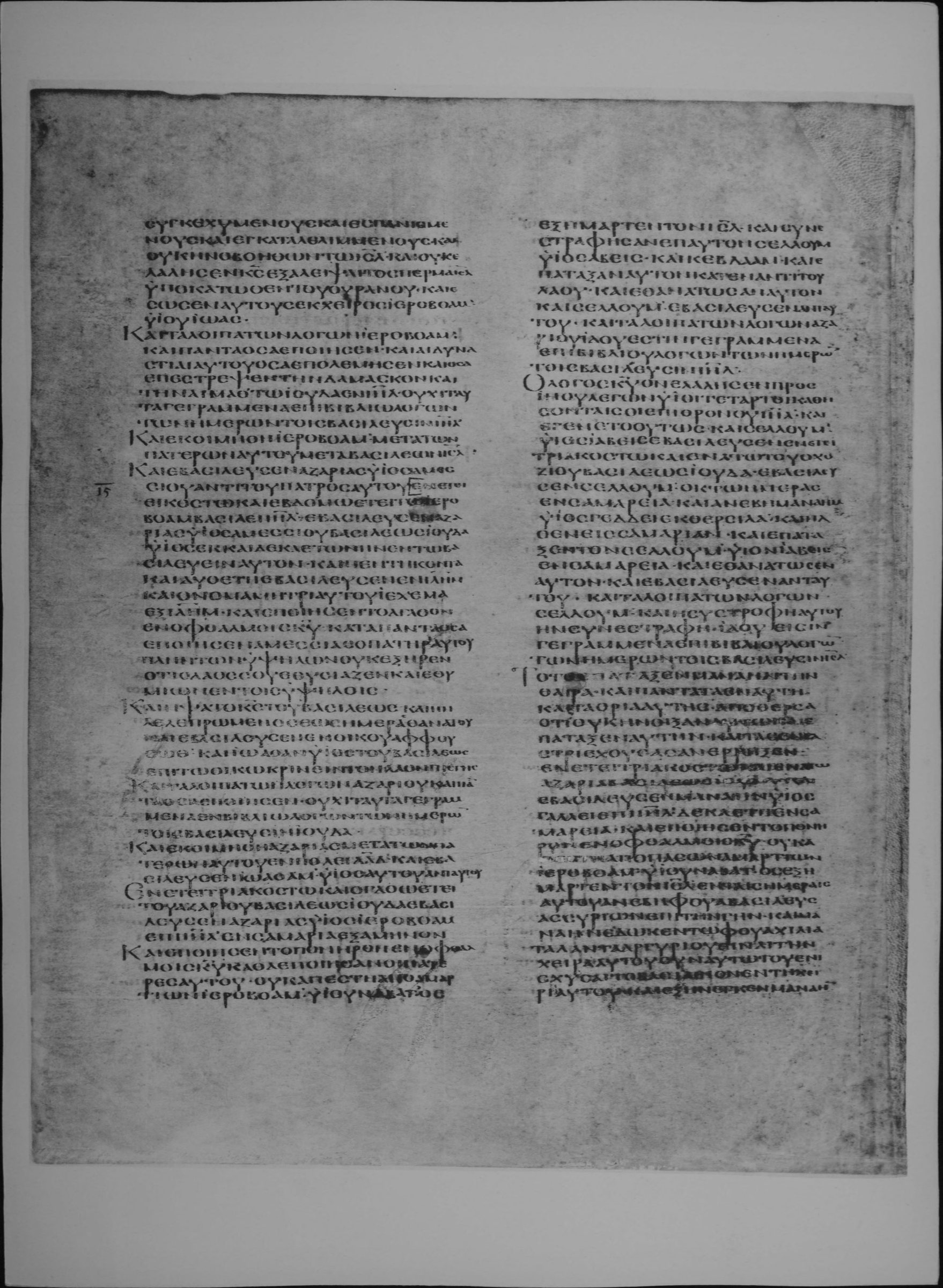
4 Kingdoms (2 Kings) 14:25-26 is on fol. 232r (full-size facsimile of 1879-83, Internet Archive codex-alexandrinus leaf 482). The 1930 reduced facsimile prints beneath this page: 2 Kings xiv. 6-26. Checked on the plate: the page begins inside 4 Kingdoms (2 Kings) 14:6 (first words read: ΚΣ ΛΕΓΩΝ ΟΥΚ ΑΠΟΘΑΝΟΥΝΤΑΙ ΠΑΤΕΡΕΣ ΥΠΕΡ ΥΙΩΝ ΚΑΙ ΥΙΟΙ ΟΥΚ ΑΠΟΘΑΝΟΥΝΤΑΙ ΥΠΕΡ ΠΑΤΕΡΩΝ). 4 Kingdoms (2 Kings) 14:26-29 is on fol. 232v (full-size facsimile of 1879-83, Internet Archive codex-alexandrinus leaf 483). The 1930 reduced facsimile prints beneath this page: 2 Kings xiv. 26-xv. 20. Checked on the plate: the page begins inside 4 Kingdoms (2 Kings) 14:26 (first words read: ΣΥΝΚΕΧΥΜΕΝΟΥΣ ΚΑΙ ΕΣΠΑΝΙΣΜΕΝΟΥΣ ΚΑΙ ΕΓΚΑΤΑΛΕΛΕΙΜΜΕΝΟΥΣ ΚΑΙ ΟΥΚ ΗΝ Ο ΒΟΗΘΩΝ ΤΩ ΙΣΡΑΗΛ).
25αὐτὸς ἀπέστησεν τὸ ὅριον Ἰσραὴλ ἀπὸ εἰσόδου Αἱμὰθ ἕως τῆς θαλάσσης τῆς Ἀραβά, κατὰ τὸ ῥῆμα Κυρίου θεοῦ Ἰσραὴλ ὃ ἐλάλησεν ἐν χειρὶ δούλου αὐτοῦ Ἰωνᾶ υἱοῦ Ἀμαθεὶ τοῦ προφήτου τοῦ ἐκ Γεθχόβερ. 26ὅτι εἶδεν Κύριος τὴν ταπείνωσιν Ἰσραὴλ πικρὰν σφόδρα καὶ ὀλίγους τοὺς συνεχομένους καὶ ἐσπανισμένους καὶ ἐγκαταλελειμμένους, καὶ οὐκ ἦν ὁ βοηθῶν τῷ Ἰσραήλ. 27καὶ οὐκ ἐλάλησεν Κύριος ἐξαλεῖψαι τὸ σπέρμα Ἰσραὴλ ὑποκάτωθεν τοῦ οὐρανοῦ, καὶ ἔσωσεν αὐτοὺς ἐκ χειρὸς Ἰεροβοὰμ υἱοῦ Ἰωάς. 28καὶ τὰ λοιπὰ τῶν λόγων Ἰεροβοὰμ καὶ πάντα ὅσα ἐποίησεν καὶ αἱ δυναστεῖαι αὐτοῦ, ὅσα ἐπολέμησεν καὶ ὅσα ἐπέστρεψεν τὴν Δαμασκὸν καὶ τὴν Ἑμμὰθ τῷ Ἰούδᾳ ἐν Ἰσραήλ, οὐχὶ ταῦτα γεγραμμένα ἐπὶ βιβλίῳ λόγων τῶν ἡμερῶν τοῖς βασιλεῦσιν Ἰσραήλ; 29καὶ ἐκοιμήθη Ἰεροβοὰμ μετὰ τῶν πατέρων αὐτοῦ μετὰ βασιλέων Ἰσραήλ, καὶ ἐβασίλευσεν Ἀζαρίας υἱὸς Ἀμεσσείου ἀντὶ τοῦ πατρὸς αὐτοῦ.
25He recovered the coast of Israel from the entering in of Æmath to the sea of Araba, according to the word of the Lord God of Israel, which he spoke by his servant Jonas the son of Amathi, the prophet of Gethchopher. 26For the Lord saw that the affliction of Israel was very bitter, and that they were few in number, straitened and in want, and destitute, and Israel had no helper. 27And the Lord said that he would not blot out the seed of Israel from under heaven; so he delivered them by the hand of Jeroboam the son of Joas. 28And the rest of the acts of Jeroboam, and all that he did, and his mighty deeds, which he achieved in war, and how he recovered Damascus and Æmath to Juda in Israel, are not these things written in the book of the chronicles of the kings of Israel? 29And Jeroboam slept with his fathers, even with the kings of Israel; and Zacharias his son reigned in his stead.
Cite
Sources
- Source: Codex Alexandrinus (British Library Royal MS 1 D. V) via the British Museum photographic facsimiles of 1879-83 and 1930 (Internet Archive) + Swete's Septuagint + Brenton's English (holding institution)
- Critical edition: H. B. Swete, The Old Testament in Greek according to the Septuagint (1909)
← previous · → next · v cycle view · l back to library