4 Kingdoms (2 Kings), Chapter 18 (Codex Alexandrinus)
Introduction
4 Kingdoms (2 Kings) 18 in the Greek Old Testament (the Septuagint) as written in Codex Alexandrinus, a Greek Bible copied in the fifth century, probably in Egypt, and now in the British Library (Royal MS 1 D. V, the first of its four volumes). It is one of the three great early codices of the whole Greek Bible, with Codex Vaticanus and Codex Sinaiticus.
This entry meets the strict three-criteria standard of the Theosis Library:
- Manuscript scan: the pages of Codex Alexandrinus carrying this chapter (fol. 235r, fol. 235v), from the full-size photographic (autotype) facsimile published by the British Museum in 1879-1883, as digitised on the Internet Archive. The verse range of every page comes from the reduced photographic facsimile of 1930, which prints it beneath each plate, and the opening words of every page were read on the plate to confirm the page and the verse it begins with. Each section links to the page or pages that hold its verses. Folio numbers are those written at the head of each leaf and visible on the plates.
- Original text: Swete's edition, which here prints the text of Codex Vaticanus (Vat. gr. 1209), the base of his edition, and gives the readings of Alexandrinus only in his apparatus. The Greek column is therefore Vaticanus' text; where Alexandrinus differs, the plate shows what Alexandrinus reads.
- English translation: Sir Lancelot C. L. Brenton, The Septuagint Version of the Old Testament (1844; 1851 edition), a translation of the Greek, public domain, from the eBible.org text.
How was this verified? (Provenance)
Where on the image
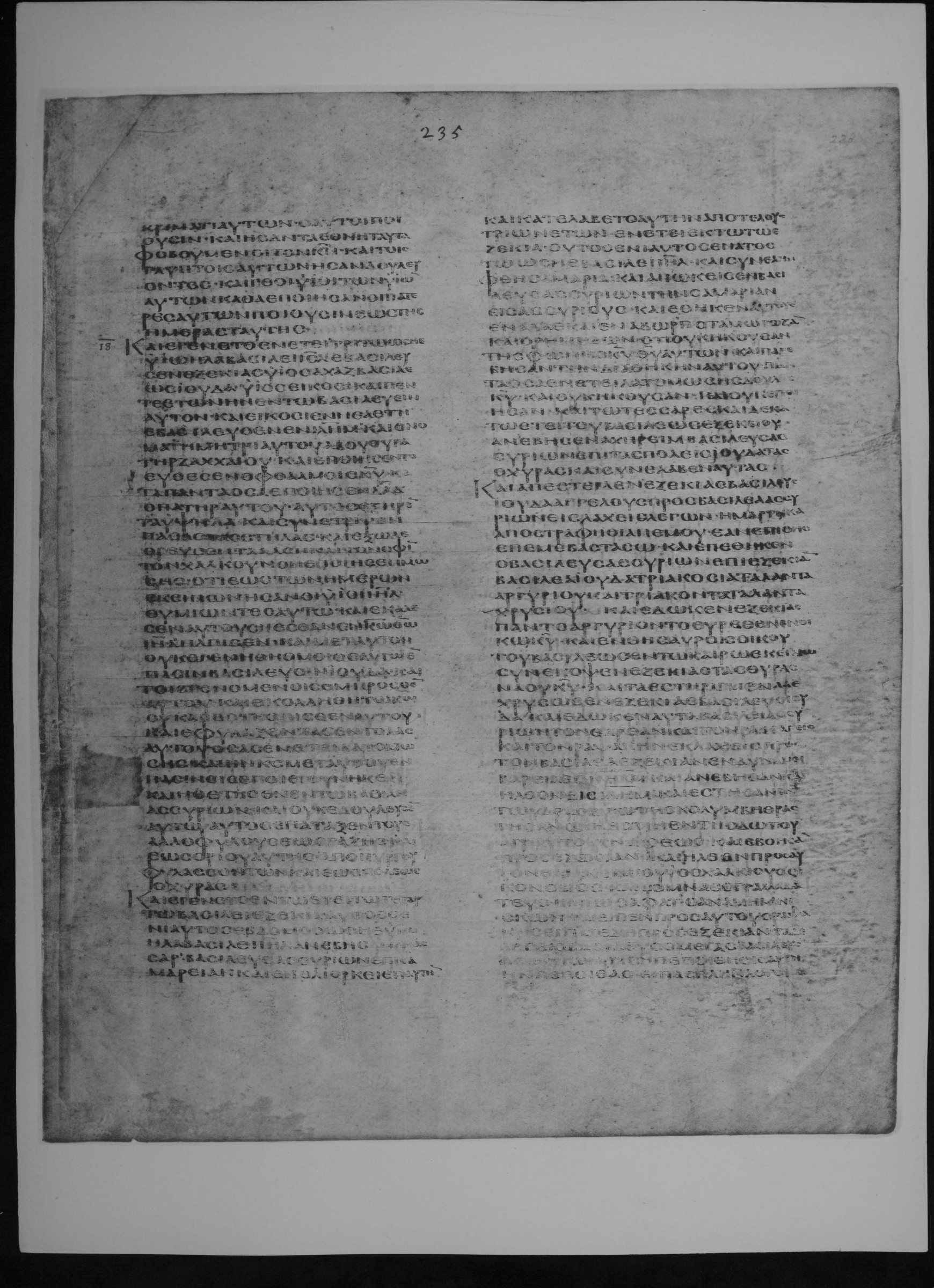
4 Kingdoms (2 Kings) 18:1-8 is on fol. 235r (full-size facsimile of 1879-83, Internet Archive codex-alexandrinus leaf 488). The 1930 reduced facsimile prints beneath this page: 2 Kings xvii. 40-xviii. 20. Checked on the plate: the page begins inside 4 Kingdoms (2 Kings) 17:40 (first words read: ΚΡΙΜΑ ΑΥΤΩΝ Ο ΑΥΤΟΙ ΠΟΙΟΥΣΙΝ ΚΑΙ ΗΣΑΝ ΤΑ ΕΘΝΗ ΤΑΥΤΑ ΦΟΒΟΥΜΕΝΟΙ ΤΟΝ ΚΝ).
1Καὶ ἐγένετο ἐν ἔτει τρίτῳ τῷ Ὡσῆε υἱῷ Ἠλὰ βασιλεῖ Ἰσραὴλ ἐβασίλευσεν Ἑζεκίας υἱὸς Ἀχὰζ βασιλέως Ἰούδα. 2υἱὸς εἴκοσι καὶ πέντε ἐτῶν ἐν τῷ βασιλεύειν αὐτόν, καὶ εἴκοσι καὶ ἐννέα ἔτη ἐβασίλευσεν ἐν Ἰερουσαλήμ, καὶ ὄνομα τῇ μητρὶ αὐτοῦ Ἀβού, θυγάτηρ Ζαχαρίου. 3καὶ ἐποίησεν τὸ εὐθὲς ἐν ὀφθαλμοῖς Κυρίου κατὰ πάντα ὅσα ἐποίησεν Δαυεὶδ ὁ πατὴρ αὐτοῦ. 4αὐτὸς ἐξῆρεν τὰ ὑψηλά, καὶ συνέτριψεν τὰς στήλας, καὶ ἐξωλέθρευσεν τὰ ἄλση καὶ τὸν ὄφιν τὸν χαλκοῦν ὃν ἐποίησεν Μωυσῆς, ὅτι ἕως τῶν ἡμερῶν ἐκείνων ἦσαν οἱ υἱοὶ Ἰσραὴλ θυμιῶντες αὐτῷ· καὶ ἐκάλεσεν αὐτὸν Νεσθαλεί. 5ἐν κυρίῳ θεῷ Ἰσραὴλ ἤλπισεν, καὶ μετ᾽ αὐτὸν οὐκ ἐγενήθη ὅμοιος αὐτῷ ἐν βασιλεῦσιν Ἰούδα καὶ ἐν τοῖς γενομένοις ἔμπροσθεν αὐτοῦ· 6καὶ ἐκολλήθη τῷ κυρίῳ, οὐκ ἀπέστη ὄπισθεν αὐτοῦ, καὶ ἐφύλαξεν τὰς ἐντολὰς αὐτοῦ ὅσας ἐνετείλατο Μωυσῇ. 7καὶ ἦν Κύριος μετ᾽ αὐτοῦ, καὶ ἐν πᾶσιν οἷς ἐποίει συνῆκεν· καὶ ἠθέτησεν ἐν τῷ βασιλεῖ Ἀσσυρίων, καὶ οὐκ ἐδούλευσεν αὐτῷ. 8αὐτὸς ἐπάταξεν τοὺς ἀλλοφύλους ἕως Γάζης καὶ ἕως ὁρίου αὐτῆς, ἀπὸ πύργου φυλασσόντων καὶ ἕως πόλεως ὀχυρᾶς.
1And it came to pass in the third year of Osee son of Ela king of Israel that Ezekias son of Achaz king of Juda began to reign. 2Five and twenty years old was he when he began to reign, and he reigned twenty and nine years in Jerusalem: and his mother's name was Abu, daughter of Zacharias. 3And he did that which was right in the sight of the Lord, according to all that his father David did. 4He removed the high places, and broke in pieces the pillars, and utterly destroyed the groves, and the brazen serpent which Moses made: because until those days the children of Israel burnt incense to it: and he called it Neesthan. 5He trusted in the Lord God of Israel; and after him there was not any like him among the kings of Juda, nor among those that were before him. 6And he clave to the Lord, he departed not from following him; and he kept his commandments, as many as he commanded Moses. 7And the Lord was with him; and he was wise in all that he undertook: and he revolted from the king of the Assyrians, and served him not. 8He smote the Philistines even to Gaza, and to the border of it, from the tower of the watchmen even to the strong city.
Where on the image
4 Kingdoms (2 Kings) 18:9-16 is on fol. 235r (full-size facsimile of 1879-83, Internet Archive codex-alexandrinus leaf 488). The 1930 reduced facsimile prints beneath this page: 2 Kings xvii. 40-xviii. 20. Checked on the plate: the page begins inside 4 Kingdoms (2 Kings) 17:40 (first words read: ΚΡΙΜΑ ΑΥΤΩΝ Ο ΑΥΤΟΙ ΠΟΙΟΥΣΙΝ ΚΑΙ ΗΣΑΝ ΤΑ ΕΘΝΗ ΤΑΥΤΑ ΦΟΒΟΥΜΕΝΟΙ ΤΟΝ ΚΝ).
9Καὶ ἐγένετο ἐν τῷ ἔτει τῷ τετάρτῳ βασιλεῖ Ἑζεκίᾳ, αὐτὸς ἐνιαυτὸς ὁ ἕβδομος τῷ Ὡσῆε υἱῷ Ἠλὰ βασιλεῖ Ἰσραήλ, ἀνέβη Σαλαμανάσσαρ βασιλεὺς Ἀσσυρίων ἐπὶ Σαμάρειαν καὶ ἐπολιόρκει ἐπ᾽ αὐτήν· 10καὶ κατελάβετο αὐτὴν ἀπὸ τέλους τριῶν ἐτῶν ἐν ἔτει ἕκτῳ τῷ Ἑζεκίᾳ, αὐτὸς ἐνιαυτὸς ἔνατος τῷ Ὡσῆε βασιλεῖ Ἰσραήλ, καὶ συνελήμφθη Σαμάρεια. 11καὶ ἀπῴκισεν βασιλεὺς Ἀσσυρίων τὴν Σαμάρειαν εἰς Ἀσσυρίους, καὶ ἔθηκεν αὐτοὺς ἐν Ἁλάε καὶ ἐν Ἁβιὼρ ποταμῷ Γωζὰν καὶ Ὀρὴ Μήδων· 12ἀνθ᾽ ὧν ὅτι οὐκ ἤκουσαν τῆς φωνῆς Κυρίου θεοῦ αὐτῶν, καὶ παρέβησαν τὴν διαθήκην αὐτοῦ πάντα ὅσα ἐνετείλατο Μωσῆς ὁ δοῦλος Κυρίου, καὶ οὐκ ἤκουσαν καὶ οὐκ ἐποίησαν. 13Καὶ τῷ τεσσαρεσκαιδεκάτῳ ἔτει βασιλεῖ Ἑζεκιοὺ ἀνέβη Σενναχηρεὶμ βασιλεὺς Ἀσσυρίων ἐπὶ τὰς πόλεις Ἰούδα τὰς ὀχυρὰς καὶ συνέλαβεν αὐτάς. 14καὶ ἀπέστειλεν Ἑζεκίας βασιλεὺς Ἰούδα ἀγγέλους πρὸς βασιλέα Ἀσσυρίων εἰς Λαχεὶς λέγων Ἡμάρτηκα, ἀποστράφητι ἀπ᾽ ἐμοῦ· ὃ ἐὰν ἐπιθῇς ἐπ᾽ ἐμὲ βαστάσω. καὶ ἐπέθηκεν ὁ βασιλεὺς Ἀσσυρίων ἐπὶ Ἑζεκίαν βασιλέα Ἰούδα τριακόσια τάλαντα ἀργυρίου καὶ τριάκοντα τάλαντα χρυσίου. 15καὶ ἔδωκεν Ἑζεκίας πᾶν τὸ ἀργύριον τὸ εὑρεθὲν ἐν οἴκῳ Κυρίου καὶ ἐν θησαυροῖς οἴκου τοῦ βασιλέως. 16ἐν τῷ καιρῷ ἐκείνῳ συνέκοψεν Ἑζεκίας τὰς θύρας ναοῦ καὶ τὰ ἐστηριγμένα ἃ ἐχρύσωσεν Ἑζεκίας βασιλεὺς Ἰούδα, καὶ ἔδωκεν αὐτὰ βασιλεῖ Ἀσσυρίων.
9And it came to pass in the fourth year of king Ezekias (this is the seventh year of Osee son of Ela king of Israel,) that Salamanassar king of the Assyrians came up against Samaria, and besieged it. 10And he took it at the end of three years, in the sixth year of Ezekias, (this is the ninth year of Osee king of Israel, when Samaria was taken.) 11And the king of the Assyrians carried away the Samaritans to Assyria, and put them in Alaë and in Abor, by the river Gozan, and in the mountains of the Medes; 12because they hearkened not to the voice of the Lord their God, and transgressed his covenant, even in all things that Moses the servant of the Lord commanded, and hearkened not to them, nor did them. 13And in the fourteenth year of king Ezekias came up Sennacherim king of the Assyrians against the strong cities of Juda, and took them. 14And Ezekias king of Juda sent messengers to the king of the Assyrians to Lachis, saying, I have offended; depart from me: whatsoever thou shalt lay upon me, I will bear. And the king of Assyria laid upon Ezekias king of Juda a tribute of three hundred talents of silver, and thirty talents of gold. 15And Ezekias gave all the silver that was found in the house of the Lord, and in the treasures of the king's house. 16At that time Ezekias cut off the gold from the doors of the temple, and from the pillars which Ezekias king of Juda had overlaid with gold, and gave it to the king of the Assyrians.
Where on the image
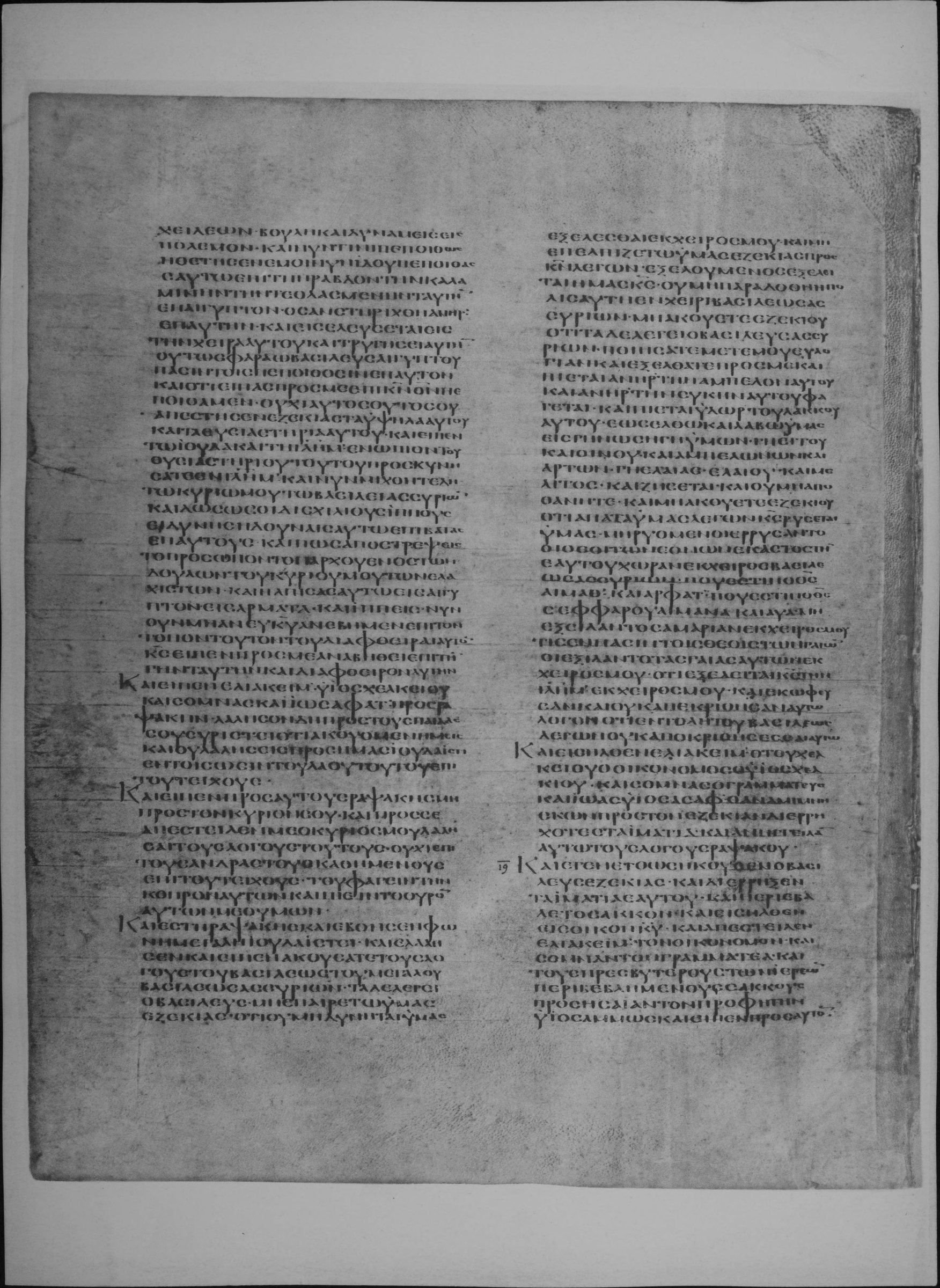
4 Kingdoms (2 Kings) 18:17-20 is on fol. 235r (full-size facsimile of 1879-83, Internet Archive codex-alexandrinus leaf 488). The 1930 reduced facsimile prints beneath this page: 2 Kings xvii. 40-xviii. 20. Checked on the plate: the page begins inside 4 Kingdoms (2 Kings) 17:40 (first words read: ΚΡΙΜΑ ΑΥΤΩΝ Ο ΑΥΤΟΙ ΠΟΙΟΥΣΙΝ ΚΑΙ ΗΣΑΝ ΤΑ ΕΘΝΗ ΤΑΥΤΑ ΦΟΒΟΥΜΕΝΟΙ ΤΟΝ ΚΝ). 4 Kingdoms (2 Kings) 18:20-24 is on fol. 235v (full-size facsimile of 1879-83, Internet Archive codex-alexandrinus leaf 489). The 1930 reduced facsimile prints beneath this page: 2 Kings xviii. 20-xix. 3. Checked on the plate: the page begins inside 4 Kingdoms (2 Kings) 18:20 (first words read: ΧΕΙΛΕΩΝ ΒΟΥΛΗ ΚΑΙ ΔΥΝΑΜΙΣ ΕΙΣ ΠΟΛΕΜΟΝ ΝΥΝ ΟΥΝ ΤΙΝΙ ΠΕΠΟΙΘΩΣ ΗΘΕΤΗΣΑΣ ΕΝ ΕΜΟΙ).
17Καὶ ἀπέστειλεν βασιλεὺς Ἀσσυρίων τὸν Θανθὰν καὶ τὸν Ῥαφεὶς καὶ τὸν Ῥαψάκην ἐκ Λαχεὶς πρὸς τὸν βασιλέα Ἑζεκίαν ἐν δυνάμει βαρείᾳ ἐπὶ Ἰερουσαλήμ· καὶ ἀνέβησαν καὶ ἦλθον εἰς Ἰερουσαλήμ, καὶ ἔστησαν ἐν τῷ ὑδραγωγῷ τῆς κολυμβήθρας τῆς ἄνω ἥ ἐστιν ἐν τῇ ὁδῷ τοῦ ἀγροῦ τοῦ γναφέως. 18καὶ ἐβόησαν πρὸς Ἑζεκίαν, καὶ ἦλθον πρὸς αὐτὸν Ἐλιακεὶμ υἱὸς Χελκίου ὁ οἰκονόμος καὶ Σόμνας ὁ γραμματεὺς καὶ Ἰωσαφὰτ ὁ ἀναμιμνήσκων. 19καὶ εἶπεν πρὸς αὐτοὺς Ῥαψάκης Εἴπατε δὴ πρὸς Ἑζεκίαν Τάδε λέγει ὁ βασιλεὺς ὁ μέγας βασιλεὺς Ἀσσυρίων Τί ἡ πεποίθησις αὕτη ἣν πέποιθας; 20εἶπας, πλὴν λόγοι χειλέων Βουλὴ καὶ δύναμις εἰς πόλεμον· νῦν οὖν τίνι πεποιθὼς ἠθέτησας ἐν ἐμοί; 21νῦν ἰδοὺ πέποιθας σαυτῷ ἐπὶ τὴν ῥάβδον τὴν καλαμίνην τὴν τεθλασμένην ταύτην, ἐπ᾽ Αἴγυπτον· ὃς ἂν στηριχθῇ ἀνὴρ ἐπ᾽ αὐτήν, καὶ εἰσελεύσεται εἰς τὴν χεῖρα αὐτοῦ, καὶ τρήσει αὐτήν· οὕτως Φαραὼ βασιλεὺς Αἰγύπτου πᾶσιν τοῖς πεποιθόσιν ἐπ᾽ αὐτόν. 22καὶ ὅτι εἶπας πρὸς μέ Ἐπὶ Κύριον θεὸν πεποίθαμεν· οὐχὶ αὐτὸς οὗτος ἀπέστησεν Ἑζεκίας τὰ ὑψηλὰ αὐτοῦ καὶ τὰ θυσιαστήρια αὐτοῦ, καὶ εἶπεν τῷ Ἰούδᾳ καὶ τῇ Ἰερουσαλήμ Ἐνώπιον τοῦ θυσιαστηρίου τούτου προσκυνήσετε ἐν Ἰερουσαλήμ; 23καὶ νῦν μίχθητε δὴ τῷ κυρίῳ μου βασιλεῖ Ἀσσυρίων, καὶ δώσω σοι δισχιλίους ἵππους, εἰ δυνήσῃ δοῦναι σεαυτῷ ἐπιβάτας ἐπ᾽ αὐτούς. 24καὶ πῶς ἀποστρέψετε τὸ πρόσωπον τοπάρχου ἑνὸς τῶν δούλων τοῦ κυρίου μου τῶν ἐλαχίστων; καὶ ἤλπισας σαυτῷ ἐπ᾽ Αἴγυπτον εἰς ἅρματα καὶ ἱππεῖς.
17And the king of the Assyrians sent Tharthan and Raphis and Rapsakes from Lachis to king Ezekias with a strong force against Jerusalem. And they went up and came to Jerusalem, and stood by the aqueduct of the upper pool, which is by the way of the fuller's field. 18And they cried to Ezekias: and there came to him Heliakim the son of Chelcias the steward, and Somnas the scribe, and Joas the son of Saphat the recorder. 19And Rapsakes said to them, Say now to Ezekias, Thus says the king, the great king of the Assyrians, What is this confidence wherein thou trustest? 20Thou hast said, (but they are mere words,) I have counsel and strength for war. Now then in whom dost thou trust, that thou hast revolted from me? 21See now, art thou trusting for thyself on this broken staff of reed, even upon Egypt? whosoever shall stay himself upon it, it shall even go into his hand, and pierce it: so is Pharao king of Egypt to all that trust on him. 22And whereas thou hast said to me, We trust on the Lord God: is not this he, whose high places and altars Ezekias has removed, and has said to Juda and Jerusalem, Ye shall worship before this altar in Jerusalem? 23And now, I pray you, make an agreement with my lord the king of the Assyrians, and I will give thee two thousand horses, if thou shalt be able on thy part to set riders upon them. 24How then wilt thou turn away the face of one petty governor from among the least of my lord's servants? whereas thou trustest for thyself on Egypt for chariots and horsemen.
Where on the image
4 Kingdoms (2 Kings) 18:25-32 is on fol. 235v (full-size facsimile of 1879-83, Internet Archive codex-alexandrinus leaf 489). The 1930 reduced facsimile prints beneath this page: 2 Kings xviii. 20-xix. 3. Checked on the plate: the page begins inside 4 Kingdoms (2 Kings) 18:20 (first words read: ΧΕΙΛΕΩΝ ΒΟΥΛΗ ΚΑΙ ΔΥΝΑΜΙΣ ΕΙΣ ΠΟΛΕΜΟΝ ΝΥΝ ΟΥΝ ΤΙΝΙ ΠΕΠΟΙΘΩΣ ΗΘΕΤΗΣΑΣ ΕΝ ΕΜΟΙ).
25καὶ νῦν μὴ ἄνευ Κυρίου ἀνέβημεν ἐπὶ τὸν τόπον τοῦτον τοῦ διαφθεῖραι αὐτόν; Κύριος εἶπεν πρὸς μέ Ἀνάβηθι ἐπὶ τὴν γῆν ταύτην καὶ διάφθειρον αὐτήν. 26καὶ εἶπεν Ἐλιακεὶμ υἱὸς Χελκείου καὶ Σόμνας καὶ Ἰώας πρὸς Ῥαψάκην Λάλησον δὴ πρὸς τοὺς παῖδάς σου Συριστί· ἀκούομεν ἡμεῖς, καὶ οὐ λαλήσεις μεθ᾽ ἡμῶν Ἰουδαιστί· καὶ ἵνα τί λαλεῖς ἐν τοῖς ὠσὶν τοῦ λαοῦ τοῦ ἐπὶ τοῦ τείχους; 27καὶ εἶπεν πρὸς αὐτοὺς Ῥαψάκης Μὴ ἐπὶ τὸν κύριόν σου καὶ πρὸς σὲ ἀπέστειλέν με ὁ κύριός μου λαλῆσαι τοὺς λόγους τούτους; οὐχὶ ἐπὶ τοὺς ἄνδρας τοὺς καθημένους ἐπὶ τοῦ τείχους, τοῦ φαγεῖν τὴν κόπρον αὐτῶν καὶ πιεῖν τὸ οὖρον αὐτῶν μεθ᾽ ὑμῶν ἅμα; 28καὶ ἔστη Ῥαψάκης καὶ ἐβόησεν μεγάλῃ Ἰουδαιστί· καὶ ἐλάλησεν καὶ εἶπεν Ἀκούσατε τοὺς λόγους τοῦ μεγάλου βασιλέως Ἀσσυρίων 29Τάδε λέγει ὁ βασιλεύς Μὴ ἐπαιρέτω ὑμᾶς Ἑζεκίας λόγοις, ὅτι οὐ μὴ δύνηται ὑμᾶς ἐξελέσθαι ἐκ χειρὸς αὐτοῦ. 30καὶ μὴ ἐπελπιζέτω ὑμᾶς Ἑζεκίας πρὸς Κὺριον λέγων Ἐξαιρούμενος ἐξελεῖται Κύριος· οὐ μὴ παραδοθῇ ἡ πόλις αὕτη ἐν χειρὶ βασιλέως Ἀσσυρίων. 31μὴ ἀκούετε Ἑζεκίου, ὅτι τάδε λέγει ὁ βασιλεὺς Ἀσσυρίων Ποιήσατε μετ᾽ ἐμοῦ εὐλογίαν καὶ ἐξέλθατε πρὸς μέ, καὶ πίεται ἀνὴρ τὴν ἄμπελον αὐτοῦ, καὶ ἀνὴρ τὴν συκῆν αὐτοῦ φάγεται, καὶ πίεται ὕδωρ τοῦ λάκκου αὐτοῦ, 32ἕως ἔλθω καὶ λάβω ὑμᾶς εἰς γῆν ὡς γῆ ὑμῶν, σίτου καὶ οἴνου καὶ ἄρτου καὶ ἀμπελώνων, γῆ ἐλαίας ἐλαίου καὶ μέλιτος· καὶ ζήσετε καὶ οὐ μὴ ἀποθάνητε. καὶ μὴ ἀκούετε Ἑζεκίου, ὅτι ἀπατᾷ ὑμᾶς λέγων Κύριος ῥύσεται ὑμᾶς.
25And now have we come up without the Lord against this place to destroy it? The Lord said to me, Go up against this land, and destroy it. 26And Heliakim the son of Chelkias, and Somnas, and Joas, said to Rapsakes, Speak now to thy servants in the Syrian language, for we understand it; and speak not with us in the Jewish language: and why dost thou speak in the ears of the people that are on the wall? 27And Rapsakes said to them, Has my master sent me to thy master, and to thee, to speak these words? has he not sent me to the men who sit on the wall, that they may eat their own dung, and drink their own water together with you? 28And Rapsakes stood, and cried with a loud voice in the Jewish language, and spoke, and said, Hear the words of the great king of the Assyrians: 29thus says the king, Let not Ezekias encourage you with words: for he shall not be able to deliver you out of his hand. 30And let not Ezekias cause you to trust on the Lord, saying, The Lord will certainly deliver us; this city shall not be delivered into the hand of the king of the Assyrians: hearken not to Ezekias: 31for thus says the king of the Assyrians, Gain my favour, and come forth to me, and every man shall drink of the wine of his own vine, and every man shall eat of his own fig-tree, and shall drink water out of his own cistern; 32until I come and remove you to a land like your own land, a land of corn and wine, and bread and vineyards, a land of olive oil, and honey, and ye shall live and not die: and do not ye hearken to Ezekias, for he deceives you, saying, The Lord shall deliver you.
Where on the image
4 Kingdoms (2 Kings) 18:33-37 is on fol. 235v (full-size facsimile of 1879-83, Internet Archive codex-alexandrinus leaf 489). The 1930 reduced facsimile prints beneath this page: 2 Kings xviii. 20-xix. 3. Checked on the plate: the page begins inside 4 Kingdoms (2 Kings) 18:20 (first words read: ΧΕΙΛΕΩΝ ΒΟΥΛΗ ΚΑΙ ΔΥΝΑΜΙΣ ΕΙΣ ΠΟΛΕΜΟΝ ΝΥΝ ΟΥΝ ΤΙΝΙ ΠΕΠΟΙΘΩΣ ΗΘΕΤΗΣΑΣ ΕΝ ΕΜΟΙ).
33μὴ ῥυόμενοι ἐρύσαντο οἱ θεοὶ τῶν ἐθνῶν ἕκαστος τὴν ἑαυτοῦ χώραν ἐκ χειρός βασιλέως Ἀσσυρίων; 34ποῦ ἐστιν ὁ θεὸς Αἱμὰθ καὶ Ἀρφάλ; ποῦ ἐστιν ὁ θεὸς Σεπφαρουμάιν; καὶ ὅτι ἐξείλαντο Σαμάρειαν ἐκ χειρός μου; 35τίς ἐν πᾶσιν τοῖς θεοῖς τῶν γαιῶν οἳ ἐξείλαντο τὰς γᾶς αὐτῶν ἐκ χειρός μου, ὃτι ἐξελεῖται Κύριος τὴν Ἰερουσαλὴμ ἐκ χειρός μου; 36καὶ ἐκώφευσαν καὶ οὐκ ἀπεκρίθησαν αὐτῷ λόγον, ὅτι ἐντολὴ τοῦ βασιλέως λέγων Οὐκ ἀποκριθήσεσθε αὐτῷ. 37καὶ εἰσῆλθεν Ἐλιακεὶμ υἱὸς Χελκείου ὁ οἰκονόμος καὶ Σόμνας ὁ γραμματεὺς καὶ Ἰώας υἱὸς Σαφὰν ὁ ἀναμιμνήσκων πρὸς τὸν Ἐζεκίαν διερρηχότες τὰ ἱμάτια, καὶ ἀνήγγειλαν αὐτῷ τοὺς λόγους Ῥαψάκου.
33Have the gods of the nations at all delivered each their own land out of the hand of the king of the Assyrians? 34Where is the god of Hæmath, and of Arphad? where is the god of Seppharvaim, Ana, and Aba? for have they delivered Samaria out of my hand? 35Who is there among all the gods of the countries, who have delivered their countries out of my hand, that the Lord should deliver Jerusalem out of my hand? 36But the men were silent, and answered him not a word: for there was a commandment of the king, saying, Ye shall not answer him. 37And Heliakim the son of Chelcias, the steward, and Somnas the scribe, and Joas the son of Saphat the recorder came in to Ezekias, having rent their garments; and they reported to him the words of Rapsakes.
Cite
Sources
- Source: Codex Alexandrinus (British Library Royal MS 1 D. V) via the British Museum photographic facsimiles of 1879-83 and 1930 (Internet Archive) + Swete's Septuagint + Brenton's English (holding institution)
- Critical edition: H. B. Swete, The Old Testament in Greek according to the Septuagint (1909)
← previous · → next · v cycle view · l back to library