4 Kingdoms (2 Kings), Chapter 19 (Codex Alexandrinus)
Introduction
4 Kingdoms (2 Kings) 19 in the Greek Old Testament (the Septuagint) as written in Codex Alexandrinus, a Greek Bible copied in the fifth century, probably in Egypt, and now in the British Library (Royal MS 1 D. V, the first of its four volumes). It is one of the three great early codices of the whole Greek Bible, with Codex Vaticanus and Codex Sinaiticus.
Numbering: Swete's Greek and Brenton's English number or divide some verses of this chapter differently (Swete 19:31-32 = Brenton 19:31-32). Each column keeps its own verse numbers, and sections are cut only where the two texts agree, so each section holds the same passage in both languages.
This entry meets the strict three-criteria standard of the Theosis Library:
- Manuscript scan: the pages of Codex Alexandrinus carrying this chapter (fol. 235v, fol. 236r, fol. 236v), from the full-size photographic (autotype) facsimile published by the British Museum in 1879-1883, as digitised on the Internet Archive. The verse range of every page comes from the reduced photographic facsimile of 1930, which prints it beneath each plate, and the opening words of every page were read on the plate to confirm the page and the verse it begins with. Each section links to the page or pages that hold its verses. Folio numbers are those written at the head of each leaf and visible on the plates.
- Original text: Swete's edition, which here prints the text of Codex Vaticanus (Vat. gr. 1209), the base of his edition, and gives the readings of Alexandrinus only in his apparatus. The Greek column is therefore Vaticanus' text; where Alexandrinus differs, the plate shows what Alexandrinus reads.
- English translation: Sir Lancelot C. L. Brenton, The Septuagint Version of the Old Testament (1844; 1851 edition), a translation of the Greek, public domain, from the eBible.org text.
How was this verified? (Provenance)
Where on the image
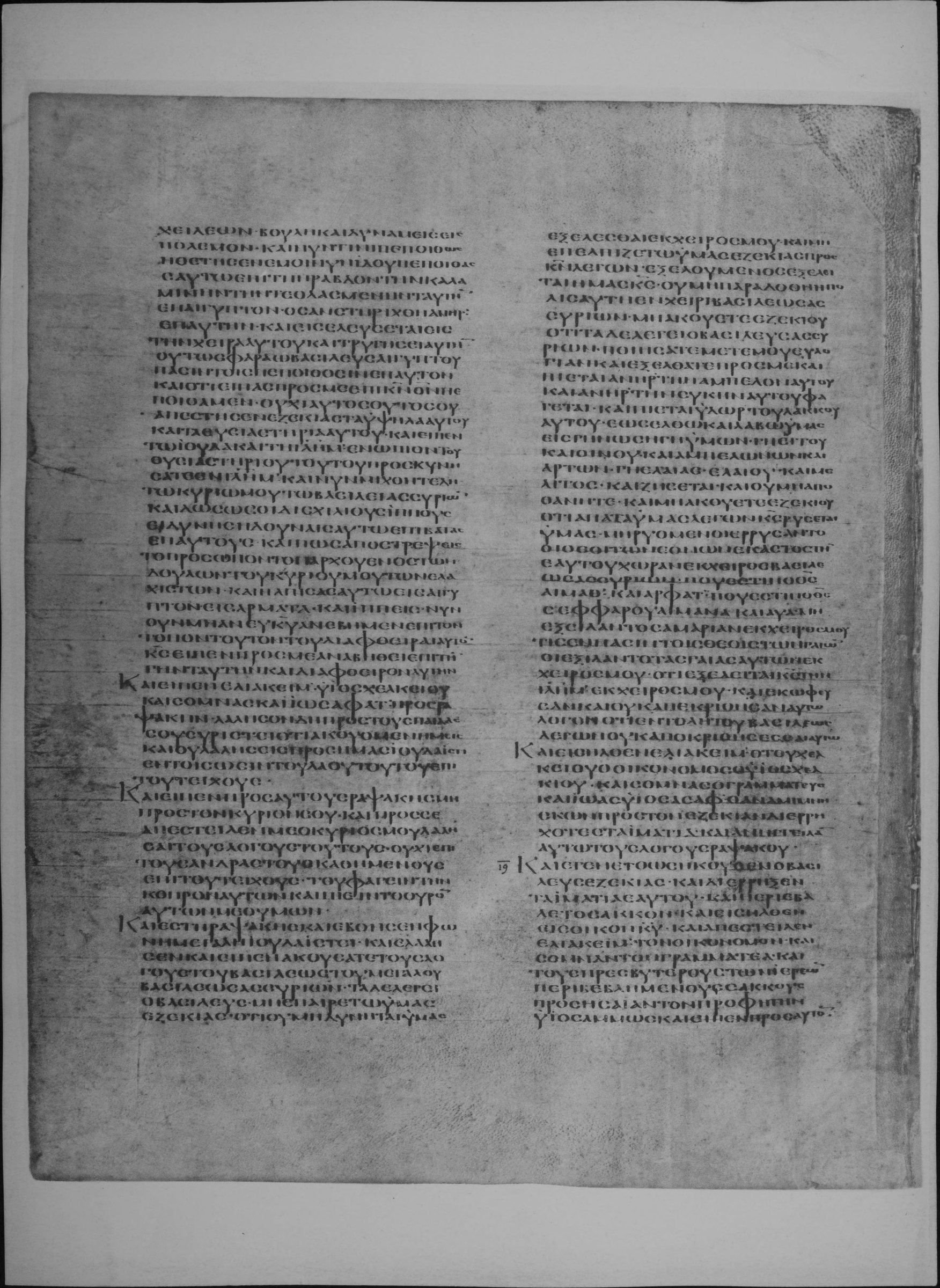
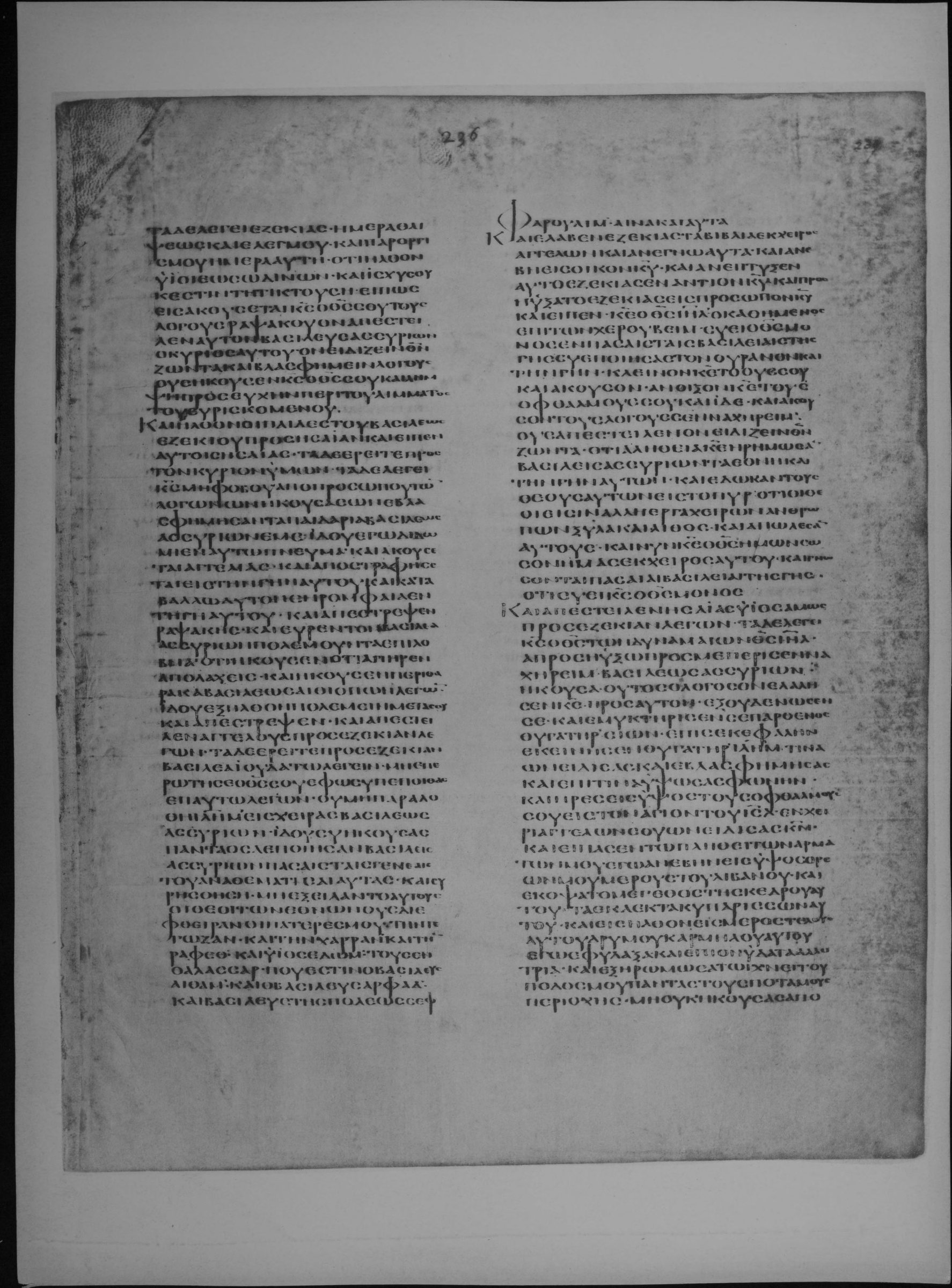
4 Kingdoms (2 Kings) 19:1-3 is on fol. 235v (full-size facsimile of 1879-83, Internet Archive codex-alexandrinus leaf 489). The 1930 reduced facsimile prints beneath this page: 2 Kings xviii. 20-xix. 3. Checked on the plate: the page begins inside 4 Kingdoms (2 Kings) 18:20 (first words read: ΧΕΙΛΕΩΝ ΒΟΥΛΗ ΚΑΙ ΔΥΝΑΜΙΣ ΕΙΣ ΠΟΛΕΜΟΝ ΝΥΝ ΟΥΝ ΤΙΝΙ ΠΕΠΟΙΘΩΣ ΗΘΕΤΗΣΑΣ ΕΝ ΕΜΟΙ). 4 Kingdoms (2 Kings) 19:3-8 is on fol. 236r (full-size facsimile of 1879-83, Internet Archive codex-alexandrinus leaf 490). The 1930 reduced facsimile prints beneath this page: 2 Kings xix. 3-25. Checked on the plate: the page begins inside 4 Kingdoms (2 Kings) 19:3 (first words read: ΤΑΔΕ ΛΕΓΕΙ ΕΖΕΚΙΑΣ ΗΜΕΡΑ ΘΛΙΨΕΩΣ ΚΑΙ ΕΛΕΓΜΟΥ ΚΑΙ ΠΑΡΟΡΓΙΣΜΟΥ ΗΔΕ Η ΗΜΕΡΑ ΟΤΙ ΗΛΘΟΣΑΝ ΥΙΟΙ ΕΩΣ ΩΔΙΝΩΝ).
1Καὶ ἐγένετο ὡς ἤκουσεν βασιλεὺς Ἑζεκίας, καὶ διέρρηξεν τὰ ἱμάτια ἑαυτοῦ καὶ περιεβάλετο σάκκον, καὶ εἰσῆλθεν εἰς οἶκον Κυρίου. 2καὶ ἀπέστειλεν Ἐλιακεὶμ τὸν οἰκονόμον καὶ Σόμναν τὸν γραμματέα καὶ τοὺς πρεσβυτέρους τῶν ἱερέων περιβεβλημένους σάκκους πρὸς Ἠσαίαν τὸν προφήτην υἱὸν Ἀμώς, 3καὶ εἶπεν πρὸς αὐτόν Τάδε λέγει Ἑζεκίας Ἡμέρα θλίψεως καὶ ἐλεγμοῦ καὶ παροργισμοῦ ἡ ἡμέρα αὕτη, ὅτι ἦλθον υἱοὶ ἕως ὠδίνων, καὶ ἰσχὺς οὐκ ἔστιν τῇ τικτούσῃ. 4εἴ πως εἰσακούσεται Κύριος ὁ θεός σου πάντας τοὺς λόγους Ῥαψάκου, ὃν ἀπέστειλεν αὐτὸν βασιλεὺς Ἀσσυρίων ὁ κύριος αὐτοῦ ὀνειδίζειν θεὸν ζῶντα καὶ βλασφημεῖν ἐν λόγοις οἷς ἤκουσεν Κύριος ὁ θεός σου, καὶ λήμψῃ προσευχὴν περὶ τοῦ λήμματος τοῦ εὑρισκομένου. 5καὶ ἦλθον οἱ παῖδες τοῦ βασιλέως Ἑζεκίου πρὸς Ἠσαίαν, 6καὶ εἶπεν αὐτοῖς Ἠσαίας Τάδε ἐρεῖτε πρὸς τὸν κύριον ὑμῶν Τάδε λέγει Κύριος Μὴ φοβηθῇς ἀπὸ τῶν λόγων ὧν ἤκουσας, ὧν ἐβλασφήμησαν τὰ παιδάρια βασιλέως Ἀσσυρίων. 7ἰδοὺ ἐγὼ δίδωμι ἐν αὐτῷ πνεῦμα, καὶ ἀκούσεται ἀγγελίαν καὶ ἀποστραφήσεται εἰς τὴν γῆν αὐτοῦ· καὶ καταβαλῶ αὐτὸν ἐν ῥομφαίᾳ ἐν τῇ γῇ αὐτοῦ. 8Καὶ ἐπέστρεψεν Ῥαψάκης, καὶ εὗρεν τὸν βασιλέα Ἀσσυρίων πολεμοῦντα ἐπὶ Λομνά, ὃτι ἤκουσεν ὅτι ἀπῆρεν ἀπὸ Λαχείς.
1And it came to pass when king Ezekias heard it, that he rent his clothes, and put on sackcloth, and went into the house of the Lord. 2And he sent Heliakim the steward, and Somnas the scribe, and the elders of the priests, clothed with sackcloth, to Esaias the prophet the son of Amos. 3And they said to him, Thus says Ezekias, This day is a day of tribulation, and rebuke, and provocation: for the children are come to the travail- pangs, but the mother has no strength. 4Peradventure the Lord thy God will hear all the words of Rapsakes, whom the king of Assyria his master has sent to reproach the living God and to revile him with the words which the Lord thy God has heard: and thou shalt offer thy prayer for the remnant that is found. 5So the servants of king Ezekias came to Esaias. 6And Esaias said to them, Thus shall ye say to your master, Thus saith the Lord, Be not afraid of the words which thou hast heard, wherewith the servants of the king of the Assyrians have blasphemed. 7Behold, I send a blast upon him, and he shall hear a report, and shall return to his own land; and I will overthrow him with the sword in his own land. 8So Rapsakes returned, and found the king of Assyria warring against Lobna: for he heard that he had departed from Lachis.
Where on the image
4 Kingdoms (2 Kings) 19:9-16 is on fol. 236r (full-size facsimile of 1879-83, Internet Archive codex-alexandrinus leaf 490). The 1930 reduced facsimile prints beneath this page: 2 Kings xix. 3-25. Checked on the plate: the page begins inside 4 Kingdoms (2 Kings) 19:3 (first words read: ΤΑΔΕ ΛΕΓΕΙ ΕΖΕΚΙΑΣ ΗΜΕΡΑ ΘΛΙΨΕΩΣ ΚΑΙ ΕΛΕΓΜΟΥ ΚΑΙ ΠΑΡΟΡΓΙΣΜΟΥ ΗΔΕ Η ΗΜΕΡΑ ΟΤΙ ΗΛΘΟΣΑΝ ΥΙΟΙ ΕΩΣ ΩΔΙΝΩΝ).
9καὶ ἤκουσεν περὶ Θαρὰ βασιλέως Αἰθιόπων λέγων Ἰδοὺ ἐξῆλθεν πολεμεῖν μετὰ σοῦ· καὶ ἐπέστρεψεν καὶ ἀπέστειλεν ἀγγέλους πρὸς Ἑζεκίαν λέγων 10Μὴ ἐπαιρέτω σε ὁ θεός σου, ἐφ᾽ ᾧ σὺ πέποιθας ἐν αὐτῷ λέγων Οὐ μὴ παραδοθῇ Ἰερουσαλὴμ εἰς χεῖρας βασιλέως Ἀσσυρίων. 11ἰδοὺ σὺ ἤκουσας πάντα ὃσα ἐποίησαν βασιλεῖς Ἀσσυρίων πάσαις ταῖς γαῖς, τοῦ ἀναθεματίσαι αὐτάς· καὶ σὺ ῥυσθήσῃ; 12μὴ ἐξείλαντο αὐτοὺς οἱ θεοὶ τῶν ἐθνῶν; οὐ διέφθειραν οἱ πατέρες μου τήν τε Γωζὰν καὶ τὴν Χαρρὰν καὶ Ῥάφεις καὶ υἱοὺς Ἔδεμ τοὺς ἐν Θαεσθέν; 13ποῦ ἐστιν ὁ βασιλεὺς Μὰθ καὶ ὁ βασιλεὺς Ἀρφάθ; καὶ ποῦ Σεφφαρουάιν, Ἁνὲς καὶ Οὐδού; 14καὶ ἔλαβεν Ἑζεκίας τὰ βιβλία ἐκ χειρὸς τῶν ἀγγέλων καὶ ἀνέγνω αὐτά· καὶ ἀνέβη εἰς οἶκον Κυρίου καὶ ἀνέπτυξεν αὐτὰ Ἑζεκίας ἐναντίον Κυρίου, 15καὶ εἶπεν Κύριε ὁ θεὸς Ἰσραὴλ ὁ καθήμενος ἐπὶ τῶν χερουβείν, σὺ εἶ ὁ θεὸς μόνος ἐν πάσαις ταῖς βασιλείαις τῆς γῆς, σὺ ἐποίησας τὸν οὐρανὸν καὶ τὴν γῆν. 16κλῖνον, Κύριε, τὸ οὖς σου καὶ ἄκουσον· ἄνοιξον, Κύριε, τοὺς ὀφθαλμούς σου καὶ ἴδε, καὶ ἄκουσον τοὺς λόγους Σενναχηρεὶμ οὓς ἀπέστειλεν ὀνειδίζειν θεὸν ζῶντα.
9And he heard concerning Tharaca king of the Ethiopians, saying, Behold, he is come forth to fight with thee: and he returned, and sent messengers to Ezekias, saying, 10Let not thy God on whom thou trustest encourage thee, saying, Jerusalem shall not be delivered into the hands of the king of the Assyrians. 11Behold, thou hast heard all that the kings of the Assyrians have done in all the lands, to waste them utterly: and shalt thou be delivered? 12Have the gods of the nations at all delivered them, whom my fathers destroyed; both Gozan, and Charran, and Raphis, and the sons of Edem who were in Thaesthen? 13Where is the king of Hæmath, and the king of Arphad? and where is the king of the city of Seppharvaim, of Ana, and Aba? 14And Ezekias took the letter from the hand of the messengers, and read it: and he went up to the house of the Lord, and Ezekias spread it before the Lord, 15and said, O Lord God of Israel, that dwellest over the cherubs, thou art the only God in all the kingdoms of the earth; thou hast made heaven and earth. 16Incline thine ear, O Lord, and hear: open, Lord, thine eyes, and see: and hear the words of Sennacherim, which he has sent to reproach the living God.
Where on the image
4 Kingdoms (2 Kings) 19:17-24 is on fol. 236r (full-size facsimile of 1879-83, Internet Archive codex-alexandrinus leaf 490). The 1930 reduced facsimile prints beneath this page: 2 Kings xix. 3-25. Checked on the plate: the page begins inside 4 Kingdoms (2 Kings) 19:3 (first words read: ΤΑΔΕ ΛΕΓΕΙ ΕΖΕΚΙΑΣ ΗΜΕΡΑ ΘΛΙΨΕΩΣ ΚΑΙ ΕΛΕΓΜΟΥ ΚΑΙ ΠΑΡΟΡΓΙΣΜΟΥ ΗΔΕ Η ΗΜΕΡΑ ΟΤΙ ΗΛΘΟΣΑΝ ΥΙΟΙ ΕΩΣ ΩΔΙΝΩΝ).
17ὅτι ἀληθείᾳ, Κύριε, ἠρήμωσαν βασιλεῖς Ἀσσυρίων τὰ ἔθνη, 18καὶ ἔδωκαν τοὺς θεοὺς αὐτῶν εἰς τὸ πῦρ, ὅτι οὐ θεοί εἰσιν ἀλλ᾽ ἢ ἔργα χειρῶν ἀνθρώπων, ξύλα καὶ λίθος, καὶ ἀπώλεσαν αὐτούς. 19καὶ νῦν, Κύριε ὁ θεὸς ἡμῶν, σῶσον ἡμᾶς ἐκ χειρὸς αὐτοῦ, καὶ γνώσονται πᾶσαι αἱ βασιλεῖαι τῆς γῆς ὅτι σὺ Κύριος ὁ θεὸς μόνος. 20Καὶ ἀπέστειλεν Ἠσαίας υἱὸς Ἀμὼς πρὸς Ἑζεκίαν λέγων Τάδε λέγει Κύριος ὁ θεὸς τῶν δυνάμεων θεὸς Ἰσραήλ Ἃ προσηύξω πρὸς μὲ περὶ Σενναχηρεὶμ βασιλέως Ἀσσυρίων ἤκουσα. 21οὗτος ὁ λόγος ὃν ἐλάλησεν Κύριος ἐπ᾽ αὐτόν Ἐξουδένησέν σε καὶ ἐμυκτήρισέν σε παρθένος θυγάτηρ Σειών· ἐπὶ σοὶ κεφαλὴν αὐτῆς ἐκίνησεν θυγάτηρ Ἰερουσαλήμ. 22τίνα ὠνείδισας καὶ ἐβλασφήμησας; καὶ ἐπὶ τίνα ὕψωσας φωνὴν καὶ ἦρας εἰς ὕψος τοὺς ὀφθαλμούς σου; εἰς τὸν ἅγιον τοῦ Ἰσραήλ. 23ἐν χειρὶ ἀγγέλων σου ὠνείδισας κύριόν σου καὶ εἶπας Ἐν τῷ πλήθει τῶν ἁρμάτων μου ἐγὼ ἀναβήσομαι εἰς ὕψος ὀρέων, μηροὺς τοῦ Λιβάνου· καὶ ἔκοψα τὸ μέγεθος τῆς κέδρου αὐτοῦ, τὰ ἐκλεκτὰ κυπαρίσσων αὐτοῦ· καὶ ἦλθεν εἰς μέσον δρυμοῦ καὶ Καρμήλου. 24ἐγὼ ἔψυξα καὶ ἔπιον ὕδατα ἀλλότρια, καὶ ἐξηρήμωσα τῷ ἴχνει τοῦ ποδός μου πάντας ποταμοὺς περιοχῆς.
17For truly, Lord, the kings of Assyria have wasted the nations, 18and have cast their gods into the fire: because they are no gods, but the works of men's hands, wood and stone; and they have destroyed them. 19And now, O Lord our God, deliver us out of his hand, and all the kingdoms of the earth shall know that thou alone art the Lord God. 20And Esaias the son of Amos sent to Ezekias, saying, Thus saith the Lord God of hosts, the God of Israel, I have heard thy prayer to me concerning Sennacherim king of the Assyrians. 21This is the word which the Lord has spoken against him; The virgin daughter of Sion has made light of thee, and mocked thee; the daughter of Jerusalem has shaken her head at thee. 22Whom hast thou reproached, and whom hast thou reviled? and against whom hast thou lifted up thy voice, and raised thine eyes on high? Is it against the Holy One of Israel? 23By thy messengers thou hast reproached the Lord, and hast said, I will go up with the multitude of my chariots, to the height of the mountains, to the sides of Libanus, and I have cut down the height of his cedar, and his choice cypresses; and I have come into the midst of the forest and of Carmel. 24I have refreshed myself, and have drunk strange waters, and I have dried up with the sole of my foot all the rivers of fortified places.
Where on the image
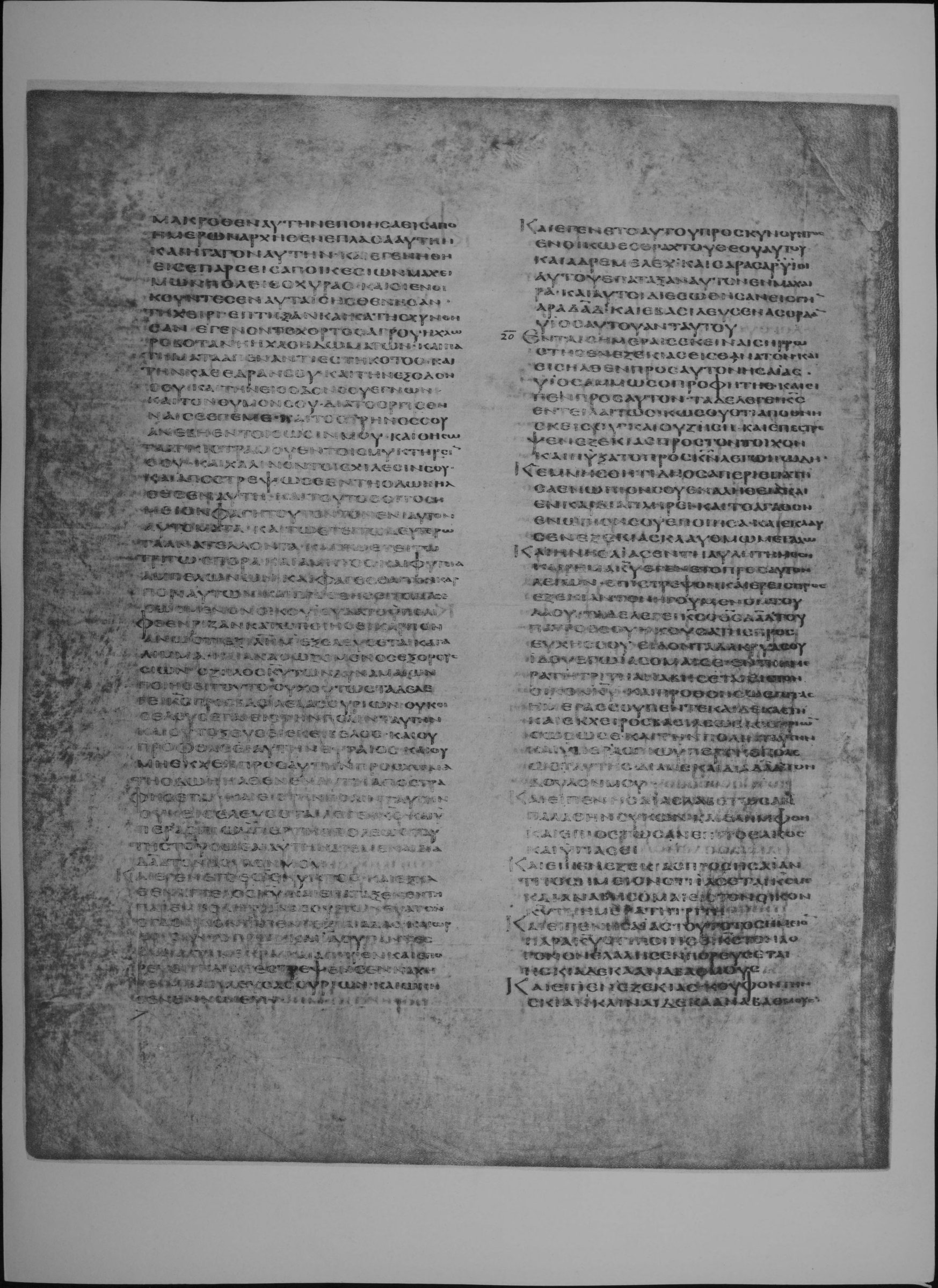
4 Kingdoms (2 Kings) 19:25 is on fol. 236r (full-size facsimile of 1879-83, Internet Archive codex-alexandrinus leaf 490). The 1930 reduced facsimile prints beneath this page: 2 Kings xix. 3-25. Checked on the plate: the page begins inside 4 Kingdoms (2 Kings) 19:3 (first words read: ΤΑΔΕ ΛΕΓΕΙ ΕΖΕΚΙΑΣ ΗΜΕΡΑ ΘΛΙΨΕΩΣ ΚΑΙ ΕΛΕΓΜΟΥ ΚΑΙ ΠΑΡΟΡΓΙΣΜΟΥ ΗΔΕ Η ΗΜΕΡΑ ΟΤΙ ΗΛΘΟΣΑΝ ΥΙΟΙ ΕΩΣ ΩΔΙΝΩΝ). 4 Kingdoms (2 Kings) 19:25-32 is on fol. 236v (full-size facsimile of 1879-83, Internet Archive codex-alexandrinus leaf 491). The 1930 reduced facsimile prints beneath this page: 2 Kings xix. 25-xx. 10. Checked on the plate: the page begins inside 4 Kingdoms (2 Kings) 19:25 (first words read: ΑΠΟ ΜΑΚΡΟΘΕΝ ΑΥΤΗΝ ΕΠΟΙΗΣΑ ΕΞ ΗΜΕΡΩΝ ΑΡΧΗΣ ΕΠΛΑΣΑ ΑΥΤΗΝ ΚΑΙ ΝΥΝ ΗΓΑΓΟΝ ΑΥΤΗΝ). Note: the page begins inside 4 Kgdms 19:25, in words of Codex Alexandrinus (ΑΠΟ ΜΑΚΡΟΘΕΝ ΑΥΤΗΝ ΕΠΟΙΗΣΑ ΕΞ ΗΜΕΡΩΝ ΑΡΧΗΣ) that Swete's shorter text of this verse lacks.
25ἔπλασα αὐτήν, συνήγαγον αὐτήν· καὶ ἐγενήθη εἰς ἐπάρσεις ἀπὸ οἰκεσιῶν μαχίμων, πόλεις ὀχυράς. 26καὶ οἱ ἐνοικοῦντες ἐν αὐταῖς ἠσθένησαν τῇ χειρί, ἔπταισαν καὶ κατῃσχύνθησαν· ἐγένοντο χόρτος ἀγροῦ ἢ χλωρὰ βοτάνη, χλόη δωμάτων καὶ πάτημα ἀπέναντι ἑστηκότος. 27καὶ τὴν καθέδραν σου καὶ τὴν ἔξοδόν σου καὶ τὴν εἴσοδόν σου ἔγνων, καὶ τὸν θυμόν σου ἐπ᾽ ἐμέ. 28διὰ τὸ ὀργισθῆναὶ σε ἐπ᾽ ἐμέ, καὶ τὸ στρῆνός σου ἀνέβη ἐν τοῖς ὠσίν μου· καὶ θήσω τὰ ἄγκιστρά μου ἐν τοῖς μυκτῆρσίν σου καὶ χαλινὸν ἐν τοῖς χείλεσίν σου, καὶ ἀποστρέψω σε ἐν τῇ ὁδῷ ᾗ ἦλθες ἐν αὐτῇ. 29καὶ τοῦτό σοι τὸ σημεῖον· φάγε τοῦτον τὸν ἐνιαυτὸν αὐτόματα, καὶ τῷ ἔτει τῷ δευτέρῳ τὰ ἀνατέλλοντα· καὶ ἔτει τρίτῳ σπορὰ καὶ ἄμητος καὶ φυτεία ἀμπελώνων, καὶ φάγεσθε τὸν καρπὸν αὐτῶν. 30καὶ προσθήσει τὸν διασεσωσμένον οἴκου Ἰούδα τὸ ὑπολειφθὲν ῥίζαν κάτω, καὶ ποιήσει καρπὸν ἄνω. 31ὅτι ἐξ Ἰερουσαλὴμ ἐξελεύσεται κατάλειμμα, καὶ ἀνασωζόμενος ἐξ ὄρους Σειών. ὁ ζῆλος Κυρίου τῶν δυνάμεων ποιήσει τοῦτο. 32οὐχ οὕτως· τάδε λέγει Κύριος πρὸς βασιλέα Ἀσσυρίων Οὐκ εἰσελεύσεται εἰς τὴν πόλιν ταύτην, καὶ οὐ τοξεύσει ἐκεῖ βέλος, καὶ οὐ προφθάσει αὐτὸν θυρεός, καὶ οὐ μὴ ἐκχέῃ πρὸς αὐτὴν πρόσχωμα.
25I have brought about the matter, I have brought it to a conclusion; and it is come to the destruction of the bands of warlike prisoners, even of strong cities. 26And they that dwelt in them were weak in hand, they quaked and were confounded, they became as grass of the field, or as the green herb, the grass growing on houses, and that which is trodden down by him that stands upon it. 27But I know thy down-sitting, and thy going forth, and thy rage against me. 28Because thou wast angry against me, and thy fierceness is come up into my ears, therefore will I put my hooks in thy nostrils, and my bridle in thy lips, and I will turn thee back by the way by which thou camest. 29And this shall be a sign to thee; eat this year the things that grow of themselves, and in the second year the things which spring up: and in the third year let there be sowing, and reaping, and planting of vineyards, and eat ye the fruit of them. 30And he shall increase him that has escaped of the house of Juda: and the remnant shall strike root beneath, and it shall produce fruit above. 31For from Jerusalem shall go forth a remnant, and he that escapes from the mountain of Sion: the zeal of the Lord of hosts shall do this. 32Is it not so?
Where on the image
4 Kingdoms (2 Kings) 19:33-37 is on fol. 236v (full-size facsimile of 1879-83, Internet Archive codex-alexandrinus leaf 491). The 1930 reduced facsimile prints beneath this page: 2 Kings xix. 25-xx. 10. Checked on the plate: the page begins inside 4 Kingdoms (2 Kings) 19:25 (first words read: ΑΠΟ ΜΑΚΡΟΘΕΝ ΑΥΤΗΝ ΕΠΟΙΗΣΑ ΕΞ ΗΜΕΡΩΝ ΑΡΧΗΣ ΕΠΛΑΣΑ ΑΥΤΗΝ ΚΑΙ ΝΥΝ ΗΓΑΓΟΝ ΑΥΤΗΝ). Note: the page begins inside 4 Kgdms 19:25, in words of Codex Alexandrinus (ΑΠΟ ΜΑΚΡΟΘΕΝ ΑΥΤΗΝ ΕΠΟΙΗΣΑ ΕΞ ΗΜΕΡΩΝ ΑΡΧΗΣ) that Swete's shorter text of this verse lacks.
33τῇ ὁδῷ ᾗ ἦλθεν, ἐν αὐτῇ ἀποστραφήσεται· καὶ εἰς τὴν πόλιν ταύτην οὐκ εἰσελεύσεται, λέγει Κύριος. 34καὶ ὑπερασπιῶ ὑπὲρ τῆς πόλεως ταύτης δι᾽ ἐμὲ καὶ διὰ Δαυεὶδ τὸν δοῦλόν μου. 35Καὶ ἐγένετο νυκτὸς καὶ ἐξῆλθεν ἄγγελος Κυρίου καὶ ἐπάταξεν ἐν τῇ παρεμβολῇ τῶν Ἀσσυρίων ἑκατὸν ὀγδοήκοντα πέντε χιλιάδας· καὶ ὤρθρισαν τὸ πρωί, καὶ ἰδοὺ πάντες σώματα νεκρά. 36καὶ ἀπῆρεν καὶ ἐπορεύθη καὶ ἀπέστρεψεν Σενναχηρεὶμ βασιλεὺς Ἀσσυρίων, καὶ ᾤκησεν ἐν Νινευή. 37καὶ ἐγένετο αὐτοῦ προσκυνοῦντος ἐν οἴκῳ Ἐσδρὰχ θεοῦ αὐτοῦ, καὶ Ἀδραμέλεχ καὶ Σαράσαρ οἱ υἱοὶ αὐτοῦ ἐπάταξαν αὐτὸν ἐν μαχαίρᾳ· καὶ αὐτοὶ ἐσώθησαν εἰς γῆν Ἀραράθ· καὶ ἐβασίλευσεν Ἀσορδὰν ὁ υἱὸς αὐτοῦ ἀντ᾽ αὐτοῦ.
33By the way by which he comes, by it shall he return, and he shall not enter into this city, saith the Lord. 34And I will defend this city as with a shield, for my own sake, and for my servant David's sake. 35And it came to pass at night that the angel of the Lord went forth, and smote in the camp of the Assyrians a hundred and eighty-five thousand: and they rose early in the morning, and, behold, these were all dead corpses. 36And Sennacherim king of the Assyrians departed, and went and returned, and dwelt in Nineve. 37And it came to pass, while he was worshipping in the house of Meserach his god, that Adramelech and Sarasar his sons smote him with the sword: and they escaped into the land of Ararath; and Asordan his son reigned in his stead.
Cite
Sources
- Source: Codex Alexandrinus (British Library Royal MS 1 D. V) via the British Museum photographic facsimiles of 1879-83 and 1930 (Internet Archive) + Swete's Septuagint + Brenton's English (holding institution)
- Critical edition: H. B. Swete, The Old Testament in Greek according to the Septuagint (1909)
← previous · → next · v cycle view · l back to library